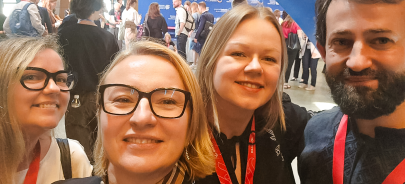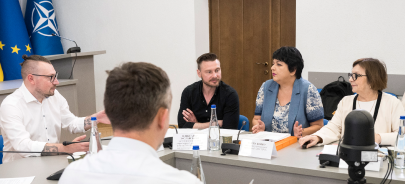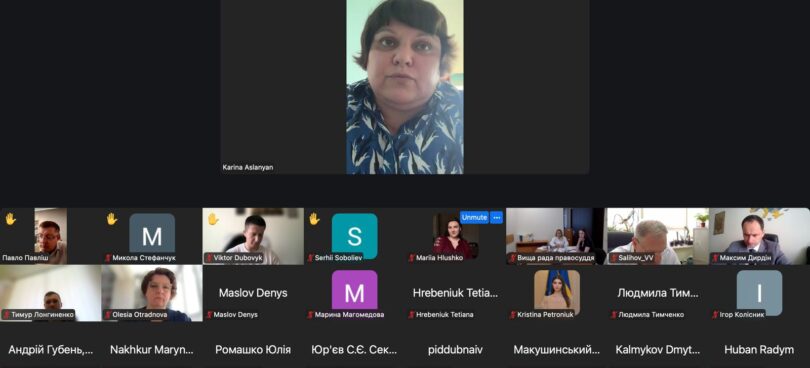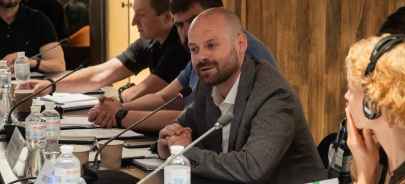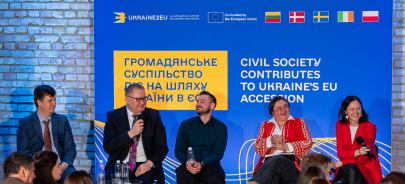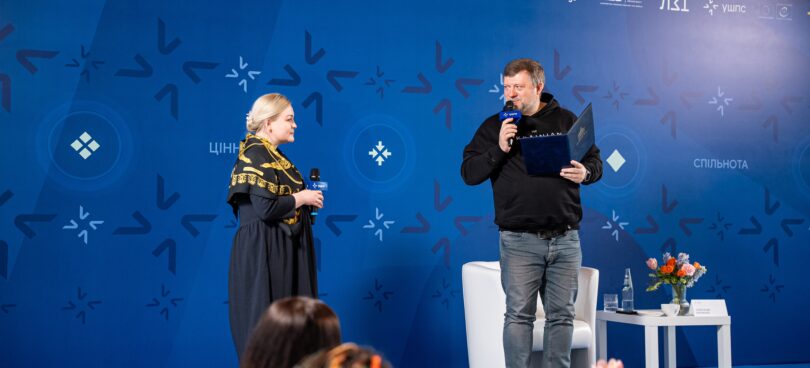
The Agency for Legislative Initiatives attended a meeting about the regulation of parliamentary majority and opposition powers in Ukraine. Organised by the National Democratic Institute, the event was also attended by Members of Parliament, representatives of political parties, civil society organisations, academics and experts. An Analytical Note on the regulation of the powers of the parliamentary majority and opposition was also shared at the event.
Oleksandr Zaslavskyi, the ALI’s Deputy Executive Director for Analytics, outlined the concept of legislative enshrinement of the opposition’s status. This concept was originally designed in 2022 by the Sub-group on Regulating the Status of the Opposition, which was part of the Working Group on Parliamentary Reform. The ALI was a member of this Sub-group.
Oleksandr Zaslavskyi highlighted that the Sub-group’s key insight was the rejection of the perception that the opposition is a unified entity, given that Ukrainian parliamentary practice is far more intricate. In fact, it is more accurate to refer to a pluralistic opposition, or even to opposition factions that may collaborate ad hoc, rather than to the opposition as a unified whole.
In terms of the definition of the word ‘opposition’, the Sub-group had set out several potential criteria:
- Factions in which the majority of registered members did not vote in favour of the Government’s appointment (or of the majority of Government members) — a mandatory criterion;
- Factions in which the majority of registered members did not vote in favour of the Government’s programme — an optional criterion;
- Factions that have declared themselves to be in opposition or have signed an opposition list — an optional criterion.
The concept also acknowledges the separation of responsibilities between the majority and the opposition. The majority is responsible for policymaking, while the opposition focuses on parliamentary oversight. The opposition must have access to the necessary tools and levers, including the appointment of committee chairs with clear oversight responsibilities.
Members of Parliament of the 9th convocation must address the issue of regulating the status of the parliamentary opposition alongside other long-awaited decisions. Among these tasks are adopting the Code of Ethics for Members of Parliament, passing the Parliamentary Service Law, and establishing a framework for a special oversight committee on intelligence matters for the next parliamentary convocation.