
Although studying at the School of Community Leaders-2020 is over, the community of people united by values and “armed” with knowledge remains. And this is the most important thing. We hope to continue working with alumni of the School of Community Leaders in the future!
Svitlana Matviienko on a “nationwide poll” announced by the president
Svitlana Matviienko, Chairwoman of the Board of the Agency for Legislative Initiatives, took part in the press conference “Risks of the poll during the elections”. During the event, experts from NGOs (Center for Political and Legal Reforms, OPORA Civic Network, IFES Ukraine, Reanimation Package of Reforms – RPR) discussed the feasibility and legality of conducting a “nationwide poll”, and in fact – a referendum on election day.
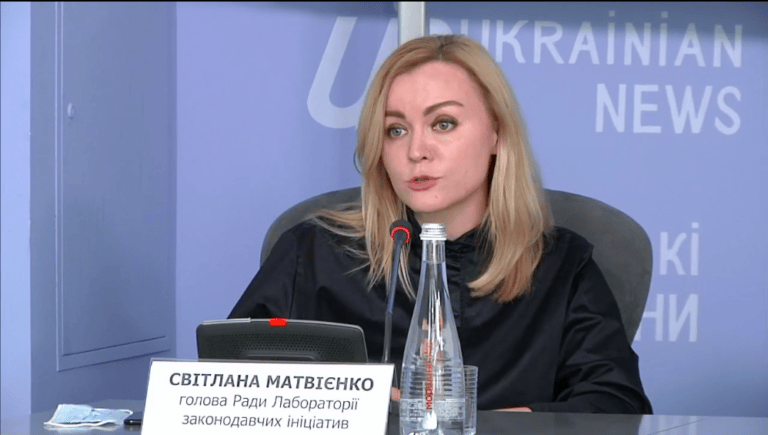
The position of the Agency for Legislative Initiatives is clear, in contrast to the authorities’ actions – without a clear legal basis, written procedures, and awareness of the consequences, Ukraine citizens should not participate in the survey. Svitlana Matviienko explained why:
“The nationwide poll announced by the president is, in fact, a consultative referendum. We call this the formation of a voter’s deceptive involvement in the processes that are taking place. An analysis of the procedures for conducting this poll and the format of the president’s communication gives an understanding of why all this is being done.
The poll is conducted to ensure that voters come to the polls and support the trend of “closeness of the politician to the people”. This will be one of the most difficult elections in the history of Ukraine. Instead of educating voters and protecting citizens in elections, the authorities form a “simple dialogue with citizens.”
I’m worried about money. We have not yet heard at what cost the survey will be conducted. Any experts understand that the classic sociological survey will be much cheaper, more adequate and relevant, and, most importantly – reliable and legitimate. For our part, we urge citizens of Ukraine not to take part in these polls because there is no legal basis for this, much less a wise reason to be further endangered during a pandemic”.
The School of Community Leaders has come to an end
The election campaign officially started in Ukraine on Saturday, September 5. And the program of the School of Community Leaders, which lasted a month and a half, has just ended. And this means that the program participants are ready to plunge into the election race to fight for their chance for honest leadership.
We devoted the third module to practical tools for involving citizens. After all, it is impossible to be a leader without the community’s support, without uniting people around a common big idea. Community residents are not just voters. And winning an election with a successful strategy is just the beginning. After the election, the most challenging part begins – you need to interact with citizens, find the problems, and solve them together. Only in this way, we have a chance for the emergence of civil responsibility, which will not allow those who are not worthy of it to come to power over the years.
During the third module, students of the School of Community Leaders learned how to work with the community.

In particular, as part of the program, we conducted a live motivational session together with the finalists of the national TV project “New Leaders” for students of the School of Community Leaders. Mariupol City Council Member Maksym Borodin, Kotsyubynske Town Council Chairwoman Olga Matyushyna, and Mayor of Chortkiv City Volodymyr Shmatko talked about how they turn difficulties into opportunities and develop communities. Each of the speakers has extensive experience in local government. Facing new obstacles daily is a reality for those who undertake community development. But our speakers prove that the main thing is to go to the goal sincerely and devotedly, without stopping and without doubting it.

Oleksandr Slavsky during the lecture
Oleksandr Slavsky, Director of the Odesa Regional Development Bureau and a USPS alumnus, shared his experience in establishing cooperation between local governments, communities, and civil society. In Ukraine, citizens have legal means of influencing the government. The main thing is to know and use them correctly.

Ruslan Deinychenko during the lecture
Ruslan Deinychenko, the co-founder of the Stopfake project, told all about countering fakes and manipulation, which can hinder communication between society and government.

Live event with Nicole Ruder
Nicole Ruder, Director of the Swiss Cooperation Office in Ukraine, met with participants online to discuss the basic principles and possibilities of decentralization, which is an effective tool for overcoming global challenges. Each community can contribute to developing not only autonomously, but also to benefit the world, for example, by caring for environmental issues.

Backstage with Olexandr Yarema
Olexandr Yarema, State Secretary of the Cabinet of Ministers of Ukraine and a USPS alumnus, spoke about the experience of holding a Town Hall Meeting – a useful tool for involving citizens. The Agency for Legislative Initiatives and the Ukrainian School of Political Studies have been holding Town Hall Meetings for several years, during which citizens have the opportunity to discuss community issues. In the meantime, government officials can better understand citizens to overcome challenges together.
We managed to hold one training Town Hall Meeting with participants online! During the meeting, students tried to find a solution to the problem of a large number of outdoor advertising in cities, which, on the one hand, can spoil the appearance of buildings, and on the other – can bring money to the city budget. So at Town Hall Meeting, they learned to understand different stakeholders and look for consensus for all community members.

Results of our online Town Hall Meeting
The latest video lectures of the School of Community Leaders were dedicated to innovative methodology. Oleksandr Zaslavskyy, Director of the Analytical Department of the Agency for Legislative Initiatives, and Uliana Poltavets, Program Director of the USPS and Deputy Chairwoman of the Board of ALI, introduced participants to a unique for Ukraine tool of public control – social audit. We developed the methodology of social audit in the Agency for Legislative Initiatives with the support of the Kingdom of the Netherlands. We will soon implement it in Ukrainian communities, particularly with the School of Community Leaders’ alumni.

Uliana Poltavets and Oleksandr Zaslavskyy during the shooting of a lesson
The second module of the School of Community Leaders-2020
Time is relentless. Local elections in Ukraine will take place very soon – in less than two months. But we manage to prepare worthy candidates for the School of Community Leaders.
At the end of the first module, we held a live event for the participants with the editor-in-chief of the newspaper “Dzerkalo Tyzhnia” Yulia Mostova. As always, a deep, honest, and therefore challenging conversation is needed to ensure that community leaders from all over the country are aware of the real state of affairs and understand the need to change it.

Live event with Yulia Mostova
The second module was devoted to the nuances of this year’s elections and the tools of a successful election campaign.
Andriy Mahera, an expert in electoral law and deputy chairman of the Central Election Commission in 2007-2018, discussed in detail with the participants the new election legislation, all its positives, and shortcomings.

Backstage of Andriy Mahera’s lecture
Together with political scientist and co-founder of the Civic Movement “SVIDOMI” Mykhailo Nakhod, the students had the opportunity to develop a victorious strategy for the election campaign.

Mykhailo Nakhod during the lecture
Oleksandr Bondarenko, the RMA communication agency’s project manager, gave the participants valuable advice on how to communicate with voters. Today’s world is becoming digital, and therefore a successful election campaign is impossible without communicating with voters using modern technology. Where to establish contact with the people, what to tell them, and in which way? Our students learned at lectures and practiced themselves.

Backstage with Oleksandr Bondarenko
Olga Aivazovska, Chairwoman of the Board and Coordinator of Political Programs of the Civil Network OPORA, told the audience all about the crimes during the elections and the punishment for them after the voting. The result is clear – breaking the law is very dangerous.

Olga Aivazovska during the lecture
At the participants’ request, we held a feedback-session with Pavlo Sheremeta, the founder of the proryv.in.ua analytical center, so that our students could discuss all local development issues in more detail with an expert.
The third and last module is currently underway. With the help of practical tools, participants learn to identify problems and solve them through government and citizens’ joint efforts.
The School of Community Leaders will end on September 6, just after the election campaign’s official start.
The first module of the School of Community Leaders 2020 is coming to an end!
Studying at the School of Community Leaders-2020 continues! More than 200 people were selected and allowed to learn from the best. We have created a unique web platform for them so that our participants could listen to lectures, do homework, and communicate with speakers from anywhere in the world.

We are currently completing the first module devoted to local development, its problems, and opportunities in Ukraine. The participants have already passed 4 classes and met six incredible lecturers:
Oleksandr Khoruzhenko, a USPS alumnus and an expert on local self-government. In 2016-2019, Oleksandr headed the Sumy Center for Local Government Development. He helped participants understand decentralization reform and the legal framework for local self-government.

Pavlo Sheremeta, founder of the analytical center proryv.in.ua, member of the Supervisory Board of the Lviv Institute of the city and Minister of Economic Development and Trade of Ukraine in 2014. Pavlo knows a lot about urban development. Using the example of Lviv and Vinnytsia, the lecturer explained how to make a development strategy that will help make a breakthrough and create a city that will be comfortable for residents and earn money.

Ulyana Pak, a member of the Lviv City Council and a USPS alumna. During the lectures, Ulyana told from her own experience who a local councilor is, what his powers and responsibilities are, and what you should be ready for if you want to join local self-government.

The Transparency International Ukraine team, which conducted classes for participants on combating corruption at the local level. In particular, Andriy Borovyk, Executive Director of TI Ukraine, explained what corruption is and what its manifestations can be. Oleksandr Kalitenko, TI Ukraine’s legal adviser, spoke about the conflict of interest and how not to fall into this trap for local government representatives. Anastasiia Mazurok, TI Ukraine’s Chief Operating Officer, spoke about how local government transparency can effectively prevent corruption.

Svitlana Matviienko, Director of the Ukrainian School of Political Studies and Chairwoman of the Board of the Agency for Legislative Initiatives, and Oleksandr Sushko, Executive Director of the International Renaissance Foundation, inspired the participants to take responsibility and work for our country and each community.


We move on. There are two more modules ahead: new lectures, speakers, homework, tests, and even live events. We are making the last month of summer busy for the School of Community Leaders’ participants so that they get the maximum preparation before the upcoming local elections!
XIV Annual meeting of the USPS
On February 29, the XIV Annual Meeting of the Ukrainian School of Political Studies took place. We gathered Alumni on this day not by chance. During this period – in late February and early March – the annexation of Crimea happened six years ago.

The peninsula was and remains an important part of the history of the School. We have been visiting Crimea every year since the beginning of the USPS. Our groups were hospitably hosted in Bakhchisaray Zindjirli Madrasa. But after 2013 it is impossible. We believe that future USPS groups will be able to visit the Ukrainian Crimea freely.
In the meantime, we wanted to remember together with the community the noise of the Crimean waves and plunge into the sea atmosphere. Thus arose the installation “Crimea”, which we presented at the Annual Meeting of the USPS. These are memories for each of us and an opportunity to feel a part of the home for the Crimean Tatar people.
We believe that the next groups of the School will be able to visit Crimea freely. In the meantime, let’s look for a “way home”, as Jamala sings.

In 2020, the Ukrainian School of Political Studies will be 15 years old. That is why we wanted to show the whole journey of becoming a Community, starting from 2005, when the Committee of Ministers of the Council of Europe decided to establish the Ukrainian School of Political Studies.
“We are going through times of turbulence, but we have always sought to overcome them with you, pursuing only one goal – the idea of Ukraine. Everything we have done for 15 years, we are doing now and will continue in the future – just for our state’s subjectivity, development, and progress. School is not a party or a network of useful contacts. I always say that the School is a sieve. This is a clear crystallization. And we say goodbye very easily to those who forget about these values,” – said Svitlana Matviienko, Director of the USPS, during her speech.

For 15 years, together, the whole community, we have overcome challenges and developed. Circumstances changed, political players changed, and we defended our principles. Ukraine needs justice, breakthrough, and unity. To this end, our community has always chosen one journey – the path of values, dialogue, enlightenment, and taste.
Dialogue
Our Alumnus, project director at the Centre of United Actions Andriy Andrushkiv, spoke about the importance of dialogue at the USPS Annual Meeting.

“The builders of the Tower of Babel not only failed the project. They scattered around the world and disappeared as a people. First of all, because they stopped talking to each other. We need a conversation. This should be a real dialogue, not a small talk over a glass”, – the speaker stressed.
At the same time, it is important to adhere to certain principles of dialogue. In particular, dialogue requires homework, effort to hear the other, silence, and attention.
According to the speaker, a dialogue is not a thing in itself, but a way to know the truth. We have a lot of topics for dialogue. How do we build a civil service system so that we have to serve there, not kowtow? How do we build a judicial system that will not pass politically motivated sentences? Only in the format of agreement, dialogue, co-creation can we invent the rules for the future. And, thus, to ensure that the country in the process of creation does not fall apart like the Tower of Babel.
Taste: Architecture is politics
Anna Kyrii, the founder of the architectural bureau and an Alumna of the USPS, opened the topic of architecture in politics for the guests.

“First we shape our buildings; then they shape us”, – speaker quoted Winston Churchill.
She told and showed how architecture reflects countries’ political regimes, how symbolic is the difference between democracy and authoritarianism on the example of buildings. In the first bridges are erected. In the second – fences rise.
“The philosophy of fences must be replaced by the philosophy of bridges. After all, the first ones separate, and the bridges unite“, – the speaker explained.
Ukraine inherited many authoritarian “political” buildings from the Soviet Union. Rebuilding the past for a new quality of the future is a new symbolic task for modern Ukrainian architects.
Values
Yevhenia Zakrevska, Chair of the Bar Advisory Group and an Alumna of the USPS 2019, spoke with the School community about values. Yevhenia is a lawyer for the families of the Heavenly Hundred for Maidan affairs. She used to stand up for her principles, no matter what. In particular, in November 2019, Eugenia went on a hunger strike, when due to parliament’s actions, the investigation of cases was suspended. Because values motivate struggle.

“Everyone has values. Attempts to instill something from the outside provoke resistance. And this is understandable. After all, this is an interference with the integrity of the individual. But even those values that are your own actually limit your choice, reduce competitiveness, or even efficiency. There are no advantages from them. However, values are about a compass, about the direction of movement towards civilization. It’s not just about fear. If you unite a large circle of people who have a single value scale, they will form a field of trust. Then there will be a leap in the development of the environment in which we live”, – the Alumna summed up her speech.
Justice
Andriy Stelmashchuk, the managing partner of Vasyl Kisil & Partners and an Alumnus of the School, spoke about justice as one of the community’s fundamental values this evening.

“Law is the art of goodness and justice. The law is based on justice – everyone must have equal conditions. But justice comes when punishment is inevitable“, – said the speaker.
However, today in Ukraine, there are certain obstacles to achieving justice.
“Legal institutions – the judiciary and law enforcement – have a high level of distrust. This means that people want justice, but they cannot get it in these institutions”, – Andriy Stelmashchuk said.
Legal activity, the main purpose of achieving justice, is now mixed with business all over the world. Here, says Andriy, it is important to remember that a lawyer is not a businessman because his main goal is not to make a profit. A lawyer is, first and foremost, one who cares about justice.
Challenge
The director of the Swiss Cooperation Office, Nicole Ruder, described how the Ukrainian School of Political Studies overcomes challenges with the help of its basic values. She also said that Switzerland supports USPS on its path.

“Climbing a mountain is a challenge. It’s like your personal path here. Your values are spikes on the soles of your shoes that do not allow you to “slip”. Your community is like a rope. It does not exist to lift you up a mountain. Its purpose is not to let you fall. Each group of the School is your constantly climbing team. Behind and in front of you – “mountain range”. Switzerland is happy to support you on this path. And, in the end, everyone goes their own path. Keep going up and enjoy the scenery”, – Ms. Ruder explained metaphorically.
Unity
Rustem Umerov, a representative of the Crimean Tatar people and co-founder of the Astem Foundation, stressed the importance of unity for Ukraine now in order to preserve its sovereignty and statehood.

People come together because they have something in common. However, according to Mr. Umerov, only unification for the sake of positive development, for the sake of justice and peace, protection of common values can be really long-term.
There are many examples in Ukrainian history of how unity helped to achieve the highest goal.
“Last year we celebrated the 100th anniversary of the Act of Unification of the Ukrainian People’s Republic and the Western Ukrainian People’s Republic. Then Ukrainians proved to the whole world that unity could take a concrete political and legal form – a single Ukrainian state. We had to pay a terrible price for this because the Soviet regime saw the unity of Ukrainians as a threat to their own existence. We survived the Holodomor, repression, but we won. We restored our statehood, created a political nation. The Ukrainian state flag is now proudly flying all over the world,” –the speaker said.
And now we need the unity of all citizens of Ukraine again to defeat the enemy. The truth has nothing to divide. The truth is what unites.
“When we talk about the strategies of de-occupation of Crimea, it is necessary to consider many factors. First of all, we must restore not only the territorial integrity of the state. We must provide conditions for the political and cultural unity of our citizens. Do not unify them using tools of influence. However, unite them, preserving the identity of each ethnic and religious group. To unite on the basis of common values, vision, purpose. We can use the “unity of identities” approach”. I think this is our strength“, – added Rustem Umerov.
Awarding diplomas
The last action of the XIV Annual Meeting of the USPS was the awarding of diplomas to the group-2019.

On this day, the participants of the program officially completed their studying. But we do not say goodbye to our Alumni. Ahead – new victories on our common Way!
Presentation of the functional analysis of the gender mechanism in Ukraine
Agency for Legislative Initiatives presented the results of the analysis of the scope and distribution of responsibilities for the implementation of gender equality policy.
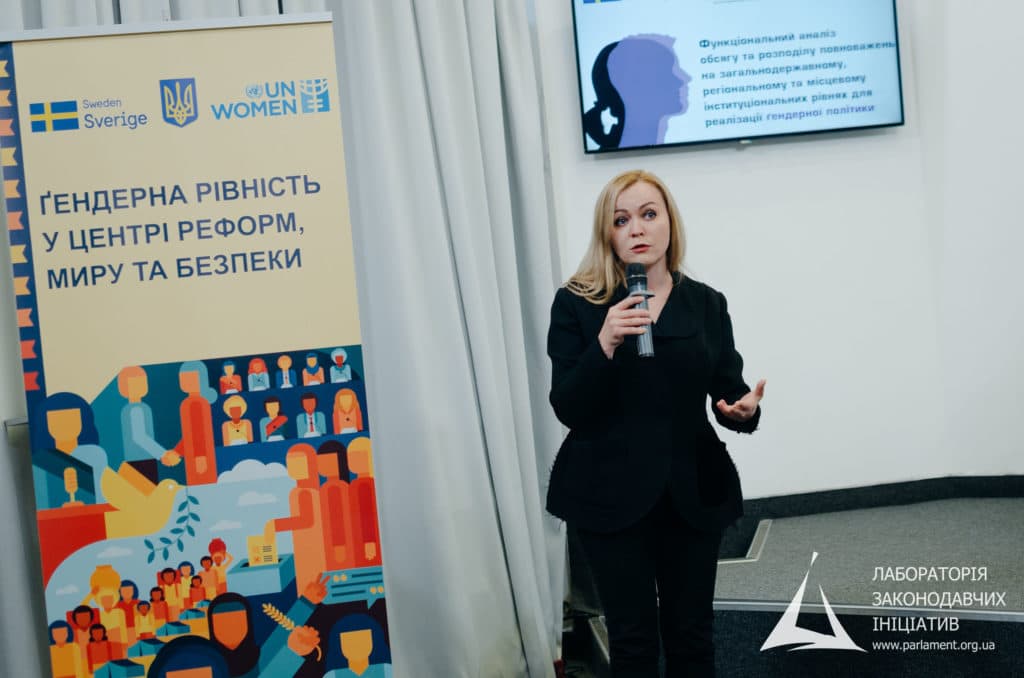
Svitlana Matvienko, the Chairwoman of the Council of the Agency for Legislative Initiatives, began the presentation.
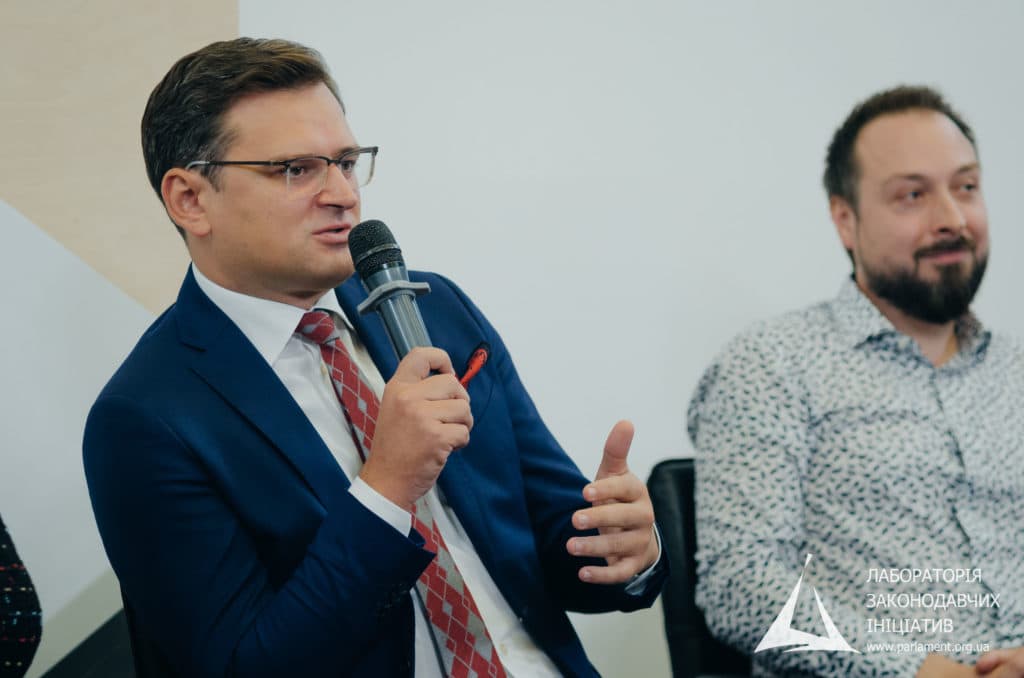
Dmytro Kuleba, the Deputy Prime Minister of Ukraine for European and Euro-Atlantic Integration, has attended the event. He said that the new government will continue to implement gender equality policies in Ukraine initiated by the previous government.
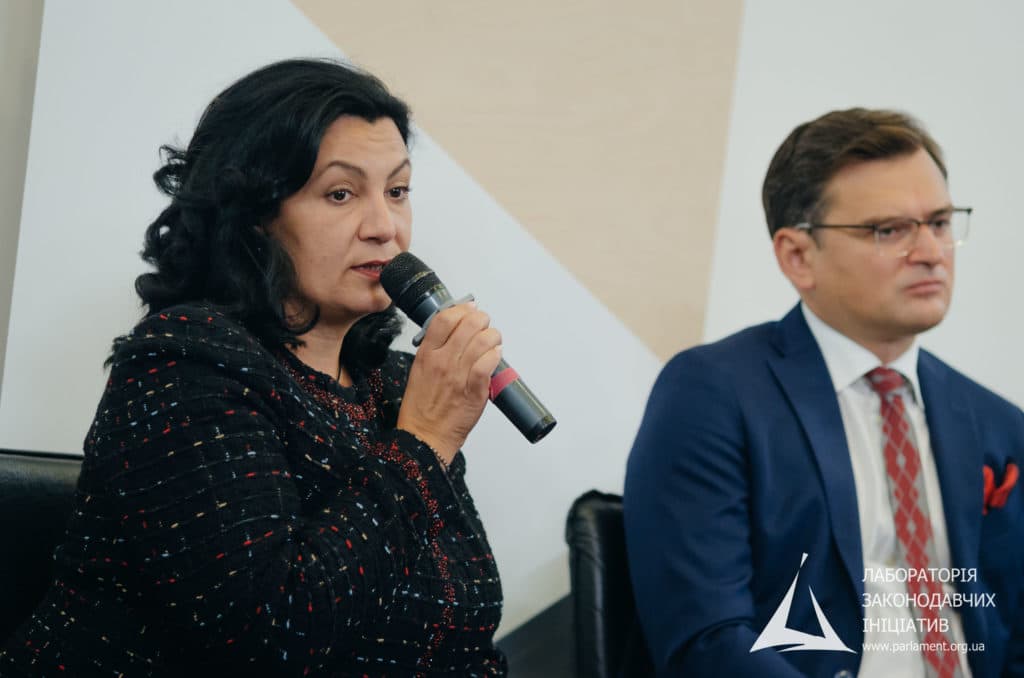
Ivanna Klympush-Tsintsadze, currently the Chairwoman of the Verkhovna Rada Committee on Integration of Ukraine into the European Union, and in 2016-2019 the Deputy Prime Minister for European and Euro-Atlantic Integration in Ukraine, said that to achieve gender equality there is still much work to be done in Ukraine.
“In spite of all the regulations and changes to the legislation that we have been able to adopt in recent years, there is still a lot of work to be done in order to say that our country ensures equality, makes it impossible to discriminate on the basis of sex and display sexism at the public level”, – said Ivanna Klympush-Tsintsadze.
She also noted that it is necessary to work with the regions so that the national mechanism could ensure equal rights for men and women.
“Our society is full of stereotypes. All of us have seen the rush that has caused the introduction of feminitives in the Ukrainian language. It means that in society it is necessary to explain what equality is and why it is important”, – the politician emphasized.
The Head of the UN Office for Women in Ukraine, Anastasia Divinskaya, agreed with Ivana Klimpush-Tsintsadze. She noted that according to the Beijing Platform for Action, a national mechanism can only succeed if it is part of the government. But it must also be implemented at all levels of the country. It is important to engage with civil society organizations.
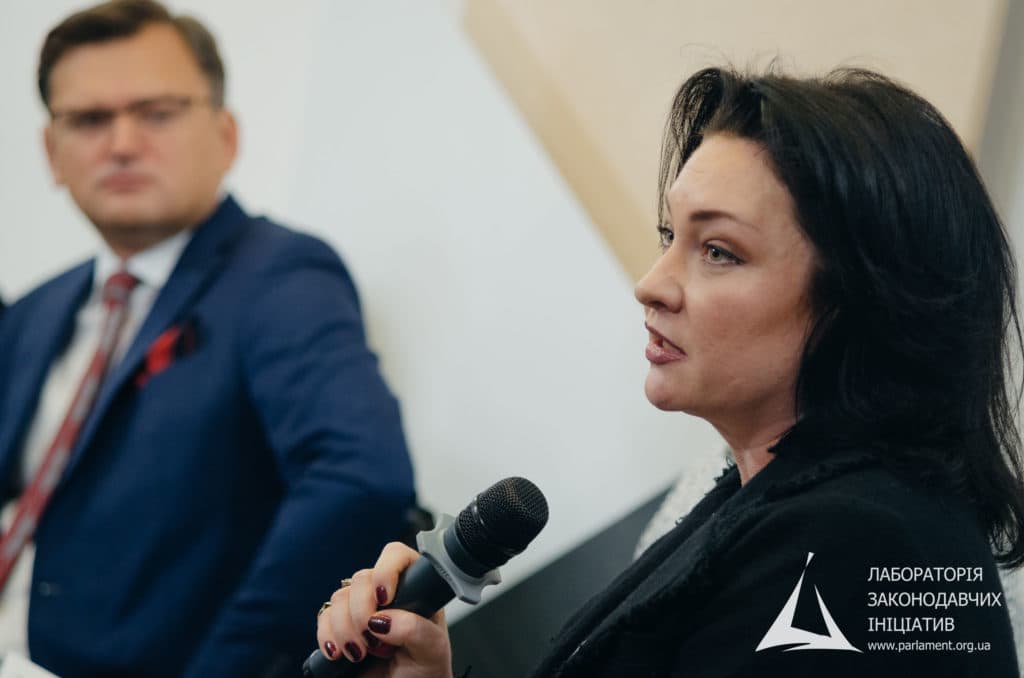
“The national mechanism should be able to influence all policies developed by the state so that all laws inevitably have a positive result equal for men and women, boys and girls living in this country”, – Ms. Divinska summed up.
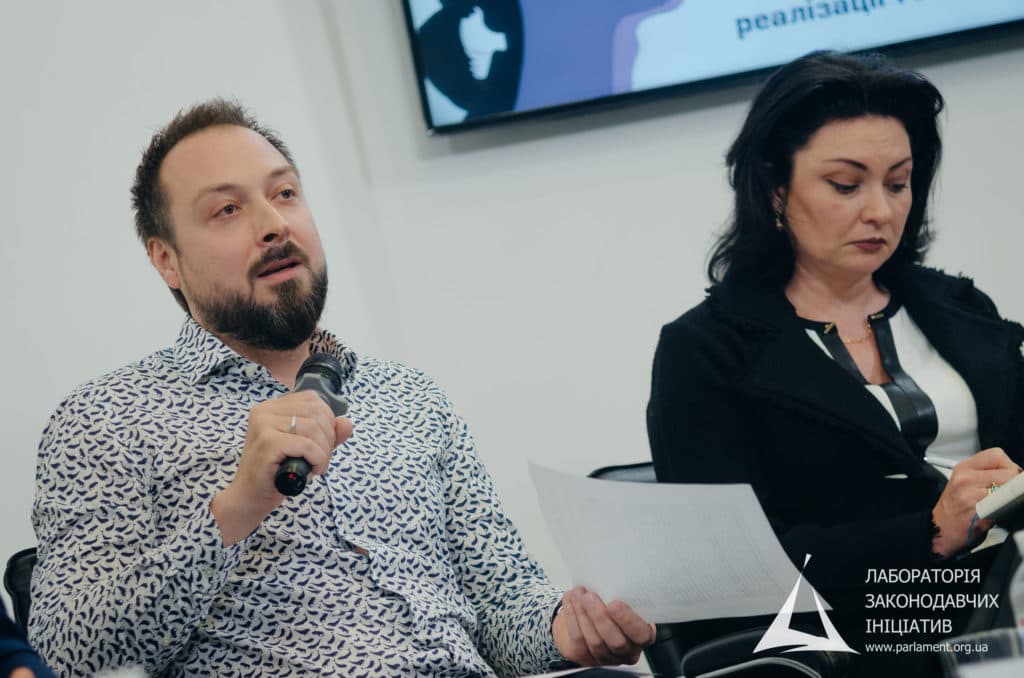
Andriy Vyshnevsky, a lawyer and public administration expert, emphasized that Agency had submitted a draft report that needs further public discussion. He described the methodology of the study, which took place in three stages.
“The main conclusion is that we have a gender mechanism and it is sufficiently developed. But that does not mean that there is nothing to improve. There are a lot of serious problems”, – said Andrey Vyshnevsky.
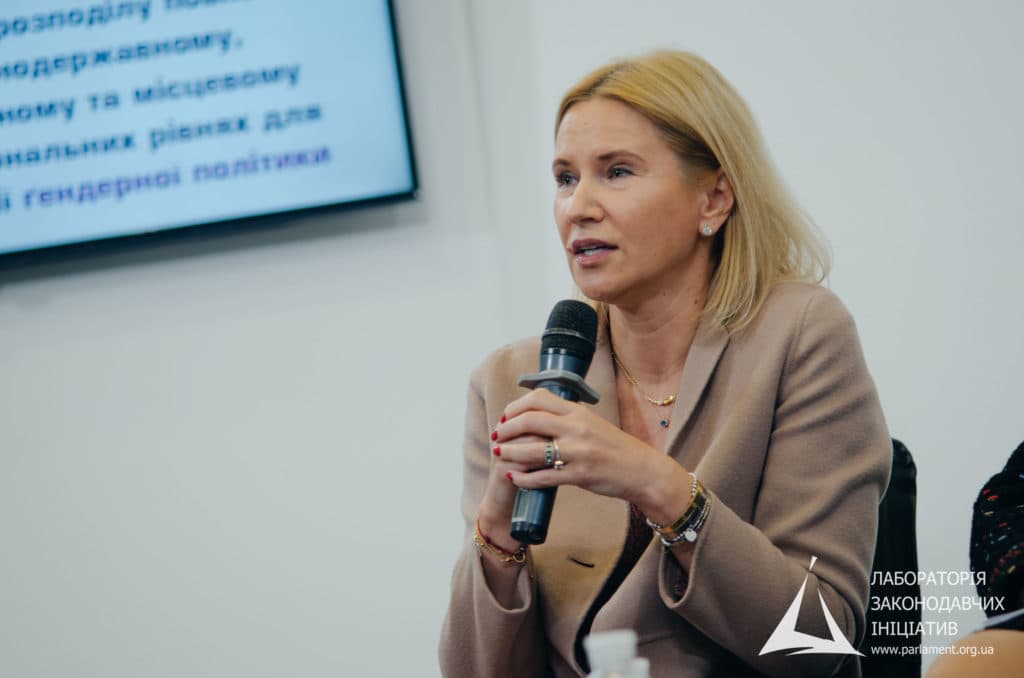
Finally, Olena Kondratyuk, the Deputy Speaker of the Verkhovna Rada of Ukraine, took the word. She said that the implementation of gender equality policies requires a coordinated work of government, public and legislative sectors.
You can watch the full presentation here.
The round table “When and how will land reform end?”
Dzerkalo Tyzhnia (Mirror Weekly), Agency for Legislative Initiatives and Internews held the round table “When and how will land reform end?”. Among the speakers were experts who are engaged in the implementation of the open land market and experts with alternative views on this process.
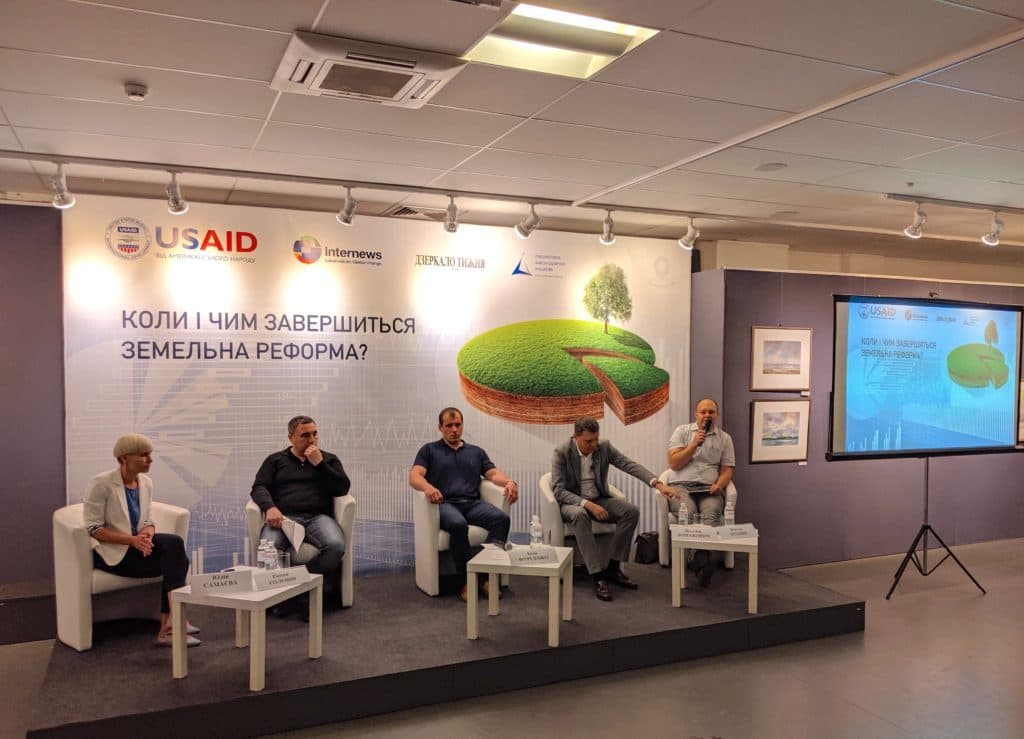
Photo: Dzerkalo Tyzhnia
According to Oleg Nivievsky, Assistant Professor of the Kyiv School of Economics, Ukraine is ready to open the agricultural land market. Studies of the Kyiv School of Economics show a significant macroeconomic impact of the land market opening. In particular, Ukraine could expect accelerating economic growth by 1.5-2% of GDP each year. But Mr. Nivievsky thinks that without the introduction of effective mechanisms for the development of farming this effect will not be so sustainable. In his opinion, there should be a special guarantee fund that would provide loans for the farmers. The government and the World Bank are working now together to create it.
According to Hlib Vyshlinskiy, Executive Director of the Center for Economic Strategy, Ukraine needs other transformations to strengthen investment protection and property rights, simplify business for farmers.
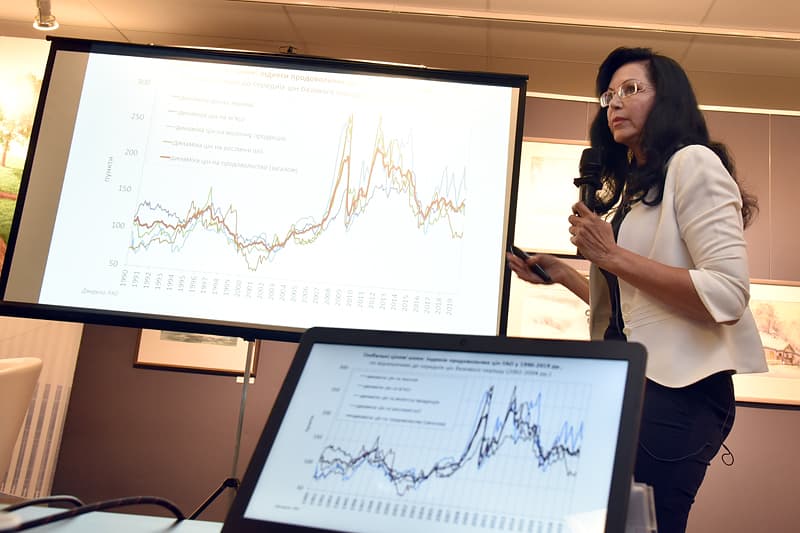
Photo: Tatiana Unkovska / Dzerkalo Tyzhnia
Tatiana Unkovska, Director of the Optima Expert-Analytical Center, said that the launch of free land markets without the necessary regulation to the loss of land, which was in possession of the citizens of rural areas, and increased food risks in several countries. According to her colleague Vitaliy Lomakovych, a free market of agricultural land, which is controlled and regulated by the state preventing abuse and manipulation in the market, is good for Ukraine. Mr. Lomakovych reminded the audience that the land cadaster is now filled by only 70% and until this indicator reaches 100%, it will be impossible to avoid abuse.
Almost all the experts agreed that the main purpose of opening the market should be stimulation of the farms’ development in Ukraine since it is the easiest way to increase productivity in the agriculture and it has a direct impact on the development of rural areas.
However, Ivan Fursenko, Deputy Chairman of the All-Ukrainian Association of Rural and Settlement Councils, is convinced that until territorial communities don’t have the opportunity to dispose of agricultural lands on their territories (including lands outside settlements), it is difficult to say about the development of farming and the positive effect for the development of territories.
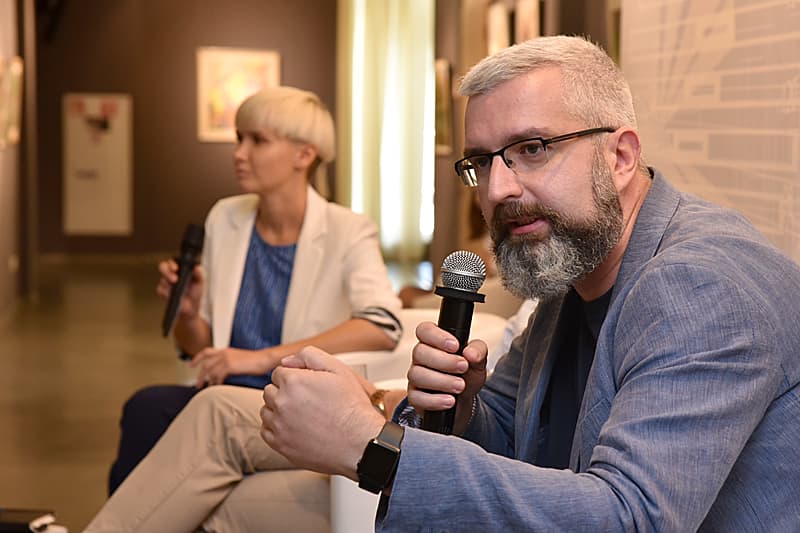
Photo: Andriy Martyn / Dzerkalo Tyzhnia
The experts think that the right of priority purchase of land by the agrarians, who are now renting these lands, is a doubtful solution because in the vast majority the renters are large producers. According to Andriy Martyn, Senior Project Manager for Land Reform in the Reforms Delivery Office (RDO) of Ukraine’s Cabinet of Ministers, the large agricultural companies now have both the will and the financial resources needed to buy the land they are currently renting.
The experts agreed that the land market is necessary for Ukraine. However, hurry and lack of public discussion can hamper the process of its implementation.
The second season of the TV project “New Leaders” has ended
The Agency for Legislative Initiatives was included in the Supervisory Board of the national television Project “New Leaders” for the second season. Chairwoman of the Council of the Agency and the curator of the Ukrainian School of Political Studies Svitlana Matvienko was part of the jury.
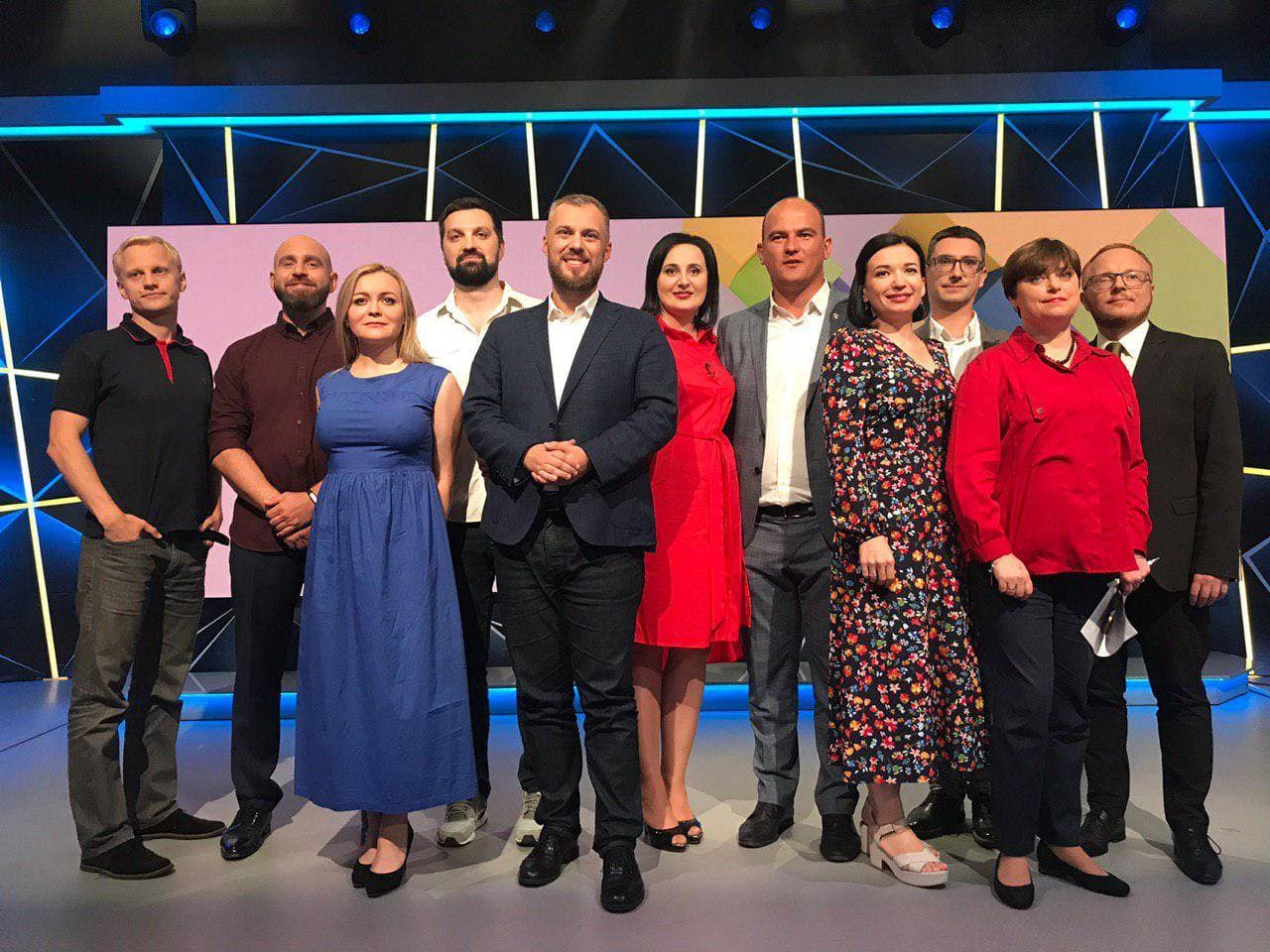
Thanks to the project Ukrainians have learned about a lot of initiatives and projects, each of which is worthy.
However, the winner is always one. This year, Ukrainians determined Volodymyr Shmatko’s idea as the best one. Volodymyr is the Mayor of Chortkiv and alumnus of the Ukrainian School of Political Studies. During the project, he fought for the implementation of his idea, which would contribute to the economic growth of communities throughout the country.
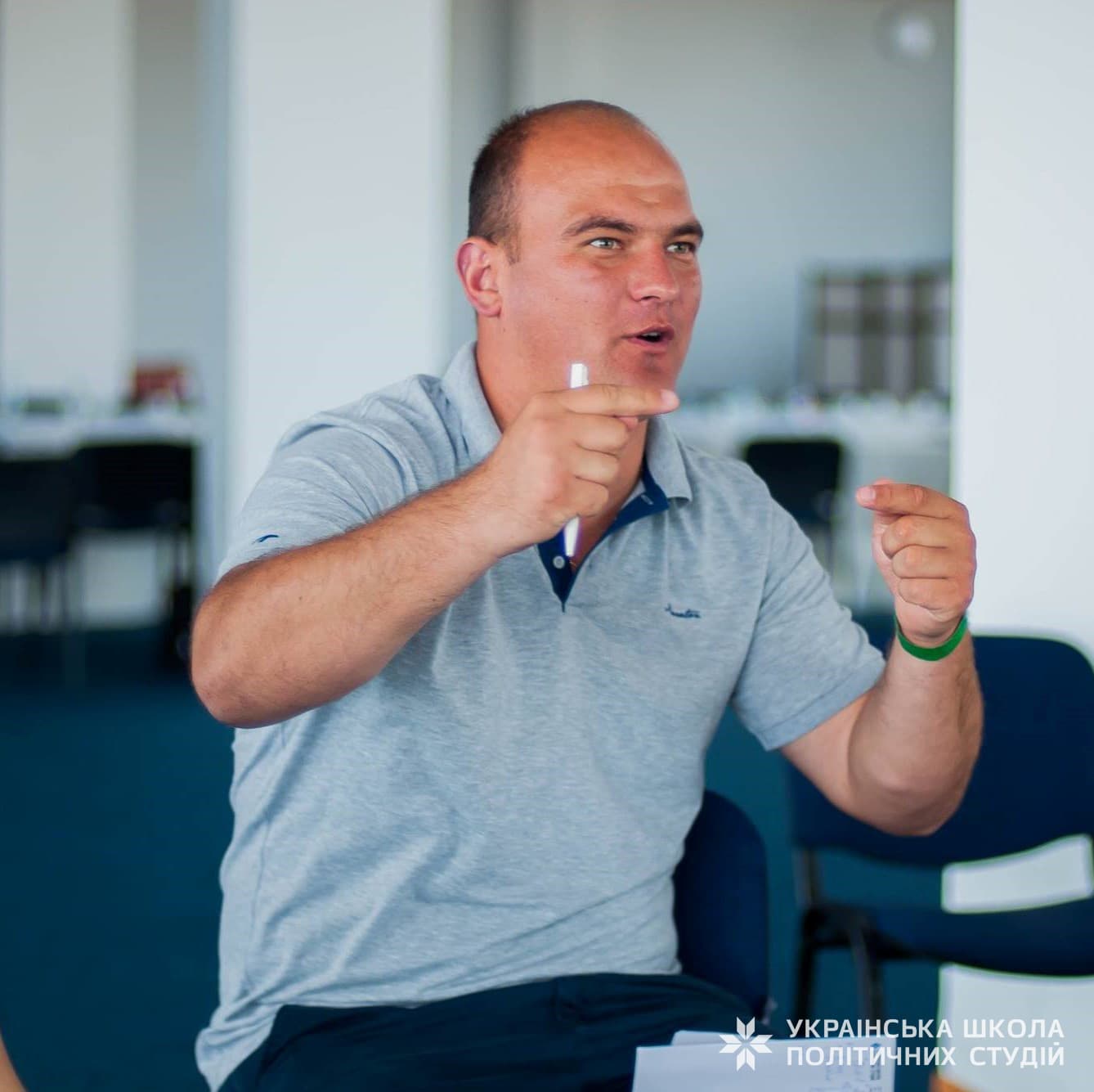
Decentralization is an extremely important reform for an economically successful Ukraine. Volodymyr has developed an action plan. The implementation of his project will allow to support local entrepreneurs and develop innovative projects such as business incubators, startups, and economic clusters in the communities.
We congratulate Volodymyr on victory and wish him success in the implementation of the project!
The Agency for Legislative Initiatives presented the organization at the Atlas Weekend Festival
This year, the Agency for Legislative Initiatives presented the organization at the Atlas Weekend Festival. Our team carried out rapid testing for those who are interested in democracy.
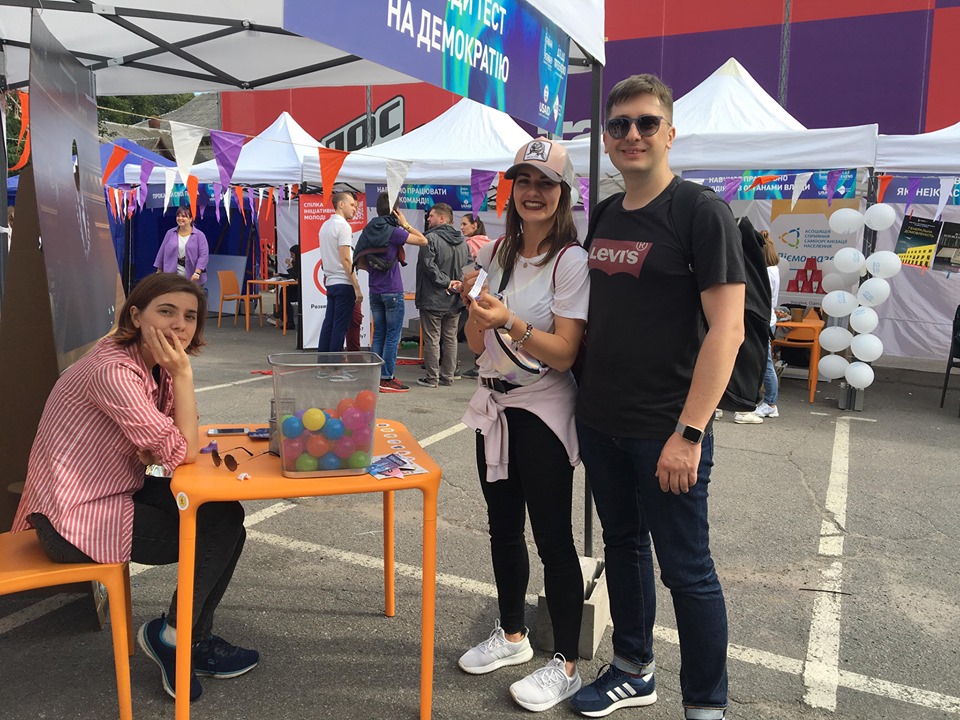
From now on, more Ukrainians will know how democracy really works, who decides and how to overcome difficulties. Indeed, democracy is not only the freedom of speech and deeds. First and foremost, this is an instrument that should be used correctly: if there is a problem, then it is necessary to initiate its solution by yourself, instead of waiting until someone else, higher in the vertical power will do it.
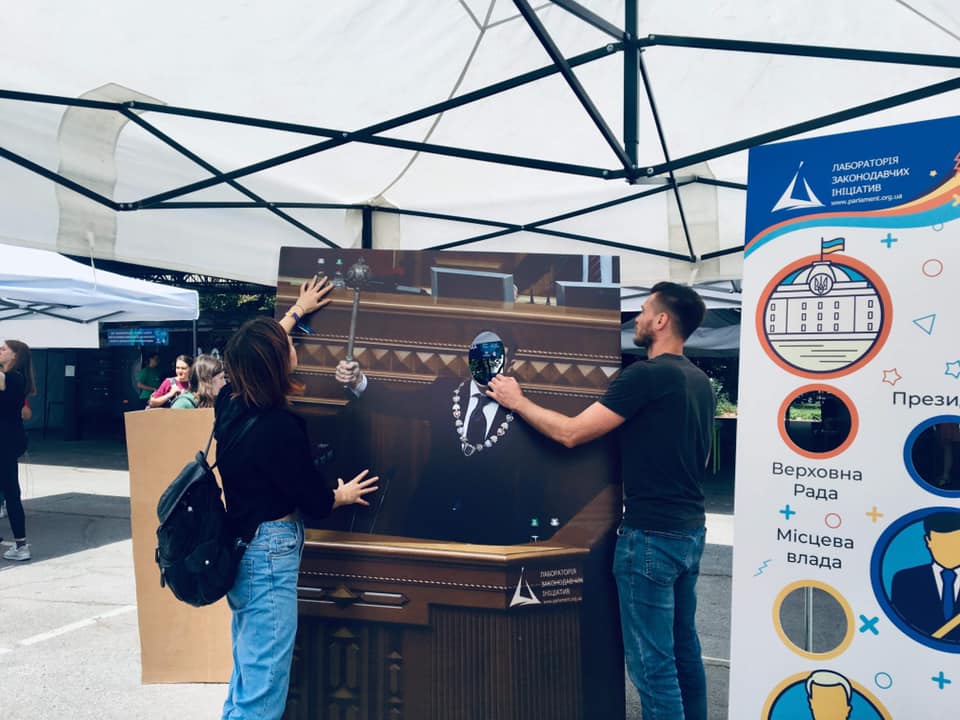
Civic education, even if it is during the festival, is a vaccine against populism for teenagers and young Ukrainians who liked our activities.
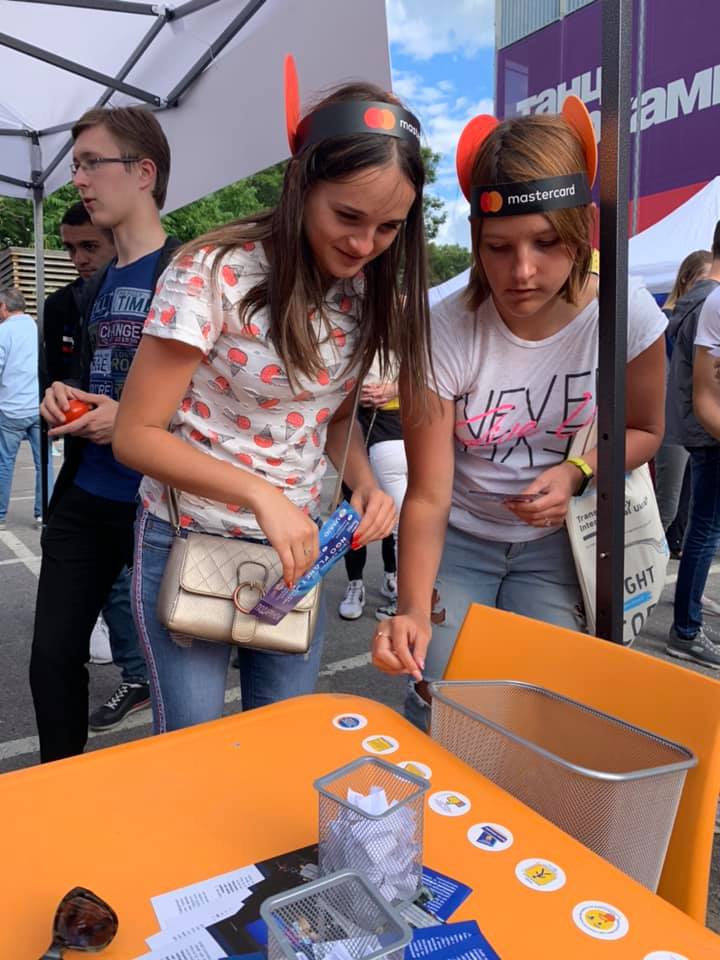
During the festival, we met many active and knowledgeable people – Ukrainians and foreigners, open to knowledge and ready for action. We understood more of what the youth needs in order to be interested in social and political processes. The youth, in turn, has learned how to find the right way out of the situation and to distinguish power of the Government and Parliament.
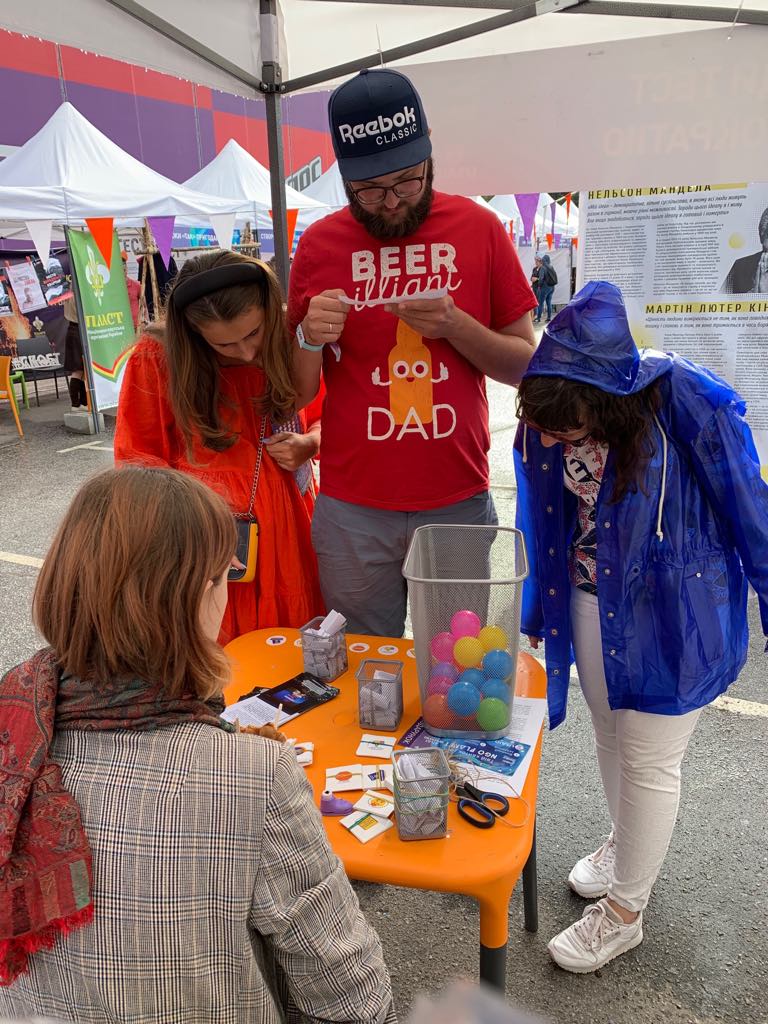
It was a valuable experience for the Agency. We hope that not the last one.
Workshop “Upcoming Elections – Avoiding Risks in Cyber”
During the elections, political parties must learn how to resist cyber threats. Therefore, the Agency of Legislative Initiatives in partnership with Cybexer Technologies (Estonia) on July 9 held a training on “Upcoming Elections – Avoiding Risks in Cyber” in Kyiv for representatives of communications departments of parties, digital marketing departments of parties, information technologies and security departments of parties, as well as party members who are running for parliament during this election.
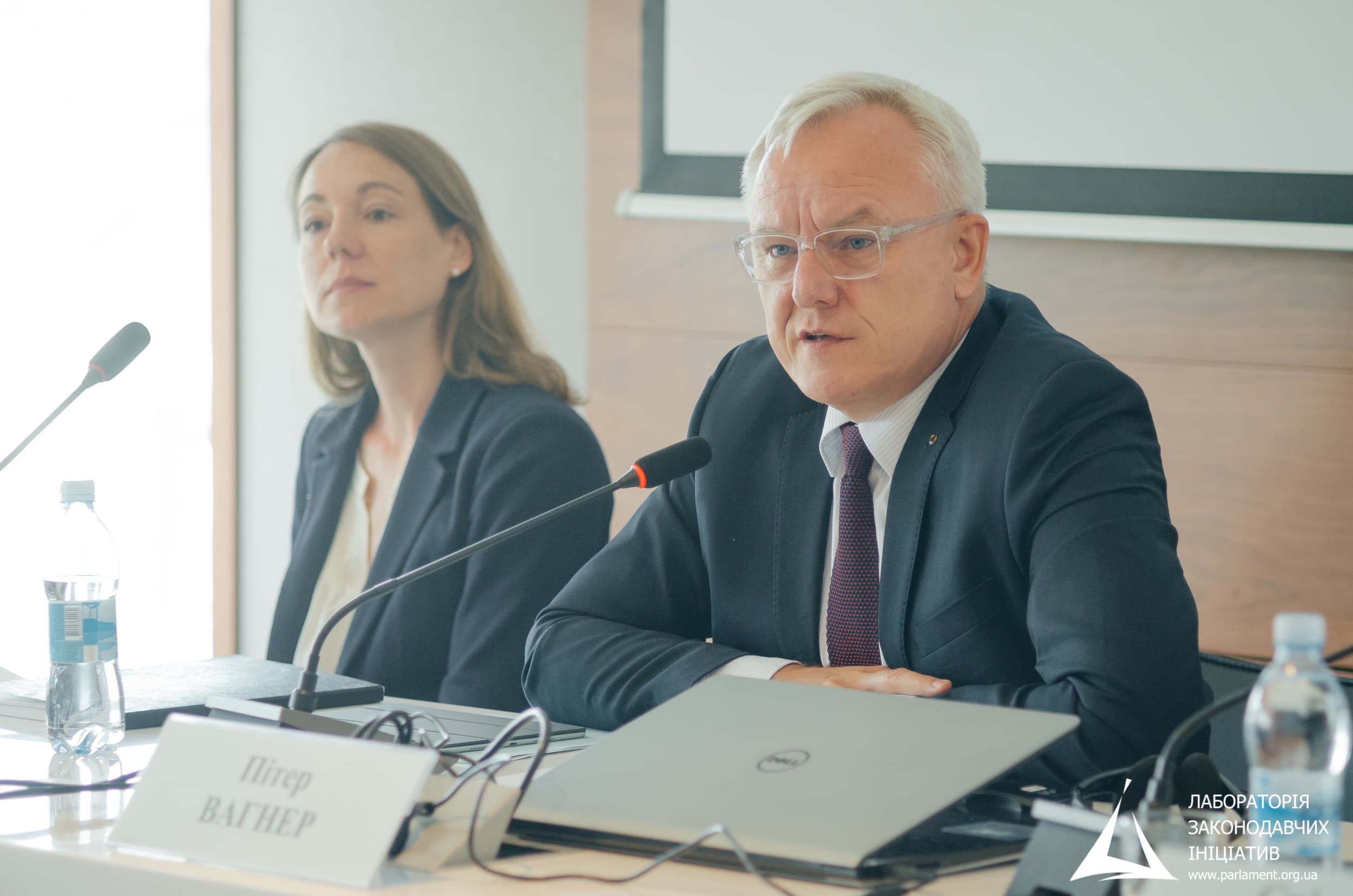
“Securing free and fair elections has become a fundamental pillar of a functioning democracy. The EU will continue to support Ukraine by reinforcing its legislative framework, strategy and coordination mechanisms that are in line with EU legislation and best practices, particularly with the EU Directive on security of network and information systems (NIS Directive)”, – summarized the Head of the Support Group for Ukraine at the European Commission Peter Wagner.
During the training, participants learned the best way to protect company information systems from manipulation, how to raise awareness of party members about targeted cyber breaches, such as phishing attacks and advanced persistent threats (APT), fake news, leaking, and ransomware.
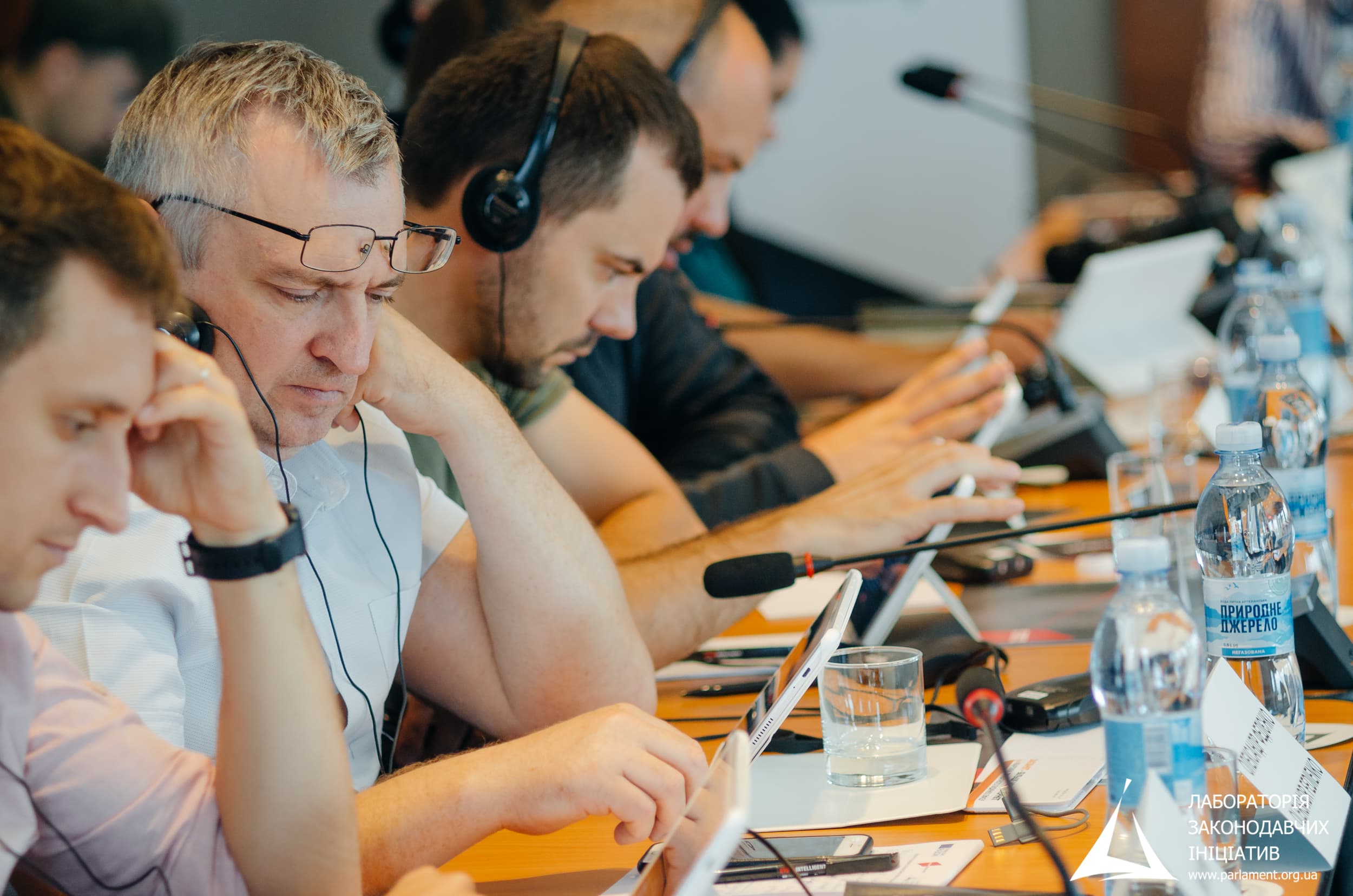
In addition, each party representative has undergone individual online training about digital literacy and has completed a digital test that can identify areas of cyber risk in different categories, such as personal attitude, knowledge about technology, exposure to social media and organizational culture. As a result of testing, participants received recommendations on how to protect themselves and their party from specific cyber threats.
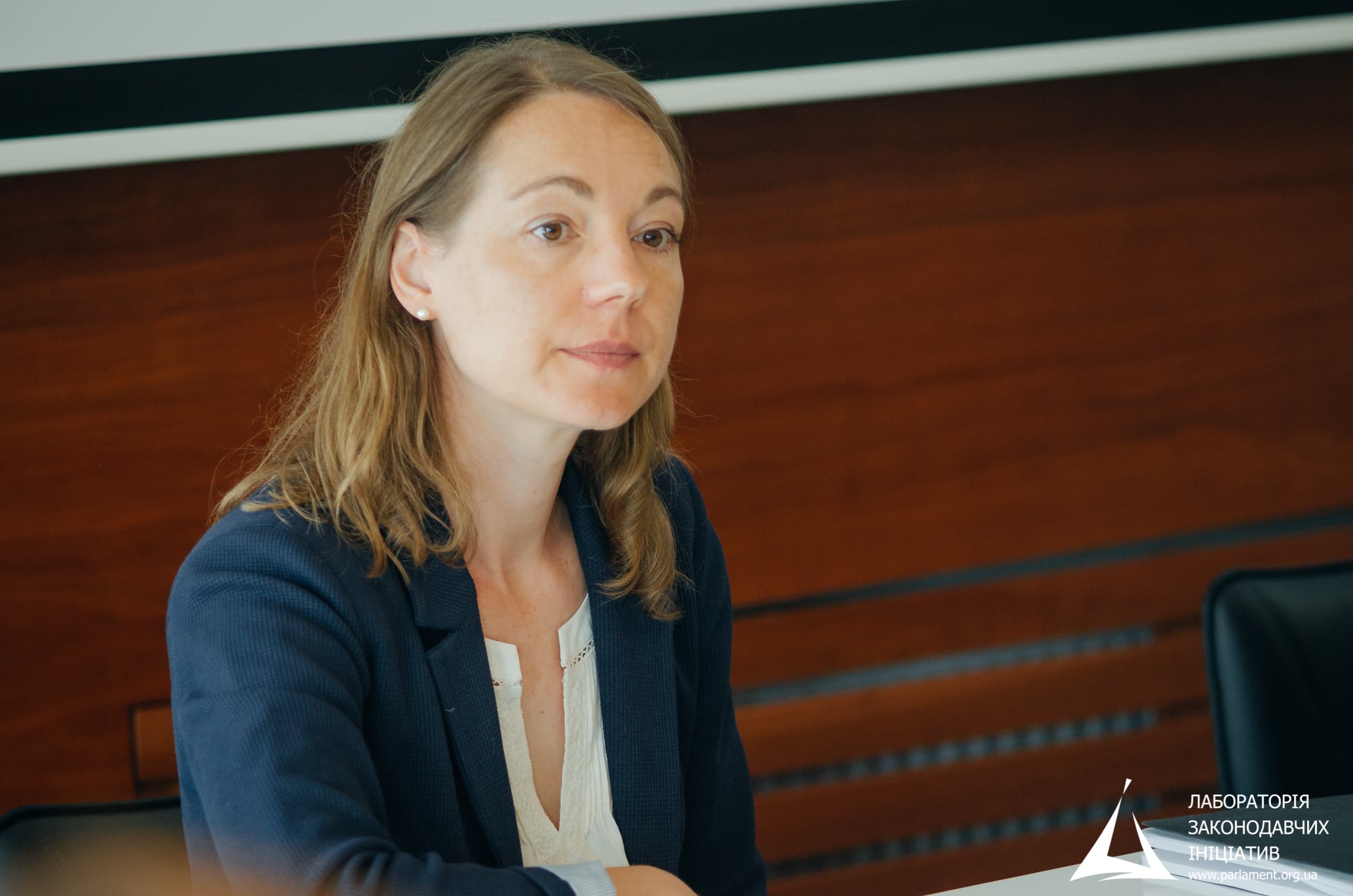
“Independently of our jobs, age or level of responsibility, we all need some technological literacy at the individual level, if we want to function safely in today’s digitally dependent society and to make sure that we don’t create risks to it by your behavior,” – said the Executive Vice President of the Estonian company for providing countermeasures against cyber-threats Cybexer Technologies Merle Maigre.
Reference information:
As a follow-up to the EU-Ukraine Summit statement of 2018, the European Union has launched an action in Ukraine to strengthen the capacity of the key participants of the electoral process. The training was conducted following the EU launch of a project “Support to Cybersecurity of Parliamentary Elections” in Ukraine.