
By the end of 2016, the resources already integrated into the Verkhovna Rada portal would work in a test mode to troubleshoot possible problems.
Presentation of E-Tools for the Public in Kharkiv
On November 10, 2016, the press center of Khakriv Today hosted a presentation of new electronic resources that help make Parliament more transparent – the Portal for Public Discussion of Draft Laws and the Electronic Register of Non-Governmental Organizations (E-Register of NGOs).
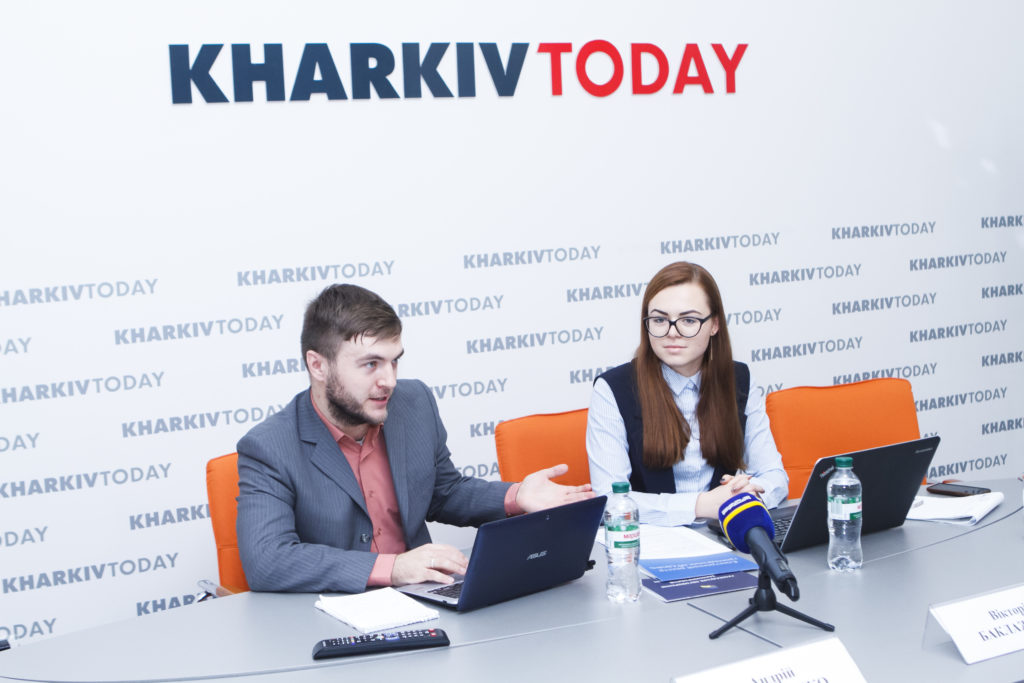
Victoriia Baklazhenko, Project Manager of the Department of Parliamentary Reform of the Agency for Legislative Initiatives, and Andriy Pylypenko, PR-manager, told how these resources could involve the public in discussing draft laws before they are submitted to specialized parliamentary committees and help to cooperate effectively with the committees.
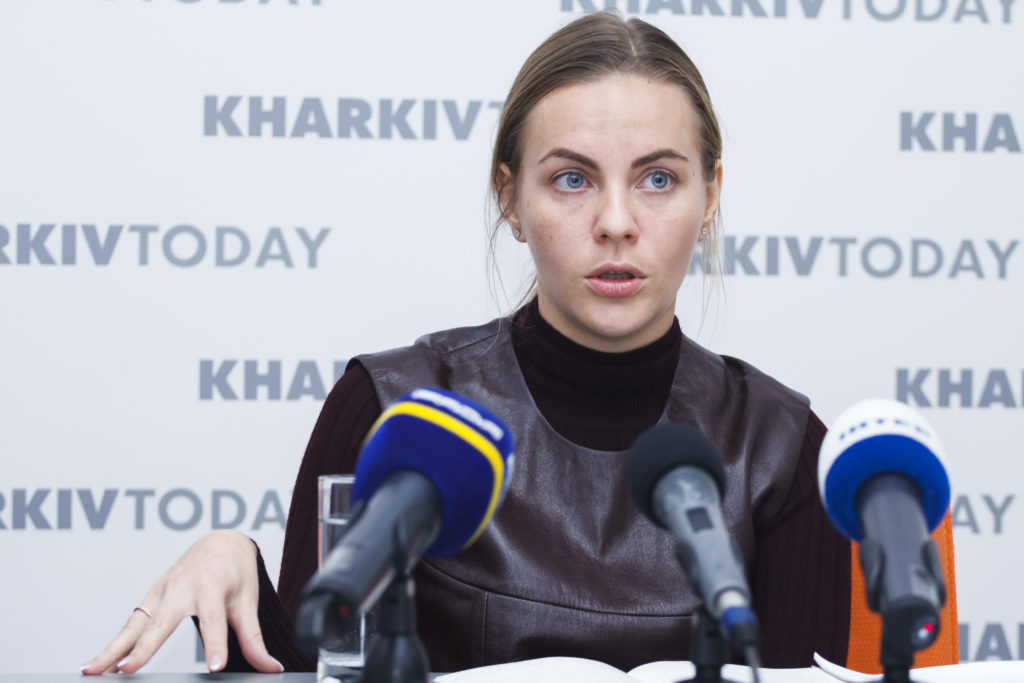
Olena Sotnyk, MP, pointed out to the importance of such tools not only in Kyiv but also in all regions of Ukraine. Kharkiv became the first city, and subsequently the new e-tools would be made known to the public in other parts of the country.
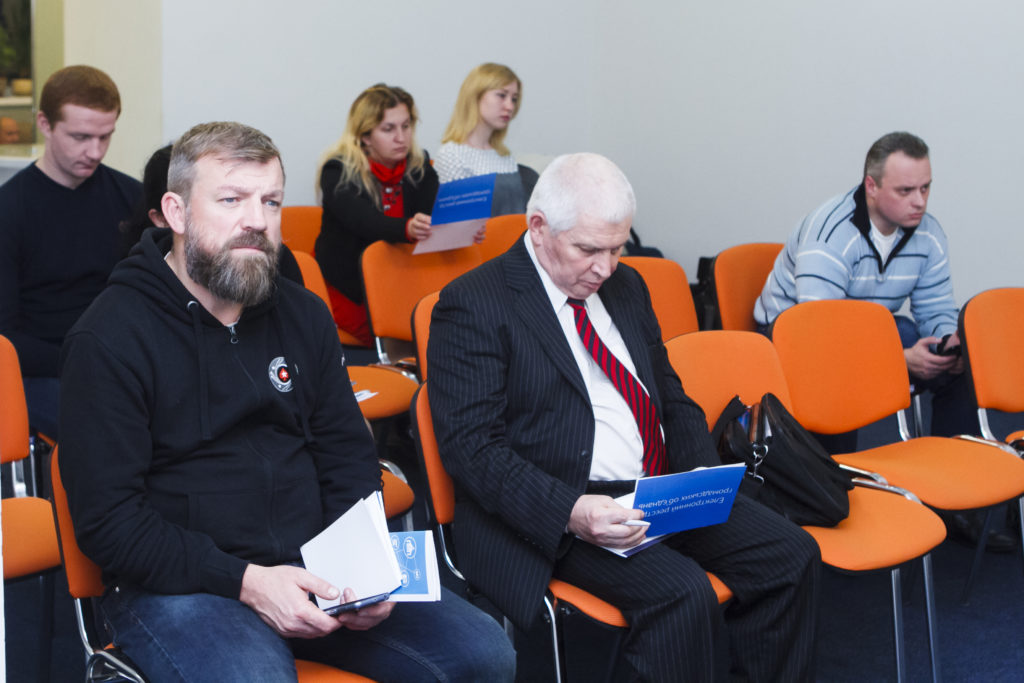
Participants took an active part in the discussion of the new electronic tools. Their proposals will be included in the Terms of Reference for further improvement of the Electronic Register and the Portal.
You can register your NGO in the Electronic Register by filling in the form.
By the end of 2016, the resources already integrated into the Verkhovna Rada portal would work in a test mode to troubleshoot possible problems.
Presentation of E-Tools in the Verkhovna Rada
On November 4, 2016, in the Verkhovna Rada of Ukraine there was held a presentation of new e-resources that will help make Parliament activities more transparent: the Portal for Public Discussion of Draft Laws and the Electronic Register of Non-Governmental Organizations (E-Register of NGOs).
Thanks to these resources, the public will have the opportunity to contribute to the discussion of draft laws before they are submitted for consideration to specialized parliamentary committees.

The Portal for Public Discussion of Draft Laws, developed with the support of the USAID RADA Program and at the initiative of the Computerized Systems Department of the Verkhovna Rada of Ukraine, will make it possible to citizens:
- to get acquainted with draft laws submitted to the VRU for discussion,
- to get acquainted with the work of specialized committees of the Parliament,
- to participate in the discussion of draft laws.

“The potential of civil society has to be used to improve the quality of drafting bills and work of committees. The portal for public discussion of draft laws will provide an opportunity to improve transparency and confidence in committees”
The Portal for Public Discussion of Draft Laws was designed in response to the recommendations of the European Parliament on internal reforms of the Verkhovna Rada of Ukraine. It is aimed to improve its institutional capacity and step up public involvement in the legislative process.

“Our main goal is to ensure real and effective communication. Owing to the Agency for Legislative Initiatives, all participants in today’s meeting have got an excellent presentation of the electronic database”

“The portal is an important step towards the reform of the VRU. Much has been done. According to the rating of the Inter-Parliamentary Union, the VRU was rated 24th. I am confident that the pace of the reform of the Verkhovna Rada will remain very high next year”
The other tool, i.e. Electronic Register of Non-Governmental Organizations (E-Register of NGOs), is designed to ensure public consultation during the work on draft resolutions in VRU committees. The E-Register was created by the Agency for Legislative Initiatives within the framework of the USAID RADA Program.
Thanks to this resource, committees will have up-to-date information on public associations, their expert input, management and expert composition, etc. The committees will be able to use this e-resource, which currently includes more than 80 organizations, to effectively involve non-governmental organizations in cooperation with one another. An application for cooperation can be submitted here.

“Public activity and donor support really influence the work of the parliament. The global trend when the civil society influences the government work continues after the Maidan. I think that we changed the influence of experts, analysts, and intellectuals after 2014. All revolutionary bills – those on the media, civil service, declarations – were adopted under pressure from the public. Therefore, increasing accessibility for citizens is the first and foremost task”

“We must make it clear that most of the MP’s work takes place not in the session hall, but it continues in the committees. Of course, this is not a “Green” or “White” Book. However, this will create an opportunity to increase the presence of experts in the committees. Therefore, it is necessary to popularize this resource in expert communities. Besides, it is important to understand which legislative initiatives are truly top priorities. One of the higher goals is to change the algorithm for reviewing and adopting laws to get rid of “legislative spam””
Experience of a Local Referendum in Ukraine as a Component of Local Democracy (Shadow Report)
As is known, Article 38 of the Constitution of Ukraine guarantees the right of citizens to “participate in national and local referendums”, however with the loss of force of the Law of Ukraine “On national and local referendums” 1991 and the entry into force of the Law of Ukraine “On national referendum” The legally established mechanism for the initiation and conduct of local referendums is disappearing in 2012. On the other hand, the current policy of the State’s regional policy is to decentralize and deregulate power and to empower citizens to address local issues, including through the initiation and holding of local referendums. In particular, within the framework of the implementation of the reform, the Law of Ukraine “On the Voluntary Association of Communities” was adopted, where a local referendum is a necessary component of this process. However, there is still a lack of a legislative framework to regulate the mechanism for local referendums. To date, four draft laws have been registered, which should regulate this mechanism: the draft Law of Ukraine “On the All-Ukrainian Referendum” № 2145a dated 23.06.2015, “On the local referendum” № 2145a-1 dated 03.07.2015, 2145a-2 dated 06.07.2015, 2145a-3 dated 08.07.2015).
The preparation and presentation of analytical reports in the Shadow Report format is part of the project embodied by the Agency for Legislative Initiatives, supported by the USAID Rada Program: Responsible Accountable Democratic Assembly, implemented by the East Europe Foundation.
Town Hall Meeting “School Education: Budget and Parents’ Funds”
A town hall meeting on “School Education: Budget and Parents’ Funds” was held in Kharkiv on July 20th.
The event was organized on the initiative of MP Olena Sotnyk by the Agency for Legislative Initiatives in cooperation with the Interns’ League within the Model District project under the aegis of USAID RADA Program: Responsible Accountable Democratic Assembly implemented by the East Europe Foundation.

Oleksandr Zaslavskyi, Deputy Chairman of the Board of the Agency for Legislative Initiatives, familiarized the participants with the methodology of the event and told about the tangible results of the previous Town Hall Meetings within the Model District project.

The author of the scenarios, Iryna Kohut, expert at the CEDOS Center, told the audience that the public education subvention is currently one of the “cheapest” public subventions. Recently, there has been a change in attitude towards parents’ contributions throughout Ukraine – from legalization and “unshadowing” of the funds offered by parents to educational institutions monthly to their full ban. The expert stressed the importance of an active public stance as regards settling the issue of parental contributions:
“In order to get the maximum effect from state funding, the topic of today’s discussion should be in the focus of the Kharkiv community”

The discussion was held at ten desks and involved more than a hundred representatives of the Kharkiv community: teachers, parents, activists, and representatives of local authorities. The participants considered the pros and cons of each of the 5 alternative solutions to the problem of school budgets and legalization of parental contributions.

Eventually, 27 participants (majority of those who took part in the voting) chose the option of imposing a total ban on parental contributions. One of the alternatives was not supported by anyone at all, and only 7 people chose the option “do not change anything”.

At the end of the event, all interested persons had an opportunity to express their ideas concerning the format and content of the event, to briefly comment on it, and ask questions.
Olena Sotnyk is convinced that a complete ban on parental contributions is too radical a decision. The MP expected some more willingness in terms of personal initiative and responsibility. Therefore, based on the results of the discussion, the best proposals and ideas will be collected to be used for amendments to the law On Education.
Materials of the Town Hall Meeting:
Description of the problem
Option 1. Arrangement and collection of parental contribution should be left to the discretion of school administrations and parents (status quo)
Option 2. Creation of a charitable foundation
Option 3. School administration opens an account at a state bank (or treasury) and independently manages its own school fund
Option 4: Local authorities make it obligatory to transfer all parental contributions to special accounts in the State Treasury
Option 5. Completely ban parental contributions at schools
Town Hall Meeting “Looking for Ways of the Further Use of the Landfill in the Village of Korzhi”
A town hall meeting on “Looking for Ways of the Further Use of the Landfill in the Village of Korzhi” was held in the town of Baryshivka on June 30th.
The event was organized by the Agency for Legislative Initiatives in cooperation with the Interns’ League within the Model District project under the aegis of USAID RADA Program: Responsible Accountable Democratic Assembly on the initiative of MP Pavlo Rizanenko.

In his opening speech, MP Pavlo Rizanenko emphasized the urgency and importance of finding a consensus concerning the further use of the landfill. He encouraged representatives of the communities of the villages of Berezan, Baryshivka, and Korzhi, as well as representatives of local self-government bodies, to discuss the issue in detail in order to break the impasse arising out of one of the most urgent problems of the region.

Oleksandr Zaslavskyi
Oleksandr Zaslavskyi, Deputy Chairman of the Board of the Agency for Legislative Initiatives, familiarized the participants with the methodology of the event, giving examples of the application of the Town Hall Meetings format abroad and in Ukraine.

The expert of the event, Valeriy Mykhailenko, Associate Professor of the Department of Physical Geography and Geo-Ecology of T. Shevchenko National University, Candidate of Chemical Sciences, spoke about the modern scientific methods of landfill management and shared the relevant experience of the Baltic countries and Scandinavia in order to prepare the participants for discussion of the scenarios.

More than 50 participants spent hours discussing different options concerning the future landfill management from setting a sorting line to building a waste recycling plant.

Policy option 1 (to retain the status quo) proved unacceptable for both community representatives and local deputies. Therefore, they together decided to skip this alternative. Eventually, most of the participants voted for policy option 3, which implies the construction of a mini-processing plant funded by an investor.

Photo credit: Oleksandr Kovalenko
At the end of the event, representatives of the investor, who attended the event, made a presentation of concrete projects that can be fulfilled in the landfill of the village of Korzhi.
TOWN HALL MEETING “Ways to Organize Comfortable Urban Space in Kyiv”
On May 25, the NSC Olimpiyskiy hosted the Town Hall Meeting “Ways to Organize Comfortable Urban Space in Kyiv”.
The event was organized by the Agency for Legislative Initiatives on the initiative of MP Yehor Sobolev, in cooperation with the Interns’ League, in the framework of the Model District Project with the support of the USAID RADA Program: Responsible Accountable Democratic Assembly implemented by the East Europe Foundation.

Ihor Kohut, CoP of the USAID RADA Program, expressed his gratitude to all those present for the time they devoted to the town hall meeting and pointed out:
“The format of Town Hall Meetings gives politicians an opportunity to get feedback from the community and, having the necessary arguments and legitimacy, to solve community problems at both city and parliamentary levels”

MP Yehor Sobolev supported this idea:
“Our meeting is about providing active citizens with an opportunity to consider all points of view and all alternatives in order to overcome the “historical curse” of chaotic construction practices in Kyiv and jointly identify ways how and where we should move on”

More than 150 active participants split into small groups and took part in a three-hour discussion of the crisis of urban planning documentation and alternatives of decentralization of the urban development industry management. Kyiv residents expressed their support for the scenario that involved drafting a Kyiv City Strategy, introduction of changes to the General Plan 2015, and drawing up clear zoning regulations. Besides, most participants voted in favor of the option involving new unified state building standards (DBN) for the whole of Ukraine instead of the local level regulation of construction standards.
Voting results

Problem No. 1 “Crisis of Urban Planning Documentation”

Problem No. 2 “Decentralization of the Urban Development Industry Management"
Crisis of urban planning documentation. Description of the problem
Problem I. Option 1. Adopt the draft of General Plan-2025 and zoning of the central part of Kyiv
Problem I. Option 2: Continue public discussion and professional discussion with a view to finalizing the zoning project and creating conditions for adoption of a General Plan and a zoning plan that would be acceptable for Kyiv residents
Problem I. Option 3. Conduct an independent audit of the General Plan-2025 and make a decision following the audit
Problem I. Option 4. Create a Kyiv City Strategy, amend the General Plan 2025 and develop clear zoning regulations
Problem I. Option 5. Commission a completely new General Plan from a foreign institute
Problem II. Option 1. New unified state building standards (DBN) for the entire country
Problem II. Option 2. Regulation of building standards at the local level, the state sets only accessibility and security requirements
Denys Kovryzhenko: The Strengths and the Weaknesses of the Proposed Election Legislation
On May 27, the draft Law “On the Election of Members of Parliament of Ukraine” was posted on the website of the Ministry of Justice . It was prepared having regard to the results of meetings of the Working Group on Improvement of Election Legislation established in November of last year by the President of Ukraine. The revised draft law was based on the “technical” draft of the same Law which had been made public by the Justice Ministry in April 2011. The ministry says that the updated document takes account of many of the proposals voiced during the meetings with representatives of political parties, nongovernmental and international organizations. In reality, however, there are just a few provisions of this sort.
Positive Changes Compared to the “Technical” Draft of the New Election Law
The updated draft law really does contain a number of positive changes. They reflect to a considerable extent proposals voiced by participants in the meetings of the Working Group on Improvement of Election Legislation. These changes include the more precise definition of the procedure for registering observers from nongovernmental organizations (NGOs) and the affording of the opportunity for NGO observers to be present at the meetings of the CEC. In particular, according to the revised draft law, the decision to allow an NGO to have observers lies with the Central Election Commission (rather than with the district election commissions, as was provided by the “technical” version of the draft). Furthermore, eligibility requirements regarding nongovernmental organizations are specified: the right to have observers will be granted only to those NGOs whose statutory activities embrace issues related to the election process and to the observation thereof. Just like the “technical” draft law, the revised draft of the Law “On the Election of Members of Parliament of Ukraine” provides theses official observers with the same rights as the ones enjoyed by the official observers of parties or of MP candidates. All these innovations promote effective public observation of the election campaign. Still, it should be noted that the updated document affords the right to observe the election to organizations registered not later than 60 days prior to the voting day. This may result in the emergence, shortly before the election, of lots of NGOs, which will discredit public observation and will be used by parties or individual candidates as a political technology instrument.
The “technical” draft law essentially restricted citizens’ access to socially significant information about the election process subjects, since it did not provide for the necessity to make public the candidates’ bios, their income statements, the election programs of the candidates and the parties, or the financial reports on the receipt and use of the resources of the election funds. Due to the efforts of the NGO representatives taking part in the meetings of the Working Group, a part of these defects were eliminated: the information being provided by the parties and the candidates at the point of their registration is to be considered as open-access information; and parties’ election programs, financial reports by parties and candidates, and candidates’ income statements are to be posted on the CEC website. However, one of the defects of the previous draft law version has been preserved: the majoritarian candidates are not required to have any election programs of their own. Accordingly, they will be free to promise anything to the voters, while there will be no real opportunity to verify the keeping of these promises.
The list of grounds for canceling MP candidates’ registration has been considerably narrowed; on the whole, this is in line with the international democratic election standards.
One of the pluses of the updated draft law consists in resuming the use of the stamp “Withdrawn” for amending ballot papers (the “technical” draft law did not provide for the use thereof). In line with the Working Group members’ proposals, it is specified that these stamps are to be kept at the district election commissions, not at the precinct ones. This will prevent their unlawful use. Other favorable points of the draft law include the more precise definition of the vote-counting procedure at the precincts and the expansion of the requirements regarding the vote-counting protocol – in it, the number of ballot papers in each ballot box is to be indicated. Pursuant to OSCE recommendations, the “against all” option was removed from the text of the ballot paper; this will make the voters more responsible for their choice and will also reduce the number of votes received by the campaign winning parties due to “reassigned” ballot papers in which voters did not support any particular party of candidate.
The authors of the draft law at last provided for mandatory training of the leaders of the district election commissions. This innovation will promote better performance of the commissions in question. However, it might also lead to negative consequences for the opposition parties – the procedure for such “election training” is to be determined by the CEC rather than directly by the law. As a result, the leadership of the election commissions may come to be dominated by representatives of certain parties only who successfully complete their training. Moreover, the precinct commission leaders – the persons experiencing the highest workload – will not be required to receive any training.
To ensure that voters are provided with objective information, a requirement is established that in the event of publication of the results of an opinion survey by mass media, information on the originator of the survey must be indicated. The revised draft law also takes account of the pan-European approaches to regulating issues related to “election sociology” – the deadline for the publication of the opinion poll results has been shortened from 15 to 10 days prior to the voting day.
The “technical” draft law text provided for the resolution of all election disputes exclusively in court, thus weakening opportunities for defending the violated electoral rights of citizens, parties, candidates, etc. Indeed, during the brief election process period the courts would by no means always be able to provide for prompt and – above all – high-quality resolution of election disputes. In the revised draft law, this defect was eliminated: election law violations can be appealed not only to courts, but to election commissions as well. However, blameworthy is the fact that the deadline for submitting the relevant complaints has been reduced from 5 to 2 days.
The Main Defects of the Draft Law
At the same time, the revised draft of the Law “On the Election of Members of Parliament of Ukraine” contains a number of serious conceptual defects and provisions which fail to fully take into account the democratic standards of fair and transparent elections. The role of public consultations during the preparation of the draft law was greatly narrowed, because the most important problems of the election legislation (in particular election system related issues) were resolved by the president in a single-handed manner, without being discussed with the public or with the parties’ representatives. Thus, one can hardly say that the revised draft law version is the product of the Working Group’s activities and of public consultations.
In the first place, attention should be focused here on the restoration of the mixed proportional-majoritarian electoral system. The current authorities attribute the return to the electoral system which was already used back in 1998 and 2002 to the wish to strengthen the relationship between the MPs and the voters, as that connection was considerably weakened under the proportional electoral system. However, in the context of relationship between the elected representatives and the public, it would be more logical and effective to introduce a proportional system with preferred voting (so-called “proportional system with open lists”). More than that, such an election mechanism would facilitate further development of the party system in Ukraine, which was in fact the main objective for introducing proportional election back in 2004. Restoration of the old electoral model automatically brings back all of its defects, the most essential ones being political corruption and stronger influence of the administrative resource on the final election outcome.
Nor can one approve of the raising of the entrance barrier to the Parliament of Ukraine (from 3 % to 5 %) or of the ban on participation of electoral blocs in the election. Both of these initiatives are exclusively in favor of the current authorities and the dominant political force. Moreover, the higher entrance barrier to the parliament will promote neither a renewal of the political elite nor a representation of the interests of small groups of voters. As to the ban on electoral blocs it should logically be accompanied by amendments to the Law “On Political Parties in Ukraine” which would provide for unification of parties. Also of questionable merit is the reduction of the election campaign period from 120 to 90 days – this will considerably complicate the organization and holding of the election.
The proposed version of the parliamentary election law breaches the principle of equal franchise: voters residing outside the territory of Ukraine are to be included in the voter lists of one single-mandate election district, although their number outside Ukraine is several times higher than the number of voters even in the largest district established within the territory of the country. Therefore, the votes of Ukrainians exercising their voting right beyond the borders of the country will actually have less weight than the votes of citizens casting ballots in their motherland.
There are also defects in the context of the maximum number of voters in a precinct. Presently in Ukraine, it is planned to keep it at 2,750 voters; this will neither facilitate proper organization of the voting nor comply with the recommendations of the Venice Commission or of the international election observation missions, which recommended decreasing the number of voters in a precinct to 1,500. The revised draft law provides for introducing a division of the election precincts into regular and temporary ones, while failing to specify the procedure for establishing and disestablishing regular precincts, for revising their limits, etc.
A serious problem is the violation of the principle of equality of parties in the formation of the election commissions, since in this aspect, preferences are provided for parliamentary factions registered at the beginning of the election process. As a consequence, the Party of the Regions and the Communist Party will be guaranteed (as parties having independent factions in the Parliament of Ukraine) representation in each district and precinct commission. At the same time, for example, the faction “Our Ukraine – People’s Self-Defense” (made up by 9 parties) will only have one representative in an election commission, which automatically implies discrimination against the political forces represented in the faction, compared to the “regionals” or the communists.
The cancellation of the possibility for the parties to withdraw their representatives from the election commissions also creates problems for political forces participating in the election, since under such conditions competitors can simply “buy over” some or other member of an election commission.
The draft provides for the possibility of amending voter lists on the voting day; this is at odds with the international standards (in particular with the Venice Commission’s Code of Good Practice in Electoral Matters) and creates serious opportunities for abuse.
Although the draft Law “On the Election of Members of Parliament” provides for mandatory publication of the reports on the receipt and use of the resources of the election funds, no requirements regarding the design and content of such reports are established. Besides, there is still inconsistency regarding election campaign funding. Thus, it is formally forbidden to form election funds on the basis of contributions from legal entities, but the Law of Ukraine “On Political Parties in Ukraine” provides that parties can be financed by legal entities. Accordingly, political forces will be able to transfer money from legal entities to their election funds claiming that these funds are self-contributions – and the amounts thereof will not be subject to any limitations (contrary to contributions from natural persons).
The grounds for refusing to register candidates are unclearly defined by the draft law, which creates an environment conducive to all sorts of abuse, in particular non-admission of certain candidates to participation in the election. For example a candidate can be refused registration if he/she violates the requirements of the legislation during the nomination, or if documents submitted for his/her registration are “improperly” prepared.
The draft law section relating to regulation of the election campaign preserves a number of undemocratic restrictions which have been repeatedly pointed out by international election observation missions. Among them is the prohibition on expressing comments on or assessments of campaign programs within 20 minutes before and after their presentation on TV or radio, as well as the prohibition of campaigning in mass media partially owned by foreigners. Preserving quotas for political advertising will not be conducive to ensuring candidates’ equality, while canceling election campaign funding from the State Budget will disadvantage some parties (especially those lacking sufficient financial resources) compared to other electoral process subjects.
Also worthy of mention is the absence of appropriate mechanisms for informing voters: at the precincts, only lists of candidates (respectively, parties in the nationwide district and “majoritarians” in single-mandate districts) will be posted, without their election programs, photographs, etc. All of this will make it harder to make an informed choice on election day.
As in the past, there will be the threat of fraud related to “voting at home” – the designers of the draft law failed to take into account the recommendations voiced by some members of the Working Group that the law should make it mandatory for voters to submit documents confirming their temporary inability to move without outside assistance.
The revised draft law does not provide for amendments to the Code of Administrative Proceedings (CAP) as regards the procedure for appealing election-related decisions, actions, or inaction to a court. In essence, this implies conservation of the defects resulting from the amendments introduced into the CAP before the 2010 presidential election, in particular the impossibility to appeal certain court decisions to an appellate court. Nor is there a provision requiring that the Criminal Code be amended, even though most of its articles concerning liability for violation of citizens’ electoral rights were criticized by domestic experts, the Venice Commission, and the OSCE.
It is planned that the updated draft Law “On the Election of Members of Parliament” will be presented to the Venice Commission and the International Foundation for Electoral Systems (IFES) and be brought up for wide public discussion. Although such a step is in itself praiseworthy, the process of preparation and adoption of the new election law can be assessed as democratic only if the draft law is amended in line with the results of the relevant public discussion. Moreover, the authorities must clearly and convincingly explain the reasons and motives for failing to take account of certain proposals (including those related to the conceptual provisions of the draft law, such as electoral system type, election barrier level, etc), as is common in many European countries. Without this, public consultations regarding the draft law will turn into an imitation of democratic procedure, which can hardly provide for the legitimacy of the adopted law or evoke respect for it on the part of political actors and society in general.
Denys Kovryzhenko,
Director for Legal programs, Agency for Legislative Initiatives.
Prepared on behalf of the Civic Consortium on Election initiatives.
Public forum “Constitutional reform: the view of the civil society”
On 16-18 February 2007, Odessa hosted the Public Forum “Constitutional Reform: the View of the Civil Society”. The discussion was initiated and organised by the Agency for Legislative Initiates (Kyiv), the Council of Europe, and a number of expert institutions of Donetsk, Lutsk, Sumy, Zaporizhzhya, Luhansk, and Kherson. The Forum was also supported by Joint Programme of the Council of Europe and the European Commission “Support to Democratic Processes in Southern Caucuses and Ukraine”.
The Forum aimed to ensure a possibility to discuss the results and further priorities and prospects for the development of the constitutional reform in Ukraine, as well as to prepare recommendations of the next steps to be taken to secure effective functioning of public authorities and local self-governance bodies in Ukraine.
In particular, the following issues were discussed:
-
Constitutional Reform in Ukraine: Assessment of Results;
-
Prospects of Further Reform of the Public Authorities in Ukraine;
-
New Format of Relations in the Parliament-President-Government Triangle:
-
Constitutional Reform and Local Self-Governance.
The forum collected about 130 participants from 20 regions of Ukraine (90 participants and 35 media representatives):
1) NGO and think tank experts;
2) Members of local councils and political parties representatives;
3) Media;
4) Members of the Verkhovna Rada and other high level state authorities;
5) Representatives of the CoE Directorate General for Political Affairs and other international institutions.
Speakers
-
Ihor KOHUT, Chairman of the Board, Agency for Legislative Initiatives;
-
Oleksandr PROKOPENKO, Secretary of Odessa City Council;
-
Mykola TYNDYUK, Deputy Head of the Odessa Regional Council;
-
Plamen NIKOLOV, Adviser of the Directorate General of Political Affairs, Council of Europe;
-
Vladyslav LUKYANOV, MP, Deputy Head of the Committee on State Building, Regional Policy and Local Governments;
-
Thomas MARKERT, Deputy Secretary of the Venice Commission, Council of Europe;
-
Anatoliy MATVIENKO, MP, First Deputy Head of the Committee on State Building, Regional Policy and Local Governments;
-
Mykola KOZYUBRA, Member of the National Commission for Strengthening Democracy and Rule of Law, resigned judge of the Constitutional Court of Ukraine, Doctor of Sciences in Law, Professor;
-
Sergyi HRYNOVETSKYI, Member of the Odessa Regional Council;
-
Sergio BARTOLE, Professor of Constitutional Law, University of Trieste, substitute member of the Venice Commission;
-
Volodymyr FESENKO, Director of the Center of Applied Political Studies «Penta»;
-
Denys KOVRYZHENKO, Expert, Agency for Legislative Initiatives;
-
Michel GUEGAN, Vice-Chair of the Institutional Committee, Chamber of Local Authorities, Congress of Local and Regional Authorities;
-
Volodymyr SHAPOVAL, Representative of the President of Ukraine in the Constitutional Court of Ukraine, resigned judge of the Constitutional Court of Ukraine, Doctor of Sciences in Law, Professor;
-
Anatoliy SELIVANOV, Representative of the Verkhovna Rada of Ukraine in the Constitutional Court of Ukraine, Doctor of Sciences in Law, Professor;
-
Yuriy KLUCHKOVSKYI, MP;
-
Victor TYMOSCHUK, Head of the Centre for Political and Legal Reforms;
-
Taras CHORNOVIL, MP;
-
Oleksiy HARAN, Professor of the National University Kyiv Mohyla Academy, School for Political Analyses;
-
Oleksandr STARYNETS, Head of the Secretariat of the Socialist party faction in the Verkhovna Rada of Ukraine.
Openning
At the Opening Ceremony, the Forum participants were welcomed by the organisers, representatives of Odesa authorities, the Verkhovna Rada of Ukraine, the Council of Europe, and the Venice Commission. In his welcoming speech, Mr Ihor Kohut, Chairman of the Board of the Agency for Legislative Initiativesstressed how important it is to assess the results of the constitutional reform in Ukraine from the positions of the civil society, as well as emphasised the necessity of rational comprehension of the process whereby cooperation between different branches of power is formed and the new system of local self-governance is built in Ukraine. Mr Oleksandr Prokopenko, Secretary of Odesa City Council mentioned that the improvement of the local self-governance is the basis of democratic transformations, while its improper system generates social and political complications. Mr Mykola Tyndyuk, Deputy Chairman of Odesa City Council reminded that the people is the bearer of power in Ukraine, therefore the constitutional reform and definition of the legal framework of political responsibility shall be discussed not only by the politicians, but also the public in general; in this context, there is a need to pass the laws on the President of Ukraine, on the parliamentary opposition, as well as to amend the Cabinet of Ministers Act. Mr Plamen Nikolov, representative of the Directorate General for Political Affairs of the Council of Europe stressed the necessity of cooperation between public authorities and the civil society sector. Mr Vladyslav Lukiyanov,Deputy Chairman of the Parliamentary Committee for Public Authorities Development, Regional Policy, and Local Self-Governance pointed out that the main problem in the triangle of public authorities in Ukraine is not the issue of division of powers, but rather the correlation of rights and powers, which brings about the necessity to pass the laws on the status of a citizen and on central executive authorities, as well as make the necessary amendments to the Cabinet of Ministers Act. Mr Thomas Markert, Deputy Secretary of the Venice Commission recalled the history of cooperation between the Venice Commission and Ukraine and said that the democratic progress in the country were obvious; however, at the current moment there was a need to solve the problems of relations between public authorities and efficient division of powers.
Panel 1: “Constitutional Reform in Ukraine: Assessment of Results”
The main aim of the Plenary Session “Constitutional Reform in Ukraine: Assessment of Results” was to discuss the prospect of the constitutional reform in Ukraine, and to define the priorities of further transformations and steps to be made to ensure efficient functioning of public authorities and local self-governance in Ukraine. The participants of the panel have agreed that the main aim of cooperation within the power triangle “the President – the Parliament – the Government” is unclear and unbalanced division of powers between the branches of powers. One of the preconditions for the solution of this problem is the local self-governance reform with due account of the subsidiarity principle.
MP Anatoliy Matvienko stressed that the main task of the constitutional reform is to ensure existence of responsible government system and stable society. Having analysed the history of the constitutional reform he noted that the calls for a new constitution threaten the lost of the achievements of the current one, therefore any further reforms shall aim to ensure the balance of powers and their division in order to eliminate the threat of war between the branches of power. In this context, one of the important mechanisms is the local self-governance reform which shall become the first step towards efficient and structured division of powers. Mr Matvienko also supported Bill No. 3207 (new No. 0900) and blamed those who frighten the President by the loss of powers due to its adoption.
Mr Mykola Kozyubra, Head of the State and Legal Sciences Department of Kyiv-Mohyla Academy and a judge of the Constitutional Court of Ukraine, said that different political forces had had different motives when they had been backing the constitutional reform. The main problem, however, was that the political elite was not striving to observe the constitutional provisions, “to live in accordance with the Constitution”. Therefore, it is not possible to say that the 1996 Constitution has exhausted itself, and therefore its further refer shall be aiming not at the redistribution of powers between the power centre, but rather decrease of the number of discretional powers, i.e. those that can be exercised by a certain authority on its own.
According to Mr Sergio Bartol, Professor of Constitutional Law of the University of Trieste and Deputy Chairman of the Venice Commission, the studies of the Ukrainian system of power performed by the Venice Commission have become a constant element of constitutional debates. The main conclusion proposed for discussion concerned the danger of direct implementation of the powers of public authorities envisaged by the constitutional reform. In the speaker’s opinion, the balance of power and prevention of its concentration in the hands of the executive powers can be achieved through distribution of power at two levels: vertical which envisages its division into legislative, executive, and judicial, and horizontal which includes the separation of powers between the state and the local self-governance.
Mr Serhiy Hrynevetskyi, Member of Odesa Oblast Council stressed the necessity to separate parliamentary and local elections in time, to abolish the system of proportional representations at elections to oblast and district councils, to introduce a bicameral parliament and election of the heads of oblasts and districts in order to improve the efficiency of the operation of local self-governance bodies.
Mr Volodymr Fesenko, Director of the Penta Centre for Applied Political Studies underlined that even though the discussion of the constitutional reform is focused on the issues of the constitutional law, the process of transformations is politico-legal. Having assessed positive and negative consequences of the constitutional amendments, as well as have outlined the present day problems, the speaker analysed the possible scenarios of further transformations which shall envisage a comprehensive character of amendments to the legislation, improvement of the operation procedure of the Constitutional Court, and termination of war between the main actors of the constitutional process.
Mr Denys Kovryzhenko, expert of the Agency for Legislative Initiatives analysed the consequences of the constitutional reform and outlined the further steps in the process of reform of the system of powers in Ukraine, which shall concern regulatory and institutional transformations.
Panel 2: “Prospects of Further Reform of the Public Authorities in Ukraine”
Participants of the Plenary Session “Prospects of Further Reform of Public Authorities in Ukraine” discussed the prospects and priorities of the constitutional reform in Ukraine. The participants defined the general vectors and specific steps to be made for the further reform of the constitutional system; in particular they include amendment of only those constitutional provisions that need to be objectively changed (the local self-governance reform, balancing of powers etc) on the basis of the sole reconciled concept; broader involvement of the public into the process of political decision-making; improvement of transparency of the operation of public authorities at all levels; adoption of laws that will bring the system of public authorities, their functions and powers closer to the democratic standards; further strengthening of the parliamentary oversight powers; implementation of the administrative reform; development of a reconciled concept of the administrative and territorial reform and local self-governance reform; and reform of law-enforcement authorities.
Mr Michel GUEGAN, Vice Chairman of the Institutional Committee of the Local Authorities Chamber of the Congress of Local and Regional Authorities of the Council of Europe mentioned that the way of democratic development of the local self-governance shall envisage that the smallest local self-governance subject should realise their role. The main problem in Ukraine is lack of political will necessary for the development of local self-governance due to the fear of responsibility and personal interests of politicians.
Outlining further steps in the process of constitutional reform, Mr Volodymyr Shapoval, Representative of the President of Ukraine to the Constitutional Court of Ukraine and a retired judge of the Constitutional Court stressed the necessity to separate the powers of local state administrations and local self-governance bodies, to define the powers of regional self-governance, to provide the local self-governance with its financial basis, to implement the administrative and territorial reform, as well as to set up efficient mechanisms for the conduct of local referenda. According to the speaker, there is a need for deep and systemic constitutional amendments, otherwise there will only be sporadic attempts to solve individual issues in which only certain people are interested in. However, adoption of the law on the President is not to the point, as the status of the head of state is defined by the Constitution, and therefore the regulation subject of the law on the President is unclear.
Mr Anatoliy Selivanov, Permanent Representative of the Verkhovna Rada in the Constitutional Court described the constitutional reform as the result of negotiations and a political compromise, since it was done not only for the government powers, but also for the transfer to a new election system, i.e. the changes had a common constitutional and legal nature. Further transformations shall concern the functioning of the local self-governance system, the judiciary, and the public prosecution system.
Defining the context of the constitutional reform, MP Yuriy Klyuchkovskyi stressed the necessity to interpret many new constitutional provisions that adversely affect the efficiency of the government system. By their nature, the powers of the President shall find themselves in the area of executive authorities. In Ukraine, however, this area is rather fragmented, since due to the functioning of the institution lf parliamentary majority, the positions of the parliament and the government actually coincide. In addition, he mentioned that adoption of Bill No. 0900 (3207-1) on the local self-governance reform is dangerous, as it does not meet the need of the Ukrainian society at all.
Mr Victor Tymoshchuk, Head of the Centre for Political and Legal Reforms said that the lack of balance in the system of public authorities is the main problem generated by the constitutional reform, having stressed that adoption of Bill No. 0900 (3207-1) will not be able to solve this problem, since it will make high quality and equal provision of public services to the people impossible. Regional self-governance can be established only if there is a strong basic level of local self-governance; therefore the local self-governance reform shall begin with this step.
According to Mr Oleksiy Hraniy, there is a need for target amendments to the Constitution, and not the radical review of its provisions. Having analysed the recent sociological study of public opinion, the speaker defined the main problems of the constitutional amendments, like their unclearness, the haste with which they have been passed to meet the political circumstances of the day. This evidences lack of convergence pf visions of the model of the system of public authorities between the governing elite and the people.
Mr Oleksandr Starynets, Chief of Staff of the Socialist Party stressed that there is no point in discussing the revision of the Constitution, since the constitutional reform resulted from the agreement between practically all political forces; therefore, analysing the prospects of further transformations, one should talk about the bill currently considered by the Verkhovna Rada, and not look into some hypothetical scenarios.
Round Table: “New Format of Relations in the Parliament-President-Government Triangle”
The following key issues have been discussed:
-
New Model of Relations within this Triangle: its Strong and Weak Aspects;
-
Ways to Further Reform of the Public Authorities;
-
Reform of the Executive Branch: from Constitutional Amendments to the Administrative Reform.
Round Table: “Constitutional Reform and Local Self-Governance”
The participants of the round table discussed the following issues:
-
Bill No. 0900 (3207-1): Assessment of its Relevance to the Current Challenges;
-
Ways to Improve the Administrative and Territorial System;
-
Role of Local Executive Authorities under the Conditions of the Local Self-governance Reform.
Address
On the results of the Public Forum “Constitutional Reform: View of the Civil Society”, its participants issued the Address to the President, the Verkhovna Rada, the Cabinet of Ministers, Political Parties, and NGOs.
In their address, the participants have presented their generalised vision of the consequences of the constitutional reform in Ukraine and further steps towards the reformation of the system of public authorities and local self-governance. The Forum participants emphasised that implementation of the Ukrainian Constitution is complicated not only by the struggle between the President, the Parliament, and the Government, but also by the fact that the potential of the current Constitution in relation to the reform of public authorities still remains unused. The Forum participants consider that further steps towards to the reform of public authorities shall envisage not only constitutional amendments, but also adoption of a number of legislative act for the development of the constitutional provisions.
You can find also:
AGENDA of the Public Forum “CONSTITUTIONAL REFORM: VIEW OF THE CIVIL SOCIETY”
LIST OF PARTICIPANTS of the PUBLIC FORUM “CONSTITUTIONAL REFORM: VIEW OF THE CIVIL SOCIETY”
ANALYTICS, made by the experts of the Agency for Legislative Initiatives for the Public Forum “CONSTITUTIONAL REFORM: VIEW OF THE CIVIL SOCIETY”
ADDRESS of the Public Forum participants to the President of Ukraine, the Verkhovna Rada of Ukraine, the Cabinet of Ministers of Ukraine, Political Parties and Non-Governmental Organisations
Regional partners:
Centre for Legislative Initiatives (Donetsk)
Centre for Political Analysis and Election Consulting (Lutsk)
Centre for Regional Policy Studies (Sumy)
Association for Support and Development of Local Self-Governance (Luhansk)
Southern-Ukrainian Agency for Social Technologies (Zaporizhzhya)