The preparation and presentation of analytical materials is part of a project implemented by the Agency for Legislative Initiatives within the framework of the USAID RADA Program: Responsible, Accountable, Democratic Assembly implemented by the East Europe Foundation.
Advocacy and its Aspects in Working with Parliament
During 2015 – 2016 the Agency for Legislative Initiatives supported the advocacy campaigns of the Reanimation Package of Reforms groups, in particular: “Pension Reform”, “Tax Reform”, “Health Care Reform”, and “Policy of National Memory”.
To support the campaigns a number of trainings and consultations on policy analysis were conducted and assistance in establishing communication with the parliament was provided through such tools as preparation and presentation of shadow reports and policy proposals, as well as discussing advocacy groups initiatives in the regions.
The guidelines aim to systematize and present existing experience in planning and holding advocacy campaigns. The proposed publication contains step-by-step instructions and strategies for civil society institutes on how to build effective communication with public authorities.
The guidelines aim to strengthen the civil society organizations’ skills in planning and implementing advocacy campaigns. To achieve this goal the guidelines explain what advocacy is and how it differs from lobbying; consider advocacy support for public policy implementation; teach the techniques of building coalitions and interaction with partners in advocacy campaigns; explore the main strategies of advocacy campaigns informational support, work with media and social networks, community and organization of protests of direct action; study the aspects of parliamentary advocacy and examples of successful parliamentary advocacy campaigns.
Town Hall Meeting on “Strategy for the Development of Youth Centers in Volyn Region”
On June 30, 2017, at 12:00 am, the Volyn Orthodox Theological Academy (Lutsk, 5, Hradnyi Uzviz) hosted a Town Hall Meeting on the topic “Strategy for the Development of Youth Centers in Volyn Region”.
The event was organized by the Agency for Legislative Initiatives in cooperation with the Interns League and the Ministry of Youth and Sports of Ukraine. It was initiated by MP Ihor Huz as part of the Model District project with the support of USAID RADA Program: Responsible, Accountable, Democratic Assembly, implemented by the East Europe Foundation.
The discussion was held in the Town Hall Meeting format, which implies competent and efficient discussion of any specific issues of public interest and serves as a tool for citizen participation in governing.
Photos by Oleksandr Kovalenko
The agenda included such topics as the creation and development of youth centers, communication between youth centers of Ukraine, and work with youth with disabilities.
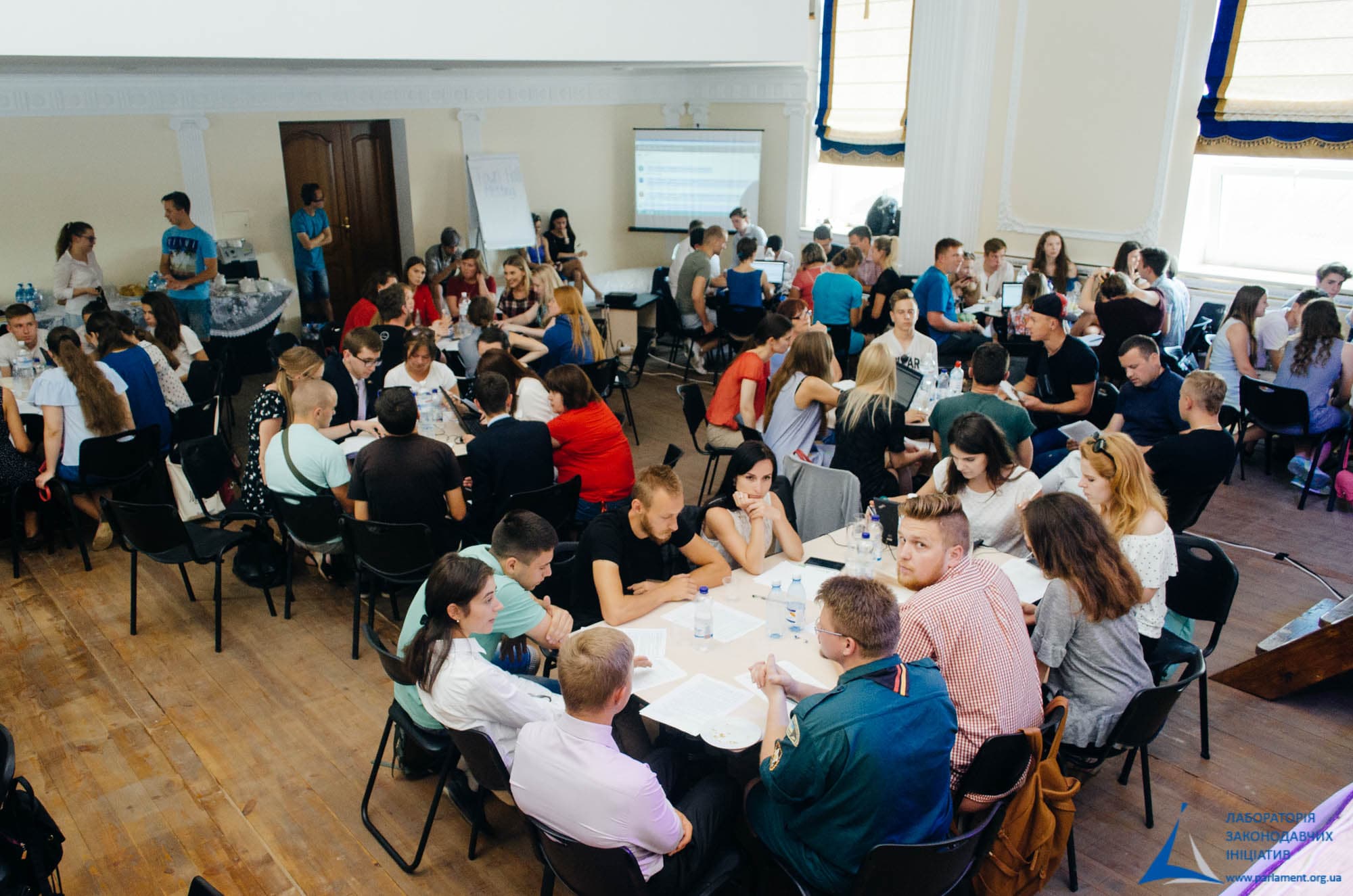
The event was attended by about 110 participants including representatives of youth organizations from Lutsk, Kovel, Novovolynsk; local officials; representatives of Youth and Sports Administration; representatives of Volyn academia; youth from Lutsk, Kovel, and Novovolynsk; and activists.
Photos by Oleksandr Kovalenko
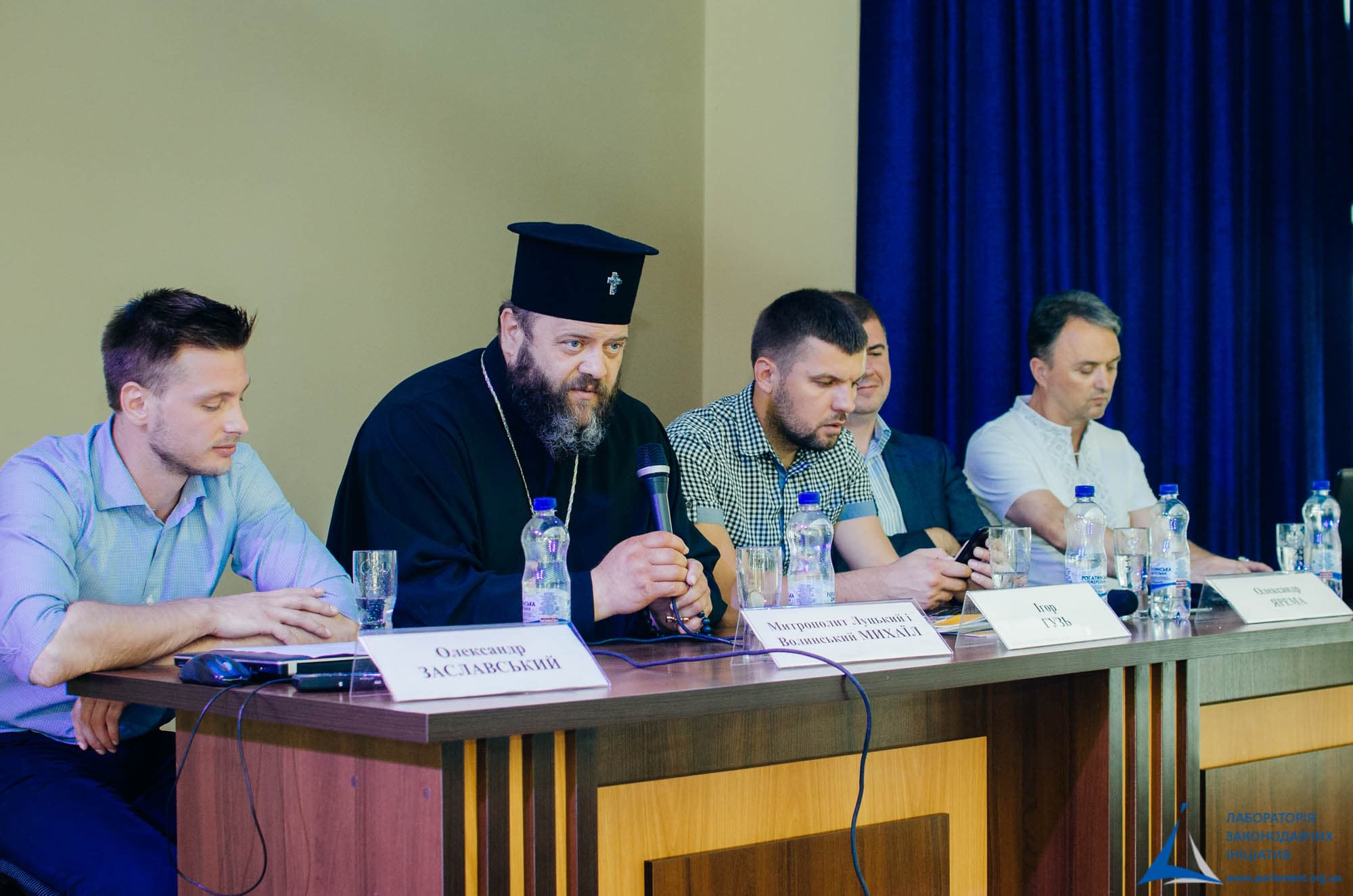
Metropolitan of Lutsk and Volyn Mikhail, Bishop of the Ukrainian Orthodox Church (Kyiv Patriarchate), Metropolitan of Lutsk and Volyn, welcoming the town hall meeting participants on the premises of Volyn Orthodox Theological Academy, observed how many young people attended the discussion of socially important issues. Recalling the words of the Gospel, Bishop stressed that it was better to be either cold or hot but it was very bad to be lukewarm, indifferent, uninterested. Metropolitan of Lutsk and Volyn Mikhail wished young people to be self-sufficient, ambitious, visionary and indomitable; he also expressed confidence that the attendees would surely find answers to their questions precisely because they persisted in looking for them. In addition, Bishop stressed that it was important not just to make a decision but to live according to the decisions that were taken that day.
Photos by Oleksandr Kovalenko
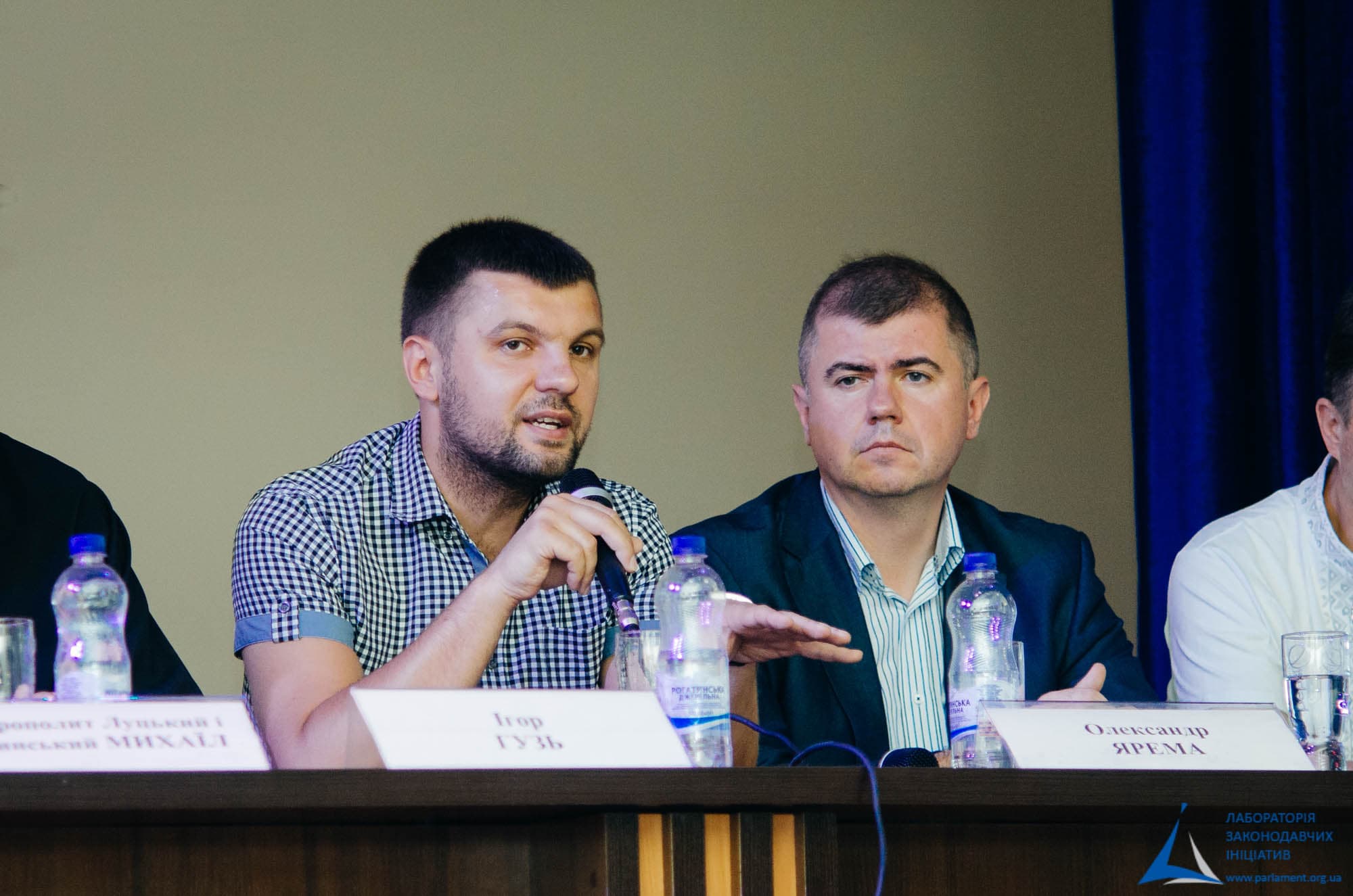
Ihor Huz, MP of Ukraine, Deputy Chairman of the VRU Committee on Foreign Affairs, stressed that the future of our country depended on each of those present in the audience rather than on the president or other officials. It was on the younger generation, their aspirations and beliefs, and their understanding of the role of men in the life of the country that the future of Ukraine depended. Ihor Huz advised young people to avoid complaining and grumbling, and to rely only on themselves. Everyone should contribute to building the future. Mr. Huz also expressed hope that despite the previous failure of voting in the Verkhovna Rada on the draft law on youth centers, it would still be approved and youth centers would be established both at the national and at oblast levels.
Photos by Oleksandr Kovalenko
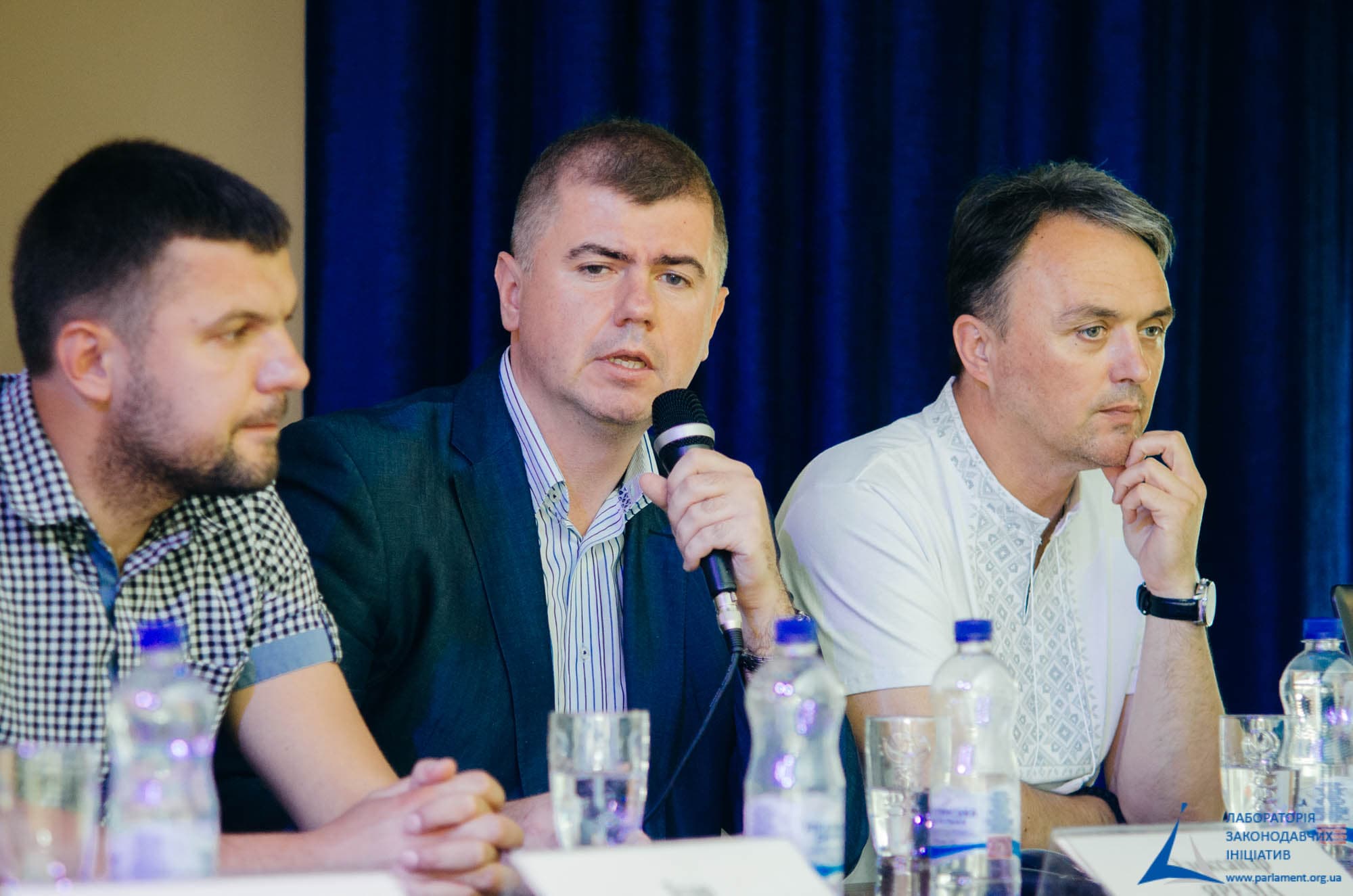
Stressing the importance of town hall meetings devoted to youth policy, Oleksandr Yarema, Deputy Minister of Youth and Sports of Ukraine, raised the question of where young people could fulfill their potential outside educational institutions. Mr. Yarema pointed out that he had in mind a platform where young people could gather, receive information, consult, and create projects that would change the lives of others. This discussion is aimed at ensuring that Ukraine has a future. The Ministry of Youth and Sports has been creating an optimal model of youth work in united territorial communities, which prescribes who, where and based on what resources have to work with the youth. In the near future, the Ministry will hold public events to popularize the experience and practices of youth work in united territorial communities. Mr. Yarema also expressed his conviction that the results of that day’s work would be actively discussed and examined and would be integrated into legislative initiatives supported by his colleagues MPs who were present at the event.
Photos by Oleksandr Kovalenko
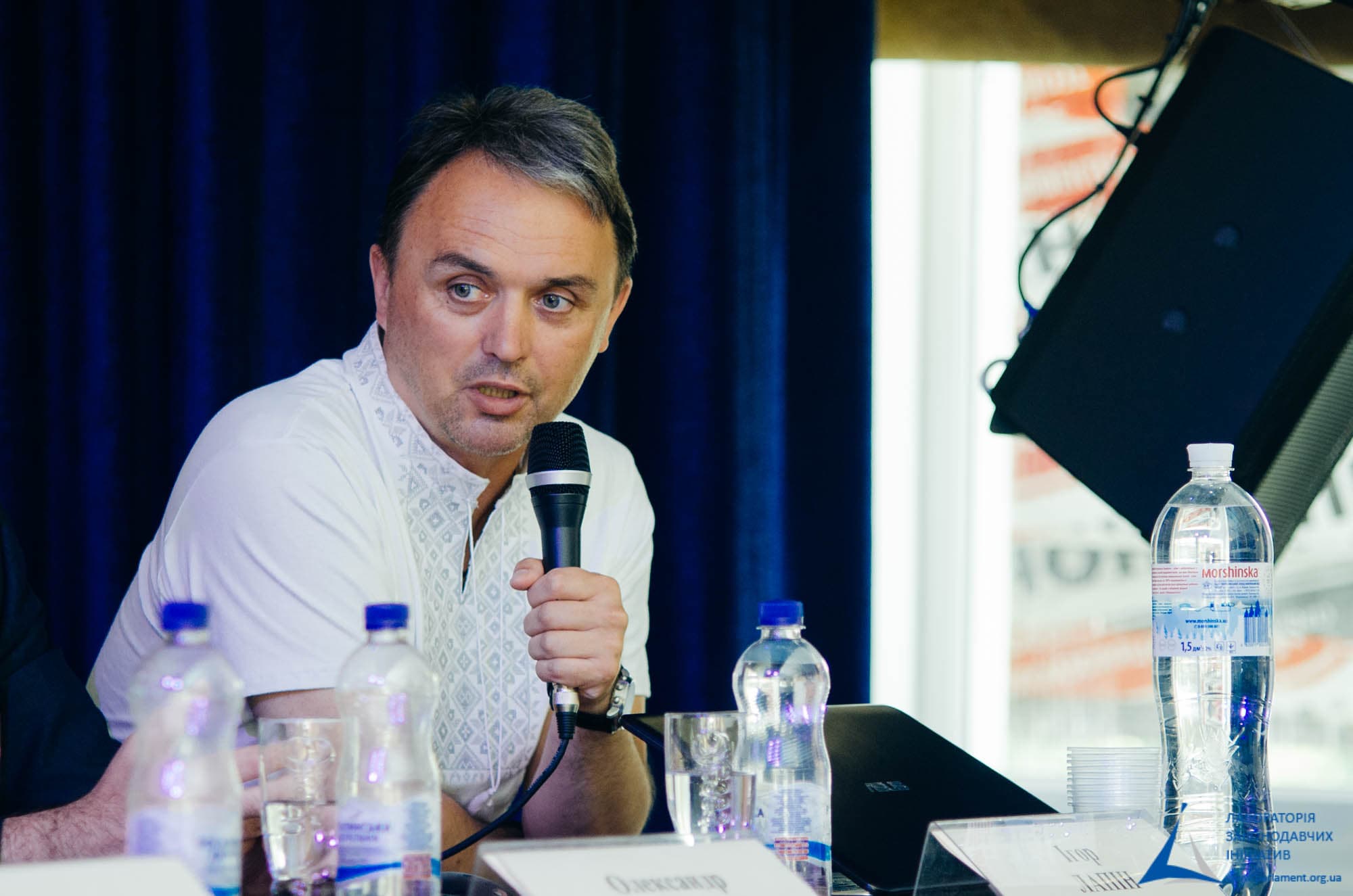
Ihor Lapin, MP of Ukraine, First Deputy Chairman of the Special Control Commission of the Verkhovna Rada of Ukraine for Privatization, stressed the need to talk about Ukraine as the land of our children rather than the land of our ancestors. For these are young people who form the future of the country by actively advocating their beliefs and values. Mr. Lapin pointed out that success can only be achieved by being open and supporting each other. Therefore, thanks to the support of all stakeholders, the law on youth will be adopted and this will open up new opportunities for the effective implementation of youth policy.
Photos by Oleksandr Kovalenko
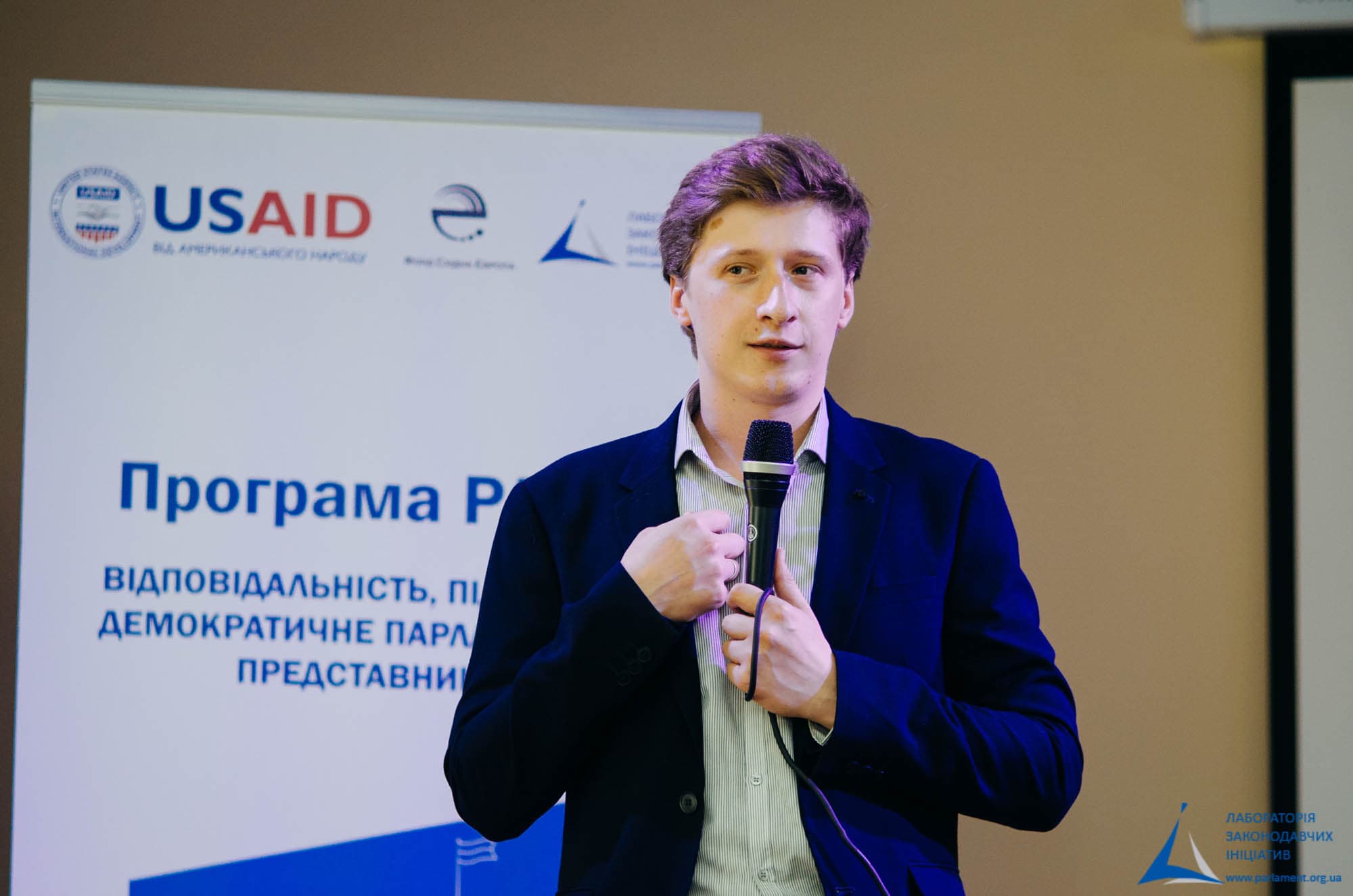
Zakhar Tkachuk, Chairman of the Board of the NGO Youth Platform, director of the Volyn Youth Center, thanked all those involved in the work of the Volyn Youth Center. Explaining the importance of holding town hall meetings, Zakhar Tkachuk emphasized that it was necessary to work convincingly, i.e. by studying the problems the young are facing. This event, which involved a wide range of stakeholders, was conducted precisely in order to find out opinions of young men and women about the youth center and its future development.
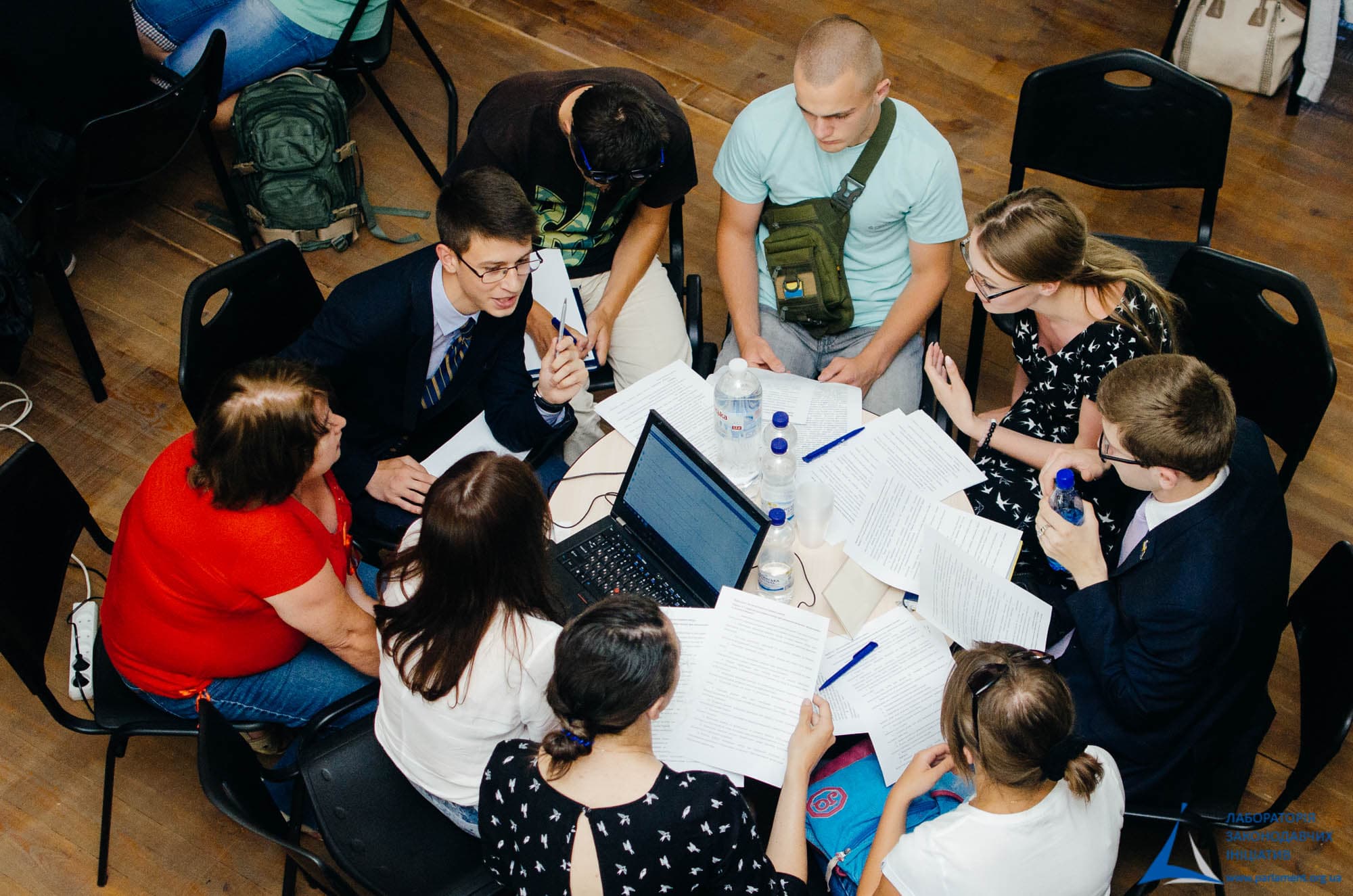
Photos by Oleksandr Kovalenko
During the town hall meeting on the topic “Strategy for Development of the Youth Centers of Volyn oblast”, the participants discussed three issues that concerned communication between youth centers and work among youth with disabilities.
During the discussion on the institutionalization of youth centers, the participants reviewed four scenarios: the first one involved the creation of a municipal youth center; the second included the establishment of a youth center affiliated with an NGO and financed from the local budget; the third scenario implied the creation of a youth center as a structural subdivision of an existing municipal educational or cultural institution; the fourth scenario was about setting a youth center by developing and implementing a project based on a public initiative.
The votes were distributed as follows: the first scenario scored 20.3% of the votes, the second one scored 36.5%, the third one scored 4.1%, and the fourth one scored 39.2%. Thus, by a slim margin the participants chose the option of creating a youth center by developing and implementing a project based on a public initiative.
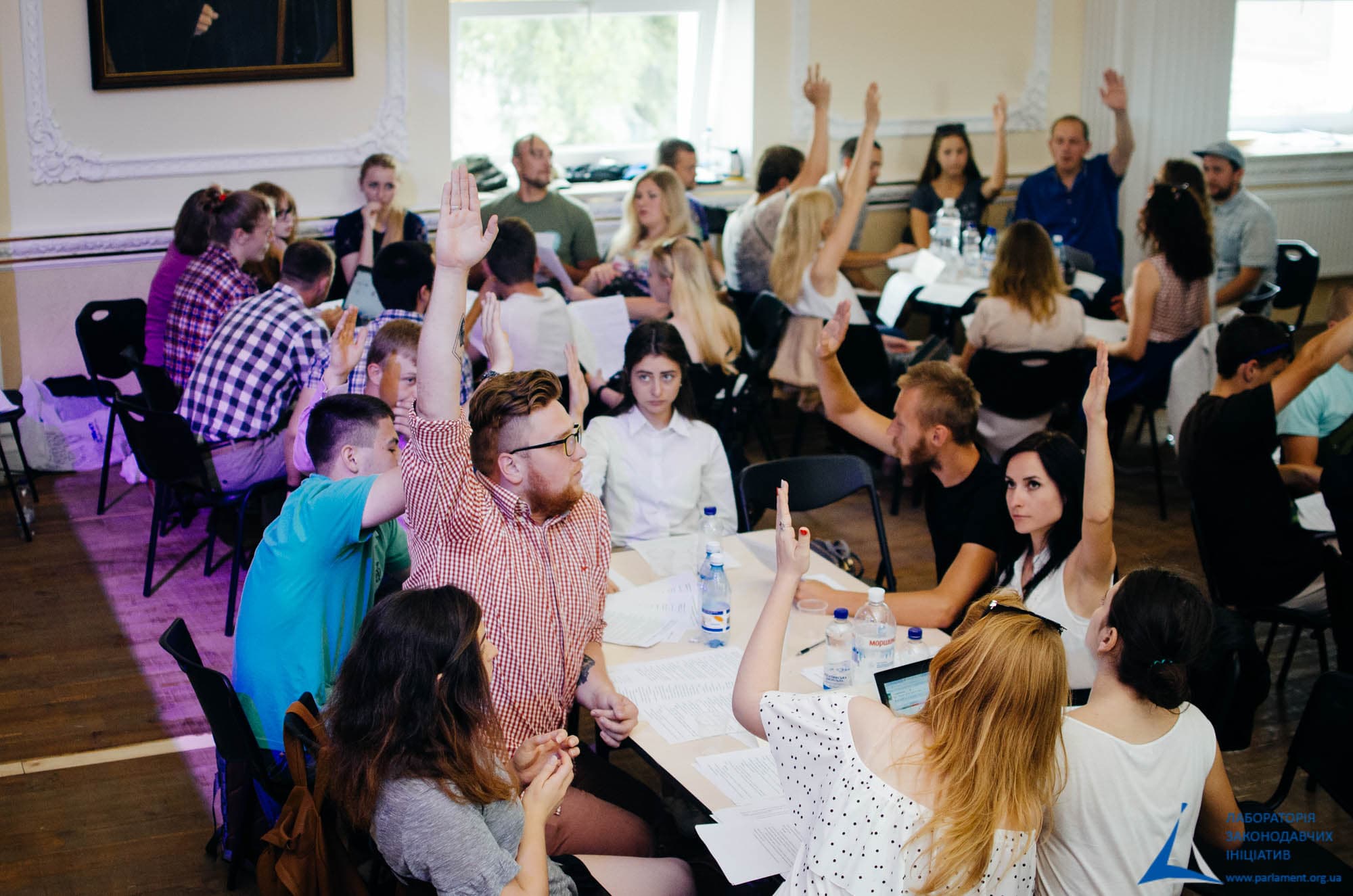
Photos by Oleksandr Kovalenko
Discussing the problem of communication between youth centers of Ukraine, the participants reviewed 4 scenarios, the first of which implied establishment of a coordination council under the Ministry of Youth and Sports of Ukraine; the second one suggested the creation of an all-Ukrainian public organization of employees and activists; the third one was about establishing a professional communication network based on an Internet platform (a volunteer initiative); the fourth one involved the creation of the National Youth Center functioning as an organizational and methodological center of the network.
During the discussion, the participants voted as follows: the first scenario scored 8.3%, the second one scored 27.8%, the third one scored 19.4%, and the fourth one scored 44.4%. Consequently, the participants of the discussion preferred the fourth option, which implied the creation of the National Youth Center functioning as an organizational and methodological center of the network.
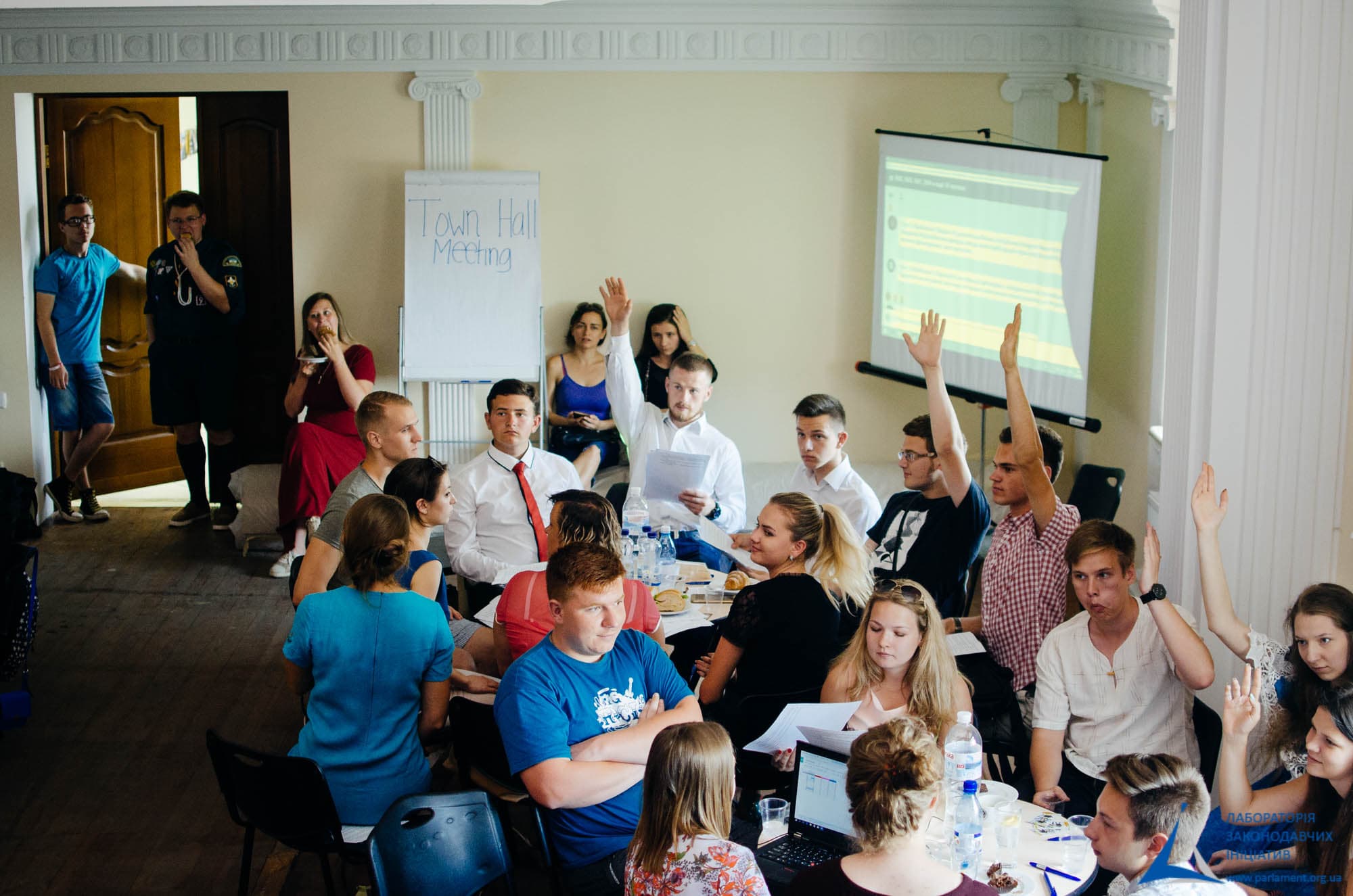
Photos by Oleksandr Kovalenko
Considering the problem of youth with disabilities, the participants discussed 2 scenarios. The first one suggested creating a network of youth centers for work with youth with disabilities in the spheres of social protection, education and health; the second scenario involved the implementation of youth centers programs for youth with special needs.
The participants favored the second scenario. It scored 89.2%, while the first one scored only 10.8% of the votes. It was agreed that the best option was the launch of youth centers programs for work with young people with special needs.
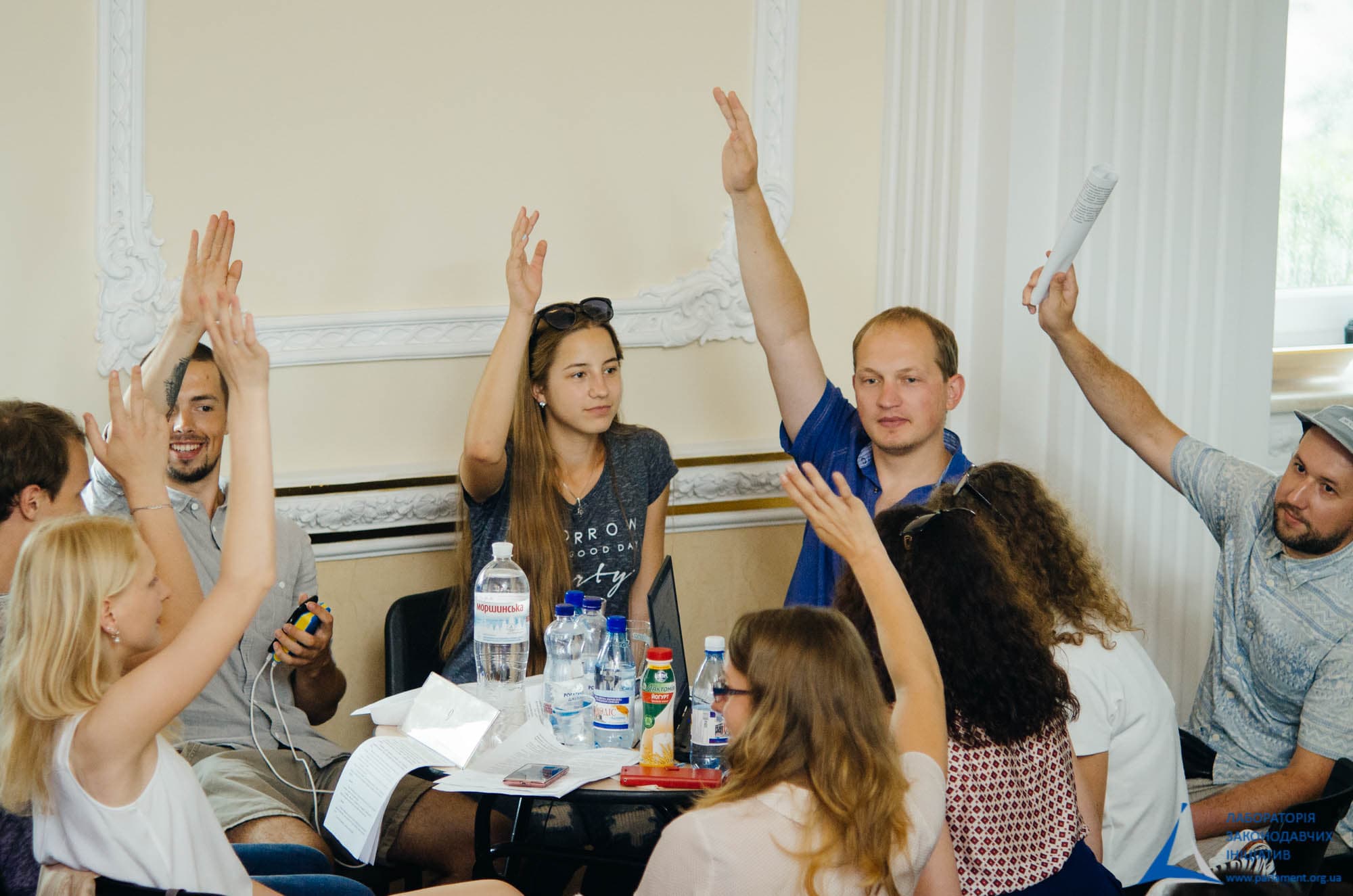
Photos by Oleksandr Kovalenko
The results of the town hall meeting are not legally valid. Ihor Huz will implement the decisions taken in the framework of this discussion within his powers and capabilities as an MP.
Town Hall Meeting “Strategies for the development of youth policy in Zakarpattya region”
On June 15, 2017 in Zakarpattya regional state administration (Uzhgorod city) Town Hall Meeting “Strategies for the development of youth policy in Zakarpattya region” took place.
Town Hall Meetings is organised by the Agency of Legislative Initiatives together with the Interns’ League and the Ministry of Youth and Sports of Ukraine on the initiative of MP of Ukraine Ivan Krulko in the framework of the Model District Project with the support of USAID RADA Program: Responsible Accountable Democratic Assembly, implemented by East Europe Foundation.
Town Hall Meetings provide a competent and effective discussion of any specific issues of public interest and are an instrument for ensuring citizens’ participation in governance.
- Discussion is taking place around prepared scenarios. That is, the event itself following painstaking expert work aims at providing certain options to solve the problem for discussion.
- The discussion takes place in small groups of 10-12 people, involving a facilitator and a note taker. Facilitators help participants in a friendly and casual atmosphere to discuss potential solutions, and note-takers put down the key points of discussion and meaningful conclusions.
- The event is primarily attended by ordinary citizens who are direct stakeholders in the issue being discussed. The results of this event carry no legal weight.
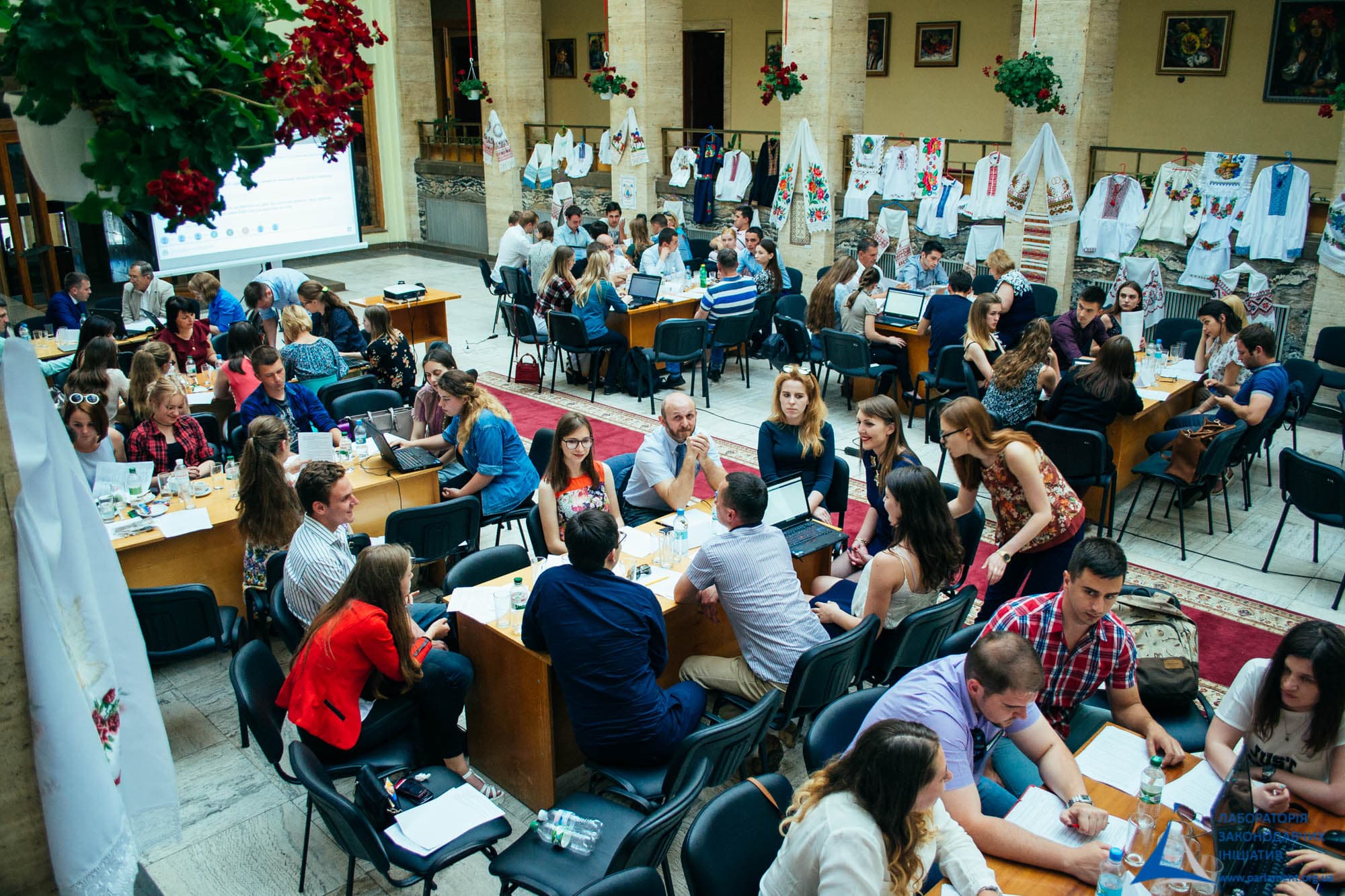
The discussion focused on the issues of the youth age range as an important component of the Law on Youth, creation and development of youth centres, as well as organisation of work with youth with disabilities.
The event was attended by 95 participants, including representatives of youth NGOs, representatives of the Zakarpattya regional authorities, representatives of the education administration, representatives of the youth and sports administration, students of the Zakarpattya State University, youth from the towns of Khust and Mukachevo, and activists.
During the discussion on the issue of creating a youth centre, the participants discussed 4 scenarios, the first of which concerned the creation of a municipal youth centre; the second was focused on the creation of a youth centre under an NGO with financing from the local budget; the third scenario involved the creation of a youth centre as a structural subdivision of the existing municipal institutions in the field of education, culture, etc.; the fourth scenario offered the creation of a youth centre through the development and implementation of a project (on the basis of a public initiative).
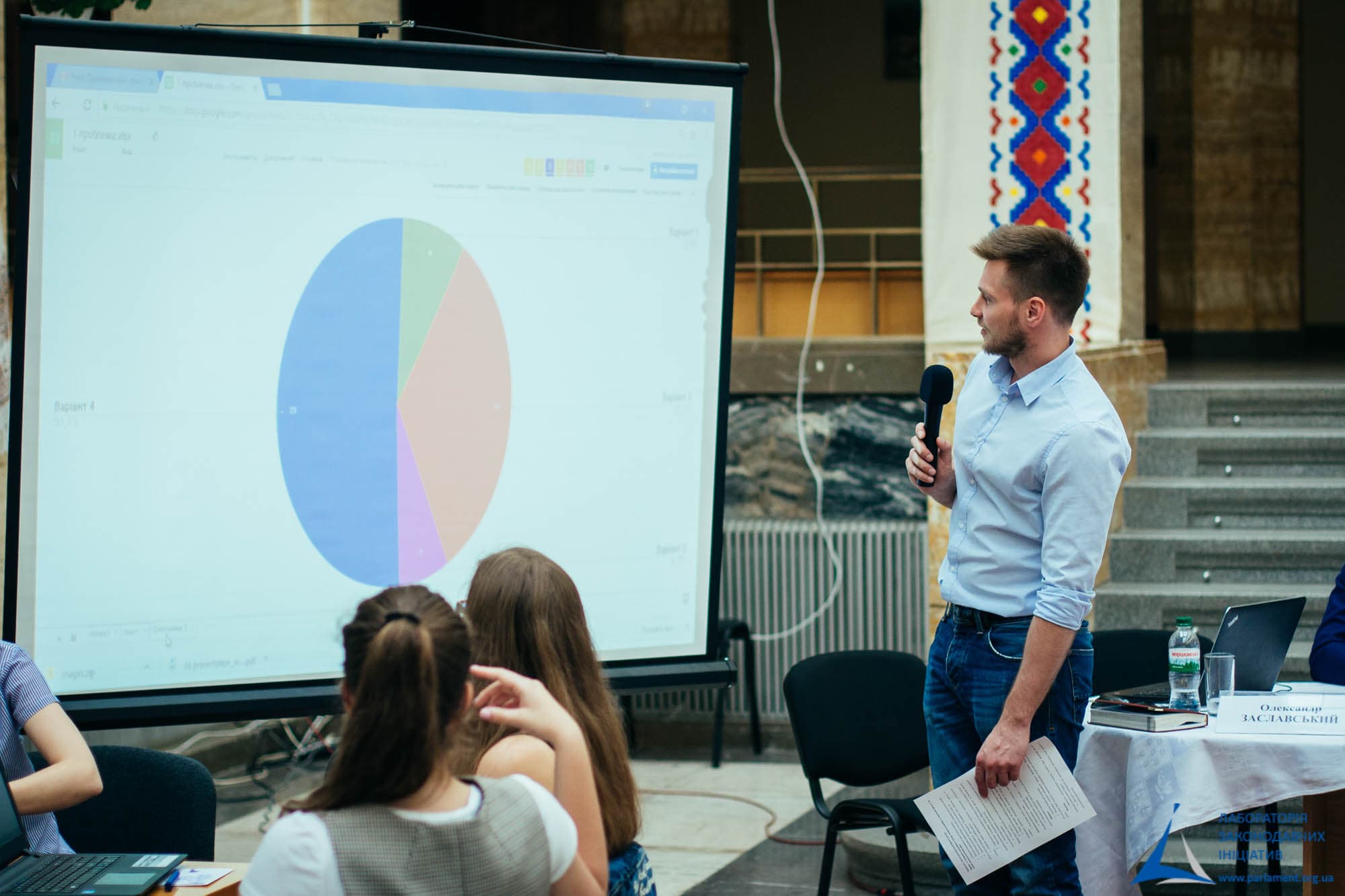
The results of the voting were distributed as follows: the first scenario gained 7.5% of votes, the second – 39.6%, the third – 5.7%, and the fourth – 47.2%. Thus, the participants of the discussion chose the option of creating a youth centre through the development and implementation of a project (on the basis of a public initiative).
Discussing the problem of determining the youth age range, the participants reviewed 3 scenarios, the first of which implied preserving the effective definition of the youth age range as 14-35 years old; the second proposed a dramatic lessening of the youth age range – from 0 to 29 years old; and the third presented a balanced approach that included the definition of the youth age range from 12 to 29 years.
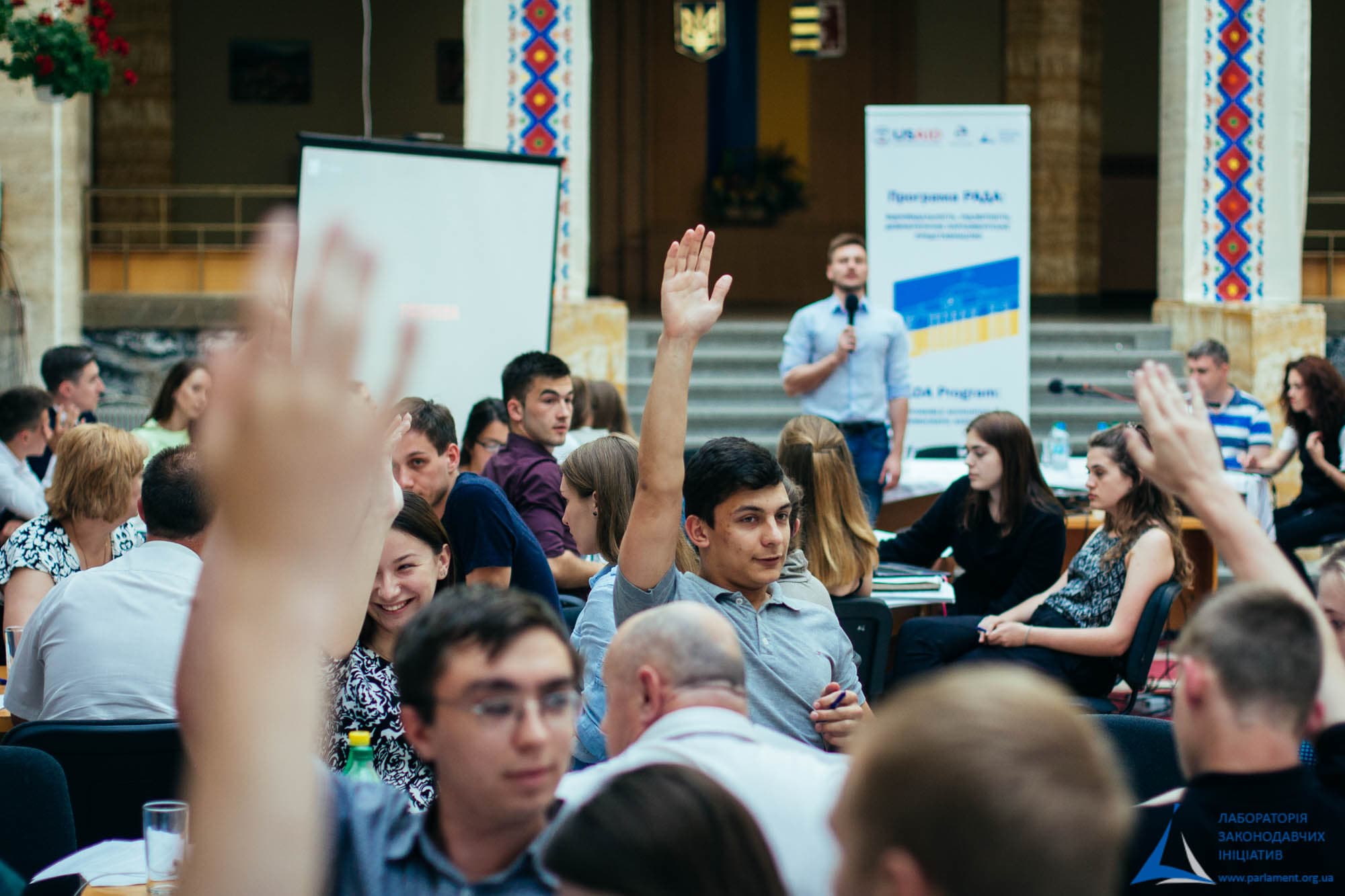
During the discussion, the participants voted in the following way: the first scenario – 48.9%, the second – 23.4%, the third – 27.7%. Thus, concerning the issue of determining the youth age range, the discussion participants preferred the first option, which does not provide for any changes in the current age limits.
Considering the problem of organising youth policy among young people with disabilities, the participants discussed 2 scenarios. The first one proposed the creation of a network of centres for work with youth with disabilities in the areas of social protection, education, and health; and the second scenario implied introduction of programs for centres for work with youth with special needs.
As a result of voting, the participants preferred the second scenario – 68.1%, while the first one gained 31.9% of the votes of the participants. Consequently, it is the introduction of programs for centres for work with youth with special needs that the discussion participants consider the best option for solving the problem of youth policy organisation for youth with disabilities.
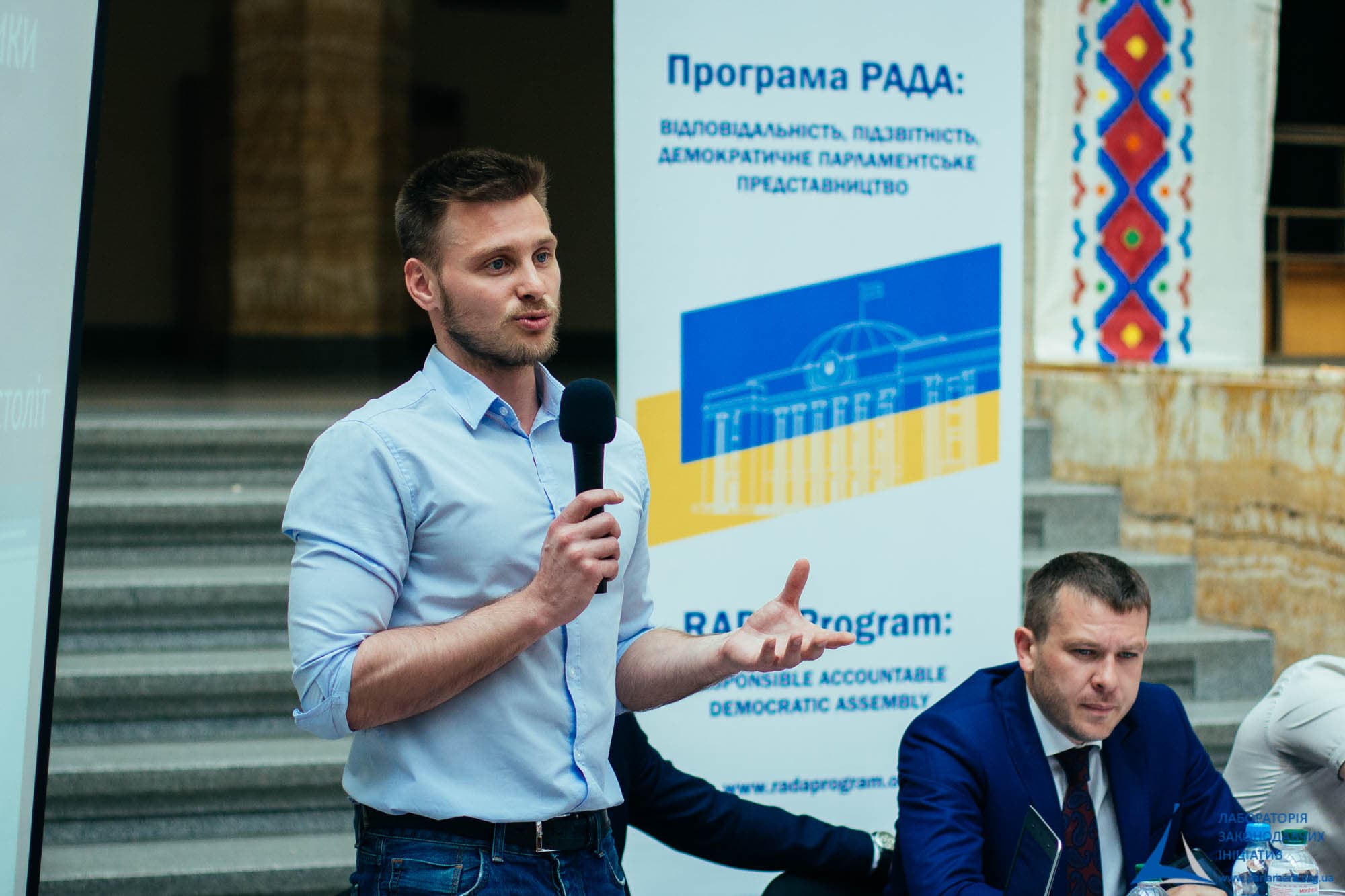
The decision approved during this discussion will be implemented by Mr Ivan Krulko within his powers and competences as an Ukrainian MP.
Town Hall Meeting “Improving the efficiency of utilisation of solid household waste: distribution of the financial burden”
On June 15, 2017 in Zakarpattya regional state administration (Uzhgorod city) Town Hall Meeting “Improving the efficiency of utilisation of solid household waste: distribution of the financial burden” took place.
Town Hall Meetings is organised by the Agency of Legislative Initiatives together with the Interns’ League on the initiative of MP of Ukraine Ivan Krulko in the framework of the Model District Project with the support of USAID RADA Program: Responsible Accountable Democratic Assembly, implemented by East Europe Foundation.
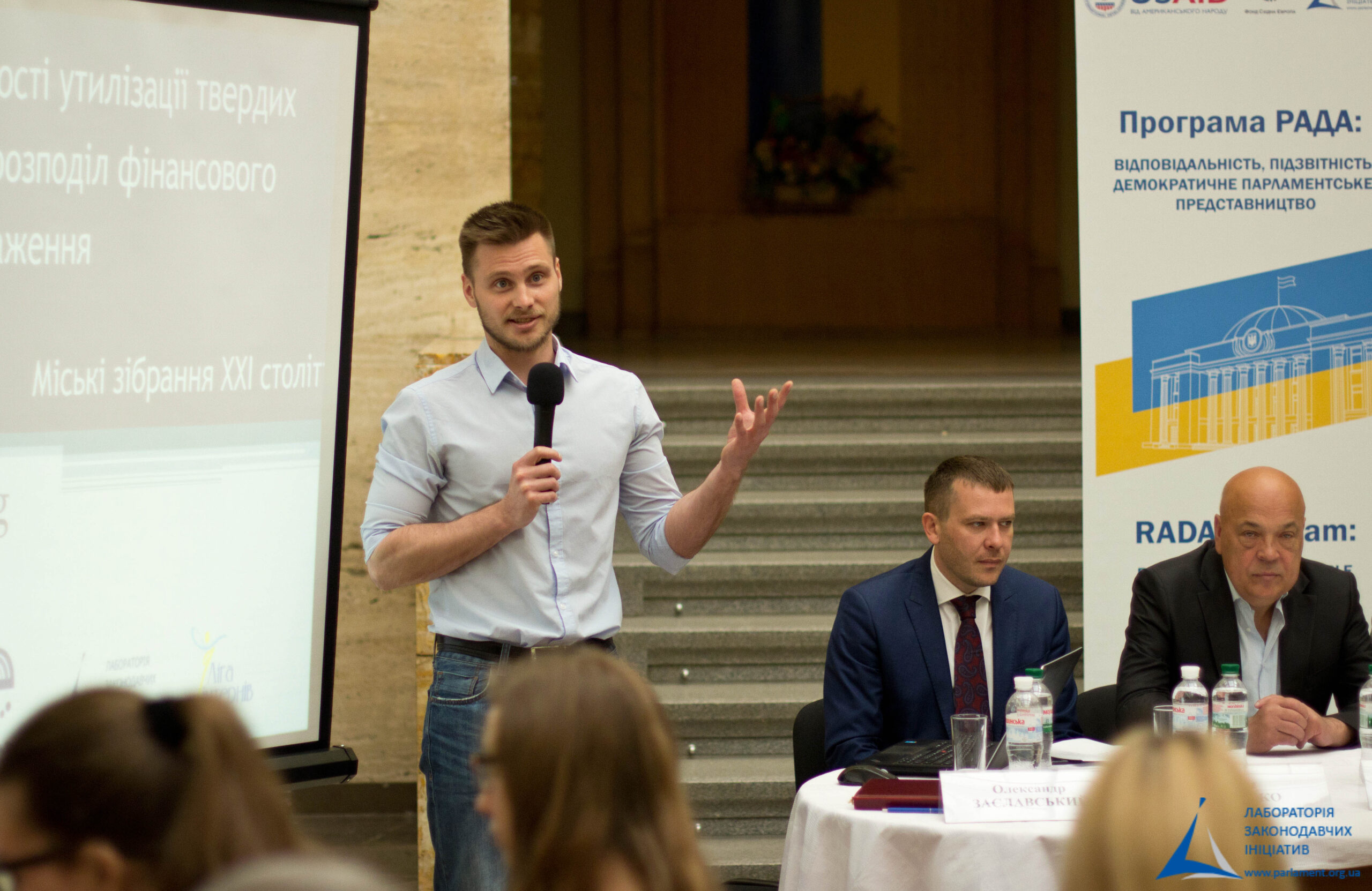
Town Hall Meetings provide a competent and effective discussion of any specific issues of public interest and are an instrument for ensuring citizens’ participation in governance.
1. Discussion is taking place around prepared scenarios. That is, the event itself following painstaking expert work aims at providing certain options to solve the problem for discussion.
2. The discussion takes place in small groups of 10-12 people, involving a facilitator and a note taker. Facilitators help participants in a friendly and casual atmosphere to discuss potential solutions, and note-takers put down the key points of discussion and meaningful conclusions.
3. The event is primarily attended by ordinary citizens who are direct stakeholders in the issue being discussed. The results of this event carry no legal weight.
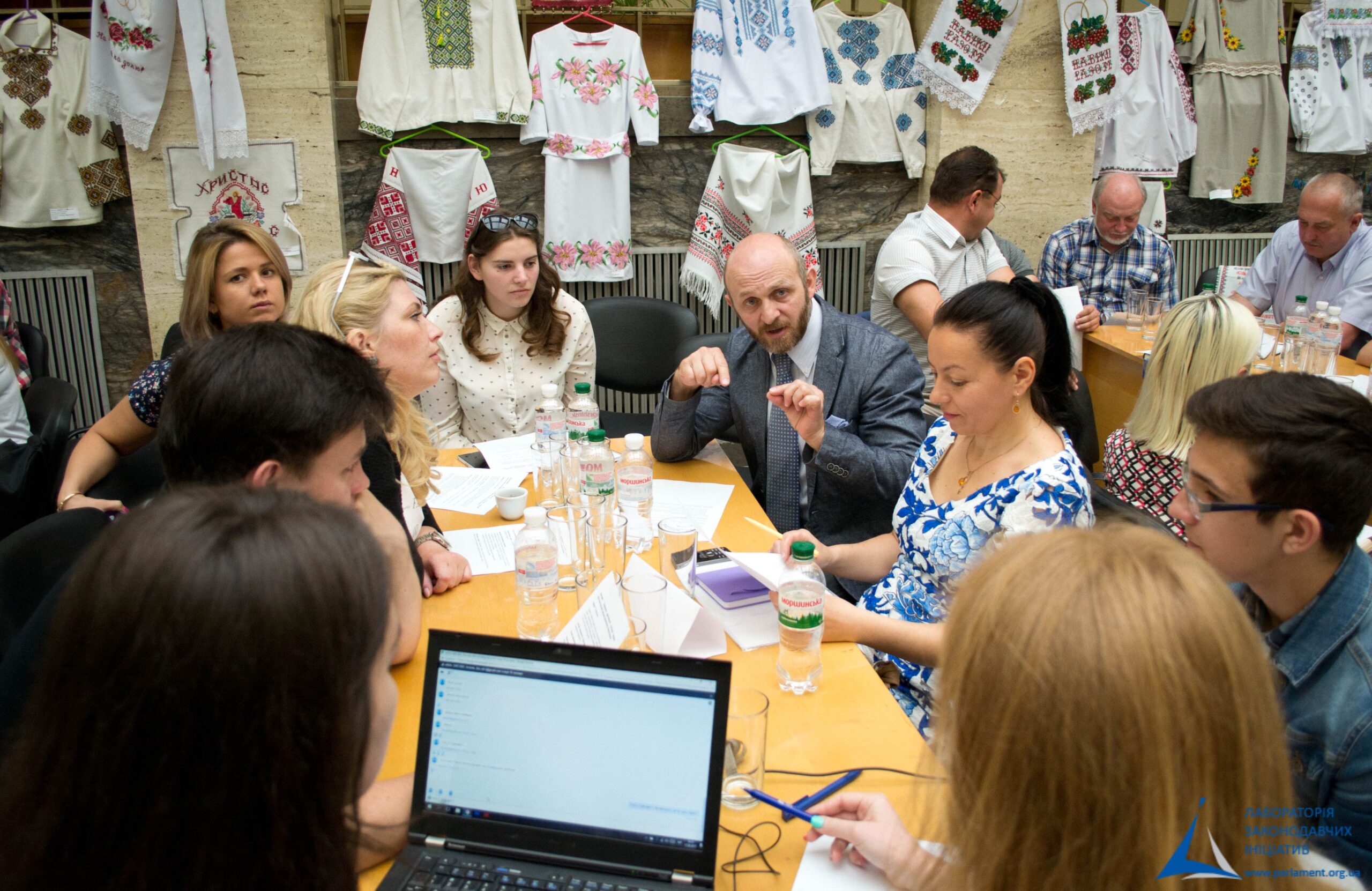
The event was attended by more than 95 participants, including representatives of environmental organisations, representatives of the authorities of the Zakarpattya region, business representatives, youth and activists.
During the discussion of the problem of increasing the efficiency of solid household waste utilisation, the participants considered 3 scenarios, the first of which does not provide for any changes or interference with the current situation of waste disposal; the second and third offer a transition from landfill disposal to an integrated solid waste management system, i.e. its recycling. The second scenario involves the introduction of a special utility tariff for the public to cover waste disposal costs; while the third scenario imposes the financial burden on the producers of solid household waste rather than on consumers.
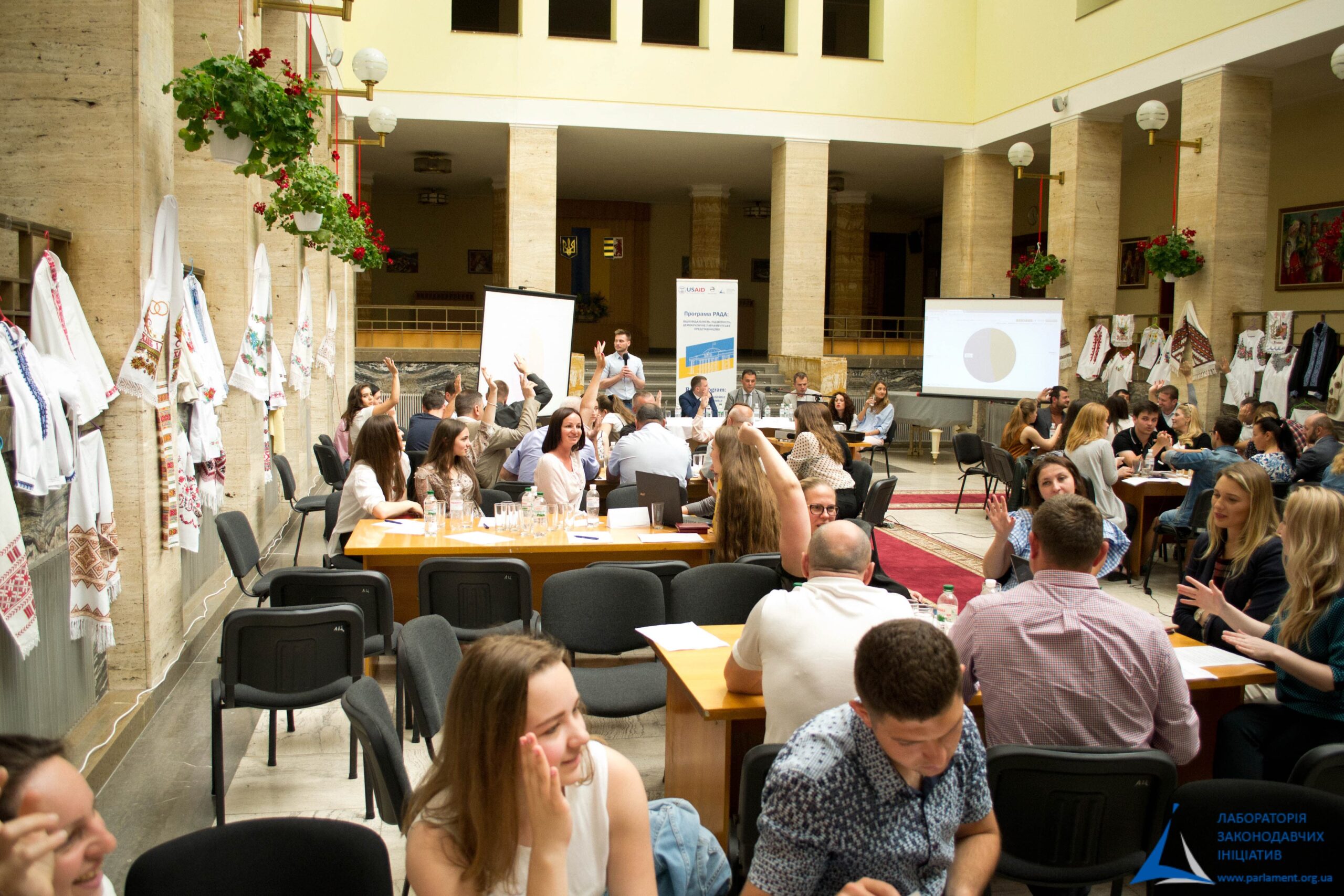
As a result of the discussion, the participants voted for implementation the third scenario – 72.9%; 27.1% of participants chose the option of introducing a separate payment in the household bill for the utilisation of solid household waste; and no participant supported the first option, which does not provide for any changes.
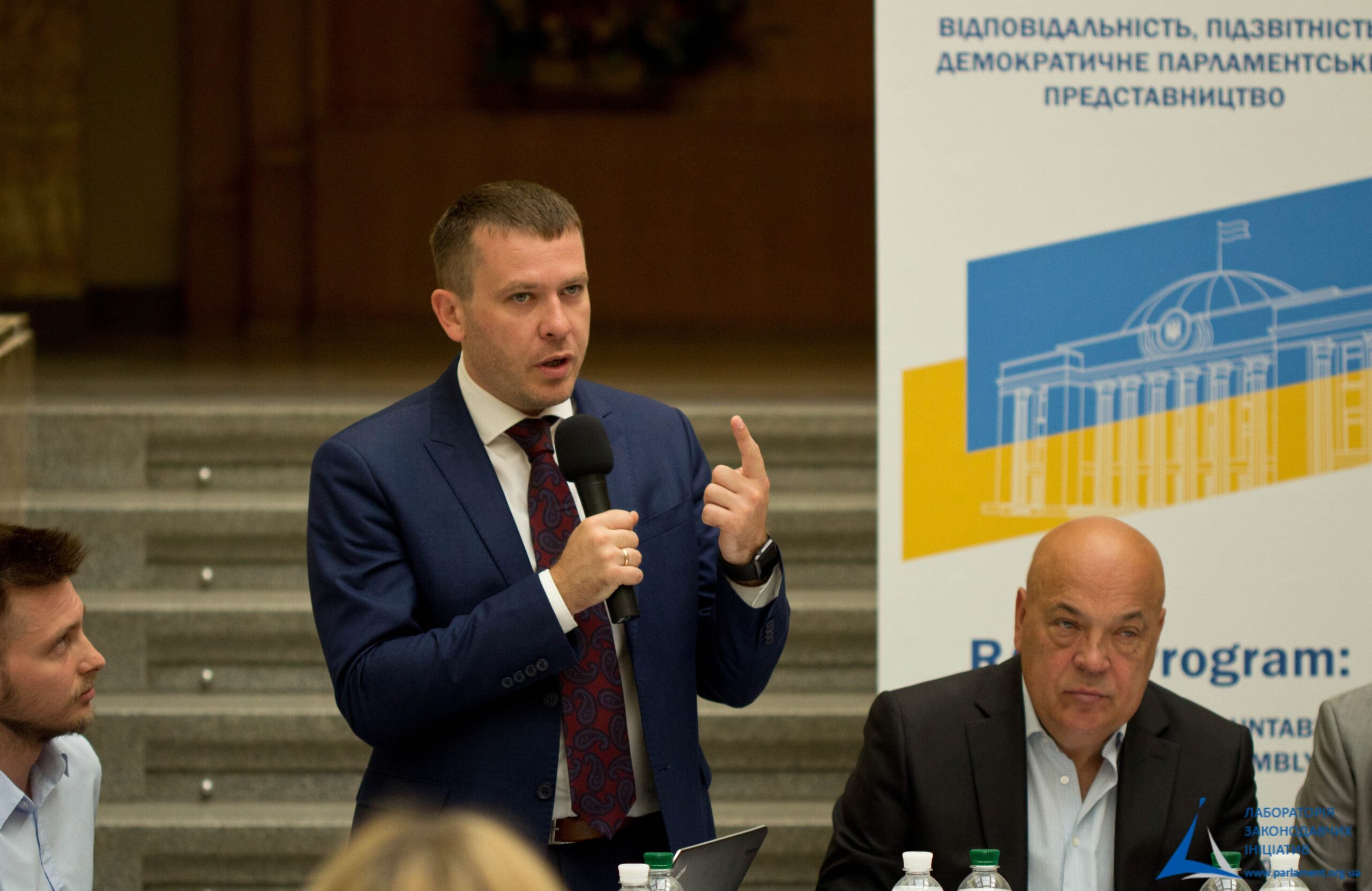
The decision approved during this discussion will be implemented by Mr Ivan Krulko within his powers and competences as an Ukrainian MP.
Trainings for Town Hall Meetings’ facilitators and notetakers
The training was organized by the Agency for Legislative Initiatives in cooperation with the League of Interns within the framework of the USAID RADA Program: Responsible Accountable Democratic Assembly, implemented by East Europe Foundation.

Oleksandr Zaslavskyi, Deputy Chairman of the Board, Agency for Legislative Initiatives, presented the mechanism and experience of holding city meetings, and also stated the purpose of the training:
“The USAID RADA Program aims to make the activities of the parliament and deputies more transparent, predictable, responsible, as well as to establish communication between deputies and voters. Town Hall Meetings, in particular, is one of the innovative tools aimed at achieving this goal. This year, we decided to engage in the training facilitation experts as coaches in order to train future facilitators to properly negotiate with the participants of the discussion. Traines will also teach how to improve the interaction between facilitator and note-taker, which is necessary for receiving informative notes during the discussion. Thease notes can be analyzed after the event and based on these data to work out a solution”
The participants of the training gained the skills of professional facilitation of the discussion and together with the trainers-facilitators of the NGO “Institute for Peace and Common Ground” worked out an algorithm for working with scenarios and a sense return exercise, a powerful tool for conducting constructive dialogue.
The practical part of the training was aimed at mastering and applying the acquired knowledge in practice. During the simulated city meeting each participant had the opportunity to try him- / herself as a facilitator and a note-taker, as well as to participate as an ordinary citizen to discuss the problem of “Parliamentary reform: finding ways to reduce legislative spam and prevent non-personal voting. The scenarios for the probem discussion were deeloped by Oleksandr Zaslavskyi and Volodymyr Khryzhanivskyi, Senior Advisor at USAID RADA Program, Member of the Parliament of Ukraine (I convocation).
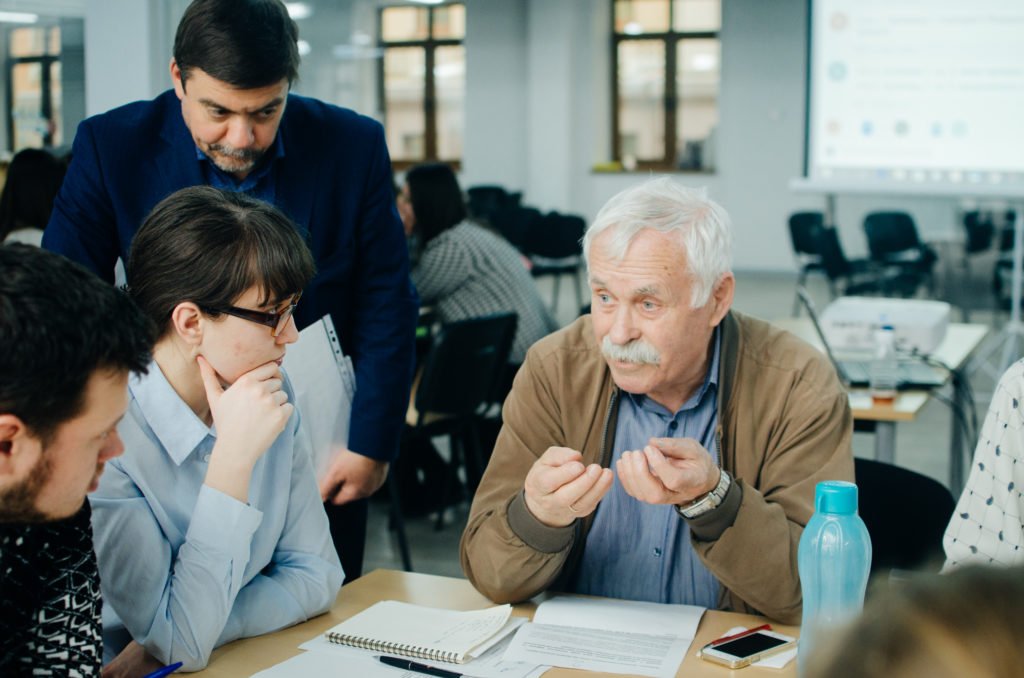
60 participants took part in the training and will partiiapte in Town Hall Meetings scheduled for 2017. Volodymyr Khryzhanivskyi noted that mastering of the facilitation method of work in groups can be considered successful:
“The atmosphere of work was lively, all the participants were engaged as much as possible in the discussion. The methodology forcees the active work of all participants, who must keep track of the entire course of events during each scenario discussion. It is great that a day before the participants got general information about the issues to be considered. This approach allowed almost immediately to work in groups, without spending much time examining the problem”
Photos: by Oleksandr Kovalenko
Conference “The Rise of “Left” and “Right” Forces: the Collapse of Democracy?”
On December 20, 2016, the Opera Hotel (Kyiv, 53, Bohdan Khmelnytsky Str.) hosted the conference “Rise of the ‘Left’ and ‘Right’ Forces: Curtailment of Democracy?”. During the event, directors and graduates of the Schools of Political Studies from Azerbaijan, Belarus, Bulgaria, Armenia, Georgia, Moldova and Ukraine, representatives of civil society and international organizations discussed the results of recent elections in Western Europe and the Eastern Partnership countries.
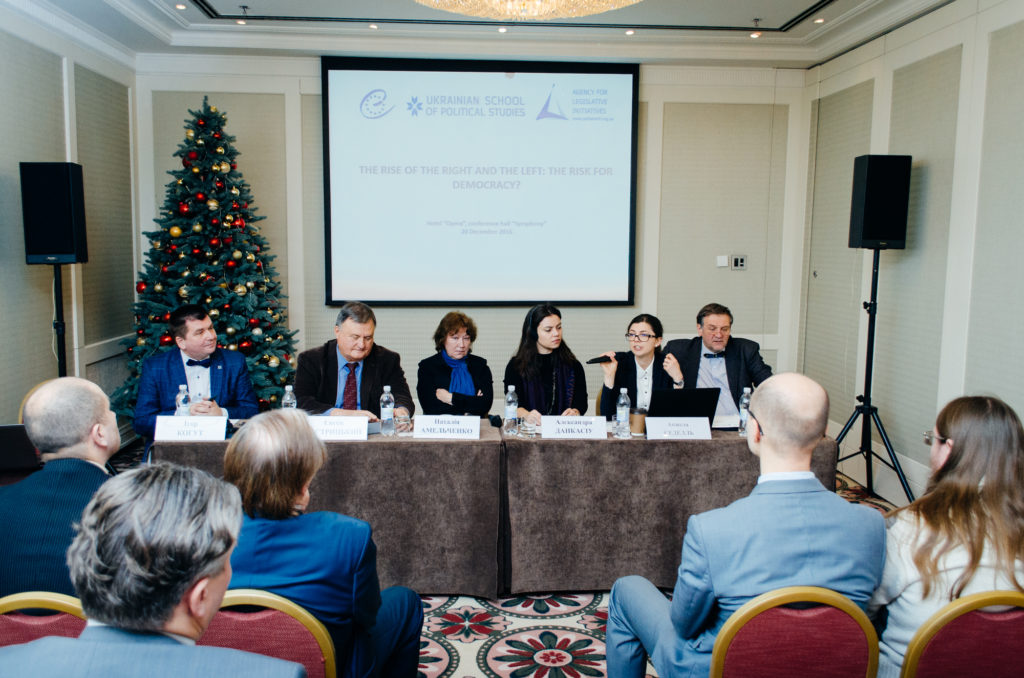
The conference was organized with the support of the Division of Electoral Assistance and Census of the Directorate General II – Democracy of the Council of Europe. It was aimed at improving the quality of democracy via the dialogue between the Eastern Partnership countries and at discussing the processes that contribute to the decline of democracy.

The panel discussion of the conference “Rise of the ‘Left’ and ‘Right’ Forces: Curtailment of Democracy?” was dedicated to global trends in consolidated democracies. It invited guests and participants to reflect on the crisis of ideologies and parties, causes of the rise of the “right” and “viability” of right-wing ideologies among Ukrainian voters. The conference was opened by the Honorary Director of the Ukrainian School of Political Studies Ihor Kohut, who urged the participants to reflect on the challenges facing Ukraine, EU and Eastern Partnership countries after the elections in Moldova and Bulgaria and the risks that the upcoming election in France might be fraught with.

Yevhen BYSTRYTSKY, PhD, Head of the Department of Philosophy of Culture, Ethics and Aesthetics of the Institute of Philosophy of the NAS of Ukraine, who started the first panel, voiced the opinion that there are representatives of leftist ideas in Ukraine, but at the moment they are not an organized political force. They insist that there is no freedom of speech in Ukraine. In addition, such representatives argue that there is no space in the media where one could express their thoughts. He also noted: “There are certain things that have contributed to the revival of the neoconservative wave. I’m talking about the elections in Hungary and Poland, where nationally-driven right forces have consolidated, and the election of Trump. In fact, the conservative wave has captured voters in America”. He added that one of the factors contributing to this was the conflict of worldview and ideological interests. “In Europe, it is a response to the dangers that have arisen: refugees, Russia’s pressure, and the imposition of sanctions. It is also important to mention the wave of resistance to financial and industrial globalization. For instance, at the beginning of the XXI century the European world is full of local conflicts that are cruel and devoid of respect for human rights. They involve confrontation aimed at destruction of another culture”.

Natalia AMELCHENKO, PhD, associate professor, lecturer of the Department of Political Science, National University of Kyiv-Mohyla Academy, started her speech by pointing out to problems with identifying the ideologies of political parties, particularly in Ukraine, because we use old terms and try to impose them onto new phenomena. She argued, “Today, classical ideologies are in crisis. The neoconservative wave has existed before and exits now. Today the challenge is to survive it.” The speaker went on to say that few of voters, in fact, read the statutes of the parties. The statutes are read only by students who are studying these issues. They exist only for the purpose of registration and contain no clear ideology. The program of the political party Batkivshchyna (Fatherland) contains the notion of subsidiarity, but the media and talk shows are not aimed at explaining significant problems to the public, rather they exist to create an image of the politician”.
Oleksiy HARAN, Research Director of the Ilko Kucheriv Democratic Initiatives Foundation, pointed out that in the world there was a global tendency of populism, including left-wing populism. In Ukraine, the niche of the Left is vacant and there is a need for a normal left-wing Ukrainian party. “We live in the period after the collapse of the USSR and the end of the Cold War. What we now see as the total slippage of democracy has already happened in history. Europe and its capitalism have manifested great adaptability. The PACE, which adopted our position in the European Parliament, gave an example how to establish relations with socialists. Yes, there is a crisis, but we should not underestimate the potential of Europe, which we can also develop here,” Mr. Haran said.
Angela SEDELL, Senior Researcher at Oxford University, reminded that on June 24, 2016, Britain announced its withdrawal from the EU based on the results of the referendum. “Britain was divided into 2 camps – those who campaigned for and against Brexit. Proponents of remaining in the EU appealed to expert opinions and economic arguments. Everything suggested inflation, uncertainty in doing business, and a decline in economic growth. Their opponents said that if we left the EU, 350 million euros (EU contributions) would be transferred to the public health care. Surveys say that this message was decisive,” commented Ms. Sedell. She added that populist messages such as the restriction of migration to Britain had proved to be very effective. Consequences include the decline of the national currency and trust in the law, British Constitution and European treaties. According to Ms. Sedell, the referendum put the authority of judges and parliament in question. Another result is the mistrust of voters.
Alexandra DANCASIU, political analyst at Go-Governance (Austria), began her speech as follows: “We see many politicians talk about fear, hatred, threats, appealing to emotions rather than objective facts. We heard Trump emotional speeches during his campaign and things he appeals to now during his winner tour. Now he tells his voters things that run contrary to what he promised.” According to Alexandra, today many people can vote, but we do not have real political debates and not all voters can join them, as it used to be before. True debates do not take place because many people do not even vote. Are those who vote well-informed? Is it legitimate for them to elect politicians? Is this still the choice of the majority? Alexandra emphasized that democracy tries to gather all points of view and work out a long-term strategy. Only before elections politicians think what they should do to remain in position.
“Democracy still guarantees equality, the right for everyone to express their opinion, freedom, human rights. But if we do not make an effort to find ways to reach out to the people who are not involved in the political debate, we will lose them and populists will be able to come to power”
“It’s very difficult to understand what people want, but they are not happy. So they are protesting, and populists take advantage of it. Today’s politicians need to think in a contemporary way, using technologies (Facebook, Instagram), generating a political dialogue, and engaging the public in the discussion”


Panel II was dedicated to the “rollback” of democracy based on the results of elections in the Eastern Partnership countries and close neighbors of Ukraine. The moderator of the session, Alexander Dabravolski, urged the speakers to share their views on the popularity of “left” ideas as a result of the Soviet legacy or demand for a fair social distribution.

Olga MANOLE, coordinator of the Human Rights Program, coordinator of civic and electoral education of Promo-LEX Association (Moldova), as a member of an organization that monitors elections in Moldova, began her speech by saying that the last presidential election in Moldova in November 2016 differed from all previous elections as soon as politicians relied heavily on false and populist arguments broadcasted through the media. Candidates appealed to traditions used propaganda and backing of the church to receive support from voters. In this election they did not rely on administrative resources and bribes as heavily as before. In comparison with the parliamentary election of 2014, the electoral process in Moldova has improved a lot. Ironically, however, the methods which were used to achieve the improvement still involved an influence on voters. In this respect, the intervention of the church was especially aggressive. Olga said, “There is a probability of canceling the results of the presidential election because the gap between the candidates is very small.”
Yevhen RADCHENKO, Development Director of the NGO Internews-Ukraine, said that based on statistics there was a major shake-up among those elected to Parliament in Belarus, among old politicians in particular. It indicates a certain trend. He also suggested focusing on the situation in Armenia and the referendum of 2015, when Armenia became a parliamentary republic. “The parliamentary election of 2017 will take place on a proportional basis, and in 2018 the president will be elected in three rounds by the parliamentary assembly,” said Mr. Radchenko. He further argued that the referendum, which was held in Azerbaijan on September 26, made the power of Ilham Aliyev absolute and gave him the right to appoint the first vice president and two vice-presidents, who are essentially his economic advisers. According to Yevhen, these actions undermine the importance of Parliament. Mr. Radchenko concluded his presentation with the thesis that Europe and the Eastern countries were immersing in authoritarianism and the crisis of democracy.

Anastasia DARAFIEIEVA, Chairwoman of the Belarusian Green Party, alumnus of the East European School of Political Studies (Belarus) said that the results of this election campaign were new to Belarus. Two opposition candidates entered the parliament. “Europe is interested in maintaining stability in Belarus and taking steps to simulate democracy. This is an alarming signal that attests to the depreciation of European values,” said Ms. Darafyeyeva. Civil society is the only thing that can change the current political situation; the only way out for these representatives is to become actors and go to the level of decision-making. In Ukraine, the left-wing party niche is vacant, but there are people who could unite into such a party. “There is a lack of vision. What parties can do is to give a vision. In the situation with the EU, we are witnessing a crisis of values and vision in part because it has been implemented. Similarly, in the post-Soviet countries, there is a demand for an ideology. This should be a vision of the future based on the processes of the present.”
Hennadii MAKSAK, Chairman of the Board, Head of the Foreign Policy Council “Ukrainian Prism”, USPS alumnus, started with the fact that the Eastern Partnership countries had 2 systems: corrupt and authoritarian-oligarchic. “In Belarus, there are appointments rather than elections, there is no decent control over local elections, and OSCE commissions keep telling about that. In Moldova, there was a vote, socialists won, but sometimes they used pro-Russian methods again. In Armenia, before the parliamentary election it was clear which 2 parties would be in power. Under such conditions, the president said he would rather be the head of a party than president”, he added. According to Mr. Maksak, it would be better to without disguise about the lack of democracy or substitution of concepts. In Armenia, there is a platform for public initiatives they want to close. Unfortunately, in Azerbaijan civil society activists are behind bars.

Panel III actualized the concept of gender in politics as an indicator of democratization and the role of women in the democratic process.
Olha VESNIANKA, human rights activist, journalist, USPS alumnus, said that it was very difficult to talk about gender equality and its legal implementation in European countries. There is a large number of human rights organizations operating in the field of discrimination in Ukraine. Talking about Ukraine, we need to remember the sexist statements of former President Yanukovich and Prime Minister Azarov, whose Cabinet was known as the “Cabinet without women”. Instead of ratifying the Istanbul Convention, the Verkhovna Rada of Ukraine initiated meaningless discussions on the topic of “What is gender?” The Verkhovna Rada of Ukraine believes that it is not important to talk about a camp for those who suffer from violence. Ukraine’s goal was to reach the indicator of 30% of women in politics, but at the moment the percentage of women in the Verkhovna Rada of Ukraine is only 12%.
Olha AIVAZOVSKA, Chairwoman of the Board and Coordinator of Electoral and Political Programs at the Civil Network OPORA, representative of Ukraine in the political subgroup of the Trilateral Contact Group on Donbas, USPS alumnus, said that after the decentralization most of the money would stay in regions enabling women to take seats in local councils. Women in Parliament work more, preparing initiatives and providing feedback.
Parliament or any council should represent people, but this is impossible without gender and ethnic equality. In any negotiation, 25% must be women protecting the rights of women. Woman can work effectively also in military affairs. Pregnancy or gender are only pretexts for paternalistic attitudes. Talking about quotas, there are many different stances. Germans believe that “the quota principle creates quota women”. However, only the countries that have no problems can afford to say that. There are stupid women and men in Parliament. I do not agree that men are smarter than women. But it is certainly true that women do not have the same access to resources as men. If a party goes to politics to increase resources rather than champion voters’ interests, it is sure to be interested in players who have more resources, and usually these are not women. The question of the openness of political funding directly concerns the quality of staff and the gender issue. If the party receives money from citizens and the country, it will not be interested in whether a candidate has a million or not. Many parties take into account the issue of gender. I’m not a fan of the topic of womankind, but I’m a fan of the issue of quality of people. In fact, this is the same as with people with disabilities – if we do not see them on the streets, it does not mean that they do not exist.
Valentina POLIEVIKOVA, Manager of the East European School of Political Studies, founder and Chairwoman of the Belarusian Women’s Party Nadzieja (1994-2002), stated that a lot of stereotypes and patriarchal attitudes still persist in Belarus. Women need help not only in fighting discrimination but also in engaging in the decision-making process. Belarus has only 2 female mayors. Some people do not believe in the effectiveness of gender quotas; unfortunately, we do not have even this in Belarus. However, having studied the experience of the implementation of territorial quotas, we can see that the more women work, the more they vote for women because they understand their problems.

Participants of Discussion platform IV debated on the role of media in the shaping and consumption of populist messages in Western Europe, Eastern Partnership countries, and Ukraine.
The platform was moderated by Vitaly Portnikov, observer of the Radio Liberty, who stressed that the real danger wasn’t Trump’s words but rather his failure to act on them. Therefore, in the next election greater promises and populism will prevail. This is a question of the direction of movement – to new responsibility or to a triumph of irresponsibility.
Serhiy HAIDAI, Strategic Planning Director at the social engineering agency Haidai.Com, believes that we live in a new world and don’t have to struggle with it. The only thing we need to do is to improve the culture of information consumption. Why have we begun to separate form and content? If you are not a populist, you should create a new influential form. I would rather stop pushing the panic button and get down to developing new technologies.

Andriy ANDRUSHKIV, Coordinator of the project “Reform of Public Finance Control Use” at the NGO Center UA, USPS alumnus, spoke about the PR strategies of NGOs whose messages always appealed to emotions. He noted that in order to avoid this, we should improve the level of media culture among citizens.
Ivan HODARSKI, media and legal issues consultant at MEMO 98 (Slovakia), pointed out that fake news did not emerge yesterday. The main reason for their appearance is a lack of critical thinking, which is the main skill to counteract propaganda.
Vitaliy MOROZ, Head of the New Media Department at Internews-Ukraine, stressed that journalism today is not as exclusive as it used to be several years ago. This has both advantages and disadvantages. The former include the fact that journalists can use many new media.
Andriy PROKOPENKO, Managing Partner at Prokopenko and Partners, political Management, USPS alumnus, summed up all the speeches and emphasized the importance of promoting a higher level of media culture not only among journalists but also among the public.

Conference photo gallery can be accessed on the USPS Facebook page. Photographer – Oleksandr Kovalenko.
New Draft Laws Appeared on the Public Bills Discussion Portal
The first three draft laws appeared for discussion on the Public Bills Discussion Portal, launched in November, 2016, with the support of USAID RADA Program: Responsible, Accountable, Democratic Assembly, implemented by the East Europe Foundation, at the initiative of Computer Systems Office of the Verkhovna Rada of Ukraine Secretariat, namely Draft Law 2295a On Public Hearings and Draft Laws 5144 and 5144-1 On Lobbyism.
We urge all interested parties to contribute to the discussion of the draft laws en bloc or their individual provisions!
The Public Bills Discussion Portal allows citizens to get acquainted with the bills that are to be submitted to the Verkhovna Rada of Ukraine and are under consideration by parliamentary committees, as well as participate in their discussion.
The Public Bills Discussion Portal was developed in response to the recommendations of the European Parliament concerning internal reforms of the Verkhovna Rada of Ukraine in order to improve its institutional capacity and encourage wider public involvement in the legislative process.
Presentation of the Shadow Report “Experience with Local Referendums in Ukraine as an Element of Local Democracy”
On November 24 the shadow report “Experience with Local Referendums in Ukraine as an Element of Local Democracy” was presented in Chernihiv. The presentation took place within the framework of a working group meeting at the Subcommittee on Elections and Referendums of the Committee of the Verkhovna Rada of Ukraine on Legal Policy and Justice.
The meeting was organized by the Agency for Legislative Initiatives in cooperation with MP Oleksandr Chernenko, co-chair of the Subcommittee on Elections and Referendums, within USAID RADA Program: Responsible Accountable Democratic Assembly implemented by the East Europe Foundation.
An opening speech was delivered by Valerii Kulich, Head of Chernihiv Oblast State Administration.


Tetiana Chernukha, project coordinator of the Agency for Legislative Initiatives, presented the results of a study on the practice of initiating and conducting local referendums in Ukraine from 1991 to 2012 (i.e. during the period when law No. 1286-12 On National and Local Referendums dated 1991 was in force).


Another speaker Maksym Latsyba, Ukrainian Center for Independent Political Research, Director of USAID “Citizens in Action Project”, made a presentation on “Legal Framework for Mechanisms of Local Democracy”.


Shadow reports are a method, new to Ukraine, to communicate information and policy alternatives regarding the implementation of government programs to the public.
Presentation of Shadow Reports in committees of the Verkhovna Rada of Ukraine is part of the project carried out by the Agency for Legislative Initiatives within the USAID RADA Program: Responsible Accountable Democratic Assembly implemented by the East Europe Foundation.
Медіа-галерея заходу
Presentation of E-Tools for the Public in Chernihiv
On November 24, 2016, the Chysta Polityka (Pure Politics) Press Center in Chernihiv hosted a presentation of new electronic resources that help make Parliament more transparent – the Portal for Public Discussion of Draft Laws and the Electronic Register of Non-Governmental Organizations (E-Register of NGOs).

Фото: Олександр Коваленко
Oleksandr Zaslavskyi, Deputy Chairman of the Board of the Agency for Legislative Initiatives, had a 1.5-hour talk with Chernihiv activists and interested residents of the city discussing how these resources could help involve the public in discussing draft laws before they are submitted to the specialized committees of the Verkhovna Rada and contribute to effective cooperation with the committees themselves.

Фото: Олександр Коваленко
The Portal for Public Discussion of Draft Laws was designed and prepared within the USAID RADA Program in cooperation with the Secretariat of the Verkhovna Rada of Ukraine in accordance with the recommendation of the European Parliament Mission on internal reform and capacity building of the Verkhovna Rada.
The Portal will become a communication link between the staff of committees, MPs, expert groups and the public in order to improve the national legislation. The resource provides the opportunity for a committee to initiate a public discussion of a draft law and for the public to initiate a discussion. In the future, it is planned to expand the possibilities of the portal: for example, to involve only a certain category of people, first of all experts, by setting certain filters.
In order to be included in the Electronic Register of NGOs, designed by the Agency for Legislative Initiatives, it is necessary to fill in the form.
Participants took an active part in the discussion asking critical questions and making suggestions on how to improve these electronic tools.
Town Hall Meeting “Organization of the Urban Space in Mykolayiv”
On November 21, on the premises of the restaurant “Stargorod Nikolaev” in Mykolayiv-city was held a Town Hall Meeting on the topic “Organization of Urban Space in Mykolayiv. How to Make Soborna Street More Comfortable for Residents of the City”. The event was organized by the Agency for Legislative Initiatives with the help of Mykolayiv Development Agency and Interns’ League, with the support of Western NIS Enterprise Fund and USAID.
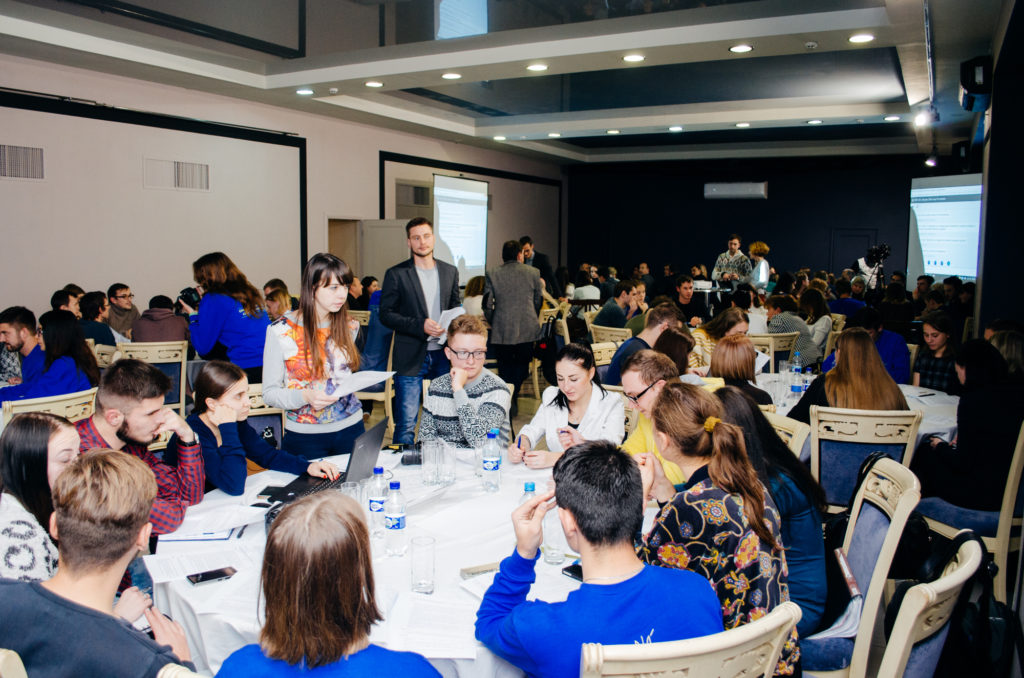
Photo: Oleksandr Kovalenko
Almost 150 residents of the city were looking for answers to the following questions:
- setting up temporary constructions for trade and entertainment services,
- setting up various types of advertising inventory (bill-boards, street lights, banners, posters, mobile stands, etc.),
- changing the original facade appearance in violation of the State Building Regulations.
Opening the event, Oleksandr Zaslavskyi, Deputy Chairman of the Agency for Legislative Initiatives, spoke of experience with Town Hall Meetings, which come from the US, and practical cases of its application in Ukraine.
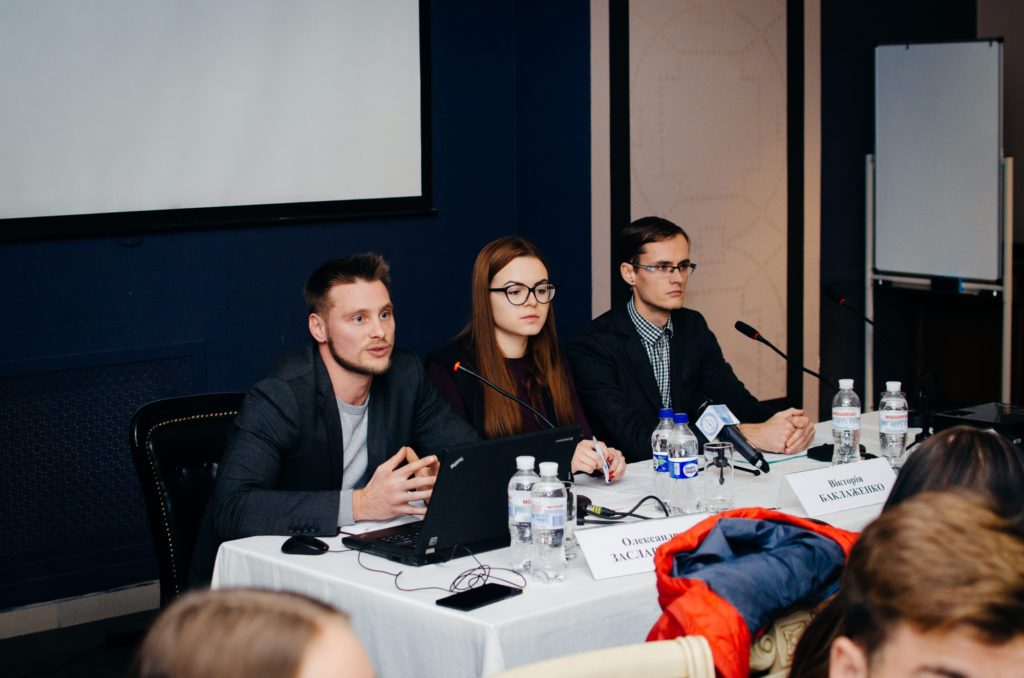
Photo: Oleksandr Kovalenko
The participants worked in small groups at the desks, accompanied by moderators and note-takers (secretaries), and analyzed opinions via the local network – comments and suggestions were displayed on screens.
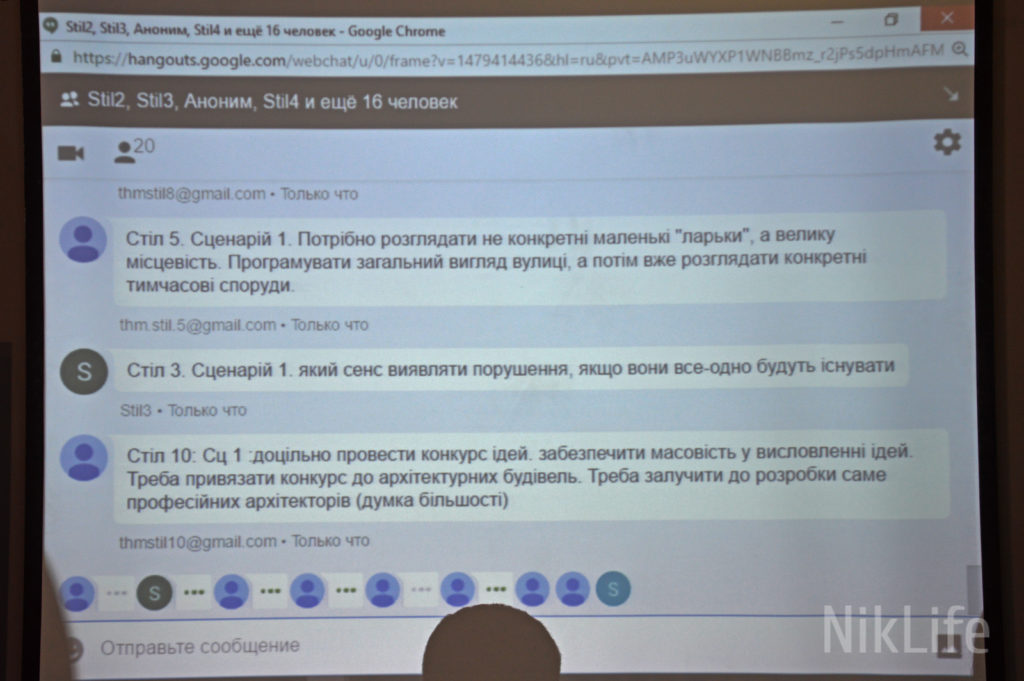
Photo: Oleksandr Kovalenko
They discussed scenarios that had been developed with the assistance of Yevhenii Poliakov, expert from the State Architectural Construction Inspection in Mykolayiv oblast, who actively contributed to the work by helping the participants understand all the city-planning intricacies.

Photo: Oleksandr Kovalenko
Yevheniya Dulko, Project Manager at Mykolayiv Development Agency, said the following:
“The scenarios are not that fundamental because we, together with experts, tried to draw up something realistic rather than re-invent a wheel; we relied on the experience of other cities and legislation of other countries. It is impossible to demolish, dismantle, and ban everything; it does not work that way. Therefore, the scenarios are realistic and close to the real Mykolayiv, which has its own history and traditions”

Photo: Oleksandr Kovalenko
Сценарії до обговорюваних проблем
Scenarios for discussion
Problem No. 1
Excessive number of randomly located temporary constructions for trade and entertainment services on Soborna Street
• Option 1
• Option 2
Problem No. 2
Advertising on Soborna Street
• Option 1
• Option 2
Problem No. 3
Change of original facades by private owners of apartments and premises
• Option 1
• Option 2
Voting results:

Problem No. 1

Problem No. 2

Problem No. 3
Медіа – галерея заходу