
The Vice-President Is Gone — Long Live the Head of the Chancellery?
The issue of appointing a new Head of the Office of the President (OP) has receded to the margins of the political agenda while President Zelenskyy is fully immersed in the negotiation process. This, however, has not stopped political commentators, journalists and others from speculating about who will ultimately take the helm of the OP. In parallel, Ukrainska Pravda reports that the President has resumed communication with Andrii Yermak.
Despite this, the moment of ‘office interregnum’ should be used for a kind of after-action review. In other words, we propose to look at the institution of the Administration/Secretariat/Office of the President in a broader perspective and through the prism of international experience, and to examine what, in fact, could function differently with a change in the Head of the OP. And, ultimately, whether there is an institutional problem within the power triangle or a traditional ‘excess of executive discretion’.
What Is the Office of the President (or How Was It Designed)?
The Office of the President of Ukraine is a permanent auxiliary body of the Head of State; it is an institution that replaced the Presidential Administration in this capacity in 2019. Officially, the Office of the President is positioned as an advisory and analytical, communications and organisational centre that ensures the functioning of the Head of State. Formally, the Office of the President does not adopt political decisions, is not a body of executive power and may not assume the functions of the Government or Parliament.
Its main tasks include analytical work, coordination of communications, oversight of compliance with diplomatic protocol, interaction with public authorities, preparation of the President’s documents and administration of working processes. Given the constitutionally defined duties and powers of the President of Ukraine, the Office must possess strategic-level expertise in the fields of national security, international relations, interaction with public authorities and related areas.
What, then, constitutes the basis and legal framework for the establishment and functioning of this auxiliary body? Obviously, it will come as no surprise that the Constitution of Ukraine provides the basic answer to this question, in the part that defines the powers of the President and the apparatus that ensures their exercise. Article 106 of the Constitution sets out the exclusive powers of the Head of State: defence, national security, international policy, appointment and dismissal of a number of officials, submission of draft laws to the Verkhovna Rada of Ukraine (VRU), signing adopted laws and exercising the right of veto. Although the Constitution does not contain a separate article on the Office of the President, it is precisely the scope of the President’s powers that necessitates the establishment of an apparatus to ensure the performance of these functions, and paragraph 28 of Article 106 explicitly states that the President ‘establishes, reorganises and dissolves consultative, advisory and other auxiliary bodies and services’.
What Does an ‘Auxiliary Body’ Turn Out to Be in Practice?
If the Office of the President operated strictly within the limits of its formal tasks, the figure of its Head would hardly be an object of such a level of public attention. However, Ukrainian politics and the architecture of power systematically demonstrate weak institutional development. As a result, situations repeatedly arise in which the actual influence of a specific official often exceeds their formal mandate. The Head of the Office/Administration/Secretariat of the President is a classic example of this phenomenon.
At the same time, the same statement is fully applicable to the position of the President of Ukraine itself: everyone who has held it, perhaps with the exception of Leonid Kravchuk, has in one way or another sought to increase their level of influence, expanding their constitutional powers in a non-constitutional manner. The Administration/Secretariat/Office has precisely been the auxiliary instrument that enabled this ‘expansion of influence’.
We will not delve too deeply into history. Primarily due to an entirely obvious fact: the Constitution in the 1996 version granted the President of Ukraine powers close to those of the head of the executive branch. As a result, during the presidencies of Leonid Kuchma and Viktor Yanukovych, the Head of the Presidential Administration was the ‘right hand’ of the Head of State and a key management hub through which personnel decisions, political arrangements and a significant part of state strategies passed.
However, the more recent framework of the constitutional reforms of 2004/2014 also provides examples of the President’s influence and that of their auxiliary body beyond constitutional powers.
During the presidency of Viktor Yushchenko, the Administration was renamed the Secretariat, ostensibly to emphasise the renewal of both the auxiliary body’s functionality, with an apparent focus on ‘clerical functions’, and the Head of State himself. In practice, however, the Secretariat became a centre for the formulation of presidential decisions that went beyond the framework defined by the Constitution: from the appointment and dismissal of heads of regional and district state administrations without government submissions to overwhelming the Government with hundreds of decrees on virtually any matter.
Under Petro Poroshenko, the Presidential Administration effectively performed the functions of a political headquarters, a decision-making centre and a coordinator of key policy areas. For example, in 2016, it was the President and his Administration who became the key architects of the judicial reform.
With the launch of the OP in 2019, the ‘unloading’ of the institution and its depoliticisation were declared, but in practice, it became an even stronger centre of decision-making concentration, albeit within a new, more informal architecture. At the same time, several groups of claims can be identified that have regularly appeared in the media space regarding the OP and its leadership.
- Excessive lack of transparency and concentration of power. According to journalists, key decisions were made within a narrow circle without the necessary communication with the Government, Parliament and/or the expert community. This gave rise to conclusions about ‘manual governance’, politicisation and the personalisation of processes that should have been institutional in nature. This category also includes a subcategory relating to personnel decisions. Appointments of ministers, heads of law enforcement bodies and top officials often appeared to be personal arrangements and the construction of a vertical of loyalty rather than a systemic approach based on professionalism and achievements.
- Conflicts of interest and issues of trust. Certain publications highlighted corrupt links, informal or improper influence, which cast doubt on the impartiality and professionalism of the decisions taken.
- Parallel ‘centres of power’ and a struggle between towers. Publications often described internal conflicts between different groups of influence within the OP, which led to blocked decisions, ineffective coordination and information contradictions. This category also includes materials related to communication crises surrounding sensitive issues.
How can such a media discourse around the Office of the President and its leadership be explained? The Regulation on the OP contains a rather broad range of functions of a strategic nature, from analysing the situation in the world to providing expertise on adopted laws and developing its own legislative initiatives. The structure of the body, in fact, reproduces the architecture of the executive branch: so-called ‘sectoral’ units are responsible for the development of specific authorities. As a result, despite the declared ‘minimalist’ concept of the Secretariat/Office/Administration of the President, which would be limited solely to organisational matters, it has in practice turned into a ‘fourth’ branch of power alongside the legislative, executive and judicial branches.
The Office of the President became not merely an analytical or advisory body. It turned into a bridge between the President and the entire system of government and often into a de facto filter for access to decision-making. In the presence of a presidential ‘mono-majority’ in Parliament, this created such an imbalance in the system of checks and balances, such an over-centralisation and personalisation of power, that the Head of the Office of the President began to be informally referred to as a ‘Vice President’.
If the OP is viewed from this perspective, it becomes clear that the history of scandals, accusations of ‘grey cardinal schemes’, conflicts of interest and information wars between different ‘towers’ within the presidential circle is the result of a convergence of historical preconditions, a structural flaw in the architecture of power and specific political realities, rather than of individual personalities. In this sense, it can be argued that the role and place of the auxiliary body and the extent of influence of its Head are determined by the governing style of the President himself, within the limits permitted by the legislative framework.
What Does International Experience Say about Advisory Bodies Attached to the President?
In Ukraine, in the search for a ‘proper recipe’ for any reform, reference is traditionally made to ‘best international practices and standards’. We, however, propose to look at international experience in regulating and operating auxiliary bodies attached to the president, bearing in mind the identified problem and its genesis in Ukraine.
Globally, there is a wide range of models for organising presidential offices, apparatuses, administrations and secretariats, ranging from purely administrative and support structures to powerful political decision-making centres.
In parliamentary republics (Bulgaria, Slovakia, Slovenia, Croatia and others), the president does not possess executive powers and his role in the legislative process is largely limited to symbolic or procedural functions. Accordingly, the activity of the president’s office is predominantly administrative and protocol-oriented.
Its main functions include the preparation of documents for promulgation, technical support for decrees and the organisation of protocol events. Presidential advisers perform the functions of secretaries and rapporteurs and do not exert substantive influence on policy. In complex or controversial legislative situations, the president relies not on his own analytical apparatus but on the expertise of government structures or the decisions of the Constitutional Court.
In semi-presidential systems (France, Poland, Lithuania, Romania and others), where the president has real levers of influence over the executive branch, the president’s office acquires significant political weight. Such a body is effectively integrated into the system of public administration: it analyses draft laws, elaborates options for the use of veto powers and participates in consultations with the government and parliament. In this case, the president’s office acts as an extension of the powers of the Head of State.
The degree of legislative regulation of the status and powers of such offices varies across countries. For example, in Romania and Lithuania, the functions of the presidential administration are defined by law. In Poland and Lithuania, there are direct constitutional and legislative provisions that delineate the auxiliary role and structure of the office. In contrast, in France, a significant part of the activities of the President’s Chancellery is based on constitutional custom and internal orders of the president.
For Reference
The Statute of the Romanian Presidential Administration provides that presidential advisers (consilieri) hold the rank of minister, while the staffing and structure of the administration are approved by presidential decree. As a result, presidential advisers are formally endowed with a high status and access to state authority resources. In practice, strategic policy in areas where the Head of State plays a leading role is often shaped through the presidential apparatus. For example, in foreign policy and security, presidential advisers participate in the development of defence doctrine (as provided for by legislation); in domestic policy, they are involved in shaping international policy on anti-corruption matters, among others. Thus, the Romanian Presidential Administration has formally established an influence and scope that corresponds to the constitutional functions of the Head of State.
The Chancellery of the President of Lithuania in practice constitutes an important centre for diplomacy, defence and appointments. Under the Constitution of Lithuania, the President defines the main directions of foreign policy and, together with the Government, implements it, appoints diplomatic representatives, and plays a key role in the field of national security and defence. The only impeachment in Lithuania’s history was linked to the fact that President Rolandas Paksas, in 2003–2004, allowed business partners and donors connected to Russian business and special services into his close circle, which posed a threat to Lithuania’s national security.
The Offices of the Presidents of France and Poland, alongside their formally defined functions, also perform informal ones: they prepare analytical materials, oversee personnel policy, coordinate legislative initiatives and shape the President’s position. However, a substantial share of this influence occurs outside the boundaries of normative regulation and proper public oversight.
What these countries have in common is the presence of a broad staff of expert advisers who wield significant informal influence. On the one hand, this provides the President with access to high-quality analysis and comprehensive information, which is critically important when decisions must be taken on the promulgation of laws, the exercise of veto powers or appeals to the Constitutional Court under tight time constraints. On the other hand, such a model creates risks: advisers who do not bear political responsibility may exert non-public influence over the fate of laws, shaping a behind-the-scenes agenda. In the absence of clear mechanisms of democratic oversight, this increases the risks of backroom decision-making and potential abuses.
Does a Fateful Dismissal Create an Opportunity for Change?
Both a brief historical excursus and a review of international experience suggest that, at this stage, Ukraine is not unique in its ‘office–presidential discourse’:
- the formal status and informal influence of auxiliary bodies may differ;
- their functions may be regulated or may instead be based on political and organisational traditions;
- depending on the specific individuals holding office, new practices may emerge, as well as various difficulties and crisis episodes.
International experience underscores the absence of a one-size-fits-all approach to addressing these issues and demonstrates the need to build functioning institutions as an alternative to a personalised style of governance.
Is it possible to change anything in the specific socio-political and wartime circumstances? Unlike politicians, we have no need to promise ‘golden mountains’ or lure anyone with ‘castles in the air’. Therefore, to be completely frank, we are rather sceptical about the prospects of changing an already entrenched approach that has proven its propensity to generate problems. At the same time, the illusory nature of these prospects is no reason to give up or to refrain from demanding more.
We nevertheless propose to view the change of the Head of the Office of the President not merely as a political or personnel gesture. It is an opportunity to reconsider the very architecture of the institution which, in Ukraine’s political system, has traditionally acquired excessive, often informal, influence.
What needs to change is the model of operation in favour of a more transparent one, with clearly defined procedures for interaction within the triangle of power, analytically capable and less personalised, rather than simply selecting a ‘better person’. This would help avoid the hyperconcentration of power in the hands of the head of the President’s auxiliary body, who exercises his powers in the context of a full-scale war and the presence of a pro-presidential ‘mono-majority’. Of course, this is provided that Yermak’s resignation and his rapid transition to the status of a service member are not part of a cunning plan for a triumphant return and the preservation of influence, in light of his own statement about reforming the OP by involving service members and veterans across all departments.
InfoBrief: What Should Law-Enforcement Reform Look Like? ALI’s Vision
What Is ‘Law-Enforcement Reform’?
In the sphere of the state’s internal (civil) security, there exists a range of threats that negatively affect human security, primarily physical security. Among these threats, as in any society, there is crime, which cannot be eradicated or overcome, given that this negative social phenomenon is a direct consequence of human nature (behaviour). However, crime as a phenomenon can be controlled and minimised in certain areas.
The level of crime and its perception (people’s sense of security) fall within the direct influence of law-enforcement bodies, and both human security and the perception of security depend on the effectiveness of their work. Under these conditions, effectiveness may be undermined by corrupt practices within these bodies. And while a system affected by corruption may remain effective in certain aspects of crime control, public perceptions of crime will inevitably suffer because of the negative image of law-enforcement agencies. Conversely, attempts to improve their image through active communication of performance results will not necessarily have positive consequences, particularly in terms of real crime control.
At the same time, people’s attitudes towards the system of combating crime depend directly on two circumstances. On the one hand, law-enforcement bodies must have the proper capacity to help a person with their problem — that is, the criminal-law conflict (the criminal offence) that has occurred. Namely, they must provide support to the victim, investigate the criminal offence and restore justice by bringing the perpetrators to justice and ensuring compensation for the harm. On the other hand, it is the law-enforcement system that is endowed with the most invasive instruments regarding human rights and freedoms, as it has lawful powers to restrict liberty, conduct searches or seize property and so on. It is precisely here that cases of unlawful detention, torture, falsification of evidence, corruption and similar abuses occur.
Today in Ukraine, complaints about both the first and the second components are quite widespread. Depending on the type of offence (it is obvious that in cases of violent crime, a person is more likely to seek protection from law-enforcement bodies, whereas in property-related or, all the more so, in office-related offences, much less so), people assess differently the ability of law-enforcement bodies to protect their rights, that is, to guarantee their safety.
For example, in 2024, 48% of companies experienced pressure from law-enforcement or regulatory bodiesThe state and needs of business in Ukraine: results of the survey in August 2024. The survey was conducted by the Innovation Development Centre, the Entrepreneurship and Export Development Office, the national project Diia.Business and AdvanterGroup in cooperation with the Ministry of Economy of Ukraine, the Ministry of Finance of Ukraine, the Ministry for Development of Communities and Territories of Ukraine, the Ministry of Digital Transformation and the Coalition of Business Communities for the Modernisation of Ukraine. Survey period: 20.08.2024 — 31.08.2024.. This is because within law-enforcement agencies, there are abuses of criminal law instruments for the purpose of exerting pressure and obtaining undue benefit. This occurs within the framework of artificially initiated criminal proceedings (conducting searches, seizure and arrest of property). As a consequence, this blocks the operation of the enterprise, harming businesses and their investors. Such actions have long-term negative impacts on the Ukrainian economy and limit its development. Foreign investors often name problems with the rule of law among the reasons why they are not ready to operate in the Ukrainian market.
Thus, citizens seek support from the law-enforcement system in order to protect themselves from unlawful encroachments that negatively affect their safety, while at the same time expecting that the law-enforcement system will fulfil the duties directly assigned to it — namely, ensuring proper respect for human rights and freedoms — and not create new unlawful acts in the sphere of offences committed by officials. For this, the law-enforcement system must be effective, oriented towards the needs of people, primarily victims and use scientifically grounded approaches to forecasting and countering crime at a systemic level.
That is why law-enforcement reform consists of these structures fulfilling their core task — countering crime that negatively affects the internal security of people in society. It concerns the institutional capacity of law-enforcement bodiesThe Constitution of Ukraine uses both the term ‘law-enforcement bodies’ (Article 131-1) and ‘law-enforcement agencies’ (Article 17). Sectoral legislation uses varying terminology that requires unification. The first step towards this may be the Law of Ukraine ‘On Law-Enforcement Bodies’, the adoption of which is envisaged in para. 1.1 of the Action Plan for the implementation of the Overarching Strategic Plan for Reforming Law-Enforcement Agencies for 2023–2027. In our view, law- enforcement bodies should be understood as bodies endowed with powers: 1) to conduct pre-trial investigations of criminal offences; 2) To exercise operational-search activity (in future — criminal intelligence). At the same time, the term ‘law-enforcement bodies’ is a specific (narrower) category, whereas ‘law-enforcement agencies’ is a generic (broader) category. The latter encompasses the former and includes bodies with attested staff, uniforms, the right to carry weapons, and those that perform oversight functions of a security nature, or which are expressly designated by law as law-enforcement agencies. to carry out the prevention of and fight against crime, primarily organised crime, which causes the greatest harm to the interests of society.
What Are the Key Components of Law-Enforcement Reform?
In the context of European integration, Ukraine continues the process of aligning its legislation with the EU acquis communautaire, as well as implementing the enlargement-policy recommendations contained in the European Commission’s Enlargement Reports (2023, 2024, 2025) under Chapter 24 ‘Justice, Freedom and Security’. It is in this chapter that the focus is placed on organised crime, cybercrime, drug-related crime, the fight against terrorism and international cooperation in this field (Europol, Eurojust), as well as other aspects of combating serious crime.
In addition, the issue concerns not only the institutional capacity of law-enforcement bodies to counter crime, but also the instruments for the strategic prevention of crime and for the prioritisation of law-enforcement resources through the introduction of planned and consistent criminal policyFor details, see: Krapyvin Y. Criminal policy and strategic planning in combating crime: prospects and what European integration has to do with it. JustTalk, 12.11.2025.. Thus, the introduction of European mechanisms for assessing threats posed by such crime (SOCTASerious and Organised Crime Threat Assessment., IOCTAInternet Organised Crime Threat Assessment.), information exchange with European law-enforcement bodies (SIENA, SIENA-CT, cooperation with Europol and Eurojust) and the implementation of intelligence-led policing concepts is envisaged. In other words, the issue concerns strategic planning in the sphere of combating crime.
In addition to institutional capacity and the strengthening of the analytical component (strategic planning), the discussion also concerns a review of criminal procedural powers and of the infrastructure of criminal justice. The former includes improving the system of investigative jurisdiction over criminal offences, improving alternative measures for resolving criminal-law conflicts (for example, international practice with transactions), transforming the institution of operational search activity into criminal intelligence, introducing safeguards against the abuse of procedural rights and so forth. The latter includes implementing a system for compensation of victims of violent crimes, improving the system for ensuring the safety of participants in criminal proceedings and expanding the whistleblowing framework to a broader range of offences committed by officials, as provided by the relevant EU Directive 2019/1937 and so on.
Thus, Ukraine’s European integration commitments are directed towards building a more effective law-enforcement system that will be oriented towards consistent and effective criminal policy, the prioritisation of criminal proceedings and the allocation of resources to counter serious crime.
At the centre of such a system will be the victim and their need for compensation for harm, rather than solely the criminal prosecution of the offender at any cost.
Law-enforcement reform consists of three key areas:
- strengthening the institutional capacity of law-enforcement bodies in countering serious crime;
- improving the system of strategic planning in the sphere of combating crime — the introduction of a system of criminal policy;
- reviewing the criminal procedural powers of the prosecution service and of law-enforcement bodies and, more generally, the infrastructure of the criminal justice system.
What Is the State (Public) Policy in this Sphere?
The main document in the sphere of reforming law-enforcement bodies is the Overarching Strategic Plan for Reforming Law-Enforcement Agencies as Part of the Security and Defence Sector of Ukraine for 2023–2027Overarching Strategic Plan for Reforming Law-Enforcement Agencies as Part of the Security and Defence Sector of Ukraine for 2023–2027: Decree of the President of Ukraine No. 273/2023 of 11.05.2023. (the OAS) and the Government’s Action PlanAction Plan aimed at implementing the Overarching Strategic Plan for Reforming Law-Enforcement Agencies as Part of the Security and Defence Sector of Ukraine for 2023–2027: Order of the Cabinet of Ministers of Ukraine No. 792 of 23.08.2024. aimed at its implementation (the OAS Action Plan). Certain provisions of the OAS are reflected in the Rule of Law Roadmap, approved by the Cabinet of Ministers of Ukraine in May 2025Certain issues of ensuring the negotiation process on Ukraine’s accession to the European Union under Cluster 1 ‘Fundamentals of the EU Accession Process’: Resolution of the Cabinet of Ministers of Ukraine No. 475 of 14.05.2025.. At the same time, implementation of the OAS is one of the measures under Chapter 24 of the EU acquis.
Certain measures are also included in the Plan for the Ukraine FacilityPlan for the Ukraine Facility. 2024–2027., in the State Anti-Corruption Programme for 2023–2025On the Approval of the State Anti-Corruption Programme for 2023–2025: Resolution of the Cabinet of Ministers of Ukraine No. 220 of 04.03.2023. (a new programme is currently being prepared by the NACP) and in sectoral documents (the Strategy for Combating Organised Crime, the Prosecution Service Development Strategy for 2025–2028, the National Strategy for the Protection of Children’s Rights in the Sphere of Justice until 2028 and others). Achieving comprehensive reform of law-enforcement bodies on the path towards European integration is possible only on the condition that all measures provided for in these documents in the sphere of state policy are implemented, as they concern, at the same time, amendments to legislation, the resolution of institutional problems, the introduction of strategic planning practices and so forth.
By contrast, addressing individual components — whether personnel matters (the introduction of competitive selection procedures and so on), or the expansion of powers, or institutional practices — will not have the proper effect given the unsystematic and fragmented nature of such reforms.
Which Components of Law-Enforcement Reform Are Priority Areas?
Key measures for strengthening the institutional capacity of law-enforcement bodies in countering serious crime:
- adoption of the Law of Ukraine ‘On Law-Enforcement Bodies’, which will define the legal framework for the functioning of law-enforcement bodies and will unify their status and powers;
- introduction of merit-based principles for the selection of candidates to managerial positions in law-enforcement bodies, including the heads of these bodies (the National Police, the SBI, NABU);
- reform of the Security Service of Ukraine through the gradual removal of pre-trial investigation functions, which will transform it into a classical counterintelligence body;
- strengthening the institutional capacity of analytical units of law-enforcement bodies;
- strengthening the internal security system of law-enforcement bodies and the procedures for conducting internal investigations and disciplinary proceedings; strengthening the institutional capacity of authorised units within the criminal justice system responsible for preventing and detecting corruption and granting them the powers necessary for effective monitoring and for supporting the implementation of anti-corruption programmes;
- improving the system of accountability and transparency of law-enforcement bodies.
Key measures for improving the system of strategic planning in the sphere of combating crime — the introduction of a criminal policy system:
- introduction of a system of strategic planning in the sphere of combating crime — criminal policy — which will encompass both prevention and the fight against crime;
- introduction of European strategic planning instruments: the Serious and Organised Crime Threat Assessment (SOCTA) and the Internet Organised Crime Threat Assessment (IOCTA);
- introduction of a system for collecting alternative data forming the knowledge base on crime: crime surveys, victimology surveys and so forth;
- improvement of the criminal statistics system;
- introduction of criminal policy documents: 1) national priorities for combating crime (long-term, high-level criminal policy for a period of 5–10 years); 2) strategic priorities of law-enforcement bodies (medium-term criminal policy — annual plans); 3) priorities in individual criminal proceedings (short-term criminal policy), which constitute part of the management system in this field.
Key measures for reviewing the criminal procedural powers of the prosecution service and law-enforcement bodies and, more generally, the infrastructure of the criminal justice system:
- improving the system of investigative jurisdiction as a means of determining the specialisation of law-enforcement bodies;
- introducing detectives into all law-enforcement bodies;
- introduction a common performance evaluation system for detectives and others, who are involved into the crime investigation, which is oriented to the quality of data, not only quantity;
- expanding the discretionary powers of the prosecutor for the purpose of implementing the measures provided for by criminal policy;
- improving alternative measures for resolving criminal-law conflicts (for example, international practice of transactions);
- introducing into the CPC of Ukraine the principle concerning the abuse of procedural rights;
- improving the system for guaranteeing the safety of participants in criminal proceedings;
- establishing a compensation fund for victims of violent crimes;
- reforming the system of forensic expert activity in criminal proceedings;
- adopting the Law of Ukraine ‘On Criminal Intelligence’, which will transform the institution of operational-search activity by delimiting it from criminal procedural, intelligence and counterintelligence activity;
- full implementation of the provisions of the Convention on Cybercrime and its Second Additional Protocol, including the introduction into the CPC of Ukraine of the concept of electronic (digital) evidence (by analogy with the Commercial and Procedural Code of Ukraine, the Civil Procedural Code of Ukraine and the Code of Administrative Proceedings of Ukraine), criminalisation of cyberviolence and so forth.
The Agency for Legislative Initiatives (ALI) is an independent Ukrainian think tank that for 25 years has been helping the state build sustainable institutions and develop evidence-based public policy across various sectors.
Parliament in Wartime and on the Path to the EU: Key Takeaways from the ALI Discussion
On 5 November 2025, the Agency for Legislative Initiatives (ALI) held an expert discussion entitled ‘Wartime Challenges and the European Integration Tasks of the Verkhovna Rada of Ukraine: Institutional and Personal Dimensions’. The event followed ALI’s recent publication of its Parliamentary Monitoring Report for the 13th session, which analysed trends, practices and performance indicators.
Members of Parliament, the leadership of the Verkhovna Rada and its Secretariat, as well as representatives of the expert community and international projects, gathered to openly discuss the current situation, key challenges and risks in the work of the Ukrainian Parliament. They also outlined the steps needed to improve the functioning of the Verkhovna Rada, strengthen its agency and ensure its institutional resilience.
Svitlana Matviienko, Executive Director of ALI, emphasised that the Parliament of the ninth convocation can already be described as a wartime Parliament, as it has operated under wartime conditions for 1,350 days — no previous convocation has ever worked for so long. The work of the Verkhovna Rada in such circumstances enables us to speak about its European integration tasks and its role in these processes, as without the active work of Members of Parliament, Ukraine would not have been able to advance so far on its path towards the EU.
Maximilian Schröder, Head of the European Parliament Office in Ukraine, noted that Ukrainians continue to do extraordinary things daily under such circumstances — including in the Parliament.
At the same time, looking at this from a broader perspective, you may be considering how best to prioritise your future work and which issues to focus on to achieve strategic goals and to continue the fight for freedom against tyranny. To this end, effective dialogue — both within Parliament and between the legislative and executive branches — is crucial for building and sustaining the political consensus needed to achieve strategic objectives’.”
First Deputy Chair of the Verkhovna Rada of Ukraine, Oleksandr Korniienko, spoke about the work already carried out — as well as the further tasks and challenges facing the Verkhovna Rada. He recalled that European integration is one of the priority workstreams alongside support for defence and security.
The need to strengthen internal mechanisms and processes within the Verkhovna Rada was also highlighted by the Deputy Chair of the Verkhovna Rada of Ukraine, Olena Kondratiuk.
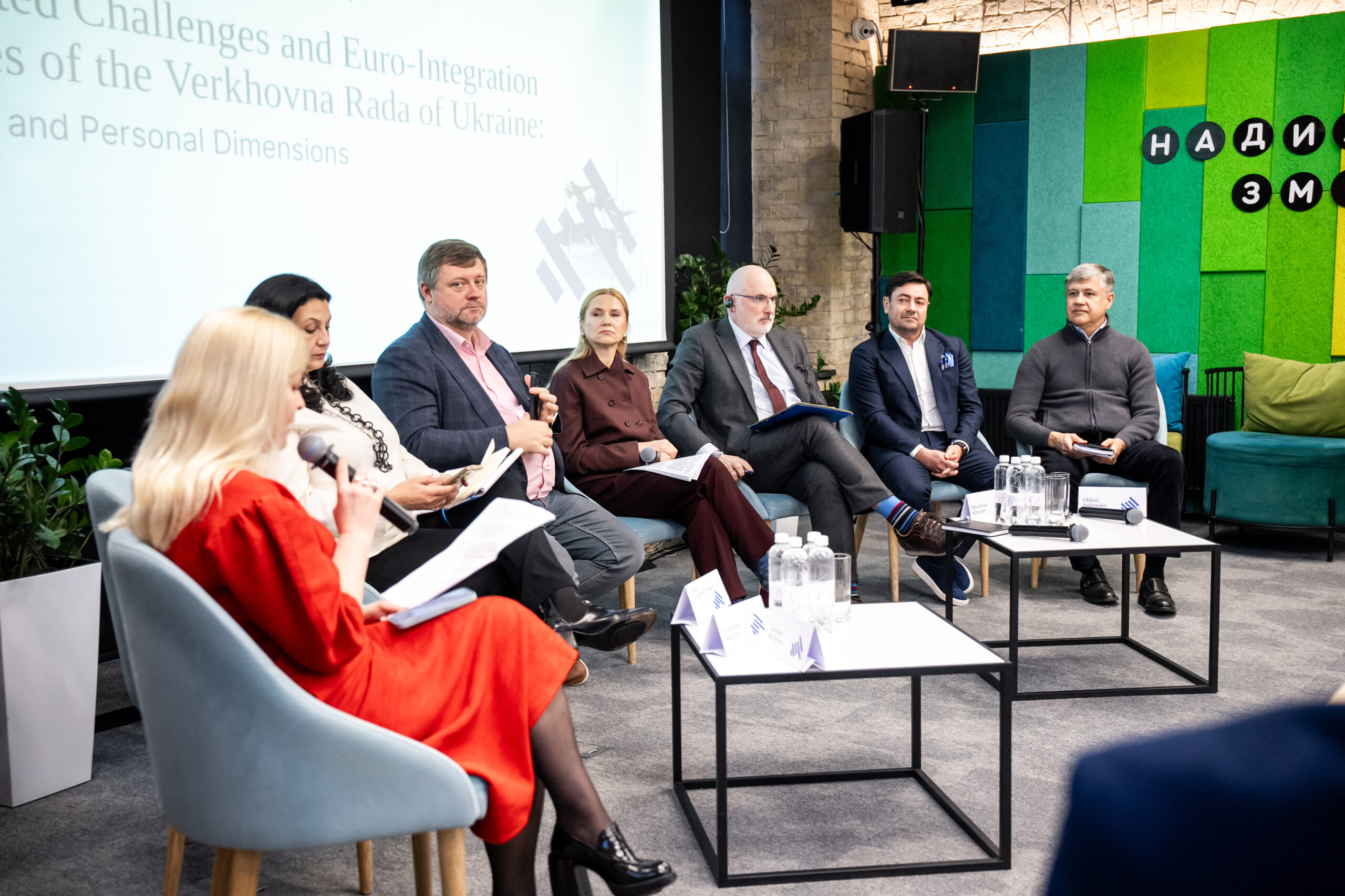
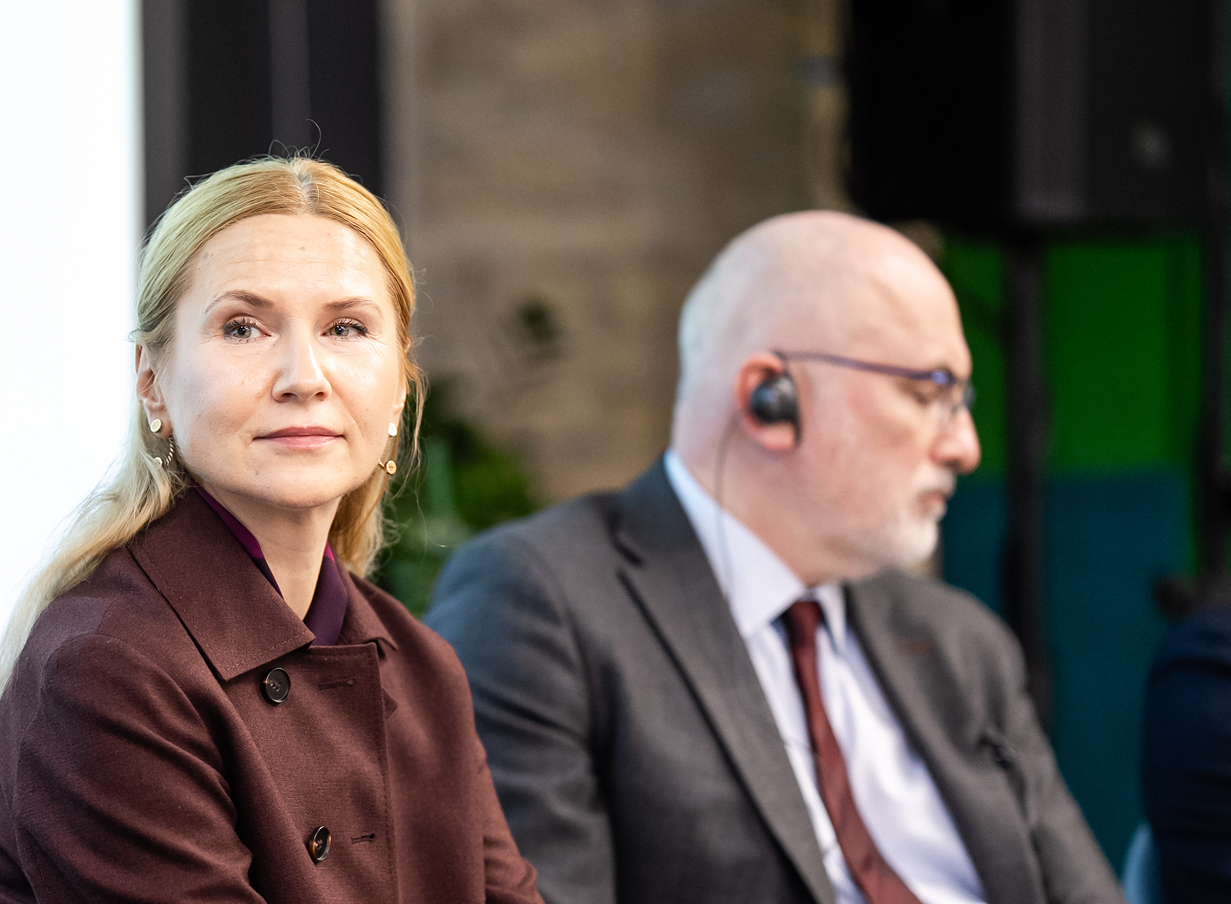

The Chair of the Verkhovna Rada Committee on Ukraine’s Integration into the European Union, Ivanna Klympush-Tsintsadze, emphasised the importance of the Monitoring conducted by ALI — as it makes it possible to view, from the outside, how Members of Parliament are fulfilling their duties and exercising their powers.
The Secretary-General of the Verkhovna Rada, Viacheslav Shtuchnyi, stressed that ensuring the uninterrupted work of Parliament has been one of the key tasks since the beginning of the war. ‘The uninterrupted operation of Parliament is a symbol of resistance, a symbol of resilience and devotion to the state’, he underlined.
An important and correct step for the development of Parliament was the decision to open the European Parliament Liaison Office in Ukraine and the Verkhovna Rada Office in the European Parliament. Over the past six years, the Verkhovna Rada has been working both within the Jean Monnet Dialogue formatThe Jean Monnet Dialogue format involves meetings between parliamentarians on a given subject in order to develop a common ground on a specific issue. This format aims to foster political dialogue and consensus between political parties. and on implementing the recommendations of the Roadmap for Internal Reform — which the Secretariat of the Verkhovna Rada has completed by 99%.
Particular attention must also be paid to the technical support of parliamentary work. A worthy response by the Ukrainian Parliament to the challenges of wartime has been the Continuity Plan of the Verkhovna Rada of Ukraine.
Oleksii Sydorenko emphasised that the Secretariat continues to strengthen cyber resilience and cybersecurity components. He also noted that Parliament recently completed its successful connection to the PULS system, a tool for monitoring the fulfilment of European integration commitments — and an additional platform for interaction between the Verkhovna Rada and the Government on all initiatives.
The second part of the discussion focused on the work of Members of Parliament during martial law. Three Members — Halyna Mykhailiuk, Anastasiia Radina and Mariia Ionova — shared their experiences as well as their perspectives on priorities and changes needed in parliamentary work.
Oleksandr Zaslavskyi, Deputy Executive Director of the Agency for Legislative Initiatives, stressed that in 2022, the Verkhovna Rada increased the intensity of parliamentary diplomacy many times over.




A Military Ombudsman’s Office to Be Established: Can We Expect Better Protection of the Rights of Military Personnel?
The Verkhovna Rada has finally adopted the law on the Military Ombudsman. On 17 September, 283 MPs voted in favour. The new post has every chance of strengthening the protection of the rights of military personnel. The Military Ombudsman will be appointed by the President for a five-year term to handle complaints about violations of military personnel’s rights, conduct inspections and issue findings demanding that violations be stopped. The Ombudsman will also report on their activities to both the President and the Verkhovna Rada.
At first glance, this appears to be a long-awaited positive development. In practice, however, the risks seem to outweigh the opportunities. Let us consider whether this reform will indeed improve the protection of military personnel’s rights.
Fourth Time Lucky: What Preceded the Law on the Military Ombudsman
The main risk for the new institution is that Ukraine may once again repeat its past mistakes. Experts from the Agency for Legislative Initiatives have already detailed this experience in the Green Paper on Parliamentary Oversight of the Security and Defence Sector. The Military Ombudsman represents the fourth attempt to protect the rights of military personnel. If the previous three mechanisms failed (hence the need for a new institution), what will make this one different? Why should it succeed where others have not? The tools remain the same — only the title and the person holding the office will change.
Since 1998, Ukraine has had the Parliament Commissioner for Human Rights, whose mandate includes protecting the rights of all individuals, including military personnel. In fact, complaints from service members account for over 25% of all submissions to the Commissioner — more than 28,000 in 2024 alone.
To safeguard military personnel’s rights, the Commissioner conducts monitoring, receives appeals and complaints, and contacts relevant authorities to restore violated rights. The Commissioner is also supported by a Coordination Council on the Protection of the Rights of Military Personnel, Police Officers, and Members of Their Families. In addition, the Commissioner regularly prepares Reports on Human Rights, identifying systemic issues in ensuring the rights of military personnel and providing recommendations on how to address them.
In other words, the Parliament Commissioner for Human Rights already performs all the core functions of a Military Ombudsman — and does so with an established organisational structure, a team of staff, practical experience in protecting military personnel’s rights, and an existing regulatory framework. The Commissioner is already restoring the rights of thousands of service members who turn to the institution for help. Moreover, this is not merely a peacetime Commissioner. The current Commissioner, Dmytro Lubinets, was appointed by the Verkhovna Rada in mid-2022 — presumably with the understanding that during wartime, he would also address issues related to the protection of military personnel’s rights. Yet, it appears this was deemed insufficient, prompting the decision to establish a Military Ombudsman’s Office.
In April 2024, another mechanism was introduced to strengthen the protection of military personnel’s rights — the establishment of the Central Department for the Protection of Service Members’ Rights within the Ministry of Defence. Since its establishment, the department has received over 5,000 complaints, resulting in the restoration of rights for 2,038 service members and their family members, including 1,037 cases in 2025. Nevertheless, this measure also seems to have fallen short of expectations, as the problem of rights violations among service members persists.
To complement the two existing structures, a third one appeared on 30 December 2024 — the President created a new advisory position entitled ‘Presidential Commissioner for the Protection of the Rights of Military Personnel and Their Families’. Yet even this consultative role proved insufficient, so the drafting of the Law ‘On the Military Ombudsman’ began in parallel with its establishment.
A New Player or a Duplication of Powers?
Three previous attempts to protect service members’ rights — all with functions similar to those of the Military Ombudsman — have failed to resolve the issue or ensure adequate protection. The fourth attempt might indeed be more successful. But how will it relate to the previous three? Who will be responsible for what? Which rights will each protect?
The new law introduces no changes to the procedures of the Parliament Commissioner for Human Rights, to whom around a quarter of all complaints come from service members. It seems that both the Commissioner and the Military Ombudsman will engage in monitoring compliance with rights, conducting inspections, addressing violations, and preparing reports and recommendations. The Central Department for the Protection of Service Members’ Rights within the Ministry of Defence will also perform similar functions.
The relationship between the Military Ombudsman and the Presidential Commissioner for the Protection of the Rights of Military Personnel and Their Families appears particularly ambiguous. Both are appointed by the President, and both are tasked with defending the rights of service members. This raises an obvious question: will the same person hold both positions?
A Military Ombudsman Outside the Constitution?
The Law on the Military Ombudsman carries significant risks of being unconstitutional. It stipulates that the President, through the Military Ombudsman, would exercise democratic civilian control over the security and defence sector. However, Article 106(2) of the Constitution explicitly prohibits the President from delegating powers to other persons or bodies.
The Constitution clearly defines the President’s powers, yet it currently contains no provisions regarding either the appointment or dismissal of a Military Ombudsman. To grant such powers legally, constitutional amendments would be required. Nor does the Constitution include the set of functions now assigned to the Ombudsman, who is to be directly subordinated to the President.
Building a mechanism for protecting service members’ rights on an unconstitutional foundation is inherently problematic. If the law were to be ruled unconstitutional, the rights of service members would once again be put at risk, and all the resources and effort invested in creating this new institution would be wasted. In the worst-case scenario, it could set a troubling precedent — one in which the President acts contrary to the Constitution, doing what he deems necessary regardless of its limits.
From Risks to Opportunities
There remain numerous risks that could prevent the Military Ombudsman from effectively protecting the rights of service members. For example, despite the recommendations of the Parliamentary Assembly of the Council of Europe (PACE) and the Venice Commission, the Ombudsman will be appointed without an open competition, and the position will be directly dependent on the President. Moreover, the law does not even specify who will be subject to the inspections carried out by the Ombudsman. These and many other issues — dozens, in fact — were identified in expert opinions, including that of the Main Legal Department of the Verkhovna Rada (MLD), yet the law was nonetheless adopted and signed by the President the very next day.
Ahead lies the process of appointing the Military Ombudsman, allocating financial and material resources, and developing and approving the necessary regulatory documents for the institution’s functioning. Will it be successful? Will the Ombudsman avoid repeating the mistakes of the other institutions that were supposed to protect the rights of service members? Will he or she manage to coordinate effectively with these existing institutions so that service members benefit? And will it be possible to avoid the risks of unconstitutionality? One can only hope — hope that the creation of yet another institution will finally address the systemic problem of protecting service members’ rights, which the previous three structures somehow failed to solve.
The main task of the Ombudsman is to respond to violations of rights. When the rights of service members are violated, they can turn to the Ombudsman for assistance. Yet the true strength and value of this institution do not lie in restoring the rights of individual service members, but in identifying systemic causes behind hundreds of such violations. These findings — together with recommendations — will be reflected in reports that are advisory in nature.
The Ombudsman cannot independently eliminate the causes of widespread violations of service members’ rights or reform the system — he or she can only highlight its shortcomings and advise on how to correct them. But if these recommendations are ignored, the problem of rights violations among service members will persist. In that case, the Parliament Commissioner for Human Rights, the Central Department for the Protection of Service Members’ Rights within the Ministry of Defence, the Presidential Commissioner for the Protection of the Rights of Military Personnel and Their Families and the Military Ombudsman will merely mitigate the consequences rather than resolve the root causes.
How the Code of Conduct for Parliamentarians Works: ALI Together with Ukrainian MPs Studied the Experience of the United Kingdom
In early September, Kateryna Ryabiko, Chair of the Board of the Agency for Legislative Initiatives, joined the visit of the Verkhovna Rada of Ukraine and the National Assembly of North Macedonia to the United Kingdom. In the British Parliament, the delegation studied the experience of one of the world’s oldest democracies in regulating the rules of ethical conduct for Members of Parliament. The visit involved Members of Parliament of Ukraine, parliamentarians of the National Assembly of North Macedonia, as well as representatives of the OSCE/ODIHR, the Parliamentary Assembly of the Council of Europe and the National Democratic Institute.
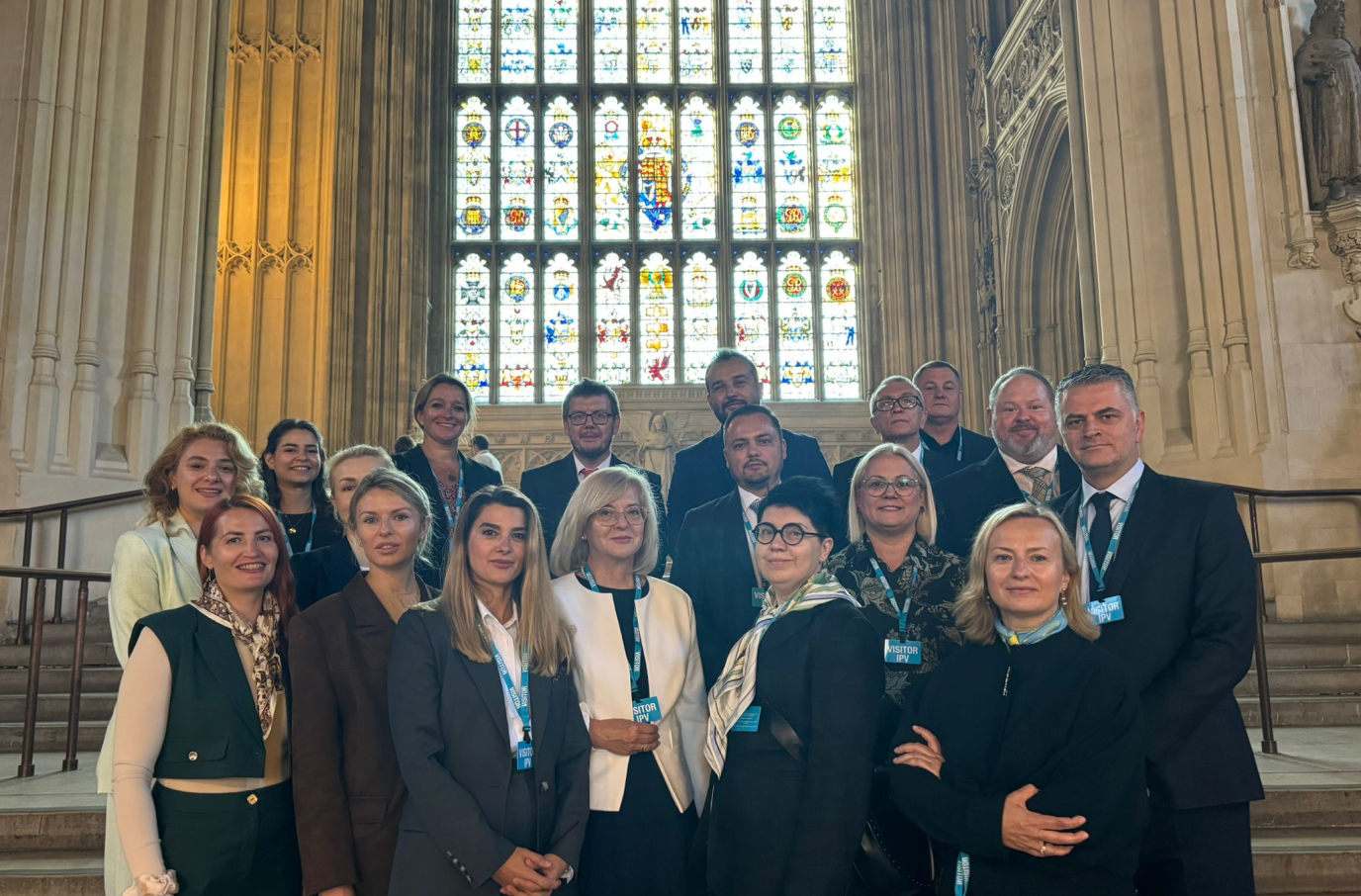
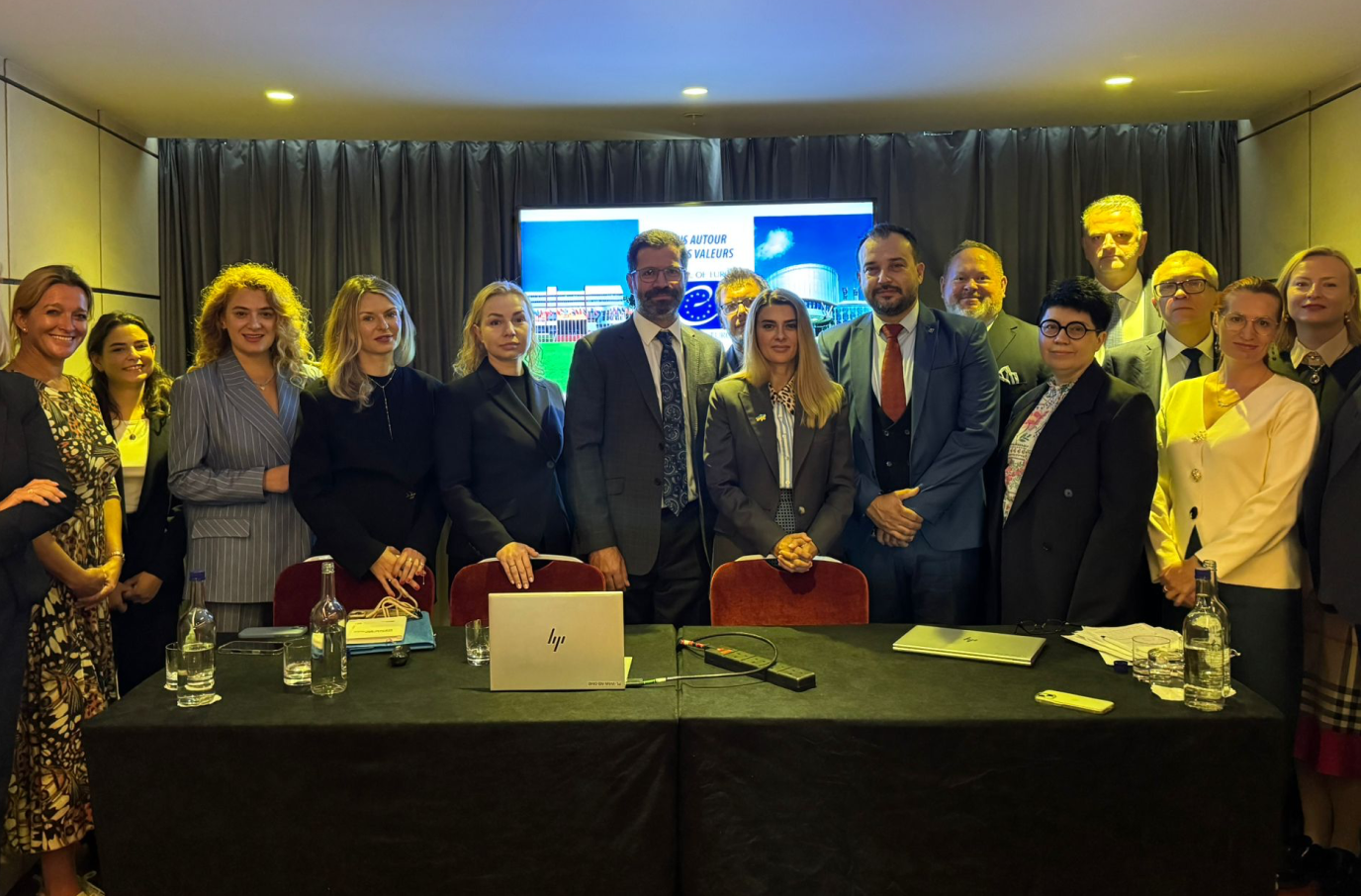
For the Ukrainian delegation, the key focus was parliamentary ethics and the introduction of a corresponding Code in Ukraine, a draft of which was submitted to the Verkhovna Rada at the end of 2022. At present, the Rules of Procedure of the Verkhovna Rada of Ukraine regulate only breaches of conduct in the chamber, exclusively during plenary meetings, and only in cases of insulting another Member of Parliament or a parliamentary faction or group. The existing mechanisms are insufficient for the Ukrainian Parliament to respond in a substantive way and regulate the unethical behaviour of MPs. At the same time, every violation of ethical standards by them undermines trust in Parliament as an institution and damages Ukraine’s reputation abroad.
That is why the Agency for Legislative Initiatives consistently advocates for the adoption of a Code of Conduct for Parliamentarians, for the adoption of Draft Law No. 8327, the purpose of which is to modernise the existing rules of parliamentary ethics and to create an effective system for their implementation.
The draft Code extends ethical standards beyond the chamber and provides for the establishment of a dedicated Ethics Committee, bringing the Ukrainian Parliament closer to OECD/GRECO norms and the practice of the UK Parliament. However, the draft law on the Code of Ethics has already been awaiting consideration in the Verkhovna Rada for two years: at present, there is simply not enough political will for its adoption. Achieving consensus on this issue, as well as the broader societal importance of introducing ethical restrictions, is not only one of the priority tasks for the Verkhovna Rada of Ukraine, but also an element of strengthening political culture — even in wartime.
Read more on why the Ukrainian Parliament needs a Code of Ethics in the ALI article.
Administrative Procedure in Action: Implementation of the Law of Ukraine ‘On Administrative Procedure’ in the Public Administration System
The introduction of an administrative procedure has long been a necessityThe need to adopt legislation regulating administrative procedures in Ukraine was outlined back in 1998 as a component of the Concept of Administrative Reform, the aim of which is, in particular, to form a system of public administration that meets the needs and demands of the people, to create conditions for the exercise of citizens’ rights and freedoms, and to provide them with a wide range of public and administrative services.. Until 2022, Ukraine remained the only European state without a law on administrative procedure (except for russia, which is not a benchmark for democratic governance). All areas of interaction between the state and citizens or businesses were regulated by different rules (special laws, decrees, instructions, etc.). The introduction of an administrative procedure was driven by the need to address a number of issues, such as:
- the absence of several important individual rights in relations with public administration (e.g., the right to be heard and to access case materials, the right of an interested party to participate in proceedings, etc.);
- the dominance of departmental interests and predominantly subordinate regulation of procedures;
- inconsistent approaches across different areas of public administration;
- inefficiency of many procedures (particularly appeals) or a complete lack of regulation (e.g., regarding the early termination of administrative acts).
The necessity of adopting and applying the Law ‘On Administrative Procedure’ (LAP) is also driven by the OECD/SIGMA European Principles of Public Administration, particularly Principle 17, which states that the right to good administration is upheld, among other means, through administrative procedure. Full implementation of this Law is a requirement of the European Union, and its swift introduction into the practical activities of civil servants is an important element of the European integration process. The EU emphasised the importance of this step in its annual reports on Ukraine’s progress within the Enlargement Package in 2023 and 2024. The LAP implementation is one of the requirements of the Ukraine Facility Plan for 2024–2027. Its implementation is expected to help reduce corruption risks in public administration, increase public trust in the state, and improve the functioning of the business environment. The introduction of the LAP, modelled after similar acts in other countries, aims to ensure the right to good administration enshrined in Article 41 of the Charter of Fundamental Rights of the European Union and to bring public administration in Ukraine closer to modern European standards and practices.
The implementation of an administrative procedure that is user-friendly and understandable for citizens and businesses is one of the tasks of the Public Administration Reform Strategy for 2022–2025 (hereinafter — the Strategy) under the High-Quality Services and User-Friendly Procedures pillar. Adoption and implementation of the Law ‘On Administrative Procedure’ are defined as priorities for the development of administrative services and procedures.
The key tasks for implementing this area of the Strategy related to administrative procedures are:
- introducing an administrative procedure and aligning regulatory legal acts with the Law ‘On Administrative Procedure’;
- conducting training for civil servants and increasing public awareness of a general administrative procedure.
Progress of the reform in achieving these tasks is assessed using the following indicators:
- the share of draft laws necessary for the implementation of the Law submitted to the Verkhovna Rada of Ukraine: 80% in 2023, 90% in 2024;
- the share of civil servants who need training on the new principles of administrative procedure and have undergone such training: 20% in 2022, 40% in 2023, 60% in 2024, 80% in 2025.
State of Play and Progress of Reform
The implementation of the tasks outlined in the Strategy began withThe Ministry of Justice worked on draft law No. 3475. Representatives of the Secretariat of the Cabinet of Ministers of Ukraine, ministries, other central executive authorities, the judiciary, experts and specialists from the EU Delegation to Ukraine, the German Foundation for International Legal Cooperation, experts from the SIGMA Programme and the project Support to Comprehensive Reform of Public Administration in Ukraine (EU4PAR). the drafting and adoption of the Law ‘On Administrative Procedure’ on 17 February 2022. The Law was signed by the President in June 2022 and entered into force on 15 December 2023.
This event marked the start of the process of aligning existing legislation with the LAP provisionsParagraph 8 of the Final and Transitional Provisions of the Law ‘On Administrative Procedure’.. Upon completion of this harmonisation process, by the end of 2025, the Cabinet of Ministers of Ukraine must inform the Verkhovna Rada of Ukraine about the status of implementation of the Law ‘On Administrative Procedure’.
Drafting Legislation and Aligning the Existing Laws with the Law ‘On Administrative Procedure’
By June 2023, the government was required to submit proposals to Parliament for aligning legislative acts of Ukraine with the LAP. By December 2023, it was to take measures to adopt and/or update regulatory acts of executive authorities to comply with the new rules, ensuring they took effect simultaneously with the Law ‘On Administrative Procedure’.
To achieve this, experts analysed about 400 laws related to289 days to go: how ministries and government agencies are preparing to implement administrative procedures. Public administration reform. 2023. various aspects of administrative procedures. In October 2023, draft law No. 10161 was registered in Parliament, aimed at aligning legislation with the LAP. A year later, the Verkhovna Rada of Ukraine adopted Law No. 4017, which amended 196 legislative acts. As a result, the 2023 Strategy Implementation Report declared that the target indicator for this task had been achieved. The 2024 Strategy Implementation Report is not publicly available.
The process of harmonising legislation with the LAP is accompanied by several challenges:
- As of mid-2025, full implementation of the LAP has not yet been achieved. The European Commission 2024 Report on Ukraine noted that by the end of 2025, Ukraine must achieve full implementation of the Law ‘On Administrative Procedure’, including harmonisation of sectoral and implementing legislation and aligning digital procedures with the Law. However, a number of legislative acts still require alignment with the provisions of the LAP, particularly in the areas of taxation, customs, land regulation, citizen appeals, and administrative offences. Draft laws concerning some of these changes are still awaitingFor example, draft Law No. 11082 ‘On Appeals’ and draft Code of Ukraine on Administrative Offences No. 11386. consideration in Parliament. The government is expected to report on the status of LAP implementation by the end of 2025. Although, there are reasonable doubts that full harmonisation of legislation with the LAP will be achieved within the established timeframe. These doubts are further reinforced by the fact that the Public Administration Reform Roadmap envisions certain steps regarding LAP implementation to be carried out throughout 2026.
- Some state authorities are attempting to exempt themselves from the scope of the LAP regulation, arguing that their areas of competence fall under exceptions. The 2023 SIGMA Monitoring Report contains information about initiatives in Ukraine aimed at removing public institutions from the scope of the LAP regulation. In public discourseOne year with the Law ‘On Administrative Procedure’: key findings from experts. Public administration reform. 2024., such attempts have been discussed in relation to the State Environmental Inspectorate, the Antimonopoly Committee, the State Tax Service, and the Ministry of Internal Affairs. These initiatives are not supported by the SIGMA Programme, whose representatives maintain that special legislation (instead of the LAP) should apply only in exceptional cases, justified byPublic Administration in Ukraine: Assessment of Compliance with Public Administration Principles. SIGMA. December 2023. P. 10. the specifics of a particular administrative field. The European Commission expressed similar concernsReport on Ukraine for 2023. European Commission. 2023. pp. 19–20., particularly regarding the State Tax Service. Ukrainian experts share this view, emphasising the need to extend the application of the Law ‘On Administrative Procedure’ to a significant portion of the powers of executive authorities (though certain exceptions should apply depending on the specific functions).
- The technical aspect of implementing the LAP in digital procedures requires improvement. Effective application of the LAP requires ensuring proper information interaction between public electronic registers. However, the current system of interaction does not meet the requirements of full interoperability.
Training and Raising Awareness of Civil Servants on the Implementation of the Law ‘On Administrative Procedure’ in Their Respective Authorities
The Strategy stipulates that at least 20% of civil servants requiring training on LAP implementation should complete it each year, with the overall rate reaching 80% by the end of 2025.
During 2022, 2,168 civil servants and 709 local self-government officials (a total of 2,877 persons) underwentPublic Administration in Ukraine: Assessment of Compliance with Public Administration Principles. SIGMA. December 2023. P. 10. relevant training at the Ukrainian School of Administration and regional professional development centres. The 2022 Strategy Implementation Report claims this indicator was met. However, the report presents the target value and actual performance using different units of measurement. This makes it impossible to clearly determine whether the reported number of trained individuals corresponds to the target of 20% of the total number of civil servants who required such training.
In 2023Report on the implementation in 2023 of the Strategy for Public Administration Reform in Ukraine for 2022–2025. P. 43., the National Agency of Ukraine on Civil Service developed and approved 12 training programmes on administrative procedures for civil servants and local self-government officials. The number of civil servants, local self-government officials, and employees of Administrative Service Centres who underwent relevant training exceeded 4,400 persons. According to the 2023 results, the necessary Strategy performance indicator was achieved (90% reported against the required 40%). This time, the report included the actual number of individuals needing training in 2023.
Additionally, civil servants can take online courses and training. The Zrozumilo! platform hosts an online course titled ‘General Administrative Procedure’, a handbook for civil servants, and train-the-trainer programmes for offline and online training on a general administrative procedure (60 trainersReport on the implementation in 2023 of the Strategy for Public Administration Reform in Ukraine for 2022–2025. P. 20. were trained by the end of 2023For example, training courses are conducted within the framework of the project Support to Comprehensive Reform of Public Administration in Ukraine (EU4PAR) and the USAID Hoverla project in partnership with the Higher School of Public Governance.).
Also, there is a dedicated information portal that offers answers to over 200 frequently asked questions about applying the LAP and provides document templates, checklists, and other practical materials.
A social media group titled ‘Administrative Procedure: Professional Community’ was created for representatives of state authorities involved in the general administrative procedure and LAP implementation, allowing practitioners and scholars to exchange opinions and experiences regarding LAP application.
Despite satisfactory reporting indicators, certain challenges persist for the effective implementation of the LAP in terms of training:
- Insufficient quality and comprehensiveness of training materials. A survey of central executive authorities (CEAs) on their readiness to apply the LAP, conducted between December 2024 and January 2025, showed that 59% of respondents noted the need for staff training, 40% required assistance in developing templates and standard documents, and 35% needed expert advisory support. Category A civil servants were the most knowledgeable about the provisions of the LAP. Though nearly half of the surveyed Category B and C civil servants had yet to fully understand the details. Respondents indicated the need for additional clarification of the essence of administrative procedure principles, particularly those of proportionality, reasonableness, formality, the presumption of legality of actions, and the requirements of individuals.
- Not all civil servants are adequately informed about the LAP implementation in their respective authorities. The CEA survey showed that more than 50% of respondents could not say whether their institution had begun the adaptation of legislation to the LAP, and over 70% were unaware of whether their institutions had identified the list of regulatory legal acts to be aligned with the LAP. This indicates a need to improve institutional awareness and internal communication regarding the implementation of the LAP in central executive authorities.
The survey is not representative (due to uneven distribution of respondents by type and level of state authorities), but it demonstrates general trends in the readiness of civil servants to apply the LAP.
Public Awareness of Administrative Procedures
One of the tasks of the Strategy is to raise citizens’ awareness of the general administrative procedure. However, there are no indicators to track progress on this task. Citizens can participate in training on the Zrozumilo! Platform. In 2024, more than 22,000 persons completed this online course. Also, the information portal contains useful materials explaining the LAP provisions and their practical value for citizens and businesses. Nevertheless, the lack of indicators makes it impossible to assess progress in fulfilling this task.
Recommendations
The current state of implementation of the Public Administration Reform Strategy for 2022–2025 regarding the enforcement of the Law ‘On Administrative Procedure’ is largely satisfactory, with most tasks either fully completed or in progress. However, further reform efforts require the following measures:
- Minimising cases where state authorities are exempt from the Law ‘On Administrative Procedure’, particularly those performing public service functions. The non-application of LAP provisions to certain public institutions sets a precedent that undermines the role of the LAP in the public administration reform. The use of special legislation instead of the LAP may still exist, but additional justification is required on a case-by-case basis.
- Ensuring full implementation of the LAP by aligning tax, customs, land legislation, the Law of Ukraine ‘On Appeals of Citizens’, and the Code of Ukraine on Administrative Offences with its provisions and by adopting subordinate regulatory legal acts necessary for the implementation of the LAP and Law No. 4017.
- Introducing amendments to current legislation to address the application of the LAP in automated procedures to ensure full realisation of the principles of efficiency and formality, particularly regarding e-interaction between information systems, technical implementation of complex procedural mechanisms (e.g., leaving applications without progress), and applicant access to case files.
- Improving the quality of training materials for civil servants undergoing professional development on administrative procedure. Optimisation should focus on:1) clarifying the essence of LAP principles and terminology; 2) resolving potential conflicts between the LAP and special laws; 3) analysing specific practical cases and addressing possible ambiguities in LAP interpretation; 4) technical aspects of using information systems within administrative procedures.
- Enhancing awareness among civil servants, particularly categories B and C, regarding the application of LAP provisions.
- Intensifying the implementation of the LAP in state authorities, while providing clear guidance to their staff on the essence and algorithm of such implementation.
- Expanding public outreach campaigns to raise awareness about the significance and practical value of the LAP for citizens when applying to state authorities.
This publication has been prepared within the framework of the ‘Improvement of Governance in Ukraine: Enhancing Policy Making for Social Progress’ Project with the support of Switzerland. The content of this publication is the sole responsibility of the NGO ‘Agency for Legislative Initiatives’. The opinion of the authors does not necessarily reflect the views of the donor.
Organisational Architecture of the Cabinet of Ministers of Ukraine and Central Executive Authorities
Digitalisation of the human resource management system, as a key element of rebooting public administration, is implemented in accordance with the Strategy for Public Administration Reform in Ukraine for 2022–2025 under the area ‘Professional Civil Service and Personnel Management’.
One of the directions of the Public Administration Reform Strategy for 2022–2025 (hereinafter — the Strategy) is Effective Governance, which entails creating conditions under which government bodies shape state policy based on analytical results and communication with stakeholders, as well as ensuring its implementation for the sustainable development of the state. Key challenges in this area include the insufficiently effective system of central executive authorities, the lack of a clear division between policy development and policy implementation, an imperfect mechanism for directing and coordinating the activities of ministries, and the unregulated system of state strategic planning. The Strategy stipulates that ministries should focus on policy development, assigning the relevant powers to directorates, while delegating policy implementation functions to other central executive bodies.
The separation of policy development and implementation functions between ministries and other central executive authorities is also outlined in the Public Administration Reform Roadmap, which is one of the key documents under Cluster 1: Fundamentals in Ukraine’s EU accession negotiations. The Roadmap sets the strategic goal for Ukraine to achieve by the end of 2026: ministries are focused on policy development, possess optimal institutional capacity, and effectively use human resources, while policy implementation functions (such as managing state-owned enterprises or providing services) are transferred to other central executive authorities. To achieve this, a range of measures is envisaged, including the introduction of a unified structure for ministries.
Another issue identified in the Strategy is the flawed procedure for establishing and dissolving central executive authorities, particularly the inadequate justification for their creation and the unclear definition of their areas of competence. Additionally, the lack of a clearly defined legal succession mechanism leads to problems related to the transfer of property obligations from a dissolved authority and ensuring the proper execution of functions reassigned to another central executive authority. As a result, the principle of continuity of public authority is violated, and the process of dissolving central executive authorities sometimes takes years.
The tasks for implementing this aspect of the Strategy include:
- improving the organisation and procedures of central executive authorities, including enhancing mechanisms for guidance and coordination, organisational structure, clearly defining and distributing functions and powers, eliminating duplication, and introducing accountability for their performance;
- streamlining the procedures for establishing and dissolving central executive authorities as legal entities of public law, as well as defining a clear legal succession mechanism in case of changes within the system of central executive authorities;
- continuing the process of relieving ministries of non-core functions and powers, particularly by reallocating such functions and powers to other central executive authorities or transferring them to local executive authorities or local self-government bodies as part of decentralisation efforts, or even discontinuing state involvement in their execution.
However, no indicators have been defined for these tasks that would allow tracking progress in their implementation.
State of Play and Progress of Reform
Repeated announcements by the Prime Minister regarding plans to reduce the number of ministries have not been implemented. Instead, only name changes and redistribution of competences within the Government are carried out, or new policy areas emerge that require regulation. For example, following the reorganisation of the Ministry of Reintegration of Temporarily Occupied Territories of Ukraine, some of its powers were transferred to the Ministry of Social Policy of Ukraine. The emergence of new areas of state policy, where ministries are responsible for policy development and implementation, is a natural result of evolving societal relations and technological advancements. A clear example is the Ministry of Digital Transformation of Ukraine being granted powers to ensure the development and implementation of state policy in the field of artificial intelligence.
Architecture of the Cabinet of Ministers of Ukraine, ministries, and other central executive authorities
The creation, reorganisation, and liquidation of ministries and other central executive authorities in accordance with the law fall under the constitutional powers of the Cabinet of Ministers of Ukraine. However, frequent, unjustified, or poorly reasoned changes in the system of central executive authorities, in their guidance and coordination schemes, and the redistribution of competences destabilise the work of ministries and other central executive authorities, forcing them to readjust their operations to new conditions. This negatively affects citizens and businesses, creating uncertainty and unpredictability in public policy planning and undermining trust in the institutional capacity of the Government.
For instance, in December 2024, the renaming of the Ministry of Reintegration of Temporarily Occupied Territories of Ukraine into the Ministry of National Unity of Ukraine was accompanied by the transfer of some powers of the former Ministry of Reintegration to the Ministry for Development of Communities and Territories of Ukraine and the Ministry of Social Policy of Ukraine. Some functions were left without a clearly defined responsibility, leading to a ‘governmental vacuum’ in the area of protecting the rights of internally displaced persons, as noted by both authorities and civil society representatives.
The current Procedure for Implementing Measures stipulates that executive authorities are established, reorganised, or liquidated by the Cabinet of Ministers of Ukraine upon submission of the Prime Minister of Ukraine, based on a proposal from a member of the Cabinet of Ministers. Such proposals should consider Government priorities and the need to ensure the exercise of executive powers, avoid duplication of competences, and include justification for the feasibility of establishing, reorganising, or liquidating the body, along with relevant financial and economic calculations. However, the decision to establish the Ministry of National Unity was influenced more by political motives than by a substantiated need for a new ministry.
The areas where the Ministry of National Unity ensures the development and implementation of state policy, as defined in its regulations, lack legal definitions in Ukrainian legislation. This applies, in particular, to such matters as ‘national unity of Ukraine and joint development’ and ‘Ukrainian national self-awareness’. In December 2022, the Verkhovna Rada adopted the Law of Ukraine ‘On the Fundamentals of State Policy in the Field of Affirming National and Civic Identity’, and later the Government designated the Ministry of Youth and Sports as the central executive authority responsible for developing and implementing state policy in this area. The Ministry of National Unity was tasked with ‘promoting the establishment of Ukrainian national identity and Ukrainian civic identity’. This raises an open question: what exactly constitutes ‘Ukrainian national self-awareness’ or ‘national unity’, as these terms are not defined in legal acts, leaving room for broad interpretation of the responsibilities of the ministry.
Additionally, the new ministry’s activities aim at ensuring the rights and interests of Ukrainian citizens abroad and creating conditions for their return to Ukraine. This partially duplicates the powers of the Ministry of Foreign Affairs of Ukraine, which is responsible for protecting the rights and interests of Ukrainian citizens abroad.
Also, the role of the ministry in ensuring information policy regarding the unity of Ukraine and strategic communications (within its powers regarding national unity of Ukraine) overlaps with the powers of the Ministry of Culture and Strategic Communications of Ukraine. However, the absence of a clear definition of ‘national unity of Ukraine’ calls into question the division of competencies between these ministries in the field of information policy and strategic communications.
An analysis of the regulations of the Ministry of National Unity suggests that the ministry has limited autonomy in implementing some of its powers. For example, it works jointly with the Ministry of Education and Science of Ukraine to facilitate education for Ukrainians abroad and cooperates with the Ministry of Foreign Affairs to engage with organisations and media to protect the interests of these citizens.
Currently, the existence of the Ministry of National Unity is in question, in particular due to the criminal charges of abuse of office and illicit enrichment on a particularly large scale brought against Vice Prime Minister of Ukraine and Minister of National Unity, Oleksii Chernyshov, as well as the relatively low effectivenessAlthough the number of regulatory acts issued cannot be an indicator of the effectiveness of this ministry, it is worth noting that the Ministry of Justice of Ukraine has registered only one order during the entire period of the Ministry of National Unity’s activity — regarding the criteria for determining enterprises, institutions, and organisations belonging to its sphere of management as those that are important for the national economy, which allows for the reservation of employees of such enterprises, institutions, and organisations who are subject to military service. of the ministry.
As part of the implementation of the Strategy, procedures for the establishment and dissolution of central executive authorities have been streamlined at the procedural level through the adoption of the Law of Ukraine ‘On Amendments to Certain Legislative Acts of Ukraine in Connection with the Adoption of the Law of Ukraine “On Administrative Procedure”’. This Law introduced changes to the Law of Ukraine ‘On Central Executive Authorities’, clarifying the procedure for transferring powers and functions from an existing ministry or other central executive authority to a newly established one, as well as the procedure for transferring powers and functions without establishing a new authority. In addition, the Law requires that the relevant act of the Cabinet of Ministers of Ukraine determine the legal successors of the property, rights, and obligations of a ministry or other executive authority subject to liquidation.
The lack of a clearly formulated policy on the organisation of the Government and the role of central executive authorities complicates the reform of individual ministries, the system of central executive authorities, and the Government as a whole. On the one hand, unjustified reorganisations of ministries lead to duplication of functions. On the other hand, they create a ‘governmental vacuum’, waste state resources, and halt the formation and implementation of state policy.
The architecture of the public administration system is not discussed with the public. Additionally, the Law of Ukraine ‘On Legislative Activity’ and the Law of Ukraine ‘On Public Consultations’ exclude legal acts related to the establishment or dissolution of state authorities from their scope. As a result, the establishment or dissolution of a new authority does not require an assessment of its impact on social relations or the conduct of public consultations with stakeholders.
Another aspect of the reform is the delineation of functions related to the development and implementation of policy between ministries and other central executive authorities. In May 2021, the Government submitted Draft Law No. 5469 to Parliament, proposing changes to the procedures governing the preparation of draft regulatory legal acts by ministries and other central executive authorities that are directed and coordinated by the Government through the relevant minister. The draft law provided that such central executive authorities would lose the competence to develop and submit regulatory legal acts (e.g., draft laws) for consideration by the relevant minister. Instead, they would submit proposals to the minister to support policy formation and, at the minister’s request, ensure the participation of their representatives in the preparation of regulatory legal acts. The proposed amendments aimed to ensure that only ministries could engage in policy development (or at least in the development of policy documents). Importantly, the Draft Law also sought to clarify the areas of state policy and areas of activity for which the Government would be responsible, with the distribution of competencies among Government members covering all areas and directions of its activity. In September 2021, the Main CommitteeThe Committee on Organisation of State Power, Local Self-Government, Regional Development and Urban Planning has been designated as the main committee for the preparation and preliminary consideration of the draft law. issued a revised opinion on the Draft Law, recommending its adoption as a basis in the first reading, with subsequent refinement in preparation for the second reading. In September 2024, the Draft Law was withdrawn by its initiator. Despite this, its adoption remains one of the measures set out in the Strategy Implementation Plan.
At present, most central executive authorities directed and coordinated by the Government through respective ministers are responsible only for the implementation of state policy and for submitting proposals to the respective ministers on developing/ensuring the development of state policy. The only exception is the Ukrainian State Film Agency (hereinafter — USFA). In November 2021, the Cabinet of Ministers of Ukraine decided to transfer the direction and coordination of USFA activities from the Minister of Culture and Information Policy of Ukraine directly to the Cabinet of Ministers. As a result, USFA was granted direct authority to exercise legal and regulatory functions in the field of cinematography, including the adoption of regulatory legal acts in this area. In March 2023, the traditional core function of such central executive authorities (‘submitting proposals for ensuring the development of state policy’) was replaced with ‘ensuring the development of state policy in the field of cinematography’. Consequently, the Ministry of Culture and Information Policy of Ukraine lost one of its competencies — the field of cinematography — which was transferred to USFA. However, in February 2025, a reverse process took place: USFA was returned under the oversight of the Ministry of Culture and Strategic Communications of UkraineThe Ministry of Culture and Information Policy of Ukraine was renamed the Ministry of Culture and Strategic Communications of Ukraine in September 2024. (hereinafter — MCSC), which regained its authority to ensure the development and implementation of state policy in the field of cinematography and to exercise legal and regulatory functions in this area. The new regulations governing USFA excluded its authority to exercise legal and regulatory functions in the field of cinematography. However, its task of ensuring the development of state policy in cinematography remained unchanged, leading to duplication and competition with similar functions of the ministry now overseeing USFA.
The recent ‘experiments’, such as the establishment of the Ministry of National Unity and the redistribution of competencies between MCSC and the Government regarding the coordination of USFA, demonstrate the lack of a strategic vision for the system of central executive authorities in connection with state policy areas. There is no established tradition of relations between ministries and their subordinate central executive authorities that would clearly define the scope of autonomy and accountability of such authorities to the respective ministries. Ministries should functionJohnsøn, J., L. Marcinkowski and D. Sześciło (2021), ‘Organisation of public administration: Agency governance, autonomy and accountability’, SIGMA Papers, No. 63, OECD Publishing, Paris. as the primary centres for state policy development, while other central executive authorities should focus on collecting and providing data on the implementation of laws and policies, as well as offering comments and proposals on ministerial initiatives.
Internal Organisation of Ministries
Aligning the organisational structure of ministries with established requirements remains one of the measures of the Public Administration Reform Strategy Implementation Plan. The creation of directorates within ministries as structural units responsible for policy development, coordination, and monitoring of its implementation, as well as the creation of a separate Directorate for Strategic Planning and European Integration, was one of the key objectives outlined in the Concept for Optimising the System of Central Executive Authorities and the Concept for Introducing Reform Support Specialist Positions. These directorates were intended to become the central hubs for policy development and strategic planning within ministries.
Draft Law No. 5469 proposed toCurrently, the typical structure of the central executive authorities is defined in a resolution of the Cabinet of Ministers of Ukraine. legally formalise the structure of the apparatus of the ministry, consisting of directorates and a secretariat, while also allowing for the creation of other independent structural units (departments, administrations, etc.) and the introduction of positions outside the framework of these structural units.
The 2023 SIGMA Report provides a critical assessment of the ministry structure reform. It notes that the establishment of directorates has led to the creation of parallel, sometimes even competing, units (directorates and departments) within certain ministries, failing to achieve the goal of building capacity for reform development and implementation due to weak institutional support. Since 2021, the number of directorates in most ministries has been steadily decreasing.
In April 2024, the Coordination Council on Public Administration Reform presented an improved model structure for the apparatus of the ministry. It proposed the creation of structural units along three main lines of work: 1) units for policy development and implementation (directorates); 2) units for specific functions related to policy implementation (departments and divisions responsible for administrative services, management of state-owned assets, etc.); 3) support units (secretariat). However, legislative changes necessary to ensure the implementation of this structure have not yet been adopted, and the creation of new directorates within ministries has been temporarily suspended.
Recommendations
- Ensure the decision-making on the establishment, reorganisation, or dissolution of central executive authorities based on impact assessment, not just political considerations. For instance, such decisions should be preceded by: 1) functional analysis of existing authorities to assess whether the proposed functions could be assigned to an authority operating in a related policy area; 2) evaluation of the potential effectiveness of planned changes to ensure that establishing, restructuring, or dissolving an institution is truly necessary and will not cause adverse consequences for citizens, businesses, or the state as a whole.
- Strengthen justification requirements for decisions related to changes in the system of central executive authorities.
- Consider engaging civil society and the business community in discussions concerning decisions on structural changes within the system of central executive authorities.
- Review and unify the internal structure of the apparatus of ministries and other central executive authorities. This will enhance policy development in areas of shared responsibility between multiple ministries and foster the development of horizontal linkages between them, which is a particularly important aspect in the context of Ukraine’s European integration. The updated structure should take into account the specific policy domains for which ministries are responsible and ensure an effective distribution of functions within the apparatus.
Not by Quorum Alone: What the Constitutional Court Still Lacks for Effective Work
On the eve of Constitution Day, June 27, 2025, President Zelensky appointed Oleksandr Vodiannikov as a judge of the Constitutional Court of Ukraine (CCU). This was the first appointment to the CCU since September 2024 and the third under the new procedure — an open competition conducted by the Advisory Group of Experts (AGE), which consists of three Ukrainian and three international legal experts. The public and thorough selection process for the CCU, which excluded questionable candidates, confirms the effectiveness of competition commissions with foreign experts involved.
On July 3, 2025, Oleksandr Vodiannikov solemnly took the oath, formally restoring the quorum in the Grand Chamber of the Constitutional Court of Ukraine (CCU), which had been lost since the end of January 2025.
Undoubtedly, the appointment of a new judge to the CCU is a step in the right direction. However, unfortunately, it does not resolve all the problems that directly affect the institutional capacity of the Constitutional Court of Ukraine.
Quorum is present — decisions are absent
Nominally, from today, the Constitutional Court is fully operational, but its actual effectiveness remains questionable. On paper, the appointment of Oleksandr Vodiannikov looks good: the Court now has 12 judges out of 18. This is enough to hold sessions of the Grand Chamber of the CCU and its two Senates (the Second Senate had been blocked for six months due to a lack of judges). However, to make a full-fledged decision at the level of the Grand Chamber requires at least 10 votes. And this is the main problem, as gathering 10 out of 12 votes is extremely difficult.
This was effectively confirmed by Constitutional Court judge Vasyl Lemak in his Facebook post on June 29, 2025:
‘During the years of large-scale war (since February 2022), the CCU has made 41 substantive decisions. In 30 of these 41 decisions, provisions of the law were declared unconstitutional. Three quarters! Despite the war, the Court managed to do this — defending the Constitution of Ukraine. Even this year, before January 27, 2025, the Court managed to issue three decisions, in two of which the provisions of the laws were declared unconstitutional […]. Show me another Constitutional Court that acts more actively, especially during wartime, implementing the principle of separation of powers and respect for human rights […].’
The number of decisions made is not impressive, but the fact that three-quarters of them recognise existing legal norms as unconstitutional is significant. Thus, a non-functioning Constitutional Court is a blessing for those who would prefer to continue violating the Fundamental Law. A country at war obviously needs a greater number of CCU decisions, especially given that most of them declare laws unconstitutional. Most European democracies face fewer challenges than Ukraine currently does, yet they consider up to 60 cases per year. Therefore, the Constitutional Court of Ukraine still has room to evolve.
It is worth recalling that six positions for Constitutional Court judges remain vacant. As practice shows, even a single appointment takes several months. For example, ranked candidate lists for the CCU were submitted to the Competition Commission under the President and to the Verkhovna Rada Committee on Legal Policy back in February 2025. Since then, only one appointment has been made, despite the fact that there are enough candidates to fill all quotas from both the President and the Parliament.
An old system in a new reality
The next problem is that in 2025, the Constitutional Court continues to operate according to a system from the 1990s: the reporting judge independently gathers votes for “their” decision. This opens the door to internal politicisation and mutual protection, where decisions are made not based on law but according to “who benefits”. Judges themselves lobby for the cases they are interested in, while others remain pending for years. For example, in 2024, the Court functioned with 13–14 judges. Most decisions were made almost unanimously, which is rare given the broad legal discussions and differing opinions among the CCU judges. With the current number of judges, each decision will be even harder to pass or may be blocked altogether due to a lack of votes.
The minimal quorum exacerbates another problem: it creates opportunities to influence judges and puts the independence of the Constitutional Court at risk, making its decisions politically biased. Consequently, this does nothing to build public trust in the CCU. The draft law “On Constitutional Procedure” should partially resolve at least some of these issues. However, since 2020, it has been gathering dust within the Parliament.
Bureaucratic deadlock or irresponsibility
Currently, two judges are to be appointed to the CCU by the Parliament. Is the Verkhovna Rada willing to accept a half-functional Constitutional Court operating under outdated procedures? Since February 2025, the Parliament has not reviewed the candidates for the Constitutional Court recommended by the Advisory Group of Experts. The nuance is that the Committee on Legal Policy cannot reach an agreement with the AGE regarding the provision of candidate documents. It seems rather odd when an advisory body withholds these documents. Delays in appointments harm not only the reputation of the CCU but also the functioning of the entire system of checks and balances.
It is also worth recalling that in 2022, Parliament appointed Olha Sovhyria to the Constitutional Court. She had previously served as the permanent representative of the Verkhovna Rada of Ukraine to the CCU. At that time, MPs ignored the Venice Commission’s recommendations regarding adherence to proper vetting procedures and simultaneously violated the constitutional principle of political neutrality that all Constitutional Court judges must uphold. This appointment, to put it mildly, does not inspire trust in the institution, especially concerning the impartiality and independence of a Constitutional Court judge. Therefore, once the Court is fully staffed, Olha Sovhyria should undergo a thorough review to dispel doubts about her professionalism and integrity — both within Ukrainian society and among international partners. The Agency for Legislative Initiatives and other civic organisations have repeatedly raised this issue. This will, of course, require targeted amendments to the law on the Constitutional Court, but there has been no movement in this direction from the Verkhovna Rada.
Notably, prior to her appointment to the CCU, Olha Sovhyria was a member of Parliament and voted on a number of laws currently under the Court’s consideration. For this reason, she should recuse herself from relevant cases and must not participate in their hearings. As a result, even with a formal quorum of 12 judges, the review of some cases may be effectively “on hold” until new judges are appointed if Olha Sovhyria or others file recusals.
A full and truly effective operation of the Constitutional Court of Ukraine is possible not only with a complete composition of the Court but also through the implementation of systemic reforms. It is necessary to update internal procedures and strengthen institutional guarantees. The Parliament, as one of the key actors in this process, must finally move from passive observation to active engagement — fulfilling its duties regarding transparent appointments and the expected legislative changes.
The Constitutional Court itself also faces numerous challenges — above all, the public expects systemic approaches to its work and overcoming the backlog of longstanding unresolved cases, especially those pending for five or more years. A priority must also be the expedited consideration of all constitutional submissions, petitions, and complaints within a six-month timeframe. Delays in constitutional proceedings prevent the Court from timely responding to institutional conflicts, which negatively affect the effectiveness of the entire system of checks and balances, and most importantly — the protection of citizens’ constitutional rights and freedoms.
The implementation of a modern organisational structure within the Constitutional Court, full digitalisation of all processes, staff renewal, and adequate funding will also contribute to resolving these issues.
To enhance the authority of the Constitutional Court in society, it is also necessary to establish effective communication, through which the Court clearly explains its decisions. Only comprehensive reforms will lead to greater independence and efficiency of the Constitutional Court and enable it to make decisions deserving of trust — both within Ukraine and beyond its borders.
Training of Trainee Prosecutors: Lecture by ALI Expert
The ALI expert has been teaching this topic in various formats at the Training Centre for the third consecutive year. During the sessions, trainees explore general approaches to defining the professional ethics of legal practitioners, the relationship between moral and ethical categories and legal norms, and the concepts of “ethics”, “integrity”, and related issues. The training also focuses on current practices of the Qualification and Disciplinary Commission of Prosecutors and prospects for the development of prosecutorial self-governance in light of these lecture topics.
Background information
On June 4, 2025, by Decision No. 175 dk-25, the Qualification and Disciplinary Commission of Prosecutors approved the results of the competition for appointment as trainee prosecutors at the district prosecutor’s offices (the competition was held from July 2024).
On June 16, 55 trainee prosecutors began their preparation, which will last two months. This will be followed by an internship, and upon successful completion, prosecutors will be appointed to positions of the corresponding level.
Legislative Impact Assessment: ALI’s Handbook
Such an Assessment is one of the key instruments for ensuring the development and subsequent evaluation of the effectiveness of quality legislation.
The Agency for Legislative Initiatives has been consistently working on the integration of impact assessments into the practice of the Ukrainian parliament. In particular, the Agency facilitated the preparation of a range of legislative impact assessments in cooperation with the Committee on Ukraine’s Integration into the European Union, the Committee on Law Enforcement, the Committee on National Security, Defence and Intelligence, and the Committee on State Building, Local Self-Government, Regional Development and Urban Planning.
In this Handbook, the Agency for Legislative Initiatives publishes new groundwork and an expanded methodology for performing gender-sensitive impact assessments based on the experience of piloting the methodology in the Verkhovna Rada of Ukraine.
International Practices and Requirements of Ukrainian Legislation
The legislative practices of developed democracies, including the EU countries, are based on the model of the policy cycle. That is, a decisionFor example, draft laws or other non-normative measures. goes through a chain of mandatory stages — from planning and analysis of the problem to monitoring and evaluation of the implementation effectiveness. Impact assessment is performed at the initial stage of the policy design process, which makes it possible to adjust its instruments in accordance with the data obtained.
The logic of the Ukrainian legislative process, with the exception of a few cases, is reversed: first, the initiatorMost commonly a member of Parliament. registers a ready-made draft law and only then does the justification of the proposed approach to address the problem take place. In fact, our European partners have repeatedly drawn attention to this issue. For example, back in 2016, the European Parliament’s Needs Assessment Mission to the Verkhovna Rada on Parliamentary Reform recommended introducing the Impact Assessment tool in the work of the Ukrainian Parliament.
At the same time, the incorporation of the Assessment into the Verkhovna Rada’s practice is driven not only by the requirements of European integration, but also — and most fundamentally — by the need to strengthen the institutional capacity of the Parliament and enhance the effectiveness of public policies. Therefore, by adopting the Law of Ukraine “On Lawmaking” in 2023, the Verkhovna Rada committed itself to integrating Impact assessments into its lawmaking.
The Importance of Legislative Impact Assessment
- provides an opportunity to clarify the implications of the draft law and its impact on various social groups and areas;
- serves as a mechanism for effective communication with stakeholders and the civil society in the course of drafting a law;
- serves as a tool to promote transparency in the decision-making process, as the policy designer conducts consultations with stakeholders along the way;
- allows lawmakers to assess whether a proposed measure is reasonable and capable of achieving its intended purpose;
- becomes particularly valuable in cases of insufficient background information or justification for a draft law. It provides the full picture needed to ensure evidence-based decision-making.
Gender Impact Assessment
People may experience legislative impacts very differently depending on their gender identity, age, ethnicity or other characteristics. However, gender-sensitive impact assessments help to determine to what extent and how draft laws or other measures affect various groups of people. It also allows for policy adjustments and ensures that any discriminatory effects are eliminated or mitigated.
Who Will Find the Handbook Useful?
The purpose of this Handbook is to outline a methodological approach to conducting a gender-sensitive legislative impact assessment and to systematise the process of its implementation in order to help lawmakers analyse and assess the potential effects of legislative initiatives and to enable them to justify the chosen method of regulation.
Read more about the Legislative Impact Assessment — in the new ALI’s Handbook.
The Handbook was developed within the framework of the project “Parliamentary Accountability of the Security Sector in Ukraine” (PASS Ukraine), which the Agency implements together with the Parliamentary Centre, in cooperation with The Verkhovna Rada of Ukraine, and with the support of Canada’s Foreign Policy—Global Affairs Canada as part of the Peacebuilding Program and stability (PSOPs).