
I am waiting for the moment when all women will pass the appropriate certification to demonstrate their skills. By the results, they will receive those positions that will be precisely within their power. I’m sure there will be women who will be able to command units.
What Do Women Say About Gender Equality in the Security and Defense Sector?
March 8 is not a holiday of beauty and flowers. This is a day reminiscent of women’s long struggle for their rights. The Constitution of Ukraine guarantees all citizens equal constitutional rights and freedoms and equality before the law. However, gender equality is still a formal concept, enshrined in documents but not enforced in real life.
Especially gender balance is still lacking in the security and defense sector, where women are rarely able to hold leadership positions and don’t have the trust and respect of male colleagues.
The Agency for Legislative Initiatives is implementing the Parliamentary Accountability for the Security Sector in Ukraine project in partnership with the Canadian Parliamentary Centre, the Canadian Ministry of International Affairs, and the Peace and Stabilization Operations Program (PSOPs). One of the project’s essential components is researching the gender aspect in the security and defense sector.
We decided to delve deeper into the topic before International Women’s Day and ask parliamentarians, women in the armed forces volunteers about the problems of gender equality in the security and defense sector and how they can be solved.
The views expressed in this publication reflect the personal beliefs of the speakers and do not necessarily reflect the views of the Agency for Legislative Initiatives.

Ivanna Klympush-Tsintsadze, Member of Parliament of Ukraine, Chairwoman of the Verkhovna Rada Committee on Ukraine’s Integration into the EU
What is the impact of the presence of women in the Verkhovna Rada of Ukraine, particularly in your Committee, on the process of security sector reform?
When we talk about women’s representation in decision-making processes, we need to talk about human rights and justice. If to date we do not have equal representation of women and men in representative bodies (and I want to remind you that women make up almost 54% of the total population of Ukraine), then something is definitely “wrong.” Today, although the current Verkhovna Rada of Ukraine has the most significant representation of women MPs in the history of Ukraine, we still have a situation where of the 23 current Committees of the Verkhovna Rada of Ukraine, only three Committees are headed by women, in three more Committees, women hold the positions of first deputy chairwomen and are secretaries of Committees. Which means that representation of women in these positions is approximately 13% of the total number of posts.
But even women in leadership positions in the Verkhovna Rada may not always be able to influence decision-making. Their role is often nominal, and this needs to be changed.
To fully represent the interests of all groups of voters, both women, and men, it is necessary to guarantee the full participation of women MPs in parliament, including the opportunity to participate and hold senior positions in the Verkhovna Rada Committees, etc. It is also important to remember our international obligations. In particular, in the context of implementing the Sustainable Development Goals (Goal №5. Gender equality. Task 5.4. Ensure equal opportunities for representation at higher levels of decision-making in political and social life). In general, the always balanced representation of women and men at the decision-making level, including security and defense, means a better consideration of different groups of women and men’s interests and needs — accordingly more fair, effective and sustainable solutions.
Do you see progress on gender equality in your personal and professional life?
My family has a partnership from the very beginning, so I can realize myself professionally and develop. As for professional life, I see progress on the example of local elections. Many men were skeptical about quotas and whether there would be the required number of professional women. But finally, women have been able to compete effectively with men, and we must continue to provide women with this opportunity for self-realization and real influence over decisions.
What would you suggest to change to make the security and defense sector more gender-balanced?
The issue of gender equality in the security sector is complex, and it is essential to look at it that way. The point of equality is not only about numbers, statistics, and representation. It is also about skills and values, mechanisms, institutions, and, of course, legislative work.
Currently, there are about 57,000 women in the Ukrainian army. We must provide them with equal opportunities for promotion, equal pay, protection from sexual harassment.
And here we are inspired by the experience of NATO’s implementation of the “Women, Peace & Security” agenda. More than 90% of NATO countries have opened all military specialties and positions for women. For example, Norway did so back in 1985. The problems of harassment are spoken out loud, and precise mechanisms have been developed to combat gender-based violence in Norway since then.
Among the priority problems that need to be addressed are the following:
- the low representation of women in peace processes;
- cultural, value, infrastructural, and domestic barriers that prevent women from fully realizing themselves in the security and defense sector;
- the low representation of women in management positions in the security and defense sector;
- lack of effective systematic monitoring and control of the implementation of already approved documents;
- untimely adoption of legal documents aimed at ensuring gender equality in the security and defense sector (example – Annual National Program under the auspices of the NATO-Ukraine Commission for 2020, which was prepared in late 2019 but adopted in late May 2020) ;
- sexism and impunity for sexual harassment;
- lack of definition of sexual violence during the conflict;
- gender-blind programs for supporting veterans, IDPs, political prisoners, hostages, and prisoners of war which do not consider the specific needs and interests of women and men.
What is your message for girls and women on International Women’s Day?
Each year, the UN determines the theme of International Women’s Day. In 2021, it is “Women’s Leadership: Approaching an Equal Future in the World during a Pandemic.”
In Ukraine, nurses, doctors, social workers, postwomen, saleswomen, pharmacists, teachers – hundreds of thousands of women and girls overcome illness and circumstances every day and are already leaders of their lives.
I know that it can be difficult, and there is a need to make difficult decisions, that there may be many critics and “advisers” around, and not as many helpers as we would like. But I believe that we will succeed. Overcome the crisis, overcome restrictions and emerge victoriously. Each one in her field, in her way.
It is only necessary not to stop, study every day, improve, and set more ambitious goals, even if they seem unattainable to someone at the moment.
And it is essential to support each other. In our platform “Security. Women. Peace “we understand the value of such solidarity and networking. These faith and support give us the strength and inspiration to move forward.

Mariana Bezuhla, Member of Parliament of Ukraine, Member of the Verkhovna Rada Committee on National Security, Defense and Intelligence
What is the impact of the presence of women in the Verkhovna Rada of Ukraine, particularly in your Committee, on the process of security sector reform?
Numerous studies show that mixed groups are the most productive and balanced. Accordingly, the same applies to the parliament and our Committee. A particular focus, perception, uniqueness of experience, which differ in men and women, add value.
We focus on gender equality in the security and defense sector. In particular, a joint initiative was recently launched to correct certain inconsistencies in the legislation and to give women access to all positions and opportunities in the security sector. So that opportunities remained at the choice of the woman.
Do you see progress on gender equality in your personal and professional life?
Throughout my life, I did not experience any particular obstacles to work. However, there are additional challenges. I met with a biased perception from men, especially in 2014, when the mobilization took place, then while working in the Ministry of Defense, then in parliament. I am in charge of reforming the intelligence services of the Security Service of Ukraine, and this is a “secret caste” where there are no women in leadership roles. With one exception, the current Minister of Veterans Affairs. However, the exceptions only confirm the rule.
When we were preparing for the reform, I encountered bullying on Telegram channels from SSU officers. Most of the harassment was due to the emphasis on my gender and age. But we can work with it.
I do not believe that there are critical obstacles in our society, particularly in the security and defense sector, that need to be addressed. The main thing is gradual development.
What would you suggest to change to make the security and defense sector more gender-balanced?
Gender balance is needed everywhere. But it must be natural. I would also like more responsibility from the women themselves. Unfortunately, we often have situations in the security and defense sectors when the wife of the brigade commander holds a comfortable position that does not require particular activity. This kind of nepotism is common in the security sector. It forms prejudice and a particularly negative image of the woman. And those girls and women who have dreamed of being in military positions all their lives have additional obstacles because of that negative image.
In 2015, when I was mobilized, I met rejection of my active role from women. The responsibility for giving women more opportunities and rights in the security and defense sector lies with men, civil society organizations, and women themselves.
What is your message for women and girls on International Women’s Day?
Never give up!

Anna Gvozdyar, volunteer
What gender equality issues did you face while volunteering?
Personally, during the war, I mainly felt an increased level of care and desire to protect. The other side of the coin is the rejection of a woman who can be knowledgeable in military affairs. It is common, mainly in middle and senior command. It is more a tribute to the Soviet legacy that a girl cannot be competent in military affairs. Here everything is solved by time and examples of women who have achieved a high level of competence and real achievements during the war.
Is it the duty of everyone, regardless of gender, to defend their country?
Having experienced the events that began in 2014, we see that everyone has found a place in the “defense” of the Motherland. Some were engaged in medicine, some in providing, some in psychological support. Therefore, it is essential to be ready from school because it can help. For example, the bandaging skills I learned in medicine class in 10-11 grades helped me a lot.
In your opinion, how should the opportunities of women and girls in the defense sector be empowered? How can the situation in this non-gender balanced sector be changed?
I don’t think it’s necessary to force women into units, especially in combat or high-risk positions. The nominal presence of women in office solely for gender equality does not benefit the country’s defense capabilities. We have cases where women waive some of the Statute’s responsibilities, referring, for example, to “critical days” every week or something, thus taking advantage of ignorance and caution on the part of men.
The idea of equality in the army should open up equal conditions for selection. There should be no positions only for men or only for women. A selection must be of high quality. If a woman wants to be, for example, a sniper, she must be able to undergo full selection and training and perform all job responsibilities.
We have, for example, the experience of the Marines, when the girls, including Oleksandra Bezsmertna, overcame the obstacle course with everyone and received a “black beret” of Marines on equal terms with men.
What problems of women and girls in defense need to be solved?
It is necessary to provide separate regular barracks with facilities for women. The maternity leave of military personnel is also essential but this issue has not yet been resolved. If we are talking about equality in the army, these problems must be solved first.

Olga Benda, ATO veteran
What gender equality issues have you faced in the military?
As soon as I went to military service and studied in Starychi, I heard words from men: “Why did you come here? You have to cook borscht at home and take care of your husband and children”. The older generation of the military had prejudices that girls would be treated with concessions. But girls trained on an equal footing with everyone. We did everything we were told. We didn’t cry all the time, as the men expected. But that was in 2016. Then the attitude changed.
Is it the duty of everyone, regardless of gender, to defend their country?
Yes. Ukraine is our home, and we must defend it.
In your opinion, how should the opportunities of women and girls in the defense sector be empowered?
Women in the army are now treated much better. Previously, women held positions only as cooks, doctors, and liaison officers. Now the girls can be platoon commanders. In 2016, girls were very selectively admitted to military service because men did not want to take women to the anti-terrorist operation. When my training ended in 2016, and I had to be transferred to a permanent deployment for military service, I was not taken to one of the brigades because “the commander forbade taking girls”.
What problems of women and girls in defense need to be solved?
During the anti-terrorist operation, I began to work as a cook, then became the senior cook, and wanted to become the head of the cook’s department. But then this position was held by a guy who did not even know how to cook. He was a driver. I asked our commander if I could become the head of the cooks’ department. He answered: “Are you a guy? Can you drive a car? The head of the department should be a guy”. That’s how my ambitions were immediately “cut off.”
After the injury (which Olya received in 2017, after which her leg was amputated – ed.), I continued my military service at the military registration and enlistment office. I was a senior soldier. I had a great desire to study, get the rank of officer and continue to serve.
But it would be complicated for me to get to study with injuries because I have to take an exam on the level of physical training on an equal footing with everyone. I was told no one will take into account the lack of a leg. I wanted to connect my life with the army, but I was denied because of my disability. So I resigned.

Julia Hromova, servicewoman
What gender equality issues did you face during your military service?
I joined the army weighing 37 kg, but I never heard that I was a woman and “it’s none of my business”.
Is it the duty of everyone, regardless of gender, to defend their country?
Indeed, I believe that such questions should never arise at all. It doesn’t matter what gender you are, what kind of specialist you are.
In your opinion, how should the opportunities of women and girls in the defense sector be empowered? How can the situation in this non-gender balanced sector be changed?
Gender equality is not a position, not a title, not a gender. First of all, it is knowledge and skills.
Unfortunately, it happens that women usually (in the case of combat units) delegate their responsibilities to the platoon’s chief sergeants.
What problems of women and girls in defense need to be solved?
Women have long been able to hold various positions. It’s just that not all of them fully understand what gender equality is in the defense sector.
I would suggest changing the approach. You want to be a tank gunner – you go through 45 days of training, charge it by yourself, service the tank – and that’s all, you get a position. But will every woman be able to load a gun weighing 45 kg?
Currently, there is no problem for a woman to become a tank commander. There is a problem with physical and moral training. I want our personnel to be qualitatively selected, not because of beauty, but for understanding the responsibility you take on.
Online Project Launch Parliamentary Accountability for the Security Sector in Ukraine
This project aims to promote peace and stability in Ukraine by supporting the Verkhovna Rada of Ukraine (VRU) to play its central role in formulating, implementing, monitoring and reforming security policy.
The main stakeholders of the project took part in the event. In particular, the event was attended by representatives of the two parliamentary committees of the Verkhovna Rada, with which the Agency and the PArliamentary Centre will work closely during the project – members of the Security, Defense and Intelligence Committee and the Law Enforcement Committee – as well as other Ukrainian MPs, Canadian MPs, H.E. Ambassador of Canada to Ukraine and the H.E. Ambassador of Ukraine to Canada.
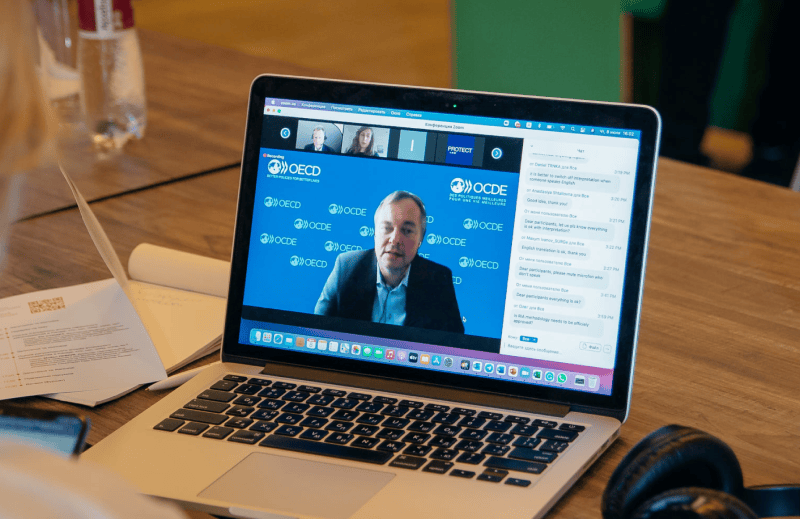
During the event, the participants expressed hope for productive cooperation between the Canadian and Ukrainian sides for the sake of achieving peace, security, and stability in Ukraine.
Dmytro Razumkov, Chairperson of The Verkhovna Rada of Ukraine, noted that issues of national security have become one of the key issues on the agenda of society and the state in Ukraine.
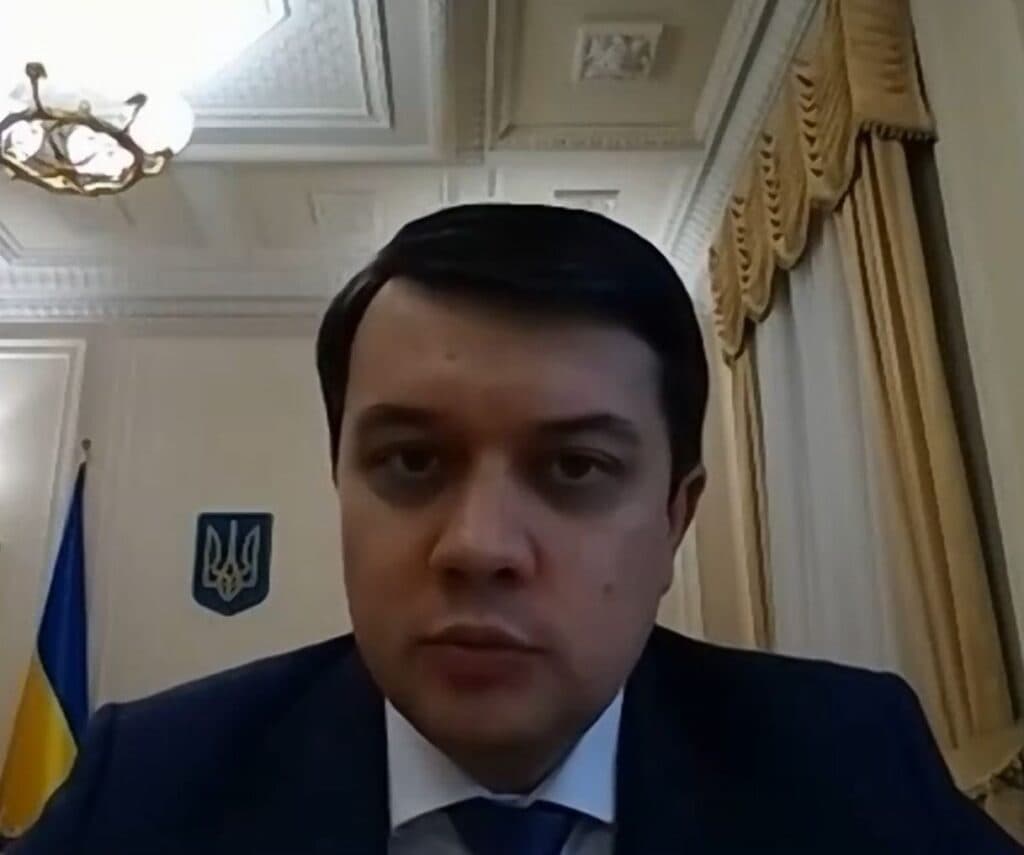
Dmytro Razumkov, Chairperson of The Verkhovna Rada of Ukraine
“Parliament has set a course for NATO and the EU in the Constitution, and this vector will not change. However, it is very important to continue reforms in the security and defense sector. And this applies not only to the front and the Ukrainian army but also to law enforcement activities within the state. I am confident that in the future, thanks to mutual assistance, additional recommendations and proposals, exchange of experience, we will be able to fulfill the tasks we set for ourselves”
Olena Kondratiuk, Deputy Chairperson of the Verkhovna Rada of Ukraine, stressed the importance of taking into account the gender aspect in the reform of the defense sector. The speaker noted that Ukraine has consistently implemented the National Action Plan for the implementation of UN Security Council Resolution 1325 “Women, Peace & Security”, which is part of the government’s strategy. The parliament of the previous convocation passed a number of laws that opened more opportunities for women to exercise in the military.
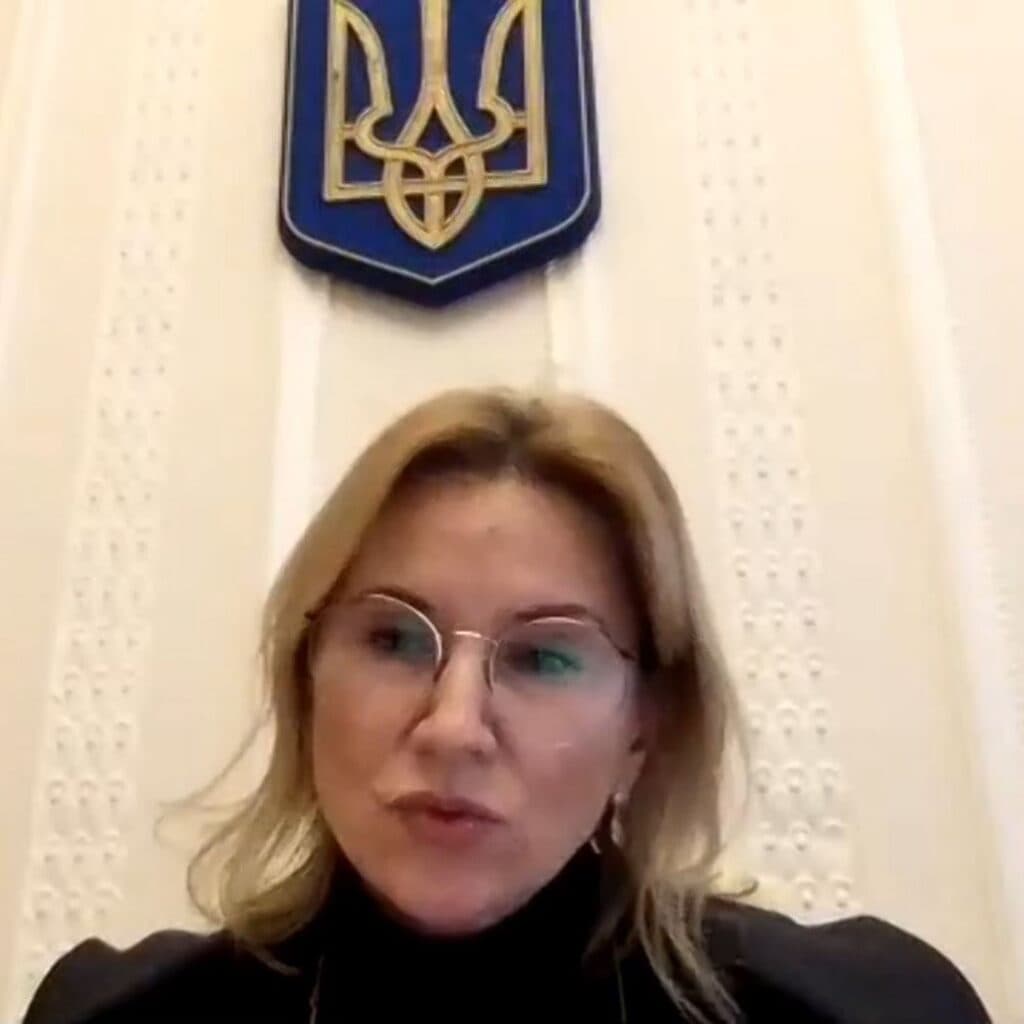
Olena Kondratiuk, Deputy Chairperson of the Verkhovna Rada of Ukraine
“At the same time, I would like to draw attention to the still unequal participation of women and men in the peace process and in decision-making in the defense sector. For Ukraine, the introduction of gender quotas in the management and Supervisory Boards of all state-owned enterprises, including in the defense sector, is important. It is important to introduce gender-oriented budgeting in the security and defense sector, to take into account at the financial and organizational level all the sensitive and special needs of women in armed forces”
In turn, Larisa Galadza, H.E. Ambassador of Canada to Ukraine, is confident that the Canadian experience will help Ukraine in defense sector reform. In addition, she noted the special role of parliament in the reform process.
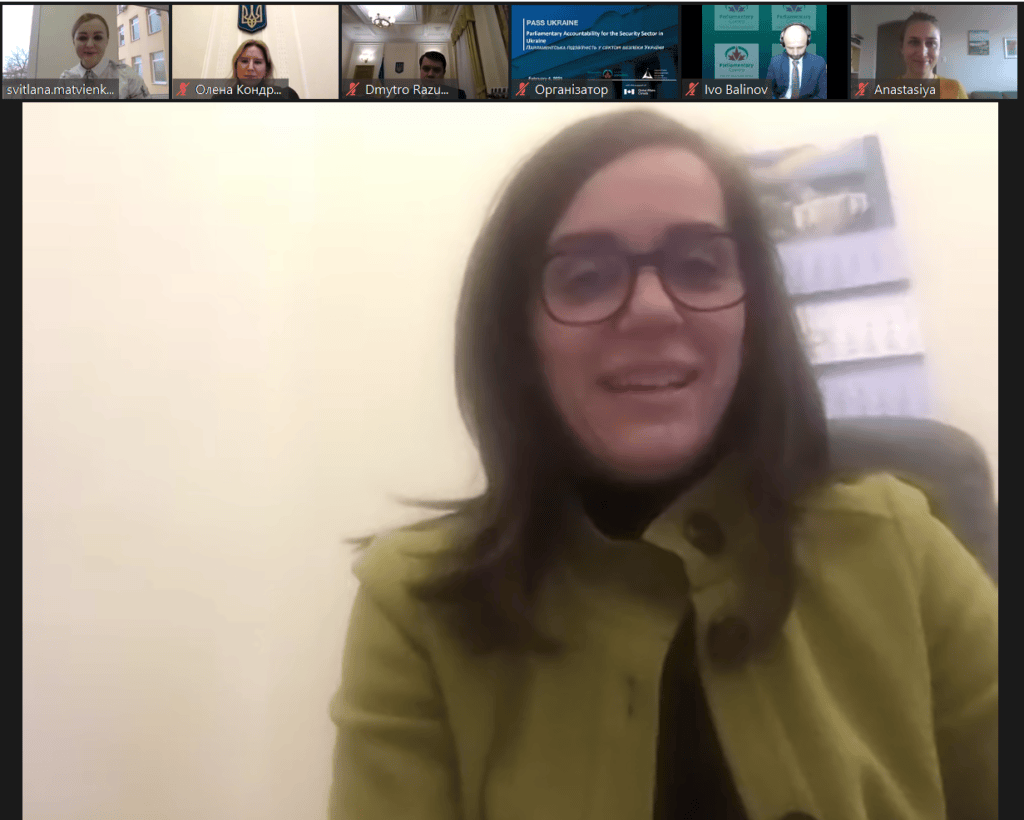
Larisa Galadza, H.E. Ambassador of Canada to Ukraine
“Canada supports this project because we understand that security, defense, and law enforcement are not just the executive branch. It is in these areas, where the state has the strongest power, that strong democratic control must also be ensured. This control is needed not only after the reform but also at the stage of policy formulation and implementation in the security sector”
Andriy Shevchenko, H.E. Ambassador of Ukraine to Canada, also believes that the project “Parliamentary Accountability for the Security Sector in Ukraine” will have a positive impact for both parties:
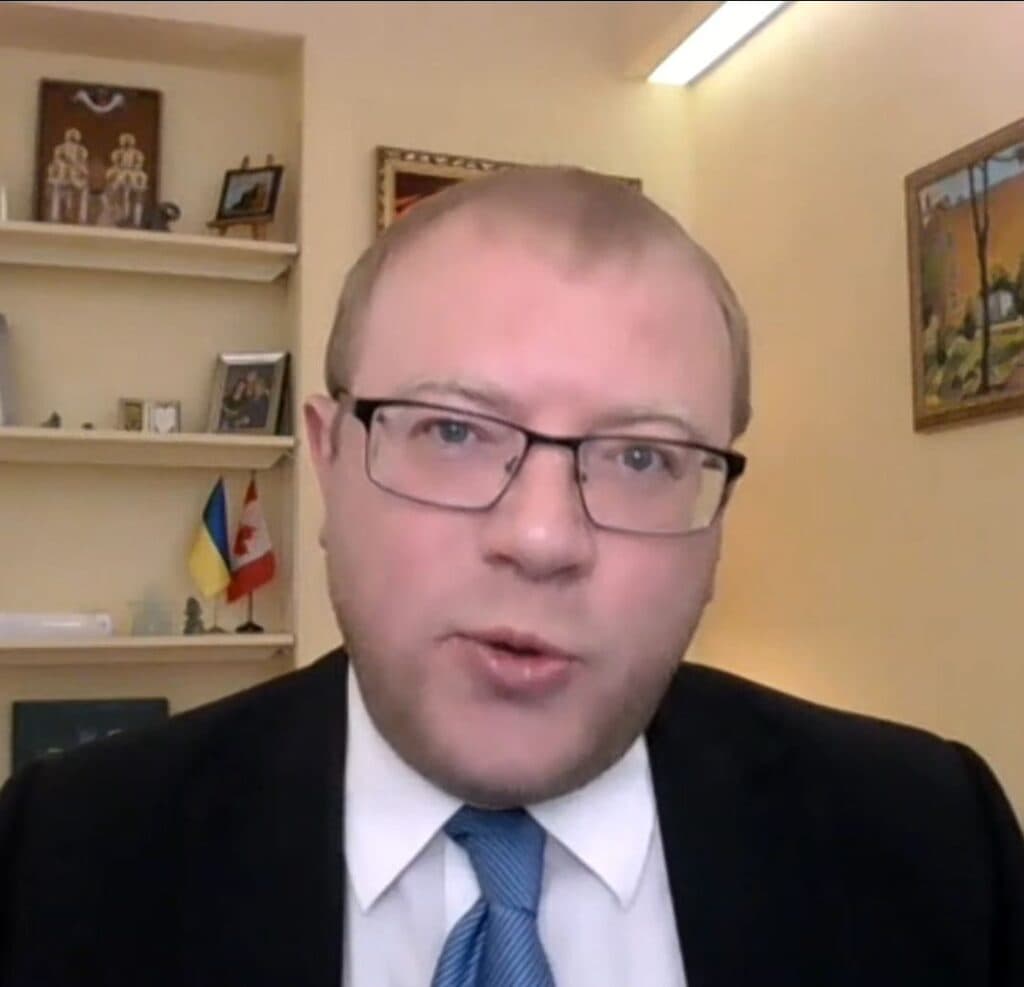
Andriy Shevchenko, H.E. Ambassador of Ukraine to Canada
“I see a lot of benefits from this project for both Ukraine and Canada. First, the project is a complement to existing security cooperation. Secondly, the project should strengthen Ukrainian parliamentarism – both at the level of policy development, and at the level of changes in legislation, and at the level of the control function of the parliament”
Tom Cormier, CEO of the Parliamentary Centre, spoke about the mission of the Canadian Parliamentary Centre and stressed the importance of helping the parliaments in democratic countries.
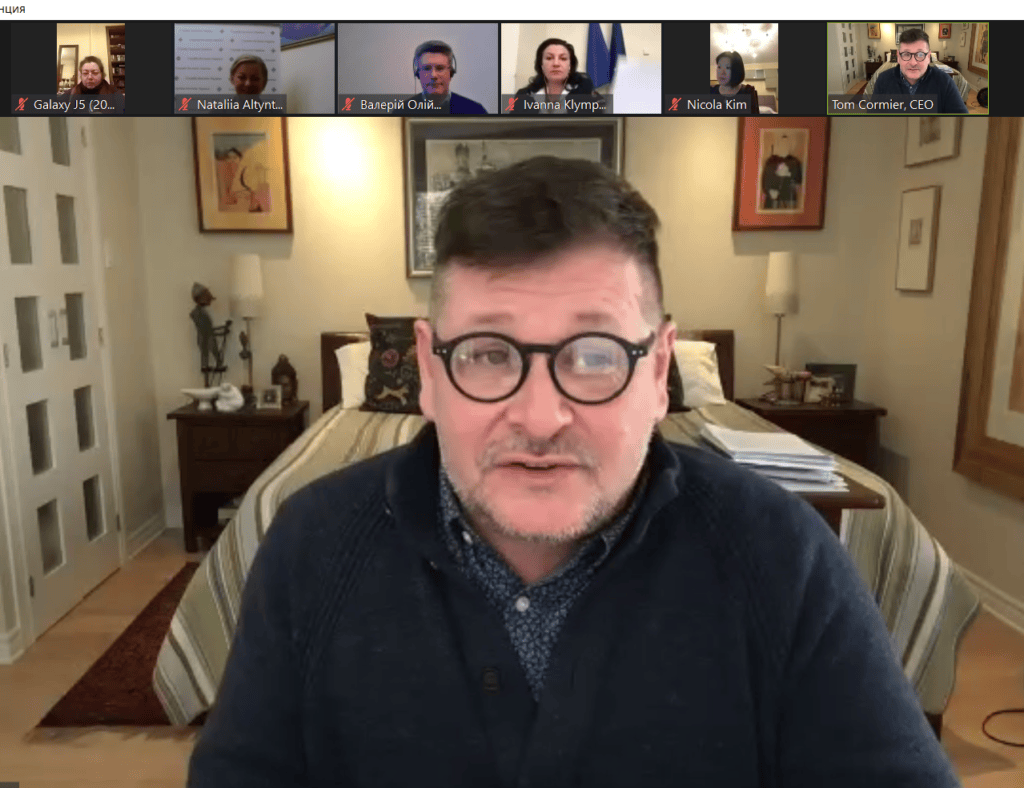
Tom Cormier, CEO of the Parliamentary Centre
“Parliaments have the potential to make important changes that can help overcome the biggest challenges facing society. Especially if these parliaments have connections with the people they serve for if they are supported by professionals, informed by evidence-based research, working with their counterparts in other countries, and having a constructive relationship with the executive branch. We are pleased that this project will focus on achieving all these important goals”
Svitlana Matviienko, Executive Director of the Agency for Legislative Initiatives, noted that the idea of the project has been developed together with representatives of the Verkhovna Rada of Ukraine so that the project would be of maximum benefit to the parliament of this and future convocations.
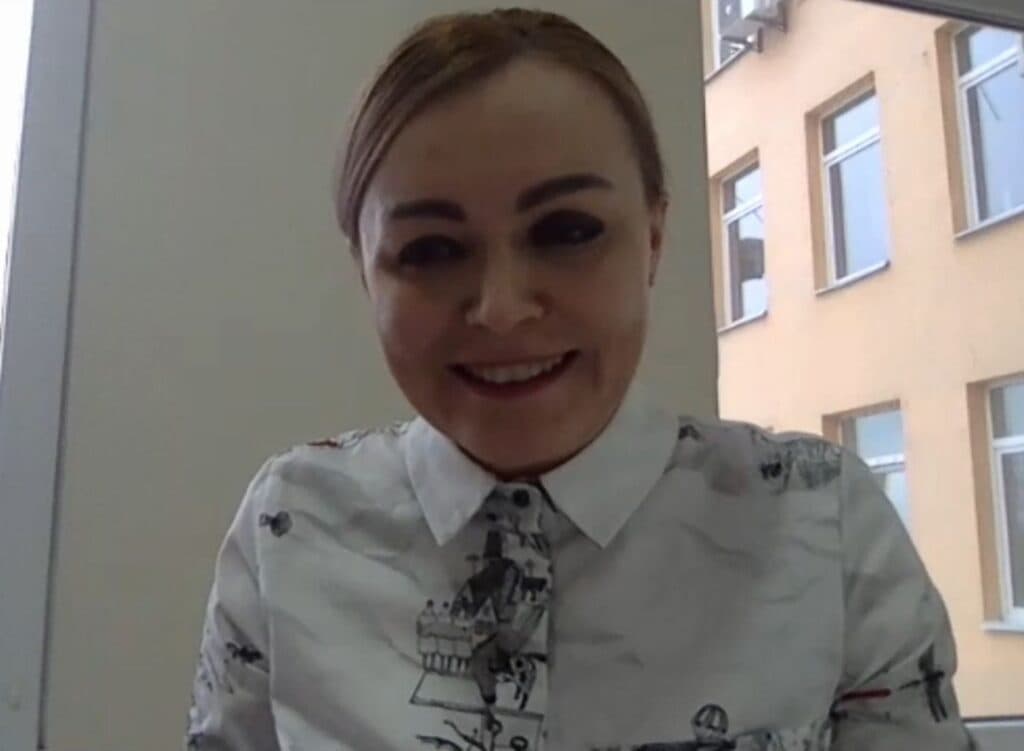
Svitlana Matviienko, Executive Director of the Agency for Legislative Initiatives
“We are very pleased with this partnership. The Agency has been closely involved in the Ukrainian parliament for more than two decades. We hope that this project will not only have an impact on the processes taking place in Ukraine now, but the project will help the next convocations. Inter-parliamentary dialogue is extremely important”
Oleksandr Zavitnevych, Chairperson of the Verkhovna Rada Committee on Security, Defense and Intelligence, and Denys Monastyrskyi, Chairperson of the Verkhovna Rada Committee on Law Enforcement, also expressed their expectations regarding the project.
“We understand the responsibility of our committee in security and defense sector reform. The most well-known problems now are the reform of Ukroboronprom, the creation of an effective management system in the field of defense and industry, the reform of the Security Service of Ukraine (SBU), special services, as well as the development of defense and security capabilities based on NATO standards. I hope that this project will be one of the steps in cooperation with civil society and will contribute to the development of a system of civil control”
Denys Monastyrskyi, Chairperson of the Verkhovna Rada Committee on Law Enforcement, also stressed the importance of strengthening parliamentary control as one of the levers in the reform process.
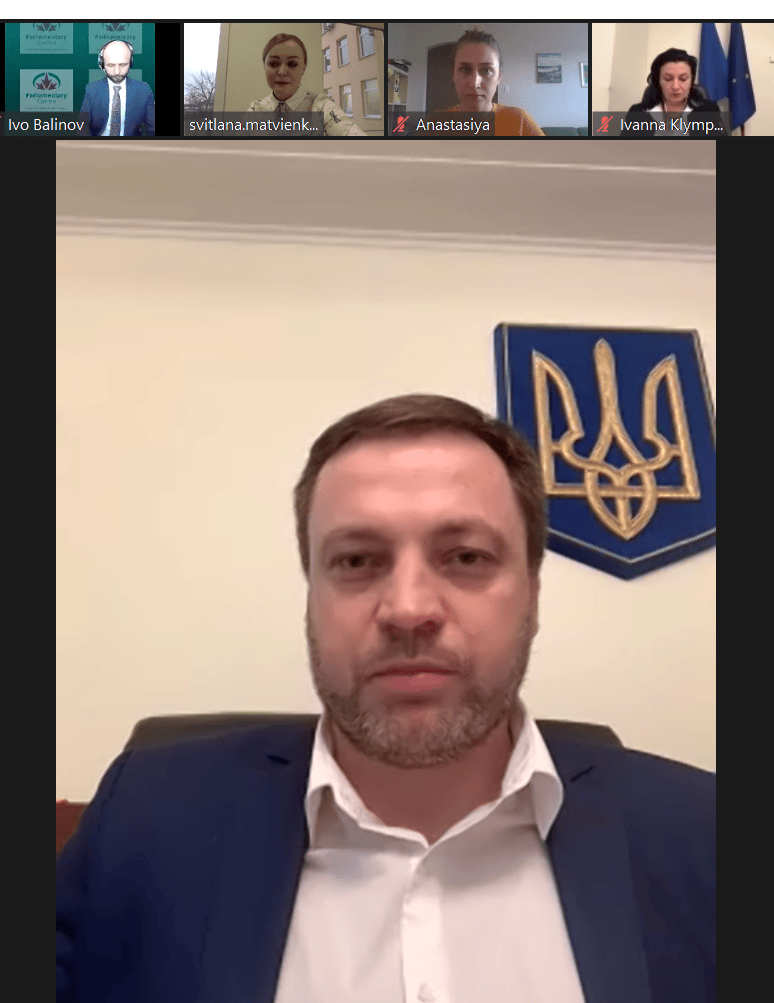
Denys Monastyrskyi, Chairperson of the Verkhovna Rada Committee on Law Enforcement
“Our committee is considering hundreds of draft laws during the session. Of course, there is always the question of strengthening parliamentary control and the committee’s ability to exercise that control. Our committee and other MPs are ready to cooperate. I think that later we will be able to say about the progress of specific draft laws that will help increase the efficiency of law enforcement agencies in Ukraine”
A colleague of Ukrainian parliamentarians from Canada, Yvan Baker, MP, Chairperson of the Canada-Ukraine Parliamentary Friendship Group, said that Canada has always supported Ukraine, especially in matters of security and sovereignty of Ukraine.
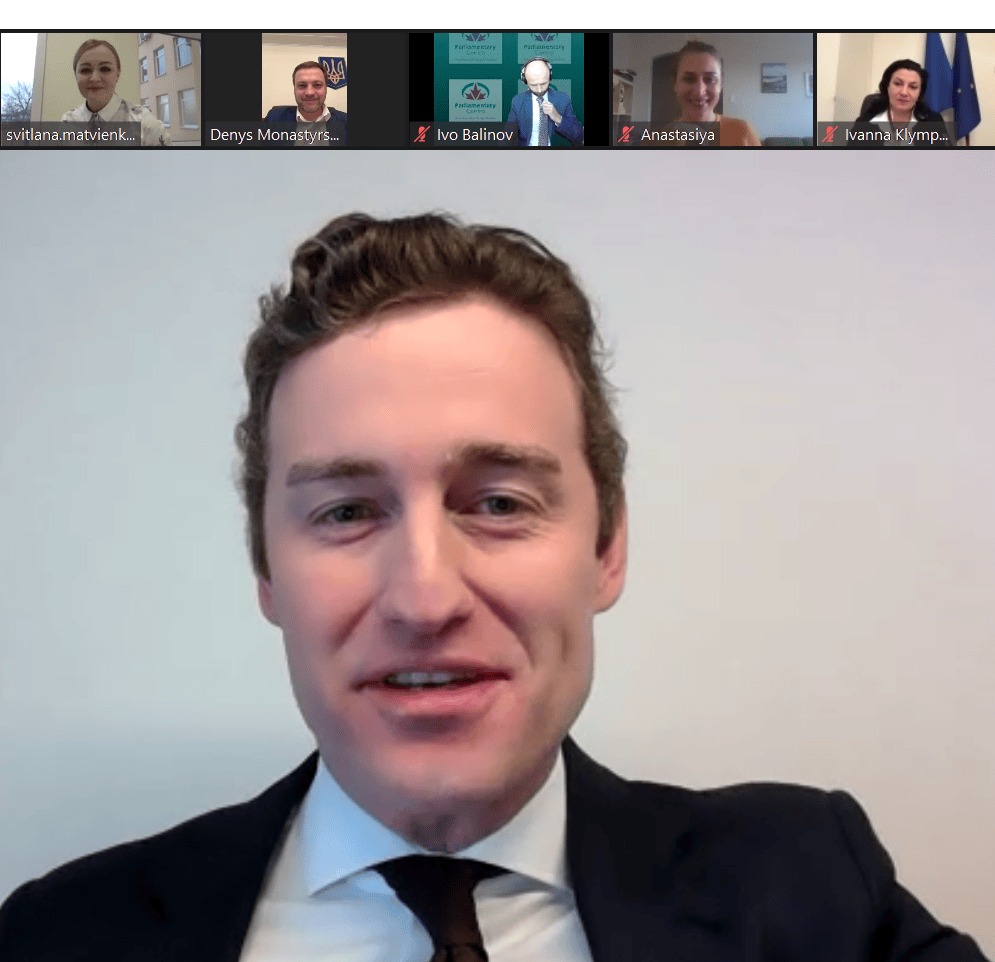
Yvan Baker, MP, Chairperson of the Canada-Ukraine Parliamentary Friendship Group
“Canada’s Deputy Prime Minister Chrystia Freeland often says, ‘Canadian parliamentarians from different parties disagree on many issues, but we are all united in our support for Ukraine’. Canada cooperates with Ukraine in many areas: economic development, military support, trade and investment, and more. One of the reasons for such deep ties between Ukraine and Canada is the large Ukrainian diaspora, whose representatives are very worried about what is happening in Ukraine”
Ivanna Klympush-Tsintsadze, MP, Chairwoman of the Verkhovna Rada Committee on Ukraine’s Integration into the European Union, Member of the Interparliamentary Relations Group with Canada, also noted that Ukraine needs substantial expert support from the Canadian side to continue the path of comprehensive reform.
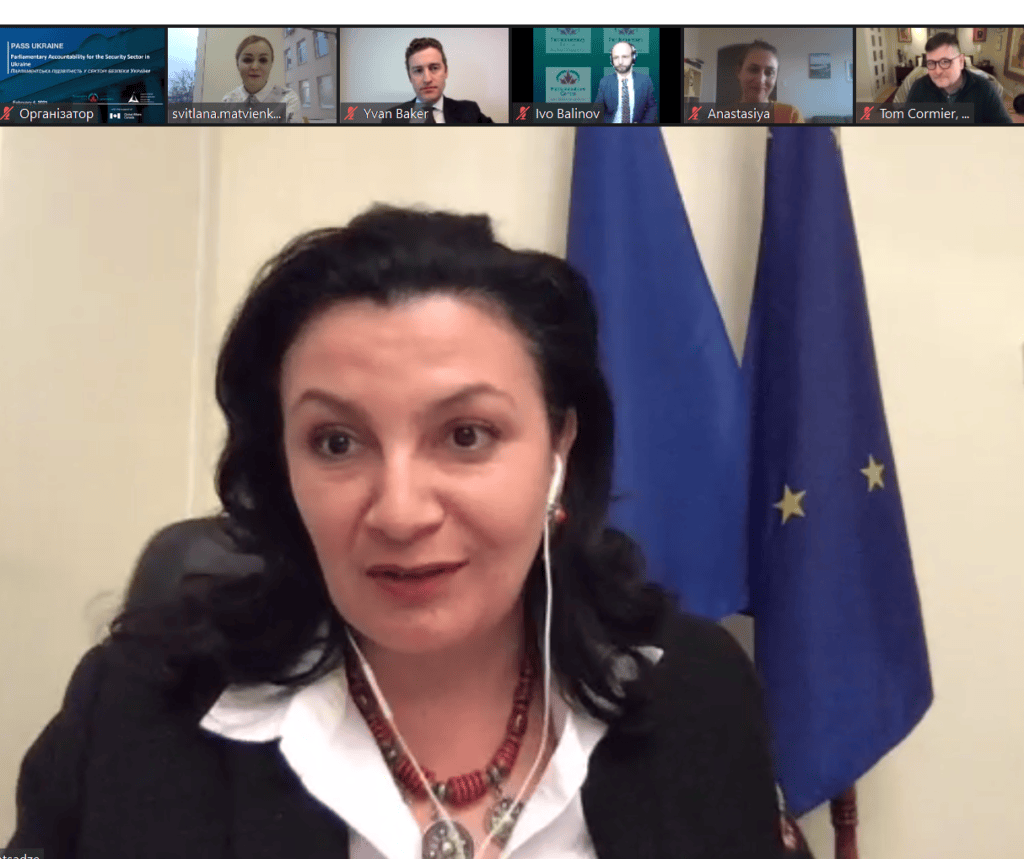
Ivanna Klympush-Tsintsadze, MP, Chairwoman of the Verkhovna Rada Committee on Ukraine’s Integration into the European Union, Member of the Interparliamentary Relations Group with Canada
“It is important to continue parliamentary work and improve control mechanisms and their use. In addition, gender equality is not just about statistics, representation, and quantitative indicators. It is also about the value component, institutions, and change of culture, so this task is not for one or two years”
Anita Vandenbeld, Member of the House of Commons of Canada, Parliamentary Secretary to the Minister of Defense of Canada, said that cooperation within the project is very important because in this way Canadian and Ukrainian MPs will be able to share best practices bilaterally. She also called for a gender component to be included in the discussions on defense sector reform, as the inclusion of women in the dialogue could help to look at the problem from a different angle and find new solutions.
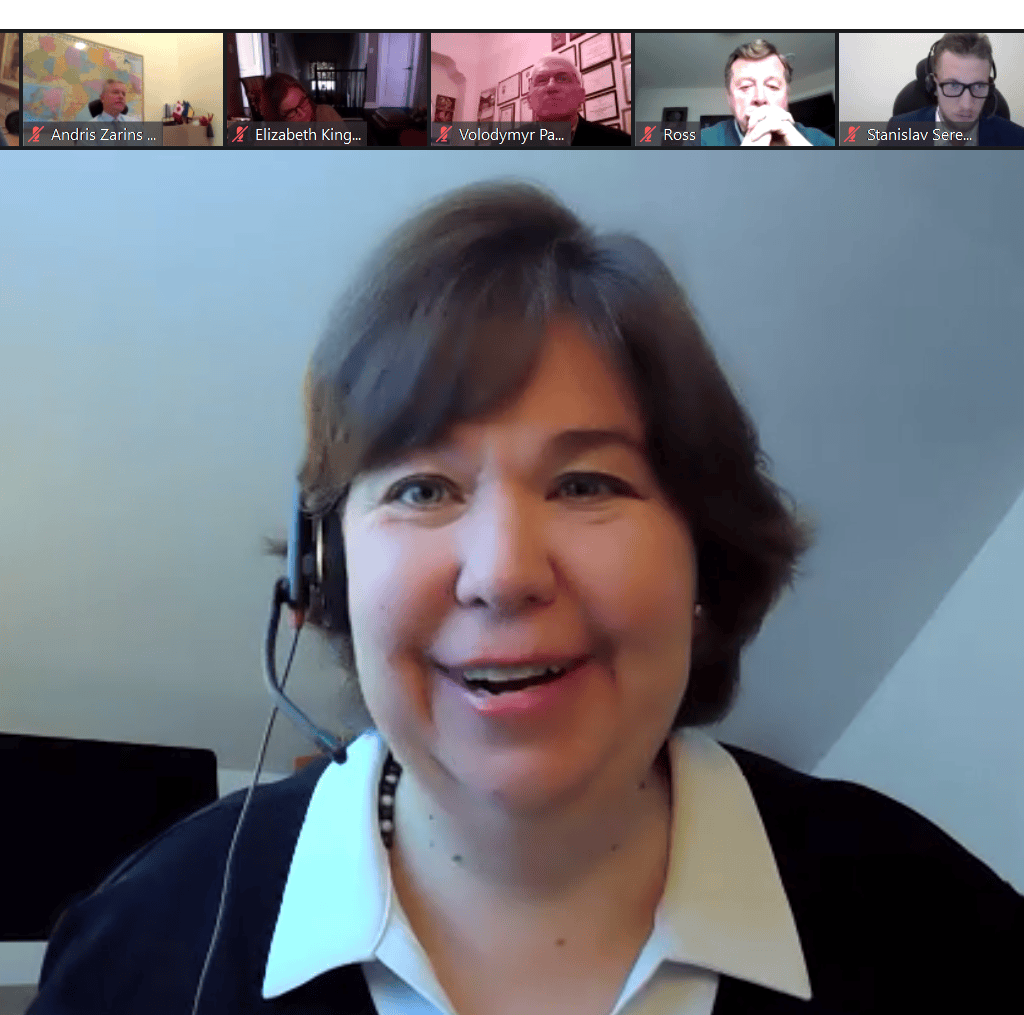
Anita Vandenbeld, Member of the House of Commons of Canada, Parliamentary Secretary to the Minister of Defense of Canada
“Why is it important to mention gender when we talk about security and defense? Women experience conflicts differently. The military aggression has the greatest impact on women and children. Women also play a key role in post-conflict reconstruction. This is confirmed statistically: when women participate in peace negotiations, peace agreements and stability last much longer. It also works in another direction – we need to involve men in committees on women’s issues. Different backgrounds, different experiences are really important for solving complex problems”
At the end of the opening event, the Director of the Analytical Department of the Agency Oleksandr Zaslavskyi and the Director of the Partnerships and Program Development of the Parliamentary Centre Ivo Balinov spoke in detail about the essence, stages, and components of the project “Parliamentary Accountability for the Security Sector in Ukraine”.
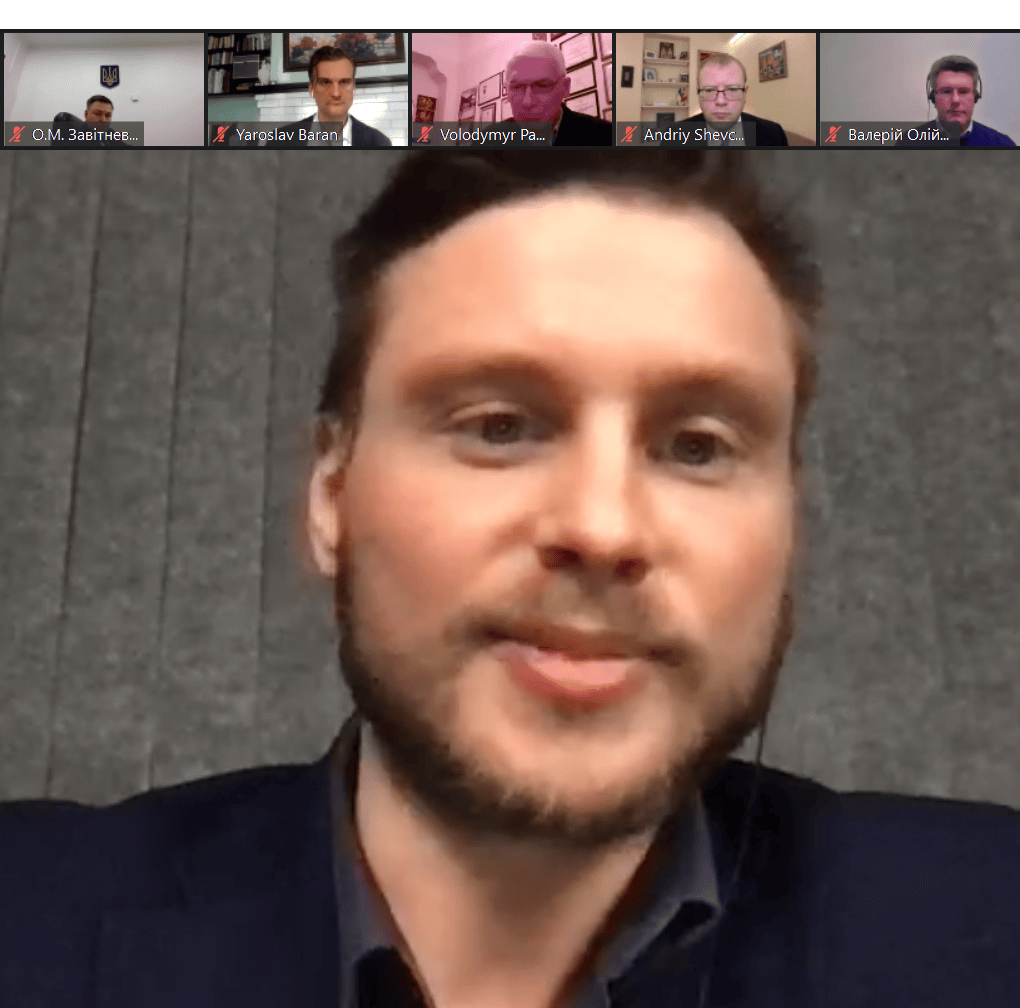
Director of the Analytical Department of the Agency Oleksandr Zaslavskyi
“An important component of the project is to support the decision-making process, much of which passes through the Verkhovna Rada of Ukraine. The key role in the reform of the security sector by the Verkhovna Rada is played by two committees – the Committee on Security, Defense and Intelligence and the Committee on Law Enforcement. We are aware that these are two different reforms in terms of content. However, they are united by one goal – to ensure peace, stability and territorial integrity in Ukraine, including by advancing Ukraine in the Euro-Atlantic direction”
In turn, Ivo Balinov noted that the Agency and the Parliamentary Centre are ready to cooperate with other projects that Canada is implementing in Ukraine in the security and defense sector.
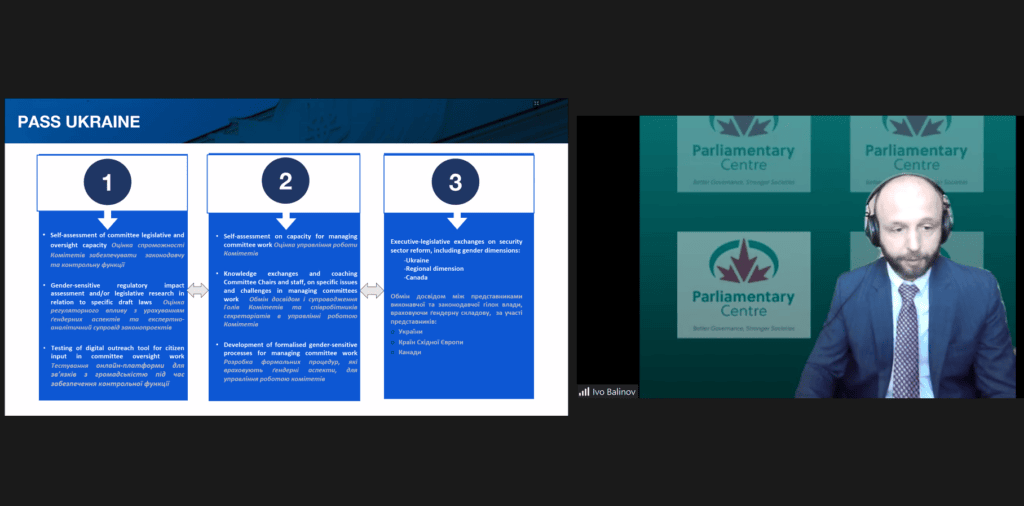
Director of the Partnerships and Program Development of the Parliamentary Centre Ivo Balinov
“There are many projects in Ukraine – with the support of Canada and other Euro-Atlantic partners – that focus on various aspects of defense sector reform. These are projects that cooperate with the National Police and projects aimed directly at the defense industry. Therefore, we are open to cooperation with these projects for the benefit of Ukraine”
The participants of the event expressed their readiness for fruitful cooperation during the implementation of the project “Parliamentary Accountability for the Security Sector in Ukraine”. All in order for the security sector reform in Ukraine to continue to move in the right direction, and for the defense industry to continue to develop according to the best international standards.
Corporatization of Defense Enterprises in the Draft Law №3822 — What and Why?
What are the purpose and main tasks of the draft law “On the peculiarities of reforming the enterprises of the military-industrial complex of the state form of ownership” (№3822)?
As stated in the preamble, the main purpose is to determine the features of legal, economic, and organizational regulation of the transformation of the State Concern “Ukroboronprom” into a joint-stock company, state unitary enterprises, including state-owned enterprises that are part of “Ukroboronprom” – into companies, as well as the introduction of a corporate model of management of state-owned objects in the military-industrial complex (hereinafter – MIC).
In other words, draft law №3822 introduces the idea of expanding the powers of Ukroboronprom as a managing economic structure in the defense industry together with expanding the powers of its Supervisory Board.

This draft law will be the first but very important step in the transformation of the defense industry, as it will provide a legal basis for the transformation of defense companies into state joint-stock companies.
The project regulates how the Concern and its members should be reformed in three stages:
- the first stage of reform involves preparing the members of the Concern for reorganization.
- the second stage of reform envisages the formation of companies in two alternative ways: the transformation of a member of the Concern into a company in the organizational and legal form of a joint-stock company or limited liability company; or joining the members of the Concern to another participant and simultaneously transforming such participant into a business company according to a special procedure.
- the third stage of reform envisages the transformation of the Concern into a joint-stock company, which will include the following actions:
- The Cabinet of Ministers of Ukraine must decide on the reorganization of the Concern through its transformation into a joint-stock company and approval of the charter;
- On the basis of the decision of the Cabinet of Ministers of Ukraine – introduction into the authorized capital of the joint-stock company of blocks of shares (shares) of the companies formed at the second stage;
- With the Cabinet of Ministers’ consent based on the joint-stock company’s decision, the shares of companies formed in the second stage may be contributed to the authorized capital of another company formed as a result of the transformation of a Concern.
On January 19, 2021, the Central Scientific Experts Office (CSEO) of the Verkhovna Rada published a negative conclusion on this draft law.
CSEO believes that the draft law №3822 needs to be refined from terminology to conceptual provisions that could lead to negative consequences. The conclusion consists of 12 points, which indicate the creation of special conditions for Ukroboronprom and the provision of unjustified benefits to enterprises or officials of Ukroboronprom, which are not in accordance with applicable law.
“Such a disposition of state property creates opportunities for the actual privatization of state-owned defense enterprises and companies formed on their basis outside the Law of Ukraine “On Privatization of State and Municipal Property” – it is stated in conclusion.
Besides, CSEO recommends that the parliament obtain an expert opinion from the Cabinet.
On January 20, 2021, the Verkhovna Rada Committee on National Security, Defense and Intelligence considered the draft law and recommended that it be included in the agenda of the session and adopted as a basis. It is noted that, according to the draft law, a modern model of corporate governance is being introduced at the Concern’s enterprises, which will protect them from corruption risks, conflicts of interest, and direct political influence. In addition, Ukroboronprom’s enterprises will be rehabilitated at all levels: financial, social, and production-technological.
On the last day of the fourth session of the Verkhovna Rada, January 29, the parliament adopted the draft law in the first reading. Now the draft law awaits amendments from MPs.
Ukroboronprom itself believes that the draft law can be passed by April 30, 2021, after which, by the end of June 2021, the Concern will be liquidated. A new defense holding company in the form of a joint-stock company will be created on the basis of its 65 most promising enterprises. In addition, branch business units will be established in the form of joint-stock companies, united in the areas of aircraft repair, armored vehicles, radar systems, marine systems, high-precision weapons, ammunition, and special chemicals.
The corporatization of Ukroboronprom is a step in line with the OECD Guidelines (Organization for Economic Co-operation and Development, with which Ukraine cooperates).
The OECD Guidelines define generally accepted international standards of corporate governance. Transforming Ukroboronprom in line with these OECD recommendations, in particular through the adoption of draft law №3822 and the implementation of the prescribed steps, will mean that Ukraine will have opportunities for transparent and accountable governance in the defense industry and, consequently, for cooperation with international partners and investors.
Analytics of the Day: Why Is Ukraine Still Not in NATO?
Why is Ukraine still not in NATO? Ukrainian President Volodymyr Zelensky wants to address this question to the new US President Joe Biden. But the American president is unlikely to have an answer to this question. After all, he cannot push the magic button for Ukraine to become a member of the North Atlantic Alliance. This button does not exist at all. Instead, for the issue of Ukraine’s full membership in NATO to be taken seriously, the country must accomplish many tasks.

Ukraine began cooperating with NATO almost immediately after independence. We were one of the first countries in the post-Soviet space to join NATO’s Partnership for Peace program. Since then, fruitful cooperation between Ukraine and the North Atlantic Alliance has begun, which could well have escalated into more serious membership talks in 2005-2008. Then Ukraine has officially announced its intention to become a member of the Alliance.
But in 2010, during Viktor Yanukovych’s presidency, Ukraine’s foreign policy was changed – the authorities changed their minds and chose a non-aligned status for Ukraine + distance from NATO + rapprochement with Russia. Ukraine could return to “joining NATO” only in 2014 when the war with Russia had already begun. In 2019, this course was enshrined in the Constitution. But this is not enough for the North Atlantic Alliance membership.
Ukraine must confirm its intentions with specific actions and indicators. To this end, Ukraine annually approves the NATO-Ukraine Annual National Program. This program sets out measures to implement reforms that meet Alliance standards. If Ukraine implements the Annual National Programs properly, it will be able to join the NATO Membership Action Plan to prepare for potential membership and demonstrate its ability to meet its commitments. But participation in this program is not a guarantee of membership for Ukraine or any other country.
The North Atlantic Council decides to invite a country to become a full member of NATO based on consensus among all Alliance members. That is, not the American president can make this decision.
20th Anniversary of the UN Security Council Resolution “Women, Peace and Security”
Exactly 20 years ago, on October 31, 2000, UN Security Council Resolution 1325, better known as “Women, Peace and Security”, was adopted. We want to talk about its main provisions and importance for our country.
Although the resolution was adopted 20 years ago, the world community, namely the UN Security Council, is actively improving it. In support of the implementation of this resolution in 2008-2019, 9 more UN Security Council resolutions were adopted under the following numbers: 1820, 1888, 1889, 1960, 2106, 2122, 2242, 2467, 2493.

Ukraine, as a member of the UN, must also implement the provisions of the resolution. In particular, in February 2016, Ukraine adopted a National Action Plan to implement UN Security Council Resolution 1325 “Women, Peace and Security” for the period up to 2020. Before the 20th anniversary, Ukraine adopted the second National Plan.
What are the main provisions of the resolution?
- The special importance of taking into account the needs of women and girls in conflict situations and women’s special vulnerability to the negative consequences of conflicts are noted.
- The Security Council calls on UN member states to actively involve women in decision-making at all levels through national, regional, and international institutions and mechanisms for conflict prevention, management, and resolution.
- UN member states call for the inclusion of a gender component in field operations, particularly the greater involvement of women in the military and police forces.
Subsequent UN Security Council resolutions, in support of Resolution 1325, were aimed at combating sexual violence during conflicts, increasing women’s involvement in the conflict and post-conflict situations, and more.
Why is this resolution important?
The resolution became the institutional framework for the integration of women into the security sector. More than 60 countries (including Ukraine) have already adopted national action plans to implement Resolution 1325. NATO and the EU have also adopted action plans. Involving women in decision-making and increasing the representation of women in the military and police significantly increases the effectiveness of combating gender-based violence and improves the consideration of women’s needs in conflict situations.
Ukraine already has the first achievements from the implementation of Resolution 1325. Positions of gender advisers are created in educational institutions of security and defense, a law on equal rights and opportunities for women and men during military service in the Armed Forces is adopted, the list of military specialties that women can occupy is expanded, and more than 27 thousand women serve in the Armed Forces.
However, the Ukrainian implementation of the resolution is also criticized: women mostly hold feminized positions in logistics, logistics, and medical services. Despite the formal expansion of the list of military specialties, there is informal resistance to the increase in women’s number in the security and defense sectors. There are almost no women in the leadership (especially at the rank of “colonel” and above).
Resolution 1325 and other resolutions in support of it (the last of which was adopted in 2019), action plans, demonstrate efforts to integrate women into peacekeeping and security processes, but they are also a signal of the inadequacy of such efforts. The problems addressed by resolution 1325 have not yet been resolved. Therefore, 20 years after adopting the resolution “Women, Peace and Security”, it is necessary to increase efforts to implement it.
Virus and Politics: How Does the Coronavirus Pandemic Affect Political Processes?
Coronavirus is like a hurricane traveling the world. It takes lives, destroys economies, leads to the closure of State borders, the imposition of a state of emergency, and the imposition of severe quarantine. So how do those who are supposed to fight hurricanes work in these conditions? How does global turbulence affect individual governments?
It would seem that, in today’s situation, the institutions of each country must work as cohesively as ever: to unite for a common purpose, to develop a strategy of struggle quickly, and to carry out every step of it. But in some countries, instead of clarity and coherence, there is fear, confusion, and lack of communication, both within institutions of power and externally with society.

For ordinary citizens, the coronavirus pandemic is a hurricane, but for politicians, it is yet another spiral of opportunity and threat. Some may take a more advantageous position, while others may stay out of politics. The ruling forces are struggling to stabilize the situation and maintain their position, and the opposition is secretly hoping for government failures that will lead to a change of power.
In Ukraine, a coronavirus hurricane has already knocked down two ministers. And the vote to replace them for the first time did not find sufficient support. A fifth of the mono-majority splintered, jeopardizing the availability of financial assistance from the IMF. In the end, the right number of votes was found with the help of other factions, but a split majority in a crisis is a pretty dangerous signal. And Ukraine is not alone in the political vortex caused by the coronavirus.
Spain
Spain and Italy are on the brink of a political crisis. In Spain, the government failed to respond in time to the pandemic that was coming and alert its citizens.
Spain now has a weak minority government, so Prime Minister Pedro Sanchez did not want to risk his fragile hold on power by imposing harsh quarantine measures when the virus has not yet done much damage to the country. In early March, football matches were still taking place in Spain, attracting thousands of people. On 8 March, a rally for women’s rights, attended by 120,000 people, was not banned.
Together with the authorities, the seriousness of the disease was not understood by the citizens, who continued to live a normal life when it was necessary to prevent COVID-19 from spreading. As a result, the virus invaded Spain very quickly. The health care system, long considered one of the most efficient and quality in the world, is now unable to cope with the influx of COVID-19 patients.
France
French President Emmanuel Macron declared a coronavirus pandemic a war and called on citizens to mobilize. Together with other European countries, France has declared a quarantine, and citizens were allowed to leave the house only to buy food, visit a doctor, or go to work. Also, during the acute phase of the pandemic, all ongoing reforms were suspended, and the second round of municipal elections was postponed.
Germany
Germany has also declared a quarantine. In her address, Chancellor Angela Merkel noted the danger of the virus, which required mobilization and would probably lead to a change in the German citizens’ way of life. What does that mean for Miss Merkel herself? Since 2018, she has stated that by 2021 she intends to return to academic activities, leaving the post of Chancellor. But the coronavirus pandemic may adjust these plans. There is a possible scenario of postponing the next election and preserving the current political configuration for a period of crisis and recovery.
Although France and Germany have been criticized for the slow response to the pandemic, these countries have relatively calmly «gone» to quarantine, imposing extraordinary but necessary restrictions to combat the spread of the infection.
Hungary
In Hungary, the government led by Prime Minister Viktor Orban received carte blanche. Parliament granted him unlimited powers to manage the emergency, which were introduced through the coronavirus. Powers were granted indefinitely.
As a result, because of the pandemic, Parliament had been closed, future elections had been canceled, and, during the state of emergency, referendums could not be held. In fact, in Hungary, all power is now concentrated in the hands of only one State institution – the government. Therefore, Hungarian democracy found itself in a very precarious position. In particular, given that a state of emergency had been introduced, prison sentences were imposed for violations of epidemiological measures and the dissemination of false information. The latter, in turn, threatens the independent media against which the government, with unlimited power, can start a war.
Israel
In Israel, Prime Minister Benjamin Netanyahu appears to have been able to use the coronavirus to his advantage. In less than a year, the Knesset has been re-elected three times in Israel, and Netanyahu has been charged with corruption. However, the pandemic allowed the country to declare a state of emergency on 19 March. Criminal proceedings and questions about changing the premier have now been postponed.
Belgium
Belgium provided an example of cohesion during the crisis. Since May 2019, this country wasn’t able to form a new Government. But the outbreak of coronavirus infection has spurred political forces to unite – in a short time, an interim government has been established that will act with the sole purpose of overcoming the coronavirus.
The provisional government in Belgium gained extraordinary power. It will be able to pass the necessary laws to counter the pandemic without the need for a full legislative process and parliamentary approval. Such laws shall be declared by royal decree and shall take effect immediately. Some Belgian parliamentarians have expressed fear that the new government will abuse its power on issues unrelated to the fight against the virus. But whether this will harm democracy will be seen later. So far, the good news is that there are officials in Belgium who have taken responsibility for controlling the disease.
«Republic of Kosovo»
At the height of the European pandemic, the Parliament, unrecognized by Ukraine, of the «Republic of Kosovo» dismissed the government there, which had managed to work for less than two months. This occurred after the coalition was unable to agree on a state of emergency. The day before, the Head of the Government of the «Republic of Kosovo» dismissed the Minister of the Ministry of Internal Affairs, who called for a state of emergency. In the opinion of the Prime Minister, such a drastic step is not justified, and the head of the Ministry of Internal Affairs «spread panic, stating that the number of people infected by coronavirus increases with each hour».
As a result, the party, of which the «Minister of the Ministry of Internal Affairs» was a member, initiated the resignation of the entire local «government». The political crisis began in the country. How the «state apparatus» will function now is unknown. It is impossible to hold «early elections» due to the spread of the disease.
But the coronavirus pandemic is not just affecting domestic politics. Some countries try to exploit the vulnerability of other States to their advantage.
Russia on the international scene
Russia sent to Italy, the epicenter of coronavirus in Europe, disinfectants and military generals – the trademark of Russian «humanitarian aid». In this way, perhaps, Russia is trying to solidify itself on the political stage in Italy, one of its largest supporters in the European Union Russia wants to strengthen its arguments in favor of lifting or at least easing the sanctions because of coronavirus – a global threat that overshadows all existing conflicts.
The influence of Russia can also be seen in the temporarily occupied territories of Donetsk and Luhansk regions of Ukraine. The leaders of the French and German Foreign Ministries reported the previous day that the ORDLO occupiers were using the coronavirus as a cover to obstruct the work of the OSCE monitors. In particular, the militants restricted the access of the Special Monitoring Mission in the occupied territory of the Donetsk region due to the «quarantine». Therefore, the actual status of morbidity in the temporarily occupied territories of Donetsk and Luhansk regions of Ukraine is hidden from international observers.
The coronavirus hurricane is not over yet, but it has helped some countries to form a new government and consolidate themselves, another to consolidate the old power, and yet others to reverse the destruction of the old political landscape. Its winds have already brought new practices of telecommuting to government, electoral and other innovations into the political life of the world. The political plane «after the quarantined world» can suffer no less substantial, irreversible, and unpredictable changes than the daily life of people.
Who Can Declare a State of Emergency?
The number of patients with coronavirus in Ukraine, as well as around the world, is growing. To combat the disease, many states are imposing a state of emergency. Among those who have already declared a state of emergency: the Czech Republic, Estonia, Spain, Bulgaria, Portugal, Italy, Serbia, Lebanon, and most US states, this list can go on. As of the evening of March 19, 26 cases of coronavirus have been registered in Ukraine, and if the situation worsens, a state of emergency is likely to be imposed in Ukraine as well.

Moreover, some media outlets already say that a state of emergency has been declared in three regions of Ukraine. However, this is not the case. An emergency situation was imposed in Chernivtsi, Zhytomyr, and Kyiv regions, not a state of emergency. They have different methods of introduction and different legal consequences.
The Agency for Legislative Initiatives recalls the legal features of the mechanism of imposing a state of emergency.
The Constitution regulates the procedure for imposing a state of emergency, the Rules of Procedure of the Verkhovna Rada, and the Law “On the Legal Regime of the State of Emergency”.
The WHO has declared a coronavirus pandemic. A pandemic that threatens the lives and health of large sections of the population is, following paragraph 1 of Part 2 of Art. 4 of the Law “On the legal regime of the state of emergency”, one of the conditions for the introduction of the state of emergency. If this threat to the security of the citizens of Ukraine cannot be eliminated in other ways, then a state of emergency must be imposed.
If there are conditions (pandemic) in Ukraine for the imposition of a state of emergency, the National Security and Defense Council or the Cabinet of Ministers shall submit proposals to the President on the imposition of a state of emergency in Ukraine or in certain regions.

The President issues a decree on the imposition of a state of emergency. This decree should contain information on:
1) justification of the need to impose a state of emergency, following Art. 4 of the Law “On the legal regime of the state of emergency.”
2) the boundaries of the territory where the state of emergency is imposed: it can be separate territories or the whole territory of Ukraine.
3) the time from which the state of emergency is imposed and the period for which it is imposed: no more than 30 days for the territory of the whole of Ukraine and no more than 60 days for certain regions of Ukraine.
4) list and limits of emergency measures, an exhaustive list of constitutional rights and freedoms that are temporarily restricted: mainly this applies to restrictions on freedom of movement, movement of vehicles, restrictions on mass meetings, establishing a particular order of enterprises and introducing a special order of distribution of food and necessities. The rights defined in part two of Art. 64 of the Constitution cannot be restricted.
5) state authorities, military command bodies and local self-government bodies entrusted with the implementation of emergency measures, and the limits of their additional powers;
After signing the decree, the President immediately addresses the Verkhovna Rada.

The Verkhovna Rada convenes within two days without holding a meeting to consider the issue of approving the Presidential decree. This issue does not require prior preparation in committees. It does not require inclusion in the agenda of the session, the schedule of plenary sittings of the session, the weekly agenda of plenary meetings of the Verkhovna Rada. The draft law on the approval of the relevant presidential decree is considered according to the procedure of the first reading and adoption of the law as a whole.
The Verkhovna Rada may adopt in full, in part with recommendations and/or reservations, or reject the draft law approving the relevant presidential decree.
The media immediately declare the approved decree on the state of emergency.
At the same time, Ukraine informs the states that have signed the International Covenant on Civil and Political Rights, on the restriction of the rights and freedoms enshrined in this Covenant during the state of emergency.
If the threat to the safety of citizens is eliminated, the President may, by his decree, lift the state of emergency earlier than the term for which it was imposed. Proposals to raise the state of emergency are submitted to the President by the Verkhovna Rada or the Cabinet of Ministers.
If necessary, the state of emergency may be extended, but not more than for 30 days. The Verkhovna Rada must approve the Presidential Decree on the continuation of the state of emergency of Ukraine.
Against the proposals of the Cabinet of Ministers to change the mechanism of the state of emergency, it should be emphasized that in accordance with paragraph 31 of Art. 85 and item 21 of Art. 106 of the Constitution (and the Constitution is higher than other laws), the approval by the Verkhovna Rada of the Presidential decree on the imposition of a state of emergency is mandatory. Without the adoption of amendments to the Constitution, the transfer of the President’s authority to impose a state of emergency alone is unconstitutional.
Thus, a state of emergency is imposed on the proposal of the National Security and Defense Council or the Cabinet of Ministers through the issuance of a presidential decree to be approved by the Verkhovna Rada. A state of emergency may be declared on the territory of certain localities for 60 days, or on the territory of the whole of Ukraine for 30 days. After that, it can be extended for another 30 days. If the threat to the safety of citizens is eliminated, the President may terminate the state of emergency ahead of time.
Workshop “Upcoming Elections – Avoiding Risks in Cyber”
During the elections, political parties must learn how to resist cyber threats. Therefore, the Agency of Legislative Initiatives in partnership with Cybexer Technologies (Estonia) on July 9 held a training on “Upcoming Elections – Avoiding Risks in Cyber” in Kyiv for representatives of communications departments of parties, digital marketing departments of parties, information technologies and security departments of parties, as well as party members who are running for parliament during this election.
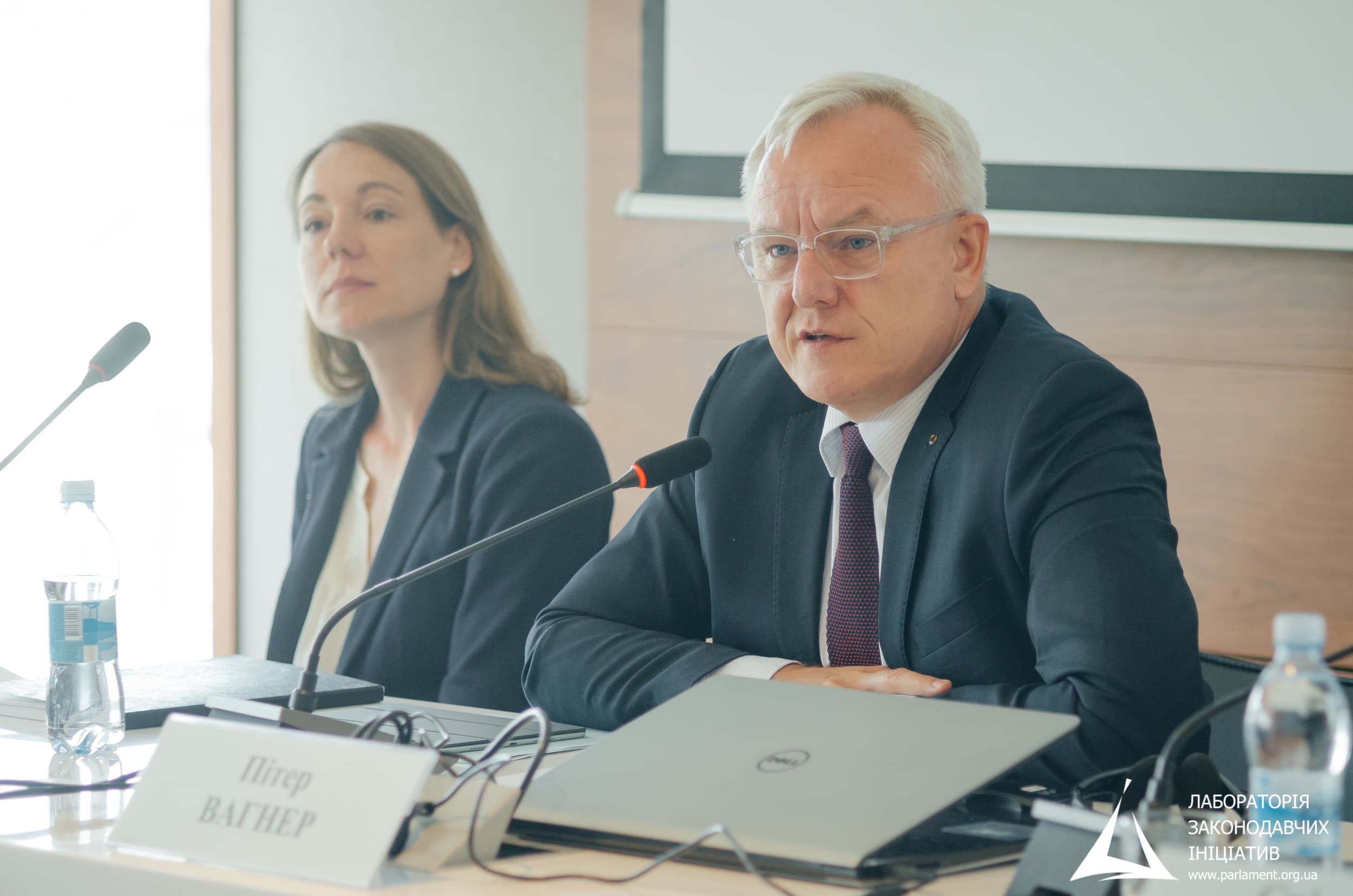
“Securing free and fair elections has become a fundamental pillar of a functioning democracy. The EU will continue to support Ukraine by reinforcing its legislative framework, strategy and coordination mechanisms that are in line with EU legislation and best practices, particularly with the EU Directive on security of network and information systems (NIS Directive)”, – summarized the Head of the Support Group for Ukraine at the European Commission Peter Wagner.
During the training, participants learned the best way to protect company information systems from manipulation, how to raise awareness of party members about targeted cyber breaches, such as phishing attacks and advanced persistent threats (APT), fake news, leaking, and ransomware.
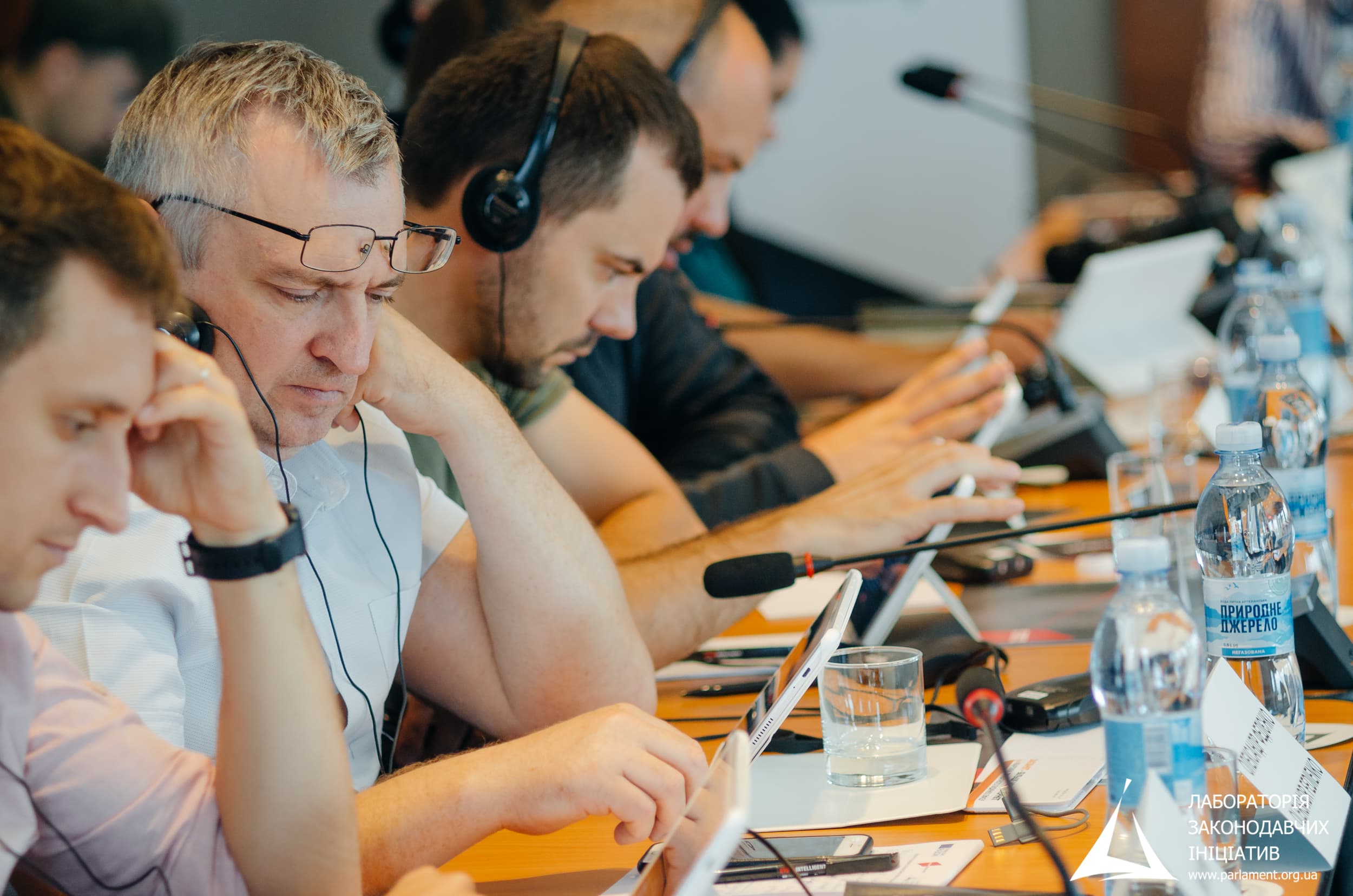
In addition, each party representative has undergone individual online training about digital literacy and has completed a digital test that can identify areas of cyber risk in different categories, such as personal attitude, knowledge about technology, exposure to social media and organizational culture. As a result of testing, participants received recommendations on how to protect themselves and their party from specific cyber threats.
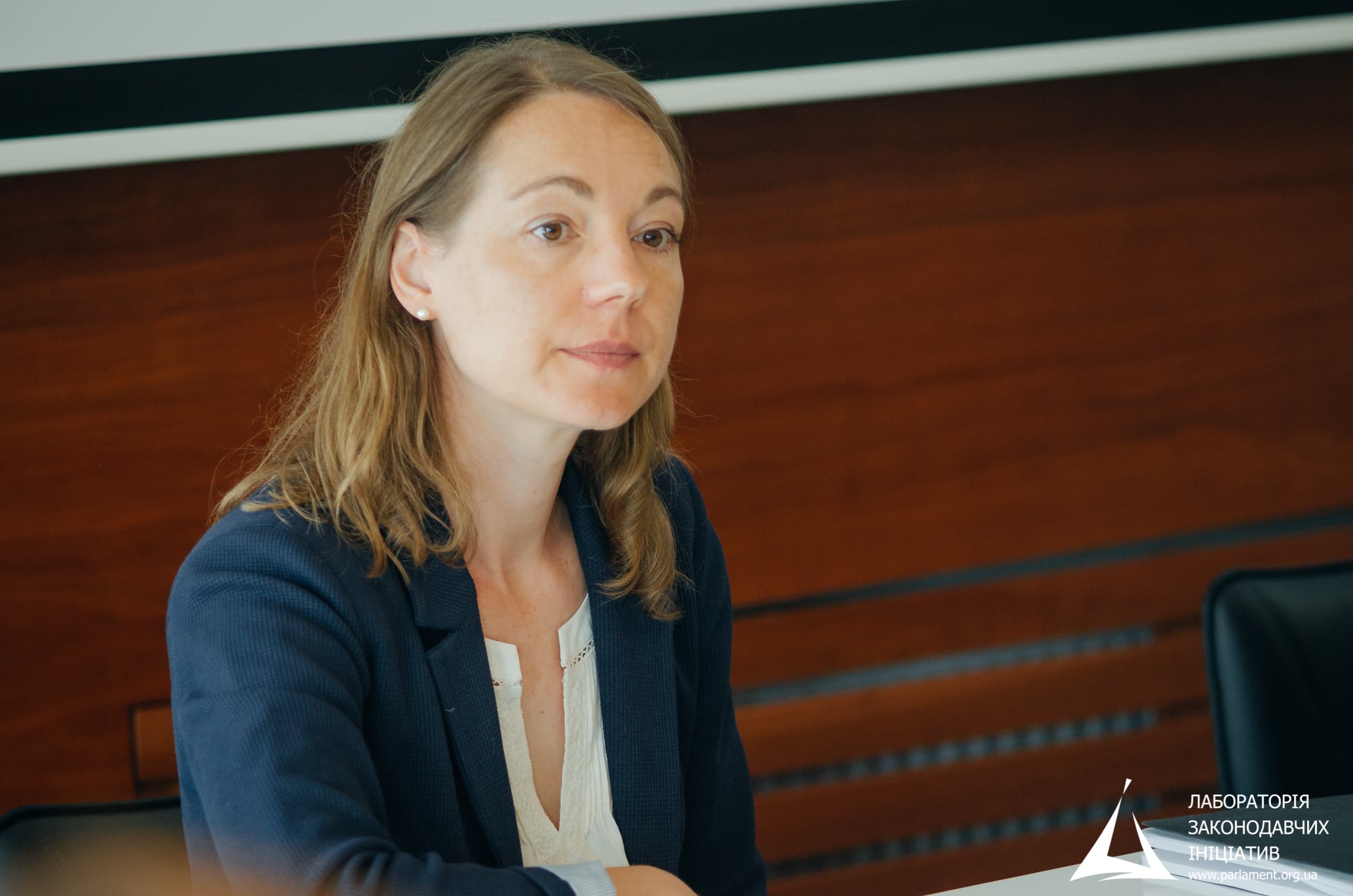
“Independently of our jobs, age or level of responsibility, we all need some technological literacy at the individual level, if we want to function safely in today’s digitally dependent society and to make sure that we don’t create risks to it by your behavior,” – said the Executive Vice President of the Estonian company for providing countermeasures against cyber-threats Cybexer Technologies Merle Maigre.
Reference information:
As a follow-up to the EU-Ukraine Summit statement of 2018, the European Union has launched an action in Ukraine to strengthen the capacity of the key participants of the electoral process. The training was conducted following the EU launch of a project “Support to Cybersecurity of Parliamentary Elections” in Ukraine.
How to Determine the Priorities of State Security Policy? (Policy Paper)
Losing control over Crimea and part of Luhansk and Donetsk Regions, the Ukrainian Government has found its weakness and inefficiency in national security policy. Based on analysis of Government security measures during 2014–2015, budgeting strategy and current legislation regulating the security sector, this Policy Paper proposes an alternative strategy of public policy in the security sector. The authors claim that the prime aim of the modern reform is to institutionalize a united system of strategical analysis, forecasting, and planning in national security policy.
The authors of the study offer an alternative vision of public policy strategy in the security sector. In particular, the introduction of a unified system of strategic analysis, forecasting, and planning.
Authors of the study:
- Roman Nitsovych, Program Manager, DiXi Group Analytical Center;
- Andriy Datsyuk, Ph.D., Associate Professor of the Department of Global Studies, European Integration and National Security Management of NAPA;
- Rena Marutyan, Ph.D., Associate Professor of the Department of Global Studies, European Integration and National Security Management of NAPA;
- Valery Sadovsky, Reserve Major General, Member of the Public Council of the Ministry of Defense of Ukraine.
The preparation of the analytical materials is a part of a project implemented by the NGO Agency of Legislative Initiatives with the support of USAID RADA Program: Responsible Accountable Democratic Assembly, implemented by East Europe Foundation.
How to Prevent Disruption and Delay of Public Procurement in the Field of Defense (Policy Paper)
In May 2014, the Verkhovna Rada of Ukraine adopted amendments to the Law on Public Procurement, which significantly simplified procurement for law enforcement agencies. They were given the right to conduct purchase under a negotiated procedure, i.e., without an open tender. At the same time, the law did not provide the right to apply negotiation procedures to military units subordinated to law enforcement agencies. That is why a significant number of public procurements of military units are disrupted because they are held in open tenders, in which businesses do not want to take an active part.
The reluctance of business to participate in procurement has a negative impact on public procurement for the army because if less than two bidders participate in the bidding – bidding should be canceled. Low business motivation is associated with both corruption among customers and distrust of the state as a partner who does not fulfill signed contracts and does not pay bills.
At the same time, those competitions, which still end with the determination of the winner, last for months, which is unacceptable in war conditions. Procurement deadlines at the central level are much shorter, but they are also far from optimal. This is because even the negotiation procedure is carried out in the order that was developed for peacetime, and therefore is not adequate in wartime. After all, in the latter case, one of the key priorities is the speed of procurement, which the current procedure does not take into account.
The study analyzes the current state of public procurement in the field of defense; key stakeholders of the process are considered; the causes of systematic failure and delay of public procurement in the field of defense are investigated; the consequences of the problem, their scale and severity are considered; the state policy on the decision of a problem is analyzed; alternative solutions to the problem of disruption and delay of public procurement in the field of defense are offered.
The preparation and presentation of Policy Proposals is part of the project embodied by the Agency for Legislative Initiatives, supported by the USAID Rada Program: Responsible Accountable Democratic Assembly, implemented by the East Europe Foundation.