
Homo Armatus: a Firearms Law is Not Enough
The war has made weapons part of Ukrainian reality, and the state has a duty to address this. Even before 24 February 2022, experts estimated that civilians may have held between three and eight million illegal firearms. The number has since increased, with some weapons reaching civilians as a result of hostilities. Following the launch of the state firearms register in July 2023, citizens voluntarily declared around 22,000 firearms and the police seized a further 20,000. These measures, however, are only isolated responses to the circulation of weapons in Ukraine, a problem that will become more acute after the war. The central question is not whether weapons will be present in Ukrainian society, but whether the state can build a coherent and effective security architecture governed by law.
This is not only a domestic task, but also part of Ukraine’s EU integration commitments. On 14 July 2026, negotiations were opened with Ukraine on Cluster 6, ‘External Relations’, which covers foreign policy, security and defence. For a country at war, this is one of the most strategically important areas, as Ukraine’s resilience and defence capability depend directly on it.
Under this cluster, the EU expects Ukraine to adopt a national strategy and action plan to combat illicit trafficking in and possession of firearms, ammunition and explosives, with clear deadlines, funding and a clear division of responsibilities among public authorities. Adopting the relevant documents alone will not be enough: Ukraine must demonstrate tangible progress in implementing them. In other words, the EU expects a new system capable of effectively controlling weapons and the risks associated with them.
Ukraine cannot limit the question to whether weapons should be permitted or prohibited. The principal challenge is how to bring their presence under effective control, so that one person’s right to protection does not conflict with another’s right to life and the freedom to own weapons does not become immunity from rules and responsibility.
This must form the basis of a new state policy. A law on civilian firearms is necessary, but it is only the first step.
Neither Uncontrolled Freedom Nor an Absolute Ban
It is commonly claimed that civilian weapons are prohibited in Ukraine. This is not entirely accurate. Civilians may legally own hunting firearms (both smooth-bore and rifled), less-lethal weapons, bladed weapons such as hunting knives, stilettos and daggers and gas pistols. No special permit is required to own airguns or certain types of small-calibre weapons (up to 4 mm) chambered for Flobert rounds. These rules are established by an order of the Ministry of Internal Affairs.
For the duration of martial law, legislation also allows civilians to be issued firearms or retain firearms they have found in order to repel and deter Russia’s armed aggression. The exceptions are rifled weapons exceeding 12.7 mm in calibre, smooth-bore weapons of 23 mm or more, weapons assigned to military personnel or law enforcement officers and weapons used to commit a criminal offence.
The debate focuses almost entirely on whether civilians should be permitted to acquire and carry short-barrelled firearms, namely pistols and revolvers.
A total ban and completely uncontrolled access to weapons are both extremes. A complete restriction of this right may deter law-abiding citizens, but criminals, who by definition break the law, will seek ways to circumvent or manipulate the rules.
Supporters of a total ban generally argue that violent crime will inevitably rise in proportion to the number of weapons held by civilians. There are, however, no comprehensive studies establishing a direct relationship between these figures. Nor is there a common methodology that would allow these questions to be studied regularly and the results compared over time. There are therefore no sound grounds for claiming that the number of civilian-held weapons either worsens the crime situation in the country or makes public spaces safer.
During the war and in the post-war period, a total ban would naturally drive firearms further underground and increase illicit trafficking. Law enforcement agencies would then find it more difficult to control weapons and ensure public safety.
The state’s task is to build a system of rules under which the right to own weapons does not threaten public order or deprive others of a sense of security. Civilian firearms legislation must be balanced and any expansion of related rights should be introduced gradually, taking account of the country’s current security situation.
Weapons by the Rules: How Europe Regulates Firearms
In addition to the requirements under Cluster 6 described above, control over the circulation of firearms is part of Ukraine’s commitments under Chapter 24, ‘Justice, Freedom and Security’, of Cluster 1, ‘Fundamentals of the Accession Process’. Ukraine must improve the legal framework governing the circulation of firearms, cooperation among law enforcement agencies and international cooperation in this area. Criminal liability for illicit arms trafficking must also be brought fully into line with the EU acquis and international law. The acquis (in full, acquis communautaire) comprises all binding EU rules, laws, principles, decisions, case law and obligations applicable to Member States and candidate countries — editor’s note.
Adopting laws alone will not be enough. Ukraine must demonstrate tangible progress in implementing them. The EU expects a new security architecture that fits organically into the wider European security space. These processes will therefore remain under close and continuous scrutiny by European partners throughout Ukraine’s EU accession negotiations.
In the European Union, the general rules governing civilians’ acquisition and possession of firearms are laid down in Directive (EU) 2021/555. It defines categories of firearms that may lawfully be acquired, carried and used, including for hunting or sport, and establishes rules on marking, control over their circulation and movement between EU Member States.
The Directive requires a register through which firearms can be identified and traced. Each state must also establish a system regulating firearms manufacturers, dealers and gunsmiths, including checks of their personal and professional integrity.
A person may obtain a licence to acquire and possess a firearm if they have good cause, have reached the required age and do not pose a danger to themselves or others. Checking a person only once when a permit is issued is not sufficient. Under European rules, the licence must be reviewed at least every five years. The system therefore contains safeguards that not only grant access to firearms, but also respond promptly when an owner no longer meets the established criteria.
The Directive also allows EU Member States to introduce stricter rules than those it sets.
Firearms legislation across Europe ranges from relatively liberal regimes to strict restrictions. Weapons are generally permitted for hunting or sporting purposes. Common standards apply, particularly to categories prohibited for civilian use and weapons whose acquisition or carrying requires a special licence.
Croatia, for example, permits concealed carry with a special authorisation. Austria permits concealed or open carry but carrying a weapon must not cause public alarm. Civilian carry is effectively prohibited in Norway, where only limited numbers of firearms may be acquired for hunting or sport. Only a few countries, including Finland, Czechia and Poland, expressly recognise firearms in legislation as a means of personal security.
There is no universal formula for regulating firearms and fully protecting society from the risks they create. Each state develops its own mechanisms and procedures in light of its national context. In every case, the objective is to develop a shared security architecture across Europe, not merely to grant a right to own weapons.
The Law as a Starting Point
Ukraine has debated and attempted to adopt a firearms law for decades, but has still failed to reach a consensus. At least 20 draft laws on the subject have been registered in the Verkhovna Rada over the past 30 years. Each initiative prompted intense debate that ultimately failed to produce a legislative solution.
Under the Rule of Law Roadmap, a law regulating firearms and strengthening liability for violations in this area must be adopted by the fourth quarter of 2026.
Draft law No. 5708, which is currently under discussion, was adopted at first reading shortly before the full-scale invasion. It partly reflects European requirements, but requires further revision to make the system more effective and eliminate risks and loopholes through which unscrupulous applicants could obtain the right to own weapons. The draft law also fails to provide clear answers on certain procedures for obtaining a firearms owner’s certificate, the rules for carrying weapons and the designation of areas where firearms may not be carried.
The law will create only a general framework, which will not function without institutions, resources and daily practice. Its adoption must be followed by a lengthy implementation process: developing infrastructure and a system of cooperation among public authorities, the firearms industry and firearms owners, conducting public information campaigns, strengthening the state’s capacity to trace weapons, identify risks in time and prevent violent crime.
The permit procedure and subsequent control must be designed to prevent corruption loopholes. Work is also needed to shape public attitudes through information campaigns and training in the safe and responsible handling of firearms.
Firearms owners and those seeking to acquire a weapon must regard it not only as a means of protection, but also as a source of heightened risk. Training, clear procedures, regular monitoring and the inevitability of sanctions for violations must become integral elements of responsible firearms ownership.
A Right That Begins With Responsibility
The regulation of civilian firearms does not exist in a vacuum: weapons have already become part of life in Ukraine. Without a resilient security architecture, however, any decision to expand the right to own and carry them would be premature.
A firearms law would form the first level of that architecture. The second would consist of systemic changes in society that allow freedom and the right to protection to coexist with control and responsibility.
Ukraine must first improve and codify the existing rules without undermining the foundations of public safety. Once the system has been established and tested, the country can return to the debate on liberalising the carrying of handguns.
The well-known firearms manufacturer Samuel Colt is credited with saying that ‘the most important part of any firearm is its owner’s head’. A responsible attitude to weapons must become the foundation of Ukraine’s new reality.
Establishing a System for Transition from Military Service to Civilian Life
The Problem
Following the outbreak of the Russo-Ukrainian war in 2014 and the full-scale invasion in 2022, the return of combatants to civilian life and their full reintegration has become one of the key challenges of state policy. Ukraine already has over 2 million veterans, and once the active phase of the war ends their number will rise significantly. At the same time, the current system of support for veterans remains fragmented and is largely based on approaches formed back in the early 1990s.
The principal legislative act in the field of support for veterans and their families is the Law of Ukraine ‘On the Status of War Veterans and Guarantees of Their Social Protection’, adopted in 1993. This Law does not establish a coherent system of state veterans policy; it regulates matters of status and sets out more than 20 benefits, only a few of which work in practice. The regulation of other aspects of veterans support is scattered across dozens of laws and items of subordinate legislation. This leads to the duplication of provisions, gaps in legal regulation and difficulties in accessing services and support.
A further problem is the absence of a legally regulated mechanism for the transition from military service to civilian life. As a result, veterans often face difficulties in accessing medical assistance, mental and psychological support, professional retraining, employment, the launch of their own business, the receipt of social services and participation in community life.
The situation is compounded by insufficient coordination among state authorities, local self-government bodies, healthcare institutions, employment services and other actors that provide services to veterans.
The existing system does not take into account the importance of communities as the principal actor in delivering veterans’ reintegration measures. There is also uneven access to services depending on the community of residence, a shortage of trained specialists — particularly in psychological support, rehabilitation and social care — and the insufficient adaptation of many state services to the specific needs of veterans.
The need to create a comprehensive state veterans policy and a system for the transition from military service to civilian life is reflected in the Veterans Policy Strategy until 2030.
The need to develop a comprehensive state veterans policy corresponds to Ukraine’s commitments in the spheres of social policy, employment and inclusion within the process of accession to the European Union.
The European Commission’s Ukraine 2025 Report points to the need to promote the integration of veterans into the labour market and to safeguard the rights of persons with disabilities, whose number is growing as a result of the war.
The need to develop a comprehensive system of support for veterans and their reintegration is also noted in the European Parliamentary Research Service (EPRS) briefing ‘Ukraine’s Veterans Policy’ (2026), which regards veterans as one of the key resources for the country’s post-war recovery.
In June 2026, the mandate of the EU Advisory Mission for Civilian Security Sector Reform Ukraine (EUAM Ukraine) was expanded, addingCouncil of the European Union. ‘EUAM Ukraine: Council broadens the Mission’s mandate to counter hybrid threats and support veteran reintegration’. Press release, 11 May 2026. EU Advisory Mission Ukraine (EUAM Ukraine). ‘EUAM Ukraine Starts Operating under Expanded Mandate’. News release, 15 May 2026. new priorities to its work that include support for the rehabilitation and reintegration of veterans.
At the same time, the Ukraine Facility Plan expressly provides for a reform of the transition from military service to civilian life, encompassing rehabilitation, psychological support, professional retraining, employment and support for veteran entrepreneurship, with a completion deadline in the third quarter of 2026.
Why This Matters
- a fragmented and outdated model of veterans support oriented towards a system of benefits and payments;
- limited access to medical and rehabilitation care and to mental health support and psychosocial support;
- reduced employment and economic self-sufficiency owing to the underdevelopment of employment and entrepreneurship-support mechanisms;
- heightened risks of social exclusion, deterioration of psycho-emotional wellbeing and the loss of human capital;
- ineffective use of veterans’ potential for economic recovery, community development and strengthening societal resilience;
- the persistence of fragmented regulation and insufficient coordination among authorities, local self-government and service providers;
- a mismatch with contemporary international approaches to veterans policy and the reintegration of veterans.
Current Response
In March 2025, Law of Ukraine No. 4285-IX was adopted, setting out priorities for creating a system of support for war veterans, members of their families and the families of fallen Defenders of Ukraine, in particular through the streamlining of veterans policy.
These priorities are to be implemented in a corresponding legislative act. Several draft acts have been developed so far: the draft Law of Ukraine ‘On the Fundamental Principles of State Veterans Policy regarding Veterans Who Took Part in Repelling the Armed Aggression of the Russian Federation against Ukraine’ (registration No. 13696, dated 25 August 2025). The draft was prepared to implement step 7.4 of the Ukraine Facility Plan.
In parallel, the Government has drafted the Code of Ukraine on the Protection of Statehood, Independence and the Status of Defenders of the State (the Veterans’ Code) (registration No. 14265, dated 28 November 2025), which aims to codify legislative acts into a single legal instrument.
The Verkhovna Rada Committee on Social Policy and Protection of Veterans’ Rights has prepared its own (alternative) version of the draft Code on the Protection of Statehood, Independence and the Status of Defenders of the State (registration No. 14265-1, dated 17 December 2025).
All of the above draft legislative acts enshrine veterans’ rights in the areas of:
- rehabilitation and medical care, including psychological assistance;
- training, retraining and professional development programmes;
- the conditions necessary for the employment of veterans as a distinct category;
- measures to support veteran businesses.
Key Risks
Persistence of a Fragmented Veterans Policy System
Legislation in the veterans sphere remains scattered across a large number of laws and items of subordinate legislation. In the absence of a comprehensive legislative act, individual aspects of support for veterans and their families continue to be governed by different instruments.
This creates risks of:
- duplication of the functions and powers of public authorities;
- inconsistency among state veterans-support programmes;
- difficulty for veterans in accessing services and support programmes;
- the uneven application of state policy at community level.
Absence of a Coherent System for Transition from Military Service to Civilian Life
Despite the development of individual veterans-support programmes, Ukraine still lacks a legally defined, coherent system for the transition from military service to civilian life that would ensure continuous support for a service member both before and after their discharge.
This increases the risk that:
- veterans will not receive timely information about available services and support;
- veterans’ needs in the spheres of rehabilitation, mental health, education and employment will go unidentified;
- state and local support programmes will operate in isolation from one another;
- the reintegration of veterans will depend largely on their place of residence and the capacity of the particular community.
Loss of Human Capital and of Potential for the Country’s Recovery
Veterans are one of the key groups on which Ukraine’s post-war recovery will largely depend. The absence of an effective system of support and reintegration may limit veterans’ opportunities for employment, education, entrepreneurial activity and participation in community life.
This creates risks of:
- a decline in veterans’ economic activity;
- increased social isolation;
- growing demand for social support in the future and an excessive burden on the social assistance system;
- the underuse of veterans’ potential for community development and the country’s recovery.
Risk of Failing to Meet Commitments under the Ukraine Facility
The entry into force of a legislative act on state veterans policy is defined as one of the steps of the Ukraine Facility Plan. The purpose of this step is to build a comprehensive system of support for veterans, particularly in the spheres of rehabilitation, medical and psychological assistance, professional adaptation, employment and veteran entrepreneurship.
A delay in adopting or implementing the relevant legislation may:
- complicate the fulfilment of the indicators of the Ukraine Facility Plan;
- negatively affect the assessment of reform progress by European partners.
Recommendations
Short-Term (Urgent Legislative Actions)
- Adopt a legislative act on state veterans policy.
A single legislative act should enshrine the foundations of state veterans policy and create the legal basis for forming a system for the transition from military service to civilian life.
In doing so, it is advisable to:
- define the principles and objectives of state veterans policy;
- establish a system for the transition from military service to civilian life;
- define the powers of state authorities, local self-government bodies and other persons involved in ensuring the transition;
- provide for mechanisms to identify the individual needs of veterans and members of their families and to introduce case management approaches;
- ensure inter-agency coordination in the field of veterans support.
Medium-Term
- Establish a fully fledged system for the transition from military service to civilian life.
The introduction of such a system should go beyond individual support programmes and provide for the continuous support of a service member from the moment preparation for discharge begins until the reintegration process is complete, engaging numerous stakeholders and ensuring coordination among them.
In particular:
- introduce a mechanism for assessing a service member’s needs prior to discharge;
- define the procedure for inter-agency cooperation between the security and defence sector and civilian authorities;
- ensure continuity of access to medical, rehabilitation, social, educational and other services;
- create mechanisms for informing veterans about available support programmes;
- establish a system of coordination among state authorities, local self-government bodies and other persons that provide support to veterans and their families.
- Strengthen the role of territorial communities in implementing veterans policy.
The reintegration of veterans takes place primarily at community level, so state policy should provide appropriate tools to support the local level.
To this end, it is advisable to:
- define minimum standards for supporting veterans in communities;
- ensure the development of a system of veteran-support specialists;
- create mechanisms for coordination among communities, veteran spaces and service providers;
- help strengthen communities’ capacity to provide services to veterans and members of their families.
- Ensure the transition from a benefits model to a model of restoring human capital.
The further development of veterans policy should be aimed not only at social protection but also at creating conditions for veterans’ active participation in the life of the state and communities.
In particular, it is necessary to:
- expand opportunities for vocational education and requalification;
- improve veteran employment-support programmes;
- develop tools to support veteran entrepreneurship;
- ensure the necessary level of health recovery;
- integrate mental health issues into all stages of reintegration;
- introduce mechanisms for assessing the effectiveness of state veterans policy on the basis of veterans’ outcomes and needs.
This infobrief was compiled with the support of the International Renaissance Foundation. Its content is the exclusive responsibility of the authors and does not necessarily reflect the views of the International Renaissance Foundation.
Not About Base Salaries: What the Law on Police Remuneration Actually Changes
On 10 June, the Verkhovna Rada of Ukraine adopted Draft Law No. 6506-1, which provides for changes to police remuneration. It is currently awaiting the President of Ukraine’s signature. A wave of public discontent followed, with claims that ‘police officers received a pay rise, but military personnel did not’. The headlines are striking, but only partly reflect the substance of the adopted changes. The draft law establishes a guaranteed minimum remuneration threshold rather than increasing the base salaries of all police officers. This distinction has largely been overlooked.
What, then, is the full picture of police remuneration under the adopted draft law?
What Does the Draft Law Provide For?
The draft law on increasing payments to police officers had been ‘stuck’ in Parliament since January 2022. It was adopted at first reading only in March 2025 and then underwent almost a year of revision. The first version of the draft law did indeed concern the base salary, from which all additional payments, including allowances and bonuses, are calculated. However, the approach had changed by the second reading.
The adopted version concerns total remuneration rather than only the base salary, or the ‘bare’ rate. In other words, it establishes a minimum threshold below which a police officer’s total remuneration may not fall. Police remuneration comprises the base salary, a special-rank supplement, a length-of-service allowance, an allowance for access to state secrets, an academic degree supplement and bonuses.
In other words, the media conflated the initial version of the draft law with the final version that Parliament adopted. The former would indeed have almost doubled the remuneration that police officers take home. The adopted version, however, only establishes a minimum threshold that will not affect most police officers.
Under the adopted changes, total remuneration must amount to at least ten subsistence minimums, currently UAH 33,280. The changes provided for in draft law No. 6506-1 will enter into force on 1 January 2027, when the projected subsistence minimum is UAH 3,482. The guaranteed minimum salary for a police officer will therefore be UAH 34,820.
Who Will the Changes Actually Affect?
Different categories of police officers already receive payments close to or above this level. According to Minister of Internal Affairs Ihor Klymenko, the average remuneration of a police officer at the beginning of 2026 was UAH 34,000–36,000.
Patrol officers, investigators, inquiry officers and psychologists working in the National Police receive UAH 25,000–30,000 or more once additional payments are included. In the Patrol Police, for example, the average salary is approximately UAH 20,000, with a further UAH 10,000 paid under an order of the Ministry of Internal Affairs (MoIA) for the duration of martial law. These funds are not paid during sick leave or annual leave, however, and therefore do not constitute a regular allowance. This is why the MoIA presented the draft law primarily as a means of regularising payments so that they would no longer depend on martial law, rather than as an increase in remuneration as such.
The current level of actual payments does not therefore mean that it is guaranteed to remain in place after martial law ends. The adopted draft law permanently establishes a minimum level of remuneration that does not depend on martial law.
Misreading the Changes Versus the Broader Problem
Ukraine currently has approximately 98,000 sworn police officers. The changes will not affect all of them. For example, some senior officers in the central administration with long service will be unaffected because they already receive more than the established minimum.
Assume that 50,000 police officers are paid less, including patrol officers, district police officers, juvenile prevention officers and others. Once the law enters into force, the additional burden on the budget would then be approximately UAH 5,000 per officer. This would cost the State Budget around UAH 250 million per year, or UAH 20.8 million per month.
If the same funds were distributed not to police officers but among serving military personnel, of whom there are approximately one million in the Armed Forces alone, each service member would receive only about UAH 208 more per month. Would that be fair? The question is rhetorical. The military must undoubtedly remain the priority, but an increase of around 5% would simply look insulting to society.
For Ukraine, now in the fifth year of a defensive war, military personnel’s remuneration, clear terms of service, appropriate accountability for military offences and mobilisation remain critically important, even if politically sensitive. Ukrainian military personnel do need higher remuneration and must be properly compensated for their service.
These measures should not, however, be set against establishing a minimum level of remuneration for the police, which maintain public security, combat ordinary crime and perform a range of other functions.
Shortly after draft law No. 6506-1 was adopted, the President announced an increase in military salaries, with personnel serving in rear areas to receive at least UAH 30,000. This confirms once again that increasing remuneration in the internal security sector, including the police and the State Emergency Service, and increasing military service pay are two separate and equally important tracks.
The discussion should remain focused on the relevant policy issues and take place in the context of higher taxes and levies, spending optimisation and the reallocation of expenditure. News headlines should also have been different: not ‘The Verkhovna Rada raised police salaries’, but ‘The Verkhovna Rada established a minimum salary threshold for the police’. This is the main substance of the adopted changes. Did someone deliberately manipulate Ukrainians, or did they simply read the initial version of the draft law rather than the adopted one? The question is rhetorical. This is reminiscent of the story of ‘mass labour migration’.
Concept for the Draft Law ‘On Law Enforcement Agencies’
Problem Statement
The Rule of Law Roadmap, the Overarching Strategic Plan for Law Enforcement Reform as Part of the Security and Defence Sector of Ukraine for 2023–2027 and the Government Action Plan for its implementation provide for unifying the legal framework for organising the system of law enforcement agencies, by establishing criteria for distinguishing the areas of activity of law enforcement agencies and other state bodies based on their exclusive functional focus. A similar measure is also set out in the Rule of Law Roadmap.
This concerns the development and adoption of the Law ‘On Law Enforcement Agencies’, which should define:
- the system of law enforcement agencies;
- the unified foundations for their organisation and functioning, the main criteria for delimiting their competence and areas of activity;
- the entrenchment of the principles of integrity, gender equality and non-discrimination in their activities;
- the development of their analytical capacities, including criminal analysis and the ILP model;
- the consolidation of their institutional independence, an adequate level of financial, logistical and technical support and guarantees of social and legal protection for employees of law enforcement agencies;
- forms of inter-agency cooperation and coordination between law enforcement agencies and the prosecution service, including information exchange, as well as interaction with other public authorities and local self-government bodies.
In addition, state policy documents on the reform of all law enforcement agencies provide for improving internal control and anti-corruption mechanisms, applying uniform integrity criteria and standards to vet employees of all law enforcement agencies and monitor them on an ongoing basis, as well as introducing common ethical principles for employees of law enforcement agencies.
These measures are aimed at addressing problems related to duplication of functions, more clearly delimiting the powers of law enforcement agencies, strengthening their independence, increasing their effectiveness and improving mechanisms for interaction as well as legal and social guarantees for their employees.
Proposals for the Law of Ukraine ‘On Law Enforcement Agencies’
For several decades, legal scholarshipFor example: A. V. Lapkin. Prosecutor in Criminal Proceedings: Theoretical, Legal, Organisational and Methodological Problems: monograph. Kharkiv: Pravo, 2020, pp. 98, 122–123, 287; O.S. Tarasenko. On the Concept of Law Enforcement Bodies of Ukraine. Scientific Bulletin of Public and Private Law. Issue 3, 2025, pp. 246–260; A.V. Stolitnii. Legislative Collisions in Defining ‘Law Enforcement Bodies’ and ‘Law Enforcement Agencies’ in the Context of Prosecutorial Supervision: Ways to Unify Terminology. Current Problems of Innovative Economy and Law. 2026. No. 1, pp. 27–31 etc. has debated the meaning and relationship between the concepts of law enforcement bodies and law enforcement agenciesIn Ukrainian «правоохоронні органи» and «органи правопорядку» properly — first is the ‘law defending/securing bodies’ and second is ‘law and order bodies’ (this semantic difference is not obvious in English, but reflects some conceptual aspects of the Ukrainian legislation development during past years)., a debate that intensified after the 2016 amendments to the Constitution of Ukraine.
At that time, the concept of law enforcement agencies appeared in the text of the Basic Law as an object of prosecutorial supervision: in accordance with the new functions of the prosecutor’s office, it supervises covert and other investigative and search actions of law enforcement agencies (Article 131-1 of the Constitution of Ukraine).
In view of this, it may be concluded that, according to the constitutional functions of the prosecutor’s office, law enforcement agencies are vested with powers to carry out covert and other investigative and search actions. Therefore, from the perspective of constitutional regulation, law enforcement agencies primarily include bodies authorised to conduct pre-trial investigations of criminal offences and covert investigative (search) actions, as defined respectively by the CPC of Ukraine (Articles 41 and 216) and the Law of Ukraine ‘On Operational-Search Activities’ (Article 5).
At the same time, Section I of the Constitution of Ukraine uses the concept of law enforcement bodies: ‘ensuring state security and protecting the state border of Ukraine shall be entrusted to the relevant military formations and law enforcement bodies of the state, the organisation and procedure for whose activities shall be determined by law’ (Article 17 of the Constitution). However, this wording is more likely an artefact of outdated terminology, as indicated by two circumstances: (1) law enforcement bodies are mentioned in the general section of the Constitution in the context of national security, rather than in special provisions concerning the activities of executive authorities and justice; (2) amendments to Section I of the Constitution are extremely difficult, unprecedented and, in practice, almost impossibleA draft law amending Section I ‘General Principles’, Section III ‘Elections. Referendum’ and Section XIII ‘Amendments to the Constitution of Ukraine’ is submitted to the Verkhovna Rada of Ukraine by the President of Ukraine or by at least two thirds of the constitutional composition of the Verkhovna Rada of Ukraine and, provided it is adopted by at least two thirds of the constitutional composition of the Verkhovna Rada of Ukraine, is approved by an all-Ukrainian referendum called by the President of Ukraine (Article 156 of the Constitution of Ukraine). There are no known cases of amendments to Section I in the history of the current Constitution of Ukraine., because this section defines the general principles of the state system, while constitutional amendments introduced after 2014 were primarily aimed at reforming the justice system and defining the state’s European integration and Euro-Atlantic course.
Practising lawyers often refer to the Law of Ukraine ‘On State Protection of Court Employees and Law Enforcement Officers’, which allegedly defines the list of law enforcement bodies. However, this Law expressly states that the list contained in it may be used only for the purposes of regulation by this Law. Under it, ‘law enforcement bodies’ are the prosecution authorities, the National Police, the security service, the Military Law Enforcement Service in the Armed Forces of Ukraine, the National Anti-Corruption Bureau of Ukraine, state border protection bodies, the Economic Security Bureau of Ukraine, penitentiary bodies and institutions, pre-trial detention centres, state financial control bodies, fish protection bodies, state forest protection bodies and other bodies exercising law-applying or law enforcement functions (Part 1 Article 2 of the Law).
The problem is, first, that this concept applies precisely for the purposes of that Law, as expressly stated in its text; second, that there is no clear criterion by which those particular bodies are included in the list; and third, that the list is not exhaustive, while defining law enforcement bodies through law application and law enforcement functions expands it to a state of complete uncertainty because the features and the subject of the definition repeat each other. Law enforcement bodies cannot be defined as bodies that perform law enforcement functions, since this definition adds nothing to the content of the concept and does not make it possible to understand what such functions consist of.
The law enforcement function is an extremely broad concept. In theory, it includes not only any activity of public authorities involving the application of legal norms but, in some views, even the activity of any person who obeys legal norms and therefore applies them. In other words, reliance on the definition contained in the Law ‘On State Protection of Court Employees and Law Enforcement Officers’ is impossible under any circumstances except where practical issues of applying its provisions are being resolved. Moreover, the legal uncertainty of the list of law enforcement bodies is disorientingWhite Paper on the Depoliticisation of Law Enforcement Agencies and the Prosecutor’s Office: Appointment/Dismissal of Leadership, Y.O. Krapyvin. Centre for Policy and Legal Reform. Kyiv: O.D. Buria, PE. 2023, p. 46..
In 2023, the Supreme Court resolved an exceptional legal problem consisting in the absence, at the legislative level and in case law, of clear criteria for defining the concepts of ‘law enforcement body’ and ‘employee of a law enforcement body’. This had led to inconsistent application of substantive and procedural law and had an extremely negative impact on the implementation of the principle of legal certainty. The subject of divergent case law was the determination of the victim who enjoys enhanced protection by the state (an employee of a law enforcement body) in the relevant elements of criminal offencesA law enforcement officer is designated as a victim of such criminal offences as resistance (Article 342 of the CC of Ukraine), interference with activities (Article 343 of the CC of Ukraine), threat or violence (Article 345 of the CC of Ukraine), intentional destruction or damage to property (Article 347 of the CC of Ukraine), attempt on life (Article 348 of the CC of Ukraine), taking hostage (Article 349 of the CC of Ukraine) and failure to take security measures (Article 380 of the CC of Ukraine)..
According to the legal position of the Supreme Court in case No. 633/195/17 (proceedings No. 13-39ks23), law enforcement bodies should include: (1) public authorities defined in the laws of Ukraine as law enforcement bodies or (2) those exercising a law enforcement function assigned to them at the legislative level. When resolving whether a person is an employee of a law enforcement body, it is necessary to proceed from a systemic analysis of: the provisions of the Constitution of Ukraine, the Criminal Code of Ukraine, the Criminal Procedure Code of Ukraine, the Code of Ukraine on Administrative Offences and normative legal acts regulating the legal status of the relevant public authority with which the person is in an employment or service relationship; the employee’s powers under their job description, which provide for the exercise of a law enforcement function, including the application of preventive measures and coercive measures defined by law, as well as measures provided for by criminal procedure legislation and legislation on administrative offences; and legislation on pension provision for the relevant category of employees.
Attention should also be paid to work by auxiliary bodies of Parliament. In 2024, the Research Service of the Verkhovna Rada of Ukraine published a document entitled ‘Scientific Concept of Legislative Support for the Activities of Law Enforcement Agencies of Ukraine’. It rightly notes that the existing conceptual and legislative uncertainty regarding the concept, fundamental principles, status, tasks and functions of law enforcement agencies as a separate autonomous system, as well as their delimitation from other state bodies performing related functions, has a negative impact on combating crime and on the effectiveness of the relevant state policy in this field. As a result, this legal uncertainty leads to inconsistency and imbalance in the work of the relevant state institutions, ineffective performance of their functional powers and, consequently, failure to ensure guarantees for protecting citizens from criminal and other unlawful encroachments, failure to observe the rule of law and failure by state bodies to perform their main task of protecting the constitutional rights and freedoms of the individual and citizen.
In general, imperfect legal regulation has a negative impact on determining the status of a particular state body and its place in the system of public authorities, and leads to inconsistent law enforcement practice, including in criminal proceedings concerning offences against the authority of public authorities.
In our view, the most productive approach to distinguishing between the concepts of law enforcement bodies and law enforcement agencies is a functional approach, based on the main tasks and functions of the relevant bodies. This approach is fully consistent with the Constitution of Ukraine and corresponds to the Rule of Law Roadmap, the Overarching Strategic Plan for Law Enforcement Reform as Part of the Security and Defence Sector of Ukraine for 2023–2027 and the Government Action Plan for its implementation.
This approach makes it possible to define:
- the relationship between these concepts. It appears most appropriate to distinguish between law enforcement bodies and law enforcement agencies as a broader and a narrower category: every law enforcement agency is a law enforcement body, but not every law enforcement body may be classified as a law enforcement agency;
- the criteria for classifying a particular state body as law enforcement, including functions and corresponding powers, namely: 1) functions: protection of the rights and freedoms of the individual, society and the state from unlawful encroachments; protection of public order; ensuring public and national security; 2) powers: prevention, detection, solving and investigation of criminal offences; conducting operational-search measures and covert investigative (search) actions; application of direct coercive measures on behalf of the state, including the use of firearms.
- 2.2. The Concept of a ‘Law Enforcement Agency’ and Its Features
Legal order is a term widely used both in legal scholarship and in national and international law. Thus, Part 1 Article 19 of the Constitution of Ukraine provides that the legal order in Ukraine is based on principles according to which no one may be compelled to do what is not provided for by legislation.
Therefore, legal orderTheory of State and Law: textbook for students of higher legal education institutions / O.V. Petryshyn, S.P. Pohrebniak, V.S. Smorodynskyi et al.; edited by O.V. Petryshyn. Kharkiv: Pravo, 2014, p. 337. is the actual state of ordering of social relations through legal means. The latter formulation effectively emphasises three components of this concept: (a) law; (b) coercion; and (c) order. In all cases, therefore, it concerns, in one way or another, the coercive application of the law to protect legal order by the bodies responsible for its protection.
In view of this, the following definition is proposed:
Law enforcement agencies are central executive bodies and structural units of state bodies and military formations whose main functions under the law are to protect the rights and freedoms of the individual, society and the state from unlawful encroachments, protect public order and ensure public and national security.
This definition takes into account situations where these functions are not the main functions of a state body or military formation, but its structure includes units that perform such functions, for example the Military Law Enforcement Service in the Armed Forces of Ukraine.
The main features of law enforcement agencies may be considered to include:
- performance of functions related to protecting the rights and freedoms of the individual, society and the state from unlawful encroachments, protecting public order and ensuring public and national security;
- the organisation and procedure for the activities of such agencies and their administrative and legal status are defined by law;
- belonging to the security and defence sector;
- powers to prevent, detect, suppress, solve and investigate criminal offences;
- powers to conduct operational-search activities and/or covert investigative (search) actions;
- the right to apply direct coercion on the grounds and in cases defined by law, including the right to use firearms;
- prosecutorial supervision over the activities of such agencies in countering offences and carrying out covert and other investigative and search actions of law enforcement agencies.
- 2.3. Subject Matter of the Law
The following state bodies and military formations that could be classified as law enforcement agencies, or whose units could fall within the scope of the relevant law, were analysed* for compliance with the features listed above: the National Police of Ukraine (NPU); the State Bureau of Investigation (SBI); the National Anti-Corruption Bureau of Ukraine (NABU); the Economic Security Bureau of Ukraine (ESBU); the Security Service of Ukraine (SSU); the State Border Guard Service of Ukraine (SBGS); the Foreign Intelligence Service of Ukraine (FISU); the Department of the State Protection of Ukraine (UDO); penitentiary bodies and institutions and pre-trial detention centres of the State Criminal-Executive Service of Ukraine (SCES); the intelligence body of the Ministry of Defence of Ukraine (Defence Intelligence of Ukraine); the Military Law Enforcement Service in the Armed Forces of Ukraine (MLES AFU); units of the National Guard of Ukraine (NGU); the State Customs Service of Ukraine (SCS); and the Court Security Service (CSS).
The list of bodies and military formations was formed on the basis of Article 216 of the Criminal Procedure Code of Ukraine, the Laws of Ukraine ‘On National Security of Ukraine’ and ‘On State Protection of Court Employees and Law Enforcement Officers’, the Overarching Strategic Plan for Law Enforcement Reform as Part of the Security and Defence Sector of Ukraine for 2023–2027 and the Government Action Plan for its implementation.
Compliance with the above features is established on the basis of the provisions of the laws of Ukraine regulating the activities of these bodies.
In addition, the analysis identified certain shortcomings in legislation that will need to be addressed.
- 2.3.1. Status of state bodies
The NPU, the ESBU, the SCES and the SCS have the status of central executive bodies, while the NABU is a central executive body with special status. Under Ukrainian legislation, these bodies belong to the executive branch.
The SBI is a law enforcement body, while the UDO and the SBGS are special-purpose law enforcement bodies. Under the Law of Ukraine ‘On Intelligence’, the SBGS is also classified as an intelligence body.
The SSU has the status of a special-purpose state body with law enforcement functions.
The Court Security Service is a state body within the justice system.
The FISU is defined as an intelligence body with the status of a separate state body that is not an executive authority.
The NGU is a military formation with law enforcement functions, while the MLES AFU is a special law enforcement formation within the Armed Forces of Ukraine.
The status of a central executive body means that such bodies are established in accordance with the Law of Ukraine ‘On Central Executive Bodies’ and that this Law applies to their activities insofar as it does not contradict special laws. Under Article 16, central executive bodies are established to perform specific functions related to implementing state policy. Their activities are directed and coordinated by the Cabinet of Ministers of Ukraine through the relevant ministry. Special status of a central executive body provides for a special procedure for forming the composition of such a body, if it is collegial, or a special procedure for appointing its head, as well as a special form of interaction with the Government.
The concept of a ‘state body’ has a broad and generalising meaning. The Law of Ukraine ‘On Prevention of Corruption’ defines this concept as follows: a public authority, including a collegial state body, or another public-law entity, regardless of whether it has the status of a legal entity, which is vested by legislation with powers to exercise authoritative managerial functions on behalf of the state and whose jurisdiction extends to the entire territory of Ukraine or to a separate administrative-territorial unit. Accordingly, this concept covers legislative, executive and judicial bodies.
- 2.3.2. Functions and tasks
The laws regulating the activities of the state bodies and military formations included in the list show different approaches to defining the functions and tasks of these bodies, as well as to the content of the concepts of ‘task’ and ‘function’. However, the prevailing approach is that a body’s function is its main purpose, while its tasks are specific areas of activity.
Protection of the rights and freedoms of the individual, society and the state from unlawful encroachments is, in essence, a function of all the bodies on the list. Such protection means ensuring the right to life, liberty, inviolability, personal security and private property, preventing crime, combating terrorism and organised crime and protecting the sovereignty, territorial integrity of the state and the inviolability of its borders.
Ensuring public and national security is also among the functions of all state bodies on the list.
National security is the protection of state sovereignty, territorial integrity, the democratic constitutional order and other national interests of Ukraine from actual and potential threats.
Public security and order means the protection of interests vital to society and individuals, as well as the rights and freedoms of the individual and citizen, the safeguarding of which is a priority task of the security forces, other state bodies, local self-government bodies, their officials and the public, which implement coordinated measures to realise and protect national interests from the impact of threats.
Five bodies on the list have powers to conduct pre-trial investigations: the NPU, the SBI, the NABU, the ESBU and the SSU. In addition to these five bodies, operational-search activities may also be conducted by the SBGS, the FISU, the UDO, the SCES and Defence Intelligence of Ukraine. In view of Article 131-1 of the Constitution of Ukraine, all these bodies are subject to prosecutorial control. However, the FISU and Defence Intelligence of Ukraine cannot be classified as law enforcement agencies, since their main function is intelligence rather than law enforcement activity.
All bodies on the list have the right to use physical force, special means and firearms on the grounds and in cases defined by law. At the same time, the provisions of the laws regulating the activities of the SBI, the NABU, the ESBU, the FISU, the UDO, the SCES, Defence Intelligence of Ukraine, the NGU and the Court Security Service are blanket provisions and refer to the relevant provisions of the Law of Ukraine ‘On the National Police’.
- 2.3.3. Belonging to the security and defence sector
Under the Law of Ukraine ‘On National Security of Ukraine’, the SBI, the NABU, the ESBU, the SCES and the SCS are not included in the security and defence sector.
Three of the listed bodies have almost identical legal status: the NABU, the ESBU and the SBI. In our view, however, their exclusion from the security and defence sector is erroneous.
Under the Law of Ukraine ‘On National Security of Ukraine’, the security and defence sector is a system of public authorities, the Armed Forces of Ukraine, other military formations established in accordance with the laws of Ukraine, law enforcement and intelligence agencies, special-purpose state bodies with law enforcement functions, civil protection forces, the defence-industrial complex of Ukraine, whose activities are subject to democratic civilian control and, in accordance with the Constitution and laws of Ukraine, are functionally aimed at protecting Ukraine’s national interests from threats, as well as citizens and civil society associations that voluntarily participate in ensuring Ukraine’s national security.
Thus, an important criterion for classifying a particular state body as part of the security sector is its functional focus on protecting the national interests of the state from threats.
Ukraine’s national interests are the vital interests of the individual, society and the state, the realisation of which ensures Ukraine’s state sovereignty, its progressive democratic development and safe living conditions and welfare for its citizens.
Accordingly, threats to Ukraine’s national security are phenomena, trends and factors that make impossible or complicate, or may make impossible or complicate, the realisation of Ukraine’s national interests and the preservation of its national values. Crime is among such threats.
The SBI, the NABU and the ESBU were established to counter specific categories of criminal offences. Moreover, the Law ‘On the National Anti-Corruption Bureau of Ukraine’ states that this body counters corruption and other criminal offences committed by senior officials authorised to perform state or local self-government functions and constituting a threat to national security. Under the Law ‘On the Economic Security Bureau of Ukraine’, this body is tasked with countering threats to Ukraine’s economic security, which is a component of national security. Therefore, the SBI, the NABU and the ESBU should be classified as part of the security and defence sector as security forces.
Based on the analysis conducted, it is proposed to classify the following as law enforcement agencies:
2.3.4. Law enforcement agencies and the list of issues to be regulated by the law
a) the following public authorities, to which the provisions of the Law of Ukraine ‘On Law Enforcement Agencies’ would apply in full:
- the National Police of Ukraine;
- the State Bureau of Investigation;
- the National Anti-Corruption Bureau of Ukraine;
- the Economic Security Bureau of Ukraine.
b) structural units of the following state bodies and military formations, to which the provisions of the Law of Ukraine ‘On Law Enforcement Agencies’ would apply partially:
- the Security Service of Ukraine;
- the State Border Guard Service of Ukraine;
- the Department of the State Protection of Ukraine;
- the State Criminal-Executive Service of Ukraine;
- the National Guard of Ukraine;
- the State Customs Service;
- the Military Law Enforcement Service in the Armed Forces of Ukraine;
- the Court Security Service.
In the future, the State Bureau of Military Justice and customs may be added to the list of law enforcement agencies to which the provisions of the Law would apply in full.
It is proposed that the subject matter of the Law ‘On Law Enforcement Agencies’ include the following issues:
- the concept of a law enforcement agency and other definitions related to the activities of such agencies;
- the organisational and legal status of law enforcement agencies and the features of special status within the executive branch;
- an exhaustive list of law enforcement agencies;
- the foundations for the activities of law enforcement agencies, including principles of activity, functions, powers, tasks, guarantees of independence, organisational foundations, model structure and the overall authorised staffing level of each agency;
- the foundations for analytical activity, including the use of the ILP model, consideration of criminal policy in the activities of law enforcement agencies, application of the SOCTA and IOCTA systems, regular assessment of the crime situation through crime surveys and victimisation surveys, as well as public trust in these agencies, including the sense of security as a key component of trust;
- the foundations of service in law enforcement agencies, including the principles and procedure for appointing heads, candidate requirements, terms of office of heads, grounds and procedure for early termination of their powers, a list of typical positions such as detective and analyst, the procedure for appointing and dismissing employees, requirements for candidates for positions, general principles for wearing uniforms, general principles for awarding special ranks, social protection and guarantees of material support;
- the grounds and procedure for using physical force, special means and firearms;
- the foundations for international and inter-agency cooperation and coordination of the activities of law enforcement agencies, including principles, coordination and cooperation arrangements, the role of the MIA, the procedure and forms of cooperation and specific features of interaction between law enforcement agencies during martial law;
- the foundations of integrity and professional ethics for employees of law enforcement agencies, including ethical principles for interaction with participants in criminal proceedings;
- the audit and internal control system and the foundations for whistle-blower protection;
- the general procedure and grounds for holding employees disciplinarily liable;
- external control over the activities of law enforcement agencies, including parliamentary and public oversight.
Unifying the key foundations for the activities of the above-mentioned bodies would make it possible to eliminate gaps in legislation, clarify the place of these bodies in the overall system of public authorities and their status, strengthen guarantees of their independence and improve the system of interaction between them so that they can perform their main functions more effectively.
After the Tragedy in Kyiv: Why the Security System is Failing to Keep Pace with Threats
On 18 April, gunshots were reported in the Holosiivskyi district of Kyiv. Seven people were killed and at least 14 were injured. Two police officers have been notified of suspicion on allegations that they fled the scene, leaving civilians in danger. This terrorist attack has once again reignited debate on the reform of the National Police and its effectiveness — much like previous incidents in Vradiivka, Kryve Ozero, Knyazhychi, Pereiaslav and Kaharlyk. Each of these cases prompted public outrage and promises of change. None, however, led to a systemic breakthrough.
ZN.UA has previously examined what needs to change in police training and in the broader security system. Yet the issue is not only about identifying solutions. The key question is whether the system itself is capable of delivering them.
Following the incident, Minister of Internal Affairs, Ihor Klymenko, instructed the Head of the National Police, Ivan Vyhivskyi, to conduct an internal investigation into the actions of the officers involved and to submit all relevant materials to the State Bureau of Investigation (SBI). The entire chain of command of the Kyiv patrol police was also suspended from duty. Minister Klymenko further noted that response protocols and the training of law enforcement personnel must be reviewed in light of the risks associated with civilians’ access to weapons and ammunition.
This will also require changes to the training system for patrol officers. Ihor Klymenko has once again endorsed the draft law on civilian firearms, which introduces mandatory training and a clear classification of different types of weapons — an initiative that has been under development for several years as part of Ukraine’s European integration process. On 27 April, the Verkhovna Rada of Ukraine Committee on Law Enforcement established a dedicated working group on this issue, despite the existence of a similar group within the Ministry of Internal Affairs that has been working on it for several years. Importantly, Ukraine has committed to the European Commission in the Rule of Law Roadmap to adopt this draft law by December 2026.
Meanwhile, both social and traditional media are competing to assign blame and determine who should be held accountable: ‘Klymenko must resign’, ‘police officers must be imprisoned’, ‘re-certify everyone’, ‘send everyone to the front’ and so on. However, in the context of a full-scale war — where internal security directly depends on the police — such responses are superficial and unlikely to result in meaningful change. Action is clearly needed — both at the personnel and institutional levels.
However, the problem goes beyond individual mistakes or staffing decisions. The issue lies in how the system itself is designed. To understand this, it is necessary to examine how police reform has been shaped and where it has fallen short.
Process for the Sake of Process: a Brief Overview of Police Reform
The transformation of the post-Soviet militia into the Ukrainian police after the Revolution of Dignity did take place. However, the success of the patrol police — effectively the ‘shop window’ of the reform — was presented as the reform itself. In 2015, patrol officers were recruited from scratch through an open competition, and this branch of public safety did indeed differ markedly from the rest. Other militiamen underwent attestation in 2015–2016 and following the dismissal of the ‘Georgian team’, a consultative competition was held in 2017 for the second Head of the National Police. At that point, large-scale reform efforts effectively came to an end.
From the outset, the police lacked a clear development strategy, and changes were introduced in a piecemeal manner — resembling ad hoc firefighting rather than a coherent system driven by shared objectives. The transformation primarily affected public safety policing, while the criminal investigation branch remained largely untouched. At the same time, systemic problems persisted — including torture, unlawful detention, abuse of power or, conversely, institutional paralysis and the inability to prevent crime or investigate it effectively. According to official data, 7.7% of former militiamen were dismissed, half of whom were later reinstated by court decisions and awarded compensation. In practice, the ‘new police’ largely consisted of former militiamen who carried over entrenched institutional memory and informal practices — constraints that continue to shape the National Police to this day.
This is not merely an institutional problem — it is a feature of Ukraine’s new reality under a full-scale war. Rising social inequality, the challenges of demobilisation, post-traumatic stress and a weak veterans policy all inevitably affect levels of violent crime. Criminology and the experience of other countries show that this trend typically intensifies after the end of a war. It is precisely this reality for which the system has proved unprepared.
Despite the stated aim of ‘depoliticising’ the police — that is, reducing ministerial influence over its operational management — the National Police has remained dependent on the MoIA in areas that fall outside the Ministry’s proper remit. At present, the position of Head of the National Police is effectively determined by the Minister of Internal Affairs, and the absence of a competitive selection process has been identified as a concern by the European Commission. As a result, the post currently held by Ivan Vyhivskyi remains under the control of the Minister. Moreover, the appointment of all heads of territorial bodies and their deputies is also subject to the Minister’s approval.
Instead, the Minister of Internal Affairs should be responsible solely for shaping state policy, participating in Cabinet of Ministers meetings and representing budgetary and regulatory matters, while the Head of the National Police should manage the police itself. In practice, however, all ministers have simultaneously engaged in both policymaking and the operational management of the police. The Minister is a political appointee, appointed by Members of Parliament. By contrast, police operational activity should be insulated from political influence.
During the full-scale war, the police have continued to avoid addressing sensitive issues of social inequality — for example, maintaining public order during mobilisation measures. Minister Klymenko has explicitly opposed assigning such functions to police officers, who are legally authorised to use coercive measures. The police have therefore minimised their involvement in this process to avoid triggering a political crisis and a renewed wave of demands to hold the police themselves accountable. As a result, the reputational fallout has largely been borne by the Territorial Centres for Recruitment and Social Support.
Interestingly, even under the conditions of a full-scale war, the police continue to enjoy a relatively high level of public support — surveys indicate that trust in the police stands at around 48% (Razumkov Centre, Rating Group). Significant approval is also driven by the direct participation of nearly 10% of police officers (according to the Ministry of Internal Affairs) in combat operations at the front — including units such as ‘Liut’ and rifle units — while service both in frontline areas and in the rear entails daily risks to life.
Under the Law of Ukraine ‘On the National Police’ of 2015, the principal indicator of police performance is public trust. To implement this provision, the Cabinet of Ministers adopted a resolution in 2018 providing for state-funded tenders to commission such surveys. Until 2022, independent sociological services conducted these studies, but with the introduction of martial law, the tenders were suspended. At that time, trust levels were likewise reported at over 40%. However, a key problem is that different sociological services may apply different methodologies from year to year, making it impossible to compare results on a consistent basis. The 2018 resolution was repealed in March 2026. A new resolution has since been adopted, under which such surveys are to be conducted across all criminal justice institutions. The issue of differing methodologies, however, remains unresolved.
The reform of the law enforcement system is formally ongoing, including as part of Ukraine’s European integration commitments. Chapter 24 of the EU acquis, ‘Justice, Freedom and Security’, directly requires strengthening the institutional capacity of authorities in combating crime, in particular organised crime.
In this context, the National Police is now planning a shift from addressing isolated incidents to tackling systemic cases and organised crime. This includes developing analytical capacities, integrating the police into the broader criminal policy framework and introducing the European system for assessing organised crime threats (SOCTA), including in the field of cybersecurity (IOCTA), among other measures. Part of these European integration measures has been reflected in the first National Police Development Strategy for 2026–2030. Their implementation is expected to complete the reform of the criminal investigation branch. Ukraine has now reached a point where the reform can finally address what remained unfinished in 2015–2019 and, under the European Commission’s rigorous assessment, there is a real opportunity for meaningful change.
Collective Responsibility and the Staffing Crisis
It is misguided to assume that any high-profile incident involving police officers should automatically lead to the resignation of senior leadership. Such an approach may be viable in established democracies with sufficient resources and institutional capacity — for example, in Switzerland — but not in a country facing a full-scale war.
In the aftermath of the 18 April terrorist attack in Kyiv, responsibility for subordinates should lie with the leadership of the patrol police and the National Police as a whole. However, if Ivan Vyhivskyi were to be dismissed now, the new Head of the National Police would likely be much the same, as the appointment would again be determined by the Minister of Internal Affairs, reflecting the continued lack of depoliticisation of the police. In other words, a change of name does not equate to a change in direction. This directly affects the system’s ability to respond swiftly and effectively to crisis situations.
Approaches based on collective responsibility reflect political logic rather than professional standards. Political retribution is not a hallmark of the European-style policing model Ukraine seeks to build. What matters far more is which systemic measures are taken to prevent such tragedies in the future.
At the same time, there are very few — if any — are willing to take on leadership roles in the police at any level. Qualified professionals are clearly deterred by low salaries and the constant risk of dismissal not based on audits or performance evaluations, but simply as part of ‘collective responsibility for subordinates’, among other factors.
The scale of the problem is also acknowledged by the leadership of the National Police itself. According to its Head, the staffing shortfall in the patrol police stands at around 25% and is even higher in Kyiv. In such conditions, officers are routinely redeployed to reinforce units, even if they lack sufficient experience in response operations. As Ivan Vyhivskyi admitted, one of the officers involved in the events of 18 April had not been systematically engaged in such duties.
This is compounded by broader staffing challenges affecting not only the police but the entire civil service. The European Commission emphasises the need for merit-based career progression — including competitive selection procedures for leadership positions, up to and including the Head of the National Police. At present, such rules apply to the appointment of all heads of law enforcement bodies except for the Head of the National Police. Removing this exception would help reduce the institution’s dependence on the Minister of Internal Affairs.
Introducing competitive selection for leadership positions in the police is more complex, given that there are thousands of such posts, making it practically impossible to organise a comprehensive process, as this would require the establishment of numerous selection panels. It is therefore more reasonable to apply competitive procedures not to all positions, but only to senior leadership roles and selected mid-level posts. At the same time, the MoIA is willing to support competitive selection only on the condition that the positions to which it applies are defined in a subordinate legal act at the Minister’s discretion. This creates a risk that the Minister may limit competitive selection to a small number of non-influential posts. A more balanced approach would be to prioritise competitive procedures for senior leadership positions — namely those whose decisions have a systemic impact on the functioning of the police.
Accordingly, a rapid resolution of staffing problems should not be expected, particularly when it comes to competitive selection procedures. The appropriate response to the consequences of the terrorist attack should instead be to strengthen internal oversight mechanisms — including impartial internal investigations and the establishment of clear grounds for the disciplinary liability of managers for the inadequate organisation of their subordinates’ work.
An Office of (Not-So) Simple Solutions: What Next?
The problems within the police highlighted by the terrorist attack in the Holosiivskyi district of the capital are unlikely to be resolved through a handful of ad hoc personnel or political decisions. Instead, what is needed is a strengthening of the institution’s capacity. This entails the depoliticisation of governance, effective internal oversight, updated response protocols and professional training, among other measures. Taken together, these changes can ensure a proper balance between citizens’ rights, their security and the effectiveness of law enforcement bodies in wartime.
- Criminal liability is individual. The case of the ‘police officers who fled’ falls under Part 3 of Article 367 of the CC of Ukraine. Within these criminal proceedings, the State Bureau of Investigation (SBI), having examined the relevant protocols and procedures, will assess whether the elements of a criminal offence are present, after which the prosecution will refer the case to court.
- Accountability of leadership. As part of the internal investigation, it is necessary to examine whether there are grounds for the disciplinary liability of police leadership — including the Kyiv patrol police, the Head of the National Police and other officials responsible for organising the counter-terrorism operation.
- Response protocols. Protocols for responding to terrorist attacks involving hostage-taking must be improved. While KORD fulfilled its role, the effectiveness of negotiators and special units, as well as their coordination with patrol officers who are first to arrive at the scene, can help reduce the number of casualties before the terrorist is neutralised.
- Tactical and technical training. Skills in the use of physical force, special means and firearms must be continuously developed. The number of training hours should be increased, particularly for practical shooting exercises — including firing in unconventional and high-risk conditions. It is not enough to possess a weapon; officers must be proficient in its use and prepared to deploy it on lawful and strictly necessary grounds.
A separate, critical issue must be highlighted — the readiness of police officers to use firearms.
- Psychological preparedness of police officers. This is precisely what was lacking on 18 April: the officers fled not only due to individual factors, but also because of a systemic lack of readiness to act in situations where the use of firearms inevitably leads to an investigation. In Ukraine’s legal system, the use of firearms is treated a priori as a problem for which someone must be held accountable. This creates a powerful psychological deterrent, clear in practice. Over time, the mindset of ‘better not to use force to avoid consequences’ in a society at war undermines public safety and order. At present, every instance of firearm use triggers an internal investigation, but such investigations are not always objective. Judicial practice on the lawful use of firearms remains underdeveloped, particularly in comparison with case law on civilian self-defence.
- Improving the licensing system. It is essential to finally adopt legislation establishing clear rules on civilian access to firearms (either draft law No. 5708 or its revised version developed by the relevant working group or groups). The licensing system must be streamlined — including stronger oversight of firearm registration and re-registration, proper assessment of the mental fitness of applicants, improved training requirements for firearm owners and ballistic testing of rifled firearms.
Some of these measures have already been announced by Minister Klymenko. However, what will ultimately matter is not political statements made in the wake of a high-profile tragedy, but the ability of the law enforcement system to implement these changes in practice. The key question, therefore, is whether this institutional capacity exists. As long as the depoliticisation of the police remains declarative rather than real, the limits of reform will be defined not by the war, but by the system itself.
Law Enforcement Reform: ALI Joins the Expert Group under the Coordination Council
Reform of the security and defence sector aims not only to ensure compliance with normative legal acts but also to bring about real changes in the institutional capacity, transparency and accountability of the entire law enforcement system. Accordingly, all stakeholders should be interested in this process — representatives of state institutions, civil society and international partners alike.
On 25 February, the Agency for Legislative Initiatives joined the first constituent meeting of the Coordination Council on monitoring the implementation of the Action Plan aimed at executing the Overarching Strategic Plan for Law Enforcement Reform as Part of the Security and Defence Sector of Ukraine for 2023–2027 (OSP). During the meeting, an Expert Working Group was established within the Coordination Council, and its composition and regulations were approved. Yevhen Krapyvin, Head of the Law-and-Order Area at the ALI, joined this group, which will provide expert support for monitoring and assessing the implementation of the OSP.
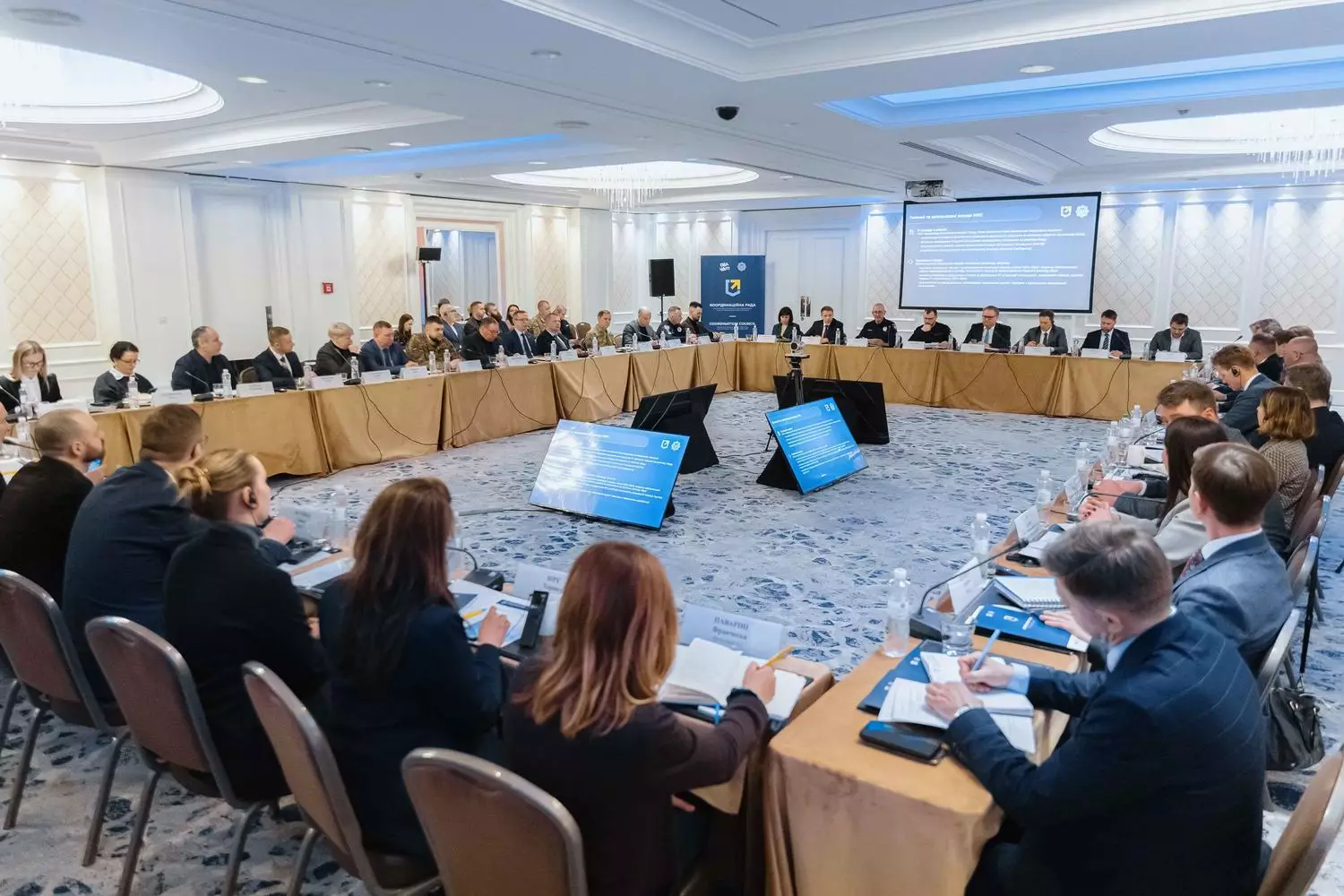
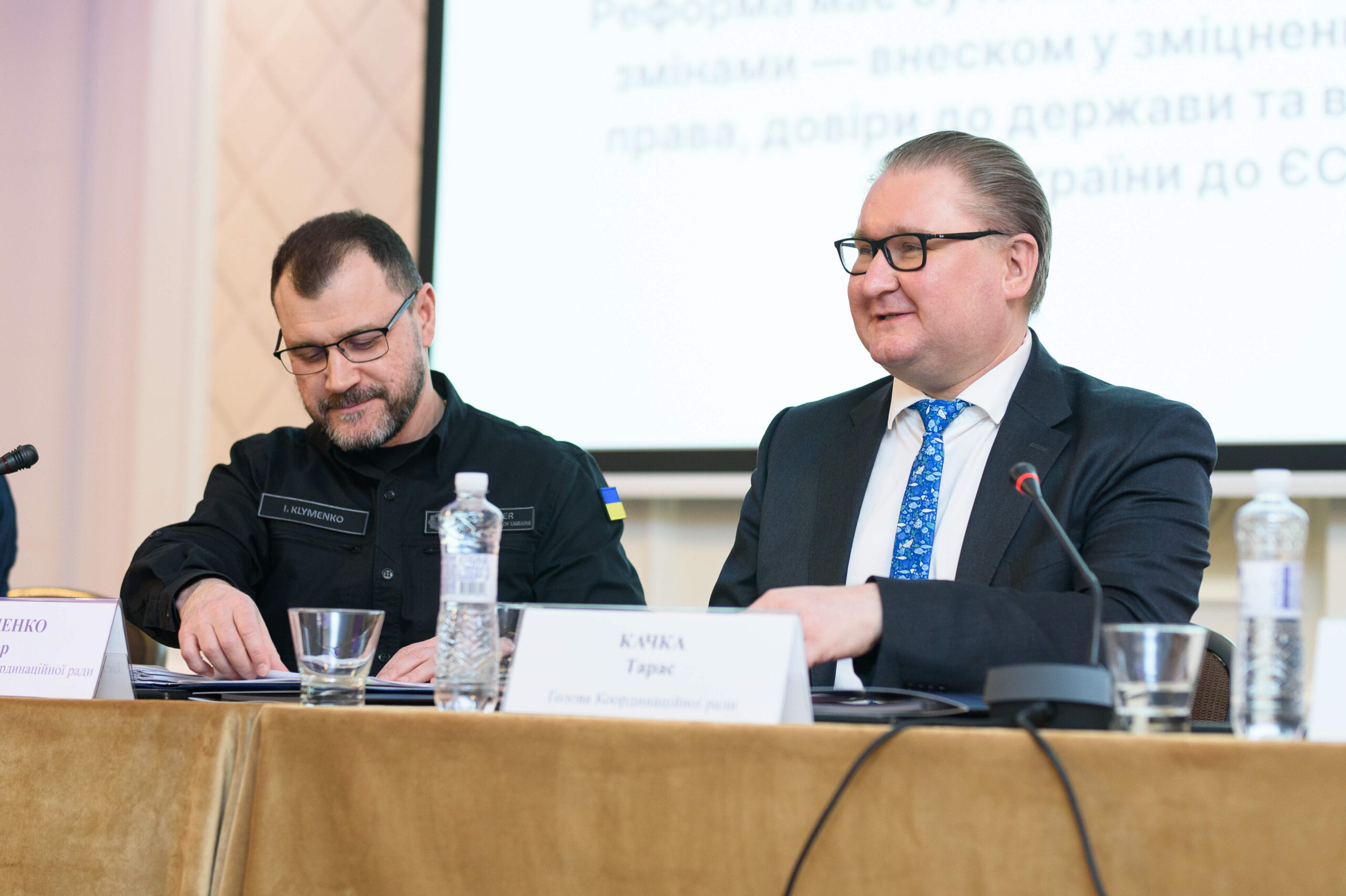
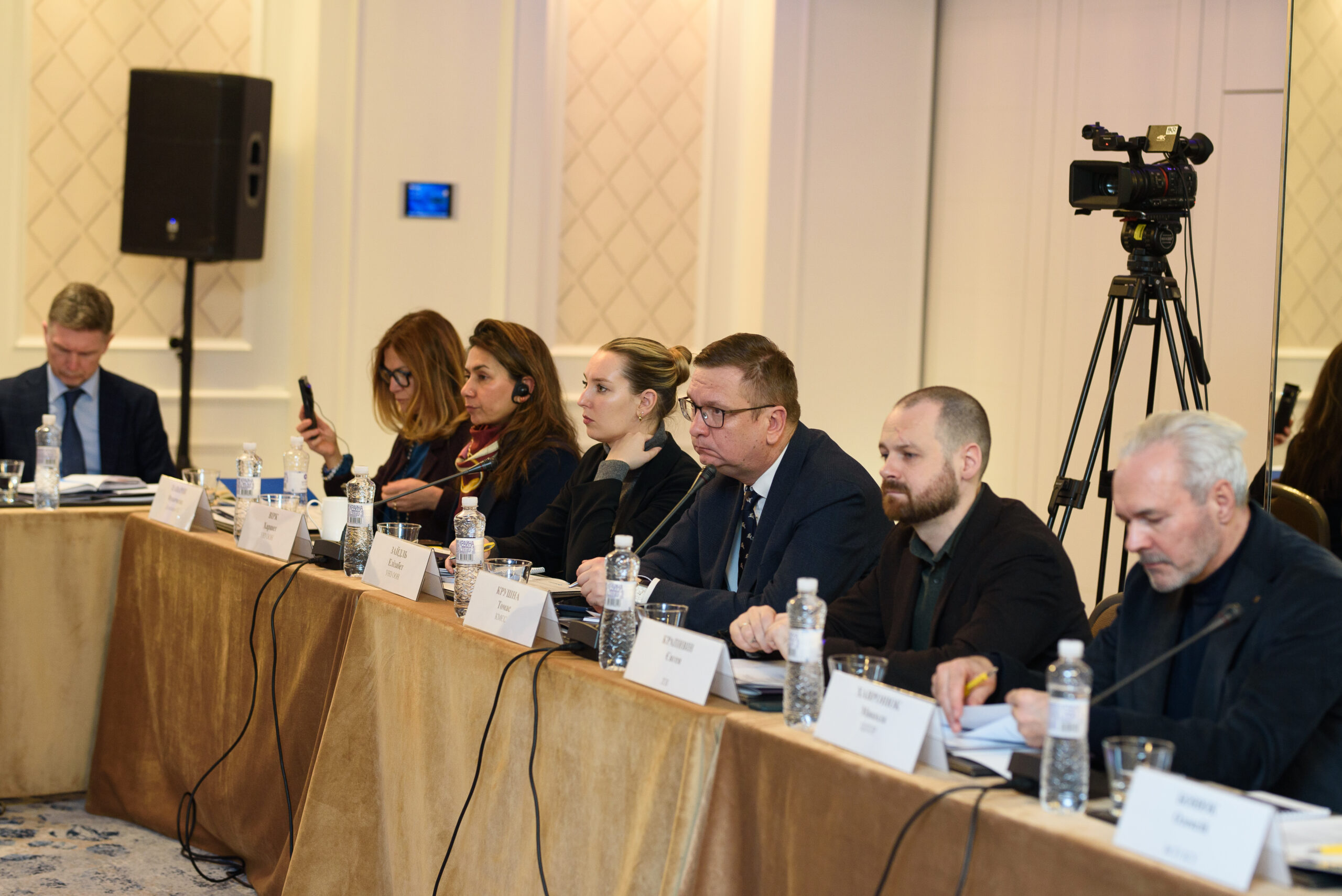
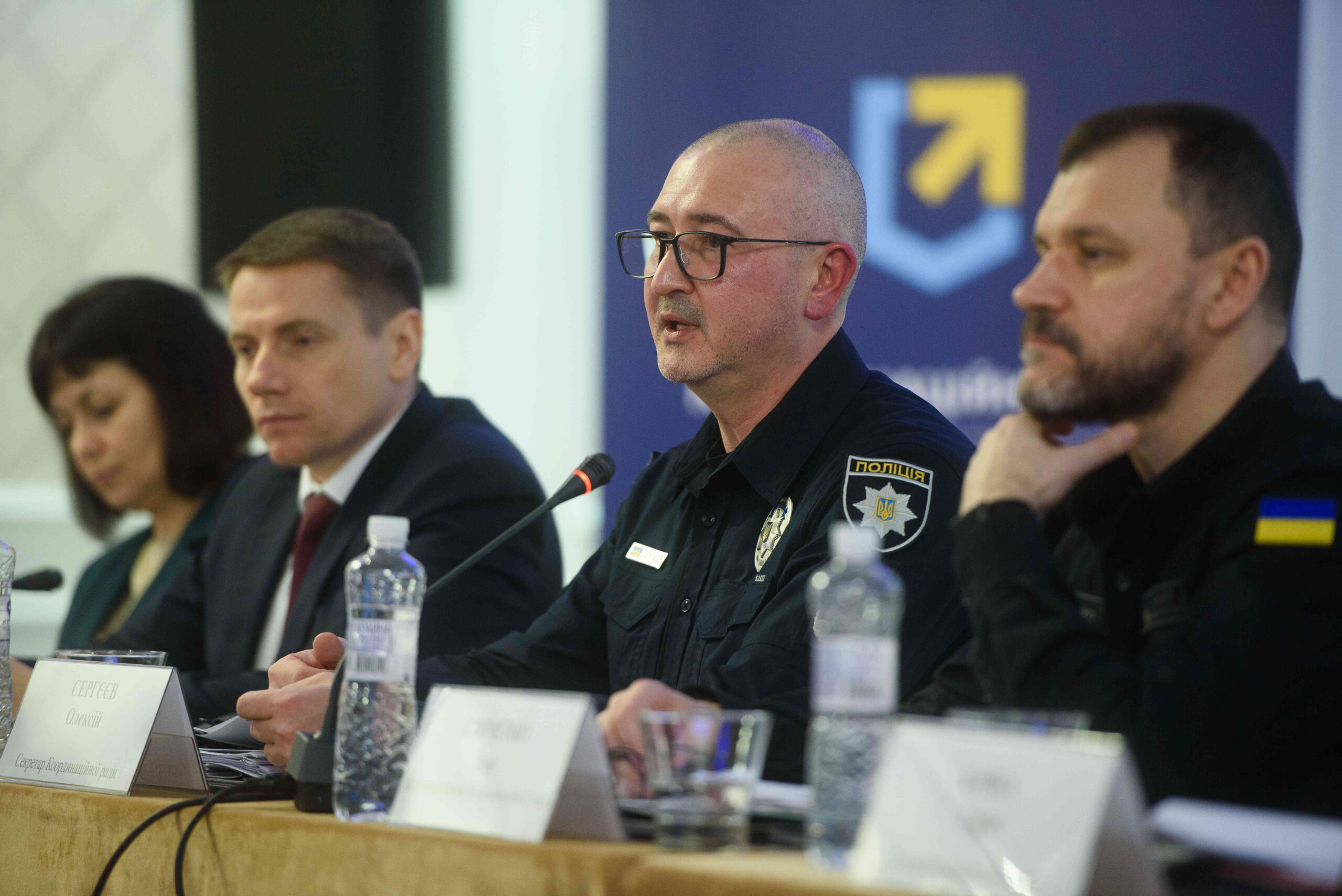
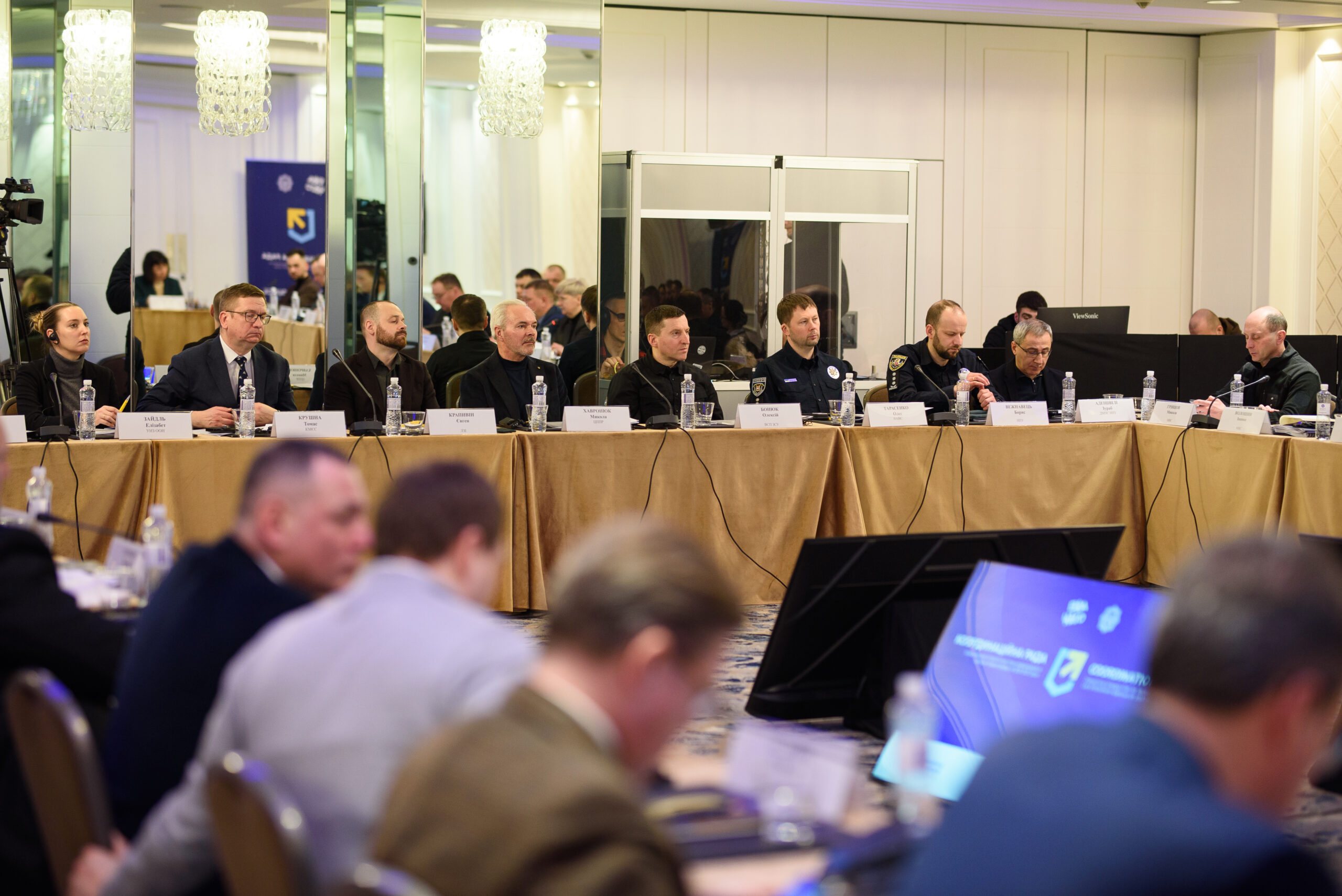
Participants discussed the state of implementation of the OSP, further steps and the strengthening of effective interagency cooperation to ensure the efficient and timely implementation of the OSP, as well as international support for the implementation of the reforms.
The Head of the Coordination Council, Deputy Prime Minister for European and Euro-Atlantic Integration of Ukraine Taras Kachka, emphasised the importance of consolidating the efforts of all state institutions on the path towards European integration — further progress must be pursued even more actively.
The Deputy Head of the Coordination Council, Minister of Internal Affairs of Ukraine Ihor Klymenko, stressed that the reform is key to the transformation of the state and provided examples of changes already implemented — the operation of the 112 Service, the modernisation of the alert system, a new HRM strategy and the work of the relevant coordination centre. For his part, the Secretary of the Coordination Council, Deputy Minister of Internal Affairs of Ukraine Oleksii Serhieiev, spoke about the scale and interagency nature of the plan: ‘The Overarching Strategic Plan covers 198 measures and nearly 50 entities are involved in its implementation — state and local authorities, civil society organisations and research institutions.’
Yevhen Krapyvin, Head of the Law and Order Area at the ALI, noted that the Coordination Council and the expert group established under it constitute an important step on the path towards European integration.
The expert has been involved in the development of both the Overarching Strategic Plan for Law Enforcement Reform and the Action Plan for its implementation since 2020, when the idea emerged to continue the 2008 Concept for the Development of Criminal Justice. Ultimately, these documents were developed by a working group coordinated by the Office of the Prosecutor General and adopted in 2023 and 2024, respectively. Therefore, implementing these ideas in practice is a shared task for law enforcement bodies, central executive authorities, Members of Parliament and international partners.
For its part, the ALI, together with other representatives of the expert community, will continue to support the reform of law enforcement bodies and the prosecution service in Ukraine through analytical work — with the aim of shaping an objective and substantive approach to implementing reforms.
Background
The Coordination Council was established pursuant to the Resolution of the Cabinet of Ministers of Ukraine No. 65 of 21 January 2026 as a temporary advisory body of the Government. The Council is chaired by the Deputy Prime Minister for European and Euro-Atlantic Integration of Ukraine. The Minister of Internal Affairs of Ukraine serves as Deputy Head of the Council, while the Deputy Minister of Internal Affairs acts as its Secretary. The official composition of the Council includes the heads of key law enforcement bodies (NPU, SBGS, SBI, ESBU, SSU, the State Customs Service), representatives of the Office of the President, the National Security and Defence Council, Members of Parliament, as well as international partners.
Meeting between ALI and GIZ Representatives: Focus on Veterans Policy Issues
Researching veterans policy issues is not a new topic for the Agency for Legislative Initiatives, and the need for its effective development and implementation is more relevant than ever for Ukraine. Therefore, the ALI continues to work in this area. In particular, on February 19, we held a meeting with representatives of the German Society for International Cooperation (Deutsche Gesellschaft für Internationale Zusammenarbeit, GIZ).
We shared our thoughts and visions on the Ukrainian approach to working with veterans — which aspects need to be revised and which procedures — improved. We focused separately on the importance of developing a comprehensive veteran policy and discussed the challenges and specifics of its implementation, in particular:
- forming a legislative framework for veteran policy;
- developing a network of veteran support assistants;
- involving local businesses in supporting veterans;
- the capacity of local authorities to integrate veterans;
- the suitability of services to the needs of veterans and the capacity to provide them.
ALI already has systematic experience in this area, including a comprehensive Shadow Report on the Study of Invisible Veteran Policy for 2014–2022, in which ALI experts described the entire cycle of veteran policy — to understand whether it is possible to create a policy that will be able to truly solve the problems of veterans, and what systemic mistakes were made earlier.
The ALI educational project, the Ukrainian School of Political Studies (USPS), also ran the ‘You Are Important’ training programme in 2024. More than 30 servicewomen and female veterans participated in the first cycle of the programme.
The meeting was attended by Svitlana Matviienko, Executive Director at ALI, Volodymyr Skrypets, the Analytics Lead at ALI, Oleksandra Egert, Deputy Executive Director for Operations and Project Coordination, Sebastian Schlebusch, Head of the InClude Component EMPOWER Project (GIZ), and Oleksandr Khoruzhenko, GIZ Ukraine Project Advisor.
Commission for the Selection of SAPO Leadership: Why the Appointment of Shevchuk Raises Concerns
On 23 December, by his order, Prosecutor General Ruslan Kravchenko appointed lawyer Oleksii Shevchuk as a member of the competition commission responsible for selecting prosecutors to senior positions in the Specialised Anti-Corruption Prosecutor’s Office (SAPO), including the Deputy Head of SAPO, a position that is currently vacant. According to the law, members of such a commission may only be persons of impeccable business reputation, high professional and moral qualities, public authority and proven integrity.
Although the commission consists of six members and three of them are yet to be delegated by international development partners, the central issue concerns doubts as to Oleksii Shevchuk’s compliance with these criteria. Given his reputation and his flamboyant conduct in proceedings, one may also speak of the risk of commission meetings being disrupted even by a single member. Thus, the matter concerns not only an individual included in the composition of the commission, but also a much broader issue — the limits of permissible influence of the Prosecutor General over an institutionally independent anti-corruption system.
A Candidate with an Extensive Competition Record
Oleksii Shevchuk has repeatedly participated in competitions for key public positions. In different years, he applied for the positions of Director of the National Anti-Corruption Bureau of Ukraine (NABU), Head of the Coordination Centre for Legal Aid Provision, Head of the National Police of Ukraine (2017), Head of the National Agency on Corruption Prevention (NACP), and, during the full-scale war, for the position of member of the High Council of Justice (HCJ).
None of these competitions proved successful for him. At the same time, the 2023 competition for the HCJ is of particular significance, as it resulted in a formalised decision of the Ethics Council finding that the candidate did not meet the criteria of professional ethics and integrity. That decision set out the factual circumstances underlying the negative assessment.
Clearly, such a decision does not automatically produce legal consequences beyond the specific competition in question. However, the established facts cannot simply be ignored — they have neither disappeared nor lost relevance. A renewed assessment of the same individual within another competition procedure should logically entail, at a minimum, a renewed analysis of those circumstances. Accordingly, both the Council of Prosecutors of Ukraine, which (according to its clarification) had a single uncontested candidate from outside the prosecution system, and the Prosecutor General, as the appointing authority, should have examined this matter and assessed the candidate. In our view, that assessment should have been negative, as there is a failure to meet the criterion established by Article 29-1 of the Law of Ukraine ‘On the Public Prosecutor’s Office’, namely that ‘Members of the Competition Commission shall be persons of impeccable business reputation, high professional and moral qualities, public authority and integrity…’. What, then, is the basis for such a conclusion?
Facts Giving Rise to Reasonable Doubt
In its decision, the Ethics Council referred to a number of established circumstances. Let us focus only on those that are directly relevant to the assessment of moral and professional qualities, primarily integrity.
First, it was established that Oleksii Shevchuk failed to confirm compliance with the obligation of an advocate to undertake continuing professional development in 2020–2021. During the review, he did not provide convincing documents to substantiate such compliance. Against this background, it is noteworthy that in 2024–2025, the Higher School of the Bar of the UNBA submitted hundreds of disciplinary complaints against advocates who had not undertaken continuing professional development for five years. The question of whether this aspect of Shevchuk’s own professional activity was examined in disciplinary proceedings remains open.
Second, more serious are the circumstances related to the use of questionable documents. In 2018, a law firm headed by Shevchuk submitted a tender proposal to a state enterprise, attaching a reference letter bearing a logo and name visually and substantively similar to the branding of the well-known civil society coalition ‘Reanimation Package of Reforms’. Such similarity could have created a misleading impression of endorsement by a reputable civic initiative. Despite Shevchuk’s statements that he was unaware of this issue, the Ethics Council concluded that he understood the potentially misleading nature of using such branding.
Third, in 2018 Shevchuk applied to register the trademark ‘Sudovyi Reporter’, while an independent journalistic outlet of the same name already existed and was known within the professional community. The circumstances of this attempted registration, as well as subsequent pressure on the outlet’s editorial team, were publicly described by journalist Iryna Salii and caused significant public resonance.
Overall, the Ethics Council referred to eight established circumstances which, taken together, were deemed sufficient to conclude that the candidate lacked integrity. Among these were issues relating to disciplinary proceedings concerning Oleksii Shevchuk.
Disciplinary Record and the Problem of Procedural Opacity
Particular attention should be paid to Oleksii Shevchuk’s disciplinary record as a member of the Bar. One of the key circumstances was his being held disciplinarily liable in 2023 for violating the Rules of Legal Ethics, which resulted in the deprivation of his right to practise law. That decision was subsequently overturned by the High Qualification and Disciplinary Commission of the Bar (HQDCB) on procedural grounds — without refuting the existence of the violations. Thereafter, Shevchuk became the spokesperson of the Ukrainian National Bar Association. Such a timeline also raises questions.
In addition, other disciplinary complaints were filed against him, including in connection with publicly expressed insulting statements and threats to use military service as a form of punishment.
Two further complaints were submitted by lawyer Masі Nayyem, requesting that Shevchuk be held liable for insults and harassment directed at him in relation to his injury, for public accusations made without evidence and for the dissemination of false information. Unfortunately, not all decisions on these complaints are publicly available.
The absence of an open register of disciplinary decisions within the Bar makes it impossible to fully assess how the system of accountability operates and whether disciplinary sanctions are applied fairly — or perhaps selectively. This is not merely an individual issue but a systemic one, directly affecting trust in Bar self-governance. The existence of a public register of all disciplinary decisions concerning advocates would significantly increase confidence in the system.
The situation is further complicated by an institutional crisis within Bar self-governance itself: the Congress of Advocates, which is responsible for electing governing bodies, was due to take place back in 2022. For more than three years, key appointments have been made by decisions of the Bar Council of Ukraine (BCU) contrary to the law — for example, the appointment of the Head of the HQDCB, although the law expressly provides that the Head of this Commission may be appointed only by the Congress of Advocates. As a result, the highest disciplinary body is dependent on the BCU. In practice, leading positions within Bar self-governance bodies continue to be held by representatives elected as far back as 2012 and who have remained in power for more than 13 years. The reference to continuity as a justification for the failure to convene the Congress of Advocates appears legally flawed, given that congresses of judges and conferences of prosecutors have taken place after 2022. In what way is the Bar worse than judges and prosecutors, whose degree of self-governance and state regulation is significantly more limited?
Appointment to the SAPO Commission as Part of a Broader Context
On 26 January, the Council of Prosecutors published a statement effectively shifting responsibility for Shevchuk’s appointment onto Ruslan Kravchenko. Three prosecutors and one advocate applied to participate in the competition for membership of the commission. The Council of Prosecutors delegated three prosecutors. However, subsequently one of the prosecutors submitted a request to withdraw from the commission of her own accord. Under the law, the Prosecutor General thereby obtained the formal right to appoint one member of the commission at his own discretion. That person became Oleksii Shevchuk.
For its part, the Prosecutor General’s Office (PGO) stated that the current legislation does not provide for the possibility of recalling a member of the commission on reputational grounds. At the same time, both the Council of Prosecutors and the PGO emphasise that the commission is currently not quorate due to the absence of candidates delegated by international and foreign organisations.
In this context, a legitimate question arises: will international partners be prepared to delegate their representatives to a commission with such a composition, and will they be able to work effectively in conditions of evident public distrust? Moreover, what should be done if the three representatives of international partners clearly state that they are unwilling to work ‘with Shevchuk’? This already puts the entire process at risk. It would be far more constructive to resolve the conflict here and now rather than to force the situation further.
Another issue concerns the representation of prosecutors within the commission. All six members are determined by the Prosecutor General: three — upon nomination by international partners and three — upon nomination by the Council of Prosecutors. It is logical and expected that the prosecution service should be directly represented in this body, as this is important for taking into account the professional position and the specific nature of prosecutors’ work. It is evident that the prosecutorial community counted on representation precisely under the quota of the Council of Prosecutors. However, the appointment of a lawyer by the Prosecutor General effectively deprived prosecutors of such an opportunity. This raises the question: were there truly no worthy and willing candidates among prosecutors who could have ensured proper representation within the commission?
Public Reaction and the Question of Responsibility
As of today, a joint statement demanding the revocation of the order appointing Shevchuk has been signed by more than 60 civil society organisations, Members of Parliament, lawyers and public figures. In response, the Prosecutor General and his Office have limited themselves to formal explanations regarding the absence of legal powers to reconsider the appointment.
Oleksii Shevchuk himself has claimed that he faced pressure and threats following his appointment, having appealed to law enforcement bodies and to the President of Ukraine to ensure his protection. However, no evidence of such threats has been publicly provided. Moreover, beyond statements made during a press conference, nothing further is known about these alleged threats — neither the factual circumstances, nor the existence of criminal proceedings, nor the submission within such proceedings of a request for the application of security measures in accordance with the law.
Why This Issue Is Not About One Individual
The problem does not lie in the absence of a criminal conviction against Oleksii Shevchuk or in the fact that decisions of Bar disciplinary bodies were overturned. Legislation and integrity standards do not require the existence of a final judicial or disciplinary decision, as the appointing authority has the autonomous right to assess whether a candidate meets the necessary moral and professional qualities. To exclude a person from sensitive procedures requiring a high level of public trust, it is sufficient that there be a reasonable doubt as to compliance with the established criteria. In this case, such doubt arises from the cumulative effect of numerous documented circumstances. We do not deny that there is a lack of a unified approach to assessing ethical conduct and the criterion of integrity in competition procedures. However, this approach should be developed rather than merely lamented as absent. Moreover, the Unified Indicators for Assessing the Integrity and Professional Ethics of a Judge (Judicial Candidate), approved by the High Council of Justice in December 2024, provide a useful benchmark in this regard.
The commission to which Shevchuk has been appointed will select the Deputy Head of the Specialised Anti-Corruption Prosecutor’s Office — the second most influential position within a body that has a formally and practically independent status from the Prosecutor General. It is precisely for this reason that the composition of this commission is of decisive importance.
In this context, it is worth recalling the crisis of July 2025, when the authorities attempted to significantly limit the powers of the NABU and the SAPO. According to media reports, Prosecutor General Ruslan Kravchenko was among the active implementers of the strategy pursued at that time. Had these changes been implemented, Ukraine would likely never have learned the details of the so-called ‘Mindichgate’, Andrii Yermak would have continued to head the Office of the President without public reputational consequences and Members of Parliament who allegedly ‘purchase votes’ would have continued to feel immune from accountability. Indeed, under full procedural control over anti-corruption bodies by a Prosecutor General who is still appointed on the basis of political preferences rather than professional criteria, it would be difficult to speak of objective and comprehensive investigations involving individuals holding high-level positions.
However, attempts to limit the activities of anti-corruption bodies are far from over. Among the instruments that may be deployed is the preparation of a notice of suspicion against the Head of SAPO, Oleksandr Klymenko, as has already been reported in media outlets that regularly cover justice and anti-corruption issues.
If Klymenko were to be suspended from office for the duration of the investigation, his powers would normally be assumed by the First Deputy. However, at present, the Head of SAPO has no such deputy. Under these circumstances, the personnel decision of the Prosecutor General effectively creates the possibility of implementing a scenario of indirect control over the leadership of the anti-corruption prosecution service.
The appointment of a person with such a controversial reputation appears not merely as a hiring mistake, but as a signal of readiness to disregard public expectations regarding transparency and integrity in the anti-corruption sphere.
An Open Question
In this situation, a key question remains: how do the prosecutors of the Specialised Anti-Corruption Prosecutor’s Office themselves view the fact that their evaluation and the effective selection of SAPO leadership may be influenced by a person whose reputation is subject to well-founded doubts?
Oleksii Shevchuk has been delegated to two strategically important commissions — one for the selection of members of the HQCJ and another for the selection of candidates to senior positions in the SAPO. Neither of them has yet been able to commence full-fledged work. Perhaps the issue is not limited to individual personalities, yet it is precisely such personalities that become a litmus test for a systemic problem.
If even formally lawful decisions result in the paralysis of key anti-corruption procedures, this indicates that the problem does not lie in a single individual, but in the overall quality of public governance and in the willingness of the authorities to listen to society.
SBI Reform: Changing the Institutional Logic, Not the Director
At the beginning of 2026, the President publicly announced a course towards renewing the State Bureau of Investigation (SBI). He instructed that a relevant draft law be prepared during January and urgently submitted to Parliament. This decision did not emerge spontaneously, as reform of the SBI had been discussed before; rather, it is a political signal of the need to act here and now. Accordingly, it has organically fitted into the agenda both in the context of European integration and against the backdrop of personnel reshuffles.
The quality of these reshuffles is not the subject of this text, whereas reform of the SBI is one of the ten priorities that Ukraine must deliver in 2026 within the framework of frontloading. This is a process launched jointly with the European Union that will allow Ukraine to prepare for the opening of negotiating clusters for EU accession even before the lifting of the Hungarian veto.
In this context, renewal of the State Bureau of Investigation becomes an important test for the Ukrainian authorities: whether they are capable of rethinking the role of yet another law enforcement body with a significant concentration of powers and clear signs of politicisation of its processes.
What, then, should be the role of the SBI in the law enforcement system? Why does this body continue to find itself at the centre of scandals? How can reform be turned from a formality into genuine institutional change?
How and Where Did the SBI Go Off Track?
The idea of establishing the State Bureau of Investigation in 2018 appeared logical. The body was supposed to investigate official crimes — torture, unlawful detention, fabrication of evidence and other crimes against justice — eliminating conflicts of interest when violations are investigated by the same institutions whose employees may be implicated in them. The SBI was meant to become an institution that reduces the sense of impunity and demonstrates that no one stands above the law, not even public officials.
Until November 2018, these crimes were investigated by the prosecutor’s office, and the transfer of jurisdiction to a new body had been envisaged as early as the 1996 Constitution. After several unsuccessful attempts to establish a similar body in 1997 and 2004, the 2012 Criminal Procedure Code required the creation of the SBI within five years. Formally, this task was fulfilled — jurisdiction was transferred, and years-long legislative work was completed. However, the expected effect did not materialise.
The SBI failed to change the rules of the game in combating torture and other official crimes. Medium-level corruption became the de facto priority, and the body itself began to position itself as yet another anti-corruption agency. As a result, its original mission receded into the background — contrary to the expectations of human rights defenders and international partners.
In its first year of operation (2018–2019), the SBI’s governance model resembled a ‘triumvirate’: the Director and his deputies alternated in performing managerial functions, which undermined the vertical of responsibility. This quickly led to scandals, symbolised by the ‘Truba tapes’ — recordings of conversations linked to the then Director, Roman Truba, which gave rise to doubts about informal influence over investigations. It was precisely this that triggered the first attempt at a ‘reset’.
On 3 December 2019, Parliament supported the presidential law on the early termination of the powers of the SBI leadership. While the decision appeared politically understandable, the manner of its implementation raised serious concerns: the powers were terminated automatically, without an individualised accountability procedure. Roman Truba challenged this logic before the Constitutional Court of Ukraine, yet the Court ultimately did not assess his specific case. At the same time, such a scenario is today virtually impossible — as in 2021–2023 the Constitutional Court repeatedly emphasised in its rulings on the attestation of police officers and prosecutors that Parliament cannot substitute personnel procedures with political decisions.
Early termination of the leadership’s mandate made the SBI institutionally vulnerable and entrenched the perception of the Bureau as a body dependent on political expediency. The law was a reaction to a crisis of trust rather than a genuine reset: powers were not reviewed; integrity assessments were not conducted, and safeguards against abuse were not created.
In December 2021, Oleksii Sukhachov was appointed Director of the SBI following a competitive selection. His mandate expires at the end of 2026. However, the volume of criticism directed at the Bureau indicates that even a competitively selected change of leadership did not resolve systemic problems. Thus, the issue is not personalities — but the very model of the SBI.
The SBI Without Focus: From Specialisation to ‘Universal Investigator’
Over time, the State Bureau of Investigation has turned into a universal ‘investigator of everything’, with resources dispersed and priorities shifted. And these are by no means official crimes, let alone those in the field of justice. A significant share of the Bureau’s caseload today consists of military offences (against the order of military service), which is logical in wartime. Although current criminal statistics are classified (given the scale of unauthorised absence), older reporting forms show that in recent years their share amounted to around 80–90% of the SBI’s entire jurisdiction (in particular, in 2024 — 89,000 out of 98,000 proceedings). Yet when the body was created, this jurisdiction was treated as residual, not as a primary one at all.
At the same time, another portion of the SBI’s resources is directed towards investigating medium-level corruption offences, which by their nature was also not the primary reason for establishing this body. Moreover, the effectiveness of such work raises questions: few cases reach verdicts, while the situation with crimes in the field of justice remains consistently poor and impunity — systemic. Ultimately, torture, unlawful detention and fabrication of evidence are among the lowest priorities of this body. Yet this is precisely what it was created for.
As a result, the SBI is simultaneously overloaded and deprived of a clear priority. It is no coincidence that jurisdiction over military offences is regularly proposed to be transferred to a new specialised body, such as a State Military Justice Bureau, as the SBI is objectively unable to cope with such volume. This concerns not only more than 200,000 proceedings related to unauthorised absence, but also military offences more broadly, including corruption which, in terms of the level of public danger, often does not meet the threshold of jurisdiction of the National Anti-Corruption Bureau of Ukraine.
For some time, the idea was also discussed of transferring the investigation of crimes against national security to the SBI as part of reforming the Security Service of Ukraine, to strip it of pre-trial investigation functions. Today, however, this proposal evokes rather irony among experts and open irritation in society.
Additional questions also arise regarding the SBI’s dependence on the Office of the President of Ukraine and the role of the Bureau in possible ‘political persecutions’. The SBI regularly finds itself at the centre of scandals, while journalists and civil society representatives have repeatedly accused it of pressure, selective law enforcement and politicisation in the context of excessively broad powers.
Events surrounding the High Qualification Commission of Judges of Ukraine (HQCJ) in 2025 were illustrative in this regard. The SBI conducted a series of searches at the HQCJ’s premises and at the residence of the then Deputy Head of the Commission and questioned its members. Formally — within the framework of criminal proceedings; however, beyond the procedural framework, much deeper institutional problems became apparent. The HQCJ publicly stated that it regarded these actions as pressure and interference with the exercise of its constitutional functions, a point noted by both international partners and civil society organisations. The events coincided with the intensification of the qualification assessment of judges of the dissolved District Administrative Court of Kyiv and the Pechersk District Court, which at the same time were considering SBI motions for searches and access to documents. The line between law enforcement and pressure proved to be dangerously thin.
Public perception of the SBI’s activities has also been significantly shaped by the active use of urgent searches conducted without a warrant from an investigating judge. Although the CPC of Ukraine allows for such a tool in exceptional cases, in practice it increasingly appears to function as a standard procedure that is subsequently legalised post factum. When scandals and identified violations do not lead to internal investigations or disciplinary decisions, a sense of impunity emerges. This only reinforces narratives about a ‘political SBI’ and undermines trust in the institution.
How the SBI Reform Became a Condition for European Integration
Scandals surrounding the SBI have not gone unnoticed by international partners. The European Commission, in its Enlargement Reports for 2024 and 2025, explicitly pointed to the need to reform the Bureau. Specifically, Ukraine is required to introduce transparent, merit-based procedures for the selection of the SBI’s leadership with the involvement of independent experts — not a formal competition, but a mechanism capable of guaranteeing institutional independence from political influence. This emphasis is not incidental: previous competitive procedures for the SBI have repeatedly been criticised for lack of transparency and instability of selection commissions, while under martial law their effectiveness has not been analysed at all.
An even tougher position is set out in the Screening Report on the compliance of Ukrainian legislation with EU law (January 2025), which recommends a ‘reset’ of the SBI by analogy with the Economic Security Bureau of Ukraine (ESBU). Although this document is not public, such a recommendation was reported back in February 2025 by Member of Parliament Yaroslav Zhelezniak.
The Rule of Law Roadmap provides for a comprehensive review of the SBI’s institutional structure in the fourth quarter of 2026, the development of integrity and oversight mechanisms, and only thereafter — an assessment of the advisability of further reform and the preparation of relevant legislation. At the same time, the governmental approach appears overly slow, given the scale of the problems and the number of questions addressed to the SBI by politicians, civil society and professional communities. Implementation of such a plan may stretch over years.
An alternative path is proposed by Members of Parliament Yaroslav Zhelezniak and Anastasiia Radina. In August 2025, they registered draft law No. 13602, which provides for a ‘reset’ of the SBI based on the ESBU model — a new procedure for selecting the Director with a decisive vote of international experts and the attestation of personnel. However, this should constitute only the first stage of SBI reform, as it primarily concerns staffing issues.
The key issue of SBI reform, however, lies not in replacing the Director, but in rethinking the logic of jurisdiction, the system of oversight and the role of the body within the overall architecture of law enforcement.
Not Only Who, but How: Conditions for a Genuine Reset of the SBI
The history of the State Bureau of Investigation already includes attempts at ‘resets’ that failed to produce long-term effects. If the structure continues to combine an excessively broad portfolio of powers, political influence over its activities will be inevitable.
How can this be avoided? A comprehensive reform should primarily address the SBI’s jurisdiction and its place within the law enforcement system. If the SBI is to focus first and foremost on combating crimes in the field of justice and abuses of office, resources and personnel should be channelled precisely into these areas. The reform should start with the specialisation of investigative units and move towards the creation of secure communication channels, the expansion of the whistleblower institution to cover official crimes, etc. Many ideas articulated back in 2021 in the Government Strategy on Preventing Torture have still not been implemented — and it is precisely the SBI that should take this on.
In parallel, it is critically important to develop analytical capacity to forecast crime, ensure effective counteraction, begin working with European instruments such as SOCTA, improve approaches to criminal policy, etc. This would bring Ukraine closer to an EU-model law enforcement system. European approaches in this area are based precisely on data analysis and the strategic prioritisation of objectives.
There is a need to improve the accountability of the SBI and to introduce genuine oversight instruments. The formal existence of internal control units, public oversight councils, etc. does not guarantee results if these mechanisms are unable to exert real influence over the activities of the SBI. They must be sufficiently independent from the leadership and capable of impartially reviewing complaints against Bureau staff. The institutional trajectory can be reviewed, for example, through periodic audits of activities, as a result of which the head may lose their position and the work of the body may be substantially adjusted externally — by the Government and Parliament.
Reform of the SBI today is a test of the ability to build institutions with real checks and balances. Without a systemic rethinking of the role of this body, personnel changes will not work.
Appointing new leadership is only one of many steps required for genuine reform of the SBI. All the more so given that this is a ‘newly established’ body that emerged after the Revolution of Dignity — with competitive selection procedures, a public oversight council and reporting to Parliament. Therefore, personnel reshuffles alone are insufficient, as even the most transparent competition involving civil society and international experts will not resolve the problem if the body continues to operate with the same concentration of powers, blurred jurisdiction and weak safeguards against abuse, without effective external and internal oversight. Old practices will return unless these deeper issues are addressed. If reform changes the logic of how the SBI operates, fixes its clear jurisdiction and provides for safeguards and control mechanisms, this will offer a chance for real change and for meeting priority European integration requirements.
The Security Service of Ukraine Between War and Law: Is It Time for Reform?
The Security Service of Ukraine (SSU) has long ceased to be ‘just a special service’. In times of war, it has become one of the key institutions for the survival of the state. The SSU performs counterintelligence functions, combats organised crime, collaborationism and war crimes, exposes agent networks, counters sabotage and cyberattacks, etc. And at times — its officers also manage to take part in ‘conflicts’ around business and politics.
The Service itself notes — ‘we are developing’. But is such development the reform that the EU expects from Ukraine?
The SSU still combines the function of a classic special service — counterintelligence — and that of a law enforcement body — pre-trial investigation of crimes with a rather broad jurisdiction. Such a concentration of powers creates space for abuse, politicisation of the body, conflicts of competence and risks to human rights.
Reform of the SSU is a European integration requirement, despite an implicit consensus among experts that it is ‘not timely’ because it would weaken the country’s defence capability. The European Union states that over the past year there has been no progress in SSU reform. At the same time, it directly indicates that the SSU should transfer the function of pre-trial investigation to specialised law enforcement bodies, and itself — focus on the sphere of national security (national security tasks) and introduce effective safeguards against abuse.
The European Commission calls for strengthening both internal and external oversight and anti-corruption mechanisms, as well as improving the rules for the selection of senior management and personnel of the Security Service of Ukraine. This is also highlighted by a coalition of civil society organisations led by the Agency for Legislative Initiatives (ALI) in the Shadow Report. The Ukrainian authorities, for their part, have officially committed to changing the SSU by the first quarter of 2026.
It is worth noting that under the sphere of national security our legislation understands a wide range of issues — from defence matters to economic and environmental security. At the same time, there is little difference between the term ‘state security’, customary for the SSU, and ‘national security’ — everything depends on the context, as the legislation lacks systemic coherence in this area.
Thus, the term ‘national security’ is broader than ‘state security’; in some cases, these terms are synonymous, while in others the term ‘state security’ relates only to non-military-time threats, etc. At the same time, the development of legislation has led to the term ‘national security’ being used far more frequently; this applies in particular to responsibility which, under the Constitution, is defined within the powers of the President and the Cabinet of Ministers — the protection of national security. Accordingly, they assign these tasks to the special service — the SSU. Therefore, it is not the name itself that matters, but that the powers of the SSU are clearly defined by law and do not allow for broad interpretation, as cases of unlawful actions by the Service often have nothing to do with its powers, when national security is understood to encompass all spheres of state activity.
Thus, we examine why and what changes the Security Service of Ukraine requires, and how realistic it is to reform this institution in the context of a full-scale war.
War as Justification and as a Trap
By law, the SSU is a central body of special purpose with law enforcement functions. In practice, however — it operates within an excessively broad range of tasks and powers. This is an approach rooted in the Soviet logic of security universalism, when a single structure was responsible for almost everything: from state security to economic crimes. At the same time, a defining feature of democratic societies is precisely that the powers of special services are limited, and their activities are subject to civilian oversight, including parliamentary oversight.
This is why, after the Revolution of Dignity, reform of the SSU became one of the tasks that ultimately was not completed before the full-scale invasion. Since 24 February 2022, the multitasking of the Security Service has only intensified. New challenges have emerged: large-scale international crimes, threats to national security (high treason, collaborationism, propaganda of war, etc.), special operations in occupied territories and on enemy territory, international cooperation, etc.
Experts of the Agency for Legislative Initiatives note the merging of counterintelligence and counterterrorism in the activities of the structure in wartime conditions. From the perspective of the rule of law, this blurs the boundaries of responsibility and accountability.
Martial law cannot serve as a long-term ‘indulgence’ for preserving old institutional solutions. Yes, war requires flexibility and rapid decision-making, but there is a need to review managerial and legal models and approaches that were shaped in a different security context.
Jurisdiction as a Point of Systemic Imbalance
The issue of jurisdiction remains problematic. This primarily concerns the SSU’s broad pre-trial investigation functions — not limited to national security and terrorism. These also include smuggling, international crimes, crimes related to state secrets and the protection of critical infrastructure. Some of these fall within the economic sphere, which is a frequent source of complaints from business (smuggling, financing of terrorism, collaborationist activities in the form of entrepreneurship, etc.). This is atypical for special services of the European model.
For example, war crimes are in fact investigated by the National Police — given the presence of police officers in all communities, they are the first to be approached, and most of these cases concern ‘strikes’, the consequences of which need to be properly documented. Accordingly, there are calls to expand the jurisdiction of the police or to establish a new body that, in the long term, would be capable of investigating these crimes, in order not to repeat the negative experience of the ‘Maidan cases’.
Certain criminal prosecution policies are also frequently criticised, for example the prosecution of pensioners for collaborationist activities (likes on ‘Odnoklassniki’) or of those who were forced to remain in occupied territories (of course, not those who went to work in the occupation administration or actively supported the occupation regime). Excessively harsh de facto criminal policy is a consequence of heightened demands for justice, yet it is counterproductive in the long term, especially in the context of de-occupation. In some cases, it is simply the result of working towards quantitative clearance indicators rather than a genuine fight against crime.
According to representatives of the SSU with whom ALI experts spoke in the course of preparing the Shadow Report, the Service is opposed to narrowing the function of pre-trial investigation. The exception is smuggling, jurisdiction over which may be transferred to the Economic Security Bureau of Ukraine, given its subject-matter focus. However, a broader narrowing of jurisdiction is needed — for example, to determine a phased approach as to what would be transferred to other bodies under martial law and what — after its termination. The investigation of crimes should be secondary in comparison with other tasks related to the protection of the state.
In addition, operational units of the SSU are widely involved in the investigation of criminal offences by all pre-trial investigation bodies (even the National Anti-Corruption Bureau of Ukraine (NABU) occasionally involves SSU operatives — there is no conflict in this). At the same time, within the Security Service of Ukraine, units ‘K’ (counterintelligence in the field of combating corruption and organised crime) and ‘E’ (counterintelligence in the economic sphere) have a ‘bad reputation’ — in the past, human rights defenders, journalists and anti-corruption activists often criticised them for interference in the activities of other bodies, surveillance of activists and journalists, etc. Following such criticism, the activities of units ‘K’ and ‘E’ were reoriented in 2021 towards the protection of critical infrastructure (in effect, a significant narrowing of functions took place).
Here it is important to understand that corruption-related offences do not fall within the jurisdiction of the SSU. They are investigated by NABU, the State Bureau of Investigation (SBI) and the National Police. The activities of the aforementioned units take place precisely in the counterintelligence sphere and do not provide for criminal prosecution by the Service for corruption or the economy as such. The economic sphere, threats to the national security of public authorities and other sensitive areas cannot be fully removed from the field of activity of the Security Service of Ukraine as a counterintelligence body, as they constitute areas of influence for foreign intelligence services, industrial espionage, preparation of terrorist acts, etc.
Counterintelligence as a function will always remain with this body, as it is inherent to a special service, unlike pre-trial investigation. The only question is the extent to which the Service is accountable and subject to oversight in a democratic society, so that these powers are not abused.
Undoubtedly, risks of abuse have existed and will always exist. That is precisely why there must be instruments to mitigate them through control, accountability, etc. For its part, this should be the responsibility of Parliament. Both the European Commission and ALI experts in the Shadow Report emphasise the need to strengthen such mechanisms.
Symptoms of a Personnel Illness
A widespread narrative concerns the politicisation of the SSU — due to high-profile scandals surrounding the special service and its officers, as well as past experience when law enforcement bodies became instruments of political struggle. However, such generalisation is overly simplistic.
Interestingly, at the same time, the level of trust in the SSU as of September 2025 stands at 78%. It is clear why, after the Defence Forces, trust in the SSU is the highest. In wartime, the reputation of the SSU correlates with its effectiveness on the battlefield and in the enemy’s rear (let us recall the ‘Alpha’ special unit), as well as with countering internal security threats.
At the same time, there is much talk about the so-called ‘political SSU’ and the ‘other SSU’. Yet such a division is devoid of meaning, as it narrows a structural problem down to individual personalities. It is not enough simply to replace ‘bad’ managers with ‘good’ ones. It is necessary to build a system of checks and balances, define the scope of powers and introduce accountability mechanisms that would make abuses in the work of the Service impossible.
It is important to understand that reform of the SSU cannot be ensured through a universal ‘international experts involved’ recipe in competitive selection procedures. After all, this concerns a special service, not an executive authority or even a court. Re-certification of all personnel or regular reminders in the media space about cases such as that of Shylo and similar ones are insufficient to bring Ukraine closer to EU and NATO standards. These instruments are not applicable to persons who have a high level of access to state secrets, perform tasks involving confidential cooperation and are often non-public individuals. Thus, for example, during the large-scale police attestation in 2015–2016, operational officers were not subject to re-certification — let alone an entire special service.
In this context, the case of NABU detective Ruslan Mahamedrasulov is noteworthy. Together with his father, he was accused by the SSU of allegedly selling technical hemp to representatives of the economic sector of russia. Mahamedrasulov was arrested on 21 July, which is in one way or another linked to attempts to undermine the independence of anti-corruption bodies. His defence publicly stated that they view this case as possible pressure on the detective and his family. The media and civil society also noted that the entire situation may be connected to the investigation into corruption abuses within the President’s inner circle. The disclosure of information regarding Operation ‘Midas’, conducted by NABU and the Specialised Anti-Corruption Prosecutor’s Office (SAPO), has somewhat clarified the situation.
According to NABU, Detective Mahamedrasulov took part in the collection of evidence for this operation. As early as 3 December, the prosecution changed its position on the need to keep Mahamedrasulov and his father in custody, as a result of which the court released them from pre-trial detention under a personal recognisance.
Is there a role of the SSU in this? Undoubtedly. At the same time, this concerns the politicisation of the entire system — from prosecutors, whose head is the result of political agreements, to the Office of the President, which traditionally stands outside the branches of power and duplicates all other spheres of state activity. After all, criminal proceedings involve various actors: an investigator who collects evidence, a prosecutor who exercises procedural guidance and an investigating judge who oversees compliance with human rights and freedoms, including the application of preventive measures.
In other words — the Mahamedrasulov case or other ‘political’ cases are an indictment of the entire criminal justice system, not exclusively of the SSU. Moreover, if the SSU is maximally removed from this system (which is precisely the idea of the reform, which, among other things, limits the Service’s jurisdiction), the possibility of involving it in political cases will also decrease. What follows is the depoliticisation of the entire criminal justice system, which is beyond the scope of this article.
In this respect, it would be more effective to shift the focus of the discussion from attachment to individual personalities to the search for systemic institutional solutions. Thus, it is worth speaking about gradual reform of the Service, which would transform and develop the structure itself, while at the same time strengthening democratic oversight over it. This can be done by Members of Parliament through the specialised Committee on National Security, Defence and Intelligence.
At the beginning of 2027, it is planned to establish a separate Verkhovna Rada Committee that will ensure the Parliament’s oversight functions over special-purpose bodies with law enforcement functions, law enforcement bodies of special purpose and intelligence bodies. It will operate in accordance with best European practices and will be protected from unjustified political influence. This measure of the Rule of Law Roadmap strengthens the Parliament’s role in oversight of the SSU.
In addition, the work of the Service should be monitored by an independent ombudsman / oversight body to investigate individual complaints and other issues related to the activities of the SSU. The establishment of this position or body in line with European standards is envisaged by the Roadmap by the first quarter of 2027.
A Reform That Has Been ‘Timely’ Since 2021
Discussion of reform has been ongoing since 2021. Its aim is to transform the special service into a small, mobile, high-tech structure, similar to the UK’s MI5, with an exhaustive list of tasks: counterintelligence, counterterrorism and the protection of state secrets.
The foundation for this was intended to be Draft Law No. 3196-d, adopted at first reading in January 2021. It provided for the demilitarisation of the Service, the removal of non-core functions of pre-trial investigation of the aforementioned types of economic crimes and the strengthening of the counterintelligence block. The relevant initiative was prepared considering EU and NATO recommendations and strategic documents on the development of the security sector.
However, the context has changed radically. At present, this draft law is no longer sufficient, and the necessary changes will be attempted through several legislative initiatives, the central one of which should be a new Law of Ukraine ‘On the Security Service of Ukraine’.
The Rule of Law Roadmap sets deadlines for these innovations. The SSU itself participated in its development, and the European Commission also provided its assessment. In the fourth quarter of 2025, the analysis of EU and NATO legislation is to be finalised, and by the first quarter of 2026 — a new Law ‘On the SSU’ is to be adopted. In accordance with the requirements of international partners, it should focus the Service’s activities on counterintelligence, counterterrorism, cybersecurity and the protection of state secrets. In addition, a substantial block of reforms related to the activities of law enforcement bodies will apply to investigative and operational units.
Changes to the legislation are possible. In 2025 alone, two laws were adopted that clarify the structure, strengthen social guarantees and increase the number of SSU personnel. The Service has also been granted the right to independently submit draft legislative amendments to the Government or the President (previously this was done through the Ministry of Internal Affairs).
What Is Needed Now Is Not Debate, but Change
The time for discussing whether SSU reform is necessary has long passed. The Ukrainian authorities now have clear obligations — both to society and to the European Union. Changes to the structure must also be in the interests of the SSU itself: the body needs to cleanse its reputation and to restore public trust both in the rule of law and in the fact that old patterns will not be repeated and that the special service will not become yet another instrument of political influence and coercion.
Scandals surrounding the SSU, the events of July 2025, subsequent criminal proceedings in which NABU detectives are suspects and the experience of ‘political shaking’ of the leadership of certain institutions point to long-term negative consequences in wartime conditions. Therefore, restoring trust in the SSU not as an ‘organ of political persecution’ or a ‘punitive club of the President’ has become a relatively new development goal for the Service, which emerged in 2025.
Moreover, reform of the SSU is a condition for Ukraine’s further European integration. The Security Service of Ukraine can transform from a multifunctional law enforcement body with features of politicisation into a modern strategic special service of the European model, aligned with EU and NATO standards. The only question is whether the Ukrainian authorities will have sufficient political will not to waste this opportunity.