
Sustainability of Processes and Continuation of Parliamentary Reform: Visit of the Delegation of the Verkhovna Rada to Canada
At the beginning of April, a delegation of the Verkhovna Rada of Ukraine made a study visit to Canada to learn about the experience in areas related to the sustainable operation of the parliament.
The status of parliamentary staff, its similarities and differences with the public service, work with parliamentarians, issues of the Rules of Procedure for plenary and committee meetings, tools and processes used for translation of documents and ongoing work — during the visit, many thematic meetings and trainings were held for the representatives of the Verkhovna Rada. Canada is currently preparing for a parliamentary election, so it is a very valuable opportunity to see how similar processes are carried out in another country.

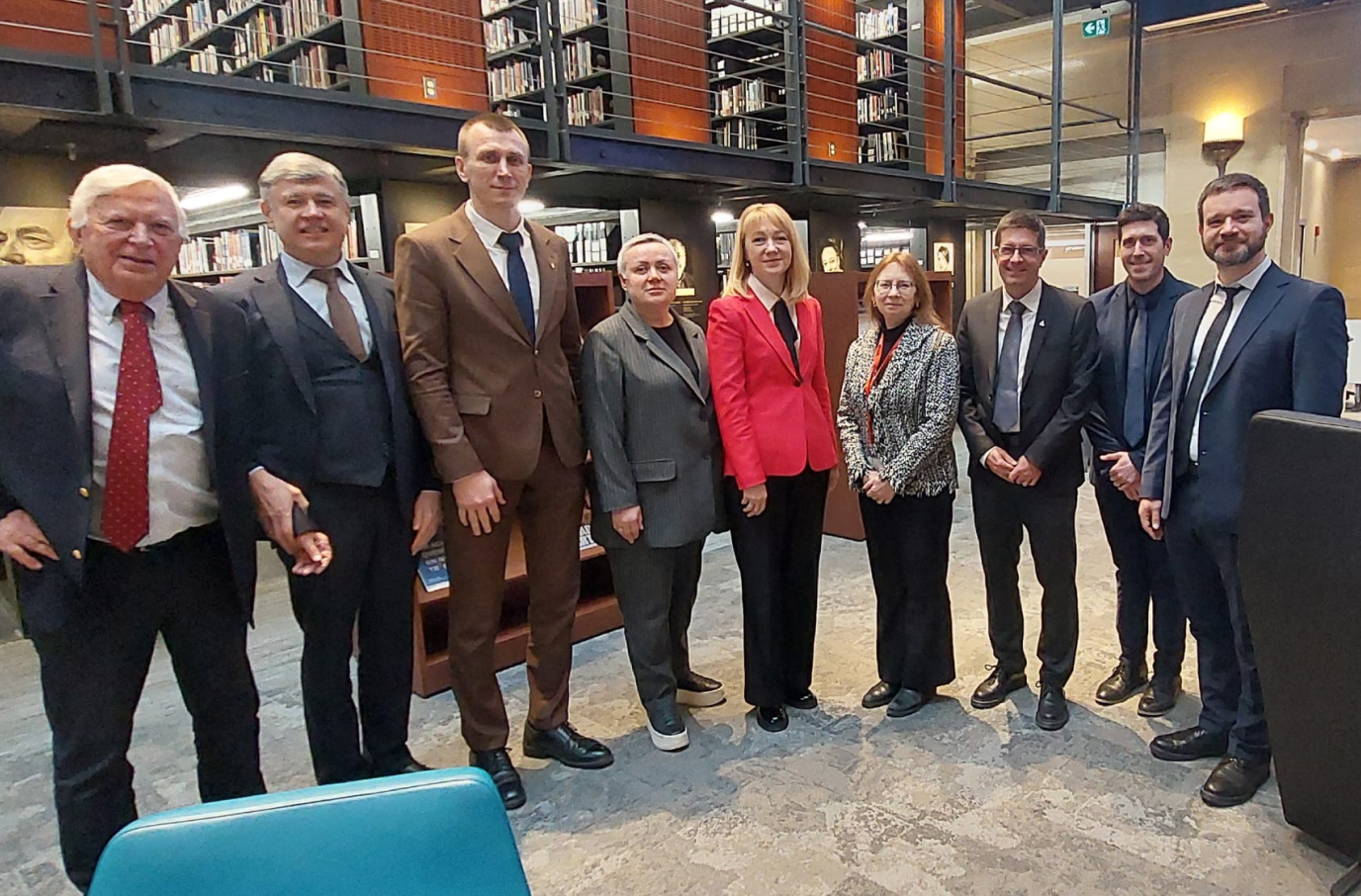
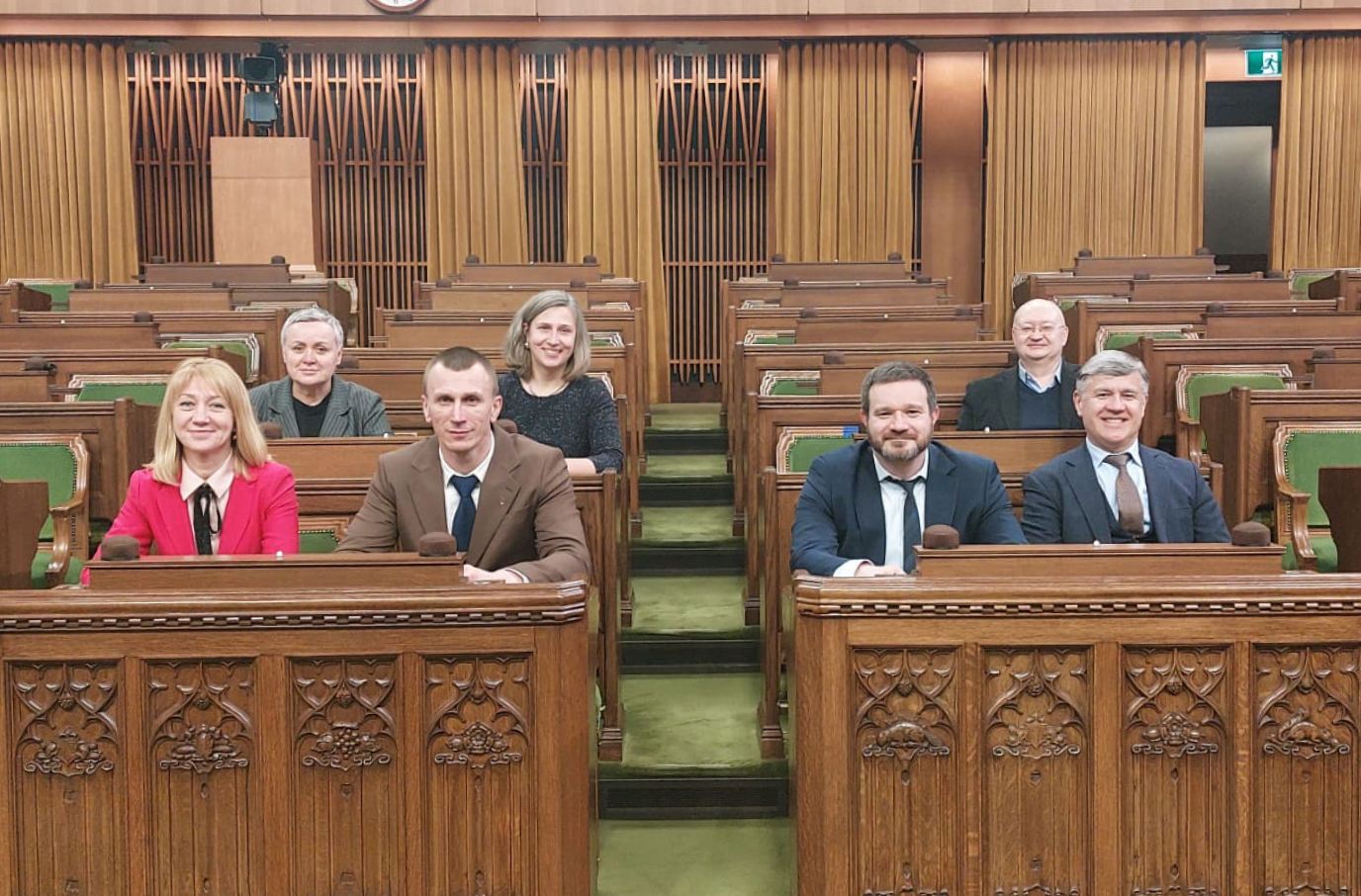
It is important for Ukraine to maintain the sustainability of its institutions, and the visit focused on aspects of business continuity of the Parliament. This remains a priority due to the numerous security challenges faced by the Ukrainian parliament during martial law. The work of the parliament did not stop even during the most critical period — the beginning of the full-scale invasion of russia. The Verkhovna Rada was able to adapt and develop organisational processes under martial law, which is undoubtedly an important step for institutional development. Therefore, including within the framework of the PASS Ukraine project, documents and plans to ensure the continuity of the Verkhovna Rada’s activities have already been developed and are in the process of implementation and adoption.
In the context of parliamentary reform and the need to balance competing demands, the Ukrainian delegation gained valuable experience from Canadian colleagues in legislative and research support for parliamentarians, as well as professional training programs for parliamentary staff. The topics of the visit were based on the requests and challenges for the Verkhovna Rada: the continuation of parliamentary reform, Ukraine’s accession to the European Union, and russian aggression against Ukraine. All these topics remain extremely relevant for improving various aspects of parliamentary work, especially in wartime.
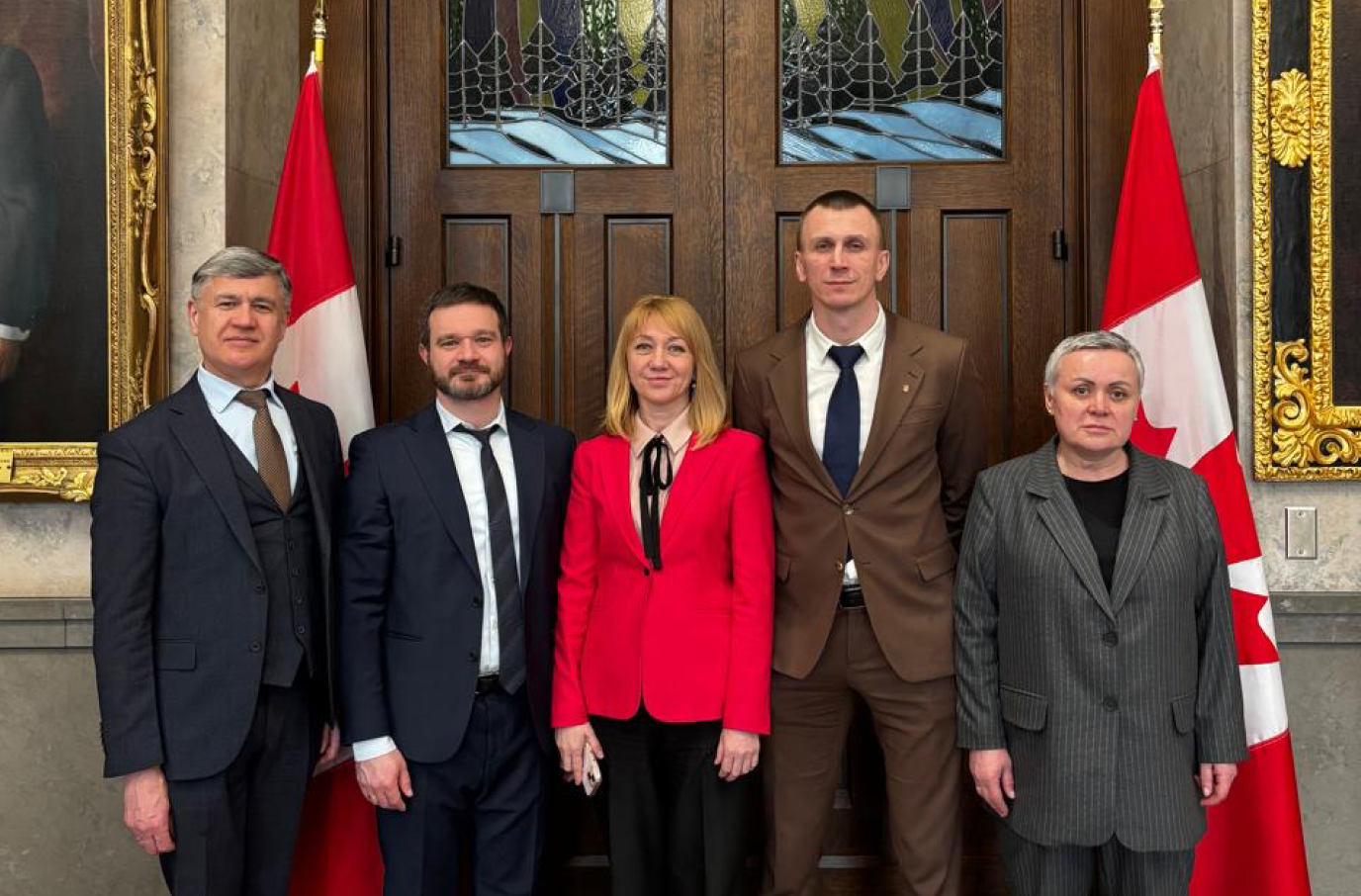
The visit took place as part of the “Parliamentary Accountability of the Security Sector in Ukraine” (PASS Ukraine) project, which the Agency is implementing in partnership with the Parliamentary Centre (Canada) in cooperation with the Verkhovna Rada of Ukraine and with the support of Global Affairs Canada under the Peace and Stabilization Operations Program (PSOPs).
Strengthening Transparency and the Rule of Law: ALI’s Working Visit to Brussels
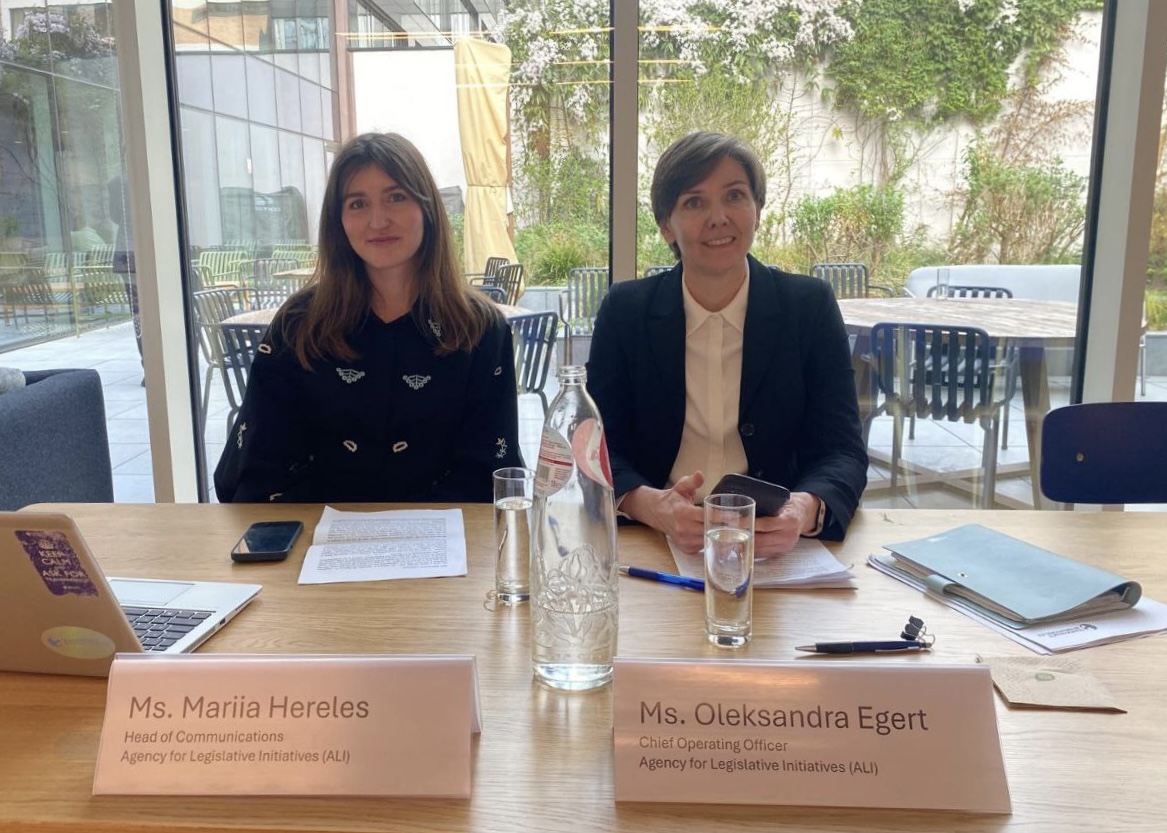
The Agency for Legislative Initiatives joined the visit of Transparency International Ukraine at the invitation of Transparency International EU. Together with representatives of civil society from Georgia, Moldova and the Western Balkans, the participants discussed anti-corruption challenges and news, exchanged experiences and achievements on the European integration path, which each country is going through in its own context and with its own obstacles.
The main topics of the panel discussions included pressure on civil society, malign interference and corruption. ALI also joined working meetings with representatives of DG ENEST (Directorate-General for Enlargement and Eastern Neighbourhood), EEAS (European External Action Service), COELA / COWEB, as well as a meeting in the European Parliament chaired by MEP Daniel Freund.
Delegations from the Agency for Legislative Initiatives and Transparency International Ukraine spoke about the challenges and threats Ukraine has faced in recent years, the work of Ukrainian democratic institutions and the role of the judiciary in the fight against corruption.
Over the years, the organisations have monitored many external and internal factors that affect the implementation of reforms. However, by far the first and greatest challenge for us, which affects all state processes, is the war that has been going on in Ukraine since 2014.
Only strong and capable institutions, whose development civil society has been promoting and supporting for years, will help to withstand this pressure at all levels and dispel attempts to undermine the credibility of Ukrainian state institutions not only in the eyes of the Ukrainian audience but also the international one.
But what if this capacity, including in terms of the rule of law, is affected by both systematic malign interference from russia and internal factors related to staff shortages, difficulties in conducting competitive selections, and complicated procedures for recruiting to the judiciary at all levels?
As a reminder, the Agency for Legislative Initiatives, in coalition with other CSOs, including Transparency International Ukraine, prepared a Shadow Report on Chapter 23 “Justice and Fundamental Rights” of the European Commission’s Report on Ukraine in 2023. Currently, the CSO Coalition has launched a new cycle of monitoring and evaluation of Ukraine’s progress in the field of European integration — under Chapters 23 “Justice and Fundamental Rights” and 24 “Justice, Freedom and Security”.

For reference
The working visit took place within the framework of the annual meeting of the Transparency International movement. The presentations of national regional chapters of Transparency International and NGOs from Ukraine, Georgia, Moldova and the Western Balkans were devoted to the analysis of the “Fundamentals” Cluster, the first and key cluster of the EU in its enlargement process. In particular, the visit focused on the key challenges and opportunities of each country in terms of their enlargement prospects.
How Parliament Would Approve Peacekeepers in Ukraine
In recent months, discussions around peace negotiations have intensified significantly. This is particularly linked to the return to power of Donald Trump in the United States, who during his election campaign emphasised his desire to end the war and go down in history as a peacemaker. So far, however, we have only seen pressure on Ukraine and concessions to the Kremlin’s wishes.
Nonetheless, talk of a potential end to the war has not subsided, and the key question now is not whether negotiations are possible, but under what conditions they would take place. The most pressing and controversial issue at present is: what security guarantees can Ukraine receive?
While Ukraine continues to insist on NATO membership as a security guarantee, the more likely scenario at this point appears to be the deployment of peacekeeping units from the armed forces of other countries on Ukrainian territory. Such statements have already been made by political leaders in Denmark, Еstonia and the United Kingdom.
However, throughout the negotiation preparation process, the absence of Parliament is noticeable. Regardless of the scenario, the Verkhovna Rada of Ukraine — as the country’s sole legislative body — will be one of the key actors in adopting decisions on behalf of Ukraine.
So, what role would the Verkhovna Rada play in ending the war? And what actions must Ukraine take if agreements are reached on the deployment of foreign military contingents on its territory or the possible establishment of a buffer zone?
It is important to note that we are not advocating for or expressing support for this particular scenario of ending the war. Rather, we aim to broadly outline how such a scenario could be implemented and what role the Verkhovna Rada of Ukraine would play. This analysis is crucial in the context of potential political destabilisation and challenges to legitimacy that Ukraine may face in 2025.
In general, the establishment of a buffer zone is not new to Ukraine. In 2014, following the so-called Minsk Agreements, a “line of contact” was formed — essentially a buffer zone with opposing forces positioned on either side. Moreover, Ukraine has extensive experience in hosting foreign military forces, particularly those of NATO member states (albeit under the pretext of joint exercises). The key law enabling the presence of foreign armed forces on Ukrainian territory was adopted by Parliament back in 2000. However, this does not mean that the Verkhovna Rada’s involvement would be limited.
Let us consider scenarios in which a foreign military contingent might be present in Ukraine as a security guarantee. This could involve a UN contingent (1), a European Union force (2), or troops from individual countries (3). Each of these scenarios has its own specifics, but all require the conclusion of a peace agreement.
Such an agreement would provide a solid basis for Ukraine to appeal to the UN Security Council or the Council of the European Union to deploy peacekeeping forces on its territory. In the case of an agreement with individual countries, third parties would need to be involved, and zones, capabilities, and conditions for the deployment of foreign military units would have to be defined. These arrangements must be formalised through a multilateral international treaty. At the same time, the multilateral treaty must comply with the requirements established by Ukrainian law — that is, it must contain information on the composition, structure, and other characteristics of the foreign forces; the location and boundaries of deployment areas; and restrictions on the movement of their military and civilian personnel, among other provisions.
The next step is the adoption by the Verkhovna Rada of a law recognising the binding nature of such a multilateral treaty for Ukraine, in line with the requirements of the Law on International Treaties.
In this context, it is important to recall that it is Parliament that will ratify the treaty. According to subparagraphs 23 and 32 of Article 85 of the Constitution of Ukraine, it is the Verkhovna Rada that, by adopting a law, ratifies Ukraine’s international treaties and directly approves decisions both on sending units of the Armed Forces of Ukraine abroad and on admitting foreign armed forces to the territory of Ukraine.
Next, in the case of the first and second scenarios, the Verkhovna Rada must prepare an appeal to the United Nations Security Council or the Council of the European Union.
It is important to note that a resolution to deploy peacekeeping missions to a specific country must be supported by at least nine of the 15 members of the Security Council. Moreover, it must receive affirmative votes from all five permanent members — including the Russian Federation. Therefore, this scenario appears to be the least realistic.
The final step is the formation and deployment of military units from third countries on the territory of Ukraine as part of a peacekeeping mission.
It is essential that this entire process proceeds in a coordinated manner and in compliance with Ukrainian legislation. Therefore, Parliament must begin developing and adopting the necessary legislative acts in parallel with the start of negotiations. Particularly, this concerns the previously mentioned Law “On the Procedure for Admitting and the Conditions for the Presence of Units of the Armed Forces of Other States on the Territory of Ukraine”.
Among the most important amendments to this law, the following should be highlighted:
- Provide for the possibility of deploying troops from third countries for peacekeeping purposes. Currently, the law does not allow individual countries to deploy their forces to Ukraine for peacekeeping without a decision from the UN or the EU, although foreign armed forces may be admitted to fight alongside Ukraine against the aggressor.
- Regulate issues related to additional requirements for an international treaty, should the need arise; the use of real estate, Ukraine’s airspace, navigational, hydrographic, and informational support by the peacekeeping military contingent; the provision of utilities, household and other services; and the procedures for border and customs control for peacekeeping personnel.
Once agreements on peace (a truce) have been reached and there is clarity regarding which peacekeeping forces will be deployed on the territory of Ukraine, Parliament will need to adopt legislative acts to regulate the following issues:
- The definition and status of a buffer (demilitarised or sanitary) zone, including the delineation of its territorial boundaries.
- Rules for interaction between the peacekeeping contingent and Ukrainian state authorities and the civilian population residing (or present) in this zone.
- Conditions for the residence or presence of civilians in the zone.
- Rules governing the activities of Ukrainian state authorities and the provision of public, medical, and banking services to the population in this special zone.
- Business operations.
- The payment of taxes, duties, and other mandatory contributions in this territory.
All the aforementioned amendments to existing legislation — and the need for new laws — address only one issue: the deployment of peacekeepers. However, the challenges we will face after a ceasefire are far broader. The pace at which our negotiating positions are changing and the uncertainty surrounding the preparation process for these negotiations suggest that the work on legislative changes must begin now — as there may not be enough time later. The process is already under way, which is why the active involvement of Parliament is essential.
ALI, in Coalition with Civil Society Organisations, Is Preparing a Shadow Report on Monitoring and Assessing Ukraine’s Progress in European Integration under Chapters 23 and 24
The results of monitoring and assessing Ukraine’s progress under both Chapters will be presented in the 2025 Shadow Report. This report will contain:
- an analysis of the progress made by Ukraine under Chapters 23 and 24, starting from the publication of the European Commission’s Report on Ukraine in 2024 for each area, and for Chapter 23 – also concerning the recommendations provided in the 2024 Shadow Report;
- a detailed analysis of the problems that have arisen in the reform process for each area of both Chapters;
- description of the current state of affairs in the areas of state policy under Chapter 24 in general and in some areas under Chapter 23 (which were not the focus of the previous monitoring) from the perspective of civil society.
In addition, the report will focus on the following issues:
- what has been done in each area during the monitoring period;
- to what extent has what been done allows the achievement of the set goals;
- to what extent does it meet the expectations of society.
Particular attention of the coalition members, within the framework of monitoring and assessing Ukraine’s progress, will be paid to the analysis of the state of:
- Ukraine’s implementation of the recommendations provided by the European Commission in the reports on Ukraine in 2023–2024 and the first screening report of Cluster 1, “Fundamentals of the EU accession process”;
- taking into account by the state authorities responsible for the implementation of relevant state policies, the recommendations of the public set out in the Shadow Report to Chapter 23 “Judiciary and Fundamental Rights” of the European Commission’s Report on Ukraine in 2023.
The Shadow Report within the framework of the project will be prepared by the end of September 2025.
For reference
The Agency for Legislative Initiatives (ALI) is a leading independent Ukrainian think tank whose activities are aimed at strengthening the institutional capacity of the Parliament and Government, continuing European and Euro-Atlantic integration, supporting the stabilisation and reconstruction of Ukraine to overcome the aftermaths of the Russian Federation’s aggression, monitoring and backing reforms in justice and security, political and civic awareness-raising.
Transparency International Ukraine (TI Ukraine) is an accredited chapter of the global movement Transparency International. The organisation takes a comprehensive approach to implementing changes to reduce corruption in specific areas: it helped to create and subsequently transferred to the state of Prozorro, Prozorro.Sale, eHealth and ProZvit systems. TI Ukraine has also implemented the City Transparency and Accountability Rankings, built the DOZORRO community to monitor public procurement, and co-founded the RISE Ukraine coalition to promote the principles of integrity and efficiency in reconstruction.
ZMINA Human Rights Centre – The Centre is engaged in information, educational, monitoring, analytical, and advocacy activities in human rights. It protects human rights defenders and civil society activists in Ukraine, including those in occupied Crimea. Following the onset of large-scale Russian aggression, ZMINA, together with 38 other CSOs, created the “Ukraine 5 AM” Coalition, which documents war crimes and aims to protect the victims of Russia’s armed aggression in Ukraine and bring to justice the top leadership of the Russian Federation as well as the direct perpetrators of these war crimes.
Tomorrow’s Lawyer is a non-governmental organisation that promotes the institutional development of justice to strengthen the rule of law and protect human rights. Since 2016, the NGO has been researching state policy and the state of affairs in the justice sector while also developing recommendations for their improvement and advancement. A key priority of the organisation is the professional development of the legal community.
The Ukrainian Bar Association (UBA) is an all-Ukrainian non-governmental organisation founded in 2002. It currently unites more than 8,000 lawyers. The Association’s activities include promoting the development of the legal profession, improving legislation, implementing ethical standards, and protecting the professional rights of its members and human rights in general.
European Pravda is an independent Ukrainian media outlet specialising in covering news on European issues and Ukraine’s European integration.
The EU Project Pravo-Justice is a technical assistance project implemented by Expertise France with the financial support of the European Union.
After the victory of the Revolution of Dignity, the EU Project Pravo-Justice became one of the drivers in promoting the rule of law in Ukraine, bringing the country’s legislative framework into line with European standards, developing a strategic vision for reforms, judicial reform, proper enforcement of court decisions, etc.
The Issue of Internal Reform and Institutional Capacity of the VRU Is Always Relevant — ALI at the Meeting with Pat Cox
The Agency for Legislative Initiatives joined a meeting of Ukrainian civil society representatives with Pat Cox, former President of the European Parliament and Head of the Needs Assessment Mission to the Verkhovna Rada of Ukraine.
The discussions focused on urgent challenges and problems the civil society sector in Ukraine has faced, the need to maintain interaction with the authorities, including the Verkhovna Rada, and the next steps in this regard. The Agency highlighted the continuation of parliamentary reform in the context of a full-scale war as a cross-cutting aspect. This reform was launched in 2015 with the commencement of the European Parliament’s Needs Assessment Mission led by Pat Cox.
The mission developed a Roadmap with specific recommendations on how to strengthen the Verkhovna Rada of Ukraine institutionally and solve the problems of Ukrainian parliamentarism, which ALI has repeatedly drawn attention to, as it has been supporting parliamentary reform and monitoring its implementation since the beginning. Indeed, the war has intensified the implementation of some of the Roadmap’s recommendations for internal reform of the Verkhovna Rada, although some improvements may require constitutional amendments, which is currently impossible. ALI analysed each aspect of the reform in a thematic Journal, which describes its current state in detail.
At the same time, the Ukrainian parliament continues to operate as the main legislative body of a democracy at war. Therefore, it needs to strengthen its subjectivity and capacity and, even in such circumstances, implement changes that help build resilience and sustainability of internal processes.
One of the components of such processes should be the adoption of the Code of Conduct for MPs, a document that will eventually introduce uniform standards of ethical conduct for MPs, a system of monitoring and oversight over their observance, and become an effective mechanism for distancing from MPs who discredit the entire institution.
Status of Local Council Members: State of Play, Challenges and Solutions
The issue of the status of local members is becoming increasingly relevant: in 2017, the Agency for Legislative Initiatives already studied this matter and, in particular, developed Policy Proposals to Regulate the Status of the Local Council Members. On the other hand, enough time has passed, further changes have taken place in local government reform, and the regulation of the status of local members still requires special attention — and an update of the legislation in the light of current challenges.
The study was carried out in several stages:
- Desk study: analysis of legislative acts regulating the status of local council members; the study of the practical implementation of the Law “On the Status of Local Council Members” following the 2020 local elections, analysis of legislative initiatives to improve the status of local council members etc.;
- In June 2024, an online survey of local government representatives was conducted to assess the status of local council members. The survey involved 2,279 respondents from all regions of Ukraine. Of these, 94.7% were local government representatives; the majority of respondents — 67.2% — were or are members of local councils. Notably, most respondents represented the rural population: 33.6% of villagers, 21.4% of towns and 45% of city dwellers.
With the outbreak of full-scale Russian aggression, the problems in exercising local council members’ powers and in the regulatory framework for the status of local council members have become even more visible.
Currently, the following issues have been highlighted:
- The legislation contains inconsistencies in defining the representative functions of local council members: they are simultaneously considered representatives of the interests of the territorial community and of the voters in their constituency. However, a city district or regional council member does not represent the interests of the territorial community, as district and regional councils represent the common interests of territorial communities of villages, settlements and cities. A district or city council member represents voters’ interests within the territory of the district or city council.
- In 2022-2024, 19 pro-Russian political parties were banned in Ukraine by the courts. However, the current legislation does not provide for the automatic loss of mandates by council members elected on the lists of such parties and does not contain any restrictions on the powers of local council members in the event that a court decision banning a political party enters into force.
- The status of local council members is not defined in the legislation in the context of the transfer of powers of local self-government bodies to the relevant military administration and the temporary non-exercise of powers by local councils and local council members.
- The current legislation does not define the concept of ‘council member’s ethics’; instead, it lists insufficient rules for comprehensive legal regulation. Moreover, there are no sanctions for violation of these rules.
In addition to regulatory inconsistencies, there are other dangerous trends, such as a decrease in the number of local councils. Given the classified data on the state of local self-government under martial law, the situation with the full functioning of local representative bodies is potentially critical. The shortcomings identified point to the need to amend the legislation governing the status of local council members.
Read more about the problems and recommendations for optimising the status of local councils in Ukraine in the context of full-scale war — in the new ALI study.
The study was conducted within the framework of the project “Parliamentary Accountability of the Security Sector in Ukraine” (PASS Ukraine), which the Agency implements together with the Parliamentary Centre, in cooperation with The Verkhovna Rada of Ukraine, and with the support of Canada’s Foreign Policy—Global Affairs Canada as part of the Peacebuilding Program and stability (PSOPs).
DACK-2. What Will Ukraine Get – an Independent High Administrative Court or Another Pocket Monster?
On 9 January, the parliament adopted as a basis draft law No. 12368-1, authored by Yulia Tymoshenko Bloc MP Serhii Vlasenko, on amending the Law of Ukraine “On the Judiciary and the Status of Judges” and some other legislative acts of Ukraine regarding the establishment and functioning of the Kyiv City District Administrative Court (KCDAC) and the Kyiv City Administrative Court of Appeal (KCACA). As stated in the explanatory note to the draft law, its main objectives are to “ensure the efficiency and transparency of the administrative proceedings, eliminate conflicts of interest and minimise possible corruption risks in the courts,” etc. It sounds like a mockery if you look into the details.
Thus, it is proposed that the KCDAC should consider cases against central executive authorities (the Cabinet of Ministers, ministries and the Antimonopoly Committee), review decisions of competition commissions regarding competitions for the positions of heads of the Specialised Anti-Corruption Prosecutor’s Office, National Anti-Corruption Bureau, National Agency on Corruption Prevention, etc., as well as casesCases against the President, Parliament, High Council of Justice, High Qualification Commission of Judges, etc. that are currently under consideration by the Supreme Court as a court of first instance, and the KCACA should be an appeal against the decisions of the “district administrative court.”
At the same time, “the competition for the positions of KCDAC and KCACA judges is held in accordance with the procedure established for local courts by the Law of Ukraine “On the Judiciary and the Status of Judges.” Isn’t it logical to select judges for the appellate courts according to the rules for selecting judges of local courts? For those who do not understand that this is sarcasm, we explain: no, this is not the case.
What do we have in the end?
The jurisdiction of cases involves the most complex, important and/or high-profile administrative cases in the country. The selection of judges for both instances, as for an ordinary district or raion court, is done without the involvement of public or international experts, and in violation of the rules for selecting judges of appellate courts.
After voting for the draft law in the first reading, the public and the media have already referred to this court structure as “DACK-2,” although this monster is much worse in reality.
It is also worth adding here that this court structure does not comply with Ukraine’s international obligations and, therefore, will not be accepted by our European and American partners. It also violates the general logic of the judicial reform, whereby “simple” administrative casesPensions, taxes, etc. of Kyivans should be heard by a district court in Kyiv, and cases involving central executive authorities should be heard by a high specialised court, as is the case with corruption cases, where petty corruption is heard by general courts and grand corruption is heard by the High Anti-Corruption Court.
After the vote, some MPs shared on Facebook that this was only the first reading and the draft law would be “significantly revised” for the second reading.
So who is to blame? How did we get at least a draft-level DACK-2 instead of the High Administrative Court? Most importantly, what should we do to fix it? Let’s find out in this article.
Background
In December 2022, the District Administrative Court of Kyiv was liquidated. This happened as a result of numerous scandalous DACK decisions, the release of the so-called DACK tapes by the NABU, criminal cases against some of the court’s judges, and even the imposition of personal sanctions against DACK President Pavlo Vovk by the United States.
At the same time, the Kyiv City District Administrative Court was established “on paper,” while DACK cases were “temporarily” transferred to the Kyiv District Administrative Court. Most of them remained in boxes and bags for two years until the parliament decided to redistribute them among other district administrative courts according to their workload so that the consideration of these cases could at least start moving.
Five draft laws
However, despite the existence of the “court on paper,” nothing actually happened for some time.
International partners included the need to create a new court in Ukraine’s reform commitments, while the government did everything behind the scenes and slowly.
So, the Ukraine Facility Plan and agreements with the International Monetary Fund provide for the creation of a court that will hear cases involving central executive authorities instead of the liquidated DACK. The judges of such a court should be properly vetted for professional competence and integrity with the involvement of independent experts and “following similar selection procedures for anti-corruption judges.” The deadline for the establishment of this court under the Ukraine Facility, for example, is the third quarter of 2025. At the same time, the competition for positions of judges of this court should be completed by the end of the third quarter of this year. This means that there is virtually no time left.
Meanwhile, the Cabinet of Ministers has been working on a draft law for a year, but almost no one has seen it. When the deadline for passing the draft law was almost over, draft law No. 12206 was submitted to Parliament. MPs from the Servant of the People faction introduced it, but it was actually the work of the Presidential Office. It was followed by an alternative draft law from the Cabinet of Ministers and another draft law authored by the head of the relevant committee, Maslov, which received the committee’s support.
The Parliament rejected all of them in December. In January, another draft law from the Cabinet of Ministers (No. 12368) appeared, which was presented personally in the session hall by Olha Stefanishyna, Deputy Prime Minister for European and Euro-Atlantic Integration and Minister of Justice. It also failed, and the alternative draft law No. 12368-1, authored by Vlasenko, was voted in the first reading, which is the worst of all five versions, but it is on its basis that the final version of the draft law should now be built.
Olha Stefanishyna later complained more than once that she had “spent three days in parliament and had zero results.” She can be understood because international partners will ask her questions about implementing the Ukraine Facility.
Some MPs, on condition of anonymity, said that “they did not go deep into the details of the draft laws on courts but voted as agreed.” Can you guess right away which party’s MPs we are talking about here?
So why do the political authorities and the pro-government majority need Vlasenko’s draft law if Ukraine’s receipt of the next tranches of money depends on fulfilling the Memorandum with the IMF and the Ukraine Facility Plan? If it was necessary to vote for at least some version in the first reading, why did they not vote for the Cabinet of Ministers’ version?
Expert Council vs Public Council of International Experts
Since Vlasenko’s version is obviously unsuitable, and Ukraine has committed to establishing a court similar to the HACC, the court should be created as a high specialised administrative court.
To verify the integrity of candidates, all four draft laws provide for establishing an Expert Council, three members of which should be appointed based on proposals from international partners and three based on proposals from the Council of Judges of Ukraine. This is, in fact, the eighth option of competition in the judicial system and another experiment.
It does not comply with Ukraine’s international obligations, according to which future judges should be vetted “following similar selection procedures for anti-corruption judges”, i.e., with the participation of the Public Council of International Experts (PCIE) per se, which is currently involved in the vetting of candidates to the HACC.
Yes, the political authorities have given some very strange explanations for why it is allegedly impossible to constantly demand that international partners delegate their representatives. However, when the international partners signed, for example, the Memorandum with the IMF, did they understand their obligations to delegate representatives to the PCIE for the purposes of the competition for HACC judges and for the purposes of establishing the new court? Until they hear a clear message that the three-for-three arrangement is okay, imposing on them something they did not sign up for looks like some kind of petty (or not so petty) fraud. A country that wants to become part of the EU and continue to receive international financial support should not play with marked cards.
If the commitments imply the PCIE’s involvement in selecting judges for the High Administrative Court (HAC), then it should be the PCIE.
Insiders among judges
The draft laws on the high administrative court expand the list of persons eligible to apply for the position of judge and establish an additional category: persons who have worked for at least seven years in category A and B civil service positions in governmental authorities whose powers extend over the entire territory of Ukraine.
It should be noted here that the 2016 amendmentsRegarding justice. to the Constitution of Ukraine and the reform of approaches to the selection of judges opened up opportunities for representatives of independent legal professionsLawyers, academics, etc. to participate in competitions to the Supreme Court, courts of appeal and high specialised courts.
This approach has been used to increase the independence of the judiciary, mitigate corruption risks, reduce political influence and break down power verticals.
If civil servants are now allowed to participate in the competition, this will significantly offset the achievements of the judicial reform of previous years, as government officers are not representatives of independent legal professions. On the contrary, such lawyers are used to working under strict governmental verticals and acting exclusively in accordance with the requirements of their superiors, which, if such persons are appointed to judicial positions, may negatively affect the independence of not only an individual judge but also the entire court and the judiciary as a whole.
In this case, it is simply necessary to appoint civil servants who are liked by the Presidential Office without any competition and complicated structures. After all, it is obvious that such rules are written with an understanding of what names will be submitted to the competition.
Instead of conclusions
First, Ukraine should establish a High Administrative Court to hear cases involving central executive authorities as soon as possible, launch a competition for judges of this court and, in parallel, a competition for judges of the Kyiv City District Administrative Court, which will hear administrative casesAfter all, it is Kyiv residents who are currently deprived of proper access to justice. of Kyivans. It is important to clearly delineate the jurisdiction between the HAC, KCDAC and the Supreme Court. The real capacities of the HQCJ to conduct competitions should also be taken into account since each competition does not take place in a vacuum but in parallel with many other personnel procedures in the judiciary, of which we already have five.
Second, the PCIE should vet the integrity of future judges of the High Administrative Court, which will assist the HQCJ in this important matter, especially since its powers were extended for 18 months in the autumn of 2024. It is also important that the PCIE has veto power over dishonest candidates, which can only be overridden by joint votes of the HQCJ and the PCIE, with at least three votes coming from international experts.
Third, it is crucial to prevent the HAC from being declared unconstitutionalThrough the use of regular ad hoc procedures, which is essentially what the Expert Council is. in the future. Therefore, the requirements for judges, their formation, and other aspects should be in line with the overall framework of judicial reform, competitions, and so on.
And the last point for today. It is always very noticeable when the central political authorities try to sabotage the creation of an independent court. Unfortunately, this is exactly what is happening now.
The sooner the Presidential Office and the Parliament realise that Ukraine does not need a pocket court like the DACK (and that it will be impossible to create one), the sooner Ukraine will be able to put a fat plus point on its record in fulfilling not only the requirements of international partners but, above all, in creating a truly independent court that is actually needed by both the government and the opposition, but first and foremost, by Ukrainian society.
Updating the Civil Service Selection Procedure
The civil service selection procedure is being updated as a key element of the reboot of public administration under the Public Administration Reform Strategy of Ukraine for 2022-2025 in the area of ‘Professional Public Service and Human Resources Management’.
The key tasks for implementing this area of the Strategy regarding competition and selection include:
- updating the selection procedure;
- modernising the work of the Commission on the Higher Civil Service Corps;
- introducing a personnel reserve for civil service positions;
- developing criteria and providing opportunities for career advancement;
- motivating women to participate in competitions for category A civil service positions;
- developing and implementing policies to ensure a balanced representation of women and men in various civil service positions;
- creating opportunities for internships to attract young, highly qualified professionals to the civil service;
- promotion of civil service.
Indicators of achieving these objectives of the Strategy are:
- the average number of candidates for civil service positions: in 2022 — 10, in 2023 — 12, in 2024 — 13, and in 2025 — 15;
- staff turnover in category A civil service positions: 17% in 2022, 15% in 2023, 13% in 2024, and 10% in 2025;
- staff turnover in civil service positions of categories B and C: 20% in 2022, 15% in 2023, 13% in 2024, and 10% in 2025.
Additionally, as part of the communication measures of the Strategy, the updated civil service selection procedure is being accompanied by an all-Ukrainian information campaign to promote the civil service.
The reform of the civil service selection procedure is driven by several factors. First, there is a need to ensure the selection of personnel through transparent and open competitions based on merit and to strengthen the institutional capacity of the civil service. Secondly, it aims to increase trust in the public administration system in the context of Ukraine’s recovery. In addition, updating the civil service selection procedure is one of Ukraine’s European integration commitments in terms of public administration reform, which is being implemented in line with the European Principles of Public Administration developed by the OECD/SIGMA, and is also a requirement of the Ukraine Facility programme, under which Ukraine receives up to €50 billion from the EU until 2027.
State of play and progress of changes
In accordance with the Law of Ukraine ‘On Civil Service’, the selection of personnel for civil service positions is carried out through a mandatory competition. However, since May 2022, competitions for civil service positions have been temporarily suspended for security reasons. A similar practice was applied during the COVID-19 pandemic.
As a result, during the three years of hostilities, the selection of candidates for civil service positions has been carried out using non-transparent direct appointments, which leads to the risk of losing opportunities to attract professional specialists to civil service positions, undermines the professionalism and stability of the civil service. This fact is also confirmed by the European Commission in its Report on the 2024 EU Enlargement Package. Due to the termination of the competitive selection process, it is not possible to assess the level of implementation of the Strategy indicator on the average number of candidates for civil service positions.
Experts and international partners have repeatedly called for the resumption of competitive selection for civil service positions while maintaining security conditions. Thus, according to Nataliia Aliushyna, Head of the NAUCS, all necessary technical and organizational capacities are in place to restart competitions for civil service positions even during martial law. Moreover, some state bodies with special status, such as the NABU, have already resumed the procedure for appointing individuals based on the results of the competition. The issue of resuming competitive selection is essentially the first step — or even a prerequisite.
The analysis of the results of the competitive selection reform implementation shows that it has not ‘moved forward’, and the key tasks of the competition and selection in this area of the Strategy have not been practically implemented, namely:
- The selection procedure for civil service positions has not been updated, and the mechanism for appointing civil servants to a higher position through career promotion has not been implemented. To improve the procedure for entering, completing, and terminating civil service, draft law No. 6496 was developed and registered in 2021, but was never considered by the Parliament and withdrawn in September 2024. New amendments to the legislation to improve the procedure for entering, completing and leaving the civil service are currently being developed and are expected to come into force in the third quarter of 2025, according to the Ukraine Facility Plan.
- The work format of the Commission on the Higher Civil Service Corps has not changed significantly, although the Strategy envisages modernisation of its work to ensure professionalisation. In addition, the composition of the Commission, approved by Government Order No. 1006, does not ensure gender representation of the Commission members, contrary to the objectives of the Strategy.
- The competitive selection procedure has not been restored, considering security conditions. Over time, the number of civil servants appointed without competition and working in temporary (fixed-term) positions is increasing. Delaying the timing of the competition may result in public authorities being unable to organise competitions for all necessary positions within a limited timeframe. For example, according to media reports citing information from the NAUCS, in 2022-2023, the number of civil servants appointed without competitive selection is 49.9 thousand. Obviously, by the end of 2024, the number of such individuals will be much higher.
- The trend of staff turnover in all categories of positions and the overall outflow of personnel from the civil service is increasing. In 2023, the staff turnover rates were not achieved and were quite high, in particular for positions of categories A — 29%, B — 20%, and C — 27%. However, in 2022, the staff turnover rate was significantly lower: 24% for Category A, 14% for Category B, and 20% for Category C. Since the beginning of the full-scale invasion, 82.7 thousand people have been appointed to positions, and 93.7 thousand peopleFrom 24 February 2022 to 1 October 2024, 82.7 thousand individuals were appointed to civil service positions, including 20.3 thousand in 2022, 36.2 thousand in 2023, and 26.2 thousand in the first 9 months of 2024. Over the same period, 93.7 thousand people were dismissed, including 25.6 thousand in 2022, 40.2 thousand in 2023, and 27.9 thousand in the first 9 months of 2024. have been dismissed. The situation is further aggravated by the fact that the number of civil servants and the actual of employees, as well as the number of vacant positions, is steadily decreasingThe number of full-time positions in 2022 is 207,140; in 2023 — 206,151; in 2024 (as of 01.10.2024) — 196,696. The actual number of civil servants in 2022 was 165,422, in 2023 — 159,904, in 2024 (as of 01.10.2024) — 157,719. The vacant positions were 34,891 in 2022, 39,102 in 2023, and 33,318 in 2024 (as of 01.10.2024). every year. This threatens to lose the institutional memory of the civil service, the state as a competitive employer, and trust in the public administration system as a whole. Thus, according to the results of a nationwide survey, interest in joining the civil service in 2023 decreased from 20% to 16% compared to 2021. By contrast, public perception of the public administration system in 2023 increased to 30% compared to 2021 (8%).
- Conditions for balanced representation of women and men in various civil service positions have not been created. Eliminating the gender imbalance requires, first of all, appropriate legislative changes, including improving the gender-sensitive approach in the budget process. In addition, it is urgent to take measures to motivate women to participate in competitions for category A civil service positions. Consequently, as of the third quarter of 2024, 75.5% of womenThe share of women in civil service positions as of the third quarter of 2024 is 75.5%, calculated as the ratio of the number of women (119,089) to the actual number of civil servants (157,719). 75.5% of women work in civil service positions, including 29.5% in category A, 66.3% in category B, and 78.6% in category C. This trend of gender imbalance has been maintained over the past few years.
- As part of the communication measures of the Civil Service Recruitment Strategy, the NAUCS conducts an annual communication campaign to promote civil service, entitled the Civil Service Promotion Day. In 2024, the event gathered over 100 young people offline.
Personnel reserve for civil service positions
Since 3 July 2023, a personnel reserve for civil service positions was established and launched, with its formation and utilization managed through an automated information and communication system. As of 8 November 2024, the reserve included 2,721 people out of 2,935 registered candidates, 56% of whom were men. The most in-demand area of work is administrative management (49.7%), while the most prioritized region for employment is the Autonomous Republic of Crimea (75.5%). The introduction of the personnel reserve will facilitate the rapid restoration of normal life in territories after their de-occupation and ensure the proper functioning of state bodies in the liberated communities.
State service for women and men veterans
The number of civil servants serving in the Armed Forces is increasing every year, with 4,244 civil servantsIn 2022, 3,637 people served in the Armed Forces, in 2023 — 4,138 people, as of 01.10.2024 — 4,244 people. in service as of 1 October 2024. The reintegration of veterans into civilian life requires the creation of inclusive conditions within public authorities, the implementation of retraining programs, and employment support. To attract veterans to the civil service, an e-Map of vacancies in the civil service and local self-government bodies for veterans was introduced, providing direct communication with employers. As of 10 October 2024, the e-Map offered 359 vacancies for veterans, including 138 vacancies in civil service, 202 vacancies in local self-government bodies and 19 vacancies in military administrations.
Thus, as of August 2024, more than 17% of staff positions in the Ministry of Veterans Affairs alone were held by veterans, their family members and the families of fallen soldiers, active military personnel, and former prisoners of war.
Recommendations for reforming the civil service selection procedure
On the way to reforming the competitive selection procedure for civil service positions, only certain steps have been taken to implement the objectives of the Strategy. The successful implementation of the reform requires the following key measures:
- Develop and implement a legislative framework for restoring the competitive selection of individuals to civil service positions, improving the procedure for entering, completing and terminating civil service, including the appointment of civil servants to a higher position as part of career advancement and the integration of a gender-sensitive approach in civil service.
- Restore competitive selection for all categories of civil servants in the government-controlled territory, considering security conditions. This will avoid non-transparency in appointing individuals to civil service positions, ensure fairness in the selection of personnel and increase the state’s competitiveness as an employer.
- Restore and modernise the Unified Civil Service Vacancies Portal (career.gov.ua), to streamline the competitive selection procedure.
- Conduct awareness-raising campaigns on the resumption of competitions for civil service positions and methodological support for entry, service and dismissal from the civil service.
- Ensure monitoring of the announcement of competitions for civil service positions that were appointed without competitive selection. This will allow for timely competition for civil service positions, appointment of specialists on a permanent basis, preservation of institutional memory and strengthening of state bodies’ institutional capacity.
- Modernise the work of the Commission on the Higher Civil Service Corps, particularly taking measures to ensure gender representation of commission members. Provide training for selection commission members on assessing candidates’ professional competence.
This publication has been prepared within the framework of the ‘Improvement of Governance in Ukraine: Enhancing Policy Making for Social Progress’ project with the support of Switzerland. The content of this publication is the sole responsibility of the NGO ‘Agency for Legislative Initiatives’. The opinion of the authors does not necessarily reflect the views of the donor.
Reform of the Civil Servants’ Remuneration System
The implementation of the remuneration reform as a key measure for rebooting public administration is being carried out in accordance with the Public Administration Reform Strategy of Ukraine for 2022–2025 under the direction of Professional Public Service and Human Resource Management.
The main tasks for implementing this direction of the Strategy regarding Motivation and Remuneration are as follows:
- introducing a classification of civil service positions;
- carrying out a comprehensive reform of the remuneration system, which includes increasing the fixed component and limiting the variable part, reducing the number of elements of the remuneration structure, eliminating the causes for pay gaps, and bringing remuneration closer to the level in the private sector;
- preventing a reduction in the level of remuneration for civil servants.
The main indicators for implementing the tasks outlined in this direction of the Strategy are as follows:
- the share of civil service positions for which a remuneration system based on position classification has been introduced: in 2022–2023, it was set at 1%, in 2024 — 75%; in 2025 — 90%;
- staff turnover rate in Category ‘A’ civil service positions in 2022 — 17%, in 2023 — 15%, in 2024 — 13%, in 2025 — 10%;
- staff turnover in civil service positions of categories ‘B’ and ‘C’ in 2022 — 20%, in 2023 — 15%, in 2024 — 13%, in 2025 — 10%.
The reform of the remuneration system is driven by the need to optimise state budget expenditures in the context of the war, as well as by Ukraine’s fulfilment of its European integration commitments. After all, the implementation of the civil servants’ remuneration system reform is based on the European Principles of Public Administration developed by the OECD/SIGMA. Moreover, the remuneration reform is one of the requirements of the Ukraine Facility programme, under which Ukraine receives up to EUR 50 billion from the EU until 2027.
Status and Progress of Changes
The reform of civil servants’ remuneration commenced on 1 January 2024 on the basis of the Law of Ukraine ‘On the State Budget of Ukraine for 2024′, introducing a transition period of one budget year.
The reform was planned to be implemented in 2020. However, due to a number of socio-economic factors, the framework draft law No. 8222, intended to implement the remuneration reform on a permanent basis, was registered only in 2022 and passed in the first reading in the summer of 2023. Since then, the draft law has been suspended in Parliament due to a large number of amendments.
According to the NACS, in the first half of 2024, the results of the reform implementation have a number of strengths and weaknesses, and the tasks and indicators of the reform set out in the Strategy for 2024 have been achieved only partially, in particular:
- Based on Government Decisions No. 1109 and No. 1409, state authorities ensured that civil service positions would be classified in 2024 under martial law. Consequently, about 74% of civil service positionsIn the first half of 2024, 146,333 of the 198,638 civil service positions available were classified (according to the National Agency of Ukraine on Civil Service). were classified in the first half of 2024. At the same time, despite the increase in the volume of classification of positions compared to 2023, there are a number of government agencies that refused to conduct it during the war, including the Ministry of Internal Affairs, the Ministry of Defence, the State Tax Service, the State Customs Service, etc.
- In fact, certain steps have been taken towards implementing a comprehensive reform of the remuneration system, as the reform has been implemented for only one budget year and needs to be extended by laws on the state budget until the legislative framework is established. At the same time, the measures implemented as part of the reform have ensured predictability and transparency in the remuneration system, facilitating the process of budget planning of the payroll fund. It also reduced the discretion of managers to set unlimited bonuses, and the number of salary components, including the cancellation of incentive bonuses for work intensity and performance of particularly important tasks, and ultimately balanced the salary structure, reaching a ratio of 70% (fixed)/30% (variable). By the end of the first half of 2024, the average guaranteed portion of a civil servant’s salary increased from 65% to 88% compared to 2023.
- Disparities in the remuneration of civil servants in regional and district state (military) administrations persist, with wage gaps remaining at the 2023 level — 69%. For example, the average salary of a Category ‘B’ civil servant in district state (military) administrations in 2024 amounts to UAH 16,164, while a civil servant in equivalent positions in first-tier state bodies (e.g., the Secretariat of the Cabinet of Ministers of Ukraine, the Secretariat of the Verkhovna Rada Commissioner for Human Rights, the Ministry of Economy of Ukraine, etc.) earns UAH 43,587.1. Such disproportions in remuneration may primarily indicate the lack of alignment between public sector salaries and those in the private sector. At the same time, government agencies at the central level (first-tier jurisdiction) have shown a positive trend in reducing imbalances in remuneration, as wage gaps decreased by approximately 41% compared to 2023.
- Overall, the level of civil servants’ salaries has been increased, in some cases reaching competitiveness in the labour market. This trend is observed mainly in central government agencies. According to the NACS survey, 54% of civil servants reported a salary increase due to the reform, while 31% noted a decrease, and 16% experienced no significant changes.
- The trend of staff turnover across all categories of positions and the general outflow of personnel from the civil service is increasing. In 2023, the staff turnover rates were not achieved (did not decrease as expected) and remain high, namely for Category ‘A’ positions — 29%, 20% — for Category ‘B’, and 27% — for Category ‘C’. However, in 2022, staff turnover rates were significantly lower: 24% for Category ‘A’, 14% for Category ‘B’, and 20% for Category ‘C’. With the reduction of staffing and vacant positions in the civil service, there is a risk of losing the institutional capacity of the public administration system.
- Insufficient awareness of civil servants about the procedure, methodology and other specifics of the job classification based on the results of the information campaign. Specifically, 84% of civil servants were notified of the start of the classification, 66% received information and explanatory materials, and only 51% received internal training on the classification of positions. Only 69% of people were familiarised with the results of their position classification. This indicates that the Strategy’s communication measures were not effective enough.
Shortcomings of the remuneration system reform
While implementing the remuneration reform, several problematic issues have been identified that require urgent resolution, including the following:
- Lack of a legislative framework for the reform and imperfections in the current legislation. Draft Law No. 8222 has been suspended due to a large number of amendments and proposals since 2023 , exceeding 125 in total. According to Nataliia Aliushyna, Head of the NACS, the draft law should be considered and adopted in the second reading in October–November 2024, as, under the Ukraine Facility Plan, it is expected to become operational in the first quarter of 2025.
- Shortcomings in the organisation and implementation of position classification, which is accompanied by a delay in the entire procedure due to the ‘manual’ processing of documents. Furthermore, repeated classifications are continuously carried out, which are often not related to changes in the functionality of the position, but to the need to increase the salary (grade). This leads to both a lack of operational statistics and the risk of losing state oversight of the classification results.
- Non-compliance with the principle of competitiveness of civil servants’ salaries. In addition, the minimum official salaryThe minimum official salary applies to civil servants in government agencies. Thus, the minimum official salary is UAH 7100, according to the Resolution of the Cabinet of Ministers of Ukraine No. 1409 dated 29.12.2023, and the minimum wage is UAH 8000 (starting from 01.04.2024), according to the Law of Ukraine ‘On the State Budget of Ukraine for 2024’. The above wording applies only to civil servants in state bodies and does not apply to local self-government. in state bodies is lower than the minimum wage. According to the NACS, the state lacks information on competitive salaries in the labour market. This raises doubts about the validity of the salaries and the success of the reform in the future.
Further implementation of the remuneration system reform
Currently, the implementation of the reform is at an early stage, with the prospect of continuing in the following years. According to Nataliia Aliushyna, Head of the NACS, certain steps are being taken to reform the system, as it is necessary to build a ‘framework’ for the entire system and eliminate existing subjective factors. This requires the adoption of a legislative framework — Draft Law No. 8222 — by the first quarter of 2025. Also, as part of the budget process, the Law of Ukraine ‘On the State Budget of Ukraine for 2025’ has included nearly the same foundations for civil servants’ remuneration as in 2024.
Recommendations for Implementing the Remuneration System Reform
The results of the intermediate stage of the new remuneration system implementation have revealed several problematic issues. Further successful implementation of the reform requires the following key measures:
- Adoption and implementation of the framework draft law No. 8222, adoption of other legislative acts and regulations to ensure proper implementation of the remuneration system based on position classification.
- Ensure automation of the position classification process, clarifying the procedure for approving the results of classification, including the introduction of annual position classification. This will provide up-to-date and timely information on the state of play and make the procedure more transparent.
- Ensure that salaries for typical civil service positions are comparable to those in the private sector. Due to the lack of information on the comparison of salaries in the public and private sectors, the state cannot reasonably adjust the grades to changes in the labour market and the state budget capacity. Therefore, ensuring the comparison of salaries will enable the state to be a competitive employer in the labour market, make timely and informed decisions aimed at saving budget funds.
- Unification of legislation related to the activities of public authorities to formulate unified criteria that will make the implementation of the remuneration system and the procedure for classifying positions transparent and predictable.
- Continuing efforts to eliminate significant gaps between salaries (grades) across positions, job families, types and jurisdictions of state bodies, taking into account the capacity of the state budget.
This publication has been prepared within the framework of the ‘Improvement of Governance in Ukraine: Enhancing Policy Making for Social Progress’ Project with the support of Switzerland. The content of this publication is the sole responsibility of the NGO ‘Agency for Legislative Initiatives’. The opinion of the authors does not necessarily reflect the views of the donor.
Reforming Administrative Services
Optimisation of the administrative service delivery system is one of the areas of public administration reform and a task of the Public Administration Reform Strategy of Ukraine for 2022–2025, which aims to “create conditions under which individuals and legal entities receive high-quality and accessible administrative services through convenient and understandable procedures”. Improving the accessibility of administrative services in the context of public administration reform is mentioned in the conclusions of the European Commission. In addition, bringing services closer to citizens is a key aspect of decentralisation. According to the Law of Ukraine “On Local Self-Government in Ukraine”, organisational support for the provision of administrative services through administrative service centres (ASCs) is a delegated responsibility of local self-government bodies (LSGs).
The Public Administration Reform Strategy envisages several indicators of reform progress in the area of administrative services, in particular:
- the level of citizen satisfaction with the quality of administrative services (target values for 2025: 80% in ASCs, 70% in government agencies, and 90% in electronic form);
- the number of electronic public services (including through the Unified State Web Portal) (target for 2025: 250 services);
- share of electronic resources for interaction and exchange through the Trembita system (target for 2025: 90%);
- the level of integration of certain administrative services in the ASC (targets for 2025: civil status registration services, social services — 90%, services related to passport issuance and processing — 80%, services related to pensions, taxation services for citizens, registration (re-registration) of vehicles and issuance (exchange) of driver’s licences — 50%);
- compliance of the ASC network with the administrative and territorial structure (targets for 2025: ASCs in district centres — 80%, ASCs in communities — 80%);
- number of simplified procedures for the provision of administrative services (target for 2025: 5);
- implementation of the law on administrative procedure (targets for 2025: 90% of the required laws submitted to the Parliament, 80% of civil servants trained in the relevant procedures).
In addition to the list of indicators, the Strategy contains several tasks:
- development of the ASC network;
- ensuring further integration of services into ASCs and decentralisation of powers;
- implementation of a unified system for monitoring and evaluating the quality of administrative service delivery;
- review and optimisation of administrative service delivery procedures.
The Strategy envisages quarterly monitoring and preparation of annual reports on the implementation of the Strategy’s measures. In the latest report for 2022, the measures were implemented by 89% and the indicators by 59%. Currently, collecting up-to-date data on the progress of the Strategy’s tasks in the area of administrative services is difficult due to martial law. In addition, the Strategy’s implementation indicators were set before the full-scale invasion, so their full implementation under martial law may not be possible.
State of play and progress of the reform: Development of the ASC network
The Law No. 943-IX, adopted in 2020, determined the gradual establishment of ASCs in all communities: by 2022 in communities that were district centres as of 1 January 2020, by 2023 in communities with a population of more than 10,000 residents, by January 2024 in communities with a population of up to 10,000 residents (provided state funding is available). As of the end of 2022, the ASC network included 3,142 units: the ASC coverage indicators showed 100% of district centres, 75% of communities with a population of more than 10,000, and 56% of communities with a population of less than 10,000, which exceeded the indicators of compliance of the ASC network with the administrative-territorial structure for 2022 planned by the Strategy (60%, 37%, 15%, respectively). However, the full-scale invasion impacted the pace of ASC network expansion, particularly due to the cancellation of the state subvention, temporary occupation of some communities, and damage and destruction of ASCs. Nevertheless, as of the end of the second quarter of 2024, the total number of ASCs in the network reached 4,585, with remote workplaces (67%) and ASCs (29%) accounting for the largest share.
One of the indicators of the progress of public administration reform is the level of citizens’ satisfaction with the quality of administrative services. As of the end of November 2024, the level of satisfaction with the quality of services provided by ASCs is 94.7%, which exceeds the target set by the Strategy (78% as of 2024).
Accessibility and convenience in the field of administrative services are among the principles defined in the Law of Ukraine ‘On Administrative Services’. The results of the all-Ukrainian survey conducted by Kantar Ukraine in December 2023 show an improvement in the convenience of ASCs (58% in 2023 compared to 44% in 2021), as well as the convenience and speed of service delivery (47% and 45% in 2023 compared to 36% and 33% in 2021, respectively).
However, there is an issue with the low level of physical barrier-free accessibility of ASCs. As of the second quarter of 2024, only 59% of ASCs have barrier-free access to their premises, 58% are equipped with ramps, 56% have stairs with handrails, and 27% have sanitary facilities. Additionally, the monitoring of the status and needs of de-occupied and affected communities conducted by PROSTO project experts in July 2023 indicates a significant deterioration in the level of inclusiveness of ASCs in these communities. This is due to the damage and destruction of administrative buildings, which forces the provision of services in temporary premises that often do not meet the requirements of inclusiveness.
One of the tools that can bring services closer to recipients in the de-occupied territories is mobile services. As of the second quarter of 2024, the number of mobile ASCs was 37, which is about 1% of the total ASC network. However, monitoring of the work of mobile ASCs during the war revealed low efficiency due to the insufficient frequency of visits (1–2 times a month) and the limited number of services provided (less than 10 per visit).
The functioning and development of the ASC network directly depend on financial support. Approximately 90% of administrative services in ASCs are provided free of charge to recipients, while income from paid services covers only up to 30% of the actual costs of their provision. In other words, the current model of financing the administrative services sector is structured in such a way that the costs of maintaining ASCs and providing administrative services are covered mainly by local budgets, which are especially limited under martial law. To address this issue, the Public Administration Reform Strategy has recognised the need to regulate the administrative fee at the legislative level, update the methodology for calculating the amount of the administrative fee, and align the legislation with the Law of Ukraine ‘On Administrative Services’.
At the same time, the registered Draft Law No. 4380 (‘On Administrative Fee’) has been under consideration in the Verkhovna Rada since 2022. Experts note that the possible obstacles to its adoption are the resistance of central authorities providing administrative services and producers of forms. In March 2023, the regulation of fees for administrative services was identified as a priority for the Ministry of Digital Transformation for 2023–2025 as part of the Government’s State Anti-Corruption Programme.
On 1 January 2024, Resolution No. 1386 came into effect, which provides for an increase in fees for certain administrative services. As a result of these changes, local budgets may receive an additional UAH 1 billion in revenue from the provision of administrative services in 2024.
Ensuring further integration of services into ASCs and decentralisation of powers
The Law of Ukraine ‘On Administrative Services’ stipulates that the list of administrative services to be provided by ASCs is approved by the Cabinet of Ministers of Ukraine. As of September 2024, this list includes 450 administrative services, with the number of mandatory services depending on the community type, its location and technical capabilities. On average in Ukraine, ASCs currently provide 200–400 administrative services. However, the results of selective monitoring of ASCs in Kyiv, Lviv, Dnipro and Kharkiv showed that not all ASCs provide a full range of mandatory services. Monitoring data on the implementation of the Strategy’s measures for 2022 showed that the target indicators of the level of integration were achieved in all defined areas of administrative services, except for services in the field of taxation (2% compared to the target value of 5%), registration (re-registration) of vehicles and issuance (exchange) of driver’s licences (9% compared to the target value of 10%). At the same time, there is currently no up-to-date data on the level of integration of services in ASCs, which may be related to the inability to obtain them due to martial law.
Overall, there are difficulties with the integration of such services:
- State registration of civil status acts (civil registry): despite the relevant powers granted to local authorities by the Verkhovna Rada in 2021, the Ministry of Justice does not allow them to fully provide these services. In August 2023, the Interregional Department of Justice published an Algorithm of Actions for the exercise of delegated powers in the field of state registration of civil status acts by executive bodies of local self-government registration, partially removing some obstacles to the exercise of delegated powers in the field of civil registry by LSGs.
- In September 2022, administrative social services (ASS), including the allocation of housing subsidies and certain types of state benefits, were transferred from the Department of Social Protection of the Population (DoSPP) to the Pension Fund of Ukraine (PFU). This caused difficulties due to poor communication, duplication of data in several information systems and PFU’s requirements for additional documents.
- As of July 2023, passport services were available in only 23% of ASCs. At the same time, the network of territorial units of the State Migration Service (SMS), which are the main points of access to passport services, is shrinking. The integration of passport services into ASCs is complicated by the high cost of equipment, fees for secure communication, and the refusal of the SMS to transfer equipment after the closure of its territorial units.
- Pension services are provided in the territorial offices of the PFU and through remote workplaces of PFU employees in ASCs according to a defined schedule. At the same time, the PFU has not ensured the full transfer of these services to the LSG level.
- Business and real estate registration is complicated by the insufficient number of state registrars. The reason for this was an almost two-year break in the state attestation. On 12 June 2023, the first attestation was conducted after the break, with only 16 individuals (8% of all participants) successfully passing the test for real estate registrars and 5 individuals (3% of all participants) passing for business registrars.
- Services for veterans and their families were added to the list of mandatory services to be provided through ASCs in June 2023. As of the end of May 2024, 869 ASCs had implemented the provision of veteran services based on the ‘Single Window’ principle.
Monitoring and evaluation of the quality of administrative services
One of the objectives of the Strategy is to introduce a unified system for monitoring and evaluating the quality of administrative service provision. The Law of Ukraine ‘On Administrative Services’ stipulates that monitoring of the quality of administrative services includes the collection and analysis of data to improve the quality of their provision and is carried out in accordance with the approved Procedure (CMU Resolution No. 864). The monitoring and evaluation of the quality of public (electronic public) services are among the main tasks of the ‘Diia’ portal. The monitoring is conducted on a quarterly basis, with results being published on the National web platform of administrative service centres, which demonstrates that this task of the Strategy has been fulfilled.
Review and optimisation of administrative service delivery procedures
The increase in the number of electronic public services is one of the indicators of the progress of public administration reform. Issues related to the provision of public services in electronic form are regulated by the Law of Ukraine ‘On Peculiarities of Provision of Public (Electronic Public) Services’, which provides for the approval of an action plan for the transfer of public services to electronic form. The 2023 Action Plan included 30 tasks, of which, according to the Ministry of Digital Transformation, 37% were completed as of the end of 2023, 33% were partially completed, and 23% were not completed. The action plan for 2024 was not approved.
According to the Strategy, the target value of the indicator for the number of electronic public services for 2024 was set at 200 services (250 services for 2025). The Government’s Priority Action Plan for 2024 in the area of Public Administration and Digitalisation provides for the expansion of access to 210 electronic services through the Unified State Web Portal of Electronic Services. As of the end of 2023, more than 130 services were available on the portal and in the ‘Diia’ app, more than 30 of which were launched in 2023.
As of the end of June 2024, the number of users of the ‘Diia’ app reached over 20.5 million, with an average monthly growth of 100,000 users. Data from a 2023 KIIS survey shows that over the three years of observation (since 2020), the usage rate of ‘Diia’ has increased from 13% to 51%, with most respondents considering the experience of using electronic services positive. However, the 2023 Digital Literacy Survey indicates that 40.4% of the Ukrainian population has digital skills below the basic level, limiting their ability to effectively use electronic services.
One of the indicators of the success of the public administration reform is the share of priority state electronic information resources connected to the Trembita electronic interaction system. According to the report for the second quarter of 2024, 90% of priority state registers were connected to the Trembita production environment, exceeding the target for this indicator (80%). A total of 141 electronic information resources have been connected to the system, with 238 state and local government bodies participating. Plans for 2024 include expanding the system’s performance and launching a subsystem for monitoring access to personal data, which will help increase transparency of information processing and enable citizens to control the use of their personal data.
The public administration reform indicators include the implementation of the Law of Ukraine ‘On Administrative Procedure’, with the target indicators of progress being the share of draft laws submitted to the Parliament that are necessary for the implementation of the law (90% by 2024) and the share of civil servants who have received relevant training (60% by 2024). The Law of Ukraine ‘On Administrative Procedure’ (LAP) came into force in December 2023. The initial list of regulations to be harmonised included 134 documents. In October 2024, the Parliament adopted the Law (4017-IX) amending 196 legal acts. As of the end of 2023, more than 10,000 civil servants, or approximately 6% of their total number, had completed training and acquired the necessary knowledge.
Recommendations
To ensure progress in public administration reform in administrative services delivery, it is necessary to continue work in the following key directions:
Development of the ASC network:
- revising the requirement to establish ASCs in all communities; an alternative may be to provide access to administrative services through community cooperation;
- in border and frontline communities, instead of building new ASCs, it is worth focusing on the optimal use of existing infrastructure and expanding the network by creating remote workplaces for administrators;
- enhancing the inclusivity of ASCs;
- ensuring compensation for paid administrative services through legislative regulation of administrative fees.
Integration of administrative services into ASCs and decentralisation of powers:
- classification of administrative services at the state level according to the needs and capacity of communities, identification of a group of ‘basic’ services that are most needed in communities;
- when expanding the list of mandatory administrative services for ASCs, it is necessary to account for the capabilities of communities and provide them with adequate organisational and resource support.
Monitoring and evaluation of the quality of administrative service delivery: introducing a unified system for monitoring the effectiveness of mobile ASCs, improving the planning of their work to meet the current needs of the population, expanding the list of administrative and other public services that can be provided through mobile ASCs.
Review and optimisation of administrative service delivery procedures:
- strengthening the capacity of local self-government bodies to implement and deliver services through training and methodological support;
- further simplification of procedures, introduction of comprehensive administrative services based on the ‘life situation’ model, where individuals require several services at the same time;
- minimising digital inequality, strengthening the role of ASCs as ‘digital intermediaries’;
- ensuring that new services introduced in electronic format have an offline alternative (at ASCs).
This publication has been prepared within the framework of the ‘Improvement of Governance in Ukraine: Enhancing Policy Making for Social Progress’ Project with the support of Switzerland. The content of this publication is the sole responsibility of the NGO ‘Agency for Legislative Initiatives’. The opinion of the authors does not necessarily reflect the views of the donor.