
Parliament in Wartime and on the Path to the EU: Key Takeaways from the ALI Discussion
On 5 November 2025, the Agency for Legislative Initiatives (ALI) held an expert discussion entitled ‘Wartime Challenges and the European Integration Tasks of the Verkhovna Rada of Ukraine: Institutional and Personal Dimensions’. The event followed ALI’s recent publication of its Parliamentary Monitoring Report for the 13th session, which analysed trends, practices and performance indicators.
Members of Parliament, the leadership of the Verkhovna Rada and its Secretariat, as well as representatives of the expert community and international projects, gathered to openly discuss the current situation, key challenges and risks in the work of the Ukrainian Parliament. They also outlined the steps needed to improve the functioning of the Verkhovna Rada, strengthen its agency and ensure its institutional resilience.
Svitlana Matviienko, Executive Director of ALI, emphasised that the Parliament of the ninth convocation can already be described as a wartime Parliament, as it has operated under wartime conditions for 1,350 days — no previous convocation has ever worked for so long. The work of the Verkhovna Rada in such circumstances enables us to speak about its European integration tasks and its role in these processes, as without the active work of Members of Parliament, Ukraine would not have been able to advance so far on its path towards the EU.
Maximilian Schröder, Head of the European Parliament Office in Ukraine, noted that Ukrainians continue to do extraordinary things daily under such circumstances — including in the Parliament.
At the same time, looking at this from a broader perspective, you may be considering how best to prioritise your future work and which issues to focus on to achieve strategic goals and to continue the fight for freedom against tyranny. To this end, effective dialogue — both within Parliament and between the legislative and executive branches — is crucial for building and sustaining the political consensus needed to achieve strategic objectives’.”
First Deputy Chair of the Verkhovna Rada of Ukraine, Oleksandr Korniienko, spoke about the work already carried out — as well as the further tasks and challenges facing the Verkhovna Rada. He recalled that European integration is one of the priority workstreams alongside support for defence and security.
The need to strengthen internal mechanisms and processes within the Verkhovna Rada was also highlighted by the Deputy Chair of the Verkhovna Rada of Ukraine, Olena Kondratiuk.
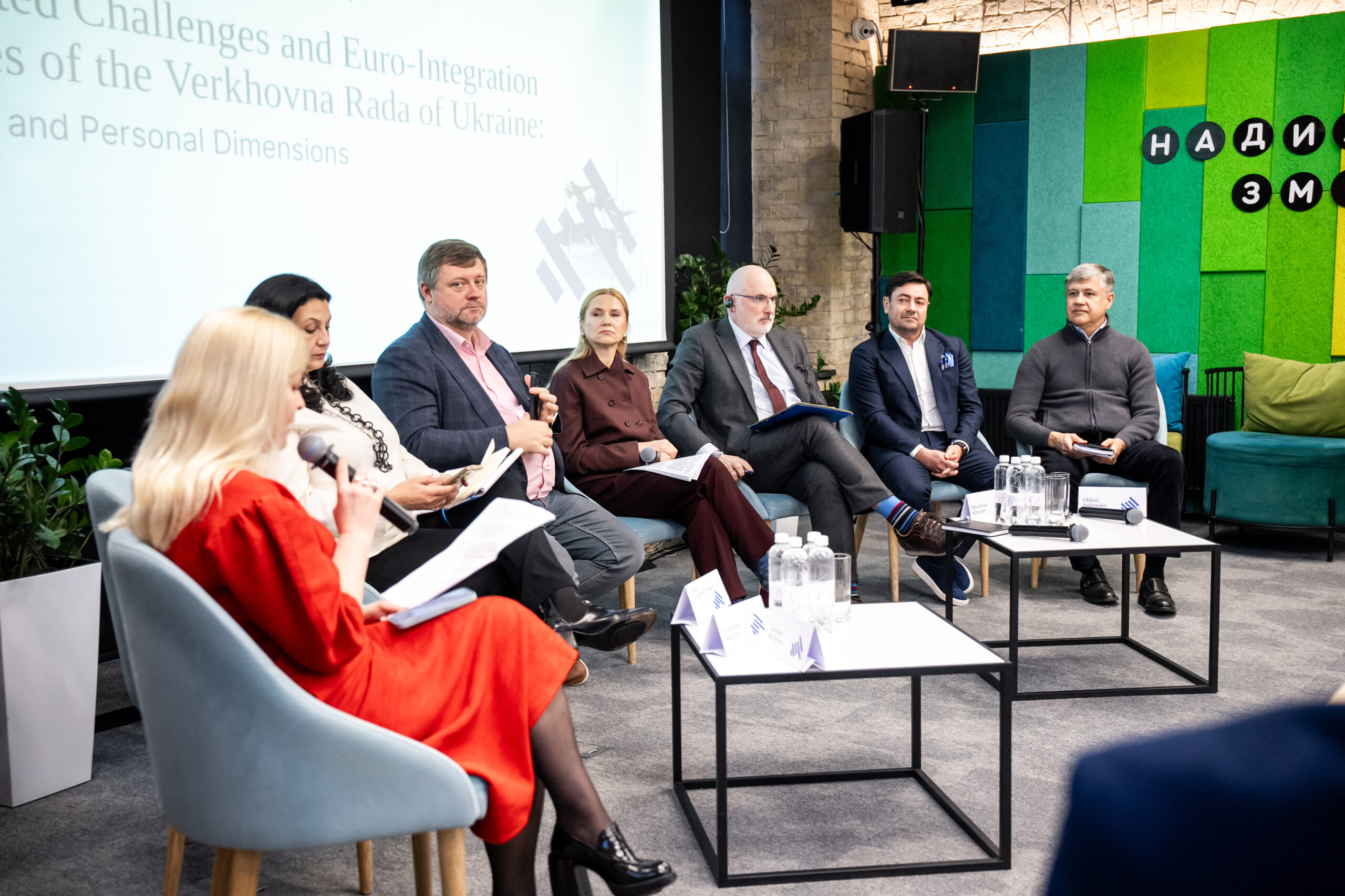
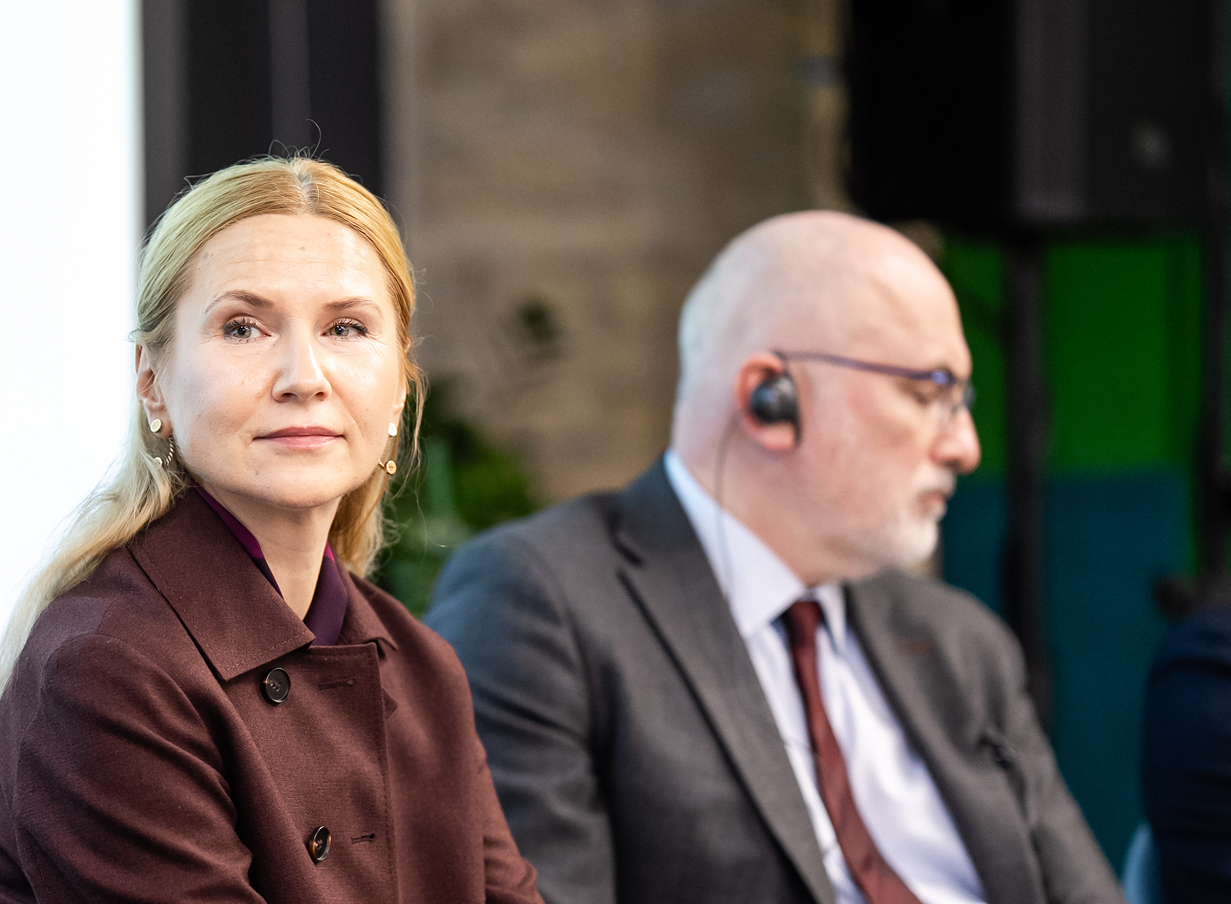
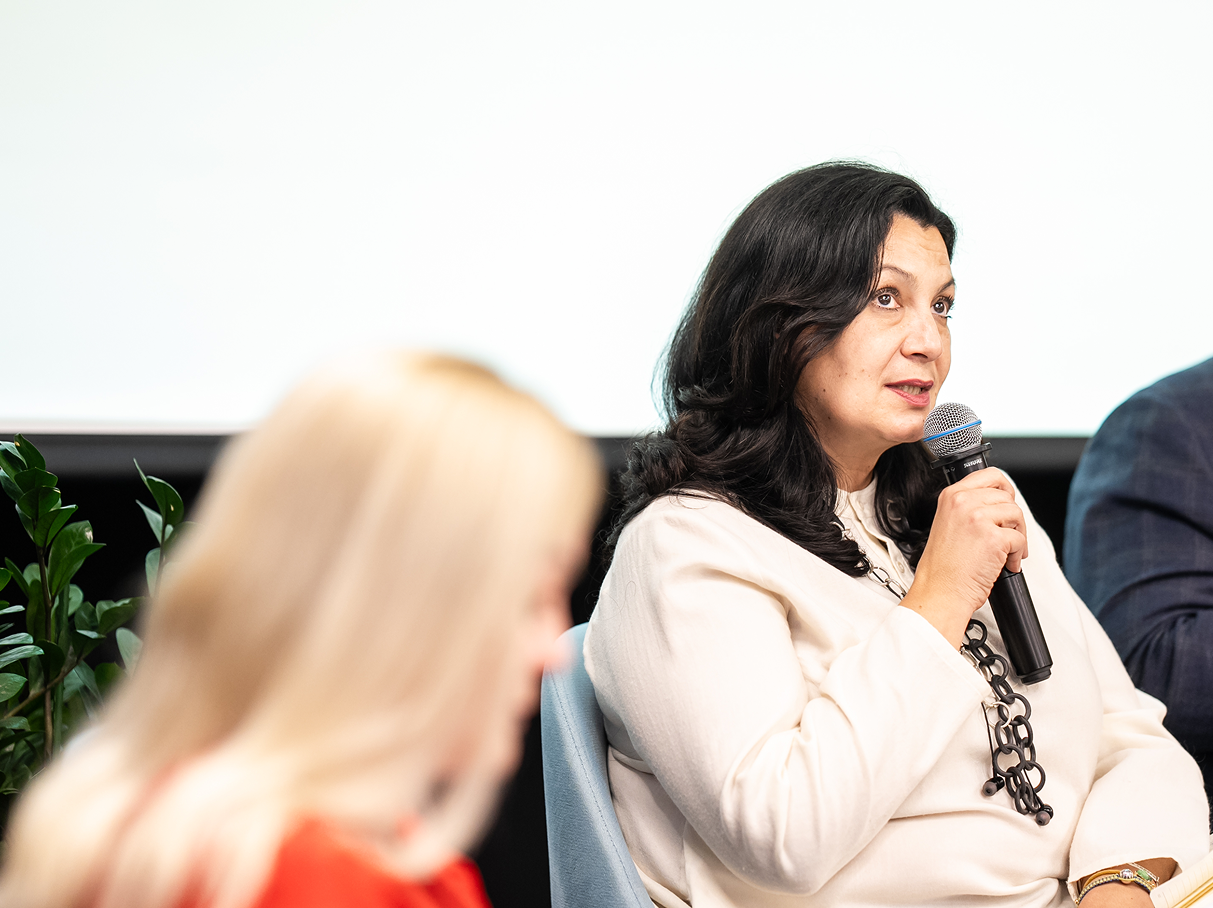
The Chair of the Verkhovna Rada Committee on Ukraine’s Integration into the European Union, Ivanna Klympush-Tsintsadze, emphasised the importance of the Monitoring conducted by ALI — as it makes it possible to view, from the outside, how Members of Parliament are fulfilling their duties and exercising their powers.
The Secretary-General of the Verkhovna Rada, Viacheslav Shtuchnyi, stressed that ensuring the uninterrupted work of Parliament has been one of the key tasks since the beginning of the war. ‘The uninterrupted operation of Parliament is a symbol of resistance, a symbol of resilience and devotion to the state’, he underlined.
An important and correct step for the development of Parliament was the decision to open the European Parliament Liaison Office in Ukraine and the Verkhovna Rada Office in the European Parliament. Over the past six years, the Verkhovna Rada has been working both within the Jean Monnet Dialogue formatThe Jean Monnet Dialogue format involves meetings between parliamentarians on a given subject in order to develop a common ground on a specific issue. This format aims to foster political dialogue and consensus between political parties. and on implementing the recommendations of the Roadmap for Internal Reform — which the Secretariat of the Verkhovna Rada has completed by 99%.
Particular attention must also be paid to the technical support of parliamentary work. A worthy response by the Ukrainian Parliament to the challenges of wartime has been the Continuity Plan of the Verkhovna Rada of Ukraine.
Oleksii Sydorenko emphasised that the Secretariat continues to strengthen cyber resilience and cybersecurity components. He also noted that Parliament recently completed its successful connection to the PULS system, a tool for monitoring the fulfilment of European integration commitments — and an additional platform for interaction between the Verkhovna Rada and the Government on all initiatives.
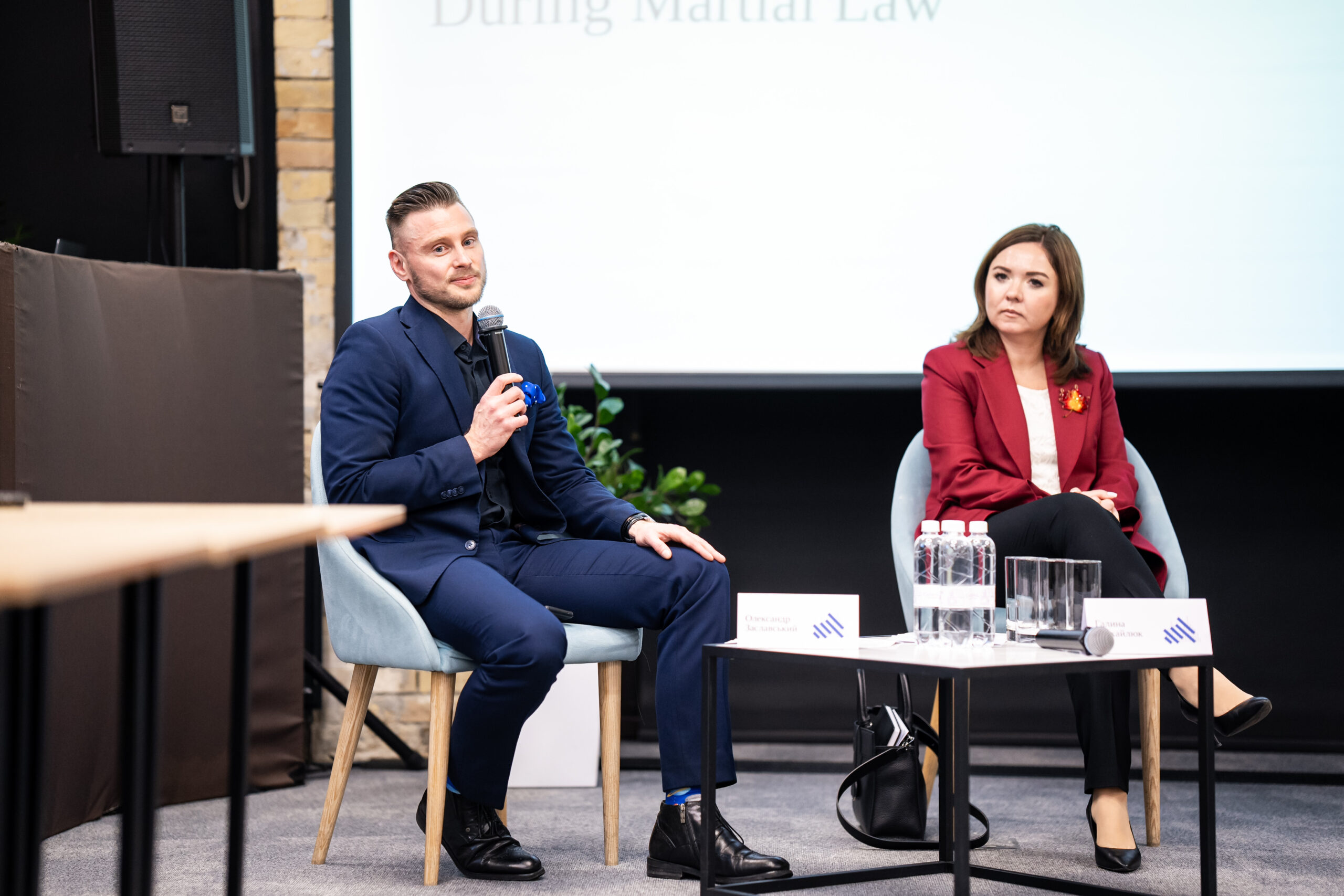
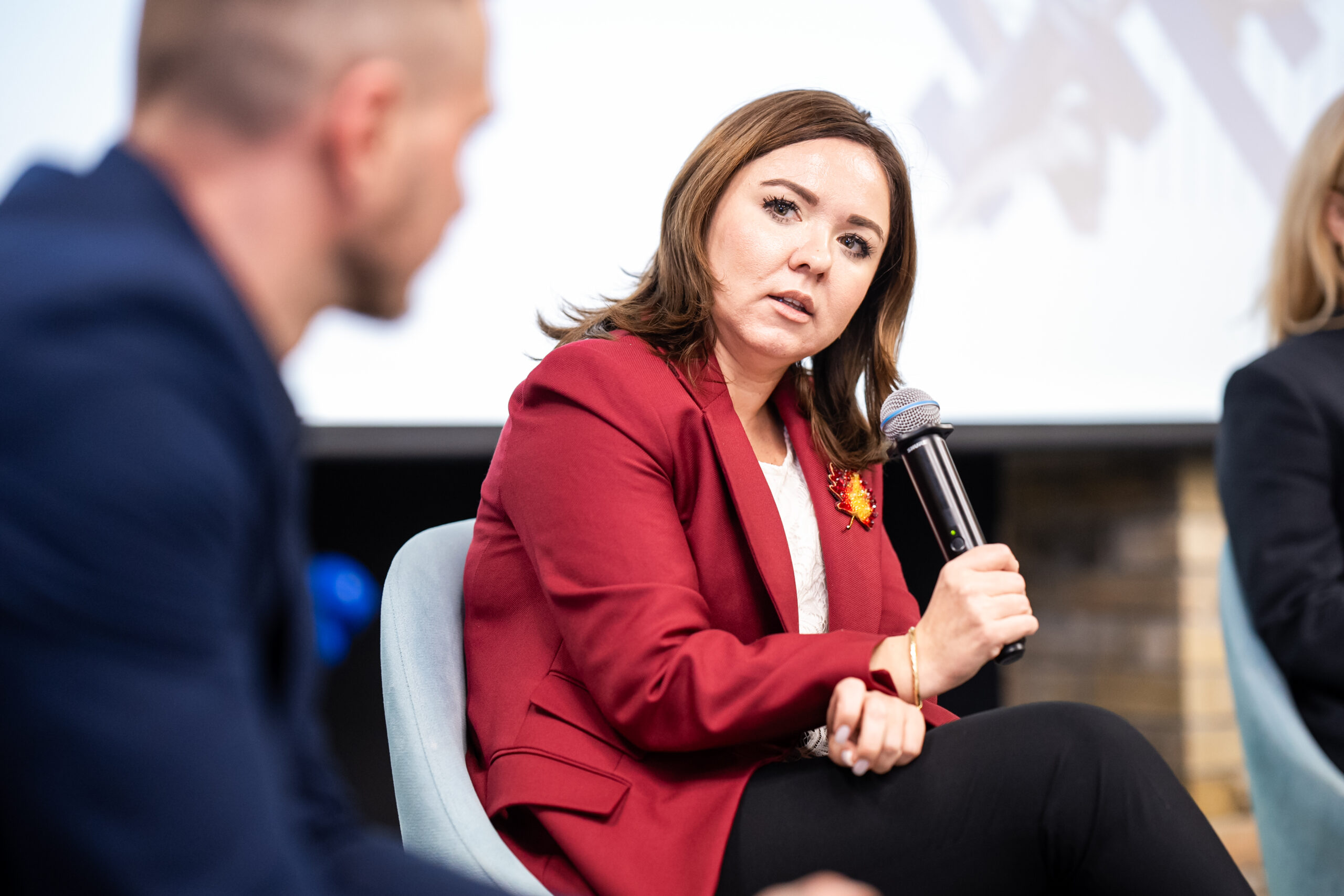
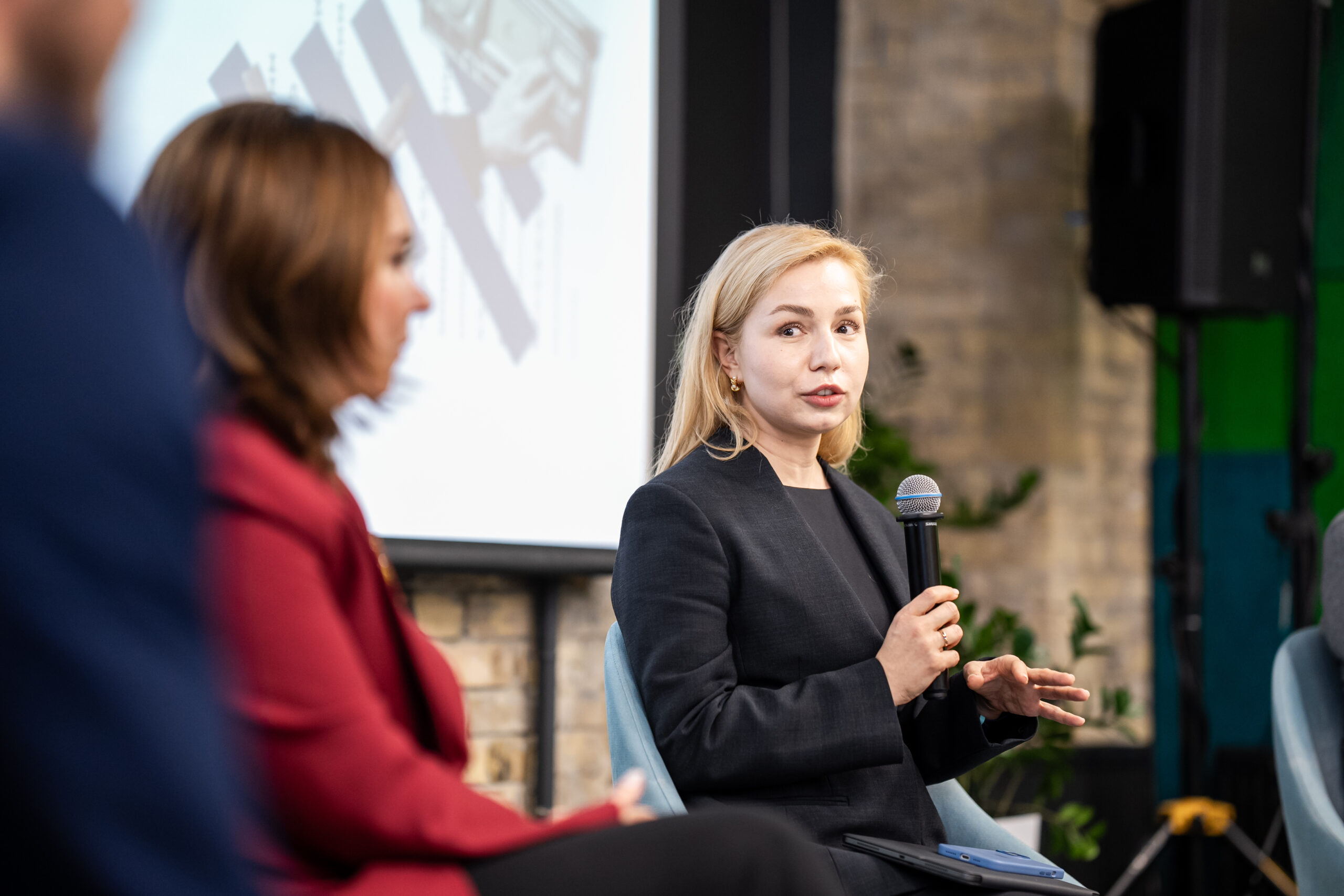
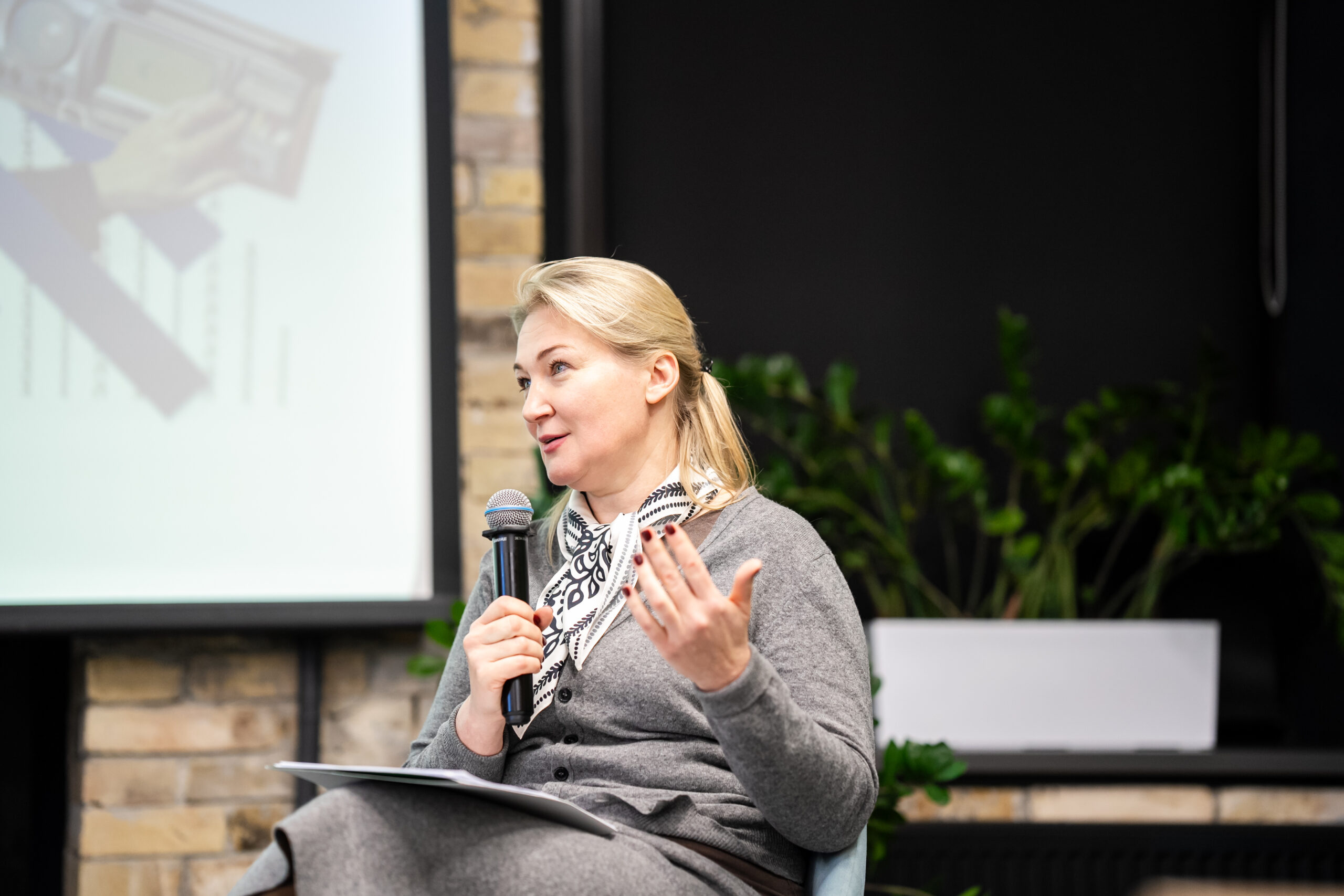
The second part of the discussion focused on the work of Members of Parliament during martial law. Three Members — Halyna Mykhailiuk, Anastasiia Radina and Mariia Ionova — shared their experiences as well as their perspectives on priorities and changes needed in parliamentary work.
Oleksandr Zaslavskyi, Deputy Executive Director of the Agency for Legislative Initiatives, stressed that in 2022, the Verkhovna Rada increased the intensity of parliamentary diplomacy many times over.
Oversight Function of the Verkhovna Rada of the 9th Convocation during the 13th Session
Summary of the Unit
- During the 13th session, nine ‘Government Question Hours’ were held — in total, MPs and ministers spent more than 11 hours asking and answering questions.
- Most questions from MPs concerned the functioning of the state’s energy infrastructure and social policy.
- MPs terminated the activities of three temporary commissions and established eight temporary commissions. All three terminated commissions were re-established.
- During the 13th session, MPs submitted 303 enquiries, the largest number since the beginning of the full-scale invasion, although this figure still does not reach the pre-24 February 2022 level.
The exercise of parliamentary oversight is a direct constitutional powerThis monitoring does not analyse indirect parliamentary oversight, i.e. oversight exercised by other bodies and officials (the Accounting Chamber and the Ukrainian Parliament Commissioner for Human Rights). of the Verkhovna Rada of Ukraine. A large part of the powers within parliamentary oversight relates to the activities of the Government, as the Cabinet of Ministers of Ukraine is accountable and reportable to the Verkhovna Rada of Ukraine. This part of the monitoring report provides a brief overview of the exercise of the oversight function by Parliament and the changes that took place during the 13th session.
Government Question Hour
The ‘Government Question Hour’ is a parliamentary oversight instrument that allows MPs to put questions to members of the Cabinet of Ministers on a specified topic and receive answers. Proposals for determining the topic of the ‘Government Question Hour’ are submitted to the Conciliation Council by parliamentary factions (parliamentary groups). During the ‘Government Question Hour’, only issues related to the specified topic may be raised. Normally, the minister responsible for the relevant area responds from the rostrum, although questions may also be addressed to the Prime Minister and other ministers.
After the full-scale invasion of Ukraine by the Russian Federation, the holding of the ‘Government Question Hour’ in the Verkhovna Rada was suspended for security reasons. The first full ‘Government Question Hour’ after 24 February 2022 was held by the Verkhovna Rada during the 10th session. The return of the ‘Government Question Hour’ on a regular basis took place from May 2024, during the 11th session.
Government Question Hours Held
During the 13th session, nine Government Question Hours were held — in total, MPs and ministers spent more than 11 hours asking questions and receiving answersMPs may often yield the floor to another MP during the Government Question Hour to ask a question. Therefore, remarks by MPs lasting less than 10 seconds were removed from the data, as these were most likely such transfers of the floor. .
MPs may put several questions during one speech, and ministers may answer several questions, or several ministers may answer one question. Given these particularities of the Government Question Hour, the data illustrate MPs’ interest in specific topics or even in particular ministers.
MPs’ Speeches by Factions and Groups
Most frequently during the 13th session, questions from MPs were answered by Prime Minister of Ukraine Denys Shmyhal, Deputy Prime Minister for the Restoration of Ukraine — Minister for Communities and Territories Development of Ukraine Oleksii Kuleba, Minister of Education and Science of Ukraine Oksen Lisovyi, and Minister of Social Policy of Ukraine Oksana Zholnovych. This distribution is logical, given the role of the Prime Minister in coordinating the activities of the Cabinet of Ministers, and the fact that the listed ministers acted as lead speakers during the Government Question Hours (Deputy Prime Minister Oleksii Kuleba spoke twice).
List of Government Question Hour Topics during the 13th Session
Temporary Investigative and Special Commissions
The Verkhovna Rada may establish temporary bodies: temporary special commissions and temporary investigative commissions. The task of temporary investigative commissions is to exercise parliamentary oversight by conducting investigations on matters of public interest. Temporary special commissions are established for the preparation and preliminary consideration of issues, as well as for the preparation and revision of draft laws and other acts of the Verkhovna Rada. An MP may simultaneously be a member of no more than two temporary investigative commissions and one temporary special commission. Temporary investigative and temporary special commissions are established for a term of no more than one year.
During the 13th session, Parliament voted to establish eight temporary commissions (five temporary investigative and three temporary special) and terminated the work of three temporary commissions (two of them temporary special commissions). Their list is provided in Annexe 7.
-
Annexe 7. Temporary Commissions Established during the 13th Session
Temporary commissions that terminated their activities
Commission Date of termination Temporary Special Commission of the Verkhovna Rada of Ukraine on Monitoring the Receipt and Use of International Material and Technical Assistance 18.06.2025 Temporary Special Commission of the Verkhovna Rada of Ukraine on the Protection of Investors’ Rights 29.04.2025 Temporary Investigative Commission of the Verkhovna Rada of Ukraine on Investigating Possible Unlawful Actions by Officials of State Authorities, Other State Bodies and State-Owned Enterprises that Could Have Harmed Ukraine’s Economic Security 12.03.2025
In this convocation, a practice has also emerged of renewing the activities of temporary commissions. Of the three commissions that terminated their work during the 13th session, all three were re-established on the same day they were dissolved. In the case of the Temporary Special Commission on Monitoring the Receipt and Use of International Material and Technical Assistance, this was done by a single resolution, which simultaneously terminated the previous commission and immediately established an identical commission with the same membership.
Temporary commissions by sessions
MPs’ Enquiries and Appeals
MPs have the right to submit MPs’ enquiries and MPs’ appealsSince MPs’ appeals do not require announcement at a plenary sitting and there is no information about their registration, which complicates data collection, they are not the subject of this monitoring. . The former are a demand by an MP for an official response on matters within the competence of a body or institution, while the latter are a proposal to provide an official explanation or state a position on matters within the competence of a body or institution.
During the 13th session, MPs submitted 303 enquiries, the largest number since the beginning of the full-scale invasion, although this figure still does not reach the pre-24 February 2022 level.
MPs’ Enquiries
One feature of post-full-scale invasion MPs’ enquiries is the growing number of enquiries to the President regarding the awarding of servicemembers and other persons (most often with the title of Hero of Ukraine). This situation is understandable given the ongoing hostilities and the fact that the conferral of titles and state awards falls within the powers of the President. The MPs’ enquiry has thus become one of the instruments for recognising the contribution of servicemembers, alongside citizens’ appeals or electronic petitions.
Monitoring Report of the Activity of the Verkhovna Rada 13th Session 9th Convocation
Summary
Key performance indicators of the Verkhovna Rada of Ukraine during the 13th session of the 9th convocation:
700 draft laws were registered, of which:
- 7 (1%) European integration draft laws;
- 45 (6.4%) draft laws on the consent to or denunciation of international treaties;
- 8 (1.1%) urgent draft laws.
119 draft laws were adopted in their entirety, of which:
- 9 (7.6%) European integration draft laws;
- 17 (14.3%) laws on ratification of international treaties;
- 3 (2.5%) laws were identified by the President as urgent.
The President vetoed (and submitted his proposals) two draft laws. Four draft laws were adopted after a veto during the 13th session.
42 laws were adopted in their entirety after the first reading (35.3%) and 77 laws — after the second reading (64.7%).
Monitoring of the work of the Verkhovna Rada of Ukraine during the 13th session of the 9th convocation revealed five key trends:
Unusual Governmental Dynamics Caused by the Change of Government
The 13th session of the 9th Verkhovna Rada of Ukraine was marked by a change of Government, which left its imprint on all areas of the Parliament’s work. 353 draft laws submitted by the Shmyhal Government were withdrawn. Some of them were re-registered by the Svyrydenko Government. Together, these two governments registered 22.7% of draft laws, which is the highest figure for the entire 9th convocation. More than half of them were registered after 17 July 2025. Thus, the new Government registered more draft laws in one and a half months than the previous Government did in five months. However, new draft laws require new committee meetings and expert opinions, so the share of adopted governmental laws, on the contrary, decreased. This also affected the relatively small number of laws adopted during the 13th session — 119 (the lowest indicator for spring sessions of the Verkhovna Rada during the full-scale invasion). All governmental draft laws adopted were initiated by the Shmyhal Government, while no draft law initiated by the Svyrydenko Government was adopted during the 13th session.
Signs of Legislative Spam
Evidence of legislative spam caused by the submission of low-quality MPs’ draft laws during the 13th session is reflected in several indicators at once. The 700 draft laws registered during the 13th session represent the second-highest figure since the start of the full-scale invasion. Of course, this is partly explained by the re-registration of governmental draft laws already mentioned, but not only by this. The Restoration of Ukraine group continues to maintain an extraordinary pace of lawmaking, registering almost six draft laws per MP. At the same time, the share of MPs’ draft laws with only one signatory set a record for the entire 9th convocation, reaching 45%. In other words, almost every other draft law has only one signatory, which is an indirect indicator of low quality. Such high figures for draft law registration reinforce the thesis about legislative spam against the backdrop of the lowest number of laws adopted in spring sessions of the Verkhovna Rada during the full-scale invasion.
Record-Slow Passage of Draft Laws
Two record-breaking lows of the 9th convocation were set during the 13th session. MPs’ draft laws took an average of 110 days to pass from registration to adoption in the first reading and in their entirety (three times longer than in the previous session). Meanwhile, governmental draft laws took an average of 418 days from registration to adoption in the second reading and in their entirety, thus completing the legislative backlog of the Shmyhal Government (which itself set a record for the longest tenure of a Prime Minister).
Record Violations
Another record was set by the President of Ukraine. The share of violations of the constitutional procedure reached 47% during the 13th session. Almost every second law adopted by the Verkhovna Rada was either signed in violation of the deadlines or not signed at all. The share of ordinary violations of the Rules of Procedure of the Verkhovna Rada in the course of the passage of draft laws in the second reading also increased — two-thirds of such procedures were violated.
Strengthening of Parliamentary Oversight
An unambiguously positive observation of the 13th session is the increase in the quantitative indicators of parliamentary oversight. The total durationThe average duration also increased, amounting to 72 minutes. of the ‘Government Question Hour’ during the 13th session reached 11 hours, exceeding any indicators recorded during the full-scale invasion. The number of answers provided by government officials to questions was also the highest since the start of the full-scale invasion, amounting to 276 answers (speeches). The Verkhovna Rada established eight temporary commissions during the 13th session, which is a record not only for the period of the full-scale invasion but also for the entire 9th convocation. MPs also submitted 303 inquiries, the largest number during the full-scale invasion.
Route through the Monitoring Report*
This monitoring report of the activity of the 13th session of the 9th Verkhovna Rada of Ukraine consists of a summary, six units and annexes. *To learn more about each unit, please follow the links below:
- legislative activity: the total number of registered draft laws and laws, their breakdown by initiators and groups of signatories;
- passage of draft laws: breakdown of laws by readings of adoption, deadlines for submitting opinions of the main committees, timeframe from registration to adoption of the law, including by readings and initiators;
- plenary time: total time spent on consideration of draft laws in the VRU, distribution of time for consideration of draft laws according to the initiator and the time required for consideration of the draft law in the session hall;
- committees: total number and breakdown by initiators of opinions on dismissal, number of committee meetings and their workload in accordance with the number of registered draft laws and submitted opinions on draft laws, including the workload per committee member and secretariat staff member;
- violations of the Rules of Procedure: the number of violations of the Rules of Procedure in relation to draft laws and proposals of the President of Ukraine;
- the oversight function of the Verkhovna Rada: indicators of the ‘Government Question Hour’, the number of temporary commissions and the number of MPs’ inquiries.
Annexes contain lists of draft laws included in the ranking, which is based on various quantitative indicators (e.g., number of days from registration to adoption).
Violations of the Rules of Procedure in the Work of the Verkhovna Rada of the 9th Convocation during the 13th Session
Summary of the Unit
- During the 13th session, the share of violations of the Rules of Procedure in the adoption of laws remained high: approximately 61% of laws were adopted with violations.
- The share of violations in the second reading of draft laws increased compared to the 11th and 12th sessions.
- The overall share of violations of the constitutional timeframe (15 days) for signing laws by the President during the 13th session reached a record 47% for the 9th convocation. The deadline for signing (or submitting proposals) was violated for 51 laws, and another five laws were neither signed, nor vetoed.
The scale of violations of the legislative procedure during the 13th session remained high. The overall share of draft laws adopted with violations is lower than in the 12th session (66%), in particular due to fewer violations in the first reading. At the same time, the number of violations in the second reading continued to increase.
This section provides information on violations of the Rules of Procedure in the adoption of laws during the 13th session.
The 13th session showed a partial increase in violations in most categories, although a significant decrease was recorded in breaches of the deadlines for submitting committee opinions for the first reading. The procedures for the consideration of approximately 61% (almost two-thirds) of laws contained violations during the 13th session.
Violation of the Rules of Procedure
During the 13th session, the dynamics of the frequency of violations of the Rules of Procedure varied depending on whether it was the first or second reading. For the first reading, the share of violations decreased compared to the 11th and 12th sessions when looking at the deadlines for opinions of the main committees. As for the other two violations of the first reading procedure, there were no significant changes compared to the 12th session.
For the second reading, the share of violations of the Rules of Procedure increased for all three types of violations tracked at this stage. The scale of violations in both the first and second readings still exceeds the level of violations before the beginning of the full-scale invasion. The increase in the share of violations in the second reading has been observed for three consecutive sessions, which is a negative trend.
In the graphs and the table, the data show the share of draft laws adopted with violations of the Rules of Procedure, presented by sessions.
Violations of Rules of Procedure Concerning Adopted Laws in the Verkhovna Rada
Violation of the Constitution Regarding the Deadline for Signing Laws
In addition to ordinary violations of the Rules of Procedure, monitoring was carried out of violations of the Constitution in terms of the 15-day deadline for the President to sign adopted laws (Article 94 of the Constitution). The monitoring covered 119 laws adopted by the Verkhovna Rada of Ukraine during the 13th session. The signing deadline (or submission of proposals) was violated for 51 laws, i.e., in 43% of cases (in the 12th session, the share was 35%). In addition, five laws were neither signed by the President, nor vetoed, nor received proposals (although the deadline for their signing had already expired). Taken together, these violations amounted to 47%There was also a violation of the deadline for the President of Ukraine to sign the draft law vetoed in the 13th session — No. 12073 of 27 September 2024. Although the President submitted proposals on time after its adoption in the second reading, the law was signed in breach of the deadline after being re-adopted with the President’s proposals. of all laws adopted during the 13th session, which is higher than in the 11th (45%) and 12th (44%) sessions. Thus, almost half of all laws adopted during the 13th session breached the deadlines established by the Constitution of UkraineA violation of the signing deadline also occurred with the repeatedly vetoed draft law No. 11150 of 4 April 2024, which was not included in the monitoring as its adoption and first veto took place during the 11th session..
Of course, it does not matter whether the deadline was missed by two days or 102 days — in both cases, it constitutes a violation. Nevertheless, if we look at record-holders in this regard, the longest signing period was 163 daysThe record-holder for signing time is Draft Law No. 12271 On Amendments to the Law of Ukraine “On Enforcement Proceedings” on State Support and Economic Recovery of the Rocket and Space Industry under Martial Law of 2 December 2024..
Violations of the constitutional procedure began to increase with the introduction of martial law. If in the 7th session (the first six months of martial law) violations accounted for 16.4%, then, over the next six sessions, their number almost tripled. In the 13th session, the scale of violations of the constitutional procedure reached the highest level of the 9th convocation of the Verkhovna Rada. The volume of violations during the 13th session remains quite high and, by most indicators, higher than in the previous two sessions. These violations cannot be explained by shortcomings in normative or procedural rulesAccording to the Constitution of Ukraine, the President has 15 days to sign a law and officially promulgate it, or to return it with his reasoned and formulated proposals to Parliament. At the decision of the President, the Government organises an expert review of the law submitted for signature. According to the Rules of Procedure of the Cabinet of Ministers, the Government has a maximum of seven days to submit its proposals regarding the signing of the law by the President or reasoned and substantiated proposals on the expediency of the President exercising the right of veto. The time spent on preparing generalised comments and proposals depends both on the scope and complexity of the law and on other factors — the day of the week and time when the copy of the law was received, the number of ministries involved in the review, differences in their positions regarding the adopted law, internal bureaucratic procedures in the ministries, technical reasons, etc. Any combination of these factors may delay the Government’s submission of proposals on the law and, accordingly, the President’s decision to sign the law or return it to Parliament., as the relevant provisions have not changed.
During the 13th session, the President promptly (within the 15-day deadline) vetoed and submitted proposals to two draft laws. The Verkhovna Rada has so far considered only one of them (No. 12073 of 27 September 2024), which was re-adopted with the President’s proposals and signed in violation of the deadline established by the Constitution of Ukraine.
One of the two vetoed draft laws was initiated by representatives of the Servant of the People faction, and the other was initiated by an MP from the Platform for Life and Peace group.
Committees of the Verkhovna Rada of the 9th Convocation for the 13th Session
Summary of the Unit
- The most heavily loaded committees are the Committee on Legal Policy (64 opinions provided), the Committee on Social Policy (52 opinions), the Committee on National Security (50 opinions) and the Committee on Law Enforcement (49 opinions).
- The Committee on Social Policy, the Committee on Legal Policy, the Committee on National Security and the Committee on Law Enforcement each had more than two draft laws allocated and opinions provided per MP. In five committees, the workload (number of opinions provided) did not exceed 0.5 per MP.
During the 13th session, the committees of the Verkhovna Rada continued to carry out their work under conditions of a significant increase in the number of registered draft laws compared to the 12th session. The total number of opinions provided increased by 186 (from 292 in the 12th session) to 478 opinions, although this is five fewer than the committees provided during the corresponding 11th session. The greatest workload in terms of the number of opinions provided fell on the Committees on Legal Policy, Social Policy, National Security and Law Enforcement. The uneven distribution of workload between committees — in some cases differing by a factor of 26 — raises the question of redistributing responsibilities.
Information on the deadlines for committees’ opinions is available in the section on the speed of passage of draft laws.
Opinions on Rejection (a Total of 69 Opinions)
| Submitting entity | Number of opinions on rejection of draft laws (share of total opinions on rejection) |
| MPs of Ukraine | 60 (87%) |
| Government | 9 (13%) |
| President | 0 |
Number of Opinions on the Rejection of MP’s Draft Laws by Factions and Groups
During the 13th session, 69 opinions of the main committees on the rejection of draft laws were prepared. Opinions on rejection may indicate both the political loyalty of committees and the level (at least minimal) of quality of draft law preparation. At the same time, as in the 12th session, almost half of the rejected draft laws were alternative ones. Presidential draft laws appear to meet both criteria, as they did not receive any opinions on rejection (though it should be remembered that presidential draft laws were few in number and often related to ratifications and decrees). Governmental draft laws also appear largely unproblematic: only nine of them received opinions on rejection, although it should be noted that this is three times more than in the 11th session, which can be explained by the greater number of governmental draft laws registered compared to the 11th session. The bulk of opinions on rejection were received by draft laws of MPs from the Servant of the People faction, which is logical given the number of MPs in the faction and their legislative activity.
Withdrawn Draft Laws
During the 13th session and for the first time since the beginning of the full-scale invasion, the Verkhovna Rada dismissed the Cabinet of Ministers. The new Prime Minister became Yuliia Svyrydenko, who had previously held the position of First Deputy Prime Minister — Minister of Economy of Ukraine.
The dismissal of the Government undoubtedly affected the lawmaking activity of Parliament. According to the Rules of Procedure of the Verkhovna Rada, a draft law submitted by the Cabinet of Ministers is considered withdrawn if, before its adoption in the first reading as a basis, the powers of the Cabinet of Ministers are terminated. Due to the dismissal of the Government, 353 such draft laws were withdrawn, 59 of which (17%) had been registered during the 13th session. This means that all subsequent governmental draft laws to be considered in the first reading as a basis will be those registered [by the Svyrydenko Government rather than the Shmyhal Government], starting from the 13th session and onwards.
The committees most affected by the withdrawal of governmental draft laws were the Committee on Transport and Infrastructure (76 withdrawn draft laws), the Committee on Finance and the Committee on Legal Policy (36 withdrawn draft laws each). The Committee on Freedom of Speech and the Committee on Rules of Procedure had no registered governmental draft laws at all, and therefore no withdrawn ones.
Committees’ Workload
When reviewing the workload of committees, it should be borne in mind that this monitoring calculates workload primarily on the basis of the number of opinions of the main committees. This method is used due to the availability of data (open data format). Specifically, information on the opinions of the main committees is constantly available on the website of the Verkhovna Rada, is regularly updated and covers all opinions of the main committees. However, committees, of course, perform many other functions and tasks in addition to providing opinions of the main committees. Three committeesThe Budget Committee, the Committee on Anti-Corruption Policy and the Committee on European Integration. are required to provide mandatory opinions on all draft laws; committees may also be tasked with preparing opinions as auxiliary committees; committees consider and make decisions in the framework of the oversight function; they review letters and appeals and hold conferences and round tables. These limitations should be considered when reviewing the information below, which is based on the opinions of the main committees.
The chart presented shows two indicators. First, it demonstrates the number of opinions provided by the main committees. The second indicator is the number of draft laws allocated to each committee as the main committee, according to the subject matter of the committees. Together, they show the distribution of lawmaking work regarding the preliminary processing of draft laws.
The greatest workload in terms of the number of opinions provided (64 opinions) fell on the Committee on Legal Policy. Four other committees also had a comparatively high workload: the Committee on Social Policy (52 opinions), the Committee on National Security (50 opinions), the Committee on Law Enforcement (49 opinions) and the Committee on Finance. This is a relatively standard distribution for the last seven sessions of martial law (7th, 8th, 9th, 10th, 11th, 12th and 13th sessions).
The total number of opinions provided increased by 186 (from 292 in the 12th session) to 478 opinions, although this is five fewer than the number provided in the corresponding 11th session. This reflects the increase in the number of draft laws registered in the 13th session (and consequently, in the opinions on them).
The committees that reduced the number of opinions provided the most (compared to the corresponding 11th session) during the 13th session were: the Committee on Finance (-20 opinions), the Committee on Foreign Policy (-13 opinions) and the Committee on Public Health (-10 opinions).
At the same time, in some committees, the number of opinions provided increased compared to the 11th session. The largest increases (compared to the 11th session) were recorded in the Committee on Legal Policy (+27 opinions) and the Committee on Social Policy (+17 opinions).
The number of draft laws allocated to committees, compared to the 11th session, varied from -8 to +25 allocated draft laws.
The potential workload (number of allocated draft laws) for committees decreased the most (compared to the 11th session) in the Committee on Economic Development (-8 allocated draft laws), the Committee on Humanitarian Policy (-6) and the Committee on Environmental Policy and the Committee on Integration into the EU (-5 each).
The potential workload of committees increased for three committees: the Committee on Law Enforcement (+25 allocated draft laws), the Budget Committee and the Committee on State Organisation (+21 each).
Another dimension of committee workload is shown in the chart above, which indicates how many opinions or registered draft laws fall on one MP-member of a committeeNumber of MPs at the end of the 12th session; during the 12th session, the number of MPs in committees changed.. Heavy workload (where both the number of allocated draft laws and the number of opinions provided exceed two per MP) was recorded in four committees: the Committee on Social Policy (4.6 draft laws and 5.2 opinions per MP), the Committee on Legal Policy (4.33 draft laws and 3.56 opinions per MP), the Committee on National Security (3.84 draft laws and 2.63 opinions per MP) and the Committee on Law Enforcement (5.45 draft laws and 2.23 opinions per MP). Another three committees had a workload of more than 1.5 opinions per MP: the Committee on Education, the Committee on Economic Development and the Committee on European Integration.
In five committees, the number of opinions provided per MP did not reach 0.5 (in the 11th session, this indicator was below 0.5 in three committees). The smallest number of opinions provided per MP was recorded in the Committee on Rules of Procedure (0.20 opinions per MP), the Committee on Transport and Infrastructure (0.27 opinions per MP) and the Committee on Energy (0.29 opinions per MP).
When comparing the 13th session with the corresponding 11th session, a significant difference in workload can be seen, as the difference in the number of opinions provided per MP ranged from -0.93 to +2.02. The number of allocated draft laws fluctuated slightly less, within a range from -0.67 to +1.6.
The real workload (i.e. the number of opinions provided per MP) decreased the most in the Committee on Foreign Policy (-0.93 opinions per MP) and the Committee on European Integration (-0.63 opinions per MP). The greatest increase in real workload was recorded in the Committee on Social Policy (+2.02 opinions per MP).
The potential workload decreased the most (compared to the 11th session) in the Committee on Freedom of Speech (-0.67 allocated draft laws per MP). By contrast, the potential workload increased the most in the Committee on Social Policy (+1.60 allocated draft laws per MP) and the Committee on Education (+1.45 allocated draft laws per MP).
The trends in the real and potential workload per committee member generally correspond to the data on the workload of committees as a whole.
When comparing the least and most heavily loaded committees, their workload differs by a factor of 26. This situation, which arose during the 13th session, as well as certain trends in committee workload that persist from session to session, highlight the issue of either redistributing MPs or redistributing areas of competence between committees.
Heavy workloads (where the number of opinions provided exceeds three per secretariat staff memberThe calculation of the number of committee secretariat staff was based on data as of early September 2025.) were recorded in the Committee on National Security (3.85 opinions per staff member), the Committee on Legal Policy (3.76 opinions per staff member) and the Committee on Law Enforcement (3.06 opinions per staff member). In the 11th session, there were four such committees. For half of the committees, the real workload (number of opinions provided) corresponds to the absolute workload per secretariat staff member.
In three committees, the number of opinions provided did not reach 0.5 per secretariat staff member. These were the Committee on Rules of Procedure (0.13 opinions per staff member), the Committee on Freedom of Speech (0.14) and the Committee on Energy (0.41).
The largest decrease in real workload (number of opinions provided per secretariat staff member) during the 13th session compared to the 11th session was recorded in the Committee on Foreign Policy (-2.21 opinions per staff member) and the Committee on Law Enforcement (-2.12 opinions per staff member). The largest increase in real workload was recorded in the Committee on Legal Policy (+1.71 opinions per secretariat staff member).
When comparing the potential workload (number of draft laws allocated per secretariat staff member) during the 13th session with the 11th session, the largest decreases were recorded in the Committee on Environmental Policy (-1.5 allocated draft laws per staff member) and the Committee on Economic Policy (-1.23 allocated draft laws per staff member). The largest increases in potential workload were recorded in the Committee on Education (+1.39 allocated draft laws per secretariat staff member) and the Committee on Public Health (+0.93 allocated draft laws per staff member).
When reviewing the quantitative indicators of committees’ work, it is important to remember the mandatory opinions of auxiliary committees. The Committee on Ukraine’s Integration into the EU, the Budget Committee and the Committee on Anti-Corruption Policy have a comparatively low workload as main committees, but they are required to provide their mandatory opinions on all other draft laws, which demands significant resources.
For a better understanding of the specific features of the work of VRU committees, the chart below shows the number of committee meetings and how many main committee opinions were provided on average per meeting.
Only one committee held more than 30 meetings during the 13th session — the Committee on National Security (this committee was also the leader in the number of meetings during the 11th session). More than half of the committees held 15 or more meetings. Fewer than 10 meetings were held by only four committees during the 13th session.
The leader in the number of opinions per meeting was the Committee on Legal Policy (3.56 opinions per meeting). Similar figures were recorded by the Committee on Social Policy (3.06 opinions per meeting), the Committee on Finance (three opinions per meeting) and the Committee on Law Enforcement (2.88 opinions per meeting). In total, only these four committees adopted more than two opinions per meeting. Eleven committees (48% of all committees) adopted fewer than one opinion per meeting. For the 12th session, this figure was 15 committees, and for the 11th session, it was 10 committees.
The workload of parliamentary committees can also be viewed through the prism of other functions and documents prepared by these committees.
In the table below, the preliminary opinions on draft laws submitted to the main committee make it possible to see the workload of the three mandatory committees: the Committee on Anti-Corruption Policy, the Budget Committee and the Committee on Ukraine’s Integration into the European Union. These committees are required to provide their opinionsThis refers to opinions on compliance with the requirements of anti-corruption legislation, budget legislation and obligations in the field of European integration. on all draft laws. This function may sometimes demand more resources than providing opinions as main committees.
According to the data, oversight of the implementation of laws and resolutions was carried out most actively by the Committee on Education, Science and Innovation (27 oversight matters), the Committee on Humanitarian Policy (26 oversight matters) and the Committee on Transport and Infrastructure (25 oversight matters). Taken together with the data on workload from draft law work, these figures show that committees with comparatively less involvement in lawmaking compensate by being more active in exercising their oversight function. Some committees can even be called oversight committees, or at least committees with a priority oversight function. For instance, the Committee on Freedom of Speech provided only one opinion as a main committee, but it is among the most active committees in exercising oversight. There are also situations where committees provide more preliminary opinions to main committees than they prepare opinions as a main committee for draft laws allocated to them, due to the small number of such laws. For example, the Education Committee, as a main committee, prepared 21 opinions but provided almost twice as many preliminary opinions to other committees (39 preliminary opinions). In the Committee on Digital Transformation, the difference between the opinions provided as a main committee and preliminary opinions to other main committees was almost sixfold (nine main committee opinions versus 60 preliminary opinions).
Activities of the Committees of the Verkhovna Rada during the 13th Session
Plenary Time: 13th Session of the Verkhovna Rada of the 9th Convocation
Summary of the Unit
- During the 13th session, 54 hours were spent in the session hall on the consideration of draft laws, which is closer to the figures of the 7th and 9th sessions than to the 11th session.
- 15% of plenary time in the 13th session was spent on the consideration of draft laws initiated by non-governmental representatives. This is the highest share of plenary time in the entire 9th convocation.
- The plenary time spent on draft laws adopted in the first reading and in entirety is among the highest for the 9th convocation and the highest for the period of martial law.
- Draft laws for which both readings took place in the 13th session were considered for an average of 29 minutes. In terms of the median (21 minutes), the 13th session returned to the figures of the period before the full-scale invasion.
For the calculation of plenary time indicators, only the time spent on the consideration of draft laws was used. Time for registration, announcements of inquiries, the ‘Government Question Hour’, resolutions, etc., was not considered.
Plenary Time by the Initiator
During the 13th session, MPs spent almost 54 hours of plenary time on the consideration of draft laws. This is significantly less than in the previous two sessions. The 11th and 12th sessions recorded the highest results of plenary time spent, but after reaching the maximum for the Verkhovna Rada during the full-scale invasion (11th session — 76 hours), this figure began to decline gradually. It can be assumed that the trend of increasing plenary time, which began in the 9th session, has come to an end.
During the 13th session, 85% of plenary time was devoted to the consideration of draft laws of the authorities — the Servant of the People faction, the Government and the President. This is quite an unusual situation for the last five sessions, as this figure usually exceeds 90%. This can be linked to the increase in the number of opposition draft laws adopted in this session.
Plenary Time for Laws Adopted in the First Reading and in Entirety (Seconds, Minutes)
The 13th session of the Verkhovna Rada demonstrates a further increase in the average and median time spent on the consideration of draft laws compared to previous sessions. The average and median consideration times are among the highest for the 9th convocation and are the highest for the period of the full-scale invasion. This indicates the continuation of the trend towards longer consideration of draft laws, approaching the pre-war format of the Parliament’s work. For all draft laws adopted in the first reading and in entirety, the plenary time spent increased. Although the average time is slightly lower than the peak of the 6th session (701 seconds), these data demonstrate a return to the pre-war format of considering draft laws.
Plenary Time for Laws Adopted in the Second Reading and in Entirety (the First Reading of Which Took Place before the 13th Session)
Draft laws considered only in the second reading during the 13th session were reviewed in the session hall at roughly the same pace as in the previous two sessions. It can be said that the speed of consideration of draft laws in the second reading has reached a plateau characteristic of the Verkhovna Rada during the period of the full-scale invasion. As in the previous three sessions, more than half of the draft laws are discussed longer than before the beginning of the invasion. For 50% of draft laws adopted in the second reading and in entirety (the first reading of which took place before the 12th session), plenary time increased.
Plenary Time for Laws, Both of Whose Readings Took Place during the 13th Session
Draft laws, both of whose readings took place during the 13th session, were considered at the level of the 11th session. The average consideration time of draft laws was about 29 minutes, and the median was 21 minutes. This indicates a slight reduction in time compared to the 12th session, although it still remains among the highest indicators since the beginning of the full-scale invasion. For half of the draft laws, the duration of discussion in the session hall decreased by about seven minutes compared to the previous session. Thus, in terms of the format of consideration of draft laws in the session hall, the 13th session continues to move towards the pre-invasion period. For 90% of draft laws, the plenary time for both readings decreased compared to the 12th session.
The five longest draft laws in terms of the time of consideration in the plenary session hall are presented in Annexe 6.
-
Annexe 6. Time of Consideration of Adopted Draft Laws in the Session Hall
Top five draft laws with the longest time of consideration in the plenary hall
Draft laws Minutes spent on consideration of the draft law in the plenary hall Draft Law on Amendments to the Tax Code of Ukraine in connection with the Adoption of the Law of Ukraine ‘On Integrated Prevention and Control of Industrial Pollution’ No. 13157 of 07.04.2025 103 min Draft Law on Amendments to the Budget Code of Ukraine regarding the Implementation of the Agreement between the Government of Ukraine and the Government of the United States of America on the Establishment of the US–Ukraine Reconstruction Investment Fund No. 13256 of 02.05.2025 85 min Draft Law on Amendments to the Law of Ukraine “On the Judiciary and the Status of Judges” and Certain Other Legislative Acts of Ukraine regarding the Establishment and Functioning of the Kyiv City District Administrative Court and the Kyiv City Appellate Administrative Court No. 12368-1 of 07.01.2025 81 min Draft Law on Amendments to Certain Laws of Ukraine regarding Ensuring the Realisation of the Right to Acquire and Retain Citizenship of Ukraine No. 11469 of 07.08.2024 73 min Draft Law on Amendments to the Tax Code of Ukraine regarding Expanding Patients’ Access to Medicines Subject to Procurement by the Entity Authorised to Carry Out Procurement in the Field of Healthcare through Managed Access Agreements No. 13134 of 25.03.2025 69 min
Passage of Draft Laws in the Work of the Verkhovna Rada of the 9th Convocation during the 13th Session
Summary of the Unit
- 35.3% of draft laws were adopted after the first reading, 64.7% — after the second reading and the third reading was not applied.
- Only two of the 119 laws adopted during the 13th session were registered before 24 February 2022, indicating the dominance of the martial law agenda.
- Main terms of passage of draft laws (average values): 1) from registration to adoption in the first reading and in entirety — 69 days; 2) between the first reading and adoption in the second reading and in entirety — 149 days; 3) from registration to adoption in the second reading and in entirety — 309 days.
The timeframes for the passage of draft laws set two record-breaking lows.
For the first reading, the average passage time of MPs’ draft laws is the highest for the period of the 4th–13th sessions of the 9th convocation and amounted to 110 days, almost four times longer than in the 12th session. This is the slowest indicator compared to other entities of legislative initiative in the 13th session.
For the second reading, the average number of days taken by governmental draft laws from registration to adoption in the second reading and in entirety is the highest for the period of the 4th–13th sessions and amounted to 418 days. This is the slowest indicator compared to other entities of legislative initiative in the 13th session.
Number of Laws by Readings
- 42 — adopted in their entirety after the first reading (35.3%);
- 77 — adopted in their entirety after the second reading (64.7%);
- 0 — adopted in their entirety after the third reading (0%).
The 13th session continued the standard distribution of adopted laws by readings. Almost two-thirds of laws were adopted in the second reading and in their entirety, while 35.3% were adopted in the first reading and in their entirety. A similar situation occurred during the 5th, 6th, 8th, 10th, 11th and 12th sessions. The trend of not using the third reading has not changed — no draft law has passed all three readingsAccording to Article 1(102) of the Rules of Procedure, ‘draft laws shall be considered by the Verkhovna Rada, as a rule, according to the procedure of three readings’. . It should be recalled that two readings allow for better preparation of the draft law and correction of shortcomings and errors discovered during the first reading. However, two readings also require more time.
Deadlines for Submitting Opinions of the Main Committees for the First Reading
When reviewing the information on committees, it should be borne in mind that this monitoring report is based on the number of opinions of the main committees. These methods are used due to the availability of data. Specifically, information on the opinions of the main committees is constantly available on the website of the Verkhovna Rada, is regularly updated and covers all opinions of the main committees. However, committees, of course, perform many other functions and tasks in addition to providing opinions of the main committees. Three committeesThe Budget Committee, the Committee on Anti-Corruption Policy and the Committee on Ukraine’s Integration into the European Union. are required to provide mandatory opinions on all draft laws; committees may also be tasked with preparing opinions as auxiliary committees; committees consider and make decisions within the framework of the oversight function; they review letters and appeals and hold conferences and round tables. However, all this information is published only in fragments and therefore cannot be used for the purposes of regular monitoring. If such information is available in a form acceptable for systemic monitoring, it is used. These limitations should be considered when reviewing the information below, which is based on the opinions of the main committees.
The timing of the main committees’ opinions on draft lawsThe data presented relate only to cases where opinions were provided. The time between the date of draft law registration and the date of submission of the first opinion by the main committee was calculated, including opinions on inclusion in the agenda. This type of opinion was taken into account, as the committee often considers draft laws on their merits during preliminary processing. allows for the assessment of several important indicators. In terms of committees, the time from registration to the submission of the first opinion by the committee characterises the workload of the committees and enables a general forecast of the speed of preliminary processing of a given draft law, depending on its main committee. In terms of initiators, the time of submitting opinions characterises the commitment of committee members to a particular initiator and enhances the predictive capacity of the speed of preliminary processing. Finally, the time required to receive the main committee’s first opinion, together with the data on the overall passage of draft laws, makes it possible to better understand the overall dynamics of the passage of draft laws.
On average, the committees provided their opinions for the first reading in 106 days and half of all opinions were provided within 34 days.
The speed of issuing opinions varies greatly from committee to committee. The difference in some cases reaches a 200-fold gap. If we compare the performance of the 13th session with that of the previous 12th session, for more than one-third of committees, the time for issuing the first opinion decreased (for some committees by as much as half a year), while for almost two-thirds it increased. In most cases, this was a moderate increase of 1–2 months.
In general, the workload and the speed of issuing opinions are mostly correlated. However, this is not always the case. The Committee on Law Enforcement, the Committee on Finance and the Committee on National Security, despite the relatively large number of opinions submitted (30 or more), provided their first opinions on draft laws relatively quickly. The Committee on Transport and Infrastructure, with a moderate number of opinions submitted (only five), took a relatively long time to provide its first opinions on draft laws.
Days from Registration to the First Opinion of the Main Committee by the Submitting Entity
Compared to the 12th session, the average number of days for the President to provide the first committee opinion for the first reading decreased threefold and returned to the level of the 11th session. For MPs and the Government, the average timeframe for submitting opinions decreased slightly (by 11 days for the Government and by one day for MPs) compared to the 12th session. For the fifth session in a row, the average timeframe for providing first opinions on governmental draft laws is shorter than the average timeframe for providing first opinions on MPs’ draft laws. The median time for providing the first opinion on governmental and MPs’ draft laws differs by only one day. However, compared to the 12th session, the median time increased for governmental draft laws and decreased for MPs’ draft laws. At the same time, the median time for providing the first committee opinion on presidential draft laws is significantly shorter than the median time for providing the first opinion on governmental and MPs’ draft laws. As usual, the President’s draft laws received the first committee opinions the fastest, with half of such draft laws receiving their first committee opinion in just over two weeks.
During the 13th session, the majority of factions’ and groups’ draft laws received opinions faster compared to the 12th session, for some factions — on average, five times faster. However, for draft laws initiated by MPs from the European Solidarity faction and the Party for the Future, the speed of providing first opinions, on the contrary, decreased.
Number of Days from Registration to Submission of the First Committee Opinion by the Initiator
| Factional affiliation of the initiator | Average number of days | Median number of days |
| For the Future | 271 | 56 |
| Platform for Life and Peace | 232 | 80 |
| Restoration of Ukraine | 224 | 114 |
| European Solidarity | 205 | 68 |
| Non-factional | 179 | 42 |
| Government | 100 | 37 |
| Dovira | 100 | 113 |
| Servant of the People | 100 | 34 |
| Holos | 71 | 28 |
| Fatherland | 48 | 24 |
| President | 28 | 15 |
The five longest draft laws in terms of the number of days from registration to the first opinion of the main committee are presented in Annexe 1.
-
Annexe 1. Time from Registration to the First Opinion of the Main Committee
Top five draft laws with the longest time from registration to the first opinion of the main committee
Draft laws Days from registration to the first opinion of the main committee Draft Law on Amendments to Certain Laws of Ukraine regarding Publicly Important Passenger Transport Services by Road and Urban Electric Transport No. 4583 of 13.01.2021 1,568 Draft Law on the Status of Members of Parliament — Founders of State Independence of Ukraine No. 6493 of 31.12.2021 1,292 Draft Law on Amendments to Certain Legislative Acts of Ukraine in the Field of Road Transport to Eliminate Existing Legal Conflicts and Align Legislation with Current Realities No. 7541 of 08.07.2022 1,032 Draft Law on Amendments to Certain Legislative Acts regarding the Consideration of Certain Categories of Court Cases in Connection with the Armed Aggression of the Russian Federation No. 7520 of 05.07.2022 962 Draft Law on Amendments to Certain Legislative Acts regarding the Judicial Consideration of Cases on Compensation for Damage Caused by Armed Aggression against Ukraine No. 7520-1 of 18.07.2022 949
Deadlines for Submitting Opinions of the Main Committees for the Second Reading
The speed at which committees provided opinions for the second readingThe number of days was calculated between the date the draft law was adopted in the first reading and the date the committee submitted its first opinion for the second reading (although there may be several opinions). is less indicative due to the small number of such opinions per committee. These dataDue to the small number of opinions for the second reading, only the average value is used here. Only eight committees submitted five or more opinions for the second reading during the 13th session. should be treated with caution, but they are also worthy of attention. Nine out of 17Another six committees did not provide any opinion for the second reading. committees (i.e. more than half) increased, compared to the previous 12th session, the average time it took them to provide opinions for the second reading, while more than one-third reduced this time.
The average time from the adoption of a draft law in the first reading to the submission of the opinion for the second reading was 130 days, almost one and a half times more than in the 12th session, while half of all opinions were provided in less than 74 days. In other words, the speed of committee processing of draft laws for the second reading differs from that for the first reading by approximately 20%.
Average Number of Days from the First Reading to the Submission of the First Opinion of the Main Committee for the Second Reading by the Submitting Entity
| Submitting entity | Average number of days from the first reading to the submission of the first opinion of the main committee for the second reading |
| Cabinet of Ministers of Ukraine | 140 |
| MPs of Ukraine | 130 |
| President of Ukraine | 64 |
The committees provided only three opinions on the President of Ukraine’s draft laws for the second reading during the 13th session. Therefore, this entity is highlighted in grey in the table.
The speed of providing the first committee opinion for the second reading shows that the average time for governmental draft laws decreased by seven days compared to the 12th session, while the average time for MPs’ draft laws increased by 21 days. For MPs of the Servant of the People faction, the time for providing the first committee opinion for the second reading also increased — by 46 days.
Average Number of Days from the First Reading to the Submission of the First Opinion of the Main Committee for the Second Reading by Factional Affiliation of the Initiator
| Affiliation of the initiatorIt should be noted that a large number of opinions (more than five) were provided only on draft laws submitted by the Government and deputies from the Holos and Servant of the People factions. For the President and other factions and groups, the number of draft laws on which opinions were provided is less than five. They are highlighted in grey in the table. For these categories, this figure can be explained by a coincidence of circumstances. | Average number of days |
| Non-factional | 220 |
| Servant of the People | 145 |
| Government | 140 |
| President of Ukraine | 64 |
| Restoration of Ukraine | 44 |
| Holos | 40 |
| Platform | 36 |
| Fatherland | 34 |
The five longest draft laws in terms of the number of days from the first reading to the submission of the first opinion of the main committee for the second reading, as well as the five fastest draft laws, are presented in Annexe 2.
-
Annexe 2. Time from Adoption in the First Reading to the Submission of the First Opinion of the Main Committee for the Second Reading
Top five (the list contains six draft laws because several of them have the same shortest time) draft laws with the shortest time from adoption in the first reading to the provision of the first opinion of the main committee for the second reading
Draft law Days from the first reading to the submission of the first opinion of the main committee for the second reading Draft Law on Amendments to the Tax Code of Ukraine regarding Expanding Patients’ Access to Medicines Subject to Procurement by the Entity Authorised to Carry Out Procurement in the Field of Healthcare through Managed Access Agreements No. 13134 of 25.03.2025 9 Draft Law on Amendments to Certain Laws of Ukraine regarding the Extension of the Validity of Territorial Planning Documents No. 12283 of 03.12.2024 12 Draft Law on Amendments to the Budget Code of Ukraine regarding the Implementation of the Agreement between the Government of Ukraine and the Government of the United States of America on the Establishment of the US–Ukraine Reconstruction Investment Fund No. 13256 of 02.05.2025 13 Draft Law on Amendments to Article 206 of the Criminal Code of Ukraine regarding the Elimination of Terminological Inconsistencies No. 11203 of 25.04.2024 16 Draft Law on the Establishment of the Specialised District Administrative Court and the Specialised Appellate Administrative Court No. 13302 of 19.05.2025 16 Top five draft laws with the longest time from the first reading to the submission of the first opinion of the main committee for the second reading
Draft law Number of days from first reading to submission of the main committee’s initial opinion to second reading Draft Law on Amendments to the Law of Ukraine ‘On Tourism’ and certain other legislative acts concerning the basic principles of tourism promotion No. 4162 dated 29.09.2020 1,460 Draft Law on the Timber Market No. 4197-d dated 10.09.2021 1,183 Draft Law on Amendments to the Law of Ukraine ‘On Public Service’ regarding the introduction of uniform approaches to the remuneration of civil servants based on job classification No. 8222 dated 23.11.2022 573 Draft Law on Academic Integrity No. 10392 dated 08.01.2024 398 Draft Law on Amendments to Certain Legislative Acts of Ukraine Regarding the Improvement of the National Qualifications System in Line with Current Labour Market Needs and Other Issues No. 9630 of 21 .08.2023 326
Time from the Registration of Laws to Their Adoption
The average time for adopting laws, regardless of the reading, amounted to 225 days, with a median of 132 days (i.e. half of the draft laws were adopted in more than 132 days and half in a shorter period).
Time from Registration to Adoption in the First Reading and in its Entirety
For 60% of draft laws, the time required for adoption in the first reading and in entirety increased. As a result, the median time grew compared to the 12th session. All (except for one) draft laws adopted in the first reading and in entirety were registered after May 2024. The exception is one draft law registered in October 2023. This trend is generally in line with the standard logic of using the first reading as a fast track for adopting the most urgent draft laws.
The experimental indicator of the ‘growth rate’ decreased by about five days, which means that the growth rate of the time required to adopt a draft law in the first reading and in entirety has slowed down. Recall that the growth rate is calculated as the average difference in deciles between the number of days from registration to adoption in the 12th and 11th sessions and the difference in deciles between the number of days from registration to adoption in the 13th and 12th sessions.
Average Days from Registration to Adoption of a Draft Law in the First Reading by Session and Entity
In the first reading and in entirety, 11 governmental draft laws, 18 MPs’ draft laws and 13 presidential draft laws were adopted. Almost all governmental draft laws (except one) were ratifications only (as was the case in the 9th and 10th sessions). At the same time, all (except one) presidential draft laws adopted in the first reading and in entirety were approvals of decrees and ratifications.
The time for the passage of governmental draft laws from registration to adoption in the first reading and in entirety increased by only two days. The average passage time of MPs’ draft laws is the highest for the period of the 4th–13th sessions of the 9th convocation and amounted to 110 days, which is almost four times higher than in the 12th session. Interestingly, for MPs’ draft laws, both the average and the median time increased. This means that some MPs’ draft laws took much longer to pass from registration to adoption in the first reading and in their entirety, particularly due to the consideration of a number of older draft laws.
For presidential draft laws, the average passage time decreased fourfold, although the median time decreased only slightly. This means that half of the presidential draft laws passed from registration to adoption in the first reading and in their entirety faster. Overall, the average passage time for presidential initiatives is the lowest for the 4th–13th sessions of the 9th convocation. However, all these initiatives are decrees and ratifications.
The five longest draft laws in terms of the number of days from registration to adoption in the first reading and in entirety, as well as the five fastest draft laws, are presented in Annexe 3.
-
Annexe 3. Time from Registration of the Draft Law to its Adoption in the First Reading and in Entirety
Top five draft laws with the shortest time from registration to adoption in the first reading and in entirety
Draft laws adopted in the first reading and in entirety Days from registration of the draft law to its adoption in the first reading and in entirety Draft Law on Amendments to the Law of Ukraine ‘On the State Budget of Ukraine for 2025’ on Financial Support for the Security and Defence Sector No. 13573 of 31.07.2025 0 Draft Law on the Approval of the Decree of the President of Ukraine ‘On Extending the Period of General Mobilisation’ No. 13173 of 15.04.2025 1 Draft Law on the Approval of the Decree of the President of Ukraine ‘On Extending the Period of Martial Law in Ukraine’ No. 13172 of 15.04.2025 1 Draft Law on the Approval of the Decree of the President of Ukraine ‘On Extending the Period of Martial Law in Ukraine’ No. 13471 of 14.07.2025 1 Draft Law on the Approval of the Decree of the President of Ukraine ‘On Extending the Period of General Mobilisation’ No. 13472 of 14.07.2024 1 Top five draft laws with the longest time from registration to adoption in the first reading and in entirety
Draft laws adopted in the first reading and in entirety Days from registration of the draft law to adoption in the first reading and in entirety Draft Law on Amendments to Certain Laws of Ukraine regarding Expanding the Opportunities of Special General Secondary Education Institutions for the Rehabilitation of Persons with Special Educational Needs and Servicemembers No. 10160 of 18.10.2023 496 Draft Law on Amendments to the Civil Code of Ukraine and Certain Other Laws of Ukraine regarding the Specifics of Providing Data from Public Electronic Registers Held by the Ministry of Justice of Ukraine and Certain Other Public Electronic Registers No. 11533 of 29.08.2024 357 Draft Law on Amendments to Paragraph 19 of the Section ‘Final and Transitional Provision’” of the Civil Code of Ukraine regarding the Renewal of the Limitation Period No. 11315 of 31.05.2024 348 Draft Law on Repeal of Certain Decrees of the Cabinet of Ministers of Ukraine No. 12158 of 28.10.2024 220 Draft Law on Amendments to the Criminal Code of Ukraine and the Criminal Procedure Code of Ukraine regarding the Prevention of Evasion of Criminal Liability by Persons who Committed Criminal Offences against the Fundamentals of National Security of Ukraine No. 11517 of 22.08.2024 188
Time from Registration to Adoption in the Second Reading and in its Entirety
During the 13th session, Parliament shortened the passage time of draft laws from registration to adoption in the second reading and in entirety. On average, the time decreased by 26 days compared to the 12th session, but increased by seven days compared to the 11th session. The median value decreased by 67 days and returned to the level of the 11th session. For 60% of draft laws, the time required for adoption in the second reading and in entirety decreased. Only two out of 77 (3%) draft laws adopted in the second reading and in entirety were registered before 24 February 2022. This indicates that during the 13th session, Parliament adopted almost exclusively laws corresponding to the martial law agenda. These indicators demonstrate that over three years and seven sessions of martial law, the Verkhovna Rada has, in effect, formed a new agenda with a new body of draft laws.
The growth rate of the time from registration to adoption in the second reading and in entirety decreased. This is the second session in a row with a decline in the growth rate. The adoption time of draft laws in the 13th session increased, but the pace of this increase fell significantly compared to previous periods.
Days from Registration to Adoption of a Draft Law in the Second Reading by the Entity
The Verkhovna Rada of Ukraine adopted only one presidential draft law in the second reading and in entirety during the 13th session. Therefore, this initiator is highlighted in grey in the table.
Governmental draft laws increased their average passage time from registration to adoption in the second reading and in entirety compared to the 12th session, and continue to take the longest among all entities of legislative initiative. The average passage time of governmental draft laws is the highest for the period of the 4th–13th sessions and amounted to 418 days. At the same time, MPs’ draft laws were adopted on average 74 days faster compared to the 12th session and reached the level of the 8th, 9th and 11th sessions.
The average time taken for parliamentary draft laws to pass is the highest for the period of the 4th to 13th sessions of the 9th convocation and amounts to 110 days, which is almost four times higher than the figures for the 12th session.
The only presidential draft law adopted in the second reading and in its entirety concerned the regulation of multiple citizenship. It took 315 days from registration to adoption. However, this cannot be taken as an indicator of the President’s influence as an entity of legislative initiative on the lawmaking process, as only one such draft law was adopted.
The five longest draft laws in terms of the number of days from registration to adoption in the second reading and in entirety, as well as the five fastest draft laws, are presented in Annexe 4.
-
Annexe 4. Time from Registration of the Draft Law to its Adoption in the Second Reading and in Entirety
Top five (the list contains six draft laws because several of them have the same shortest time) draft laws with the shortest time from registration to adoption in the second reading and in entirety
Draft laws adopted in the second reading and in entirety Days from registration of the draft law to its adoption in the second reading and in entirety Draft Law on Amendments to the Budget Code of Ukraine regarding the Implementation of the Agreement between the Government of Ukraine and the Government of the United States of America on the Establishment of the US–Ukraine Reconstruction Investment Fund No. 13256 of 02.05.2025 33 Draft Law on Amendments to the Law of Ukraine ‘On the State Budget of Ukraine for 2025’ on Financial Support for the Security and Defence Sector and Resolution of Priority Issues No. 13439-3 of 14.07.2025 37 Draft Law on Amendments to the Law of Ukraine ‘On the Judiciary and the Status of Judges’ and Certain Other Legislative Acts of Ukraine regarding the Establishment and Functioning of the Kyiv City District Administrative Court and the Kyiv City Appellate Administrative Court No. 12368-1 of 07.01.2025 50 Draft Law on Amendments to the Law of Ukraine ‘On Compulsory Insurance of Civil Liability of Owners of Land Vehicles’ regarding Reimbursement of Expenses for Certain Categories of Persons No. 12295-d of 20.02.2025 56 Draft Law on Amendments to Section XXI ‘Final and Transitional Provisions’ of the Customs Code of Ukraine regarding Support for Enterprises of the Defence Industry No. 13421 of 25.06.2025 57 Draft Law on Amendments to the Tax Code of Ukraine and Other Laws of Ukraine regarding Support for Enterprises of the Defence Industry No. 13420 of 25.06.2025 57 Top five draft laws with the longest time from registration to adoption in the second reading and in entirety
Draft laws adopted in the second reading and in entirety Days from registration of the draft law to its adoption in the second reading and in entirety Draft Law on Amendments to Certain Legislative Acts of Ukraine regarding the Recognition as Deported of Citizens of Ukraine who in 1944–1951 were Forcibly Resettled from the Territory of the Polish People’s Republic No. 2038 of 03.09.2019 2,143 Draft Law on Amendments to Certain Legislative Acts of Ukraine regarding the Regulation of the Road Transport Services Market in Ukraine to Align it with European Union Legislation No. 4560 of 30.12.2020 1,548 Draft Law on Amendments to Certain Legislative Acts of Ukraine regarding Improving the Mechanism for Attracting Private Investment through Public–Private Partnerships to Accelerate the Reconstruction of War-Damaged Facilities and the Construction of New Facilities Linked to the Post-War Reconstruction of Ukraine’s Economy No. 7508 of 01.07.2022 1,084 Draft Law on Amendments to the Law of Ukraine ‘On the Civil Service’ regarding the Introduction of Unified Approaches to the Remuneration of Civil Servants based on the Classification of Positions No. 8222 of 23.11.2022 839 Draft Law on Amendments to the Law of Ukraine ‘On the Protection of the Interests of Persons in the Field of Intellectual Property during Martial Law Introduced in Connection with the Armed Aggression of the Russian Federation against Ukraine’ regarding the Improvement of Patent Legislation No. 9383 of 13.06.2023 673
Time between the First Reading of a Draft Law and its Adoption in the Second Reading and in its Entirety
Days from the First Reading to the Adoption of a Draft Law in the Second Reading by the Entity
The Verkhovna Rada of Ukraine adopted only one presidential draft law in the second reading and in entirety during the 13th session. Therefore, this initiator is highlighted in grey in the table.
The passage of draft laws from adoption in the first reading to adoption in the second reading and in entirety during the 13th session returned to the trends of the 6th, 7th and 11th sessions in terms of the ratio of the passage time of MPs’ and governmental draft laws. MPs’ draft laws now demonstrate faster passage than governmental legislative initiatives. Compared to the 12th session, the relevant passage time for governmental draft laws increased by 44 days (almost by one-third), while for MPs’ draft laws, the situation was the opposite — their passage time decreased by 35 days compared to the 12th session.
The time between the first and second readings increased for 40% of the fastest draft laws, while for the other 40% (with average and longer passage times) it decreased.
The five longest draft laws in terms of the number of days from adoption in the first reading to adoption in the second reading and in entirety, as well as the five fastest draft laws, are presented in Annexe 5.
-
Annexe 5. Time from Adoption of the Draft Law in the First Reading to its Adoption in the Second Reading and in Entirety
Top five (the list contains six draft laws because several of them have the same shortest time) draft laws with the shortest time from adoption in the first reading to adoption in the second reading and in entirety
Draft law Days from adoption in the first reading to adoption in the second reading and in entirety Draft Law on Amendments to the Tax Code of Ukraine regarding Expanding Patients’ Access to Medicines Subject to Procurement by the Entity Authorised to Carry Out Procurement in the Field of Healthcare through Managed Access Agreements No. 13134 of 25.03.2025 14 Draft Law on Amendments to the Budget Code of Ukraine regarding the Implementation of the Agreement between the Government of Ukraine and the Government of the United States of America on the Establishment of the US–Ukraine Reconstruction Investment Fund No. 13256 of 02.05.2025 22 Draft Law on Amendments to Article 30-1 of the Law of Ukraine ‘On the Protection of Childhood’ regarding the Realisation of the Right of Children to Obtain the Status of a Child Affected by Military Actions or Armed Conflicts No. 12385 of 08.01.2025 27 Draft Law on Amendments to the Law of Ukraine ‘On Enforcement Proceedings’ regarding State Support and Economic Recovery of the Rocket and Space Industry under Martial Law No. 12271 of 02.12.2024 29 Draft Law on Amendments to the Law of Ukraine ‘On the Fundamentals of National Resistance’ regarding the Involvement of War Veterans in the Organisation and Implementation of the Preparation of Citizens of Ukraine for National Resistance No. 9421 of 26.06.2023 29 Draft Law on Amendments to Certain Laws of Ukraine regarding the Implementation of the Bolar Provision No. 13087 of 12.03.2025 30 Top five draft laws with the longest time from adoption in the first reading to adoption in the second reading and in entirety
Draft law Days from adoption in the first reading to adoption in the second reading and in entirety Draft Law on Amendments to Certain Legislative Acts of Ukraine regarding the Recognition as Deported of Citizens of Ukraine who in 1944–1951 were Forcibly Resettled from the Territory of the Polish People’s Republic No. 2038 of 03.09.2019 1,391 Draft Law on Amendments to Certain Legislative Acts of Ukraine regarding Improving the Mechanism for Attracting Private Investment through Public–Private Partnerships to Accelerate the Reconstruction of War-Damaged Facilities and the Construction of New Facilities Linked to the Post-War Reconstruction of Ukraine’s Economy No. 7508 of 01.07.2022 987 Draft Law on Amendments to Certain Legislative Acts of Ukraine regarding the Regulation of the Road Transport Services Market in Ukraine to Align it with European Union Legislation No. 4560 of 30.12.2020 890 Draft Law on Amendments to the Law of Ukraine ‘On the Civil Service’ regarding the Introduction of Unified Approaches to the Remuneration of Civil Servants based on the Classification of Positions No. 8222 of 23.11.2022 592 Draft Law on Amendments to Certain Legislative Acts of Ukraine regarding the Improvement of the National Qualifications System in line with Current Labour Market Needs and Other Issues No. 9630 of 21.08.2023 341
Legislative Activity of the Verkhovna Rada of the 9th Convocation during the 13th Session
Summary of the Unit
700 draft laws were registered, of which:
- 7 (1%) European integration draft laws;
- 45 (6.4%) draft laws on the consent to or denunciation of international treaties;
- 8 (1.1%) urgent draft laws.
119 draft laws were adopted in their entirety, of which:
- 9 (7.6%) European integration draft laws;
- 17 (14.3%) laws on ratification of international treaties;
- 3 (2.5%) laws were identified by the President as urgent.
The 13th session of the Verkhovna Rada of Ukraine of the 9th convocation was marked by fairly high legislative activity — 700 draft laws were registered, making the 13th session the second-highest by this indicator during martial law. This observation, together with two others, may indicate an increase in legislative spam. Thus, during the 13th session, the share of draft laws with one signatory also increased significantly. In addition, as in previous sessions, the Restoration of Ukraine group demonstrated very high activity: one MP of this group accounts for almost six registered draft laws (five times more than for other factions and groups).
The Government demonstrated the largest share of registered draft laws for the entire 9th convocation. The significant increase in the share of governmental draft laws was due to the change of Government (and the need to re-register draft laws of the previous Government). This also affected the lowest number of adopted laws in all spring sessions during martial law, since no draft law initiated by the Svyrydenko Government was adopted during the 13th session.
The share of laws initiated by minority factions and non-factional MPs totalled 16%, the highest figure for the entire 9th convocation. The number of adopted laws with 23+ signatories is the highest of the 9th convocation. It is also noteworthy that two draft laws of the Platform for Life and Peace group were adopted — for the first time since the beginning of the full-scale invasion.
Registered Draft Laws
700 draft laws were registered during the 13th session, which is 135 more than were registered during the previous spring 11th session. Overall, the 13th session has one of the highest figures for the number of draft laws during martial law. This result differs from the trend of the previous sessions, which recorded a gradual decrease in the number of registered draft laws that began in the 9th session. This can be explained by both the increase in legislative spam and the re-registration of governmental draft laws caused by the change of Government.
Seven European integration draft lawsEuro-integration draft laws are those that have been granted the relevant status by decision of the Committee on European Integration. Consequently, the number of Euro-integration draft laws for the 13th session may change and may not correspond to the data presented in the Monitoring. This may occur if the Committee on European Integration recognises draft laws registered during the 13th session as European integration-related after the publication of the Monitoring for that session. The data presented here regarding the number of registered European integration-related draft laws is current as of 2 September 2025. were registered during the 13th session. This is 1% of all registered draft laws.
45 draft laws on the consent to or denunciation of international treaties were registered during the 13th session. This is 6.4% of all registered draft laws.
Eight urgent draft laws were registered during the 13th session. This is 1.1% of all registered draft laws.
Registered Draft Laws by the Initiator
For the majority of factions and groups of the Verkhovna Rada of Ukraine, the indicators of the 13th session remain relatively stable, demonstrating trends similar to those of the previous sessions (10th–12th). Non-factional MPs (6.1%) and the European Solidarity faction (3.6%) registered between 10 and 41 draft laws, which corresponds to their previous activity. The share of draft laws initiated by the President remains at a fairly standard level. However, there are several notable changes and features worth highlighting:
- The share of draft laws initiated by the Cabinet of Ministers of Ukraine increased to 22.7%, compared to 15.8% in the 12th session. This is the largest increase in the Government’s share per session and the highest both in share and in number of draft laws for the entire 9th convocation. Most governmental draft laws were registered by the new Government after 17 July 2025. In one and a half months, the Svyrydenko Government registered more draft laws than the Shmyhal Government did in five months. The pace of registration per month under the Svyrydenko Government is three times higher than that of the Shmyhal Government in the 13th session. The reasons for such growth lie in the re-registration of draft laws after their withdrawal. This process is one of the reasons for the increase in the total number of draft laws per session and in the share of governmental ones.
- The Servant of the People faction demonstrates the lowest share of draft laws for the entire 9th convocation. The number of draft laws of the ruling faction is, in fact, higher than in the previous three sessions. The increase in the number and simultaneous decrease in the share of draft laws of Servant of the People was caused by the growth in the number of registered draft laws from other factions and the Government.
- The Restoration of Ukraine group continued to demonstrate high legislative activity: the group maintained a high level of lawmaking activity, although its share decreased to 13.9% compared to the record 20.4% in the 12th session. The decrease in the share of this group’s draft laws is due to the increase in the number of draft laws of the Government and parliamentary factions. The number of draft laws registered by this group has remained stable over the last four sessions. Nevertheless, the group remains one of the most active, outpacing most factions and groups, which confirms the trend towards possible legislative spam, when a large number of draft laws are registered that do not always have prospects of adoption.
- The share of draft laws initiated by the Fatherland faction increased to 5.9% compared to 3.7% in the 12th session. This is the highest figure for the faction in the last five sessions, indicating an increase in its legislative activity.
- The Holos faction has slightly revived its activity (3% compared to 1.6% in the 12th session), but it remains at a rather low level compared to previous convocations.
The authorship of the draft law was determined by the initiator’s factional affiliation. For MPs, the first signatory of the draft law is considered the initiator. This method has its limitations, but it is used by the VRU Secretariat. In addition, Article 90(3) of the Rules of Procedure explicitly defines the MP whose signature appears first as the initiator of a draft law.
The number of registered draft laws per MPIt is worth noting that the number of draft laws per MP does not indicate the efficiency of factions or groups. It is rather an indicator that allows for a better understanding of the general trends in the Verkhovna Rada’s work. The number of draft laws registered by specific MPs is deliberately not given here, as they often perceive it as an indicator of their efficiency. This encourages them to register more draft laws, neglecting the quality, which is one reason for legislative spam. for the majority of factions and groups in the 13th session shows a fairly standard situation for the 9th convocation. Unlike the 12th session, where most factions and groups had fewer than one draft law per MP, in the 13th session, more than half of the factions and groups had more than one draft law per MP. This is particularly evident in the case of the Holos faction, which almost tripled the number of draft laws per MP (1.1 compared to 0.35 in the 12th session), the Fatherland faction — which doubled its figure (1.47 compared to 0.67 in the 12th session) and the Party for the Future — which increased its figure by one and a half times. For MPs belonging to the majority of parliamentary groups, this indicator continues to remain below 0.6 draft laws per MPIt is logical to assume that legislative drafting in parties forming factions is better established than in groups formed by majoritarian MPs due to the existing stable organisational structure and the possibilities of establishing the work of the parliamentary association as a subject of the right of legislative initiative. This obviously affects the ability to develop group draft laws.. The Restoration of Ukraine group continues, for the sixth session in a row, to stand out with an extraordinarily high indicator for the 9th convocation — 5.71 draft laws per MP. This figure is higher than in the 12th session and second only to the 10th session. The Restoration of Ukraine group has at least 4.8 times more draft laws per MP than the next faction by this indicator — Servant of the People (1.19). Such a number of draft laws per MP is another sign of legislative spam.
Registered Draft Laws by Groups of Signatories
In terms of the number of signatories to draft laws, the 13th session deviates from the trend of a decrease in the number of draft laws with one initiator, a large number of which indirectly indicates the presence of legislative spam. The share of draft laws with one signatory increased compared to the 11th and 12th sessions and is the highest for all sessions of the 9th convocation. Instead, almost all shares of the other groups of draft laws showed a decrease. This may indicate a lower level of cooperation between MPs and, potentially, a somewhat lower quality of draft laws. At the same time, the gradual increase in the share of draft laws with more than 23 signatories continued.
In this section of parliamentary monitoring, the authors proceed from the assumption that a larger number of signatories correlates positively with better elaboration of draft laws, a higher level of consensus and a decrease in legislative spam.
The draft law with the largest number of signatories is Draft Law on the Commissioner of the Verkhovna Rada of Ukraine for Human Rights No. 13181 of 17 April 2025, which has 248 signatories.
Laws Adopted
119 laws were adopted in their entirety during the 13th session. This is a relatively low figure for the 9th convocation. At the same time, it is the lowest figure for spring sessions during martial law, as the number of adopted draft laws decreased by 18 compared to the 11th session. Moreover, the ratio of adopted to registered draft laws in the 13th session is lower than in the 11th and 12th sessions.
Nine European integration laws were adopted during the 13th session. This is 7.6% of all laws passed.
During the 13th session, the Verkhovna Rada adopted 17 laws on granting consent to international treaties. This is 14.3% of all laws adopted. Only one international draft law was a denunciation of an agreement, namely, on the suspension of the Convention on the Prohibition of Anti-Personnel Mines for Ukraine. Of the 16 treaties ratified by the Verkhovna Rada during the 13th session, seven were multilateral agreements and nine bilateral agreements. Among all these agreements, most were ratified with the EU (four agreements).
Three draft laws (2.5%) adopted during the 13th session were identified by the President of Ukraine as urgent.
The President vetoed (and submitted his proposals) two draft laws. One of them has already been adopted, taking into account the President’s proposals, while the second is under consideration in the committee.
Laws Passed by the Initiator
The Monitoring of the 13th Session Revealed Several Observations
First, MPs of the Servant of the People faction slightly increased their share of all adopted draft laws (46.2%) compared to the 11th session (43%). This figure is fairly typical for Servant of the People when considering the period of martial law. The share of adopted draft laws of Servant of the People has been growing for the third session in a row, although it remains significantly lower than the record 63% in the 10th session.
Second, the Cabinet of Ministers of Ukraine has shown a decrease in the share of adopted laws for the third session in a row. While in the previous session the Government was the initiator of almost one-third of adopted draft laws, now it accounts for only a quarter. The decrease in the share of adopted draft laws can be explained by the change of Government, as part of the draft laws of the previous Government were never adopted, while the new Government’s draft laws have not yet passed all stages of consideration. At the same time, no draft law initiated by the Svyrydenko Government was adopted during the 13th session.
The share of adopted laws initiated by the President of Ukraine also decreased (11.8%) compared to the results of the 12th (14.8%) and 11th (16.8%) sessions. This share of adopted laws initiated by the President is one of the lowest for the 9th convocation.
Third, the share of laws initiated by minority factions and non-factional MPs totalled 16%, the highest figure for the entire 9th convocation. This increase may be explained by the fact that the share of draft laws of the Holos faction more than doubled (9.2%) compared to other sessions during martial law.
Interestingly, during the 13th session, two laws initiated by the Platform for Life and Peace group were adopted. These are the first two draft laws adopted that were initiated by MPs belonging to this group.
Laws Passed by Groups of Signatories
The 13th session partially continued the positive trends of the previous sessions. Compared to the previous 12th session, the share of adopted laws with more than 23 signatories increased significantly, accounting for more than one-third of all laws passed. Their share is not only a record but, for the first time, the highest among all groups in a session. At the same time, the share of draft laws with one signatory also continued to grow. The share of adopted draft laws with 8–22 signatories decreased significantly. Thus, 65% of adopted laws had more than eight signatories, while in the 12th session, this figure was 70%.
The draft law with the largest number of signatories is the Law on Amendments to the Tax Code and Other Laws of Ukraine to Support Entrepreneurs of the Defence and Industrial Complex No. 13420 of 25 June 2025, adopted by the Verkhovna Rada on 21 August 2025. It has 128 signatories.
Laws Passed by the Number of Signatories
| Groups by the number of signatories — MPs for adopted laws | Number of laws submitted by MPs (percentage of total MPs’ laws) |
| 1 | 9 (12.2%) |
| 2–3 | 4 (5.4%) |
| 4–7 | 13 (17.6%) |
| 8–22 | 20 (27%) |
| 23+ | 28 (37.8%) |
Policy Commitments and Immunity: Will the Verkhovna Rada Restore Oversight of the Government?
With a 37-day delay, the Svyrydenko Government has finally submitted its Programme of Activities to Parliament. In July 2025, for the first time since the full-scale invasion, the Verkhovna Rada accepted the resignation of the Prime Minister — and, accordingly, of the entire Cabinet of Ministers — and formed a new Government.
The Svyrydenko Government is already the third Cabinet of Ministers formed during the tenure of the Ninth Convocation of the Verkhovna Rada. The first, led by Oleksii Honcharuk, had an approved programme but lasted less than six months. The second, led by Denys Shmyhal, operated without an approved programme altogether, yet remained in office for more than five years. This practice has revealed a paradox: formally, legislation grants Parliament the tools to exercise influence over the Government; in reality, political circumstances have allowed Cabinets to evade their programme commitments.
A Document of Trust and Parliament’s Oversight Tool
By law, a newly formed Cabinet of Ministers is required to develop and submit this document to the Verkhovna Rada within one month of its formation. This refers specifically to the formal registration of the relevant resolution in Parliament. The public presentation of the draft was purely Yuliia Svyrydenko’s initiative — the law does not require it. The Government approved the Programme of Activities on 10 September, and Svyrydenko stated that it would be sent to the Verkhovna Rada. However, it was registered in Parliament even later — only on 23 September. The issue of approving the Programme is to be considered within 15 days of its registration, approximately in early October.
The Programme of Activities is the main document for planning state policy. It forms the basis for the Government’s medium-term action plans (for a three-year period) and its priority action plans (for up to one year). The document should not only outline the Government’s priorities but also include clear goals, objectives, evaluation criteria and implementation timelines. Its approval represents both a vote of confidence in the Cabinet and a granting of immunity — the Verkhovna Rada may not consider any motion of responsibility against the Cabinet of Ministers within one year of the Programme’s adoption.
The Programme of Activities serves as the foundation for the Government’s annual reports to Parliament. Its existence is therefore a key instrument of parliamentary oversight. Based on the discussion of these reports, the Verkhovna Rada may determine whether the Government’s performance is satisfactory or not — and even adopt a resolution of no confidence in the Cabinet of Ministers. However, if there is no Programme, this entire logical chain collapses from the start, and Parliament’s oversight function loses its meaning. No Programme — no report. No report — no grounds for assessing the Government’s performance. No assessment — no accountability. This creates a vicious circle of irresponsibility, where the systematic evaluation of political decisions becomes impossible, as such decisions are taken largely on an ad hoc basis.
The Third Government of the Ninth Convocation: Lessons from Its Predecessors
The experience of previous Cabinets of Ministers shows that governments can function even without any strategic vision of their activities. However, assessing their performance without predefined indicators of achievement appears highly unlikely. For instance, the previous Prime Minister Denys Shmyhal (currently Minister of Defence of Ukraine) presented his Programme of Activities in 2020, which Parliament declined to approve even after revisions. The Rules of Procedure of the Verkhovna Rada allow the Government to resubmit its Programme for consideration, but not earlier than one year after its previous submission. Yet Denys Shmyhal did not do so in 2021, 2022 or the following years. As a result, Parliament had no opportunity to evaluate the Government’s performance in the manner prescribed by law.
The absence of regular reporting creates another challenge: each successive Government is effectively forced to ‘reinvent the wheel,’ having no clear understanding of what its predecessors achieved. The former Prime Minister Volodymyr Hroisman’s attempt to introduce the tradition of ‘transition books’ never became an established practice. As a result, Parliament is unable to assess whether the measures proposed by a new Cabinet are innovative initiatives or simply a continuation of previous policies.
The Svyrydenko Government’s Programme: For All Things Good, Against All Things Bad
The Svyrydenko Government’s Programme of Activities resembles many other strategic documents in Ukraine — a classic case of being ‘for all things good and against all things bad’: approve strategies, raise salaries, create jobs, digitalise services (the latter, incidentally, is almost the only proposed anti-corruption measure).
The Programme covers only the end of 2025 and the year 2026 — just 16 months in total. This is an unusually short planning horizon, suggesting that the Government itself does not envision a longer-term perspective. Structurally, the document consists of 12 priorities, 16 programme goals, and 129 operational tasks. From the previous programmes of the Honcharuk and Shmyhal Governments, it retains the system of assigning responsible ministries, which simplifies monitoring of their performance.
Many of the goals and performance indicators for 2026 are planned to be achieved ‘by New Year’s Eve,’ with a deadline of 31 December. Such end-loaded planning appears questionable, creating the impression that implementation will be postponed until the very end, rather than taking place gradually and predictably.
A telling case is that of the Ministry of Education and Science, which in 2026 is expected to upgrade the qualifications of 50,000 teachers under a new preschool education standard — one that has yet to be approved. This can be interpreted in two ways: either 12,500 teachers would undergo training each quarter, or all 50,000 would do so by 31 December. Both approaches would technically achieve the goal, yet their impact on the education process would differ significantly.
Old projects have also reappeared on the agenda — for example, the construction of a new building for the Kyiv Pre-Trial Detention Centre in Kyiv Oblast. This idea is not new: the same proposal was made in February 2022 by then Minister of Justice Denys Maliuska. At that time, the construction was estimated at over half a billion hryvnias, but the tender was cancelled in June 2022 due to spending cuts. In 2025, the construction of the new detention centre returned as a public investment project, with funding allocated in the 2025 State Budget.
A significant portion of the Programme’s goals and performance indicators consists of previously announced projects or ministry plans, or even activities already included in the Government’s Priority Action Plan for 2025. Examples include the Ministry of Internal Affairs’ initiatives such as ‘community rescue officer’ and ‘community police officer’ programmes; the establishment of mental health centres; the ‘e-Consul’ service; and the ‘money follows the teacher’ project — an idea first proposed as far back as 2019.
On the one hand, this approach promotes continuity of government, ensuring that projects are not ‘lost’ but continue to be implemented. On the other hand, the Programme resembles more a compilation of previous plans than a coherent strategic document. Moreover, tasks that the Government sets for itself but fails to deliver — for one reason or another — tend to accumulate and migrate from one programme to another, eventually remaining at the level of promises, plans, concepts or public consultations. No analysis is carried out to understand why something did not work, nor is there a proper assessment of the soundness of future plans and projects.
Will Parliament Have Enough Agency to Exercise Oversight of the Government?
Whether the Government will receive its one-year immunity from parliamentary no-confidence and whether the Verkhovna Rada will be able to use the oversight mechanism provided by law — we shall soon find out.
Parliament now has a chance to restore its oversight function, as this document serves as a benchmark for evaluating the efficiency and effectiveness of the Government as a whole and of its individual members. At the same time, the Verkhovna Rada risks further undermining its own capacity to hold the Cabinet of Ministers to account if it fails to approve the document. In that case, the Government will not be obliged to report to Parliament on its activities — and given MPs’ constant complaints about the lack of control over the Cabinet, such a political stance would be little more than a shot in the foot. The country would once again be left with another collection of promises, whose implementation and success could neither be measured nor properly monitored.
How the Code of Conduct for Parliamentarians Works: ALI Together with Ukrainian MPs Studied the Experience of the United Kingdom
In early September, Kateryna Ryabiko, Chair of the Board of the Agency for Legislative Initiatives, joined the visit of the Verkhovna Rada of Ukraine and the National Assembly of North Macedonia to the United Kingdom. In the British Parliament, the delegation studied the experience of one of the world’s oldest democracies in regulating the rules of ethical conduct for Members of Parliament. The visit involved Members of Parliament of Ukraine, parliamentarians of the National Assembly of North Macedonia, as well as representatives of the OSCE/ODIHR, the Parliamentary Assembly of the Council of Europe and the National Democratic Institute.
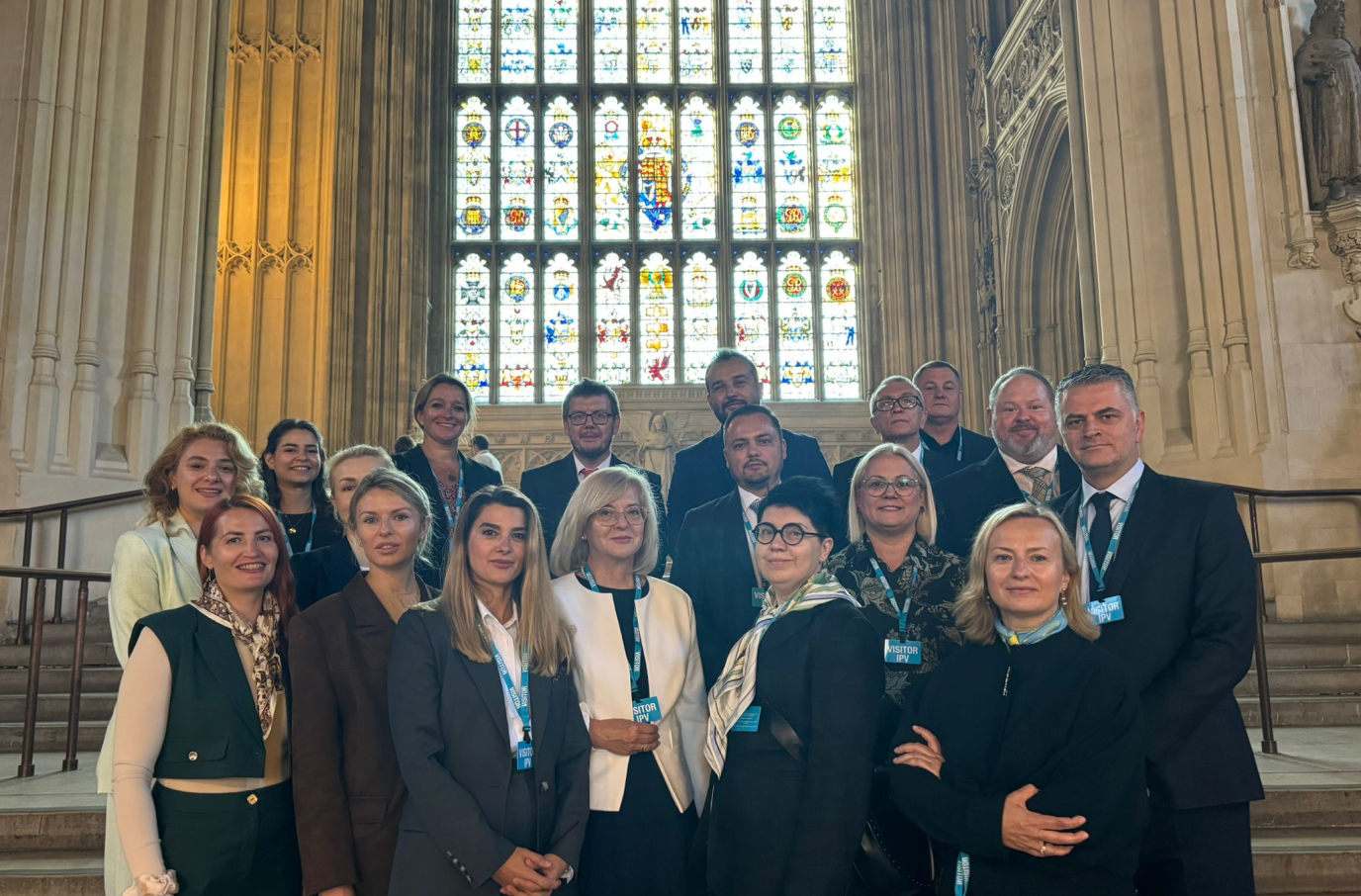
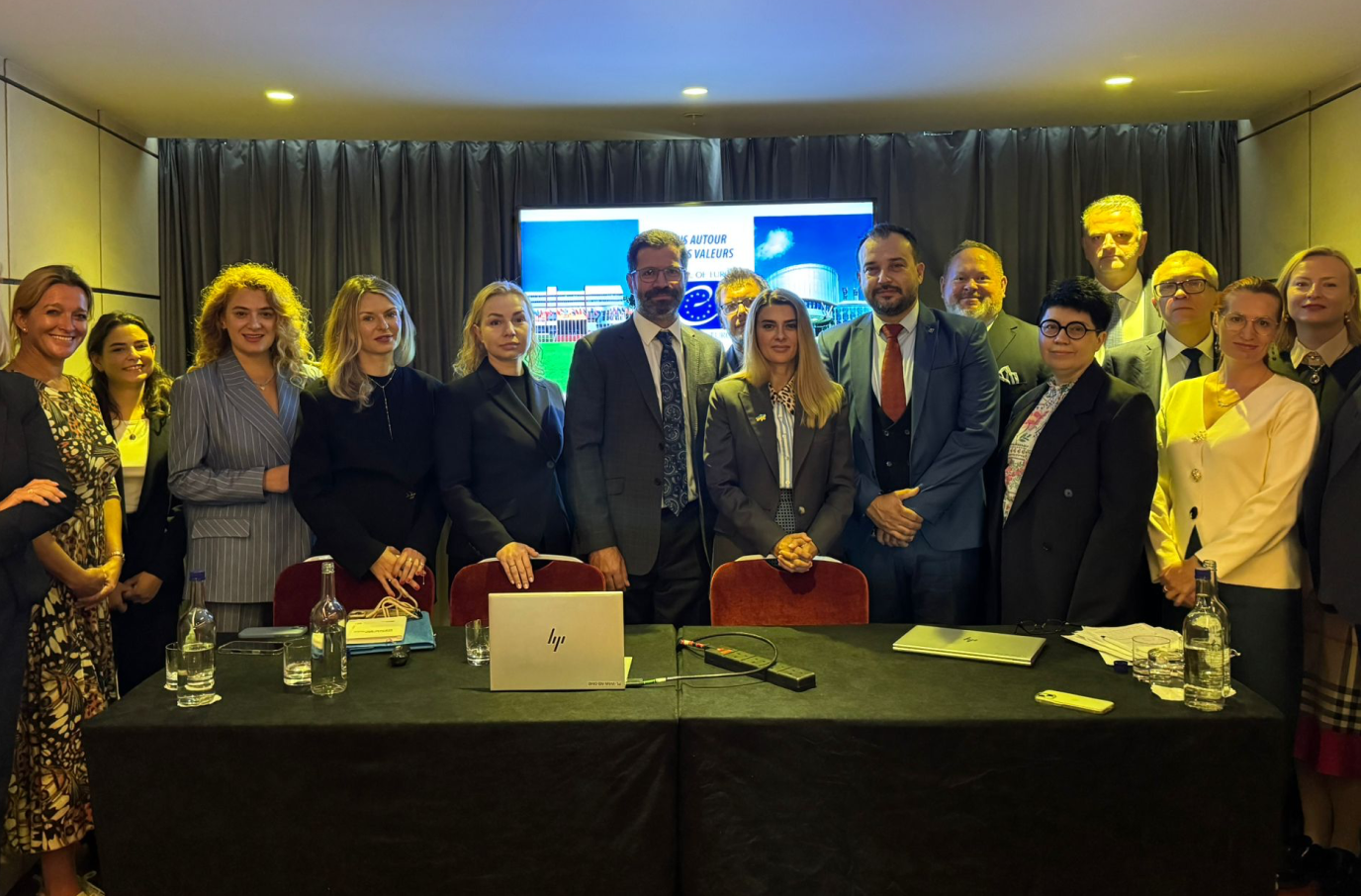
For the Ukrainian delegation, the key focus was parliamentary ethics and the introduction of a corresponding Code in Ukraine, a draft of which was submitted to the Verkhovna Rada at the end of 2022. At present, the Rules of Procedure of the Verkhovna Rada of Ukraine regulate only breaches of conduct in the chamber, exclusively during plenary meetings, and only in cases of insulting another Member of Parliament or a parliamentary faction or group. The existing mechanisms are insufficient for the Ukrainian Parliament to respond in a substantive way and regulate the unethical behaviour of MPs. At the same time, every violation of ethical standards by them undermines trust in Parliament as an institution and damages Ukraine’s reputation abroad.
That is why the Agency for Legislative Initiatives consistently advocates for the adoption of a Code of Conduct for Parliamentarians, for the adoption of Draft Law No. 8327, the purpose of which is to modernise the existing rules of parliamentary ethics and to create an effective system for their implementation.
The draft Code extends ethical standards beyond the chamber and provides for the establishment of a dedicated Ethics Committee, bringing the Ukrainian Parliament closer to OECD/GRECO norms and the practice of the UK Parliament. However, the draft law on the Code of Ethics has already been awaiting consideration in the Verkhovna Rada for two years: at present, there is simply not enough political will for its adoption. Achieving consensus on this issue, as well as the broader societal importance of introducing ethical restrictions, is not only one of the priority tasks for the Verkhovna Rada of Ukraine, but also an element of strengthening political culture — even in wartime.
Read more on why the Ukrainian Parliament needs a Code of Ethics in the ALI article.