
Preparation of the analytical materials is a part of a project implemented by the NGO Agency of Legislative Initiatives with the support of USAID RADA Program: Responsible Accountable Democratic Assembly, implemented by East Europe Foundation.
Presentation of the paper “Problem of Creating Parliamentary Service. Principles of Reform, Foundation of Functioning, Guarantees of Activity”
The event involved 10 procedural discussions aimed at promoting the implementation of parliamentary reform.
The discussion covered the following issues:
- Analysis of current practices and international experience in regulating the parliamentary service.
- The problem of creating a parliamentary service. Principles of reform, foundation of functioning, guarantees of activity.
- Legislation on parliamentary service: the preferred format:
- a separate law;
- a section of the law on civil service.

Presenting the paper, Tetyana Chernukha, Program Coordinator of the Agency for Legislative Initiatives, drew attention to the principles of reforming the parliamentary service, including reinforcement of the institutional autonomy of the Secretariat of the Verkhovna Rada of Ukraine; development of a staffing strategy of the Secretariat; codification of internal parliamentary policies; and drafting of the law “On Regulatory Legal Acts”.
Outlining the functions of the parliamentary service of Ukraine and its role in decision-making, Ms. Chernukha noted that the VRU Secretariat carried out organizational, expert and analytical, financial and technical support of the work of the Verkhovna Rada of Ukraine; prepared draft decisions important in planning the work of the VRU (i.e. estimates, plans of legislative work, draft agenda, draft assessment of bills for the main committees, draft opinions of the Scientific and Expert Department and Legal Department, and registration of draft laws).
Ms. Chernukha emphasized that based on the results of the survey of Secretariat employees (anonymous poll of the expert department and committee secretariats), 100% of respondents indicated that their political views did not affect their work in the VRU). However, 40 % of respondents noted that they had witnessed political pressure on their colleagues.

According to Ms. Chernukha, the possible ways of reforming the parliamentary service include designing an effective mechanism that would enable the Main Scientific and Expert Department and the Main Legal Department to suspend inadequate bills; development and introduction of a mechanism of protection against political pressure on employees of the relevant departments; as well as creating an anonymous online platform for employees to complain about political pressure on themselves or their colleagues. Each complaint should be dealt with and investigated.
Having analyzed the current personnel policy of the VRU Secretariat, Ms. Chernukha proposed a number of ways to improve the work of the parliamentary service, including elaboration of clear job descriptions; standardization of the form and establishment of clear-cut requirements for the expert opinions and legal reviews prepared by the Secretariat, the relevant job descriptions must contain references to them; classification of professional positions; appropriate training of the members of the competition commissions; elaboration of test tasks, which should vary depending on the job description and the grade level of the job. The selection of the VRU Secretariat employees and their further work may greatly benefit from the following: arrangement of selection planning so that specific requirements should be checked at each stage of the selection; reducing the scope of subjective assessments of commission members by introducing answer-keys to situational tasks; improving data collection and reporting on human resources in the civil service with a view to effectively supporting HR planning, HR management activities and monitoring can also significantly improve the process of selecting the staff of the Verkhovna Rada staff and their further work.

As of today, 37 % of the polled representatives of the Verkhovna Rada Secretariat state that they do not think that the regulations and procedures of the organization of the work of the Verkhovna Rada of Ukraine are clear and understandable. 52 % of the representatives of the Verkhovna Rada Secretariat emphasize that they do not consider the legislative process in the VRU to be of high quality and effective (at the same time, 48 % consider it to be sufficiently effective).
According to Ms. Chernukha, the measures aimed at improving the legal framework for the work of the VRU Secretariat include consolidation of the legal and regulatory framework for the documents regulating the work of the VRU Secretariat into a single set of internal rules, including those on the implementation of personnel policy (Roadmap on Internal Reform and Capacity-Building for the Verkhovna Rada of Ukraine); as well as adoption of a law on regulatory legal acts that could facilitate the regulation of the status of regulatory acts, as well as acts adopted by officials of the VRU Secretariat.

Presentation of the Policy Paper “Proposals for the Policy Concerning Supporting Documents in the Legislative Process”
The round table was organized within the framework of events aimed to support parliamentary reform by the USAID RADA Program in cooperation with the Agency for Legislative Initiatives.
The discussion focused on the following issues:
- Support documents: types and requirements for drafting.
- Role of support documents in the registration of bills.
- Explanatory note to the bill as a gist of the concept of the bill.
- Financial feasibility study: its role, significance, specific features of preparation.
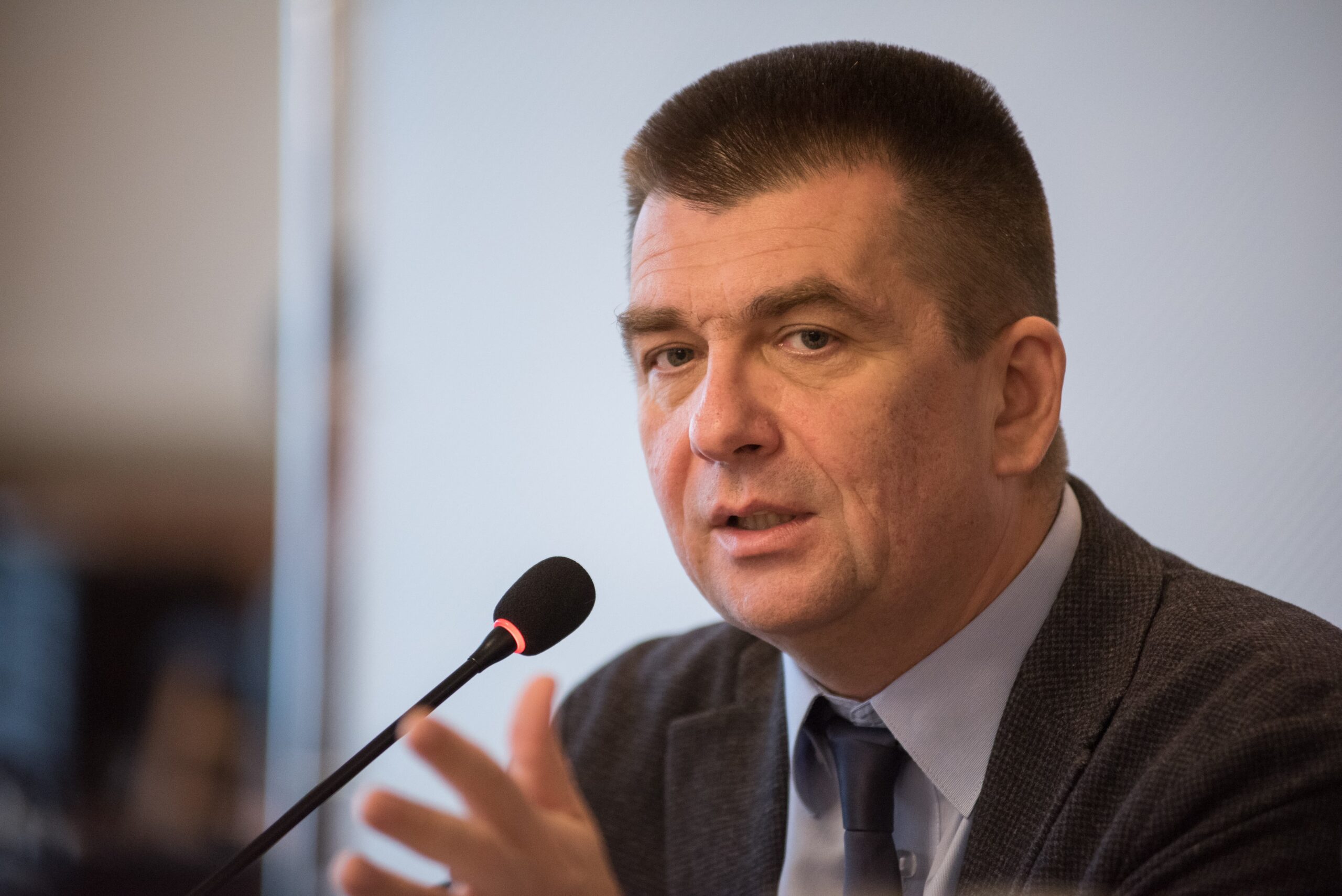
Ihor Kohut, USAID RADA CoP, made an introductory speech, encouraging all participants of the roundtable to a free exchange of views. Mr. Kohut observed:
“When it comes to parliamentary reform, there are many different components, but for the public, for citizens, it is important to understand that without a well-established, conforming to the rules of procedure, and maximally open legislative process that includes the full cycle of policies, monitoring, and assessment of these bills, without proper parliamentary oversight, we are doomed to flawed legislation for many years to come”

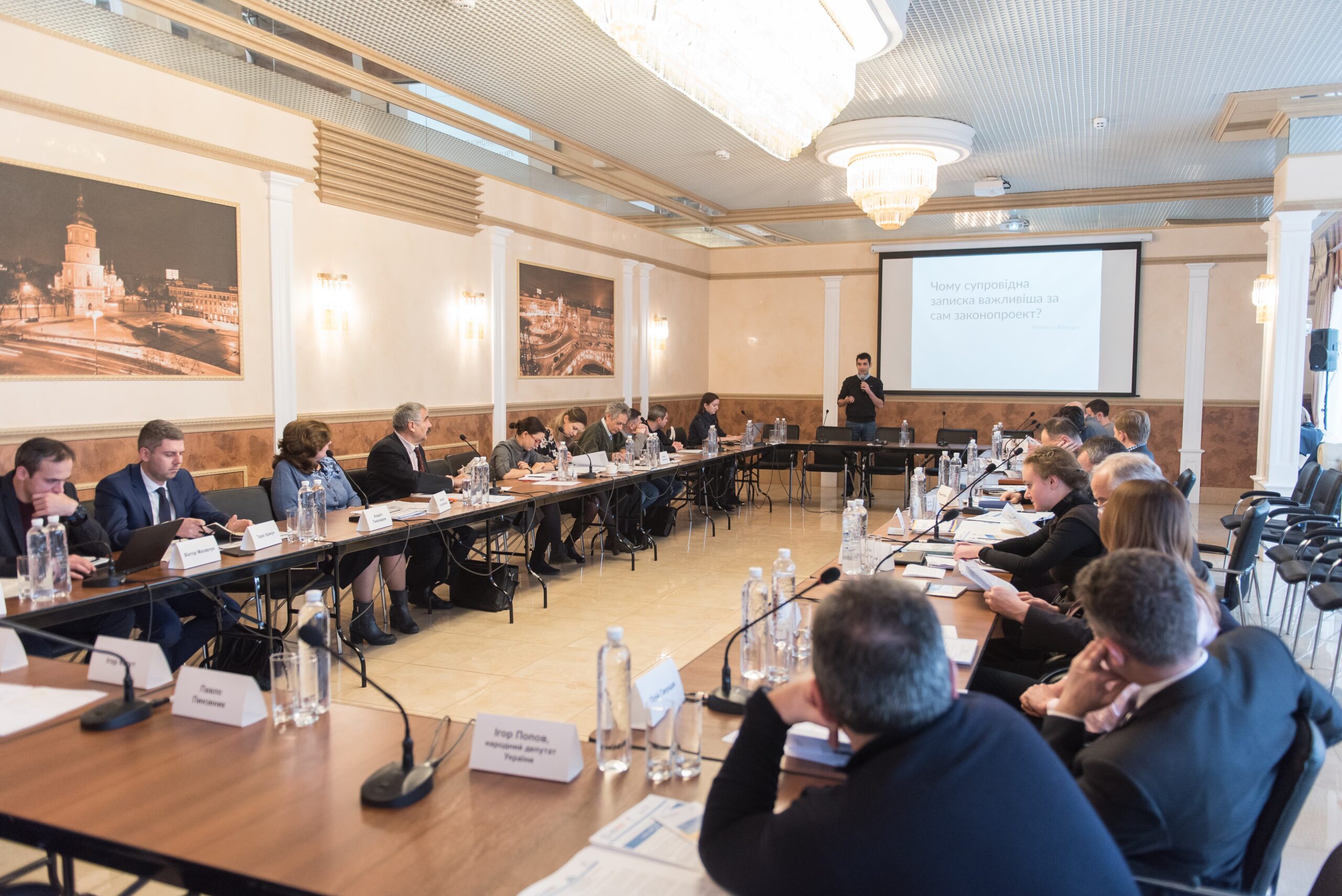
Presenting the Policy Paper “Proposals for the Policy Concerning Supporting Documents in the Legislative Process”, Mykhailo Koltsov, expert of the Agency for Legislative Initiatives, emphasized that the problem of “legislative spam” affected, first and foremost, MPs themselves and the Secretariat of the Verkhovna Rada of Ukraine. The load on the latter is particularly tough since its work is strictly regulated and there are no additional resources to solve the problem by increasing the staff or by amending regulations.
In the current situation, the most suitable of the several possible solutions to the problem is the one involving improvement of the mechanism of drafting supporting documents, in particular, the cover note. At the moment, it is but a formality and has little impact on the process of the procedural passage of the bill or on the evaluation of the document by various groups of stakeholders. Increase in the number of supporting documents due to additional opinion paper does not improve the situation either; it only worsens the load on the system.
But if we change the role of the cover note, formalize its structure, and introduce checklists in the practice of the Secretariat’s work, it can both improve the situation with a large number of bills and optimize the work of the departments.
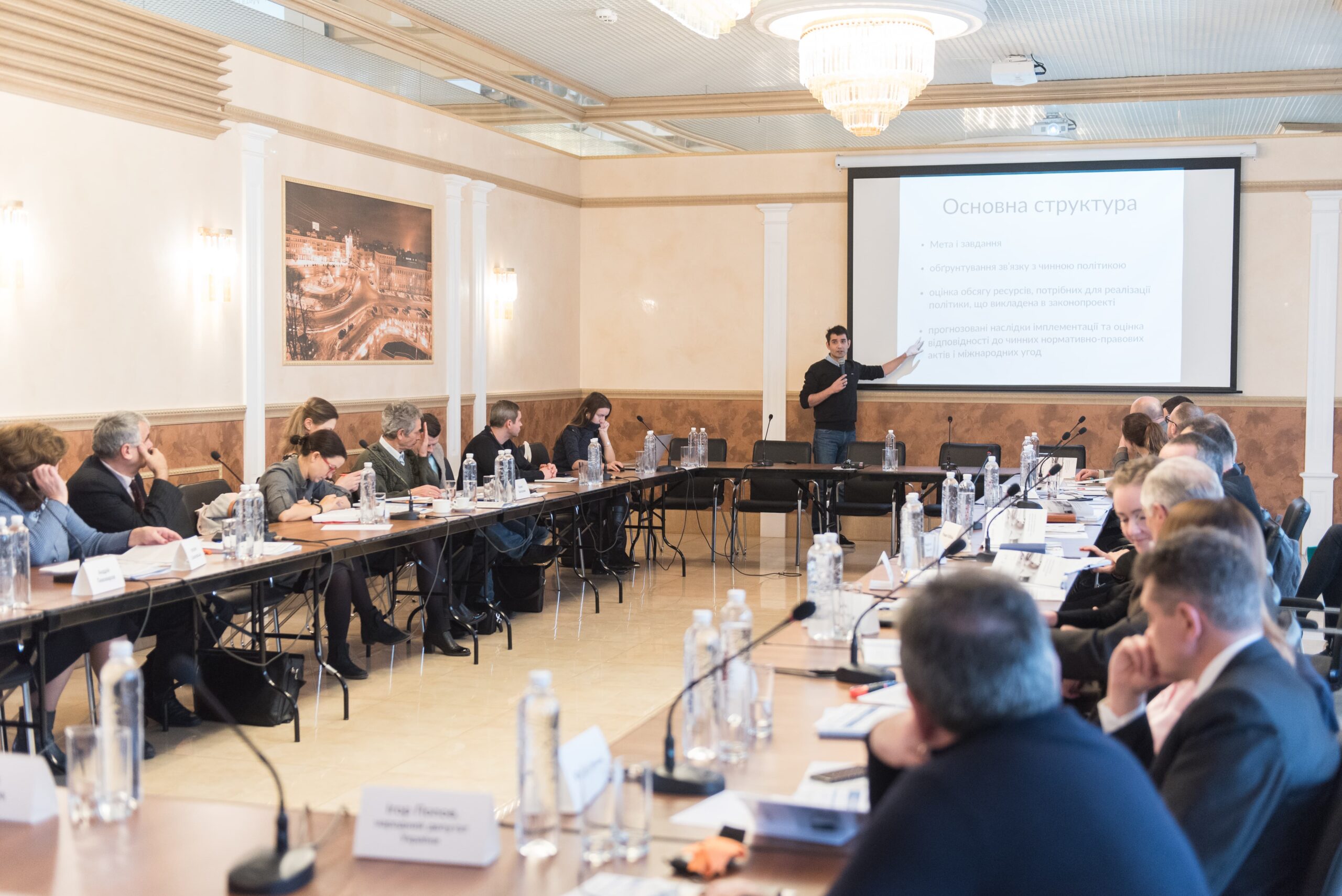
The cover note is not intended for lawyers. It is intended for the stakeholders – MPs, civic leaders, and experts – who are not lawyers, and who need an explanation of the practical consequences of enactment of a law.
The main changes in the structure of the cover note stem from its role as a document aimed to clarify the goals and objectives of the draft law. It is supposed to contain: the explanation of its connection with the current policy, estimation of the number of resources required to implement the policy envisaged by the draft law, expected effects of the implementation and assessment of compliance with the provisions of the Constitution of Ukraine, current regulations and international agreements. To implement this suggestion, it is only necessary to make changes to the methodological recommendations for the legislative mechanism in order to spell out the role and structure of the explanatory note. The oversight of compliance with these requirements can be performed via checklists since they make it possible to check documents based on a single structure and can be applied by employees with different levels of qualification.
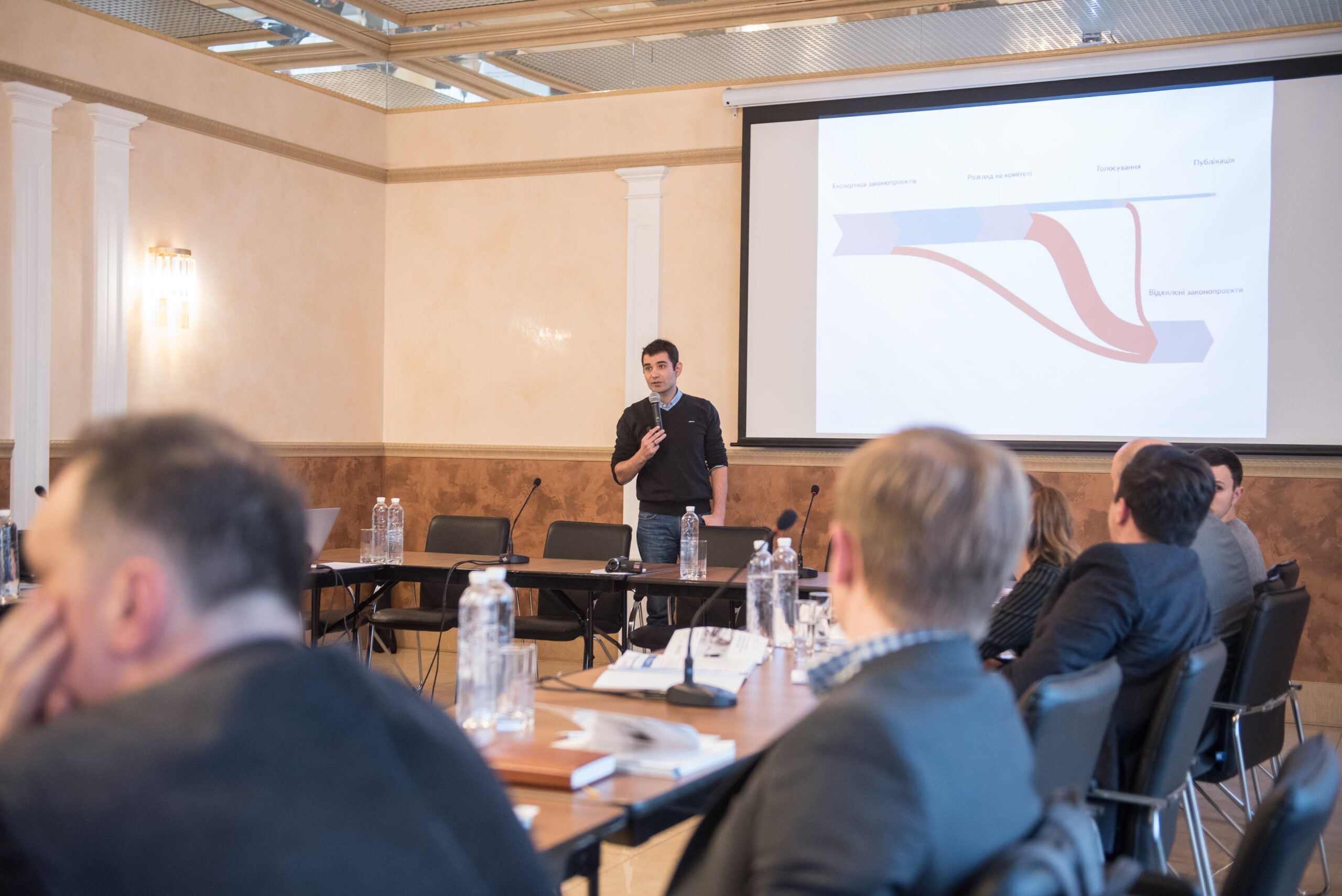
It is expected that by focusing on the structure and new requirements when preparing the cover note legislative initiative entities will be able to clarify the problems the bill is supposed to resolve, the ways of tackling them, and the consequences of its enforcement. Consequently, the content of the cover note may be the subject of discussion both during the first and second readings, as well as in communication with various groups of stakeholders. This, without a doubt, will help increase confidence in both the legislative process and laws themselves.
Preparation of the analytical materials is a part of a project implemented by the NGO Agency of Legislative Initiatives with the support of USAID RADA Program: Responsible Accountable Democratic Assembly, implemented by East Europe Foundation.
Presentation of the Policy Paper on “Proposals Concerning Policy on Conflict of Interests of MPs of Ukraine”
On November 15, 2017, the Ukrainian Crisis Media Center hosted a presentation the policy paper on “Proposals Concerning Policy on Conflict of Interests of MPs of Ukraine”.
The event was organized by the Agency for Legislative Initiatives within the framework of the USAID RADA Program: Responsible, Accountable, Democratic Assembly implemented by the East Europe Foundation.
Speakers:
- Svitlana Matviyenko, Chairwoman of the Board of the Agency for Legislative Initiatives;
- Serhiy Leshchenko, MP of Ukraine, Chairman of the Subcommittee on International Cooperation and Implementation of the Anti-Corruption Legislation of the Verkhovna Rada Committee on the Corruption Prevention and Counteraction;
- Ulyana Poltavets, Program Director of the Agency for Legislative Initiatives;
- Yaroslav Yurchyshyn, Executive Director of Transparency International Ukraine;
- Oleksandr Lemenov, Senior Expert, RPR Anticorruption Group.

The document focuses on the phenomenon of conflict of interest in the Ukrainian parliament and suggests possible ways to manage conflicts of interest and develop relevant policies. Based on the conducted analysis, it was found that 9% of MPs display signs indicative of a conflict of interest. However, due to the incoherence of legislation, lack of a comprehensible policy concerning conflicts of interest, insufficiency of penalties and inertia of controlling bodies, neither existing conflicts can be resolved, nor new ones can be prevented. The nature of the parliamentary representative function implies the existence of certain conflicts of interest, therefore it is extremely important to prevent conflicts of interest and to ensure the inevitability of punishment for violating the existing rules and conflicts of interest measures through the use of a coherent conflict-of-interest policy.

“The issue of conflict of interests arose in the context of our cooperation with MPs of Ukraine when drafting a Code of Conduct for parliamentarians. This is an extremely important and topical issue for Ukraine and we have been working on it for many years with a number of international partners. Due to the proposed codification for MPs including the main provisions of the Law “On the Status of the People’s Deputy of Ukraine”, the Law “On the Rules of Procedure of the Verkhovna Rada of Ukraine” and the Constitution of Ukraine, we created the basis for every MP to understand what exactly is included in ethical codification, how it is regulated and how we can prevent corruption of the work of MPs. Because the MP’s work is a professional activity that must be regulated, just like the activity of a doctor or teacher”
Ms. Matviienko emphasized that this study was done as a Policy Paper, a standard format for documents prepared within the framework of the RADA Program. The paper offers proposals concerning policies, that is, it suggests specific solutions as to preventing MPs’ conflicts of interests based on the current legislation and proposals for the future in the field of regulation of parliamentary activity as such.

“The current situation in the Ukrainian parliament is the result of the lack of proper regulation of the issue of conflict of interest. Because when an MP is elected to parliament, there appears a customary and constant drive to use the position for self-enrichment through the use of opportunities given by the parliamentary seat. This is especially true for MPs who have permanent business connections with their either previous companies, or the ones they presently continue to manage having withdrawn from business pro forma, on paper only”
Mr. Leshchenko claims that he has become used to hearing MPs in the session hall blatantly discussing the most effective ways to attract budget funds to the area of their interests. Mr. Leshchenko believes that a Code of Conduct can help avoid corruption problems that keep arising. MPs who are involved in business cannot make decisions in the relevant area.
Mr. Leshchenko argues that this study shows how acute the problem is and how it is settled in different countries of the world. He hopes that after the adoption of the Code of Conduct the Ukrainian parliament will have fewer conflicts of interest. It is better to prevent them than to spend money to fight their consequences. The present study will contribute to the elimination of conflicts of interest.

“Parliament’s role in combating corruption is not limited to adopting anti-corruption laws. First of all, a democratic parliament must conform to its own standards of openness and transparency. Of course, the main obstacle to adhering to these principles is MPs’ conflicts of interests. The Ukrainian parliamentary practice abounds in examples when a representative of a particular industry is a member or the head of the specialized parliamentary committee. Despite the popularity of the term “cronyism”, the phenomenon of “a conflict of interest”, which essentially illustrates this term in the Ukrainian parliament, is not a priority on the agenda of parliamentary reform and corruption counteraction. However, MPs’ conflicts of interests are the prime source of corruption. MPs make extensive use of the impunity for existence and exploitation of private interests.
According to the analysis of the 2016 electronic declarations of 422 MPs of Ukraine of the 8th convocation, 31% have equity rights, and 25.6% are the final beneficiaries of legal entities. At the same time, the analysis revealed that 38 MPs have a conflict of interests, including two chairpersons of committees (Chairperson of the VRU Committee on Health Care and Chairperson of the VRU Committee on Transport). The record holders in terms of the number of members with conflicts of interests are the Committee on Agrarian Policy (20 MPs) and the Committee on Construction, Urban Development and Housing and Communal Services (7 MPs).
Some enterprises may belong to family members rather than MPs themselves, which anyway is contrary to the provisions of the Law of Ukraine “On Prevention of Corruption”: rights cannot be transferred to the benefit of family members. However, only 3 out of 131 MPs who have equity rights indicated that their company was put in trust for a management entity. However, neither the Committee on Rules of Procedure nor the NACP takes the necessary measures to eliminate existing conflicts of interest, not to mention avoiding them. MPs exploit their status and enjoy impunity by voting on issues of direct interest to them.
Given the above described, it is advisable to introduce a comprehensive conflict-of-interest policy. This policy will include a series of measures that will help to effectively manage conflicts of interest, as well as prevent them. To this end, according to the OECD recommendations, policies will be developed in following key areas: completeness of the definition of the concept of conflict of interest in legislation, transparency, openness and accountability, conflict of interest management, raising awareness concerning conflicts of interest, enforcement and monitoring of enforcement of the current regulations”
According to the analysis of the 2016 electronic declarations of 422 MPs of Ukraine of the 8th convocation, 31% have equity rights, and 25.6% are the final beneficiaries of legal entities. At the same time, the analysis revealed that 38 MPs have a conflict of interests, including two chairpersons of committees (Chairperson of the VRU Committee on Health Care and Chairperson of the VRU Committee on Transport). The record holders in terms of the number of members with conflicts of interests are the Committee on Agrarian Policy (20 MPs) and the Committee on Construction, Urban Development and Housing and Communal Services (7 MPs).
Some enterprises may belong to family members rather than MPs themselves, which anyway is contrary to the provisions of the Law of Ukraine “On Prevention of Corruption”: rights cannot be transferred to the benefit of family members. However, only 3 out of 131 MPs who have equity rights indicated that their company was put in trust for a management entity. However, neither the Committee on Rules of Procedure nor the NACP takes the necessary measures to eliminate existing conflicts of interest, not to mention avoiding them. MPs exploit their status and enjoy impunity by voting on issues of direct interest to them.
Given the above described, it is advisable to introduce a comprehensive conflict-of-interest policy. This policy will include a series of measures that will help to effectively manage conflicts of interest, as well as prevent them. To this end, according to the OECD recommendations, policies will be developed in following key areas: completeness of the definition of the concept of conflict of interest in legislation, transparency, openness and accountability, conflict of interest management, raising awareness concerning conflicts of interest, enforcement and monitoring of enforcement of the current regulations”

Yaroslav Yurchyshyn, Executive Director of Transparency International Ukraine, emphasized the importance of the study that draws attention to the permanent violations of conflict-of-interest principles, focusing on the precedence of private interests over public ones in the actions of some politicians. Mr. Yurchyshyn argues that Ukraine is gradually moving towards solving the conflict-of-interests issue. The importance of this problem lies in the fact that combating the effects of corruption is rather complicated since corruption schemes remain in place, they can easily be resuscitated and re-channeled. It is more effective to prevent such situations by setting rules that inhibit corruption. Also, Mr. Yurchyshyn emphasized that in the realities of Ukraine the Code of Conduct would only be effective if major penalties were imposed for violations.

According to Oleksandr Lemenov, Senior Expert, RPR Anticorruption Group, despite the anti-corruption regulations integrated into Ukrainian legislation since 2014, neither the specialized anti-corruption institutions nor MPs can settle this problem in their activity. Mr. Lemenov drew attention to the fact that very often senior officials did not even understand the very essence of the principle of conflict of interest. That is why it is extremely important that MPs should study the paper in detail.

Preparation of the analytical materials is a part of a project implemented by the NGO Agency of Legislative Initiatives with the support of USAID RADA Program: Responsible Accountable Democratic Assembly, implemented by East Europe Foundation.
Press briefing “Presentation of the Policy Paper ‘Proposals Concerning Policy on Conflict of Interests of MPs of Ukraine’”
The paper was presented by MP Serhiy Leshchenko, Svitlana Matviienko, Chairwoman of the Board of the Agency for Legislative Initiatives, and Ulyana Poltavets, author of the study, Program Director of the Agency for Legislative Initiatives.

“This briefing organized in cooperation with the Agency for Legislative Initiatives is dedicated to the notion that lies at the heart of political corruption, this is especially true for parliament. This notion is a conflict of interests, that is, the phenomenon when people who have business in the area they regulate as officials are elected to parliament or to a public office. A typical example is Mr. Dubnevych, Chairman of the VRU Committee on Transport, who has business in the field of supply to Ukrzaliznytsia. That is, on the one hand, he chairs the Committee and, therefore, can influence Ukrzaliznytsia, the Ministry of Infrastructure and his deputies; and, on the other hand, he supplies equipment and is making a lot of money, which makes it possible for him to capitalize, design his political projects, engage in acts of corruption, and so on. I know that the Anti-Corruption Bureau has launched an inquiry into some of his affairs.
Why does it happen? Because we do not have any safeguards against conflicts of interest, although it is much easier to keep such people out of office than to investigate their actions, study their schemes, spend investigator resources, resources for travel to offshore zones and abroad to collect documentation, press charges, and spend years in court to punish these corruptors and confiscate stolen money in the future (possibly!). It is easier to prevent them from access to these positions. If you chair a committee, you should engage in something else in life. Dubnevych is a specialist in transport, he has a transport business, let him deal with issues of culture or spirituality, for example, or youth and sports. That is a sphere that has nothing to do with his personal business. This is precisely how European politicians are appointed to positions to avoid conflicts of interest. We are implementing the same initiative in parliament so that we could use a draft law, a Code of Conduct to bar politicians with conflicts of interest from holding public offices in the area of their private business interests”
Why does it happen? Because we do not have any safeguards against conflicts of interest, although it is much easier to keep such people out of office than to investigate their actions, study their schemes, spend investigator resources, resources for travel to offshore zones and abroad to collect documentation, press charges, and spend years in court to punish these corruptors and confiscate stolen money in the future (possibly!). It is easier to prevent them from access to these positions. If you chair a committee, you should engage in something else in life. Dubnevych is a specialist in transport, he has a transport business, let him deal with issues of culture or spirituality, for example, or youth and sports. That is a sphere that has nothing to do with his personal business. This is precisely how European politicians are appointed to positions to avoid conflicts of interest. We are implementing the same initiative in parliament so that we could use a draft law, a Code of Conduct to bar politicians with conflicts of interest from holding public offices in the area of their private business interests”

“We want to present our proposals for a policy on conflicts of interests of MPs of Ukraine. This is a continuation and analytical lead-in of the Agency for Legislative Initiatives to the work on adoption of the Code of Conduct in the Ukrainian Parliament. Settlement of conflicts of interest is one of the main cross-cutting issues that will make it possible to overcome corruption as well as provide an important safeguard. This analytical material with concrete proposals, which Ulyana Poltavets will elaborate on, is handed out to MPs, faction leaders and, in fact, the Chairman of the Verkhovna Rada of Ukraine. As an organization that cooperates with numerous international foundations and donors, such as USAID, the Kingdom of the Netherlands, OSCE/ODIHR, we urge to adopt the Code of Conduct in Parliament with a list of so-called safeguards, possibly even including penalties, since it is the only thing that will help Ukraine get out of this corruption pit mentioned previously by Mr. Leshchenko”

“Parliament’s role in combating corruption is not limited to adopting anti-corruption laws. First of all, a democratic parliament must conform to its own standards of openness and transparency. Of course, the main obstacle to adhering to these principles is MPs’ conflicts of interests. The Ukrainian parliamentary practice abounds in examples when a representative of a particular industry is a member or the head of the specialized parliamentary committee. According to the analysis of the 2016 electronic declarations of 422 MPs of Ukraine of the 8th convocation, 131 MPs (31%) have equity rights, and 108 MPs (25.6%) are the final beneficiaries of legal entities. At the same time, the analysis revealed that 38 MPs have a conflict of interests, including two chairpersons of committees (Chairperson of the VRU Committee on Health Care and Chairperson of the VRU Committee on Transport). The record holders in terms of the number of members with conflicts of interests are the Committee on Agrarian Policy (20 MPs) and the Committee on Construction, Urban Development and Housing and Communal Services (7 MPs). Some enterprises may belong to family members rather than MPs themselves, which anyway is contrary to the provisions of the Law of Ukraine “On Prevention of Corruption”: rights cannot be transferred to the benefit of family members.
Given the above, it is advisable to introduce a comprehensive conflict-of-interest policy. In particular, it is proposed to clarify the provisions regarding the inadmissibility of MPs’ business activity and availability of equity rights, by aligning the Commercial Code and the Law of Ukraine “On Prevention of Corruption”. Another extremely important element, according to Ms. Matviienko, is the adoption of the Code of Conduct, which would take into account MPs’ opinions and best international practices. A separate element of the legislative regulation of conflicts of interest is the adoption of a law on lobbying. The NAPC as the main tool for managing conflicts of interest should begin to operate independently and impartially.
This study attests to the need to include the issue of conflicts of interest in the political agenda. We hope that MPs, and in particular the Chairman of the Verkhovna Rada, as well as the Committee on Rules of Procedure, will take this into account and, in cooperation with the NAPC, will manage to implement an effective comprehensive policy on conflict of interests”
Given the above, it is advisable to introduce a comprehensive conflict-of-interest policy. In particular, it is proposed to clarify the provisions regarding the inadmissibility of MPs’ business activity and availability of equity rights, by aligning the Commercial Code and the Law of Ukraine “On Prevention of Corruption”. Another extremely important element, according to Ms. Matviienko, is the adoption of the Code of Conduct, which would take into account MPs’ opinions and best international practices. A separate element of the legislative regulation of conflicts of interest is the adoption of a law on lobbying. The NAPC as the main tool for managing conflicts of interest should begin to operate independently and impartially.
This study attests to the need to include the issue of conflicts of interest in the political agenda. We hope that MPs, and in particular the Chairman of the Verkhovna Rada, as well as the Committee on Rules of Procedure, will take this into account and, in cooperation with the NAPC, will manage to implement an effective comprehensive policy on conflict of interests”

Preparation of the analytical materials is a part of a project implemented by the NGO Agency of Legislative Initiatives with the support of USAID RADA Program: Responsible Accountable Democratic Assembly, implemented by East Europe Foundation.
Proposals for the Policy Concerning Supporting Documents in the Legislative Process (Policy Paper)
Ukrainian MPs and the Apparatus of the Verkhovna Rada suffer from the «legislative spam». The best way to solve the problem is to improve the mechanism of preparing accompanying documents, in particular explanatory memorandum. For the moment it is a formal requirement which influences neither the procedure of passing a bill nor stakeholders’ opinions. But if we change the role of explanatory memorandum, formalize its structure and introduce check lists into the Apparatus practices, it can remedy the situation regarding a huge number of bills. In addition, it can help to streamline the workflow of departments. In order to implement this option, it is needed to incorporate changes to the guidelines for legislation, in which it is necessary to define the role and structure of explanatory memorandum. Whether an explanatory memorandum meets requirements, legislators can check with the help of check list. Such method allows for examining the document according to the only structure, and it can be applied by employees with different levels of training.

Preparation of the analytical materials is a part of a project implemented by the NGO Agency of Legislative Initiatives with the support of USAID RADA Program: Responsible Accountable Democratic Assembly, implemented by East Europe Foundation.
Specifics of civil service in the verkhovna rada of Ukraine

The issue focuses on the following questions: Does the Secretariat of the Verkhovna Rada meet the legislative body requirements for professional operational support of its activities? Should the Government as the executive branch determine the conditions for labor remuneration of parliamentary officials? Is the executive support service and other types of service sufficiently separated within the structure of the parliamentary service of the Verkhovna Rada? (for instance, there is an opinion that the secretariats of factions should also be included in the executive support service); Does the legislature have sufficient resources to recruit employees who meet professional requirements? Is the management of the Secretariat and the management of its structural units protected from political pressure? How is the behavior of parliamentary officials regulated (specifically, the issue of parliamentary officials’ integrity)?
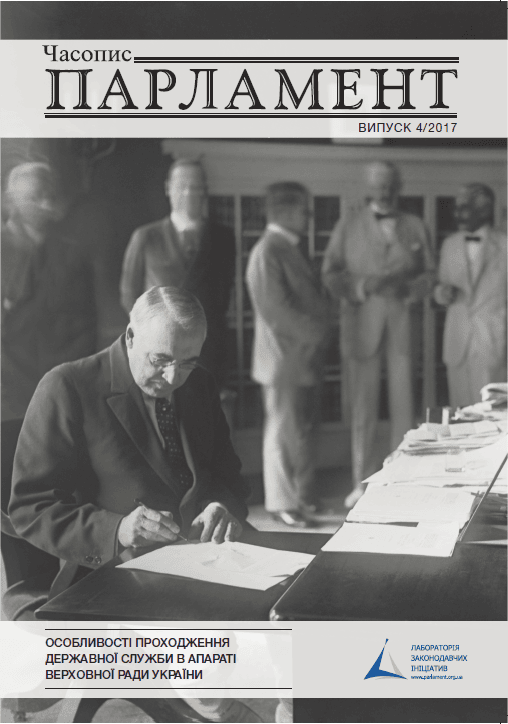
The preparation and presentation of Parliament Journal is part of the project embodied by the Agency for Legislative Initiatives, supported by the USAID Rada Program: Responsible Accountable Democratic Assembly, implemented by the East Europe Foundation.
The role and the functions of the parliamentary committees and factions
Implementation of Government’s program requires the adoption of bills drafted by the Government. The cooperation between Parliament and Government regarding the adoption of laws is one of the main issues. Such communication is mostly carried out in parliamentary committees due to the special role of committees in the modern legislative process. The document is devoted to the study of international practices in relation to the number of committees and ministries, as well as a brief overview of the forms of interaction between them. In addition, a summary of the varieties of parliamentary committees is collected.
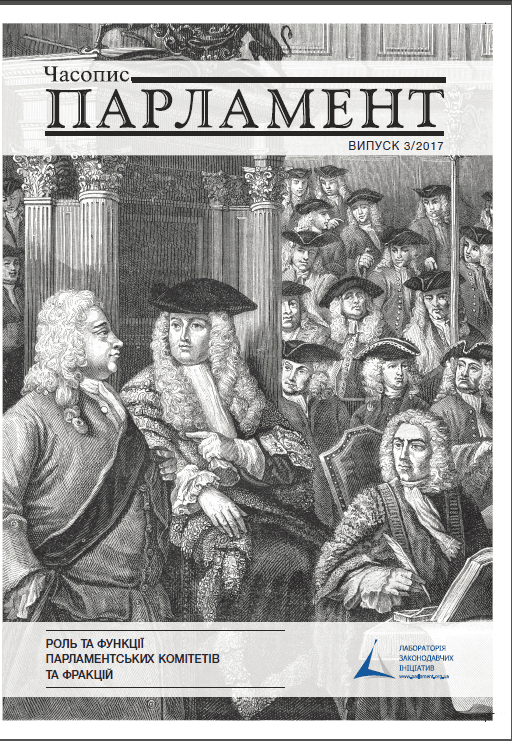
The preparation and presentation of Parliament Journal is part of the project embodied by the Agency for Legislative Initiatives, supported by the USAID Rada Program: Responsible Accountable Democratic Assembly, implemented by the East Europe Foundation.
The Concept of the ‘End- to-End’ Legislative Process (Policy Paper)
Analysis of laws registered and adopted during the 4th and 5th sessions shows that during this period 1,506 draft laws were registered, of which the total of 187 (12%) were passed. The Parliament remains hostage of the “legislative tsunami” of parliamentary initiatives. The President continues being the most effective subject of legislative initiative (29 of the 30 registered initiatives adopted). While the governmental efficiency is 25% (63 of 252 registered drafts approved). At the same time, 50% of all approved draft laws are those of MPs.
Moreover, the ease with which MPs of Ukraine can enter draft laws, regular violations of parliamentary procedures, lack of an established practice of long-term planning or streamlined communication among actors of the legislative branch condition the general chaotic nature of policymaking. Initiating completely different – often inconsistent among themselves or with the government’s program – legislative initiatives a priori cannot ensure stable and gradual development of Ukraine in any certain direction.
Thus, development of an effective system for policy formulation, coordination, approval, evaluation, and revision remains an extremely important challenge both for political leadership, and for the Ukrainian society in general.
The proposed document contains an analysis of current practices, a review of international experience, and proposals for the legislative process reform concept “From End to End” with an emphasis on strengthening coordination among subjects of legislative initiative. This is what is discussed in the first recommendation of the Roadmap on the Internal Reform and Enhancement of Institutional Capacity of the Verkhovna Rada of Ukraine, prepared by the European Parliament need assessment mission chaired by Pat Cox.

Preparation of the analytical materials is a part of a project implemented by the NGO Agency of Legislative Initiatives with the support of USAID RADA Program: Responsible Accountable Democratic Assembly, implemented by East Europe Foundation.
Proposals to Ensure Gender Equality in the Ukrainian Parliament (Policy Paper)
Implementation of the policy of equal rights and opportunities for men and women always serves as an indicator of ethics, transparency, and readiness to democratic transformations, and the Ukrainian parliament takes important steps in this direction as is required by the international standards and the time.
The 8th Verkhovna Rada is different from the previous convocations not only by the biggest number of women among its members over the entire time of the Parliament’s existence, but also by the active promotion of “gender interests” in terms of the public policy making. And it is not by chance that the Verkhovna Rada gender sensitivity is on the agenda, as it is one of the main components of the parliamentary reform in accordance with the Pat Cox recommendations and the Jean Monnet Dialogues.
The gender sensitive parliament can be defined as an institution that meets the needs and interests of both men and women in its structure, operations, methods, and work generally. The aim of the gender sensitive parliament is to overcome the obstacles faced by women on the way to the full-fledged participation in politics, as well as to demonstrate a positive example and to define the model of opportunities for the society in general.
Analysis of the provisions governing the structure and methods of the parliamentary work is based on the proposals to amend the Verkhovna Rada Rules of Procedure in order to introduce the gender-based analysis of draft laws, instruments to counteract sexism and discrimination in the behaviour of the members of parliament, as well as to ensure the balanced representation of women and men in the Ukrainian parliament.

The preparation and presentation of Policy Proposals is part of the project embodied by the Agency for Legislative Initiatives, supported by the USAID Rada Program: Responsible Accountable Democratic Assembly, implemented by the East Europe Foundation.
International and Ukrainian experience of parliamentary internship programs
The work is dedicated to the topic of functioning and organization of internship programs in the Parliaments of the world. 20 countries with different levels of political and economic development and the European Parliament were researched. All the programs have in common the target group: mainly young people under 30, university graduates and young professionals. The analysis of internship programs has shown that the main goals of their functioning are creation of career opportunities for talented youth and formation of the human resources for the apparatus of parliaments and other state authorities. Internship programs also serve as a factor in enhancing the prestige and attractiveness of the civil service for young people.
Another section is dedicated to the internship programs that are functioning in the Verkhovna Rada of Ukraine. The research mentions unofficial programs (commercial and free) and the official Parliamentary Internship Program, which works since 1995.
The analysis and conclusions conducted in the research can be used for implementation of the best international practices for the development of Parliamentary Internship Program in the Verkhovna Rada.
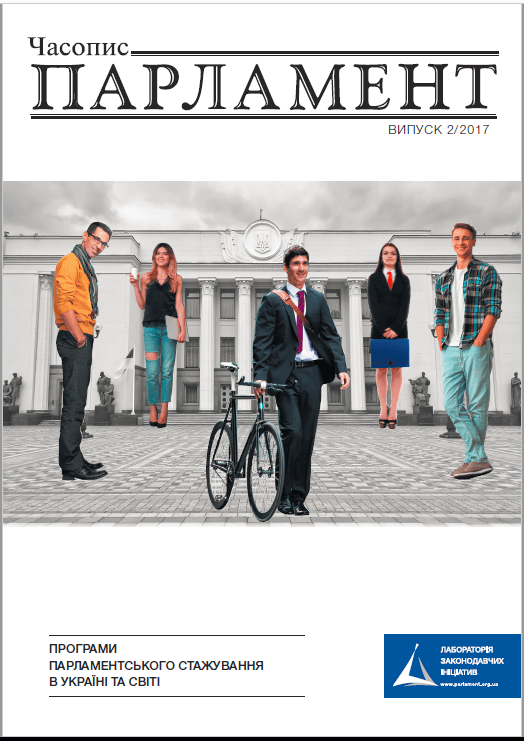
The preparation and presentation of Parliament Journal is part of the project embodied by the Agency for Legislative Initiatives, supported by the USAID Rada Program: Responsible Accountable Democratic Assembly, implemented by the East Europe Foundation.