
I am waiting for the moment when all women will pass the appropriate certification to demonstrate their skills. By the results, they will receive those positions that will be precisely within their power. I’m sure there will be women who will be able to command units.
What Do Women Say About Gender Equality in the Security and Defense Sector?
March 8 is not a holiday of beauty and flowers. This is a day reminiscent of women’s long struggle for their rights. The Constitution of Ukraine guarantees all citizens equal constitutional rights and freedoms and equality before the law. However, gender equality is still a formal concept, enshrined in documents but not enforced in real life.
Especially gender balance is still lacking in the security and defense sector, where women are rarely able to hold leadership positions and don’t have the trust and respect of male colleagues.
The Agency for Legislative Initiatives is implementing the Parliamentary Accountability for the Security Sector in Ukraine project in partnership with the Canadian Parliamentary Centre, the Canadian Ministry of International Affairs, and the Peace and Stabilization Operations Program (PSOPs). One of the project’s essential components is researching the gender aspect in the security and defense sector.
We decided to delve deeper into the topic before International Women’s Day and ask parliamentarians, women in the armed forces volunteers about the problems of gender equality in the security and defense sector and how they can be solved.
The views expressed in this publication reflect the personal beliefs of the speakers and do not necessarily reflect the views of the Agency for Legislative Initiatives.

Ivanna Klympush-Tsintsadze, Member of Parliament of Ukraine, Chairwoman of the Verkhovna Rada Committee on Ukraine’s Integration into the EU
What is the impact of the presence of women in the Verkhovna Rada of Ukraine, particularly in your Committee, on the process of security sector reform?
When we talk about women’s representation in decision-making processes, we need to talk about human rights and justice. If to date we do not have equal representation of women and men in representative bodies (and I want to remind you that women make up almost 54% of the total population of Ukraine), then something is definitely “wrong.” Today, although the current Verkhovna Rada of Ukraine has the most significant representation of women MPs in the history of Ukraine, we still have a situation where of the 23 current Committees of the Verkhovna Rada of Ukraine, only three Committees are headed by women, in three more Committees, women hold the positions of first deputy chairwomen and are secretaries of Committees. Which means that representation of women in these positions is approximately 13% of the total number of posts.
But even women in leadership positions in the Verkhovna Rada may not always be able to influence decision-making. Their role is often nominal, and this needs to be changed.
To fully represent the interests of all groups of voters, both women, and men, it is necessary to guarantee the full participation of women MPs in parliament, including the opportunity to participate and hold senior positions in the Verkhovna Rada Committees, etc. It is also important to remember our international obligations. In particular, in the context of implementing the Sustainable Development Goals (Goal №5. Gender equality. Task 5.4. Ensure equal opportunities for representation at higher levels of decision-making in political and social life). In general, the always balanced representation of women and men at the decision-making level, including security and defense, means a better consideration of different groups of women and men’s interests and needs — accordingly more fair, effective and sustainable solutions.
Do you see progress on gender equality in your personal and professional life?
My family has a partnership from the very beginning, so I can realize myself professionally and develop. As for professional life, I see progress on the example of local elections. Many men were skeptical about quotas and whether there would be the required number of professional women. But finally, women have been able to compete effectively with men, and we must continue to provide women with this opportunity for self-realization and real influence over decisions.
What would you suggest to change to make the security and defense sector more gender-balanced?
The issue of gender equality in the security sector is complex, and it is essential to look at it that way. The point of equality is not only about numbers, statistics, and representation. It is also about skills and values, mechanisms, institutions, and, of course, legislative work.
Currently, there are about 57,000 women in the Ukrainian army. We must provide them with equal opportunities for promotion, equal pay, protection from sexual harassment.
And here we are inspired by the experience of NATO’s implementation of the “Women, Peace & Security” agenda. More than 90% of NATO countries have opened all military specialties and positions for women. For example, Norway did so back in 1985. The problems of harassment are spoken out loud, and precise mechanisms have been developed to combat gender-based violence in Norway since then.
Among the priority problems that need to be addressed are the following:
- the low representation of women in peace processes;
- cultural, value, infrastructural, and domestic barriers that prevent women from fully realizing themselves in the security and defense sector;
- the low representation of women in management positions in the security and defense sector;
- lack of effective systematic monitoring and control of the implementation of already approved documents;
- untimely adoption of legal documents aimed at ensuring gender equality in the security and defense sector (example – Annual National Program under the auspices of the NATO-Ukraine Commission for 2020, which was prepared in late 2019 but adopted in late May 2020) ;
- sexism and impunity for sexual harassment;
- lack of definition of sexual violence during the conflict;
- gender-blind programs for supporting veterans, IDPs, political prisoners, hostages, and prisoners of war which do not consider the specific needs and interests of women and men.
What is your message for girls and women on International Women’s Day?
Each year, the UN determines the theme of International Women’s Day. In 2021, it is “Women’s Leadership: Approaching an Equal Future in the World during a Pandemic.”
In Ukraine, nurses, doctors, social workers, postwomen, saleswomen, pharmacists, teachers – hundreds of thousands of women and girls overcome illness and circumstances every day and are already leaders of their lives.
I know that it can be difficult, and there is a need to make difficult decisions, that there may be many critics and “advisers” around, and not as many helpers as we would like. But I believe that we will succeed. Overcome the crisis, overcome restrictions and emerge victoriously. Each one in her field, in her way.
It is only necessary not to stop, study every day, improve, and set more ambitious goals, even if they seem unattainable to someone at the moment.
And it is essential to support each other. In our platform “Security. Women. Peace “we understand the value of such solidarity and networking. These faith and support give us the strength and inspiration to move forward.

Mariana Bezuhla, Member of Parliament of Ukraine, Member of the Verkhovna Rada Committee on National Security, Defense and Intelligence
What is the impact of the presence of women in the Verkhovna Rada of Ukraine, particularly in your Committee, on the process of security sector reform?
Numerous studies show that mixed groups are the most productive and balanced. Accordingly, the same applies to the parliament and our Committee. A particular focus, perception, uniqueness of experience, which differ in men and women, add value.
We focus on gender equality in the security and defense sector. In particular, a joint initiative was recently launched to correct certain inconsistencies in the legislation and to give women access to all positions and opportunities in the security sector. So that opportunities remained at the choice of the woman.
Do you see progress on gender equality in your personal and professional life?
Throughout my life, I did not experience any particular obstacles to work. However, there are additional challenges. I met with a biased perception from men, especially in 2014, when the mobilization took place, then while working in the Ministry of Defense, then in parliament. I am in charge of reforming the intelligence services of the Security Service of Ukraine, and this is a “secret caste” where there are no women in leadership roles. With one exception, the current Minister of Veterans Affairs. However, the exceptions only confirm the rule.
When we were preparing for the reform, I encountered bullying on Telegram channels from SSU officers. Most of the harassment was due to the emphasis on my gender and age. But we can work with it.
I do not believe that there are critical obstacles in our society, particularly in the security and defense sector, that need to be addressed. The main thing is gradual development.
What would you suggest to change to make the security and defense sector more gender-balanced?
Gender balance is needed everywhere. But it must be natural. I would also like more responsibility from the women themselves. Unfortunately, we often have situations in the security and defense sectors when the wife of the brigade commander holds a comfortable position that does not require particular activity. This kind of nepotism is common in the security sector. It forms prejudice and a particularly negative image of the woman. And those girls and women who have dreamed of being in military positions all their lives have additional obstacles because of that negative image.
In 2015, when I was mobilized, I met rejection of my active role from women. The responsibility for giving women more opportunities and rights in the security and defense sector lies with men, civil society organizations, and women themselves.
What is your message for women and girls on International Women’s Day?
Never give up!

Anna Gvozdyar, volunteer
What gender equality issues did you face while volunteering?
Personally, during the war, I mainly felt an increased level of care and desire to protect. The other side of the coin is the rejection of a woman who can be knowledgeable in military affairs. It is common, mainly in middle and senior command. It is more a tribute to the Soviet legacy that a girl cannot be competent in military affairs. Here everything is solved by time and examples of women who have achieved a high level of competence and real achievements during the war.
Is it the duty of everyone, regardless of gender, to defend their country?
Having experienced the events that began in 2014, we see that everyone has found a place in the “defense” of the Motherland. Some were engaged in medicine, some in providing, some in psychological support. Therefore, it is essential to be ready from school because it can help. For example, the bandaging skills I learned in medicine class in 10-11 grades helped me a lot.
In your opinion, how should the opportunities of women and girls in the defense sector be empowered? How can the situation in this non-gender balanced sector be changed?
I don’t think it’s necessary to force women into units, especially in combat or high-risk positions. The nominal presence of women in office solely for gender equality does not benefit the country’s defense capabilities. We have cases where women waive some of the Statute’s responsibilities, referring, for example, to “critical days” every week or something, thus taking advantage of ignorance and caution on the part of men.
The idea of equality in the army should open up equal conditions for selection. There should be no positions only for men or only for women. A selection must be of high quality. If a woman wants to be, for example, a sniper, she must be able to undergo full selection and training and perform all job responsibilities.
We have, for example, the experience of the Marines, when the girls, including Oleksandra Bezsmertna, overcame the obstacle course with everyone and received a “black beret” of Marines on equal terms with men.
What problems of women and girls in defense need to be solved?
It is necessary to provide separate regular barracks with facilities for women. The maternity leave of military personnel is also essential but this issue has not yet been resolved. If we are talking about equality in the army, these problems must be solved first.

Olga Benda, ATO veteran
What gender equality issues have you faced in the military?
As soon as I went to military service and studied in Starychi, I heard words from men: “Why did you come here? You have to cook borscht at home and take care of your husband and children”. The older generation of the military had prejudices that girls would be treated with concessions. But girls trained on an equal footing with everyone. We did everything we were told. We didn’t cry all the time, as the men expected. But that was in 2016. Then the attitude changed.
Is it the duty of everyone, regardless of gender, to defend their country?
Yes. Ukraine is our home, and we must defend it.
In your opinion, how should the opportunities of women and girls in the defense sector be empowered?
Women in the army are now treated much better. Previously, women held positions only as cooks, doctors, and liaison officers. Now the girls can be platoon commanders. In 2016, girls were very selectively admitted to military service because men did not want to take women to the anti-terrorist operation. When my training ended in 2016, and I had to be transferred to a permanent deployment for military service, I was not taken to one of the brigades because “the commander forbade taking girls”.
What problems of women and girls in defense need to be solved?
During the anti-terrorist operation, I began to work as a cook, then became the senior cook, and wanted to become the head of the cook’s department. But then this position was held by a guy who did not even know how to cook. He was a driver. I asked our commander if I could become the head of the cooks’ department. He answered: “Are you a guy? Can you drive a car? The head of the department should be a guy”. That’s how my ambitions were immediately “cut off.”
After the injury (which Olya received in 2017, after which her leg was amputated – ed.), I continued my military service at the military registration and enlistment office. I was a senior soldier. I had a great desire to study, get the rank of officer and continue to serve.
But it would be complicated for me to get to study with injuries because I have to take an exam on the level of physical training on an equal footing with everyone. I was told no one will take into account the lack of a leg. I wanted to connect my life with the army, but I was denied because of my disability. So I resigned.

Julia Hromova, servicewoman
What gender equality issues did you face during your military service?
I joined the army weighing 37 kg, but I never heard that I was a woman and “it’s none of my business”.
Is it the duty of everyone, regardless of gender, to defend their country?
Indeed, I believe that such questions should never arise at all. It doesn’t matter what gender you are, what kind of specialist you are.
In your opinion, how should the opportunities of women and girls in the defense sector be empowered? How can the situation in this non-gender balanced sector be changed?
Gender equality is not a position, not a title, not a gender. First of all, it is knowledge and skills.
Unfortunately, it happens that women usually (in the case of combat units) delegate their responsibilities to the platoon’s chief sergeants.
What problems of women and girls in defense need to be solved?
Women have long been able to hold various positions. It’s just that not all of them fully understand what gender equality is in the defense sector.
I would suggest changing the approach. You want to be a tank gunner – you go through 45 days of training, charge it by yourself, service the tank – and that’s all, you get a position. But will every woman be able to load a gun weighing 45 kg?
Currently, there is no problem for a woman to become a tank commander. There is a problem with physical and moral training. I want our personnel to be qualitatively selected, not because of beauty, but for understanding the responsibility you take on.
What to Do with “Button Pushing” in the Verkhovna Rada?
The Prosecutor General’s Office of Ukraine handed over the first notice of suspicion to the member of parliament for “button pushing”. This is the first attempt in Ukraine history to bring an MP to justice for impersonal voting.
“Button pushing” in the Verkhovna Rada since December 2019, when the law was passed, falls under criminal liability and is punishable by a fine of three to five thousand non-taxable minimum incomes (which is now about 51-85 thousand hryvnias).
Moreover, bringing a parliamentarian to justice may lead to the termination of his powers. According to Article 81 of the Constitution of Ukraine, a Member of Parliament’s powers are terminated prematurely, particularly in the case of “coming into force of a conviction against him”. That is, now, in the story with the first notice of suspicion of “button pusher”, the court is to decide.
The introduction of criminal liability for impersonal voting and suing a case in court – on the one hand, can show results, and on the other can be a mechanism for fighting opposition MPs and covering up “the loyal MPs”, which carries many risks for Ukrainian parliamentarism.
Besides, MPs have “button pushed” long before the first notice of suspicion from the Prosecutor General and can do it further. After all, their guilt still needs to be proved in court. And this is a rather long process. Besides, evidence is needed. And the recent story with videos that recorded “button-pusher” during the vote for Minister of Science and Education appointment proves – the evidence may “disappear”.

It is necessary to have a “Plan A” – a mechanism that will make impersonal voting impossible for MPs. At the beginning of 2021, the Verkhovna Rada began active talks on overcoming “button pushing”. Verkhovna Rada Speaker Dmytro Razumkov announced some changes that could help eradicate impersonal voting. In particular:
- Vacant seats reserved for MPs from the temporarily occupied territories will be disconnected from the Rada system;
- All cards of MPs will be tied to a specific place;
- Additional video cameras will be installed in the hall to record the voting;
- The possibility of changing the Rules of Procedure is considered so that the “button pushers” could be suspended for several weeks;
- It is planned to transfer the parliament to the Rada-4 system, but funds are needed for this.
Will these innovations help prevent “button pushing”? And is there another, easier way?
In the Agency for Legislative Initiatives, we talked about this with the head of the NGO “Electronic Democracy”, ex-adviser to the Chief of the Apparatus of the Verkhovna Rada of Ukraine, and the USPS Alumnus Volodymyr Flonts. During the VIII convocation of the Verkhovna Rada, the expert, and his team spent six months researching the problem of “button pushing” and testing possible solutions. We will talk about one of these options, which also has its drawbacks, but it can work already – without additional funds and time.
The root of the problem
“Button pushing” is not so much a matter of impersonal voting. Because in the Verkhovna Rada, an MP always votes for himself for the first time, no matter where he/she sits, no matter what card he/she votes with. The problem is repeated voting when the MP has time to press as many buttons as possible in 10 seconds while voting goes. It is from this that we must proceed.
The architecture of the Rada’s electronic voting system was built so that an MP could vote from anywhere in the session hall by simply inserting a card and pressing a button. There is currently no binding to a specific location.
Volodymyr Flonts says that it doesn’t matter where an MP voted from, if he did it once. Therefore, all allegations about cards are a shift of focus to another topic and not a solution to one-time or multiple voting. The issue of “button pushing” is exclusively about “once or many”. Not “by what card”, “from what place”, “in what way”, “under the cameras or not”.
Restriction of rights
The electronic system “Rada” does not determine the procedure and method of voting. It is an electronic tool for counting votes. If it differs in any way from the old-fashioned voting procedure by raising hands, then this instrument starts to limit the rights and opportunities of MPs.

Volodymyr Flonts says: “The proposed changes are cosmetic. They do not solve the problem but only create restrictions for MPs. Before, if the MP’s desk is temporarily out of order, the button is stuck, the MP could insert his card into the next desk and vote. The rights of MPs did not decrease”.
Now, if you attach each MP to a particular console, then there is a restriction of parliamentarians’ rights. MP, for example, will be able to apply to challenge the results of a vote because his button did not work, and he could not vote. Then there is a possibility that the results of the voting will be questioned.
The decision to disconnect some seats from the system and allow MPs to vote exclusively from their seats may prove ineffective. Instead, much more potential harm than good can be expected from it.
There is a way out
It is necessary to introduce such a voting mechanism, which would make it impossible to vote repeatedly.
The Rada-3 electronic voting system is established in the Ukrainian parliament. It counts how many and which buttons the MPs pressed to vote for a particular bill.
Now the voting is as follows: within 10 seconds, the MP must press one of the buttons on the electronic voting machine – “for”, “against” or “abstained”, after which the electronic system counts each press of the button. Thus, during these 10 seconds, one MP can run through the plenary hall pressing buttons – and all these votes will be counted.
A technical solution is needed that would prevent parliamentarians from voting many times. And this decision has already been tested in the current Rada-3 system. Its essence is to introduce a mechanism so that the system considers the vote only when the button is pressed at the end of voting. Thus, MPs will not be able to run because they will have to keep one hand on the button until the end of the vote.
And here – the problem of repeated voting is almost wholly solved without disconnecting cards, installation of cameras, and anything else.
The only question is, what to do with the second hand of the MP? After all, the most cunning parliamentarians will be able to press two buttons – their own and someone else’s – during the voting.
One possible solution is a touch button that responds to living matter.
According to Volodymyr Flonts, it is already placed in the electronic voting machines in Verkhovna Rada. But it is not turned on in the Verkhovna Rada.
The principle of voting using the touch and mechanical buttons is as follows: within 10 seconds, the MP must press the voting button with one hand and the other hand hold on the touch button. The buttons are placed on the electronic voting machine so that you can not press both with one hand.
Thus, both hands of the MP will be occupied. It is the end of the story with the possibility of multiple voting because there will be no physical opportunity to vote several times. It is proved by Kyiv City Council’s example, where since the introduction of the touch button (2015), “button pushers” have not been detected.
Rada-3 vs. Rada-4
There were several generations of electronic voting systems in the Verkhovna Rada. All of them are developed in Ukraine. The first Rada was introduced in 1990, the second – in 1993, and Rada-3 – in 2002. This system still functions in the Ukrainian parliament.
After the development of the third generation, scientists immediately began working on the next one. But this invention is not so new either, because, for example, the Kyiv City Council has been operating the Rada-4 system since 2015.
The head of the NGO “Electronic Democracy” notes that “Rada-3” and “Rada-4” differ fundamentally only in the size of the monitor. In the third one – black and white screen, small font, inconvenient to read. In the fourth one – a large and color screen. The developers wanted to make a touch screen additionally, but it is not provided in the current version of “Rada-4”.
But, even in the current Rada-3, which is installed in the parliament, there is the same touch button as in Rada-4!
Yes, when Rada-3 was made, it had only a mechanical voting button. In 2008, the Rada-3 installed in parliament was retrofitted with a touch button instead of changing the entire system. But this second button wasn’t simply turned on.
During the VIII convocation of the Verkhovna Rada, the two-button voting mechanism was tested. All the nuances have been corrected. There was a real chance to introduce a principle that would make “button pushing” impossible: when an MP has to hold the voting button with one hand and the touch button with the other hand within 10 seconds.
However, it was decided to introduce new rules not at the last session of the VIII convocation but for the new Verkhovna Rada. As a result, nothing has changed. On the day when a public test of the Rada-3 system with a touch button was scheduled, the Security Service of Ukraine (SSU) and State Bureau of Investigation (SBI) detectives entered the Verkhovna Rada and blocked the work of the parliament’s computer center. A new mechanism has not been introduced.
To make “button pushing” impossible, we need political will and one decision. It is not necessary to “invent a bicycle” with cameras and cards of MPs. But it seems to be much more complicated than promising and declaring a victorious fight against impersonal voting.
Online Project Launch Parliamentary Accountability for the Security Sector in Ukraine
This project aims to promote peace and stability in Ukraine by supporting the Verkhovna Rada of Ukraine (VRU) to play its central role in formulating, implementing, monitoring and reforming security policy.
The main stakeholders of the project took part in the event. In particular, the event was attended by representatives of the two parliamentary committees of the Verkhovna Rada, with which the Agency and the PArliamentary Centre will work closely during the project – members of the Security, Defense and Intelligence Committee and the Law Enforcement Committee – as well as other Ukrainian MPs, Canadian MPs, H.E. Ambassador of Canada to Ukraine and the H.E. Ambassador of Ukraine to Canada.
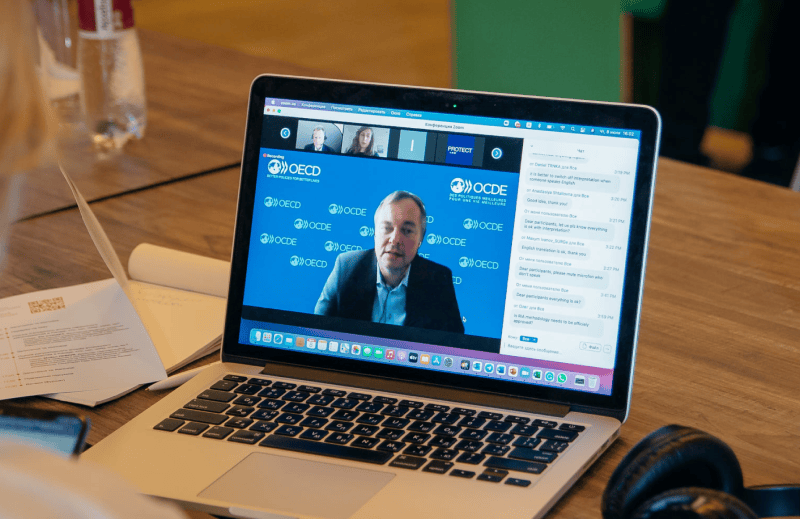
During the event, the participants expressed hope for productive cooperation between the Canadian and Ukrainian sides for the sake of achieving peace, security, and stability in Ukraine.
Dmytro Razumkov, Chairperson of The Verkhovna Rada of Ukraine, noted that issues of national security have become one of the key issues on the agenda of society and the state in Ukraine.
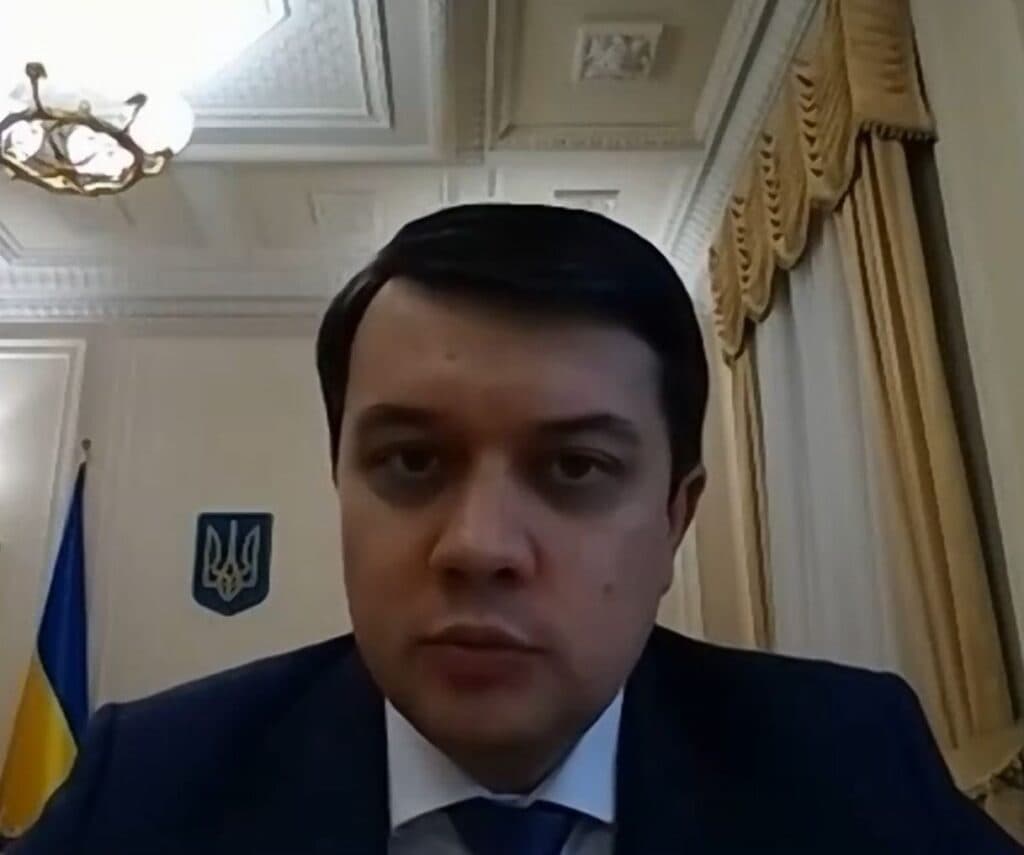
Dmytro Razumkov, Chairperson of The Verkhovna Rada of Ukraine
“Parliament has set a course for NATO and the EU in the Constitution, and this vector will not change. However, it is very important to continue reforms in the security and defense sector. And this applies not only to the front and the Ukrainian army but also to law enforcement activities within the state. I am confident that in the future, thanks to mutual assistance, additional recommendations and proposals, exchange of experience, we will be able to fulfill the tasks we set for ourselves”
Olena Kondratiuk, Deputy Chairperson of the Verkhovna Rada of Ukraine, stressed the importance of taking into account the gender aspect in the reform of the defense sector. The speaker noted that Ukraine has consistently implemented the National Action Plan for the implementation of UN Security Council Resolution 1325 “Women, Peace & Security”, which is part of the government’s strategy. The parliament of the previous convocation passed a number of laws that opened more opportunities for women to exercise in the military.
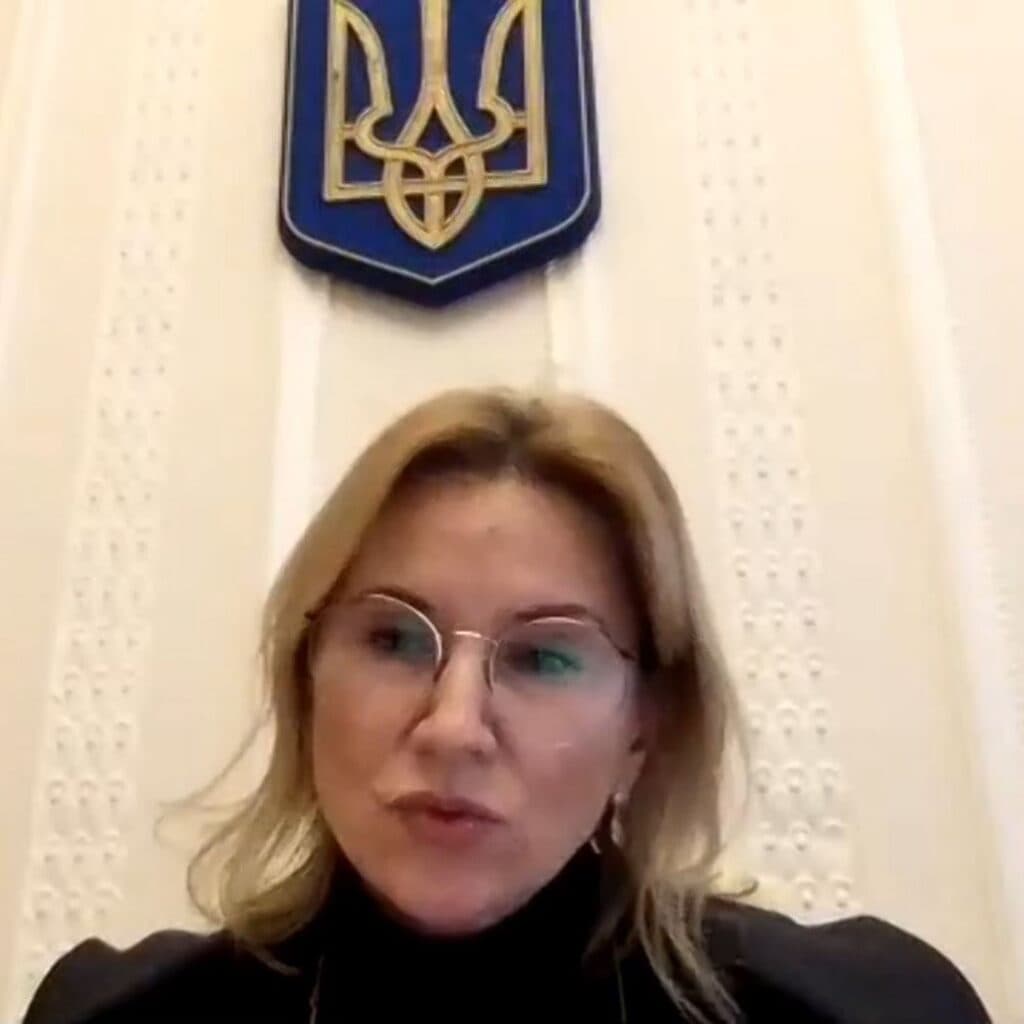
Olena Kondratiuk, Deputy Chairperson of the Verkhovna Rada of Ukraine
“At the same time, I would like to draw attention to the still unequal participation of women and men in the peace process and in decision-making in the defense sector. For Ukraine, the introduction of gender quotas in the management and Supervisory Boards of all state-owned enterprises, including in the defense sector, is important. It is important to introduce gender-oriented budgeting in the security and defense sector, to take into account at the financial and organizational level all the sensitive and special needs of women in armed forces”
In turn, Larisa Galadza, H.E. Ambassador of Canada to Ukraine, is confident that the Canadian experience will help Ukraine in defense sector reform. In addition, she noted the special role of parliament in the reform process.
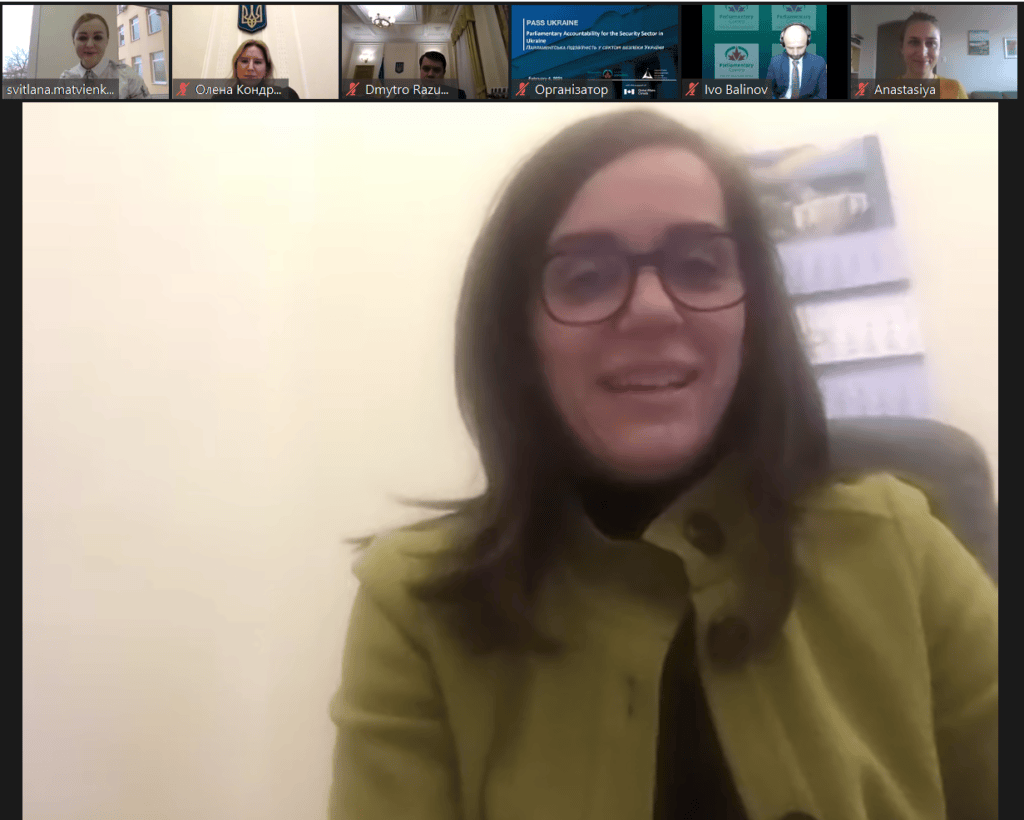
Larisa Galadza, H.E. Ambassador of Canada to Ukraine
“Canada supports this project because we understand that security, defense, and law enforcement are not just the executive branch. It is in these areas, where the state has the strongest power, that strong democratic control must also be ensured. This control is needed not only after the reform but also at the stage of policy formulation and implementation in the security sector”
Andriy Shevchenko, H.E. Ambassador of Ukraine to Canada, also believes that the project “Parliamentary Accountability for the Security Sector in Ukraine” will have a positive impact for both parties:
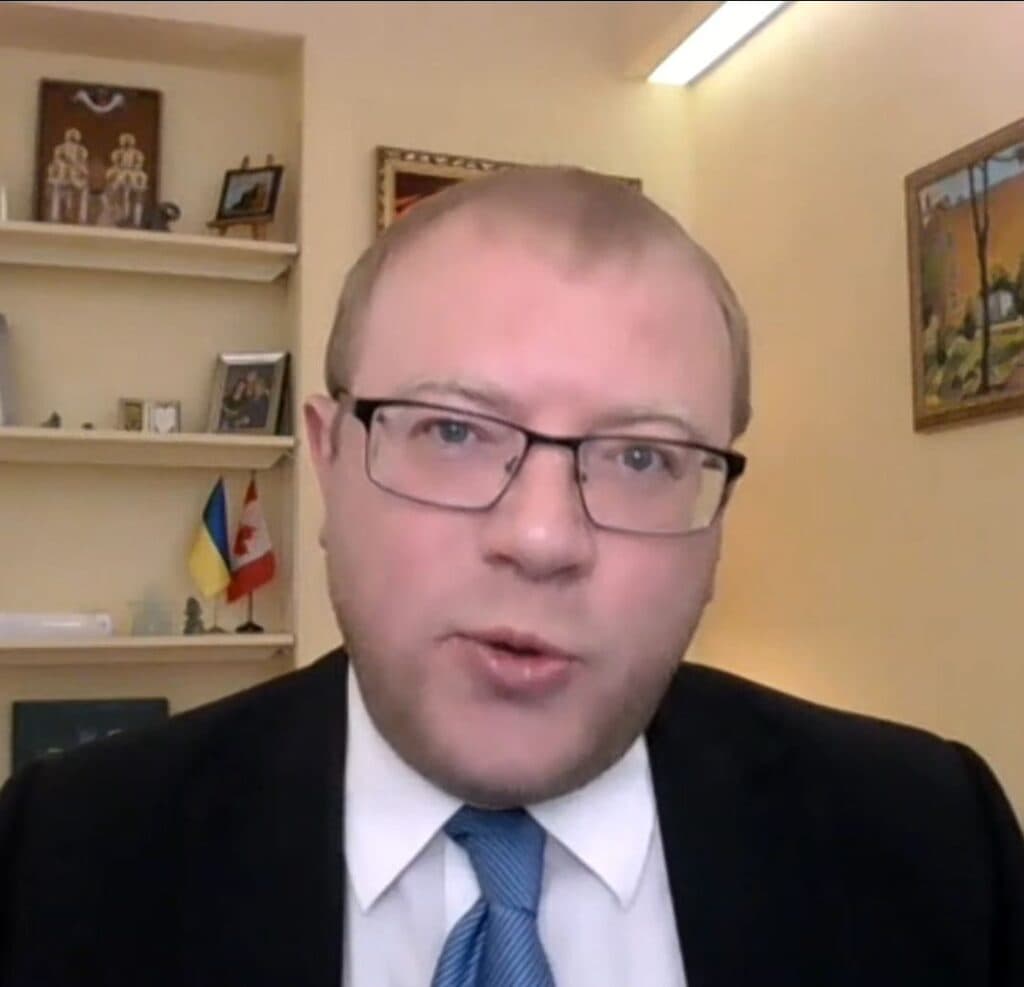
Andriy Shevchenko, H.E. Ambassador of Ukraine to Canada
“I see a lot of benefits from this project for both Ukraine and Canada. First, the project is a complement to existing security cooperation. Secondly, the project should strengthen Ukrainian parliamentarism – both at the level of policy development, and at the level of changes in legislation, and at the level of the control function of the parliament”
Tom Cormier, CEO of the Parliamentary Centre, spoke about the mission of the Canadian Parliamentary Centre and stressed the importance of helping the parliaments in democratic countries.
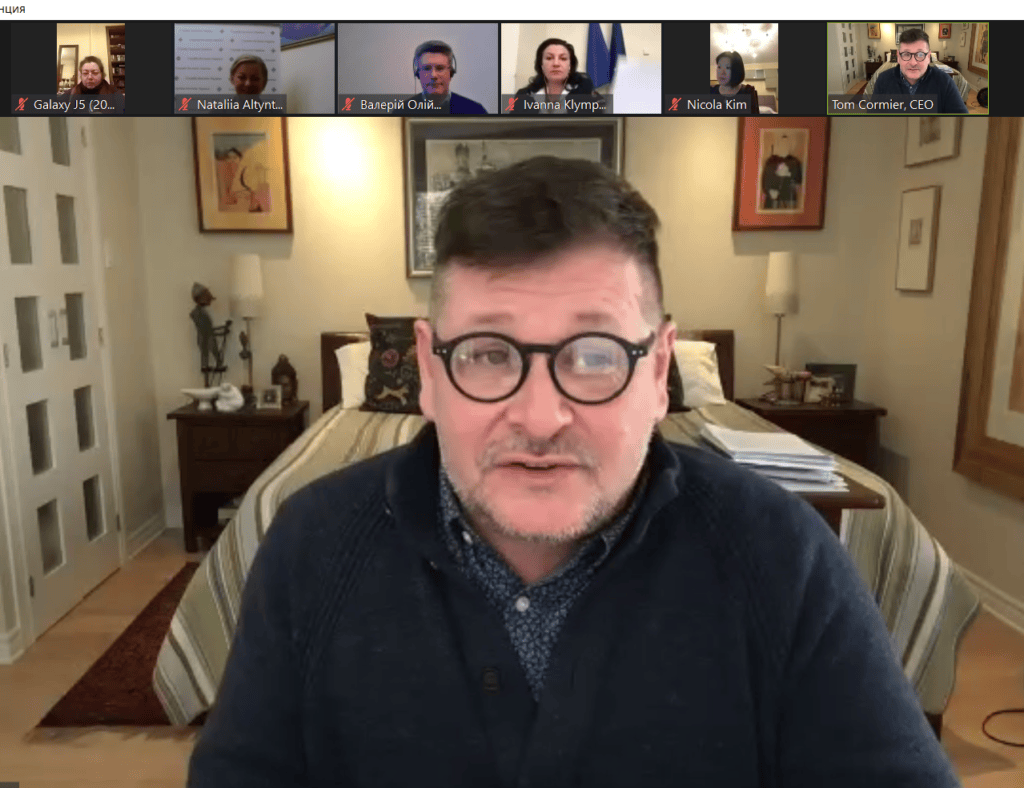
Tom Cormier, CEO of the Parliamentary Centre
“Parliaments have the potential to make important changes that can help overcome the biggest challenges facing society. Especially if these parliaments have connections with the people they serve for if they are supported by professionals, informed by evidence-based research, working with their counterparts in other countries, and having a constructive relationship with the executive branch. We are pleased that this project will focus on achieving all these important goals”
Svitlana Matviienko, Executive Director of the Agency for Legislative Initiatives, noted that the idea of the project has been developed together with representatives of the Verkhovna Rada of Ukraine so that the project would be of maximum benefit to the parliament of this and future convocations.
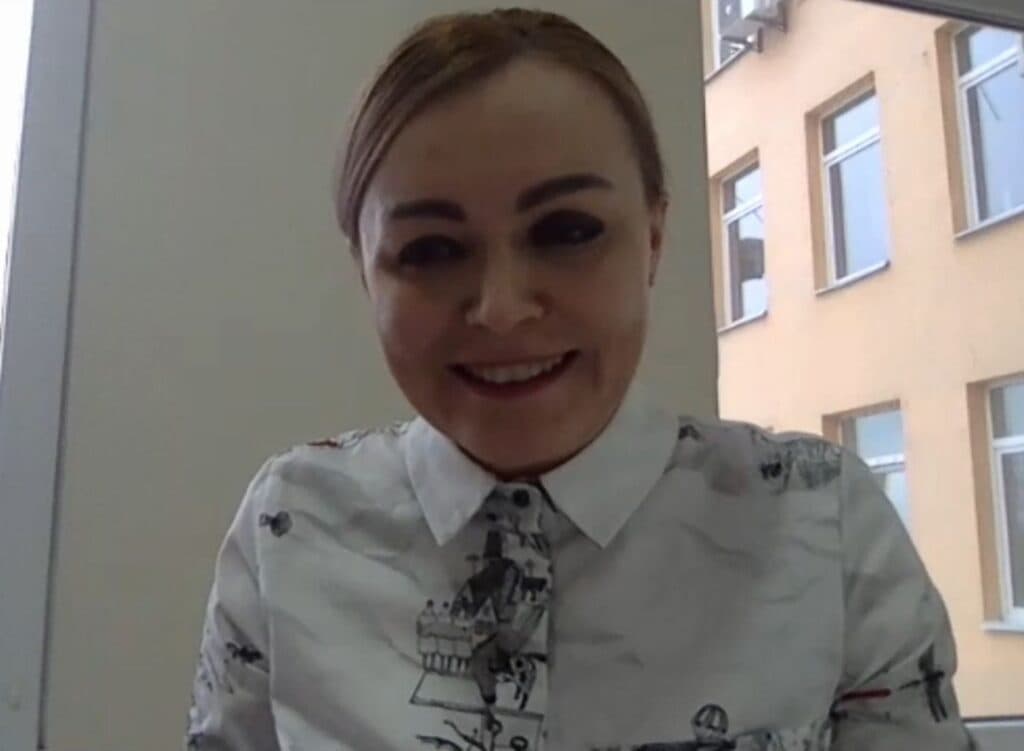
Svitlana Matviienko, Executive Director of the Agency for Legislative Initiatives
“We are very pleased with this partnership. The Agency has been closely involved in the Ukrainian parliament for more than two decades. We hope that this project will not only have an impact on the processes taking place in Ukraine now, but the project will help the next convocations. Inter-parliamentary dialogue is extremely important”
Oleksandr Zavitnevych, Chairperson of the Verkhovna Rada Committee on Security, Defense and Intelligence, and Denys Monastyrskyi, Chairperson of the Verkhovna Rada Committee on Law Enforcement, also expressed their expectations regarding the project.
“We understand the responsibility of our committee in security and defense sector reform. The most well-known problems now are the reform of Ukroboronprom, the creation of an effective management system in the field of defense and industry, the reform of the Security Service of Ukraine (SBU), special services, as well as the development of defense and security capabilities based on NATO standards. I hope that this project will be one of the steps in cooperation with civil society and will contribute to the development of a system of civil control”
Denys Monastyrskyi, Chairperson of the Verkhovna Rada Committee on Law Enforcement, also stressed the importance of strengthening parliamentary control as one of the levers in the reform process.
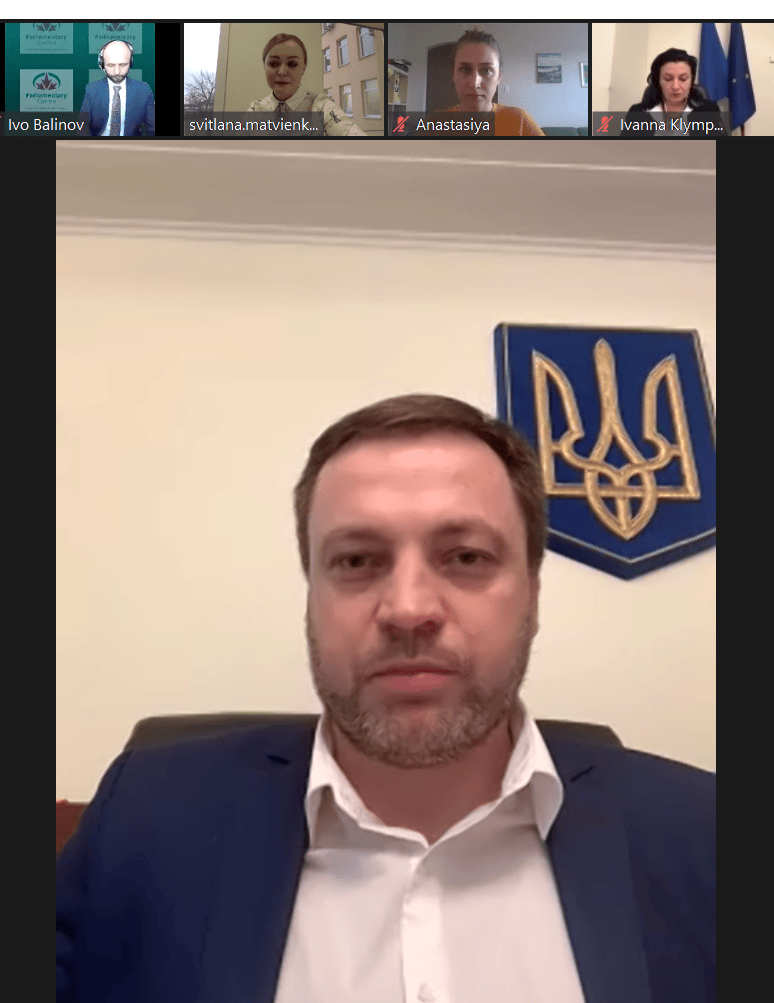
Denys Monastyrskyi, Chairperson of the Verkhovna Rada Committee on Law Enforcement
“Our committee is considering hundreds of draft laws during the session. Of course, there is always the question of strengthening parliamentary control and the committee’s ability to exercise that control. Our committee and other MPs are ready to cooperate. I think that later we will be able to say about the progress of specific draft laws that will help increase the efficiency of law enforcement agencies in Ukraine”
A colleague of Ukrainian parliamentarians from Canada, Yvan Baker, MP, Chairperson of the Canada-Ukraine Parliamentary Friendship Group, said that Canada has always supported Ukraine, especially in matters of security and sovereignty of Ukraine.
Yvan Baker, MP, Chairperson of the Canada-Ukraine Parliamentary Friendship Group
“Canada’s Deputy Prime Minister Chrystia Freeland often says, ‘Canadian parliamentarians from different parties disagree on many issues, but we are all united in our support for Ukraine’. Canada cooperates with Ukraine in many areas: economic development, military support, trade and investment, and more. One of the reasons for such deep ties between Ukraine and Canada is the large Ukrainian diaspora, whose representatives are very worried about what is happening in Ukraine”
Ivanna Klympush-Tsintsadze, MP, Chairwoman of the Verkhovna Rada Committee on Ukraine’s Integration into the European Union, Member of the Interparliamentary Relations Group with Canada, also noted that Ukraine needs substantial expert support from the Canadian side to continue the path of comprehensive reform.
Ivanna Klympush-Tsintsadze, MP, Chairwoman of the Verkhovna Rada Committee on Ukraine’s Integration into the European Union, Member of the Interparliamentary Relations Group with Canada
“It is important to continue parliamentary work and improve control mechanisms and their use. In addition, gender equality is not just about statistics, representation, and quantitative indicators. It is also about the value component, institutions, and change of culture, so this task is not for one or two years”
Anita Vandenbeld, Member of the House of Commons of Canada, Parliamentary Secretary to the Minister of Defense of Canada, said that cooperation within the project is very important because in this way Canadian and Ukrainian MPs will be able to share best practices bilaterally. She also called for a gender component to be included in the discussions on defense sector reform, as the inclusion of women in the dialogue could help to look at the problem from a different angle and find new solutions.
Anita Vandenbeld, Member of the House of Commons of Canada, Parliamentary Secretary to the Minister of Defense of Canada
“Why is it important to mention gender when we talk about security and defense? Women experience conflicts differently. The military aggression has the greatest impact on women and children. Women also play a key role in post-conflict reconstruction. This is confirmed statistically: when women participate in peace negotiations, peace agreements and stability last much longer. It also works in another direction – we need to involve men in committees on women’s issues. Different backgrounds, different experiences are really important for solving complex problems”
At the end of the opening event, the Director of the Analytical Department of the Agency Oleksandr Zaslavskyi and the Director of the Partnerships and Program Development of the Parliamentary Centre Ivo Balinov spoke in detail about the essence, stages, and components of the project “Parliamentary Accountability for the Security Sector in Ukraine”.

Director of the Analytical Department of the Agency Oleksandr Zaslavskyi
“An important component of the project is to support the decision-making process, much of which passes through the Verkhovna Rada of Ukraine. The key role in the reform of the security sector by the Verkhovna Rada is played by two committees – the Committee on Security, Defense and Intelligence and the Committee on Law Enforcement. We are aware that these are two different reforms in terms of content. However, they are united by one goal – to ensure peace, stability and territorial integrity in Ukraine, including by advancing Ukraine in the Euro-Atlantic direction”
In turn, Ivo Balinov noted that the Agency and the Parliamentary Centre are ready to cooperate with other projects that Canada is implementing in Ukraine in the security and defense sector.
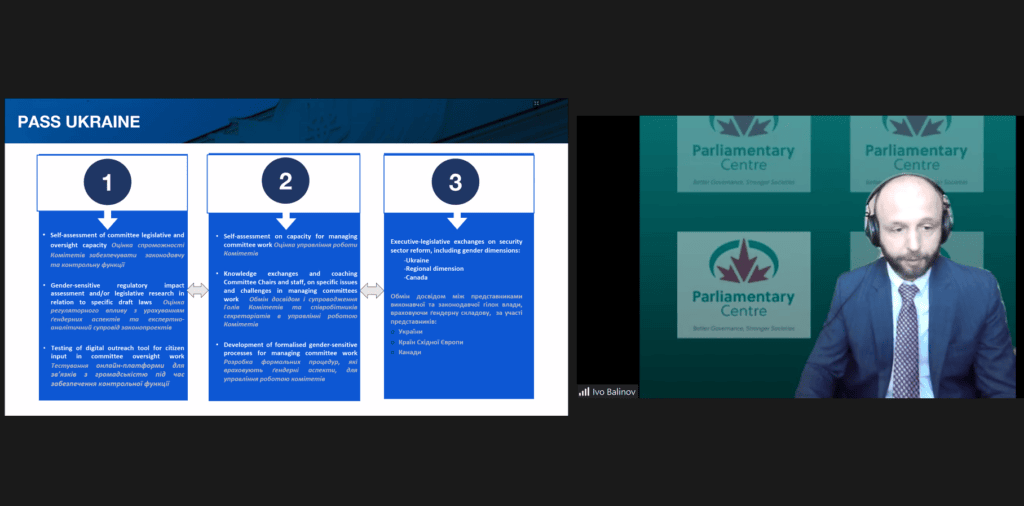
Director of the Partnerships and Program Development of the Parliamentary Centre Ivo Balinov
“There are many projects in Ukraine – with the support of Canada and other Euro-Atlantic partners – that focus on various aspects of defense sector reform. These are projects that cooperate with the National Police and projects aimed directly at the defense industry. Therefore, we are open to cooperation with these projects for the benefit of Ukraine”
The participants of the event expressed their readiness for fruitful cooperation during the implementation of the project “Parliamentary Accountability for the Security Sector in Ukraine”. All in order for the security sector reform in Ukraine to continue to move in the right direction, and for the defense industry to continue to develop according to the best international standards.
Referendum Law: Nuances and Legal Gaps
On January 26, the Verkhovna Rada adopted the draft law “On the All-Ukrainian Referendum” in the second reading and as a whole. The Agency for Legislative Initiatives has analyzed it and is ready to share the results.
The adopted draft law has more pros (or gains) than cons (or threats), in short. The draft law “On the All-Ukrainian Referendum” is, without any doubt, better than the previous unconstitutional and unconstitutionally adopted law on the national referendum. And the final version, adopted in the second reading, considers some of the comments and is, therefore, better than the first reading version. According to Article Thirty-eight of the Constitution, citizens of Ukraine are guaranteed to participate in the all-Ukrainian referendum. According to the Basic Law, without a referendum, it is impossible to change the territory of Ukraine and make changes to I, III, and XIII Chapters of the Constitution. That is, the need to adopt a law on a referendum is conditioned by constitutional norms. However, the adopted draft law should not be idealized: it has some shortcomings, and 27 pages of comments of the Main Legal Department can serve as confirmation of this.

The draft law has been developing and editing with the involvement of an expert community for more than a year. It partially considers the ODIHR / OSCE and the Venice Commission’s recommendations, expert comments on the draft of the first reading. Certainly, it has very detailed and well prescribed procedural mechanisms. Therefore, many specialist organizations respond positively to this approved version. And although the draft law “On the All-Ukrainian Referendum” has many positives, some shortcomings need to be addressed to understand the risks and limitations that we may face in the implementation of this law.
The adopted draft law does not protect against populist issues or problems that lead to a “split” of society.
The draft law “On the All-Ukrainian Referendum” does contain several safeguards: for example, the issue of the death penalty for MPs and officials for corruption or the reduction of taxes for Ukrainians cannot be put to a referendum. But other populist issues can be raised, such as the abolition of benefits for MPs, providing free housing for all citizens, etc. These may be questions that usually split Ukraine, the classic set – whether Bandera/Shukhevych/Zhukov/some red commissar is a hero of Ukraine or whether it is worth giving the status of the state language to Russian, etc. These matters may be national importance issues, and the adopted draft law on the referendum does not protect against them. In some countries, there is a practice where the authorities can adjust or at least influence the wording of the question. The Venice Commission recommended this option. But Ukraine has taken a different path: by Article 30 of the adopted version of the law, the text of the question submitted to the referendum can not be changed after its approval by the initiative group.
Such a norm was probably added to prevent abuse of power, which could harm “good” and “people’s” initiatives. However, the referendum will instead be a tool for organized political groups, given the signature collection procedure’s peculiarities. These political groups will be able to use populist issues that the government will not be able to correct. The adopted draft law does not consider the Venice Commission’s recommendations on the unity of form, content, and hierarchy of the referendum issue.
The context is also important.
The adopted version of the law creates several safeguards against manipulation and possible attempts to infringe on the democratic regime. However, it is worth remembering the context in which Ukraine finds itself: we have problems with the rule of law, we are in a state of actual war, economic crisis, and only seven years have passed since the potential dictator fled to Russia.
In these circumstances, a referendum, no matter how perfect the law is, can be used to increase instability and establish attempts to restrict citizens’ rights and freedoms and undermine democratic institutions.
The Venice Commission also mentions the danger of referendums in its recommendations in terms of confrontation between the executive power and the parliament.
A referendum is often called a voice of the people, and the possibility of repealing laws is called a “right to revolt”.
In Ukraine, the referendum on the adopted draft law is not like that. The referendum procedure is quite regulated.
You need to go through many verification procedures and collect and submit many different types of documents.
The initiation of a national referendum is very resource-intensive: it is necessary to collect 3 million signatures in not less than 2/3 of regions and not less than 100 thousand signatures in each region. For about half of them 100,000 people is about 10% of the population – that is, it is necessary to collect the signatures of every tenth person living in the region. All this must be done in 90 days. According to paragraph 6 of Article 32 of the draft law, signatures can be compiled only by members of the initiative group and only in paper form, as the rules on applying for support of the referendum initiative in electronic form were excluded during the consideration of the draft law in the plenary hall, arguing that these norms are unconstitutional and this mechanism could be opaque. So, on average, you need to collect 33,000 signatures on paper per day.
Will volunteers be able to organize such a process? It isn’t very likely, even if we believe in the self-organizing ability of Ukrainians. It is rather possible for highly organized political groups with funding, human and time resources. Regardless of who manages the referendum – volunteers or political groups – the authorities can, if they wish, disrupt the process. The Central Election Commission (the CEC) may not register something, not accept any documents, or find any violations in the complicated procedure of initiating a referendum. It is still possible to impose a state of emergency in one of the regions (for example, if forests are burning in the Luhansk region or there are floods in Zakarpattia) and disrupt the referendum process. It means that if the [anti-people/dictatorial] government wants to prevent a referendum, it will do so.
Therefore, we should not think that a referendum can become a viral initiative or that the people can use a referendum to express dissatisfaction with the adoption of a law. If the referendum is organized, it will be initiated by capable political groups in the absence of categorical disagreement of the authorities (and given the previous experience of Ukraine, the initiation of a referendum will most likely be done by the President himself).
The planned electronic voting also raises many concerns.
The adopted draft law establishes that electronic voting will be possible only after the entry into force of the law on innovative technologies for electronic (machine) voting. It is not clear from the adopted draft law on referendum what electronic voting will be like – whether it will be special polling machines for polling stations, or it will be voting at home from a personal computer through a created site, or the Ministry of Digital Technologies will present a separate application. If the voting is remote (from a computer via a website), then there are many problems with compliance with the voting principles set out in Articles 6-13 of the law.
The referendum must provide universal, equal, direct, free, voluntary, secret, personal, and one-time voting. And remotely, it will be difficult to trace who is voting, whether there are facts of pressure, bribery, how many times one person can vote, and so on.
In Europe, e-voting is used only in isolated cases. The Venice Commission also mentioned the danger of electronic voting in terms of technical reliability, transparency, security, and secrecy in its conclusion.
The adopted draft law does not establish an absolute ban on holding two, three, or more referendums at the same time.
Such a ban is only for holding a referendum simultaneously with regular elections of various kinds. Therefore, although supporters of the adopted law “On the All-Ukrainian Referendum” deny the possibility of mass use of referendums, we should not rule out using this tool by unscrupulous initiators to obstruct other referendums and clog the media space.
According to the working group members for the development of this draft law, if holding one referendum costs 1-2 billion hryvnias, holding several referendums a year does not bring anything good to the Ukrainian budget.
The adopted draft law prohibits only the initiation of several referendums on one issue at a time. Dishonest initiators can also use this norm: if you are the first to register an initiative group in the CEC, a referendum on a particular issue can be blocked. It does not matter how many signatures such a fake initiative group will collect. Those who want to hold a referendum will have to wait at least 90 days to register their initiative.
Many questions are raised by the rules on the repeal of the law or its provisions.
In some European countries, the law’s repeal is possible shortly after its adoption, even before it has wholly entered the state’s legal field.
Repealing any law or its provisions can be pretty dangerous because it unbalances the legal system and leaves gaps in it.
There may be a legal vacuum (a situation where certain social relations are not regulated by law), which can not be filled. It happens for many reasons. On the one hand, MPs may not count on the success of the cancellation referendum and, accordingly, not prepare for its consequences (if we recall the attitude to the Brexit referendum and the corresponding level of readiness of MPs in the homeland of the parliamentary system, there are reasonable doubts about the predictive capabilities of Ukrainian MPs). On the other hand, it is essential to remember that passing law is usually a difficult compromise for many political groups and the more important the law is, the harder it is to reach such a compromise. And at the time of repealing the law, such a compromise may not exist, which will lead to a legal vacuum.
Repeal of laws through referendums is also questionable in terms of violation of the constitutional competence of the Verkhovna Rada of Ukraine, as “the only legislative body in Ukraine is the parliament – the Verkhovna Rada of Ukraine”, and it is the powers of the Verkhovna Rada to adopt laws, including the abolition of other laws. The Venice Commission recommended giving parliament a role in the referendum process on repealing laws: for example, providing a text of a law that would replace the text of a repealed law if the referendum was successful. However, this was not done.
Violation of the Verkhovna Rada’s constitutional competence may be the reason for declaring the law on referendum unconstitutional.
The procedure of adopting the draft law “On the All-Ukrainian Referendum” was also problematic. During the preparation for consideration and consideration of the draft law in the second reading, the MPs deviated from some Verkhovna Rada Rules of Procedure norms without applying the ad hoc procedure provided for in Art. 50 of the Rules of Procedure.
It can be considered a violation of the Rules of Procedure and thus undermine the adopted draft law’s legitimacy.
The repeatedly identified problem of the Rules of Procedure of the Verkhovna Rada, which often leads to an imbalance in the text of draft laws in the session hall, has once again manifested itself. Ironically, the imbalance of the law’s internally agreed text due to the removal of some of its provisions occurred with the adopted version of the law on referendum. In particular, the wording of the draft law, which was adopted in the first reading, in paragraph 2 of Art. 4 contained the following somewhat contradictory provision:
“The decision made at the all-Ukrainian referendum can be changed only by the all-Ukrainian referendum not earlier than in three years from the date of its acceptance”.
Before the second reading, the committee changed this provision to another:
“A new all-Ukrainian referendum on issues previously supported in the all-Ukrainian referendum may be held not earlier than three years from the date of announcement of the results of the relevant all-Ukrainian referendum”.
“A new all-Ukrainian referendum on issues that were not previously supported in the all-Ukrainian referendum may be held not earlier than one year from the date of announcement of the results of the relevant all-Ukrainian referendum”.
However, at the very end of the review of the amendments, V. Vyatrovych confirmed these amendments. Voting to confirm the first amendment failed (9 votes were not enough), the second amendment still managed to get the required votes. Therefore, paragraph 2 of Art. 4 of the adopted law says:
“A decision made in an all-Ukrainian referendum may be changed only by an all-Ukrainian referendum not earlier than three years from the date of its adoption.
A new all-Ukrainian referendum on issues that were not previously supported in the all-Ukrainian referendum may be held not earlier than one year from the date of announcement of the relevant all-Ukrainian referendum results”.
It is quite possible that the draft law “On the All-Ukrainian Referendum” adopted later in the second reading and as a whole will be amended and corrected. Still, now, this has several ambiguous consequences. Firstly, the first item of paragraph 2 of Art. 4 contradicts the second item of paragraph 2 of Art. 4 and item 2 of Art. 122, because in one place, any decision cannot be changed for three years, and in another – that an unsupported decision can be put to a referendum in a year. Secondly, it turns out that the laws/some of their provisions, repealed by the referendum, will be repealed forever because of the referendum’s decision, following the first item of paragraph 2 of Art 4, can be changed only through a referendum.
A change in the decision to repeal the law is the adoption of a law. According to the law “On the All-Ukrainian Referendum”, laws in a referendum can only be repealed, not adopted. Third, the change in the decision not to repeal the law is to repeal the law.
Given that the decision of the referendum can be changed only in a referendum, then the law, which was not repealed once, receives additional “protection” – now it can be revoked only in a referendum.
And while whether the repeal of laws is an interference with the Verkhovna Rada’s constitutional competence can be a matter of debate, the repeal of laws forever and the special protection of laws look more clearly like such an interference.
The situation with the funds of the all-Ukrainian referendum and the NGOs in this process is also quite unclear.
The fact is that in the wording adopted in the first reading, NGOs could form these funds at their own expense. Unlike political parties, NGOs have no restrictions on the sources and amounts of contributions. It means that the entire structure of the control over the financing of the referendum (which provides for the restriction of funding sources and the size of the contribution from one source) – was destroyed. After all, some oligarch or a hostile state could contribute a large sum of money to the NGO’s account. This NGO could already transfer these funds to the account of its all-Ukrainian referendum fund. Many experts and even the Venice Commission have drawn attention to this problem. And in the second reading of paragraph 3 of Art. 72 the opportunity to finance NGOs’ funds at their own expense was removed, but paragraph 7 of Art. 72 is still about this possibility. How this rule will be applied in practice is not entirely clear, so the risk of non-transparent funding provided by large tranches from dubious sources through NGOs remains.
Summing up, a referendum is a tool that can be used with both good and bad intentions. It should not be assumed that with the current design, the referendum will be an instrument of the people’s will. Organized political groups or the President will definitely use it.
Despite the safeguards, the adopted draft law contains dangers – among them electronic voting (although in the final version, it became a dead norm) and a legal vacuum in place of repealed norms. The adopted law “On the All-Ukrainian Referendum” has some technical shortcomings, all of which were not mentioned in our analysis, but some of which look pretty threatening – unwavering referendum decisions and non-transparent funding through NGOs. These shortcomings can be corrected in the future, so it remains to hope for Ukrainian lawmakers’ prudence.
Top 3 Legislative Initiatives That Have Changed the Work of Parliament
Summing up the parliamentary results of 2020, we could mention the high-profile and significant events that took place in the Verkhovna Rada of Ukraine: the adoption of the law on the land market or “banking law”, the coronavirus pandemic, and the vicissitudes of the CCU decision. However, all of the above events are common policies that have little effect on Verkhovna Rada’s functioning as an institution. As a result, we will try to focus on more fundamental things, namely the three changes concerning the rules of operation of the Ukrainian parliament, its format, and scope of influence.

№1 Fight against amendment spam
The first months of 2020 in the Verkhovna Rada were spent in an aggressive confrontation. The battle for land first unfolded when 4,018 amendments were submitted to the draft law on agricultural land circulation. The usual procedure for considering these amendments took several plenary weeks. However, an absolute record was soon set for Ukraine – more than 16,000 amendments to the draft law 2571-d (the so-called “banking law”).
Of course, the MPs who submitted hundreds and thousands of amendments did not want to make changes to the draft laws. They just wanted to block their adoption using the permitted procedural mechanisms (called a parliamentary obstruction). And although the 16,000 Ukrainian amendments do not look so staggering compared to other countries’ records, the parliamentary majority has decided to limit legal regulatory resistance possibilities. The draft law adopted in the first reading in autumn 2019 was edited and adopted as a whole. Now the draft law, which has more than 500 amendments, can be considered under a special procedure, making it impossible to block its adoption for a long time. Thus, the most effective Ukrainian parliamentary obstruction weapon was removed from the MP’s “arsenal”. Accordingly, the parliamentary minority now has fewer ways to oppose the actions of the majority.
№2 Digitization
One of the slogans of the Sluga Narodu party was digitalization. However, they were not innovators in this. Huge stacks of paper with thousands of edits printed on them and the general inefficiency of communications have long been criticized. Therefore, the topic of transition to modern technology has been raised for a long time. An example is the recommendations of the European Parliament’s Evaluation Mission.
In 2020, the digitalization of the Verkhovna Rada increased. At the beginning of the year, amendments to the Regulations on the introduction of electronic document management were adopted. The coronavirus provided the next impetus for digitalization. Politicians are more likely to catch the coronavirus, so many parliaments have been quarantined with the onset of the epidemic. However, the parliament is too important, so Ukrainian lawmakers have tried to develop remote voting rules, although this has never been implemented. Another digitalization area driven by the coronavirus has been the online format of committee meetings and sometimes conciliation councils. Some aspects of digitalization are controversial, such as remote voting, but in general, there is a digitalization trend. The rules and formats “invented” during the coronavirus in the future can be used in the normal work of the Verkhovna Rada. On the one hand, this opens the way for new opportunities and, on the other hand, for new threats to parliamentary activity.
№3 Parliamentary control
Currently, the most common perception of the Verkhovna Rada is its perception as a legislative institution. However, in developed democracies, in addition to the legislature, parliament must also exercise a control function. The second half of 2020 gives some reason to hope that the Verkhovna Rada will also gradually increase its control capacity.
The increase in the parliament’s control powers, given the presence of a one-party majority, seems somewhat unexpected, as it is the parliamentary majority that has the power to appoint the executive and therefore should exercise direct extra-parliamentary control. However, as the practice has shown, the Ukrainian parliamentary majority does not have much influence on appointments, and some MPs do not even fully understand the procedure for appointing members of the government. The coronavirus epidemic requires the effective and professional work of the Cabinet of Ministers. Therefore, MPs, observing government failures, intensified efforts to increase parliamentary control.
Initially, there was a draft law on interpellation, which proposed the introduction of a new format of government reporting to parliament with possible consequences in the form of dismissal of the minister if MPs do not like his report. However, this draft law from the Holos faction was not adopted. Another option was submitted by MPs from the Sluga narodu. This draft law detailed some aspects of reporting, but it did not bring any particularly useful innovations. MPs eventually accepted it.
It can hardly be said that the Verkhovna Rada has significantly increased parliamentary control in 2020. Still, we can assume that the discussion on parliamentary control has intensified, possible mechanisms for its implementation have been worked out. If this trend continues, we can expect new bills that, becoming laws, will qualitatively increase parliamentary control.
In conclusion, the year 2020 for the Verkhovna Rada of Ukraine brought restrictions on amendment spam, increased digitalization, and the beginning of the parliamentary control increasing.
We hope that 2021 will bring the implementation of the legislative process from beginning to end, the adoption of a Code of conduct, and the implementation of parliamentary reform.
Update on Parliamentary Reform from the Agency
The Agency for Legislative Initiatives continually monitors the progress (and regress) of parliamentary reform in Ukraine. We currently have an update for you for 2020. Oleksandr Zaslavskyy, Director of the Analytical Department of the Agency, told during the Ukraine Reform Conference 2020/2021 (#URC2020) what happened to the parliamentary reform last year.

Photo: Reanimation package of reforms
We have the results: from 2016 to 2019, less than 42% of the reform and recommendations of the Roadmap were implemented. When the Verkhovna Rada of the ninth convocation was authorized, we suggested to the MPs to continue the implementation of the reform:
- review 52 Roadmap recommendations;
- adopt the Law “On Peculiarities of Civil Service in the Office of the Verkhovna Rada of Ukraine”;
- develop and adopt a Code of Conduct for MPs.
None of these three recommendations have been implemented in a year. However, the reform continued in some respects.
- For example, the number of committees was reduced to 23, which was one of the recommendations.
- Meetings of representatives of parliamentary factions and groups in the format of Jean Monnet Dialogues continued.
- Work on the draft law “On Legal Acts” and the draft law on the opposition and the relationship between the coalition and the opposition has begun.
- The first audit of the Accounting Chamber on the activities of the Verkhovna Rada is done. Of course, the audit results are not very positive, but the very fact of its conduct is the implementation of the Roadmap recommendation.
One of the main problems affecting the implementation of parliamentary reform is the imbalance of power. With the declared parliamentary-presidential form of governing, the real influence on the government’s formation and its policy is not the Verkhovna Rada of Ukraine, but the President. How to further implement parliamentary reform, and what mistakes should be corrected?
Read our brief for more detail.
Should the Control Function of the Parliament Be Strengthened by the Draft Law №4131?
Since the creation of the White Paper on Ukrainian Parliamentarism, and since the beginning of the comprehensive parliamentary reform in 2016, experts and MPs have repeatedly stressed the importance of strengthening parliament’s control function. But what does that mean? And does the call for strengthening the parliament’s control function always mean increasing the constitutional parliamentary control?
For starters, a little context. Recently, MPs passed in the first reading the draft law №4131 to ensure the effective implementation of parliamentary control. It does not propose radical measures, but given the explanatory note and the comments provided by the Central Scientific Experts Office and parliamentary experts, it can be concluded that there are terminological difficulties in the discussion on parliamentary control. Comments on the draft law will be set out at the end. And first, let’s deal with the concept of parliamentary control.

The concept of parliamentary control
In legal doctrine, “parliamentary control” is interpreted quite broadly. The most common will be the following definition:
Parliamentary control is the ability of the legislature to restrain the activities of the executive.
Restraint, however, may mean the ability to influence the actions of the executive branch. However, this effect can be different in form and intensity.
The specificity of the control function is that
“Control powers are” present “in all functions of the Verkhovna Rada and at all stages of the parliamentary process. Thus the control function is realized through two groups of powers: powers of the first group have only control value; others are complex, and equally belong to the control and other functions of the Verkhovna Rada of Ukraine”.
So we can talk about parliamentary control in the broadest sense and parliamentary control in the narrow sense. In turn, the latter means the possibility of direct influence on the results of control actions – for example, dismissal.
Researchers distinguish the following types of parliamentary control:
- party control (usually used by the opposition);
- non-partisan control (through parliamentary oversight, which can take many forms: questions, committees, hearings, etc.);
- control with the possibility of applying “sanctions” (for example, expressions of no confidence in the Government, the Prosecutor General, dismissal, etc.).
In Ukrainian legal thought, a similar division was proposed by Barabash, who divided parliamentary control according to the consequences of “mandatory” and “recommended”. For simplicity, we will use this division.
It is the “mandatory” type of parliamentary control, or control with the possibility of applying “sanctions”, which is the most radical way of influencing. Because of this, it is the subject of the Constitution. This is what the Constitutional Court draws attention to in its judgment of 10 May 2000 № 8-rp / 2000:
“The Verkhovna Rada of Ukraine exercises parliamentary control in various organizational and legal forms, but only within limits set by the Constitution of Ukraine.”
In this sense, the Constitutional Court interprets parliamentary control in a narrow sense. We cannot but agree that parliamentary control, with the possibility of direct adverse consequences (for the executive branch), can be exercised only within the Constitution. This naturally follows from the constitutional principle of separation of powers. Here we can mention such forms of parliamentary control as reporting of the Governor of the National Bank, the Prosecutor General, reports of the Cabinet of Ministers of Ukraine, etc.
In general, there should be no difficulty with mandatory parliamentary scrutiny. The bodies subject to such scrutiny must report to parliament in setting the deadline. Here you can discuss the timing of reporting and its content. It is necessary to consolidate the options for the parliament’s response to such reports.
At the same time, in a broad sense, “parliamentary control” is a component of any activity of the Verkhovna Rada. Even the adoption of laws carries a share of control (to pass a quality law, you need to have information about problems in implementing existing laws). And in this context, parliamentary control can be regulated by law. This is when we talk about the formal expression of parliamentary control.
But what does parliamentary scrutiny include in a broad sense? And what forms can be offered? In addition to parliamentary inquiries, parliamentary hearings, and “government question hours,” we should focus on such a seemingly insignificant way of parliamentary control as informing.
Control, in this case, is primarily the possession of information. Having sufficient information on the implementation of laws, problems, and implementation of policies, the Verkhovna Rada can influence public authorities through legislation changes.
In addition, the dual nature of parliamentary control is clearly manifested here: 1) as state control and 2) public control. Subjects of parliamentary control, having all the hallmarks of state oversight institutions, also influence violators of the law through such instruments of public scrutiny as public opinion and widespread media coverage. Even hearings in plenary or committee meetings of information from any public body can be considered parliamentary scrutiny in a broad sense.
Information is an important part of parliamentary scrutiny. Many researchers have written about increasing the role of parliamentary control without “sanctions”.
Parliament should communicate with other government agencies and request information and the presentation of this information from various government agencies.
Such information helps the Verkhovna Rada to understand current issues, the state of implementation of laws.
Coverage of public authorities in parliament makes their work more transparent and public reporting processes systematic. We can talk about creating a certain culture of reporting by public authorities to the public and submitting such reports to the Verkhovna Rada through the information procedure.
However, such measures’ effectiveness largely depends on the organization of work (especially on the design of the reporting system) within the Cabinet of Ministers. The key here is the reform of public administration. In this context, close cooperation between the government and parliament is needed. This implies clear requirements for public authorities to report to the public and the Cabinet of Ministers. The Verkhovna Rada can play the role of a catalyst in this process.
It is probably necessary to legislate the procedure of informing the state bodies of the Verkhovna Rada or its committees. However, the current provisions of the Rules of Procedure allow doing so without further detail. It all depends on how determined the committees are to communicate with the relevant bodies, receive and process information from them, and the general understanding of the MPs of such actions priority. With the advancement of public administration reform, committees must organically come to the principle of “more intensive control over specific issues”. However, for supporters of the positivist concept of law, the following can be noted: the Rules of Procedure can enshrine the process of initiating the information procedure, set reasonable deadlines for the preparation of such information, oblige the Verkhovna Rada or the committee to form a clear list of issues. Standard forms of reporting should also be considered so that each body understands what may be required of it and documents its activities in a pre-agreed manner.
Another aspect that confuses terminology in parliamentary control is the “reporting” of a number of independent institutions that have a special legal status. For example, the National Commission for State Regulation of Energy and Utilities (the Regulator). The Verkhovna Rada only indirectly participates in the formation of this body through the appointment of part of the tender commission and has no leverage over the Regulator’s dismissal.
In cases with the Regulator and a number of other institutions, we have terminological confusion in the context of parliamentary control. The fact is that the Regulator must report annually to the Verkhovna Rada, but the latter cannot influence it in any way due to consideration of this report. So technically, it’s not reporting. It’s just informing. The purpose of such information is clear: the Verkhovna Rada should know whether the legal framework is being implemented effectively and what are the problems in this area, as well as to draw the attention of the public and the media to the activities of the Regulator. Therefore, it cannot and should not directly influence the Regulator, but it can influence the legislative regulation of the area in which the Regulator operates. What is important in such cases for effective control? Forms of reporting, constant communication, obligatory consultations with these bodies in case of changes in the sectoral legislation are coordinated with each such independent body.
It is necessary to mention the peculiarity of parliamentary control in the presence of a mono-majority in parliament. According to Duverger, the executive and legislative branches, government and parliament, are only constitutional facades. In reality, only parties exercise power.
In a parliamentary mono-majority case, the parliament (represented by the majority) has all the necessary levers for control through party mechanisms. At the same time, provided there is a majority, parliamentary control is informal, hidden from the general public and reduced to the party’s control over the government.
In other words, the majority has all the means to influence the government. In our current context, this means that claims that parliament does not have sufficient mechanisms to influence the government or individual ministers are not true (although weak party discipline may complicate such control). This, of course, does not preclude the need to improve the legal framework for parliamentary scrutiny and to launch a new round of discussions on guarantees of participation in parliamentary scrutiny by the opposition.
Draft law on ensuring the effective implementation of parliamentary control
The draft law proposes to set specific reporting dates for some government agencies. Such an initiative can be supported, although there is no urgent need to change these provisions. Because setting specific reporting dates could be part of informal regulation.
The draft law proposes to expand the participation of committees in the consideration by the Verkhovna Rada of the report of the Cabinet of Ministers of Ukraine on the progress and results of the implementation of the approved Program of Activities of the Cabinet of Ministers. This approach is justified because it improves the quality of control over the activities of the government. However, the intensity of measures and their quality remains subject to internal regulation. In short, it will depend only on the committees themselves whether the quality of control over the government will improve. After all, it is, first of all, about development by committees of internal standards of estimation of this program. It would be appropriate to organize some training for the staff of the committees’ secretariats (perhaps even joint training with representatives of the Cabinet of Ministers and ministries).
The draft law proposes to detail the provisions on consideration by the Verkhovna Rada of reports and reports of the Cabinet of Ministers of Ukraine. One of the novelties: The Verkhovna Rada is invited to provide an opportunity to formulate recommendations for the Cabinet of Ministers.
The draft law proposes to detail the procedure for reviewing the reports of several bodies on which the Verkhovna Rada makes personnel decisions (Prosecutor General, Chairman of the Security Service, Chairman of the National Bank, Antimonopoly Committee, State Property Fund, Accounting Chamber, Commissioner for Human Rights). Given that the rules are duplicated, it would be appropriate to create a single generalized rule that would regulate in detail the process of reviewing these reports and add options for decisions that may be taken as a result of the review. The alternative proposed in the draft law is slightly contrary to the legal technique and overloads the Rules, but does not pose a danger.
The most controversial in the draft law is Article 232-8, which provides for the consideration of reports, reports, and other government agencies and officials’ information. And although we noted above that parliamentary scrutiny in a broad sense may include information procedures, the draft law’s way of proposing this procedure is questionable. It is necessary to distinguish between reporting and informing because, according to the reporting results, the Verkhovna Rada can influence the reporting body. According to the results of informing the Verkhovna Rada can only indirectly influence the body’s activities through amendments to legislation. That is, those bodies to which the Verkhovna Rada has no relation cannot report to the Verkhovna Rada. Even if they present their annual report to the plenary, in parliamentary scrutiny, such a report will be considered informing. This raises the question of whether it is appropriate to include the concept of “report” in this rule. Therefore, in our opinion, this part needs significant refinement, as it does not follow from the text of the bill whether the MPs understand this difference. And the creation of additional terminological difficulties seems to be typical for the legislative process but still superfluous.
It seems important to carry out explanatory work on parliamentary control’s nature, its forms, and importance among MPs. The parliament has sufficient powers to exercise effective parliamentary control, especially given the fact that there is a mono-majority. The issue is to change MPs and committees’ patterns of work and increase interaction with the executive branch.
As a result, we have a draft law with a beautiful name, a noble purpose, without special “hardships” and special benefits.
We hope that this draft law will be a starting point for discussing the essence of the parliament’s control function. One could start (as always, in theory, and, as never before, in practice) by examining the control function’s implementation and identifying the main intra-parliamentary barriers to parliamentary control in the broadest sense.
What Did the First Audit of the Verkhovna Rada in the History of Independence Show?
The Accounting Chamber conducted a financial audit of the Verkhovna Rada. This is the first parliamentary audit in the history of Ukrainian independence. We have analyzed the report based on the audit results and are ready to share the main conclusions.
The audit was conducted for the period 2013-2019. Experts found violations of the order of use of funds and/or inefficient use of funds in most areas. Nevertheless, the Verkhovna Rada Staff fulfilled its main goal – to ensure the Verkhovna Rada of Ukraine’s activities.

A total of UAH 7 billion, 702.2 million, was used in 2013-2019. The main item of expenditure of the Verkhovna Rada was wages and salaries: 70% of current spending (UAH 5 billion 426 million) was spent on it.
The audit also revealed significant legal gaps in the Verkhovna Rada activities, which resulted in violations of the procedure for the use of funds. The main legal gap is the Regulations’ approval on the Staff of the Verkhovna Rada (a document regulating the activities of the Office) by order of the Chairman of the Verkhovna Rada. However, Art. 7 of the Rules of Procedure of the Verkhovna Rada requires that this provision must be approved by a resolution of the Verkhovna Rada. As a result, the Office is not a legal entity and cannot independently carry out financial and logistical activities to ensure Verkhovna Rada’s work. Instead of the Office, such support is provided through its subdivision – the Office of the Verkhovna Rada, which is a legal entity.
Among other legal gaps, it can also be noted that a significant part of the VRU’s material base is not designed correctly. In particular, the procedure of state registration of real rights to immovable property was not carried out in respect of the following property:
- 198 of 326 buildings;
- 231 out of 330 engineering structures;
- 13 out of 49 land plots do not have title documents.
The Accounting Chamber negatively assessed the transparency and accountability of the Office. In 2014-2017, the Verkhovna Rada did not have approved estimates! This is a violation of Part 4 of Art. 7 of the Rules of Procedure of the Verkhovna Rada. When the estimates were approved (2013, 2018, 2019), the Verkhovna Rada still did not consider reports on their implementation. That is, MPs did not control the Office’s activities in the study period (2013-2019). The Internal Audit System of the Office also received a negative assessment from the Accounting Chamber.
The audit focused mainly on the financial side of the VRU but partially covered some aspects of the parliament’s units’ direct activities. This applies, in particular, to the Institute of Legislation. The Accounting Chamber pointed out that 78.9% of people who studied in postgraduate and doctoral studies in 2013-2019 were not MPs of Ukraine, representatives of the Office and local governments, although these categories of people should be directed to the methodological assistance of the Institute.
The recommendations provided by the Accounting Chamber partly reflect the recommendations of the Roadmap on Internal Reform provided by the European Parliament’s Needs Assessment Mission to the Verkhovna Rada.
For example:
- The 35th recommendation said to conduct an audit of the Verkhovna Rada – accordingly, it was finally fully implemented.
- The 36th recommendation of the European Parliament Mission is about the creation of a single set of internal rules that would regulate the work of the Office. The Regulation on the Staff of the Verkhovna Rada, which the Accounting Chamber recommends to approve by a resolution of the Verkhovna Rada, may become such a set of internal rules.
- The 37th recommendation of the European Parliament Mission is about the consolidation of all administrative units of the Verkhovna Rada into the structure of the Office. Proper approval of the Regulations on the Staff of the Verkhovna Rada and registration of the Office as a legal entity (as recommended by the Accounting Chamber) will allow for such consolidation.
What’s Wrong with the “New Faces” in Politics?
The trend for “new faces” is decreasing! And this, on the one hand, is good news!

The results of the survey of the Sociological Group Rating showed that the majority of respondents (60-70%) believe that it is more important for parties at the local level to have a strong local leader than well-known national, experienced politicians than “new faces”, a good team than a strong leader. One way or another, political players are changing, and the authorities are being “renewed”. In particular, Agency for Legislative Initiatives counted that 80.4% of “new faces” entered the Verkhovna Rada after the last parliamentary elections in 2019. These are people who have never received a mandate as a member of parliament before.

Experience shows that the coming to power of “new faces” is not the same as radical positive changes in the country, the eradication of corruption, and economic growth. Of course, new people need to appear in the political process. But we insist that politics must be a professional activity. To become an effective manager, you need to gain years of experience, earn credibility in society, work first for your community, and then reach the national level.
In Ukraine, it is necessary to build a system for the education of political leaders and the formation of strong political parties so that this smooth growth of politicians takes place in a professional environment. That is how we finally could have the opportunity to choose professionals in their field – politics, and not just “new faces” who were previously engaged in a completely different area.
We are working to make society aware of this. On the other hand, experienced leaders in Ukraine are also often not professionals. And that needs to be changed too.
Svitlana Matviienko, Chairwoman of the Board of the Agency for Legislative Initiatives and Director of the Ukrainian School of Political Studies, spoke on Ukrainian Radio about why politics should be a professional activity and why we shouldn’t believe only in “new faces”.
What’s wrong with the “new faces” in politics?
The trend for “new faces” is decreasing! And this, on the one hand, is good news!
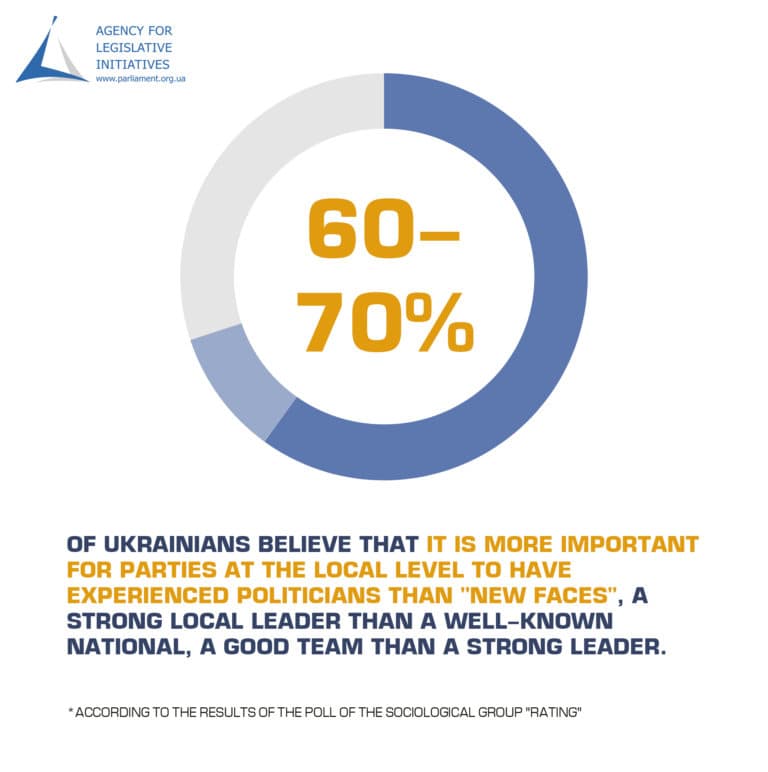
The results of the survey of the Sociological Group Rating showed that the majority of respondents (60-70%) believe that it is more important for parties at the local level to have a strong local leader than well-known national, experienced politicians than “new faces”, a good team than a strong leader. One way or another, political players are changing, and the authorities are being “renewed”. In particular, Agency for Legislative Initiatives counted that 80.4% of “new faces” entered the Verkhovna Rada after the last parliamentary elections in 2019. These are people who have never received a mandate as a member of parliament before.

Experience shows that the coming to power of “new faces” is not the same as radical positive changes in the country, the eradication of corruption, and economic growth. Of course, new people need to appear in the political process. But we insist that politics must be a professional activity. To become an effective manager, you need to gain years of experience, earn credibility in society, work first for your community, and then reach the national level.
In Ukraine, it is necessary to build a system for the education of political leaders and the formation of strong political parties so that this smooth growth of politicians takes place in a professional environment. That is how we finally could have the opportunity to choose professionals in their field – politics, and not just “new faces” who were previously engaged in a completely different area.
We are working to make society aware of this. On the other hand, experienced leaders in Ukraine are also often not professionals. And that needs to be changed too.
Svitlana Matviienko, Chairwoman of the Board of the Agency for Legislative Initiatives and Director of the Ukrainian School of Political Studies, spoke on Ukrainian Radio about why politics should be a professional activity and why we shouldn’t believe only in “new faces”.