
The Committee on Freedom of Speech is one of the least effective in this convocation. Dismissing or changing its chair does not address the problem that arose during this convocation. In order to attain a genuine resolution, it is imperative to possess the political will to revert to the circumstances of the eighth convocation, when the coalition did not hold such a dominant influence in the committees of the Verkhovna Rada. Until this happens, the Committee on Freedom of Speech will remain one of the least busy committees of the Rada.
Liquidation of the Committee on Freedom of Speech: A Natural End or a Victory of Censorship
When Nestor Shufrych, (still) MP, was accused of treason and subsequently lost the position as Chair of the Committee on Freedom of Speech, the matter arose within the parliament once again: what should be done with the committee, which was hardly distinguished by law-making activities throughout the entire IX convocation, and where only three deputies remained? Should it be liquidated? Or, reorganised and merged with another committee? Or, perhaps, it should stay as is?
Let’s review different political outcomes for the committee.
How did the committee perform during the IX convocation?
During this time, only three draft laws were elaborated by the Committee on Freedom of Speech. Of them, all were assigned after the beginning of the full-scale invasion. That is, it has the lowest workload of all the committees of the Verkhovna Rada of the ninth convocation. Its quantitative composition also appears reasonable – only three MPs, the smallest number among the other committees.
According to the transcripts, during the first four meetings of the committee in 2022 (i.e., all of the meetings before the full-scale invasion), each time one of the issues raised was the “illegal” restrictions on the media of pro-Russian politicians, “NASH” and “Ukraine Public News,” (owned by Muraiev and Medvedchuk, respectively) In fact, primarily due to Shufrych being the chair of this committee, it morphed into a mouthpiece for pro-Russian forces, which were able to express once again their remorse for the “persecutions” that had been afflicted upon them.
And how did it perform before?
Looking back, the situation during the eighth convocation is completely different. At that time, the committee was known as the Committee on Freedom of Speech and Information Policy and worked much more actively. The number of elaborated laws was much higher – 109. The committee’s composition was also distinct; at the commencement of the eighth convocation, it consisted of a total of 10 MPs.
Why was there such a drastic weakening of the committee? The issue is associated with modifications made at the start of the ninth convocation. The Committee on Humanitarian and Information Policy (a similar committee was called the Committee on Culture and Spirituality in the eighth convocation) was given a broader scope of competence. This happened because of two other committees: the Committee on Freedom of Speech and Information Policy and the Committee on Family, Youth, Sports, and Tourism.
The Committee on Humanitarian and Information Policy has the most members, just as the highest number of elaborated laws – 186.
Why did this re-distribution happen?
The reason for the redistribution of the committee’s scope of competence could be a purely political decision. Chairing committees has always been a subject of political agreements.
Consequently, during the ninth convocation, OPZZh, an apparently pro-Russian party, received the second-largest faction in the Rada. This faction also possesses a means of exerting influence, as they have also submitted applications for positions in committees. The reluctance to give such an important political resource as the chairmanship of committees to the most toxic faction makes it seem logical to redistribute the scope of competence and give the weaker committee to the OPZZh as part of the general desire of the Servant of the People party to concentrate as much influence as possible in its hands.
The current Committee on Youth and Sports suffered the same fate. No wonder that it is chaired by the MP from the minority faction – “Batkivshchyna.” The complete picture becomes apparent when one considers who was appointed as the Chair of the Committee for Humanitarian and Information Policy in 2019. And this is Oleksandr Tkachenko, a man from the ranks of the Servant of the People party who will later become the Minister of Culture and Information Policy.
It is important to improve the balance between committees and ministries. Such reorganisation of the scope of expertise resulted in the emergence of a further issue pertaining to the control mechanism. As previously stated by the Agency, the distribution in the form of “one ministry – one committee” is the best approach for ensuring the highest level of quality performance of the oversight function. In this particular instance, it is evident to each ministry which committee to communicate with and to which to report. The decision to divide the committee duties, however, has led to a dispersion of its oversight function – the Ministry of Culture and Information Policy now has to be accountable to a certain extent to four committees. This has a detrimental impact on both the Ministry’s performance (as the burden increases and coordination deteriorates) and the efficacy of committee oversight.
So, what is next?
We now find ourselves at the cross roads: what should we do with such a committee? There are several options. There were suggestions to liquidate the committee altogether or to merge it with another committee. Despite the assertions of opposition figures that this would be a “victory of censorship,” such “censorship” may not extend beyond mere assertions. The Committee on Freedom of Speech now has such a limited scope of powers that its nullification will have little impact on the actual situation. But this does not mean that the Committee on Freedom of Speech should be put out of commission.
Another option is to give the chairmanship to one of the other opposition factions. Each faction deserves to chair at least one of the committees, as we already estimated at the beginning of the ninth convocation using the D’Hondt method. There is only one faction that does not have this privilege, and that is the Voice faction. Nonetheless, such a modification will not address the primary issue, as the Committee on Freedom of Speech will continue to be constrained in its workload. Three laws were elaborated during the entire ninth convocation, which is a telling indicator.
Another way to address the problem is to go back to the scope of competence that was distributed during the eighth convocation. However, there is one caveat: Servant of the People party currently does not preside over three of the 23 committees. Two of them got fewer powers than in the previous convocation. So, will there be a political will to balance the capacity of various committees? This could have a negative impact on the coalition in power.
Political will or death (of the Committee)
Legislation At the Tank’s Point: How Stable Were the Laws Adopted in March 2022
The first month of the full-scale invasion is a unique period in the history of the Ukrainian parliamentary system. At that particular moment, representatives of the ruling elite were in immediate danger, and the Verkhovna Rada, as a place housing MPs, was one of the primary targets for destruction.
Nonetheless, the Ukrainian parliament kept working despite all odds. MPs needed to amend the legislation immediately to fit the conditions of a full-scale invasion, and they did so in a very short time and under the threat of shelling and operations of sabotage and reconnaissance groups. However, given the rapid alterations in circumstances, what was the degree of stability of laws enacted during this period?
We have analysed all laws adopted in March 2022. The absolute majority of them were amending other laws. So, we reviewed all laws and codes that had been amended.
According to our estimates, after 18 months following March 2022, most amendments were modified again. This means that MPs once again tried to re-write what had been changed just before that. Such laws can be called unstable.
Why can the laws be unstable?
One of the reasons includes continuously changing circumstances. When enemy tanks are within a few kilometres from the capital, changes are needed here and now. This is what the Rada was doing: settling the situation in a very stressful environment. Subsequent developments at the frontline and in the international arena forced parliamentarians to amend newly adopted laws again and again. The general instability also affected the instability of legislation.
In peacetime, however, a slightly different paradigm exists: constant amendments to the legislation, especially during a relatively short time since its adoption, mean that the quality of the law is not very high. Amendments to it may be compared to patching old clothing that no longer fits by any parameters.
In March 2022, laws were developed and enacted with utmost speed, and hence, errors were unavoidable. The frequency of amendments to the regulations may be related to the low quality.
It is hard to tell what was the actual reason in each specific case. Since there are sufficient resources and information available, the Cabinet of Ministers is the only body that may speak with certainty of the quality and clarity of any draft law. Although sometimes, everything is obvious.
For instance, the Main Scientific and Expert Administration saw a violation of laws in draft law No. 7118 already after its registration due to the introduced possibility of forwarding cases investigated by NABU to another pre-trial investigation body. After all, it is for a reason that NABU has a special status. But the draft law was adopted without recommendations being taken into account. Therefore, a month later they were to be introduced by means of a separate law.
And it is sometimes apparent that laws were adopted with great speed during this period. It is especially noticeable in the laws elaborated with obviously superficial mistakes. For instance, draft law No. 7185 was adopted on 24 March 2022. This law was supposed to amend the law “On Baby Food,” which had been invalid for almost six months at the time.
Draft law 7151 is similar. It was intended to change the words that do not exist in the law! It seems like this paragraph will stay in the law forever as a recollection of March 2022, when two days passed between the law’s registration and adoption.
“{Amendments to part one of Article 18 adopted by Law of Ukraine No. 2121-IX of 15 March 2022 are infeasible (the words that need replacement are missing)}”
What do data say?
Of the 51 laws that were adopted in March 2022, only 17 remained unchanged. It is noteworthy that we do not consider ratifications and resolutions, which are regarded as crucial pillars of stability in the unstable framework of Ukrainian legislation (as they are hardly ever amended). One ratification was found among March laws. Two additional laws remain unsigned and are still sitting on the shelves of the President’s Office.
The norms of 68% of the laws have undergone changes, while a third of them remain in the version of March 2022. A comparison will help us figure out whether it is many or not.
Let’s review similar periods – March 2021 and March 2023. In March 2021, 27 laws were adopted (and another 15 ratifications and resolutions). Of them, only five were subsequently amended. More than 80% of unchanged laws is a striking difference compared to the results shown by MPs a year later.
The situation in March 2023 is interesting. During this time, MPs adopted 17 laws and another 13 resolutions. Out of these 17 laws, 24% – almost a quarter – were later amended. This figure is higher than two years before. However, considering that less than six months have elapsed, the current situation is beginning to resemble the one in March 2022.

The temporary nature of the laws enacted in the initial month of the full-scale invasion is apparent. This is not surprising, as the unstable nature of the legislation is directly linked to the broader instability that engulfed the country, resulting from the full-scale invasion. During this time, laws were drafted and passed with haste, which caused problems with technical and legal aspects.
Simultaneously, the need to “keep the finger on the pulse” compelled legislators to repeatedly revisit previously enacted laws with amendments. Currently, despite the global situation appearing to be more stable compared to the disastrous March 2022, the legislative process has not fully recovered, and amendments to the adopted laws are being made more frequently than before the full-scale invasion.
The law is the foundation and framework for regulations, particularly in the context of the general uncertainty of war. Indeed, during times of war, it is imperative to swiftly respond to the circumstances, including through modifications in legislation. But if Ukrainian legislators keep changing the same lines several times within a short period, this once again indicates that the legislative structure is unstable and that Ukrainian legislators are short-sighted. The tumultuous processes of state functioning increasingly resemble a game of Jenga, where players alternate removing blocks from the base of a tower and putting them on top, resulting in a tower becoming taller and less stable.
An Educational Event for Representatives of the Parliament and the Government
On September 15, 2023, the Agency for Legislative Initiatives (ALI) held a training event for parliament and government representatives to discuss problematic issues arising while developing and processing draft laws. This event is prepared within the framework of the “Civil Society for Ukraine’s Post-War Reconstruction and EU Readiness” project financed by the European Union.
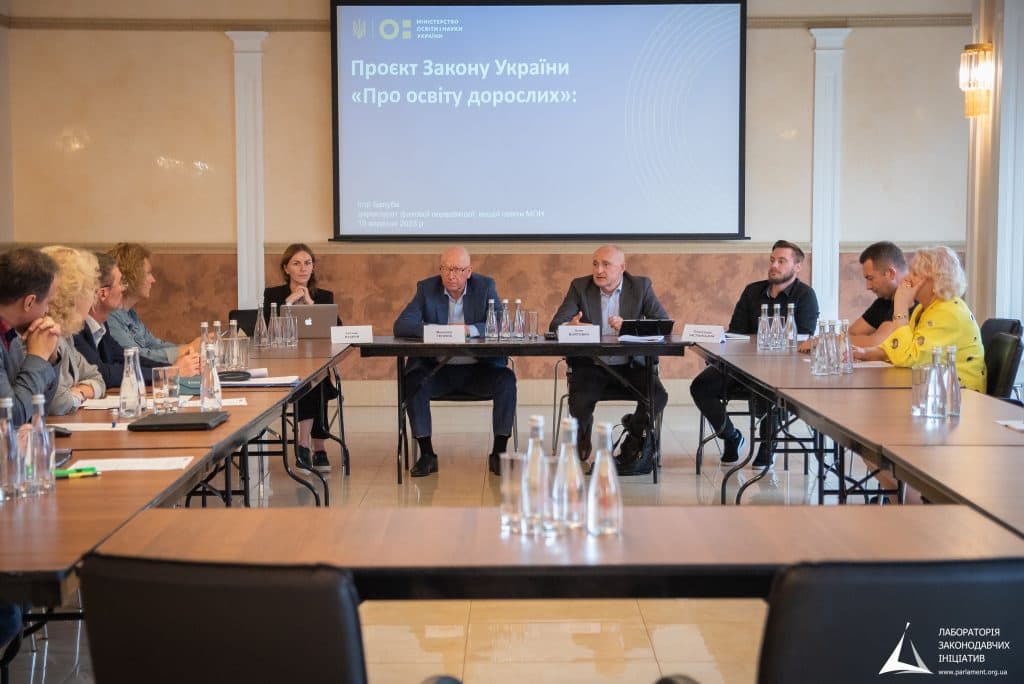
Context. The legislative process is a living organism that constantly needs improvement. A legislative impact assessment is one of the tools for this which can be used right now. This practice is rightfully considered an effective tool for improving draft laws, particularly during expert-analytical review.
During the event, the participants discussed existing gaps and challenges in the process of developing draft laws and ways to solve these problems.

Oleksandr Zaslavskyy, director of the analytical direction of the Agency for Legislative Initiatives, moderated the discussion. He spoke about the advantages of the legislative impact assessment methodology:
“For the past several years, the Agency for Legislative Initiatives has been promoting the idea of legislative impact assessment in Ukraine. We even developed a step-by-step guide. Today’s informal discussion is organised to identify gaps in the legislative work better, how they can be corrected and how to properly use the impact assessment tool of draft laws”

Tetiana Lukeria, the author of the Manual on the preparation of legislative impact assessments, spoke about the international experience of using this tool and the nuances that must be considered when adapting the tool to Ukrainian needs:
“Legislative impact assessment is an effective tool that has long been used in many countries around the world. The purpose of this assessment is to determine what consequences the draft law will have even at the stage of its preparation. We cannot simply copy international experience, but we can adapt it to the needs of the Ukrainian context”
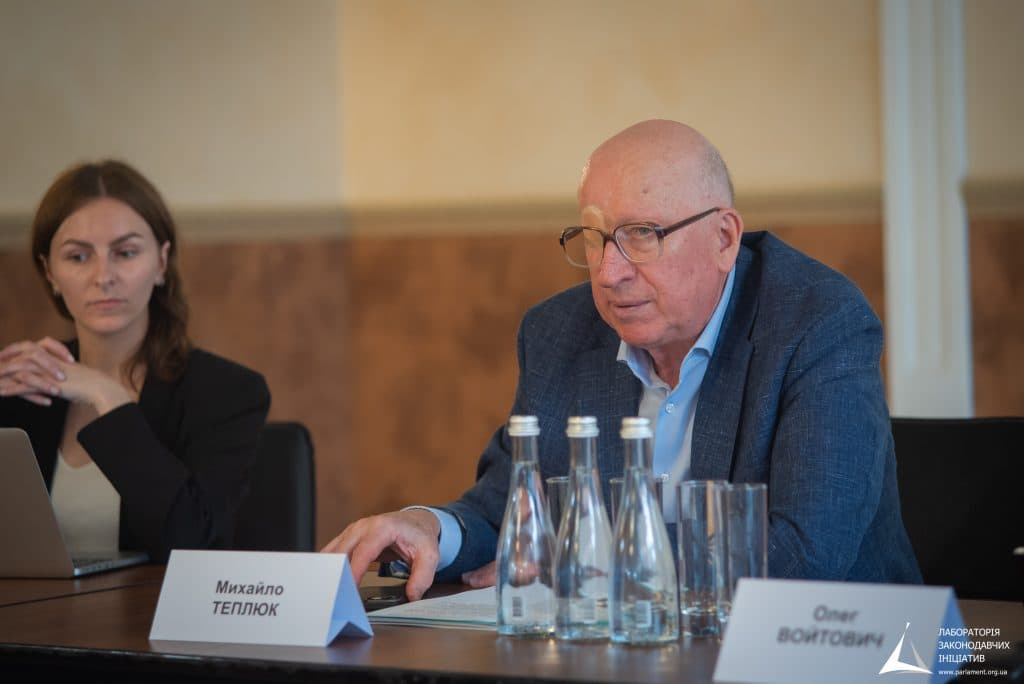
Mykhailo Teplyuk, Deputy Head of the Apparatus of the Verkhovna Rada of Ukraine – head of the Main Legal Department of the VRU, emphasized the need to rethink the approach to evaluating the effectiveness of draft laws:
“The issue of the number of adopted laws and resolutions has long been a priority from the point of view of evaluating the effectiveness of the legislative activity of the parliament. However, the adoption of laws is not an end in itself. The main goal is to regulate relations between citizens, the public sector and public structures”
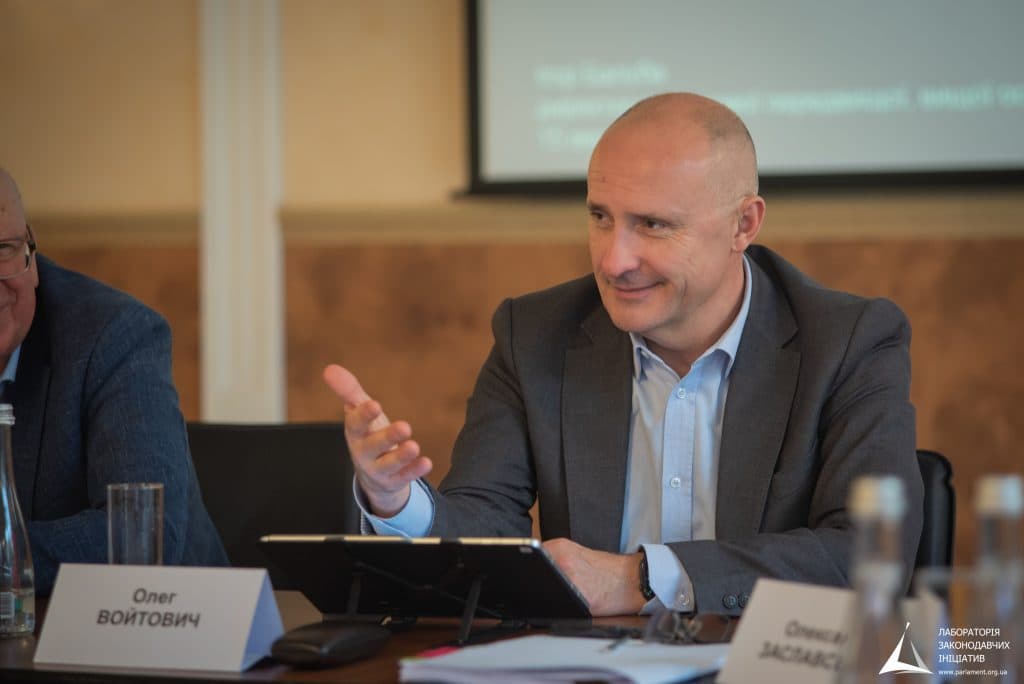
Oleh Voitovych, Deputy State Secretary of the Cabinet of Ministers of Ukraine, noted that the development of quality laws requires the cooperation of the parliament and the government:
“This meeting, organised with the help of the Agency for Legislative Initiatives, is one of the bricks that should improve the cooperation between the parliament and the government. A comprehensive approach in our cooperation will help construct an algorithm for preparing high-quality draft laws”
For additional information, contact Maria Hereles, Director of the Communications Department of the Agency of Legislative Initiatives, at mg@parliament.org.ua.
Agendas And Their Implementation: Why Does Not Rada Follow Its Plans?
The agenda of the Parliament is a list of draft laws that MPs are to consider in the session hall. Essentially, this is the Verkhovna Rada’s work plan.
Agendas and their implementation bring clarity to the Parliament’s work. This is the foundation of the quality performance of MPs, as they enable parliamentarians to prepare for the session and review draft laws to be put to vote.
Moreover, the availability of agendas is essential for the public and our partners, who may use them to keep track of the matters the Parliament has to vote for and when.
So, if the Parliament follows the agenda, this indicates the systematic and predictable functioning of the Verkhovna Rada, which is the most important democratic institution in Ukraine.
However, in the Ukrainian reality, agendas have long stopped being a perfect plan for the Parliament’s operation.
Ukrainian Parliamentary Practice
First, agendas are unreal in terms of the number of draft laws.
Sometimes, over 100 draft laws are included in the agenda for one session. It is physically unfeasible to consider such a significant number of draft laws and resolutions during a single day, given the need to discuss them.
To substantiate this assertion, we analysed four springs of legislative activity and deduced the capacity of the Verkhovna Rada of Ukraine, i.e., the maximum number of draft laws that the Parliament can consider in a single session.
Before martial law, the Verkhovna Rada performed quite consistently. In 2020 and 2021, the average statistical number of draft laws considered during one session was 6.7 (the difference between the analysed period of 2020 and 2021 being in two decimal points).
Although the speed of the Verkhovna Rada’s work hardly changed in practice, session agendas were very inflated. The plan significantly exceeded the MPs’ ability to analyse such many draft laws and the Rada’s capacity to consider them. For instance, in spring 2020, one agenda on average contained 10 draft laws, while in 2021, the number already reached 45.
After the introduction of martial law, the capacity of the VRU increased. We have observed that the average number of draft laws considered per session has increased by nearly threefold, whereas agendas have simultaneously shortened significantly.
The spring of 2022 saw an average of 84% of draft laws from the set plans being considered, which means much better adherence to agendas. It was during this period that they were most effective.

In the spring of 2023, the Rada preserved the speed of consideration, which was evidenced at the start of the full-scale invasion. For instance, the average number of considered draft laws per session is similar. At the same time, agendas are increasingly going beyond the Verkhovna Rada’s capacity in terms of consideration. In particular, the agenda for 30 May 2023 contained nearly 70 draft laws. It is unreal to consider so many draft laws during just one session.
Second, the consideration of draft laws may take place outside the plan or without any plan whatsoever.
Before martial law, MPs received the agenda a week in advance, so according to the logic, they had enough time to analyse at least part of these draft laws. Moreover, according to the Regulations, MPs were provided with the plenary session agenda by 6 p.m. on the day. However, it could differ from the previous weekly plans in that draft laws could be entered in a different sequence, or new draft laws could appear that were not initially included in any of the agendas.
After the full-scale invasion started, the already imperfect planning became even more chaotic. In spring 2022, agendas were handed over to parliamentarians just a few hours before the session. This was primarily associated with the Parliament’s security policy. When Russian tanks and artillery are situated within a few kilometres of the administrative border of Kyiv, it is imperative that the Parliament, including MPs, functions without prior announcement.
In spring 2023, the situation somewhat stabilised, and MPs started receiving the agenda one week before the start of sessions. But just as before, the previously devised agendas are not always followed – new draft laws may be put for consideration during the session, although there were no plans to consider them.
How to prepare an effective agenda?
It appears that the ideal agenda should be elaborated based on the Council’s past results.
Herein lie two distinct alternatives: prior to the full-scale invasion, in the spring of 2020 and 2021, the median number of considered draft laws per session, comprising half of the indicators being lower and half being higher, was 4 and 5, respectively.
After the full-scale invasion, the situation changed drastically: 20 considered draft laws per session in the spring of 2022 and 22 draft laws in the spring of 2023.
*We cite median data in the article to present a general picture, which, however, does not convey the multifaceted nature of the legislative process.

The pace of the Verkhovna Rada’s functioning during peaceful times, when amendment spam was prevalent and a consensus was not a fundamental principle, is entirely dissimilar to how the Rada works during martial law.
The agenda size, which is realistic for the Verkhovna Rada and does not go beyond extreme values, is 20 draft laws for the period until 2022 and 27 for the period of martial law. That is, there is no point in including additional draft laws on the agenda, as there will be no time to consider them, not to mention that MPs should still have time to review all draft laws for which they have to vote (and each draft law comprises dozens of pages with text).
Therefore, if agendas are more realistic, i.e., contain fewer draft laws that require consideration, then everyone will gain. The work of the Parliament is expected to become less chaotic and more predictable, which is crucial for the institutional stability of the Verkhovna Rada of Ukraine and for ensuring that the Parliament adopts high-quality decisions.
This, of course, does not imply that shorter agendas will suffice to address all the issues of the legislative process in Ukraine. Yet, this is one of the crucial steps.
How Parliament Worked in the Second Half of the Full-Scale Invasion: Trends and Conclusions
After a year and a half of a full-scale invasion, Ukrainians have adapted to living under a constant threat. State institutions, the parliament, in particular, were also stabilized. This is evidenced by quantitative data from the last monitoring of Verkhovna Rada by the Agency for the Legislative Initiative (ALI).
We shall begin with some general numbers. During the 8th session (from September 2022 to February 2023), 385 draft laws were registered, 207 draft laws were considered, and 138 were approved/ratified. 29 hours of plenary time were spent in the assembly hall to consider draft laws. The Committees provided 405 conclusions on draft laws. Now let’s dive into the conclusions hiding behind these general figures.
In particular, we see three main tendencies: strengthening the government’s positions, reducing legislative spam and stabilising the work of parliament in wartime.
Strengthening the government’s positions
What signals about the strengthening of the Government’s positions is the fact that the Cabinet of Ministers started actively using the right of legislative initiative — 30% of all laws approved during 8th session were initiated by the government. This is the record for their entire 9th convocation of the parliament.

Unlike MPs and President, the Government began to move their draft laws faster in the second reading. The part of registered acts has also risen — from 10.1 to 14.5%.
A quick reminder that there are only three actors in a lawmaking in Ukraine — Members of Parliament, Government, and the President. Usually, in Ukraine, the MPs play a crucial role in lawmaking — they register the most bills, particularly the ones that will later become laws. International and Ukrainian experts think this situation is distressing and recommend switching to Government-centric model. These recommendations are based on the fact that the Government has better expertise and understanding of the mechanics of implementation and financing of a particular law. The government-centric model is also actively discussed within the framework of the parliamentary reform. The tendency to strengthen government positions in the legislative process during the 8th session of the Verkhovna Rada resonates with the idea of forming a government-centric decision-making model.
Decrease of legislative spam
During the 8th session, 385 draft laws were registered. If we compare it to the similar 6th session, the number of registered draft laws per session has decreased by almost 200. A reminder that at the end of the 8th session, there were 409 MPs. For the first time during 9th convocation of Verkhovna Rada, the number of registered drafts per session is fewer than the number of Verkhovna Rada MPs.

For the time being, in general, one MP initiates 0,94 bill. Until the 8th session, MPs, in their law-making behaviour, mostly followed the principle «the more draft laws, the better the MP». Some even focused on the ratings of deputies-legislators. However, writing, proceeding and approving one worthy law is better than 10 «bad ones». «Bad» laws usually don’t work and need new legislative changes to make them work. Laws that have undergone the procedure of two readings are typically better than the ones hastily passed in one reading.
Of course, not all badly prepared draft laws are passed through, but all of them take up resources from Verkhovna Rada, as they should be reviewed and developed by committees and analytical units of the parliament. Meaning because of legislative spam, Parliament wastes its resources instead of improving important draft laws. Fewer registered acts allow more effective usage of Parliament’s assets.
Stabilisation of the work of the parliament in the wartime
The work of Verkhovna Rada was stabilised, normalised, and some procedures even accelerated compared to the first semester of a full-scale invasion, when the society watched a true turbo mode unleash in the Parliament. This stabilisation gave an opportunity to partially return to the initiatives that were discussed in Parliament prior to 24th February 2022.
Verkhovna Rada remained focused on the same topics as the first semester of wartime mode. The busiest committees of this session were Finance Committee, Law Enforcement Committee and National Security Committee. This means that national security, defence, and its financing remained the priority of Parliament during the 8th session.
Two thirds of laws were adopted by the two readings procedure. Although during the first semester of wartime mode, only one third of laws got through two readings. Meaning Verkhovna Rada could adapt work in a way that important draft laws were considered and processed for a longer period of time, which usually means more sophisticated laws as an outcome.
Two thirds (up to 63%) of laws during the 8th session were adopted, violating the legislative process. This reminds of a situation that we observed the first six months after the full-scale invasion. Violations of Regulations of the Verkhovna Rada were usually related to the speed of the adoption of laws. The high pace of passage of draft laws comes at a price — their processing is worse.
Quantitative indicators analysed by the ALI team show only the tendencies of the Parliaments pace of work. They are not to be considered as evidence for increasing or decreasing quality of adopted laws. The apparent strengthening of the government’s positions does not cancel the complete dependence of the Cabinet’s policy on the decisions of the president’s office. However, even from the described trends, it can be concluded that the work of parliamentarians has stabilised. Legislative initiatives during the 8th session were worked out more thoroughly, were less spammed, and more attention was paid to the proposals of the Cabinet of Ministers.
This article was prepared with the financial support of Sweden.
How and When Ukrainian Political Parties Will Start Reporting Their Finances Again
Accountability and control of political party funding may soon be restored. The draft laws on this issue were submitted by the Cabinet of Ministers and MPs on the initiative of the first deputy chairman of the Verkhovna Rada Oleksandr Korniyenko.
This is already the third iteration of the introduction of state financing of parties and control over their finances. The first attempt took place back in 2008. At that time, the Agency for Legislative Initiatives was one of the organisations that promoted the idea of state financing of parties and effective control over their receipts and expenditures.
Unfortunately, 15 years ago, the majority of political forces did not accept such an idea, contenting themselves with opaque oligarchic financing. Unwillingness to be accountable and populist rhetoric slowed everything down.
But why is reporting needed at all? The general logic of state financing of parties and control over their finances is that it can:
- reduce the influence of big capital (that is, individual private donors and industrial and financial groups) on political parties and, accordingly, on the adoption of political decisions;
- make the financing of political parties transparent and strengthen control over party finances by the state;
- provide conditions for the development of new political parties, fair and transparent interparty competition.
Ukrainian parties returned to financing and control for the second time in 2015. It was part of a broader reform to fight corruption. The Ukrainian public and influential international organisations, such as the OSCE, the Venice Commission, and GRECO, supported the reform.
A special body was created – the National Agency on Corruption Prevention (NACP), which was supposed, in particular, to administer the budget financing of parliamentary parties and control the activities of all parties, collecting and checking reports on income and expenses. In case of detection of violations, administrative and, in some cases, criminal liability could be imposed. If a violation concerned the parliamentary parties, NACP had the authority to stop funding from the state budget.
The second attempt to introduce party financing and reporting proved more successful. Money from the state budget began to flow to the parties in 2016 and continues to flow to this day. However, reporting was not such a continuous process – it was mandatory from the fall of 2016 until the spring of 2020, that is, for three and a half years.
And then, the COVID-19 pandemic started. The Verkhovna Rada allowed the parties not to submit reports for the quarantine period. Because of this, it is impossible to control the parties’ activities to detect violations and questionable contributions.
This step seemed logical at one time because the coronavirus pandemic complicated the work of many bodies – both party and state. It was more difficult for them to obtain the documents necessary for reporting and organising this process.
But already in 2021, it became apparent that society had adapted to the pandemic, the work of both state and non-state bodies improved, but control over funds was not renewed.
Parliamentary parties received funds but didn’t have to report on them. They were not forbidden to do this, but they were not obliged either.
Parties could voluntarily report, but this option did not become popular. Large parties, with a few exceptions, did not submit reports. If any parties did report, they were usually small parties that had [almost] no expenses and income. Therefore, the problem of uncontrolled financing of parliamentary parties was not solved.
Talks about renewing reporting and control were cut short in February 2022. In March 2022, Verkhovna Rada relaxed the reporting requirements of legal entities: reports could be submitted or not submitted, liability for non-submission/late submission was abolished, and authorised bodies could conduct or not conduct audits of reports. There were objective reasons for this – part of the documentation was destroyed, and banks and control bodies had significant interruptions in their work.
Parties have the status of legal entities, so these rules also apply to them. This means that NACP could neither check party reports nor impose liability on the party.
Additional relaxations were created, common to all legal entities during martial law, in addition to specific relaxations established specifically for parties during quarantine.
After a year and a half of martial law, a new demand for party accountability appeared in society. So there were registered two draft laws to resolve this issue.
Government draft law No. 9419, dated June 26, 2023
Its main focus is on detailing the party financing mechanism and possible party expenses, but in general, the draft law is quite versatile and provides for:
- Limitation of contributions to party support through related legal entities and non-profit organisations, in particular, to limit indirect influence;
- Limitation of the total amount of the contribution at the level of 20% of its total aggregate income for the last five years (to avoid financing by fictitious persons);
- Separately, it is allowed to finance the involvement of persons with disabilities in parties;
- The priority areas of party financing have been determined;
- Prohibited types of expenses financed from the state budget have been established;
- The system of distribution of state budget funds between parties is changing;
- COVID-19 relaxations for party reporting are going to be cancelled.
Another draft law, initiated by the First Deputy Chairman of the VRU, Oleksandr Korniyenko, No. 9419-1, dated July 12, 2023
This draft law is more comprehensive in terms of restoring reporting. It provides:
- Reduction of the percentage barrier that a party must overcome in elections to receive funding from 5 to 3%, which should facilitate the development of smaller parties.
- Martial law reporting exemptions that apply to all legal entities will no longer apply to parties.
- If the party has state funding, its reports for previous periods (from 2020) must be submitted by 90 days after the date of entry into force of this law.
- If the party does NOT have state funding, its reports for previous periods must be submitted by 120 days after the date of entry into force of this law.
- Reports for these earlier periods may be in an annual format, and quarterly reports should resume in the future.
- The NACP must verify these reports and reports voluntarily submitted during martial law within 60 days from the date of submission or the date of entry into force of the law.
- Parties are released from responsibility if they cannot provide information due to force majeure circumstances related to hostilities (destruction, damage or unavailability due to occupation – documents or computers). Force majeure must be documented.
- The register of party reporting resumes.
If we compare these two draft laws, the task of restoring reporting and control is better performed by draft law No. 9419-1.
Draft law No. 9419 in its current version will not lead to the resumption of reporting because martial law is currently in effect. Therefore parties will be subject to general relaxations for reporting that apply to all legal entities.
Draft law No. 9419 cancels only the COVID-19 relaxations. In addition, it does not define any transitional norms and rules for submitting reports for previous periods, nor does it consider the limitations of martial law.
Transitional provisions and cancellation of COVID-19 and martial law relaxations are in draft law No. 9419-1.
Although draft law No. 9419 does not restore party reporting, it can improve the general mechanism of state financing. Still, its current version contains part of unfinished norms that do not have real implementation mechanisms or appear to be unnecessary.
In general, draft laws No. 9419 and No. 9419-1 do not contradict each other too much. Therefore, it will be interesting to observe their consideration process because they are alternatives. Both draft laws have quite promising initiators – the Cabinet of Ministers for No. 9419 and the First Deputy Chairman of the VRU with the support of several factions and groups for No. 9419-1.
So, there is a reasonable prospect of restoring the accountability of political parties, especially those that receive state funding. Control over how they spend these funds can finally be restored.
At the same time, it is essential to avoid making mistakes made in the previous period. Most recently, on June 6, 2023, the Accounts Chamber’s report on the audit of state financing of parties in 2016-2019 was released, which covers three out of three and a half years of total control and reporting on party finances. The conclusion of this report is quite sad:
“The National Agency on Corruption Prevention has not ensured effective management, productive, economical, effective and legal use of state budget funds allocated for leadership and management in the field of corruption prevention and financing political parties’ statutory activities”.
Party financing lacks performance indicators, making it difficult for the Audit Chamber to evaluate relevant budget programs. Therefore, assessing the effectiveness of using UAH 1.5 billion to finance parties was impossible. Control over how money was spent on party financing by the NACP was complicated due to shortcomings in the legislation, which the NACP still needs to correct.
Unfortunately, neither draft law No. 9419 nor No. 9419-1 take into account parts of the recommendations of the Accounting Chamber. For example, the recommendation regarding “determining the reporting of local organisations of political parties on the spending of state funding and the crediting of state funding to separate accounts of local organisations to improve control over the targeted use of these funds” was not considered.
Therefore, draft laws No. 9419 and No. 9419-1 can restore party accountability and improve their financing mechanisms. However, the NACP, the Cabinet of Ministers and MPs should be proactive in this process. As seen from the audit of the Accounting Chamber, even the most accountable period of party funding in 2016-2019 had significant shortcomings.
After restoring accountability, systemic work must begin to correct all these shortcomings. If this is not done, public trust in the party financing mechanism may decrease to the level of 2008, when political forces successfully manipulated public opinion and cancelled party financing and reporting. As a result, the influence of oligarchic groups was not eliminated, the conditions for fair and transparent party competition were not created, and new powerful political parties did not appear.
The abolition of party funding and control contributed to preserving the opaque political-party life of the late 2000s. Such phenomena as “Yanukovych-president”, “party-switching”, voting for “dictatorship laws on January 16”, usurpation of power, etc., were the result of this situation. A new iteration of such a development could be fatal for Ukraine. Members of the Verkhovna Rada of Ukraine should not allow this.
Monitoring of the Ukrainian Parliament’s work, IX convocation, 8th session
Stabilisation During Martial Law
The Verkhovna Rada continues functioning in conditions of martial law, which presents many challenges both for the state management system in general and for the Parliament in particular. However, this session has seen the stabilisation of legislative processes.
This means that the Verkhovna Rada is still dealing with the agenda that emerged after 24 February 2022, but its functioning is no longer so extraordinary and hasty. Work processes have been modified to such an extent that it has become feasible to partially revisit the issues that were on the agenda prior to the full-scale invasion.
Overall, the Monitoring of the work of the 8th session of the 9th convocation of the Verkhovna Rada showed three key trends: strengthening the positions of the Cabinet of Ministers, reducing legislative spam, and stabilising work under the martial law regime.
During the 8th session, 385 draft laws were registered, and 207 were considered in the session hall. 138 draft laws became laws.
At the same time, a telling peculiarity is when, for the first time in a long time, at least during the entire 9th convocation, the number of draft laws registered with the Verkhovna Rada per session is lower than the number of Verkhovna Rada MPs. On average, one MP initiates of 0.94 draft laws, which also reflects the tendency to reduce legislative spam.
The recurring trend is the reduction in the number of registered draft laws per MP. However, it was during the 8th session that the ratio of one draft law per one MP for most factions was lowered.
It is also noteworthy that the Cabinet of Ministers has improved its interaction with the Verkhovna Rada and has begun to promote its draft laws more efficiently. This indicates that the government is improving its position as a subject of legislative initiative, although it has previously lagged behind the MPs and the President. Hence, the Cabinet of Ministers has significantly increased the share of legislative initiatives, and as a result, 30% of all laws adopted during the 8th session were initiated by the Government. This is a record of the entire 9th convocation of the Cabinet of Ministers.
Furthermore, the situation regarding the passage of draft laws is interesting: the dynamics of the 8th session somehow continue the dynamics of the first half of the martial law period and somewhat return to the dynamics of the 6th session. Some of the draft laws pertain to the military agenda, while the other portion relates to initiatives that were developed and registered up until 24 February 2022 (for the second reading, the ratio is approximately 50/50).
The President, as the subject of a legislative initiative, returned to more familiar tasks: 20% of presidential initiatives adopted during the first reading and, in general, are made up of “ordinary” laws. During the first six months of martial law, laws were adopted as initiated by the President, which were purely symbolic laws and ratifications. Regarding legislative proposals of the MPs, it is noteworthy that for the first time in the last four sessions, their draft laws experienced the slowest passage between adoption in the first reading, the second reading, and overall. Nonetheless, the average processing time for both parliamentary and government draft laws was significantly shorter than that of the 6th session despite the similar duration.
The process of draft law review by committees and expert analytical units, as well as the political approval of draft laws, roughly corresponds to the first six months of martial law. The time required for preparing draft laws for the second reading increased slightly, and for 40% of draft laws, this indicator grew by 17–19 days.
During the 8th session, 42 conclusions of the main committees were prepared on the dismissal of draft laws. Conclusions regarding deviations can serve as indicators of both the political loyalty of the committees and the level of quality of the preparation of draft laws.
Presidential draft laws appear to meet both criteria, as they do not have findings on the dismissal. Governmental draft laws appear to be satisfactory, with only two of them having received a conclusion on dismissal. Draft laws submitted by MPs of the “Servant of the People” faction received the majority of conclusions about deviations, which is logical, considering the number of deputies of this faction and their legislative activity. Other factions and groups received less than 5 conclusions of deviation each.
In traditional monitoring, the aspects related to violations of the Regulation are analysed separately. During the first reading, the share of violations decreased, but during the second reading, it barely changed compared to the previous session. This phenomenon can be attributed to the distribution of draft laws according to the readings: during the initial six months of martial law, most draft laws were adopted in the first reading and as a whole, whereas now, the majority of draft laws are adopted in the second reading.
Procedures for consideration of up to 63% of laws had violations. At the same time, the practice of adopting draft laws right away almost stopped. No draft law was adopted on the day it was registered, only one was adopted the day after it was registered.
This session may be characterised as a “stabilisation” one for the activities of the Verkhovna Rada in martial law conditions. With a well-established and stable performance, the Parliament is capable of allocating sufficient time to the consideration of draft laws, resulting in their adoption during the second reading rather than the first reading. Thus, the Verkhovna Rada was able to adapt its operation so that important draft laws were considered and worked out for a longer time. This usually means a higher quality of laws. Nevertheless, violations in legislative procedures are still at a high level.
Read more about the work of the Parliament during the second six months of the full-scale invasion in the monitoring of our analysts.
This study has been prepared with financial support from Sweden.
At a Meeting with Pat Cox, the Agency Discussed the Continuation of Parliamentary Reform During the Full-Scale War
These days, the Agency for Legislative Initiatives has been participating in meetings with Pat Cox, former President of the European Parliament and Head of the Mission to promote the reform of the Verkhovna Rada of Ukraine. Discussions were devoted to further steps to continue parliamentary reform during the full-scale war.

The reform of the Ukrainian Parliament began in 2015 with the launch of the Assessment Mission of the European Parliament under the leadership of Pat Cox. The Mission has developed a Roadmap with specific recommendations on how to strengthen the Verkhovna Rada of Ukraine institutionally and solve the existing problems of Ukrainian parliamentarism – the lack of political dialogue, constant “legislative spam” from MPs and replacing the quality of legislative initiatives with quantity, the weakness of the Apparatus of the VRU and the lack of understanding the importance of this structure and parliamentary officials.
The Agency for Legislative Initiatives supports the parliamentary reform from the very beginning and monitors its implementation. As of mid-2021, we estimate that the reform of the parliament has been completed less than half. And although at the beginning of 2022 the priorities of both the Verkhovna Rada and the entire Ukrainian society have changed, we are convinced that the reform of the parliament must be continued.
The Verkhovna Rada of Ukraine is the centre of Ukrainian democracy. Even in the darkest times, we cannot allow the institutional capacity of the parliament to be forgotten and the democratic gains of the last 30 years to be jeopardized. Of course, parliamentary reform during the war cannot be so comprehensive, but there are concrete actions, the implementation of which will strengthen the Verkhovna Rada and, as a result, will help Ukraine to endure and retain the support of partners.
During the full-scale invasion, we propose to concentrate, first of all, on the following areas of reform:
Business continuity management and disaster recovery planning
Before the start of the full-scale invasion, the Ukrainian parliament was definitely not ready for the challenges of wartime. If the parliament could not, however chaotically, continue its work in February-March 2022, the capacity of the Ukrainian authorities in the eyes of partners and enemies would be in serious danger.
Therefore, the Verkhovna Rada of Ukraine should have an appropriate plan to ensure business continuity management and disaster recovery planning in case of crisis situations. The Ukrainian parliament should develop of such a plan, taking into account the existing experience of the VRU after February 24, 2022, as well as the experience of parliaments of other countries with similar plans.
New Digital Strategy
The fact that the VRU continued to perform its functions after the beginning of the full-scale invasion is largely due to the achievements of the VRU Apparatus, and in particular the Computerized Systems Department, which was, just one example, able to provide the remote and secured functions of various systems and subsystems very quickly. This is the result of the implementation of the previous digital strategy.
Now is the time to create a new, more up-to-date strategy that will take into account experience with the most modern technologies, including machine translation.
Parliamentary Сode of Сonduct
At the end of 2022, draft law No. 8327 was registered in the parliament, which introduces the Code of Conduct for MPs with clear principles, rules, and, most importantly, sanctions for their violation, as well as mechanisms for monitoring their compliance. The Agency for Legislative Initiatives was also involved in preparing this draft law.
The adoption of the Code of Conduct is an extremely important step both for the Verkhovna Rada as a sign of the independence and legitimacy of the institution, and for our partners and allies, because it is a direct recommendation of the Roadmap of Parliamentary Reform, OSCE/ODIHR, GRECO and the Council of Europe.
Development of parliamentary diplomacy
With the beginning of the full-scale invasion, every member of parliament had turned into an ambassador of the Ukrainian people. At the same time, there are several issues that require an adequate solution now, so that the general public diplomacy of Ukraine would become more coherent.
Improving the quality of legislation
The low level of expert-analytical support and, as a result, not very well written legislative initiatives, which then turn into conflicts in legislation or simply non-working laws, is a long-standing problem of the Ukrainian parliament.
Currently, MPs lack the practice of assessing the legislative impact of draft laws before their adoption, as well as understanding why this analysis is needed.
At the same time, improving the quality of laws produced by the parliament is a priority task now, both so that wartime legislative initiatives do not undermine the legitimacy of the Verkhovna Rada, and in order to create a quality framework for future legislative initiatives related to the restoration of post-war Ukraine.
We are grateful to the current convocation of the Verkhovna Rada for their willingness to continue parliamentary reform even during a full-scale war, and to Pat Cox and international partners, including National Democratic Institute in Ukraine, for supporting important changes and dialogue with civil society.
The Agency for Legislative Initiatives will always support the Ukrainian Parliament on this path.
Event “Toward Ukraine’s Membership in NATO: Strengthening Euro-Atlantic Security”
The Agency has always contributed to the Euro-Atlantic integration of Ukraine and makes a lot of efforts to develop parliamentary diplomacy. This week, together with the Embassy of Ukraine in Canada / Посольство України в Канаді and the Parliamentary Centre, we organized a panel discussion, “Toward Ukraine’s Membership in NATO: Strengthening Euro-Atlantic Security” at the Parliament of Canada.
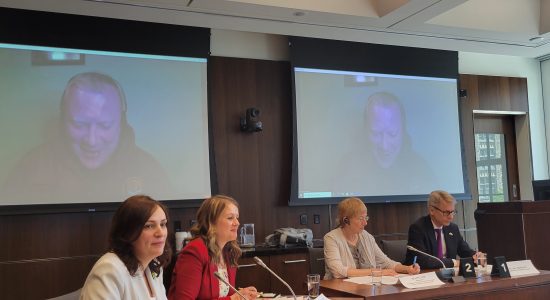
The event’s main goal was to discuss the future of Ukraine, its security and the security of the entire Euro-Atlantic community. Considering Ukraine’s path to NATO – how fast we are progressing, what reforms are being implemented and which are just being planned, what kind of support, in terms of legislation, we need from allies and how Ukraine’s accession to NATO will strengthen the Alliance and Euro-Atlantic security in general.
The event was attended by Canadian parliamentarians, the deputy chairman of the VRU Committee on National Security, Defense and Intelligence, the Head of the Permanent Delegation of Ukraine to the NATO Parliamentary Assembly Yehor Chernev, Deputy Minister of Defense for European Integration Andriy Shevchenko and representatives of the diplomatic corps, including Ambassador Extraordinary and Plenipotentiary of Ukraine to Canada Her Excellency Yuliya Kovaliv and Ambassador Extraordinary and Plenipotentiary of Finland to Canada His Excellency Roy Eriksson.
The event was held as part of the project “Parliament and Accountability of the Security Sector in Ukraine” (PASS Ukraine), which the Agency implements jointly with the Parliamentary Centre (Canada), in cooperation with the Verkhovna Rada of Ukraine, and with the support of Global Affairs Canada within the framework of the Peace and Stabilization Operations Program (PSOPs).
“Legislative Purgatory”: What to Do with Law Drafts That the President Won’t Sign?
The text was prepared for “Dzerkalo Tyzhnia” (Mirror of the Week newspaper)
The end of 2022 was remembered, among other things, for adopting the scandalous draft law No. 5655, which its critics were easy to call “urban rape reform”. Mass media wrote that it expanded developers’ capabilities, removing almost all responsibility from them while opening up new opportunities for corruption. The prospect of adoption made the public flare up: criticism was heard seemingly from everywhere: the Ministry of Culture, the Association of Ukrainian Cities, the National Union of Architects and many other public organizations, and even the NAPC came out categorically against the weakening of transparency in the field of construction.
Law draft No. 5655 gathered only 228 votes in its favour, with just three MPs providing the majority. A day before the vote, registered was a petition demanding to veto the draft law, which accumulated the required number of signatures in a few days. But time elapsed, and neither the veto nor the signature appeared on the document. All deadlines have passed, and No. 5655 still hangs in “legislative purgatory” as if the scandalous draft law had never existed. Yet thanks to that, another problem popped out, and it had been eroding the Ukrainian constitutional norms for years. What is happening, and how can it be addressed? We suggest you figure that out.
What is the problem?
Article 94 of the Constitution of Ukraine defines —“The President of Ukraine, within fifteen days after receiving the law, shall sign it, taking for pursuance, and officially promulgate it or shall return the law with his/her motivated and formulated proposals to the Verkhovna Rada of Ukraine for reconsideration”.
And what if the President won’t do this? The same article states — “If the President of Ukraine does not return the law for reconsideration within the prescribed period, the law is considered to have been approved by the President of Ukraine and must be signed and officially promulgated”. In theory, we have a fairly complete picture of the adoption of draft laws. Regretfully, only in theory.
In practice, everything is a little more complicated. The thing is that the said norm does not provide a clear understanding of who must sign such a draft law if the “15 days of the President” have expired. On the one hand, this can be construed as meaning that the President him/herself must sign and promulgate the law (albeit in violation of the 15-day deadline). On the other hand, the very next paragraph prescribes a rule if the President vetoes the approved draft law and the Parliament overrides the veto with a constitutional majority of 300 votes or more: “If the President of Ukraine has not signed such a law, it shall be officially promulgated by the Speaker of the Verkhovna Rada of Ukraine immediately and shall be published with his/her signature”. Article 94 is contained in the very section of the Constitution dealing with the Verkhovna Rada.
All this gives reasons to believe that the draft law, which has not been signed by the president, must be signed by the Speaker of the Verkhovna Rada. One way or another, in the second case — when the veto is overcome (paragraph 4 of Article 94) —the directly approved entity is in place to take the last step for publishing the document. Whereas in the first case — when the draft law simply lies unsigned (paragraph 3 of Article 94) — there is no clear understanding of who exactly must sign the draft law that the President has not signed. This is what creates the most problems.
How was it used?
As history shows, it’s very simple: firstly, some Presidents allowed themselves to disregard the 15-day limit, and the fact of violation of the deadline has become a common phenomenon since Kuchma’s era. Subsequently, his successors used this increasingly more often: as of 26 June 2018, three dozen draft laws had been pending then-President Petro Poroshenko’s signature for more than a month. Gradually, lateness turned into nearly a habit — in the first two years of his term, Poroshenko, on average, vetoed the draft laws on the 19th day, thus violating the provisions of the Constitution.
Another very interesting thing happened during Petro Poroshenko’s tenure, the likes of which had not been recorded since the adoption of the Constitution — for the first time ever, a draft law was not signed as a matter of principle (the tenures for both the eighth convocation of the Verkhovna Rada and the fifth President have already expired). The draft law is still on the shelf at the Presidential Office. This refers to the infamous draft law No. 5553, which became a precedent for the abuse of the imprecision in the Constitution. It was aimed at reassuring the depositors of the newly nationalized Privatbank. At the same time, this document contradicted obligations to the IMF, possibly because the President did not turn to the draft law.
But the most crucial thing in this story is something else: never before had Article 94 been tested for strength so directly. It looks like this can be used in the future. This is exactly what is happening now: as of 10 April 2023, 25 unsigned draft laws sit and collect dust at the Presidential Office, with some of them waiting for their fate to be decided for years. For example, the draft Law On Amendments to the Budget Code of Ukraine No. 2661 of 20 December 2019 was submitted to the President for signature on 21 January 2020, i.e., more than three years have passed.
Specific trends in “very nearly laws” appear to be rather vague. However, even the existing picture, drawn with broad strokes, seems fanciful. Of the total number of “forgotten” documents, two were submitted as drafts by President Zelenskyi himself and three more — by Prime Minister Shmyhal. The case becomes even stranger considering that the initiators of another 18 draft laws included members of the pro-presidential parliamentary faction, Servant of the People. That is, out of the 25 ignored draft laws, 23 — the absolute majority, 92% (!) — were submitted by members of the ruling coalition or by “Zelenskyi’s people” (including himself, no matter how ironic this sounds).
Other data reveal a greater depth of the overall picture: 13 out of the 25 analysed draft laws were adopted by more than 300 votes — that is, the complete consolidation of the Parliament can be mentioned in their case. And when the President does not sign such draft laws, what we have is a “silent veto”, as it is called, which can’t be overcome. 52% of the draft laws already have a constitutional majority, so the subsequent evolution of the case can be imagined as follows: the President vetoes, and the Verkhovna Rada would have to overrule (of course, if he were to have the political will and once again collect 300 votes for such initiatives). Instead, the “silent veto” — ignoring a draft law submitted for signature — cannot be overcome at the moment.
So, three trends are distinguished here:
The head of state, time and time again, takes advantage of the shortcomings of the Constitution to reject even those draft laws that were adopted by the constitutional majority (as of 10 April — 52% of such cases).
Most of the unsigned law drafts come from the pro-presidential faction, which indicates weak communication between the President and his party and calls into question the very existence of the single-party majority.
The reasons behind the decisions not to sign are unclear: government officials initiate most draft laws, and only the President himself can say why he did not sign them.
What is the reason for the President to ignore draft laws?
A non-solid attitude towards statutory prescriptions that regulate the course of law-making is characteristic of the work not only of the President but also of the Parliament. In the Verkhovna Rada, violations during the adoption of draft laws have already become a common practice. Increasingly, legislators perceive the Rules of Procedures not as a set of rules but as a list of completely optional recommendations. After the full-scale invasion, two out of three laws passed have some sort of procedural flaw, and in 2021, Ruslan Stefanchuk noted that “in this Verkhovna Rada… not a single law of Ukraine was adopted in full accordance with the Rules of Procedures of the Verkhovna Rada”. In light of this, the library of unsigned draft laws at the Presidential Office no longer seems to be something incredible.
What is the President’s motivation for ignoring certain bills? Several hypotheses can be put forward:
- Some part of the draft laws, especially those adopted by the Verkhovna Rada at the beginning of martial law, has simply lost their relevance. An example is draft law No. 7153. Like some other law drafts, it was voted on at the beginning of the full-scale invasion, when circumstances constantly changed. After the liberation of a large part of the north of Ukraine, many problems that the draft law was supposed to solve have lost their relevance. Therefore, the draft law’s obsolescence may be one reason for not signing it.
- The case of draft law No. 5655 On Amendments to Certain Legislative Acts of Ukraine on Reforming the Field of Urban Development is illustrative. It received a lot of criticism, including from the Union of Architects and civil society. Even more: the European Parliament directly stated that adopting this draft law is an obstacle to the EU. Yet it was supported by the majority of votes in the Verkhovna Rada, so the President should have signed or vetoed the law. Still, vociferous fallout seems to have done its job, so the guarantor of the Ukrainian Constitution is not ready to sign it. Then why not use the right to veto? Here comes the time for speculation: conflict of interest? Reluctance to push back lobbyists? In each case, vetoing or signing is a loud message to the concerned groups. It is less provocative to leave the document until better times.
How to go about this?
What are the ways to change the current situation? Solving this problem is a complex issue. The thing is that the said imprecision in the Constitution becomes obvious to the public only after the news about another unsigned draft law. This happened both with draft law No. 2689 On Amendments to Certain Legislative Acts of Ukraine regarding the Implementation of International Criminal and Humanitarian Law in 2021 and, more recently, with the scandalous draft law No. 5655. Every now and then, a small piece of the Constitution gives rise to scandals, rallies and heated discussions, and each time only the President is accused of not wanting to do something with a given draft law. With time and further regular law violations, the systematic problem of the disproportionate power of the head of state may come to the fore. Yet, at present, it is possible to observe a reaction to just piecemeal symptoms but not to the source of the disease.
The lack of a diagnosis as such is the worst part of the whole situation. Should he wish to do so, the President may stop the work of the entire state machinery by simply not letting anything whatsoever reach Holos Ukrayiny (Voice of Ukraine, an official herald). In retrospect, it can be seen how the head of state abuses this imprecision of the Constitution increasingly more, turning a blind eye to an inconvenient draft law at the right moment. No one can control this, as there is no system of checks and balances in this regard. This is the most alarming red flag of all those noted earlier.
But in addition to the public, there is another group of people for whom the status quo is not beneficial. These are MPs themselves. Ultimately, it is they that suffer most from such arbitrariness of the President. The entire outcome of their work can be crossed out by being ignored — and what if the most important draft law of the opposition party or even the coalition itself is sent to purgatory in the Presidential Office?
Maybe the Constitutional Court has a solution? It repeatedly issued interpretations of Article 94 of the Constitution — in 1997, 1998, and 2008. But there is no answer to the question of what to do when the President does not sign laws. Instead, its decisions concernув the method of calculating days (15 calendar or working days), the peculiarities of submitting proposals and imposing vetoes, signing laws adopted in referendums and the entry into force of the Constitution. Naturally, even under martial law, a group of MPs can turn to the Constitutional Court and ask it to explain the provisions of the Basic Law. However, the court may refuse to address this issue. For example, in 2008, concerning another problem, the court noted that “the procedure for signing and promulgating laws adopted by an all-Ukrainian referendum is not regulated in the Constitution of Ukraine. This issue is exclusively for the legislative body and does not belong to the competence of the Constitutional Court of Ukraine”.
It is quite doubtful that the court will construe Article 94 so that it is the Speaker of the Verkhovna Rada who must sign draft laws not signed by the President. After all, such norms are not written directly and clearly. Should the court interpret insufficient regulation so that the President him/herself must sign draft laws that have not been signed before, the verdict will not change the situation: the President is acting this way now. The systemic problem remains the ability of the President to completely block the process of adopting laws that s/he does not like and the inability of the Verkhovna Rada to resolve this situation even if more than 300 MPs wish to do so.
Thus, the most realistic way to solve the problem is to amend the Constitution. This is important, at least for MPs themselves, because their own gains will then be guaranteed. And taking into account the fact that the Rules of Procedure of the Verkhovna Rada have not been considered as something mandatory for a long time, a comprehensive reform suggests itself. But this should really be the position of the majority — after all, an amendment to the Constitution needs the votes of more than 300 lawmakers.
Still, it must be noted that the Constitution’s changes should be expected after the war, as the Basic Law may not be amended under martial law. This, of course, does not mean that the mentioned reform is not overdue, and public discussions are extremely needed. Although currently, no one from MPs’ chambers articulates the need for specific reforms, there is hope for change, not least thanks to the infamous law draft No. 5655.