
The preparation of the research is part of the project implemented by the Agency for Legislative Initiatives within the Civic Synergy Project under the auspices of the Ukrainian National Platform of the Eastern Partnership Civil Society Forum with the financial support of the European Union and the International Renaissance Foundation.
Сivil Assessment of Public Administration Reform (Shadow Report)
The Shadow report proposes the assessment of results of the reform in pilot ministries (in particular in relation to introduction, recruitment of employees and integration of directorates). It aimed at 1) identification of key causes of the problems faced by the responsible individuals and institutions in the process of the reform implementation, and 2) development of recommendations for further implementation of the reform. Within this report a comparative analysis of the updated Strategy of Public Administration Reform in Ukraine in the wording of the CMU Decree No. 1102-p, dated December 18, 2018, and the old version of the Strategy was made in the context of consideration of the recommendations and comments developed by the SIGMA and the Agency for Legislative Initiatives (ALI) experts. Also, ALI experts analyzed relevant regulations and conducted in-depth interviews (with the Directors General, heads of expert groups and government experts from 6 pilot ministries and SCMU) and expert interviews (with the heads of structural subdivisions of NACS).

Press Briefing «Parliamentary Reform: Assessment of Results and Agenda for the New Authorities»
On May 23, 2019, in the Ukrainian Crisis Media Center hosted a press briefing «Parliamentary Reform: Assessment of Results and Agenda for the New Authorities».
The experts of the Agency for Legislative Initiatives presented its assessment of the implementation of parliamentary reform and proposed its agenda for parliamentary reform for the new authorities:
- Svitlana Matviyenko, Chairwoman of the Board of the Agency for Legislative Initiatives;
- Oleksandr Zaslavskyi, Director of the Analytical Department of the Agency for Legislative Initiatives.
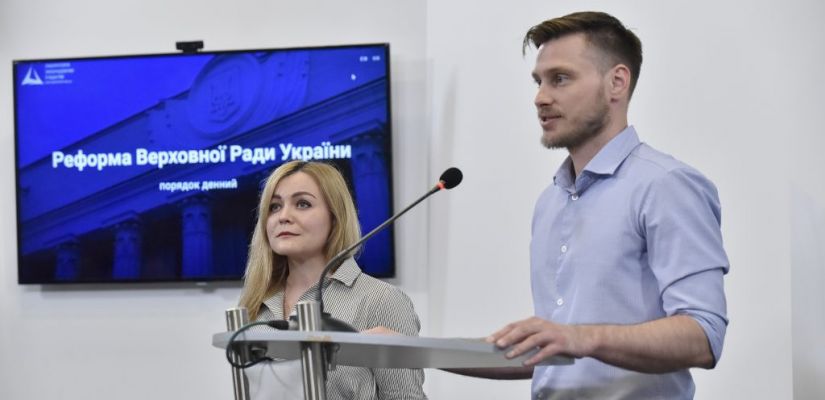
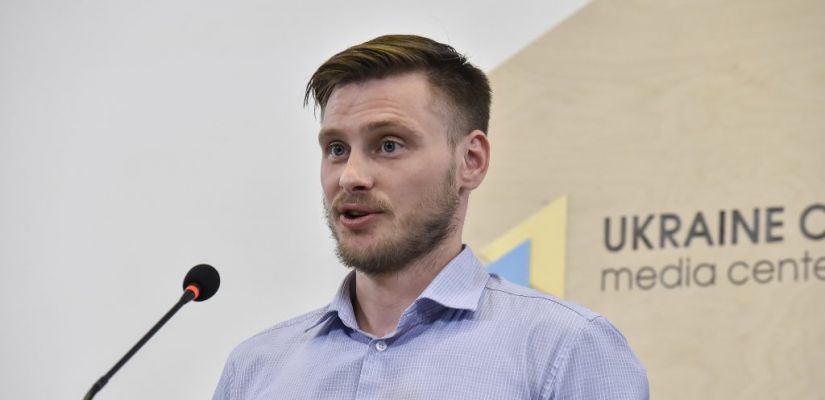
Oleksandr Zaslavskyi, Director of the Analytical Department of the Agency for Legislative Initiatives, said that the reform of the Verkhovna Rada was completed only by 41.8%. Alexander evaluated the status of implementation of key recommendations of the Roadmap on Internal Reform and Institutional Capacity Building for the Verkhovna Rada of Ukraine and stressed:
“Those of reforms that depend on MP`s implemented slowest. About 50 initiatives were registered. None of these documents has been adopted as a whole, only 2 – passed the first reading. Initiatives are more advanced, which did not depend on MP`s and could be resolved by the efforts of Apparatus of the VRU”
Svitlana Matviyenko, Chairwoman of the Board of the Agency for Legislative Initiatives, presented Reform of the Verkhovna Rada of Ukraine: Way Forward and 7 immediate steps of the parliamentary reform to be taken:
“This is not an exhaustive list of steps to be taken to ensure the implementation of parliamentary reform and further development of parliamentarism in Ukraine. Without these steps, the parliament will continue to be in the orbit of the President’s influence, whoever he is, whatever political forces he represents and goals he pursues. A strong parliament is a parliament with a modern parliamentary service, with high ethical standards of people’s deputies, with clear, transparent and effective legislative procedures”
The experts of the Agency for Legislative Initiatives noted that it was possible to implement the Roadmap recommendations in a year and a half. The reason for the inhibition of parliamentary reform is the lack of political will and the general coordination of all those who depend on decision-making.
Video of the press briefing «Parliamentary Reform: Assessment of Results and Agenda for the New Authorities»
Learn about Reform of the Verkhovna Rada of Ukraine: Way Forward
Working Meeting and Discussion of the Research Design “Civil Assessment of Public Administration Reform in Ukraine”
On April 12, 2019 working meeting and discussion of the research design “Civic Assessment of Public Administration Reform in Ukraine” was held.
The preparation of the research is part of the project implemented by the Agency for Legislative Initiatives within the Civic Synergy Project under the auspices of the Ukrainian National Platform of the Eastern Partnership Civil Society Forum with the financial support of the European Union and the International Renaissance Foundation.

The main goal of the project is to strengthen the permanence of the reform in the scope of all European-oriented reforms by conducting the civic assessment of the implementation of EU-Ukraine agreements in the field of public administration.
The working meeting finalized the initial project phase, which involved developing a civic assessment design. Representatives of the Ukrainian National Platform of the Eastern Partnership Civil Society Forum were invited to participate in the discussion.
During the meeting, the issues of the relevance of civic assessment in the proposed format were discussed, as well as research focuses that could have changed in connection with the Government’s adoption of the new version of the Strategy of Public Administration Reform.
Among other things, civic experts suggested that they go beyond the performance indicators set by the Strategy of Public Administration Reform, and try to propose more qualitative criteria for assessing the real impact of reform on end-users – citizens.
The next step in the implementation of the project is to hold consultations with key stakeholders, government agencies involved in the process of reform, professional NGO, etc.
The preliminary results of the Сivic Assessment of Public Administration Reform will also be presented and discussed at the expert platform of the Ukrainian National Platform for the Eastern Partnership Civil Society Forum.
The Civic Assessment of Public Administration Reform in Ukraine will become the third ALI’s analytical report in the Shadow Report format, which assesses progress in implementing key public administration and civil service reforms in Ukraine.
Read the results of previous reports:
Civil Service Reform in Ukraine: Specialised Law Implementation in 2016 – 2017 (Shadow Report)
Civil Service and Public Administration Reform in Ukraine in 2017 (Shadow Report)
Its contents are the sole responsibility of the ALI and do not necessarily reflect the views of the European Union and the International Renaissance Foundation.
Case Study “Ethical and Professional Standards of Civil Servants of Apparatus of the Verkhovna Rada of Ukraine”
The research is dedicated to the assessment of the integration of civil service principles in the VRU Apparatus. The aim was to identify the problematic aspects of the work of the parliamentary service and to develop the most effective approaches to strengthening the Apparatus as an institution. For this purpose, the study considered the civil service quality criteria in accordance with the Law of Ukraine “On Civil Service”, analyzed the relevant legal framework, reviewed the results of the interviews with the Apparatus’ civil servants and compared Ukrainian and international experience of approval of the parliamentary service ethical and professional standards.
The Agency prepared the research for Legislative Initiatives with the support of Konrad-Adenauer-Stiftung Ukraine Office.
The opinions and statements expressed in this publication do not necessarily reflect the position of the Konrad-Adenauer-Stiftung Ukraine Office.
Forum of Regional Civil Servants in the framework of the YES Annual Meeting
Its participants have an opportunity to discuss the main challenges facing the world, as well as the interaction of Ukraine with its partners. They will take on the experience of leading international and Ukrainian politicians, experts, businessmen and statesmen. This year, regional civil servants, civil society representatives, and participants of the national TV project “New Leaders”, who were selected after an all-Ukrainian competition, joined the Forum.
The speakers of the Forum were Ivanna Klympush-Tsintsadze, Vice-Prime-Minister for European and Euro-Atlantic Integration of Ukraine; Oleksandr Bogutsky, Director-President of the ICTV TV channel; Gennadiy Zubko, Vice-Prime-Minister, Minister of Regional Development, Construction and Housing and Communal Services of Ukraine; Ray Kurzweil, American inventor and futurist; Condoleezza Rice, 66th United States Secretary of State (2005-2009); Andriy Illarionov, Senior fellow in the Center for Global Liberty and Prosperity at the Cato Institute; Hernando de Soto, President of the Institute for Liberty and Democracy; Alastair McBain, Executive Director of Arawak Energy; Nataliya Katser-Buchkovska, MP of Ukraine; Michael McFaul, Professor at Stanford University, Senior Researcher at the Hoover Institution, US Ambassador to the Russian Federation (2012-2014); Manuel Valls, Prime Minister of France (2014-2016); Anatoliy Grytsenko, Leader of the Civic Position party, Defense Minister of Ukraine (2005-2007); Pat Cox, President of the European Parliament (2002-2004).

Ivanna Klympush-Tsintsadze, Vice-Prime-Minister for European and Euro-Atlantic Integration of Ukraine, told the civil servants about the the difficulties and daily challenges of working as Vice-Prime-Minister. She noticed that coordinating different departments is the most difficult part of her job, since historically different departments were not accustomed to cooperate with each other, and there was no tradition of interagency coordination.
Vice-Prime-Minister noted that last year Ukraine managed to enter the brightest page in the biography of integration into the European Union. Starting from June 11, 2017, Ukrainians felt the benefits of one of the fundamental European freedoms – freedom of visa-free travel to the EU. More than a million Ukrainian citizens have already taken advantage of a visa-free stay and felt the effect of European norms and standards. “I am convinced that the Association Agreement and the visa-free travel are a watershed between the European future and the Soviet past of Ukraine”, said Ivanna Klympush-Tsintsadze.
She stressed that the European and Euro-Atlantic integration of Ukraine should be carried out of political fight. National interests cannot be the subject of political speculation and manipulation. The rates are too high and the risks are too obvious.
(Source: https://bit.ly/2IBIpKT)
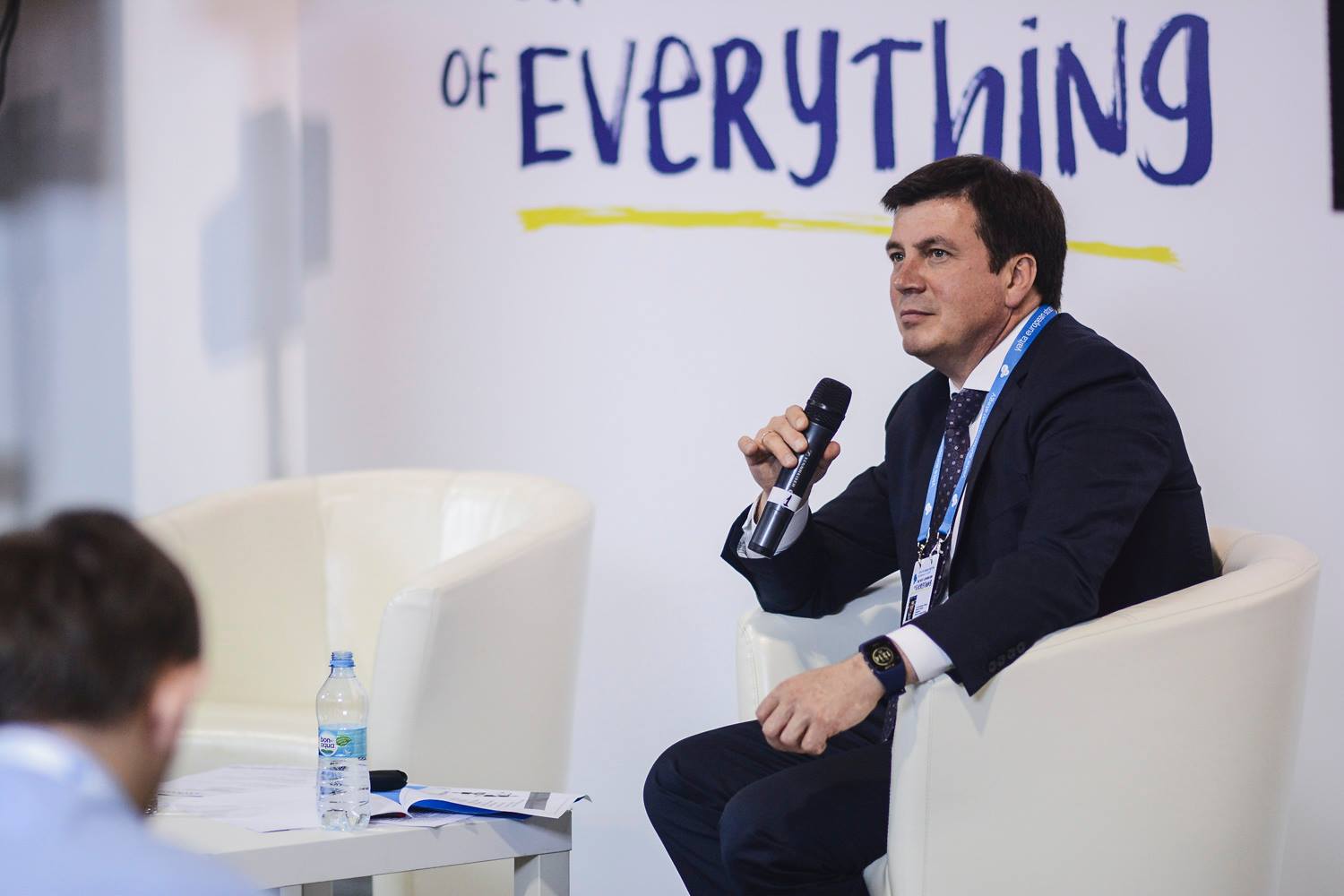
Gennadiy Zubko, Vice-Prime-Minister, Minister of Regional Development, Construction and Housing and Communal Services of Ukraine, told the Forum participants about the smart specialization of regional development. He shared the experience, which European states introduce to strengthen their communities in order not to preserve their economies in a regional aspect, but to think what can be added in the future.
Energy saving is one of the most urgent issues for Ukraine, since the issue of energy efficiency is a security issue in Ukraine. When we talk about the independence of the country, first of all, we talk about its energy independence. This is not only a matter of increasing the extraction of natural resources, but the question of saving the energy we consume, both private consumers and enterprises.
“The key role of smart-specialization is to strengthen the community, transform the regional economies rather than retain traditional industries”
Smart-specialization involves identification of the region’s competitive advantages and assets, use of its innovative and scientific potential, and consolidation the human resource. Strategy formation below in close cooperation and dialogue between government, business, science and community is a significant feature of smart-specialization.
Six steps to develop regional strategies for smart-specialization: 1. Analysis of regional potential for innovation; 2. Establishing a reliable management structure; 3. Developing a common vision for the future of the region; 4. Choice of a limited number of regional development priorities; 5. Creating an appropriate policy combination; 6. Integration of monitoring and evaluation mechanisms.
“The key to regional strategies development is to be able to find solutions that will allow us to “run ahead” and see the real prospect of a direction that will definitely work to develop and strengthen the community in the future”
(Source: https://bit.ly/2Q2Pern)
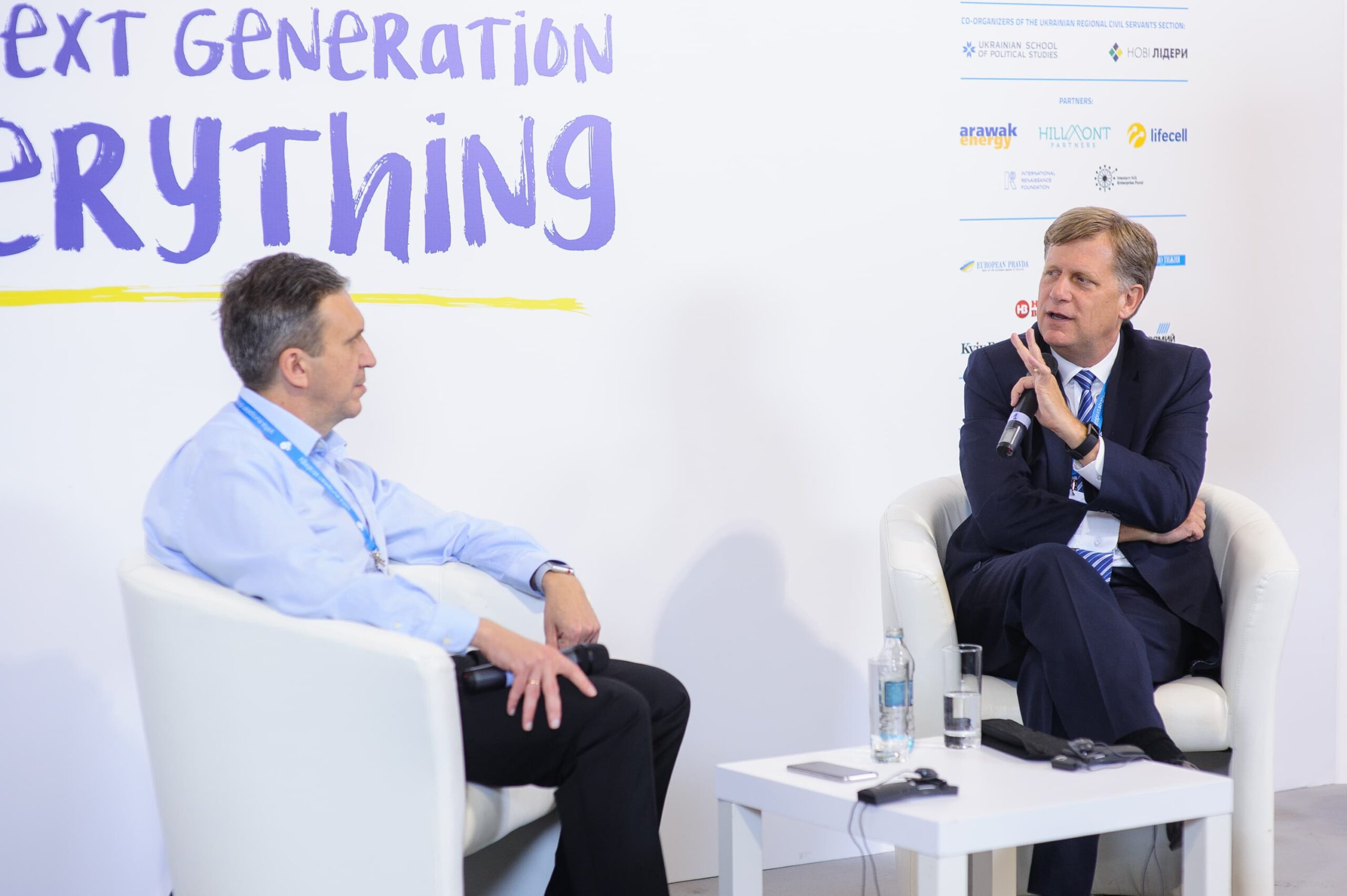
Michael McFaul, Professor at Stanford University, Senior Researcher at the Hoover Institution, US Ambassador to the Russian Federation (2012-2014)
The Russian elites will split after President Putin leaves his office and the transfer of power to another will not be a smooth process, says Michael McFaul.
“It would not be correct to say that they are united. When the post-Putin era begins, do not expect all the elites to behave in the same manner. I think we should expect a big fight. Also, some of theses people, who did not like the path taken, will start questioning: are we going the right way? … I think there will be a split in the elite”
McFaul added that an attempt to hand over the power to other members of the security agencies will not gain support from all the members of the Russian elite. “The Russians won’t go for Bortnikov or Patrushev. There were twenty years of “Putinism”, and now they promise another twenty years of the same course but without that charisma and luck Putin has had? I think it would be very difficult to hand over the reins of power to the security agencies”, McFaul concluded.
(Source: https://bit.ly/2P8B4Vp)
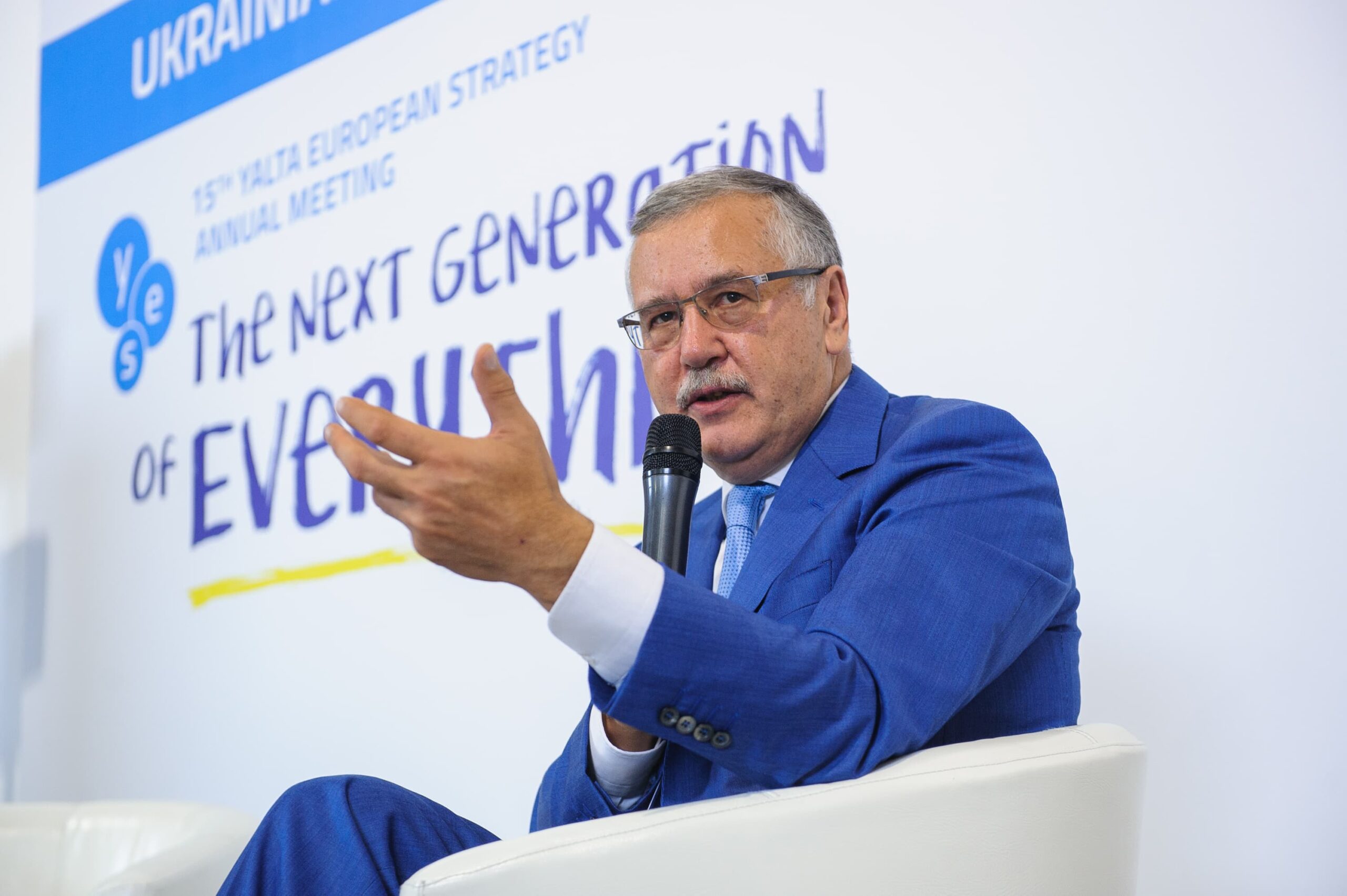
Anatoliy Grytsenko, Leader of the Civic Position party, Defense Minister of Ukraine (2005-2007), said that building a successful Ukraine requires an effective protection of citizens’ rights, freedoms and property.
“The State must not be one where one person plants seeds in the soil and another comes and takes the whole harvest away, with the police watching and smiling. We cannot be a State where the Government requests an $2bn loan from the IMF while people are keeping much more cash under their mattresses because they are afraid of bringing that money into banks”
He stressed that in order to protect citizens’ rights, fair justice should be put in place in the first instance, the anti-corruption bloc function should be improved, the Anti-Monopoly Committee should be reformed and boosted, and the State’s monopoly over use of force should be restored.
“We must protect rights, freedoms and property… There is no democracy without a sound economic base”
(Source: https://bit.ly/2QrJTd9)
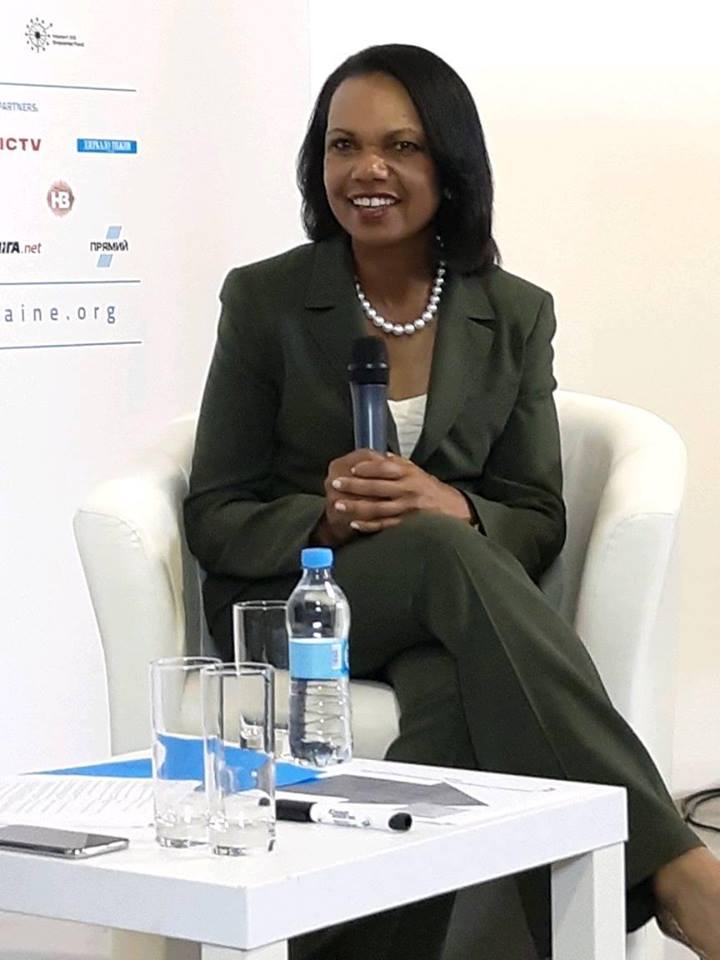
Condoleezza Rice, 66th Secretary of State of the United States (2005-2009), stressed that the US political system is built in such a way that it remains stable and balanced under any president.
“President Donald Trump is one of many actors within our political system. The US Founding Fathers – and this will be a good lesson to young democrats in Ukraine – were very cautious about the executive power. They provided for a system of checks and balances: a two-house parliament, the civil society, the press … This system is not one-person based, it is not relying on one person”
At the same time, Condoleezza Rice believes that there is a range of issues in the United States that give grounds for populism and require addressing.
“The US has their own challenges. We are a polarized country where many citizens feel left beyond the new reality that has emerged due to globalization and automation”
(Source: https://bit.ly/2DVAadU)
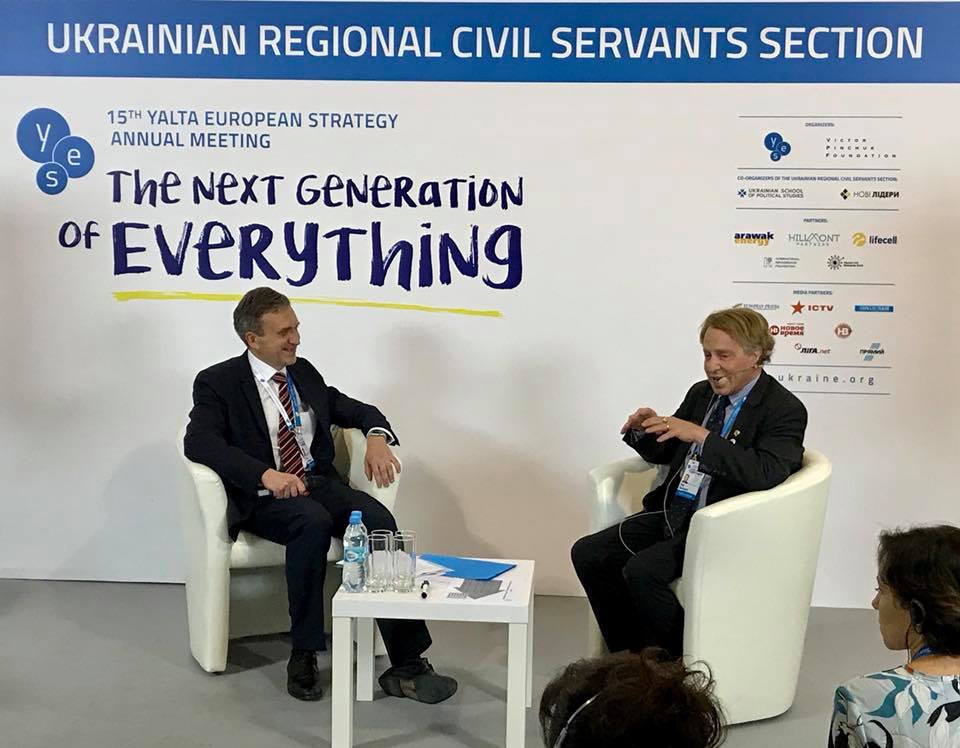
Ray Kurzweil, American inventor and futurist
“There are two aspects: hardware and software … Processors have already the capacity that is equivalent to 100 thousand human brains. As for the software, there is also the wonderful progress in solution of key issues. I believe that by 2029, creation of the full-fledged artificial intellect may be expected”, said Ray Kurzweil.
He added that the artificial intellect will not be something detached from a human, but it will be an extension and a complement to the human brain. “These are not some extraterrestrials or aliens from Mars, it will be our extension… We will just merge”
He added that the artificial intellect will not be something detached from a human, but it will be an extension and a complement to the human brain. “These are not some extraterrestrials or aliens from Mars, it will be our extension… We will just merge”
According to Ray Kurzweil, the human life may be prolonged, and the capacity of the brain may be much extended thanks to the use of artificial intellect.
Also, the inventor believes that thanks to the new technologies, such common domains of life will get automated in the near future as agriculture: it will become possible to use up to 90% of soils that are not cultivated now.
(Source: https://bit.ly/2QqQZyu)
Photo: YES © 2018. Maksym Nesterenko
Round Table “Housing Subsidies: towards Monetization”
The event was organized by the Agency for Legislative Initiatives, Dzerkalo Tyzhnia (Mirror Weekly), Internews and USAID Ukraine in order to identify the problems, which the government faces in the first phase of transition to monetization of subsidies, as well as to outline solutions that will enable monetization of subsidies at the consumer level to be implemented quickly and efficiently.

I DISCUSSION PANEL. Service provider level monetization: history, present and challenges
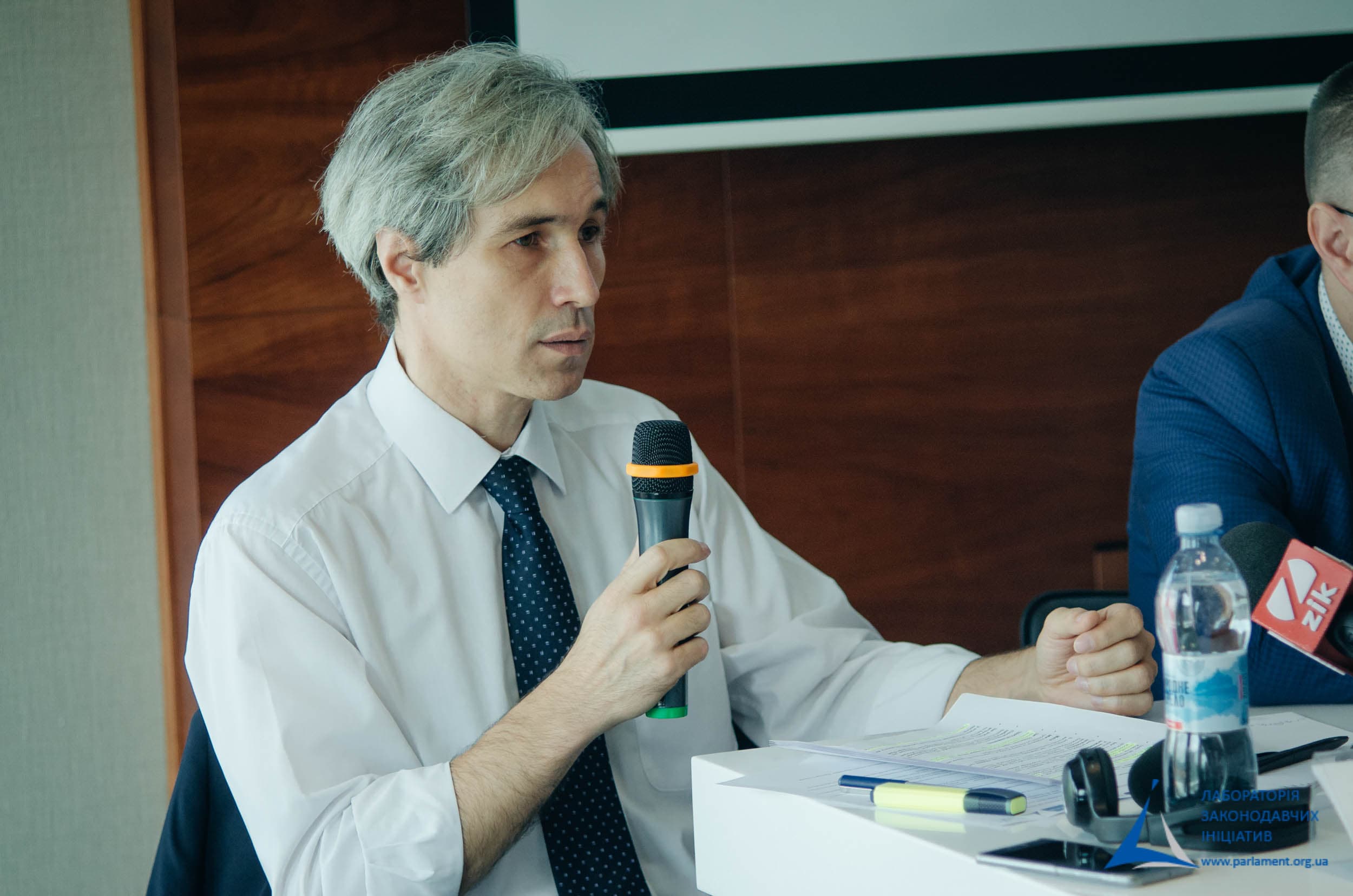
Yuriy Dzhygyr, Deputy Minister of Finance of Ukraine, emphasized the main strategic goal of the transition to monetization, which is energy efficiency – more economical use of energy resources. When applying the monetization tool, it is necessary to take into account the critical objectives to be achieved as a result of its implementation. So, the monetization system should protect vulnerable groups of the population, while it must have built-in tools to achieve fiscal discipline. At the same time, the system should be transparent, user-friendly, and it should be perceived by society as fair.
A two-stage transition to the subsidy monetization model was chosen: the first stage – monetization at the level of service providers. Firstly, direct payments were made with business entities, which facilitated the administration process; and secondly, subsidies cover already consumed resources, which already gives apparent savings in funds; thirdly, automatic financing of subsidies was introduced, which excludes manual interference in calculations with economic entities. These three elements during the 8 months of 2018 have already led to apparent savings in budget funds – 8.2 billion less than in the same period in 2017.
In the second phase, monetization of subsidies at the household level will be introduced.
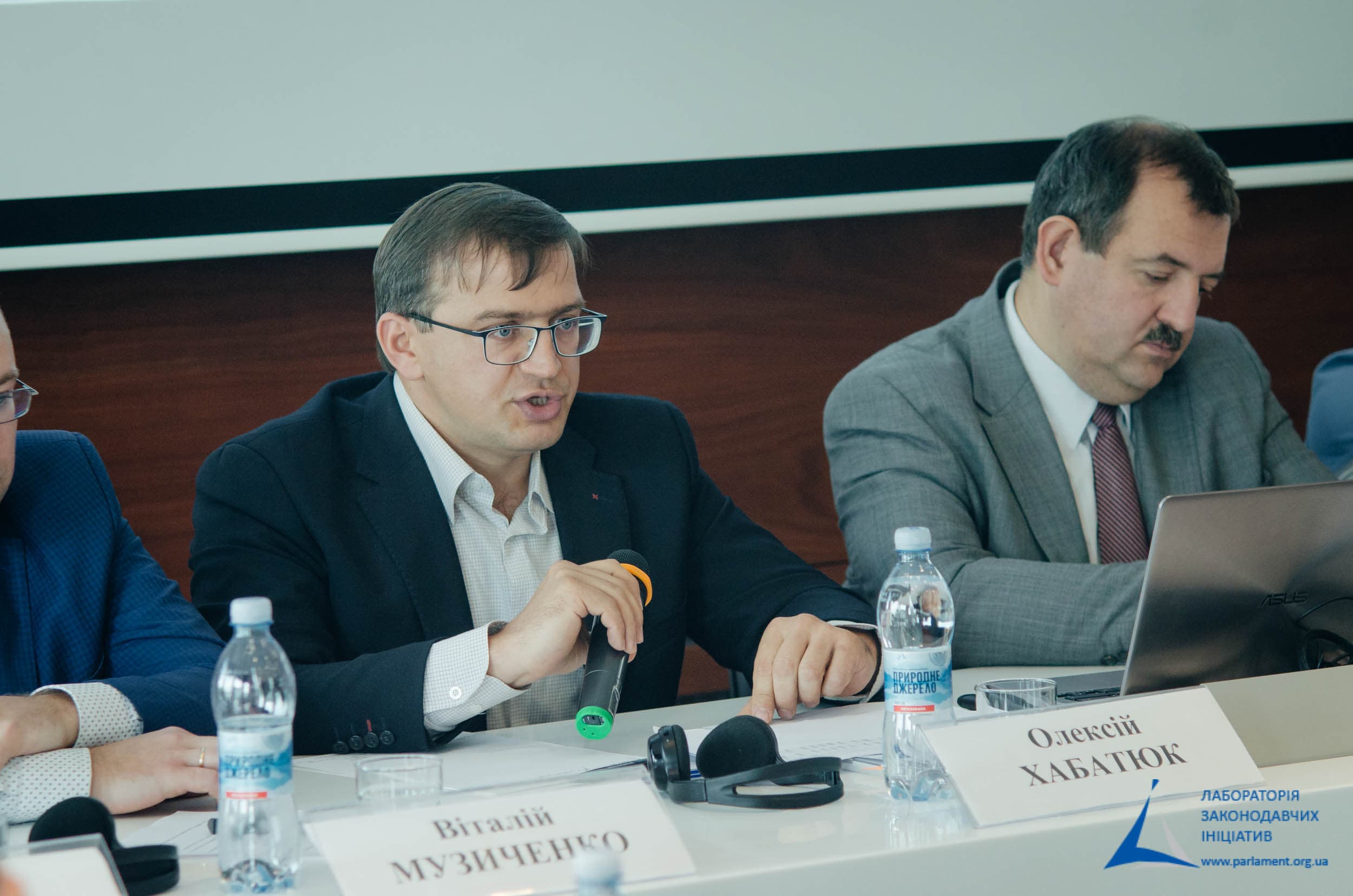
Oleksiy Habatiuk, Deputy Head of the Energy Efficiency Department of NJSC Naftogaz Ukraine, emphasized that the subsidy monetization phase is an integral part of a large system of subsidies, which, in addition to monetization, involves identifying those to whom the subsidy is allocated, as well as a system for calculating subsidies that depend on technical parameters.
Oleksiy stressed that there is currently no link between the calculation of subsidies and their monetization. Monetization, which came into force on January 1, 2018, had no effect on the amount of resource consumption. Subsidiaries continue to consume substantially more resources than those who consume and pay energy on their own.
“According to the data on Kirovograd oblast, access to which we have, we see that those who live in apartments that have individual heating, and there are quite a lot of such consumers in the region – it is about 40 – 50 thousand apartments, they consume 1.6 times more than those who pay themselves. And those who live in individual homes – consume 2 times more gas. And this is very critical for us”
Every saved cubic meter of gas to the population is profitable, because NJSC “Naftogaz” buys gas on the market more expensive than it sells to the population. Gas of own extraction is not enough. Therefore, NJSC “Naftogaz” is interested in the population to consume economically, in particular, the subsidiaries, because the budget pays for them, which is formed from our taxes. Therefore, for us, this is a double benefit: less tax is spent, as well as less losses from gas supply at a low price.
Also, Oleksiy noted that according to the observations of NJSC Naftogaz Ukraine, since January 1, 2018, the situation has little changed: financing of expenditures from the state budget for subsidies continues, as before, with delays. You cannot say that only resources consumed by the population are financed, since there is no access to information on personalized consumption of resources by the population. And this is a significant corruption risk, since private gas companies supply gas to the population, which can manipulate the price of gas and thus receive grey funds that will fuel corruption in the country.
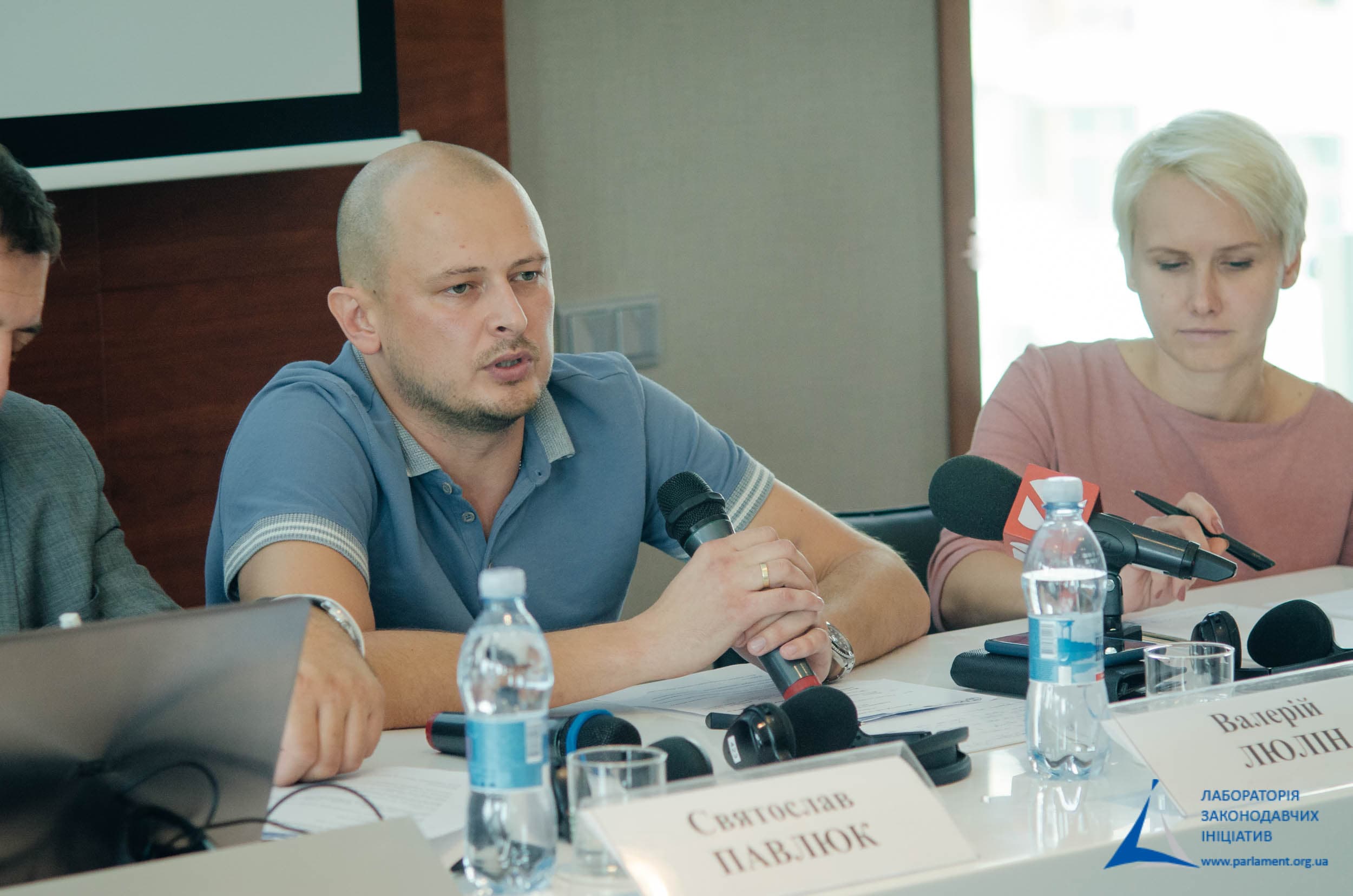
Valeriy Lyulin, Director of the Calculation Department, Kyivvodokanal, spoke about the difficulties Kyivvodokanal encountered during the implementation of the reform. First of all, due to software reassignment, there were no subsidies for consumers for several months, all calculations were subsequently redeemed.
Among possible risks Valeriy highlighted the danger of using money that would be received on personal accounts of consumers, for other needs. It is therefore important to synchronize the exchange of information about consumer indebtedness in order to prevent a situation where consumers accumulate payment arrears for certain services.
Valeriy noted that it is important to introduce mechanisms that would stimulate the saving of resources, in particular, encourage consumers to install meters. In Kiev, still 25% of apartments are not equipped with water meters. Yes, you can apply a subsidy for consumers who have already installed meters to encourage others to install and save resources.
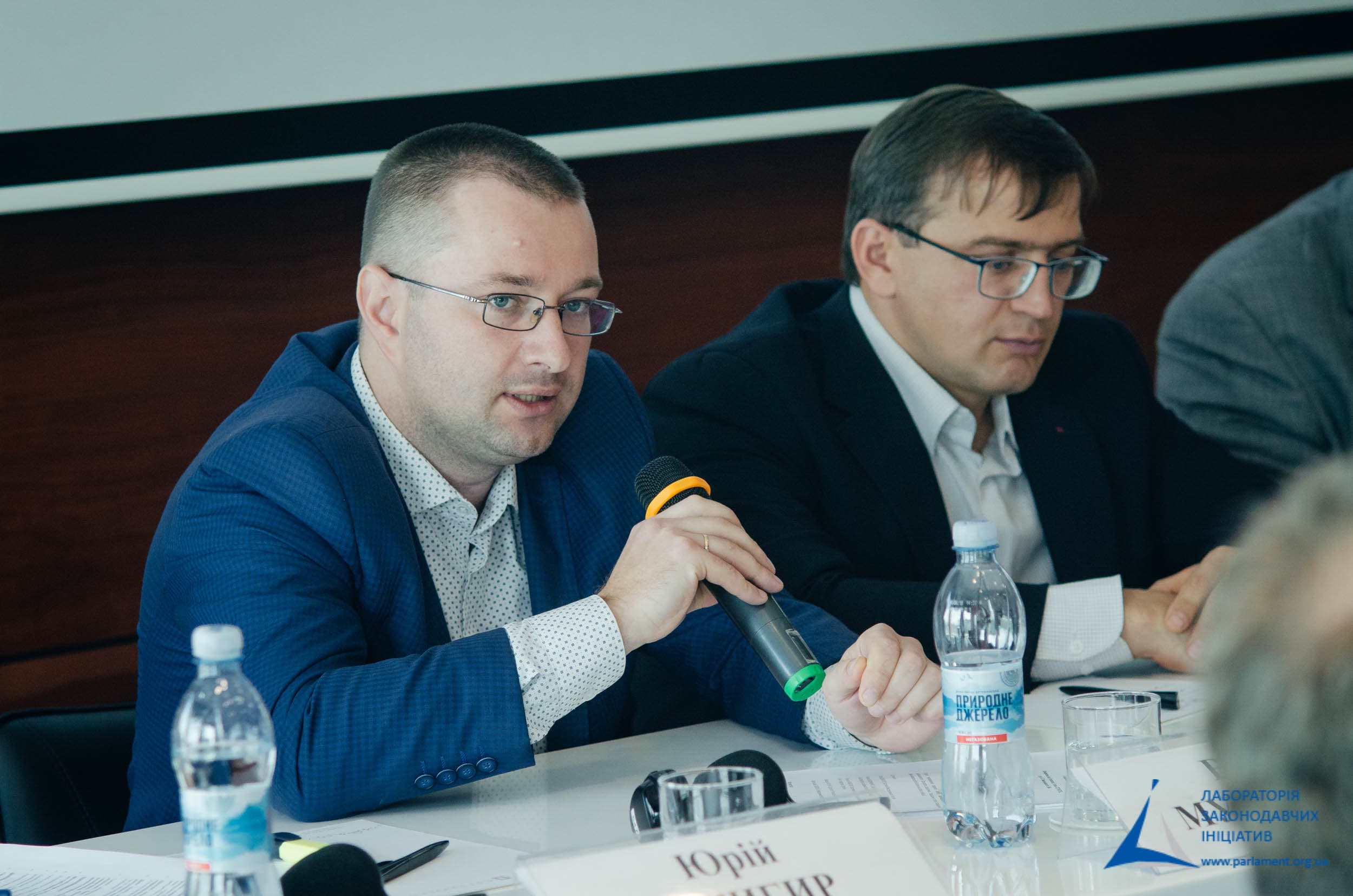
Vitaliy Muzychenko, Director of State Social Assistance Department of the Ministry of Social Policy of Ukraine, noted that the system of subsidies in Ukraine has been in operation since 1995 and, during all the years of existence, it was the subject of discussion on its compliance with the requirements of the time. The system of subsidies became especially relevant after 2014, when the incomes of the population decreased significantly, and prices and tariffs greatly increased. It was the system of housing subsidies that made it possible to cope with this situation.
In 2014, the approach to the mechanism for assigning and accrual of subsidies was changed. These observations suggest that the established social norms are approaching the actual volumes of natural gas consumption. Also, on the basis of a thorough analysis, a conditional portrait of the recipient of housing subsidies was drawn up, as well as factors that allowed households to obtain fraudulent subsidies for which they were not entitled. Since May, more rigorous approaches to the allocation of subsidies have been introduced that aim at increasing the targeting of this type of social assistance. This creates the basis for the successful introduction of housing subsidies monetization.
An explanation that recipients of housing subsidies consume more resources than those who do not receive them is that their income does not allow them to implement energy-saving measures at their own expense. It is necessary to think about the mechanism of support for such groups of citizens, in particular, it can be done through the system of providing “warm loans”.
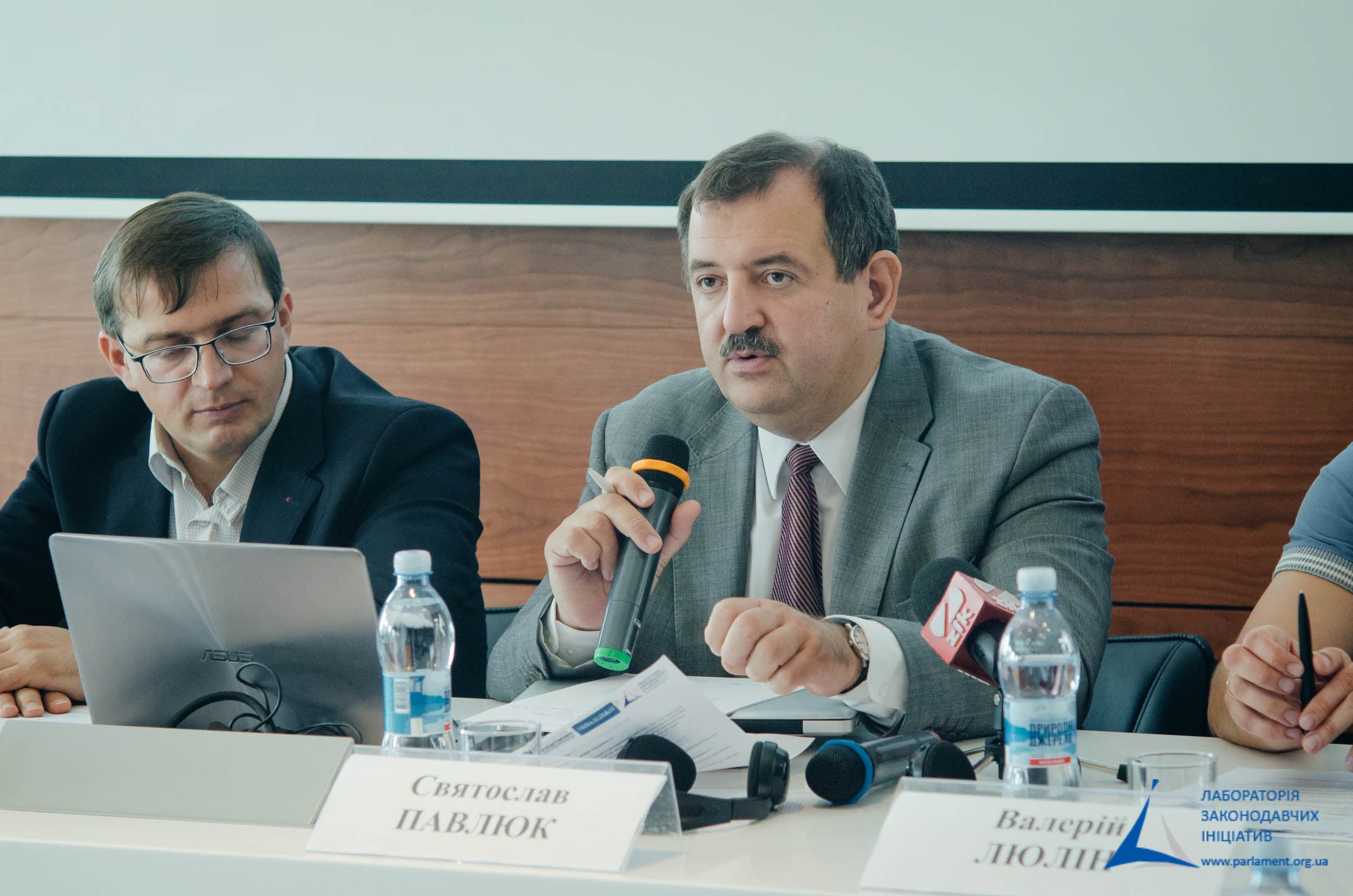
Svyatoslav Pavlyuk, Independent Expert on Energy Saving, said that if while subsidizing we aim to stimulate energy efficiency, then we must first look at what subsidies are being given. Currently, subsidies are allocated for 8 services: gas, heating, hot and cold water supply, drainage, electricity, garbage, housing maintenance. Among these services only gas, heat and electricity are directly related to energy efficiency. Household expenditures for the maintenance of adjoining areas, garbage disposal, drainage and even water supply are not so significant for the family budget, and the costs of administration of subsidies for these services are significant. Therefore, it is worth subsidizing only the payment of services that are most sensitive to the family budget – gas, heat and electricity.

II DISCUSSION PANEL. Monetization of subsidies at the consumer level
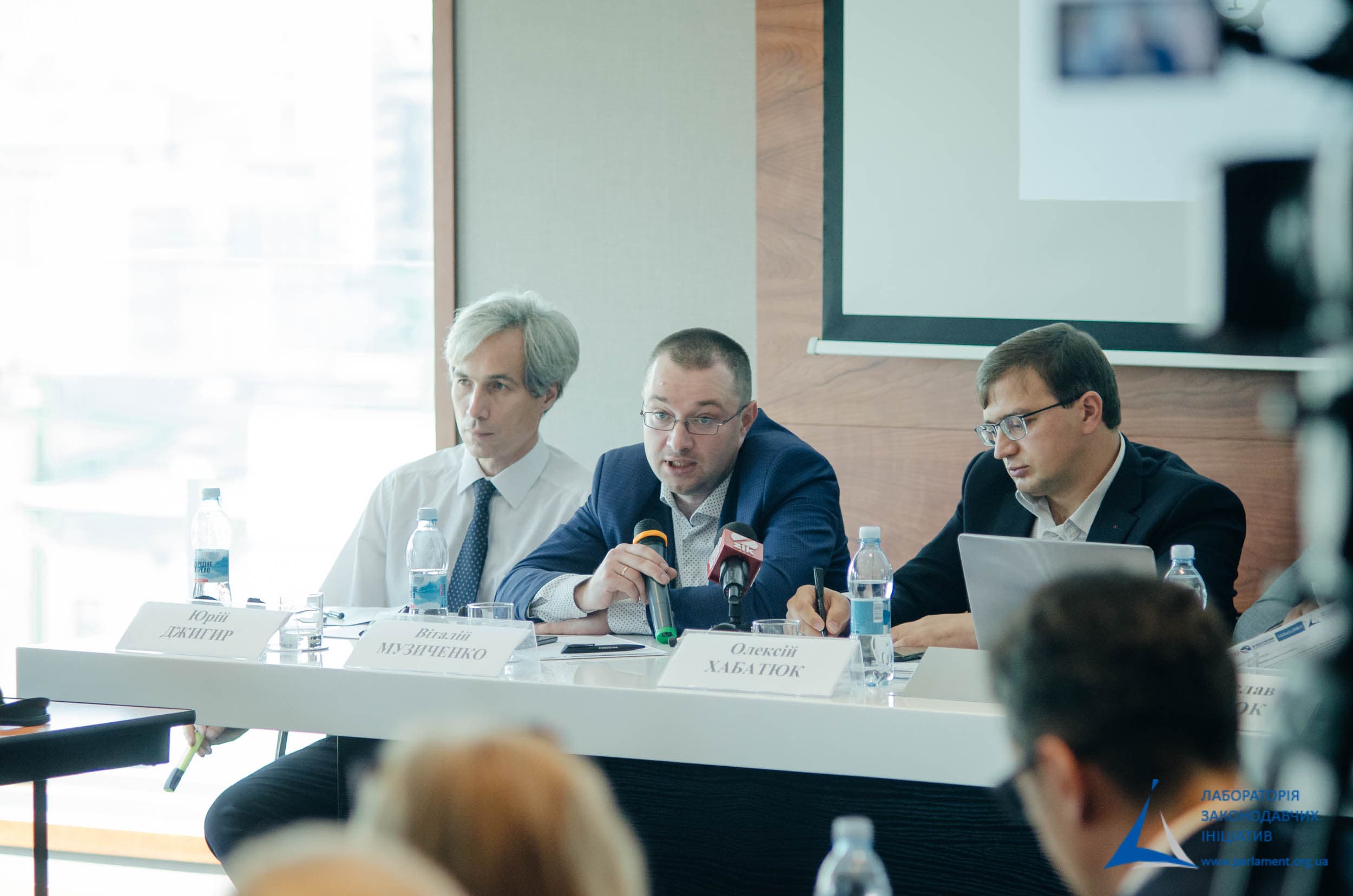
Vitaliy Muzychenko, Director of State Social AssistanceDepartment of the Ministry of Social Policy of Ukraine, stressed that the conditions for the appointment of housing subsidies have now changed, the system becomes more targeted and provides more rigorous verification of potential recipients of subsidies, as well as social standards were adjusted. All these steps provide an opportunity to talk about the successful introduction of housing subsidies monetization at the level of service users.
Subsequent revisions require mechanisms to control the use of subsidized funds to consumers. Today it impossible to simultaneously introduce monetization of subsidies among all households that need it; a phased system of introduction of this mechanism should be introduced.
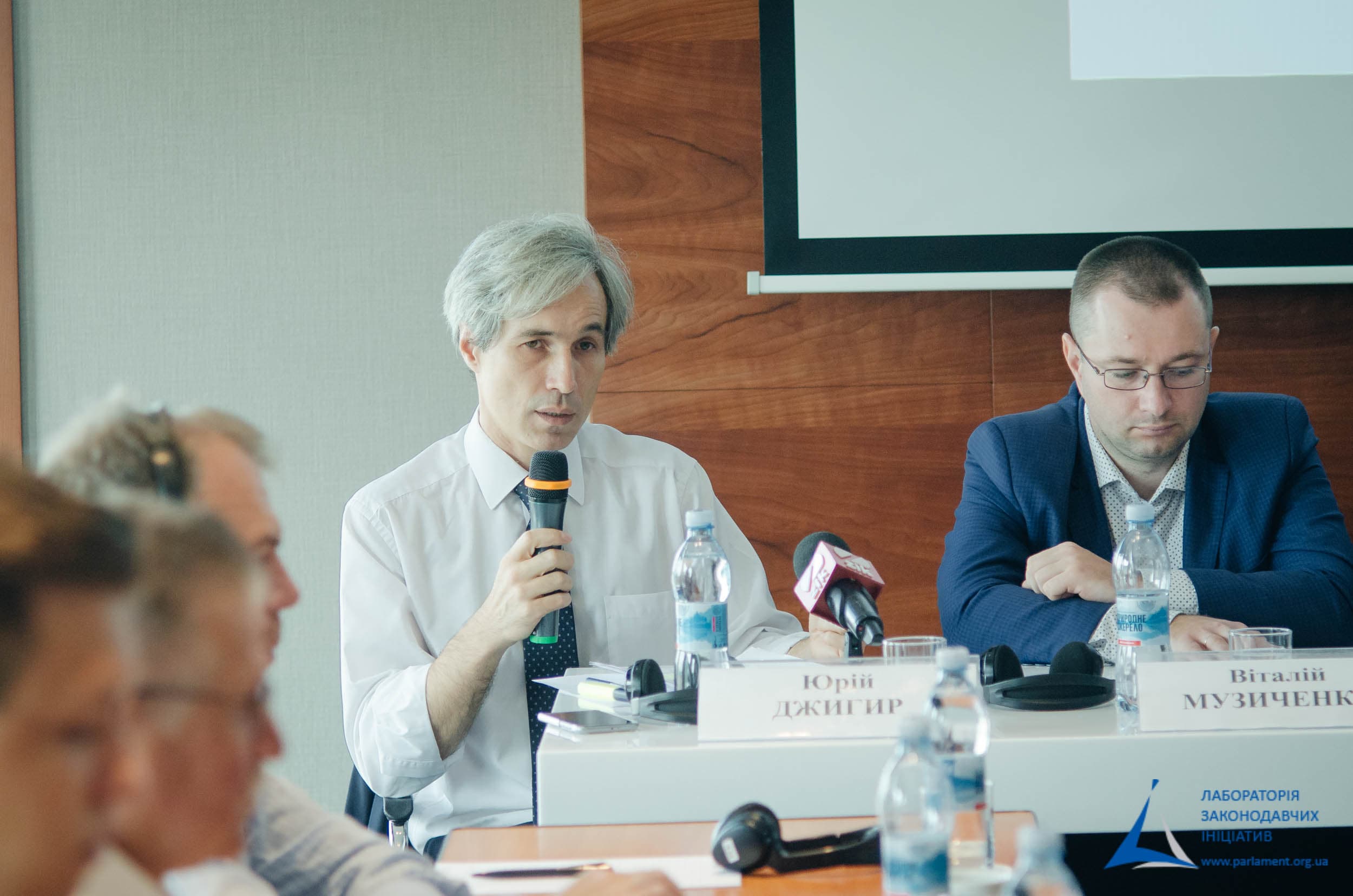
Yuriy Dzhygyr, Deputy Minister of Finance of Ukraine, noted that the second stage of monetization assumes that funds will be transferred to personal accounts of recipients of subsidies from which they will pay for utilities.
A key condition for the introduction of the second stage is filling the register of households, which need of assistance, as well as the possibility of a complete check of the property status of recipients of subsidies.
Also, Yuriy stressed that the set of measures that accompany the monetization of subsidies at the level of consumers, give an opportunity to hope for significant savings.
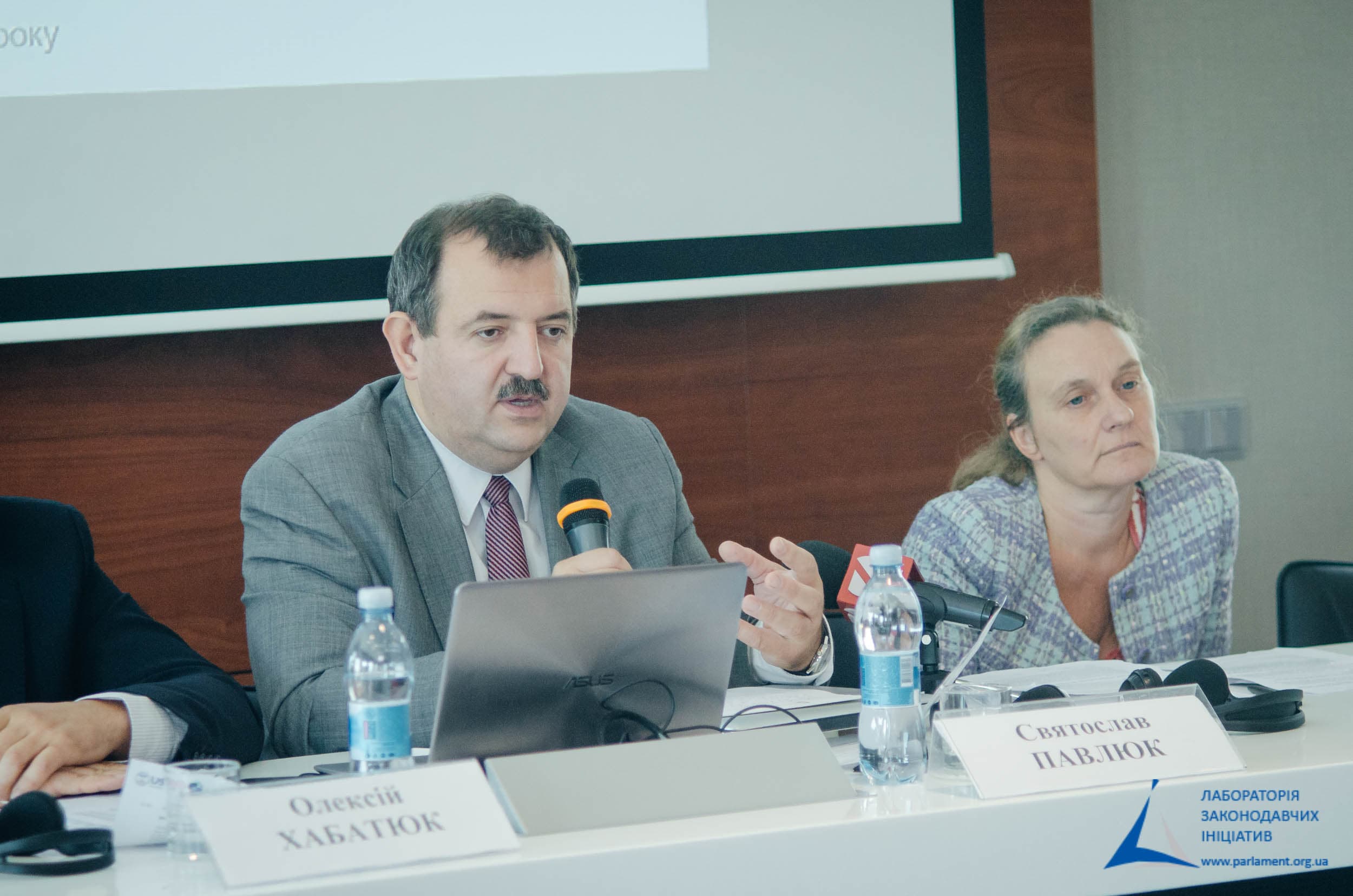
Svyatoslav Pavlyuk, Independent Expert on Energy Saving, stressed that speaking about energy saving, it is worth remembering that people do not save energy, they save money. Monetization makes the consumer to change his behavior and stimulates to energy saving. You need to tell people about medium-term plans of the state, so that people can have a strategy of their behavior. The mechanism of control and deprivation of subsidies for non-payment of accounts must be introduced.
According to Svyatoslav, the state should allow households to use subsidized money to upgrade their housing for the sake of better energy saving. Here the problem of the elderly people appears, who are not able to upgrade their housing on their own. It is also necessary to inform consumers that the subsidies will not be issued forever, and the amount of payments will be reduced. Therefore, it is critically important to invest in upgrading housing.
In addition, the problem of renting apartments with subsidies needs to be solved. And also the question of gas rate formation.
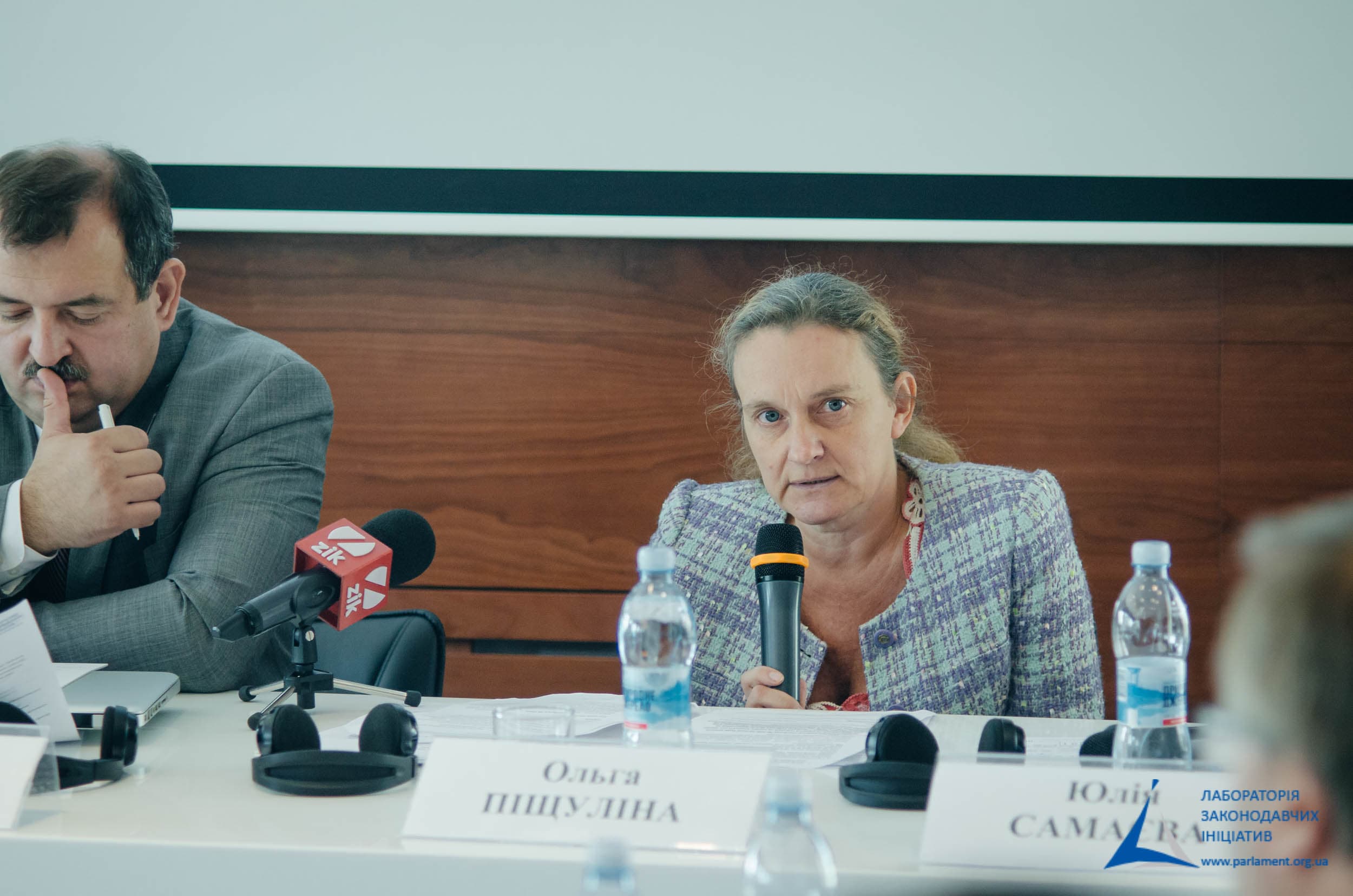
Olga Pishchulina, Expert on social support of the population of the Razumkov Center, drew attention to the fact that in Western countries, subsidies are received from 2 to 5% of citizens. In Ukraine today almost 50% of the population are considered disadvantaged ones.
“The number of recipients of subsidies, which is now in Ukraine, is not a problem, not a catastrophe, it’s a verdict”
Today, subsidies are not available to everybody who really needs it.Also, the subsidy system does not stimulate energy saving. Such a system is beneficial both for service providers and for consumers. Through the recipients of subsidies, the state finances monopolists of energy supply companies.
Olga pointed out that the new rules on provision subsidies have the element for assessing the property status of applicants for subsidies, which would allow more accurately identify the recipients of subsidies. However, creep-holes for wealthy applicants are still there.
The method of monetization of subsidies is not definitely positive, not all elements of the mechanism are well thought out. There is also a problem of liquidity of the treasury.
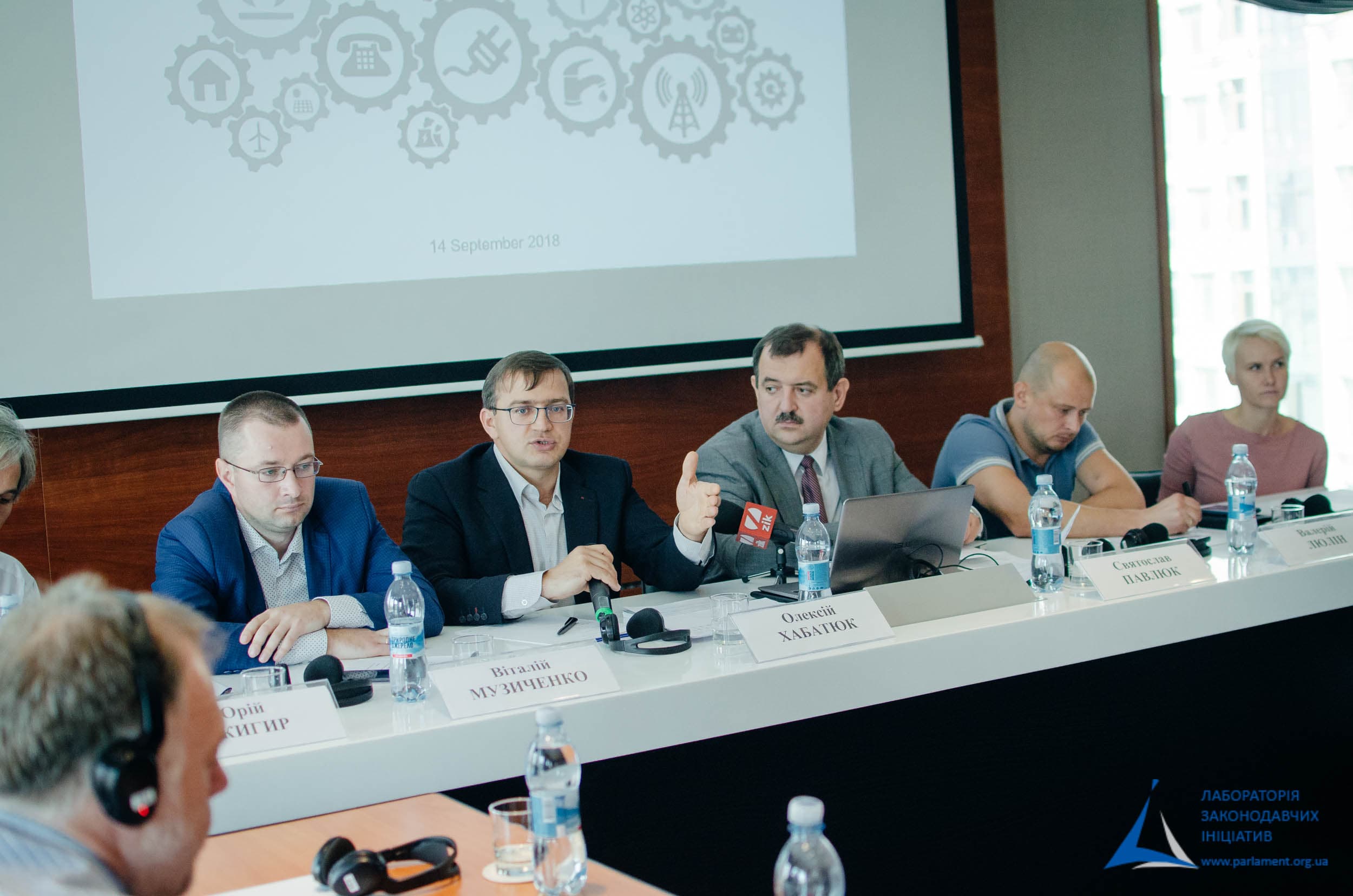
Oleksiy Khabatyuk, Deputy Head of Energy Efficiency Department of NJSC Naftogaz Ukraine, stressed that 100% of energy consumers receive subsidies, simply through various subsidy mechanisms. In the electricity market it is cross-subsidies, in the gas market it is the difference of the purchase and sale price of gas.
“Energy subsidy – the case when the selling price to the end user does not correspond to the market price”
Today, there is a problem of guaranteeing the payment of debts by subsidiaries, since the system does not stimulate paying for services at all. Misuse of subsidized money should lead to severe punishment. The planning horizon must be clearly defined so that citizens can plan their own energy costs in advance. In addition, qualitative verification of the subsidiaries should be carried out. The reform should be aimed at ensuring that the subsidiary is no different from ordinary consumers.
Photos by Oleksandr Kovalenko
Презентація Тіньового аналітичного звіту від громадськості (Shadow Report) на тему «Реформа державної служби та державного управління в Україні у 2017 році» – Copy
On May 16, 2018 at the Committee meeting on State Building, Regional Policy and Local Self-Government the presentation of the Shadow Report “Civil Service and Public Administration Reform in Ukraine in 2017” was held.
The shadow report was presented by Tatiana Chernukha, Program Coordinator of the Agency for Legislative Initiatives. The study was prepared within the framework of the USAID RADA Program: Responsible, Accountable, Democratic Assembly implemented by the East Europe Foundation.
The report is includes the process assessment of key reforms implementation in the area of public administration and public service of Ukraine, as defined by the new edition of the Law of Ukraine “On Civil Service”, adopted on December 10, 2015, which came into force on May 1, 2016, along with the relevant key policy documents of the Government on public administration reform, approved in 2017. The report studies the policy assessment in the field of civil service reform and public administration reform (PAR), including its compliance, retrospective progression and internal concurrence, integrity, planning, co-ordination and resource provision of implementation.
This report does not analyze the Verkhovna Rada and the President of Ukraine role in shaping the public policy and their coordination with the Cabinet of Ministers; local state administrations role and their coordination with central executive bodies; independent regulators role; local self-government role; budget process efficiency and reformation state of the public finance management system.
Tetiana Chernukha noted that the report prepared by the Agency for Legislative Initiatives is an alternative to the government report for 2016-2017 on the implementation of public administration and civil service reform of Ukraine.
“This report is prepared to support the Committee on State Building, Regional Policy and Local Self-Government control functions. We also pursue the goal of supporting the reform itself in such a way that it takes place as efficiently as possible and in order to respond in time to certain challenges, problems that may arise in the process of its implementation.
The Government’s report for 2017 contains a detailed description of the activities implemented during the year in areas covered by the Strategy, but does not reveal the state of objectives achievement, implementation of performance indicators and, in particular, the impact on problem solving. The reports also do not provide a clear understanding which planned measures were not implemented and why, and do not fully address the real challenges and risks associated with the PAR implementation, which are currently crucial and critical”
The Government’s report for 2017 contains a detailed description of the activities implemented during the year in areas covered by the Strategy, but does not reveal the state of objectives achievement, implementation of performance indicators and, in particular, the impact on problem solving. The reports also do not provide a clear understanding which planned measures were not implemented and why, and do not fully address the real challenges and risks associated with the PAR implementation, which are currently crucial and critical”
The report presents a qualitative assessment of the reform implementation, based on the Public Administration Principles developed by SIGMA:
- Coordination of implementation of public administration reform;
- Formation and coordination of government policy and strategic planning of government activities;
- Development of civil service and personnel management;
- Accountability and institutional architecture of the central executive authorities system.
Problematic aspects of public administration reform implementation are:
- Weak political management;
- Uncertainty in resource provision and sustainability of PAR funding;
- Insufficient and uncoordinatedPAR communication;
- Low level of introduction of modern information and communication technologies in public administration system.
Among the problematic aspects of the formation, coordination of state policy and strategic planning, the following should be singled out:
- Low coherence and coordination of state policy at the political level;
- Low capacity to formulate state policy at the administrative level (at the civil service level);
- Inconsistency between the planning of government activities and the planning of budget expenditures.
The problems of civil service development and human resources management are:
- Low ability to manage civil service personnel management;
- Low professional level of organization and holding competitions for civil service positions;
- Inconsistency of the evaluating system of civil servants performance with the government goals and between different categories of civil service. Lack of connection between the assessment system and financial motivation;
- Lack of an effective system of civil servants professional development of all categories.
Among the problematic aspects of accountability and institutional architecture of the central executive authorities system, the following should be singled out:
- There is no clear distinction between political and administrative functions at the level of ministries;
- The subjects’ functions of the policy formation and implementation are not distinctly specified;
- The optimization and centralization of ministry functions were not held.
Summing up the presentation and discussion of the Shadow Report, Serhiy Vlasenko, Chair of the Committee on State Building, Regional Policy and Local Self-Government, noted that the Committee takes note of the information, taking into account the comments expressed by MPs during the discussion.

Civil Service and Public Administration Reform in Ukraine in 2017 (Shadow Report)
The report is devoted to the evaluation of the progress on key reforms in the field of public administration and public service of Ukraine, as defined in the revised Law of Ukraine «On Civil Service», adopted on December 10, 2015, which came into force on May 1, 2016, with the relevant key policy documents of the Government on the Public Administration Reform that were approved in 2017. The evaluation of policy in the field of reforming the civil service and public administration, including its relevance, consistency in retrospectives and internal consistency, integrity, planning, coordination, and resourcefulness of implementation are researched.
The research examines the progress of implementing the corresponding State policy measures from January 2017 to May 2018, as well as the analysis of the specific challenges of reforming and specific suggestions for the required steps in this area.
Only existing normative legal acts in the field of public administration from January 2017 to May 2018, primarily the Civil Service Law, have been studied with a view of preparing the publication.
The publication focuses on reforming the public administration system, mainly at the level of the CMU and CEB, especially as regards the coordination of the reform implementation, the development of capacity in relation to the formation of public policy, the development of personnel management in the civil service and the organization of the Government architecture and its accountability.
For this publication, the above-mentioned issues and essential elements of the public administration were not analyzed. They should be included in the comprehensive harmonization of the Public Administration Reform, still, they are insufficiently covered by the key Government policy documents:
- Roles of the VRU and the PU in the formation of the state policy, and their coordination with the Cabinet of Ministers;
- The role of the MDA and their coordination with the CMU and the territorial offices of the CEB;
- The role of independent state bodies regulating certain spheres (independent regulators) and their coordination with the CMU;
- The role of local self-government;
- The effectiveness of the budget process and the state of the public finance management system reform.
The preparation and presentation of analytical reports in the Shadow Report format is part of the project embodied by the Agency for Legislative Initiatives, supported by the USAID Rada Program: Responsible Accountable Democratic Assembly, implemented by the East Europe Foundation.
Shadow Report on Implementation by the Ukrainian Government of the European Court of Human Rights Judgement in the Case of Burmych and Others v. Ukraine
The problem of non-enforcement of the national court decisions was first stated by the European Court in the cases of Zhovner v. Ukraine (Application No. 56848/00, Judgement of 29.06.2004) Voytenko v. Ukraine (Application No. 18966/02, Judgement of 29.06.2004). Unfortunately, the Government of Ukraine took no efficient measures in the subsequent 5 years to solve this problem, which generated a much bigger number of complaints submitted to the European Court, so, as a result, the Court decided to apply a pilot-judgement procedure in the case of Yuriy Mykolayovych Ivanov v. Ukraine (Judgement No. 40450/04 of 15.10.2009).
The Shadow Report on Implementation by the Ukrainian Government of the European Court of Human Rights Judgement in the Case of Burmych and Others v. Ukraine contains a brief overview of the problem, and the analysis of the measures proposed by the Government of Ukraine. It investigates the implementation of measures to enforce national courts’ decisions in favor of the applicants in the case of Burmich and payment of compensation. It also explores the implementation of measures to introduce an effective system of enforcement of decisions of national courts, and offers an effective mechanism for implementing new solutions and repayment of current debts.

Презентація аналітичних досліджень на теми «Концепція законодавчого процесу “від початку до кінця”» та «Пропозиції до політики щодо звітування Уряду в Парламенті» – Copy
On December 20, 2017, the Verkhovna Rada of Ukraine held a press briefing devoted to the presentation of policy papers on the topic “Concept of ‘End-to-End’ Legislative Process” and “Proposals Concerning the Policy of Government’s Reporting in Parliament”.
The event was organized by the Agency Legislative Initiatives in co-operation with Dmytro Lubinets, MP of Ukraine, Secretary of the Verkhovna Rada Committee on Rules of Parliamentary Procedure and Support to Work of the Verkhovna Rada of Ukraine within the framework of the USAID RADA Program: Responsible, Accountable, Democratic Assembly implemented by the East Europe Foundation.
The papers were presented by:
- Dmytro Lubinets, MP of Ukraine;
- Oleksandr Zaslavskyi, author of the study, Deputy Chairman of the Board of the Agency for Legislative Initiatives.
The draft concept paper on the “end-to-end” legislative process contains an analysis of existing practices, an overview of international experience, as well as proposals as to the concept of the “end-to-end” legislative process reform focused on strengthening coordination between legislative initiative actors. This document suggests alternative options of changing the legislative process “end to end”, which can be provisionally called “government-centered” (based on the experience of France), “parliament-centered” (based on the US experience), and “the concept of minimum necessary changes” (based on analysis of existing practices in Ukraine).
The document “Proposals Concerning the Policy of Government’s Reporting in Parliament” focuses on the main issues of communication between Government and Parliament, analyzes international experience, and provides suggestions for improving communication between Government and the Verkhovna Rada.
Dmytro Lubinets, MP of Ukraine:
I am very pleased that now the activities of the Verkhovna Rada of Ukraine have an effect – a very positive one – on public organizations, which help MPs and offer their proposals on how to improve the work of the Verkhovna Rada and activities associated with legislative initiatives
Oleksandr Zaslavskyi, Deputy Chairman of the Board of the Agency for Legislative Initiatives, presented two analytical documents: “Concept of ‘End-to-End’ Legislative Process” and “Proposals Concerning the Policy of Government’s Reporting in Parliament”, prepared within the framework of the USAID RADA Program: Responsible, Accountable, Democratic Assembly implemented by the East Europe Foundation.
Mr. Zaslavskyi observed that at the end of February 2016, the European Parliament’s needs assessment mission led by Pat Cox presented its Roadmap on Internal Reform and Capacity-Building for the Verkhovna Rada of Ukraine. On March 17, 2016, the Verkhovna Rada adopted the Resolution on Measures to Implement the 52 Recommendations Contained in the Roadmap.
The presented policy papers are developed to clarify and extend the recommendations contained in the Roadmap. The documents analyze the current procedures and practices of decision-making in the Ukrainian parliament, examine the international experience and suggest a certain vision for improvement of these processes. Among the specific problems analyzed in the documents, Mr. Zaslavskyi highlighted the lack of strategic planning in policy-making, as well as the lack of coordination and communication between the legislative and executive branches of government in the legislative process.
“This may be confirmed by the fact that during the 4th and 5th session, 75 laws adopted as a whole were not directly or indirectly envisaged by the Government’s Program of Activity. Moreover, only 35% of the laws adopted during the 5th session were put on the agenda at the beginning of the session, about 19% were introduced during the session and the origin of about 45% of the bills is quite difficult to track. Furthermore, the Government’s efficiency is 25%. That is, with the existing Coalition, only 25% of the submitted government bills are adopted as a whole in the session hall. These factors wreak chaos on decision-making and make it unpredictable”
The proposals that require special attention include: review of the status of the Government’s Program of Activity (in the event of a Government’s failure to present this document, it should resign); the agenda of sessions should be formed on the basis and in pursuance of the Government’s Program of Activity; any document should be based on the results of monitoring and assessment of already implemented laws or certain policies. Moreover, any legislative initiative should come with a monitoring and assessment plan approved by the Main Committee of the Verkhovna Rada.
