
Carthage Has Fallen: How Ruslan Kravchenko Tightened His Grip on the Prosecution Service — and What Comes Next
Rumours that Ruslan Kravchenko might resign as Prosecutor General first surfaced on 12 December 2025. But he quickly denied them on his personal Facebook page and threatened: ‘I’ll come after each and every one of you myself.’
Less than a year later, Kravchenko submitted his resignation amid corruption scandals at the Prosecutor General’s Office. The Verkhovna Rada must now approve his dismissal. That is a remarkably swift end to his tenure, but it does not solve the core problems of the prosecution service — one side of the justice triangle.
This is not only about one criminal proceeding or the people involved in it. Operation ‘Carthage’ by the National Anti-Corruption Bureau of Ukraine (NABU) and the Specialised Anti-Corruption Prosecutor’s Office (SAPO) exposed a much deeper institutional problem: over the past year, the prosecution service has become even more dependent on whoever happens to occupy the Prosecutor General’s office.
Ruslan Kravchenko’s work came under regular criticism from the outset. His priorities did not match the challenges of wartime, European integration reforms stalled and, in some areas, went into reverse, while ‘manual control’ and the appointment of unqualified people to managerial positions took hold across the prosecution service.
In that sense, ‘Carthage’ is only the tip of the iceberg. It showed how costly a system becomes when staffing decisions increasingly depend on the will of one leader rather than on professional competence, while internal safeguards weaken or disappear altogether.
After Kravchenko’s departure, Ukraine will therefore have to answer two questions at once. Who will be the next Prosecutor General? And what should be done with the system his successor will inherit — a system damaged under Kravchenko? As for what comes next for Ruslan Kravchenko himself, further SAPO materials may provide the answer.
The Cost of a Year of Backsliding
The direction of the prosecution service under Kravchenko became clear almost immediately after his appointment. On 24 June 2025, with a single signature, he undid a year’s work by the prosecution service and international experts on a pilot project for selecting heads of prosecution offices, which envisaged a gradual shift towards competitive appointments. Kravchenko abolished the rules governing the personnel reserve for managerial positions in the prosecution service, just as the reserve was nearing completion. The reserve was no cure-all for staffing problems, of course. But it was meant to help move the system gradually from backroom recruitment towards transparent selection based on clear criteria of professional competence and integrity.
The scandal over prosecutors’ ‘fake’ disabilities was equally revealing. After taking office, Ruslan Kravchenko promised to get to the bottom of the scandal that had cost his predecessor, Andrii Kostin, his job in 2024. Rather than pursue criminal proceedings, the Prosecutor General simply sent complaints to the Qualification and Disciplinary Commission of Prosecutors (QDCP) and waited for the outcome. Unsurprisingly, that did not answer the central question — whether the disability statuses had been obtained unlawfully. To this day, the prosecutors have not been held criminally liable and have faced barely any disciplinary consequences: 80% of the disciplinary cases were simply closed, while the prosecutors continue to receive payments. Some lost managerial positions but stayed on as rank-and-file prosecutors. What is more, some have even had their disability status restored by courts after the notorious scandal. Kravchenko effectively stepped away from the problem, tried to shift responsibility onto an independent body and made their impunity all the more obvious.
The prosecution service under Kravchenko then moved towards an even more ‘manual’ model of management. Early in his tenure, he tried to justify simplified appointment procedures by citing a ‘staffing shortage’ in the prosecution service that he had simply invented. During the July 2025 attack on the anti-corruption bodies, Parliament adopted Law No. 4555-IX, which stripped the NABU and SAPO of their procedural independence. Investigative reporting points to Kravchenko’s active role in that move — and to the benefit he secured in return: the abolition of competitive selection for managerial positions in the prosecution service. After the protests, some provisions affecting the NABU and SAPO were amended. But the damaging changes to the prosecution service remained.
Competitive selection was suspended for the duration of martial law — since August 2025, anyone with a law degree can be appointed to a position in the Prosecutor General’s Office or a regional prosecutor’s office. The Prosecutor General’s procedural powers were expanded, further strengthening his influence over all prosecutors. He can now issue instructions directly to an investigator, bypassing the prosecutor handling the case, and call in particular criminal proceedings for review, effectively freezing them.
The restrictions lawmakers had sought to impose on the NABU and SAPO were instead left in place for other law enforcement bodies and the prosecution service. In practice, the Prosecutor General can therefore interfere in cases handled, for example, by the Economic Security Bureau of Ukraine and the National Police of Ukraine, whether to pursue his own ideas or to defend other political interests.
Institutional reforms of the prosecution service — competitive selection for managerial positions, rather than only rank-and-file posts, stronger prosecutorial self-governance, random allocation of criminal proceedings, a new evaluation system and improvements to disciplinary procedures — were effectively put on hold under Kravchenko.
By contrast, the Prosecutor General made the protection of children’s rights his priority. The Prosecutor General’s Office began assigning heads of regional and district prosecution offices to personally prosecute high-profile cases involving murders and rapes of children, even though they were less familiar with the cases than the prosecutors who had handled them from the outset. The prosecution service also sought broader powers to coordinate other state bodies in the field of child protection. Experts saw two risks in this practice: a gradual return to the Soviet-totalitarian concept of ‘general supervision’, which Ukraine had moved away from through earlier reforms, and the replacement of specialised juvenile prosecutors by administrative managers.
Ukraine, meanwhile, lost an entire year of prosecution reform and, worse, has left the next Prosecutor General with an even weaker starting position. Kravchenko bears direct responsibility for this backsliding — something that has surprised even European bureaucrats. In meetings with international partners, he said one thing and did the opposite.
Kravchenko Is Leaving. His Staffing System Is Not
Until August 2025, the only way to become a prosecutor was through a competition administered by the QDCP. Only then could prosecutors ‘move up’ through the system. Those already in the system had undergone that kind of vetting. That meant it was impossible simply to bring ‘your own’ person straight into the Prosecutor General’s Office, and putting them through a competition was cumbersome. Law No. 4555-IX removed precisely this demanding entry route into the profession. Kravchenko made active use of the opportunities it created.
Under the new rules, for example, Serhii Kropyva joined the Prosecutor General’s Office in August 2025. A former cyber police official and deputy head of the Odesa Regional Military Administration, he was appointed to a managerial position in the Department of International Cooperation without an open competition. What is more, he had never previously served as a prosecutor.
According to experts at the Agency for Legislative Initiatives, under the new rules more than a thousand people entered the system without competitive selection or a prior competitive assessment of their professional competence and integrity. Kravchenko personally ‘reshuffled’ the prosecution service’s leadership, undermining the quality of management.
That is why simply restoring the old rules is no longer enough. Ukraine will also have to change management practices and scrutinise the staffing decisions made over the past year.
Kravchenko is leaving, but his appointees remain — and they are the ones running the prosecution service. They have largely shaped the institution’s public image over the past year. But the prosecution service is part of the justice system, and Kravchenko does not represent all prosecutors.
A crisis or political turbulence at the very top should not cast a shadow over the institution as a whole, or over the thousands of prosecutors who continue to do their jobs conscientiously.
Many competent, high-integrity professionals remain in the system. Under Kravchenko, however, some were pushed to the margins of management decision-making, while others left the prosecution service altogether. These are the people who should be leading the prosecution service, including by serving on prosecutorial self-governance bodies that should develop in line with European standards. In a democratic state, the prosecution service is not a ‘law enforcement body’ built around a rigid executive chain of command. It is an important part of the justice system, which guarantees a degree of independence for both judges and prosecutors. Their decisions are dictated by law, not by superiors. At the same time, self-governance decentralises the system, limits the powers of heads of prosecution offices, including the Prosecutor General, and protects prosecutors from unlawful pressure, above all political pressure.
Judging the entire institution solely through the actions or inaction of its head means ignoring the reality on the ground and devaluing the work of those who continue to ensure the fair administration of justice.
For the system to work effectively and remain resilient regardless of who holds the office of Prosecutor General, it is critical to focus on far-reaching institutional reforms.
First, Ukraine needs to repeal the damaging provisions of Law No. 4555-IX and restore transparent competitive selection at every level of the prosecution service. The prosecutorial corps should be formed on the basis of professional competence, integrity and meritocracy, not loyalty to the leadership. In addition, effective prosecutorial self-governance should become the foundation of an independent prosecution service. Its bodies must become genuine collective bodies rather than nominal appendages to the chain of command, capable of protecting prosecutors’ procedural independence from administrative pressure and ensuring fair disciplinary procedures. Ukraine must also deliver on its EU commitments a new evaluation system, random allocation of criminal proceedings, improved disciplinary procedures and other reforms.
The staffing decisions of the past year also require separate attention. There is no lawful way simply to dismiss prosecutors appointed during this period. Heads appointed without competitive procedures should face heightened scrutiny both from internal control units within the prosecution service and from law enforcement bodies more broadly.
Time Ukraine Does Not Have
There is another problem with appointing a new Prosecutor General: time. After Andrii Kostin resigned in autumn 2024, the president spent another eight months looking for a successor. As we can now see, that lengthy search can hardly be called a success.
The same transitional period could recur. By law, in the Prosecutor General’s absence, their powers are exercised by the First Deputy Prosecutor General or, if there is no first deputy, by one of the deputies.
At present, First Deputy Prosecutor General Mariia Vdovychenko features in covert recordings from Operation ‘Carthage’ and, according to journalists, was preparing a fresh attack on the anti-corruption bodies. On 8 September, Vdovychenko submitted her resignation, so under the allocation of duties, the role passes to Deputy Prosecutor General Maksym Krym.
At the same time, appointing the next Prosecutor General under the current closed procedure would effectively take Ukraine straight back to the point where the Kravchenko story began.
Ukraine therefore needs a transitional solution. Its task is much simpler: to prevent another candidate who lacks competence and integrity from being appointed Prosecutor General while a new permanent model is not yet in place.
But can the president do this alone? Probably not. The voice of the professional community matters too, as do the support and trust of those in the profession who will ultimately have to work with this person. An assessment by that community would allow the public to see who the candidate is, what experience they have and whether they meet integrity standards. That would make the process clearer and more transparent and help build trust. The president should therefore submit prospective nominees for an assessment of competence and integrity before formally nominating one to Parliament.
One possible mechanism would be preliminary screening of candidates by the existing Ethics Council. It assesses candidates for the High Council of Justice (HCJ) against the criteria of professional ethics and integrity. The Ethics Council has six members: three judges or retired judges nominated by the Council of Judges of Ukraine and three international experts. It is an existing institutional framework with experience in reviewing asset declarations and information from state registers and open sources, as well as assessing reputational risks and professional ethics. It has been operating since 2022.
In the future, this function should be performed by a reformed Council of Prosecutors of Ukraine or through a new competitive procedure, depending on the model Ukraine chooses after consultations with the Venice Commission.
Involving the Ethics Council at this stage would therefore be a bridge towards depoliticising the procedure for appointing the Prosecutor General. It would buy Ukraine more time to carry out the longer-term reform properly.
For several years, the European Union has been urging Ukraine to reduce political influence over the appointment of the Prosecutor General. The European Commission explicitly requires Ukraine to depoliticise the procedure for selecting and dismissing the Prosecutor General and make it transparent and merit-based, with the involvement of the prosecutorial corps.
Ukraine currently has several ways to meet these EU requirements. One is an open competition involving international experts. MPs registered the relevant Draft Law No. 15343 in Parliament in June 2026.
Another model envisages a greater role for the professional community and a reformed Council of Prosecutors of Ukraine in the preliminary assessment of candidates. The Agency for Legislative Initiatives has already analysed both approaches and their constitutional risks in detail, because the Constitution of Ukraine cannot be amended under martial law.
The problem now is not that Ukraine has to choose between these models within a few days. It is that neither of them can start working immediately. Each option requires legislative amendments, their implementation, the establishment of the necessary bodies, the launch of the relevant procedures and, ultimately, the selection itself.
Permanent rules and procedures are needed for years to come. A Prosecutor General is needed now.
Government Out: What do Repeated Personnel Reshuffles Cost Ukraine?
Five days remained until the first anniversary of Yuliia Svyrydenko’s Government. Instead of a public assessment of its performance, President Volodymyr Zelenskyy announced a change in political strategy and a Government reshuffle. The following day, the Prime Minister submitted her resignation to the Verkhovna Rada, and Parliament accepted it. This automatically entailed the resignation of the entire Cabinet.
The public was never told why these changes were being made. It could only speculate as to whether the Government had fulfilled its tasks, what criteria had been used to assess it and whether state priorities were changing or the authorities were simply trying to salvage their reputation and approval ratings.
The news also came as a surprise to those required to give the decisions legal effect: MPs. They said they had learnt of the Government reshuffle from the President’s social media posts and the media.
The episode once again exposed not only poor communication between branches of government, but also the gap between Parliament’s role under the law and actual practice, in which political initiative is centred on the President.
Following procedure and making decisions transparent allow society to understand who decided what, how and why and who will be held responsible. The way personnel changes, including Government reshuffles, are conducted affects not only trust in new appointees, but also the state’s ability to continue working effectively through changes in personnel. This article considers what these processes reveal and what consequences they may have for the state.
Who Should Decide Whether the Government Has Delivered?
The President of Ukraine cannot appoint or dismiss the Cabinet of Ministers single-handedly. The Verkhovna Rada appoints the Prime Minister, the Minister of Defence and the Minister for Foreign Affairs on the President’s submission. It appoints the other members of the Government on the Prime Minister’s submission.
The Government is responsible to both the President and Parliament, but it is controlled by and accountable specifically to the Verkhovna Rada. Parliament should assess the Government throughout its term, not only on the day it resigns. MPs should monitor the fulfilment of commitments, hear reports from ministers, analyse decisions and demand explanations. Ultimately, they should determine whether the executive is performing its tasks.
With proper parliamentary oversight, the Cabinet’s performance would not be assessed within a closed circle of political leaders. MPs themselves would conduct that assessment.
This is difficult, however, in a system where the President is perceived as the main centre of decision-making by both Government officials and, often, MPs themselves. In such a configuration, accountability becomes an open question: why report to Parliament if it does not, in practice, determine whether a minister remains in office? Parliamentary oversight instruments exist, but in practice they do not ensure that the Government is accountable to the Verkhovna Rada.
Society is consequently given a political verdict without a public analysis of the Cabinet’s performance, clear conclusions or an explanation of what the new Government is expected to change.
The problem is not only that MPs do not assess the Government systematically. They may also be excluded from shaping personnel decisions that they will later be expected to approve with their votes.
Parliament as the Technical Executor of a Presidential Decision?
By law, the Government is formed with the participation of the President, the Verkhovna Rada and the candidate for the post of Prime Minister. Informal negotiations are a normal part of a democratic process. The problem arises when they entirely replace a substantive and open procedure and Parliament becomes merely the technical implementer of a decision taken elsewhere.
It remains unclear whether parliamentary committees were consulted before the reshuffle was announced or who prepared the list of candidates. Another unanswered question is whether the President, the future Prime Minister and the parliamentary majority divided among themselves the right to nominate candidates and, if so, how.
Judging by public and private reactions, MPs received no explanation for the Government reshuffle. This leaves them hostage to the situation and subsequently accountable to society for personnel changes over which they had little or no influence. Their votes, after all, turn the President’s initiative into a formal appointment.
Supporting the personnel changes proposed by the President will amount to an informal vote of confidence in the presidential strategy. Responsibility for that vote, however, cannot be transferred entirely to the President and his team.
Impossible to Assess: a Government Without an Approved Programme
Symbolically, Svyrydenko’s resignation coincided with the end of her first year in office, equivalent to the one-year protection from dismissal that the Government would have received had its Programme been approved. Even if the authorities had sought to justify the resignation by reference to the Svyrydenko Government’s performance, another problem would have arisen: on the basis of which documents could its performance be assessed?
This Cabinet submitted its Programme of Activities to the Verkhovna Rada in September 2025, but Parliament never approved it. There are therefore no objectives endorsed by Parliament against which the Government’s effectiveness can be measured.
It is, of course, possible to analyse priority action plans, the State Budget, implementation of international commitments, draft laws prepared and public promises. Such an assessment would, however, be based largely on public commitments that are not binding and do not assign responsibility.
Without an approved Programme, the Government’s resignation does not complete a proper cycle of accountability. The Government simply changes. Society is not shown the shortcomings that need to be addressed. These are lost amid speculation and rumours.
The new Cabinet’s first priority should therefore be to prepare a comprehensive Programme of Activities with measurable objectives, deadlines and responsible authorities. It should be presented publicly and submitted to the Verkhovna Rada on time. Approval of the Programme would give the new Government one-year immunity from dismissal and would allow MPs and society to understand exactly what the Cabinet is responsible for and how its performance will be assessed.
The Cost of Reorganisation: How to Preserve Institutional Memory
The imbalance between influence and responsibility is only one aspect of a personnel reset. The other is its cost to the public administration system.
Personnel changes in Ukraine are regularly accompanied by changes to the architecture of the executive itself. Ministries are merged, divided or renamed and their functions transferred from one authority to another.
Such a decision can be announced in a day, but its implementation takes months — usually around six. The ministry continues to operate during this period, but a substantial share of its resources is diverted to restoring and stabilising processes.
The Ministry of National Unity is a good example of poor management practice: a ministry that lasted only six months. At a time when Ukraine’s resources are limited, substantial resources were spent on an experiment that delivered no results.
Reorganisation requires a new regulation governing the ministry and the redistribution of functions, areas of responsibility, staff, budgets and other matters. Some decisions must be agreed again with other authorities.
Part of the new Government’s first year may therefore once again be spent on internal restructuring rather than policy implementation. Even a competent team cannot instantly recover lost time, restore disrupted working relationships or rebuild processes. The more complex another restructuring becomes, the more important a proper handover from the outgoing Government to its successor will be.
The quality of that handover will determine whether the new Cabinet can continue work already under way or must again spend months reconstructing the context, reviewing decisions already prepared and building its own teams. The true legacy of a Government is therefore not only a list of successes and failures or the Prime Minister’s final social media post, but a clear account of the state in which key policy areas are handed over to the new leadership.
Handover books for the new Prime Minister and each minister could be one tool for this transfer. They should record the current state of affairs, critical deadlines for meeting commitments, draft laws and secondary legislation in progress, potential risks and other relevant matters. They should separately identify processes that must not be interrupted by a change of leadership and decisions that cannot be postponed.
Ukraine has already attempted to introduce this practice, but it unfortunately failed to take root. As a good governance tool, it helps ensure that institutional memory is not lost when leadership changes. It would also allow Parliament to determine which measures proposed by the new Cabinet are genuinely new and which continue work begun by its predecessors.
Draft Laws That Fall With the Government
A change of Government will force some Government draft laws to begin their parliamentary journey again. This concerns all 142 draft laws introduced by the Svyrydenko Cabinet that had not been adopted as a basis at first reading, according to calculations based on open data. For Parliament, this effectively means a new cycle of committee consideration, opinions and another first reading.
The previous work does not disappear entirely, but repeating the procedure will take time. This may slow processes on which the fulfilment of EU integration commitments and Ukraine’s access to international financial support often depend. During a reshuffle, the state must therefore preserve its ability to perform hundreds of interconnected daily tasks without repeatedly returning to the starting point.
Between Political Expediency and Institutional Capacity
Personnel changes are sometimes necessary. It is reasonable to revise the structure of the executive if it is not delivering results. Every such decision, however, has a price: time, resources, lost momentum in meeting international commitments, the need to rebuild processes and the risk of new crises.
Ukraine has very few of these resources during wartime. Political decisions should therefore be assessed not only in terms of political expediency or the desire to satisfy personal political ambitions, but also in terms of whether they can realistically be implemented.
Even the best objective does not release the authorities from their duty to explain the reasons for personnel decisions, what state policy will look like following changes in personnel and what will ensure its continuity. Nor does it remove the obligation to follow the procedure established by law. The issue concerns not only the stability of state institutions, but also public trust and the country’s ability to move forward without another return to the starting point.
Ukraine is already at that starting point, forming a new Government. This time, it should at least try to do things properly: adopt a Programme of Activities and avoid another radical reshuffling of ministries. The new Cabinet may then avoid the fate of its predecessor.
ALI and a Coalition of Civil Society Organisations Present the Interim Shadow Report to the European Commission on the ‘Functioning of Democratic Institutions’
The second presentation of the interim Shadow Report: the Agency for Legislative Initiatives, together with a coalition of civil society organisations, presented the findings of its monitoring under the ‘Functioning of Democratic Institutions’ area of the ‘Fundamentals’ cluster. It covers Parliament, European integration, elections, civil society, governance and multi-level governance. The report sets out the current state of play, the progress of reforms in this area, and recommendations from experts at the organisations concerned.
Experts of the Agency for Legislative Initiatives, Civil Network OPORA and the Centre for Democracy and Rule of Law shared their work. The presentation was joined by representatives of the European Commission’s Directorate-General for Enlargement and Eastern Neighbourhood (DG ENEST), which is responsible for enlargement and EU accession negotiations with candidate countries and potential candidates.
Oleksandr Zaslavskyi, Deputy Executive Director for Analytical Work at ALI, congratulated the coalition partners and the EU representatives on the opening of the ‘Fundamentals’ cluster for Ukraine.
Under the ‘Parliament’ section, participants discussed the challenges and recommendations relating to parliamentary reform, the autonomy of the Verkhovna Rada, the legislative process and related matters. The expert noted that, since the start of the full-scale invasion, the Verkhovna Rada has remained functional and legitimate, and that during the first session under martial law parliamentarians passed 258 laws — the largest number of laws adopted in a single session in the history of the Ukrainian parliament.
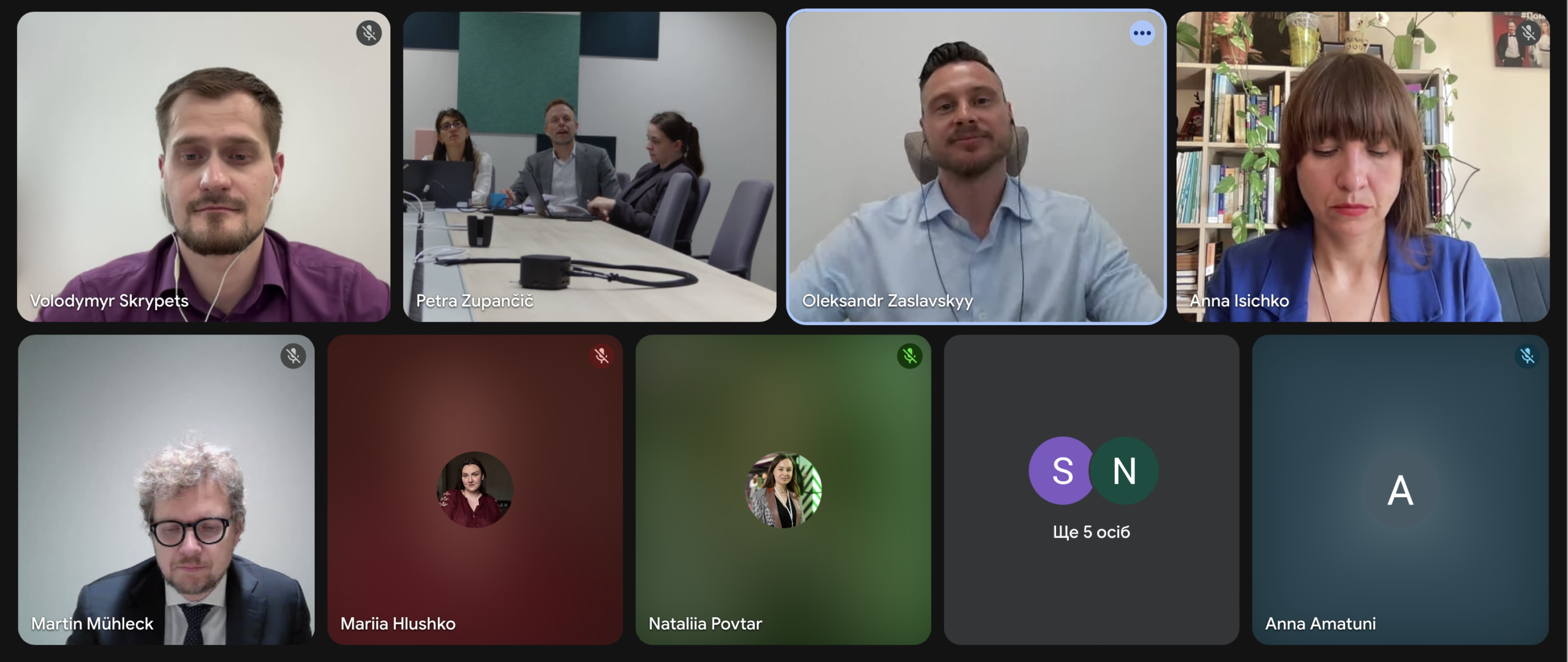
The presentation also addressed Ukraine’s progress on the European integration track, in particular the planning and development of law-making, policy implementation, and the monitoring of the changes introduced.
One of the significant achievements in this area has been the approval of the National Programme for the Adaptation of Ukrainian Legislation to European Union Law. It is now important to enshrine in law the status and binding nature of the National Programme, and to align it with the Verkhovna Rada’s legislative work plan.
During the presentation of the ‘Governance’ section, Oleksandr Zaslavskyi described the current situation — namely the structural and staffing changes in the Ukrainian Government, the challenges in its interaction with the Verkhovna Rada, and the planning of government activity, particularly with regard to fulfilling international commitments.
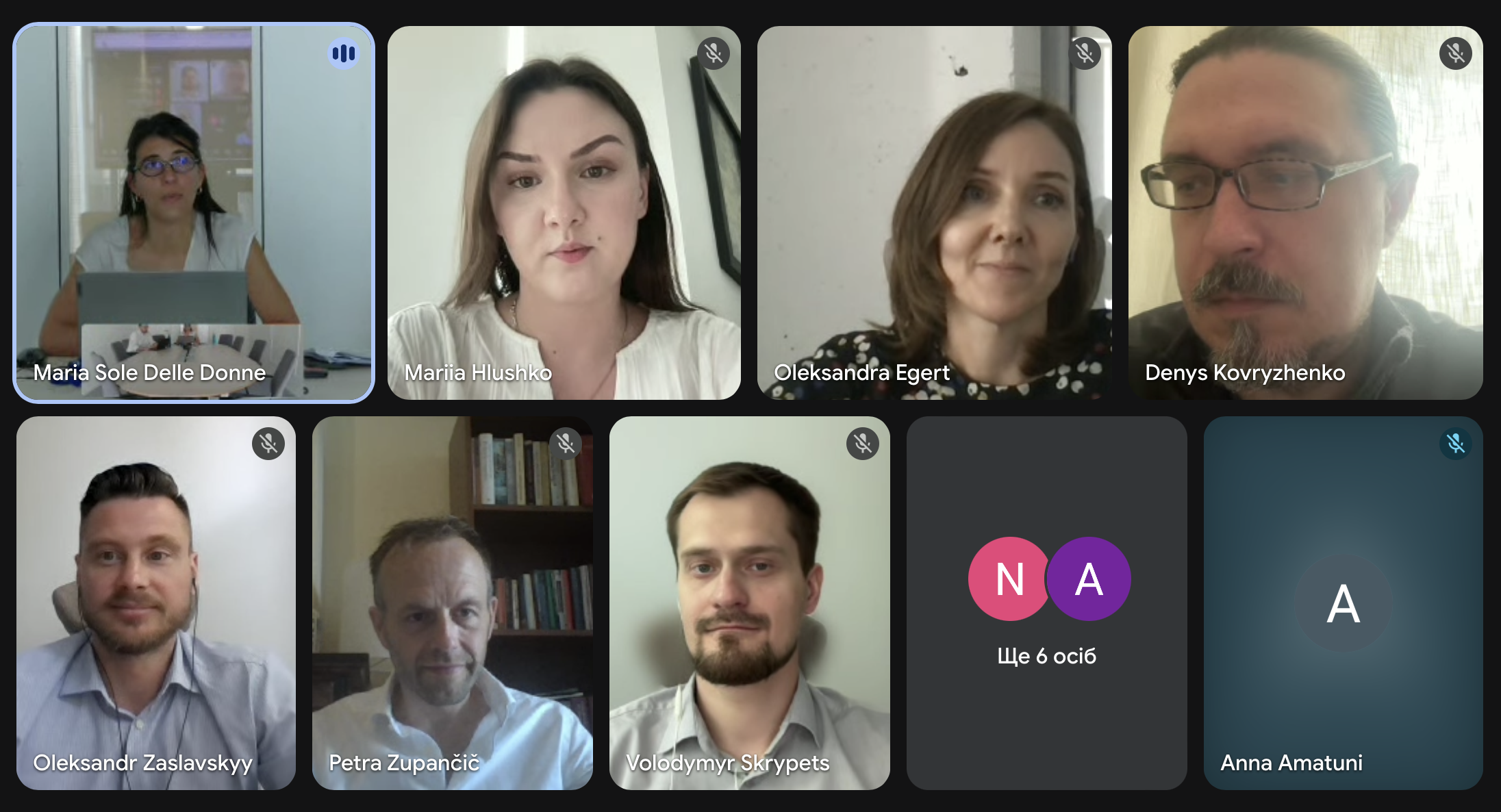
On multi-level governance, Volodymyr Skrypets noted that the European integration processes are continuing in this area too: in December 2025 the Government adopted Resolution No. 1748, ‘Certain Issues of Reforming Local Self-Government and the Territorial Organisation of Power under Martial Law and in Preparation for Ukraine’s Accession to the European Union’. However, under conditions of full-scale war, the problems that come to the fore are those linked to the depopulation of Ukrainian communities, the falling number of local council deputies, and the attraction of investment at the local level, including the implementation of the State Strategy for Regional Development.
As a reminder, the Agency for Legislative Initiatives, together with a coalition of civil society organisations, previously presented to the European Commission the interim findings of this year’s Shadow Report under Chapter 23 ‘Judiciary and Fundamental Rights’ and Chapter 24 ‘Justice, Freedom and Security’.
For the third year running, the coalition of civil society organisations coordinated by ALI has been monitoring and assessing Ukraine’s progress on European integration. This is an independent, alternative analysis by representatives of civil society and the expert community, coordinated by ALI. The coalition comprises experts from the Agency for Legislative Initiatives, Transparency International Ukraine, the Human Rights Centre ZMINA, Tomorrow’s Lawyer, Europe without Barriers, the Ukrainian Bar Association, Civil Network OPORA and the Centre for Democracy and Rule of Law, with media support from European Pravda.
As has become customary, the new Shadow Report will be published ahead of the European Commission’s report on Ukraine’s progress within the European Union Enlargement Package in 2026.
Background
The Shadow Report is a systematic audit by sector experts from civil society organisations. It does not duplicate the state’s official documents or the European Commission’s assessments and is not dependent on their positions. Rather, it is an analytical tool for developing a professional and comprehensive understanding of European integration processes, one that involves experts in the reform process. At the same time, it assesses how far Ukrainian legislation and the system as a whole conform to EU standards.
Producing shadow reports is a regular practice for all candidate countries seeking to join the European Union. In Bosnia and Herzegovina, Serbia, North Macedonia and Moldova, independent coalitions of civil society organisations have for years carried out alternative monitoring of reform progress in areas such as the rule of law and the functioning of democratic institutions. In Ukraine, this work has been carried out systematically since 2024, when a coalition of civil society organisations first prepared an alternative analysis to accompany the European Commission’s report on Ukraine’s progress within the European Union Enlargement Package.
The Shadow Report is entirely a product of civil society, regardless of its sources of support. To strengthen the institutional independence of the process, from 2026 ALI is establishing a new trend: the Shadow Report is also financed by independent civil society organisations. A significant share of the funding for its development will be covered by the Agency for Legislative Initiatives and Transparency International Ukraine. ALI takes on the mission of ensuring the maximum impartiality and objectivity of this preparation process, as it does every year.
The Problem of Delineating Powers Between State Authorities and Local Self-Government in Draft Law No. 14412
The Concept of Reforming Local Self-Government and Territorial Organisation of Power in Ukraine set out, as early as 2014, the objective of achieving an optimal distribution of powers between local self-government bodies (LSGBs) and state authorities. Despite this, the proper delineation of powers between the various levels of public administration remains an open question and has yet to be conclusively resolved. The absence of such delineation sustains the excessive (post-communist) centralisation of public administration, entrenches an ineffective model of power-sharing between central state authorities and LSGBs, undermines the achievements of Ukraine’s decentralisation reform, and does not conform to the European principles governing the distribution of powers across levels of public governance. In practical terms, the lack of delineation gives rise to conflicts of competence, the inefficient use of resources, and the dependence of local self-government on ‘manual’ control from the centre.
The specific problem has been set out in the following documents:
- the Ukraine Facility Plan for 2024–2027,which sets the task of bringing into force, by 31 March 2026, legislation delineating powers between LSGBs and state authorities, and between the various levels of public administration, in line with the principles of decentralisation and subsidiarity;
- the Action Plan for Implementing the Recommendations of the European Commission Set Out in the Report on Ukraine’s Progress Under the 2024 EU Enlargement Package, which establishes commitments: (1) to define the principles for delineating the spheres of competence of the state and of local self-government and (2) to distribute LSGB powers into own and delegated powers by June 2025, and (3) to submit to the Cabinet of Ministers of Ukraine a draft law on delineating the powers of LSGBs of different levels and of LSGBs and executive authorities in accordance with the principle of subsidiarity by August 2025;
- the Public Administration Reform Roadmap (2025), which provides for completing the reform of local self-government and the territorial organisation of power in Ukraine by 31 December 2027 and adopting the corresponding legislation by 31 March 2026.
Why This Matters
Entrenching the current model of power-sharing between LSGBs and state authorities, together with the imbalances between the various levels of public administration, creates a set of systemic risks. Specifically, it:
- makes effective vertical coordination impossible owing to chronic conflicts of competence between levels of authority: the quality of public service delivery becomes secondary, while authorities focus on disputes over the limits of their responsibilities;
- undermines the very idea of decentralisation: the administrative, financial and resource dependence of LSGBs — driven by the persistence of extensive ‘manual’ control over them by state administrations — devalues the accountability of LSGBs to voters;
- contributes to a negative assessment of Ukraine’s progress in the EU negotiation process, owing to the late fulfilment of commitments under the Ukraine Facility Plan for 2024–2027, the Action Plan for Implementing the Recommendations of the European Commission Set Out in the Report on Ukraine’s Progress Under the 2024 EU Enlargement Package, the European Commission’s recommendations set out in its report on Ukraine (November 2025), and the Public Administration Reform Roadmap, [АБ1] with regard to regulating the area of multi-level governance.
Addressing the Problem
The problems described above are to be resolved by the government’s draft law ‘On the Principles of Delineation and Distribution of Powers Between Levels of Public Governance’ (No. 14412 of 30 January 2026).
The draft law sets out the framework, principles, conditions and criteria for the delineation and distribution of powers between executive bodies and local self-government bodies. If it is adopted, amendments will be required for a further 158 laws and other legal acts, ultimately establishing the powers of public governance bodies.
Draft Law No. 14412 defines:
- the legal basis and principles for delineating and distributing powers of public governance bodies;
- the levels and bodies of public governance;
- the classification of the powers of public governance bodies;
- the criteria for distinguishing the own and delegated powers of local self-government, as well as the criteria for delineating powers between levels of local self-government;
- the conditions under which the state may delegate powers to LSGBs;
- the specific arrangements for the exercise of powers by executive authorities and LSGBs under martial law or a state of emergency;
- the resourcing of the exercise of powers by public governance bodies;
- the limits of LSGB autonomy in decision-making;
- the accountability of LSGBs for the exercise of their powers.
Draft Law No. 14412 was considered by the Verkhovna Rada of Ukraine and adopted at first reading on 7 April 2026. While it regulates the same matters of local self-government reform and the territorial organisation of power as the Resolution of the Cabinet of Ministers of Ukraine No. 1748 of 12 December 2025, the two documents propose different approaches to classifying the powers of public governance bodies. The government Resolution No. 1748 differentiates between (1) powers of state authorities that cannot be transferred to LSGBs; (2) powers of executive authorities that may be transferred under certain conditions; (3) delegated powers of LSGBs; and (4) own powers of LSGBs. The classification proposed by Draft Law No. 14412 includes (1) functional powers (own, delegated, optional, and those falling within the exclusive competence of the state) and (2) institutional and organisational powers (powers aimed at establishing and providing organisational support for the activities of public governance bodies).
Key Risks
Inconsistency in the legal basis for the activities of the various levels of public governance. Draft Law No. 14412 contains provisions that conflict with the Constitution of Ukraine and with European law, namely: (1) defining by law the manner in which LSGBs perform their own functions; (2) specifying the list of LSGB functions through a legal act of the government or the President rather than through a law; (3) restricting the right of LSGBs to challenge in court the decisions concerning their own powers; and (4) establishing contractual grounds for the joint exercise or delegation of powers. Together with the discrepancies between Draft Law No. 14412 and Resolution of the Cabinet of Ministers No. 1748 regarding the classification of the powers of public governance bodies, these features create the following risks:
- a high likelihood that the law will be found unconstitutional, in whole or in part;
- the emergence of an internally contradictory model of public governance;
- a slowing of European integration.
Institutional bias in favour of the executive vertical. Draft Law No. 14412 effectively allows the functions of LSGBs to be defined at the level of subordinate legislation (acts of the President and the Cabinet of Ministers), which creates a threat:
- to the balance between the branches of government, in particular by limiting the competence of Parliament and of local councils;
- to the long-term planning of LSGB activities, since subordinate legislation is less stable and predictable than primary law.
Conclusion
Adopting Draft Law No. 14412 without addressing its conceptual inconsistencies would create risks of legal uncertainty and institutional conflict, lay the groundwork for greater centralisation of administration by the executive and the erosion of the positive results of the decentralisation reform, and slow Ukraine’s fulfilment of its European integration commitments.
Recommendations
Short-Term Recommendations (Urgent Legislative Changes):
- Synchronise government decisions with legislative changes in the area of the optimal distribution of powers between LSGBs and state authorities and between the various levels of public administration; align the terminology and the classification of powers used in Draft Law No. 14412 and in government Resolution No. 1748.
- Remove from Draft Law No. 14412 the provisions on defining the functions of LSGBs through subordinate legislation, and provide that LSGB functions be defined exclusively by law.
- Remove from Draft Law No. 14412 the norms allowing executive authorities to determine the means and procedures by which LSGBs exercise their own powers, leaving communities free to choose their own working methods within the powers conferred on them by law.
- Remove from Draft Law No. 14412 the concept of ‘optional powers’, as it has no equivalent in European law and creates legal uncertainty.
- Remove from Draft Law No. 14412 the provisions on the contractual redistribution of powers between public authorities, and provide that powers be defined exclusively by law rather than transferred locally through informal arrangements.
- Provide for the resolution of any disputes regarding the exercise of all powers (not only those delegated) through the courts.
Medium-Term Recommendations (1–3 Years):
- Conduct a functional audit of the system of public powers.
- Develop and enshrine in law a single model for classifying powers.
- Regulate the resourcing for LSGBs’ exercise of delegated powers.
- Institutionalise a mechanism for monitoring compliance with the distribution of powers between LSGBs and state authorities and between the various levels of public administration.
This infobrief was compiled with the support of the International Renaissance Foundation. Its content is the exclusive responsibility of the authors and does not necessarily reflect the views of the International Renaissance Foundation.
ALI Presents Study on Prospects for Restoring Competitive Selection for the Civil Service during Martial Law
Suspending competitive selection was a necessary step for the civil service system at the start of the full-scale invasion. But what comes next amid martial law, active European integration and a growing staffing crisis? The Agency for Legislative Initiatives presented its vision in the study ‘Staffing of the Civil Service during Martial Law: Needs, Challenges and Prospects’ during a roundtable organised by the Verkhovna Rada Committee on the Organisation of State Power, Local Self-Government, Regional Development and Urban Planning. Together with MPs of Ukraine, representatives of state institutions and civil society, participants discussed:
- improving the procedure for entry into and service in the civil service;
- restoring competitions for civil service positions and service in local self-government bodies;
- proposals to the relevant Draft Law No. 13478-1, which is currently being prepared for the second reading.
International institutions emphasise that Ukraine shall return to competitive selection based on merit. Lawmakers are focused on meeting these requirements, while civil servants themselves do not always agree with these proposals. This is why the problem of staffing the civil service also needs to be viewed from within.
Oleksandr Zaslavskyi, Deputy Executive Director for Analytical Work at ALI, said that the study covers such aspects as civil servants’ internal assessment of the current system of selection for civil service positions, their needs and expectations, and possible approaches to addressing the problem of staff selection. In addition, the study contains recommendations on the legal regulation of selection for civil service positions.
The results show that civil servants have adapted to the current staffing model and have limited awareness of the potential benefits of competitive selection:
- the majority of respondents (57.2%) are satisfied with the absence of competitive procedures, while more than 55% believe that the absence of competitions fully ensures equality of access to positions;
- some respondents (26.3%) clearly understand the need for competitions and are waiting for them to be restored.
What explains these results? Factors include trust in the results of competitive selection and the uncertain status of civil servants appointed to positions without competitions. Currently, 42.8% of the civil servants surveyed believe that such persons may continue civil service without competition based on the results of performance appraisal.
A separate focus of the study is the prospect of adopting Draft Law No. 13478-1 in the near future. Civil servants’ expectations are rather cautious, but MPs note that restoring competitions is long overdue. Adoption of Draft Law No. 13478-1 on restoring competitive procedures would help fulfil one of the requirements of the Ukraine Facility Plan for 2024–2027. Restoring competitions is not only a matter of political expediency but also of evidence-based policy: what problems emerged during the period of simplified procedures, what risks are visible now and which models can work under martial law.
However, the staffing model is not the only factor shaping the professionalism, prestige and staffing stability of the civil service. Working conditions are no less important.
What model for restoring competitions would be fair, realistic and, at the same time, safe for the stability and functionality of the public administration system? It is now important to talk about the phased restoration of competitions, specific features for local self-government bodies and compliance with both Ukrainian realities and international standards.
Read more about ALI’s recommendations, stakeholders’ positions on the relevant draft law and the analysis of the current state and practice of selection for civil service positions under martial law in the new study.
ALIʼs New Report on the Staffing of the Civil Service During Martial Law
Executive Summary
The suspension of competitive selection in early 2022 was a necessary emergency measure for the civil service system in the first months of the full-scale invasion. At the same time, several questions remain open regarding:
- whether the use of this practice throughout the entire period of the legal regime of martial law is justified;
- the mechanisms to be introduced to remedy the situation;
- whether the proposed approaches meet the interests of the target audience — civil servants themselves.
This report seeks to answer these questions.
Throughout martial law, the restoration of competitive procedures for civil service positions has repeatedly prompted active debate. International institutions have emphasised the need for Ukraine to return to merit-based, competitive selection. Lawmakers have focused on meeting these requirements, while the target audience — civil servants themselves — do not always share this view.
This study focuses on civil servants’ internal perspective of the current state of play and prospects for staffing the civil service during the legal regime of martial law, as well as their attitudes, needs and expectations.
The internal assessments and attitudes of the civil service were identified through an anonymous questionnaire survey.
Overall, the survey results indicate that civil servants have adapted to the current staffing model and appear to have limited awareness of the potential advantages of competitive selection. A majority of respondents (57.2%) are comfortable with the absence of competitive procedures and, in some cases, openly opposed their restoration, not only during martial law but more broadly.
At the same time, some respondents clearly recognise the need to restore competitive procedures for civil service positions and expect this step to be taken. They associate such procedures with fair selection, reduced subjective discretion and lower corruption risks in staffing decisions. However, this group accounts for only 26.3% of respondents.
Although the prospect of restoring competitive procedures did not receive broad support, a majority of respondents (51.7%) expressed trust in their results. At the same time, almost one in five respondents does not trust the results of competitive selection. As civil servants themselves explain, this mistrust is based on their own negative experience of taking part in competitive procedures.
This experience has created demand among respondents for improving the quality and transparency of competitions. In this context, civil servants identified areas that could strengthen the effectiveness of the Commission on Senior Civil Service and competition commissions, including:
- granting commissions the power to select one winner of the competition and the next-ranked candidate, who may take up the position if the winner declines or if the position becomes vacant within one year after the competition — 29.5%;
- reducing political influence on commission members — 29%;
- specifying liability for interference in the work of commissions — 22.9%;
- training commission members in tools for assessing candidates’ professional competence — 22.5%.
Civil servants appointed without competition during martial law are concerned about their future status once competitive selection is restored. Most respondents (42.8%) believe that such persons should be able to continue in civil service without a competition based on the results of performance appraisal, 26.7% — based on the actual length of service and 22.5% — based on a competition under the general procedure. In addition, respondents suggested combining appraisal results with the time actually worked, as well as simplifying competitive procedures for persons who already have some length of service in civil service positions.
38.6% of survey participants stated that continuation of civil service based on a decision of the appointing authority would improve the quality of public administration, as it creates opportunities to retain valuable and experienced staff.
On the one hand, these results may reflect concerns about competitive selection or an unwillingness to spend personal resources, in particular time and effort, on additional preparation for it. On the other hand, the inclination towards this practice may indicate that the civil servants do not perceive the appointing authority’s discretion as a significant risk and, in some cases, even regard it as a potential advantage and an acceptable alternative to competitive selection.
At the same time, the staffing model is not the main factor shaping the professionalism, prestige and stability of the civil service workforce. Working conditions play an equally important role and are currently neither conducive to attracting highly qualified specialists to the civil service nor to retaining current civil servants.
Only 8% of respondents consider civil service employment to be prestigious. Respondents most often mention: (1) excessive workload, which leads to burnout and resignations; (2) low remuneration; (3) frequent changes in the organisational structure of state bodies (changes in structure, staffing tables and staff reductions); (4) instability of the system of central executive bodies (redistribution of powers, reorganisations and changes in subordination or functions of bodies); (5) ineffective decisions and weak management by the political leadership. These factors encourage civil servants to change jobs.
The adoption of Draft Law No. 13478-1 on restoring competitive procedures will contribute to meeting one of the requirements of the Ukraine Facility Plan for 2024–2027 and to resolving a number of problems related to forming the workforce, serving in and terminating civil service.
At the same time, civil servants are cautious about the draft law’s ability to improve the situation. Only 4.2% of respondents believe that it will do so, while the largest share (29.2%) assumes that the draft law will help resolve the problems only partially. Every sixth respondent (17.8%) is not familiar with the provisions of Draft Law No. 13478-1 at all. This points to insufficient awareness among civil servants of their prospects for continuing in the civil service and the need to strengthen communication activities to prepare them to work under the renewed conditions.
Despite the sceptical attitude of most respondents towards the restoration of competitive procedures, competitive selection remains a tool with clear advantages over the current procedure for forming the civil service workforce.
A meritocratic approach to staffing increases the value of selection both for the civil servant, who invests personal effort in entering the civil service, and for the state body, which has an interest in retaining a professional selected through competition.
Selecting candidates for civil service positions on a competitive basis can potentially contribute to a more balanced distribution of workload among staff, reducing the risk of situations where some specialists have to compensate for the lack of experience or professional training of newly appointed employees. Therefore, restoring competitions is likely to help reduce staff turnover.
The restoration of competitive selection and clarification of certain conditions for entry into, service in and termination of civil service should not be expected, in themselves, to automatically ensure the recruitment of highly qualified specialists or significantly increase the prestige of the civil service. This requires comprehensive solutions aimed at creating working conditions that would be both attractive and acceptable for potential and current civil servants. This concerns ensuring fair remuneration (respondents mention disgracefully low pay), stability in the system of public authorities and improving the quality of managerial competences and decisions of the political leadership, whose effectiveness is assessed critically by some civil servants.
Restoring competitive procedures is a necessary step, but parallel efforts must continue to develop and implement measures that increase the prestige of the civil service and strengthen the state’s image as a reliable and competitive employer.
Restoration of Competitive Selection for Civil Service Positions under Martial Law
The Problem
Competitive selection is a basic tool for ensuring professionalism, integrity and political neutrality in the civil service. In Ukraine, this model was developed after 2016 as part of public administration reform, implemented with the EU support.
After the full-scale invasion, the state abandoned competitive selection. This alleviated the staff shortage caused by mobilisation and massive forced displacement, both internally and abroad. At the same time, the prolonged suspension of competitive selection created systemic risks for the quality of governance, institutional memory, and trust in the civil service.
Why It Matters
Current Solution
Currently, the only legislative initiative aimed at restoring competitive selection during martial law is the Draft Law No. 13478-1. It provides for:
- the gradual restoration of competitive selection procedures;
- the determination of deadlines for competitive selection procedures for positions to which persons have been appointed without competitive selection for the duration of martial law;
- the possibility of continuing service by decision of the appointing authority to preserve human resources, time, and budget;
- the application of positive measures to achieve gender balance in civil service positions in specific state bodies.
The Government supports the adoption of this draft law.
Key Risks
- Political blocking of the process. Despite the declared political readiness to gradually resume competitive selection procedures during martial law, in practice, this process remains blocked and has not been brought before Parliament for consideration for a long time. This delay indicates a lack of consensus on restoring competitive selection in wartime. The issue of competitions for top civil service positions remains particularly controversialFirst Deputy Chairman of the Verkhovna Rada of Ukraine, Oleksandr Korniyenko: Return to competitive selection for top positions triggers debate among MPs. Interfax-Ukraine. 24.09.2025.. The reasons include the desire to maintain maximum managerial flexibility, concerns of complicating procedures, and the general focus of political attention on security issues. At the same time, this approach ignores long-term risks, as temporary appointments are gradually becoming the ‘new normal.’
- Unfinished remuneration reform. Resuming competitions without completing remuneration reform creates the risk of an outflowThis is supported by data from an anonymous questionnaire survey of civil servants conducted by the Agency for Legislative Initiatives in December 2025 with the assistance of the Verkhovna Rada Committee on Organisation of State Power, Local Self-Government, Regional Development and Urban Planning and the National Agency of Ukraine on Civil Service. of personnel from the civil service. Despite the adoption of the Law of Ukraine No. 4282 and positive developments, the level of remuneration remains one of the key demotivating factors. There are still significant disparities in remuneration between bodies of different jurisdictions, as well as between different categories of positions within the same body. In its conclusions, the Accounting Chamber of Ukraine also notesReport of the Accounting Chamber of Ukraine on the results of the compliance audit on the topic ‘Reforming the remuneration system in public administration’, approved by Decision of the Accounting Chamber of Ukraine No. 26-1 from October 28, 2025. that the reform has not fully achieved its goals of creating a fair, transparent and competitive remuneration system.
- Institutional instability. Frequent changes in the system of central executive bodies (reorganisations, mergers, changes of powers) destabilise their activities, cause staff turnover, loss of institutional memory and reduced efficiency.
- Political dependence of senior civil servants. After the reset of power in 2019Based on the Law of Ukraine No. 117-IX ‘On Amendments to Certain Laws of Ukraine Regarding the Restructuring of Government’., state secretaries of ministries and heads of central executive bodies (category ‘A’ positions) remain dependent on political figures. Appointment and dismissal procedures undermine the meaning of competitive selection and create conditions for politically motivated decisionsStarting from September 29, 2019 (the date of entry into force of the Law of Ukraine No. 117-IX), the Commission determines not the winner of the competition, but the candidates for civil service positions who have received the highest total number of points based on the results of the overall ranking of candidates (no more than three per position) for selection of the winner by the appointing authority or head of the civil service.. The practice of frequent changes of state secretaries (who change with the appointment of a new minister, or even more often) makes it impossible for them to perform their key functionFor example, over the past five years, the state secretaries of the Ministry of Culture (in all variations of its name) have changed five times since 2019 (Bidenko A., Dul’ Y., Leshchuk Y., Kurochenko O., Levchuk V.) and none of them has served the full five-year term provided for by law (although the latter still has a chance to do so). — ensuring the stability and continuity of the work of ministries. The Draft law No. 13478-1 does not eliminate these risks.
Conclusions
The restoration of competitive selection is a necessary condition for a professional civil service; however, it must be accompanied by systemic changes. Without the completion of the remuneration reform, reduction of political influence, and ensuring institutional stability, competitive selection may not fully fulfil its function.
Recommendations
- Adopt the Draft Law No. 13478-1 in the first reading (take as a basis).
- During the revision of the Draft Law No. 13478-1 for the second reading, provide for: 1) strengthening the role of the Senior Civil Service Commission and competitive commissions formed by the appointing authority, granting them the power to determine one winner and the next candidate who can take the position in case of refusal by the winner or vacancy of this position within a year after the competition; 2) establishing the submission of the Senior Civil Service Commission as a mandatory basis for the dismissal of category ‘A’ civil servants; 3) specifying the responsibility for interference in the work of the Senior Civil Service Commission and the competition commissions; 4) bringing the procedure of the Senior Civil Service Commission formation in line with the Constitution of Ukraine.
Medium-term
- Complete the remuneration reform, taking into account the recommendations of the Accounting Chamber.
- Introduce the practice of reformatting the system of central executive bodies only based on a functional review of the entire system, identification of all alternatives, and justification of the proposed changes, in particular in terms of financial and human resources.
Infobrief was compiled with the support of the International Renaissance Foundation. Its content is the exclusive responsibility of the authors and does not necessarily reflect the views of the International Renaissance Foundation.
The Vice-President Is Gone — Long Live the Head of the Chancellery?
The issue of appointing a new Head of the Office of the President (OP) has receded to the margins of the political agenda while President Zelenskyy is fully immersed in the negotiation process. This, however, has not stopped political commentators, journalists and others from speculating about who will ultimately take the helm of the OP. In parallel, Ukrainska Pravda reports that the President has resumed communication with Andrii Yermak.
Despite this, the moment of ‘office interregnum’ should be used for a kind of after-action review. In other words, we propose to look at the institution of the Administration/Secretariat/Office of the President in a broader perspective and through the prism of international experience, and to examine what, in fact, could function differently with a change in the Head of the OP. And, ultimately, whether there is an institutional problem within the power triangle or a traditional ‘excess of executive discretion’.
What Is the Office of the President (or How Was It Designed)?
The Office of the President of Ukraine is a permanent auxiliary body of the Head of State; it is an institution that replaced the Presidential Administration in this capacity in 2019. Officially, the Office of the President is positioned as an advisory and analytical, communications and organisational centre that ensures the functioning of the Head of State. Formally, the Office of the President does not adopt political decisions, is not a body of executive power and may not assume the functions of the Government or Parliament.
Its main tasks include analytical work, coordination of communications, oversight of compliance with diplomatic protocol, interaction with public authorities, preparation of the President’s documents and administration of working processes. Given the constitutionally defined duties and powers of the President of Ukraine, the Office must possess strategic-level expertise in the fields of national security, international relations, interaction with public authorities and related areas.
What, then, constitutes the basis and legal framework for the establishment and functioning of this auxiliary body? Obviously, it will come as no surprise that the Constitution of Ukraine provides the basic answer to this question, in the part that defines the powers of the President and the apparatus that ensures their exercise. Article 106 of the Constitution sets out the exclusive powers of the Head of State: defence, national security, international policy, appointment and dismissal of a number of officials, submission of draft laws to the Verkhovna Rada of Ukraine (VRU), signing adopted laws and exercising the right of veto. Although the Constitution does not contain a separate article on the Office of the President, it is precisely the scope of the President’s powers that necessitates the establishment of an apparatus to ensure the performance of these functions, and paragraph 28 of Article 106 explicitly states that the President ‘establishes, reorganises and dissolves consultative, advisory and other auxiliary bodies and services’.
What Does an ‘Auxiliary Body’ Turn Out to Be in Practice?
If the Office of the President operated strictly within the limits of its formal tasks, the figure of its Head would hardly be an object of such a level of public attention. However, Ukrainian politics and the architecture of power systematically demonstrate weak institutional development. As a result, situations repeatedly arise in which the actual influence of a specific official often exceeds their formal mandate. The Head of the Office/Administration/Secretariat of the President is a classic example of this phenomenon.
At the same time, the same statement is fully applicable to the position of the President of Ukraine itself: everyone who has held it, perhaps with the exception of Leonid Kravchuk, has in one way or another sought to increase their level of influence, expanding their constitutional powers in a non-constitutional manner. The Administration/Secretariat/Office has precisely been the auxiliary instrument that enabled this ‘expansion of influence’.
We will not delve too deeply into history. Primarily due to an entirely obvious fact: the Constitution in the 1996 version granted the President of Ukraine powers close to those of the head of the executive branch. As a result, during the presidencies of Leonid Kuchma and Viktor Yanukovych, the Head of the Presidential Administration was the ‘right hand’ of the Head of State and a key management hub through which personnel decisions, political arrangements and a significant part of state strategies passed.
However, the more recent framework of the constitutional reforms of 2004/2014 also provides examples of the President’s influence and that of their auxiliary body beyond constitutional powers.
During the presidency of Viktor Yushchenko, the Administration was renamed the Secretariat, ostensibly to emphasise the renewal of both the auxiliary body’s functionality, with an apparent focus on ‘clerical functions’, and the Head of State himself. In practice, however, the Secretariat became a centre for the formulation of presidential decisions that went beyond the framework defined by the Constitution: from the appointment and dismissal of heads of regional and district state administrations without government submissions to overwhelming the Government with hundreds of decrees on virtually any matter.
Under Petro Poroshenko, the Presidential Administration effectively performed the functions of a political headquarters, a decision-making centre and a coordinator of key policy areas. For example, in 2016, it was the President and his Administration who became the key architects of the judicial reform.
With the launch of the OP in 2019, the ‘unloading’ of the institution and its depoliticisation were declared, but in practice, it became an even stronger centre of decision-making concentration, albeit within a new, more informal architecture. At the same time, several groups of claims can be identified that have regularly appeared in the media space regarding the OP and its leadership.
- Excessive lack of transparency and concentration of power. According to journalists, key decisions were made within a narrow circle without the necessary communication with the Government, Parliament and/or the expert community. This gave rise to conclusions about ‘manual governance’, politicisation and the personalisation of processes that should have been institutional in nature. This category also includes a subcategory relating to personnel decisions. Appointments of ministers, heads of law enforcement bodies and top officials often appeared to be personal arrangements and the construction of a vertical of loyalty rather than a systemic approach based on professionalism and achievements.
- Conflicts of interest and issues of trust. Certain publications highlighted corrupt links, informal or improper influence, which cast doubt on the impartiality and professionalism of the decisions taken.
- Parallel ‘centres of power’ and a struggle between towers. Publications often described internal conflicts between different groups of influence within the OP, which led to blocked decisions, ineffective coordination and information contradictions. This category also includes materials related to communication crises surrounding sensitive issues.
How can such a media discourse around the Office of the President and its leadership be explained? The Regulation on the OP contains a rather broad range of functions of a strategic nature, from analysing the situation in the world to providing expertise on adopted laws and developing its own legislative initiatives. The structure of the body, in fact, reproduces the architecture of the executive branch: so-called ‘sectoral’ units are responsible for the development of specific authorities. As a result, despite the declared ‘minimalist’ concept of the Secretariat/Office/Administration of the President, which would be limited solely to organisational matters, it has in practice turned into a ‘fourth’ branch of power alongside the legislative, executive and judicial branches.
The Office of the President became not merely an analytical or advisory body. It turned into a bridge between the President and the entire system of government and often into a de facto filter for access to decision-making. In the presence of a presidential ‘mono-majority’ in Parliament, this created such an imbalance in the system of checks and balances, such an over-centralisation and personalisation of power, that the Head of the Office of the President began to be informally referred to as a ‘Vice President’.
If the OP is viewed from this perspective, it becomes clear that the history of scandals, accusations of ‘grey cardinal schemes’, conflicts of interest and information wars between different ‘towers’ within the presidential circle is the result of a convergence of historical preconditions, a structural flaw in the architecture of power and specific political realities, rather than of individual personalities. In this sense, it can be argued that the role and place of the auxiliary body and the extent of influence of its Head are determined by the governing style of the President himself, within the limits permitted by the legislative framework.
What Does International Experience Say about Advisory Bodies Attached to the President?
In Ukraine, in the search for a ‘proper recipe’ for any reform, reference is traditionally made to ‘best international practices and standards’. We, however, propose to look at international experience in regulating and operating auxiliary bodies attached to the president, bearing in mind the identified problem and its genesis in Ukraine.
Globally, there is a wide range of models for organising presidential offices, apparatuses, administrations and secretariats, ranging from purely administrative and support structures to powerful political decision-making centres.
In parliamentary republics (Bulgaria, Slovakia, Slovenia, Croatia and others), the president does not possess executive powers and his role in the legislative process is largely limited to symbolic or procedural functions. Accordingly, the activity of the president’s office is predominantly administrative and protocol-oriented.
Its main functions include the preparation of documents for promulgation, technical support for decrees and the organisation of protocol events. Presidential advisers perform the functions of secretaries and rapporteurs and do not exert substantive influence on policy. In complex or controversial legislative situations, the president relies not on his own analytical apparatus but on the expertise of government structures or the decisions of the Constitutional Court.
In semi-presidential systems (France, Poland, Lithuania, Romania and others), where the president has real levers of influence over the executive branch, the president’s office acquires significant political weight. Such a body is effectively integrated into the system of public administration: it analyses draft laws, elaborates options for the use of veto powers and participates in consultations with the government and parliament. In this case, the president’s office acts as an extension of the powers of the Head of State.
The degree of legislative regulation of the status and powers of such offices varies across countries. For example, in Romania and Lithuania, the functions of the presidential administration are defined by law. In Poland and Lithuania, there are direct constitutional and legislative provisions that delineate the auxiliary role and structure of the office. In contrast, in France, a significant part of the activities of the President’s Chancellery is based on constitutional custom and internal orders of the president.
For Reference
The Statute of the Romanian Presidential Administration provides that presidential advisers (consilieri) hold the rank of minister, while the staffing and structure of the administration are approved by presidential decree. As a result, presidential advisers are formally endowed with a high status and access to state authority resources. In practice, strategic policy in areas where the Head of State plays a leading role is often shaped through the presidential apparatus. For example, in foreign policy and security, presidential advisers participate in the development of defence doctrine (as provided for by legislation); in domestic policy, they are involved in shaping international policy on anti-corruption matters, among others. Thus, the Romanian Presidential Administration has formally established an influence and scope that corresponds to the constitutional functions of the Head of State.
The Chancellery of the President of Lithuania in practice constitutes an important centre for diplomacy, defence and appointments. Under the Constitution of Lithuania, the President defines the main directions of foreign policy and, together with the Government, implements it, appoints diplomatic representatives, and plays a key role in the field of national security and defence. The only impeachment in Lithuania’s history was linked to the fact that President Rolandas Paksas, in 2003–2004, allowed business partners and donors connected to Russian business and special services into his close circle, which posed a threat to Lithuania’s national security.
The Offices of the Presidents of France and Poland, alongside their formally defined functions, also perform informal ones: they prepare analytical materials, oversee personnel policy, coordinate legislative initiatives and shape the President’s position. However, a substantial share of this influence occurs outside the boundaries of normative regulation and proper public oversight.
What these countries have in common is the presence of a broad staff of expert advisers who wield significant informal influence. On the one hand, this provides the President with access to high-quality analysis and comprehensive information, which is critically important when decisions must be taken on the promulgation of laws, the exercise of veto powers or appeals to the Constitutional Court under tight time constraints. On the other hand, such a model creates risks: advisers who do not bear political responsibility may exert non-public influence over the fate of laws, shaping a behind-the-scenes agenda. In the absence of clear mechanisms of democratic oversight, this increases the risks of backroom decision-making and potential abuses.
Does a Fateful Dismissal Create an Opportunity for Change?
Both a brief historical excursus and a review of international experience suggest that, at this stage, Ukraine is not unique in its ‘office–presidential discourse’:
- the formal status and informal influence of auxiliary bodies may differ;
- their functions may be regulated or may instead be based on political and organisational traditions;
- depending on the specific individuals holding office, new practices may emerge, as well as various difficulties and crisis episodes.
International experience underscores the absence of a one-size-fits-all approach to addressing these issues and demonstrates the need to build functioning institutions as an alternative to a personalised style of governance.
Is it possible to change anything in the specific socio-political and wartime circumstances? Unlike politicians, we have no need to promise ‘golden mountains’ or lure anyone with ‘castles in the air’. Therefore, to be completely frank, we are rather sceptical about the prospects of changing an already entrenched approach that has proven its propensity to generate problems. At the same time, the illusory nature of these prospects is no reason to give up or to refrain from demanding more.
We nevertheless propose to view the change of the Head of the Office of the President not merely as a political or personnel gesture. It is an opportunity to reconsider the very architecture of the institution which, in Ukraine’s political system, has traditionally acquired excessive, often informal, influence.
What needs to change is the model of operation in favour of a more transparent one, with clearly defined procedures for interaction within the triangle of power, analytically capable and less personalised, rather than simply selecting a ‘better person’. This would help avoid the hyperconcentration of power in the hands of the head of the President’s auxiliary body, who exercises his powers in the context of a full-scale war and the presence of a pro-presidential ‘mono-majority’. Of course, this is provided that Yermak’s resignation and his rapid transition to the status of a service member are not part of a cunning plan for a triumphant return and the preservation of influence, in light of his own statement about reforming the OP by involving service members and veterans across all departments.
Mindich’s ‘La Casa de Papel’, or How the Principle of Personal Loyalty in State Governance Undermines the State from Within
1,000 hours of recordings, 15 months of work, more than 70 searches. Hundreds of millions of dollars, influence over ministers and top-level officials. And no, this is not the plot of a new season of Money Heist. This is the reality of one of the largest corruption schemes in Ukraine’s energy and defence sectors. On 10 November, the country was shaken by announcements from the anti-corruption bodies revealing details of Operation ‘Midas’.
While on the international stage, the Ukrainian authorities continue to assure partners that corruption in Ukraine has been defeated and that reforms are steadily moving us towards the EU, things look very different on the inside. Some among the President’s close circle continue to live in their own world of stability: bags stuffed full of cash, purchasing high-value property abroad, manipulation, schemes, untouchability and a demonstrative confidence in their own impunity. And all this in a country at war, where the energy system is teetering on the edge, power cuts have long become the norm, and people are exhausted — morally, physically and financially.
Today, this contrast — between the public rhetoric on European integration and reform, and the backstage world of ‘under-the-table deals’ and ‘schemes’ for personal enrichment — has laid bare the central ailment of Ukrainian politics. The authorities display a façade of renewal, yet have merely refined the mechanisms of the old system of ‘fixers’ overseeing all key state bodies and enterprises.
‘Midas’ is not merely another high-profile criminal investigation. It is a signal that the systemic problems in the formation and functioning of the executive branch have tangible consequences and inflict serious harm on the economy and society.
Personnel Reshuffles: Devoid of Substance and Designed to Preserve Control
The system of checks and balances within the governing triangle, as envisaged by the Constitution — though it has in truth never functioned as intended — was entirely dismantled at the start of the current presidential–parliamentary term. The nature of the latest Government ‘reshuffles’, alongside the major corruption scandal, has fully confirmed this. The Cabinet of Ministers, appointed by the Verkhovna Rada, reports to the President, whose Office issues instructions on how to vote in Parliament, while Parliament is unable to approve the Government’s Programme of Activities and therefore unable to oversee it. This has created an extra-constitutional framework defined by a lack of responsibility and the absence of accountability.
Parliament had no influence over the appointment of the new/old Government in July 2025 (just as it had none over the previous two). The effectiveness of the ‘new’ ministries is yet to be assessed, but in practice, rearranging the variables and ministers in the governmental equation does not change the sum.
With each cycle of this ‘Ukrainian odyssey on the same rake’, the consequences become more catastrophic, while the number of lessons learned from previous cycles remains strikingly small. The main — if not the only — indicator of a minister’s effectiveness (or rather usefulness) is their personal loyalty to the ‘patrons’ instead of clearly defined criteria and visible, reported results. The inevitable side-effect (or perhaps the real objective?) in a context where political turnover is impossible is corruption.
As a result of constructing a vertical of loyalty combined with a lack of responsibility, a space emerges in which individuals who boast of close contacts with the President can approach certain ministers, tell them what to do and shape the agenda of the entire executive branch. Whereas in any democratic country an independent minister would immediately call the anti-corruption authorities and report an attempt to exert pressure, in Ukraine, such people are scarcely appointed as ministers at all.
In principle, a parliamentary–presidential system presupposes a primary link between the Government and Parliament, rather than the dominance of the President’s Office over both. Although contemporary research shows that, in practice, parliamentary–presidential systems may acquire presidential superpowers under certain conditions (for example, when there is a pro-presidential majority in Parliament), mechanisms of balance still exist.
Yet even under such conditions, there are instruments that could provide at least some system of checks and balances — instruments that, in Ukraine, have still not been introduced. For example, draft laws on interpellation, which would allow the dismissal of an individual Cabinet member based on their reporting to the Verkhovna Rada, continue to be stubbornly ignored. Meanwhile, the Government’s Programme of Activities (submitted after the deadline) has been gathering dust in a parliamentary committee for a second month. It is on the basis of the Programme’s implementation that Parliament assesses the (in)effectiveness of the Cabinet. When there is no Programme approved by Parliament — yet another situation not envisaged by the Constitution — it becomes unclear on what basis to evaluate the performance of the Government or its members.
What is more, in October 2025, the President even vetoed the adopted draft law on holding Cabinet members accountable for failing to appear when summoned to Parliament. This once again seemed to undermine the Verkhovna Rada’s autonomy, as the draft law, together with the President’s proposals, has never returned to the parliamentary agenda.
However, if the system were to function as it should, it would become more difficult for the President’s Office to dismiss the Government or reshuffle it at will. But even in cases where the Government (or its individual members) failed, responsibility would no longer be concentrated on Bankova.
When the Prosecution Service Becomes Part of a Political Shield
Another consequence of a loyalty-based, hands-on approach to governing the state is that a sector of strategic importance has been transformed into a sphere of influence for several groups, where personal proximity to the President has played the decisive role.
Following the summer reshuffles in the Cabinet, holding Herman Halushchenko, the former Minister of Energy, to account for everything he did (or failed to do) in the energy sector would now be possible only within the framework of a criminal proceeding. As things stand, he is effectively untouchable: as Minister of Justice, he will no longer bear political responsibility for his (in)action in his previous post, and criminal liability — given a Prosecutor General loyal to the President’s Office — appears closer to a fantasy. For the same reason, the Government reshuffles were not an attempt to restore order or improve performance. Rather, they were meant to keep in the system those who, at minimum, ‘do not cause problems’ and do not ask inconvenient questions and at maximum help to ‘sort things out’ and follow the instructions of the fixers.
A criminal proceeding concerning the offence allegedly committed by Halushchenko could, for example, be initiated by the Prosecutor General’s Office and then transferred, according to jurisdiction, to the Specialised Anti-Corruption Prosecutor’s Office (SAPO). However, during 2025, the powers of the Prosecutor General were significantly expanded and became a mechanism for establishing his own vertical of influence. The Prosecutor General obtained the ability to appoint subordinates without a competitive process, while the personnel reserve — intended to ensure transparency in recruitment across the prosecution service — was effectively dismantled. Under such conditions, the prosecution service, instead of serving as an instrument of oversight, is turning into a component of the President’s political shield. The European Commission also emphasised the politicisation of this sector in its latest Enlargement Report on Ukraine. Where independence should begin, influence is instead strengthened through political pressure, personal ties and similar means. As a result, when the matter concerns representatives of the authorities or their associates, the system simply does not respond.
When appointments are made behind closed doors based on personal loyalty rather than professionalism, the fight against corruption becomes nothing more than an imitation, yielding no real results. This state of play leaves ever fewer chances for genuine reform of law-enforcement bodies. After all, such reform must begin not with declarations and loud statements, but with the restoration of competition and transparent procedures in the institutions tasked with holding the authorities to account.
From Loyalty to Collapse: ‘Midas’ as a Test of the Whole System
It appears that, despite its defeat over the summer in the struggle for control of the National Anti-Corruption Bureau (NABU) and SAPO, the President’s Office did not expect a scandal of this scale. This is evident from the completely chaotic communication at all levels: from Telegram channels close to Bankova to the statements and appeals of officials themselves and everyone connected to the affair. One of the key figures in the investigation, Tymur Mindich, fled abroad a few hours before the search — essentially at the moment when the NABU and SAPO were already on their way to his home. The President managed only to express support for the anti-corruption bodies in his evening address, while Prime Minister Svyrydenko rushed to suspend Halushchenko and the Minister of Energy, Svitlana Hrynchuk, despite having no legal authority to do so. The effectiveness of the Government’s response, therefore, equals zero — if not negative. Only on the second day after the scandal did Zelenskyy state that he would sign a decree imposing sanctions on two individuals implicated in the NABU investigation concerning Energoatom; the Cabinet submitted the relevant proposals on Tymur Mindich and Oleksandr Zukerman to the National Security and Defence Council, and Hrynchuk submitted her resignation. Given that Mindich owns half of Kvartal 95, the entertainment studio that originally launched Zelenskyy as a media figure, the whole situation resembles an ouroboros — a snake devouring its own tail.
The exposure of a scheme of this scale demonstrates how weak state institutions, the appointment of ‘loyalists’ to key positions and the absence of transparency create fertile ground for corruption. This is the consequence of a system in which personnel decisions have long ceased to serve as a mechanism for renewal and have instead become an instrument for convulsive control over state financial flows.
Manual governance based on personal loyalty is convenient and may even appear effective. Yet it runs counter to the logic of building stable democratic institutions and, at the same time, regularly leads to large-scale failures. The cost is terrifying: millions of lives and, indeed, the very existence of our state.
This can only be changed when new appointments are made openly and transparently, based on competitive procedures, clear integrity criteria and public evaluation of results. When the system of checks and balances between the branches of power functions properly, and when a normal system for developing and implementing public policy is in place.
Instead of stabilising and reforming the state, the political leadership is spending its resources on reinforcing the patterns of the old system and supporting its friends. In doing so, it not only erodes the already fragile trust of society but also increases the risk of losing international support — both financial support and support in the EU accession process. Had this scandal erupted on the eve of the European Commission’s Enlargement Report, it is unlikely that our European partners would have been so lenient towards Ukraine. Moreover, it could — and still can — set us back several stages in the EU accession process. It is frightening to consider whether this might, in fact, be the true aim of certain individuals on Bankova who have yet to realise that ‘Midas’ is fully capable of removing them from there, in every sense of the word.
NABU Saved but Prosecution Not: What Was ‘Forgotten’ to Fix after the Government’s Attack on the Anti-Corruption Sector
On Thursday, the Verkhovna Rada adopted the presidential draft law and restored the procedural independence of the Specialised Anti-Corruption Prosecutor’s Office (SAPO) and National Anti-Corruption Bureau (NABU).
The protesters’ demands have been met, but public congratulations on the victory evoke mixed feelings: after all, the authorities first created the problem themselves, only to then fix it.
But did they fix it?
While public attention was focused on the ‘reversal’ of the rules concerning anti-corruption bodies, the law of 22 July introduced broader negative changes. The procedural independence of the SAPO was successfully defended, but the same independence of other prosecutors was not. The strengthening of the role of the Prosecutor General in relation to other prosecutors (except anti-corruption prosecutors) remains in force. Similarly, the rules concerning personnel issues in the prosecutor’s office remain unchanged.
And this is bad for European integration. Here is why.
The essence of the problem
First of all, it should be emphasised that the changes that undermined the independence of the SAPO and NABU have indeed been repealed. The compromise added to the legislation, primarily to allow the authorities to save face and continue to claim that this was a ‘fight against russian influence’, was a provision requiring all law enforcement officers and prosecutors to undergo polygraph tests.
At the same time, Law No. 4555-IX of 22 July also amended the Law on the Prosecutor’s Office. Most of these amendments remain in force.
Here are the four main changes.
Firstly, during martial law, the competition requirements have been abolished — anyone with a law degree can be hired for a position in the Prosecutor General’s Office or the regional prosecutor’s office.
Secondly, the law undermines the guarantees of institutional independence of prosecutors: anyone can be dismissed through the mechanism of liquidation or reorganisation of prosecution authorities. Now every prosecutor will think twice before making a decision that does not align with the ‘correct vision of the leadership’.
Thirdly, the Prosecutor General has been given new procedural powers that further strengthen his influence over all prosecutors. Now he is free to ‘request’ the necessary proceedings for verification, which completely stops the movement within the proceedings and allows the Prosecutor General to give instructions directly to the investigator, bypassing the prosecutor handling the case.
In addition, the polygraph testing mechanism is designed in such a way that it can be turned into another tool for putting pressure on undesirable prosecutors. The law states that polygraph testing must be conducted ’at least once every two years’. Let us leave aside questions about the quality of this method and the fact that the law leaves both the content of the test and the procedure for action if the test is negative undefined. But will this not become a kind of psychological pressure mechanism on disloyal prosecutors, who could be sent to the polygraph even every week?
However, the first three points pose the most real threats, including to Ukraine’s European path.
Let us explain each of them, as well as the connection between the amendments to the Law ‘On the Prosecutor’s Office’ and Ukraine’s European integration.
To higher-level prosecutor’s offices without competition
The law of 22 July contains a provision regarding the prosecutor’s office, which will supposedly only apply during martial law (although this is not entirely true; more on this below).
This provision allows anyone with a university degree and legal experience — five years for the Prosecutor General’s Office and three years for regional prosecutor’s offices — to be appointed to the Prosecutor General’s Office and regional prosecutor’s offices without competition.
Paradoxically, however, selection for lower-level prosecutor’s offices is competitive, with the independent Qualification and Disciplinary Commission of Public Prosecutors (QDCPP) playing a role. Similarly, the procedure for appointing a trainee prosecutor, which used to be the starting point for a career as a prosecutor, has remained unchanged.
And only in the top prosecutor’s office does martial law, so to speak, force the selection of employees to bypass procedures, simply by the decision of the head of the prosecutor’s office.
No tests, ratings or competitions — we simply take our favourite for a responsible position.
This norm returns to the Prosecutor General and the heads of regional prosecutor’s offices the powers they once had long ago, before 2014, taking them away from the de facto self-government body — the QDCPP.
The competition for the position of prosecutor was introduced as part of the reform promoted by the Council of Europe and the EU, as was the establishment of the QDCPP, which began operating in 2017. Its abolition is not only a corruption risk, but also a significant step backwards in European integration.
Firstly, the Rule of Law Roadmap (approved by the Government in May this year) declares the strengthening of the institutional capacity of the prosecutor’s self-government bodies and the QDCPP. Now, contrary to these commitments, Ukraine is not only failing to strengthen the QDCPP but is also taking away its powers.
Secondly, we have committed to the EU that competitions for senior positions in the prosecution authorities will become mandatory in the first quarter of 2026. Instead, we are abolishing competitions altogether.
The authorities will clearly insist that this is a temporary measure for the duration of martial law. However, this is not entirely true: when martial law ends, prosecutors recruited without competition will not be dismissed from the prosecution authorities.
The argument that martial law prevents the selection of people for the prosecutor’s office is easily refuted by the fact that since 2022, about 300 people have joined the prosecutor’s office as a result of the competition.
Dismissal as a tool of pressure
These amendments to Articles 41, 51 and 60 of the Law on the Prosecutor’s Office are even more complex and therefore went largely unnoticed.
There is an additional factor here — last year’s decision of the Constitutional Court of Ukraine, which came into force in June. The Constitutional Court defended prosecutors who found themselves ‘out of office’.
Let us explain what this means. Prosecutors are appointed to their positions for an indefinite term, and except in special cases (retirement, disciplinary action, etc.), they cannot be dismissed. This guarantees prosecutors’ independence, allowing them to make decisions at their own discretion without fear of pressure from politicians, procedural opponents or their superiors.
This is the European standard, according to which the status of a prosecutor is similar to that of a judge.
However, after these guarantees were introduced into the law, the heads of the prosecution authorities learned to circumvent them: it is enough to reorganise the department, remove people ‘out of office’, create a new staff list and appoint only those prosecutors who correspond to the ‘vision’ of the new head.
Unfortunately, this is a common practice.
People who are ‘out of office’ have prosecutor status, receive salaries, but are deprived of any powers and find themselves in an uncertain legal status — until they resign or until the head changes their mind. In practice, this means until you ‘come to an agreement’ with them or until a new leader arrives.
Therefore, the Constitutional Court ruled that such an undefined status is unconstitutional and eliminated the possibility of ‘removing from office’ altogether.
Law No. 4555-IX creatively reinterpreted the Constitutional Court’s decision and did something that contradicts its conclusions.
It provided for a mechanism for responding to situations where prosecutors find themselves ‘out of office’, significantly worsening the situation of those to whom this hidden punishment was applied: now, prosecutors who find themselves in this situation can be offered a position, and if they refuse, they can be dismissed on this basis.
Formally, the Constitutional Court’s decision has been implemented (there is a mechanism to combat the phenomenon of ‘prosecutors out of office’). In reality, however, this gives the green light for ‘personnel purges’: it is enough to offer a position at the lowest level or with working conditions that the disgraced prosecutor will certainly not agree to.
Therefore, these changes should not simply be cancelled. It is necessary to comply in good faith with the Constitutional Court’s decision and introduce a procedure for changing the structure that would allow prosecutors to continue their work.
Prosecutor General with special powers
Although we have noted the need for independence of prosecutors, who, according to the European approach, are part of the justice system, this independence is not absolute, unlike the work of judges. Senior heads of prosecution authorities have a number of procedural powers over lower-level prosecutors.
However, this does not mean that a supervising prosecutor can interfere in any proceedings without justification or halt their progress. And even more so, they cannot give instructions bypassing the prosecutor in charge of the case.
Instead, Law No. 4555-IX gave the Prosecutor General the right to ‘request’ materials, documents and other information from the prosecutor relating to any pre-trial investigation and to transfer them to third prosecutors for review. The presidential draft law adopted on 31 July left these provisions unchanged (the relevant powers of the Prosecutor General were excluded only in relation to NABU and SAPO).
In practice, this means that the Prosecutor General now has the ability to block any investigation or, worse, to give instructions directly to the investigator, bypassing the prosecutor who is the procedural supervisor. It turns out that this prosecutor will formally remain assigned to the case, but without the authority to influence it.
And all this without any control or accountability of the Prosecutor General.
At the same time, the conditional prosecutor in charge of the procedural management of the conditional Chernyshov case may remain the prosecutor, but the Prosecutor General will have full control over the case.
How did it work before?
Previously, there was also a way to control and influence the case, but instructions were given only to the prosecutor and only in writing, and it was up to them to implement them. And in order to ‘take away’ the proceedings from the prosecutor, there had to be a reasoned decision to remove them from the case. In other words, there were safeguards against abuse and documentary evidence, which enabled the conduct of an official investigation in the event of improper actions.
However, all powers are now concentrated in the hands of one person, namely the Prosecutor General, who, let us recall, is appointed politically without any competition and remains politically dependent. Incidentally, the European Commission and the Council of Europe systematically criticise both the politicised appointment procedure and the possibility of dismissing the Prosecutor General by a vote of no confidence, which can be passed by a simple majority in Parliament.
It is precisely because of the political dependence of the Prosecutor General, i.e., because Parliament can ‘keep him on the hook’ by threatening dismissal, that Ukraine, on the recommendation of its European partners, has carried out reforms that have gradually reduced the powers of the Prosecutor General.
These reforms remain important for Ukraine’s compliance with Chapter 23 during the accession negotiations with the EU. However, due to the fact that Parliament adopted these norms on 22 July and the presidential draft law, voted on 31 July, did not repeal them, we are clearly moving in the opposite direction.
European integration summary
Thus, after the dramatic story of the undermined and then restored independence of anti-corruption bodies, Ukraine found itself several steps further away from meeting EU requirements.
Prosecutorial independence remains under threat, both procedurally (the role of the Prosecutor General has been strengthened) and institutionally (prosecutors can be ‘expelled’ from the system at any time or simply pressured through inspections).
And competitions have been cancelled without any real justification. For now, they are ‘temporary’, but nothing is more permanent than temporary changes, which are often recognised as effective and become permanent.
Soon, we will see the annual EU Enlargement Report, which will not ignore these changes. Even earlier, we will see their assessment in the shadow reports under Chapter 23.
And these details are not secondary for the EU, even though they have been overlooked by the public amid the attack on anti-corruption bodies. So, European integration documents are literally permeated with words about the ‘meritocratic principles’ of appointing prosecutors (i.e., the mandatory nature of competitions, which should be extended further, ideally to the Prosecutor General), procedural independence and strong prosecutorial self-government. Instead, competitions have been cancelled, all prosecutors are under threat of ‘personnel purges’, and prosecutorial self-government has once again lost its powers…
This is only the European integration aspect.
It is obvious that, in terms of political risks, the concentration of procedural powers in the hands of the Prosecutor General (who, as already mentioned, is politically dependent due to the procedure for his appointment and dismissal) his ability to dismiss ‘dissident’ prosecutors and replace them with ‘loyal’ ones, regardless of the latter’s qualifications and almost regardless of their experience, will have long-term negative consequences for the quality of justice in Ukraine.
This is not only about the threat of selective, politically motivated persecution, but also about a reduction in fairness in society as a whole.