
The five days full of seminars in Odesa ended, but the participants left even more motivated to study. We are already waiting for the next USPS session in Lviv!
Video Course with Oleksandr Zaslavskyi | Public Policy Analysis
The Ukrainian School of Political Studies is the educational and networking institution of the Agency for Legislative Initiatives, which brings together leaders through learning for the development of Ukraine. For over 25 years, the Agency has remained committed to and consistently implemented its educational mission, in particular through its flagship project in this field — the USPS.

The main purpose of the video course is to familiarise participants with the tools of public policy analysis and to promote the establishment of a tradition of evidence-based decision-making.
Video course with Oleksandr Zaslavskyi
Course Overview
Thematically, the lectures follow the policy cycle — from problem definition and the implementation of a solution to evaluation and, if necessary, policy change:
- Lecture 1: ‘What is Public Policy?’: An introduction to the terminology of the course: ‘policy vs politics’, ‘public vs state policy’, ‘public administration’, ‘the policy cycle’, ‘zero option’, ‘legislative tsunami’ and more. We outline the distinctive features of the Ukrainian decision-making system.
- Lecture 2. ‘Why Do We Need Public Policy Analysis?’: We highlight the value, key concepts, principles and approaches of policy analysis itself. We consider how to choose the most appropriate solution, how to calculate its expected and unexpected consequences, how to assess its effectiveness and ultimately understand why a decision was made and how it can be improved.
- Lecture 3. ‘How to Define a Problem?’: We begin with the first stage of the policy cycle and examine what constitutes a public problem, how it reaches the agenda and the relevance of the ‘three streams’ model; who the ‘stakeholders’ are; and what ‘framing’ means.
- Lecture 4. ‘Policy Formulation’: Using examples, we explore how to design and select a relevant policy option in such a way that it does not fall into policy capture. In other words, we follow the algorithm of the second stage of the cycle — policy formulation. We share tools that help to determine how and whether a particular decision should be implemented at all.
- Lecture 5. ‘Who Makes Decisions and How is Policy Implemented?’: This lecture moves through the third and fourth stages of the cycle: who makes decisions and how they are implemented. Overall, the fifth lecture reflects the real process of decision-making and assesses its impact from the beginning to the end of the cycle.
- Lecture 6. ‘Monitoring, Evaluation and Revision of Policy’: This lecture covers the final stages of the cycle — monitoring, evaluation, revision and communication of policy. In other words, we examine the tools that help to build a picture of a policy’s impact and make informed decisions on whether to continue, transform, scale up, revise or discontinue it. From the perspective of the last stage, we discuss when decision-makers should communicate the content, objectives and pathway of a policy. We also set out the principles of public policy communication that help to legitimise and, subsequently, improve policy initiatives.
Who should take this course?
These lectures are designed to benefit people from different walks of professional life, including:
- current and aspiring politicians, civil servants and representatives of the judiciary;
- analysts and experts involved in political processes and public administration;
- the civil society sector and media representatives;
- educators and students of relevant disciplines.
The video course is available via the link and on the USPS YouTube channel.
Legal Education: Are Students Satisfied with the Quality of Law Teaching?
Law remains one of the most popular study programmes among applicants. The trend towards massive enrolment of law students (even despite the war, which has caused a noticeable outflow of students) continued in 2024. Specifically, during the 2024 admission campaign, applicants submitted more than 40,000 applications for the “Law” specialty. But does such a huge popularity of legal education necessarily correlate with its quality?
Students’ understanding of law as an indicator of the quality of legal education
The task of the university is not only to provide law students with formal education in the form of a thorough knowledge of legal texts. Often, people form the impression, based on American cinema, that lawyers memorize and can quote any article of the law or regulation. However, firstly, such “inflated” standards do not always correspond to reality (and this is normal, because a lawyer is not a robot programmed to memorise legal texts). Secondly, it is important not only to know the law, but also to understand it correctly to apply it properly in practice. While this “understanding” is sometimes not so easy. One of the reasons for this is that understanding the essence of law is based on the worldview of a lawyer, which is shaped over time by various factors. Studying at a higher education institution is only one component of this process. Therefore, the key role of legal education is to lay the “right” foundation for such an understanding, based on democratic values.
There are three key types of legal understandingThat is, understanding the essence of law in legal theory:
- The natural law type, characterised by the principle of the rule of law and the recognition of the values of human rights, equality, freedom, and justice.
- The positivist type, which is based on the notion that any legal activity (although not only by lawyers) must strictly adhere to the requirements of the law.
- The sociological type, according to which finding the right solution requires consideration of society’s needs in each specific case.
Ideally, students should be focused on ensuring that any decision they make embodies the idea of justice. If the situation requires, they should have the courage to deviate from the provisions of an unjust law (for example, as the judge did in a 2017 case when, as a punishment for the illegal sale of a pack of cigarettes, the court sentenced an elderly woman to a fine 100 times (!) a fine 100 times (!) smallerInstead of UAH 17,000, she received only UAH 170. The judge’s decision was based on the fact that the woman received a local pension of UAH 1,500, so she would have had to save up for years to pay the full amount of the fine. than stipulated by law). But do universities truly succeed in fulfilling their role of training specialists with such an understanding of the essence of legal phenomena?
Hype and quality of legal education: is there a connection?
To assess whether modern legal education really prepares future lawyers to face the challenges awaiting them in legal practice, ALI conducted a study on the role of universities in shaping students’ legal understanding. The results demonstrated that students do not always manage to make a fair decision, that go beyond “blind” adherence to the “letter” of the law. However, this does not mean that students reject the value of the rule of law. In fact, students have a fairly good understanding of how human rights should be ensured and protected (i.e., the ideas of natural law). However, unfortunately, the thoroughness of this knowledge is only manifested at the level of reproducing theoretical material. In practice, law students tend to act quite differently. The study led to an interesting conclusion that, when students reject the idea of the rule of law in real life, they do not necessarily take the side of strict compliance with the law, i.e. positivism, as might be expected. Instead, their decisions are primarily influenced by the specific circumstances of the case. This indicates that students prioritize the sociological concept in their approach to legal application.
Thus, the study highlighted the “gap” between students’ theoretical knowledge and their practical legal skills. This “gap” cannot be bridged during four years of undergraduate study. On the contrary, over time, the number of students who, despite their formal commitment to the unconditional protection of human rights at the level of theoretical knowledge, actually lean towards strict adherence to legal norms increases. This trend indicates that higher education institutions are “not doing enough” in terms of preparing students for the challenges they will face in the future legal practice. This refers to cases when, in difficult situations, a lawyer must critically assess the provisions of legal acts for their compliance with the rule of law and sometimes deviate from such norms in the pursuit of justice. As a result, the “overly theoretical” focus of legal education creates risks that, for some lawyers, upholding the principles of rule of law, values of equality and justice will become only a formal requirement, one that is not consistently applied when resolving practical situations.
In reality, four-year students who will graduate from universities in just a few months and start their practical work as lawyers, still have not learned how to apply their acquired knowledge in practice. This is hardly the level of preparation these students expected to receive when they enrolled in law school four years ago. Therefore, it turns out that the stated expectations regarding the quality of legal education have not been met. Thus, all this hype around legal education does not necessarily indicate the high quality of legal training (although, of course, the level of quality of the educational process varies depending on the university).
What modern legal education lacks and what to do about it: a student perspective
To identify and address the shortcomings of the educational process, it is worth listening to the students themselves. As part of a survey conducted during the study, students generally rated the quality of legal education in Ukraine as “average”.
Among the key “problematic” aspects of the educational process that require optimisation, students highlighted the following:
- In the educational process, the primary focus is on the studying theoretical concepts, so there is a demand for developing the skills to apply the acquired knowledge in practice.
- Lack of innovative approaches and formalism in teaching.
- The inclusion of mandatory disciplines in the curriculum that do not meet the interests of students.
- Lack of real opportunity to choose elective subjects.
- Difficulties caused by the remote learning format.
Of course, these issues affect different educational institutions to varying degrees – some face a greater combination of these problems, why other experience fewer. However, the question of how to improve the quality of legal education remains relevant for the entire system of higher education in Ukraine.
To correct the identified shortcomings, students offer their perspective on solving the outlined problems. In their opinion, the way to improve the quality of the educational process should be based on the following steps:
- Increase the number of lecture sessions across all years of study, starting from the first year, involving practicing lawyers.
- Increase the number of lecturers with practical experience in the field of law.
- Introduce specific training sessions in courts and law firms for students starting from the first year of study.
The idea that more emphasis should be placed on the practical aspect of teaching legal disciplines is also widely supported by government agencies, international institutions and the public sector. Therefore, to improve the quality of legal education and, consequently, the training of legal professionals, universities should start working on reorienting their approaches to teaching law in a more practical direction.
Role of Legal Education in Shaping Legal Understanding: ALI Holds Expert Discussion of the New Study
Context. Understanding the nature of law and its role and importance in society shapes the worldview of legal professionals, and their foundations are laid during their studies at higher education institutions. This worldview and understanding of the essence of law affect how lawyers act in practical life situations. We are talking about the daily activities of judges, prosecutors, attorneys, and other legal professionals. Thus, it is important to explore what role modern legal education plays in the process of shaping students’ understanding of law in general.
During the event, participants discussed the research issues, in particular how the legal understanding of law students is shaped and changes during their studies and the factors that influence it.

Volodymyr Skrypets, analyst at the Agency for Legislative Initiatives, moderated the discussion. He thanked the invited researchers for their expert examination and assistance to the Agency during the research, namely organisational, methodological and consulting.
Alina Makhno, an invited analyst at ALI, spoke about the study’s results, key findings, and recommendations.
“Understanding the essence of law affects the way lawyers act in practical situations: how they resolve disputes, what principles they follow when making decisions, providing legal advice or performing other professional duties. Therefore, we focused on finding out how students perceived the law, what place law and legal education occupied in their lives, and what legal instruments they were more likely to use. These aspects were assessed in the context of the role of legal education in this process”
Mykola Koziubra, Doctor of Law, Professor, and Judge of the Constitutional Court of Ukraine (1996–2003), stressed the relevance of the student survey, the urgency of the issues, and the importance of continuing such study.
“Speaking about the prospects of the study, from my point of view, it very much deserves to be continued. To reach more students, formulate the questions in a slightly different way. Currently, we have a general picture: the types of legal understanding the students adhere to, what they consider a priority in their studies and what they are generally guided by. They needed to be asked these questions to understand how they think; to investigate whether they need to put more emphasis on something to make their understanding of law truly holistic”

Oleksii Tseliev, PhD in Law, Associate Professor, drew attention to the need to scale up the study and involve a wider number of legal professionals.
“The idea of the study is still quite fresh, although original. And it is very timely, because such ideas inspire us to look for examples and formulations that would correspond to our vision of various legal concepts. They encourage reflection and search. That is why such projects need to be scaled up for further use and as an example of scientific imitation. After all, the overall picture of legal understanding may change over time, and it may be possible to show that the study not only recorded current trends but also prompted the necessary changes”
Yuliia Matvieieva, PhD in Law, emphasised the study’s tangible link to its potential impact on legal education in Ukraine.
“From the perspective of potential changes, the study prepared by the Agency for Legislative Initiatives is very relevant. We now realise that legal education needs to be reformed and, most importantly, improved. However, it is necessary to prepare a stable basis for this purpose, in particular, to find answers to the questions that we can already call classical, which will somehow influence the decision-making process of future jurists. Therefore, the importance of this study is obvious, and its conclusions prompt great reflection on changes in approaches to legal education”

Volodymyr Venher, Dean of the Faculty of Law at the National University of “Kyiv-Mohyla Academy,” PhD in Law, Associate Professor, highlighted the opportunities for development and further work with the ALI study.
“When we talk about changes, whether reforms or other innovations, it is important to maintain a balance between form and essence. After all, reforms based on form without touching the essence will never be effective. From this standpoint, the ALI study is very important. After all, the lack of a clear understanding and clear answers to the pressing issues of the legal ecosystem is what keeps us in the past. That is why it is worth going further, deepening our legal vision”
Based on the discussion results and after considering the experts’ comments, the study of the Agency for Legislative Initiatives will be finalised and sent to higher education institutions and relevant government agencies for further review and incorporation into their work.
Workshop on Principles and Practices of Legislative Impact Assessment
On Thursday, 30 May, ALI, with the participation of the VRU Committee on National Security, Defence and Intelligence, held a workshop on the principles and practices of legislative impact assessment.
The Agency continues to emphasise the importance of legislative process assessments as a tool for improving the quality of draft laws prepared by the Verkhovna Rada of Ukraine (VRU). Therefore, we actively work with committees and help them implement it in their work.
The visit was part of the project “Parliament and Accountability of the Security Sector in Ukraine” (PASS Ukraine), which the Agency implements jointly with the Parliamentary Centre (Canada) in cooperation with the Verkhovna Rada of Ukraine and the support from Global Affairs Canada within the framework of the Peace and Stabilization Operations Program (PSOPs).
USPS Alumni Programme
USPS has launched the first training module of our new educational format of two-day thematic courses for alumni.

The Ukrainian school of political studies is, first of all, Community, networking, and unity of differences. We are constantly emphasizing this, but we felt that we could do much more for the Community.
That’s how the USPS Alumni Program came about, a format that brings together alumni of different years and answers their demands for quality education through programs designed specifically for the Community.
To introduce the alumni to the format and test it, we simultaneously launched a set of four courses: literature, philosophy, economics, and political theory.

The first to start was a course on literature from Yevhen Stasinevych, a literary critic, curator, lecturer at many educational sites, and author of the book “The Price of the Question”. During the training module, the group talked about modern literature and the origins of bestsellers.
What do Conan Doyle’s stories have to do with urban development? How do post-war anxieties shape the cult of The Lord of the Rings and Ayn Rand? Why do too serious societies see what was not meant to be in the “Catcher in the Rye”? And how did the challenges of the 21st century, new and complex, fund Joan Rowling’s triumph?

After such a successful start of the new program, we will undoubtedly continue to develop the training format for alumni.
And these two days were very cozy, sincere, and meaningful.

The Second Session of the XV-XVI Program of the USPS
On September 8-12, the Ukrainian School of Political Studies hold the Second Session of the XV-XVI program in Odesa!

The second session is about socio-cultural ties, ethics, aesthetics, and expanding worldview. The program of the Session is always built to encourage participants to further search and reflections. This is a special session in a special place, it brings the group even closer and inspires them to learn new things.
Global art market and its impact on society

Art is first and foremost a culture and experience, but it is also an exclusive that people dream of owning. Therefore, art has become a large industry with its own rules and institutions.
Oleksandr Shchelushchenko – art dealer, founder, and director of contemporary art galleries “Tsekh” in Kyiv and Vilnius, as well as 2010 USPS program Alumnus, opened the art market world for participants and told about the structure of institutions in this field, the role of artist and critic, as well as why in Ukraine this industry still does not work properly. On the example of the gallery “Tsekh”, which is almost the only successful non-governmental cultural institution of contemporary art in Ukraine, Oleksander showed that we have a demand for art, so it is necessary to develop and transform the industry.
Ukraine, Europe, the world: a global view

What is Ukraine’s place in global history? What unites us with the history of Europe and other parts of the world, and what makes us unique?
For a long time, Ukraine in the international arena had the image of empty space – the Great Border. But with what do we identify ourselves? How does the world perceive us today, and what place do we occupy in it? How possible is for Ukraine the balance between liberalism and patriotism, between universal values and identity discourse?
The group discussed this with Volodymyr Yermolenko, a philosopher, writer, journalist, senior lecturer at NaUKMA, director of analytics at Internews Ukraine, and a member of the board of the International Renaissance Foundation.
Culture, politics, and ideology: history and modernity

Calls not to politicize culture are heard everywhere, especially from people for whom supporting a particular position means losing money. However, is it possible to stay out of politics in the eighth year of the war?
Politics is the art of solving problems here and now. It is focused on the present. And culture is aimed at the future. The artist’s goal is to overcome time.
But can culture be outside politics? Can it be just politics? Where are the limits of the artist’s responsibility, and where is the attention of politicians to art needed?
Tetyana Ogarkova, a senior lecturer at the Department of Literary Studies at NaUKMA and a lecturer at the Second Session of the USPS, discussed various concepts of cultural perception in the context of politics with the participants.
Future and liberty

We live here and now. Neither the future nor the past really exists. The past is a memory, the future is an expectation. This is what Augustine of Hippo thought about time. So what determines our future? Is it due to factors independent of us, or are we creating it ourselves, making a free choice? Is there freedom of will that allows such a choice? If free will does not exist, then what determines our actions, and are we responsible for them?
Vakhtang Kebuladze, philosopher, essayist, translator, professor of theoretical and practical philosophy at the Taras Shevchenko National University in Kyiv, held interesting discussions with participants about the future, time, science, our dreams, and fears about human freedom.
Bend Sinister: nature, context, and temptation of political populism

Ivan Gomza, candidate of Political Science, lecturer, and head of the Department of Public Administration of the Kyiv School of Economics and permanent lecturer of the USPS, conducted training for participants, which helped to understand what is the theory of political cleavages, why populism can be called a “subtle ideology” or political strategy, and how the polarization of society inhibits the development of states.
Political populism is a common concept in Ukrainian and world politics that we hear almost every day about. However, a correct understanding of the nature of this phenomenon and the context in which its promises become particularly tempting is not part of the debates on populism.
To better understand this phenomenon, it is necessary to turn to history and trace how and when political parties were born, because they eventually became an environment for the prosperity of populism. Ivan Gomza told the group about all this.
How (not) to read books through political optics?

Regardless of the era, books have always been of particular importance in human consciousness. Not reading and talking about it is always a loss of reputation. However, like culture in general, literature is often politicized by authors or readers themselves, who seek hidden meanings. Therefore, it is crucial to understand how to notice the political side of the book and when the view of the book through the prism of politics is appropriate, justified, and necessary.
Yevheniy Stasinevych, a literary critic and member of the renewed Shevchenko Committee, told our participants how to read rather than search for the political side of books and the author’s intention.
Political forecasting

No system can remain the same all the time, so it is necessary to analyze the systems and cycles inherent in them in order to make decisions and build policies. To predict events in a given system, it is first necessary to understand the difference between politics and policy, investigate which correlations, relationships, and dominants were present in previous cycles, and which markers had the most significant power.
How to approach the forecasting in a particular system? And how to distinguish professional forecasting from the forecasts of “experts” that we hear everywhere? Mykhailo Koltsov, Ph.D., World Bank Analyst, and Head of the Yu-Control Training Department, helped our participants to understand such a complicated issue.
Ukraine: a breakthrough strategy

Pavlo Sheremeta, manager-economist, co-founder of the Schumpeter School of Innovation, and Minister of Economic Development and Trade (2014), is convinced that a breakthrough is impossible without innovations and business development.
However, in Ukraine, business still exists not because of but rather against the state – entrepreneurs have no guarantees that their business will be protected from raiding. The country is experiencing a demographic crisis and an outflow of capital, which also does not contribute to entrepreneurship development, especially innovative. And for development to happen, the state must provide two things – first, security, and secondly, to give freedom of business.
What else needs to happen for Ukraine to make a breakthrough? What is the Creative Destruction and Blue Ocean Strategy? Pavlo Sheremeta discussed these issues together with the participants at the final platform of the Second USPS Session.

Results of the First Environmental Mentoring Program of Amalgamated Territorial Communities
On August 18, we launched the training of the first Program of Environmental Mentoring of amalgamated territorial communities. This year’s School of Community Leaders program has changed its format and now has three stages. The first was training for leaders that we have already conducted in June. Now the second stage is the seminars for mentors on environmental issues.

Over the course of three days, 30 selected mentors participated in panel discussions on a wide range of environmental issues: from separate waste sorting to energy sustainability of communities. Now that they have all the necessary knowledge and tools, the mentors will go to the communities we selected in the first phase and start working with the leaders during September-December this year.
Zero waste cities: from waste management to resource management

The concept of zero waste is about conscious consumption, about minimizing the amount of waste, giving preference to reusable items instead of “convenient” disposable ones – this is a necessity for the whole world and Ukraine in particular. But how can communities implement this concept?
Iryna Myronova, Executive Director of Zero Waste Lviv, Coordinator of ZW Cities, Member of the Board of Zero Waste Alliance Ukraine, shared her experience of initiating environmental change in the communities with mentors on the example of Lviv, a pilot zero waste city project in Ukraine.
Environmental Impact Assessment: How amalgamated territorial Communities and local governments can participate in ecologically important decisions

What are Strategic Environmental Assessment (SEA) and Environmental Impact Assessment (EIA)? How are these tools different, and how can civil society use them?
For successful work with EIA, it is important to understand the legal framework for environmental impact assessment, its stages, and features of public participation. Our mentors were helped to understand these complex issues by Maryna Shymkus, project manager of the European Business Association and an expert on SEA and EIA.
She told the Environmental Mentoring program participants the nuances of the environmental impact assessment procedure and the importance of civic control in the field of EIA.
Clean air in communities: responsibility, control bodies and levers of influence

In a few years, Ukraine has turned from a white spot on the map of Europe into a country with a developed system of equipment for air quality monitoring. Today, in just a few clicks, you can find out the air quality in almost any part of Ukraine, but how to reduce the level of air pollution?
Fine dust and emissions from large enterprises not only impair comfort – they cause a lot of diseases. Clean air is vital for people. Therefore, it is important to understand how the community and local authorities can monitor and control the environment, influence pollutants, and prevent violations of permitting procedures.
To answer all these questions, Artem Romaniukov, co-founder and director of development of Saveecobot and SaveDnipro and a 2018 USPS program Alumnus, shared with mentors successful cases of environmental control of enterprises and introduced them to the tools of air quality monitoring.
Energy sustainability of amalgamated territorial communities and how to improve it

Communities depend on energy. In addition, not everyone has learned to use energy effectively and, if possible, sparingly. Therefore, it is now important to explain to communities that energy efficiency is not only financially viable but also helps to avoid crises caused by natural disasters. Every community must have a crisis response plan and an uninterrupted power supply.
Andriy Zinchenko, the co-founder of the NGO Greencubator and a participant in this year’s USPS program, told the mentors where communities could get energy from, how to avoid crises, and become energy sustainable. And on the example of his project of the municipal energy cooperative Solar Town, he demonstrated that energy is a matter not only of big capital but also of local communities and groups of people.
Organization of two-stream separate waste sorting in cities: mixed and biological waste

The main reasons for improper waste management in Ukraine today are the lack of sorting skills, the absence of the necessary infrastructure, and misunderstanding of the extent of pollution and its consequences. Because of this, only 5% of waste is sorted in Ukraine.
Fortunately, we have people who care. They are developing a sorting culture in Ukraine. One of them is Artem Myrhorodskiy, CEO and founder of the GreenAge project, CEO of BioBin, and a 2007 USPS Alumnus.
From his own experience, he told how to turn waste sorting into a profitable business. There is a demand for processing and sorting in society, we just need to provide people and businesses with convenient tools for this.
Water health of your community

Clean water is another vital condition for the development and functioning of communities. According to a study by the United Nations Development Program (UNDP Ukraine) for 2020, water pollution and poor drinking water quality is an environmental problem №1 that worries Ukrainians.
How to solve “water” problems in Ukraine? Where to start? Mariana Hinzula, a water protection expert, worked on this with environmental mentors.
According to the speaker, the revival of water bodies of the territory is one of the key issues of community development, which will allow solving the numerous ecological and socio-cultural problems of the territory. However, the rescue of reservoirs requires a systematic and professional approach. There are no unsolvable environmental problems, but everything has a price. For the preservation of reservoirs, we’ll have to pay – not only money but also the time and effort of the people who are not indifferent about this problem.
Adaptation of amalgamated territorial Communities to climate change


In recent years, we have all seen climate change in Ukraine: abnormal heat, floods in the cities, and increasing fires. Therefore, adapting to these changes is a serious challenge for communities now.
Olena Maslyukivska, Associate Professor of Ecology at NaUKMA, curator of the Environmental Mentoring Program for Communities, and a 2008 USPS Alumna, conducted an interactive training for our mentors on environmental issues on adaptation to climate change.
How much will climate change in Ukraine? How will climate change affect Ukrainian communities? What are the challenges of climate change? How to help the communities adapt to these changes, and how to work properly with the stages of the adaptation cycle?
Open data on about the environment and waste in the circular economy

Working with open data is a popular and effective trend in many areas. In 2014, working with open data even appeared in the anti-corruption strategy. And in 2015, the Cabinet of Ministers approved Resolution №835, which determined which data sets are subject to disclosure in the form of open data.
The benefits of using open data in environmental matters may not be obvious to everyone at first glance, but working with them makes it much easier to solve many environmental problems.
Andriy Hnap, co-founder and data analyst at Waste Ukraine Analytics, told our mentors about this extremely difficult topic. Andriy managed to explain in the most accessible and easy way how to work with open data on the state of the environment.
Biodiversity and ecosystem services: community involvement

From 1970 to 2016, the decline in the population of the species increased to a staggering 68%. This has contributed to biodiversity loss being ranked 4th among global risks in terms of impact.
Mankind needs to stop the careless use of ecosystem services and switch to nature-oriented solutions – that is, to focus efforts on the protection, effective management, and restoration of natural or modified ecosystems.
Olena Tarasova, UNDP Ukraine Project Manager and Expert, told the mentors how to do this and how to involve communities in the transition to nature-oriented solutions. She shared her experience working with communities and tools to involve amalgamated territorial communities in biodiversity conservation.

Now we move on to the 3rd stage of the project – the cooperation of mentors and communities. This is the longest and most difficult stage, but we believe that communities will feel the changes for the better by the end of this year.
We hope that this project will be an impetus for communities not to stop but to take more care of the environment after the end of the program. If this experience is successful, we plan to expand mentoring support to communities in other areas, so we are already waiting for the third stage of this year’s project.
Educational Online Event for Parliamentarians within the Project Parliamentary Accountability of the Security Sector in Ukraine
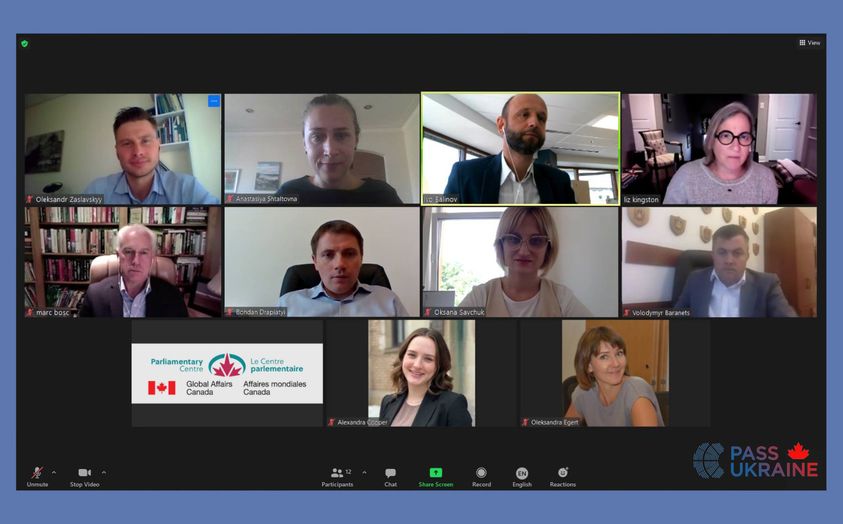
As promised, the Agency for Legislative Initiatives and the Parliamentary Centre (Canada) has launched activities to provide practical support for the development of knowledge and skills of MPs and staff of secretariats of Verkhovna Rada Committees on how to better structure and manage committees and develop formalized procedures. These activities are carried out within the framework of the project “Parliamentary Accountability for the Security Sector in Ukraine” (PASS Ukraine).
An online meeting was recently held between the staff of the Secretariat of the Verkhovna Rada Committee on Law Enforcement and representatives of the House of Commons of Canada, where they exchanged knowledge, experience, and practices on building and managing the work of secretariats.
The meeting was attended by: Head of the Secretariat of the Verkhovna Rada Committee on Law Enforcement Bohdan Drapyatyi and his deputies from the Ukrainian side and former Clerks of the House of Commons – from the Canadian side.
This meeting was the first in a series of dialogues between colleagues from the Verkhovna Rada of Ukraine and the Parliament of Canada, aimed at the practical support of Verkhovna Rada committees to improve the management of their work.
During the meeting, the secretariat learned about the organizational structure and administrative support of the House of Commons – the types of committee staff and their roles, their interaction with the committee head and other staff, and the career rotation system.
Representatives of the Ukrainian and Canadian parliaments discussed the connection between the work and experience of the staff of the secretariats of the committees in the Verkhovna Rada and the House of Commons and exchanged views on the challenges and ways to address them.
The Parliamentary Accountability for the Security Sector in Ukraine (PASS Ukraine) project is a joint project of the Agency for Legislative Initiatives and the Parliamentary Center (Canada), supported by the Canadian Ministry of International Affairs under the Peacebuilding and Stabilization Program (PSOPs) and in partnership with the Verkhovna Rada of Ukraine.
Training Seminar for Parliamentarians within the Project Parliamentary Accountability of the Security Sector in Ukraine
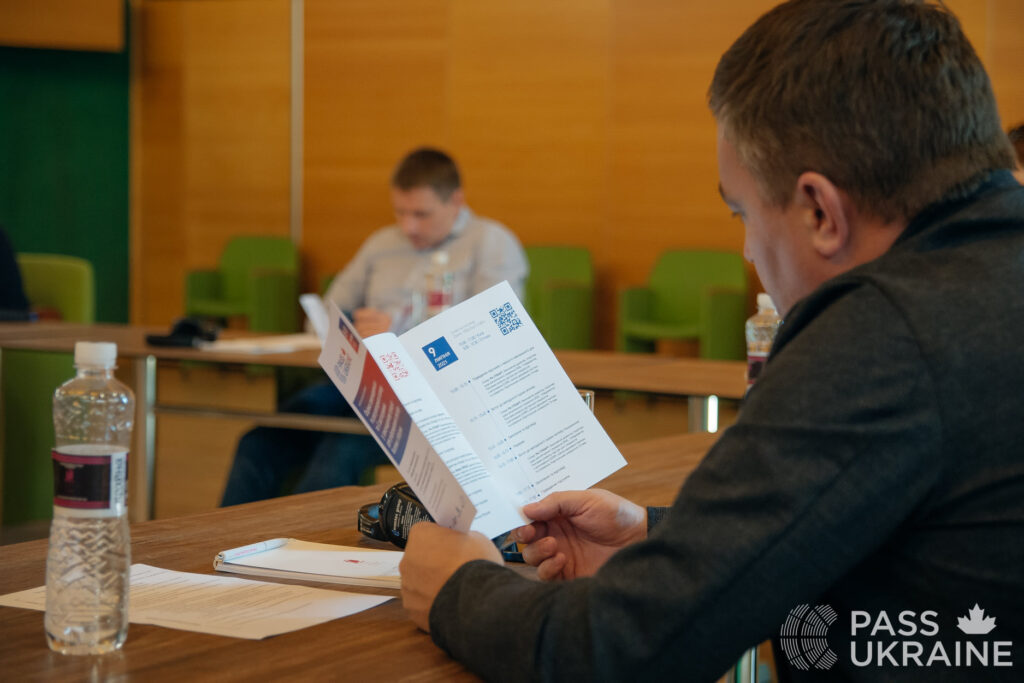
The security and defense sector is certainly one of the most important, especially in a country that has been at war for eight years. Therefore, the Agency for Legislative Initiatives is trying its best to familiarize parliamentarians and staff of the secretariats of the Verkhovna Rada Committees with new tools and methods for reforming the sector.
Last week, as part of the Parliamentary Accountability of the Security Sector in Ukraine (PASS Ukraine) project, the Agency for Legislative Initiatives, in partnership with the Parliamentary Center (Canada), held a training seminar on “Legislative and Regulatory Impact Assessment and its Application in the Security Sector Reform Legislation and defense”.
Members of the Verkhovna Rada Committee on Law Enforcement, the Verkhovna Rada Committee on National Security, Defense and Intelligence, and the Verkhovna Rada Committee on Ukraine’s Integration into the European Union were invited to participate in the seminar. Staff from the secretariats of the above-mentioned committees were also invited.
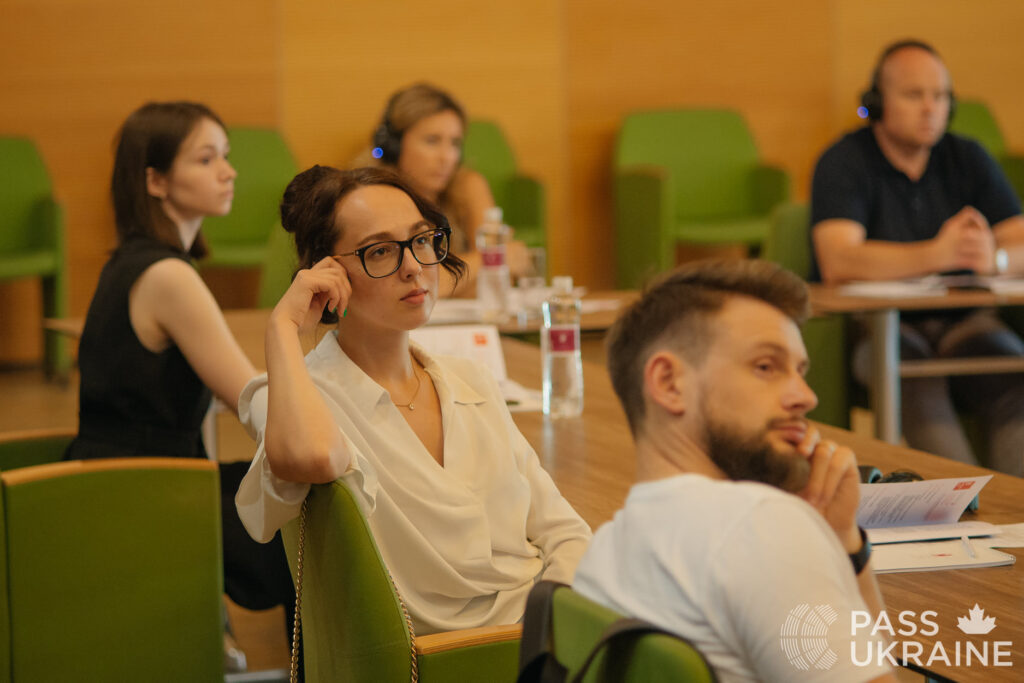
The purpose of the training seminar was to familiarize MPs, committee members, and their staff with Canadian and international experience in assessing legislative and regulatory impact and its application in the legislative process of security and defense sector reform, including assessing the different effects of legislation on women and men.
Nicola Kim, First Secretary, Embassy of Canada in Ukraine, made a welcoming speech at the opening of the training seminar.
The speakers of the training seminar were Canadian experts with many years of experience in regulatory and legislative influence:
- Daniel Trnka, Deputy Head, Regulatory Policy Division, Public Governance Directorate, Organisation for Economic Co-Operation and Development (OECD);
- Rick Stewart, Executive Director of the Regulatory Governance Initiative (RGI) and Co-Director of the Career Development for Regulatory Professionals (CDRP) Program in the School of Public Policy and Administration at Carleton University, Ottawa;
- Michael Presley, Director, Certificate Program in Regulatory Leadership, Centre for Public Management and Policy, University of Ottawa; Former Assistant Deputy Minister (Regulatory Affairs) at the Treasury Board Secretariat, Canada.
- About the experience and practice of Ukraine in applying legislative and regulatory impact assessment in the legislative process, participants were told by Ivanna Klympush-Tsintsadze, MP, Chairwoman, Verkhovna Rada Committee on Ukraine’s Integration into the European Union, Member of the Interparliamentary Relations Group with Canada.
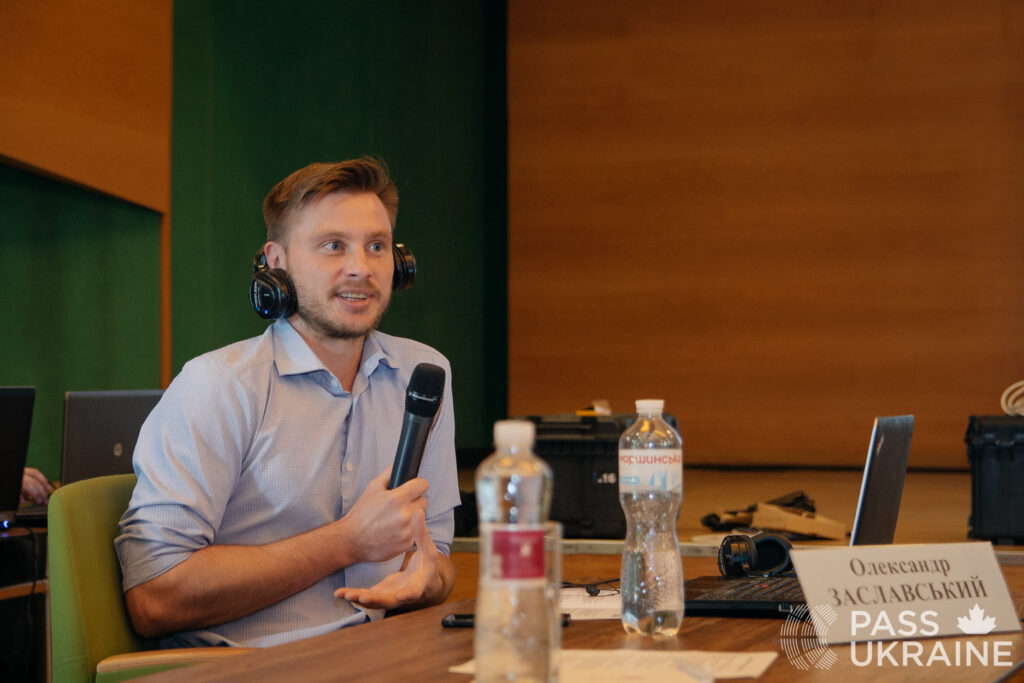
The seminar was held in an unusual format – combining offline and online, which allowed to simultaneously engage Canadian partners who shared their experiences and establish communication between members of different committees.
As part of the project, we plan to hold more such meetings in order to continue involving MPs and Canadian partners in close cooperation in various formats.
The Parliamentary Accountability of the Security Sector in Ukraine (PASS Ukraine) project is a joint project of the Agency for Legislative Initiatives and the Parliamentary Center (Canada), supported by the Canadian Ministry of International Affairs under the Peacebuilding and Stabilization Program (PSOPs) and in partnership with the Verkhovna Rada Of Ukraine.
Results of the First Session of the School of Community Leaders

The School of Community Leaders began its work on June 24. 29 local government representatives, community leaders, civil society representatives, and volunteers joined our community.
Svitlana Matvienko, Executive Director of the Agency for Legislative Initiatives, congratulated the participants on opening the School of Community Leaders. She stressed the extraordinary value of civic education in general. Projects such as the School of Community Leaders are the seeds of concrete action and real steps for change throughout Ukraine. The School of Community Leaders aims to push Ukrainian communities to change and provide them with the necessary knowledge to implement these transformations.
Political Saturnalia: Carnivalization of Politics in the Postpolitical Age

The School participants immediately plunged headlong into learning, and Ivan Gomza, Candidate of Political Science, Associate Professor, Head of the Department of Public Administration at the Kyiv School of Economics, helped them with this. He held a discussion about political saturnalia and what to do when politics turns into a carnival? In politics, there is no division into good and bad, there are facts. Today, the fact is that carnivalization of politics is a global trend: when “clowns” and “pseudo-politicians” come to power, and the political process turns into a show. Is there a danger in this? Certainly. But this is the reality in which we live. And there are opportunities in it too.
Decentralization reform and local self-government

The reform started rapidly and received support at home and abroad. However, in its implementation, naturally, difficulties arose: the decentralization of power dictates us the need for sectoral reforms – in education, medicine, culture, sports, civil protection, and security. Without accompanying reforms, decentralization loses its meaning.
Today, decentralization has lost its priority for the Government and is not going according to the vector as originally planned. But this does not mean that it should not be continued or rethought further action plan. Ukraine needs strong self-government and successful communities. This is how Oleksandr Khoruzhenko, Deputy Chairman of the Board of the Agency for Legislative Initiatives and an expert on local self-government, describes the reform.
Political responsibility and responsible policy: fair elections, good governance and responsible management of public finances

Why are the citizens in democratic societies mostly dissatisfied with representative authorities? Will the reform of the election legislation consider the interests of local self-government and what to do about it? To what extent is political corruption the norm? The discussion panel participants discussed all these issues with the Chairman of the Board of the International Renaissance Foundation and the Chairman of the Board and Coordinator of Political Programs of the OPORA Civic Network Olga Aivazovska.
Elections and political indifference of voters, use of administrative resources for “dirty game”, subventions for socio-economic development of territories, and problems with political parties in the regions – participants of the School spent the whole evening in an active dialogue and exchanged experiences and interesting cases on these topics.
Health care reform in Ukraine. The impact of the pandemic on the implementation of the second stage of medical reform.
Health care reform always raises many questions for people, especially in the regions, because it has started well not everywhere. Therefore, it is important to communicate to community leaders what changes are needed in the health care system and what can be done to save people on the ground – in the pandemic and beyond – and provide quality health services to community members.

Oleg Petrenko – the first head of the National Health Service of Ukraine (2018-2019), an independent director of strategic development in the medical network “Dobrobut”, an alumnus of the 2006 USPS program, told the participants about the beginning of the reform, the concept of health care development, and the importance of strong institutions. How health care is financed, what are the difficulties in carrying out the reform, and how people are fighting to keep unprofitable and inefficient hospitals – participants could talk about all this with the person who was at the origins of the reform.

Kateryna Bulavinova, a doctor, pediatric infectious disease specialist, and medical expert at the United Nations Children’s Fund (UNICEF Ukraine) in Ukraine, took the discussion to a more practical level. She told participants about the punctures during the COVID-19 pandemic, the maintenance and provision of hospitals on the ground, and medical infrastructure in general.
Breakthrough strategy: how communities can master the wave of “creative destruction”

Why is the community the third pillar, and how have innovation, education, and entrepreneurship been the drivers of productivity growth? The answers to these questions were given by the founder of the proryv.in.ua think tank, a member of the Supervisory Board of the Institute of the city, the Minister of Economic Development and Trade (February-September 2014), Pavlo Sheremeta. Using the examples of the Eastern countries, he told how to move from constant stagnation to constant prosperity and explained the specifics of the development of the Ukrainian economy through the prism of culture and demography.

The discussion continued on whether there would be further damage to business from the pandemic and how the Ukrainian economy could catch up with its western neighbors. Hlib Vyshlinsky, Executive Director of the Center for Economic Strategy, explained the structural changes that have taken place since the start of quarantine and how the pandemic has affected the economy as a whole. He also spoke about the “Great Construction”, low level of investment, prospects for Ukrainian GDP growth, and the role of human capital in economic development.
Continuation of the reform of the general secondary education system

How is the education reform going, and is the “New Ukrainian School” concept being implemented in the regions? What to do with schools? And what is more important – the quality of education or logistics of schools? We talked about all this and more with the Educational Ombudsman Sergii Gorbachov and the co-chair of the public association PARENTS SOS, an alumnus of the USPS 2016 program Alena Parfenova.

To ensure quality education, it is necessary to reorganize the educational network and establish communication with communities. Education is a large infrastructure system that is difficult to optimize due to several problems. One of them is the staffing problem. Often, principals or field officials are more preoccupied with solving infrastructure problems than managing the educational process. However, the situation has changed due to the pandemic. The beginning of quarantine drew the attention of educators to the need for changes in distance education and providing schools with high-speed Internet and technology. However, this is not enough to implement effective education management in communities.
Environmental policy of communities: how to preserve an environmentally safe environment for your community

The right to safe life and environment is enshrined in the Constitution of Ukraine. And the topic of environmental protection is more relevant than ever, so this year’s program pays much attention to the development of local environmental policy and its integration into the community development strategy. The environmental discussion panel consisted of two dimensions: theoretical and practical. For the first of them responsible was Olena Maslyukivska, associate professor of ecology at the National University of Kyiv-Mohyla Academy, a 2008 alumnus of USPS, who told the participants about the most pressing environmental issues and how to prioritize the sequence of their solutions in communities properly.


In the more practical part of the discussion, the two experts shared their own cases on implementing change and improving the quality of the environment of their own cities. Artem Myrhorodskyi, CEO of GreenAge, CEO of BioBin, a 2007 alumnus of USPS, spoke about waste recycling and his successful experience of how a socially important business can not only benefit people but also be monetized. And Artem Romaniukov, the co-founder of Saveecobot, director of SaveDnipro, a 2018 alumnus of USPS, spoke about the problems he faced during the struggle for clean air in his hometown and how communities can improve local air quality on their own.
Aesthetics and architecture. Influence on consciousness

Why is it important to organize the space in which you live and how it affects people’s quality of life and consciousness, how to make “buildings for people, and not people for buildings”? Is there a connection between architecture and democracy? And how do aesthetics and architecture affect consciousness? Participants were able to talk about all this with the architect, Deputy Chairman of the Architectural Chamber of the National Union of Architects of Ukraine, founder and CEO of the Architectural and Design Group Anna Kyrii, an alumnus of USPS 2016 program Anna Kyrii.
Ukraine inherited many authoritarian “political” buildings from the Soviet Union. Rebuilding the past for a new quality of the future, creating “transparent” institutions, and comfortable and aesthetic spaces for people, thereby raising the level of culture of citizens – a new symbolic task for all of Ukraine and communities in particular.
Legal capacity of the community and its sustainable development

The legal capacity of a community is one of the fundamental aspects of its development. But how to strengthen it and give communities access to justice?
MPP (Oxon), lawyer, director-founder of the national system of free legal aid, Deputy Minister of Justice of Ukraine (2012-2017), Honored Lawyer of Ukraine, and Chairman of the Board of Transparency International Ukraine Andriy Vyshnevsky told the participants about the concept of two types of justice, the impact of decentralization on access to justice and meeting the legal needs of citizens.
The level of dissatisfaction with legal needs in Ukraine is high. This is partly due to the fact that communities do not identify legal problems and ignore their solution. At the same time, unmet legal needs fuel the cycle of decline and slow down community development.
Tools of democratic influence

In order to develop democracy, it is necessary to involve citizens in the decision-making process. However, how can local governments become closer to the people in the digital age? The participants talked about this with the coordinator for digitization of the regions of the Swiss-Ukrainian EGAP program implemented by the Eastern Europe Foundation, Serhiy Hunko. The expert told the participants how to change the process of providing services, digitize paperwork and why the digitalization of business and the state is important for public participation.

The second part of the discussion concerned more traditional tools that the Agency for Legislative Initiatives has long been “lobbying” in Ukraine. Maria Sokolova, an analyst at the Agency for Legislative Initiatives, shared the insights and mechanisms for conducting a social audit and a Town Hall Meeting with participants.
Social audit is an effective means of ensuring government accountability through the study of the opinion of the final recipients of the service or public policy. Simply put, it is a way to verify compliance with government obligations. Another tool introduced to the participants was the Town Hall Meeting – an informal public gathering of residents of a certain area. Discussed the mechanisms of holding meetings and their scenarios. And, of course, shared the experience of the meetings already held.
Closure of the School of Community Leaders

The first session of the School of Community Leaders was closed by Oleksandr Sushko, a Ukrainian political scientist and public figure, executive director of the International Renaissance Foundation, an expert in international relations and civil society development.
Democracy starts from the bottom. A mature democracy cannot be established without a stratum of people who have both values and practical knowledge of how to implement it. We need people who know how to work with people, gain trust and have managerial skills. Community leaders are just such people. Thanks to such leaders, people get a sense of involvement, and then a real democracy is formed. Real democracy is not to come and vote once every 5 years. It is to be a constant participant in a certain process, which forms the background of the state.
The answer to the question of whether Ukraine has chosen the right course is formed on the ground. Course on decentralization, on local self-government. And local leaders are the number one human resource for public administration at the national level. With these words, Oleksandr Sushko congratulated the participants on the completion of the first session.
This year we will continue to work with communities in the format of environmental mentoring. Each of the participating communities will receive a separate mentor to help them address pressing environmental issues.
Meanwhile, the selection of environmental mentors who will have separate training is underway.
The School of Community Leaders is a program of the Ukrainian School of Political Studies and the Agency for Legislative Initiatives, which is implemented with the support of the International Renaissance Foundation.