
Resignations, Protests, Corruption: There Is No Magic Pill
Ukraine’s information space resembles the interlocking time loops of Christopher Nolan’s film ‘Tenet’, with one storyline giving way to another before the previous one has time to end. A change of Government with nol public explanation of the reasons for it, new appointments, protests, a lack of dialogue at every level, interviews, political statements, discussions about elections and corruption scandals pile up so quickly that individual events almost lose their contours or pass unnoticed. Each new story seems decisive for the country’s future for a few days, only to be displaced almost immediately by the next one.
In this torrent, it is very easy to lose one’s sense of stability: the human brain simply cannot process the sheer volume of information, so it seeks simplification and looks for magic pills. This is where mythmaking begins. Not necessarily as outright fabrication, but rather as a way of reducing complex realities to a comprehensible image, or a set of images, that creates a sense of order and stability. A multitude of causes is replaced by a single one. Specific names and personalisation take the place of institutions and sound bureaucratic processes. A series of complex, multi-layered processes is reduced to one decision. Uncertainty is replaced by the promise of a universal remedy or a hero-saviour. This creates the belief that this particular person will finally transform or fix ‘the system’, that one institution is enough to defeat corruption, for example, or that one particular reform or the adoption of a draft law will solve a problem that others have been unable to resolve for years. In the short term, such a construct can indeed be reassuring, because it restores the feeling that chaos can be ordered and explained. As though there were a loose end somewhere that only needs to be pulled to unravel the entire knot.
In Search of the Ideal
Unfortunately, political reality almost never lives up to such expectations. For years, names, parties, slogans and structures have changed in Ukrainian politics, while the roles we ask them to play change far less often. Or, rather, what changes far less often is the mythical image of a father or saviour whom we, as a society, keep searching for and whom each of us imagines differently. It may be the role of a strong steward, a powerful commander-in-chief, a reformer, a convincing activist, an effective manager, a reliable volunteer or someone who will restore order and punish those responsible. Preferably all at once — anything to keep the state machinery functioning properly and steadily. Season after season, political figures try on these ready-made images, while society tests whether this time the person will finally live up to the expected archetype of ‘perfection’.
Finding that kind of combination is almost impossible. So, when reality falls short of the expected image, we often begin, unconsciously, to build a myth around it. We attribute qualities to a person that they have not yet had the chance to demonstrate, capacity to an institution that it does not possess and consequences to decisions that they may not be able to guarantee or deliver. Gradually, reality gives way to the myth we have created. We assess not what is actually in front of us, but what it would have to become to satisfy our need for order, predictability and a sense that the situation is under control. And the greater the distance between this construct and reality, the sharper and even more painful the collision between expectations and reality becomes — especially when the trust invested in it ultimately proves misplaced.
One decision or position that contradicts commonly accepted rules, beliefs or preferences — and society reverses its attitude by 180 degrees, calling into question almost everything that a particular person or institution had done before. This is not because a particular decision cannot or should not be criticised. On the contrary, political maturity requires criticism. But if one decision brings down the entire previous construct, that is a sign that we had invested in a myth rather than assessed the reality before us.
Strong in Our Imagination — Fragile in Reality
Modern political myths are powerful and, at the same time, extraordinarily fragile. Today, a few decisions approved by the majority, effective public communication and the reputation of a person or institution that is ‘finally doing things differently’ may be enough for a myth to take shape. Nor is this always solely a product of public imagination. The myth of an effective manager, a wise administrator or a progressive institution may itself be a consciously constructed mask. It is a quick way to gain support, trust or political capital in pursuit of personal ambitions and objectives that are often at odds with the public interest.
At the same time, the very speed at which myths emerge is what makes them vulnerable. They often fail when confronted with contradictions, mistakes, conflicts of interest and the real limits of influence. The more we have idealised an image, the stronger the temptation to explain away discrepancies with reality in order to protect it. This is why it can sometimes be difficult to identify exactly where the myth begins to diverge from reality and why. Sometimes it really is an honest mistake, or the expected results fail to materialise because of unforeseen external factors. At other times, however, it is because something entirely different was hidden behind the mythical mask from the outset.
The Office of Simple Solutions
The same applies to political decisions. In a state of constant instability, the temptation to find a simple answer that will explain and solve most problems is particularly strong. A change of Government, for example, might be expected to reboot the state. Or a new minister is assumed certain to reform an entire sector. Perhaps dismissing one particular person is enough to make an institution independent. Or elections are presented as a way to renew the authorities and ease social tensions. Each of these instruments may be necessary in particular circumstances, but the risk arises when one possible instrument is turned into a panacea and becomes part of political mythmaking.
Simple, universal solutions look especially attractive in such circumstances. At first glance, they create a sense of clarity and control: if a particular approach or procedure has worked somewhere, surely it is enough simply to replicate it everywhere. This gives rise to the mythical idea of a solution that can be applied to almost anything, with little regard for differences in environments, functions, resources, institutional culture or the socio-political context. But in politics, one size fits all almost never works. Copying an approach does not guarantee a result and usually ignores the very factor on which success depends: context.
Real solutions are usually less attractive. They may be complex, multi-layered, slow and politically unpopular. Nor do they promise rapid results, and they almost never fit into a single elegant formula. This is particularly true in Ukraine, where institutional problems are compounded by war, resource constraints and legislative and security restrictions, meaning that solutions are rarely linear.
A Foundation Without Illusions
Political myth gravitates towards grand images, while democracy rests on smaller and sometimes even boring details: rules for appointments and dismissals, parliamentary oversight, a professional civil service, independent bodies capable of scrutinising those in power while themselves acting within established rules and the law, courts that are not dependent on the interests of those in authority and adherence to procedure. Institutions themselves rarely look bright or spectacular, because their function is to provide a foundation that allows the state to keep working despite human imperfection. The strength of that foundation depends, among other things, on mutual respect, the ability to cooperate, to share responsibility and to recognise the limits of one’s own role.
We should value talent and integrity, as well as every person whom the current system has squeezed out of public administration. Such people are rare, and many of them were indeed among the best. Their lack of loyalty to the system was often precisely why they were pushed out. At the same time, this is also a consequence of our own short-sightedness: as a society, we do not always assess the qualities and results that really matter but instead follow media trends or the support of particular activist groups which, let us be honest, are hardly beyond reproach themselves. We will all have to acknowledge many mistakes that we have made together.
At its core, the point is simple: we need to be able to recognise the competence and strength of others and let them move ahead, giving them room to act and, at times, even stepping aside ourselves. That requires a great deal of self-assurance, maturity and ethical balance.
True resilience is not one face or one surname. It is not a single point holding up the entire state, but a framework made up of many supports. Those supports are unquestionably people: the military and the home front, public officials and MPs, communities, representatives of law enforcement, civil society, journalists, judges and many others. At the same time, for these supports to endure, the people behind them must be backed by strong institutions, rules and procedures. That is what enables a system not to collapse every time someone makes a mistake, proves unworthy of their role or simply drops out of it.
The more reliable this framework becomes, the less need there is to compensate for instability with political myths. Myths take root particularly easily where real institutional foundations are lacking: then we want to believe in at least something as the one point capable of holding everything together. Myths survive for as long as we keep feeding them with our expectations. That is why it is useful, from time to time, to ask questions first of ourselves. To what extent is my view actually my own, rather than the product of other people’s moods and interpretations or the influence of the information environment? Do I change my position when new facts emerge? Or do I instead force those facts into a picture I have already constructed? Can I separate my personal sympathy or dislike for someone from my assessment of their actions?
This ability to reflect critically on our own views is itself part of political maturity. It begins when we stop needing myths to believe in the viability of our own state, despite all the complexity and trauma of reality.
Partnership for Ukraine’s Recovery at URC 2026: ALI Signs the Gdańsk Common Message
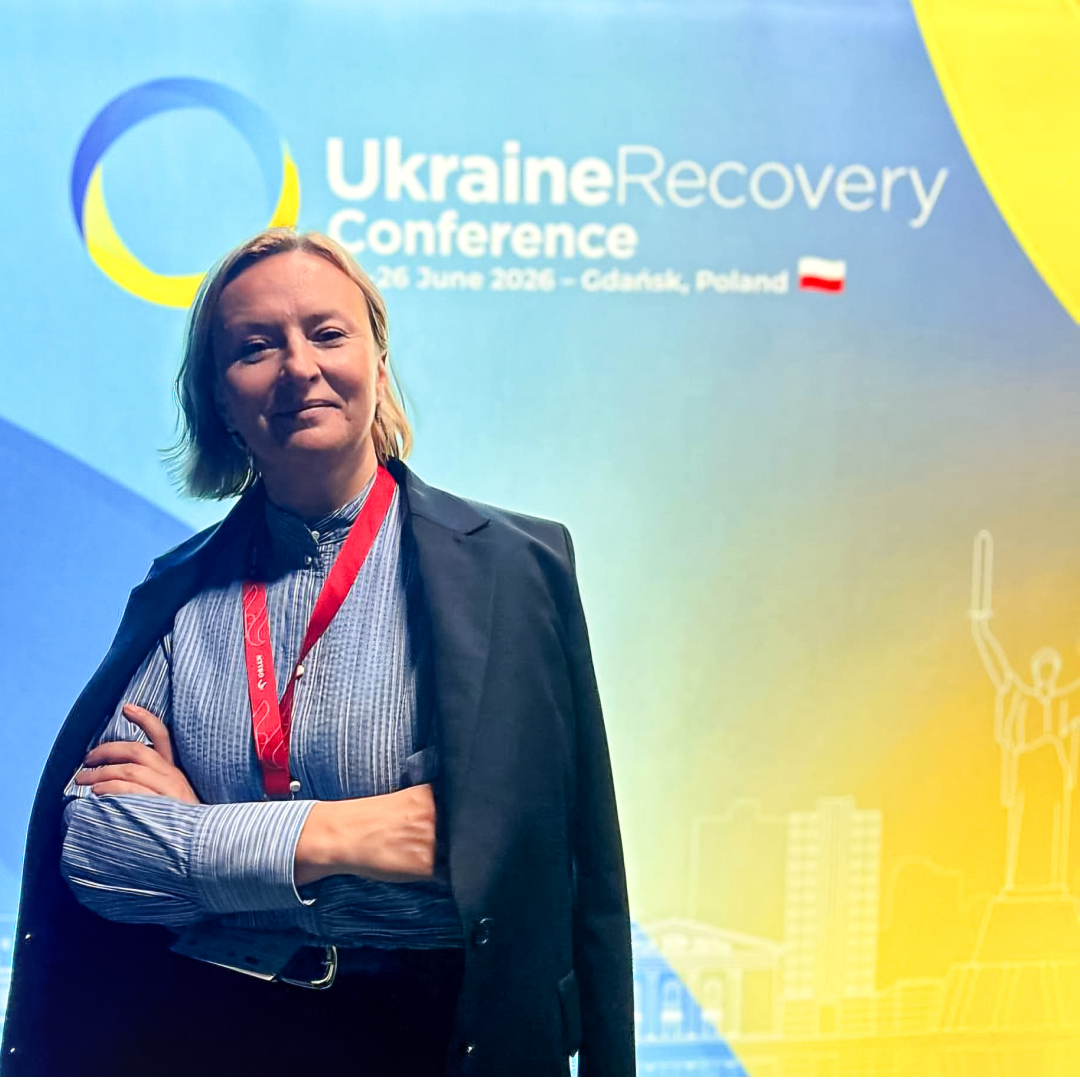
At the Ukraine Recovery Conference (URC 2026), the Agency for Legislative Initiatives (ALI) — represented by Kateryna Riabiko, Chair of ALI’s Board — signed the Gdańsk Common Message together with representatives of Ukrainian and international organisations as part of the Civil Society Forum. The document sets out a shared vision for Ukraine’s recovery and priority actions for the Ukrainian Government and international partners, adopted during the Civil Society Forum in Gdańsk on 25–26 June 2026.
The document states that recovery processes should be based on local leadership, transparency, accountability and democratic values. Participants in the discussions stressed that rebuilding institutions and strengthening civic participation are inseparable components of the country’s reconstruction.
The Forum also included meetings with alumni of the Ukrainian School of Political Studies (USPS), which the Agency established and has developed under the auspices of the Council of Europe since 2005. Their leadership in civil society, public administration, business, defence, local self-government, international cooperation and entrepreneurship is a vivid demonstration of the long-term impact of investing in the development of a values-based leadership model in Ukraine.
Kateryna Riabiko noted that today USPS is much more than an educational programme. It is a community of people who shape Ukraine’s future every day across a wide range of fields, support one another’s efforts and unite around shared values. She added that last week she represented Ukraine as part of a delegation at VivaTech in Paris and this week at URC in Gdańsk. In the view of ALI’s Chair of the Board, the value of such events lies in being able to connect them into a coherent picture and a shared outcome in addressing the challenges Ukraine faces today.
In addition, Kateryna Riabiko and USPS alumni took part in discussions on democratic governance, legislative reforms and the role of civil society in Ukraine’s recovery and continued European integration.
Background
URC 2026, co-hosted by the Republic of Poland and Ukraine, brought together representatives of governments, international organisations, business, local self-government bodies and civil society.
The aim of URC 2026 is to strengthen international support for the country’s reconstruction and stimulate investment in Ukrainian business. The event focuses on the sectors most affected by Russian aggression: energy, critical infrastructure and logistics. As a high-level platform for facilitating investment, URC brings together international, sovereign and private investors to accelerate deal-making and lay the foundations for long-term economic transformation.
A separate focus of this year’s Conference is on strengthening Ukraine’s security capabilities, as strengthening the country’s defence capacity is regarded as a necessary precondition for broader reconstruction and long-term development.
ALI and a Coalition of Civil Society Organisations Present the Interim Shadow Report to the European Commission on the ‘Functioning of Democratic Institutions’
The second presentation of the interim Shadow Report: the Agency for Legislative Initiatives, together with a coalition of civil society organisations, presented the findings of its monitoring under the ‘Functioning of Democratic Institutions’ area of the ‘Fundamentals’ cluster. It covers Parliament, European integration, elections, civil society, governance and multi-level governance. The report sets out the current state of play, the progress of reforms in this area, and recommendations from experts at the organisations concerned.
Experts of the Agency for Legislative Initiatives, Civil Network OPORA and the Centre for Democracy and Rule of Law shared their work. The presentation was joined by representatives of the European Commission’s Directorate-General for Enlargement and Eastern Neighbourhood (DG ENEST), which is responsible for enlargement and EU accession negotiations with candidate countries and potential candidates.
Oleksandr Zaslavskyi, Deputy Executive Director for Analytical Work at ALI, congratulated the coalition partners and the EU representatives on the opening of the ‘Fundamentals’ cluster for Ukraine.
Under the ‘Parliament’ section, participants discussed the challenges and recommendations relating to parliamentary reform, the autonomy of the Verkhovna Rada, the legislative process and related matters. The expert noted that, since the start of the full-scale invasion, the Verkhovna Rada has remained functional and legitimate, and that during the first session under martial law parliamentarians passed 258 laws — the largest number of laws adopted in a single session in the history of the Ukrainian parliament.
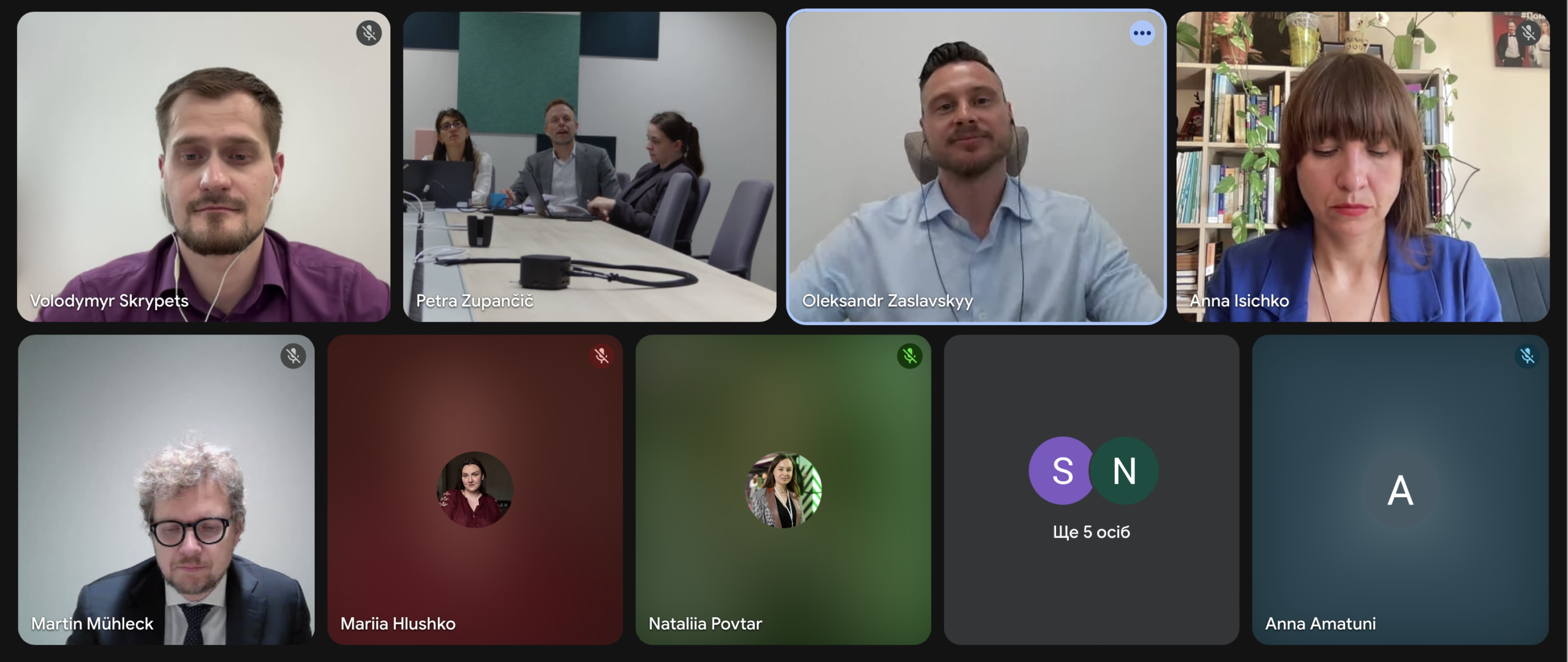
The presentation also addressed Ukraine’s progress on the European integration track, in particular the planning and development of law-making, policy implementation, and the monitoring of the changes introduced.
One of the significant achievements in this area has been the approval of the National Programme for the Adaptation of Ukrainian Legislation to European Union Law. It is now important to enshrine in law the status and binding nature of the National Programme, and to align it with the Verkhovna Rada’s legislative work plan.
During the presentation of the ‘Governance’ section, Oleksandr Zaslavskyi described the current situation — namely the structural and staffing changes in the Ukrainian Government, the challenges in its interaction with the Verkhovna Rada, and the planning of government activity, particularly with regard to fulfilling international commitments.
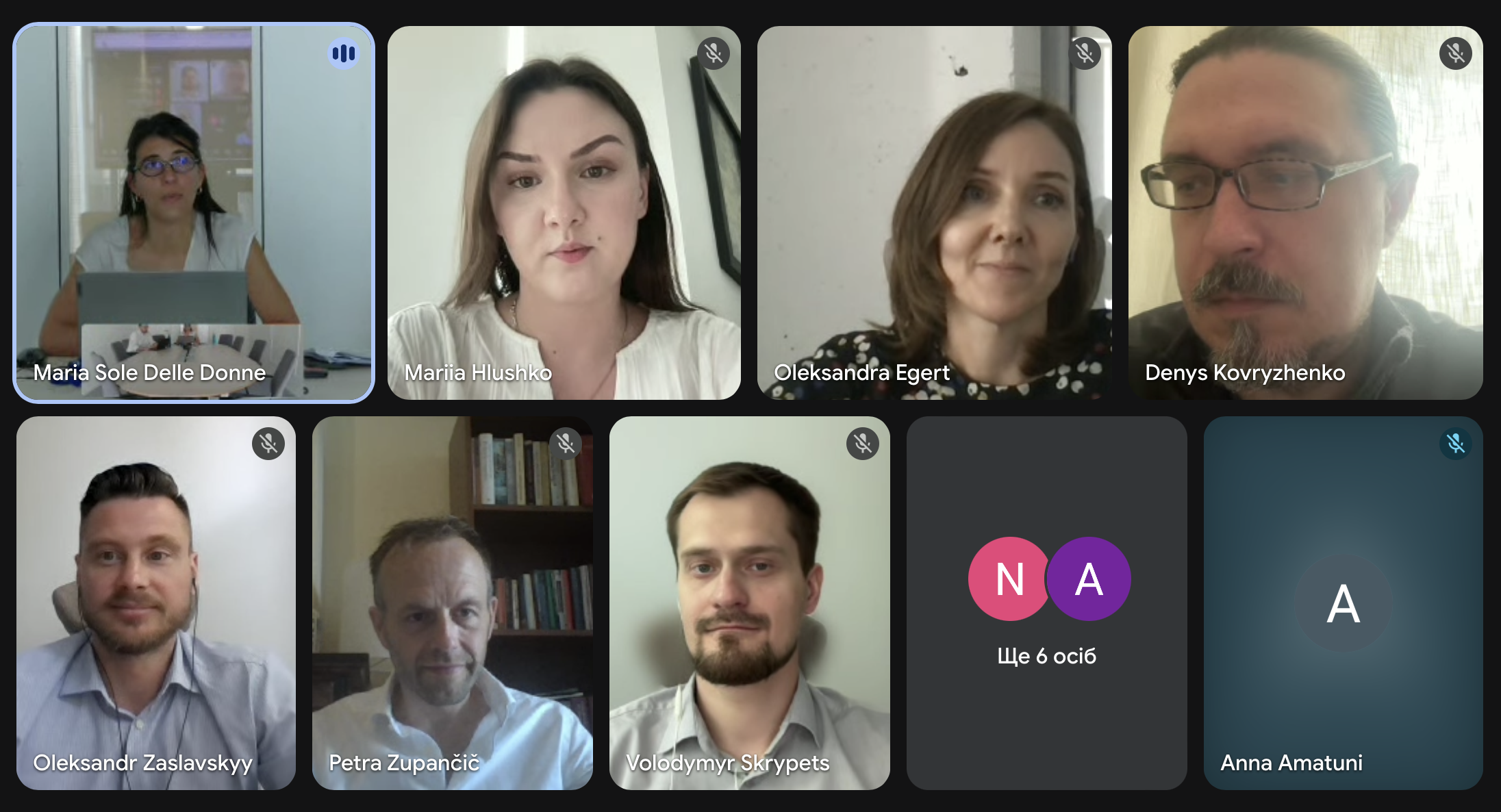
On multi-level governance, Volodymyr Skrypets noted that the European integration processes are continuing in this area too: in December 2025 the Government adopted Resolution No. 1748, ‘Certain Issues of Reforming Local Self-Government and the Territorial Organisation of Power under Martial Law and in Preparation for Ukraine’s Accession to the European Union’. However, under conditions of full-scale war, the problems that come to the fore are those linked to the depopulation of Ukrainian communities, the falling number of local council deputies, and the attraction of investment at the local level, including the implementation of the State Strategy for Regional Development.
As a reminder, the Agency for Legislative Initiatives, together with a coalition of civil society organisations, previously presented to the European Commission the interim findings of this year’s Shadow Report under Chapter 23 ‘Judiciary and Fundamental Rights’ and Chapter 24 ‘Justice, Freedom and Security’.
For the third year running, the coalition of civil society organisations coordinated by ALI has been monitoring and assessing Ukraine’s progress on European integration. This is an independent, alternative analysis by representatives of civil society and the expert community, coordinated by ALI. The coalition comprises experts from the Agency for Legislative Initiatives, Transparency International Ukraine, the Human Rights Centre ZMINA, Tomorrow’s Lawyer, Europe without Barriers, the Ukrainian Bar Association, Civil Network OPORA and the Centre for Democracy and Rule of Law, with media support from European Pravda.
As has become customary, the new Shadow Report will be published ahead of the European Commission’s report on Ukraine’s progress within the European Union Enlargement Package in 2026.
Background
The Shadow Report is a systematic audit by sector experts from civil society organisations. It does not duplicate the state’s official documents or the European Commission’s assessments and is not dependent on their positions. Rather, it is an analytical tool for developing a professional and comprehensive understanding of European integration processes, one that involves experts in the reform process. At the same time, it assesses how far Ukrainian legislation and the system as a whole conform to EU standards.
Producing shadow reports is a regular practice for all candidate countries seeking to join the European Union. In Bosnia and Herzegovina, Serbia, North Macedonia and Moldova, independent coalitions of civil society organisations have for years carried out alternative monitoring of reform progress in areas such as the rule of law and the functioning of democratic institutions. In Ukraine, this work has been carried out systematically since 2024, when a coalition of civil society organisations first prepared an alternative analysis to accompany the European Commission’s report on Ukraine’s progress within the European Union Enlargement Package.
The Shadow Report is entirely a product of civil society, regardless of its sources of support. To strengthen the institutional independence of the process, from 2026 ALI is establishing a new trend: the Shadow Report is also financed by independent civil society organisations. A significant share of the funding for its development will be covered by the Agency for Legislative Initiatives and Transparency International Ukraine. ALI takes on the mission of ensuring the maximum impartiality and objectivity of this preparation process, as it does every year.
Reforming the Appeals System in Ukraine: European Standards, Legislative Changes and Implementation Risks
In Ukraine, the interaction between citizens and public institutions is governed simultaneously by the current Law of Ukraine ‘On Citizens’ Appeals’ (No. 393/96-VR of 2 October 1996) and by the recently adopted Law of Ukraine ‘On Administrative Procedure’ (No. 2073-IX of 15 December 2023). However, these two acts rest on different governance logics. The Law ‘On Administrative Procedure’ introduces a more modern model of public administration, aligned with European standards and oriented towards taking an individual decision on the merits of a case. The Law ‘On Citizens’ Appeals’, by contrast, retains a more traditional, post-communist approach centred on the obligation to provide a reply within a set deadline. As a result, situations that are identical in substance — complaints, requests, reports of violations, or requests to resolve an individual matter — may fall under two different procedures (stipulated by two different laws). This is inconvenient for the individual, as it obscures which mechanism should actually be used to resolve a problem. At the administrative level, this duality effectively leaves the choice of procedure to the authorities’ discretion, encourages formal responses rather than genuine resolution, and reduces both the predictability and the effectiveness of protecting citizens’ rights.
The specific problem has been described in:
- the European Commission’s enlargement reports on Ukraine for 2024 and 2025: the sections devoted to public administration reform (2025) state explicitly that Ukraine has still not met the requirement to adopt a Law ‘On Appeals’ that would clearly distinguish administrative procedures from other forms of public petition;
- the Public Administration Reform Roadmap, which requires the current Law ‘On Citizens’ Appeals’ to be aligned with the Law ‘On Administrative Procedure’ and with European legislation, and a new law to be adopted by the end of the fourth quarter of 2025.
Why Does This Matter?
The continued parallel existence of two different approaches to handling appeals (the Law of Ukraine ‘On Citizens’ Appeals’ and the Law of Ukraine ‘On Administrative Procedure’) creates a number of systemic risks for both the state and citizens, namely:
- it reduces the predictability of interaction with the state: citizens find it difficult to understand the rules under which an authority will consider a particular appeal and whether this will lead to a genuine resolution or merely to a formal reply;
- this uncertainty reinforces a formalistic style of response: rather than resolving the underlying problem, authorities often confine themselves to issuing a reply within the prescribed deadline, which diminishes the practical effectiveness of protecting citizens’ rights;
- it generates duplication of procedures and additional administrative burden, since similar matters may follow different legal routes and give rise to repeated appeals and challenges;
- it creates risks for the European integration process. In the approach taken by the EU and the OECD, a clear distinction between the two functions of the state is essential: administrative procedure means taking binding individual decisions with procedural safeguards for the individual, whereas the appeals mechanism is a feedback channel between society and the state. This distinction is crucial, as it ensures a balance between individual rights and administrative effectiveness.
Addressing the Problem
The problem of duplication and inconsistency in the regulation of appeals is currently being addressed through the government’s draft Law No. 11082 ‘On Appeals’ (of 13 March 2024), which is intended to define how the right of persons to apply to public authorities is exercised and to separate the two channels of interaction between citizens and the public authorities:
- administrative procedure (the Law of Ukraine ‘On Administrative Procedure’): used where a person applies to obtain an individual administrative decision (a permit, registration, licence, or other decision on the merits of a case);
- the appeals mechanism (the new Law ‘On Appeals’): covering proposals, reports of problems, comments, and other forms of communication that do not entail an individual authoritative decision concerning a person’s rights.
To give effect to this approach, draft Law No. 11082 ‘On Appeals’ proposes the following innovations:
- a clear definition of the purpose and a classification of proposal-type appeals (proposals, recommendations, comments, and reports of problems);
- the introduction of a single procedure for considering all appeals;
- clarification of the range of entities obliged to consider appeals, with a focus on public administration bodies;
- extension of the right to submit appeals beyond Ukrainian citizens to other natural and legal persons;
- stronger legal certainty for applicants as to ‘whom to approach’ and ‘under which procedure’;
- removal of complaints from the appeals mechanism and the transfer of their full regulation to the sphere of administrative procedure, in line with EU standards;
- institutionalisation of in-person reception of citizens as a component of the work of public authorities, while allowing it to be delegated to authorised officials.
Draft Law No. 11082 ‘On Appeals’ was considered by the Verkhovna Rada of Ukraine and adopted in the first reading as a basis on 24 April 2024 and is currently being prepared for the second reading.
Key Risks
Although draft Law No. 11082 ‘On Appeals’ (of 13 March 2024) is intended to separate administrative procedure from the appeals mechanism, its revised version does not fully resolve the key systemic problems that give rise to certain risks, namely:
- Risk of institutional uncertainty in the appeals-handling system. The reference to ‘other entities designated by the head of a state authority, an authority of the Autonomous Republic of Crimea, or a local self-government body, within whose powers the matters raised fall’ creates legal uncertainty as to whether the law applies to housing maintenance offices, hospitals, schools, social protection bodies, and other providers of public services.
This will lead to:
- a regulatory ‘grey zone’: some citizens’ appeals remain outside the legal framework (covered neither by the new law nor by the Law ‘On Administrative Procedure’);
- inequality among citizens: depending on whether a reviewing body recognises itself as such, a person may or may not receive a reply to their appeal;
- an erosion of the authorities’ legitimacy: citizens will not know whom to approach, or whether their appeal will be considered at all.
The core problem: in the absence of clear criteria, the law will be interpreted by the very bodies that consider appeals, at their own discretion, creating a risk of manipulation and of blocking unwelcome communications.
- Risk of formalistic responses to appeals owing to insufficient time to prepare them. Short deadlines for preparing a reply create an unrealistic pace of administration, particularly under martial law.
This leads to:
- the formalisation of appeal handling: rather than substantive consideration, authorities will be compelled to issue template replies to ‘meet’ the deadline;
- inevitable breaches of reply deadlines: staff shortages and heavy workloads make compliance with such deadlines practically impossible;
- the provocation of additional appeals: any formal failure to meet the deadlines becomes grounds for a new appeal, creating a vicious circle.
The core problem: excessively short deadlines encourage ‘brush-off’ replies instead of substantive communication between the state’s representative and the author of the appeal.
- Risk to European integration and to EU support. Retaining in the draft law both the appellant’s ability to challenge the reply of the body considering the appeal and the excessively short deadlines for preparing a reply — which encourage formalistic handling — runs counter to Ukraine’s commitments under Cluster 1 of the EU negotiating framework (the functioning of democratic institutions, public administration reform, and the rule of law).
Retaining these shortcomings weakens Ukraine’s position in the EU accession negotiations.
The core problem: the draft law meant to eliminate competition with the Law ‘On Administrative Procedure’ and to bring Ukrainian appeals practice into line with European practice instead retains provisions that reproduce that very competition.
Conclusion
Advancing the reform of legislation on citizens’ appeals requires not merely the formal adoption of a new law, but above all its systemic consistency with the legislation on administrative procedure and with the principles of good governance. Unless the existing conceptual and procedural shortcomings are addressed, there is a risk of perpetuating legal fragmentation, weakening the safeguards for citizens’ rights, and complicating Ukraine’s fulfilment of its European integration commitments.
Conclusion
Advancing the reform of legislation on citizens’ appeals requires not merely the formal adoption of a new law, but above all its systemic consistency with the legislation on administrative procedure and with the principles of good governance. Unless the existing conceptual and procedural shortcomings are addressed, there is a risk of perpetuating legal fragmentation, weakening the safeguards for citizens’ rights, and complicating Ukraine’s fulfilment of its European integration commitments.
Recommendations
Short-Term Recommendations (Urgent Legislative Changes):
- Clarify the range of ‘other entities considering appeals’ in draft Law No. 11082 ‘On Appeals’ by adding to it institutions that perform public administration functions, provide public services, or carry out public tasks.
- Remove from draft Law No. 11082 ‘On Appeals’ the right to challenge a reply to an appeal, retaining only the right to challenge a failure to reply or a refusal to consider an appeal.
- Reconsider the excessively short deadlines for handling appeals. It would be advisable to extend the 15-day deadline for providing a reply to the EU standard of 30 days, and to reconsider the obligation to forward an appeal to the competent body within five days.
Medium-Term Recommendations (1–3 Years):
- The appeals system should become an instrument of feedback between the state and society and a source of governance analytics for identifying systemic problems and improving the quality of public services. Accordingly, implementation of the Law ‘On Appeals’ should provide for (1) its transformation into a tool of evidence-based policy-making, (2) the creation of a national system for analysing appeals, (3) the integration of this analysis into assessments of the performance of public authorities, and (4) a shift towards using feedback to adjust public policy and improve services.
This infobrief was compiled with the support of the International Renaissance Foundation. Its content is the exclusive responsibility of the authors and does not necessarily reflect the views of the International Renaissance Foundation.
Strengthening Parliament’s Capacity in European Integration: A New ALI Project
The Agency for Legislative Initiatives (ALI) provides systematic support to Ukraine’s key institutions — Parliament and Government — helping them work in concert on the legislative initiatives whose adoption and implementation European integration requires.
ALI will continue this line of work through the project ‘IntegRada: Strengthening the Capacity of the Verkhovna Rada of Ukraine in European Integration’, delivered with the support of the EU’s Ukraine2EU initiative. The project will provide coordination and expert support for the timely and effective implementation of the Roadmap on the Functioning of Democratic Institutions. This will contribute both to Ukraine’s European integration more broadly and to strengthening the Ukrainian Parliament’s capacity to drive that process.
A key element of the project is the preparation of comprehensive Legislative Impact Assessments within legislative practice. ALI has been working in this area since 2020, systematically supporting the introduction of Legislative Impact Assessments into Ukrainian parliamentary practice. Among other things, ALI has produced a Handbook on the Methodology of Legislative Impact Assessment and has repeatedly delivered training for staff of the Secretariat of the Verkhovna Rada of Ukraine on preparing gender-sensitive Legislative Impact Assessments.
An impact assessment is a structured process for identifying and evaluating the future consequences and likely effects of proposed initiatives (such as draft laws) before they are introduced. It is a practical tool for developing policies and making sound, evidence-based decisions that build the full picture needed.
Under the project, ALI’s experts will conduct assessments of legislative impact and legislation, and deliver training for Verkhovna Rada representatives to strengthen capacity in European integration. Drawing on its own experience and this work, the Agency for Legislative Initiatives will also develop recommendations on introducing ex-ante and ex-post evaluation into the Ukrainian policy cycle. As part of the research, ALI’s analysts will also put forward a vision for establishing a legislative framework for a special full legislative procedure for draft laws related to European integration.
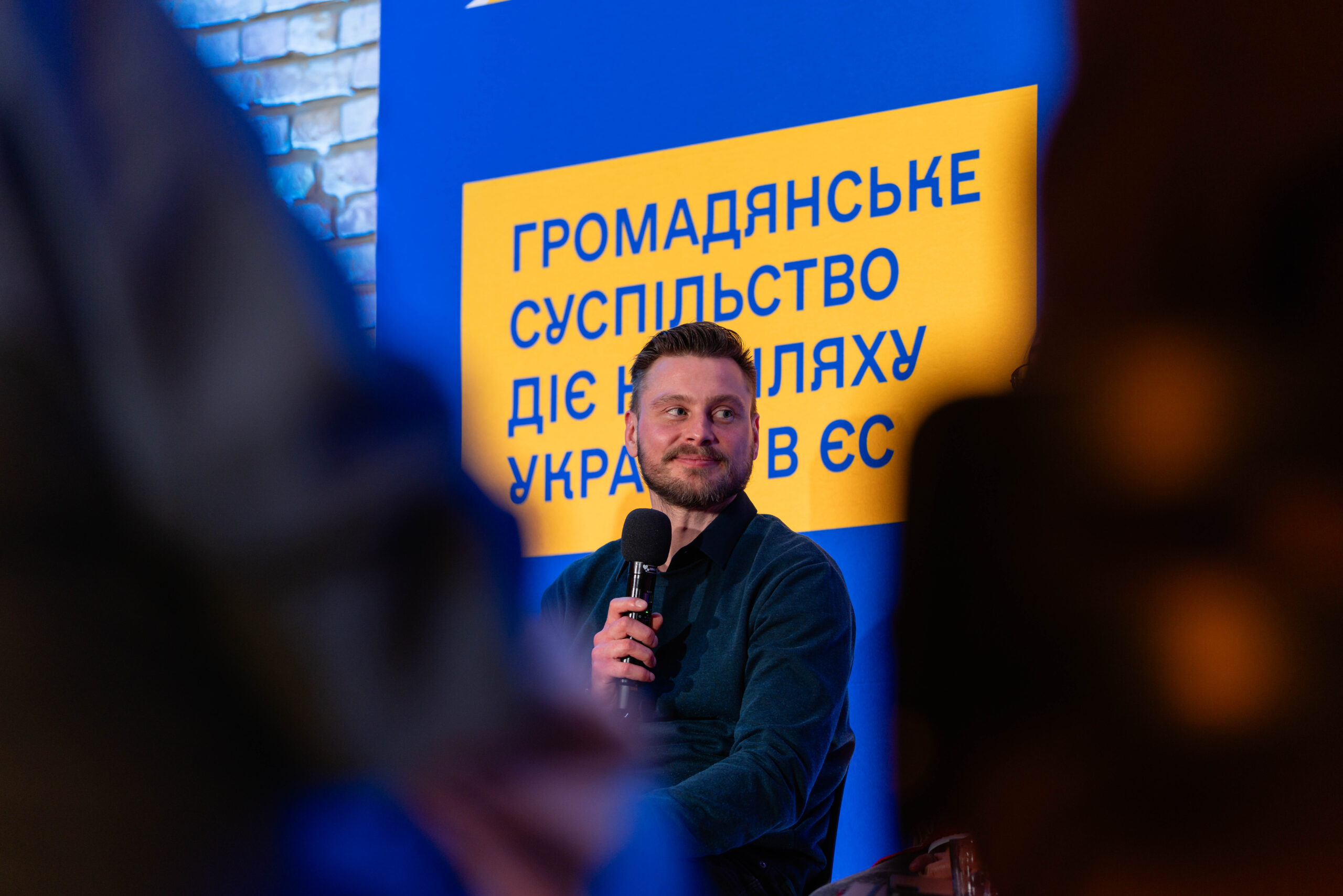
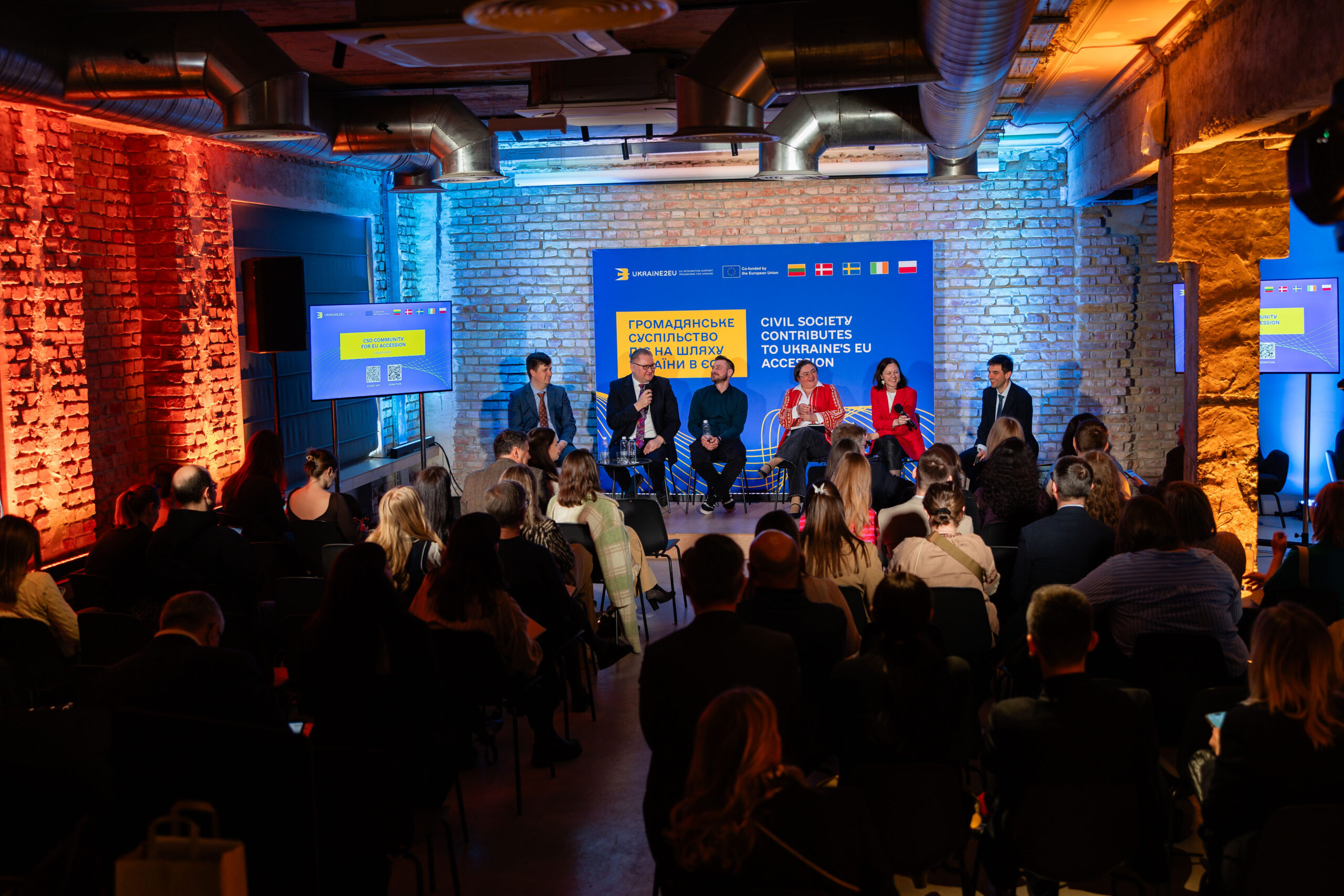
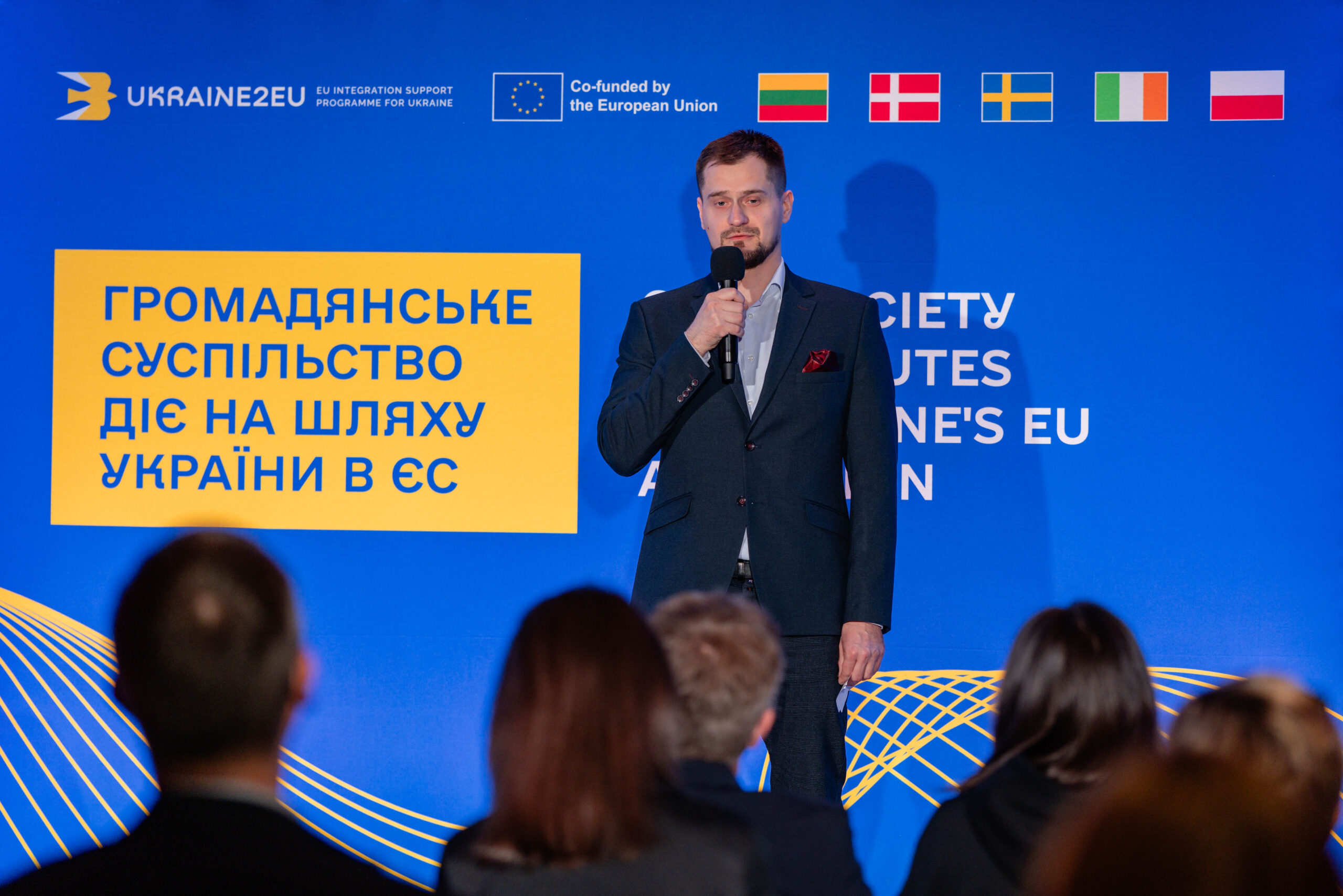
The project is implemented with the financial support of the Ukraine2EU Programme. The views and opinions expressed are solely those of the Agency for Legislative Initiatives and do not necessarily reflect the position of the Ukraine2EU Programme or the European Union.
Focus on European Integration and Interparliamentary Cooperation: ALI Launches a New Project
The Agency for Legislative Initiatives systematically supports and actively contributes to Ukraine’s European integration. As part of this effort, together with the International Renaissance Foundation, we are launching the IntehRada project. Building on sectoral analysis, the project aims to enhance awareness among international partners and Ukrainian MPs of the legislative changes and reforms that Ukraine needs to implement on its path to EU membership. Without a clear understanding of the specific political and procedural challenges faced by draft laws as they move through Parliament, it is extremely difficult to reinvigorate this process. The same applies to securing support — both externally, from EU Member States, and internally, within Parliament.
The Verkhovna Rada of Ukraine plays a crucial role in the European integration process by considering and adopting the necessary legislation. However, since obtaining EU candidate status, Ukraine has gradually experienced a slowdown in the development, consideration and adoption of EU-related draft laws: 2025 showed a decline in the pace of legislative European integration compared to previous years.
To accelerate progress in this area and ensure sustainable results, the ALI will produce three types of regular information briefs under the project:
- briefs on specific EU integration laws;
- briefs on broader challenges of the European integration track, focusing on procedural and institutional dimensions;
- briefs for Members of Parliament of Ukraine on priority EU integration draft laws (based on strategic planning documents, such as the Ukraine Facility Plan or the legislative work plan) for the upcoming month.
Ukraine’s accession to the EU also depends on the positions of EU Member States, which are not always unanimous in their support for Ukraine. However, the Verkhovna Rada can influence these positions — in particular, through interparliamentary friendship groups. Accordingly, another strand of the project will focus on analysing the work of these groups. Strengthening the effectiveness of parliamentary diplomacy tools (including friendship groups) will enable Ukraine to better substantiate its positions, explain the current context and shape realistic expectations.
We are confident that this approach will help draw the attention of international partners to challenges within the legislative European integration track and serve as an impetus for addressing them. In the longer term, it will contribute to steady progress in European integration through the consistent functioning of the Verkhovna Rada of Ukraine.
The IntehRada project is implemented with the support of the International Renaissance Foundation. The project reflects the position of the ALI and does not necessarily represent the position of the Foundation.
In Coalition with NGOs, ALI Is Working on Its Third Shadow Report to the European Commission’s Enlargement Report
Together with a coalition of civil society organisations, the Agency for Legislative Initiatives is launching a new cycle of monitoring and evaluation of Ukraineʼs European integration progress. The results will be reflected in the 2026 Shadow Report. Traditionally, the report will cover chapters 23, ‘Justice and Fundamental Rightsʼ, and 24, ‘Justice, Freedom and Securityʼ. This year, experts will also analyse a new section of the ‘Fundamentalsʼ cluster: ‘Functioning of Democratic Institutionsʼ.
The Shadow Report is a purely civil society product, regardless of its sources of support. In order to strengthen the institutional integrity of the process, we are introducing a new approach this year: the Shadow Report will be funded by independent civil society organisations. The Agency for Legislative Initiatives and Transparency International Ukraine will cover a significant share of the resources needed for the report’s production. As it does every year, the ALI is taking on the mission of ensuring maximum impartiality and independence in the preparation process. We have been able to maintain the stability and expand the coalition, which contributes to a comprehensive and in-depth analysis. This year, the Civil Network Opora and the Centre for Democracy and Rule of Law have also joined the team working on the report. The coalition now consists of nine civil society organisations.
This year, the Shadow Report is being prepared by experts from the following organisations: the Agency for Legislative Initiatives, Transparency International Ukraine, the Human Rights Centre ZMINA, Tomorrow’s Lawyer, Europe Without Barriers, the Ukrainian Bar Association, the Civil Network Opora, and the Centre for Democracy and Rule of Law. The report is being produced with media support from European Pravda.
This report will encompass the following:
- A descriptive overview of the current state of democratic institutions and the progress of reforms in this area, along with recommendations from the standpoint of civil society.
- An assessment of Ukraine’s progress under chapters 23 and 24 since the release of the European Commission’s 2025 Report on Ukraine’s progress within the European Union Enlargement Package, considering the recommendations from previous Shadow Reports.
- A detailed analysis of the issues arising from the reform process in each of the chapters covered.
The 2026 Shadow Report will feature a separate section containing the coalition’s specific recommendations on how to address the issues highlighted in each area. These recommendations will serve as guidelines for future government policies in these areas.
As is customary, this year’s Shadow Report will be released on the eve of the European Commission’s Report on Ukraine’s progress within the EU’s Enlargement Package in 2026.
Background
The production of shadow reports is standard practice for countries seeking to join the European Union. In Bosnia and Herzegovina, Serbia, North Macedonia and Moldova, independent coalitions of civil society organisations have conducted alternative monitoring of reform progress in areas such as the rule of law and the functioning of democratic institutions for years. Ukraine has systematically carried out such work since 2024, when a coalition of civil society organisations first prepared an alternative analysis to the European Commission’s report on Ukraine’s progress within the European Union’s Enlargement Package.
The Shadow Report delivers an independent, alternative analysis of public policy and how effectively the candidate country is complying with its obligations to the EU. Conducted by relevant experts from civil society organisations, it is a systematic audit that does not duplicate official state documents or the European Commission’s assessment. Rather, it is a tool for civic oversight and expert engagement in the reform process. At the same time, it evaluates the extent to which Ukrainian legislation and the entire system meet EU standards. One of the Shadow Report’s tasks is to flag gaps and encourage the effective implementation of changes.
The Next World War May Be Fought for Water
In a world besieged by crises, one catastrophe, often unspoken about, is rising to the surface. It has the potential to become the defining security threat of our time: access to water.
With a lot of ongoing conversations about the next global armed conflict and the weapons to be used in future conflicts, most of the talks are focused on drones or unmanned vehicles to deter and defeat the enemy. Not many of these conversations are focused on ‘weaponising’ water resources in contemporary and future wars, including cyber, chemical and biological threats that, if deployed, will have a devastating, deadly impact. Actions with ill intent and operational effect on civilians or military capacity, including dam-breaching, deliberate river poisoning, cyber-intrusions into water control, and denial or manipulation of supply, all fall under the definition of ‘weaponisation of water’ within a hybrid-war framework. During the 2025 Warsaw Security Forum, I askedWSF2025 Winning the War Before the War: European Strategies for Ukraine. the EU Ministries of Defence whether the EU is ready to deter the risks associated with such attacks and received a brief and indisputable response, ‘Yes’. It is reassuring at first glance, isn’t it? However, is it really?
The 2024 World Economic Forum’s Global Risks Report identified environmental changes and misinformation and disinformation as the top two short-term risks facing the planet. But disinformation doesn’t only distort elections or polarise societies. It also masks the gravity of the environmental breakdowns already unfolding, especially our mismanagement of natural resources, including water. When people take clean water for granted, at times under the influence of false narratives, they miss one of the most pressing truths of our times: water is not infinite, and in a deeply unequal world, it is already being used as a weapon.
It’s time to talk about water security with the same urgency as energy security, food security, and defence. In June 2023, the world witnessed a chilling reminder of what it means when water becomes a tactical tool in warfare. The destruction of the Kakhovka dam in Southern Ukraine unleashed an environmental, humanitarian, and strategic disaster. The massive reservoir it held was a vital water source for agriculture and the cooling of the Zaporizhzhia Nuclear Power Plant. Kakhovka’s dam collapse caused widespread flooding, forced thousands of people to evacuate, contaminated drinking water, and destroyed ecosystems that may take decades to recover.
It has been made clear that weaponising water infrastructure is no longer hypothetical. It is happening, and Russian aggression against Ukraine is not the only war theatre where water has become both a casualty and a tool of war. In Syria, drought preceded civil war, contributing to mass migration and social unrest. In Gaza, the collapse of water and sanitation systems has turned an existing humanitarian emergency into a public health crisis. Oxfam reported that sewage was flowing through displacement camps, with aid agencies warning that Gaza’s devastated infrastructure risked the re-emergence of diseases that were once eradicated. In Iraq, Iran, and Türkiye, cross-border tensions over river flows have escalated further, threatening regional stability.
By 2024, over ten cyberattacks on water supply and wastewater infrastructure were reported globally, risking public health, causing service disruptions, economic damage, and environmental harm. Within the EU in August 2025, Polish authorities reported that they had foiled a cyberattack targeting the water supply system of a ‘large city’. Officials reported that an intrusion was detected and neutralised before it could disrupt operations. The attack had exposed vulnerabilities in critical infrastructure, particularly in the interface between the IT systems and operational control systems of utility networks. The incident was used by the Polish government to accelerate investments in cybersecurity for water and utility systems by allocating funds to strengthen these systems.
These examples demonstrate an increasing trend of politicisation and militarisation of water resources. At the same time, the lack of information or disinformation fuels inaction and creates a critical thinking vacuum. As a result, water and security of water resources and infrastructure continue to be treated with a lack of sense of urgency despite the high risk of weaponisation. In high-income countries, water still flows freely from taps. This complacency is dangerous. It breeds false security in the Global North, while the Global South is already on the frontlines. From Cape Town’s Day Zero to Chennai’s parched streets to Mexico City’s collapsing aquifers, the signs are everywhere.
Disinformation doesn’t just distort facts; it dilutes our moral clarity. And in doing so, it delays the collective action needed to prevent water from becoming the catalyst of the next great conflict. When a dam falls, whether due to military strikes, sabotage, or ageing infrastructure, it impacts food production, energy supply, public health, and migration patterns. It can destabilise entire regions. In the case of Ukraine, the destruction of the Kakhovka water reservoir has become a calculated blow to civilian resilience and regional water security.
We have long understood that energy grids are critical infrastructure. The same recognition must now apply to water systems, including dams, pipelines, reservoirs, and treatment plants. Securing these is as important as securing our borders. And yet, in many countries, water infrastructure remains underfunded, outdated, unprotected, and increasingly vulnerable to cyberattacks and sabotage.
Closing the loop from where I began — are we prepared to deter the weaponisation of water? Is the answer truly an indisputable ‘YES’? Global history teaches us that wars are often sparked by scarcity, unmet needs, a sense of injustice or desperation. If we allow water to become scarce, then the next transnational war may not be fought over ideology or land, but over rivers, reservoirs, and the right to survive. The time to act is now. Before the taps run dry. Before the rivers are poisoned. Before water dams become battlegrounds, and we all lose.
A Military Ombudsman’s Office to Be Established: Can We Expect Better Protection of the Rights of Military Personnel?
The Verkhovna Rada has finally adopted the law on the Military Ombudsman. On 17 September, 283 MPs voted in favour. The new post has every chance of strengthening the protection of the rights of military personnel. The Military Ombudsman will be appointed by the President for a five-year term to handle complaints about violations of military personnel’s rights, conduct inspections and issue findings demanding that violations be stopped. The Ombudsman will also report on their activities to both the President and the Verkhovna Rada.
At first glance, this appears to be a long-awaited positive development. In practice, however, the risks seem to outweigh the opportunities. Let us consider whether this reform will indeed improve the protection of military personnel’s rights.
Fourth Time Lucky: What Preceded the Law on the Military Ombudsman
The main risk for the new institution is that Ukraine may once again repeat its past mistakes. Experts from the Agency for Legislative Initiatives have already detailed this experience in the Green Paper on Parliamentary Oversight of the Security and Defence Sector. The Military Ombudsman represents the fourth attempt to protect the rights of military personnel. If the previous three mechanisms failed (hence the need for a new institution), what will make this one different? Why should it succeed where others have not? The tools remain the same — only the title and the person holding the office will change.
Since 1998, Ukraine has had the Parliament Commissioner for Human Rights, whose mandate includes protecting the rights of all individuals, including military personnel. In fact, complaints from service members account for over 25% of all submissions to the Commissioner — more than 28,000 in 2024 alone.
To safeguard military personnel’s rights, the Commissioner conducts monitoring, receives appeals and complaints, and contacts relevant authorities to restore violated rights. The Commissioner is also supported by a Coordination Council on the Protection of the Rights of Military Personnel, Police Officers, and Members of Their Families. In addition, the Commissioner regularly prepares Reports on Human Rights, identifying systemic issues in ensuring the rights of military personnel and providing recommendations on how to address them.
In other words, the Parliament Commissioner for Human Rights already performs all the core functions of a Military Ombudsman — and does so with an established organisational structure, a team of staff, practical experience in protecting military personnel’s rights, and an existing regulatory framework. The Commissioner is already restoring the rights of thousands of service members who turn to the institution for help. Moreover, this is not merely a peacetime Commissioner. The current Commissioner, Dmytro Lubinets, was appointed by the Verkhovna Rada in mid-2022 — presumably with the understanding that during wartime, he would also address issues related to the protection of military personnel’s rights. Yet, it appears this was deemed insufficient, prompting the decision to establish a Military Ombudsman’s Office.
In April 2024, another mechanism was introduced to strengthen the protection of military personnel’s rights — the establishment of the Central Department for the Protection of Service Members’ Rights within the Ministry of Defence. Since its establishment, the department has received over 5,000 complaints, resulting in the restoration of rights for 2,038 service members and their family members, including 1,037 cases in 2025. Nevertheless, this measure also seems to have fallen short of expectations, as the problem of rights violations among service members persists.
To complement the two existing structures, a third one appeared on 30 December 2024 — the President created a new advisory position entitled ‘Presidential Commissioner for the Protection of the Rights of Military Personnel and Their Families’. Yet even this consultative role proved insufficient, so the drafting of the Law ‘On the Military Ombudsman’ began in parallel with its establishment.
A New Player or a Duplication of Powers?
Three previous attempts to protect service members’ rights — all with functions similar to those of the Military Ombudsman — have failed to resolve the issue or ensure adequate protection. The fourth attempt might indeed be more successful. But how will it relate to the previous three? Who will be responsible for what? Which rights will each protect?
The new law introduces no changes to the procedures of the Parliament Commissioner for Human Rights, to whom around a quarter of all complaints come from service members. It seems that both the Commissioner and the Military Ombudsman will engage in monitoring compliance with rights, conducting inspections, addressing violations, and preparing reports and recommendations. The Central Department for the Protection of Service Members’ Rights within the Ministry of Defence will also perform similar functions.
The relationship between the Military Ombudsman and the Presidential Commissioner for the Protection of the Rights of Military Personnel and Their Families appears particularly ambiguous. Both are appointed by the President, and both are tasked with defending the rights of service members. This raises an obvious question: will the same person hold both positions?
A Military Ombudsman Outside the Constitution?
The Law on the Military Ombudsman carries significant risks of being unconstitutional. It stipulates that the President, through the Military Ombudsman, would exercise democratic civilian control over the security and defence sector. However, Article 106(2) of the Constitution explicitly prohibits the President from delegating powers to other persons or bodies.
The Constitution clearly defines the President’s powers, yet it currently contains no provisions regarding either the appointment or dismissal of a Military Ombudsman. To grant such powers legally, constitutional amendments would be required. Nor does the Constitution include the set of functions now assigned to the Ombudsman, who is to be directly subordinated to the President.
Building a mechanism for protecting service members’ rights on an unconstitutional foundation is inherently problematic. If the law were to be ruled unconstitutional, the rights of service members would once again be put at risk, and all the resources and effort invested in creating this new institution would be wasted. In the worst-case scenario, it could set a troubling precedent — one in which the President acts contrary to the Constitution, doing what he deems necessary regardless of its limits.
From Risks to Opportunities
There remain numerous risks that could prevent the Military Ombudsman from effectively protecting the rights of service members. For example, despite the recommendations of the Parliamentary Assembly of the Council of Europe (PACE) and the Venice Commission, the Ombudsman will be appointed without an open competition, and the position will be directly dependent on the President. Moreover, the law does not even specify who will be subject to the inspections carried out by the Ombudsman. These and many other issues — dozens, in fact — were identified in expert opinions, including that of the Main Legal Department of the Verkhovna Rada (MLD), yet the law was nonetheless adopted and signed by the President the very next day.
Ahead lies the process of appointing the Military Ombudsman, allocating financial and material resources, and developing and approving the necessary regulatory documents for the institution’s functioning. Will it be successful? Will the Ombudsman avoid repeating the mistakes of the other institutions that were supposed to protect the rights of service members? Will he or she manage to coordinate effectively with these existing institutions so that service members benefit? And will it be possible to avoid the risks of unconstitutionality? One can only hope — hope that the creation of yet another institution will finally address the systemic problem of protecting service members’ rights, which the previous three structures somehow failed to solve.
The main task of the Ombudsman is to respond to violations of rights. When the rights of service members are violated, they can turn to the Ombudsman for assistance. Yet the true strength and value of this institution do not lie in restoring the rights of individual service members, but in identifying systemic causes behind hundreds of such violations. These findings — together with recommendations — will be reflected in reports that are advisory in nature.
The Ombudsman cannot independently eliminate the causes of widespread violations of service members’ rights or reform the system — he or she can only highlight its shortcomings and advise on how to correct them. But if these recommendations are ignored, the problem of rights violations among service members will persist. In that case, the Parliament Commissioner for Human Rights, the Central Department for the Protection of Service Members’ Rights within the Ministry of Defence, the Presidential Commissioner for the Protection of the Rights of Military Personnel and Their Families and the Military Ombudsman will merely mitigate the consequences rather than resolve the root causes.
Zelenskyy Under Pressure: What Is the President Proposing in His Draft Law on NABU and SAPO?
General Context
1. On 23 July, Law No. 4555-ІX entered into force — ‘On Amendments to the Criminal Procedure Code of Ukraine Regarding the Specifics of Pre-Trial Investigation of Criminal Offences Related to the Disappearance of Persons Under Special Circumstances During Martial Law’. It is better known as the ‘law abolishing the independence of NABU and SAPO’ or the ‘law enhancing the role of the Prosecutor General in anti-corruption proceedings’.
Law No. 4555-ІX was initially registered as Draft Law No. 12414 on 16 January 2025 but was significantly expanded and passed in its entirety within a single day — 22 July 2025. The Agency for Legislative Initiatives has already provided an analysis of the adopted amendments. In its final version, it introduced changes to the Criminal Procedure Code of Ukraine and the Law of Ukraine ‘On the Public Prosecutor’s Office’.
3. In substance, Law No. 4555-ІX addresses four main areas:
1) Procedural powers of the Prosecutor General over SAPO and all prosecutors (the special procedures for exercising procedural oversight over SAPO prosecutors and NABU detectives have been abolished. This undermines the procedural independence of prosecutors and opens the door to abuse of power);
2) Clarification of the grounds for conducting an urgent search (without a ruling from the investigating judge) — amendments to Part 3 of Article 233 of the CPC of Ukraine have, on the one hand, narrowed the list of offences for which an urgent search may be conducted and redefined ‘saving property’ as ‘preserving evidence’. On the other hand, they have removed the possibility of conducting urgent searches in corruption and corruption-related cases, which weakens the effectiveness of such investigations;
3) Possibility to change the location of investigating criminal proceedings involving missing persons to the place of residence (or stay) of the victim — amendments to Article 615 of the CPC of Ukraine, which implement the original intent of Draft Law No. 12414 dated 16 January 2025;
4) Personnel-related amendments to the Law of Ukraine ‘On the Public Prosecutor’s Office’ — the law enables the recruitment of individuals to the prosecution service without prior work experience and without a competitive selection process, as well as the dismissal of prosecutors who are classified as ‘out of staff’ (dismissed due to the liquidation or reorganisation of departments). This contradicts the conclusions expressed by the Constitutional Court of Ukraine in Decision No. 11-r(ІІ)/2024 and effectively bypasses guarantees of independence through so-called ‘personnel purges’.
4. On 23 July, the President of Ukraine stated that he would ‘propose to the Verkhovna Rada of Ukraine a draft law that will be the answer — that will strengthen the law enforcement system’, and on 24 July that ‘the text of the draft law, which guarantees the real reinforcement of Ukraine’s law enforcement system, the independence of anti-corruption bodies, and the reliable protection of the law enforcement system from any russian influence or interference’, had been agreed. The draft law was registered under No. 13533. What follows is an analysis of this draft law.
Analysis of the Draft Law
5. The Draft Law of Ukraine ‘On Amendments to the Criminal Procedure Code of Ukraine and the Law of Ukraine “On the Public Prosecutor’s Office”’ concerns two components of Law No. 4555-ІX (excluding the personnel-related provisions on the prosecution service and the provisions on missing persons) outlined above. Additionally, it introduces a mechanism for polygraph testing of NABU and SAPO staff who have access to state secrets — to be conducted by the internal control units of NABU and SAPO following the methodology of the SSU. It also provides for a six-month screening of NABU detectives and SAPO prosecutors with access to state secrets, which will be carried out by the Security Service of Ukraine. Broadly speaking, this applies to all law enforcement and prosecution bodies.
6. Regarding the procedural component. The draft law repeals all procedural restrictions on SAPO introduced by Law No. 4555-ІX (amendments to Articles 3, 36, 37, 39, 40, 40-1, 41, 216, 218, 284, 294, 470, 480, 481, and amendments to Section XI ‘Transitional Provisions’). Moreover, these procedural restrictions applied not only to SAPO but to all prosecutors. However, the mechanism for ‘requisitioning’ case materials for review by the Prosecutor General or third parties (prosecutors) remains — except for NABU proceedings. In other words, these amendments continue to undermine the procedural independence of all prosecutors (apart from SAPO). Yet the entire rationale behind implementing EU standards was the opposite — to expand prosecutors’ procedural independence, not to return to the old supervisory practices of the prosecution service (in the context of the function of ‘oversight of legality’).
It likewise repeals the restrictions on the Head of SAPO regarding the management of SAPO prosecutors, which had been introduced into the relevant law (amendments to Article 8-1 of the Law of Ukraine ‘On the Public Prosecutor’s Office’).
7. Regarding the grounds for conducting urgent searches. The grounds for conducting urgent searches (without a ruling from an investigating judge) are returned to their original version (amendments to Article 233 of the CPC of Ukraine).
Overall, Part 3 of Article 233 of the CPC already contains an appropriate mechanism for conducting a search without a judge’s ruling, namely: (1) conducting the urgent search; (2) applying to the investigating judge for judicial oversight; (3) legalisation of the search results by the investigating judge — resolving whether there were valid grounds, which subsequently affects the admissibility or inadmissibility of the evidence obtained. In this regard, the issue lies more in weak judicial oversight than in the regulatory framework itself. The European Court of Human Rights, in its recent judgment in Korniyets and Others v. Ukraine (10 July 2025), rightly noted that the key matter is one of discretion — and judicial control should serve to neutralise any abuse. Therefore, urgent searches may exist as a tool, but must comply with the principle of the rule of law.
8. Regarding amendments to Article 615 of the CPC of Ukraine. The draft law retains the amendments to Article 615 of the CPC of Ukraine, which allow for the change of location of a pre-trial investigation of criminal offences during martial law upon the request of a victim who is a close relative or family member of a person who has gone missing under special circumstances. At the request of such a person, the location is changed to the place of residence (or stay) of the victim, who is a close relative or family member of the person who has gone missing under such circumstances. These amendments reflect the original intent of Draft Law No. 12414 dated 16 January 2025 and can generally be assessed positively, as they address a practical issue in the operations of law enforcement agencies — primarily the National Police of Ukraine. It is worth noting that the ‘opposition’ Draft Law No. 13531 dated 24 July 2025 (MP I. Sovsun and others) also retains this provision.
9. Regarding personnel matters in the prosecution service. The possibility of appointing prosecutors to the prosecution service without a competitive selection process, as well as dismissals resulting from being declared ‘out of staff’ due to the reorganisation or liquidation of a prosecutorial body, remains in place. The draft law does not repeal the amendments to Articles 41, 51, 60 and Section XIII ‘Transitional Provisions’ of the Law of Ukraine ‘On the Public Prosecutor’s Office’. These amendments do not comply with EU standards regarding merit-based recruitment to the prosecution service through open competition and run counter to Ukraine’s broader commitments to European integration. The provision on dismissing individuals classified as ‘out of staff’ in effect constitutes non-compliance with Decision No. 11-r(ІІ)/2024 of the CCU dated 18 December 2024 — and is thus unconstitutional. The mechanism introduced, under which a prosecutor is offered a position and dismissed in case of repeated refusal, can easily be manipulated — for instance, by offering positions in lower-level prosecutor’s offices or in offices facing severe staffing shortages due to proximity to active combat zones (e.g. district prosecutor’s offices in areas of Sumy region near the border with the russian federation).
10. Regarding screenings by the SSU. The Final and Transitional Provisions of the draft law introduce the following mechanism for the ‘purging of anti-corruption bodies from the influence of russian intelligence services’:
10.1 The internal control unit of NABU and other law enforcement bodies, the PGO, and SAPO shall, using a methodology agreed with the SSU, conduct polygraph examinations of law enforcement personnel and prosecutors of the PGO and SAPO who have access to state secrets, at least once every two years, in order to detect actions taken in favour of the aggressor state.
10.2 Within six months from the date this law enters into force, the SSU shall conduct screenings of employees of the National Anti-Corruption Bureau of Ukraine and other law enforcement bodies, as well as prosecutors of the PGO and SAPO who have access to state secrets, to identify any actions taken in favour of the aggressor state.
Thus, the core idea behind the President of Ukraine’s ‘compromise’ amendments is the ‘purging’ of NABU from the influence of russian intelligence services. The information campaign that damaged NABU’s reputation following the searches and arrests on 21 July created the impression that this is a widespread issue within NABU. However, no adequate evidence or sufficiently transparent communication from the SSU has been provided.
Such screenings may serve as a means of exerting pressure on NABU and SAPO, as well as grounds for granting the SSU access to covert investigative materials in NABU and SAPO proceedings. Furthermore, this could be viewed as a form of subordinating NABU to the SSU by introducing a mechanism of continuous polygraph checks. This undermines the institutional independence of NABU and SAPO, which has been built over the past ten years in the course of implementing the state’s anti-corruption policy.
11. Regarding asset tracing. The Final and Transitional Provisions of the draft law envisage the development of a range of legislative initiatives.
11.1 The Prosecutor General’s Office and the Ministry of Justice are tasked with intensifying efforts to trace and secure the extradition of individuals from foreign states who are evading pre-trial investigation, judicial proceedings, or the execution of sentences. If necessary, within three months from the date this law enters into force, they shall — jointly with the Cabinet of Ministers — develop and submit to the Verkhovna Rada a draft law with the relevant legislative amendments.
11.2 The Prosecutor General’s Office, the Ministry of Justice, the Asset Recovery and Management Agency of Ukraine (ARMA), NABU, the ESBU, SBI, SSU, NPU, and the State Financial Monitoring Service of Ukraine are also instructed to strengthen efforts to identify, trace, and recover from foreign jurisdictions assets obtained through criminal means. If necessary, within three months of the law’s entry into force, they shall — jointly with the Cabinet of Ministers of Ukraine — develop and submit to the Verkhovna Rada a draft law with the relevant legislative amendments.
11.3 The CMU and NABU shall, within one month from the date this law enters into force, amend the relevant regulatory acts to prohibit, for the duration of martial law, the travel abroad of employees of the National Anti-Corruption Bureau of Ukraine, except in cases of official business trips.
In other words, during martial law, NABU employees will be entirely prohibited from travelling abroad (except for official duty trips), including for purposes such as leave. Furthermore, the procedure for approving official trips may involve a number of bureaucratic constraints, which could become grounds for abuse.
General Conclusion of the ALI
The draft law proposed by the President of Ukraine represents a compromise on the issue of safeguarding the procedural independence of SAPO, as well as of all prosecutors (with the exception of certain problematic instruments). It repeals all limitations on the procedural independence of SAPO introduced by Law No. 4555-ІX. However, it encroaches on the institutional independence (autonomy) of NABU and SAPO through the introduction of ongoing polygraph screenings conducted by the SSU or in accordance with SSU methodology. In general, these screenings apply to all law enforcement and prosecutorial bodies.
The grounds for conducting urgent searches (without an investigating judge’s ruling) are returned to the original version of the provision in the CPC of Ukraine.
At the same time, the negative provisions concerning personnel matters in the prosecution service have not been repealed. For example, it will remain possible to appoint individuals to the prosecution service without a competitive selection process (in violation of EU standards), and to dismiss them in cases of liquidation or reorganisation of a prosecutorial body (in violation of CCU Decision No. 11-r(ІІ)/2024).