
Ten EU Rule-of-Law Priorities for Ukraine
The EU is launching a frontloading process. This will enable Ukraine to prepare for the opening of negotiating clusters even before the Hungarian veto is lifted. Within this framework, the European Union and Ukraine have agreed ten priority conditions to be fulfilled over the course of a year under Cluster 1 ‘Fundamentals’, in addition to other obligations. Meeting these conditions will confirm Ukraine’s readiness for accession.
It is important to note that all the requirements of the EU priority plan are aligned with the recommendations of the Shadow Report prepared by a coalition of civil society organisations led by the Agency for Legislative Initiatives (ALI).
Specifically, ALI has repeatedly emphasised the need to revise the highly politicised procedure for appointing and dismissing the Prosecutor General, to reinstate competitive selection procedures in the prosecution service at all levels (suspended for the duration of martial law in July 2025), to reform the State Bureau of Investigation and to address related issues.
Another priority area, alongside anti-corruption policy and law enforcement reform, is, as ever, judicial reform. Specifically, the EU requires Ukraine to:
- appoint without delay the judges of the Constitutional Court and the members of the High Council of Justice who have passed international vetting;
- reinstate international experts on the selection panel of the High Qualification Commission of Judges (HQCJ);
- adopt the draft law on judges’ integrity declarations.
It should be added that most of these conditions are already provided for in the Rule of Law Roadmap approved by the Government in May 2025. Taken together, the Roadmap and the EU’s frontloading process set the priority directions of travel, while the ALI and its partners indicate how exactly these requirements should be implemented.
Staffing Challenges within the High Council of Justice
The High Council of Justice is an independent constitutional body of state authority and judicial governance that operates to ensure the independence of the judiciary, its functioning on the principles of responsibility and accountability to society and the formation of an ethical and highly professional corps of judges.
The key powers of the HCJ include:
- submitting proposals to the President of Ukraine on the appointment of judges to office;
- ensuring the conduct of disciplinary proceedings against judges;
- granting consent to the detention of a judge or to holding a judge in custody or under arrest;
- adopting decisions on the dismissal of judges from office, the temporary suspension of judges from the administration of justice, the transfer of judges from one court to another, as well as exercisingConstitution of Ukraine, Article 131; On the High Council of Justice: Law of Ukraine dated 21 December 2016 No. 1798-VIII, Article 3. other powers.
The HCJ consists of 21 members. Of these:
- 10 are elected by the Congress of Judges of Ukraine (from among judges or retired judges);
- 2 are appointed by the President of Ukraine;
- 2 members each are elected by the Verkhovna Rada of Ukraine, the Congress of Advocates of Ukraine, the All-Ukrainian Conference of Prosecutors and the Congress of Representatives of Higher Legal Educational Institutions and Scientific Establishments. In addition, the President of the Supreme Court is a member of the HCJ ex officio.
Members of the HCJ are elected (appointed) for a four-year term. The same person may not hold the position of an HCJ member for two consecutive terms.
The HCJ is quorate provided that at least 15 members have been elected (appointed), the majority of whom are judges (including retired judges), and that they have taken the oath.
The Current Context
As of the end of November 2025, the HCJ consists of 17 members, with four positions remaining vacant: two under the quota of the Congress of Judges of Ukraine and two under the quota of the Congress of Advocates of Ukraine.
Although the Law of Ukraine ‘On the High Council of Justice’ (the Law) requires that the Congress of Judges of Ukraine, the Congress of Advocates of Ukraine, the All-Ukrainian Conference of Prosecutors and the Congress of Representatives of Higher Legal Educational Institutions and Scientific Establishments convene for the purpose of electing HCJ members no later than two months before the expiry of the term of office of the respective HCJ member, in practice not all appointing (electing) entities comply with this requirement.
In 2025, for more than half a year starting in March, the HCJ operated at the quorum threshold — with a composition of 15 members — due to the expiry of the terms of office of two members appointed under the quota of the Congress of Judges of Ukraine and the failure to fill vacanciesShadow report to Chapter 23 ‘Justice and Fundamental Rights’ and Chapter 24 ‘Justice, Freedom and Security’ of the European Commission’s Report on Ukraine’s progress within the European Union Enlargement Package in 2024, p. 26. under the quotas of the Congress of Judges of Ukraine, the Congress of Advocates of Ukraine and the President of Ukraine.
In October 2025, the President appointed two HCJ members under his quota, following a selection process that had been ongoing since November 2024. Prior to this, these positions had remained vacant for more than three years.
Representation of the Bar within the HCJ has been absent for almost four years. The last Congress of Advocates of UkraineThe highest body of bar governance in Ukraine, convened by the Bar Council of Ukraine at least once every three years. took place in February 2019, at which two HCJ members were elected; they resigned from office early at their own request in January 2022.
In September 2022, the Bar Council of Ukraine adopted a decision to convene the Congress of Advocates of Ukraine and approved its agenda, which included, inter alia, the appointment of members of the HCJThe Bar Council of Ukraine has decided to convene the Sixth Congress of Lawyers of Ukraine. National Bar Association of Ukraine. 2022.. However, according to the National Bar Association of Ukraine, the congress is planned to be held after the termination of martial law.
Problematic Aspects of Competitive Procedures
The selection of candidates for the HCJ is conducted in accordance with the requirements of the Law through a competitive procedure based on the criteria of professional competence, ethics and integrity.
In order to be elected as an HCJ member by the Congress of Judges of Ukraine, the Congress of Advocates of Ukraine, the Congress of Representatives of Higher Legal Educational Institutions and Scientific Establishments, or the All-Ukrainian Conference of Prosecutors, a candidate must submit the required documents to the HCJ no later than 30 days before the date of the relevant congress or conference.
After the document submission period has ended, the HCJ Secretariat forwards copies of the submitted documents to the Ethics CouncilThe Ethics Council is established to assist the bodies that elect (appoint) members of the High Council of Justice in determining whether candidates for membership of the High Council of Justice meet the criteria of professional ethics and integrity.. Having reviewed the documents and conducted interviews, the Ethics Council submits to the body convening the respective congress or conference its opinion on each candidate’s compliance with the criteria of professional ethics and integrity, as well as a list of candidates recommended for election to the position of HCJ member. This list must include a number of candidates that is at least twice the number of vacant HCJ member positions.
At the same time, if the number of recommended candidates is lower than required by the LawAbout the High Council of Justice: Law of Ukraine dated 21 December 2016 No. 1798-VIII, Part 8 of Article 9., a new competition is announced.
Thus, the Law requires the Ethics Council, following the selection process, to compile a general list of candidates recommended for election to the position of HCJ member, the number of whom must be at least twice the number of vacant positions.
By way of comparison, a different approach is applied by the legislator when selecting candidates for vacancies in another key body of judicial governance — the High Qualification Commission of Judges of Ukraine (HQCJ) — as well as for the Constitutional Court of Ukraine (CCU).
Specifically, the Law of Ukraine ‘On the Judiciary and the Status of Judges’ provides that the competition commission conducts the selection of candidates for the position of HQCJ member who meet the criteria of integrity and professional competence, at a ratio of no fewer than two candidates per vacant positionOn the judicial system and status of judges: Law of Ukraine dated 02.06.2016 No. 1402-VIII, Part 5 of Article 95..
Under the Law of Ukraine ‘On the Constitutional Court of Ukraine’, if, following the assessment by the Advisory Group of ExpertsThe advisory group of experts is formed with the aim of assisting the entities responsible for appointing judges to the Constitutional Court in assessing the moral qualities and level of competence in the field of law of candidates for the position of judge of the Constitutional Court., the number of candidates who meet the criteria of high moral character and a recognised level of competence in the field of law is fewer than two persons per vacant position of a CCU judge, a new competitive selection is announcedOn the Constitutional Court of Ukraine: Law of Ukraine No. 2136-VIII dated 13 July 2017, Article 10–8..
Thus, the selection of candidates for vacant positions in the HQCJ and the CCU is carried out on the basis of at least two candidates for each individual vacant position, without reference to the total number of such positions, unlike the model used for forming the list of candidates for the HCJ.
The requirement of the Law to form a consolidated list of candidates recommended by the Ethics Council for election to the position of an HCJ member, in a number at least twice the number of vacant positions, in practice leads to difficulties in its implementation.
In this context, the situation surrounding the selection of candidates for two HCJ member positions under the quota of the Congress of Judges of Ukraine, interviews for which were conducted in February 2025, is illustrative.
On 6 March, the Ethics Council announced that it had completed the selection process and approved the list of candidates recommended for appointment. As a result of the evaluation, two candidates were found to meet the criteria of professional ethics and integrity, while five were found not to meet these criteria.
However, since the number of recommended candidates proved to be lower than required by the Law, it became necessary to announce a new competition.
Thus, under the current wording of Part 8 of Article 9 of the Law, the electing (appointing) body — the Congress of Judges of Ukraine — on the basis of the above-mentioned decision of the Ethics Council, is unable to fill even a single vacant HCJ member position.
It should be noted that over the past 11 years, the HCJ has ceased its activities twice. In the coming years, there is a risk of a repeated suspension, as nearly a quarter of the members required to form its full composition are currently missing.
In addition, the terms of office of three HCJ members — appointed under the quotas of the Congress of Representatives of Higher Legal Educational Institutions and Scientific Establishments and the Verkhovna Rada of Ukraine — will expire in August 2026. In January 2027, eight HCJ member positions under the quota of the Congress of Judges of Ukraine will become vacant simultaneously.
Another problem in the selection of HCJ members is the extremely short timeframe established by law within which the Ethics Council must carry out the selection of candidates. This process includes the review of submitted documents, the results of special background checks and information from open sources, interviews with shortlisted candidates, and the preparation of a list of candidates to be recommended to the appointing (electing) bodies of HCJ members. In practice, the Ethics Council often fails to complete candidate assessmentsShadow report to Chapter 23 ‘Justice and Fundamental Rights’ and Chapter 24 ‘Justice, Freedom and Security’ of the European Commission’s Report on Ukraine’s progress within the European Union Enlargement Package in 2024, p. 26. within such a compressed timeframe.
Thus, shortcomings in the legislative regulation of procedures for selecting HCJ members, the failure (or delayed failure) by certain appointing (electing) bodies to fill vacant positions, as well as the expected release of a significant number of positions in 2026–2027, collectively create risks of a renewed blockage of the HCJ’s activities.
Recommendations
Amend the Law of Ukraine ‘On the High Council of Justice’ to provide for the following:
- In the second paragraph of Part 8 of Article 9 — by analogy with the procedures for selecting candidates for vacant positions in the HQCJ and the CCU — establish that the list of candidates recommended by the Ethics Council for election to the position of HCJ member is to be formed on the basis of at least two candidates per one vacant position.
- Extend the time limits granted to the Ethics Council for conducting the selection of candidates for the position of HCJ member, to ensure high-quality and timely assessment and to avoid delays in the overall procedure for the election (appointment) of HCJ members.
This document was prepared with the support of Sweden. The contents of the document are the sole responsibility of CSO ‘Agency for Legislative Initiatives’ and do not necessarily reflect the position of Sweden.
Towards a Coherent State Policy on the Enforcement of Decisions: A Comprehensive Analysis of Draft Law No. 14005
One of the indicators under the Ukraine Facility Plan — specifically within the implementation of the reform of the enforcement of court decisions in the ‘Judicial System’ section — is the entry into force of legislation on the digitalisation of enforcement proceedings. The Plan itself serves as the basis for receiving financial support from the European Union and constitutes the main instrument for recovery and European integration. The deadline for meeting this indicator is the second quarter of 2025. The implementing authority is the Ministry of Justice of Ukraine.
It is envisaged that the implementation of measures aimed at the digitalisation of processes in the field of enforcement of court decisions will deliver the following results:
- as of the fourth quarter of 2025 — a system for collecting data on the enforcement of court decisions is operational;
- as of the second quarter of 2026 — an upgraded IT system for enforcement proceedings is operational, facilitating the enforcement process, the tracing of debtors’ assets, the blocking of bank accounts and debt recovery.
The reform is expected to result in more effective procedures for the compulsory enforcement of court decisions, which would help Ukraine improve its international reputation as a reliable jurisdiction for doing business.
However, due to the failure to adopt this law, inter alia, within the established timeframe, Ukraine did not receive the planned funding from the European Union.
On 4 November 2025, the Verkhovna Rada adopted at first reading the European integration draft Law of Ukraine ‘On Amendments to Certain Laws of Ukraine on Simplifying Enforcement Proceedings through Digitalisation’, registration No. 14005 of 4 September 2025 (Draft Law No. 14005), which is currently being prepared for second reading by Parliament.
Following this, a number of media publications appeared claiming that Draft Law No. 14005 changes the procedure for levying enforcement on property and may lead to a significant narrowing of debtors’ rights, as it envisages the possibility of depriving them of their only home in the event of arrears in housing and communal services payments.
Following an analysis of Draft Law No. 14005, experts from the Agency for Legislative Initiatives identified a number of key conclusions.
The non-enforcement of decisions of national courts remains a systemic problem, as indicated, inter alia, by shadow reports prepared for the European Commission by a coalition of civil society organisationsShadow report to Chapter 23, ‘Justice and Fundamental Rights,’ of the European Commission’s Report on Ukraine in 2023, p. 109; Shadow report to Chapter 23 ‘Justice and Fundamental Rights’ and Chapter 24 ‘Justice, Freedom and Security’ of the European Commission’s Report on Ukraine’s progress within the European Union Enlargement Package in 2024, p. 157. led by the Agency for Legislative Initiatives.
The total amount of debt under enforcement proceedings in 2024 amounted to UAH 2.2 trillion. Between December 2024 and March 2025, Ukrainians accumulated more than 164,000 new debts. In 2024, the State Enforcement Service bodies and private enforcement officers recovered UAH 25 billion under enforcement proceedings, which constitutes 1.2% of the total amount that was to be recovered from debtors. In additionShadow report to Chapter 23 ‘Justice and Fundamental Rights’ and Chapter 24 ‘Justice, Freedom and Security’ of the European Commission’s Report on Ukraine’s progress within the European Union Enlargement Package in 2024, p. 157., 6.5 million enforcement documents were subject to execution, of which only 1.9 million were actually enforced.
As of 1 June 2025Due to the fact that the Ministry of Justice of Ukraine does not publish statistics on the enforcement of court decisions in the public domain, more recent data is not available., enforcement authorities across the country had effectively executed more than 800,000 enforcement documents, recovering over UAH 6 billion. Overall, at the beginning of June 2025, the State Enforcement Service was handlingShadow report to Chapter 23 ‘Justice and Fundamental Rights’ and Chapter 24 ‘Justice, Freedom and Security’ of the European Commission’s Report on Ukraine’s progress within the European Union Enlargement Package in 2024, p. 157. more than 4 million documents with a total value exceeding UAH 1.5 trillion.
In order to address this problem, in January 2025, the Government extended the implementation period of the National Strategy for Addressing the Problem of Non-Enforcement of Court Decisions, adopted in September 2020, where the debtor is a state authority or a state-owned enterprise, institution, or organisation — until 2027 and approved an Action Plan for its implementation.
According to this document, the key reasons for the non-enforcement of court decisions include an insufficient level of automation of enforcement proceedings, as well as the absence of a unified system of electronic interaction between registers of court decisions and the automated enforcement proceedings system, including documents necessary to ensure the analysis and collection of information on the enforcement of court decisions.
The purpose of Draft Law No. 14005, as stated in its explanatory note, is to ensure the enforcement of court decisions and decisions of other authorities (officials) through the digitalisation of certain stages of enforcement proceedings, as well as the optimisation of their phases and the time limits for carrying out enforcement actions.
According to its authors — a group of Members of Parliament (Motovylovets A. V. et al.) — the amendments proposed by this draft law are intended to streamline the stages of enforcement proceedings, shorten the timeframes for enforcement actions and enhance the overall effectiveness of enforcement proceedings.
Draft Law No. 14005 Proposes to
Introduce amendments to the Laws of Ukraine ‘On Road Traffic’, ‘On Notaries’, ‘On Banks and Banking’, ‘On the Depository System of Ukraine’, ‘On State Registration of Rights to Immovable Property and Their Encumbrances’, ‘On State Registration of Legal Entities, Individual Entrepreneurs and Public Associations’, ‘On Enforcement Proceedings’ (the Law), ‘On Capital Markets and Organised Commodity Markets’ and ‘On Compulsory State Social Insurance’, which would provide for the following.
To expand the functional capacity of the Automated Enforcement Proceedings System, which is intended to ensure the automation of operational processes of the State Enforcement Service bodies, private enforcement officers and the conduct of enforcement proceedings as such. Specifically, the system is intended to provide parties to enforcement proceedings with access to relevant information and documents, as well as the ability to submit such documents in electronic form.
The system is also intended to ensure electronic interaction between State Enforcement Service bodies and private enforcement officers, on the one hand, and state authorities, banks, other financial institutions, non-bank payment service providers and electronic money issuers, on the other. Enforcement officers will obtain access to information on debtors, their property, income, and funds (including electronic money), including confidential information contained in state electronic databases, registers, and other automated information systems.
In this regard, the proposal to grant enforcement officers unrestricted access to an undefined range of information about debtors, including confidential data, raises concern.
This runs counter to the Constitution and the laws of Ukraine, which provide that the collection, storage, use, and dissemination of confidential information about an individual without their consent are not permitted, except in cases expressly provided for by law and only in the interests of national security, economic well-being and the protection of human rights. Confidential informationArticle 32 of the Constitution of Ukraine, Article 11 of the Law of Ukraine ‘On Information’, Article 6 of the Law of Ukraine ‘On Protection of Personal Data’. relating to an individual includes, inter alia, data on their nationality, education, family status, religious beliefs and state of health, as well as their address, date, and place of birth. Moreover, this provision of the draft law does not comply with international legal instruments, in particular Article 8 of the Convention for the Protection of Human Rights and Fundamental Freedoms.
Accordingly, the draft law creates risks of excessive interference by enforcement officers in the sphere of debtors’ personal data and of potential violations of their right to the protection of such data.
Granting enforcement officers access to information contained in state electronic databases and registers has the potential to significantly accelerate enforcement proceedings and enhance their transparency. At the same time, the draft law does not define a specific list of electronic databases and registers to which such access is to be granted, nor does it specify the categories of data or information — including whether such data exist or not — that enforcement officers would be entitled to request.
The lack of regulation in this area creates legal uncertainty as to the scope and limits of access to information.
The draft law also proposes the introduction of the automatic lifting of seizures from a debtor’s accounts once the debt has been fully repaid, without the need for an additional application to the enforcement officer. Thus, where funds are credited to the relevant account of the State Enforcement Service or a private enforcement officer in an amount sufficient to satisfy the creditor’s claims, pay the enforcement fee, enforcement costs, fines and the basic remuneration of the private enforcement officer, the automated enforcement proceedings system would generate a notification serving as grounds for removing the debtor’s details from the Unified Register of Debtors (URD) and lifting the seizure from the debtor’s funds, electronic money and securities in electronic form.
This notification will be sent, on the day it is generated, to banks, other financial institutions, non-bank payment service providers, electronic money issuers and depository institutions for the purpose of lifting the seizure from the debtor’s relevant assets.
According to the Ministry of Justice of Ukraine, this innovation is expected to significantly simplify the procedure for debtors and reduce the workload of the enforcement service.
At the same time, the automatic generation of such notifications will not apply in all cases, as the categories of enforcement documents in respect of which they will be generated are proposed to be defined additionally in a subordinate legal act of the Ministry of Justice of Ukraine.
Moreover, the draft law does not provide for the automatic lifting of seizure from movable and immovable property.
To ensure electronic interoperability of the Unified Register of Debtors (URD), which forms part of the automated enforcement proceedings system, with other electronic databases and registers
The URD has been operational since January 2017 and constitutes a systematised database of debtors, available in open access on the official website of the Ministry of Justice, where information on debtors’ unfulfilled pecuniary obligations can be verified.
To expand the grounds for entering and removing information on debtors in/from the URD
The draft law expands the grounds for entering information on a debtor into the URD. Specifically, information is to be entered simultaneously with the issuance of a ruling on:
- the opening of enforcement proceedings (already provided for by the current Law);
- the resumption or renewal of enforcement proceedings;
- the revocation of rulings or other documents that served as the basis for removing information on a debtor from the register;
- the imposition of a fine on a debtor in cases involving non-pecuniary decisions (the current Law provides for this only in relation to decisions on establishing contact with a child and removing obstacles to such contact);
- the entry of information on a debtor into the register pursuant to a decision on the recovery of periodic payments (alimony), where the amount of arrears exceeds the amount of the relevant payments for three months (already provided for by the current Law).
In addition to the existing grounds for removing debtors from the URD, which provide for the issuance of decisions on: the return of the enforcement document to the creditor; the completion of enforcement proceedings; the lifting of enforcement measures under an enforcement document on the recovery of periodic payments on the day the absence of arrears is established; as well as the issuance of a decision provided for in Part Four of Article 40 of the Law, the draft law additionally proposes to include the following grounds:
- the generation of an automatic notification confirming repayment of the debt;
- the issuance of a decision cancelling the decisions on the basis of which information on the debtor was entered in the Register;
- based on a court decision.
To introduce additional restrictions on debtors’ rights to dispose of their own property
If the draft law is adopted, the following restrictions will apply to property owners whose details are included in the URD:
- Refusal to carry out registration actions in respect of a motor vehicle
Territorial bodies of the Ministry of Internal Affairs of Ukraine and bodies responsible for departmental registration of motor vehicles, as under the current legislation, will be obliged to refuse a debtor’s request for the re-registration of a motor vehicle or its removal from the register.
At the same time, the draft law provides for exceptions. Such refusal will not apply in the following cases: where re-registration is not related to the disposal of the motor vehicle; acquisition of a motor vehicle or its receipt in satisfaction of a debt; acquisition of a motor vehicle in accordance with the procedure set out in Article 30 of the Law of Ukraine ‘On Securing Creditors’ Claims and Registration of Encumbrances’; or the gratuitous transfer of a confiscated motor vehicle.
- Refusal to carry out actions in respect of the debtor’s property
State authorities, local self-government bodies, notaries and other entities exercising public powers, as well as investment firms, will be obliged to refuse to carry out actions related to the disposal or pledging of property owned by the debtor.
Exceptions: the property has been transferred to the creditor; gratuitous transfer of confiscated property; conclusion of a transaction providing for the acquisition of ownership of the property by the mortgagee, pledgee, or a third party under a transaction concluded by the mortgagee or pledgee.
- Refusal to perform notarial acts
Notaries and officials authorised to perform notarial acts will refuse to carry them out not only in cases involving the disposal of property (as provided for under current legislation), but also where such property is transferred as collateral (mortgage).
- Refusal of state registration of rights
In addition to the existing prohibition on state registration of ownership rights based on a transaction involving the disposal of property by a debtor, the draft law proposes, subject to certain exceptions, to additionally prohibit the debtor from state registration of:
- a special property rightA type of property right that consists of owning and disposing of an unfinished construction project, a future real estate property. based on a transaction involving its disposal;
- a mortgage over immovable property, an unfinished construction object, or a future immovable property object, where the owner of such property or the holder of the special property right is the debtor.
- Restrictions on the disposal of rights to securities and rights under securities
A debtor will not be permitted to dispose of their rights to securities or rights under securities in paper form. Likewise, the disposal of rights to securities and rights under securities in electronic form will not be allowed if restrictions on their circulation are indicated in the securities depository accounting system.
To retain the existing procedure for enforcement against a debtor’s funds and other property
As under the current legislation, enforcement will first be levied against the debtor’s funds, electronic money and other valuables held in accounts, electronic wallets or in custody with banks and other financial institutions, non-bank payment service providers and electronic money issuers.
If such funds or other valuables are insufficient, enforcement will be levied against other property belonging to the debtor, including cash, with the exception of property that is exempt from enforcement under the law.
The debtor may propose which types of property or items should be realised as a priority; however, the final decision is taken by the enforcement officer.
Enforcement shall be carried out in the amount necessary to satisfy the enforcement document, considering the recovery of the enforcement fee, enforcement proceedings costs, fines imposed on the debtor during enforcement proceedings and the principal remuneration of the private enforcement officer.
The seizure of the debtor’s funds and other valuables held in accounts with banks or other financial institutions, as well as electronic money stored in electronic wallets, shall be imposed by the enforcement officer no later than the next working day after their identification, by issuing the relevant decision. The seizure shall be imposed in an amount corresponding to the sum subject to recovery, including the enforcement fee, enforcement proceedings costs, fines and the principal remuneration of the private enforcement officer.
The draft law also reiterates the existing provision prohibiting enforcement against a debtor’s sole dwelling and the land plot on which it is located where the amount of debt subject to recovery under enforcement proceedings does not exceed 20 minimum wages (as of 2025 — UAH 160,000). In such cases, the enforcement officer is required to take measures to recover the debt from other property belonging to the debtor (Part Seven of Article 48 of the Law).
The draft law contains no other provisions that would allow for the deprivation of a debtor’s sole dwelling.
Accordingly, the draft law does not expand the possibilities for depriving debtors of their sole dwelling and the land plot on which it is situated. Enforcement is primarily directed at the debtor’s funds and other property. A sole dwelling and the land plot beneath it may become subject to enforcement only in cases already provided for by law — where the amount of debt, as of 2025, exceeds UAH 160,000 and subject to compliance with the established order of enforcement.
The draft law also does not alter the existing procedure for determining the value of a debtor’s property, conducting its valuation, arranging its storage, or selling property against which enforcement has been levied.
To introduce changes to terminology
The draft law proposes, in most cases, to replace the term ‘seizure of property’ with ‘levying enforcement on property’ in the Law.
At the same time, it defines levying enforcement on a debtor’s property as encompassing its identification, inventory and seizure, removal (or debiting of funds from accounts) and compulsory sale (including the presentation of electronic money for redemption in exchange for funds transferred to the relevant account of the State Enforcement Service or a private enforcement officer).
Accordingly, the concept of ‘levying enforcement on property’ is broader, as it comprises several stages, including the seizure of property.
At the same time, the text of the draft law repeatedly uses these concepts side by side (‘enforcement against property and seizure’) or applies individual elements of enforcement in parallel. For example, it provides that, during enforcement proceedings, the enforcement officer has the right ‘to enforce against the debtor’s property, seal it, seize it, transfer such property for safekeeping and realise it’.
In our view, an example of incorrect terminological revision is the proposed wording of Article 58 of the Law, which in its current version regulates the procedure for the safekeeping of property subject to seizure. Under the existing regulation, property on which seizure has been imposed is transferred for safekeeping to the debtor or to other persons designated by the enforcement officer in the ruling on the description and seizure of the debtor’s property, against signature. By contrast, the draft law proposes to provide for the safekeeping of property against which enforcement has been levied. However, the term ‘property against which enforcement has been levied’, as used in the draft law, covers not only the stages of identification, description and seizure, but also the subsequent stages of removal and compulsory sale (realisation) of the property. In effect, this refers to property to which the entire enforcement procedure has already been applied, rather than merely property subject to seizure.
At the same time, Part Five of the new version of Article 56 of the Law states that, when conducting the inventory and seizure of property, the enforcement officer may, inter alia, transfer the property for safekeeping to other persons, which must be indicated in the decision on the inventory and seizure of the debtor’s property.
Considering the above, the proposed new title of Article 61 of the Law — ‘Sale of property under enforcement proceedings’ — also appears to be incorrect. Such a conflation of terms creates legal uncertainty, complicates the understanding of the provisions, and may lead to difficulties in their subsequent practical application.
It should be noted that Draft Law No. 14005 is not the first attempt to reform the system of compulsory enforcement of court decisions and to introduce digitalisation in the field of enforcement proceedings.
The version of Draft Law No. 14005 adopted at first reading is almost identical to Government Draft Law No. 9363 of 7 June 2023, which was adopted as a basis in November 2024 but, following consideration at second reading, was rejected by Parliament in August 2025 and removed from consideration. That draft law attracted a degree of criticismShadow report to Chapter 23 ‘Justice and Fundamental Rights’ and Chapter 24 ‘Justice, Freedom and Security’ of the European Commission’s Report on Ukraine’s progress within the European Union Enlargement Package in 2024, p. 161. from the Private Enforcement Officers Association of Ukraine.
In addition, issues related to the digitalisation of enforcement proceedings, among others, were also addressed in Draft Law No. 5660 of 14 June 2021, which, after being adopted at first reading, was never considered by Parliament at second reading. Given its proposed innovations and potential positive impactShadow report to Chapter 23 ‘Justice and Fundamental Rights’ and Chapter 24 ‘Justice, Freedom and Security’ of the European Commission’s Report on Ukraine’s progress within the European Union Enlargement Package in 2024, p. 159. on the enforcement of court decisions, that draft law was supported by the Verkhovna Rada Committee on Legal Policy, the Private Enforcement Officers Association of Ukraine and the International Union of Judicial Officers (UIHJ).
Recommendations
- Further refine Draft Law No. 14005, taking into account the provisions of previous draft laws (No. 5660 and No. 9363) and the comments expressed in relation to them, with a view to unifying approaches and shaping a coherent state policy in the field of enforcement of court decisions that reflects the positions of both the Private Enforcement Officers Association of Ukraine and the Ministry of Justice of Ukraine.
- Revise the provisions of Draft Law No. 14005 that provide for unrestricted access of enforcement officers to an undefined range of information about debtors from registers and databases, including confidential information, to bring them into compliance with the Constitution of Ukraine, the laws of Ukraine and international legal instruments.
- Define an exhaustive list of electronic databases and registers to which enforcement officers are to be granted access and specify the categories of data, or information on the presence or absence of such data, in the relevant databases and registers that may be requested by enforcement officers within enforcement proceedings.
- Within the framework of the digitalisation of the judiciary, ensure electronic interoperability between the Unified Register of Debtors and the modules of the Unified Judicial Information and Telecommunication System.
- Harmonise the terminology used in Draft Law No. 14005 to eliminate legal uncertainty and ensure consistency in law enforcement practice.
- Consider the introduction of mechanisms to incentivise debtors to voluntarily comply with court decisions of an obligation-based nature.
- Provide for an effective administrative mechanism for appealing against decisions, actions or omissions of enforcement officers in cases where errors, including technical errors, occur in the URD, given the existing restrictions on individuals’ rights to dispose of their property.
This document was prepared with the support of Sweden. The contents of the document are the sole responsibility of CSO ‘Agency for Legislative Initiatives’ and do not necessarily reflect the position of Sweden.
Agency for Legislative Initiatives and Civil Society Coalition Present Shadow Report in Brussels
A coalition of civil society organisations led by the Agency for Legislative Initiatives presented the Shadow Report on Chapter 23 ‘Justice and Fundamental Rights’ and Chapter 24 ‘Justice, Freedom and Security’ of the European Commission’s 2024 Report on Ukraine in Brussels (Belgium).
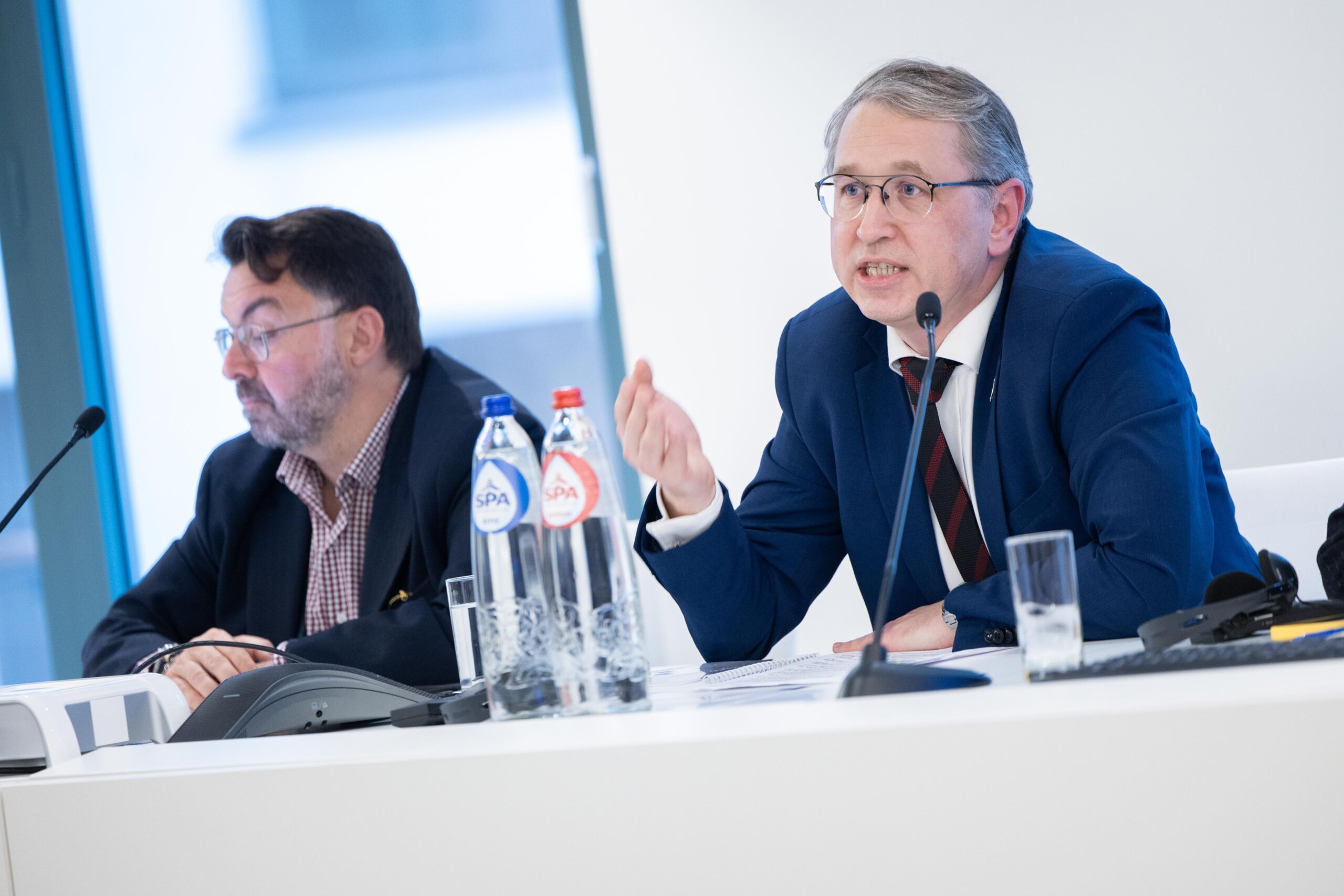
The presentation took place as part of the event ‘Justice and Resilience in Ukraine: the Perspective of Civil Society and the Human Dimension of the Judiciary’, organised with the support of the EU Project Pravo-Justice, implemented by Expertise France, at the Permanent Representation of France to the EU. The event brought together representatives of Ukrainian civil society, the judiciary, EU institutions and the international expert community.
The European path to membership is Ukraine’s own choice. This was underlined by Wolfgang Nozar, Head of the Rule of Law, Anti-Fraud and Financial Management Unit of the Directorate-General for Neighbourhood and Enlargement Negotiations of the European Commission.
‘The reforms that need to be implemented are of critical importance. We fully support the efforts Ukraine is making to carry out reforms; however, Ukraine must assume responsibility and set clear deadlines. It is important that these deadlines are both ambitious, as Ukraine seeks rapid accession to the EU, and realistic, so that the reforms can in practice be implemented,’ he noted.

Representatives of the Agency for Legislative Initiatives also stressed the need to move more actively and swiftly in implementing reforms, particularly in the areas of the rule of law and law and order.
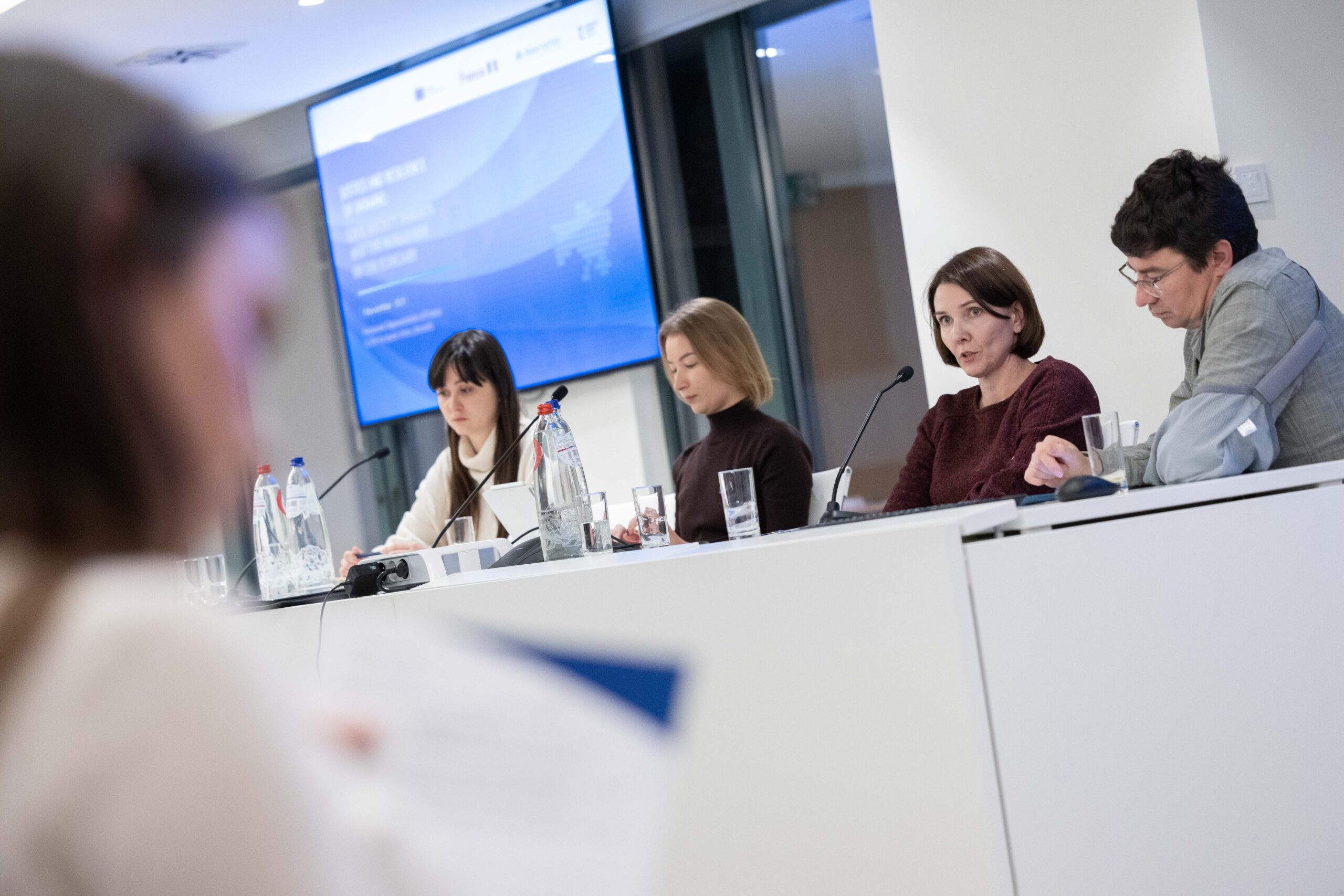
Karyna Aslanian, Head of the ‘Rule of Law’ Area at the ALI, noted that despite constant power cuts, missile strikes and drone attacks, Ukrainian courts continue to operate during the war:
The expert noted some progress in judicial reform, while at the same time drawing attention to critical challenges that could slow this progress or even undo years of work. These include delays by appointing authorities in selecting members of the High Council of Justice and judges of the Constitutional Court of Ukraine, as well as the urgent need to maintain the involvement of international experts in the selection processes for judicial governance bodies and key courts. More recently, an additional concern has been the activity of the Temporary Investigative Commission on alleged corruption- or corruption-related offences in law enforcement bodies, courts and judicial authorities. ‘Instead of focusing on systemic problems in the justice sector and law enforcement bodies, the TIC has begun questioning members of the High Qualification Commission of Judges, the Public Integrity Council and civil society activists. This is an attempt to interfere with the independence of the judiciary and to obstruct the work of civil society,’ Karyna Aslanian stressed.
At the same time, Oleksandra Egert, Deputy Executive Director for Operations and Project Coordination at the ALI, highlighted Ukraine’s progress in meeting the requirements of Chapter 24 ‘Justice, Freedom and Security’ through strengthening institutions, improving policies and deepening cooperation with European partners.
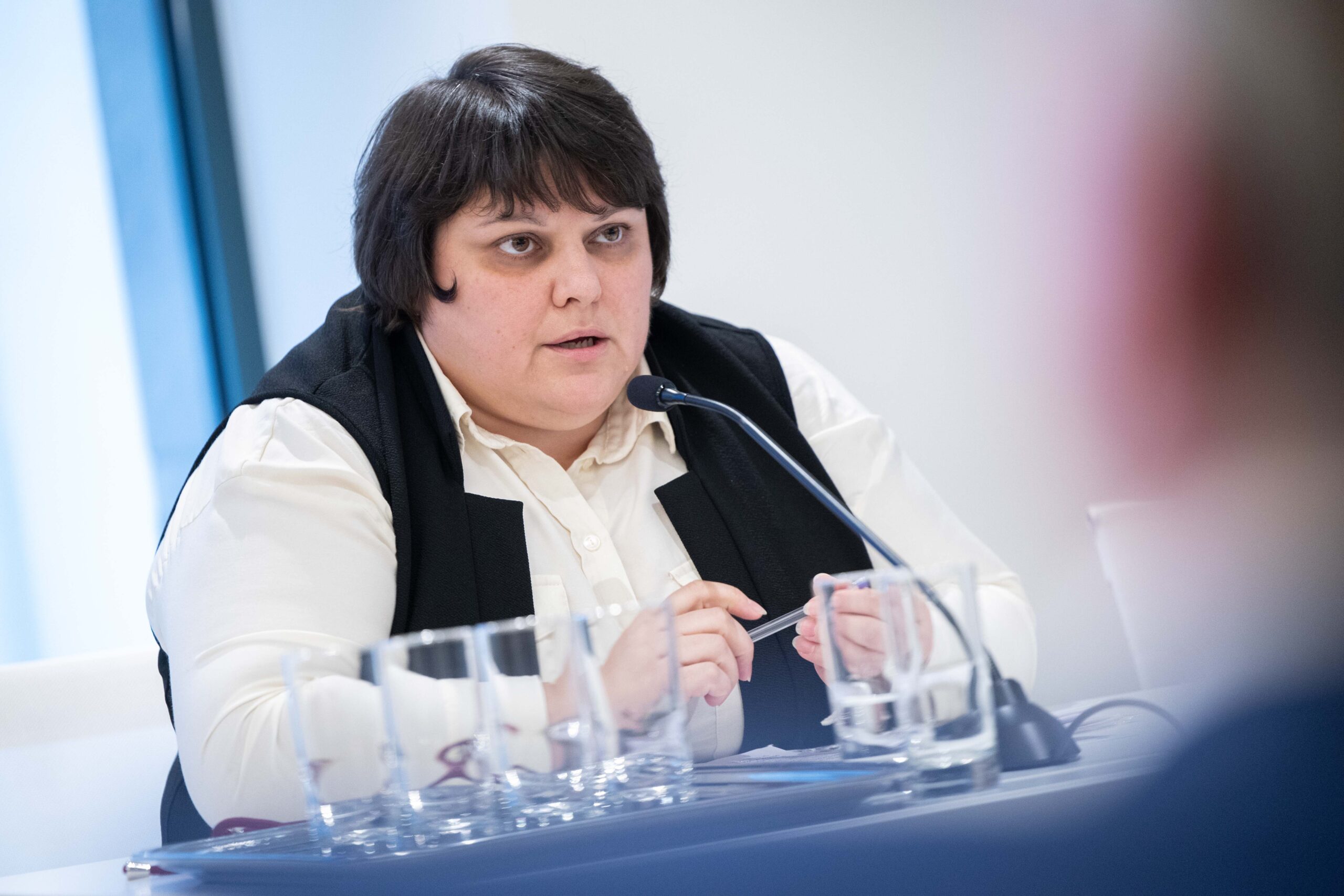



Experts from specialised civil society organisations — the Agency for Legislative Initiatives, Transparency International Ukraine, the ZMINA Human Rights Centre, Tomorrow’s Lawyer, Europe without Barriers and the Ukrainian Bar Association — have formulated more than 500 recommendations. The Shadow Report has, in effect, become a detailed answer to the question of how the Ukrainian authorities can fulfil the European Commission’s requirements.
For his part, Serhii Tereshko, Deputy Representative of Ukraine to the EU, underlined that it is the Shadow Report of the CSO coalition led by the ALI that provides an alternative view of developments in the rule of law, human rights protection and the state of the judicial system in Ukraine.
‘The Ukrainian Government remains firmly and consistently committed to advancing along the path of the rule of law. We are fully aware that without adherence to key European principles, progress on the road to EU membership is impossible,’ he noted.
By way of reminder, the Shadow Report focuses not only on Ukraine’s progress but also on the challenges and problems the state faces in implementing European standards in the areas of the rule of law (the judiciary, prosecution service, Bar and legal education), the fight against corruption and organised crime, the protection of fundamental human rights and freedoms, visa policy and migration. It serves as a complement to the EU Enlargement Report, offering an independent expert analysis with step-by-step, concrete and practical recommendations. The Shadow Report is based not only on the subjective views of civil society organisations but also assesses the compliance of Ukrainian legislation with EU law and of the system as a whole with EU standards.
The Report has been prepared with the financial support of the European Union under the EU Project ‘Pravo-Justice’. Its contents are the sole responsibility of the Agency for Legislative Initiatives and other civil society organisations and do not necessarily reflect the views of the European Union.
Digitalisation of the Judiciary at the Heart of the 14th Judicial Forum: Key Takeaways
Digitalising the judiciary was at the centre of the 14th Judicial Forum as one of the critically important tools for adapting public services to wartime conditions. The digital transformation of justice became the focus of the first session.
Experts, representatives of the judiciary and the Government discussed how technology is reshaping justice in Ukraine and which steps are needed to ensure the sustainable development of new digital solutions. The discussion was moderated by Karyna Aslanian, Head of the Rule of Law Area at the ALI.
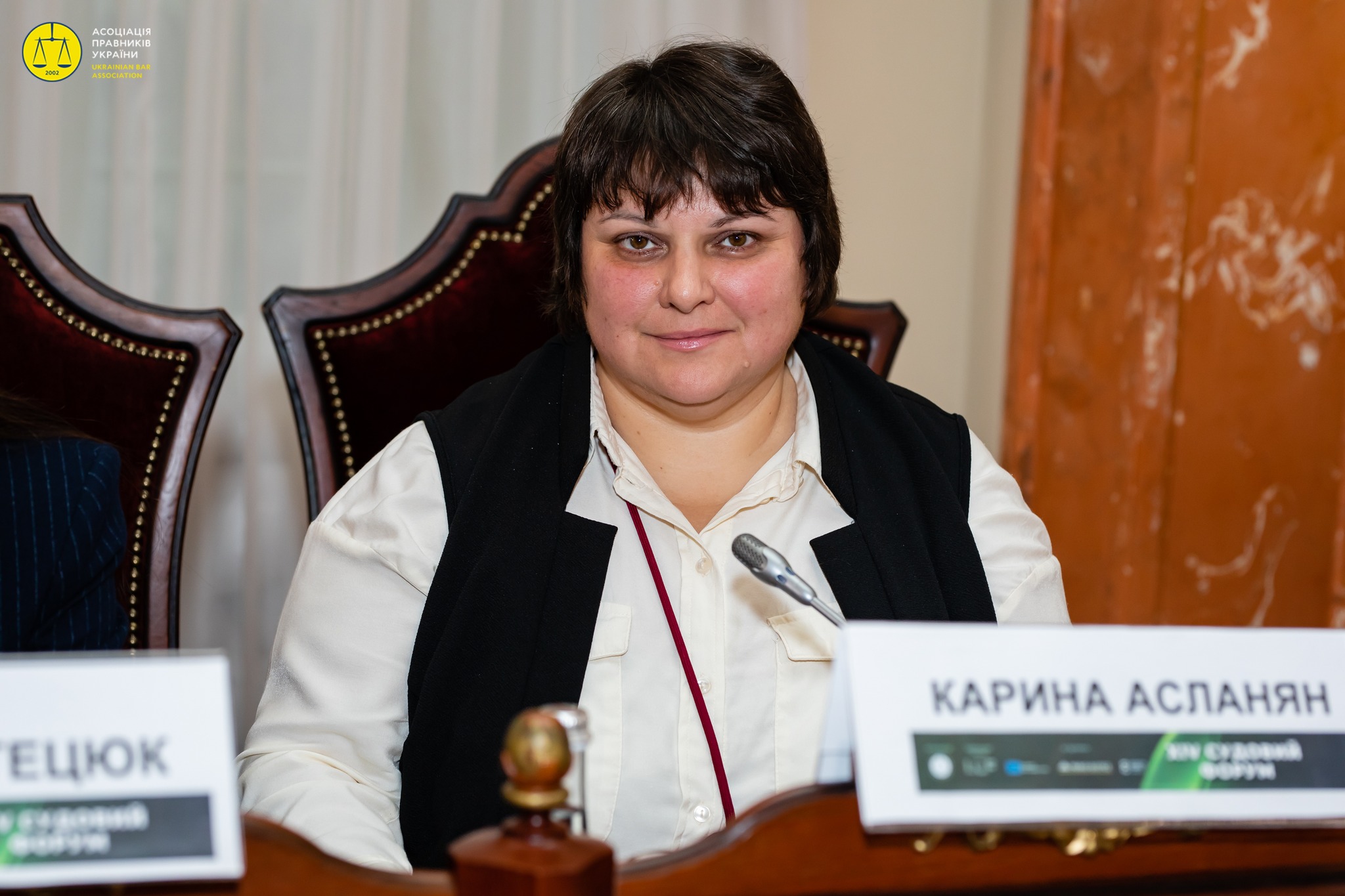
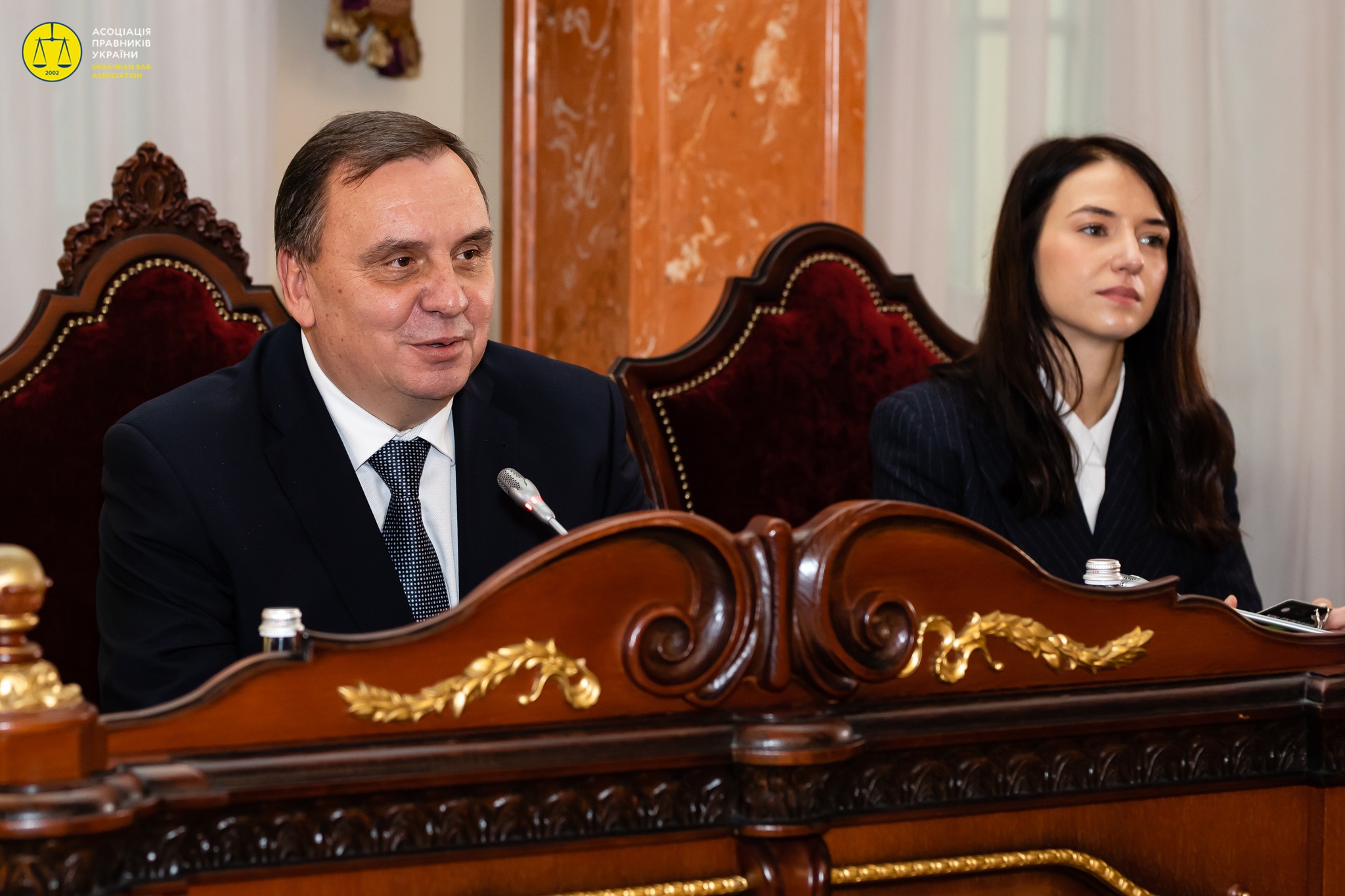
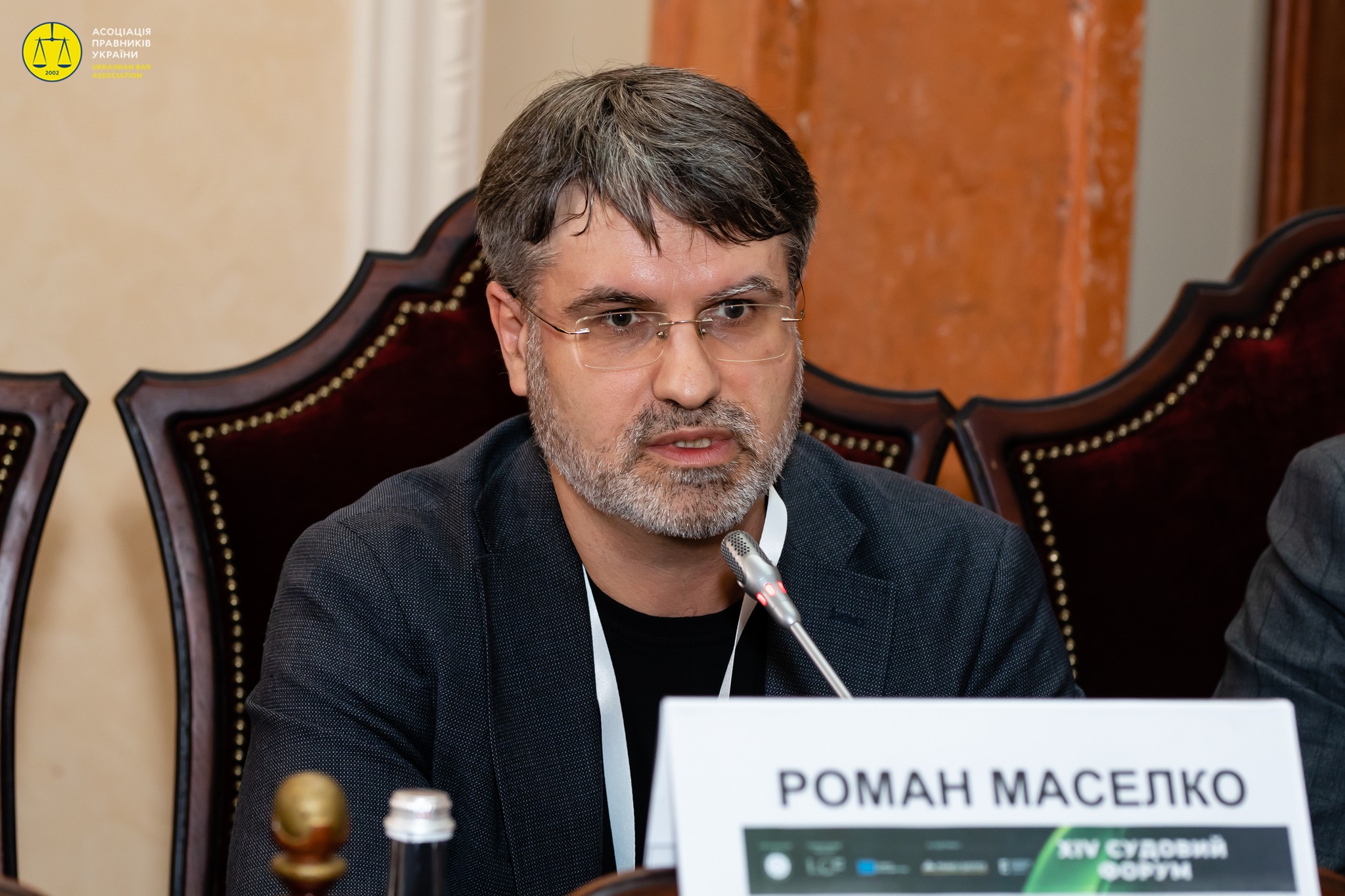
Speakers underlined that successful digitalisation requires coordinated decisions and a systemic approach across key institutions – from the High Qualification Commission of Judges of Ukraine (HQCJ) and the State Judicial Administration (SJA) to the Supreme Court (SC) and the Ministry of Digital Transformation. This applies to the introduction of electronic document management, the digitisation of judicial statistics, the use of artificial intelligence as well as the modernisation of databases and interfaces that are convenient both for judges and for the public.
President of the Supreme Court, Stanislav Kravchenko, noted that digital tools are needed wherever they improve the quality of justice, while respecting procedural standards and taking into account international experience.
Member of the High Council of Justice, Roman Maselko, stressed that digitalising procedures is not merely a technical option but an important precondition for ensuring people’s access to justice.
During the discussion, participants also reflected on what has already been achieved in terms of digitalisation over the past year and what is still planned. Zoriana Stetsiuk, Deputy Minister of Digital Transformation of Ukraine, spoke about joint initiatives of the Ministry of Digital Transformation and the State Judicial Administration designed to ease the burden on courts and speed up the consideration of cases. These include a module for generating decisions in standard cases, the integration of enforcement documents into the Diia application and the future possibility of choosing an enforcement officer online.
Leonid Sapelnikov, Deputy Head of the SJA responsible for digital development, noted that a concept for the development of digital services has already been prepared and that digital priorities for 2026 have been defined.
Oksana Litvinova, Adviser to the First Deputy Prime Minister and Minister of Digital Transformation, underlined that three key services — court notifications, access to court decisions and online payment of fines — are already part of the everyday routine of almost 13 million Ukrainians.
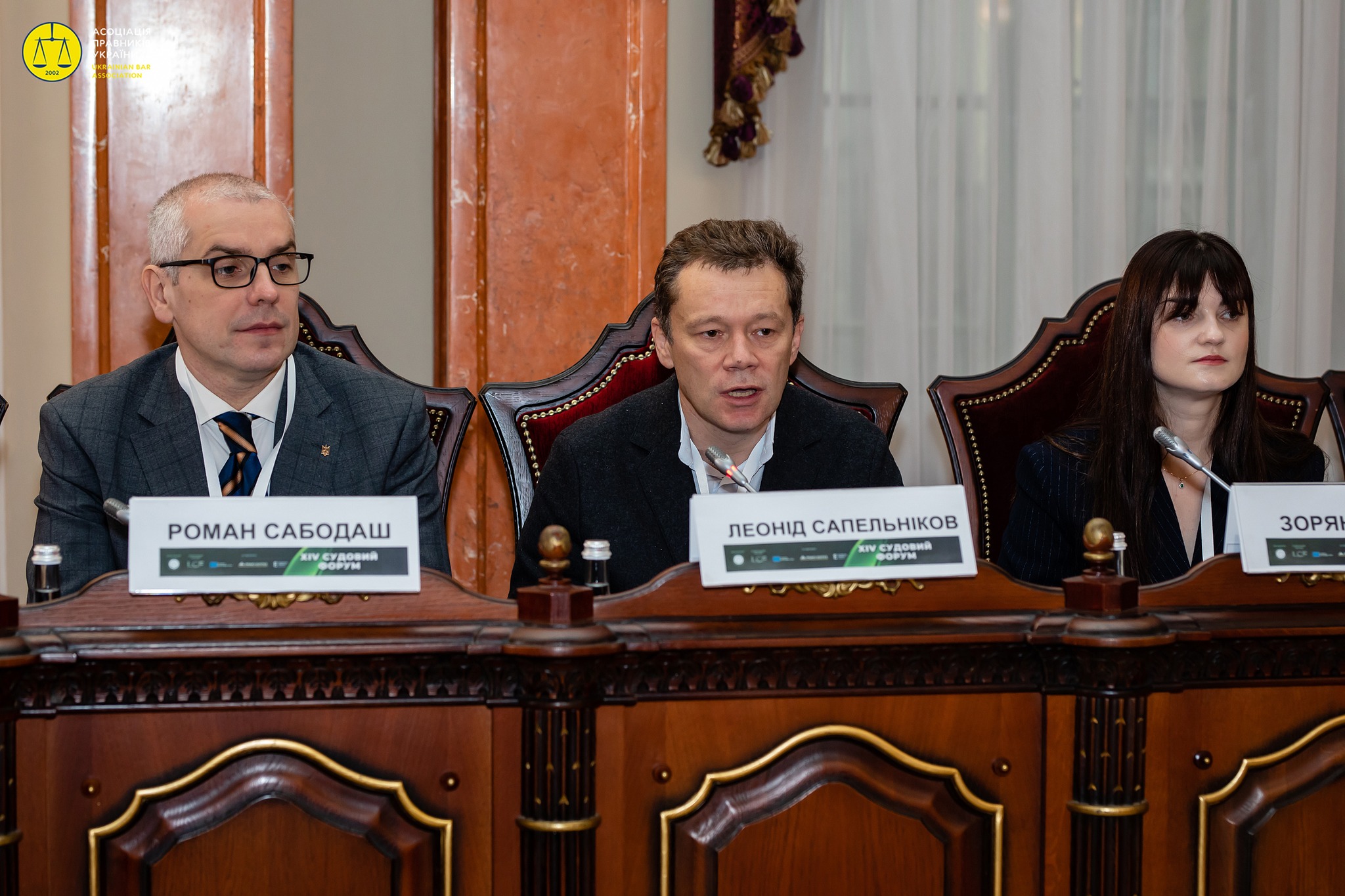
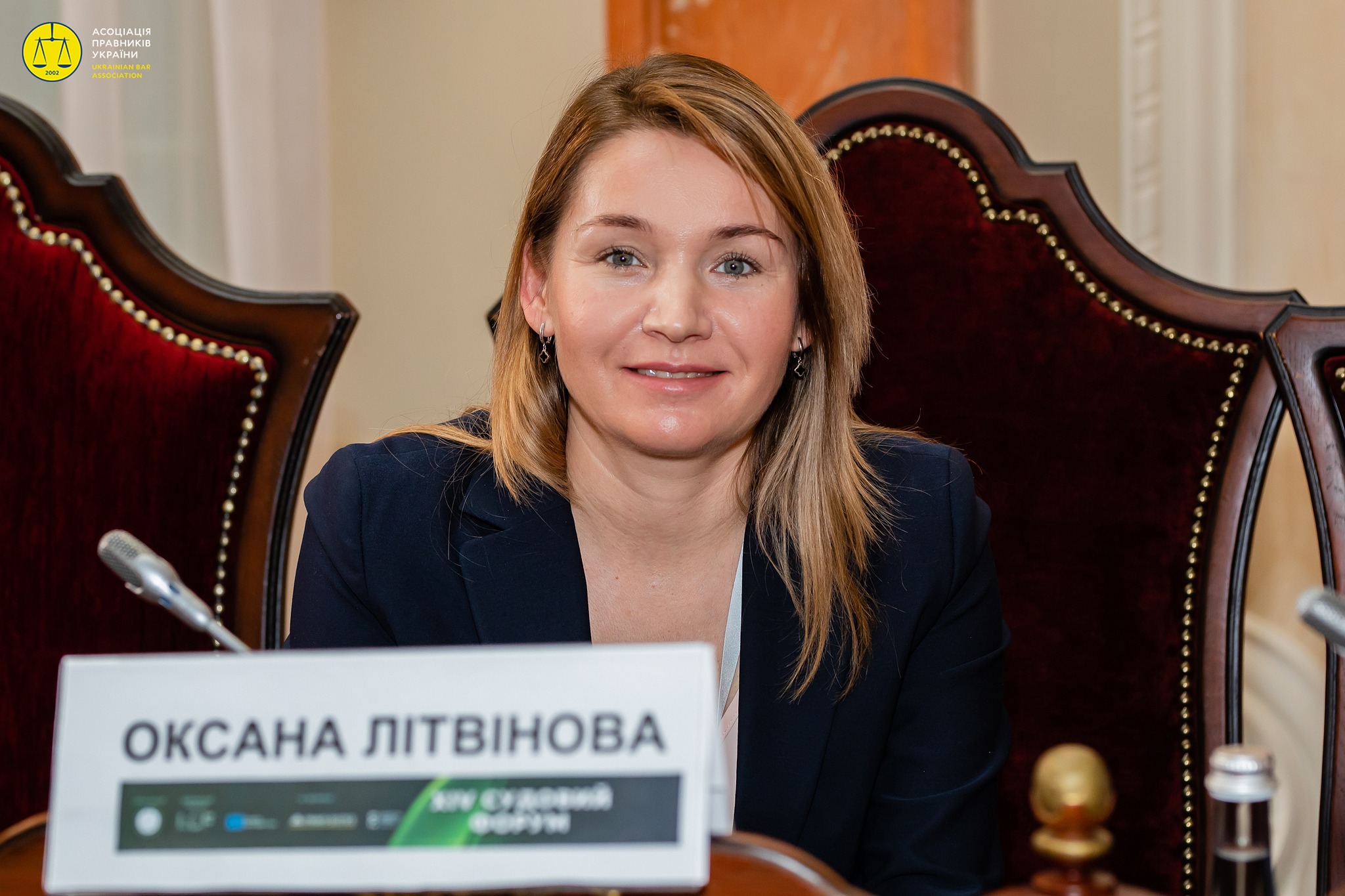
During the discussion, Roman Sabodash, member of the HQCJ, spoke about the introduction of an electronic format for submitting documents by candidates for judicial positions, which has reduced the burden on the HQCJ Secretariat and on competition participants. According to him, three goals should become strategic priorities for the HQCJ and the judiciary: electronic document management, a judicial dossier and an online account for candidates — all of which will be implemented within ALI’s project on digitalising the justice sector.
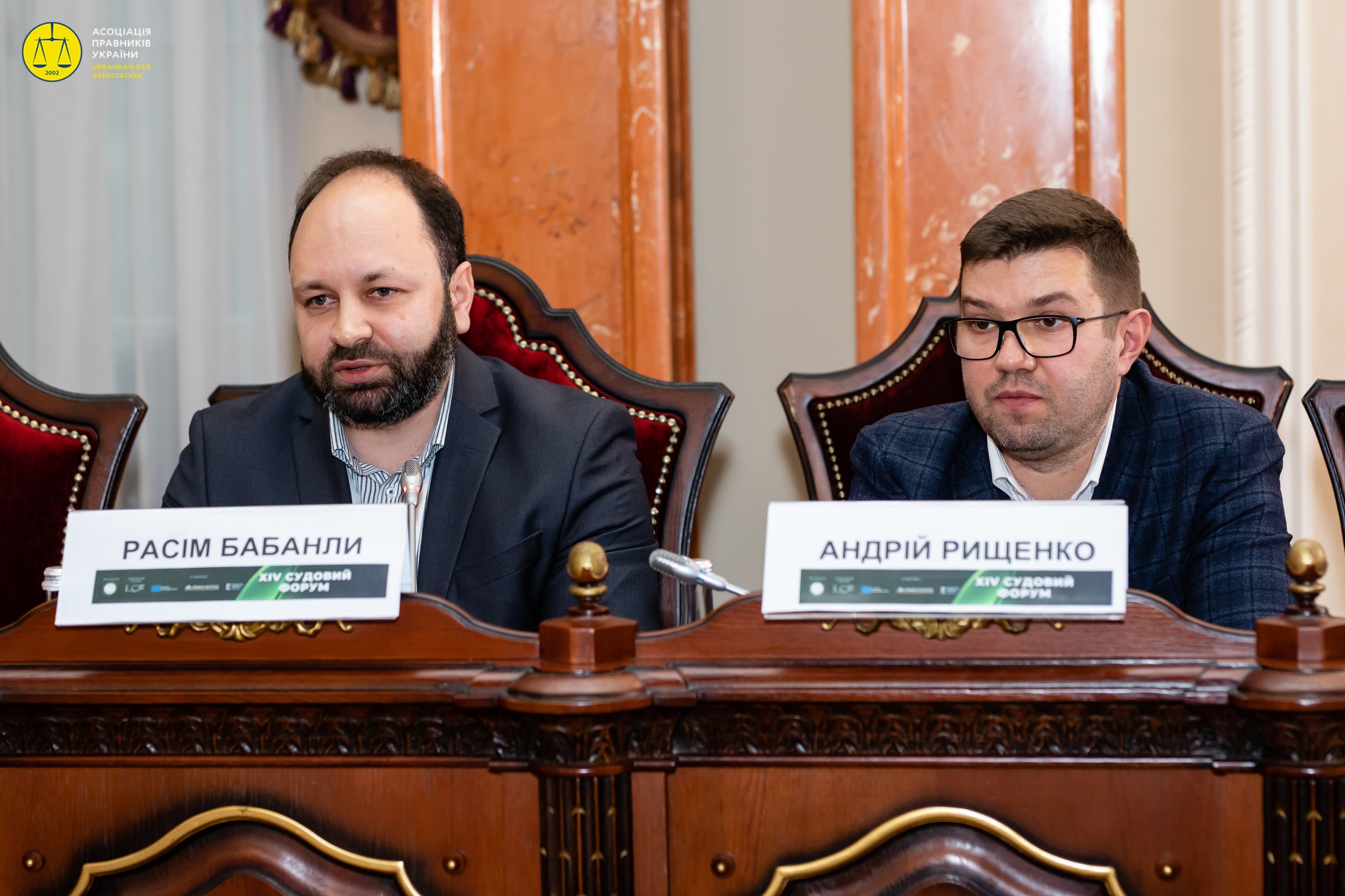
Rasim Babanli, First Deputy Head of the Supreme Court’s Secretariat, outlined the opportunities offered by the Supreme Court’s Case-Law Database and shared the experience of the Secretariat, where artificial intelligence is already being used to improve the search for legal positions and the analysis of case-law.
Judge-spokesperson of the Dnipropetrovsk District Administrative Court, Andrii Ryshchenko, stressed that data quality may become a key challenge in the digitalisation of the judiciary. In his view, Ukraine therefore needs to develop its own model of digital justice, tailored to the realities of wartime and limited resources.
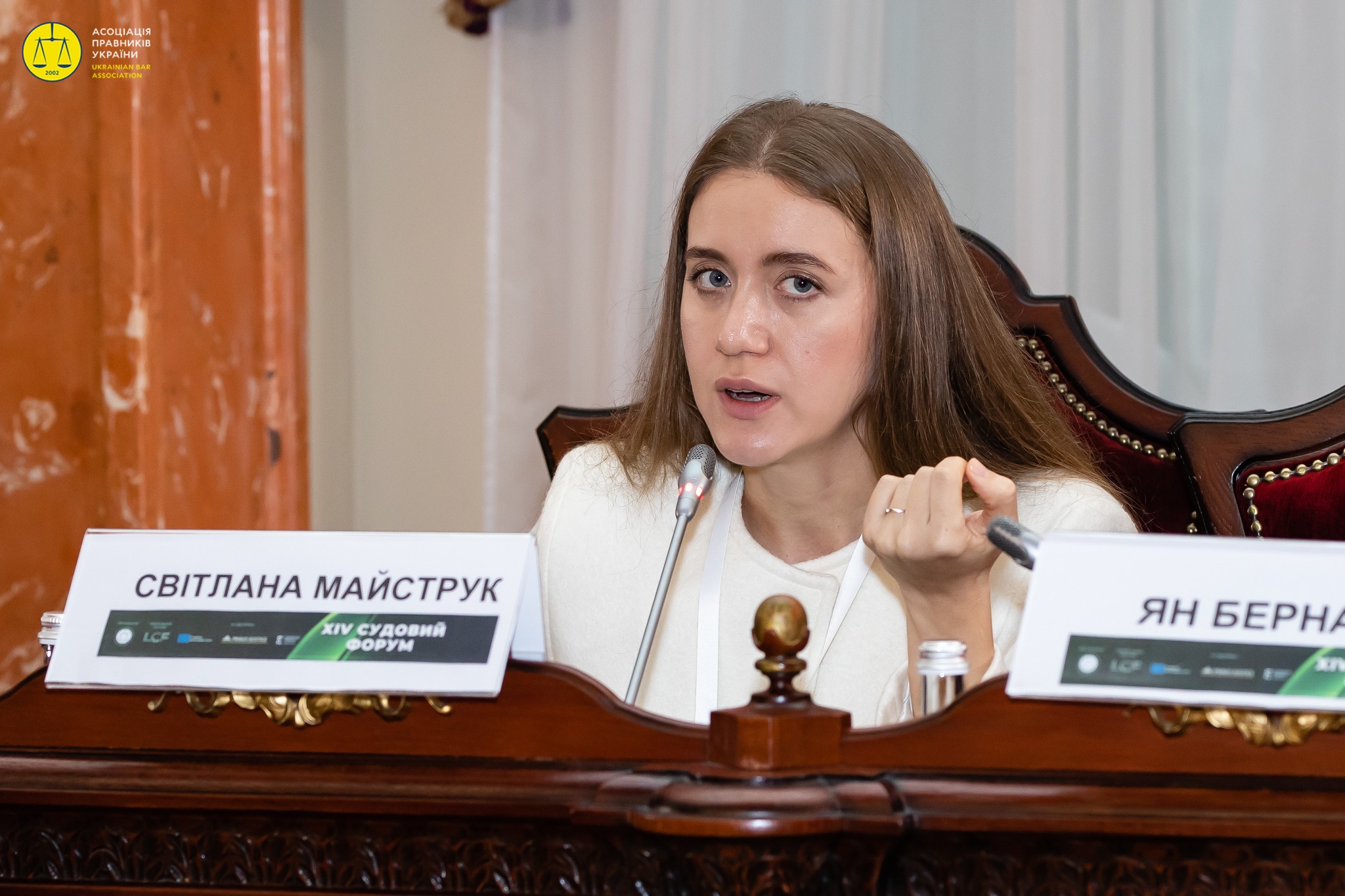
Svitlana Maistruk, Lead National Expert of the EU Project Pravo-Justice, recalled that the digitalisation of justice is part of Ukraine’s European integration commitments. She underlined that the roll-out of the e-Court reform must proceed consistently, taking into account completed audits, the updated concept of the Unified Judicial Information and Telecommunication System and close coordination among all stakeholders.
This panel discussion at the Judicial Forum once again confirmed that digitalisation in the justice system is about both innovation and embedding EU-level standards of the rule of law. Achieving this will require joint efforts from all stakeholders and a long-term strategy.
The Path to the EU is Charted, But Not Yet Completed: What Brussels Demands and Which Decisions Are Already on the Table in the Justice and Law Enforcement Sectors
International partners make no secret of the fact that the key test of Ukraine’s readiness for European integration is not the passage of laws but real institutional change. The door to the EU is open, but one can pass through it only with reforms that are fully implemented. While we are moving towards that doorway — and progress is indeed visible — the pace remains too slow. This is how the European Commission assessed Ukraine in its 2025 EU Enlargement Report. The document examines Ukraine’s progress across all negotiating chapters, including the rule of law, anti-corruption policy, reform of the prosecution service, the Bar and law-enforcement bodies. A Shadow Report — a roadmap for bringing these reforms to their logical conclusion — was presented at the end of October by a coalition of civil society organisations led by the Agency for Legislative Initiatives (ALI).
So, what steps does the Ukrainian Government need to take in the justice and law-enforcement sectors? And how do these two documents intersect to create a ‘roadmap’ without which the movement towards the EU risks remaining nothing more than a loud declaration? ALI examines these issues in this article prepared specially for LB.UA.
Judicial reform: the international component as a key to success
One of the most important signals from Brussels concerns the involvement of international experts in the competition for the High Qualification Commission of Judges of Ukraine (HQCJ). The European Commission explicitly calls for the continued participation of independent foreign experts and warns against forming the Commission solely from representatives of ‘non-reformed’ national bodies. This point is also strongly emphasised by ALI experts in the Shadow Report.
The mandate of the international experts who took part in selecting members of the HQCJ expired in the summer, and the hastily adopted 2021 law now allows the creation of a new Commission without them. Both the European Commission and Ukrainian civil society organisations agree that the international component in judicial selection processes significantly raises standards and mitigates corruption risks. Therefore, excluding international experts from these processes could become a flashpoint for backsliding on judicial reform.
The European Commission therefore demands the urgent extension of the mandate of international experts for the selection of HQCJ members and its expansion to include the competition for the Supreme Court. Draft law No. 13382, registered in June 2025, could partially address this issue (although it, too, requires refinement). However, there appears to be no public consideration of the draft law — nor political will to advance it — at this time.
In addition, international experts highlight the need to reboot the national bodies that nominate members to the HQCJ through open competitions with integrity checks. Specifically, this concerns the Council of Judges and the Bar Council.
The European Commission also stressed that the mandate of the Public Council of International Experts (PCIE), which conducts the competition for the High Anti-Corruption Court, must remain in force until all vacancies are filled. The coalition’s Shadow Report echoes these same recommendations.
Judicial reform: strengthening public oversight
Beyond the issue of international participation, the European Commission emphasises the need to reinforce public oversight mechanisms — specifically the Public Integrity Council (PIC), which assists the HQCJ in vetting judges and judicial candidates. Here, too, international partners and civil society share the same view: they recommend improving PIC’s access to information, creating a permanent secretariat and enhancing its analytical capacity.
The Shadow Report proposes amendments that would grant PIC full access to judicial dossiers, provide dedicated state-budget funding for its secretariat, allocate premises and equipment for the Public Integrity Council, and digitalise all related processes.
How staffing shortages and delayed appointments slow down judicial reform
Both the European Commission and the Shadow Report highlight recurring problems in securing quorums within key bodies of judicial governance — primarily the High Council of Justice (HCJ) — as well as in the Constitutional Court of Ukraine.
Although President Zelenskyy appointed two HCJ members in October 2025 after a lengthy delay, the risk of the body becoming paralysed remains. Four members are still missing from the HCJ’s full composition, and the mandates of two additional members will expire as early as summer 2026. Experts from the Agency for Legislative Initiatives emphasise that the four-year delay in appointing HCJ members under the Bar quota has obstructed the Council’s work and, consequently, the renewal of the judiciary. The Shadow Report warns of the potential risks: any reduction in the quorum or attempts to change it through legislative amendments, could turn the HCJ into a controlled body where decisions are taken by a minimal majority loyal to the authorities. For this reason, ALI experts recommend rejecting Draft Law No. 13137, which proposes changing the rules for forming the HCJ’s quorum. Such a change would create direct corruption risks and open the way for political pressure.
Instead, the Shadow Report proposes ensuring that all vacancies are filled through transparent and timely procedures — for example, launching competitions for vacant positions at least a year before the mandates of current HCJ members expire. It is also essential to extend the mandate of the Ethics Council in law so that it can complete its competitions.
In addition, experts propose developing an alternative mechanism for convening the Congress of Advocates. Due to delays by the National Bar Association of Ukraine, the Bar quotas in the HCJ and the Qualification and Disciplinary Commission of Prosecutors have remained unfilled for years. The Shadow Report recommends introducing legal liability for obstructing these procedures.
The quorum problem has also affected the Constitutional Court, where nearly one-third of the seats are currently vacant: instead of 18 judges, only 13 are serving. The European Commission clearly highlights these risks and stresses that selected candidates must be appointed. ALI notes in the Shadow Report that this situation arises not only from the complexity of the selection process and low candidate participation, but also from delays on the part of the appointing authorities. The President and Parliament either fail to vote on candidates or postpone decisions for long periods.
After the July attempt to subordinate anti-corruption bodies to the Prosecutor General, the authorities tried to reverse the most controversial changes, yet still ‘quietly’ preserved control over the prosecution service through Law No. 4555-IX. However, the Enlargement Report served as a ‘cold shower’, emphasising that institutional independence remains vulnerable.
The European Commission gave a negative assessment of the abolition of the pilot personnel reserve and called for legislative amendments that would make selection, appointment and dismissal procedures more objective, transparent and merit-based (as the competitive procedure for appointments to the prosecution service was effectively abolished).
How can Ukraine address this problem? ALI experts note in the Shadow Report that this can be done fairly quickly — by adopting proposals, some of which are already on the Verkhovna Rada’s agenda.
Indeed, Parliament has registered two draft laws: Draft Law No. 13601 of 6 August 2025 on amendments to the Law of Ukraine ‘On the Public Prosecutor’s Office’ concerning the reinstatement of competitions for the appointment of prosecutors during martial law and provisions on dismissal; and Draft Law No. 13699 of 26 August 2025 amending the Criminal Procedure Code of Ukraine and certain legislative acts of Ukraine to improve the functioning of criminal justice bodies. The first reinstates competitions and repeals the new powers granted to the Prosecutor General, while the second, in addition to this, addresses certain procedural issues and strengthens the anti-corruption bodies of the criminal justice system. For the Committee on Law Enforcement Activities, it is sufficient to consider these draft laws, propose one of them for a vote in the plenary hall or refine them and submit an improved version. This can be done hic et nunc (‘here and now’).
At the same time, European partners stated explicitly that the procedure for appointing the Prosecutor General remains politicised. The Shadow Report recommends introducing an open competition with the involvement of prosecutorial self-governance, as required by European standards. A member of the Council of Prosecutors could sit on the commission responsible for selecting the Prosecutor General, or the Council itself — as the highest body of prosecutorial self-governance between All-Ukrainian Conferences of Prosecutors — could organise the competition. There are numerous models, but what matters, ALI experts stress, is to develop and strengthen self-governance in this sector so that prosecutors themselves can safeguard their independence from external — above all, political — interference.
The European Commission also noted that the appointment of the new Prosecutor General, combined with the legislative amendments adopted in July 2025, ‘undermine meritocracy in the prosecution service and create risks of undue interference in criminal proceedings. These amendments should be repealed and meanwhile their application should be suspended’. The message is clear: the changes contradict Ukraine’s European integration commitments, and the use of the new powers must cease — ultimately, the amendments must be revoked.
According to ALI, more than 200 individuals have been appointed to regional prosecution offices and the Office of the Prosecutor General under the new negative provisions of Law No. 4555-IX adopted in July — all outside competitive procedures. At the same time, most of these individuals were likely transferred from lower-level prosecution offices without the competitive procedure required for transfers to higher-level offices. How many of them came ‘from the street’ — former prosecutors, those who failed attestation, or lawyers without prosecutorial experience — remains unknown. Yet these individuals have already become prosecutors and part of the prosecutorial corps, meaning they will now participate in forming self-governance bodies and influence the work of the entire prosecution service. Therefore, it would be appropriate for the prosecution service to explain who entered the system under Law No. 4555-IX and by what procedure, to halt this practice and to demonstrate to the European Commission its readiness to address the problem. It is fair to note that the procedure for transferring to higher-level prosecution offices is quite complex, and it would be reasonable to consider simplifying it — alongside maintaining competitive foundations for the appointment of senior positions, which are planned for introduction in the first quarter of 2026 under the Ukraine Facility and the Rule of Law Roadmap.
Security sector: between reform and control
European partners also paid close attention to the security sector and to combating organised crime in Ukraine — areas of particular concern during wartime. The European Commission calls for implementing the measures of the Overarching Strategic Plan for Law Enforcement Reform and the Rule of Law Roadmap. Progress in this area must accelerate through the application of European methodologies for strategic analysis and crime prevention planning, including SOCTA. This logic is also reflected in the Shadow Report for Chapter 24 ‘Justice, Freedom and Security’.
The system for combating organised crime in Ukraine lacks legislative coherence. As a result, it exists largely on paper, while in practice it operates in a fragmented manner. Analysts attribute this to the fact that the state continues to rely on the inertia of tools inherited from the 1990s — tools that have been amended over time but not conceptually renewed. Thus, police reform, the creation of the National Anti-Corruption Bureau, the State Bureau of Investigation (SBI), the Economic Security Bureau (ESBU) and the removal of prosecutors’ investigative powers all took place without updating the ‘framework’ legislation. Today, each of these bodies has its own understanding of priorities and methods of combating crime.
European partners therefore expect the adoption of a law that would delineate the powers of law enforcement agencies and ensure effective coordination and interaction among them. Particularly, this concerns the Security Service of Ukraine, which should focus on national security issues rather than duplicating the functions of the police or anti-corruption bodies. They also highlight the need to reform the SBI. The Shadow Report offers step-by-step recommendations in these areas: embedding the reform in the 2026–2030 Strategy for Combating Organised Crime, establishing the position of National Coordinator for Combating Organised Crime, and ensuring competitive procedures for appointing senior officials of the National Police and the SBI, with moderate involvement of international experts.
At the same time, the Shadow Report proposes creating a single analytical centre or developing shared standards for information exchange — crucial for monitoring and forecasting criminal activity. This would improve cooperation among criminal justice bodies and help streamline processes more effectively.
How the European Commission’s report and the Shadow Report shape a unified reform trajectory — and how Ukraine is moving along it
The enlargement process is not merely a diplomatic gesture of goodwill; it is a policy of requirements that determines whether a candidate country is ready to become part of the common European space. The Enlargement Report is an assessment of reform achievements and shortcomings — a record of ‘what has been done’ and a clear list of ‘what still needs to be done’. Meanwhile, the Shadow Report answers the question of ‘how exactly’ to meet the European Commission’s requirements. Importantly, it is based not only on the subjective views of civil society but also on EU law and standards.
The European Union emphasises: ‘The next step must be to turn intentions into results’. In other words, what matters now is the speed and consistency of reforms and the political will to implement them. Only under these conditions can the words ‘irreversibility of European integration’ have a chance of becoming reality rather than a promise.
Digitalisation of the High Qualification Commission of Judges: Implementation Team Selected
The Agency for Legislative Initiatives is launching a project to digitalise Ukraine’s judicial system, to be implemented jointly with the key institutions of the judiciary — the Supreme Court, the High Council of Justice, the High Qualification Commission of Judges of Ukraine, and the Constitutional Court of Ukraine.
The first step will be the digitalisation project for the High Qualification Commission of Judges of Ukraine (HQCJ). This is crucial for the entire judicial system, which today requires not simply renewal but deep transformation — transparent, technology-driven, data-based and centred on fairness.
Kateryna Chernohorenko — one of the main architects of the digital transformation of the state and the defence sector — has been selected as Programme Lead.
As Deputy Minister of Defence for Digital Development in 2023–2025, she and her team created large-scale digital products such as Reserv+ and Army+, advanced the DELTA combat management system, launched a military cyber centre and fostered technological innovations that became a model for NATO partners. Her experience in systemic transformation and digital reform will now be directed at one of the state’s key reform priorities — the modernisation of the judicial system.
The winner of the competition to provide expert services for the comprehensive support of the HQCJ digitalisation process is the Ukrainian GovTech company Strimco.
In recent years, the Strimco team has implemented more than 80 government IT projects in some of the most sensitive sectors: defence, social policy, healthcare and education. It was this team that helped create products that have now become standards of the digital state: Reserv+, Army+, VeteranPRO, services for the International Register of Damage and dozens of other systems.
In addition, the company is an active driver of Ukraine’s GovTech ecosystem: a partner of the CDTO Campus and the Global Government Technology Centre, the initiator of the GovTech Alliance and a contributor to the establishment of the Ministry of Digital Transformation’s Centre for Digital Competences.
Which digital products for the justice sector will be developed for the HQCJ under the Project?
- A new HQCJ website. The current version of the website has not been updated for years and is functionally very outdated. The new website will prioritise openness and user-friendliness for all categories of users.
- An electronic document management system (EDMS). Each year, the Commission processes around 70,000 incoming and outgoing documents, plus several thousand internal documents. According to research, introducing an EDMS will save up to 50% of the time spent on document handling and will also reduce costs for printers, copiers and other consumables.
- Judicial Career Portal. Each candidate will have a personalised user account. The functionality will provide round-the-clock remote access to exam and test results, as well as to all submitted documents. In addition, candidates will be able to apply for a competition with a single click — the system will automatically generate application packages using documents already uploaded. Developers of exam tasks, examiners, members of the High Qualification Commission of Judges, the High Council of Justice, the Public Integrity Council and the Public Council of International Experts will also have their own accounts with tailored functionality. The entire process — from announcing a competition to issuing a recommendation for appointment — will be stored within a single system. This will ensure maximum data protection, as the system will grant strictly limited access to specific exam materials for clearly defined users.
- Judicial Position Registry. In essence, this will function as an electronic dossier for both judges and candidates. The system will feature automated data entry, search tools, data protection, analytics, integration with state registers, statistical tools, personalised online access for users and full integration into the Unified Judicial Information and Telecommunication System.
We are confident that this cooperation will lay the foundation for building a new digital ecosystem for the HQCJ — one that ensures transparency and trust in the processes of judicial selection and integrity monitoring.
ALI is implementing the Programme within the project ‘Reinforcing the European Dimension of Ukrainian Civil Service in Law-Making, Justice and Public Finances’, supported by the Swedish International Development Cooperation Agency (Sida).
Criminal Policy and Strategic Planning in Combating Crime: Prospects and the Role of European Integration
Criminal policy in Ukraine is a widely used term in legal circles. However, there is no single, shared understanding of what it means, and discussion often boils down to complaints about the absence of formal policy documents and the unsystematic process of amending criminal legislation. When one looks at the level of strategies, concepts and forecasting in the field of crime, the problems only multiply. And if we add to this the quality of criminal statistics, the high latency of certain offences, the lack of alternative sources of knowledge about crime and the weak analytical capacity of law enforcement agencies — there is little reason for optimism. By contrast, strategic planning tools in the field of crime prevention are widespread in the EU and in the context of European integration, Ukraine plans to introduce a coherent criminal policy. Hence, what are the prospects for doing so? And what exactly should we understand by this?
[Anti-]Criminal Policy
Criminal policy is the key system-forming element of a state’s policy in combating crime. It develops strategy and tactics and defines‘Fundamentals of Modern Criminal Law Policy in Ukraine’ Vyacheslav Borisov, Pavlo Fris // Issues of Combating Crime. — 2014. — Issue 27. — Pp. 30–38. the main tasks, principles, directions and objectives of its impact on criminality. Over a century ago, the Ukrainian scholar M. P. Chubynskyi noted that the science of criminal law consists of:
- criminal dogmatics;
- criminal aetiology;
- criminal policyFris P. A Word About Mykhailo Chubynskyi. Politics in the Fight Against Crime: Status and Prospects: Collective Monograph / Edited by Prof. P.L. Fris. Kyiv, Vaite. 2025. — pp. 10–18..
The latter essentially formulates the core positions both in the sphere of social reforms aimed at combating crime and in the sphere of their normative underpinning, including the creation of appropriate criminal legislation. In Ukraine, despite a number of doctrinal and practical debates, a stable and coherent criminal policy is still lacking, although its elements are undoubtedly present in the practical activities of state bodies.
At the same time, there is an understanding that correctly determining society’s goals in combating crime makes it possible to:
- focus state resources on the most vulnerable areas;
- guide legislative activity;
- assess the effectiveness of criminal policy overall and the effectiveness of state bodies involved in combating crime;
- consolidate the state and society in the fight against crime.
Until recently, for more than 20 years of independence, Ukraine did not have a national doctrine, a concept of combating crime or a programme document outlining a coherent criminal policy. The issue was examined mainly within academic discussions and scholarly research.
There was also no single definition: the term criminal policy is understood to encompass a wide range of issues, and the number of sectoral branchesFris P.L. Criminal Law Policy of the Ukrainian State: Theoretical, Historical and Legal Issues: Monograph. Kyiv: ATIKA, 2005. P. 219; Fris P.L. Ideology of Criminal Law Policy: Monograph / Pavlo Lvovych Fris — Ivano-Frankivsk: Suprun V.P. 2021 — 389 p. — criminal law, criminal procedure, criminology and so on — continues to grow. This is because criminal policy is a component ofConceptual Foundations of the Modern Criminal Procedure in Ukraine: Monograph; N. V. Hlynska, L. M. Loboyko, O. I. Marochkin et al.: edited by O. G. Shylo. Kharkiv: Research Institute of Criminal Law named after Academician V. V. Stashys, National Academy of Internal Affairs, 2016. P. 120. legal policy, which in turn belongs to legal ideology. Not to mention the debates over the adjectives ‘criminal’ and ‘anti-criminal’, as the Ukrainian language, like any other language that uses the Latin root ‘crimen’, treats the word ‘criminal’ flexibly and employs it in two opposite meanings: criminal/offending and relating to combating crime.
But let us set the terminological issues aside for the moment and turn to the substance.
In simplified terms, there is a tendency to define criminal policy primarily as criminal-law policy — that is, the legislator’s approach to the criminalisation or decriminalisation of conduct.
At the same time, a less frequently mentioned aspect of criminal policy is the strategic planning carried out by criminal justice institutions in the field of combating crime. It is this understanding of criminal policy — as strategic planning — that this article focuses on.
Legal Policy on Criminal Policy
At the level of departmental documents, one element of implementing criminal policy is the definition of annual priorities for the activities of the prosecution service and law enforcement agencies.
These documents stress the need to use modern methods and practices for implementing policy in the field of combating crime, to simplify bureaucratic processes and to develop approaches to cooperation and interaction among law enforcement agencies.
An example of such a document is the ‘Priorities for the Activities of Law Enforcement Agencies and the Prosecution Service in the Field of Criminal Policy for 2020’, the aim of which is to guide the work of the prosecution service and the relevant law enforcement bodies and to ensure the application of modern approaches to criminal justice policy in Ukraine.
The document envisaged:
- the development of interagency cooperation, namely effective interaction during pre-trial investigations, the use of joint working groups and other modern platforms for interagency collaboration;
- the introduction of special investigative methods using modern technologies and ensuring compliance with standards of legality and proportionality;
- the implementation of modern criminal analysis systems;
- the application of prioritisation criteria in the investigation of criminal proceedings, taking into account the gravity of the offence, the presence of suspects, the type of preventive measure and the prospects of judicial review;
- the minimisation of excessive multi-level approval of the procedural decisions of investigators and prosecutors.
Subsequent priorities at the level of the prosecution service did not differ in structure or substance. Such priorities can be considered strategic for the field of criminal prosecution.
At the same time, there are priorities concerning institutional reforms within the prosecution service and law enforcement agencies, reflected in sectoral state policy documents in the field of law enforcement. Documents that can be indirectly considered as regulating the state’s criminal policy — at least in specific areas — include:
- the Overarching Strategic Plan for Reforming Law Enforcement Agencies as Part of the Security and Defence Sector of Ukraine for 2023–2027 (2023);
- the Action Plan aimed at implementing the Comprehensive Strategic Plan for Reforming Law Enforcement Agencies as Part of the Security and Defence Sector of Ukraine for 2023–2027 (2024);
- the Rule of Law Roadmap (2025);
- the Strategy for Combating Organised Crime (2020);
- the Cybersecurity Strategy of Ukraine (2021);
- the Concept for Combating Terrorism (2019);
- the Drug Policy Strategy until 2030 and the approval of the operational action plan for its implementation in 2025–2027 (2025).
Most of these documents include substantive elements of criminal policy, and this is where the law enforcement system should focus its efforts. At the same time, the Overarching Strategic Plan for Reforming Law Enforcement Agencies as Part of the Security and Defence Sector of Ukraine for 2023–2027 and the Strategy for the Development of the Prosecution Service of Ukraine for 2025–2028 provide for the introduction of measures to build a system of strategic planning in the field of combating crime (criminal policy). Today, this is the starting point of the discussion — to finally formalise the previously fragmented practices, intentions and reforms.
Indeed, in 2023, the adoption of the Overarching Strategic Plan (OAS) became one of the European Commission’s recommendations for granting Ukraine EU candidate status.
The document identified six strategic priorities for reforming the law enforcement sphere in Ukraine, among which coherent criminal policy was singled out as a separate priority. Its focus includes crime prevention, the inevitability of liability, the protection of the individual, society and the state from criminal offences and safeguarding the interests of victims.
In this respect, the Plan is revolutionary, as it is essentially the first attempt to anchor at the legislative level the intention to develop and implement a coherent criminal policy, as well as to monitor its implementation by identifying priority areas for combating crime depending on its state, structure, dynamics and trends.
To implement the OAS, by Order of the Cabinet of Ministers of Ukraine No. 273 of 23 August 2024, an Action Plan was approved, containing a detailed 150-page list of measures for putting the strategic priorities into practice.
However, following the adoption in 2025 of the Rule of Law Roadmap (hereinafter — the Roadmap) — an overarching strategic document that defines the set of reforms within Ukraine’s EU accession negotiations under Chapter 23 ‘Judiciary and Fundamental Rights’ and Chapter 24 ‘Justice, Freedom and Security’ — the Action Plan has, unfairly, become secondary. Although formally, in the section ‘Combating Organised Crime (General Principles of Combating Organised Crime)’ of the Roadmap, the implementation of the Action Plan is explicitly envisaged.
Criminal policy must respond to society’s current security and public order challenges. Moreover, given Ukraine’s acquisition of EU candidate status and the diligent, substantial work of all branches of government to align state activity with EU standards, policy on combating crime must also take into account Ukraine’s obligations to approximate its legislation to EU law under the acquis communautaire chapters. Therefore, criminal policy as a component of state policy must consider the EU’s founding treaties, the Charter of Fundamental Rights of the European Union (primary legislation), secondary legislation (regulations, directives and so on), EU acts on objectives, policies and operational principles, as well as declarations, resolutions, statements and official decisions of EU institutions and international agreements and treaties concluded by the EU.
The implementation of measures aimed at developing a systemic state criminal policy can be implicitly regarded as part of Ukraine’s European integration tasks. This is because Chapter 24 of the acquis communautaire requires the development of the institutional capacity of the law enforcement system to combat crime, above all, serious crime. By this, the European Union understands organised crime, cybercrime, drug-related crime, financial crime and other criminal offences that cause the greatest harm to society and are often transnational in nature, thus requiring particular attention from the EU.
Strategic planning in the field of combating serious crime, combined with strong, institutionally developed and systematically reformed law enforcement agencies, as well as the proper exercise of the prosecution service’s coordination powers as the key body on the prosecution side in criminal proceedings, can together strengthen Ukraine’s ability to meet its obligations under Chapter 24 of the acquis communautaire. In other words, the issue is not only about institutions, their leadership and staffing (on which Ukrainian experts often focus), but also about the strategic planning tools these institutions employ. Ukraine’s integration into the European law enforcement area will be made possible by a three-tier system of criminal policy documents, the prioritisation of criminal proceedings, a reformed criminal statistics system and the availability of alternative sources of data on crime (in the form of crime surveys and victimology surveys), as well as the use of SOCTA (Serious and Organised Crime Threat Assessment) and IOCTA (Internet Organised Crime Threat Assessment) tools, among others.
The Experience of the European Union
A systemic criminal policy is a key precondition for the sustainable development of society and a guarantee of the rule of law. For example, in the European Union, combating crime is integrated into the overall security policy. The Stockholm Programme (2010–2014) and currently the EU Security Union Strategy for the period 2020 to 2025, define a set of measures to counter organised crime, terrorism, corruption, trafficking in human beings and cybercrime, as well as mechanisms for cooperation among Member States in the area of justice and home affairs. At the same time, it is possible to speak of adopting a separate time-bound law that would set priorities for criminal policy. A unique example within the EU is Estonia, where a special criminal policy law, setting priorities for a ten-year period, is in force until 2030.
As for the current EU Security Union Strategy (2020–2025), the EU contributes to supporting Member States in strengthening security for everyone living in Europe — from combating terrorism and organised crime to preventing and detecting hybrid threats, enhancing the resilience of critical infrastructure, promoting cybersecurity and supporting innovation and research. The Strategy sets out the tools and actions to be developed over a five-year period to ensure security in both the physical and digital environment.
The Strategy sets out four priorities for action at the EU level:
- A future-proof security environment — new EU rules on the protection and resilience of critical infrastructure and on physical and digital security.
- Tackling evolving threats — strengthening the capacity of law enforcement agencies in digital investigations and equipping them with appropriate tools, methods and skills, including artificial intelligence, big data and high-performance computing in security policy, to address major threats to citizens such as terrorism, extremism or child sexual abuse.
- Protecting Europeans from terrorism and organised crime — strengthening action against root causes, effectively prosecuting terrorists, enhancing border security legislation and better use of existing databases and cooperating with non-EU countries and international organisations to end all sources of terrorist financing.
- A strong European security ecosystem — reinforcing Europol’s mandate and further developing Eurojust to improve links between judicial authorities and law enforcement agencies, strengthening cooperation with Interpol and establishing a European Innovation Hub for Internal Security.
Notably, in many European Union Member States where the prosecution service and law enforcement agencies are subordinated to the executive, primarily the Ministry of Justice, the development of criminal policy acts and the monitoring of their implementation is a simpler task than building a comparable system in Ukraine. In principle, in Ukraine, the Ministry of Justice is also responsible for shaping legal policy, of which criminal policy is a component, yet practical instruments for the implementation of this function are still lacking.
For example, the Ministry of Justice of the Republic of Ireland presented its Justice Plan 2024, setting out the programme of work the Ministry is to carry out during 2024. The Plan is aimed at achieving the goals and objectives set out in the document ‘A Safe, Fair and Inclusive Ireland: Strategy 2024–2026’.
The priorities of the Plan include:
- ensuring access to justice;
- building a victim-centred system;
- modernising the court system and improving conditions and support for victims and witnesses of crime;
- reducing crime levels;
- strengthening public confidence in the criminal justice system;
- supporting desistance from crime and reducing reoffending.
Thus, the Ministry of Justice of the Republic of Ireland, within the scope of its powers, sets annual tasks both for law enforcement agencies (work with victims and witnesses, crime reduction — as preventive work) and for judicial authorities, including the prosecution service and the courts (ensuring access to justice, modernising the court system and so on).
This approach simplifies the process of monitoring the results of implementing the Plan, as the Ministry of Justice, as the body vested with the relevant powers, coordinates the activities of the courts and the prosecution service, which are under its direct authority.
Prospects for Implementing Criminal Policy in Ukraine
Strategic Priority No. 2 of the Overarching Strategic Plan and its implementation are of fundamental importance, as they provide the transition from episodic responses to crime to the systemic management of processes within the law enforcement sphere.
The implementation of the tasks set out under this priority is intended to create a single strategic framework for all actors within the law enforcement system, ensuring coherence in policies, legislation and managerial decisions. The OAS sets out the measures to be taken in a consistent and logical sequence.
In particular, the Action Plan defines the following tasks:
- the development of a legislative framework for the institutionalisation of criminal policy, including a Law on the Fundamentals of State Policy in the Field of Combating Crime;
- the introduction of a strategic planning system that provides for regular updates of priorities depending on crime dynamics, and the development of a criminal policy concept based on an assessment of the current situation, which would define long-term cross-sectoral and sectoral, institutional, legal and organisational measures for combating crime;
- the creation of a unified criminal statistics database and an analytical threat assessment system;
- the preparation of a criminal policy concept based on the SOCTA-Ukraine model, which would ensure an objective identification of crime trends and strategic risks;
- the establishment of an effective mechanism for coordination among law enforcement agencies and for developing public-private partnerships in the field of combating crime.
As we can see, the drafters of the Action Plan have taken into account the best international and, specifically, European standards on combating crime, the response of law enforcement agencies to current threats in light of the country’s criminological situation and the use of modern technologies and methodologies in the work of law enforcement agencies.
For example, in European countries, national crime control strategies are based on continuous monitoring of the criminal situation, the results of criminological research and analytical reports by Europol and Eurojust. The SOCTA model already mentioned, which the EU uses to identify strategic threats and shape security policies, has proven effective as a strategic planning tool. It is this model that underpins the development of the Ukrainian SOCTA-Ukraine model, envisaged by the Overarching Strategic Plan for Reforming Law Enforcement Agencies. The SOCTA model has been piloted since 2018Shadow report to Chapter 23 ‘Justice and Fundamental Rights’ and Chapter 24 ‘Justice, Freedom and Security’ of the European Commission’s Report on Ukraine’s progress within the European Union Enlargement Package in 2024. — C. 629.
, and, since 2022, an interagency working group has been operating on this matter.
The recently adopted Strategy for the Development of the Prosecution Service of Ukraine for 2025–2028 confirms the prosecution service’s intention to implement a set of measures dedicated to criminal policy. Several measures under Section 2, ‘A results-oriented management system in line with the established priorities of criminal policy’, correspond to OAS Strategic Priority No. 2.
According to the document, over the next three years, the prosecution service plans to:
- introduce a process for collecting, systematising and analysing criminal statistics data (para. 2.1);
- coordinate the identification and implementation of criminal policy priorities on the basis of full and reliable data, to ensure the coherent work of the prosecution service and law enforcement agencies (para. 2.4);
- develop and strengthen the prosecution service’s coordination function in exercising its powers in the field of combating crime and determine priority areas for combating crime depending on its state, structure, dynamics and trends (para. 2.4.1);
- promote the formation of a criminal policy framework under which prosecutors have discretionary powers to prioritise during the organisation of, and procedural oversight over, pre-trial investigations and to resolve other matters in criminal proceedings in accordance with the law (para. 2.5);
- expand the practice of establishing and operating joint investigation teams both with EU countries (with the support of Eurojust) and with other countries to support the work of such teams (para. 2.10.2).
We hope that the newly appointed Prosecutor General shares the importance and fundamental nature of fulfilling Ukraine’s European integration obligations, implementing programme and strategic documents and building a comprehensive and coherent policy on combating crime, within which he will coordinate the activities of law enforcement bodies.
In my ideal world, criminal policy should exist at three levels and consist of:
- National priorities for combating crime (long-term, top-level criminal policy) — a document to be developed and approved for a long-term period by the Cabinet of Ministers of Ukraine. The designation of the Government as a key actor in criminal policy is dictated by the crime-control tasks assigned to it under Article 116 of the Constitution of Ukraine. The form of such a policy would be a National Crime Control Plan for a period of 5–10 years.
- Strategic priorities of law enforcement bodies (medium-term criminal policy). This refers to medium-term programmes in priority areas of combating crime, based on crime forecasting using SOCTA and criminal analysis and taking into account current law enforcement resources, as well as the socio-political and security situation. The form of such policy consists of medium-term priorities: strategies, plans and priorities of law enforcement bodies for one to three years.
- Priorities in individual criminal proceedings (short-term criminal policy), which form part of management within the system. It is the prosecutor who has the ability to adjust lower-level policy directions depending on the criminal situation, as the prosecutor determines the strategy of criminal prosecution in a specific criminal proceeding. The form of such policy consists of standards for pre-trial investigation, prosecution plans and similar instruments.
To support the prioritisation of resources, the concept of the economic effectiveness of the resources spent by an institution to carry out its statutory tasks has also been introduced (para. 4.3.1 of the Action Plan). This involves analysing whether expenditure corresponds to the result and to the achievement of the objective set for the law enforcement system. An example of such a resource-calculation algorithm would include: the time spent by the head of the pre-trial investigation body, the detective, the analyst and operational officers; the cost of forensic examinations, fuel, stationery, specialist work and operational funds; and, in future, the time spent by the prosecutor, the judge’s assistant and the investigating judge.
The Coordination Role of the Prosecution Service and Criminal Policy
A key unresolved issue is the identification of the actor responsible for updating priorities, initiating legislative amendments based on the findings of crime analysis and coordinating the activities of law enforcement agencies in the prevention of, and the fight against, crime.
The coordination of law enforcement activities is an objectively essential condition for combating crime. It plays an important role in consolidating the efforts of law enforcement agencies, which makes it possible to significantly increase the overall effect of measures to counter crime. The goals and tasks of coordination consist in ensuring coherent and targeted action by law enforcement agencies in combating offences and in strengthening legality and public order. Coordination, aimed at eliminating parallelism, duplication and fragmentation, requires each body to perform its assigned tasks actively, creatively and effectively and does not permit the blurring or substitution of institutional functions.
According to Part 2 of Article 25 of the Law of Ukraine ‘On the Public Prosecution Service’, the Prosecutor General, the heads of the relevant prosecution offices and their first deputies and deputies, in accordance with the allocation of responsibilities, coordinate the activities of law enforcement agencies of the corresponding level in the field of combating crime. However, the same article provides that the main form of coordination is the holding of coordination meetings with the heads of law enforcement agencies, at which information on their activities in the field of combating crime is presented. The decisions of a coordination meeting are binding on all the law enforcement agencies specified therein.
But is the mechanism of convening coordination meetings with representatives of law enforcement agencies sufficient, and is it capable of achieving the ambitious goal of implementing a coherent criminal policy?
To regulate crime control policy, the OAS Action Plan provides for the preparation of a draft law defining the content of the coordination role of the prosecution service in general and of the Prosecutor General in particular, in relation to law enforcement agencies when exercising their powers to combat crime.
Until 2016, the activities of the prosecution service were regulated by a separate Chapter VII of the Constitution of Ukraine. However, in line with European standards, its functions were significantly narrowed to criminal prosecution, and the prosecution service was placed under Chapter VIII, ‘Justice’. Law enforcement agencies, meanwhile, remained within the executive branch, which raises a logical question: who exactly should coordinate law enforcement agencies in Ukraine? If the issue concerns criminal proceedings (and public prosecution and procedural oversight are the core functions of the prosecution service), then it is clear that the coordination of the activities of pre-trial investigation bodies belongs to the functions of the prosecution service.
The coordination powers of the prosecution service derive from its constitutional function of organising and exercising procedural oversight over pre-trial investigations — a function whose content still requires clarification in Ukrainian legislation. In this light, it is long overdue to abandon the outdated perception of the prosecution service’s ‘coordination powers’ as merely convening operational meetings. Instead, these powers should be viewed more broadly through the prism of strategic planning in the field of combating crime (criminal policy).
The State of Implementation of Public Policy Documents
According to Order of the Cabinet of Ministers of Ukraine No. 792-r of 23 August 2024, the bodies responsible for implementing the Action Plan is required to submit quarterly information on the state of implementation to the Ministry of Internal Affairs. The Ministry of Internal Affairs, in turn, is required to provide the Cabinet of Ministers of Ukraine with quarterly updates on the implementation of the Action Plan.
At the same time, the results of the Government’s monitoring of the OAS implementation are generally not made public. However, in terms of legislative activity, progress on the OAS implementation can be traced through the official website of the Verkhovna Rada of Ukraine, where registered draft laws are published.
The Action Plan tasks the Prosecutor General’s Office, as the primary implementing body, with preparing a large number of substantial and fundamental draft laws.
Draft laws prepared by the Prosecutor General’s Office are supposed to be submitted to the body responsible for shaping state policy in the field of justice. Yet this mechanism is not functioning. Alternatively, such drafts may be submitted directly to the Government if they concern the implementation of state policy documents already mentioned, since the Office is the primary implementing body — albeit subject to consent, as it is not subordinated to the Government. However, the Office has reverted to an earlier practice: transmitting draft laws to ‘friendly’ Members of Parliament for registration. This practice is questionable from the perspective of quality policy development by stakeholders, as such draft laws bypass the relevant Government approval procedures, which are particularly important for matters involving the implementation of criminal policy.
In May–June 2025, the Prosecutor General’s Office, the co-implementers of measure 2.1.3, together with the Ministry of Internal Affairs, the Ministry of Justice of Ukraine, research institutions and representatives of civil society organisations, prepared a fundamentally important document to implement subparagraph 2.1.3 of the Action Plan. I had the opportunity to be a co-author of this document, which is why I am writing about it. This draft law was intended to introduce a strategic planning system in the field of state criminal policy and to define the powers of the Cabinet of Ministers of Ukraine regarding the development, approval and implementation of the criminal policy concept and the national crime prevention plan, taking into account the goal of gradually adapting Ukraine’s legislation to EU acquis. However, the draft law has still not been registered in the Verkhovna Rada, despite the expiry of the deadline for completing this task under the Action Plan.
As for the Strategy for the Development of the Prosecution Service of Ukraine for 2025–2028, it was approved only at the beginning of October. The Action Plan for its implementation has not yet been adopted, but the very existence of this document should be viewed as a positive signal of the prosecution service’s further readiness to work on these changes in the criminal justice system. Although over the past year the prosecution service has lost its leadership in this process, it is never too late to restore it.
To summarise:
- Criminal policy is most often understood as the policy of criminalising or decriminalising conduct under criminal law. Criminal procedural policy or criminal policy in the narrower sense — concerning strategic planning in the field of combating crime — is discussed far less frequently. Yet this is precisely what is currently most lacking in the work of the prosecution service and law enforcement agencies.
- Strategic planning in the field of criminal policy is a modern method of effectively combating crime — from the prosecution service’s coordinating instruments as the key actor in criminal proceedings and periodic plans formalised in documents prepared by the Government in cooperation with stakeholders, to the prioritisation of resources in individual criminal proceedings.
- Strategic planning, alongside other tools — from SOCTA to the reform of criminal statistics and the introduction of mechanisms for measuring alternative knowledge of crime — enables the institutional capacity of the law enforcement system to combat serious crime. This is the task of Chapter 24 of the acquis communautaire and therefore an integral part of Ukraine’s European integration obligations under the ‘Fundamentals’ chapter.
- Strategic planning in the field of combating crime (criminal policy) may be expressed through a three-tier structure: 1) national priorities for combating crime, adopted by the Government for a period of 5–10 years; 2) strategic priorities of law enforcement bodies, defined by these bodies for a period of one to three years; and 3) priorities in individual criminal proceedings (short-term criminal policy), which form part of management within the system. Crucially, the prosecution service will remain the key institution coordinating the sphere of criminal prosecution, and policy will be based on both official and alternative data on crime.
- The Overarching Strategic Plan for 2023–2027 and the Strategy for the Reform of the Prosecution Service of Ukraine for 2025–2028 clearly set out governmental plans to introduce comprehensive legislative changes aimed at implementing a coherent criminal policy. Work on this has begun and, despite complex professional debates and a certain loss of the prosecution service’s leadership role in the process, it still has a real chance of success.
‘The “War Discount” Is Not Unlimited: The EU Demands That Ukraine Accelerate Justice Reforms’
The European Commission warns that Ukraine has slowed the pace of reforms in the justice sector. Pressure on the National Anti-Corruption Bureau of Ukraine (NABU) and the Specialised Anti-Corruption Prosecutor’s Office (SAPO) has not gone unnoticed in Brussels.
What specific steps does the EU require from Ukraine — in reforming the judiciary, the prosecution service and the Bar?
Analyst at the Agency for Legislative Initiatives, Karyna Aslanyan, outlines the key signals for the Ukrainian authorities in the article ‘“The war discount” is not unlimited: the EU demands that Ukraine accelerate justice reforms’.
On Tuesday, 4 November, the European Commission presented its Annual Report within the 2025 European Union Enlargement Package, which covers all EU candidate countries, including Ukraine.
Following the political authorities’ assault on the NABU and the SAPO, many expected a rather critical report. Indeed, on this point, the assessment is clear and not particularly diplomatic: ‘Parliament adopted a law that repealed important guarantees of the independence of the NABU and the SAPO and subordinated their operational activities to the politically appointed Prosecutor General. After domestic protests and international criticism, another law was adopted, restoring the independence of the NABU and the SAPO. At the same time, the risks of undue pressure on anti-corruption institutions remain a matter of concern’.
Moreover, the European Commission reiterated a requirement from previous Reports: the need to adopt legislative amendments that would ensure that the procedures for selecting and dismissing the Prosecutor General become more objective, transparent and merit-based. In essence, Ukraine has been warned that the Prosecutor General can no longer remain a political figure and that the selection process should more closely resemble judicial competitions — which is entirely logical, as the Prosecutor General is also part of the justice system in the broader sense. And it is hardly conceivable in a democratic country, that district court judges undergo competitive selections for two years, sitting four exams and taking part in two public interviews, while the Office of the President can pull a card with the Prosecutor General’s name from its pocket half an hour before a vote in Parliament.
The ‘small justice triangle’ — the judiciary, the prosecution service and the Bar — must not only formally comply with EU standards but function accordingly.
So, apart from the situation with the NABU and the SAPO, what else has drawn the European Commission’s attention in the rule of law sphere this year?
International Experts
Even before the full-scale war, Ukraine’s legislation on the judiciary introduced a new safeguard against corruption, cronyism and arbitrariness — international experts on selection commissions for appointing candidates to the highest judicial positions. This mechanism was used for the first time in the competition for the High Anti-Corruption Court (HACC) and later extended to the relevant commissions responsible for selecting candidates to the High Council of Justice (HCJ), the High Qualification Commission of Judges of Ukraine (HQCJ), judges of the Constitutional Court of Ukraine (CCU) and even disciplinary inspectors of the HCJ.
In 2021, the authorities believed that international experts, as a compromise solution, would work for three to six years, conduct one or two selection processes and then transfer their expertise (and powers) to the respective self-governing bodies — the Council of Judges, the Council of Prosecutors and the Bar Council (in the case of the HCJ and the HQCJ), as well as to the appointing authorities for CCU judges.
Time has passed, and in several selection commissions, the mandate of international experts has expired. As a result, an obvious dilemma has emerged: is Ukraine ready to dispense with international experts, or, on the contrary, is it impossible to ensure impartial and transparent selection without them?
The European Commission remained publicly silent for a long time, emphasising during private meetings that Ukraine should gradually phase out the assistance of international experts. However, after the situation involving the NABU and the SAPO, the rhetoric changed dramatically. In the Enlargement Report, we now see a clear requirement to continue involving international experts, not only in the selection of future members of the HQCJ but also in the appointment of new Supreme Court judges. The same applies to the vetting of judges of the higher courts.
The EU stresses the need to continue the work of the Public Council of International Experts (PCIE) in selecting new judges of the HACC. The previous competition failed, as only two out of twenty-five vacancies were filled. A repeat competition is now underway for twenty-three vacancies in the HACC and its Appeals Chamber, which, according to the HQCJ’s schedule, should be completed in March 2026. However, anticipating the outcome, the European Commission has already indicated that the PCIE must remain involved until all vacancies are filled. In other words, if this competition does not produce a full complement of judges, the PCIE’s mandate will be extended accordingly.
Incidentally, these are precisely the proposals put forward by the coalition of civil society organisations led by the Agency for Legislative Initiatives in the Shadow Report, which they have been preparing for the European Commission for the second year in a row.
Brussels has also taken note of attempts to undermine the involvement of international experts through the Constitutional Court or Parliament. ‘There is growing resistance to the participation of independent international experts in selections and vetting procedures, including a pending constitutional submission and a registered draft law that calls all “international” procedures into question. This is a matter of serious concern’, the European Commission emphasises.
This is therefore a signal to the political authorities from both civil society and the EU: any attempt to encroach on the anti-corruption infrastructure or on the role of international experts will trigger an immediate reaction and increased oversight. One can only hope that, despite the public enthusiasm over a diplomatically positive EC report, Bankova will take this lesson to heart.
The existing experience of involving international experts in selection procedures now requires systematisation, unification and standardisation, as each commission or council currently operates according to its own standards and procedures. This somewhat undermines the lofty phrase ‘Ukraine’s path to the rule of law’, as there have been numerous cases in which these commissions or councils have reached radically different conclusions about the same candidate. And it remains unclear whether a candidate truly meets integrity and ethical standards if one commission has recognised them as compliant, while another — only a few months earlier — concluded the opposite.
Institutional Capacity of Key Bodies
The European Commission notes some progress by Ukraine in conducting competitions and appointing new judges, yet points out that ‘the judicial system still suffers from a serious staffing deficit’. It also notes that the bodies of judicial governance are functioning adequately. At the same time, the issues of selecting and appointing their members, as well as their institutional capacity (including IT tools, analytics and access to databases), require urgent resolution. The Commission also recommends strengthening the capacity of the public oversight body: ‘The Public Integrity Council needs reinforcement, including improved access to judicial dossiers, enhanced analytical capacity and the establishment of a secretariat.’
The coalition of civil society organisations supports these recommendations in its Shadow Reports — both last year’s and this year’s.
Quorums in Key Bodies
The European Commission pays no less attention to the presence of quorums in key bodies of judicial governance — the High Council of Justice (HCJ) and the High Qualification Commission of Judges (HQCJ), as well as the Constitutional Court of Ukraine. The HCJ operated for an extended period on the edge of a quorum (15 members), while the Constitutional Court suspended its work for six months due to the lack of one.
This is unacceptable in stable democracies, yet it occurs regularly in Ukraine. Over the past eleven years, the HCJ and the HQCJ have twice halted their work. The CCU has done so once completely and several times partially due to periodic internal conflicts or external interference (such as the unlawful dismissal of two CCU judges by a Presidential decree). Despite the fact that in the past three months the President has appointed two CCU judges and two members of the HCJ, there remains a real risk that these bodies could cease functioning. A quarter of HCJ members and almost a third of CCU judges are still lacking for full composition.
When competitions take six months to a year, forming stable compositions is practically impossible: by the time some appointments are made, the mandates of others have already expired. And some appointing authorities deliberately neglect their obligations. For example, Parliament last month failed to vote for two CCU judges, and the Congress of Advocates has not convened for nearly four years to elect its two representatives to the HCJ, citing the war as the reason.
The European Commission notes that the authorities responsible for appointing CCU judges ‘must urgently resume competitive procedures and avoid further delays’.
Reform of the Bar
In its Report, the European Commission states that no progress has been achieved in reforming the Bar. ‘Concerns about the abuse of disciplinary mechanisms against lawyers and uneven disciplinary practices remain. The Ukrainian National Bar Association (UNBA) has still not launched the competition for the HCJ members from its quota. In addition, the Bar’s self-governing bodies have not held elections, despite their mandates having expired.
Whereas in previous years the European Commission hinted diplomatically — often in a single sentence — at the need for reform, this year it stated it clearly: ‘Ukraine needs to urgently launch a comprehensive reform of the Bar’. At the same time, the Commission stresses that the formation of UNBA bodies must be based on ‘transparent and credible procedures’ and that access to the profession and the qualification system must be ‘substantially improved’. It also raises concerns about financial management, disciplinary liability and the system of continuous professional development for lawyers.
In essence, the European Commission has made clear that war is not a legitimate reason to postpone convening the Congress of Advocates and re-electing the leadership of the Bar, nor to delay reforms of the financing or qualification systems.
However, reform of the Bar always consists of two components: the state, represented by Parliament, which must adopt the necessary amendments to the Law and the lawyers themselves, who must then implement these changes without state interference. One may comply with as many ‘EC requirements’ as possible, but it is the legal community that must carry out the Bar reform. The question is whether the UNBA has a critical mass of lawyers who are willing and able to meet the European Commission’s stated requirements.
There is a well-known saying: those who want to act look for opportunities; those who do not look for excuses. Undoubtedly, even before this Report — over nearly four years of war — the Bar Council could have taken the initiative to propose amendments to the Law on the Bar to change the mechanism for convening the Congress. For example, through online voting in Diia or other ways to simplify the procedure for electing delegates. But this has not happened. Therefore, even if the Congress of Advocates were to be scheduled by law (such proposals do periodically appear — clearly misguided), under the current mechanism, it would still be impossible to convene it. And in a year, the European Commission will ask: what has been done? Thus, it is better to look for opportunities than to hide behind excuses.
Independence of the Judiciary and Anti-Corruption Institutions
This issue drew significant attention due to the attack on the independence of the NABU and the SAPO in the summer of 2025. However, such attacks are not limited to these institutions. In the spring, the State Bureau of Investigation (SBI) carried out searches at the HQCJ and questioned its members in several criminal proceedings. At the time, the HQCJ described this as interference in its work — a concern also reflected in this year’s Enlargement Report.
The situation concerning the criminal cases against the HQCJ has since continued to develop. Following a meeting of the Temporary Special Commission (TSC) of the Verkhovna Rada of Ukraine on investigating possible acts of corruption or corruption-related offences within law enforcement agencies, the courts and judicial governance institutions, which involved the Head of the HQCJ, the SBI opened a criminal case regarding unauthorised interference with information (automated) systems during the verification of exam results. The HQCJ publicly stated that the TSC was exerting pressure on the institution.
However, in its Report, the European Commission stressed that ‘the Parliamentary TSC (June 2025) should not undermine trust in institutions’.
Instead of a Conclusion
Despite the European Commission’s positively balanced 2025 Report, Brussels has clearly identified the areas where reforms must accelerate and where critical attention from the Ukrainian authorities is required. In addition to the key directions outlined, there are also ‘simpler’ recommendations — for example, adopting the already drafted Strategy for the Development of Judiciary and Constitutional Justice.
There are also very specific requirements: to finally allocate premises of sufficient size for the HACC. In principle, such recommendations should not appear in strategic documents at the level of an EC Report. Yet when the Cabinet of Ministers has spent six years ‘kicking the can down the road’ regarding premises for the HACC, the European Commission has said: we see this as well.
Summarising this year’s requirements for Ukraine, three points can be stated with certainty.
First — yes, Ukraine is given a ‘war discount’, but only where this is reasonable.
Second — the European Union will not allow anyone to undermine the progress achieved over the past ten years; any such attempts will have the opposite effect.
Third — our path to the EU remains fairly long. It will certainly not be limited to the timelines set out in the Rule of Law Roadmap, which runs until early 2028, as even a significant portion of the measures planned for 2025 has not been implemented.
And, indeed, it is time to begin implementing these requirements actively so that next year’s Enlargement Report will not require any ‘discounts’ to be positive.
European Commission: Progress Achieved, but Key Reforms in Justice and Security Require Acceleration
On 4 November, the European Commission released its Report within the 2025 European Union Enlargement Package, assessing Ukraine’s progress across all negotiation chapters, including the rule of law, the reform of the prosecution service, law enforcement agencies, anti-corruption policy, and the security sector. The EU notes Ukraine’s progress on its path towards European integration, yet calls for the acceleration of structural changes and the safeguarding of the independence of key institutions.
Experts from the Agency for Legislative Initiatives analysed the recommendations of international partners under Chapters 23 and 24, specifically, concerning judicial reform, the reform of the prosecution service, the fight against organised crime and related areas. Most recommendations echo the assessment provided by civil society organisations led by the Agency for Legislative Initiatives in the Shadow Report presented earlier.
The European Commission has clearly set out the main reform priorities for the year ahead. Specifically, Ukraine needs to take the following steps in implementing judicial reform:
- Adopt a medium-term strategy for the development of the justice system and constitutional adjudication, ensuring a coherent vision and the sustainability of reforms.
- Reinstate international experts on the Selection Commission for appointing members of the High Qualification Commission of Judges (HQCJ). At the same time, the procedure for selecting and nominating Ukrainian experts to this body should also be revised.
- Adopt legislation to improve the system of integrity declarations submitted by judges, including the temporary involvement of independent experts delegated by international partners to verify the declarations of judges of the higher courts. To minimise corruption risks in the Supreme Court, such experts should also be temporarily involved in the selection of new Supreme Court judges. This would enhance the accountability of the judiciary.
- Refine the constitutional procedure in line with the recommendations of the Venice Commission.
- Promptly address the staffing shortage in the courts by accelerating competitive selection procedures and qualification assessments.
- Strengthen the institutional capacities of the High Council of Justice (HCJ) and the HQCJ — including through the development of IT and analytical departments — to speed up judicial appointments.
- Reinforce public oversight bodies, particularly the Public Integrity Council, by improving access to case files, enhancing its analytical capacity and establishing an independent secretariat.
- Note that the refusal of the Bar to delegate representatives to judicial governance bodies adversely affects the balance within the system.
- Strengthen the Service of Disciplinary Inspectors by ensuring adequate financial and institutional support.
- Begin renewing the Ukrainian Bar and reform the bodies of judicial, Bar, and prosecutorial self-government — the Bar Council of Ukraine, the Council of Judges and the Council of Prosecutors — an issue on which the European Commission has repeatedly insisted.
The EU draws particular attention to the developments taking place within the prosecution service, which are causing concern. It emphasises that the sphere must be shielded from political influence and that prosecutorial independence must be ensured:
- The procedures for appointing and dismissing the Prosecutor General must become more objective, transparent and merit-based in line with European standards, in order to reduce the risk of politicisation. The European Commission expects this to be reflected in the relevant legislative amendments.
- Despite positive steps — including the restoration of the independence of the NABU and the SAPO in July 2025 — several harmful provisions remain in the new Law No. 4555-IX. These include those that allow, during martial law, the transfer and appointment of prosecutors to regional prosecutors’ offices and to the Prosecutor General’s Office without competition, as well as those granting the Prosecutor General access to any pre-trial investigation materials (except for materials of the NABU and the SAPO). The European Commission is convinced that this undermines meritocracy in the prosecution service and creates risks of undue interference in criminal cases. It therefore stresses the need to revoke such provisions and that until new amendments are adopted, their application should be suspended.
- The European Commission assessed negatively the decision of the Prosecutor General to abolish the personnel reserve shortly before the reserve list of candidates with high integrity and professionalism had been finalised. European partners link this decision to the politicised nature of the procedure for appointing the Prosecutor General.
In the security sector, the European Commission notes the lack of tangible progress in reforming the Security Service of Ukraine. In the EU’s view, the SSU should focus on national security and its investigative functions should either be transferred to other law enforcement agencies or limited strictly to national security matters, with appropriate safeguards against abuse. Among the priority steps for Ukraine, the EU also highlights:
- the need to complete the crime analysis based on the SOCTA methodology;
- the need to approve the Strategy for Combating Organised Crime for 2026–2030;
- the continued need to conduct competitive selections for middle and senior management positions in the National Police of Ukraine and the State Bureau of Investigation, with the participation of independent experts delegated by international partners;
- the European Commission notes that the appointment of a new Director of the Economic Security Bureau of Ukraine after prolonged delays was a positive step. At the same time, the reform of the ESBU must continue. The agency’s strategic development plan should be revised, and a re-attestation of staff should be carried out. The EU considers it necessary to strengthen the ESBU with financial, human and technical resources, as well as to ensure its proper operational independence.
Thus, the European Commission sees Ukraine’s efforts to implement reforms and acknowledges that progress is being made — though, it appears, not enough. It emphasises that the pace of change in the justice system, the prosecution service, and the security sector needs to accelerate. The readiness of the authorities not only to declare intentions but to implement them in practice will become the key indicator of genuine European integration maturity.