
Expert Analysis of the Draft Anti-Corruption Strategy for 2026–2030
The Anti-Corruption Strategy (ACS) defines the principles and priorities of state anti-corruption policy for the next five years. It is developed by the National Agency on Corruption Prevention (NACP) and adopted by the Verkhovna Rada of Ukraine (VRU). The Strategy should be based on a systemic analysis of the corruption situation and the results of implementing the previous strategy.
Subsequently, to implement the ACS, the Government develops and approves a clear action plan for its implementation — the State Anti-Corruption Programme (SAP).
This is Ukraine’s third strategic anti-corruption policy document. The first strategy was approved on 14 October 2014 for the period until the end of 2017. The next strategy covered 2021–2025, but the relevant Law was adopted by Parliament only in June 2022. As a result, only three years in practice remained to achieve the expected results.
At present, three draft laws on the principles of state anti-corruption policy for 2026–2030 have been registered in the Verkhovna Rada, which is an unprecedented situation. Previously, Parliament adopted a government draft law, with certain amendments, while alternative drafts were not even submitted.
This time, the initiators are Anastasiia Radina, Head of the Verkhovna Rada Committee on Anti-Corruption Policy (Draft Law No. 15230), the Cabinet of Ministers of Ukraine (Draft Law No. 15230-1) and a group of MPs who are members of the European Solidarity faction (Draft Law No. 15230-2).
Given the volume of the documents and the relatively short timeframe for their consideration and adoption, since, according to the Rule of Law Roadmap, the Strategy must be adopted no later than the second quarter of 2026, it is advisable to draw attention to both the positive provisions and the shortcomings of all three versions. This is particularly important in the most significant areas: countering corruption and corruption-related offences, the judiciary and the status of judges, the prosecution service, the Bar and law enforcement agencies.
Countering Corruption and Corruption-Related Offences
In this area, the identified problems concern disciplinary, administrative, criminal and civil-law liability for corruption and corruption-related offences. The annexes to all three draft laws contain identical provisions, which may indicate consensus among the subjects of legislative initiative as to these problems and the expected results of resolving them.
In particular, it is proposed to clarify the grounds for holding persons authorised to perform state or local self-government functions disciplinarily liable:
- for violating the requirements of anti-corruption legislation or rules of ethical conduct;
- where a court decision imposing an administrative penalty on a person for a corruption-related offence has entered into force;
- where a person has been released from administrative liability due to minor significance or the case has been closed because the time limit for imposing an administrative penalty expired.
These provisions have essentially been carried over from the ACS for 2021–2025. Since the defined results were not achieved, the necessary amendments were not introduced into legislation.
At the same time, the issue of holding public servants disciplinarily liable where an administrative offence case is closed because the time limit has expired should be approached carefully. As studies of case law show, when courts apply this ground for closing a case, they rarely establish the fact that the offence was committed and the guilt of the person concerned. Accordingly, imposing disciplinary liability on the basis of a court decision that has not found the person guilty will lead to such decisions being challenged. This leads to an obvious conclusion: the quality of court decisions needs to be improved.
In parallel, the draft ACS for 2026–2030 provides for increasing the time limits for imposing administrative penalties for corruption-related offences, which should reduce the number of cases closed by courts on this ground.
The provision of the draft ACS concerning the consolidation of Supreme Court (SC) case law in cases on corruption-related administrative offences appears somewhat questionable.
Under the Code of Ukraine on Administrative Offences (CUAO), the Supreme Court considers this category of cases where the ECtHR finds a violation of Convention rights during the consideration of the relevant case by a national court and, as a court of appeal, cases concerning offences under Article 185-3 of the Code (contempt of court). The CUAO does not provide for cassation review of cases, and the ruling of the appellate court is final and not subject to appeal (Article 294 of the CUAO).
Since it began operating in December 2017, the Supreme Court has considered eight cassation appeals against appellate court decisions in administrative offence cases. In all cases, the Court refused to open proceedings, referring to Article 294 of the Code of Ukraine on Administrative Offences. Therefore, achieving this strategic result is impossible, at least until legislation on a prejudicial request mechanism is adopted, which would enable the SC to express positions in cases not subject to cassation appeal and ensure consistency of case law in such cases.
A general analysis of all three draft ACSs shows that the problems of liability for corruption and corruption-related offences were largely not resolved during 2023–2025 and require further measures. At the same time, it is also important to analyse the reasons why similar expected results of the ACS for 2021–2025 were not achieved.
Judiciary and the Status of Judges (Including the HACC)
In the judicial sphere, the draft ACSs focus on discretion in the formation of judicial governance bodies: the High Council of Justice (HCJ) and the High Qualification Commission of Judges of Ukraine (HQCJ), as well as on ensuring their continuous operation. The latter is a significant step forward in the state’s understanding of one of the basic principles of good governance: the work of a body cannot be suspended without transferring its powers to other bodies. The history of judicial reform over the past 12 years shows that Parliament has twice suspended the work of the HQCJ and the HCJ, which led to a significant shortage of judges in courts and, consequently, worsened public access to justice. The differences in wording between the three draft laws are not substantial, so they should be supported by Parliament in any version.
The difference between Draft Laws No. 15230, No. 15230-1 and No. 15230-2 on the formation of judicial governance bodies lies in their approaches to granting a decisive vote to independent experts delegated by international partners within competition commissions selecting members of the HCJ and the HQCJ. The first two draft laws preserve this right for them for the next period, while the initiators of Draft Law No. 15230-2 believe that such experts should have voting rights equal to those of Ukrainian members of the competition commissions.
Although the idea of equal weight for the votes of international and national experts in Ukrainian competitions is correct, at this stage Ukraine is not yet fully ready to abandon the decisive vote of experts delegated by international partners. This is primarily because Ukrainian appointing entities require further reform and currently do not enjoy public trust, which is what led to the need to apply the formula involving international experts with a decisive vote.
The initiators also differ somewhat in their views on the specifics of electing the Council of Judges of Ukraine (CJU). The ACS in the versions of Draft Laws No. 15230 and No. 15230-1 proposes introducing electronic voting by all judges for the new composition of the CJU, while Draft Law No. 15230-2 provides for voting by all judges but does not specify the method of voting. Given that Ukraine is facing a full-scale war unleashed by the Russian Federation and that Ukraine’s movement towards the EU envisages full digitalisation of the judiciary as one element of an effective court free from corruption, electing new compositions of the CJU through electronic voting appears more appropriate.
At the same time, the provisions of Draft Law No. 15230-2 aimed at minimising corruption risks in the activities of the National School of Judges of Ukraine (NSJU) and expanding additional mechanisms to ensure trust in judicial career procedures, primarily through rotation in administrative positions in courts, deserve support. These provisions are much more detailed than those in Draft Laws No. 15230 and No. 15230-1. Implementing the relevant provisions is extremely important for fulfilling European integration commitments, particularly in view of the critical TAIEX report on the functioning of the NSJU and the Prosecutors’ Training Centre, which was recently provided to Ukraine.
The need for rotation of judges in administrative positions has long been discussed, but there is no consensus. At the same time, hundreds of court presidents and their deputies continue to hold their positions beyond the six-year term provided by law, successfully manipulating gaps in legislation.
Draft Law No. 15230-2 adds an expected strategic result concerning the role of the Public Integrity Council (PIC), which is absent from the other versions of the ACS for 2026–2030. It provides that: ‘the Public Integrity Council, in accordance with the recommendations of the Venice Commission (European Commission for Democracy through Law), should be legally embedded in the system of mutual balance between civil society and the state in judicial selection, where civil society strengthens transparency but does not replace the institutional decision of the judiciary’. This addition also deserves the support of MPs during consideration of the draft laws.
The problems of the High Anti-Corruption Court (HACC) in the draft ACSs are included in section ‘1.10. Independence, Institutional Resilience and Effectiveness of Anti-Corruption Institutions’ and do not contain fundamental differences.
Prosecution Service (Including SAPO)
The problems identified in the prosecution service, and the expected strategic results for addressing them, concern procedures for selecting prosecutors, material support, internal management processes within prosecution bodies, issues of procedural guidance by groups of prosecutors, criteria for determining the optimal staffing level of prosecution bodies and other matters.
All three draft ACSs differ to some extent in this part.
Draft Law No. 15230-1 does not contain the problem of risks of informal or political influence on the procedures for appointing and dismissing the Prosecutor General, nor the corresponding expected strategic results. Draft Laws No. 15230 and No. 15230-2 contain such provisions, although with different levels of detail.
While the main draft has a clear focus on selecting candidates for the position of Prosecutor General with the involvement of a competition commission, the second alternative draft uses the general and evaluative concept of ‘best European practices’ and refers to the Joint Statement by Commissioner Marta Kos and Deputy Prime Minister of Ukraine Taras Kachka. This wording makes the expected strategic result less measurable and less achievable.
In different European countries, the status of the Prosecutor General, their role in the system of state bodies and their level of political weight vary depending on the institutional model of the prosecution service. Accordingly, it is rather difficult to determine which practices are the best.
As regards improving the procedure for expressing a vote of no confidence in the Prosecutor General, Draft Law No. 15230 proposes defining the grounds for this, as well as the body that would have the authority to dismiss the Prosecutor General from an administrative position through disciplinary proceedings. Draft Law No. 15230-2 contains no reference to the relevant bodies, which is a significant shortcoming given the existing practice of the Qualification and Disciplinary Commission of Prosecutors (QDCP).
By its decision No. 97dp-18 of 28 February 2018, following consideration of disciplinary proceedings concerning Prosecutor General Y. Lutsenko, the QDCP established that there was no legislative mechanism for implementing a disciplinary sanction against the Prosecutor General. This made it impossible to hold him liable for a disciplinary offence. The absence of clear mechanisms and procedures effectively nullifies the institution of disciplinary liability of the Prosecutor General and lowers the level of control over performance in this position.
Therefore, on issues concerning the improvement of procedures for appointing and dismissing the Prosecutor General, the ACS in the version of Draft Law No. 15230 best corresponds to the principles of strategic planning.
The other provisions of Draft Laws No. 15230 and No. 15230-1 do not differ on these issues. Draft Law No. 15230-2, however, contains a clarification regarding the consequences of the new system for assessing the quality of prosecutors’ work: it proposes that, based on such an assessment, not only staffing and management decisions, as well as decisions on bonuses, but also decisions on disciplinary sanctions, may be taken. This approach is flawed and creates additional corruption risks. Issues of disciplinary liability and assessment cannot be mixed within one procedure.
Assessing the quality of a prosecutor’s work concerns the effectiveness of their performance, which should be taken into account in promotion, informing the prosecutor’s professional profile, influencing bonuses and similar incentives. However, it cannot in any way be used as an instrument of punishment for poor work results, since this would essentially amount to a return to the quota-driven ‘stick system’ of assessment, where the dynamics of statistical indicators automatically leads to punishment if they are negative. This system has de facto existed since Soviet times, and its harmful effects have been minimised only in isolated cases.
The subject of disciplinary liability is a specific disciplinary offence, namely culpable non-performance or improper performance by a prosecutor of their duties. The list of disciplinary offences and the grounds and procedure for holding prosecutors disciplinarily liable are defined by law and provide for such liability for a specific case.
Assessment of the quality of work is a procedure that helps determine how effectively a prosecutor performs the official duties assigned to them over a certain period. Under the current assessment procedure, this period is one year. It is therefore more of an incentive-based tool and serves as motivation for professional development. It helps the manager form a more objective understanding of the team’s potential, form a staff reserve and make decisions on bonuses or other incentives more transparent.
Accordingly, if the results of assessing the quality of work can be used to impose disciplinary liability, this may turn into an instrument of administrative influence over prosecutors and undermine their procedural independence.
Improving the activities of the Specialised Anti-Corruption Prosecutor’s Office is addressed in all three draft ACSs in section ‘1.10. Independence, Institutional Resilience and Effectiveness of Anti-Corruption Institutions’. However, it would be advisable to consider it as one of the specialised prosecutors’ offices within the unified system of prosecution bodies.
Both alternative draft laws exclude the provisions of the ACS for 2026–2030 that would grant the Head of SAPO the right independently to enter information into the Unified Register of Pre-Trial Investigations (URPTI) on the possible commission of a criminal offence by an MP of Ukraine and to approve motions considered by an investigating judge.
At present, this is the exclusive power of the Prosecutor General. It is the result of a political compromise reached in 2019, when parliamentary immunity, meaning immunity from criminal prosecution without the consent of the VRU, was replaced by a special procedure for bringing MPs to criminal liability under the exceptional procedural control of the Prosecutor General. For the Government and MPs, the existence of this political compromise, reached by parliamentarians of the same IX convocation that must consider the ACS for 2026–2030, is a key argument against changing it.
It should be noted that, under the new procedure for bringing MPs to liability, more than 40 MPs have been notified of suspicion, and the number of criminal proceedings may be higher. The Head of SAPO has not stated that there is a direct conflict with the Prosecutor General over problems with entering information into the URPTI and approving motions, from which it may be concluded that the practical problem is rather potential in nature.
If there are political obstacles to MPs supporting the ACS for 2026–2030, this provision may be removed from the draft at this stage, provided that it is revisited later: either when there is a real set of cases in which the Prosecutor General ignores substantiated materials from the NABU and SAPO or if a new convocation of the VRU does not consider itself ‘burdened’ by the political compromise previously reached.
The Bar
The inclusion of the Bar in the ACS for 2026–2030 is due to the relevance of this issue in the context of European integration: development of the Bar is covered by the Rule of Law Roadmap. Although the Bar is an independent self-governing institution, the advocate’s profession is subject to state regulation. Given the corruption risks that exist within the Bar, such as obtaining an advocate’s certificate and non-transparent budgets, as well as systemic problems including the continued tenure of Bar self-governance bodies (BSG bodies) since 2022, the failure to delegate two members to the HCJ and one member to the QDCP and other issues, the Bar has become part of state policy in the field of European integration. At present, it is also a matter of anti-corruption policy and justice policy.
Corruption risks in the justice sector are systemic and are not limited to courts and the prosecution service. No matter how much courts and the prosecution service are reformed, ignoring the Bar in state anti-corruption policy means reproducing corrupt practices at the level of the entire system. Even from a formal perspective, under Chapter VIII of the Constitution of Ukraine, the Bar is part of the justice system alongside courts and the prosecution service, which means that including the Bar in the ACS is a logical and necessary step.
For the first time, the Bar appears in the Anti-Corruption Strategy as a separate substantive subsection alongside courts and the prosecution service. This makes it possible to align anti-corruption policy with the Constitution, the logic of justice system reform and Ukraine’s commitments to the EU.
The problems of the Bar identified by the NACP and the corresponding expected results are included unchanged in Draft Laws No. 15230 and No. 15230-1. At the same time, Draft Law No. 15230-2 contains certain changes that do not affect the substance of the proposed state policy measures. They concern clarification of the wording of certain problems, detailing their consequences and similar refinements.
For example, the problem concerning the formation of BSG bodies is supplemented, in addition to the issues already listed above, by ‘the absence of real electoral competition, effective appeal mechanisms, representation of alternative professional groups, the formation of informal stable centres of influence and a lack of leadership rotation’, as well as the corresponding consequence: complicating access to the profession and limiting the ability to ensure disciplinary control and high professional standards.
Certain details that do not affect the substance are also clarified. For example, the wording is not simply ‘online voting’ but ‘secure online voting’, although, in substance, any online voting should have an appropriate level of protection against interference and guarantee data security. Another example is the addition of the word ‘periodic’ to ‘electoral cycle’, although a cycle, by definition, implies periodicity.
Therefore, all three documents contain the initial concept of the drafters of the ACS for 2026–2030, while Draft Law No. 15230-2 proposes certain stylistic amendments and clarified wording that may be discussed as amendments at the stage when the ACS is finalised in the lead Committee.
Law Enforcement Agencies (Including the NABU)
All draft ACSs for 2026–2030 identify problems in the activities of the National Police of Ukraine (NPU), the State Bureau of Investigation (SBI) and the National Anti-Corruption Bureau of Ukraine (NABU).
The version of the ACS appended to Draft Law No. 15230-1 does not address the problem of legal regulation of selection procedures for the heads of the NPU and the SBI, as well as the corresponding expected strategic results, although the need to introduce transparent merit-based competitions for these positions has been repeatedly noted by national experts and international partners.
Given that the subjects submitting Draft Laws No. 15230 and No. 15230-2 are MPs, it can be hoped that these provisions will be preserved in full during parliamentary discussions.
Draft Law No. 15230-2 additionally contains problems relating to the institutional independence of the SBI and the absence of clear criteria for determining the investigative jurisdiction of this body. It states that resolving these problems would allow the following strategic results to be achieved:
- introduction of a mechanism for a comprehensive staffing and institutional reset of the SBI, including an open competition for the position of Director with the involvement of independent experts with a decisive vote, as well as mandatory periodic attestation of Bureau employees;
- ensuring a clear focus for the SBI on its original mission: combating torture, unlawful detention and other criminal offences committed in office in the justice sector, as well as introducing a system of periodic external independent audits of the Bureau’s activities, where a negative conclusion would constitute grounds for early dismissal of its leadership;
- developing the analytical capacity of the SBI to shift towards strategic prioritisation of its activities based on verified data, using European tools such as SOCTA, which would help avoid selective application of the law and pressure on other state bodies.
These proposals reflect urgent problems in the activities of the SBI that have been highlighted by experts and international partners. During 2025–2026, the SBI was repeatedly used as an instrument of political pressure and inter-agency confrontation, diverting the Bureau’s resources away from its core tasks and undermining trust in it. Developing the analytical capacities of the SBI corresponds to European integration changes under which national law enforcement agencies must be integrated into the European system for countering crime.
In addition, the text of Draft Law No. 15230-2 proposes that, within 30 days after the Law of Ukraine ‘On the Principles of State Anti-Corruption Policy for 2026–2030’ enters into force, the Verkhovna Rada should hear the report of the Director of the SBI on the Bureau’s performance in 2025 and, if its work is found unsatisfactory, the President should dismiss the Director of the Bureau. This proposal is fully consistent with the provisions of the Law of Ukraine ‘On the State Bureau of Investigation’.
Although, in general, we agree that these issues are relevant, it should be noted that the problems in the activities of the SBI are more complex and require a balanced and well-considered solution.
At present, in accordance with the Rule of Law Roadmap, a comprehensive study is being conducted that should determine the need and feasibility of further reforming the SBI in line with best European practices and should lead to the preparation, adoption and implementation of a law taking into account the necessary recommendations.
The Joint Statement by Commissioner Marta Kos and Deputy Prime Minister of Ukraine Taras Kachka notes that a draft law on SBI reform will be presented by December 2026 based on the results of the study. In preparing such a law, broad discussions involving experts and civil society must also be held.
As in the current ACS for 2021–2025, the drafts do not examine problems in the activities of the Economic Security Bureau of Ukraine (ESBU) that have a corruption-related nature. While the current ACS has a different structure, the draft ACSs for 2026–2030 should pay attention to the institutional independence and capacity of the Bureau as one of the law enforcement agencies.
In particular, the work of the ESBU internal control units needs to be strengthened, since the integrity and transparency of the Bureau depend to a certain extent on their effectiveness. Attention has also repeatedly been drawn to the uncompetitive level of remuneration of ESBU employees, which prevents the Bureau from attracting the best specialists and creates corruption risks in its activities.
Issues related to the functioning of the National Anti-Corruption Bureau of Ukraine are included in the draft ACSs in section ‘1.10. Independence, Institutional Resilience and Effectiveness of Anti-Corruption Institutions’.
The versions of all three draft ACSs largely share a common view of the problem of the institutional resilience and independence of the NABU, except for certain targeted changes proposed in Draft Law No. 15230-2. It states that one way to ensure the Bureau’s resilience and independence is to build a highly professional, integrity-driven team through open, transparent competitions, and to communicate the NABU’s activities effectively through the Public Oversight Council.
Both proposals appear questionable. Under the Law of Ukraine ‘On the National Anti-Corruption Bureau of Ukraine’, the Public Oversight Council at the NABU is an instrument for ensuring transparency and civilian oversight of the Bureau’s activities. As stated in the Report on the Results of the External Independent Evaluation (Audit) of the Effectiveness of the NABU’s Activities, conducted from March 2023 to November 2024, the members of the Public Oversight Council themselves noted a fairly high level of interaction between the Bureau and the Council. Such interaction takes the form of involving Council members in competition and disciplinary procedures, providing information and semi-annual reports on NABU activities, assessing the amount of public information disclosed by the Bureau and other measures. This indicates a considerable level of transparency of the body.
The openness of competitions for NABU positions is ensured both by involving representatives of civil society in competition commissions, namely persons selected by the Public Oversight Council, and by regularly publishing announcements on the NABU website, which allows any candidate who meets the requirements to take part in the competition.
Conclusions
All three draft ACSs for 2026–2030 contain sound proposals but also leave important issues unaddressed. Compared with previous anti-corruption strategies, before voting in the plenary composition of the Verkhovna Rada, these draft laws must be considered by all parliamentary committees, whereas previous ACS drafts were examined by only five committees.
The Anti-Corruption Strategy is not only a requirement of anti-corruption legislation and a prerequisite for stable and progressive anti-corruption policy. It is also Ukraine’s commitment to international partners, reflected in the Ukraine Facility Plan and the Rule of Law Roadmap. The Joint Statement by Commissioner for Enlargement Marta Kos and Deputy Prime Minister of Ukraine for European and Euro-Atlantic Integration Taras Kachka of 11 December 2025 states that the adoption of the Anti-Corruption Strategy and the State Anti-Corruption Programme for its implementation is one of the priorities for 2026 that should demonstrate Ukraine’s determination to strengthen its institutions, achieve substantial progress in reforms under the ‘Fundamentals’ cluster of the EU accession process and continue moving forward on its European path.
Opinion on Draft Law No. 15253 Concerning the Prosecution Service’s Representative Function
Subject Matter
On 15 May 2026, the Cabinet of Ministers of Ukraine registered the Draft Law ‘On Amendments to the Law of Ukraine “On the Public Prosecutor’s Office” on Aligning the Functions of the Prosecution Service with the Constitution of Ukraine Regarding Representation of the Interests of the State in Court’ (Reg. No. 15253 of 15.05.2026).
The explanatory note to the draft law states that the relevant amendments to the law were developed to regulate the cases in which a prosecutor may represent the interests of the state in court and to eliminate the unconstitutional expansion of the functions of the prosecution service.
In view of this, the Draft Law proposes to:
- set out Article 23 of the Law of Ukraine ‘On the Public Prosecutor’s Office’ in a new version, providing for representation by a prosecutor exclusively of the interests of the state and only in exceptional cases defined by law;
- specify the scope of such exceptional cases, in particular in the field of objects of civil rights that are withdrawn from or restricted in civil circulation;
- align the prosecutor’s procedural powers with procedural legislation and the principles of justice;
- remove from legislation provisions on the prosecutor’s representation of the interests of citizens.
Position of the Constitutional Court of Ukraine
The Draft Law was developed to implement Decision of the Second Senate of the Constitutional Court of Ukraine No. 6-r(ІІ)/2025 of 3 December 2025, which found the function of representing the interests of the state in court to be inconsistent with the Constitution of Ukraine because an exceptional function had turned into a general rule, as the grounds for its exercise were not clearly defined by law.
The Constitutional Court of Ukraine states that ‘the failure to define in the Law the limits of discretion for the prosecutor and the court, which decide whether there are grounds for the prosecutor to represent the interests of the state in court, results in the possibility for these bodies to be guided essentially only by their own subjective understanding of what “does not exercise” or “improperly exercises” means. This indicates that the discretion of the prosecutor and the court arising from the content of the relevant provisions of the first paragraph of Part 3 Article 23 of the Law is such that its limits are not clearly and comprehensibly defined by the Law. As a result, an exceptional procedural instrument of the prosecution service has been transformed into a universal mechanism for representing the interests of the state in court, thereby expanding the content of the relevant constitutional function of the prosecution service’ (para. 7.2 of the Decision).
In turn, ‘[this] entails an out-of-court assessment by the prosecutor of the effectiveness of actions or the establishment of inaction by other public authorities outside the field of criminal law, whereas, in particular, in the field of criminal law there are already relevant mechanisms for the prosecution service to respond to cases where public authorities do not exercise or improperly exercise their functions to protect the interests of the state. This has created a mechanism, not provided for by the Constitution of Ukraine, through which the prosecution service may influence the exercise of powers by state authorities, local self-government bodies or other public authorities whose competence includes the relevant powers, and has nullified the requirement of Article 6 of the Constitution of Ukraine that each body exercise its powers independently within the limits defined by the Constitution of Ukraine’ (para. 7.3 of the Decision).
The issue of the constitutionality of these provisions in relation to the prosecutor’s representation of citizens’ interests in court remained outside the scope of this constitutional proceeding, in accordance with the principle of non ultra petita: the conclusions of the Constitutional Court of Ukraine (CCU) did not extend to this aspect of the representative function. At the same time, current legislation still contains provisions on the prosecutor’s representation of the interests of citizens in court, although after the 2016 constitutional reform, such a function is not provided for by Article 131-1 of the Constitution of Ukraine. Therefore, retaining these provisions in the Law violates the principle that the constitutionally defined functions of the prosecution service are exhaustive and contradicts the legal positions of the Constitutional Court of Ukraine prohibiting their expansion.
In the operative part of its Decision, the CCU postponed the loss of force of the provisions found unconstitutional until 1 January 2027. Within this period, the legislator must clearly define the grounds for representation; otherwise, the prosecution service will lose the possibility of representing the interests of the state.
ALI’s Position on the Function of the Prosecution Service in Representing the Interests of the State
The prosecution service’s representation of the interests of the state in court remains one of the debated issues in the context of prosecution reform and alignment of its functions with European standards.
Under paragraph 3, Part 1, Article 131 of the Constitution of Ukraine, the prosecution service represents the interests of the state in court in exceptional cases and in the manner defined by law. This constitutional model was introduced in 2016 as part of justice reform with the aim of substantially limiting powers that are not inherent in the prosecution service but had previously existed.
Historically, the representative function of the prosecution service in Ukraine developed as an element of the Soviet model of the prosecutor’s office, which provided for broad supervisory powers outside criminal justice. Within this model, the prosecution service acted as a universal instrument for protecting state interests in various areas of public administration.
In fact, the Venice Commission issued an opinion on the function of prosecutors in representing the interests of the state and citizens in court as early as 2013, when analysing the then draft of the current Law of Ukraine ‘On the Public Prosecutor’s Office’.
The Venice Commission drew attention to the fact that the function of representing the ‘interests of the state in court’ was formulated too broadly, since such interests could theoretically cover any matter that, in the opinion of the state authorities, concerns the performance of their functions or is of significance for the state in general, even where it concerns specific legal rights and obligations of private persons or organisations.
Although Article 24 of the Law of Ukraine ‘On the Public Prosecutor’s Office’ to some extent limits the scope of this provision in cases where this function is delegated to a state authority other than the prosecution service, the range of interests that the prosecution service may represent remains undefined.
Thus, until this function is fully abolished, the Venice Commission considers it appropriate to clearly define the range of interests that the prosecution service may represent. To this end, the functions of the prosecution service should be limited to representing interests concerning only matters of a moral or public-policy nature, exclusively in cases where it is necessary to protect specific rights of the state provided by law.
In addition, the Venice Commission drew attention to the absence of any indication that representation by prosecutors of the interests of the state is excluded in the case of state-owned companies. This provision may therefore be interpreted as allowing prosecutors to act on behalf of such companies, which would be entirely inappropriate given the role assigned to their management.
Accordingly, even at the stage when the modern legislative model of the prosecution service was being formed, the Venice Commission expressed a rather restrained and, in a certain sense, sceptical position regarding the granting of a broad representative function to the prosecution service. The proposed approach envisaged its significant narrowing and the clearest possible definition of the limits of its application.
In modern democratic systems, this model is gradually being recognised as incompatible with the principle of separation of powers and the role of the prosecution service as an institution of criminal justice.
International standards also proceed from the need to limit the functions of the prosecution service to the field of criminal prosecution. In particular, Recommendation No. 1604 (2003) of the Parliamentary Assembly of the Council of Europe states that prosecutors’ functions should be focused on prosecuting persons guilty of committing criminal offences, while separate competent bodies should be created to perform other functions.
At the same time, Opinion No. 3 (2008) of the Consultative Council of European Prosecutors (CCPE) recognises that, in some states, prosecutors may perform functions outside criminal justice. However, in such cases these powers must be clearly defined by law, be exceptional in nature and must not create a privileged position for the prosecutor in court proceedings.
A similar approach is reflected in Recommendation Rec(2012)11 of the Committee of Ministers of the Council of Europe on the role of public prosecutors outside the criminal justice system, which emphasises that such powers must be clearly regulated, exercised in compliance with the principle of equality of arms and must not disturb the balance between participants in court proceedings.
The European Commission for Democracy through Law (Venice Commission), when analysing amendments to the Constitution of Ukraine in 2015, also emphasised that representation of the interests of the state by a prosecutor should remain a residual and exceptional power, applied only where other mechanisms for protecting state interests are absent or ineffective.
Thus, the constitutional model of the prosecution service introduced in Ukraine in 2016 effectively provides for a subsidiary role of the prosecutor in representing the interests of the state. The prosecution service should intervene only where the relevant state authorities or other entities authorised by law to protect such interests do not exercise or improperly exercise their powers.
In practice, the function of representing the interests of the state continues to be applied quite broadly, although it is regarded as a temporary or transitional mechanism stemming from the particular features of the development of the state’s institutional system. In the long term, protection of the interests of the state should be carried out primarily by the relevant state authorities, which are the holders of these interests and have the necessary powers.
At the same time, the data in the 2025 Report of the Prosecutor General’s Office show that, in conditions where authorised bodies were ineffective or inactive, prosecutors filed claims concerning financial assets worth more than UAH 33.8 billion. The value of assets in respect of which courts issued decisions satisfying prosecutors’ claims amounted to UAH 1.5 billion, while the value of assets whose alienation was prevented in satisfied and closed cases amounted to UAH 13 billion. The value of assets in respect of which actual enforcement of court decisions was secured amounted to UAH 215.2 million. During 2025, particular attention was paid to protecting the interests of the state in budgetary legal relations, where the effectiveness of the measures taken has a direct impact on the ability of the state and local self-government bodies to finance priority needs. In other words, the representative function is actively performed by the prosecution service, while at the level of state policy no plans to limit it have been voiced since 2016.
As already mentioned, in Decision No. 6-р(ІІ)/2025 of 3 December 2025, the CCU stated that cases of representation must be objectively exceptional, clearly defined by law, reduced to the minimum necessary and perceived precisely as exceptions, rather than as a general rule for the prosecution service’s participation in court proceedings.
The Constitutional Court also drew attention to the fact that current legislative regulation does not ensure sufficient legal certainty regarding the limits of the prosecutor’s discretion in deciding whether to apply to court in the interests of the state. In particular, the possibility of representation in cases where the relevant state authority or local self-government body ‘does not exercise’ or ‘improperly exercises’ protection of the interests of the state effectively leaves the prosecutor and the court with excessively broad scope for subjective interpretation of these grounds. In the Court’s view, this uncertainty results in the exceptional procedural instrument of the prosecution service being transformed into a universal mechanism for representing the interests of the state in court, thereby expanding the content of the relevant constitutional function.
In view of this, the Court found unconstitutional certain provisions of the first paragraph of Part 3 Article 23 of the Law of Ukraine ‘On the Public Prosecutor’s Office’ in the part allowing the prosecutor to represent the interests of the state in connection with the failure or improper exercise of their protection by other public authorities. At the same time, the Court postponed the loss of force of these provisions until 1 January 2027, taking into account, in particular, the need to ensure continuity in the performance of the prosecution service’s functions under martial law.
Problems in defining the limits of the prosecution service’s representative powers are also evident in case law. Thus, in the ruling of the Commercial Cassation Court within the Supreme Court of 15 January 2026 in case No. 921/190/25, it was confirmed that specialised prosecutors’ offices in the defence sector may represent the interests of the state only within legal relations related to the defence sector. The Court emphasised that subordinate acts, including orders of the Prosecutor General, may not expand the powers of prosecution bodies beyond the limits defined by law. Accordingly, the claim filed by a specialised prosecutor’s office in the defence sector in a case concerning environmental damage and the interests of a local self-government body was found to have been submitted by a person without proper authority.
Assessment of Draft Law No. 15253
4.1. A positive aspect of the draft law is the very attempt to specify in legislation the list of cases in which a prosecutor may represent the interests of the state (the proposed wording of Part 2 Article 23 of the Draft Law). This approach generally corresponds to the legal position of the Constitutional Court of Ukraine on the need for a clear and predictable algorithm for determining exceptional grounds for the prosecution service to exercise this function. The draft law exhaustively and specifically defines the grounds and sources from which a prosecutor may obtain the information necessary to represent the interests of the state in court and establishes a clear procedure for the prosecutor’s actions.
4.2. The proposed exclusion from legislation of provisions on the prosecutor’s representation of the interests of citizens in court also deserves a positive assessment. Although this component of the representative function is mentioned in Article 23 of the Law of Ukraine ‘On the Public Prosecutor’s Office’, it falls outside the scope of constitutional regulation and is a remnant of the previous powers of prosecution bodies.
After the 2016 constitutional reform, the function of representing the interests of citizens no longer belongs to the constitutionally defined functions of the prosecution service provided for in Article 131-1 of the Constitution of Ukraine. Therefore, further preservation of the relevant provisions in the Law of Ukraine ‘On the Public Prosecutor’s Office’ effectively contradicts the principle that the constitutional powers of the prosecution service are exhaustive and is inconsistent with the legal positions of the Constitutional Court of Ukraine on the inadmissibility of expanding the functions of the prosecution service by law.
In this respect, the draft law demonstrates the correct approach to aligning legislation with the Constitution of Ukraine and the logic of the 2014–2016 prosecution reform, which was aimed at gradually abandoning non-criminal functions not inherent in the prosecution service.
In addition, removing the function of representing the interests of citizens is consistent with Council of Europe international standards and the recommendations of the Venice Commission, according to which the prosecution service should focus primarily on functions in the field of criminal justice, while protection of the rights and interests of private individuals should be ensured through the free legal aid system, the Bar and other specially authorised institutions.
4.3. Concerning the cases in which the representative function may be exercised.
Despite certain positive aspects of the draft law, namely the attempt to specify the grounds for representation in legislation and to align certain provisions of the Law of Ukraine ‘On the Public Prosecutor’s Office’ with the Constitution of Ukraine, the proposed wording as a whole gives rise to a number of significant reservations and requires further revision.
Despite formally enshrining the ‘exceptional’ nature of representation, the proposed list of cases in which a prosecutor may represent the interests of the state in court covers an extremely broad range of legal relations and largely restores the possibility of systemic intervention by the prosecution service in public administration outside criminal justice.
In particular, this concerns such grounds as ‘violation of fundamental national interests’, ‘strategic nationwide priorities’, ‘a conflict of powers’ between authorities, the ‘inability independently to protect’ the interests of the state by the relevant body and the prosecutor’s detection of facts indicating a violation or threat of violation of the interests of the state while exercising procedural guidance over a pre-trial investigation.
In effect, this model contributes to an even greater expansion of the limits of the prosecution service’s participation outside criminal justice.
The proposed wording of Part 2 Article 23 of the Law of Ukraine ‘On the Public Prosecutor’s Office’ defines nine cases in which a prosecutor may represent the interests of the state:
- violation or threat of violation of the fundamental national interests of Ukraine or strategic nationwide priorities defined by law;
- violation or threat of violation of the interests of the state concerning objects of ownership of the Ukrainian people or objects of civil rights that are under special state protection, whose preservation is guaranteed by the state and which, under the law, are withdrawn from civil circulation or have limited transferability;
- absence of a state authority, local self-government body or other legal entity under public law that is authorised by law to protect the interests of the state in court, or absence of powers of such entities to apply to court with the relevant procedural document in the disputed legal relations;
- violation of the interests of the state by a state authority, local self-government body or other legal entity under public law whose powers include judicial protection of such interests of the state;
- existence of a conflict of powers between state authorities, local self-government bodies and other legal entities under public law regarding their protection of the interests of the state within their competence;
- damage caused to the interests of the state by a criminal offence or other socially dangerous act where a civil claim in criminal proceedings was not or could not be filed or was left without consideration;
- detection by the prosecutor, while exercising procedural guidance over a pre-trial investigation or participating in criminal or administrative proceedings regardless of their outcome, of facts indicating a violation or threat of violation of the interests of the state requiring judicial protection;
- an application by a state authority, local self-government body or other legal entity under public law requesting the filing of a claim due to its inability independently to protect the interests of the state;
- cases concerning the recognition of assets as unjustified and their recovery for the benefit of the state.
Within this list, particular reservations arise in relation to paragraph 5, which allows a prosecutor to represent the interests of the state where there is a conflict of powers between state authorities, local self-government bodies and other legal entities under public law concerning their protection of the interests of the state.
In essence, a conflict of powers is the result of imperfect legislative regulation of the delimitation of competences of the relevant public authorities. Identifying and eliminating such conflicts should be carried out primarily at the normative level by clarifying legislation and properly delimiting the powers of the relevant entities, rather than being resolved in each specific case on the basis of a discretionary decision by the prosecutor that there are grounds to represent the interests of the state in court.
Given the absence of clear criteria for the concept of a ‘conflict of powers’, this ground is excessively evaluative in nature and creates a risk of further expanding prosecutorial discretion beyond the constitutional model of exceptional and subsidiary representation of the interests of the state.
Paragraph 7 of Part 2 Article 23 of the Draft Law provides that a ground for the prosecutor’s representation of the interests of the state is the prosecutor’s detection, while exercising procedural guidance over a pre-trial investigation or participating in criminal or administrative proceedings, of facts indicating a violation or threat of violation of the interests of the state requiring judicial protection.
In effect, the proposed model legalises the possibility for a prosecutor to initiate representation of the interests of the state in virtually any area of public-law relations if the prosecutor independently detects a potential violation of the ‘interests of the state’ while exercising other prosecutorial powers.
Taking into account the extremely broad and evaluative nature of the concept in paragraph 1 of Part 2 of the same Article, namely ‘violation or threat of violation of the fundamental national interests of Ukraine or strategic nationwide priorities’, this model creates a risk of significantly expanding prosecutorial discretion and effectively returning the prosecution service to quasi-supervisory functions.
In essence, this creates a mechanism whereby any criminal or administrative proceedings could potentially become a basis for further intervention by the prosecution service in the activities of state authorities, local self-government bodies or other public-law entities through the mechanism of representing the interests of the state in court.
4.4. Concerning the grounds for representation.
Part 3 of the proposed wording of the above-mentioned Article of the draft law provides an exhaustive list of triggers for initiating the establishment of grounds for representing the interests of the state in court:
- information obtained in the course of exercising the prosecutor’s powers;
- information received by prosecution bodies from state authorities, local self-government bodies and other legal entities under public law;
- applications by individuals and legal entities, MPs of Ukraine, deputies of the Verkhovna Rada of the Autonomous Republic of Crimea, members of local councils and associations of citizens;
- public information and publications in the media.
The provision allowing a prosecutor to exercise representation where facts indicating a violation of the interests of the state are identified from public information and media publications as a trigger for verifying whether grounds exist for representation deserves particular attention. Despite the formal prohibition on independent information searches, this model effectively endows the prosecution service with a function of monitoring the legality of the activities of authorities and other public-law actors. It brings the prosecution service closer to the functionality typical of so-called ‘general supervision’, which Ukraine officially abandoned as a result of the 2014 prosecution reform and the 2016 constitutional amendments.
As a result, there is a risk that instead of implementing the decision of the Constitutional Court of Ukraine on narrowing and clearly limiting the representative function of the prosecution service, the proposed draft law will effectively create a new, much more detailed yet broad model of prosecutorial participation in protecting state interests in court.
4.5. Additional reservations also arise in relation to paragraph 8 of Part 2 Article 23 of the Draft Law, under which a prosecutor may represent the interests of the state on the basis of a request by a state authority, local self-government body or other legal entity under public law due to its inability independently to protect the interests of the state.
The proposed construction creates a risk of formally legitimising the prosecutor’s involvement in any category of disputes at the prosecutor’s own initiative.
In particular, a prosecutor may independently identify, at their own discretion, a potential violation of the ‘interests of the state’ while exercising other powers, after which the prosecution service’s further entry into the case may be formally justified by obtaining the relevant letter or request from a state authority or other public-law entity.
In the absence of clear criteria for the concept of ‘inability independently to protect the interests of the state’, this model effectively allows the application of the relevant body to be used not as an exceptional mechanism but as an instrument for procedurally legitimising an intervention already initiated by the prosecution service.
As a result, there is a risk that the representative function of the prosecution service may be transformed from a subsidiary and exceptional mechanism into a universal form of prosecutorial participation in public-law disputes.
4.6. Analysis of the proposed amendments shows that the actual focus of the draft law does not fully correspond to the legal position of the Constitutional Court of Ukraine, which determined that the purpose of further amendments to the Law of Ukraine ‘On the Public Prosecutor’s Office’ should be precisely to narrow and clearly limit the grounds for the prosecutor’s representation of the interests of the state in court, minimise prosecutorial discretion and ensure the exceptional and subsidiary nature of this function.
Conclusion
Even at the stage of preparing the current Law of Ukraine ‘On the Public Prosecutor’s Office’, the Venice Commission drew attention to the excessive breadth of the concept of ‘interests of the state’, which creates a risk of unduly expanding the role of the prosecution service outside criminal justice. Council of Europe international standards consistently proceed from the premise that criminal prosecution should remain the main function of the prosecution service, while the performance of other functions is permissible only in exceptional cases and provided that they are clearly regulated by law.
The 2014–2016 constitutional reform of the prosecution service was aimed precisely at transforming the prosecution service into a criminal justice body that operates as closely as possible to European standards, while taking into account the domestic specificities of the justice system. In this context, representation of the interests of the state in court was intended to become exceptional, subsidiary and residual in nature.
Therefore, further legislative regulation of the representative function of the prosecution service should not proceed by normatively defining the broadest possible range of grounds for representation but, on the contrary, by substantially narrowing them, defining them clearly and minimising prosecutorial discretion in accordance with the Constitution of Ukraine, the decision of the Constitutional Court of Ukraine and international standards.
In the long term, representation of the interests of the state by a prosecutor in court should be regarded as a temporary, exceptional and residual mechanism that will gradually lose its significance as the prosecution service of Ukraine continues its institutional evolution and moves closer to the European model of a criminal justice body. Although European standards do not prohibit the prosecution service from performing functions outside the criminal justice system, such functions should be minimal. Instead, executive authorities, administrative justice and other instruments outside the field of public prosecution should meet the need to protect human rights.
We consider that Draft Law No. 15253 of 15.05.2026 requires further revision in terms of narrowing the grounds for representation. The proposed detailed list of grounds for representation does not narrow them compared with the current Article 23 of the Law of Ukraine ‘On the Public Prosecutor’s Office’; rather, it preserves them in the same scope or even expands them, which was the very subject of the unconstitutionality established by the CCU in Decision No. 6-r(ІІ)/2025 of 3 December 2025. The relevant grounds may be narrowed during finalisation of the Draft Law for the second reading or by withdrawing the Draft Law and submitting a revised version in its place.
Most ‘Prosecutors with Disability Status’ Escape Accountability. Where is the Justice Promised by the Prosecutor General?
In 2024, Ukraine was shaken by news of a wave of prosecutors with disability status among prosecutors in Khmelnytskyi region. It emerged that almost 500 prosecutors in the country were receiving disability pensions, and nearly half of them worked in Khmelnytskyi and Cherkasy regions. Because of this scandal, Prosecutor General Andrii Kostin resigned. Later, the National Security and Defence Council of Ukraine (NSDC) abolished Medical and Social Expert Commissions (MSECs), and attention to this story subsided.
Already in the summer of 2025, the new Prosecutor General, Ruslan Kravchenko, promised to deal with the problem. Yet prosecutors have still not faced criminal liability and have barely faced disciplinary liability; some lost managerial positions and moved to rank-and-file positions.
The Agency for Legislative Initiatives has already written about why the hasty decisions of the new Prosecutor General, who is filing disciplinary complaints against prosecutors en masse, will do more harm than resolve the problem comprehensively. This is confirmed, among other things, by an article by NGL.media on how prosecutors are restoring their disability status through court after the notorious scandal. I suggest looking at this story in a broader context.
The Prosecutors Whose Dismissals Were Loudly Announced
Prosecutors whose disability status was cancelled or changed underwent re-examination at the Research Institute of Medical and Social Problems of Disability (RI) in Dnipro. Some decisions are being cancelled because of inconsistencies in the procedure at the secondary legislation level and the lack of lawyers at the RI. Prosecutors are restoring their previous status through administrative courts and are also recovering monthly payments. At the same time, they continue to work, because they lost only the payments, not their positions. In other words, these prosecutors have not faced any accountability and have even restored the disability status that was cancelled or changed as a result of re-examination. How did this happen?
In July 2025, Prosecutor General Ruslan Kravchenko reported that 484 prosecutors with disability status worked in prosecution authorities, 41 of whom had applied for voluntary dismissal. At the same time, the Prosecutor General referred the issue of holding 348 prosecutors with disability status accountable to the Qualification and Disciplinary Commission of Prosecutors (QDCP). After all, the head of a prosecution authority cannot simply dismiss a subordinate. Only an independent body — the QDCP — has the right to dismiss a prosecutor.
The status of prosecutors who have had disabilities since childhood, people who have sustained irreversible health losses, acquired disability as a result of the war or have cancer was not in doubt and did not require confirmation. There are 136 such people in prosecution authorities, so they were not subject to re-examination.
All other prosecutors were required to confirm their disability status before the designated Medical and Social Expert Commissions.
Two months after the scandal, in September 2025, Ruslan Kravchenko reported the first results:
- 57 prosecutors with disability status were dismissed from prosecution authorities;
- 56 prosecutors were dismissed from administrative positions;
- 228 disciplinary complaints were opened and are awaiting consideration by the QDCP.
After that, the leadership of the Prosecutor General’s Office did not report any progress in this case, and these figures in fact raise doubts.
Previous Statements vs Actual Accountability
As of 13 May 2026, the register of QDCP decisions contains only 29 decisions on dismissal from prosecution authorities. The reason was the unjustified acquisition of disability status and an increased pension amount. This is a disciplinary offence — actions that discredit the title of prosecutor, may cast doubt on their objectivity, impartiality and independence and violate the rules of prosecutorial ethics.
This is half the number of dismissed prosecutors announced by the Prosecutor General. Fourteen prosecutors were banned from holding higher positions and being transferred to a higher-level prosecution office for one year. Three more prosecutors received reprimands. There are no other legal grounds to dismiss a prosecutor, unless they choose to leave voluntarily or through dubious reorganisation schemes.
However, 246 of the 292 prosecutors whose cases the QDCP has already decided have not been punished for their actions. In other words, the QDCP did not see elements of a disciplinary offence in their actions and closed the proceedings. This is more than 80% of the total number of disciplinary proceedings concerning prosecutors with disability status.
Why were disciplinary proceedings closed? Most often, the internal investigation found insufficient information to confirm that there was a disciplinary offence in the prosecutor’s actions when they obtained the status of a person with a disability and applied for and received a pension. In addition, it was impossible to confirm that the prosecutor used official powers or official status and the related opportunities to obtain disability status.
In this case, it concerned a change in the disability group or the duration of its validity, as determined by the Research Institute of Medical and Social Problems of Disability (because the QDCP cannot assess the accuracy of a diagnosis — it is responsible only for the legal component). In other words, the prosecutor has confirmation from the healthcare system: ‘Everything is fine, the doctors simply made a mistake with the disability group and/or its duration’.
The limitation period in disciplinary cases is only one year. In other words, the QDCP had to put ordinary complaints about prosecutorial violations (situations where citizens complained about prosecutorial arbitrariness) aside in favour of these cases to meet such a short deadline. Most QDCP decisions since the beginning of 2026 concern prosecutors with disability status, while other cases have been pushed into the background. I am certain that this has negatively affected the quality of decisions adopted in haste, which may become a weak point if they are challenged before the High Council of Justice or in court.
Where Is the Criminal Accountability?
Unjustified disability status and benefiting from it are not only a violation of ethical rules but also the result of a criminal offence. All these cases must be investigated by the State Bureau of Investigation (SBI), and the court must hold the guilty prosecutors accountable.
SBI press releases show that five criminal proceedings concerning prosecutors with disability status are being investigated. Indictments in some of them have already been sent to court. There are no separate statistics on this, and judgments, at least publicly, have not yet been published.
Yes, not all prosecutors who have been held disciplinarily liable should be convicted. However, the unjustified acquisition of disability status and pension payments is either corruption, that is, a bribe paid to an MSEC for a decision, forged documents to establish a false diagnosis, or simply buying disability status or receiving it as a gift (we know of such examples too — as a birthday present). Ultimately, it may involve direct participation in a criminal organisation or group scheme. The proceedings investigated by the SBI concern precisely such cases.
More Questions Than Answers
Thus, in response to the scandal over unjustified disability status among prosecutors, the prosecution service sent everyone for re-examination to the Research Institute of Medical and Social Problems of Disability. Some prosecutors underwent re-examination, while others avoided it, since it is not required by law. More than 300 disciplinary complaints against all prosecutors were then referred to the QDCP.
Depending on the prosecutor’s conduct, the consequences are as follows:
29 prosecutors were dismissed from prosecution authorities on the grounds of committing a disciplinary offence, that is, violating the rules of ethics. These are those who refused re-examination at the RI or whom the SBI notified of suspicion of committing a crime.
56 prosecutors who, according to Kravchenko, were dismissed from managerial positions. In other words, they moved to ordinary posts. There are no obstacles to their further appointment to a managerial position, and they have not faced legal liability.
Several prosecutors are suspects and accused persons in criminal proceedings. The SBI is investigating the unjustified acquisition of disability status and pension payments.
Most prosecutors who went for re-examination are, in the view of the healthcare system, persons with disabilities because they confirmed their status. This concerns at least 246 prosecutors. Or their diagnosis was reduced — from disability group II to group III, or from indefinite status to time-limited disability status. Legally, therefore, this is only a matter of a medical system error in establishing the diagnosis. There are no elements of an offence in the prosecutor’s actions. Some prosecutors are recovering pension payments through court on the basis of procedural violations. Whether they found a way to ‘resolve’ the issue with the relevant institution of the Ministry of Health or whether the system really made a mistake remains an open question.
The key issue remains the state of the criminal proceedings being investigated by the SBI. Procedural guidance in them is provided by prosecutors of the relevant units supervising SBI investigators. But the entire chain of their work is organised vertically by the Prosecutor General, especially since his supervisory powers were expanded in July 2025. If he is serious about solving the problem of prosecutors with fictitious disability status, there is a reasonable question for him and the SBI. What is the status of criminal investigations? Why, after a year and a half, do we have only a few indictments? These are precisely the matters on which the Prosecutor General should report, because public interest has not disappeared.
Finally, a separate component of the problem is the response of the Ministry of Health and the haste in implementing the NSDC decision without real verification mechanisms. If doctors write that the diagnosis is correct, no evidence against it will stand.
However, this is already a question for the state leadership: what is the status of implementation of this decision? After all, unjustified disability status harms not only the budget, from which money goes into the pockets of prosecutors or other unscrupulous people, but also our country’s defence capability. It is no secret that this is a huge problem in the authorities responsible for mobilisation. The issue of criminal liability should be raised not only for prosecutors but also for all organisers, perpetrators and beneficiaries of these criminal schemes. This should be a priority for the Prosecutor General.
One Year Since the Adoption of the Roadmap on the Rule of Law: ALI Participated in the Discussion
A year ago, the Government approved the Roadmap on the Rule of Law — a strategic document outlining a package of reforms in this area. The recommendations of the Roadmap are fundamentally significant for the opening of Negotiation Cluster 1: ‘Fundamentals’, and the fulfilment of the commitments set out therein plays a decisive role in Ukraine’s accession to the European Union.
The event, titled ‘Roadmap on the Rule of Law: One Year On’, addressed Ukraine’s progress to this point and the obstacles still impeding its path towards the EU. The event brought together representatives from government, state bodies and civil society, including Svitlana Matviienko, Executive Director of the Agency for Legislative Initiatives. International partners were also present, including the European Union Ambassador to Ukraine, Katarína Mathernová; the Ambassador Extraordinary and Plenipotentiary of the French Republic to Ukraine, Mr Gaël Veyssière; and the Ambassador Extraordinary and Plenipotentiary of the Federal Republic of Germany to Ukraine, Mr Heiko Thoms.
Lyudmyla Suhak, Acting Minister of Justice, emphasised that the adoption of the Roadmap is one of the pivotal stages in Ukraine’s European integration process, but its true value will be measured by the results of its implementation. At present, it is critical to ensure harmonious efforts by all authorities and partners in order to put the planned reforms into practice. After all, this also concerns the strengthening of the rule of law, ensuring a transparent and independent justice system, effectively preventing corruption and safeguarding human rights.
Taras Kachka, Deputy Prime Minister for European and Euro-Atlantic Integration, highlighted that the Roadmap solidifies the steps required to complete all the processes launched during the Revolution of Dignity and enables further progress. He noted that the rule of law is a prerequisite for membership of the European Union and the cornerstone of trust between the state, society, business and international partners.


An inextricable part of this journey and a benchmark for implementing these changes is the Shadow Report, which a coalition of civil society organisations, coordinated by the ALI, has been releasing for three consecutive years. In particular, the 2024 Shadow Report presents more than 500 specific recommendations covering issues related to the rule of law, judicial independence, reform of law enforcement agencies, human rights protection, the fight against corruption and organised crime, and more. It lays the groundwork for the European Commission’s annual Enlargement Report, which is widely covered in the media and discussed by the public.
Svitlana Matviienko also mentioned the importance of this societal control mechanism and the role of the public in these processes in general during the panel discussion ‘Rule of Law Reform: A Unified Call from Ukrainian Society’:


The Executive Director of the ALI also pointed out that we need to gradually and systematically employ all available mechanisms to streamline processes, communicate concerns and collaborate on all the challenges that arise during the reform process, rather than becoming entangled in polarised opinions. Civil society has different ways of conveying information — some informally, others formally. Large and influential think tanks, which have the genuine capacity and ability to discuss the rule of law, employ a combination of these mechanisms.
Svitlana Matviienko also pointed out that one of the key factors is trust in the reforms. First and foremost, this is reflected in trust in institutions — how we perceive them, relate to them, work with them and how transparent they are. At this stage of the reform, this is more important than the figures themselves, which can vary significantly depending on methodology or survey respondents.
The event was co-organised by the Ministry of Justice of Ukraine and the Office of the Deputy Prime Minister for European and Euro-Atlantic Integration, in collaboration with the EU Project Pravo-Justice, implemented by Expertise France, and the GIZ Programme ‘Strengthening Ukraine’s Accession to the EU in the Rule of Law’.
After the Tragedy in Kyiv: Why the Security System is Failing to Keep Pace with Threats
On 18 April, gunshots were reported in the Holosiivskyi district of Kyiv. Seven people were killed and at least 14 were injured. Two police officers have been notified of suspicion on allegations that they fled the scene, leaving civilians in danger. This terrorist attack has once again reignited debate on the reform of the National Police and its effectiveness — much like previous incidents in Vradiivka, Kryve Ozero, Knyazhychi, Pereiaslav and Kaharlyk. Each of these cases prompted public outrage and promises of change. None, however, led to a systemic breakthrough.
ZN.UA has previously examined what needs to change in police training and in the broader security system. Yet the issue is not only about identifying solutions. The key question is whether the system itself is capable of delivering them.
Following the incident, Minister of Internal Affairs, Ihor Klymenko, instructed the Head of the National Police, Ivan Vyhivskyi, to conduct an internal investigation into the actions of the officers involved and to submit all relevant materials to the State Bureau of Investigation (SBI). The entire chain of command of the Kyiv patrol police was also suspended from duty. Minister Klymenko further noted that response protocols and the training of law enforcement personnel must be reviewed in light of the risks associated with civilians’ access to weapons and ammunition.
This will also require changes to the training system for patrol officers. Ihor Klymenko has once again endorsed the draft law on civilian firearms, which introduces mandatory training and a clear classification of different types of weapons — an initiative that has been under development for several years as part of Ukraine’s European integration process. On 27 April, the Verkhovna Rada of Ukraine Committee on Law Enforcement established a dedicated working group on this issue, despite the existence of a similar group within the Ministry of Internal Affairs that has been working on it for several years. Importantly, Ukraine has committed to the European Commission in the Rule of Law Roadmap to adopt this draft law by December 2026.
Meanwhile, both social and traditional media are competing to assign blame and determine who should be held accountable: ‘Klymenko must resign’, ‘police officers must be imprisoned’, ‘re-certify everyone’, ‘send everyone to the front’ and so on. However, in the context of a full-scale war — where internal security directly depends on the police — such responses are superficial and unlikely to result in meaningful change. Action is clearly needed — both at the personnel and institutional levels.
However, the problem goes beyond individual mistakes or staffing decisions. The issue lies in how the system itself is designed. To understand this, it is necessary to examine how police reform has been shaped and where it has fallen short.
Process for the Sake of Process: a Brief Overview of Police Reform
The transformation of the post-Soviet militia into the Ukrainian police after the Revolution of Dignity did take place. However, the success of the patrol police — effectively the ‘shop window’ of the reform — was presented as the reform itself. In 2015, patrol officers were recruited from scratch through an open competition, and this branch of public safety did indeed differ markedly from the rest. Other militiamen underwent attestation in 2015–2016 and following the dismissal of the ‘Georgian team’, a consultative competition was held in 2017 for the second Head of the National Police. At that point, large-scale reform efforts effectively came to an end.
From the outset, the police lacked a clear development strategy, and changes were introduced in a piecemeal manner — resembling ad hoc firefighting rather than a coherent system driven by shared objectives. The transformation primarily affected public safety policing, while the criminal investigation branch remained largely untouched. At the same time, systemic problems persisted — including torture, unlawful detention, abuse of power or, conversely, institutional paralysis and the inability to prevent crime or investigate it effectively. According to official data, 7.7% of former militiamen were dismissed, half of whom were later reinstated by court decisions and awarded compensation. In practice, the ‘new police’ largely consisted of former militiamen who carried over entrenched institutional memory and informal practices — constraints that continue to shape the National Police to this day.
This is not merely an institutional problem — it is a feature of Ukraine’s new reality under a full-scale war. Rising social inequality, the challenges of demobilisation, post-traumatic stress and a weak veterans policy all inevitably affect levels of violent crime. Criminology and the experience of other countries show that this trend typically intensifies after the end of a war. It is precisely this reality for which the system has proved unprepared.
Despite the stated aim of ‘depoliticising’ the police — that is, reducing ministerial influence over its operational management — the National Police has remained dependent on the MoIA in areas that fall outside the Ministry’s proper remit. At present, the position of Head of the National Police is effectively determined by the Minister of Internal Affairs, and the absence of a competitive selection process has been identified as a concern by the European Commission. As a result, the post currently held by Ivan Vyhivskyi remains under the control of the Minister. Moreover, the appointment of all heads of territorial bodies and their deputies is also subject to the Minister’s approval.
Instead, the Minister of Internal Affairs should be responsible solely for shaping state policy, participating in Cabinet of Ministers meetings and representing budgetary and regulatory matters, while the Head of the National Police should manage the police itself. In practice, however, all ministers have simultaneously engaged in both policymaking and the operational management of the police. The Minister is a political appointee, appointed by Members of Parliament. By contrast, police operational activity should be insulated from political influence.
During the full-scale war, the police have continued to avoid addressing sensitive issues of social inequality — for example, maintaining public order during mobilisation measures. Minister Klymenko has explicitly opposed assigning such functions to police officers, who are legally authorised to use coercive measures. The police have therefore minimised their involvement in this process to avoid triggering a political crisis and a renewed wave of demands to hold the police themselves accountable. As a result, the reputational fallout has largely been borne by the Territorial Centres for Recruitment and Social Support.
Interestingly, even under the conditions of a full-scale war, the police continue to enjoy a relatively high level of public support — surveys indicate that trust in the police stands at around 48% (Razumkov Centre, Rating Group). Significant approval is also driven by the direct participation of nearly 10% of police officers (according to the Ministry of Internal Affairs) in combat operations at the front — including units such as ‘Liut’ and rifle units — while service both in frontline areas and in the rear entails daily risks to life.
Under the Law of Ukraine ‘On the National Police’ of 2015, the principal indicator of police performance is public trust. To implement this provision, the Cabinet of Ministers adopted a resolution in 2018 providing for state-funded tenders to commission such surveys. Until 2022, independent sociological services conducted these studies, but with the introduction of martial law, the tenders were suspended. At that time, trust levels were likewise reported at over 40%. However, a key problem is that different sociological services may apply different methodologies from year to year, making it impossible to compare results on a consistent basis. The 2018 resolution was repealed in March 2026. A new resolution has since been adopted, under which such surveys are to be conducted across all criminal justice institutions. The issue of differing methodologies, however, remains unresolved.
The reform of the law enforcement system is formally ongoing, including as part of Ukraine’s European integration commitments. Chapter 24 of the EU acquis, ‘Justice, Freedom and Security’, directly requires strengthening the institutional capacity of authorities in combating crime, in particular organised crime.
In this context, the National Police is now planning a shift from addressing isolated incidents to tackling systemic cases and organised crime. This includes developing analytical capacities, integrating the police into the broader criminal policy framework and introducing the European system for assessing organised crime threats (SOCTA), including in the field of cybersecurity (IOCTA), among other measures. Part of these European integration measures has been reflected in the first National Police Development Strategy for 2026–2030. Their implementation is expected to complete the reform of the criminal investigation branch. Ukraine has now reached a point where the reform can finally address what remained unfinished in 2015–2019 and, under the European Commission’s rigorous assessment, there is a real opportunity for meaningful change.
Collective Responsibility and the Staffing Crisis
It is misguided to assume that any high-profile incident involving police officers should automatically lead to the resignation of senior leadership. Such an approach may be viable in established democracies with sufficient resources and institutional capacity — for example, in Switzerland — but not in a country facing a full-scale war.
In the aftermath of the 18 April terrorist attack in Kyiv, responsibility for subordinates should lie with the leadership of the patrol police and the National Police as a whole. However, if Ivan Vyhivskyi were to be dismissed now, the new Head of the National Police would likely be much the same, as the appointment would again be determined by the Minister of Internal Affairs, reflecting the continued lack of depoliticisation of the police. In other words, a change of name does not equate to a change in direction. This directly affects the system’s ability to respond swiftly and effectively to crisis situations.
Approaches based on collective responsibility reflect political logic rather than professional standards. Political retribution is not a hallmark of the European-style policing model Ukraine seeks to build. What matters far more is which systemic measures are taken to prevent such tragedies in the future.
At the same time, there are very few — if any — are willing to take on leadership roles in the police at any level. Qualified professionals are clearly deterred by low salaries and the constant risk of dismissal not based on audits or performance evaluations, but simply as part of ‘collective responsibility for subordinates’, among other factors.
The scale of the problem is also acknowledged by the leadership of the National Police itself. According to its Head, the staffing shortfall in the patrol police stands at around 25% and is even higher in Kyiv. In such conditions, officers are routinely redeployed to reinforce units, even if they lack sufficient experience in response operations. As Ivan Vyhivskyi admitted, one of the officers involved in the events of 18 April had not been systematically engaged in such duties.
This is compounded by broader staffing challenges affecting not only the police but the entire civil service. The European Commission emphasises the need for merit-based career progression — including competitive selection procedures for leadership positions, up to and including the Head of the National Police. At present, such rules apply to the appointment of all heads of law enforcement bodies except for the Head of the National Police. Removing this exception would help reduce the institution’s dependence on the Minister of Internal Affairs.
Introducing competitive selection for leadership positions in the police is more complex, given that there are thousands of such posts, making it practically impossible to organise a comprehensive process, as this would require the establishment of numerous selection panels. It is therefore more reasonable to apply competitive procedures not to all positions, but only to senior leadership roles and selected mid-level posts. At the same time, the MoIA is willing to support competitive selection only on the condition that the positions to which it applies are defined in a subordinate legal act at the Minister’s discretion. This creates a risk that the Minister may limit competitive selection to a small number of non-influential posts. A more balanced approach would be to prioritise competitive procedures for senior leadership positions — namely those whose decisions have a systemic impact on the functioning of the police.
Accordingly, a rapid resolution of staffing problems should not be expected, particularly when it comes to competitive selection procedures. The appropriate response to the consequences of the terrorist attack should instead be to strengthen internal oversight mechanisms — including impartial internal investigations and the establishment of clear grounds for the disciplinary liability of managers for the inadequate organisation of their subordinates’ work.
An Office of (Not-So) Simple Solutions: What Next?
The problems within the police highlighted by the terrorist attack in the Holosiivskyi district of the capital are unlikely to be resolved through a handful of ad hoc personnel or political decisions. Instead, what is needed is a strengthening of the institution’s capacity. This entails the depoliticisation of governance, effective internal oversight, updated response protocols and professional training, among other measures. Taken together, these changes can ensure a proper balance between citizens’ rights, their security and the effectiveness of law enforcement bodies in wartime.
- Criminal liability is individual. The case of the ‘police officers who fled’ falls under Part 3 of Article 367 of the CC of Ukraine. Within these criminal proceedings, the State Bureau of Investigation (SBI), having examined the relevant protocols and procedures, will assess whether the elements of a criminal offence are present, after which the prosecution will refer the case to court.
- Accountability of leadership. As part of the internal investigation, it is necessary to examine whether there are grounds for the disciplinary liability of police leadership — including the Kyiv patrol police, the Head of the National Police and other officials responsible for organising the counter-terrorism operation.
- Response protocols. Protocols for responding to terrorist attacks involving hostage-taking must be improved. While KORD fulfilled its role, the effectiveness of negotiators and special units, as well as their coordination with patrol officers who are first to arrive at the scene, can help reduce the number of casualties before the terrorist is neutralised.
- Tactical and technical training. Skills in the use of physical force, special means and firearms must be continuously developed. The number of training hours should be increased, particularly for practical shooting exercises — including firing in unconventional and high-risk conditions. It is not enough to possess a weapon; officers must be proficient in its use and prepared to deploy it on lawful and strictly necessary grounds.
A separate, critical issue must be highlighted — the readiness of police officers to use firearms.
- Psychological preparedness of police officers. This is precisely what was lacking on 18 April: the officers fled not only due to individual factors, but also because of a systemic lack of readiness to act in situations where the use of firearms inevitably leads to an investigation. In Ukraine’s legal system, the use of firearms is treated a priori as a problem for which someone must be held accountable. This creates a powerful psychological deterrent, clear in practice. Over time, the mindset of ‘better not to use force to avoid consequences’ in a society at war undermines public safety and order. At present, every instance of firearm use triggers an internal investigation, but such investigations are not always objective. Judicial practice on the lawful use of firearms remains underdeveloped, particularly in comparison with case law on civilian self-defence.
- Improving the licensing system. It is essential to finally adopt legislation establishing clear rules on civilian access to firearms (either draft law No. 5708 or its revised version developed by the relevant working group or groups). The licensing system must be streamlined — including stronger oversight of firearm registration and re-registration, proper assessment of the mental fitness of applicants, improved training requirements for firearm owners and ballistic testing of rifled firearms.
Some of these measures have already been announced by Minister Klymenko. However, what will ultimately matter is not political statements made in the wake of a high-profile tragedy, but the ability of the law enforcement system to implement these changes in practice. The key question, therefore, is whether this institutional capacity exists. As long as the depoliticisation of the police remains declarative rather than real, the limits of reform will be defined not by the war, but by the system itself.
ALI Is Preparing a White Paper on Civil and Patronage Service in Courts: Join the Survey
The Agency for Legislative Initiatives (ALI) is starting work on a White Paper that will focus primarily on the problems of civil service and patronage service in courts of first instance and courts of appeal, as well as ways to address them. This study is a logical continuation of the Green Paper presented by ALI experts in July 2025.
The White Paper is intended to become a public policy tool and to contribute to systemic changes in attitudes towards the role of court staff in ensuring the administration of justice. In the longer term, ALI’s new study will serve as a basis for transformations in legislation and in the organisation of courts’ work.
ALI experts want to hear directly from those who ensure the daily operation of courts. This concerns civil service and patronage service staff, as well as their experience, needs, vision for change and problems.
To this end, ALI is conducting a survey and invites everyone interested to take part:
- heads of courts and their deputies: https://forms.gle/uHtC8EM9QM8VcqwA8
- heads of court offices and their deputies: https://forms.gle/vXsVhmQZ695EvKLE9
- court staff and everyone interested: https://forms.gle/yFmPM4r1arqNfHFW8
Your responses will help develop evidence-based recommendations and ensure a high-quality analytical basis for further decisions. Verified data will form the foundation for change. Last year, more than one thousand court office staff took part in the study. It was their active participation that made it possible to describe all existing problems at the level of courts of first and second instance accurately.
Research into the work of court offices is one of ALI’s priorities. After all, it is civil service and patronage service staff who ensure the daily operation of the judicial system. Without proper attention to their problems, needs and motivation, judicial reform will remain superficial, inconsistent and incomplete.
Your experience matters and can become a catalyst for change — join the survey. The deadline for completing the survey is 17 May 2026 inclusive.
The research and survey are being carried out by the Agency for Legislative Initiatives with the support of the Supreme Court and the High Council of Justice.
All questionnaires are completed anonymously, and the data are used in an aggregated form. All information received is processed by ALI experts.
The study is being implemented within the project ‘Reinforcing the European Dimension of the Ukrainian Civil Service in Law-Making, Judiciary, Finances’, implemented by ALI with the support of the Swedish International Development Cooperation Agency (Sida).
Reforms during martial law — focusing on cross-sector partnerships
Experts in governance, the rule of law, anti-corruption, and electoral processes joined the discussion. Participants discussed medium-term tendencies, potential avenues for Canada to support reforms, and opportunities for Ukraine’s recovery and reconstruction.
Close attention was drawn to the work of the Ukrainian Parliament. Oleksandr Zaslavskyi, the ALI’s Deputy Executive Director for Analytics, referred to the parliamentary Monitoring report for the 14th session when analysing trends in the Verkhovna Rada’s activity and the challenges it is currently experiencing. The expert highlighted institutional fatigue as one of the reasons for the recent decline in legislative output, adding that the 9th convocation is the longest in the Verkhovna Rada’s history. Other factors influencing this decline include issues surrounding NABU and SAPO, as well as other corruption scandals and internal conflicts.
Oleksandr Zaslavskyi remarked that the slowdown in Parliament’s work is affecting the implementation of necessary reforms, notably the adoption of EU-related legislation. If Ukraine is to join the European Union by 2027, the passage of all the necessary regulations requires greater attention and a steady pace.
For Oleksandr Zaslavskyi, an active civil society carries on playing a vital role in developing state institutions and national identity. However, he also raised particular concerns about troubling tendencies within civil society. Civil society organisations often find themselves having to work in place of institutions, rather than alongside them. In the long term, this will inevitably undermine their capacity, says Oleksandr Zaslavskyi. Therefore, it would be wise for civil society organisations to focus on approaches that engage institutions, public officials and decision-makers as deeply as possible in their work. This will empower us to preserve and reinforce the functioning of state institutions, especially those overseeing European integration.
Restoration of Competitive Appointment to Prosecutors’ Positions at the Prosecutor General’s Office and Regional Prosecutor’s Offices under Martial Law
The Problem
Competitive selection is a basic tool for ensuring professionalism, integrity, and political neutrality in the prosecution service. The comprehensive reform of the prosecution service in Ukraine has lasted nearly 20 years, and the complete HR reset across all levels of the prosecutor’s office (Prosecutor General’s Office, regional and district prosecutor’s offices) was carried out in 2019–2021 through the attestation process.
Since then, appointments to positions of prosecutors in district prosecutor’s offices were carried out only on the basis of a selection announced and conducted by the Qualification and Disciplinary Commission of Prosecutors (QDCP). Appointments to positions of prosecutors in regional prosecutor’s offices and the Prosecutor General’s Office were also based on the results of competitive selection for the transfer of prosecutors from district and regional prosecutor’s offices to higher-level prosecutor’s offices.
The special order of appointment and transfer of prosecutors without competition under martial law was implemented by the Law No. 4555-IX, introduced in July 2025. Any person without a criminal record with the required legal experience received the opportunity to be appointed to higher-level prosecutor’s offices based on the submitted application, which became an opportunity, including for former law enforcement officers who, according to the results of the attestation (vetting), were recognised as not meeting the criteria of professionalism and integrity.
The particular issue was described in the:
- European Commission report on Ukraine’s progress within the framework of the 2025 EU Enlargement Package, where it is recommended in the coming year to remove the provisions allowing the transfer and appointment of prosecutors to regional prosecutor’s offices and the Prosecutor General’s Office without competition and giving the right for the Prosecutor General to access any pre-trial investigation material, abstain from further enforcement of these provisions until they are repealed;
- Shadow Report complementing the European Commission’s 2024 Report on Ukraine, which provides the recommendation to repeal the amendments introduced by Law No. 4555-IX, that significantly restricted the scope of prosecutorial procedural independence and unjustifiably strengthened the procedural role of the Prosecutor General;
- Joint Statement between Commissioner Marta Kos and Deputy Prime Minister of Ukraine Taras Kachka that introduced 10 priorities, one of which is to adopt, within a year, a law, in line with European standards and after consultation with the Venice Commission, to ensure a transparent and merit-based selection process, appointments and transfers for prosecutors to managerial positions and other prosecutorial positions in the Prosecutor General’s Office, regional and district prosecutor’s offices, including clear criteria and a transparent, competitive, and meritocratic selection procedure that includes an assessment of professional competence and integrity;
- EU accession benchmarks for Ukraine under Cluster 1 that repeat the requirement of removing provisions allowing the appointment and transfer of prosecutors to regional prosecutor’s offices and the Prosecutor General’s Office without competition, and giving the Prosecutor General’s Office the right to access any pre-trial investigation material.
In addition, the Law No. 4555-IX introduced a hidden tool of pressure on the prosecutor — dismissal from the prosecutor’s office in the event of liquidation or reorganisation of the structural unit in which he held the position. This allowed the head of the prosecutor’s office to lay off the independent prosecutors, create a new staffing list, and appoint only those prosecutors who meet the ‘vision’ of the new leader.
Since July 2025, for more than 8 months, no law has been adopted that would abolish non-competitive appointments to the prosecutor’s office, and the prosecutor’s office actively uses the opportunity to appoint prosecutors to higher-level prosecutor’s offices.
Why It Matters
- abandonment of the meritocratic approach and the destruction of the career growth model for prosecutors;
- undermining the quality of the staff and weakening the independence of the prosecutor’s office;
- formation of lobbying groups in prosecutorial bodies by appointing loyal employees;
- deviation from European standards and reform requirements, and undermining trust from international partners.
Current Solution
Currently, three legislative initiatives (Draft Law No. 13601 dated 06.08.2025, Draft Law No. 13601-1 dated 22.08.2025 and Draft Law No. 13699 dated 26.08.2025) have been tabled in Parliament. All the legislative initiatives are from MPs, not the Government or the President of Ukraine.
The key idea of the first one (No. 13601) is to restore the previous wording of the Law ‘On the Prosecutor’s Office’:
- repealing all the amendments to the Law of Ukraine ‘On the Prosecutor’s Office’ introduced by the Law No. 4555-IX and returning to the wording of the law that preceded such amendments;
- restoration of the procedure for appointment to prosecutorial positions in prosecutorial offices at all levels that existed before the introduction of martial law.
The second one (No. 13601-1) provides for:
- the gradual cancellation of recruitment for the positions of prosecutors at the district prosecutor’s offices, carried out by the Qualification and Disciplinary Commission of Prosecutors, which means actual deterioration of the independence of prosecutors through the complete abandonment of any competitive procedures at all levels;
- establishing an equal approach to resolving the issue of appointing prosecutors at all levels during the period of martial law.
The third one (No. 13699) on amendments to the Criminal Procedure Code of Ukraine and the Law of Ukraine ‘On the Prosecutor’s Office’ addresses a wider range of issues than HR policy and provides for:
- return to the procedure of appointment to prosecutorial positions in prosecutorial offices at all levels that existed before the introduction of martial law;
- cancels the expansion of the powers of the Prosecutor General regarding the provision of pre-trial investigation materials to him, establishing the time limit and method of its implementation, thereby restoring the independence of each prosecutor in criminal proceedings.
Key Risks
Irreversibility of reform roll-back. The prosecution reform of 2019–2021 established merit-based competitive transfer as the only legitimate pathway to higher-level prosecutor’s offices.
Continuation of non-competitive appointments:
- dismantles the core architecture of that reform;
- normalises exceptional mechanisms;
- creates dual standards for prosecutors appointed before and after July 2025.
Once institutional practices shift toward discretionary appointments, restoring competitive mechanisms becomes politically and administratively more difficult. Temporary derogation risks becoming permanent regression.
Undermining prosecutorial independence. Non-competitive appointments to higher-level prosecutor’s offices increase institutional dependence on the appointing authority.
Without transparent procedures and professional assessment, prosecutors may be perceived as personally loyal appointees rather than independent procedural actors.
This increases the risk that:
- key positions in regional prosecutor’s offices and the Prosecutor General’s Office will be filled with personally loyal candidates;
- informal vertical dependencies replace institutional guarantees of independence;
- prosecutorial discretion in sensitive cases becomes indirectly influenced by personnel expectations.
Legal uncertainty and selective application risk. The absence of clear, transparent criteria for selecting among applicants creates space for selective or inconsistent decision-making.
Even if appointments formally comply with Law No. 4555-IX, lack of:
- open list of vacancies and job descriptions for positions;
- ranking mechanisms;
- independent commission, undermines predictability and equal access to public office.
This creates:
- perception of unfair advancement;
- fragmentation among prosecutors appointed through a competitive and non-competitive procedure.
EU accession and conditionality risk. Merit-based and transparent appointment of prosecutors is directly linked to Ukraine’s obligations under Cluster 1 (Fundamentals) of the EU accession framework. Furthermore, the problem was highlighted in the European Commission report within the 2025 Enlargement Package. European Commissioner for Enlargement Marta Kos identified solving the relevant problem as one of ten key priorities. EU accession benchmarks for Ukraine under Cluster 1 underlined the importance of removing provisions that allow the appointment and transfer of prosecutors to regional prosecutor’s offices and the Prosecutor General’s Office without competition.
Maintaining a simplified, non-competitive regime:
- contradicts previously implemented reform commitments;
- weakens Ukraine’s negotiating position in rule of law assessments;
- may affect conditional financial and technical support linked to governance benchmarks.
Given that prosecution reform was repeatedly referenced in European Commission assessments, deviation at this stage carries strategic geopolitical implications.
Conclusions
The continued application of non-competitive appointments to prosecutorial positions at the regional prosecutor’s offices and the Prosecutor General’s Office under Law No. 4555-IX constitutes a direct deviation from the core principles of prosecutorial reform in Ukraine.
Merit-based competitive selection is not a technical HR procedure, but a structural safeguard of independence, professionalism, and political neutrality. Its suspension at the highest levels of the prosecution service undermines the institutional architecture built during the 2019–2021 reform and reverses progress achieved in aligning Ukraine’s prosecution system with European standards.
The argument of wartime necessity cannot justify the systematic replacement of competitive procedures with discretionary appointments. When exceptional mechanisms are applied without strict limitations, they cease to be temporary and instead reshape institutional practice in a way that weakens accountability and transparency.
Moreover, the concentration of HR powers in the hands of prosecutorial leadership creates additional democratic risks. When the same authority simultaneously:
- decides on appointments to higher-level positions without competition;
- has an effective influence over organisational restructuring and liquidation of positions within prosecutorial bodies. This combination of powers creates structural imbalances.
Dismissals based on staff reduction or reorganisation, in a context where appointment decisions are discretionary, may create precedents perceived as instruments of influence rather than as an objective administrative necessity. If prosecutorial leadership can both appoint without competition and eliminate positions occupied by prosecutors, the safeguards against arbitrary HR decisions are significantly weakened.
Such concentration of power contradicts the principle of institutional checks and balances and undermines guarantees of prosecutorial independence. In democratic systems governed by the rule of law, appointment and dismissal mechanisms must be insulated from discretionary political or managerial influence.
Restoring full competitive appointment and transfer procedures is therefore not merely a matter of procedural refinement but a prerequisite for preserving the independence, legitimacy, and democratic accountability of the prosecution service.
Recommendations
Short-term (urgent legislative action):
Immediately repeal the provisions of Law No. 4555-IX that allow the appointment of prosecutors to regional prosecutor’s offices and the Prosecutor General’s Office without competitive selection on the basis of a submitted application.
Competitive appointment must be restored as the only lawful mechanism for access to higher-level prosecutorial positions.
Abolish the legal provision introduced by the same law that allows dismissal of prosecutors due to liquidation or reorganisation of a prosecutorial body without adequate safeguards.
When a single authority can effectively eliminate a position occupied by an independent prosecutor and subsequently create a new position to which a loyal individual may be appointed, this creates structural conditions for abuse. Such a model contradicts democratic governance principles, weakens institutional checks and balances, and endangers prosecutorial independence.
Medium-term:
Improve and modernise the competitive transfer procedure for prosecutors moving from lower-level to higher-level prosecutor’s offices.
The restoration of competition should not merely replicate the pre-martial law model but strengthen it. In particular:
- ensure clear, published evaluation criteria;
- establish structured scoring methodology;
- ensure monthly open reporting on available vacant positions and corresponding job responsibilities, and announcement of competitions for lower-level prosecutors to fill such positions.
Mandate the Qualification and Disciplinary Commission of Prosecutors (QDCP) to actively resume and systematically conduct competitive selection procedures for transfers to higher-level prosecutor’s offices.
The QDCP should:
- adopt and publish a detailed methodology for assessing professional competence, managerial skills (where relevant), and integrity;
- standardise interview procedures;
- set predictable timelines for regular competitions (once a month or once every three months).
A clear separation of appointments and dismissal powers and a strengthened institutional role of the QDCP are essential to maintain independence and democratic accountability.
This Infobrief was compiled with the support of the International Renaissance Foundation. Its content is the exclusive responsibility of the authors and does not necessarily reflect the views of the International Renaissance Foundation.
Focus on European Integration and Interparliamentary Cooperation: ALI Launches a New Project
The Agency for Legislative Initiatives systematically supports and actively contributes to Ukraine’s European integration. As part of this effort, together with the International Renaissance Foundation, we are launching the IntehRada project. Building on sectoral analysis, the project aims to enhance awareness among international partners and Ukrainian MPs of the legislative changes and reforms that Ukraine needs to implement on its path to EU membership. Without a clear understanding of the specific political and procedural challenges faced by draft laws as they move through Parliament, it is extremely difficult to reinvigorate this process. The same applies to securing support — both externally, from EU Member States, and internally, within Parliament.
The Verkhovna Rada of Ukraine plays a crucial role in the European integration process by considering and adopting the necessary legislation. However, since obtaining EU candidate status, Ukraine has gradually experienced a slowdown in the development, consideration and adoption of EU-related draft laws: 2025 showed a decline in the pace of legislative European integration compared to previous years.
To accelerate progress in this area and ensure sustainable results, the ALI will produce three types of regular information briefs under the project:
- briefs on specific EU integration laws;
- briefs on broader challenges of the European integration track, focusing on procedural and institutional dimensions;
- briefs for Members of Parliament of Ukraine on priority EU integration draft laws (based on strategic planning documents, such as the Ukraine Facility Plan or the legislative work plan) for the upcoming month.
Ukraine’s accession to the EU also depends on the positions of EU Member States, which are not always unanimous in their support for Ukraine. However, the Verkhovna Rada can influence these positions — in particular, through interparliamentary friendship groups. Accordingly, another strand of the project will focus on analysing the work of these groups. Strengthening the effectiveness of parliamentary diplomacy tools (including friendship groups) will enable Ukraine to better substantiate its positions, explain the current context and shape realistic expectations.
We are confident that this approach will help draw the attention of international partners to challenges within the legislative European integration track and serve as an impetus for addressing them. In the longer term, it will contribute to steady progress in European integration through the consistent functioning of the Verkhovna Rada of Ukraine.
The IntehRada project is implemented with the support of the International Renaissance Foundation. The project reflects the position of the ALI and does not necessarily represent the position of the Foundation.
Reforming the Bar in Ukraine: ALI Joins Working Group Meeting
Developing legislative amendments to reform the Bar, strengthen guarantees for advocates’ professional activities and improve the quality of legal assistance is no longer only a matter of domestic priorities — it is also an essential component of delivering on Ukraine’s European integration commitments in this area. This has been consistently emphasised in key documents, from the European Commission’s annual enlargement reports to Shadow Reports under Chapter 23 of the EU acquis.
On 19 March, the Agency for Legislative Initiatives took part in the first meeting of the Working Group on improving legislation in the field of the Bar and practice of law (established by Resolution of the Cabinet of Ministers of Ukraine No. 42 of 12 January 2026). Participants discussed next steps for developing amendments to the Law of Ukraine ‘On the Bar and Practice of Law’.
Improving sector-specific legislation is an essential component of strengthening the rule of law. It is also linked to the ratification of the Council of Europe Convention on the Protection of the Profession of Lawyer, which Ukraine signed in early March 2026. This forms part of a broader, comprehensive reform of the legal profession in Ukraine — from updating professional standards to ensuring the effective functioning of lawyers’ self-governance bodies.
The launch of active work by the joint group — bringing together parliamentarians, government officials, representatives of the Bar, civil society organisations and academia — is an important step in advancing reform, noted Yevhen Krapyvin, Head of the ‘Law and Order’ Area at the ALI. It is important to maintain this momentum and focus so that the Working Group can deliver tangible results in the future, and that Members of Parliament support the proposals developed by experts. The Rule of Law Roadmap sets a clear deadline for this — the fourth quarter of 2026.

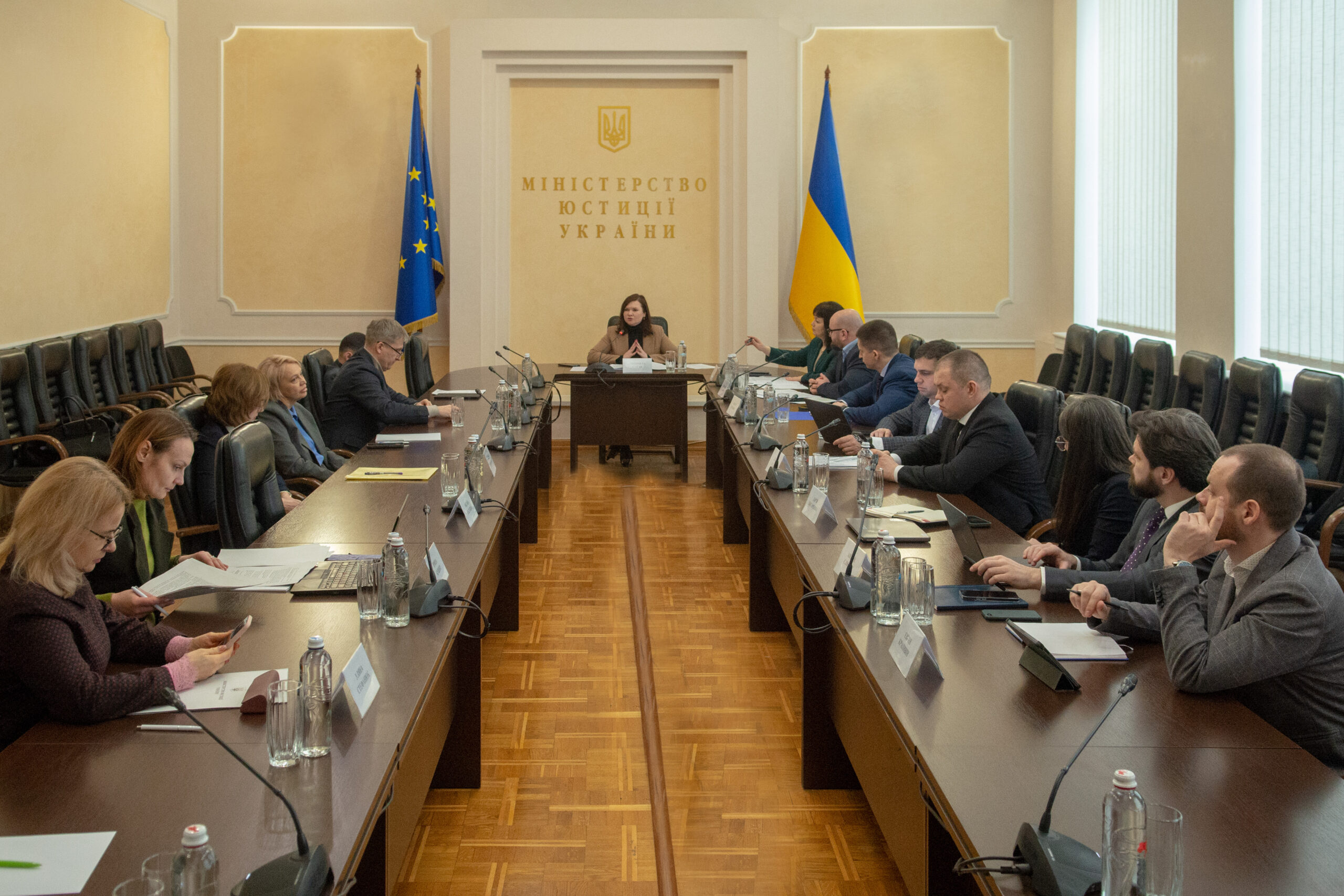
The implementation of measures under the Rule of Law Roadmap will contribute to Ukraine’s fulfilment of its European integration commitments. Accordingly, participants discussed relevant aspects of reforming the legal profession. This concerns:
- reforming the bodies of Bar self-governance, including the introduction of clear and transparent selection procedures for their formation, as well as improving the efficiency and transparency of their financial management;
- improving access to the Bar by ensuring the impartiality and objectivity of admission procedures;
- establishing a transparent and effective system of disciplinary liability for advocates;
- ensuring effective and accessible continuing professional development for advocates.
The working group format will enable the development of substantive recommendations for the implementation of these measures. In this context, one of the key issues discussed was updating its composition to ensure balanced representation of the Verkhovna Rada, the National Bar Association of Ukraine, state authorities and civil society.
The first meeting of the Working Group was attended by Deputy Prime Minister for European and Euro-Atlantic Integration of Ukraine, Taras Kachka; Acting Minister of Justice of Ukraine and Deputy Minister of Justice for European Integration, Liudmyla Suhak; Chair of the Verkhovna Rada Committee on Legal Policy, Denys Maslov; as well as representatives of the Office of the President of Ukraine, the Cabinet of Ministers of Ukraine, Members of Parliament and representatives of academia, the legal profession, civil society and international partners.