
Conference photo gallery can be accessed on the USPS Facebook page. Photographer – Oleksandr Kovalenko.
Conference “The Rise of “Left” and “Right” Forces: the Collapse of Democracy?”
On December 20, 2016, the Opera Hotel (Kyiv, 53, Bohdan Khmelnytsky Str.) hosted the conference “Rise of the ‘Left’ and ‘Right’ Forces: Curtailment of Democracy?”. During the event, directors and graduates of the Schools of Political Studies from Azerbaijan, Belarus, Bulgaria, Armenia, Georgia, Moldova and Ukraine, representatives of civil society and international organizations discussed the results of recent elections in Western Europe and the Eastern Partnership countries.
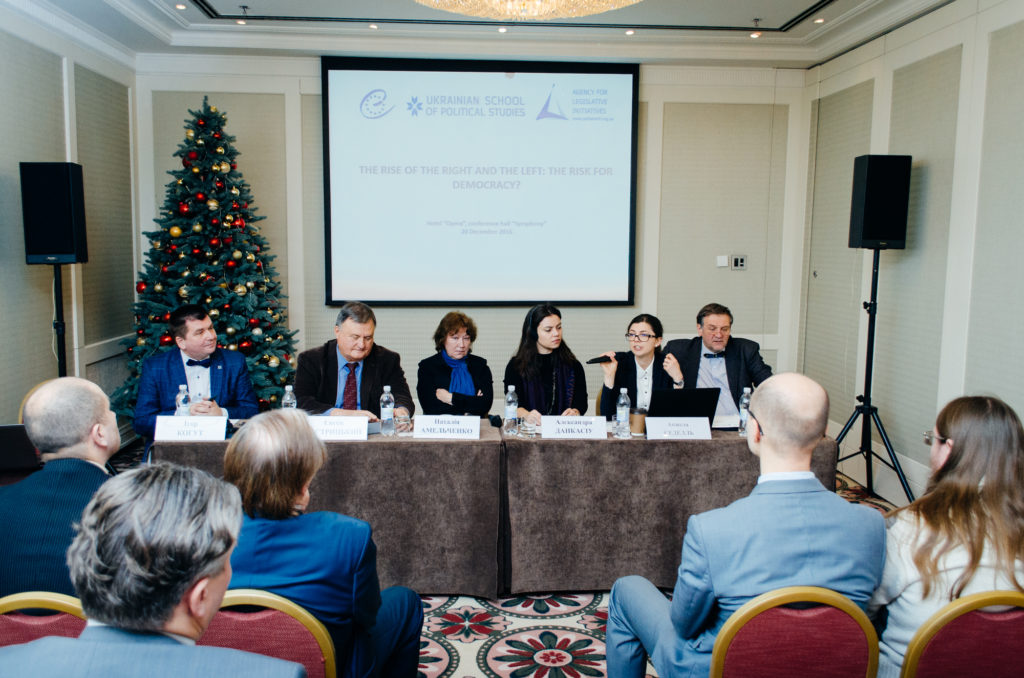
The conference was organized with the support of the Division of Electoral Assistance and Census of the Directorate General II – Democracy of the Council of Europe. It was aimed at improving the quality of democracy via the dialogue between the Eastern Partnership countries and at discussing the processes that contribute to the decline of democracy.

The panel discussion of the conference “Rise of the ‘Left’ and ‘Right’ Forces: Curtailment of Democracy?” was dedicated to global trends in consolidated democracies. It invited guests and participants to reflect on the crisis of ideologies and parties, causes of the rise of the “right” and “viability” of right-wing ideologies among Ukrainian voters. The conference was opened by the Honorary Director of the Ukrainian School of Political Studies Ihor Kohut, who urged the participants to reflect on the challenges facing Ukraine, EU and Eastern Partnership countries after the elections in Moldova and Bulgaria and the risks that the upcoming election in France might be fraught with.

Yevhen BYSTRYTSKY, PhD, Head of the Department of Philosophy of Culture, Ethics and Aesthetics of the Institute of Philosophy of the NAS of Ukraine, who started the first panel, voiced the opinion that there are representatives of leftist ideas in Ukraine, but at the moment they are not an organized political force. They insist that there is no freedom of speech in Ukraine. In addition, such representatives argue that there is no space in the media where one could express their thoughts. He also noted: “There are certain things that have contributed to the revival of the neoconservative wave. I’m talking about the elections in Hungary and Poland, where nationally-driven right forces have consolidated, and the election of Trump. In fact, the conservative wave has captured voters in America”. He added that one of the factors contributing to this was the conflict of worldview and ideological interests. “In Europe, it is a response to the dangers that have arisen: refugees, Russia’s pressure, and the imposition of sanctions. It is also important to mention the wave of resistance to financial and industrial globalization. For instance, at the beginning of the XXI century the European world is full of local conflicts that are cruel and devoid of respect for human rights. They involve confrontation aimed at destruction of another culture”.

Natalia AMELCHENKO, PhD, associate professor, lecturer of the Department of Political Science, National University of Kyiv-Mohyla Academy, started her speech by pointing out to problems with identifying the ideologies of political parties, particularly in Ukraine, because we use old terms and try to impose them onto new phenomena. She argued, “Today, classical ideologies are in crisis. The neoconservative wave has existed before and exits now. Today the challenge is to survive it.” The speaker went on to say that few of voters, in fact, read the statutes of the parties. The statutes are read only by students who are studying these issues. They exist only for the purpose of registration and contain no clear ideology. The program of the political party Batkivshchyna (Fatherland) contains the notion of subsidiarity, but the media and talk shows are not aimed at explaining significant problems to the public, rather they exist to create an image of the politician”.
Oleksiy HARAN, Research Director of the Ilko Kucheriv Democratic Initiatives Foundation, pointed out that in the world there was a global tendency of populism, including left-wing populism. In Ukraine, the niche of the Left is vacant and there is a need for a normal left-wing Ukrainian party. “We live in the period after the collapse of the USSR and the end of the Cold War. What we now see as the total slippage of democracy has already happened in history. Europe and its capitalism have manifested great adaptability. The PACE, which adopted our position in the European Parliament, gave an example how to establish relations with socialists. Yes, there is a crisis, but we should not underestimate the potential of Europe, which we can also develop here,” Mr. Haran said.
Angela SEDELL, Senior Researcher at Oxford University, reminded that on June 24, 2016, Britain announced its withdrawal from the EU based on the results of the referendum. “Britain was divided into 2 camps – those who campaigned for and against Brexit. Proponents of remaining in the EU appealed to expert opinions and economic arguments. Everything suggested inflation, uncertainty in doing business, and a decline in economic growth. Their opponents said that if we left the EU, 350 million euros (EU contributions) would be transferred to the public health care. Surveys say that this message was decisive,” commented Ms. Sedell. She added that populist messages such as the restriction of migration to Britain had proved to be very effective. Consequences include the decline of the national currency and trust in the law, British Constitution and European treaties. According to Ms. Sedell, the referendum put the authority of judges and parliament in question. Another result is the mistrust of voters.
Alexandra DANCASIU, political analyst at Go-Governance (Austria), began her speech as follows: “We see many politicians talk about fear, hatred, threats, appealing to emotions rather than objective facts. We heard Trump emotional speeches during his campaign and things he appeals to now during his winner tour. Now he tells his voters things that run contrary to what he promised.” According to Alexandra, today many people can vote, but we do not have real political debates and not all voters can join them, as it used to be before. True debates do not take place because many people do not even vote. Are those who vote well-informed? Is it legitimate for them to elect politicians? Is this still the choice of the majority? Alexandra emphasized that democracy tries to gather all points of view and work out a long-term strategy. Only before elections politicians think what they should do to remain in position.
“Democracy still guarantees equality, the right for everyone to express their opinion, freedom, human rights. But if we do not make an effort to find ways to reach out to the people who are not involved in the political debate, we will lose them and populists will be able to come to power”
“It’s very difficult to understand what people want, but they are not happy. So they are protesting, and populists take advantage of it. Today’s politicians need to think in a contemporary way, using technologies (Facebook, Instagram), generating a political dialogue, and engaging the public in the discussion”


Panel II was dedicated to the “rollback” of democracy based on the results of elections in the Eastern Partnership countries and close neighbors of Ukraine. The moderator of the session, Alexander Dabravolski, urged the speakers to share their views on the popularity of “left” ideas as a result of the Soviet legacy or demand for a fair social distribution.

Olga MANOLE, coordinator of the Human Rights Program, coordinator of civic and electoral education of Promo-LEX Association (Moldova), as a member of an organization that monitors elections in Moldova, began her speech by saying that the last presidential election in Moldova in November 2016 differed from all previous elections as soon as politicians relied heavily on false and populist arguments broadcasted through the media. Candidates appealed to traditions used propaganda and backing of the church to receive support from voters. In this election they did not rely on administrative resources and bribes as heavily as before. In comparison with the parliamentary election of 2014, the electoral process in Moldova has improved a lot. Ironically, however, the methods which were used to achieve the improvement still involved an influence on voters. In this respect, the intervention of the church was especially aggressive. Olga said, “There is a probability of canceling the results of the presidential election because the gap between the candidates is very small.”
Yevhen RADCHENKO, Development Director of the NGO Internews-Ukraine, said that based on statistics there was a major shake-up among those elected to Parliament in Belarus, among old politicians in particular. It indicates a certain trend. He also suggested focusing on the situation in Armenia and the referendum of 2015, when Armenia became a parliamentary republic. “The parliamentary election of 2017 will take place on a proportional basis, and in 2018 the president will be elected in three rounds by the parliamentary assembly,” said Mr. Radchenko. He further argued that the referendum, which was held in Azerbaijan on September 26, made the power of Ilham Aliyev absolute and gave him the right to appoint the first vice president and two vice-presidents, who are essentially his economic advisers. According to Yevhen, these actions undermine the importance of Parliament. Mr. Radchenko concluded his presentation with the thesis that Europe and the Eastern countries were immersing in authoritarianism and the crisis of democracy.

Anastasia DARAFIEIEVA, Chairwoman of the Belarusian Green Party, alumnus of the East European School of Political Studies (Belarus) said that the results of this election campaign were new to Belarus. Two opposition candidates entered the parliament. “Europe is interested in maintaining stability in Belarus and taking steps to simulate democracy. This is an alarming signal that attests to the depreciation of European values,” said Ms. Darafyeyeva. Civil society is the only thing that can change the current political situation; the only way out for these representatives is to become actors and go to the level of decision-making. In Ukraine, the left-wing party niche is vacant, but there are people who could unite into such a party. “There is a lack of vision. What parties can do is to give a vision. In the situation with the EU, we are witnessing a crisis of values and vision in part because it has been implemented. Similarly, in the post-Soviet countries, there is a demand for an ideology. This should be a vision of the future based on the processes of the present.”
Hennadii MAKSAK, Chairman of the Board, Head of the Foreign Policy Council “Ukrainian Prism”, USPS alumnus, started with the fact that the Eastern Partnership countries had 2 systems: corrupt and authoritarian-oligarchic. “In Belarus, there are appointments rather than elections, there is no decent control over local elections, and OSCE commissions keep telling about that. In Moldova, there was a vote, socialists won, but sometimes they used pro-Russian methods again. In Armenia, before the parliamentary election it was clear which 2 parties would be in power. Under such conditions, the president said he would rather be the head of a party than president”, he added. According to Mr. Maksak, it would be better to without disguise about the lack of democracy or substitution of concepts. In Armenia, there is a platform for public initiatives they want to close. Unfortunately, in Azerbaijan civil society activists are behind bars.

Panel III actualized the concept of gender in politics as an indicator of democratization and the role of women in the democratic process.
Olha VESNIANKA, human rights activist, journalist, USPS alumnus, said that it was very difficult to talk about gender equality and its legal implementation in European countries. There is a large number of human rights organizations operating in the field of discrimination in Ukraine. Talking about Ukraine, we need to remember the sexist statements of former President Yanukovich and Prime Minister Azarov, whose Cabinet was known as the “Cabinet without women”. Instead of ratifying the Istanbul Convention, the Verkhovna Rada of Ukraine initiated meaningless discussions on the topic of “What is gender?” The Verkhovna Rada of Ukraine believes that it is not important to talk about a camp for those who suffer from violence. Ukraine’s goal was to reach the indicator of 30% of women in politics, but at the moment the percentage of women in the Verkhovna Rada of Ukraine is only 12%.
Olha AIVAZOVSKA, Chairwoman of the Board and Coordinator of Electoral and Political Programs at the Civil Network OPORA, representative of Ukraine in the political subgroup of the Trilateral Contact Group on Donbas, USPS alumnus, said that after the decentralization most of the money would stay in regions enabling women to take seats in local councils. Women in Parliament work more, preparing initiatives and providing feedback.
Parliament or any council should represent people, but this is impossible without gender and ethnic equality. In any negotiation, 25% must be women protecting the rights of women. Woman can work effectively also in military affairs. Pregnancy or gender are only pretexts for paternalistic attitudes. Talking about quotas, there are many different stances. Germans believe that “the quota principle creates quota women”. However, only the countries that have no problems can afford to say that. There are stupid women and men in Parliament. I do not agree that men are smarter than women. But it is certainly true that women do not have the same access to resources as men. If a party goes to politics to increase resources rather than champion voters’ interests, it is sure to be interested in players who have more resources, and usually these are not women. The question of the openness of political funding directly concerns the quality of staff and the gender issue. If the party receives money from citizens and the country, it will not be interested in whether a candidate has a million or not. Many parties take into account the issue of gender. I’m not a fan of the topic of womankind, but I’m a fan of the issue of quality of people. In fact, this is the same as with people with disabilities – if we do not see them on the streets, it does not mean that they do not exist.
Valentina POLIEVIKOVA, Manager of the East European School of Political Studies, founder and Chairwoman of the Belarusian Women’s Party Nadzieja (1994-2002), stated that a lot of stereotypes and patriarchal attitudes still persist in Belarus. Women need help not only in fighting discrimination but also in engaging in the decision-making process. Belarus has only 2 female mayors. Some people do not believe in the effectiveness of gender quotas; unfortunately, we do not have even this in Belarus. However, having studied the experience of the implementation of territorial quotas, we can see that the more women work, the more they vote for women because they understand their problems.

Participants of Discussion platform IV debated on the role of media in the shaping and consumption of populist messages in Western Europe, Eastern Partnership countries, and Ukraine.
The platform was moderated by Vitaly Portnikov, observer of the Radio Liberty, who stressed that the real danger wasn’t Trump’s words but rather his failure to act on them. Therefore, in the next election greater promises and populism will prevail. This is a question of the direction of movement – to new responsibility or to a triumph of irresponsibility.
Serhiy HAIDAI, Strategic Planning Director at the social engineering agency Haidai.Com, believes that we live in a new world and don’t have to struggle with it. The only thing we need to do is to improve the culture of information consumption. Why have we begun to separate form and content? If you are not a populist, you should create a new influential form. I would rather stop pushing the panic button and get down to developing new technologies.

Andriy ANDRUSHKIV, Coordinator of the project “Reform of Public Finance Control Use” at the NGO Center UA, USPS alumnus, spoke about the PR strategies of NGOs whose messages always appealed to emotions. He noted that in order to avoid this, we should improve the level of media culture among citizens.
Ivan HODARSKI, media and legal issues consultant at MEMO 98 (Slovakia), pointed out that fake news did not emerge yesterday. The main reason for their appearance is a lack of critical thinking, which is the main skill to counteract propaganda.
Vitaliy MOROZ, Head of the New Media Department at Internews-Ukraine, stressed that journalism today is not as exclusive as it used to be several years ago. This has both advantages and disadvantages. The former include the fact that journalists can use many new media.
Andriy PROKOPENKO, Managing Partner at Prokopenko and Partners, political Management, USPS alumnus, summed up all the speeches and emphasized the importance of promoting a higher level of media culture not only among journalists but also among the public.

Gender-Based Training on Women-Owned Business
On December 7, 2016, a business on specifics and benefits of doing business by women was held at the office of the USAID RADA Program: Responsible Accountable Democratic Assembly (7a, Shovkovychna Str., Kyiv).
The training was organized with the support of the Embassy of the State of Israel and the IFU Equal Opportunities.
At the training, the following issues were raised:
- personality and psychological characteristics of the business initiator;
- gender traits in doing business and business benefits for women;
- development and expansion of business;
- examples of successful business initiatives (Israeli experience of supporting business ladies).

The training was conducted by experienced Israeli business coaches, Yan Zusman and Yacov Gorokhovsky.
Yan Zusman is a psychologist of the highest category in the field of social, organizational and occupational psychology. He is leading psychologist at the Center for Testing and Employment (Haifa, Israel), specialist in group and individual career counseling and career advancement. As a business trainer, he conducts seminars and lectures in the field of business initiatives and organization development. Yan Zusman collaborates with various public and private organizations as an independent expert and lecturer.

Yacov Gorokhovsky has been the owner of Segment Y.G. Business Development Ltd since 1990. The company provides services in the field of financial and business consulting, marketing, and strategy management as well as conducting business seminars and courses in cooperation with the Ministry of Foreign Affairs of Israel, the Ministry of Immigrant Absorption of Israel, the Ministry of Industry and Trade of Israel, private individuals, and organizations.

“As testified by the experience of developed countries, women’s access to decision-making process and occupation of key positions in business can improve the economic performance. Unfortunately, we have long-lasting stereotypes not only in men’s heads, but also in women’s. Women work a lot but mostly in the lower and middle-level positions or in the public sector, without actually having access to real decision-making and any influence. Thanks to such projects, I hope we will be able give a boost and inspiration to such women”

More about the Embassy of Israel in Ukraine http://embassies.gov.il/kiev/Pages/default.aspx
More about MASHAV http://embassies.gov.il/kiev/mashav/Pages/mashav.aspx
More about IFU Equal Opportunities http://bit.ly/2fSHiez
The 6th International Academic Conference “Parliamentary Readings”
On November 18-19, 2016, the Sixth International Conference “Parliamentary Readings” took place at the House of Official Receptions (Kyiv, 22, Hrushevskoho Str.).
The Conference was organized by the Agency for Legislative Initiatives in partnership with the Faculty of Legal Sciences, Faculty of Social Sciences and Social Technologies of the National University of “Kyiv-Mohyla Academy” and the Department of Parliamentarism and Political Management of the National Academy of Public Administration under the President of Ukraine.

Welcome speeches were delivered by Ihor Kohut, Director of the USAID RADA Program, Oleksandr Zaslavskyi, Deputy Chairman of the Agency for Legislative Initiatives, Denys Azarov, Dean of the Faculty of Law of the National University of “Kyiv-Mohyla Academy”, Vasyl Kuibida, President of the National Academy of Public Management under the President of Ukraine.


Serhiy Holovatyi, founder and President of the Ukrainian Legal Foundation, Minister of Justice of Ukraine (1995-1997, 2005-2006), made a presentation entitled “20 Years of the Constitution: Assessment and Retrospective”.


On November 18, thematic sections covered the following issues:
• Parliamentary Reforms (Parliament at the Crossroads)
• Parliamentary Ethics: The Path toward Legitimation
The first section was moderated by Oleksandr Zaslavskyi, Deputy Chairman of the Agency for Legislative Initiatives, while its keynote speaker was Denys Yakovlev, Professor, Dean of the Faculty of Political Science and Sociology, National University “Odessa Law Academy”.


The section devoted to parliamentary ethics was moderated by Svitlana Matviienko, Chairwoman of the Agency for Legislative Initiatives; keynote speakers were Ihor Kohut, Director of the USAID RADA Program and Yuliia Tyshchenko, Head of Civil Society Development Programs at the Ukrainian Center for Independent Political Research.
On November 19, speakers focused on the prospects of development of Ukrainian parliamentarism and parliamentary activity in the context of the enforcement of democratic principles.


Sections were moderated by Olena Ivashchenko, Doctor of Law, Institute of International Relations of Taras Shevchenko National Universiy of Kyiv, and Oksana Shcherbaniuk, Chair of Department, Doctor of Law, Associate Professor of Yurii Fedkovych Chernivtsi National University.


Vsevolod Rechytskyi, PhD, Associate Professor of the Yaroslav Mudryi National Law Academy of Ukraine, discussed the topic “Can Ukraine Have an Official Constitutional Doctrine?”.


Parliamentary Readings 2016 came to a close by announcing the winners of the essay contest dedicated to the memory of Professor of Political Science Yuriy Shveda.
The conference is part of the project implemented by the Agency for Legislative Initiatives with the support of USAID RADA Program: Responsible, Accountable, Democratic Assembly. The RADA program, implemented by the East Europe Foundation, promotes the formation of a responsible, accountable and democratic representative body.
Presentation of the Shadow Report at the VRU Subcommittee
On November 16, 2016, at 9:00, the Subcommittee on Energy Saving and Energy Efficiency of the Committee on Fuel and Energy Complex, Nuclear Policy and Nuclear Safety held a meeting where experts of the Agency for Legislative Initiatives presented a preliminary version of the shadow report on the fulfillment of the Activity Plan for the Implementation of the National Energy Efficiency Action Plan for 2020. The full version of the report will be released in early 2017.

We express our gratitude to MP Oleksiy Ryabchyn for his assistance in organizing the event.
New standards for energy efficiency and building insulation are impossible without the revision of building standards based on international norms and standards. At present, different State Standards (DSTU) contain regulations with identical names and different requirements, which results in diverse interpretations.
Shadow reports are an innovation for Ukraine. It is designed for the public sector to communicate information and policy alternatives to parliament and other institutions.
The presentation of Shadow Reports to committees of the Verkhovna Rada of Ukraine is part of the project carried out by the Agency for Legislative Initiatives within the USAID RADA Program: Responsible Accountable Democratic Assembly, implemented by the East Europe Foundation.
Training on Interparty Dialogue Skills for Representatives of Non-Governmental Organizations
On November 15, the Agency for Legislative Initiatives jointly with the Netherlands Institute for Multiparty Democracy, the OSCE ODIHR, and the USAID RADA Program held a training on interparty dialogue skills for NGOs in PinchukArtCentre (Kyiv, Velyka Vasylkivska/Baseina str., 1/3-2).

Jerome Scheltens, trainer, the Netherlands Institute for Multiparty Democracy, explained the intricacies of meaning and distinctions between “agreement” and “consensus”:
“It is necessary to use “active listening” skills to correctly present your own interests and understand the interests of the other party at a deeper level before starting the dialogue. Otherwise, agreements will be reached too soon before turning into consensus”

Uliana Poltavets, Program Director of the Agency for Legislative Initiatives and coordinator of the project “Support for the Democratic Political Culture in the Verkhovna Rada via Political Dialogue and Ethical Standards”, said the following:
“Agreement on any professional and ethical standards that may be embodied in a Code of Parliamentary Conduct should “belong” to MPs themselves and representatives of political parties. If we want to achieve a steady improvement in the quality of the work of the Verkhovna Rada, its entities should be directly involved in the process”

The project implies creating a dialogue platform for discussion of ethical dilemmas, which will provide for an inclusive process of the elaboration of a Code of Conduct for the Parliament or another mechanism to regulate parliamentary ethics, the approximation to international standards in accordance with the recommendations of the mission of the European Parliament, and the restoration of confidence in the Verkhovna Rada.

During the training, Jerome Scheltens expanded on main principles of interparty dialogue, methods of determining positions, interests, needs, and other important issues.
The activity takes place in the framework of the project of the Agency for Legislative Initiatives “Support for Democratic Political Culture in Parliament through Political Dialogue and Ethical Standards” implemented with the support of MATRA Program (Netherlands Embassy) and in partnership with the OSCE ODIHR Project “Strengthening Dialogue Among Civil Society and With Key Government Stakeholders in Ukraine on Human Dimension Issues”, the Netherlands Institute for Multiparty Democracy and USAID RADA Program: Responsible Accountable Democratic Assembly.
Training on Social Media Strategies for Political Parties
On November 2-3, the Radisson Blu Hotel in Kyiv hosted a training for representatives of Ukrainian and Georgian political parties, organized by the Netherlands Institute for Multiparty Democracy (NIMD) in partnership with the Agency for Legislative Initiatives.
The event was aimed at transferring innovative practices for conducting political campaigns using new media and social networks. Representatives of the parliamentary and extra-parliamentary parties of the two countries received hands-on experience in applying various tools to create a strategy and a content-calendar of an online campaign.

Levan Tsutskiridze, Executive Director, NIMD regional office in Eastern Europe, draw attention to the excellent opportunities for the networking of Ukrainian and Georgian MPs:
“The Institute’s activities are aimed at increasing the capacity of parties through technical assistance”
Yurriaan Regouin, Program Manager, NIMD Central Office, emphasized the principles of the Institute, i.e. those of multiparty approach, inclusiveness, diversity, taking into account local context and a long-term strategy
“We operate on three levels of assistance: the development of inter-party dialogue and assistance to active politicians, as is the case today”

Uliana Poltavets, Program Director of the Ukrainian School of Political Studies, Agency for Legislative Initiatives, congratulated the NIMD on the occasion of the office opening in Ukraine.
“Strengthening parties’ capacity will definitely contribute to improving the quality of Ukrainian political life. The lack of trust in Ukrainian political parties can be gradually overcome through inter-party and broad-based public dialogue. The participation of non-parliamentary parties also contributes to the inclusiveness of the process and overcoming of distrust”

During the event, trainers from the Dutch consulting company BKB introduced the participants to the fundamental principles of conducting political campaigns. They spoke about the global trends in new media and presented successful cases of using Twitter, Facebook, Instagram, Snapchat, and YouTube by European and American policy makers.


Dialogues on Civic Education and the Concept of the New School in Poltava
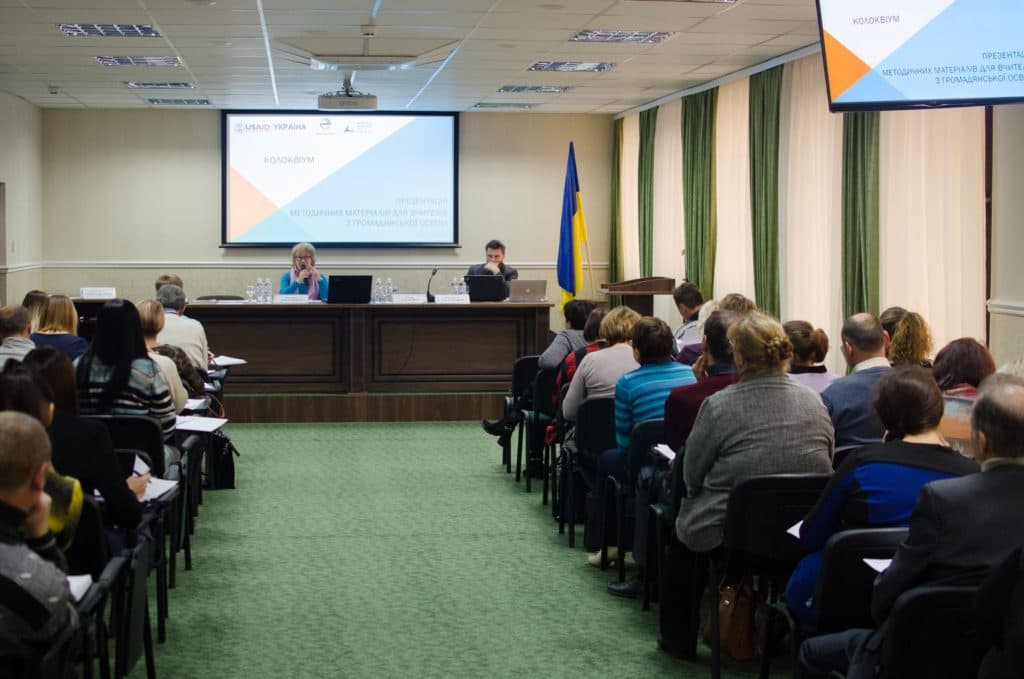
On October 27, 2016, Poltava hosted the Colloquium Presentation of Teaching Materials on Social Studies.
The event included the presentation of methodological guidelines for secondary school teachers of senior forms concerning the introduction of civic education in school curricula and testing of the role-playing game “AGORA: Democratic Procedure of Law Adoption in the Parliament of Ukraine”, which simulates the legislative process in Ukraine.
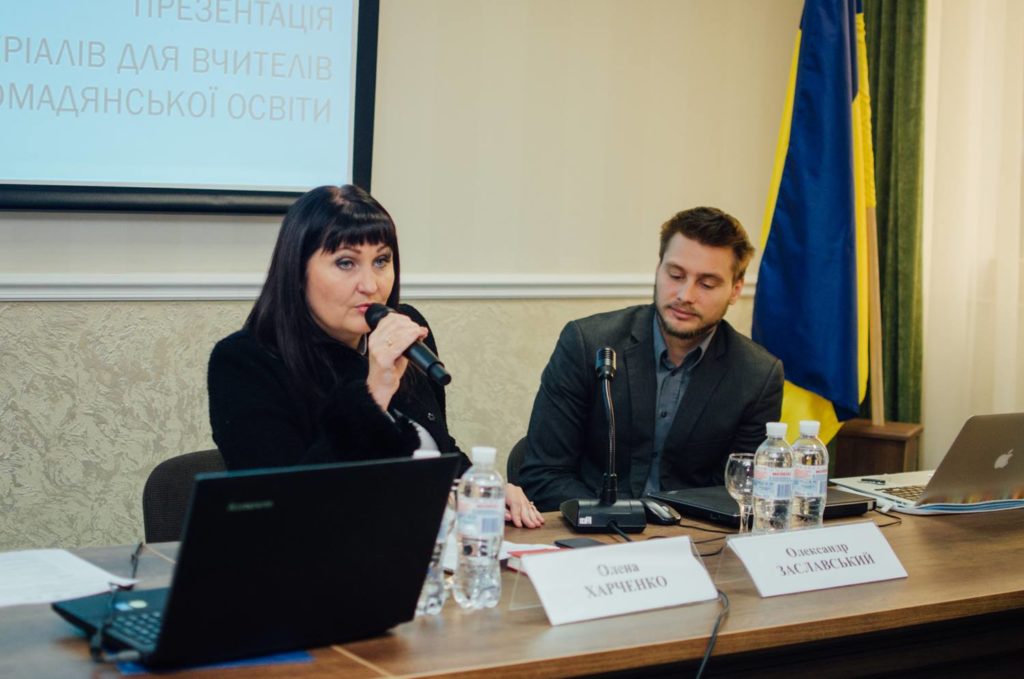
The opening speech was delivered by Olena Kharchenko, Director of the Department of Education and Science of the Poltava Oblast State Administration. Ms. Kharchenko observed that it was extremely important to update the curriculum that provide students with knowledge about the place of the citizen in society, the role of citizens in state governance, and the fundamental rights and duties of a person and of a citizen. She said the following:
“We, educators, cannot fail to notice to what extent today’s curricula are out of touch with reality, and teachers’ efforts are inefficient when it comes to the civic consciousness of students. Therefore, we are pleased to support the initiative for introducing a mandatory course or courses of civic education based on new approaches and methods of teaching. Undoubtedly, a role-playing game that will give students an idea of the real work of legislature should contribute to improving the quality of teaching, and will increase students’ interest, their performance, and, consequently, their level of internalization of the information. We will be glad to continue our cooperation with the Agency for Legislative Initiatives in this sphere”
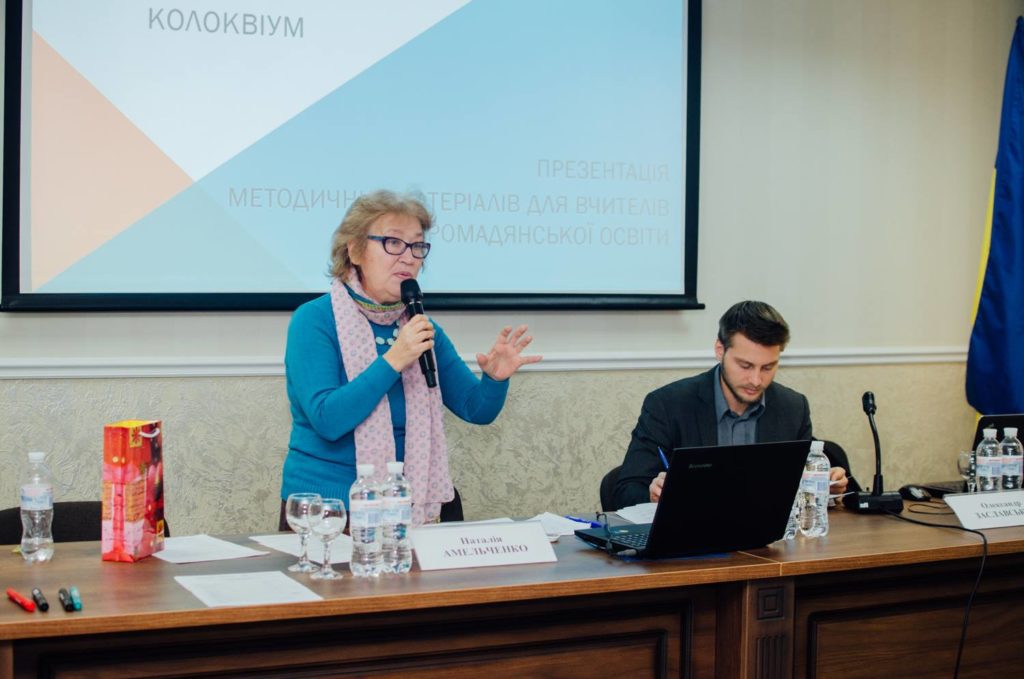
Natalia Amelchenko, PhD, professor of political science (NaUKMA), explains the essence of the Agora game that simulates the legislative process in the Verkhovna Rada.
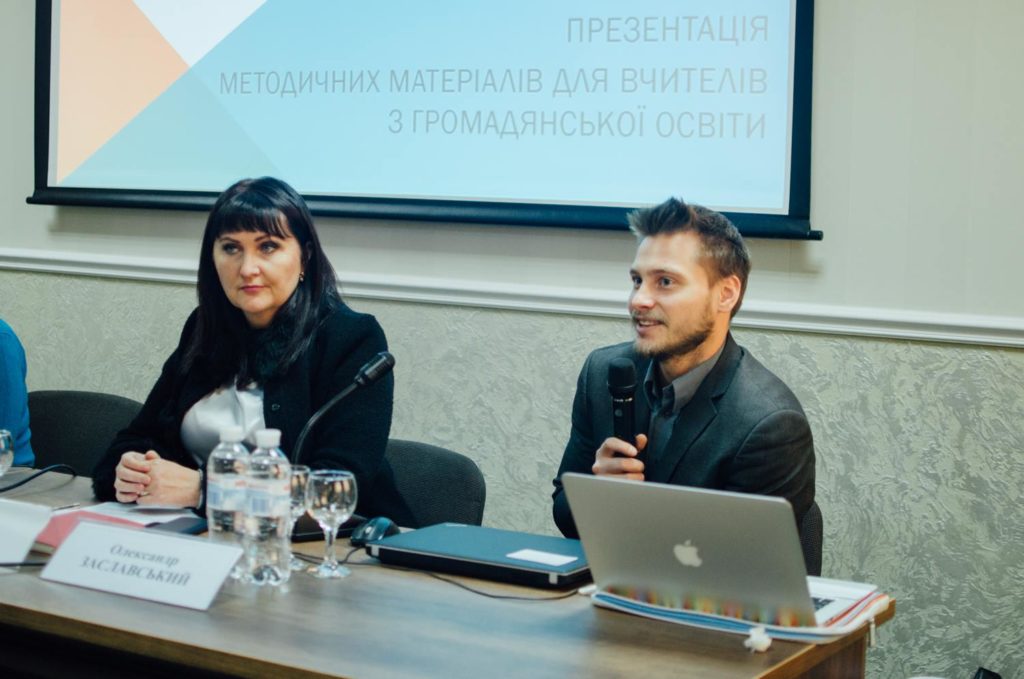
Oleksandr Zaslavskyi, Deputy Chairman of the Agency for Legislative Initiatives, emphasized that the introduction of civic education in schools would neutralize unreasonably high expectations of the Parliament and will raise the political culture in general. He argues that ever since the early 2000s the improvement of the functioning of the Verkhovna Rada – which the Agency for Legislative Initiatives has been working upon – had been problematic in view of the problems that lied outside the Parliament and distorted the legislative adoption process:
“Manifestations of the so-called “lack of political culture” include imperfect legislative procedures, non-compliance with these procedures as such, and lack of transparency in the work of committees and individual MPs. Nevertheless, it is precisely the domain of distorted public perceptions about the work of Parliament, corrupt practices of interaction between voters and MPs, and, consequently, unreasonable expectations that give rise to the problems of the Ukrainian Parliament, which experts can see with the naked eye”
The project is aimed at strengthening the political culture, making basic information and skills of “citizenship” available to the widest possible range of people, consolidating new practices of interaction between citizens and institutions of governance. It is only under such conditions one can expect qualitative changes in the activity of authorities themselves. Changes in the political culture should begin with the secondary school when the basic ideas of future citizens emerge.
Guidelines for the Colloquium are prepared by Agency of Legislative Initiatives with the support of USAID RADA Program: Responsible Accountable Democratic Assembly, implemented by East Europe Foundation.
Consultative Meeting with NGO Representatives in the framework of “II Dialogues on Parliamentary Ethics”
On October 21, at 10:30 am, in the office of USAID RADA Program: Responsible Accountable Democratic Assembly, the Agency for Legislative Initiatives held a consultative meeting within the framework of “II Dialogues on Parliamentary Ethics”, with the support of the OSCE Office for Democratic Institutions and Human Rights (ODIHR), Netherlands Institute for Multiparty Democracy and Embassy of the Netherlands in Ukraine. The meeting was broadcasted online via YouTube.
Invited experts, Margit Sutrop, Professor of Practical Philosophy, Marten Yuurik, Center for Ethics, University of Tartu, and Dirk Toornstra, Independent Governance Advisor, held a training game with representatives of NGOs involving the analysis of complex ethical cases, which will be further presented to MPs.

Ihor Kohut, Director of the USAID RADA Program: Responsible Accountable Democratic Assembly, said that parliamentary ethics was one of the cornerstones of the program in cooperation with the OSCE ODIHR. Meetings at the level of NGO experts help to “test” the game, based on cases with complex ethical challenges. He said the following:
“Our goal includes inclusiveness, MPs’ involvement in discussing ethical standards, and engagement of civil society in the dialogue. We will be glad to see the “Code of Conduct” emerge as a result of our activity, but the decision is up to MPs. We urge everyone to contribute to persistent work”

Kateryna Ryabiko, project coordinator of the OSCE ODIHR, elaborated on the extension of the pilot project:
“We are looking for a new format for involving deputies and implementing the reform. We are continuing “dialogues” in the Verkhovna Rada. The first meeting was devoted to finding consensus on the Code of Conduct or amendments to existing regulations. Today, there are debates about principles that may be stipulated in the code of conduct. A similar game (case study) in the Estonian parliament resulted in adoption of a code of conduct.”

Margit Sutrop, Professor of Practical Philosophy, Head of the Center for Ethics, University of Tartu, noted that a code of conduct was necessary if we should take the European Parliament as an example:
“There were many ‘heated debates’ in Estonia, and the process of adopting the code was not very easy. Why is it needed to codify things that seem to be understandable to adults anyway? We are ready to share experience and explain why it is so important to enshrine certain rules in a code and present it to people. In Estonia, even the Speaker of the Parliament was not convinced that the written code would help change the situation”

MPs need to agree on the Code so that people could understand why must be followed, rather than just to ‘show off’ how ethical they are.
Implementation of the National Energy Efficiency Action Plan 2020 (Shadow Report)
The energy issue has already received the status of a «bottleneck» for the economic and social development of the country. This is reflected, inter alia, in rising energy prices. The continued irrational use of energy becomes even more evident against a background of increasing environmental damage. Therefore, people and businesses, as well as society at large, should have an interest in energy efficiency and the efficient use of natural resources.
Each Government of independent Ukraine has identified as one of the main priorities in its activities the need to solve the problems of increasing energy efficiency in the housing and communal sector. In their programs of action, they have identified ways of addressing these problems, devised relevant State programs, and defined a range of measures that have facilitated their implementation.
It is a tradition in our country that all problems of the State are solved primarily at the expense of the population, and the reforms that are carried out quite often become an unbearable burden for Ukrainians. This trend is particularly evident in the reform of the housing and communal sector.
The preparation and presentation of analytical reports in the Shadow Report format is part of the project embodied by the Agency for Legislative Initiatives, supported by the USAID Rada Program: Responsible Accountable Democratic Assembly, implemented by the East Europe Foundation.
Experience of a Local Referendum in Ukraine as a Component of Local Democracy (Shadow Report)
As is known, Article 38 of the Constitution of Ukraine guarantees the right of citizens to “participate in national and local referendums”, however with the loss of force of the Law of Ukraine “On national and local referendums” 1991 and the entry into force of the Law of Ukraine “On national referendum” The legally established mechanism for the initiation and conduct of local referendums is disappearing in 2012. On the other hand, the current policy of the State’s regional policy is to decentralize and deregulate power and to empower citizens to address local issues, including through the initiation and holding of local referendums. In particular, within the framework of the implementation of the reform, the Law of Ukraine “On the Voluntary Association of Communities” was adopted, where a local referendum is a necessary component of this process. However, there is still a lack of a legislative framework to regulate the mechanism for local referendums. To date, four draft laws have been registered, which should regulate this mechanism: the draft Law of Ukraine “On the All-Ukrainian Referendum” № 2145a dated 23.06.2015, “On the local referendum” № 2145a-1 dated 03.07.2015, 2145a-2 dated 06.07.2015, 2145a-3 dated 08.07.2015).
The preparation and presentation of analytical reports in the Shadow Report format is part of the project embodied by the Agency for Legislative Initiatives, supported by the USAID Rada Program: Responsible Accountable Democratic Assembly, implemented by the East Europe Foundation.