
This study was conducted within the framework of the EU-funded project “Civil Society for Ukraine’s Post-War Recovery and EU Readiness”. The findings of this report are the exclusive responsibility of the NGO “Agency for Legislative Initiatives” and do not necessarily represent the position of the European Union.
Prosecutor General Wants to Dismiss All Prosecutors with Disabilities: Why This Won’t Help
Ruslan Kravchenko plans to appeal to the Qualification and Disciplinary Commission of Public Prosecutors (QDCPP) with a request to consider the dismissal of 348 prosecutors with disabilities. While the QDCP does have the authority to dismiss for disciplinary misconduct, there must be legal grounds for doing so. Finding one is difficult, since only a medical institution can confirm whether a disability status is unjustified. How can the problem of prosecutors with disabilities be solved? And why won’t simply firing them all help?
How Many Prosecutors Have Disabilities?
At the end of October 2024, a scandal erupted over “prosecutors’ disabilities”—nearly all prosecutors were accused of having disabilities (and receiving the corresponding benefits). Prosecutor General Andrii Kostin eventually resigned, calling it his personal “political responsibility.” Meanwhile, official data showed that only 5–7% of prosecutors received disability pensions, some of whom genuinely had Group II or III disabilities compatible with work conditions. As of now, that number has gone down to 484 individuals (some resigned voluntarily). Excluding prosecutors with childhood disabilities, combat veterans, etc., 348 individuals remain in question. This is 3.4% of the total prosecutor workforce.
What Happened After the Scandal?
The General Inspectorate of the Prosecutor General’s Office launched an internal investigation, which, as of March this year, has not been completed. The State Bureau of Investigation initiated criminal proceedings for document forgery (Art. 358 of the Criminal Code) and bribery (Art. 369 of the Criminal Code). Some officials were notified of suspicion, primarily for organising a criminal scheme in collusion with the Medical and Social Expert Commissions (MSEC).
At the same time, the disability issue largely falls under the jurisdiction of the Ministry of Health, which disbandedMSEC and began a review of disability decisions. All prosecutors were referred for reevaluation to specialised institutions. It is known that 74 prosecutors had their disability status revoked. The Prosecutor General’s Office consistently maintained that disciplinary action and dismissal could only be pursued based on such findings, which has not happened yet.
Meanwhile, Draft Law No. 12278 (authored by H. Tretiakova) is under consideration in the Verkhovna Rada of Ukraine. Its idea is simple: ban prosecutors from receiving pension payments while still working. This is a radical solution, as it “kills” the incentive for corruption. However, the idea is clearly unfair to prosecutors who have childhood disabilities or other conditions that do not interfere with their duties. Also, Ukraine will soon see the demobilisation of war veterans, some of whom are prosecutors or may work in the prosecutor’s office while having Group II or III disabilities. Passing this draft law would discriminate against such prosecutors, so it needs further refinement.
What Does the New Prosecutor General Propose?
Ruslan Kravchenko has proposed referring all prosecutors with disabilities to the QDCPP for a “review.” At first glance, such a sharp measure may seem appealing, but in reality, it poses more risks than potential benefits.
First, it is unclear what exactly the Qualification and Disciplinary Commission of Public Prosecutors is supposed to “review”. If it concerns the legality of obtaining a disability certificate from the Medical and Social Expert Commission, such an assessment is conducted by medical professionals based on documents and a physical examination. Should the QDCPP perform medical examinations instead of doctors? The question is rhetorical. If the QDCPP is only supposed to review secondary documentation, it is still unclear what conclusions it could possibly draw without medical expertise.
The previous mechanism addressed this issue: the Ministry of Health conducted assessments, either revoking or confirming disability status. Then, an internal investigation determined the unlawful way in which the disability was obtained. Finally, the General Inspectorate and State Bureau of Investigations (SBI) probed whether prosecutors committed corruption, forged documents, or exerted pressure on those authorised to make decisions on granting disability status. Prosecutors should be held accountable for these specific actions. Has the Ministry of Health found violations regarding these 358 prosecutors? This remains unknown.
This idea looks like an effort to shift responsibility for prosecutors with disabilities onto the Qualification and Disciplinary Commission of Prosecutors.
What Are the Pitfalls of the New Prosecutor General’s Idea?
The QDCPP now faces a dilemma: it can either directly refuse this proposal or agree to it. In the first case, it will face public backlash; in the second, it risks triggering lawsuits from wrongfully terminated prosecutors, leading to compensation payouts from the state budget.
The QDCPP can review secondary materials, such as medical records, prior investigation files, explanatory notes, etc., and then make a decision based on this review. But on what legal grounds? Article 43 of the Law “On the Prosecutor’s Office” provides an exhaustive list of such grounds. Perhaps an applicable one is “a one-off gross violation of prosecutorial ethics” (clause 6, part 1 of Article 43 of the Law), since it harmed the reputation of the prosecution service? However, without a medical conclusion confirming fraud, this lacks a legal basis. In this case, prosecutors would have every opportunity to successfully appeal the decision to the High Council of Justice and/or the court. The prosecution service would lose, and compensation from the state budget (after similar situations with certification of the police officers and prosecutors) can become a cruel joke.
There is an even more radical idea to dismiss prosecutors on the grounds of “integrity,” meaning recognising questionable disability claims as “actions that discredit the prosecutor and may raise doubts about their objectivity, impartiality, and independence and about the integrity and incorruptibility of prosecution offices” (clause 5, part 1 of Article 43 of the Law). This might sound good. But here’s the problem: this provision should have been removed from the law long ago, as GRECO Fourth Evaluation Round Report (2017) described it as “insufficient to ensure effective enforcement of the rules, to provide for legal certainty, and to prevent possible misuse of disciplinary proceedings.” It also recommended that specific disciplinary offences are defined more precisely. That is why the draft law submitted to the government in March this year finally implements these recommendations regarding disciplinary proceedings and excludes them from the Law. Applying this ground to more than 300 prosecutors without individualising their guilt is a losing strategy.
The statute of limitations for disciplinary proceedings is one year from the date of the offence. It means that even if wrongdoing is proven, proceedings would be closed, leaving the QDCPP to be blamed by the public.
So How Can Prosecutors be Held Accountable?
Despite the apparent nature of the issue, there is no simple fix—the solution must be comprehensive.
- It is crucial to complete the process of confirming disability status of prosecutors in specialised institutions. Delays persist, partly because some prosecutors evade re-examination, which is an act that could lead to disciplinary action. Additionally, the Prosecutor General should meet with the Ministry of Health to address the problem, potentially signing a Memorandum outlining steps toward its resolution. Meanwhile, the Ministry of Health should audit this drawn-out process.
- It is necessary to complete internal investigations by the General Inspectorate and criminal proceedings by the State Bureau of Investigations. These probes can determine how disability statuses were wrongfully obtained and hold those responsible accountable. The Inspectorate should then forward thoroughly reviewed materials to the QDCPP, while court rulings should leave no doubt about a prosecutor’s guilt.
- It is also necessary to address damage to the state budget. Recovering pension payments poses a legal hurdle: even if they are deemed unjustified, they cannot be reclaimed by the state (clause 1, part 1 of Article 1215 of the Civil Code). While this provision protects a broad circle of pensioners, it significantly softens the liability of individuals who systematically and unlawfully received funds for years. At a minimum, this should factor into offence classification, since there may be alternative means of financial liability.
- It is necessary to complete the reform of the disability assessment system. Similar schemes exist not only among prosecutors but also judges, civil servants, and individuals, enabling not just illicit payments but also evasion of military service and access to other privileges. For no apparent reason, dismantling the Medical and Social Expert Commissions required a decision of the National Security and Defence Council, yet the effectiveness of the current system of medical commissions remains questionable. We still lack public data on the results of this reform or even basic information about civil servants receiving disability-related payments.
- Finally, it is important to address unjust special pensions. Another pressing problem within the prosecutor’s service involves special pensions granted by the court based on outdated pension laws for prosecutors. Some prosecutors receive pensions as high as UAH 150,000 per month, with some recipients being under 40 years old. Outdated laws allowed such pensions after just 15 years of service, and court rulings (including by the Constitutional Court) still uphold such payouts today. This extends beyond prosecutors to judges and other officials, demanding legislative intervention.
Only systemic measures (which cannot be implemented by the Prosecutor General alone), requiring coordinated action by Parliament, the Prosecutor General’s Office, the Ministry of Health, and other responsible bodies, can resolve the “prosecutors’ disabilities” scandal and broader pension abuses. Hasty measures, like mass dismissals (though publicly popular in the short-run), could result in prosecutors being reinstated and compensated, ultimately causing even greater long-term damage and failing to bring us any closer to solving the problem.
Liquidation of CRGL: What Remains for the New Regulator
A new authorised body must be established to replace the Commission for Regulation of Gambling and Lotteries (CRGL)CRGL is a body established in 2020 to regulate activities in the field of organising and conducting gambling and lotteries, namely, the implementation of state policy and state market supervision in these areas. by 1 April 2025. It is expected to be more effective in areas of regulation such as strengthening control over financial flows, combating gambling addiction and restricting advertising.
However, there is a risk that the new regulator will not be able to eliminate the key shortcomings of the CRGL unless it carries out high-quality work on mistakes and takes other important steps, such as launching an online monitoring system, developing mechanisms for detecting violations in the gambling sector and establishing clear conditions for interaction with other responsible actors. The unclear legislation and not always orderly interaction with other structures and government agencies played a role in the liquidation of CRGL to a certain extent. Therefore, it is important to focus on each problematic aspect and approach the regulator’s reorganisation in a rather complex area with a better understanding of all processes.
Collegial principle
The Ministry of Digital Transformation initiated a draft law on the liquidation of CRGL back in May 2023. At that time, the Commission’s work was blocked for about three months due to the resignation of one of its members and a lack of quorumThe quorum is 5 members. The KRAIL works on a collegial basis; it can consist of 6 members, headed by the chairman. During the full-scale war, there were 5 of them, and the mobilisation of the chairman and resignations of the Commission members caused its blocking.. There have also been precedents of blocking individual meetings by members of the Commission. Although the draft law of the Ministry of Digital Transformation was not adopted, the new regulator will not work collegially. Some of the CRGL’s powers have already been transferred to the Ministry of Digital Transformation, while others will be transferred to the new regulator.
Control over financial flows
CRGL was unable to exercise full control over gambling finances due to the absence of the State Online Monitoring System (SOMS)SOMS is a software and hardware system for monitoring the activities of gambling organisers, compliance with licensing conditions, collecting and processing transaction data, as well as protecting information and ensuring the principle of responsible gambling.. Although the creation of the SOMS was a precondition for the legalisation of the gambling business, it would have allowed for real-time monitoring of gambling operators.
CRGL was responsible for all SOMS stages. The system was supposed to be commissioned no later than July 2022, but only in June 2023 did CRGL start developing the SOMS Procedure, and the Cabinet of Ministers approved it in February 2024. Although the state budget does not include an expenditure item, SOMS creation was included in the CRGL’s budget programme in 2021. The Commission announced a corresponding tender, but the bidding did not take place. In contrast to previous years, the State Budget for 2025 already includes the creation and implementation of the SOMS as a separate item of expenditure. CRGL must report on the use of these funds for the first time by 10 April. This will allow the system to assess its degree of readiness when it is transferred to the new Authorised Body.
However, even with the creation of the SOMS, the illegal gambling segment remains uncontrolled, and the CRGL did not have clearly defined mechanisms to detect it. When illegal games were detected, operators were not always punished: the CRGL did not have the authority to implement the imposed sanctions independently, and in case of non-compliance, the Commission could only send files to law enforcement agencies. However, in 2022, the CRGL sent the Economic Security Bureau (ESB) information about 1,698 illegal websites and 605 gambling offices, but the ESB opened only 34 criminal proceedings without making a decision on any of them.
The level of tax evasion schemes used by the gambling sector also depends on law enforcement agencies. During the time of the CRGL, miscodingMiscoding is the use of a different payment purpose code to pay taxes at different rates. and drops‘Drops’ are people who provide criminals with access to their bank details for a fee.
were popular. Miscoding caused Ukraine to lose UAH 2 billion in tax revenue per month, and drops were used to ensure transactions to illegal gambling websites. The new regulator will not be autonomous, so it will interact with law enforcement agencies like CRGL. Therefore, the new regulator’s ability to control finances will depend on:
- the availability of mechanisms for tracking illegal business;
- a defined procedure for interaction with law enforcement agencies;
- the degree of effectiveness of law enforcement.
Combating gambling addiction
The CRGL, the Ministry of Health, and the Ministry of Social Policy did not divide their powers regarding the prevention and combating of gambling addiction. In 2023, the Commission attempted to resolve this by developing a relevant draft law, but it was not submitted to the Verkhovna Rada. Therefore, the new regulator’s success in combating gambling addiction will depend on the clarity of its powers and the conditions under which it interacts with other responsible parties.
The new Authorised Body will not be more effective than the previous regulator if it continues to use CRGL tools to combat gambling addiction.
First, Ukrainians could complete an application for restriction, blocking access to all legal casinos and lotteries for themselves or their family membersRelatives of the first degree of kinship only.. This system was imperfect, as illegal casinos remained available. Unstable operations, manipulation of results, and non-guaranteed payouts could stress players. Thus, the registry will remain ineffective if there is an easily accessible illegal segment.
Second, the gambling business was obliged to adhere to the principles of responsible gambling, in particular, to warn about possible negative implications of gambling, not to incentivise with prizes or gifts, identify players, etc. In case of non-compliance with these principles, CRGL was supposed to impose sanctions, but the sector often went unpunished due to the lack of a systemic mechanism for identifying violators.
Third, CRGL used social advertising to spread messages about non-guaranteed payouts in illegal casinos, possible links between unlicensed gambling businesses and Russia, etc. However, social advertising was placed based on local initiatives, and its number was low compared to gambling advertising. On the other hand, an increase in social advertising will not have a dramatic impact without stricter control over the advertising of gambling services and brands.
Control over advertising
Control over gambling advertising was not envisaged when the Commission was established. It was only in October 2023 that the CRGL was vested with such powers. No structural unit responsible for the advertising segment was created within the CRGL. Mechanisms for monitoring gambling advertising and detecting violations were not developed, either. Therefore, a new regulator is being formed with the function of controlling such advertising.
The shortcomings of the legislation on gambling advertising were also eliminated. During the CRGL, the gambling business circumvented the restrictions by using paid journalism and advertising that speculated about volunteering and war. However, stricter rules for gambling advertising will be introduced effective 1 April 2025. For example, sponsorship, the use of military and patriotic topics, and participation in advertising of military personnel, volunteers and popular figures will be prohibited.
However, identifying violators remains a problem. Despite the fact that outdoor gambling advertising has been banned since 2020 when the above provisions were being developed, MPs received reports of potential “catastrophic consequences for the outdoor advertising industry.” This indicates the ineffectiveness of the previous restrictions, so it is necessary to develop procedures for informing the advertising industry, tracking gambling advertising and detecting offences.
Can we say that the liquidation of CRGL and the creation of a new Authorised Body guarantee the solution of key problems in the gambling sector? The new regulator needs to launch the SOMS and clear mechanisms to combat illegal business, which complicates the regulation of all the above issues. Law enforcement agencies’ work also has problems, and the new regulator should be interested in ensuring that the procedure for their interaction is defined in detail. Otherwise, all the problems accumulated by the previous Commission will become the baggage of the new body, and they will definitely not contribute to making the state policy in the field of gambling clear, consistent, and, most importantly, intended to overcome the shadow segment and challenges related to gambling addiction.
Amendments to the Constitution: New Rules Dictated by the Call of the Times
Today, the Constitution of Ukraine celebrates its 28th birthday. Though adopted quite late, as the result of a compromise, it was nevertheless a huge achievement for Ukrainian statehood as of 1996. At the same time, every Ukrainian President and every convocation of the Verkhovna Rada tried (and did so with varying degrees of success) to change the Ukrainian Constitution. The full-scale invasion of Russia (its social, demographic, economic, and political consequences) activated a broad discussion on the need to revise the social contract (these changes, by all means, shall somehow be reflected in the Constitution). Thus, the constitutional discussion continues during the hostilities, and after they end, it moves into the dimension of legislative work. In its research, the Agency for Legislative Initiatives often faced requests for constitutional changes. Therefore, to support constitutional discussions, we suggest making a retrospective journey into the history of the constitutional dimension of our research.
Social sphere: The Constitution guarantees, but is the state capable of ensuring?
The Constitution declares that Ukraine is a social state (Article 1). However, to what extent is this provision realistic? The key problem is that, despite such a declarative norm, the state has little money to implement this. This problem is so obvious that the Ministry of Social Policy of Ukraine officially recognises its existence.
In line with this, the search for a quick way to resolve it looks rather illusory since the Constitution establishes a mechanism that significantly restricts the possibilities of reforming the system of public services. In the context of veteran policy, these norms, together with decisions of the Constitutional Court, blocked the reforms. And this applies not only to veteran policy. A great part of the Constitution of Ukraine comprises such social norms. Another example is medical reform, the unconstitutionality of which the Constitutional Court of Ukraine (CCU) has been considering for several years. When it comes to social and demographic composition, Ukraine of the mid-2020s is very different from Ukraine of the mid-1990s. Under such conditions, social policy shall be flexible and adaptable, which is hard to achieve with current socially oriented prescriptions of the Constitution.
Parliamentary reform: how many issues still need constitutional regulation?
The Ukrainian Constitution features imbalances in terms of the status of the coalition and the opposition. Unlike the term “coalition of parliamentary factions,” the notion of a parliamentary opposition is not enshrined in the text of the Constitution. The opposition shall play an essential role in exercising parliamentary control and constitute an integral part of the parliamentary dialogue. Nevertheless, so far, there are three parliamentary committees headed by representatives of the parliamentary minority: 1) Youth and Sports, 2) European Integration, and 3) Freedom of Speech. These are the least influential committees within the parliament with the smallest scope of responsibility and, accordingly, the smallest workload. Certainly, this situation does not contribute to parliamentary control from the opposition.
During its work, the working group on parliamentary reform faced the need for amendments to the Constitution. Resolving this issue is one of the recommendations of the Road Map on internal reform and increasing the institutional capacity of the Verkhovna Rada of Ukraine (Recommendation 44). There are two possible ways to resolve this issue – either to add the norms on the parliamentary opposition to the Main Law or to remove the norms on the coalition from it.
Restrictions on Legislative Spam
Legislative spam is a well-known problem in the Ukrainian parliamentary system. It replaces high-quality law-making work with the adoption of hundreds of low-quality legislative acts, which need to be amended almost immediately after their adoption and do not have a real impact on resolving social problems. For example, during the recently completed 10th session of the current convocation, 80 draft laws were registered (+20%) more than during the previous similar session. One of the MP groups registered more draft laws than the total Cabinet of Ministers, and the MP’s draft laws were mostly registered by 1-3. All these are clear signs of legislative spam.
One of the priority approaches for overcoming legislative spam is the possibility of introducing a collective legislative initiative of MPs. This decision is often discussed in various working groups. However, implementing such a mechanism may require clarifying the norm of Article 93 of the Constitution.
The norm of this Article establishes that “the right of legislative initiative in the Verkhovna Rada of Ukraine shall belong […] to members of parliament of Ukraine”. That is, MPs as the subject of the legislative initiative are mentioned in the plural. Although previously, this did not prevent MPs from exercising this right individually. Therefore, in the event of any change in the practice regarding the minimum number of MPs who have the right to introduce draft laws, this constitutional norm shall be worded differently. Clarifying its content is to prevent possible contestation of the unconstitutionality of the new requirement to limit individual legislative initiatives.
Signing and promulgating draft laws not signed by the President
What to do if the President of Ukraine does not sign or veto the draft law adopted by the Verkhovna Rada of Ukraine? The problem that such an unsigned draft law was supposed to resolve has not been resolved, but the Verkhovna Rada had already done everything possible. The imperfect wording of Part 3 Article 94 of the Constitution creates specific problems in the legislative process. Thus, this part contains a provision that states, “If the President of Ukraine does not return the law for reconsideration within the prescribed period, the law shall be considered as approved by the President of Ukraine and shall be signed and officially published.” This wording prevents the establishment of a person authorised to sign and publish draft laws that the President has not signed within the 15-day period. During martial law, the President increasingly uses these aspects to avoid signing or untimely signing of draft laws. Thus, during the 10th session of the current convocation, 42% of draft laws were signed untimely or not at all. These indicators increased threefold during the period of martial law.
At the same time, part 4 of this Article does not contain such an imperfection. It clearly stipulates that when the veto is overcome, the relevant law shall be made public by the Chair of the Verkhovna Rada of Ukraine and published with their signature. Drawing a parallel with this provision and taking into account the fact that Article 94 is found in Chapter IV, “Verkhovna Rada of Ukraine,” it is quite logical to assume that the draft law not signed by the President should be signed by the Chair of the Verkhovna Rada. In reality, this logic does not work; if the President does not sign the draft law, then the Chair of the parliament does not take responsibility for signing such acts. Therefore, not to make assumptions, such provisions should be clearly recorded in the Constitution.
Parliamentary committees with the control function
Under Article 89 of the Constitution, “The Verkhovna Rada of Ukraine, for the purposes of law drafting, preparation, and preliminary consideration of issues falling within its powers, and to exercise the supervisory functions in compliance with the Constitution of Ukraine, shall form the Committees of the Verkhovna Rada of Ukraine from among MPs of Ukraine.” This approach established the “universal nature of parliamentary committees. That is, they are simultaneously engaged in legislative work and perform the control function. Problems started when trying to improve the work of the parliament. For example, to bring it to NATO standards, the Verkhovna Rada should create a control committee over law enforcement and intelligence bodies. Such norms have already been included in the legislation; however, in practice, the Committee was not created due to discussion on its unconstitutionality.
Another practical manifestation of this situation consists of limitations in introducing an effective sanction system against violators of ethical norms. Scandals about the unethical behaviour of MPs appear almost every month. The Verkhovna Rada is unable to properly respond to such behaviour because there is no mechanism for self-regulation of their behaviour. This leads to the negativity from a scandal involving one member extending to all MPs, reducing trust in the entire parliament. This problem can be solved by the Code of Ethics of Members of Parliament. Draft law No. 8327 on the Code of Ethics of Members of Parliament was registered in the parliament in late 2022. Experts from the Agency for Legislative Initiatives participated in its development. Among other things, this act proposes to create a committee, the subject matter of which is the issue of monitoring compliance with discipline and rules of parliamentary ethics. However, such an initiative also ran into a discourse on unconstitutionality, although it does not foresee the creation of a special control committee.
Summarising this text, we would like to emphasise that it is not about the Constitution’s shortcomings, the shortsightedness of its authors, or the reforms of recent years. This text concerns the importance of constitutional discourse and its mass nature/popularity for a democratic country. The wider this discourse is, and the more discussion platforms and participants are in this process, the more weight the Main Law itself will have and the more legitimacy will be vested in the state bodies, which is undoubtedly crucially important both for a young democracy and especially for a country at war. And the Constitution, as a certain framework of social relations, shall and will inevitably change along with social relations. The Constitution will most likely change after the end of martial law. This constitutional discussion should define exactly what will be changed, what the new social contract will be, and what form it will take. And the Constitution Day is a good opportunity to think about it.
The Agency for Legislative Initiatives Joins a Meeting with a Delegation of Swedish Parliamentarians
The Agency for Legislative Initiatives joined a meeting with a delegation of Swedish parliamentarians on 14 May 2024.
A delegation of the Swedish Parliament and Ambassador Extraordinary and Plenipotentiary of Sweden to Ukraine, Martin Åberg, met with representatives of Ukrainian civil society to discuss Ukraine’s progress in certain areas of reforms.
In particular, Swedish MPs noted the processes of implementing the parliamentary reform, in which the ALI is actively involved in the development, implementation, and regular monitoring.
We appreciate such feedback on important reforms, as the Embassy of Sweden in Ukraine is an institutional partner of the Agency for Legislative Initiatives, which supports us in strengthening democratic institutions in Ukraine. Improving the quality of the legislative process and the institutional capacity of the parliament as a whole is one of the key areas of the Agency’s work.
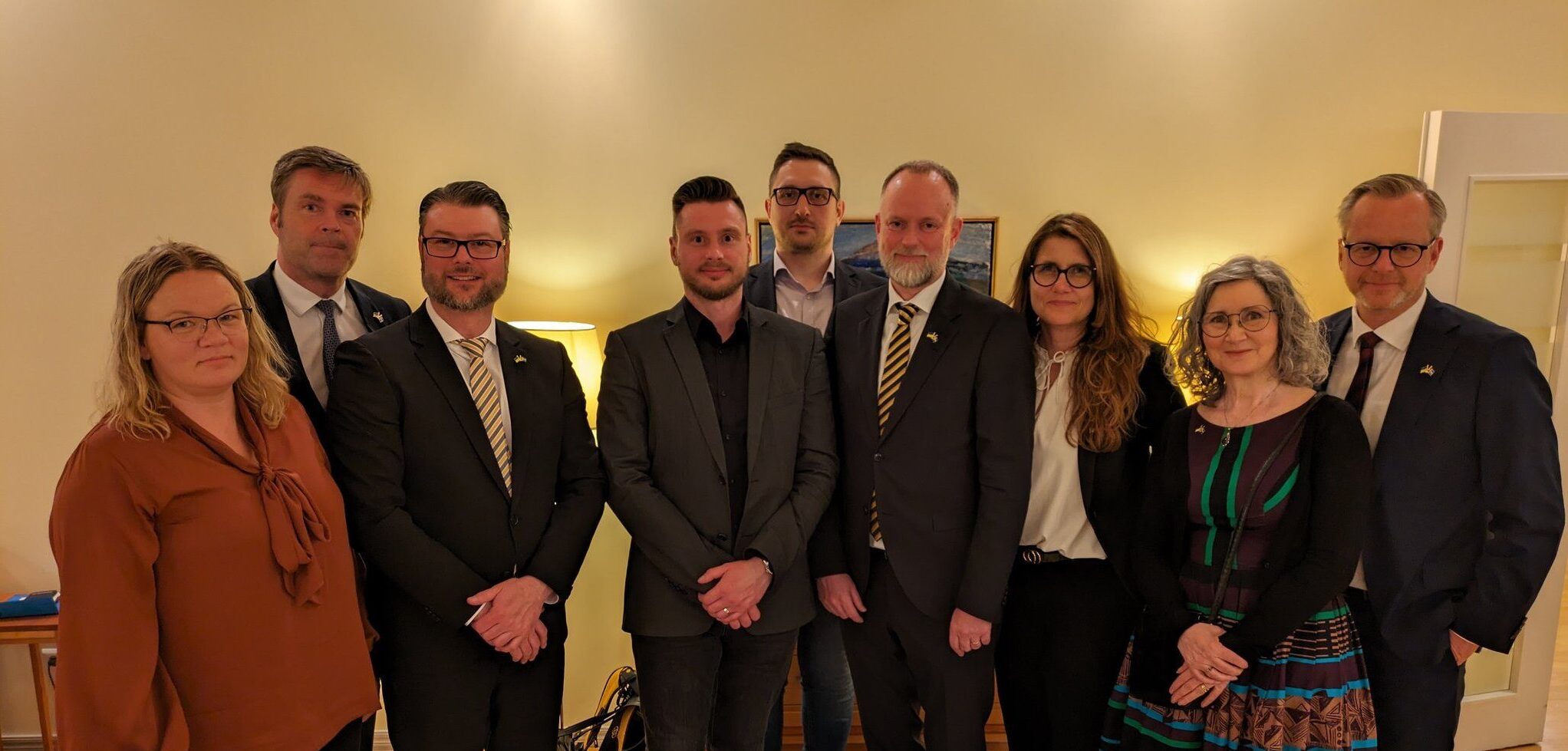
So, we once again thank Sweden for its comprehensive support at various levels – our joint efforts create opportunities for Ukraine’s further development and recovery.
Oleksandr Zaslavskyi, Head of Analytics, represented the Agency at the event.
Executive Director of the ALI Svitlana Matviienko on Air of Radio Svoboda
Amid the recent news of personnel reshuffles in the Government, including the dismissal of the heads of the Ministry of Agrarian Policy and Food and the Ministry for Communities, Territories and Infrastructure Development of Ukraine, people are talking a lot about what is happening behind the scenes. However, very little is said about the aspects that shape the presentation, communication, and, ultimately, decision-making on important state issues.
Executive Director of the ALI Svitlana Matviienko spoke on the air of Radio Svoboda about the format of decision-making on personnel changes, their communication, and what society should pay special attention to in these processes:
“I think that all of us, both the expert community and civil society, should talk about three key things: political culture – how the liberation processes took place; institutions – how all the ministries are merged and separated for a particular person, and how this destroys the institutional capacity of the state; and responsibility – whether certain decisions are responsible. These criteria should be the main ones for us as a country at war”
So, no ministerial term, especially during a full-scale war, has ever gone perfectly. However, given the current personnel hunger and the reluctance of people to take up leadership positions, decisions to fire certain individuals seem somewhat unreasonable.
At the same time, you can decide whether the proposal to separate the ministries (of infrastructure and communities and territories development) again aligns with the Government’s idea of optimising ministries in general by reading the Agency’s latest article here.
Meeting with Partners from Protect 2 and the VRU Committee on National Security, Defence and Intelligence
On 17 April, ALI held a meeting with our friends and partners from Protect 2 and the VRU Committee on National Security, Defence and Intelligence.
Such meetings always help check the direction and further steps of our cooperation. PASS Ukraine and Protect 2 are ready to continue providing support and responding to requests from our partners, including identifying specific legislative gaps and ways to address them and assisting Ukraine on its path to Euro-Atlantic integration.
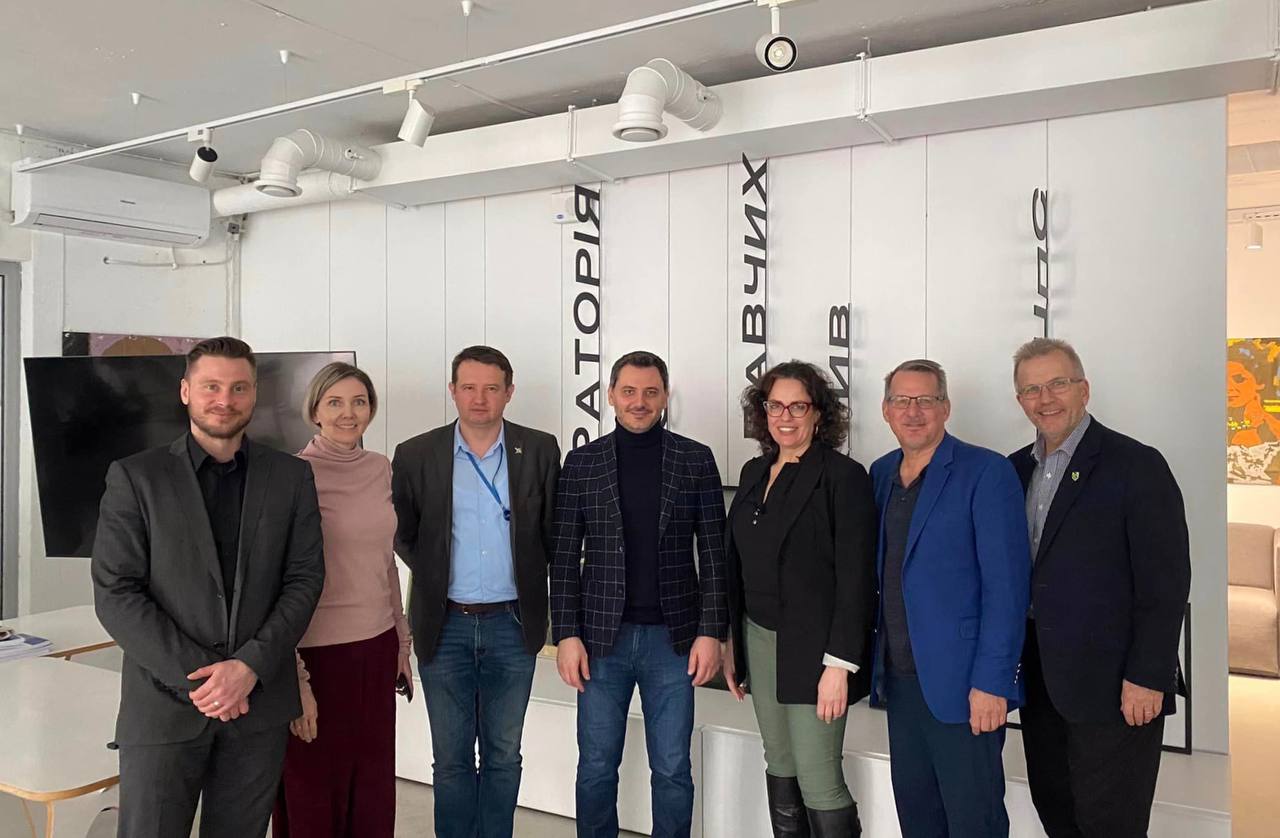
The meeting was part of the project “Parliament and Accountability of the Security Sector in Ukraine” (PASS Ukraine), which the Agency implements jointly with the Parliamentary Centre of Canada in cooperation with the Verkhovna Rada of Ukraine and the support from Global Affairs Canada within the framework of the Peace and Stabilization Operations Program (PSOPs).
Ways to Improve Social Services: Experience of Voznesensk Community
The social sector faces many challenges today since the full-scale invasion has exacerbated social problems and increased the demand for social services. Since local governments are responsible for providing social services at the regional level, given their limited financial and human resources, communities must look for ways to optimise social services, new partnerships, and additional resources. Voznesensk Community’s experience, which it shared during the research conducted by the Agency for Legislative Initiatives on the provision of social services, shows that flexibility and the use of a comprehensive approach have become crucial for adapting to new challenges.
Prior to the full-scale invasion, social services in Voznesensk Community in Mykolaiv Oblast were provided by three municipal institutions: the Centre for Social Services, the Territorial Centre for Social Services, and the Centre for Rehabilitation of Children with Disabilities. However, such an organisational structure burdened the local budget due to the administrative costs of maintaining each institution separately. Therefore, in 2023, the city council decided to merge all social service providers into one municipal institution, Voznesensk Social Service Centre. This institution has divisions for social services, in-kind aid, social work, daycare, and comprehensive rehabilitation of children with disabilities. Such reorganisation allowed the community to direct its resources mainly to providing social services. Savings on the maintenance of various institutions made it possible to expand the staff of the daycare centre and social workers and introduce a case manager position for dealing with veterans.
Currently, the community provides 18 social services, which are mainly aimed at supporting the most vulnerable categories, such as the elderly and people with disabilities. However, if residents need social services that cannot be provided in the community, the social protection division forwards the matter to oblast divisions. This applies to services provided at the Oblast Centre for Reintegration of Homeless People, the Centre for the Rehabilitation of Drug Addicts, and the Geriatric Nursing Home. Such cooperation with oblast-level social institutions allows the community to focus on the most required social services while providing residents with access to more specialised services at the regional level.
In general, the primary source of funding for the social services sector is the local budget. However, the Social Service Centre is open to cooperation in providing social services to other communities. This allows additional funds to be attracted to the community and optimises the provision of specific services at the level of several communities. For instance, the rehabilitation division provides services to children with disabilities from neighbouring communities where the number of children with disabilities is not large, and it is not feasible to create their own institutions or departments. Thus, in 2023, the department rehabilitated 8 children from other communities, and it is planning to expand this activity, as Voznesensk Community has all the necessary resources and qualified staff. According to the Voznesensk Community, cooperation is a profitable format for providing social services, as it allows partially covering the service provider’s costs and providing the necessary services for children not only in their own community but also in neighbouring communities where it is impossible.
In addition to financial revenues from community cooperation, Voznesensk is actively seeking opportunities to attract additional resources. It happens through international programmes and project competitions. One example of such cooperation is the creation of a mobile team that provides in-kind aid, which resulted in the community receiving a specialised vehicle and the necessary equipment. This enables team members to help people with limited mobility in remote communities with everyday issues. The team is composed of a social worker, a driver, a hairdresser and a building maintenance worker. This way, the mobile team can simultaneously provide help with self-care and cleaning, minor repairs, gardening, and hairdressing services. This significantly reduces the time required to provide services and allows more people to receive aid. The community notes that although organizing the work of the mobile team was not easy, it now allows for the fast and efficient delivery of social services in remote locations. Another example is the launch of a single contact centre, which is a general system of communication between residents and local authorities. How it works: when a request for social services is received, it is forwarded to the Social Protection Division, where it is processed, and a decision is made on the provision of such services. It simplifies the application process for social services and allows for faster organisation of the required assistance.
However, projects and cooperation with international partners are not the only additional source of resources to address pressing social needs. The use of opportunities provided at the state level is also effective. According to community representatives, since the outbreak of full-scale war, the number of domestic violence cases has increased significantly, which requires an appropriate response. In this context, the community is actively attracting state resources. Repairs are being carried out on the premises that will soon become a day centre for victims of domestic violence. They are carried out at the expense of a state-targeted subvention, which is co-financed by the local budget. Moreover, the community is also considering options for attracting funding in the context of international projects if the day centre is not enough to provide the necessary social services to all those in need.
There are also philanthropists and social organisations in the community. They help solve the community’s social problems, although they are not registered social service providers. For example, hot meals are distributed twice a week at the Social Service Centre to the homeless, the elderly, and other vulnerable populations. The food is delivered by a philanthropist, and the Centre’s staff organise the distribution on a voluntary basis. The community sees substantial potential in involving NGOs in the provision of social services and is already working on including one of the volunteer organisations in the Register of Providers and Recipients of Social Services. This will allow the NGO to provide social services officially and open up its opportunities to participate in social projects and competitions.
Of course, the situation with the provision of social services varies in different communities. However, the experience of Voznesensk Community shows that a combination of different tools is an effective approach, especially in the context of limited resources. By reorganising the social service provider, the community simultaneously optimised administrative costs and retained the ability to provide social services in different areas. The community improved the organisation of social services, in particular through new social initiatives. This makes the social service system more flexible and able to respond to current social challenges.
War and Burial: Did the Verkhovna Rada Settle Everything?
Year after year, Ukrainians face the never-changing problem of a shortage of burial sites for the dead on the cemeteries. In particular, as of 2022 (this is the latest official report by the Ministry for Communities, Territories and Infrastructure Development of Ukraine), communities additionally needed at least 389 sites for burial (i.e., cemeteries, columbaria, etc.).
And this is only the first and most obvious challenge. What shall be done, in particular at the legislative level, to at least reduce the problem with burials in Ukraine? The Agency for Legislative Initiatives researched this matter.
Unresolved issues
Although the relevant Law “On the Burial and the Burial Business” has undergone many changes over its 20-year history, a significant number of its provisions still need to be revised. This is emphasised by both the government authority representatives and the public sector. There are many problems in this area. However, the following remains the most relevant today:
1. The lack of a wide range of alternative burial methods.
The Relevant Law “On the Burial and the Burial Business” stipulates the implementation of three types of burials in Ukraine: 1) burial of a coffin with the body of the deceased in a grave; 2) burning of a coffin with the body of the deceased in a crematorium followed by the burial of the funeral urn with ashes in a grave or placing it in the columbarium niche; 3) scattering ashes of the deceased. Currently, the first option remains the most popular burial method. However, this is where the problem arises: cemeteries lack space.
It is indicative that as of 2022, the largest need for new cemeteries was observed in Lviv (45 more cemeteries are needed), Zakarpattia (41), Kyiv (32), and Dnipropetrovsk (31) Oblasts. The best situation with functioning burial sites is in Zaporizhzhia (which does not need any additional cemeteries), Sumy (two more need to be provided), and Volyn (four) Oblasts. However, in general, except for Zaporizhzhia Oblast, new burial sites are needed in all regions of Ukraine to a greater or lesser extent.
This problem could be solved if more alternative types of burial for the deceased were enshrined in Ukrainian legislation. However, currently, the Law “On the Burials and the Burial Business” provides for only one such method: cremation. No other alternative types of burial are legalised in Ukraine.
2. Current legislative norms contain obstacles to the promotion of cremation as an alternative burial method.
This problem has two aspects. First, the legislation, in some way, limits the possibility of exercising the right to cremation. This is manifested in crematoria being able to function only in large cities with a population of over one million people. Therefore, currently, relevant institutions operate only in Kyiv, Kharkiv and Odesa.
Second, pursuant to Ukrainian legislation, crematoria can only be municipally owned. Therefore, even a crematorium incorporated with the involvement of private funds will still be owned by local government bodies. Accordingly, it is unprofitable for private investors to invest in facilities that will eventually cease to operate.
3. Corruption in the process of allocating burial spaces in the cemeteries.
Pursuant to the requirements of the law, spaces in the cemeteries shall be allocated for free. However, in practice, quite often, a completely opposite situation is observed. The reason is the lack of sufficient territory for graves and the failure to use alternative burial methods. So, someone who wants to have a burial “on special conditions” can purchase a suitable space for a specific price. Such illegal activity is typical for many regions of Ukraine. In recent years, the Security Service of Ukraine (SSU) and the prosecutor’s office have investigated large-scale corruption schemes that allow officials to receive undue benefits for assisting in the allocation of burial sites. Not long ago, such incidents happened in Dnipro (2022), Kharkiv (2023) and Kyiv (2023). The value of such “service” fluctuates from UAH 10,000 to USD 2,000.
New Challenge: Military Burials
From the beginning of the full-scale invasion, the authorities started paying special attention to legislative regulation of the burial of victims of the Russo-Ukrainian war. Thus, in June 2023, councillors of Kyiv City Council adopted a decision to make military burials in the cemeteries of the capital uniform. In August, the government approved the experimental draft on the construction of the National Military Memorial Cemetery, and in September, the issue of consideration of draft law No. 7018 about the improvement of the burial sphere was included in the agenda of the VRU. However, the activity of Ukrainian authorities’ representatives only partially meets society’s demands.
A vivid example of this is a series of scandalous incidents following the construction of a military cemetery in Kyiv, the idea to design which first appeared back in 2011. The history of this facility’s creation has two key problems. First, the National Memorial Cemetery was never built in these 13 (!) years. This topic did not go beyond discussions and hype. Second, the authorities could not agree upon the location of the military cemetery for a long time. As a result, its possible location changed three times.
Initially, the Government proposed to create it on Lysa Hora hill, but this decision was not supported by environmental public organisations. Then, government officials chose the territory of the Bykivnia forest. This idea was completely supported by families of the fallen military service members, but their position was not taken into account when the final decision was made. As a result, the location of the National Military Memorial Cemetery was changed for the third time in August 2023.
This time, the Cabinet of Ministers chose the territory of Hatne village territorial community in Fastiv Raion of Kyiv Oblast. It is assumed that by July 2025, a special space for the honourable burial of military service members will finally appear here. However, many families of the deceased keep the ashes of soldiers at home or store them in crematoriums while waiting for this date. Besides, families of the fallen military service members disagree with the location chosen by the Government and believe that the military cemetery should be located within Kyiv.
There are legislative initiatives, but no progress is observed in solving the problems
It is evident that the current version of the Law “On the Burial and the Burial Business” needs significant revision. Considering this, over the last six years, Ukrainian authorities have made three attempts to eliminate existing legislative deficiencies and improve the legal regulation of this sphere. However, none of these attempts succeeded. In particular, the government draft law No. 8248 was withdrawn in August 2019 after a year and a half of consideration in the parliament. This draft law, among other things, stipulated a partial solution to the problem of the lack of space in cemeteries by introducing biological burial as an alternative burial method. It was also supposed to create favourable conditions for the construction of crematoriums at the cost of private investors.
One more governmental draft law, No. 7034, submitted to the Verkhovna Rada in February 2022, was similar in its essence. Draft law authors proposed regulating the construction of crematoria through a state-private partnership and promoting the development of cremation as a type of burial. However, this time again, after four months of consideration, the relevant draft law was withdrawn.
Also, in February 2022, members of parliament registered draft law No. 7018. It stipulates the implementation of other alternative types of burial in addition to cremation and aims to introduce a private form of ownership of land plots assigned for cemeteries and objects located on them. Currently, this is the only draft law on improving the burial sphere that is under consideration by the Verkhovna Rada. However, members of parliament don’t rush to adopt it; its consideration has been paused for two years.
As a result, key aspects of legal regulation of the burial sphere have not experienced any significant changes over the past twenty years. This shows that the need to intensify problem-solving in the burial sphere was long on the agenda. The war is an additional reason for starting this process right now. Therefore, the first thing that representatives of the authorities should do is speed up the process of considering legislative initiatives in this area.
ALI Starts a New Project with the Support of Sweden
Strengthening of democratic institutions. Development of Ukraine on the basis of professional policy. Defense of the public interest. This is the mission of the Agency for Legislative Initiatives.
We feel a great responsibility and, with it, inspiration and zeal to continue to implement it with reliable partners.
ALI is starting a new three-year institutional project with the support of the Swedish International Development Cooperation Agency (SIDA). In our focus for the following years:
- Strengthening the institutional capacity of the parliament and improving the quality of the legislative process.
- Strengthening the efficiency of public administration.
- Continuation of European and Euro-Atlantic integration.
- Support for the stabilisation and reconstruction of Ukraine to overcome the consequences of ongoing aggression by the russian federation.
- Monitoring and supporting reforms in the sphere of justice and security, particularly reforms of the prosecutor’s office and judicial reform.
- Political and civic education.
We are grateful to the Embassy of Sweden in Kyiv for the trust, support and opportunity to do non-trivial things. We are convinced that our joint efforts strengthen Ukraine today and create a foundation for further recovery and development after our victory.
Study on the Condition of Forced Migrants from Ukraine Living Abroad and Their Plans to Return to Ukraine
Ukraine is currently facing perhaps the greatest challenge in its history due to the threat posed by Russia, which unleashed a full-scale war on our territory in 2022. And for more than 1.5 years now, the struggle for independence and the ability to choose our own future has been ongoing. This aggressive war has triggered large-scale crises, including economic and demographic. According to the State Statistics Service, on the eve of the full-scale war, in November 2021, Ukraine had a population of around 41 million people.
These figures are rather approximate and may be subject to significant error, as the last full census of Ukraine was conducted more than 20 years ago, in 2001. According to its results, 48.5 million people lived in Ukraine back then. And after almost a year of war, as of 1 January, 2023, according to the Institute of Demography and Social Studies, the population of Ukraine was between 28 million and 34 million people.
This threatens to deepen Ukraine’s demographic crisis in the future, as most of the forced migrants are young and middle-aged women with children. Families are being separated, which in turn has a negative impact on family relationships. Thus, in the first half of 2023, the number of divorces in Ukraine tripled. The deepening demographic crisis could lead to a significant labour shortage, and thus become a significant factor undermining the country’s economic capacity.
The study focuses on the plans of forced migrants to return to Ukraine, what may influence their decision to return to Ukraine or stay abroad, and what may motivate them to change their minds.
The development of a state policy on the return of forced migrants, along with incentive measures to overcome future labour shortages, should be an integral part of the post-war recovery, which will be implemented within the framework of the Plan for the Recovery of Ukraine from the consequences of the war, which aims to accelerate rapid economic growth.