
Photo: Civil Society Forum
Proposals for the Policy Concerning Supporting Documents in the Legislative Process (Policy Paper)
Ukrainian MPs and the Apparatus of the Verkhovna Rada suffer from the «legislative spam». The best way to solve the problem is to improve the mechanism of preparing accompanying documents, in particular explanatory memorandum. For the moment it is a formal requirement which influences neither the procedure of passing a bill nor stakeholders’ opinions. But if we change the role of explanatory memorandum, formalize its structure and introduce check lists into the Apparatus practices, it can remedy the situation regarding a huge number of bills. In addition, it can help to streamline the workflow of departments. In order to implement this option, it is needed to incorporate changes to the guidelines for legislation, in which it is necessary to define the role and structure of explanatory memorandum. Whether an explanatory memorandum meets requirements, legislators can check with the help of check list. Such method allows for examining the document according to the only structure, and it can be applied by employees with different levels of training.

Preparation of the analytical materials is a part of a project implemented by the NGO Agency of Legislative Initiatives with the support of USAID RADA Program: Responsible Accountable Democratic Assembly, implemented by East Europe Foundation.
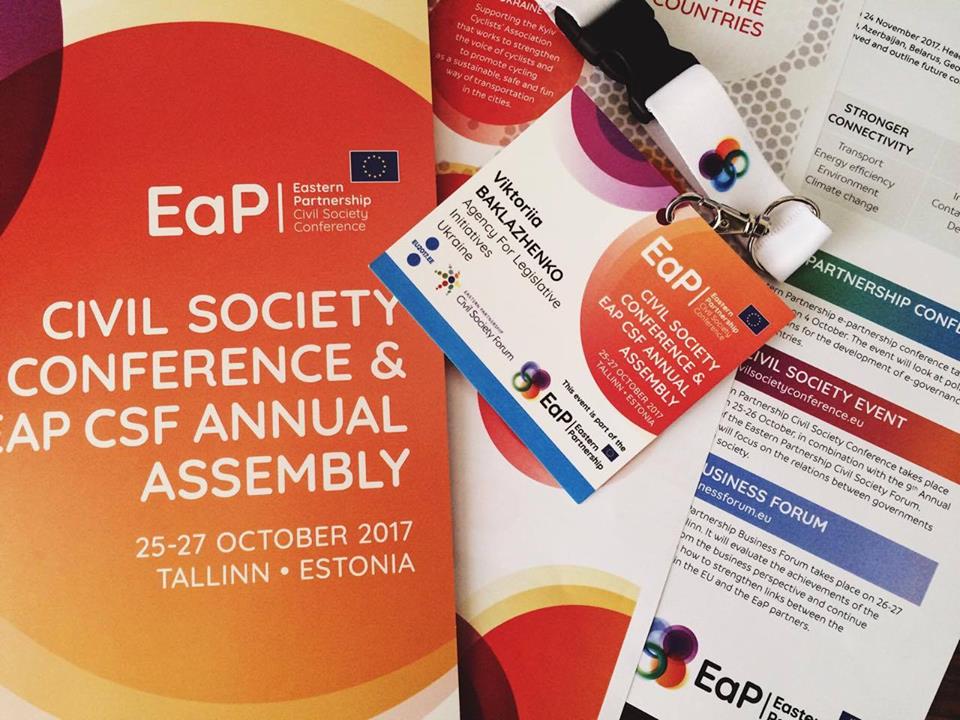
9th Annual Assembly of the Eastern Partnership Civil Society Forum
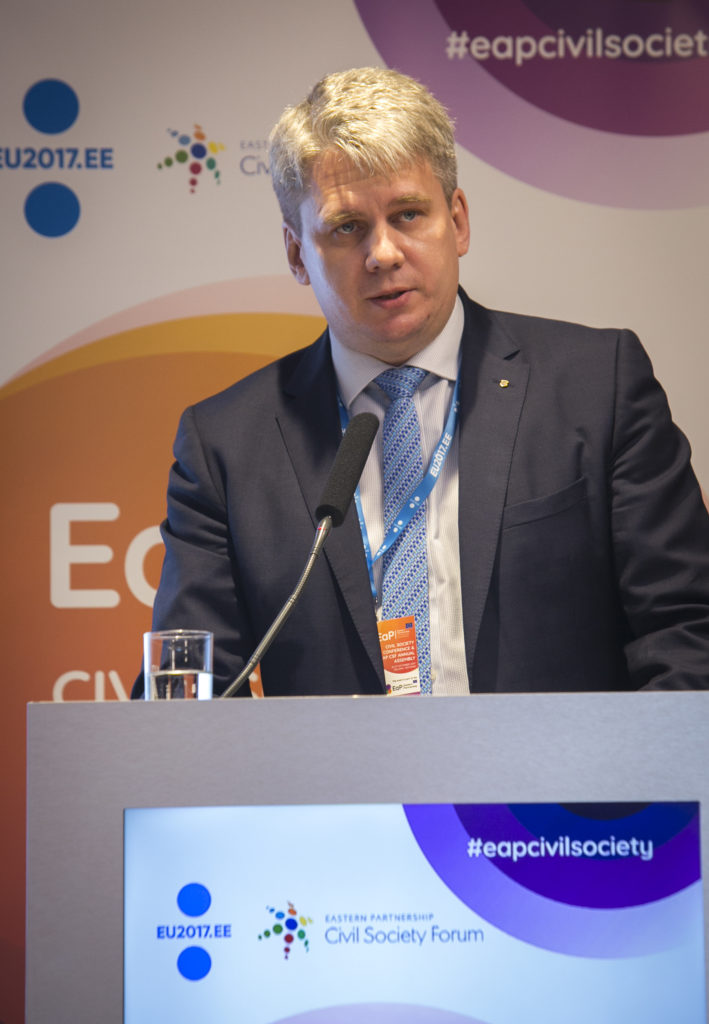
The opening speech was delivered by Jaan Reinhold, Estonia’s Ambassador-at-Large for the Eastern Partnership, and Hennadiy Maksak, Co-Chair of the EaP CSF Steering Committee, the alumnus of the Ukrainian School of Political Studies.
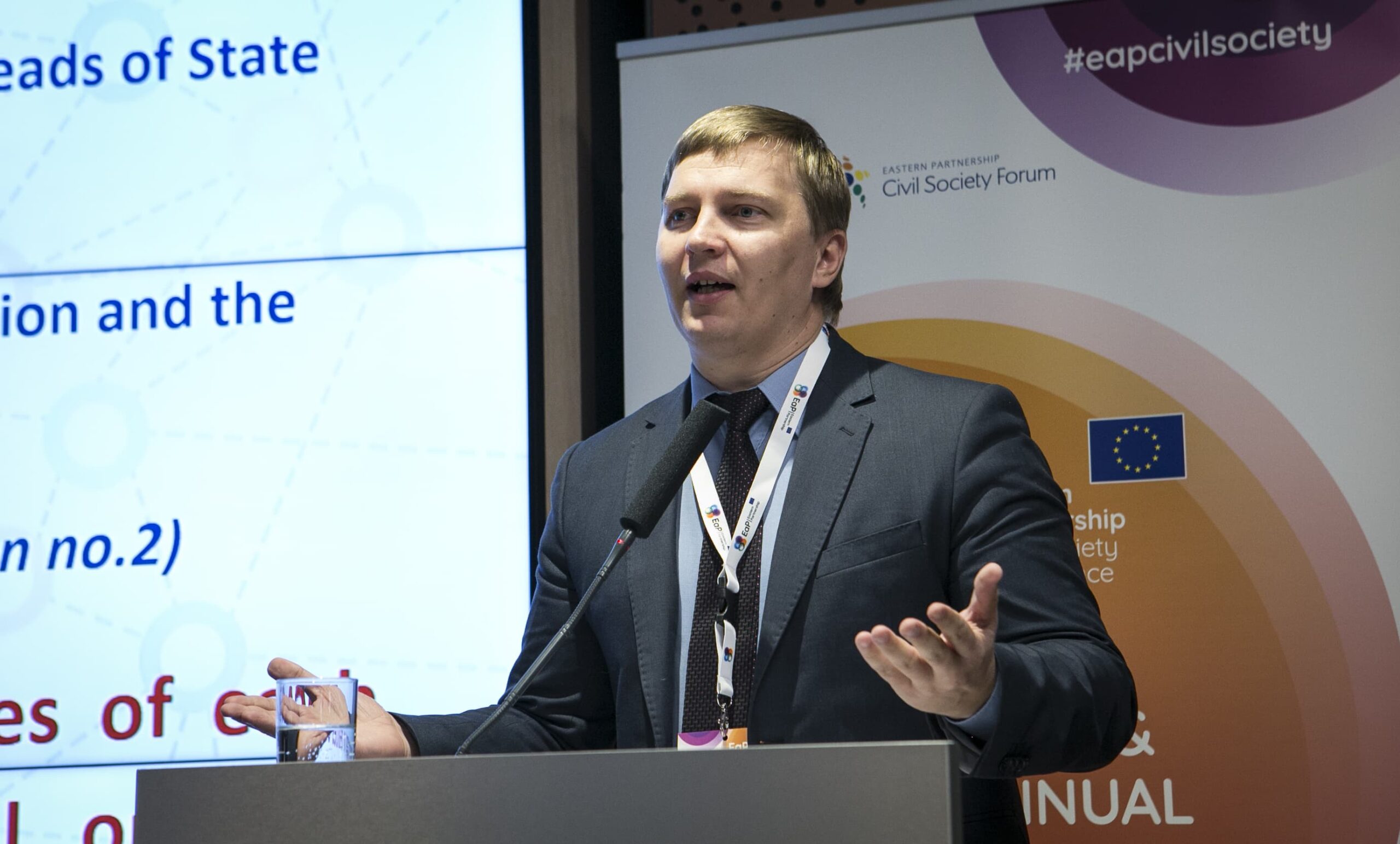
Hennadiy Maksak emphasized that the 9 years of the Forum’s work confirmed that it was an effective instrument for a multilateral dialogue between the EU, the governments of the Eastern Partnership countries and civil society. Public activists significantly contribute to overcoming regional challenges: fighting corruption, promoting respect for human rights and defending democratic values.
The first day of the Annual Assembly was devoted to outlining the agenda of the entire event. The greatest attention was paid to the cooperation of governments and civil society in the Eastern Partnership countries, which was discussed at the first plenary session. During the session, a number of issues were raised: the prospects of regional and economic integration; media and misinformation in the media; digital instruments as a means of democratic governance. Marian Lupu, Co-President for the Eastern component of the Euronest PA, Kakha Gogolashvili, member of the Steering Committee of the EaP CSF, and Diana Jablonska, representative of the EC Directorate General for Neighborhood and Enlargement Negotiation, expressed their opinions on mechanisms to strengthen and broaden civil society involvement in policy development in the Eastern Partnership region.
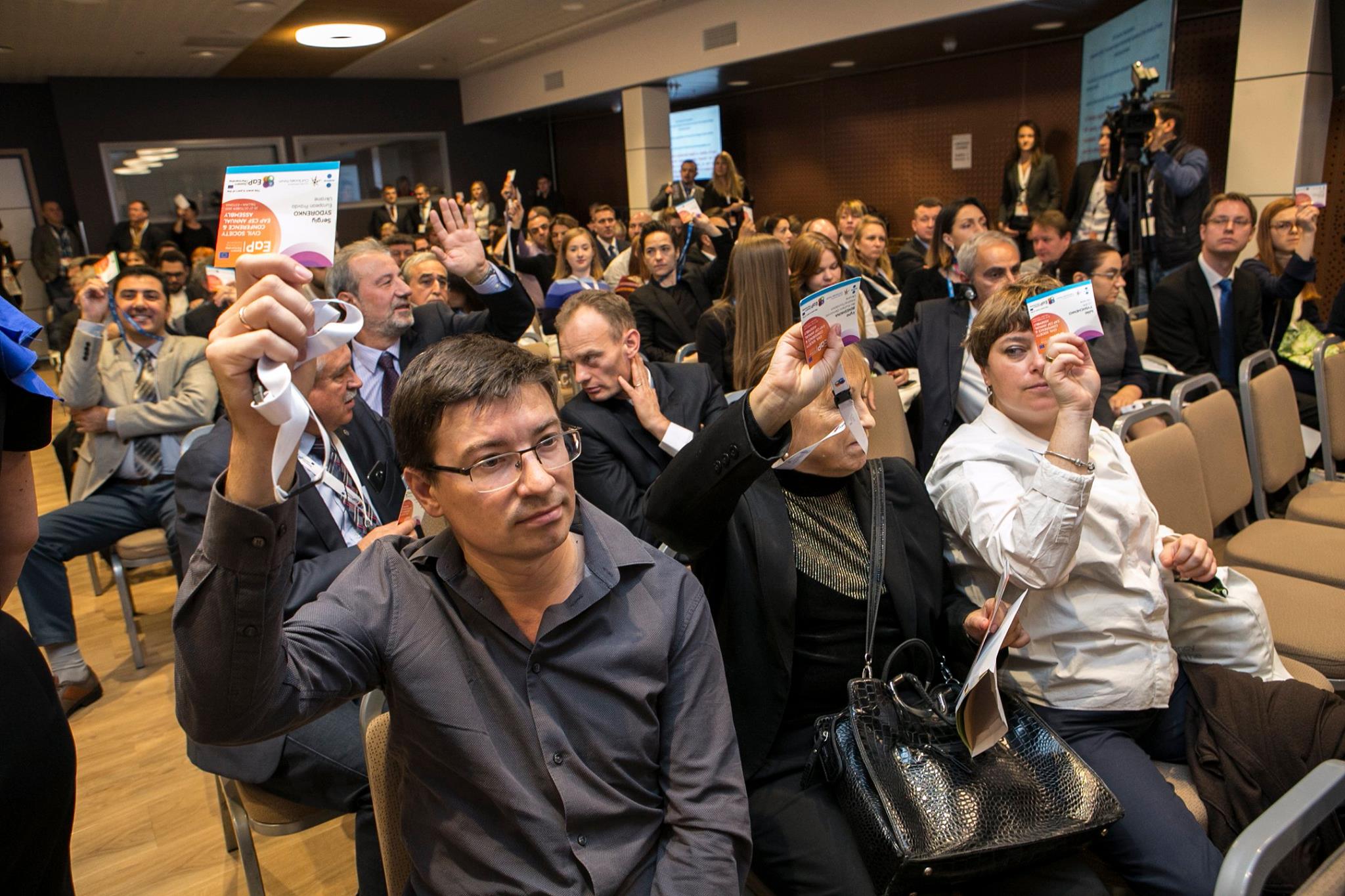
Working groups discussed the achievements of all national platforms of the Eastern Partnership Civil Society Forum, as well as the goals set in “20 Key Deliverables for 2020 for the Eastern Partnership”.
The first day culminated in the adoption of the Declaration of Civil Society. However, the Ukrainian and Georgian delegations opposed certain paragraphs of the Declaration concerning the presence of independent Russian media in the media sphere of the partner countries. Since the rules of procedure did not allow to introduce changes on the voting day, the consensus was reached via a separate opinion to the Declaration added by the delegations of Ukraine and Georgia: “Given the Russian-Georgian conflict and the Russian-Ukrainian conflict, the Russian occupation of the territories of the region and the enormous influence of the Russian media in the hybrid warfare, and taking into account the regulations of our countries, our delegations insist that the relevant paragraph should not apply to Georgia and Ukraine.”
The second day began with the ceremony of EaP CSF Pavel Sheremet Journalism Award. Last year, the award went to Mykola Semena, and this year the winner is the imprisoned Azerbaijani journalist Afghan Mukhtarli, who was kidnapped in Georgia during protests. Afterwards, representatives of the EaP CSF Steering Committee Hennadiy Maksak and Haykuhi Harutyunyan presented the adopted Civil Society Declaration upheld by 130 organizations from partner countries.
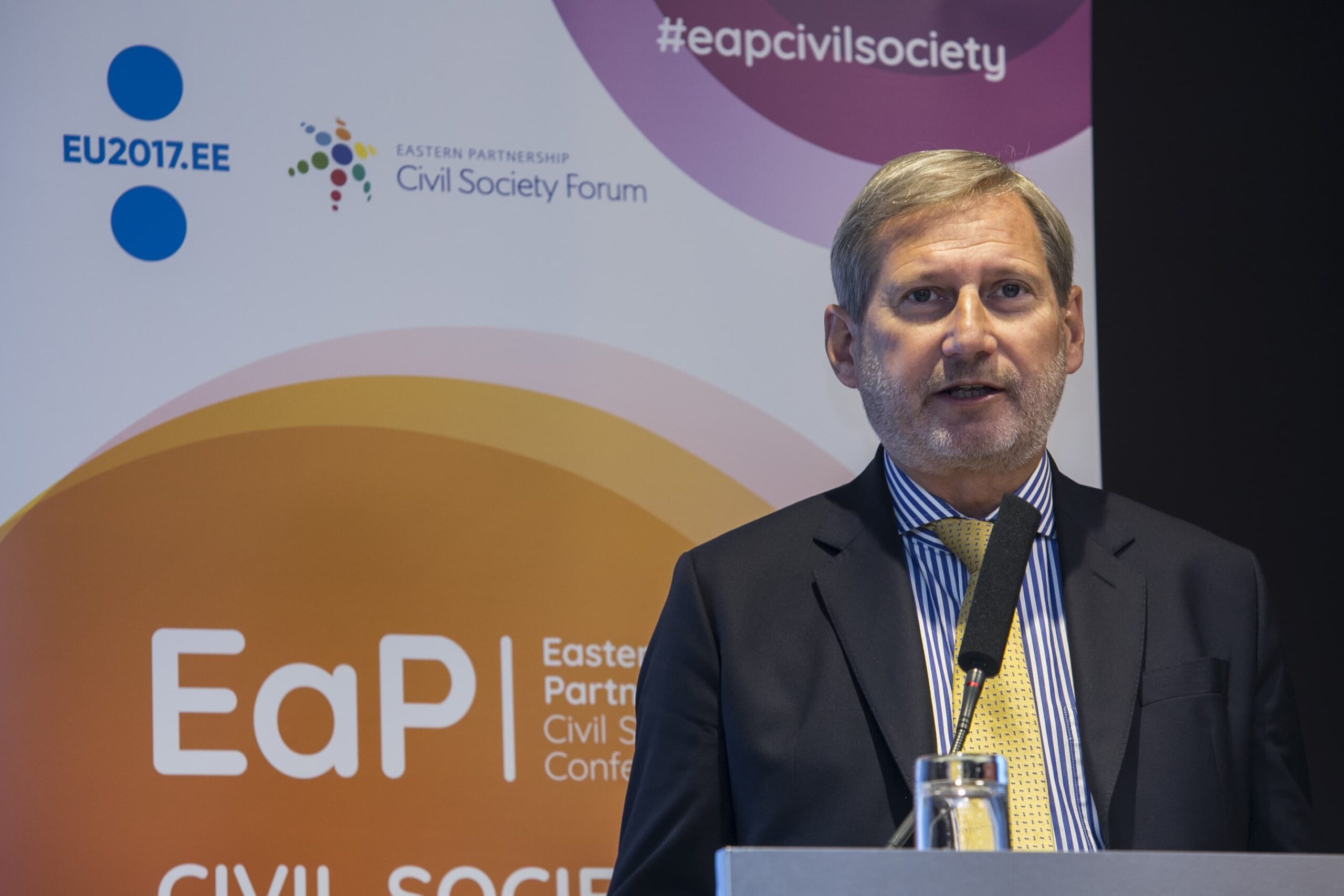
In his speech, Johannes Hahn, Commissioner for European Neighborhood Policy & Enlargement Negotiations, mentioned the achievements of Ukraine, Georgia, and Moldova in fulfilling their commitments under the Association Agreements and outlined plans for cooperation with other partner countries. The Commissioner also noted that “20 Key Deliverables for 2020 for the Eastern Partnership” could be viewed as a roadmap aimed at achieving the set goals and observed that the European Union and civil society had high mutual expectations: civil society had its vision of cooperation discussed at the Brussels Summit, while the European Union expected the maximum awareness of the population of partner countries, as well as close cooperation with a wide range of European institutions.
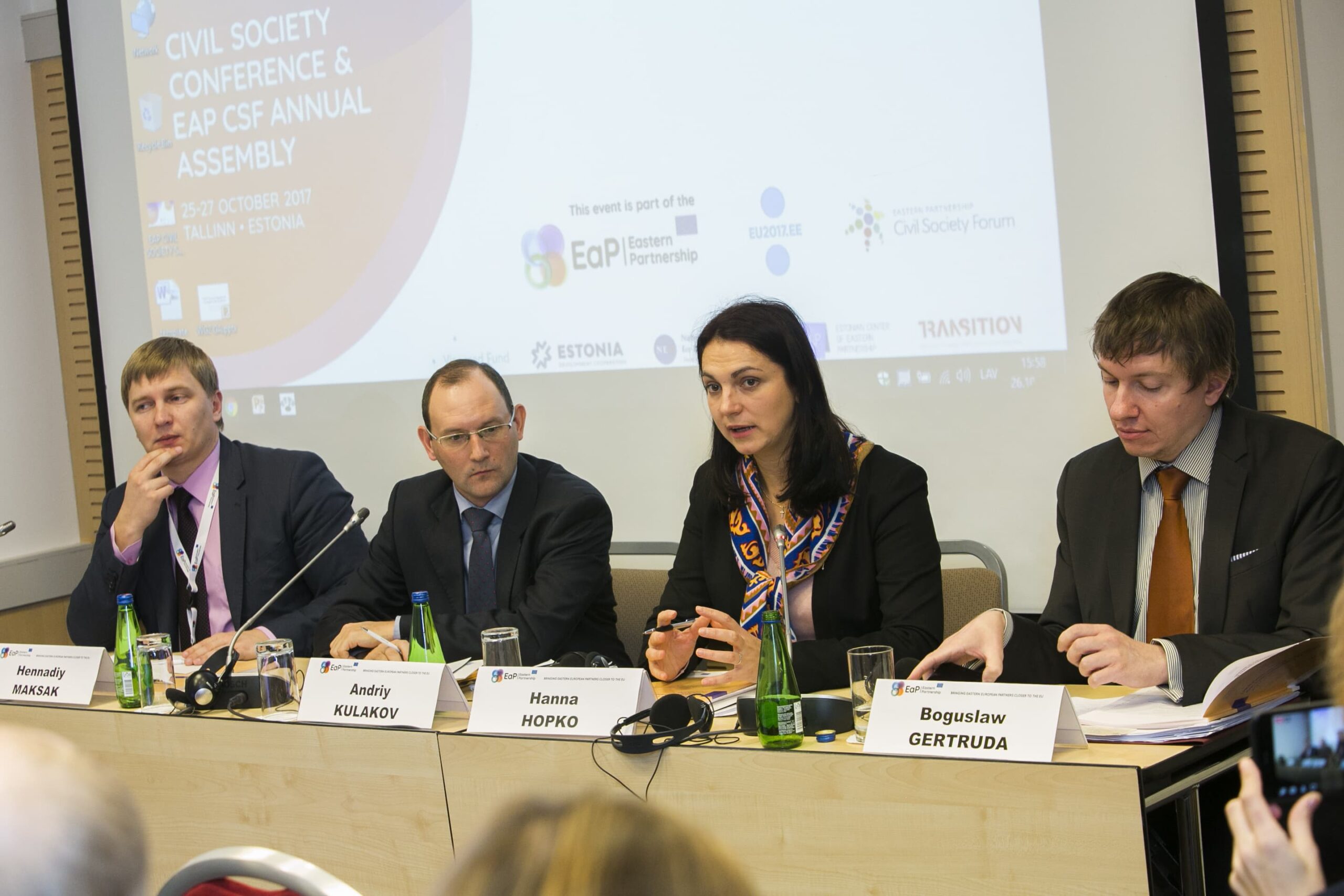
After several parallel discussions that were thematically distributed by working groups, the Ukrainian National Platform of the EaP CSF presented a study entitled “Ukraine in the Coordinates of the Eastern Partnership 2017-2020”, where UNP experts assessed the relevance and feasibility of the 20 deliverables and identified the priorities for Ukraine. The discussion was attended by Hennadiy Maksak, National Coordinator of the UNP, Hanna Hopko, Head of the Committee on Foreign Affairs of the Verkhovna Rada of Ukraine, and Bogusław Gertruda, Team Leader for Ukraine, Eastern Partnership Bilateral Division, European External Action Service. All the participants of the discussion agreed that without active participation and support of civil society, none of the reforms, including medical, pension and educational reforms, could succeed. The participants identified the key areas of sectoral cooperation, i.e. strengthening the energy component and security of the EU’s eastern borders.

The second day of the Annual Assembly concluded in the election of EaP CSF national platform coordinators and EU EaP CSF coordinators. The Ukrainian delegation unanimously elected Hennadiy Maksak Ukrainian National Platform Coordinator of EaP CSF.
The last day was devoted to discussing the EaP CSF strategy for 2018-2020, namely the importance of its advocacy function and organizational reform. However, because of the lack of a quorum, none of the documents was adopted, therefore the Working Groups will work on them during the year and vote remotely.
Presentation of the Shadow Report “Memory Policy Reform: Interim Results of Enforcement of the ‘Decommunization Laws’”
On November 1, 2017, the Shadow Report “Memory Policy Reform: Interim Results of Enforcement of the ‘Decommunization Laws’” was presented within the framework of the roundtable on “Legislation on Condemnation of the Communist and National Socialist (Nazi) Totalitarian Regimes in Ukraine: Enforcement Status”.
The event was organized by the Agency for Legislative Initiatives in co-operation with the Subcommittee on Decommunization of the Verkhovna Rada Committee on Legal Policy and Justice within the framework of the USAID RADA Program: Responsible, Accountable, Democratic Assembly implemented by the East Europe Foundation.
De-communization is one of the Ukrainian reforms implemented thanks to the joint work of the public and the legislative and executive branches of government. The initiators and supporters of the law held a lot of public discussions and roundtables in the specialized committees of the Verkhovna Rada, examined the expert opinions of commissions consisting of historians, ethnographers, archivists, sociologists and other researchers. Such programs as “Open Archives” and “Leaving the USSR” (the study of the experience of Central and Eastern European countries), launched by the Center for Research of Liberation Movement as far back as in 2010, helped to formulate proposals for policy and eventually made up its basis. National memory issues were included in one of the sections of the Coalition Agreement, signed by the parliamentarians of the VIII convocation, as well as in the Action Plan for Implementation of the Program of Activities of the Cabinet of Ministers and the Coalition Agreement for 2015, Plan on Legislative Support to Reforms in Ukraine and Action Plan of the Cabinet of Ministers for 2016.
In late 2016, the Ukrainian Institute of National Remembrance, the central executive body for implementing the policy of national memory, published the first results of decommunization in Ukraine. The Verkhovna Rada adopted 13 decrees on the renaming of settlements and toponymic sites in settlements. All in all, 52,480 objects were renamed (51,493 streets, 987 settlements (including 32 towns) and 25 districts) and 2,389 monuments (including 1,320 Lenin monuments) were dismantled. There are still 2 oblasts and one district to be renamed. Oblasts can be renamed only by introducing changes to the Constitution of Ukraine.

The Shadow Report “Memory Policy Reform: Interim Results of Enforcement of the ‘Decommunization Laws’” summarizes the interim results of the decommunization reform and highlights the issues that need to be further elaborated. The document examines the objectives of the reform (what was planned and what has been implemented at the legislative level); analyzes the reform planning at the level of Parliament and Government; discusses the principles for renaming toponyms and dismantling monuments; refers to the stages and persons who perform decommunization in Ukraine; provides official statistics on the implementation of the tasks within the decommunization package; examines the reform stakeholders, public perception of the policy and litigation; and suggests steps that need to be taken to complete the reform.

Svitlana Matviienko, Chairwoman of the Board of the Agency for Legislative Initiatives, emphasized that reform in the field of memory policy is one of the key humanitarian reforms that can change the fundamental ideological principles of Ukrainian society.

Anna Oliynyk, Analyst of the Center for Research of Liberation Movement, member of the National Remembrance Policy group of the Reanimation Package of Reforms, focused on the steps that need to be taken to make the decommunization reform comprehensive. Thus, in the legislative area, it is necessary to adopt the social part of the amendments to the law on the rehabilitation of victims of political repression; to adopt a law on the principles of national remembrance policy; to adopt a separate law to settle the issue of celebrating official public holidays; to amend the Law of Ukraine “On Protection of Cultural Heritage” in order to reconcile it with the decommunization laws. It is important to complete the work on the Branch State Archive of the Ukrainian Institute of National Memory. Ms. Oliynyk also pointed out the need to complete the establishment of museum institutions such as the Museum of Monumental Propaganda of the USSR and the Maidan Museum. Another critically important element is an outreach campaign to promote and make known new names among the public.

Volodymyr Vyatrovych, Head of the Ukrainian Institute of National Remembrance, emphasized that the success of decommunization was due to the efforts of the public because the potential, resources, and funds of the Ukrainian Institute of National Remembrance would not be enough to carry out such a large-scale reform.

The roundtable participants discussed a wide range of issues related to the state policy in the area of decommunization; examined the status of enforcement of the Law of Ukraine “On Condemnation of the Communist and National-Socialist (Nazi) Totalitarian Regimes in Ukraine and Prohibition of Propaganda of Their Symbols”; analyzed measures aimed at raising public awareness of the crimes committed by representatives of the communist and/or national-socialist (Nazi) totalitarian regimes; analyzed alternatives of the state policy in the area of decommunization; and discussed the ways to improve the legislation on condemnation of the communist and national-socialist (Nazi) totalitarian regimes in Ukraine.
«Reform in the Field of Memory Policy: Intermediate Results of the Implementation of “Decommissioning Laws”» (Shadow Report)
Decommunization was one of the reforms in Ukraine that took place thanks to the joint work of the public and the legislative and executive branches of government. The initiators and proponents of the law held many public discussions and round tables in the relevant committees of the Verkhovna Rada worked with the conclusions of expert commissions, which were composed by historians, archivists, sociologists, and other researchers. The programs «Open Archives» and «Leaving the USSR» (studying the experience of the countries of Central and Eastern Europe), which the Center for Research of the Liberation Movement started in 2010, were able to form proposals to the policy and eventually become its basis. Issues of national memory were included in one of the sections of the coalition agreement signed by the parliamentarians of the VIII convocation, as well as in the «Plan of Activities for the Implementation of the Program of Activities of the CMU and the coalition agreement in 2015», «Plan of Legislative Support of Reform in Ukraine» and «Action Plan of the Cabinet of Ministers for 2016».
The Ukrainian Institute of National Remembrance, the central executive body for the implementation of national remembrance policy, released the first results of the decommunization process in Ukraine at the end of 2016. The Verkhovna Rada passed 13 decrees on the renaming of settlements and toponymic objects in settlements. Altogether 52 480 renaming (51,493 streets, 987 settlements (including 32 cities), 25 districts), dismantled 2389 monuments (of which 1320 «Lenin»). There are two other regions and one district that remain unclarified. It is only possible to give new names to the regions through changes in the Constitution of Ukraine.
Shadow Report «Memory Policy Reform: Intermediate Results of the Implementation of “Decommunization Laws”» summarizes the intermediate results of the decommunization reform and highlights the problematic points that should be further developed. The paper analyses the objectives of the reform (what was planned and what was successfully defended at the legislative level) reviews reform planning at the level of Parliament and Government; explores the principles of the name change and the dismantling of monuments; Examines the stages and actors of decommunization in Ukraine; analyses official statistics on the fulfillment of the tasks of the decommunization package of laws; studies the stakeholders of reform, public perception of policy and judicial processes; Proposes steps to be taken to complete the reform.
The preparation and presentation of analytical reports in the Shadow Report format is part of the project embodied by the Agency for Legislative Initiatives, supported by the USAID Rada Program: Responsible Accountable Democratic Assembly, implemented by the East Europe Foundation.
Proposals to Ensure Gender Equality in the Ukrainian Parliament (Policy Paper)
Implementation of the policy of equal rights and opportunities for men and women always serves as an indicator of ethics, transparency, and readiness to democratic transformations, and the Ukrainian parliament takes important steps in this direction as is required by the international standards and the time.
The 8th Verkhovna Rada is different from the previous convocations not only by the biggest number of women among its members over the entire time of the Parliament’s existence, but also by the active promotion of “gender interests” in terms of the public policy making. And it is not by chance that the Verkhovna Rada gender sensitivity is on the agenda, as it is one of the main components of the parliamentary reform in accordance with the Pat Cox recommendations and the Jean Monnet Dialogues.
The gender sensitive parliament can be defined as an institution that meets the needs and interests of both men and women in its structure, operations, methods, and work generally. The aim of the gender sensitive parliament is to overcome the obstacles faced by women on the way to the full-fledged participation in politics, as well as to demonstrate a positive example and to define the model of opportunities for the society in general.
Analysis of the provisions governing the structure and methods of the parliamentary work is based on the proposals to amend the Verkhovna Rada Rules of Procedure in order to introduce the gender-based analysis of draft laws, instruments to counteract sexism and discrimination in the behaviour of the members of parliament, as well as to ensure the balanced representation of women and men in the Ukrainian parliament.

The preparation and presentation of Policy Proposals is part of the project embodied by the Agency for Legislative Initiatives, supported by the USAID Rada Program: Responsible Accountable Democratic Assembly, implemented by the East Europe Foundation.
Proposals for Policy on Cybersecurity Reform in Ukraine (Policy Paper)
The paper is devoted to the analysis of problems with cybersecurity in Ukraine and to the search for ways to solve them. The authors’ attention was focused on improving the regulatory framework, creating the proper infrastructure, developing the cybersecurity industry, ensuring conditions for the fruitful cooperation of all Ukrainian and international stakeholders, and developing a culture of network and information security. According to the authors, the construction of effective state policy in the field of cybersecurity is possible only if there is a single control center, a clear agreed program of action, and increased confidence among the main stakeholders.

Preparation of the analytical materials is a part of a project implemented by the NGO Agency of Legislative Initiatives with the support of USAID RADA Program: Responsible Accountable Democratic Assembly, implemented by East Europe Foundation.
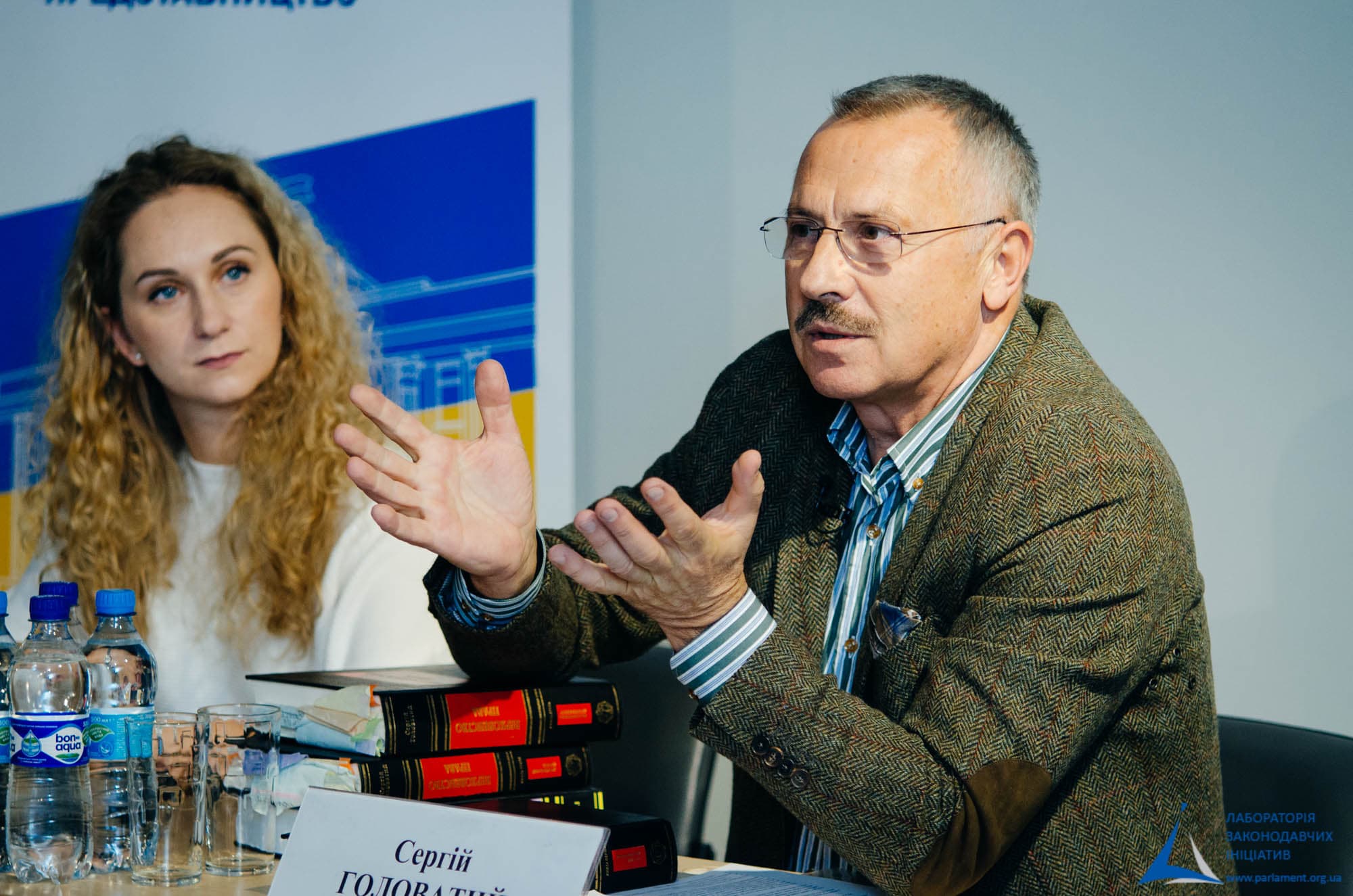
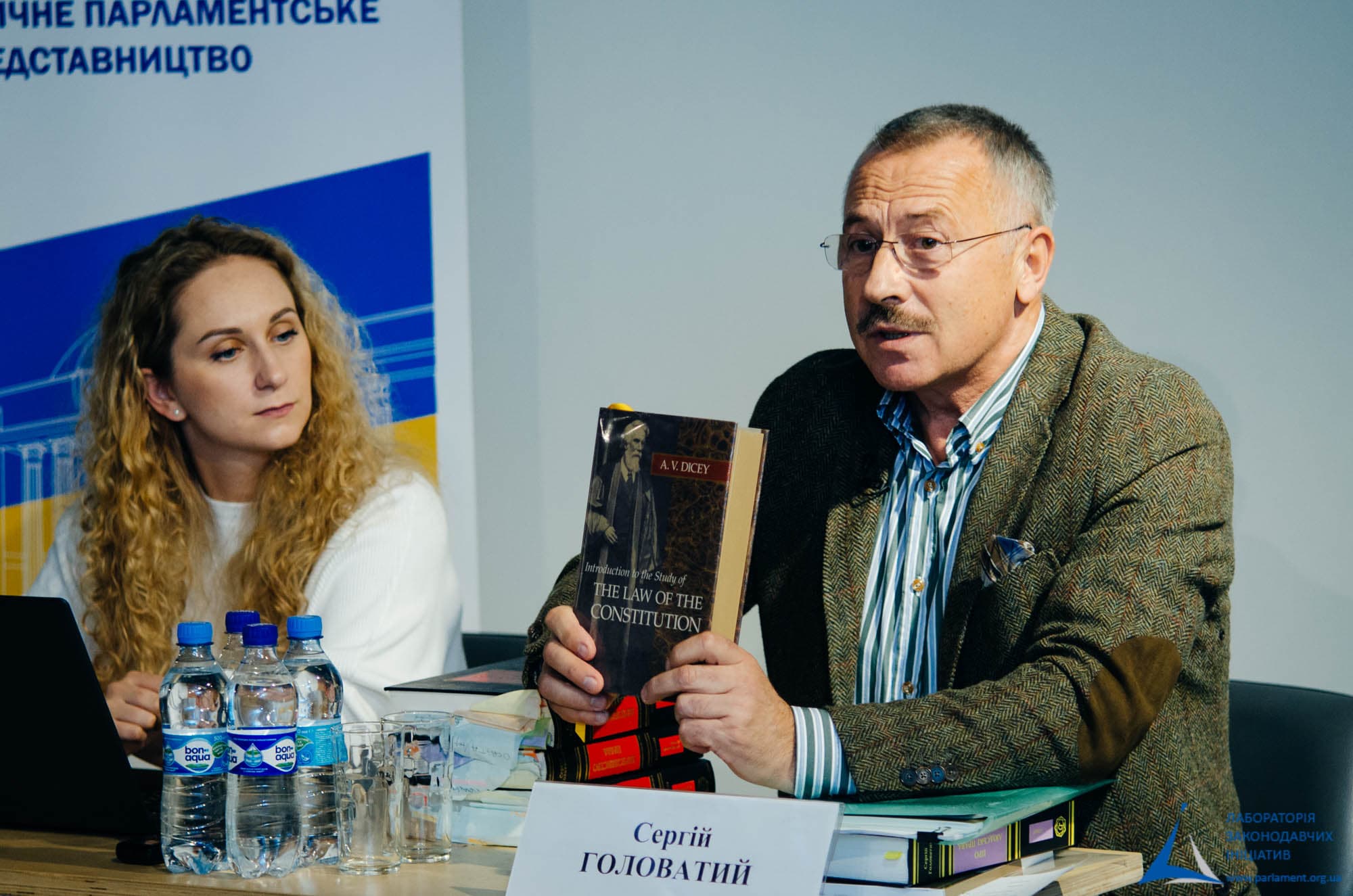
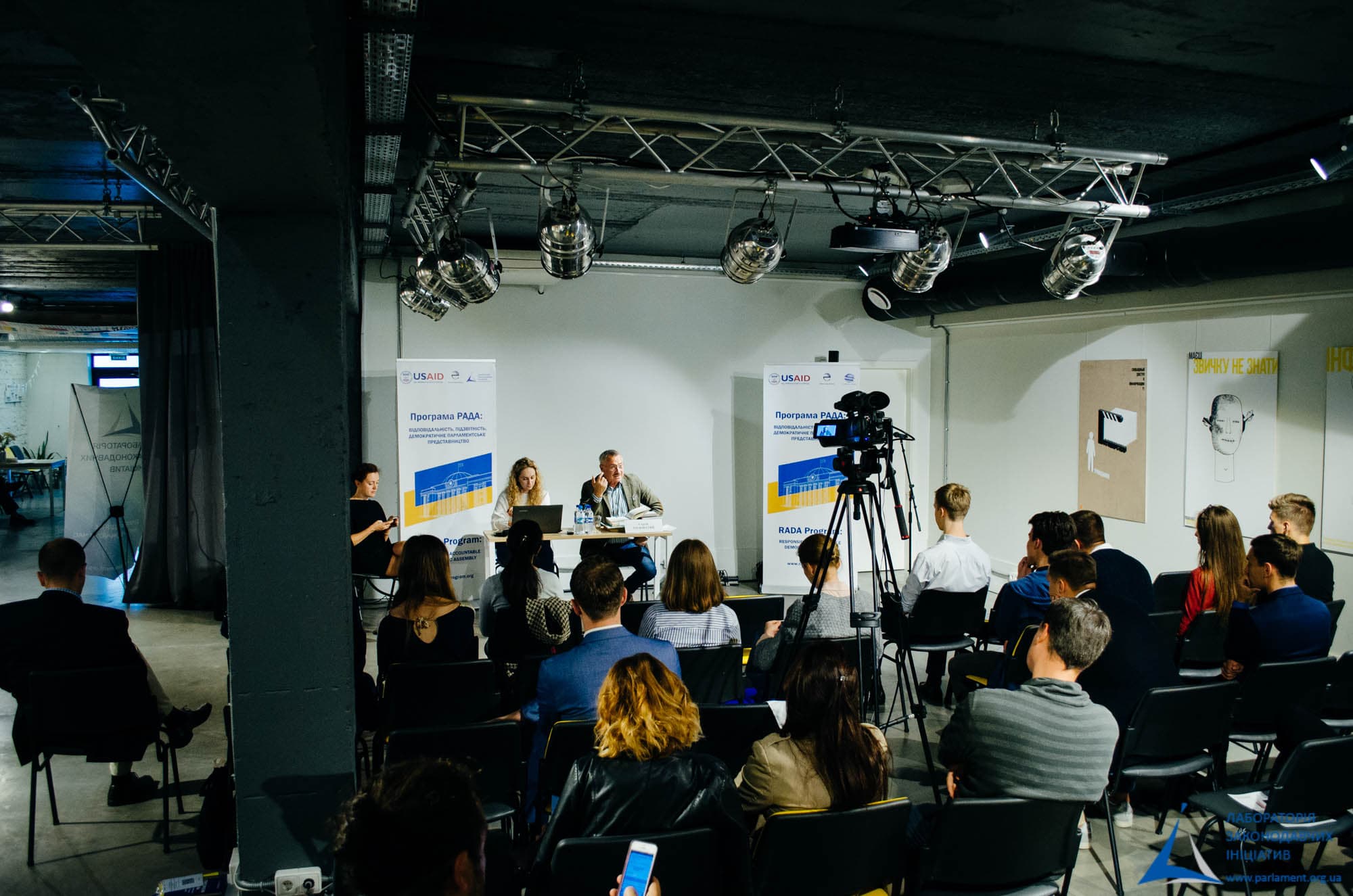
Lecture by Serhiy Holovatyi “Culture of Lawfulness: Rule of Law”
Speaker: Serhiy Holovatyi, founder and President of the Ukrainian Legal Foundation, Minister of Justice of Ukraine (1995-1997, 2005-2006), Honorary Partner of the PACE. His scholarly interests include international public law, theory of law, constitutional law, and human rights. He has published over 200 scholarly works, the main of them being the monograph (in three books) The Rule of Law (2006).
Photographer: Oleksandr Kovalenko
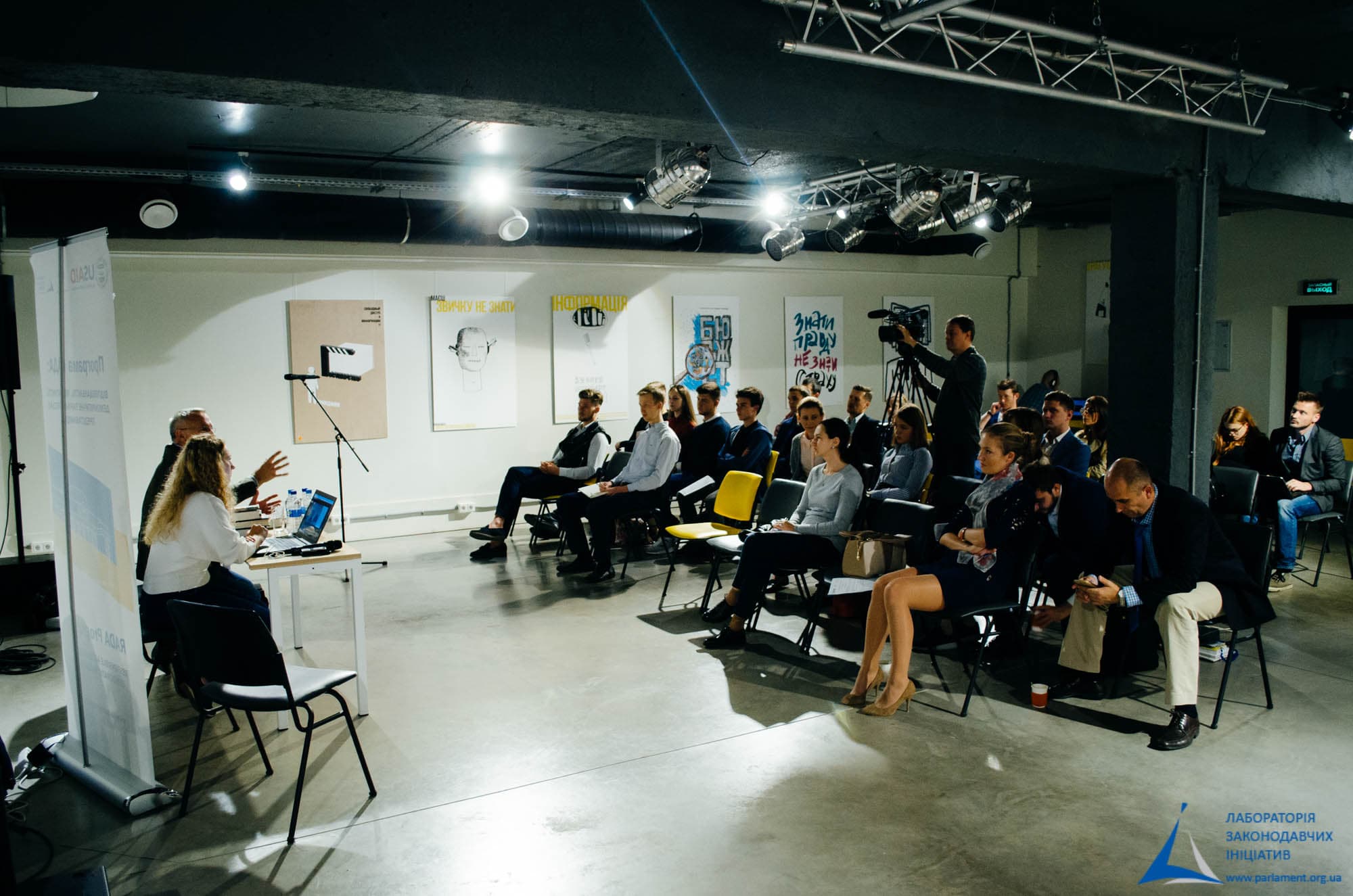
The event was attended by over 30 people: students and postgraduate students from Kyiv universities (the National University of Kyiv-Mohyla Academy, the Taras Shevchenko National University of Kyiv), instructors of the National Academy of Internal Affairs, graduates of the Internship Program in the Verkhovna Rada, MPs’ aids, and representatives of NGOs.
Photographer: Oleksandr Kovalenko
The rule of law serves as a litmus paper that demonstrates whether a society has the standard without which genuine democracy and human rights are unattainable. Assessing the actions of the state (its bodies and officials) in relation to a person based on such formulas as “in a society which has undertaken an obligation to adhere to the rule of law”, “in a state that recognizes the rule of law”, “in a state governed by the rule of law”, etc., courts clearly indicate that this or that action of the state is incompatible with the rule of law principle.
Due to the fact that the principles of true democracy, human rights and the rule of law as “fundamental European ideals” belong to the values that make up the common heritage of European peoples, the actualization of the issues of the rule of law is important in the light of Ukraine’s Eurointegration aspirations.
Photographer: Oleksandr Kovalenko
Photographer: Oleksandr Kovalenko
What is the “rule of law” and what are the values behind this principle? Why the translation of the “rule of law” principle as “верховенство права” is wrong? Why should we prefer the term “правовладдя” and what senses and connotations does it involve? What are the milestones of the idea of the rule of law? What is a measure of the rule of law? What is the difference between soft law and hard law? What is justice? What are the natural rights and how are they secured? Why does everyone need to study philosophy? What are the strengths and weaknesses of the Constitution of Ukraine? These and other questions were discussed during the lecture.

The event was organized by the Agency for Legislative Initiatives together with the Internews Ukraine and the Interns’ League, supported by the USAID Rada Program: Responsible Accountable Democratic Assembly, implemented by the East Europe Foundation.
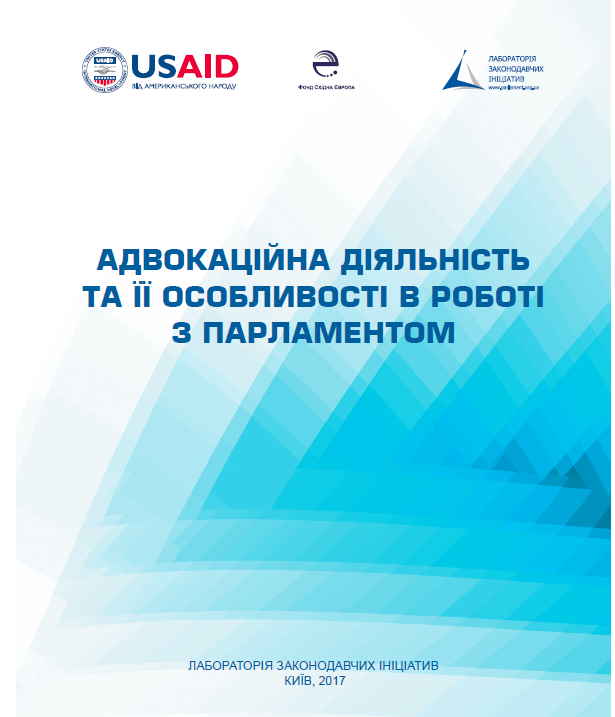
Advocacy and its Aspects in Working with Parliament
During 2015 – 2016 the Agency for Legislative Initiatives supported the advocacy campaigns of the Reanimation Package of Reforms groups, in particular: “Pension Reform”, “Tax Reform”, “Health Care Reform”, and “Policy of National Memory”.
To support the campaigns a number of trainings and consultations on policy analysis were conducted and assistance in establishing communication with the parliament was provided through such tools as preparation and presentation of shadow reports and policy proposals, as well as discussing advocacy groups initiatives in the regions.
The guidelines aim to systematize and present existing experience in planning and holding advocacy campaigns. The proposed publication contains step-by-step instructions and strategies for civil society institutes on how to build effective communication with public authorities.
The guidelines aim to strengthen the civil society organizations’ skills in planning and implementing advocacy campaigns. To achieve this goal the guidelines explain what advocacy is and how it differs from lobbying; consider advocacy support for public policy implementation; teach the techniques of building coalitions and interaction with partners in advocacy campaigns; explore the main strategies of advocacy campaigns informational support, work with media and social networks, community and organization of protests of direct action; study the aspects of parliamentary advocacy and examples of successful parliamentary advocacy campaigns.
The preparation and presentation of analytical materials is part of a project implemented by the Agency for Legislative Initiatives within the framework of the USAID RADA Program: Responsible, Accountable, Democratic Assembly implemented by the East Europe Foundation.
Informative webinar on “Youth in governmental programs”
On June 20, 2017 an informative webinar on “Youth in Governmental Programs” was held at 17.00.
The webinar was organized by the Internews Ukraine with the support of the Agency for Legislative Initiatives within the USAID RADA Program: Responsible Accountable Democratic Assembly, implemented by East Europe Foundation.
The webinar was hosted by Oleksandr Yarema, Deputy Minister of Youth and Sport of Ukraine.
During the webinar, the participants:
- got acquainted with the state youth policy in Ukraine;
- got knowledge about the role of citizens in shaping the state youth policy at the national and regional (local) levels;
- got acquainted with youth programs: Youth Worker Training Program, Ukrainian Youth Covenant-2020, Ukrainian-Polish and Ukrainian-Lithuanian Youth Exchange Programs.
As a result of the webinar, the participants:
- have mastered the techniques of shaping of youth policy at the national and regional levels;
- have gained practical skills for active participation in governmental youth programs on the basis of practical cases: Youth Worker Training Program, Ukrainian Youth Covenant-2020, Ukrainian-Polish and Ukrainian-Lithuanian Youth Exchange Programs.
Draft Concept of the “End-to-End” Legislative Process
On May 22, 2017 the Draft Concept of the “End-to-End” Legislative Process presentation took place.
The draft concept paper on the “end-to-end” legislative process contains analysis of current practices, a review of international experience, as well as proposals concerning the concept of “end-to-end” legislative process reform with an emphasis on strengthening coordination between the subjects of legislative initiative. This document offers alternatives of changing the “end-to-end” legislative process, which can be described as “government-centred” (based on the experience of France), “parliament-centred” (based on US experience) and “the concept of minimally necessary changes” (on the basis of analysis of existing practices in Ukraine).

“Problems in the legislative process in Ukraine are largely due not so much to imperfect regulatory framework as to wrong practices of their implementation. In this case, the key issues include:
– Lack of strategic planning in the policy-making process;
– Dominance of political expediency over the rule of law;
– Dominance of the “juridical” paradigm in the policy making process;
– Actual lack of a system of monitoring, evaluation and review of adopted decisions”
– Lack of strategic planning in the policy-making process;
– Dominance of political expediency over the rule of law;
– Dominance of the “juridical” paradigm in the policy making process;
– Actual lack of a system of monitoring, evaluation and review of adopted decisions”
Preparation of the analytical materials is a part of a project implemented by the NGO Agency of Legislative Initiatives with the support of USAID RADA Program: Responsible Accountable Democratic Assembly, implemented by East Europe Foundation.