

See more in the live recording of the conversation.
Thanks for the opportunity to the Konrad Adenauer Stiftung! We really appreciate our partnership.

Office 404, 45 Vozdvyzhenska St
Kyiv, Podil, 04071 Ukraine
+380445313768
info@parliament.org.ua
Lithuanian First Lady Diana Nausėdienė and Lithuanian Minister of Culture Simonas Kairys visited the TSEKH art Gallery, founder, and director of which is a USPS Alumnus Oleksandr Shchelushchenko (graduated in 2010).

The Ukrainian TSEKH art Gallery was founded 15 years ago. It is one of the most successful non-governmental cultural institutions of contemporary art in Ukraine. Meanwhile, this year, in Vilnius, the Lithuanian capital, the Tsekh Gallery Vilnius marks its 5th anniversary and is currently one of the largest private galleries in the country.
The First Lady of Lithuania and the Minister of Culture visited the exhibition dedicated to the 15th anniversary of the TSEKH art Gallery, which presents essential works by 11 artists from Ukraine, Lithuania, and the United States.

Diana Nausėdienė congratulated the Gallery in Ukrainian: “I am happy to be here and feel the pulse of Ukraine. It is a land with which Lithuania has close historical and cultural ties. I am sincerely glad to get acquainted with the works of Ukrainian artists. Let your creativity soar on the wings of freedom and spread in the most fascinating forms”.
For the Ukrainian School of Political Studies, culture is the foundation of public policy. USPS and the Agency for Legislative Initiatives are pleased to have the opportunity to support Alumni on their path and help promote Ukrainian art in the world. We wish the TSEKH art Gallery new achievements!

Special thanks to the Embassy of Lithuania in Ukraine for letting this meeting happen!
After the quarantine, TSEKH art Gallery invites everyone to visit the project “Spirits: 15 years of endurance”. Art is fascinating!
Here you can see the works presented at the exhibition.
Over the 20 years of its existence, Agency for Legislative Initiatives has changed and improved but has never betrayed its beliefs and mission.
The mission is to develop Ukraine as a European, democratic country inhabited by politically conscious citizens, and the rule of law acts as a fundamental principle. We have grown on the initiative into an influential think tank that has the courage to go against the flow and defend its opinion, despite external circumstances. We have been thinking and acting ahead of time for over 20 years.
We continue to grow, institutionalize what we have gained, and share the news with you – we have started 2021 with a new governance structure and newly elected members of the Board of the Agency for Legislative Initiatives. The organization is strengthened by professional people with whom Agency will continue its Journey.

The new Chairwoman of the Board is Tamila Tasheva, Deputy Permanent Representative of the President of Ukraine in the Autonomous Republic of Crimea, co-founder and board member of the NGO CrimeaSOS, board member of the International Renaissance Foundation, member of the Supervisory Board of the Ukrainian Institute. Tamila Tasheva is engaged in human rights activities, primarily on issues related to the occupied territories and the consequences of Russia’s military aggression against Ukraine, including work with IDPs and human rights in Crimea. Tamila has experience in advocacy and lawmaking, establishing a permanent non-governmental organization CrimeaSOS, and many years of work on developing civil society in Ukraine. In 2019, Tamila Tasheva was awarded the Polish Sergio Viera de Mello Award as a person whose activities are aimed at peaceful coexistence and cooperation between societies, religions, and cultures.
Deputy Chairman of the Board – Oleksandr Khoruzhenko, an Alumnus of the Ukrainian School of Political Studies in 2006, an expert on decentralization and local self-government reform in Ukraine, a member of the Supervisory Board of the Stopfake fact-checking project. In 2016-2020, Oleksandr was responsible for implementing decentralization reform in Sumy Oblast and several sectoral areas, including community safety, health care reform, and infrastructure development. Thanks to local leaders such as Oleksandr Khoruzhenko, a large-scale decentralization reform has been launched, and the first phase of implementation has been successfully completed.
Board Member – Kateryna Ryabiko, Project Coordinator of the OSCE Office for Democratic Institutions and Human Rights (ODIHR). For over fifteen years, Kateryna has been working for democratization and human rights, providing assistance and policy development in political accountability, gender equality, parliamentary ethics, political participation, and democratic elections. A USAID award recognized her for outstanding achievements in promoting democratic development in Ukraine and leadership in guiding the U.S. Government’s democracy assistance efforts.
Svitlana Matviienko is now the Executive Director of the Agency for Legislative Initiatives.
We are honored to work with these people! And we move on to even greater accomplishments.
118 Alumni of our programs got into local councils as a result of the elections!

That is, every 8th Alumnus of our programs got to local governments. At the same time, 6 Alumni (5% of all) headed the cities, and 1 Alumnus became the head of the village amalgamated territorial community. Most Alumni of our programs got to city councils – 62 people (53% of all) became local councilors. 18 Alumni (15% of all) became members of regional councils. 18 Alumni (15% of all) became members of district councils. 13 Alumni were elected to village/settlement councils (11% of the total).
Some of our Alumni have studied in two training programs. So among the Alumni who won the election:
Congratulations to each and everyone for the victory! And we wish you a productive cadence! The future of communities is in your hands. This responsibility should motivate you to act honestly, decisively, but also prudently. We are proud of your success!
We also want to express our support to those who did not win the local elections this time. You have tried yourself, gained the necessary experience – and this is the most important thing. We believe that your time is still ahead!
Special thanks to the International Renaissance Foundation for its support in establishing new leaders in Ukraine. We are building the civil society of Ukraine together!
When the ruling team’s actions are difficult to fit into the framework of common sense and logical reasoning. When official government communications in their entirety do not explain to society, the government’s actions but become the subject of anecdotes and memes.
When it is very difficult to understand where we are in the ongoing war, what are the current leaders’ plans and what we should all do next.
Then it’s time to turn to the old proven tools of analytical work – stop listening to them, start “watching their hands”. This study is about how the current government sees and builds relations with a country hostile to us.
The study is not comprehensive but focuses on the most important – marker to determine Russia’s influence – areas.
There is no betrayal. Victories too. It won’t be easy. Know more than the official communication channels of the government broadcast. There will be no memes and simplifications. Only the truth important to realize.
Are you following the US election? Meanwhile, the situation with votes and results is only gaining momentum – we want to tell you about the most controversial and scandalous elections in America, which took place in 2000.
The Constitutional Court has caused a political crisis in Ukraine. But the courts influence politics not only in Ukraine. How are the decisions of the US Supreme Court and the US presidential election related?

On November 3, the election period in the United States ended. The results of this election will affect American citizens and political and economic processes in other countries. Therefore, the course of the campaign and the counting of votes will be monitored around the world.
Any election held in 2020 is special because of the challenges of the pandemic. However, in the United States, the electoral process has changed beyond recognition. A record number of voters voted long before election day by sending ballots by mail.
Because each state has its own laws, the counting process is different – several states allow ballots to be counted even after election day, provided they are sent in time. Some states have started counting votes in advance and will have results soon. Among the latter are several so-called swing states, states where candidates from the two main parties have an equal chance of being elected. In these elections, such states are, for example, Pennsylvania and North Carolina, where, by the time polls closed, about 80 percent of the ballots had already been counted.
In 2000, the gap between George W. Bush (Republican) and Albert Gore (Democratic) was less than 1 percent, and the election was decided in Florida, where the count showed that Bush would win Florida by such a small margin (537 votes in total), that the law required recalculation.
Recalculation was also required due to uncertainty about most of the ballots in the form of punch-cards in which automatic voting machines incorrectly punched (so-called “hanging, dimpled, or pregnant chads”) – there were disputes regarding the enrollment of such ballots or the degree of perforation that can be enrolled. Even after the election, experts estimated that if the count had taken place across Florida, most of the ballots with problematic perforations would have been counted, Al Gore would have won the election.
However, in the case of Bush v. Gore, the US Supreme Court has made a scandalous decision to cancel the recount, voicing a very political motivation to avoid an “unnecessary and unjustified cloud” over Bush’s legitimacy. Thus, under state law, all Florida votes (even those cast for Gore) passed to Bush, which determined his victory.
This decision is still considered controversial and has seriously damaged both the Supreme Court’s reputation and the legitimacy of the president-elect.
The scenario of 2000, when the fate of the US election was decided by small holes in the ballots and 9 judges, is unlikely, as the “fight” is unlikely to be reduced to one state. However, the results of this election are unlikely to be less scandalous, given the conditions of the election, as well as a large number of lawsuits. Electronic ones have since replaced voting machines, but the highly complex US election process is likely to require more serious change and reform in the future.
Exactly 20 years ago, on October 31, 2000, UN Security Council Resolution 1325, better known as “Women, Peace and Security”, was adopted. We want to talk about its main provisions and importance for our country.
Although the resolution was adopted 20 years ago, the world community, namely the UN Security Council, is actively improving it. In support of the implementation of this resolution in 2008-2019, 9 more UN Security Council resolutions were adopted under the following numbers: 1820, 1888, 1889, 1960, 2106, 2122, 2242, 2467, 2493.

Ukraine, as a member of the UN, must also implement the provisions of the resolution. In particular, in February 2016, Ukraine adopted a National Action Plan to implement UN Security Council Resolution 1325 “Women, Peace and Security” for the period up to 2020. Before the 20th anniversary, Ukraine adopted the second National Plan.
Subsequent UN Security Council resolutions, in support of Resolution 1325, were aimed at combating sexual violence during conflicts, increasing women’s involvement in the conflict and post-conflict situations, and more.
The resolution became the institutional framework for the integration of women into the security sector. More than 60 countries (including Ukraine) have already adopted national action plans to implement Resolution 1325. NATO and the EU have also adopted action plans. Involving women in decision-making and increasing the representation of women in the military and police significantly increases the effectiveness of combating gender-based violence and improves the consideration of women’s needs in conflict situations.
Ukraine already has the first achievements from the implementation of Resolution 1325. Positions of gender advisers are created in educational institutions of security and defense, a law on equal rights and opportunities for women and men during military service in the Armed Forces is adopted, the list of military specialties that women can occupy is expanded, and more than 27 thousand women serve in the Armed Forces.
However, the Ukrainian implementation of the resolution is also criticized: women mostly hold feminized positions in logistics, logistics, and medical services. Despite the formal expansion of the list of military specialties, there is informal resistance to the increase in women’s number in the security and defense sectors. There are almost no women in the leadership (especially at the rank of “colonel” and above).
Resolution 1325 and other resolutions in support of it (the last of which was adopted in 2019), action plans, demonstrate efforts to integrate women into peacekeeping and security processes, but they are also a signal of the inadequacy of such efforts. The problems addressed by resolution 1325 have not yet been resolved. Therefore, 20 years after adopting the resolution “Women, Peace and Security”, it is necessary to increase efforts to implement it.
A recording of the broadcast is available here. And we publish the full conversation:
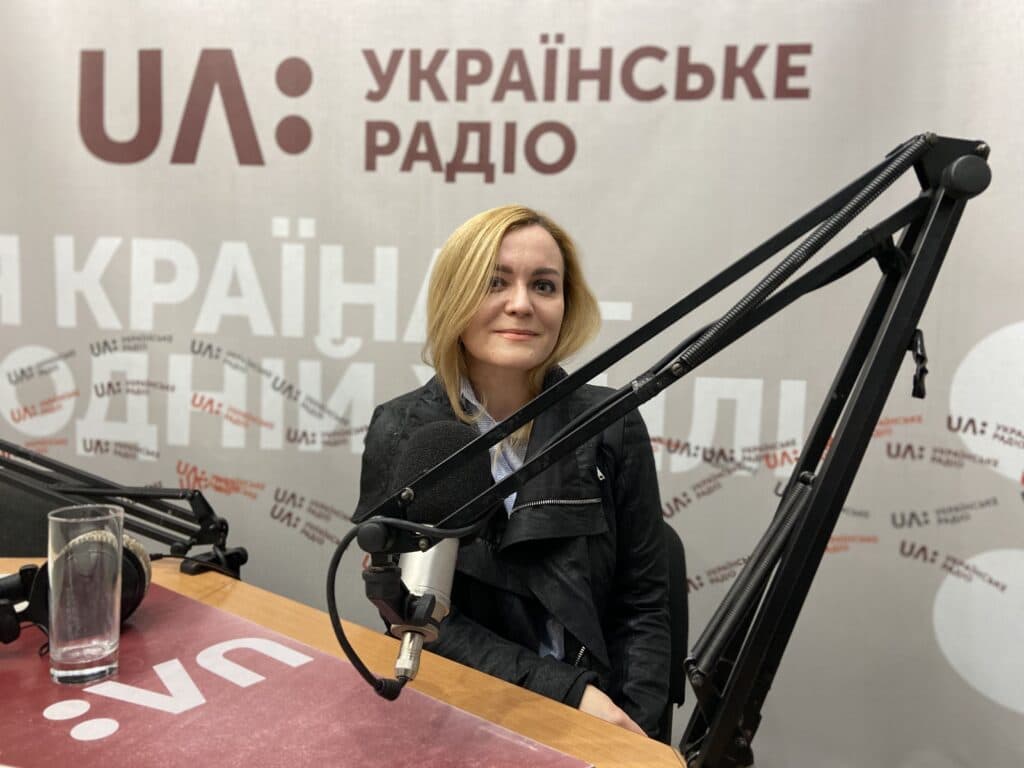
We have a lot of educational programs: the School of Community Leaders, the Party Innovation Hub, and the Ukrainian School of Political Studies. We also practiced women’s education programs, some seminars for MPs. We do not aim to look for people who will definitely go into politics. Ukrainian School of Political Studies brings together people from very different fields and promotes public dialogue. When these people decide to become political players, we talk to them, we consult. The most important thing for us is for a person to do what they have a vocation for. It is impossible to become a politician without an inner desire. But the most important thing is readiness and understanding of what you will do there and why you are going there. Our Alumni have held a variety of positions since 2005, including mayors, MPs, ministers, deputy ministers, and even the prime minister of Ukraine. Everyone came to power and came out with different indicators. Our task is to show during this studying, communication, discussion, a real picture of what can await them, what responsibility they can take, and what they can share with others for the public good.
When we started the School in 2005, the first group included very different people, who then, 10-15 years later, held responsible positions. We saw them grow. We tried to support them and be there where we could. When a person does something all his/her life, he/she becomes a professional. We have good examples at the local level, when our Alumni – mayors, village mayors – test themselves, engage in this activity all their lives, and election to election check how much the community trusts them. There are cases when our people were re-elected 3-4 times. This is a smooth growth. People who fell sharply into what is called politics of national scale, with different losses and gains, came out of it. Reputational losses are insane. Achievements depend on talents, values , and what life plan a person has.
Just before this local election, we had an exciting project – the School of Community Leaders. More than 200 people from all over the country took part in this program. We prepared people for the local elections. First of all, we tried to convince them: if they are worthy, they should try themselves in the election.
We encourage people who are aware of this to try and start with community change. I will say without any pathos: activists are also different. The word “activist” is now very “stale”. It’s like a trend. There was a trend for singers and stars in politics. Now the trend in the local elections is for activists. Why? Because civil society has a much higher level of trust than political parties and political players.
Compromises are also a problem. Which party to go from? How to deal with your reputation? How to convert it correctly? The fact is that there are no strong parties in Ukraine. Some projects appear and disappear like butterflies. We must move towards building normal parties. I would not envy the activists who are taking part in the election race now. There are two options: either they have a clear plan of what they will do in one term, they know how they will do it, they have a team of like-minded people and professionals; or they go into the unknown – and this unknown can be very cruel to them.
The question of whether activists should go into politics is wrong. It forms two camps: there are such as “good activists” who go somewhere and try to change something, and there are “bad” ones who stay away and just sit and philosophize. Many of the people we call activists are involved in professional NGO activities. This is exactly the same professional activity as baking bread, cleaning the streets, being a radio host. A lot of people from civil society became officials – so they wanted it and worked for it. Therefore, it is a question of vocation. The person should feel comfortable. You need to be clear about where you are going, with whom, and why. Once you compromise and don’t know how to defend and rebuild yourself, it won’t end well.
I know that many of the activists running in the elections have been offered autonomy in their work and decision-making. But it doesn’t work that way. When voting takes place, everything changes very dramatically.
In 2014, many young professionals from various fields who were not previously in power became members of parliament. As a result, any attempt to do something together was successful until a certain point, until the party battles began. For example, the project “EuroOptimists”. The Agency for Legislative Initiatives and the Ukrainian School of Political Studies have worked with them for a long time. We believe that these were MPs who did a lot of good, but they also had a lot of transformations. The main problem is not in people. They were good professionals, but they all came from different parties. Did they manage to create something of their own? We see now. Another question is how much support it would have.
“EuroOptimists” have managed to do a lot of good things in lawmaking. But they also showed that it’s not enough to gather a small group of good and motivated people.
It was a good experience for “EuroOptimists”, and we will see these people in politics. The most impress me those engaged in themselves, think what to do, and try themselves in other areas. The main thing is not to focus on the fact that you always have to be in politics.
Agency for Legislative Initiatives did a study “Life after Parliament”. We studied what happens to MPs after their convocation is over, and they are not re-elected. Power is a drug that people then constantly need. Understanding your balance – when to go and when to stop in time – is extremely important.
Activism is when a person in his/her free time is engaged in socially useful work, protects people’s interests, fights for justice. Often this is not a person’s place of work. It’s hard to imagine a place of work where you fight for a clean square. This is a civic activity. The parties are now trying to attract both professionals from civil society and people who are street activists. Among the latter, there are also many influential people, leaders of public opinion. We are in constant contact with such activists, whose values we share.
For example, my work is related to the formation of inter-party dialogue. I am hardly able to join any of the existing political forces. I am responsible to the people for whom we work and that our work will not be politically engaged. I have enough authority. I see many opportunities to work in the civil society sector. Everyone chooses their own path.
I do not think that Ukraine only needs new faces. We see that new faces are sometimes worse than already known ones. Politics should be a professional activity. We need to build strong political parties and educate leaders.
It isn’t easy to plan a national leader. What happened a year ago in the presidential and parliamentary elections is just the journey. We had to go through it. Society had to show its trust in the previous government and give the famous comedian a chance to become president. Volodymyr Zelensky had every chance to go down in history. He probably doesn’t have any anymore. But there was a chance. Ukrainian society can provide these chances.
Then we elected the Verkhovna Rada with 80.4% of new faces. These are often people who do not have the necessary training to go to work every day and perform their duties well. We also live with this now, remembering that the Verkhovna Rada, like any public institution, is a mirror of society.
It is possible to do specific things when you have power. The opportunity to communicate with a much higher level of public trust than politicians is closed. There is a loss of a certain circle of communication. A person can be influential both in politics and in the third sector. The main thing is for everyone to be in their place and do their job well. Opportunities are equal in politics and the third sector.
My advice to those who go from the civil society to politics is just one – not to forget all the campaign slogans and references to the word “values” that they used and will use during the campaign.
Svitlana Matviienko, Chairwoman of the Board of the Agency for Legislative Initiatives and Director of the Ukrainian School of Political Studies, took part in the “Conversation over the cup” at the invitation of the Konrad Adenauer Stiftung in Ukraine. In particular, together with journalist Philip Dykan, Svitlana Matviienko discussed the topic of women in politics: how can women join the political process, what will help us to overcome stereotypes, and do we need gender quotas?
We gathered the most interesting from the conversation:
A woman in politics does not necessarily hold a position. She is a woman who is a successful political journalist, a public intellectual, is involved in educational programs, develops what we call democracy in the broadest sense of the word, works in communities, and volunteers. If a woman is active anywhere, she usually has an impact. And then her path may end in political beau monde. It depends on the intention of this woman. Many women have had an extraordinary influence on world processes, especially ideological ones, in their daily work, such as Hannah Arendt, Simone de Beauvoir, and Susan Sontag. People have to come into politics to do something. Specifically. This can always be limited in time. You can’t get involved in politics for the sake of a job or a pension.
The worst thing I’ve seen over the years is the drug of having power. It replaces the accents of the personality so much that, having lost this power, a person feels “broken” and no longer sees himself outside this ritual, such as working in the Verkhovna Rada, voting for some laws, going on TV. But this is manifested not only in women. I saw a lot of men and women who, being one cadence, for example, as a member of parliament, then recovered for a long time that they no longer have this power.
If you saw whom political parties include in their lists, you would be very surprised. The process, which must be completely adjusted by a person’s biography, life experience, plans, and ability to do something, is replaced by counting the number of women on the list to fulfill all the necessary formal features. It is very bad.
Most of our men and women grew up in patriarchal families. Only civic and political education will help to overcome these stereotypes. But we have to understand: kindergarten and school will never be enough if the patterns that a child perceives at home reflect the humiliation of women and girls compared to men and boys.
Women always have to work harder. Research shows that women can work much better and achieve better results simply because of social pressure. Because they know that they will be asked to do more, it is difficult for them to achieve recognition. This is happening not only in politics but also, for example, in academia. My university professor kept saying: “A woman who studies philosophy is something like a guinea pig”. It could and, of course, affected all the female students.
It is possible to increase women’s ability to win elections, first of all, through political education. We run programs such as the Party Innovation Hub, the School of Community Leaders, and the closed Parliamentary Program, where women can acquire skills they lack.
Education is the first. The second is not to be afraid, but to try. If you do not try yourself in the political process and elections but you say you always wanted to do it, nobody will know how to work with you: neither the best political technologist nor consultant.
The third is to go to people. Communicating properly, conveying your thoughts, and gaining support are possible only in personal communication. The Internet and various online tools will certainly help you. But your people need to know you. And the more they know you, the more chances you have to prove to them that they may trust you.
See more in the live recording of the conversation.
Thanks for the opportunity to the Konrad Adenauer Stiftung! We really appreciate our partnership.
Association of Schools of Political Studies of the Council of Europe, which includes the Ukrainian School of Political Studies, condemned the unfair elections in Belarus and the Belarusian authorities’ attempts to suppress peaceful protests.
We publish the full text of the statement made by the Association of Schools of Political Studies:
“Strasbourg 15.08.2020: The Association of Schools of Political Studies of the Council of Europe (ASPS) voiced outrage at the rigged election and subsequent savage repression of protests in Belarus.
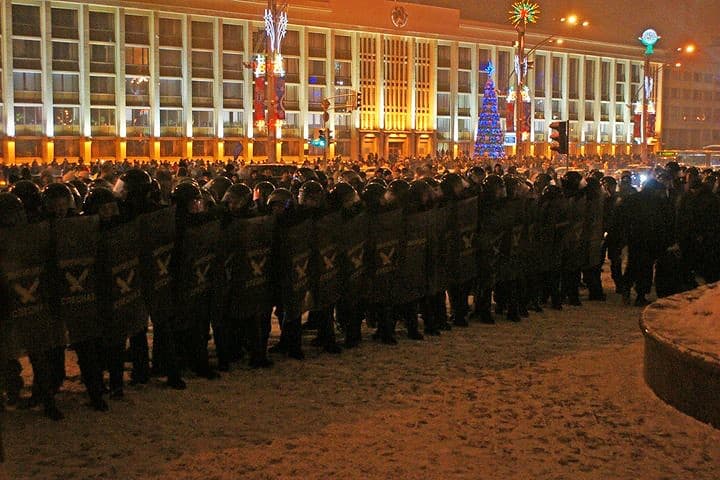
The use of violence by the country’s authoritarian regime against its own citizens shows its contempt for human rights, democracy, and the rule of law.
Calling for the release of all those detained during the election, the ASPS condemned the Lukashenko government’s attempts to silence opposition voices, undermine civil society, and prevent the emergence of a new generation of democratic leaders.
The people of Belarus must have the right to free and fair democratic elections as well as respect for human rights which are at the heart of the work of the Council of Europe’s Schools of Political Studies, the ASPS said.
The ASPS groups 21 Schools in Europe and North Africa including the East European School of Political Studies which was established in Ukraine in 2007 and works for Belarus. It promotes the emergence and development of civil society in Belarus but most of its activities have to take place outside the country”.
Ukrainian School of Political Studies and Agency of Legislative Initiatives also expressed support for the people of Belarus in their quest to defend their democratic rights and freedoms.
East-European School of Political Studies was established in 2007 to develop civil society and unite Belarus’ new democratic leaders. It belongs to the network in which the USPS works. However, the Eastern European School is registered in Ukraine, and most of its seminars still take place outside authoritarian Belarus.
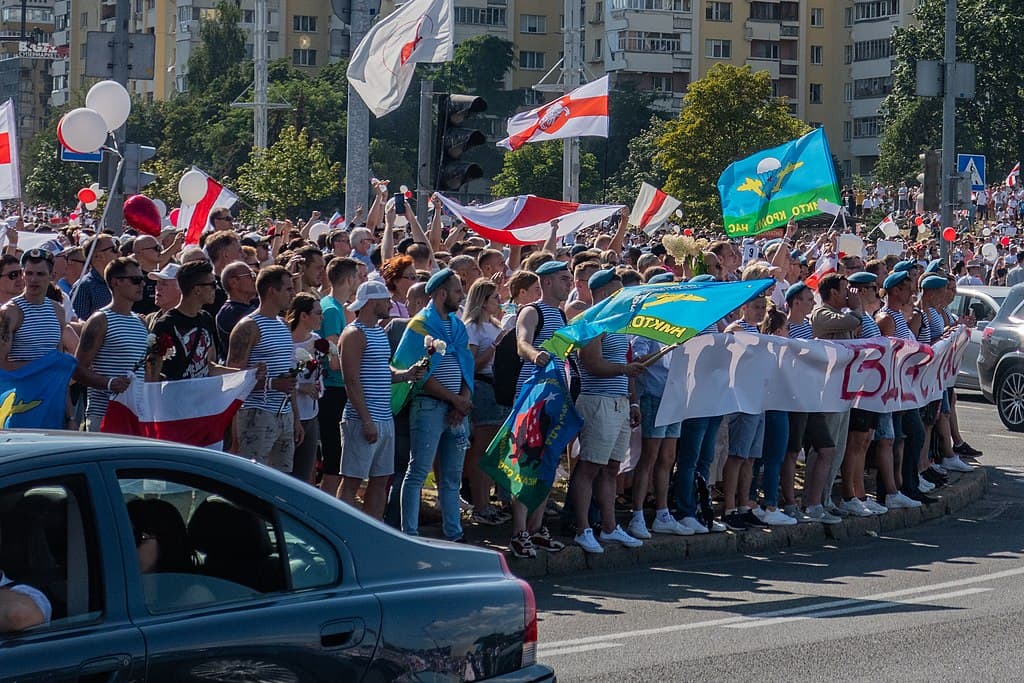
In 2009, Anna Krasulina, now the spokeswoman for Lukashenko’s main rival Sviatlana Tsikhanouskaya, became the alumna of the East-European School of Political Studies. The opposition team managed to reach people and start a large-scale protest against authoritarianism. After the election, thousands of people protested to defend their right to fair elections. Police violence didn’t stop the people.
What is Belarus fighting for, and why is the regime of “Europe’s last dictator” rapidly falling apart? Anna Krasulina gave answers to the Ukrainian School of Political Studies.
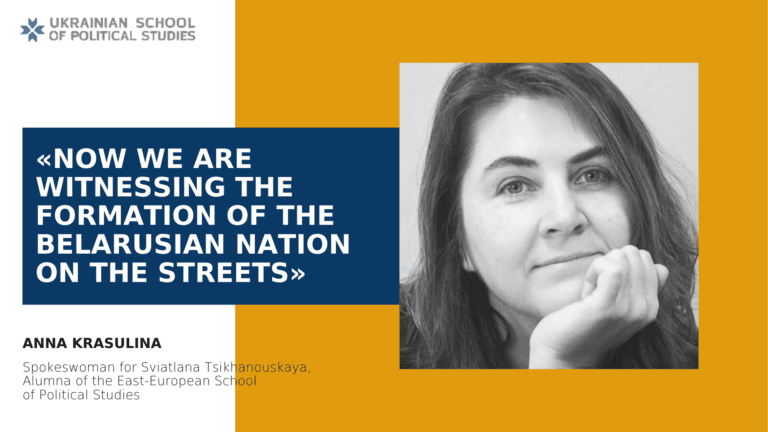
Lukashenko was supported when he had the resources to “buy” people: pensioners and state enterprises’ workers. You know, those state-owned enterprises that are extremely uncompetitive, their products are not sold – for example, the Tractor Plant. And people there receive higher salaries than university teachers. Of course, the workers were satisfied with this situation, plus or minus. But it was “bribing”. Lukashenko had enough money thanks to Russian infusions, oil transfers, and margins on oil products. We received oil at Russian domestic prices, and then it was processed at our plants and sold to Europe at European prices. Due to this margin, mostly, Lukashenko had support. Now, first, the price of oil has fallen sharply. Second, Russia has stopped selling at domestic prices because it has suffered severely economically itself. In the early 1990s, the Belarusian economy was quite competitive. We were a more economically developed country than Poland at that time. But during his presidency, Lukashenko destroyed the economy and science with his incompetent leadership. Russia has stopped supporting Lukashenko and his regime. And now the economy has collapsed. Lukashenko can no longer “buy” people. And “with him” remains only 20% of the population, who directly depend on him – it’s law enforcement agencies.
The economic situation is terrible. More than a million of the 4.5 million working population work abroad. Most of them earn money in Russia because they do not need visas and knowledge of a foreign language. Mostly, men go to work, and in villages and small towns, there are only women, children, and the elderly. People work for food and a roof over their heads. Recently, Belarus had a lower salary than Ukraine. And our prices have always been high. The standard of living has fallen sharply, even compared to Ukraine, which is at war. Belarusian stability is a myth. It is stable poverty, stable starvation.
People took to the streets against poverty, total disrespect from the authorities, against arbitrariness and injustice. During the coronavirus, the attitude of the authorities towards the people was especially clear. Lukashenko did not protect people, did not impose quarantine. So, people had to make horizontal connections. We learned to help each other during the pandemic. We sewed the costumes ourselves. We made the masks ourselves. There was no civil society in Belarus until last year. But the pandemic has shown people that they are capable of cooperating. People started to become a united nation. A clear example: the real statistics of deaths due to coronavirus in Belarus were silenced. Doctors were asked to sign a non-disclosure agreement. The paramedic from Lida (the city in the western part of Belarus, – Agency) dared to name the real figures in his district. He was immediately fired. But in three days, people gathered for him an annual salary. When Belarusians began to support those who opposed the system, who were not afraid to tell the truth despite everything, then civil society’s principles were established.
In 2010 only those who demanded respect, the rights, and freedoms acted. They are now joined by those on the lower tiers of the Maslow pyramid – people who need security and food. There is no satisfaction of the basic needs of physical existence in Belarus now. There is not enough food, we do not feel protected. In 2010, the intellectuals and the opposition took to the streets. And now even factories are on strike.
Yes. We set people up for this throughout the election campaign. At each meeting, we said: Sviatlana Tsikhanouskaya is just a symbol of hope. She will not lead people to the barricades. If there are one leader and one plan in our country, it will be very easily destroyed. We said that we should focus on decentralization. Everyone is now responsible for his/her life and future. And everyone must assess the possible participation in the protests: whether it is going to a demonstration, organizing a strike, posting leaflets or shouting from the window “Long live Belarus!”.
Fear. Uncertainty. They understood perfectly well that they had lost. The security forces were tasked with intimidating very strongly and sharply. Otherwise, society will continue to fight. People were beaten and tortured at the Okrestyna detention center. This was done deliberately to try to intimidate society and return it to the “stall”. But the authorities will not succeed anymore. People began to respect themselves. Now we are witnessing the formation of the people on the streets of Belarus.
We expect from the international community, at least, recognition of the victory of Sviatlana Tsikhanouskaya. Non-recognition of the fact of victory of the Belarusian people will be regarded as disrespect for their choice. We look forward to all possible diplomatic and moral measures to support the Belarusian people, as well as an end to violence on the country’s streets. We stand for personal visa and financial sanctions for those who falsified the election results and gave criminal orders to beat, injure, and detain civilians.
The transfer of power will be absolutely certain. Here the question is only in terms. This should happen as soon as possible to minimize consequences. This is in the interests of the authorities that will be held accountable. The regime has no economic basis to maintain its power. You can mismanage your farm if you have a lot of money. The current government will not be able to contain the situation either economically or in fact. This means that they will have to admit that people have won.
After that, Sviatlana Tsikhanouskaya promised three steps: the release of political prisoners, the restoration of the 1994 Constitution, which limits the president’s powers and term, and third, that conditions would be created for presidential elections to be held within six months. Everyone who wants will be able to take part in this fair election. Then the people, having evaluated the programs, teams, and personalities of the candidates will elect a new president.
Our government and parliament did not have any powers before. There are specialists in the government’s economic department, but they could not do anything without the approval of the president. A few years ago, Belarus negotiated with the IMF on serious loans and debt restructuring. All steps and draft reforms have been agreed with the IMF. It remained only to get a “yes” from the president and sign. But at the last moment, Lukashenko refused. Therefore, specialists in the government did not have the opportunity to work. To avoid serious shocks, we have decided that the average level of officials (from the Deputy Minister and below) is likely to remain in place. But the country’s top management needs to change. Thus, we will have the opportunity to build the government and parliament’s work in a completely different way. Those who systematically and seriously violated the law will be brought to justice.
In Ukraine, the protest was concentrated, mostly, at one point. We have all the streets of the city, sleeping areas are a “springboard” for demonstrations. The protests are “decentralized” because we understood from the beginning that centralization would be broken, that there would be no Internet, that roads would be blocked. We tried to convey it to people – and we succeeded.
First, we gathered a huge number of people at meetings. Such a large amount of people has not been on protest since the early 90’s. We talked to the people there. Secondly, we used Telegram channels. Previously, it was not possible to reach such an audience. Besides, Sviatlana Tsikhanouskaya has a YouTube channel “Country for Life” created and developed by Sergei Tsikhanouskiy. We have learned to work with new digital tools. The desire for change enveloped the whole country, and our message spread very quickly.
Democratic, European, civilized. In the twelfth century, the Grand Duchy of Lithuania already had the Magdeburg right and determined the European course of development. Belarus is a European country. Now it will return to its origins.
Ukrainian School of Political Studies and Agency for Legislative Initiatives support the people of Belarus in their intention to have a democratic country.
Solidarity with Belarus was also expressed by the Association of Schools of Political Studies, which covers a network of 21 schools in Europe and North Africa.