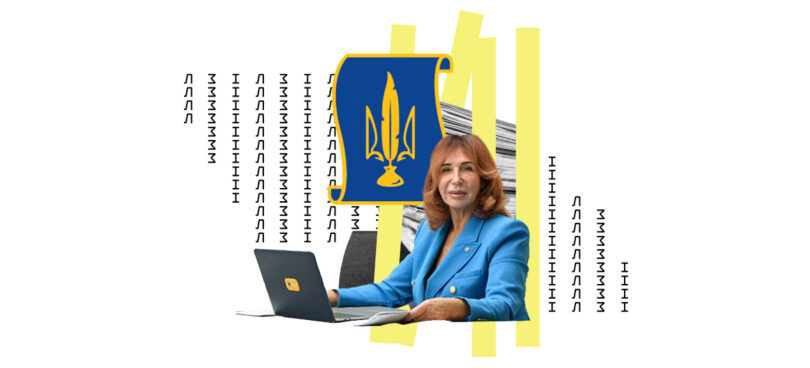
Essay by Kateryna Ryabiko, Chair of the Board of the Agency for Legislative Initiatives
In a world besieged by crises, one catastrophe, often unspoken about, is rising to the surface. It has the potential to become the defining security threat of our time: access to water.
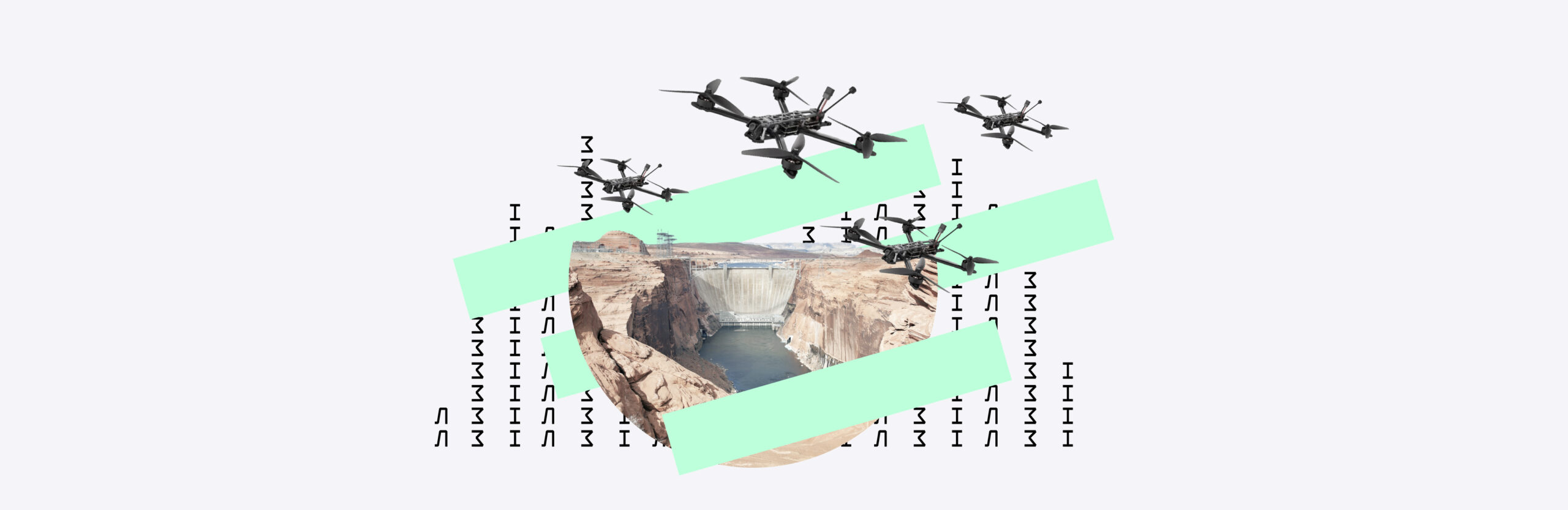
With a lot of ongoing conversations about the next global armed conflict and the weapons to be used in future conflicts, most of the talks are focused on drones or unmanned vehicles to deter and defeat the enemy. Not many of these conversations are focused on ‘weaponising’ water resources in contemporary and future wars, including cyber, chemical and biological threats that, if deployed, will have a devastating, deadly impact. Actions with ill intent and operational effect on civilians or military capacity, including dam-breaching, deliberate river poisoning, cyber-intrusions into water control, and denial or manipulation of supply, all fall under the definition of ‘weaponisation of water’ within a hybrid-war framework. During the 2025 Warsaw Security Forum, I asked WSF2025 Winning the War Before the War: European Strategies for Ukraine. the EU Ministries of Defence whether the EU is ready to deter the risks associated with such attacks and received a brief and indisputable response, ‘Yes’. It is reassuring at first glance, isn’t it? However, is it really?
The 2024 World Economic Forum’s Global Risks Report identified environmental changes and misinformation and disinformation as the top two short-term risks facing the planet. But disinformation doesn’t only distort elections or polarise societies. It also masks the gravity of the environmental breakdowns already unfolding, especially our mismanagement of natural resources, including water. When people take clean water for granted, at times under the influence of false narratives, they miss one of the most pressing truths of our times: water is not infinite, and in a deeply unequal world, it is already being used as a weapon.
It’s time to talk about water security with the same urgency as energy security, food security, and defence. In June 2023, the world witnessed a chilling reminder of what it means when water becomes a tactical tool in warfare. The destruction of the Kakhovka dam in Southern Ukraine unleashed an environmental, humanitarian, and strategic disaster. The massive reservoir it held was a vital water source for agriculture and the cooling of the Zaporizhzhia Nuclear Power Plant. Kakhovka’s dam collapse caused widespread flooding, forced thousands of people to evacuate, contaminated drinking water, and destroyed ecosystems that may take decades to recover.
It has been made clear that weaponising water infrastructure is no longer hypothetical. It is happening, and Russian aggression against Ukraine is not the only war theatre where water has become both a casualty and a tool of war. In Syria, drought preceded civil war, contributing to mass migration and social unrest. In Gaza, the collapse of water and sanitation systems has turned an existing humanitarian emergency into a public health crisis. Oxfam reported that sewage was flowing through displacement camps, with aid agencies warning that Gaza’s devastated infrastructure risked the re-emergence of diseases that were once eradicated. In Iraq, Iran, and Türkiye, cross-border tensions over river flows have escalated further, threatening regional stability.
By 2024, over ten cyberattacks on water supply and wastewater infrastructure were reported globally, risking public health, causing service disruptions, economic damage, and environmental harm. Within the EU in August 2025, Polish authorities reported that they had foiled a cyberattack targeting the water supply system of a ‘large city’. Officials reported that an intrusion was detected and neutralised before it could disrupt operations. The attack had exposed vulnerabilities in critical infrastructure, particularly in the interface between the IT systems and operational control systems of utility networks. The incident was used by the Polish government to accelerate investments in cybersecurity for water and utility systems by allocating funds to strengthen these systems.
These examples demonstrate an increasing trend of politicisation and militarisation of water resources. At the same time, the lack of information or disinformation fuels inaction and creates a critical thinking vacuum. As a result, water and security of water resources and infrastructure continue to be treated with a lack of sense of urgency despite the high risk of weaponisation. In high-income countries, water still flows freely from taps. This complacency is dangerous. It breeds false security in the Global North, while the Global South is already on the frontlines. From Cape Town’s Day Zero to Chennai’s parched streets to Mexico City’s collapsing aquifers, the signs are everywhere.
Disinformation doesn’t just distort facts; it dilutes our moral clarity. And in doing so, it delays the collective action needed to prevent water from becoming the catalyst of the next great conflict. When a dam falls, whether due to military strikes, sabotage, or ageing infrastructure, it impacts food production, energy supply, public health, and migration patterns. It can destabilise entire regions. In the case of Ukraine, the destruction of the Kakhovka water reservoir has become a calculated blow to civilian resilience and regional water security.
We have long understood that energy grids are critical infrastructure. The same recognition must now apply to water systems, including dams, pipelines, reservoirs, and treatment plants. Securing these is as important as securing our borders. And yet, in many countries, water infrastructure remains underfunded, outdated, unprotected, and increasingly vulnerable to cyberattacks and sabotage.
Closing the loop from where I began — are we prepared to deter the weaponisation of water? Is the answer truly an indisputable ‘YES’? Global history teaches us that wars are often sparked by scarcity, unmet needs, a sense of injustice or desperation. If we allow water to become scarce, then the next transnational war may not be fought over ideology or land, but over rivers, reservoirs, and the right to survive. The time to act is now. Before the taps run dry. Before the rivers are poisoned. Before water dams become battlegrounds, and we all lose.
Author of the material: