
Article by the Agency for Legislative Initiatives for Dzerkalo Tyzhnia
Ukraine’s law enforcement system resembles Orwellian ‘doublethink’: inwardly — a ‘strong hand’ and control; outwardly — a display of reform. In reality, there is an ongoing struggle between the ‘old’ bodies, heavily influenced by the President, and the independent anti-corruption institutions. The question is whether Ukraine can move from facade to genuine change.
In his article ‘Reforms and Facade: The Double Standards of Law Enforcement Agencies in the Context of European Integration’, Yevhen Krapyvin, Head of the ‘Law and Order’ Area at the Agency for Legislative Initiatives, sets out his view of the situation.
Ukraine’s law enforcement system resembles Orwellian ‘doublethink’ — existing in two parallel dimensions. One is internal, where citizens are shown a ‘strong hand’ that keeps order under control during wartime, cracks down on ‘enemy agents’ and corruption schemes. The other is for international partners, where these same law enforcement bodies present themselves as exemplary reformers, fulfilling commitments on EU accession and actively implementing European standards.
In reality, we are witnessing a fierce confrontation between law enforcement and justice bodies heavily influenced by the President — the Prosecutor General’s Office, the Security Service of Ukraine (SSU), the State Bureau of Investigation (SBI), the Economic Security Bureau (ESBU) — and the independent anti-corruption bodies established with the support (and often under pressure) of international partners. At the same time, the European Union expects the successful experience of building new institutions — the National Anti-Corruption Bureau of Ukraine (NABU) and the Specialised Anti-Corruption Prosecutor’s Office (SAPO) — to be extended across the entire system, in particular through open competitions for leadership positions and audits.
The gap is becoming ever more apparent between the Government’s declared commitments and the reality in which the country lives. The law enforcement system is still far from being recognised by citizens as effective and fair, rather than an instrument in the hands of those in power. The question is how long such a strategy can justify itself — and whether what we are seeing is not in fact a reversal of the declared state policy of European orientation in the opposite direction.
Two Sides of One Reform
Behind the facade of European integration progress hides the ‘old guard’ of law enforcement bodies. Many police leaders successfully passed the vetting process in 2015–2016, while the new bodies — the SBI and ESBU — were staffed by the same personnel carrying the institutional memory of earlier times. They often still act according to post-Soviet principles, where loyalty and control take precedence. At the level of routine cases (thefts, robberies, bodily injuries), old practices are reproduced — unlawful actions, concealing reports from being registered, persuading victims that ‘it is their own fault’, and so on. And at the level of high-profile cases, the situation is even worse, with arguments of political expediency apparent everywhere.
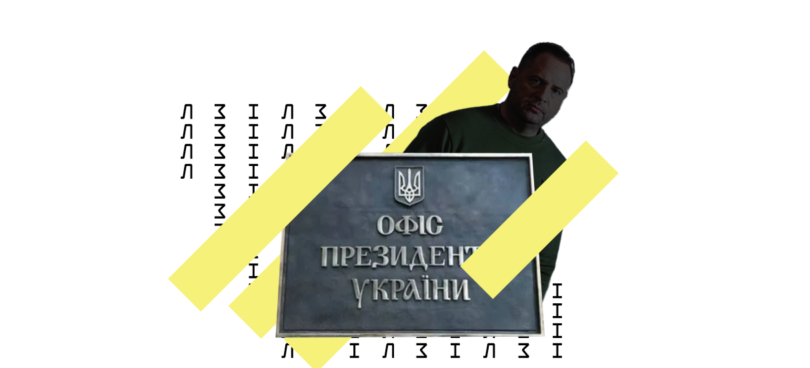
The media and civil society often point out that behind the blocking of law enforcement reform — which is disadvantageous to the authorities — stands the Deputy Head of the Office of the President, Oleh Tatarov. According to investigative journalists, it is he who has built the ‘power vertical’ that influences key law enforcement bodies, obstructs judicial reform, appoints loyal cadres to leadership positions, and more.
By contrast, representatives of law enforcement bodies in private conversations say that Tatarov’s influence is overstated. At times, the urge to explain all problems with a single surname is sheer reductionism: it explains nothing and merely creates the false impression that replacing one person in office would change everything. The system does not work that way. What really matters is the function, which must be performed properly by whoever is appointed. Whether that person is Tatarov or someone else is of little consequence. There are plenty of people capable of providing such ‘services’ to the President. The issue lies rather in the approaches and, as is often said, the values. The real struggle should be against the desire to control independent institutions and branches of power — a desire which, during martial law, is increasingly taking forms that pose risks to democracy.
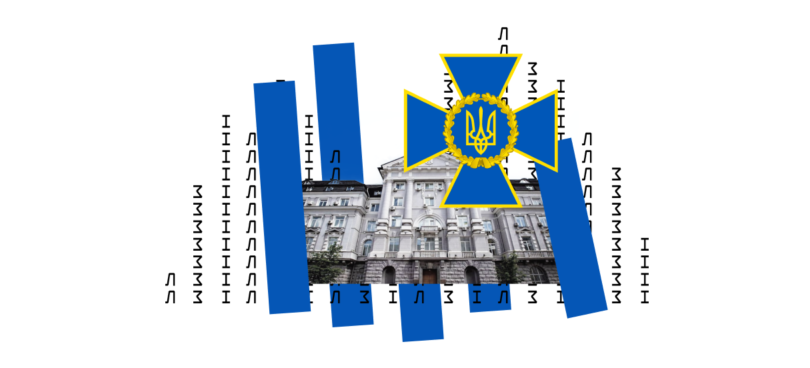
The Security Service of Ukraine, for instance, is increasingly invoking the narrative of a ‘Russian connection’ as a tool for exerting pressure on opponents. And, regrettably, not only in cases where there is truly indisputable evidence of a person’s ties to the aggressor state. Naturally, this raises questions about political bias, but criticising such actions is also uncomfortable. During wartime, the SSU performs an essential role — destroying the enemy and actively countering collaborators and traitors. Nevertheless, the SSU is above all a counter-intelligence agency, and the more powers it accumulates, the more likely it becomes that ‘the right hand will not know what the left is doing’.
At the same time, these same structures and individuals, at international meetings, assure partners of their commitment to reform, present pilot project slides, speak of implementing EU standards, and declare their readiness for change.
Progress or Regress
At the level of state policy, above all in the Rule of Law Roadmap, Ukraine has begun to build such a system. The head of the National Police is to be appointed on the basis of an open competition (currently — without one). Senior positions in law enforcement bodies are likewise to be filled by mandatory competition (currently — not everywhere). Plans are in place to improve the system of internal control, adopt standard codes of ethics, introduce an evaluation system and periodic audit. Finally, a law on law enforcement agencies is to be adopted, which will define the list of these bodies and unify their status. The Prosecutor General’s Office, the Ministry of Internal Affairs and the Ministry of Justice are actively working on this. This is the reality of European integration.
At the same time, there is an internal political reality:
- The SBI replicates the practice of urgent searches without a court order. Lawyers constantly complain about the work of this body, and a real example of the SBI’s inefficiency is its handling of the war crimes. In these cases, the problems are only growing — from unauthorised absence from a military unit or place of service to corruption in the army, which negatively affects the country’s defence capability.
- The SSU uses ‘links to Russia’ as a tool of pressure on independent bodies, while human rights defenders and scholars criticise the negative practice of prosecuting pensioners for collaboration for nothing more than liking posts on Odnoklassniki (for the sake of performance indicators).
- The NPU is attempting to rewrite the draft law on competitions (currently under consideration by the Government) in such a way as to turn European plans into a mere formality.
- Transparent competitions for regional prosecutors’ offices and for the Prosecutor General’s Office are being cancelled, which in effect opens the door to hand-picked appointments. The President’s law did not repeal all the harmful changes adopted on 22 July 2025. In the end, this means a prosecution service for ‘one’s own’.
A Gulf in the Law Enforcement System
As a result, the opposition between the ‘new’ and ‘old’ law enforcement agencies is intensifying. It existed before but was mostly reduced to a material criterion — detectives of the ‘elite’ NABU always received higher salaries, and the state protected their guaranteed level of remuneration better than judges’ pay. So, there was envy, it seems, but also an understanding that to join the Bureau one had to pass an open competition and withstand high competition, since there were fewer than three hundred positions for the entire country. Today, however, that envy has turned into a gulf — the NABU and SAPO have lost the support of the authorities within the state because of their overly active stance.
The ‘old bodies’ — the NPU, SBI, ESBU, and the SSU — are supported by the authorities internally, while the ‘new’ bodies — the NABU and SAPO — are supported by civil society and European partners. The proposal of the former is to liquidate the latter. We seemed close to this on 22 July 2025, since restricting procedural independence by strengthening the role of the Prosecutor General was only the first step. In effect, the anti-corruption bodies — the NABU and SAPO — would have become just like the ‘old’ ones, and any reforms introducing merit-based principles of appointment or audits of performance could have been sabotaged.
Ukraine has climbed out of this gulf — or rather, avoided falling fully into it. But the ‘aftertaste remains’ — such insincerity undermines trust in reforms, and this is noticed by international partners, including the EU. Yet they still do not perceive the ‘doublethink’ in the actions of the Ukrainian authorities. Publicly, questions about the seriousness of intentions regarding European integration reforms are not put to the President, because his authority in the world is enormous. For now, the EU is trying to balance between comprehensive support for Ukraine and an awareness of domestic political problems, often ‘writing them off’ to the war. But this cannot continue indefinitely.
The European Framework — Replicating the Success of the Anti-Corruption Bodies
The key requirements for Ukraine’s accession to the EU in the sphere of law and order are contained in two chapters — 23 (‘Rule of Law’) and 24 (‘Justice, Freedom and Security’). These set out quite broad frameworks but do not always provide clear indicators for measuring success. Largely for objective reasons, since it is extremely difficult to measure whether you have more rule of law and/or less corruption. This allows governments to manoeuvre: promising change, while at the same time taking steps in the opposite direction. At least for now, when most of the obligations consist of drafting and adopting laws, and the deadlines have not yet expired. Working groups have been created, draft laws are being developed, but it is too early to speak of their quality.
In 2024, Ukraine completed the screening, which made our European integration framework clearer than ever, and the Government’s Rule of Law Roadmap is confirmation of this. However, such a tactic will lead us into a dead end when, in 2026, it will be necessary to show the results of these ambitious plans.
Chapter 24, ‘Justice, Freedom and Security’, is devoted entirely to the fight against serious crime (organised crime, drug crime, terrorism, cybercrime, and so on). More precisely, to the capacity of Ukraine’s law enforcement agencies to keep such crimes under control at a relatively safe level. In other words, the EU is less concerned with which body in Ukraine is responsible for which category of crime, and more with how capable these bodies are, and how well they can make use of European instruments for crime forecasting, strategic planning, prioritisation, and the like.
For European partners, what matters is not only the formal existence of law enforcement agencies, but also their actual ability to combat serious crime, their integration into European analytical and planning instruments, and their independence from political influence. This is what is often lacking — especially in the ‘old’ bodies such as the NPU, SSU, and the Prosecutor General’s Office. At times, it is lacking in the ‘new’ ones too, since the SBI is not by chance trying to remain ‘in the orbit’ of the President rather than of the executive.
At the same time, the EU has recognised that certain bodies — the NABU and SAPO — have indeed produced results thanks to their autonomy. This is why recommendations appeared on the ‘resetting of the ESBU and the SBI’ (a recommendation from January 2025, not yet public). Their essence lies not only in appointing a new director through a competition in which members nominated by international organisations have the decisive vote. Nevertheless, the Ukrainian authorities have for some time actively promoted the idea of abandoning the involvement of international experts in selection commissions. Their argument is that a reforming Ukraine is now capable of handling this task independently. Ukrainians saw how this works in practice in the competition for the post of the ESBU Director, where it was only thanks to the position of the international experts that the process was conducted transparently. How the Government was ‘ready to cope independently’ — by violating the law and failing to appoint the winner, Oleksandr Tsyvinskyi, as Director — was also on full display. And the role played in this by the SSU’s letter — which is not grounds for refusing an appointment and had already been taken into account by the commission during the competition — was not forgotten.
Going forward, there must also be a cleansing of the personnel of these bodies (through vetting), competitions for leadership positions, strengthening of the detective staff, and the like. And of course, the introduction of real control instruments — such as periodic audits of activity, as a result of which a director may lose office and the work of a body may be significantly adjusted from outside, by the Government and Parliament.
…The success of the anti-corruption bodies can and should be scaled up across all law enforcement agencies. If, however, the path of ‘doublethink’ continues, the absence of progress will soon become obvious. And this may obstruct the European integration of the entire country because the rule of law is fundamental. Otherwise, the risk of remaining trapped by the ‘strong hand’ and unfulfilled promises is not hypothetical but all too real.
Author of the material: