Column by Svitlana Matviienko for Ukrainska Pravda
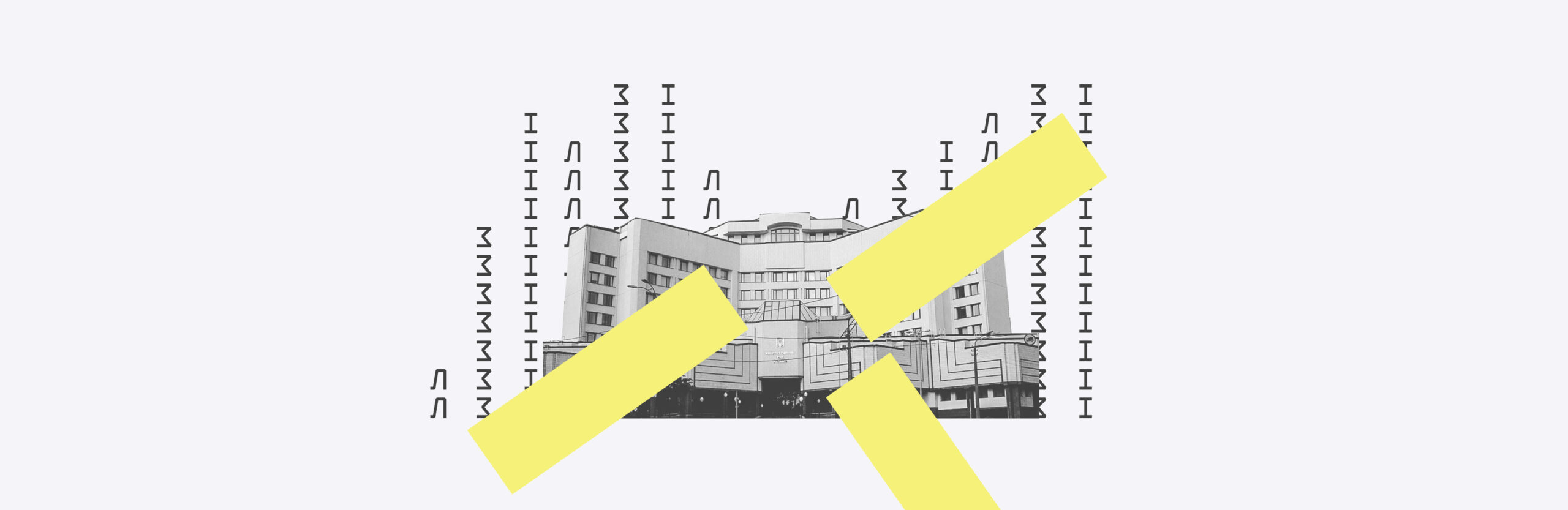
On the eve of Constitution Day, June 27, 2025, President Zelensky appointed Oleksandr Vodiannikov as a judge of the Constitutional Court of Ukraine (CCU). This was the first appointment to the CCU since September 2024 and the third under the new procedure — an open competition conducted by the Advisory Group of Experts (AGE), which consists of three Ukrainian and three international legal experts. The public and thorough selection process for the CCU, which excluded questionable candidates, confirms the effectiveness of competition commissions with foreign experts involved.
On July 3, 2025, Oleksandr Vodiannikov solemnly took the oath, formally restoring the quorum in the Grand Chamber of the Constitutional Court of Ukraine (CCU), which had been lost since the end of January 2025.
Undoubtedly, the appointment of a new judge to the CCU is a step in the right direction. However, unfortunately, it does not resolve all the problems that directly affect the institutional capacity of the Constitutional Court of Ukraine.
Quorum is present — decisions are absent
Nominally, from today, the Constitutional Court is fully operational, but its actual effectiveness remains questionable. On paper, the appointment of Oleksandr Vodiannikov looks good: the Court now has 12 judges out of 18. This is enough to hold sessions of the Grand Chamber of the CCU and its two Senates (the Second Senate had been blocked for six months due to a lack of judges). However, to make a full-fledged decision at the level of the Grand Chamber requires at least 10 votes. And this is the main problem, as gathering 10 out of 12 votes is extremely difficult.
This was effectively confirmed by Constitutional Court judge Vasyl Lemak in his Facebook post on June 29, 2025:
‘During the years of large-scale war (since February 2022), the CCU has made 41 substantive decisions. In 30 of these 41 decisions, provisions of the law were declared unconstitutional. Three quarters! Despite the war, the Court managed to do this — defending the Constitution of Ukraine. Even this year, before January 27, 2025, the Court managed to issue three decisions, in two of which the provisions of the laws were declared unconstitutional […]. Show me another Constitutional Court that acts more actively, especially during wartime, implementing the principle of separation of powers and respect for human rights […].’
The number of decisions made is not impressive, but the fact that three-quarters of them recognise existing legal norms as unconstitutional is significant. Thus, a non-functioning Constitutional Court is a blessing for those who would prefer to continue violating the Fundamental Law. A country at war obviously needs a greater number of CCU decisions, especially given that most of them declare laws unconstitutional. Most European democracies face fewer challenges than Ukraine currently does, yet they consider up to 60 cases per year. Therefore, the Constitutional Court of Ukraine still has room to evolve.
It is worth recalling that six positions for Constitutional Court judges remain vacant. As practice shows, even a single appointment takes several months. For example, ranked candidate lists for the CCU were submitted to the Competition Commission under the President and to the Verkhovna Rada Committee on Legal Policy back in February 2025. Since then, only one appointment has been made, despite the fact that there are enough candidates to fill all quotas from both the President and the Parliament.
An old system in a new reality
The next problem is that in 2025, the Constitutional Court continues to operate according to a system from the 1990s: the reporting judge independently gathers votes for “their” decision. This opens the door to internal politicisation and mutual protection, where decisions are made not based on law but according to “who benefits”. Judges themselves lobby for the cases they are interested in, while others remain pending for years. For example, in 2024, the Court functioned with 13–14 judges. Most decisions were made almost unanimously, which is rare given the broad legal discussions and differing opinions among the CCU judges. With the current number of judges, each decision will be even harder to pass or may be blocked altogether due to a lack of votes.
The minimal quorum exacerbates another problem: it creates opportunities to influence judges and puts the independence of the Constitutional Court at risk, making its decisions politically biased. Consequently, this does nothing to build public trust in the CCU. The draft law “On Constitutional Procedure” should partially resolve at least some of these issues. However, since 2020, it has been gathering dust within the Parliament.
Bureaucratic deadlock or irresponsibility
Currently, two judges are to be appointed to the CCU by the Parliament. Is the Verkhovna Rada willing to accept a half-functional Constitutional Court operating under outdated procedures? Since February 2025, the Parliament has not reviewed the candidates for the Constitutional Court recommended by the Advisory Group of Experts. The nuance is that the Committee on Legal Policy cannot reach an agreement with the AGE regarding the provision of candidate documents. It seems rather odd when an advisory body withholds these documents. Delays in appointments harm not only the reputation of the CCU but also the functioning of the entire system of checks and balances.
It is also worth recalling that in 2022, Parliament appointed Olha Sovhyria to the Constitutional Court. She had previously served as the permanent representative of the Verkhovna Rada of Ukraine to the CCU. At that time, MPs ignored the Venice Commission’s recommendations regarding adherence to proper vetting procedures and simultaneously violated the constitutional principle of political neutrality that all Constitutional Court judges must uphold. This appointment, to put it mildly, does not inspire trust in the institution, especially concerning the impartiality and independence of a Constitutional Court judge. Therefore, once the Court is fully staffed, Olha Sovhyria should undergo a thorough review to dispel doubts about her professionalism and integrity — both within Ukrainian society and among international partners. The Agency for Legislative Initiatives and other civic organisations have repeatedly raised this issue. This will, of course, require targeted amendments to the law on the Constitutional Court, but there has been no movement in this direction from the Verkhovna Rada.
Notably, prior to her appointment to the CCU, Olha Sovhyria was a member of Parliament and voted on a number of laws currently under the Court’s consideration. For this reason, she should recuse herself from relevant cases and must not participate in their hearings. As a result, even with a formal quorum of 12 judges, the review of some cases may be effectively “on hold” until new judges are appointed if Olha Sovhyria or others file recusals.
A full and truly effective operation of the Constitutional Court of Ukraine is possible not only with a complete composition of the Court but also through the implementation of systemic reforms. It is necessary to update internal procedures and strengthen institutional guarantees. The Parliament, as one of the key actors in this process, must finally move from passive observation to active engagement — fulfilling its duties regarding transparent appointments and the expected legislative changes.
The Constitutional Court itself also faces numerous challenges — above all, the public expects systemic approaches to its work and overcoming the backlog of longstanding unresolved cases, especially those pending for five or more years. A priority must also be the expedited consideration of all constitutional submissions, petitions, and complaints within a six-month timeframe. Delays in constitutional proceedings prevent the Court from timely responding to institutional conflicts, which negatively affect the effectiveness of the entire system of checks and balances, and most importantly — the protection of citizens’ constitutional rights and freedoms.
The implementation of a modern organisational structure within the Constitutional Court, full digitalisation of all processes, staff renewal, and adequate funding will also contribute to resolving these issues.
To enhance the authority of the Constitutional Court in society, it is also necessary to establish effective communication, through which the Court clearly explains its decisions. Only comprehensive reforms will lead to greater independence and efficiency of the Constitutional Court and enable it to make decisions deserving of trust — both within Ukraine and beyond its borders.
Author of the material: