The crime of genocide is “acts committed with intent to destroy, in whole or in part, a national, ethnic, racial or religious group, as such.”
On 14 April 2022, Marshal of the Senate of the Republic of Poland Tomasz Grodzki, for the first time as a representative of the international community, stated:
This statement was the first time a foreign official used the term “crime of genocide” to describe the nature of Russia’s crimes against Ukraine. Tomasz Grodzki’s words not only marked the beginning of a trend of states recognising the genocidal nature of the Russian invasion but also highlighted the politicisation of the crime of genocide as a special phenomenon in world politics.
According to international law Article 5 of the Rome Statute of the International Criminal Courtу , four categories of international crimes are currently enshrined:
- The crime of genocide that is construed as “acts committed with intent to destroy, in whole or in part, a national, ethnic, racial or religious group, as such.”
- Crimes against humanity, meaning “any of the following acts when committed as part of a widespread or systematic attack directed against any civilian population, with knowledge of the attack.”
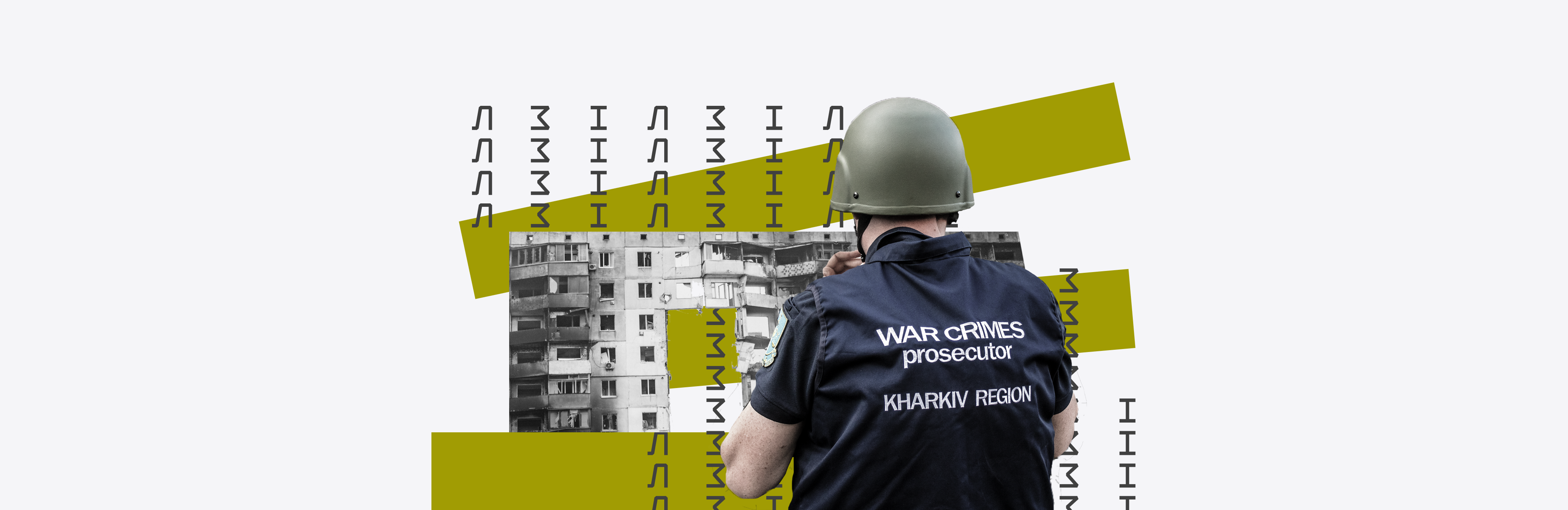
- War crimes, which are violations of international humanitarian law, i.e., violations of the rules and laws of war. As of May 2024, more than 133,000 war crimes committed by Russia against Ukraine have been documented in Ukraine, and this figure is constantly growing.
- The crime of aggression, which is defined as “the planning, preparation, initiation or execution by a person […] of an act of aggression which, by its character, gravity and scale, constitutes a manifest violation of the Charter of the United Nations […].”
In its assessments, the international community tends to refer to two categories of crimes committed by Russia against Ukraine: 1) war crimes; 2) crimes against humanity.
The peculiarity of all four categories is that they are independent, autonomous and, most importantly, equal. International crimes (four categories mentioned above) do not have an internal hierarchy that would make a particular category more important than another. From a legal standpoint, all categories are equal as they relate to different types of crimes and acts. In the context of the Ukrainian case, it is important to consider all of these categories with equal vigilance, with particular attention being paid to the qualification of Russia’s crimes as genocide.
However, if there is no legal hierarchy between the four categories of international crimes, why is the crime of genocide called the “crime of all crimes” and dismissed from recognition, referring to the need for an extremely high level of evidence? There are several explanations for this.
The problem of competencies
First, it concerns the competence of the global judicial architecture. Who has the right to consider and address issues related to massive violations of international law?
The International Criminal Court has jurisdiction over all four categories of crimes. In the context of Ukraine’s case, the Court can consider three categories: war crimes, crimes against humanity and genocide. However, there are two caveats:
- The crime of aggression does not fall under the jurisdiction of the ICC (in the case of Ukraine, due to the history of the ratification of the Rome Statute), so this issue is being dealt with by an expert group that is initiating the creation of a special international tribunal to consider the crime of aggression.
- Out of 32 cases pending before the ICC, only one has been charged with the crime of genocide. However, this case is at the pre-trial stage (Sudan), which is why there is a risk that the ICC’s examination will not provide the desired results for Ukraine.
Gaps in national legislation
As early as 5 April 2022, the Ukrainian Helsinki Human Rights Union criticised the current criminal legislation of Ukraine, noting that “war crimes are so poorly formulated that it is almost impossible to apply this qualification in practice.” Sometimes the lack of professional practices and sometimes irrelevant legislative formulations inherited from the traditions of Soviet law perception hinder not only the initial qualification of crimes but, most importantly, their further investigation and the nature of the sentence.
This creates significant challenges, as Russia’s crimes may remain outside the scope of judicial proceedings.
Current challenges
The third explanation is the challenges associated with the use of the term “genocide” itself. In the socio-political discourse, there is a belief that the concept of genocide is a serious violation of international law and applies only to the Holocaust, as all modern cases of the crime do not reach the same scale and, accordingly, the number of victims. However, what is the quantitative indicator – does the number of victims have to reach one million for the international community to define this crime as genocide? The question is rather rhetorical.
An equally important challenge is the politicisation of the problem. Leading states in the international arena do not dare to publicly discuss the genocidal nature of the Russian attack because they have their own interests and often close economic and political ties with Russia. This kind of fear limits their political will and the unity of the international community, which, following the domino principle, demonstrates a certain passivity due to the lack of clear steps by influential states.
Ukraine’s principled position
From the very beginning of the full-scale invasion, the Verkhovna Rada of Ukraine immediately reacted to the events and adopted a statement on the crime of genocide committed by Russia against Ukraine. Thus, the main legislative body, on behalf of the Ukrainian people, recognised Russia’s actions as genocidal.
The crime of genocide is the only category of international crimes that indicates the aggressor state’s special intent to destroy a group in whole or in part. In Ukraine’s testimony, this is a key point, as the qualification of Russia’s crimes against the Ukrainian people as a crime of genocide will illustrate that the aggressor state’s violations of international law are due to its main goal, which is to destroy Ukrainians.
It is the special intent that distinguishes the crime of genocide from other categories of international crimes. However, this raises the problem of how to recognise such intent in practice.
A number of legal instruments can be used to understand how the crime of genocide is interpreted and qualified in practice. In this context, we appeal to the experience of the ICTR and the ICTY.
The practice of the ICTR and the ICTY shows how the subjective category of “intent” can be interpreted to prove that the actions of the Russian Federation are genocidal in nature. For example, the ICTY’s evidentiary practice offers a list of circumstantial grounds that simplify the proof of the criminal’s special intent. One of these grounds can be considered the fact of the intentional and systematic destruction of persons because they are part of a particular group, while the destruction of members of other groups is excluded. In this context, there is evidence that Russian soldiers and armed groups have killed and tortured civilians precisely because they belong to the Ukrainian national group, for their bold self-identification and for using the Ukrainian language.
However, the problem is not the lack of evidence but rather the absence of effective tools that would have a real ability to monitor, classify and recognise the actions of the Russian Federation as genocidal already today.
So what are the alternatives? Should we convene a special tribunal for Russia’s crimes, following the example of the ICTR and the ICTY? How can we ensure real guarantees that the crime of genocide does not go unpunished?