
Material by the Agency for Legislative Initiatives for Ukrainska Pravda
In the summer of 2025, the Grand Chamber of the Supreme Court (SC GC) delivered a ruling that sparked a public outcry among the media and civil society organisations — headlines spoke of the ‘reinstatement’ of a judge with Russian citizenship, Arina Litvinova, allegedly with the right to lifelong payments. However, as the saying goes, the devil is in the details. A close reading of the SC GC’s decision revealed that this was far from the case. At the same time, Litvinova’s story exposed a number of issues that concern not only individual cases and personalities, but also the independence of the judiciary itself. So, what is really at stake? Let us unpack it in this piece.
Arina Litvinova: a Russian Passport, Judicial Service and Dismissal
Judge Arina Litvinova had served in the notoriously controversial Kyiv District Administrative Court (KDAC) since 2008, until its dissolution in December 2022. Afterwards, she no longer exercised judicial powers, though her formal status as a sitting judge — and her entitlement to judicial remuneration — remained. In 2023 alone, she earned 1.6 million hryvnias. Like other KDAC judges, Litvinova was required to undergo a qualification assessment, following which she would either be dismissed or transferred to another court.
In April 2024, it emerged that Litvinova had held a Russian passport since 2002. The public learned of this from an investigation by Skhemy journalist Heorhii Shabaiev. According to the investigation, Litvinova’s parents also hold citizenship of the Russian Federation.
Litvinova had deliberately concealed this information. As early as 2018, when she began undergoing qualification assessment, her questionnaire and responses were published on the website of the High Qualification Commission of Judges. In reply to the direct question of whether she held citizenship of another state, the former KDAC judge simply answered: ‘No’.
After the investigation was made public, Litvinova attempted to take an honorary retirement — unsuccessfully. The authorities responded swiftly: the Security Service of Ukraine (SSU) confirmed her Russian citizenship, filed a complaint against her with the High Council of Justice (HCJ), and the HCJ decided to suspend and dismiss her from office. It seemed, at that point, a happy ending.
However, in June 2025, the Grand Chamber of the Supreme Court overturned this decision of the HCJ. In the media space, Litvinova was hastily ‘reinstated’ — even though this did not in fact happen legally. The Supreme Court was quick to issue a clarification, explaining that its ruling did not mean reinstatement in office, the right to honorary retirement or lifelong payments. So, what, then, did this decision actually mean?
The Devil is in the Details: Why Was the HCJ Decision Annulled?
The High Council of Justice had dismissed Litvinova as part of disciplinary proceedings, despite the fact that her judicial powers had already expired on 31 October 2024. In the view of the SC, this contradicted not only the HCJ’s own regulations but also the Constitution of Ukraine and the Law on the Judiciary.
Specifically, Article 126 of the Constitution directly provides that a judge’s acquisition of citizenship of another state is grounds for the termination of his or her powers. This also prevents the judge from taking honorary retirement or receiving lifelong financial support. The mechanism operates automatically and does not require disciplinary proceedings, since the powers have already been terminated through another procedure. In other words, the SC GC restored legal logic but did not reinstate Litvinova and did not alter the substance — the constitutional norm applied, and it is binding.
How the Decision on Litvinova Confirmed the Legality of Lvov’s Dismissal
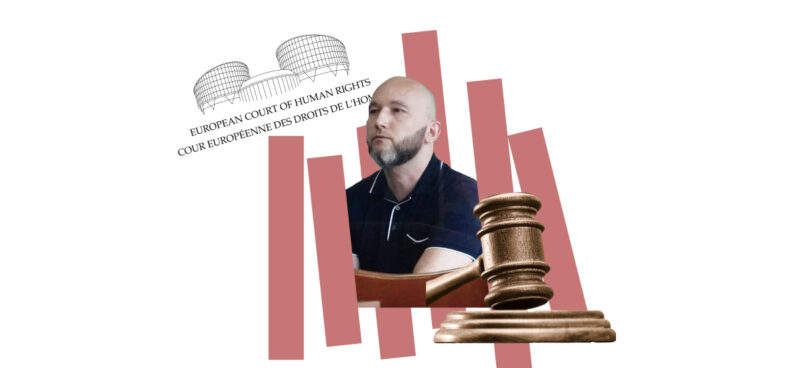
The decision of the Grand Chamber of the Supreme Court regarding Litvinova also brought some clarity to the case of Bohdan Lvov, former head of the Commercial Cassation Court. Around his Russian passport — likewise uncovered by journalists from Skhemy back in September 2022 — a whole saga unfolded. Lvov tried by every possible means to prove his Ukrainian citizenship and deny holding citizenship of another state. Moreover, he sought reinstatement at the Supreme Court. He almost succeeded — the Kyiv District Administrative Court (KDAC) ruled in his favour. However, the decision was later overturned by the Sixth Administrative Court of Appeal, where the SSU confirmed that Bohdan Lvov did in fact hold a Russian passport. The former judge never accepted the ruling and continues to consider his dismissal from the SC unlawful, even announcing his intention to appeal to the European Court of Human Rights (ECtHR).
Nevertheless, the SC GC’s decision in the Litvinova case once again confirmed that the then President of the Supreme Court, Vsevolod Kniazev, had acted within his powers. He removed Lvov from the court’s staff precisely based on the Constitution, as a judge holding foreign citizenship.
This means that the former judge’s powers should remain terminated, and he should not be entitled to reinstatement or to honorary retirement with lifelong benefits. Yet, as in Litvinova’s case, it will ultimately be for the Supreme Court to put an end to the matter — something it has been in no hurry to do for more than a year.
Judicial Independence Under Threat?
The cases of Litvinova and Lvov have highlighted a much deeper problem. With no diplomatic relations between Ukraine and Russia, the only source of information about citizenship status is certificates issued by the SSU. Legally, in the Litvinova case, the Supreme Court defended both the right and the procedure. Yet it also created another dilemma: the independence of the judiciary — and, in essence, the fate of any judge — now directly depends on what the SSU writes in its letter.
In effect, the Security Service of Ukraine has gained a new lever of influence over every judge — it can determine who may remain on the bench and who may not. This poses a threat not only to the process of cleansing the system of potential agents of influence but also to the independence of those judges who hold no foreign citizenship. Unconvincing evidence may become a basis for manipulation and discrediting members of the judiciary, or for removing disloyal judges from office. How Ukraine will manage to reconcile the rule of law with security needs is one of the greatest challenges ahead.
Without Rules or Safeguards: How to Avoid Chaos in Citizenship Cases
At the same time, the state lacks an effective mechanism not only for checking whether officials hold passports of another country, but also for preventing reinstatement or retention in office of those who are indeed found to have Russian citizenship.
The introduction of such a tool — or at least a clear procedural algorithm — would help to cleanse state and local authorities, as well as the courts, of potential traitors and Russian spies. The Agency for Legislative Initiatives noted this in its Shadow Report to the 2023 European Commission’s Report on Ukraine. This issue must be regulated by law and placed under the supervision of the High Council of Justice to avoid any violation of judicial independence. For example, such individuals should be prohibited from holding public office until there is convincing evidence that they do not possess citizenship of the russian federation. If these facts are not confirmed and the person has already been dismissed, compensation could take the form of the repayment of salary for the period of verification.
The Litvinova case highlights one of the key problems of Ukrainian justice — the lack of transparent and comprehensible procedures. In this instance, the decision of the Grand Chamber effectively reaffirmed the supremacy of the Constitution. Yet to external observers, it sounded quite the opposite — as another example of chaos within the judicial system. This shows how the absence of timely communication within the judiciary affects its reputation. Firstly, the HCJ and the Supreme Court demonstrated different approaches to Litvinova’s dismissal or removal. Secondly, there was misinterpretation — whether deliberate or not — of the Supreme Court’s ruling by some civil society organisations, which triggered a scandal that was extinguished only after the Supreme Court provided detailed clarification of its decision.
At the same time, this underlines the critical need to regulate such issues in law — to prevent Russian citizens from holding positions of power while safeguarding judicial independence. Without clear answers, every new case like Litvinova’s will turn into a crisis of trust in the judiciary, both domestically and abroad.