
Material by the Agency for Legislative Initiatives for Dzerkalo Tyzhnia
The European Commission warns that Ukraine has slowed the pace of reforms in the justice sector. Pressure on the National Anti-Corruption Bureau of Ukraine (NABU) and the Specialised Anti-Corruption Prosecutor’s Office (SAPO) has not gone unnoticed in Brussels.
What specific steps does the EU require from Ukraine — in reforming the judiciary, the prosecution service and the Bar?
Analyst at the Agency for Legislative Initiatives, Karyna Aslanyan, outlines the key signals for the Ukrainian authorities in the article ‘“The war discount” is not unlimited: the EU demands that Ukraine accelerate justice reforms’.
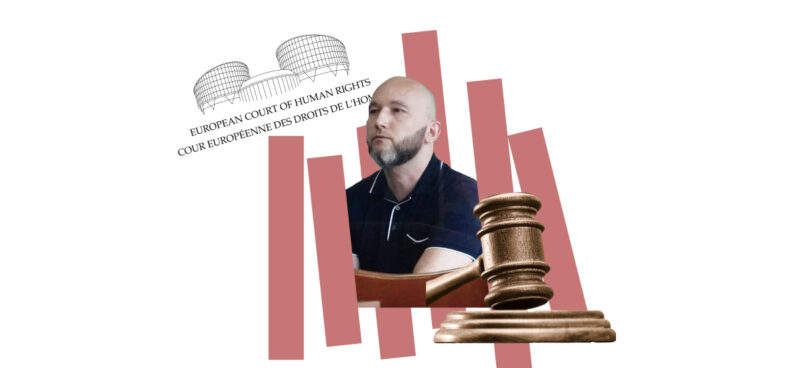
On Tuesday, 4 November, the European Commission presented its Annual Report within the 2025 European Union Enlargement Package, which covers all EU candidate countries, including Ukraine.
Following the political authorities’ assault on the NABU and the SAPO, many expected a rather critical report. Indeed, on this point, the assessment is clear and not particularly diplomatic: ‘Parliament adopted a law that repealed important guarantees of the independence of the NABU and the SAPO and subordinated their operational activities to the politically appointed Prosecutor General. After domestic protests and international criticism, another law was adopted, restoring the independence of the NABU and the SAPO. At the same time, the risks of undue pressure on anti-corruption institutions remain a matter of concern’.
Moreover, the European Commission reiterated a requirement from previous Reports: the need to adopt legislative amendments that would ensure that the procedures for selecting and dismissing the Prosecutor General become more objective, transparent and merit-based. In essence, Ukraine has been warned that the Prosecutor General can no longer remain a political figure and that the selection process should more closely resemble judicial competitions — which is entirely logical, as the Prosecutor General is also part of the justice system in the broader sense. And it is hardly conceivable in a democratic country, that district court judges undergo competitive selections for two years, sitting four exams and taking part in two public interviews, while the Office of the President can pull a card with the Prosecutor General’s name from its pocket half an hour before a vote in Parliament.
The ‘small justice triangle’ — the judiciary, the prosecution service and the Bar — must not only formally comply with EU standards but function accordingly.
So, apart from the situation with the NABU and the SAPO, what else has drawn the European Commission’s attention in the rule of law sphere this year?
International Experts
Even before the full-scale war, Ukraine’s legislation on the judiciary introduced a new safeguard against corruption, cronyism and arbitrariness — international experts on selection commissions for appointing candidates to the highest judicial positions. This mechanism was used for the first time in the competition for the High Anti-Corruption Court (HACC) and later extended to the relevant commissions responsible for selecting candidates to the High Council of Justice (HCJ), the High Qualification Commission of Judges of Ukraine (HQCJ), judges of the Constitutional Court of Ukraine (CCU) and even disciplinary inspectors of the HCJ.
In 2021, the authorities believed that international experts, as a compromise solution, would work for three to six years, conduct one or two selection processes and then transfer their expertise (and powers) to the respective self-governing bodies — the Council of Judges, the Council of Prosecutors and the Bar Council (in the case of the HCJ and the HQCJ), as well as to the appointing authorities for CCU judges.
Time has passed, and in several selection commissions, the mandate of international experts has expired. As a result, an obvious dilemma has emerged: is Ukraine ready to dispense with international experts, or, on the contrary, is it impossible to ensure impartial and transparent selection without them?
The European Commission remained publicly silent for a long time, emphasising during private meetings that Ukraine should gradually phase out the assistance of international experts. However, after the situation involving the NABU and the SAPO, the rhetoric changed dramatically. In the Enlargement Report, we now see a clear requirement to continue involving international experts, not only in the selection of future members of the HQCJ but also in the appointment of new Supreme Court judges. The same applies to the vetting of judges of the higher courts.
The EU stresses the need to continue the work of the Public Council of International Experts (PCIE) in selecting new judges of the HACC. The previous competition failed, as only two out of twenty-five vacancies were filled. A repeat competition is now underway for twenty-three vacancies in the HACC and its Appeals Chamber, which, according to the HQCJ’s schedule, should be completed in March 2026. However, anticipating the outcome, the European Commission has already indicated that the PCIE must remain involved until all vacancies are filled. In other words, if this competition does not produce a full complement of judges, the PCIE’s mandate will be extended accordingly.
Incidentally, these are precisely the proposals put forward by the coalition of civil society organisations led by the Agency for Legislative Initiatives in the Shadow Report, which they have been preparing for the European Commission for the second year in a row.
Brussels has also taken note of attempts to undermine the involvement of international experts through the Constitutional Court or Parliament. ‘There is growing resistance to the participation of independent international experts in selections and vetting procedures, including a pending constitutional submission and a registered draft law that calls all “international” procedures into question. This is a matter of serious concern’, the European Commission emphasises.
This is therefore a signal to the political authorities from both civil society and the EU: any attempt to encroach on the anti-corruption infrastructure or on the role of international experts will trigger an immediate reaction and increased oversight. One can only hope that, despite the public enthusiasm over a diplomatically positive EC report, Bankova will take this lesson to heart.
The existing experience of involving international experts in selection procedures now requires systematisation, unification and standardisation, as each commission or council currently operates according to its own standards and procedures. This somewhat undermines the lofty phrase ‘Ukraine’s path to the rule of law’, as there have been numerous cases in which these commissions or councils have reached radically different conclusions about the same candidate. And it remains unclear whether a candidate truly meets integrity and ethical standards if one commission has recognised them as compliant, while another — only a few months earlier — concluded the opposite.
Institutional Capacity of Key Bodies
The European Commission notes some progress by Ukraine in conducting competitions and appointing new judges, yet points out that ‘the judicial system still suffers from a serious staffing deficit’. It also notes that the bodies of judicial governance are functioning adequately. At the same time, the issues of selecting and appointing their members, as well as their institutional capacity (including IT tools, analytics and access to databases), require urgent resolution. The Commission also recommends strengthening the capacity of the public oversight body: ‘The Public Integrity Council needs reinforcement, including improved access to judicial dossiers, enhanced analytical capacity and the establishment of a secretariat.’
The coalition of civil society organisations supports these recommendations in its Shadow Reports — both last year’s and this year’s.
Quorums in Key Bodies
The European Commission pays no less attention to the presence of quorums in key bodies of judicial governance — the High Council of Justice (HCJ) and the High Qualification Commission of Judges (HQCJ), as well as the Constitutional Court of Ukraine. The HCJ operated for an extended period on the edge of a quorum (15 members), while the Constitutional Court suspended its work for six months due to the lack of one.
This is unacceptable in stable democracies, yet it occurs regularly in Ukraine. Over the past eleven years, the HCJ and the HQCJ have twice halted their work. The CCU has done so once completely and several times partially due to periodic internal conflicts or external interference (such as the unlawful dismissal of two CCU judges by a Presidential decree). Despite the fact that in the past three months the President has appointed two CCU judges and two members of the HCJ, there remains a real risk that these bodies could cease functioning. A quarter of HCJ members and almost a third of CCU judges are still lacking for full composition.
When competitions take six months to a year, forming stable compositions is practically impossible: by the time some appointments are made, the mandates of others have already expired. And some appointing authorities deliberately neglect their obligations. For example, Parliament last month failed to vote for two CCU judges, and the Congress of Advocates has not convened for nearly four years to elect its two representatives to the HCJ, citing the war as the reason.
The European Commission notes that the authorities responsible for appointing CCU judges ‘must urgently resume competitive procedures and avoid further delays’.
Reform of the Bar
In its Report, the European Commission states that no progress has been achieved in reforming the Bar. ‘Concerns about the abuse of disciplinary mechanisms against lawyers and uneven disciplinary practices remain. The Ukrainian National Bar Association (UNBA) has still not launched the competition for the HCJ members from its quota. In addition, the Bar’s self-governing bodies have not held elections, despite their mandates having expired.
Whereas in previous years the European Commission hinted diplomatically — often in a single sentence — at the need for reform, this year it stated it clearly: ‘Ukraine needs to urgently launch a comprehensive reform of the Bar’. At the same time, the Commission stresses that the formation of UNBA bodies must be based on ‘transparent and credible procedures’ and that access to the profession and the qualification system must be ‘substantially improved’. It also raises concerns about financial management, disciplinary liability and the system of continuous professional development for lawyers.
In essence, the European Commission has made clear that war is not a legitimate reason to postpone convening the Congress of Advocates and re-electing the leadership of the Bar, nor to delay reforms of the financing or qualification systems.
However, reform of the Bar always consists of two components: the state, represented by Parliament, which must adopt the necessary amendments to the Law and the lawyers themselves, who must then implement these changes without state interference. One may comply with as many ‘EC requirements’ as possible, but it is the legal community that must carry out the Bar reform. The question is whether the UNBA has a critical mass of lawyers who are willing and able to meet the European Commission’s stated requirements.
There is a well-known saying: those who want to act look for opportunities; those who do not look for excuses. Undoubtedly, even before this Report — over nearly four years of war — the Bar Council could have taken the initiative to propose amendments to the Law on the Bar to change the mechanism for convening the Congress. For example, through online voting in Diia or other ways to simplify the procedure for electing delegates. But this has not happened. Therefore, even if the Congress of Advocates were to be scheduled by law (such proposals do periodically appear — clearly misguided), under the current mechanism, it would still be impossible to convene it. And in a year, the European Commission will ask: what has been done? Thus, it is better to look for opportunities than to hide behind excuses.
Independence of the Judiciary and Anti-Corruption Institutions
This issue drew significant attention due to the attack on the independence of the NABU and the SAPO in the summer of 2025. However, such attacks are not limited to these institutions. In the spring, the State Bureau of Investigation (SBI) carried out searches at the HQCJ and questioned its members in several criminal proceedings. At the time, the HQCJ described this as interference in its work — a concern also reflected in this year’s Enlargement Report.
The situation concerning the criminal cases against the HQCJ has since continued to develop. Following a meeting of the Temporary Special Commission (TSC) of the Verkhovna Rada of Ukraine on investigating possible acts of corruption or corruption-related offences within law enforcement agencies, the courts and judicial governance institutions, which involved the Head of the HQCJ, the SBI opened a criminal case regarding unauthorised interference with information (automated) systems during the verification of exam results. The HQCJ publicly stated that the TSC was exerting pressure on the institution.
However, in its Report, the European Commission stressed that ‘the Parliamentary TSC (June 2025) should not undermine trust in institutions’.
Instead of a Conclusion
Despite the European Commission’s positively balanced 2025 Report, Brussels has clearly identified the areas where reforms must accelerate and where critical attention from the Ukrainian authorities is required. In addition to the key directions outlined, there are also ‘simpler’ recommendations — for example, adopting the already drafted Strategy for the Development of Judiciary and Constitutional Justice.
There are also very specific requirements: to finally allocate premises of sufficient size for the HACC. In principle, such recommendations should not appear in strategic documents at the level of an EC Report. Yet when the Cabinet of Ministers has spent six years ‘kicking the can down the road’ regarding premises for the HACC, the European Commission has said: we see this as well.
Summarising this year’s requirements for Ukraine, three points can be stated with certainty.
First — yes, Ukraine is given a ‘war discount’, but only where this is reasonable.
Second — the European Union will not allow anyone to undermine the progress achieved over the past ten years; any such attempts will have the opposite effect.
Third — our path to the EU remains fairly long. It will certainly not be limited to the timelines set out in the Rule of Law Roadmap, which runs until early 2028, as even a significant portion of the measures planned for 2025 has not been implemented.
And, indeed, it is time to begin implementing these requirements actively so that next year’s Enlargement Report will not require any ‘discounts’ to be positive.
Author of the material: