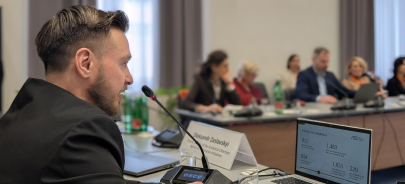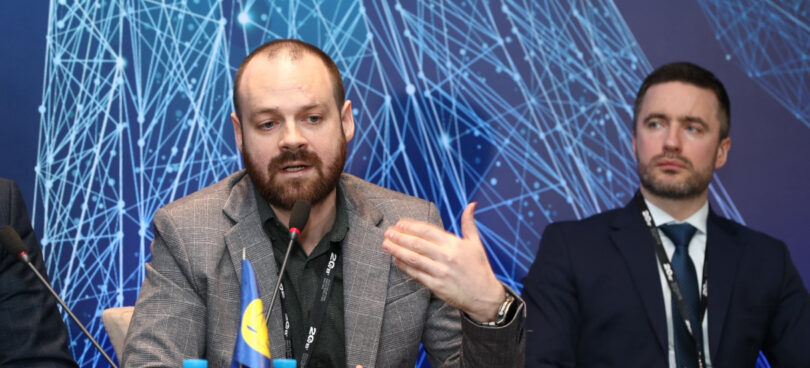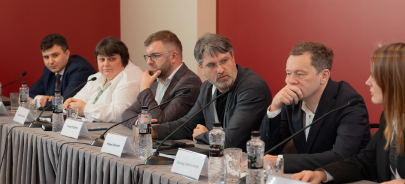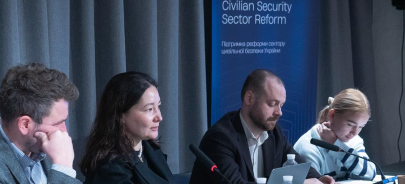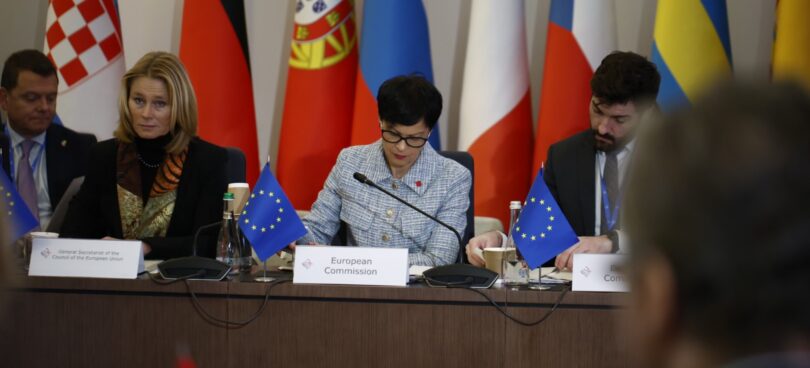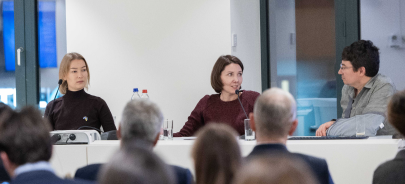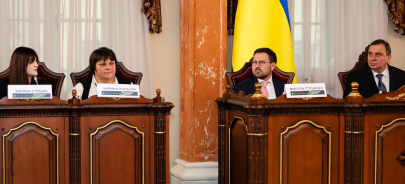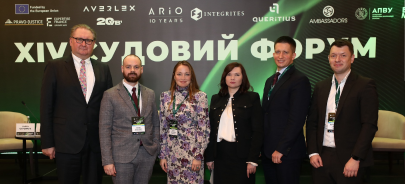
On 12 October 2010, a round table “Regulation of Political Parties in Ukraine: Current State and Direction of Reforms” took place in Kyiv. The event was organized by the Parliamentary Committee for State Development and Local Self-Governance in cooperation with the Agency for Legislative Initiatives.
During the round table, the Agency presented the study “Regulation of Political Parties in Ukraine: Current State and Directions of Reforms”, which is based on the discussions of the key problematic issues related to the regulation of the activities of political parties in Ukraine, including those related to the participation of political parties in elections, campaign funding, internal political party democracy, gender balance, complicated procedures set for the establishment and termination of political parties. The report also offers recommendations on the ways and prospects to improve the Ukrainian legislation regulating the functioning of political parties on the basis of the best European practices. The study was undertaken by Denys Kovryzhenko, Director for Legal Programmes of the Agency for Legislative Initiatives, with the financial support of the European Union within the framework of a joint EU-OSCE/ODIHR project.
The round table was opened by Ihor Kohut, Chairman of the Board of the Agency for Legislative Initiatives, who described the regional expert discussions which preceded the preparation of the study, as well as emphasised the critical importance played by political parties in Ukraine’s social life before the local elections. He also suggested that the Parliamentary Committee for State Development and Local Self-Governance could establish a working group to analyse the proposals on the improvement of the functioning of political parties.
Oleksandr Omelchenko, Chairman of the Parliamentary Committee for State Development and Local Self-Governance, spoke about the problematic aspects related to the operation of Ukraine’s political parties. In particular, he stressed the difference between the registered political parties in Ukraine and the number of the relatively active ones, including those represented in the Parliament. In Mr Omelchenko’s opinion, a considerable difference between these figures evidences a problem in the democratic functioning of political parties. Mr Omelchenko also noted the importance for Ukraine to develop its own political party model and general political system.
Rene Bebeau, Senior Project Manager of the OSCE Project Coordinator, said he was confident that the presented study should become the basis for the development of further proposals on the improvement of the political system in Ukraine. Marcin Walecki, Chief of the OSCE/ODIHR Democratic Governance Unit, stressed that the presented report was the most complete study of the topic, and that it also contained the most successful practices of the European countries.
During the discussion of the study and the Ukrainian political party system, Ihor Zhdanov, President of the Open Ukraine Think Tank, expressed his assumption that with renewal of the Ukrainian Constitution in the its 1996 version, the Ukrainian political system will go back to its condition of 1998-2004, which was characterised by instable faction structure, as well as a formal relations between political parties and members of parliament acting on their behalf in the Verkhovna Rada. In this context, Yuriy Klyuchkovskyi, Deputy Chairman of the Parliamentary Committee for State Development and Local Self-Governance, mentioned that the role of political parties in the political life of the country may decrease. He also pointed out to the necessity of the legislative support to the internal political party democracy. Volodymyr Stretovych, Deputy Chairman of the Parliamentary Committee for Legal Support to the Law-Enforcement Activities, pointed out to the danger of monopolisation of the political party system by one political party.
Regulation of Political Parties in Ukraine: Current State and Directions of Reforms