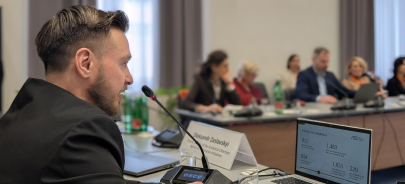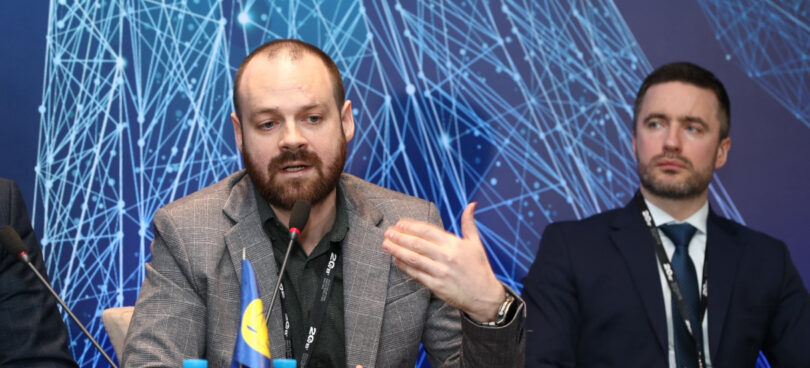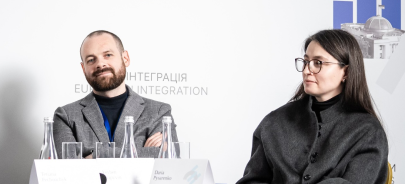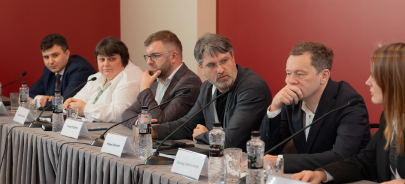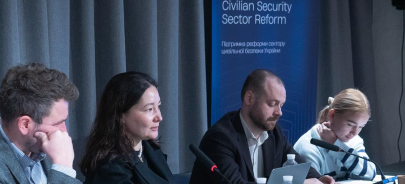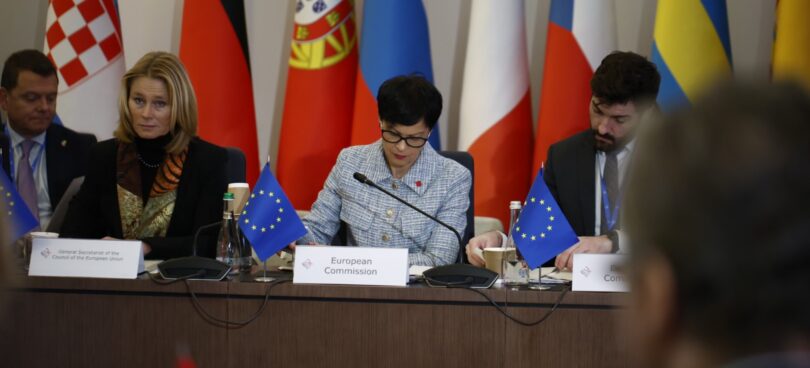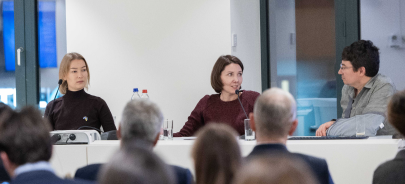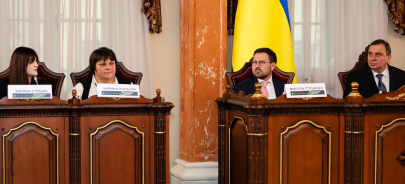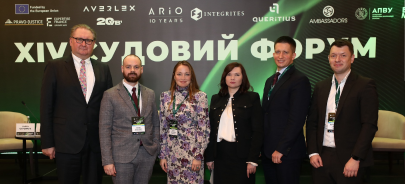
On 16-18 February 2007, Odessa hosted the Public Forum “Constitutional Reform: the View of the Civil Society”. The discussion was initiated and organised by the Agency for Legislative Initiates (Kyiv), the Council of Europe, and a number of expert institutions of Donetsk, Lutsk, Sumy, Zaporizhzhya, Luhansk, and Kherson. The Forum was also supported by Joint Programme of the Council of Europe and the European Commission “Support to Democratic Processes in Southern Caucuses and Ukraine”.
The Forum aimed to ensure a possibility to discuss the results and further priorities and prospects for the development of the constitutional reform in Ukraine, as well as to prepare recommendations of the next steps to be taken to secure effective functioning of public authorities and local self-governance bodies in Ukraine.
In particular, the following issues were discussed:
-
Constitutional Reform in Ukraine: Assessment of Results;
-
Prospects of Further Reform of the Public Authorities in Ukraine;
-
New Format of Relations in the Parliament-President-Government Triangle:
-
Constitutional Reform and Local Self-Governance.
The forum collected about 130 participants from 20 regions of Ukraine (90 participants and 35 media representatives):
1) NGO and think tank experts;
2) Members of local councils and political parties representatives;
3) Media;
4) Members of the Verkhovna Rada and other high level state authorities;
5) Representatives of the CoE Directorate General for Political Affairs and other international institutions.
Speakers
-
Ihor KOHUT, Chairman of the Board, Agency for Legislative Initiatives;
-
Oleksandr PROKOPENKO, Secretary of Odessa City Council;
-
Mykola TYNDYUK, Deputy Head of the Odessa Regional Council;
-
Plamen NIKOLOV, Adviser of the Directorate General of Political Affairs, Council of Europe;
-
Vladyslav LUKYANOV, MP, Deputy Head of the Committee on State Building, Regional Policy and Local Governments;
-
Thomas MARKERT, Deputy Secretary of the Venice Commission, Council of Europe;
-
Anatoliy MATVIENKO, MP, First Deputy Head of the Committee on State Building, Regional Policy and Local Governments;
-
Mykola KOZYUBRA, Member of the National Commission for Strengthening Democracy and Rule of Law, resigned judge of the Constitutional Court of Ukraine, Doctor of Sciences in Law, Professor;
-
Sergyi HRYNOVETSKYI, Member of the Odessa Regional Council;
-
Sergio BARTOLE, Professor of Constitutional Law, University of Trieste, substitute member of the Venice Commission;
-
Volodymyr FESENKO, Director of the Center of Applied Political Studies «Penta»;
-
Denys KOVRYZHENKO, Expert, Agency for Legislative Initiatives;
-
Michel GUEGAN, Vice-Chair of the Institutional Committee, Chamber of Local Authorities, Congress of Local and Regional Authorities;
-
Volodymyr SHAPOVAL, Representative of the President of Ukraine in the Constitutional Court of Ukraine, resigned judge of the Constitutional Court of Ukraine, Doctor of Sciences in Law, Professor;
-
Anatoliy SELIVANOV, Representative of the Verkhovna Rada of Ukraine in the Constitutional Court of Ukraine, Doctor of Sciences in Law, Professor;
-
Yuriy KLUCHKOVSKYI, MP;
-
Victor TYMOSCHUK, Head of the Centre for Political and Legal Reforms;
-
Taras CHORNOVIL, MP;
-
Oleksiy HARAN, Professor of the National University Kyiv Mohyla Academy, School for Political Analyses;
-
Oleksandr STARYNETS, Head of the Secretariat of the Socialist party faction in the Verkhovna Rada of Ukraine.
Openning
At the Opening Ceremony, the Forum participants were welcomed by the organisers, representatives of Odesa authorities, the Verkhovna Rada of Ukraine, the Council of Europe, and the Venice Commission. In his welcoming speech, Mr Ihor Kohut, Chairman of the Board of the Agency for Legislative Initiativesstressed how important it is to assess the results of the constitutional reform in Ukraine from the positions of the civil society, as well as emphasised the necessity of rational comprehension of the process whereby cooperation between different branches of power is formed and the new system of local self-governance is built in Ukraine. Mr Oleksandr Prokopenko, Secretary of Odesa City Council mentioned that the improvement of the local self-governance is the basis of democratic transformations, while its improper system generates social and political complications. Mr Mykola Tyndyuk, Deputy Chairman of Odesa City Council reminded that the people is the bearer of power in Ukraine, therefore the constitutional reform and definition of the legal framework of political responsibility shall be discussed not only by the politicians, but also the public in general; in this context, there is a need to pass the laws on the President of Ukraine, on the parliamentary opposition, as well as to amend the Cabinet of Ministers Act. Mr Plamen Nikolov, representative of the Directorate General for Political Affairs of the Council of Europe stressed the necessity of cooperation between public authorities and the civil society sector. Mr Vladyslav Lukiyanov,Deputy Chairman of the Parliamentary Committee for Public Authorities Development, Regional Policy, and Local Self-Governance pointed out that the main problem in the triangle of public authorities in Ukraine is not the issue of division of powers, but rather the correlation of rights and powers, which brings about the necessity to pass the laws on the status of a citizen and on central executive authorities, as well as make the necessary amendments to the Cabinet of Ministers Act. Mr Thomas Markert, Deputy Secretary of the Venice Commission recalled the history of cooperation between the Venice Commission and Ukraine and said that the democratic progress in the country were obvious; however, at the current moment there was a need to solve the problems of relations between public authorities and efficient division of powers.
Panel 1: “Constitutional Reform in Ukraine: Assessment of Results”
The main aim of the Plenary Session “Constitutional Reform in Ukraine: Assessment of Results” was to discuss the prospect of the constitutional reform in Ukraine, and to define the priorities of further transformations and steps to be made to ensure efficient functioning of public authorities and local self-governance in Ukraine. The participants of the panel have agreed that the main aim of cooperation within the power triangle “the President – the Parliament – the Government” is unclear and unbalanced division of powers between the branches of powers. One of the preconditions for the solution of this problem is the local self-governance reform with due account of the subsidiarity principle.
MP Anatoliy Matvienko stressed that the main task of the constitutional reform is to ensure existence of responsible government system and stable society. Having analysed the history of the constitutional reform he noted that the calls for a new constitution threaten the lost of the achievements of the current one, therefore any further reforms shall aim to ensure the balance of powers and their division in order to eliminate the threat of war between the branches of power. In this context, one of the important mechanisms is the local self-governance reform which shall become the first step towards efficient and structured division of powers. Mr Matvienko also supported Bill No. 3207 (new No. 0900) and blamed those who frighten the President by the loss of powers due to its adoption.
Mr Mykola Kozyubra, Head of the State and Legal Sciences Department of Kyiv-Mohyla Academy and a judge of the Constitutional Court of Ukraine, said that different political forces had had different motives when they had been backing the constitutional reform. The main problem, however, was that the political elite was not striving to observe the constitutional provisions, “to live in accordance with the Constitution”. Therefore, it is not possible to say that the 1996 Constitution has exhausted itself, and therefore its further refer shall be aiming not at the redistribution of powers between the power centre, but rather decrease of the number of discretional powers, i.e. those that can be exercised by a certain authority on its own.
According to Mr Sergio Bartol, Professor of Constitutional Law of the University of Trieste and Deputy Chairman of the Venice Commission, the studies of the Ukrainian system of power performed by the Venice Commission have become a constant element of constitutional debates. The main conclusion proposed for discussion concerned the danger of direct implementation of the powers of public authorities envisaged by the constitutional reform. In the speaker’s opinion, the balance of power and prevention of its concentration in the hands of the executive powers can be achieved through distribution of power at two levels: vertical which envisages its division into legislative, executive, and judicial, and horizontal which includes the separation of powers between the state and the local self-governance.
Mr Serhiy Hrynevetskyi, Member of Odesa Oblast Council stressed the necessity to separate parliamentary and local elections in time, to abolish the system of proportional representations at elections to oblast and district councils, to introduce a bicameral parliament and election of the heads of oblasts and districts in order to improve the efficiency of the operation of local self-governance bodies.
Mr Volodymr Fesenko, Director of the Penta Centre for Applied Political Studies underlined that even though the discussion of the constitutional reform is focused on the issues of the constitutional law, the process of transformations is politico-legal. Having assessed positive and negative consequences of the constitutional amendments, as well as have outlined the present day problems, the speaker analysed the possible scenarios of further transformations which shall envisage a comprehensive character of amendments to the legislation, improvement of the operation procedure of the Constitutional Court, and termination of war between the main actors of the constitutional process.
Mr Denys Kovryzhenko, expert of the Agency for Legislative Initiatives analysed the consequences of the constitutional reform and outlined the further steps in the process of reform of the system of powers in Ukraine, which shall concern regulatory and institutional transformations.
Panel 2: “Prospects of Further Reform of the Public Authorities in Ukraine”
Participants of the Plenary Session “Prospects of Further Reform of Public Authorities in Ukraine” discussed the prospects and priorities of the constitutional reform in Ukraine. The participants defined the general vectors and specific steps to be made for the further reform of the constitutional system; in particular they include amendment of only those constitutional provisions that need to be objectively changed (the local self-governance reform, balancing of powers etc) on the basis of the sole reconciled concept; broader involvement of the public into the process of political decision-making; improvement of transparency of the operation of public authorities at all levels; adoption of laws that will bring the system of public authorities, their functions and powers closer to the democratic standards; further strengthening of the parliamentary oversight powers; implementation of the administrative reform; development of a reconciled concept of the administrative and territorial reform and local self-governance reform; and reform of law-enforcement authorities.
Mr Michel GUEGAN, Vice Chairman of the Institutional Committee of the Local Authorities Chamber of the Congress of Local and Regional Authorities of the Council of Europe mentioned that the way of democratic development of the local self-governance shall envisage that the smallest local self-governance subject should realise their role. The main problem in Ukraine is lack of political will necessary for the development of local self-governance due to the fear of responsibility and personal interests of politicians.
Outlining further steps in the process of constitutional reform, Mr Volodymyr Shapoval, Representative of the President of Ukraine to the Constitutional Court of Ukraine and a retired judge of the Constitutional Court stressed the necessity to separate the powers of local state administrations and local self-governance bodies, to define the powers of regional self-governance, to provide the local self-governance with its financial basis, to implement the administrative and territorial reform, as well as to set up efficient mechanisms for the conduct of local referenda. According to the speaker, there is a need for deep and systemic constitutional amendments, otherwise there will only be sporadic attempts to solve individual issues in which only certain people are interested in. However, adoption of the law on the President is not to the point, as the status of the head of state is defined by the Constitution, and therefore the regulation subject of the law on the President is unclear.
Mr Anatoliy Selivanov, Permanent Representative of the Verkhovna Rada in the Constitutional Court described the constitutional reform as the result of negotiations and a political compromise, since it was done not only for the government powers, but also for the transfer to a new election system, i.e. the changes had a common constitutional and legal nature. Further transformations shall concern the functioning of the local self-governance system, the judiciary, and the public prosecution system.
Defining the context of the constitutional reform, MP Yuriy Klyuchkovskyi stressed the necessity to interpret many new constitutional provisions that adversely affect the efficiency of the government system. By their nature, the powers of the President shall find themselves in the area of executive authorities. In Ukraine, however, this area is rather fragmented, since due to the functioning of the institution lf parliamentary majority, the positions of the parliament and the government actually coincide. In addition, he mentioned that adoption of Bill No. 0900 (3207-1) on the local self-governance reform is dangerous, as it does not meet the need of the Ukrainian society at all.
Mr Victor Tymoshchuk, Head of the Centre for Political and Legal Reforms said that the lack of balance in the system of public authorities is the main problem generated by the constitutional reform, having stressed that adoption of Bill No. 0900 (3207-1) will not be able to solve this problem, since it will make high quality and equal provision of public services to the people impossible. Regional self-governance can be established only if there is a strong basic level of local self-governance; therefore the local self-governance reform shall begin with this step.
According to Mr Oleksiy Hraniy, there is a need for target amendments to the Constitution, and not the radical review of its provisions. Having analysed the recent sociological study of public opinion, the speaker defined the main problems of the constitutional amendments, like their unclearness, the haste with which they have been passed to meet the political circumstances of the day. This evidences lack of convergence pf visions of the model of the system of public authorities between the governing elite and the people.
Mr Oleksandr Starynets, Chief of Staff of the Socialist Party stressed that there is no point in discussing the revision of the Constitution, since the constitutional reform resulted from the agreement between practically all political forces; therefore, analysing the prospects of further transformations, one should talk about the bill currently considered by the Verkhovna Rada, and not look into some hypothetical scenarios.
Round Table: “New Format of Relations in the Parliament-President-Government Triangle”
The following key issues have been discussed:
-
New Model of Relations within this Triangle: its Strong and Weak Aspects;
-
Ways to Further Reform of the Public Authorities;
-
Reform of the Executive Branch: from Constitutional Amendments to the Administrative Reform.
Round Table: “Constitutional Reform and Local Self-Governance”
The participants of the round table discussed the following issues:
-
Bill No. 0900 (3207-1): Assessment of its Relevance to the Current Challenges;
-
Ways to Improve the Administrative and Territorial System;
-
Role of Local Executive Authorities under the Conditions of the Local Self-governance Reform.
Address
On the results of the Public Forum “Constitutional Reform: View of the Civil Society”, its participants issued the Address to the President, the Verkhovna Rada, the Cabinet of Ministers, Political Parties, and NGOs.
In their address, the participants have presented their generalised vision of the consequences of the constitutional reform in Ukraine and further steps towards the reformation of the system of public authorities and local self-governance. The Forum participants emphasised that implementation of the Ukrainian Constitution is complicated not only by the struggle between the President, the Parliament, and the Government, but also by the fact that the potential of the current Constitution in relation to the reform of public authorities still remains unused. The Forum participants consider that further steps towards to the reform of public authorities shall envisage not only constitutional amendments, but also adoption of a number of legislative act for the development of the constitutional provisions.
You can find also:
AGENDA of the Public Forum “CONSTITUTIONAL REFORM: VIEW OF THE CIVIL SOCIETY”
LIST OF PARTICIPANTS of the PUBLIC FORUM “CONSTITUTIONAL REFORM: VIEW OF THE CIVIL SOCIETY”
ANALYTICS, made by the experts of the Agency for Legislative Initiatives for the Public Forum “CONSTITUTIONAL REFORM: VIEW OF THE CIVIL SOCIETY”
ADDRESS of the Public Forum participants to the President of Ukraine, the Verkhovna Rada of Ukraine, the Cabinet of Ministers of Ukraine, Political Parties and Non-Governmental Organisations
Regional partners:
Centre for Legislative Initiatives (Donetsk)
Centre for Political Analysis and Election Consulting (Lutsk)
Centre for Regional Policy Studies (Sumy)
Association for Support and Development of Local Self-Governance (Luhansk)
Southern-Ukrainian Agency for Social Technologies (Zaporizhzhya)