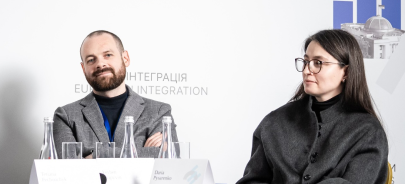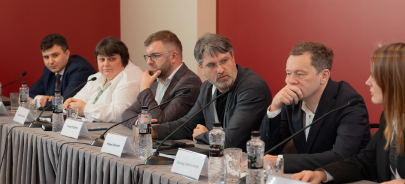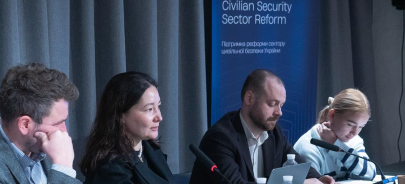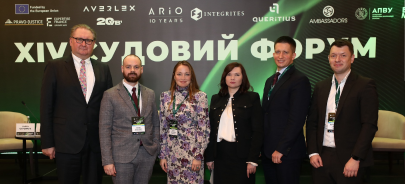
How can Ukraine accelerate essential reforms and strengthen its capacity to implement them, turning the requirements of international partners and recommendations from civil society into reality? What are the key messages of the EU Enlargement Report on the one hand, and of the Shadow Report by a coalition of Ukrainian civil society organisations on the other? These questions were in focus at the event ‘Civil Society as a Driver of EU Integration Reforms in Ukraine’.
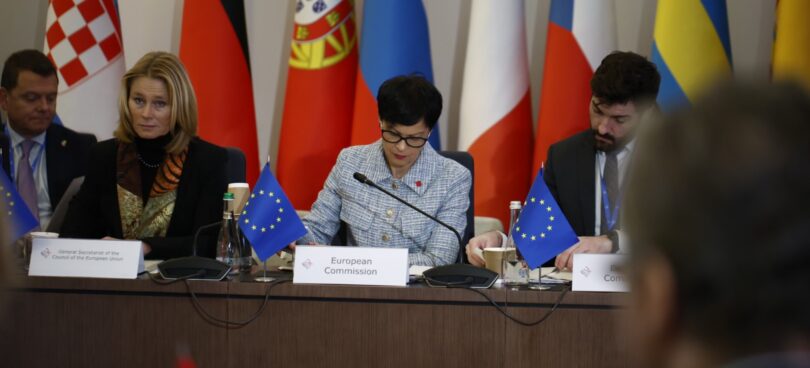
EU Commissioner for Enlargement Marta Kos and Deputy Prime Minister for European and Euro-Atlantic Integration of Ukraine Taras Kachka met with representatives of Ukrainian civil society to discuss EU enlargement policy and the role of civil society in supporting reforms.
Taras Kachka underlined that structural reforms are one of the key elements of the EU integration process, and that the related tasks are important not only for the authorities but also for civil society as a whole. In Ukraine, civil society plays a multidimensional role: in many reforms, it is independent experts who help shape a comprehensive vision for their implementation and potential risks.
Marta Kos stressed that Ukraine’s progress on European integration is possible, not least thanks to its very strong civil society. She underlined that the civic sector is more than just a partner, as representatives of various organisations contribute to policy-making, monitor implementation to ensure that reforms do not remain on paper and hold the authorities to account so that changes are carried out properly.
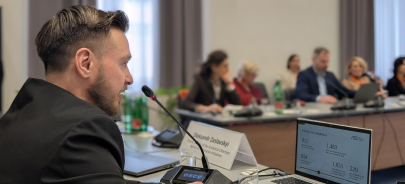
Participants discussed key aspects of interaction between state institutions and civil society in the context of the EU integration process, the implementation of EU recommendations and the sustainability of reforms.
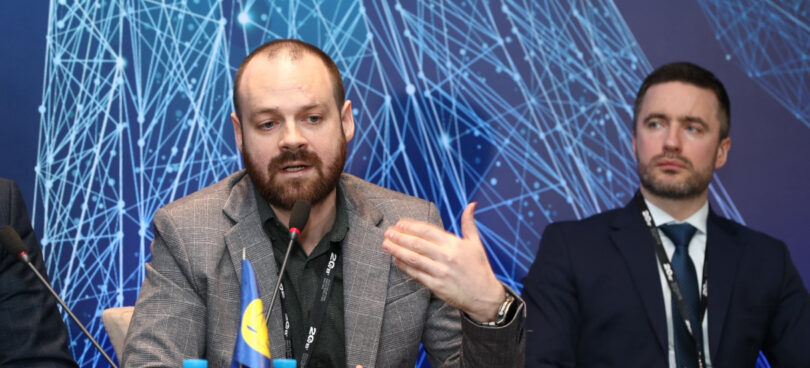
Yevhen Krapyvin, Head of the ‘Law and Order’ Area at the ALI, highlighted specific elements of the Shadow Report, in particular those relating to justice sector reform, the need to secure prosecutorial independence and the repeal of the negative ‘July amendments’ in this area. He noted that the Agency for Legislative Initiatives was among the first to introduce into Ukrainian public policy the practice of preparing Shadow Reports across different sectors and thematic areas — and the European integration process has been no exception.
The recommendations of the Shadow Report of the coalition of civil society organisations led by the ALI are regularly reflected in the Enlargement Reports, so sustaining and strengthening dialogue between the European Commission, the Ukrainian authorities and civil society is essential for continued progress on each reform covered by the negotiation chapters.
The event was organised by the Office of the Deputy Prime Minister for European and Euro-Atlantic Integration of Ukraine and the Government Office for the Coordination of European and Euro-Atlantic Integration of Ukraine, in cooperation with the Agency for Legislative Initiatives and the Ukraine2EU programme supporting Ukraine’s European integration.