


The preparation and presentation of analytical reports in the Shadow Report format is part of the project embodied by the Agency for Legislative Initiatives, supported by the USAID Rada Program: Responsible Accountable Democratic Assembly, implemented by the East Europe Foundation.
Presentation of the Guidelines for Conducting City Meetings in Town Hall Meeting Format
On June 8, 2018, “The Guidelines for Conducting City Meetings in Town Hall Meeting Format” were presented in the Verkhovna Rada of Ukraine.
The event was organized by the Agency for Legislative Initiatives in co-operation with the Apparatus of the Verkhovna Rada of Ukraine within the framework of the USAID RADA Program: Responsible, Accountable, Democratic Assembly implemented by the East Europe Foundation.
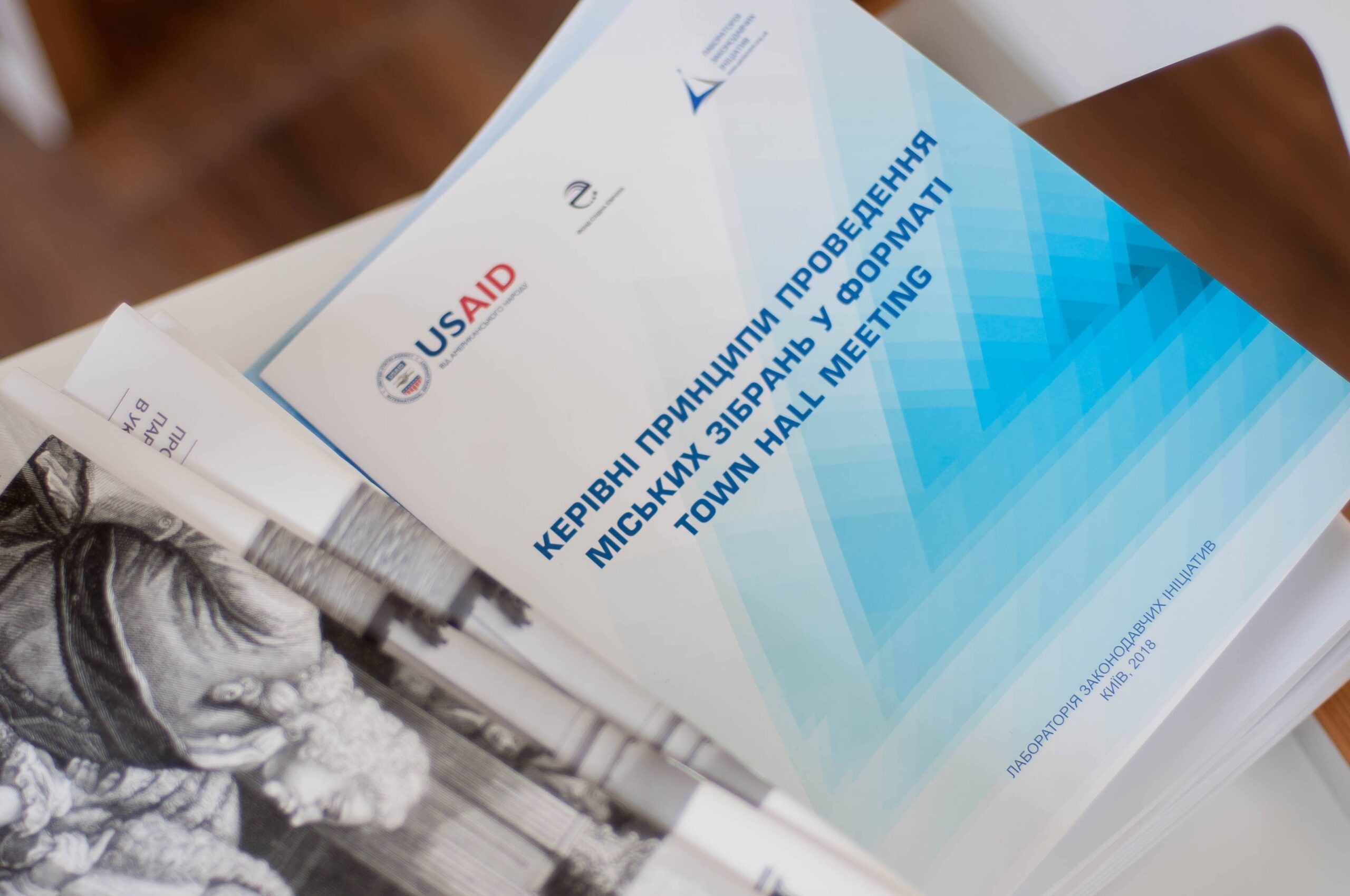
Photo by Oleksandr Kovalenko
The guidelines summarize the experience of assembling Town Hall Meeting in different regions on the various topics that the Agency for Legislative Initiatives has been conducting since 2010. The manual summarizes the best practices of planning, organizing and holding city meetings, as well as presenting materials that are examples of organizational and expert documents that were used during events organized by the Agency for Legislative Initiatives.

Photo by Oleksandr Kovalenko
Oleksandr Zaslavskyi, Deputy Chairman of the Board of the Agency for Legislative Initiatives, thanked the Apparatus of the Verkhovna Rada of Ukraine and briefly summarized the main features of the Town Hall Meeting.
“Within the framework of the “Model District” component of the USAID RADA Program, the organization’s partners offer “model” MPs a set of innovative tools for establishing communication with voters. The Agency for Legislative Initiatives offered a new format for citizen participation – city meetings in the Town Hall Meeting format”
The Town Hall Meeting format originates from the United States of America, where it is known since the 18th century. Later Town Hall Meeting spread around the world in various formats.
Why do we think it is necessary?
Today we observe rather low level of citizens’ trust in state institutions, including local self-government institutions. This distrust is mutual – the authorities also do not trust citizens. This is not an exclusively Ukrainian problem. There is a crisis of representative democracy throughout the world. In the past 20-30 years, this challenge has led to the spread of various practices of participatory democracy. This is something that allows you to create a certain discourse of complicity and co-responsibility, which, in return, builds trust in society. The Town Hall Meeting is just the tool that can provide effective public participation and confidence.
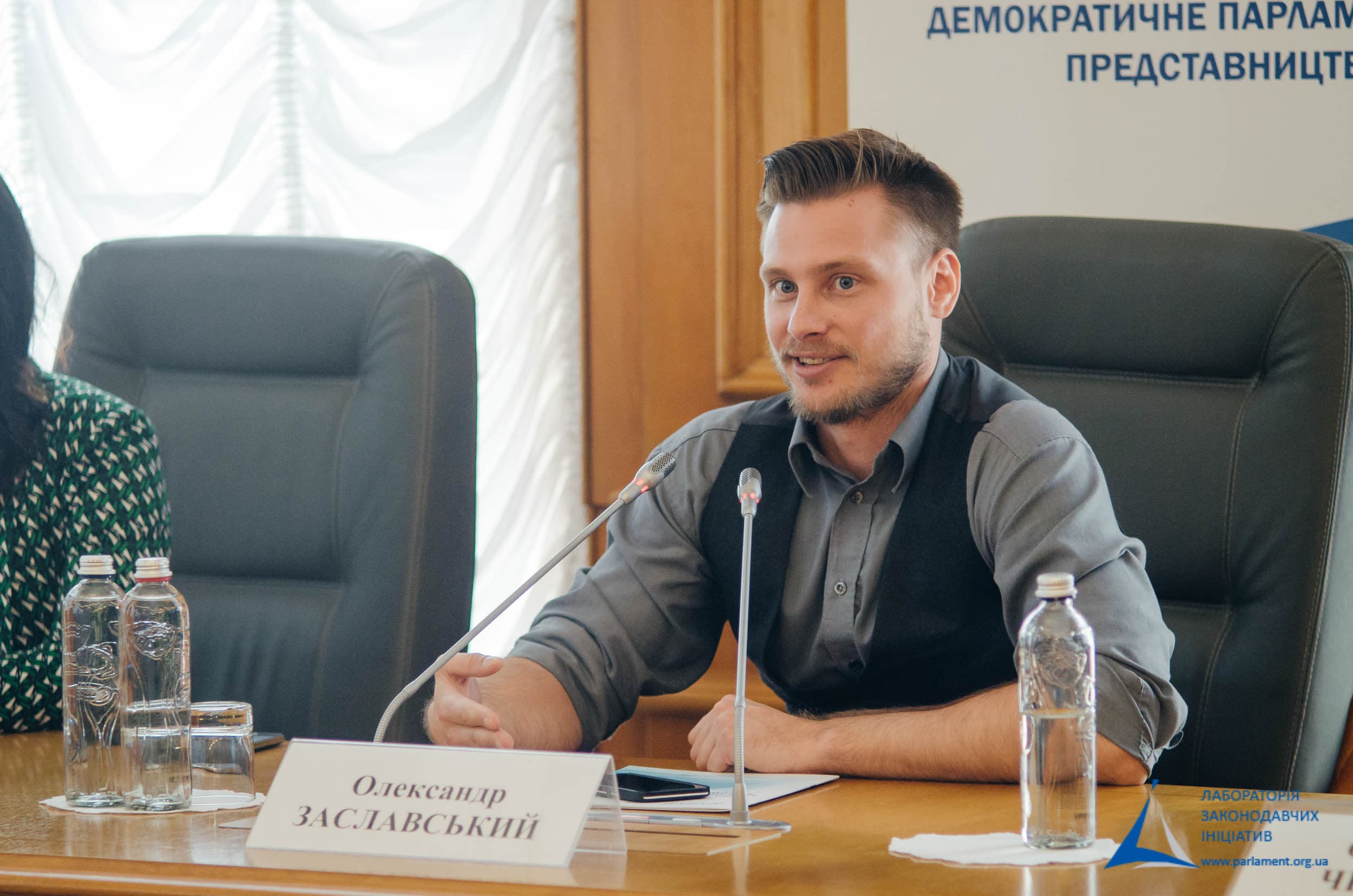
Photo by Oleksandr Kovalenko
Within the framework of the USAID RADA Program, Agency for Legislative Initiatives has conducted 11 town halls, among which the most successful is the discussion of certain points of the draft bill “On the Rehabilitation of Victims of Political Repressions in Ukraine”. This law was adopted 2.5 years later after the discussion on the Town Hall Meeting.
For decision makers, the Town Hall Meeting is an opportunity to get an answer to their initiatives, at the same time, to involve citizens in the decision-making process. The biggest advantage of the Town Hall Meeting format is that it is not about problems but solutions.
Apart from that, last year Agency for Legislative Initiatives conducted a series of town halls in cooperation with the Ministry of Youth and Sport on different approaches to youth development policy. Due to these discussions, the bill on youth centers was developed and approved, and in Donetsk region, this has contributed to the formation of a network of youth centers.
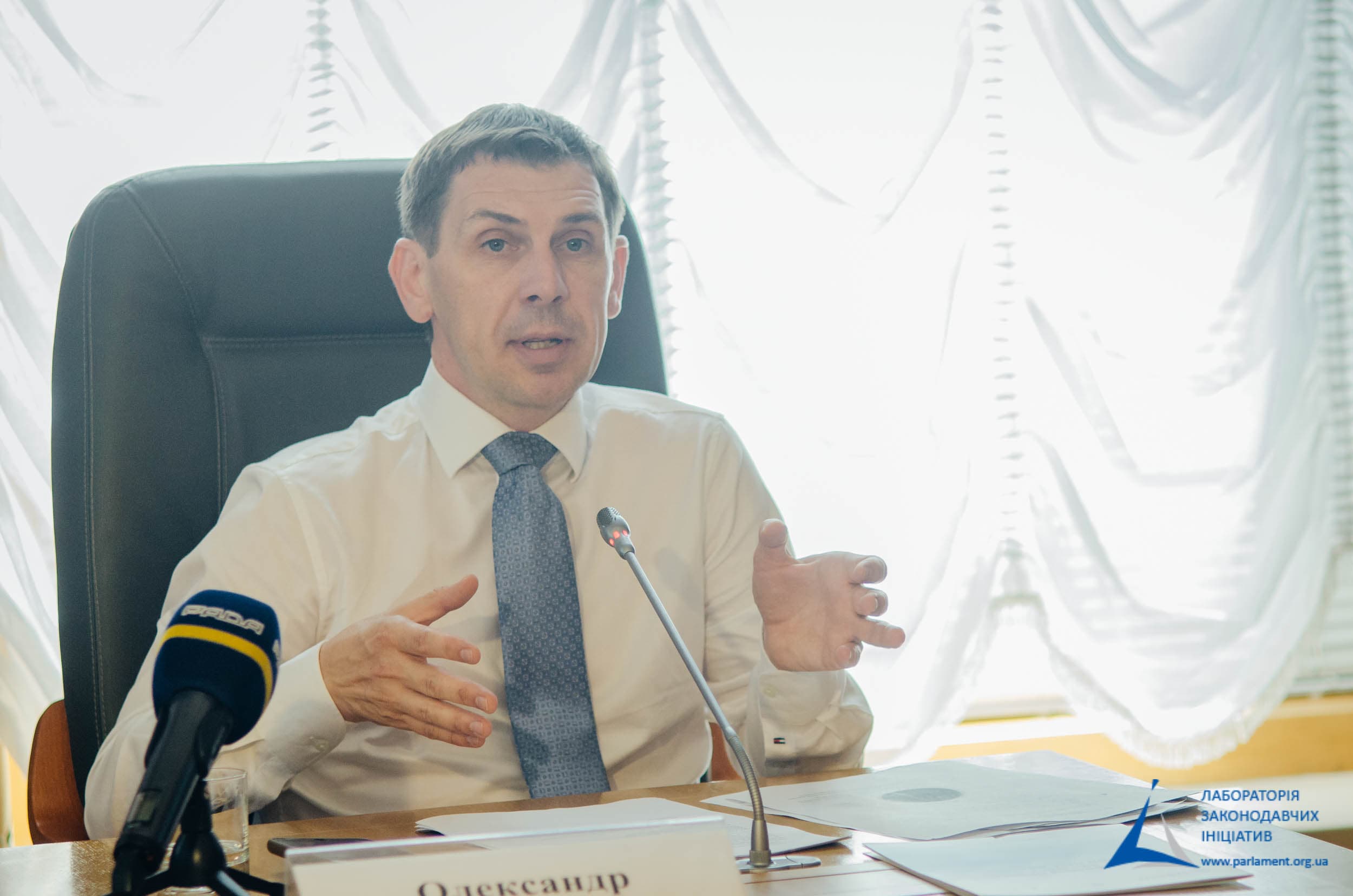
Photo by Oleksandr Kovalenko
Oleksandr Chernenko, MP, told about his experience of cooperation with the Agency for Legislative Initiatives in conducting Town Hall Meeting in Chernihiv, which was devoted to discussing various approaches of utilization solid household waste.
Among the participants of the Chernihiv meeting were Chernihiv citizens, representatives of local authorities, communal enterprises, non-government organizations, environmental organizations; i.e. all main stakeholders were represented – consumers, service providers and those who care about the environment. Within the framework of this event, we tried to find solutions to two problems: firstly, it is the search for an optimal way of utilization and recycling of waste; and secondly, effective ways of storing and transporting garbage. The discussion resulted in the number of adjustments to the environment bills, which, unfortunately, yet have not been adopted.
Oleksandr Chernenko stressed that the Town Hall Meeting provides legitimation to the discussed issues and shows that the future bill expresses the interests of the community.

Photo by Oleksandr Kovalenko
Victoria Baklazhenko, Program Coordinator, Agency for Legislative Initiatives, while presenting the guidelines, briefly focused on the key features of the Town Hall Meeting format.
Town Hall Meeting is an informal public gathering of local residents of a certain area. It is a qualified, purposeful and effective discussion of any specific issues of public interest.
The Town Hall Meeting format includes:
- discussion on the basis of several prepared scenarios – various options for solving the issue with the simultaneous display of participants’ positions on the screens;
- the participants of the discussion are, first of all, citizens interested in solving a certain problem;
- experts, politicians, public figures take part in discussions on an equal grounds with ordinary citizens;
- the discussion is held simultaneously in small groups (from 10 to 12 people);
- at each table there is a facilitator and a note taker (the person who notes on the computer the thoughts expressed by the participants);
- participants consistently discuss all options (15-20 minutes per script);
- participants’ thoughts and positions can be viewed in real-time on screens;
- after the discussion, the participants vote for the best scenario.
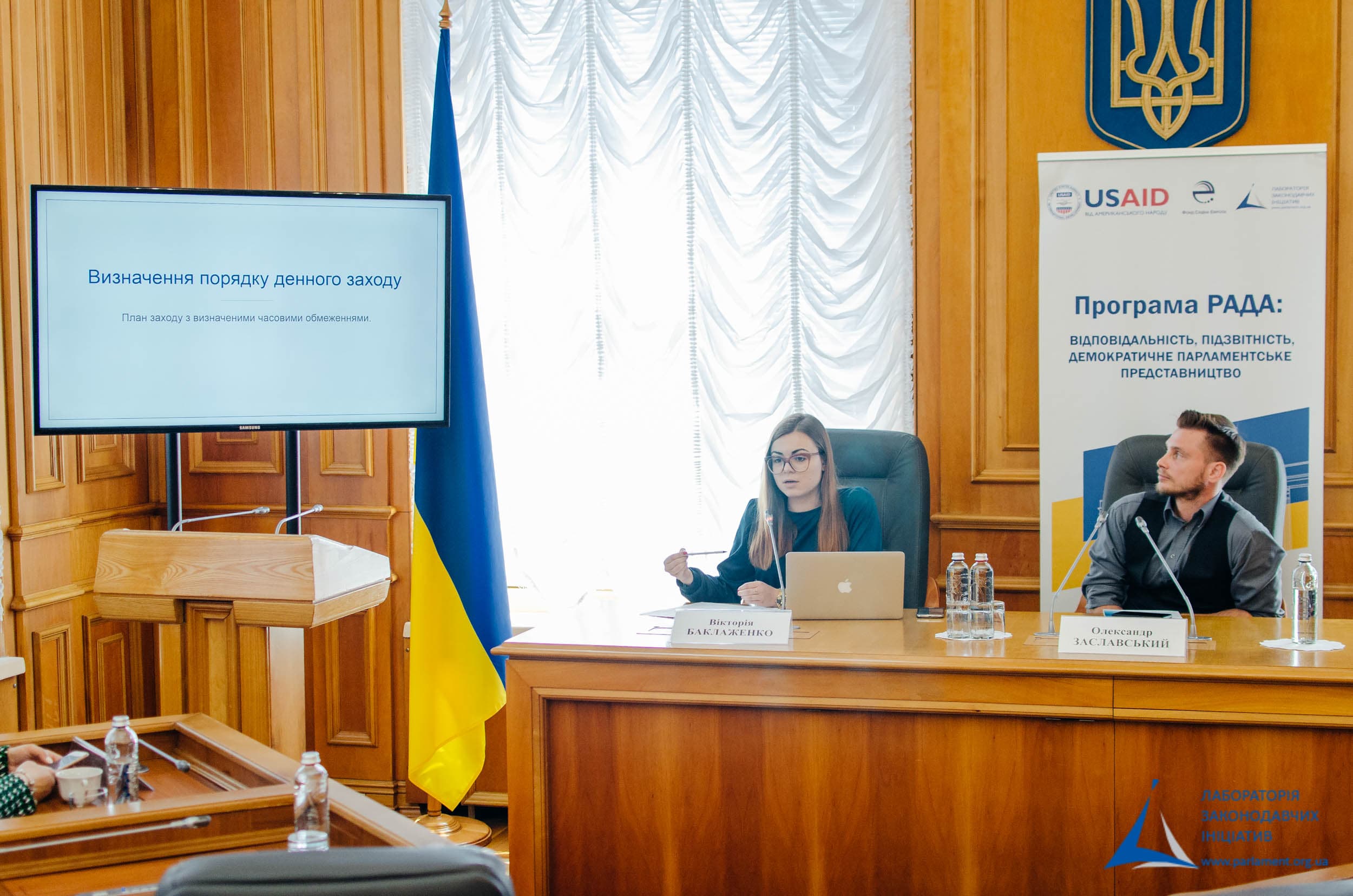
Photo by Oleksandr Kovalenko
An important part of the Town Hall Meeting is the communication support of the event, which includes an information campaign to gather main stakeholders by e- mails, publishing information on the website, social media, creating graphic materials, and spreading information among partners. After the end of the discussion, you can start an advocacy campaign on the decision voted during the Town Hall Meeting.
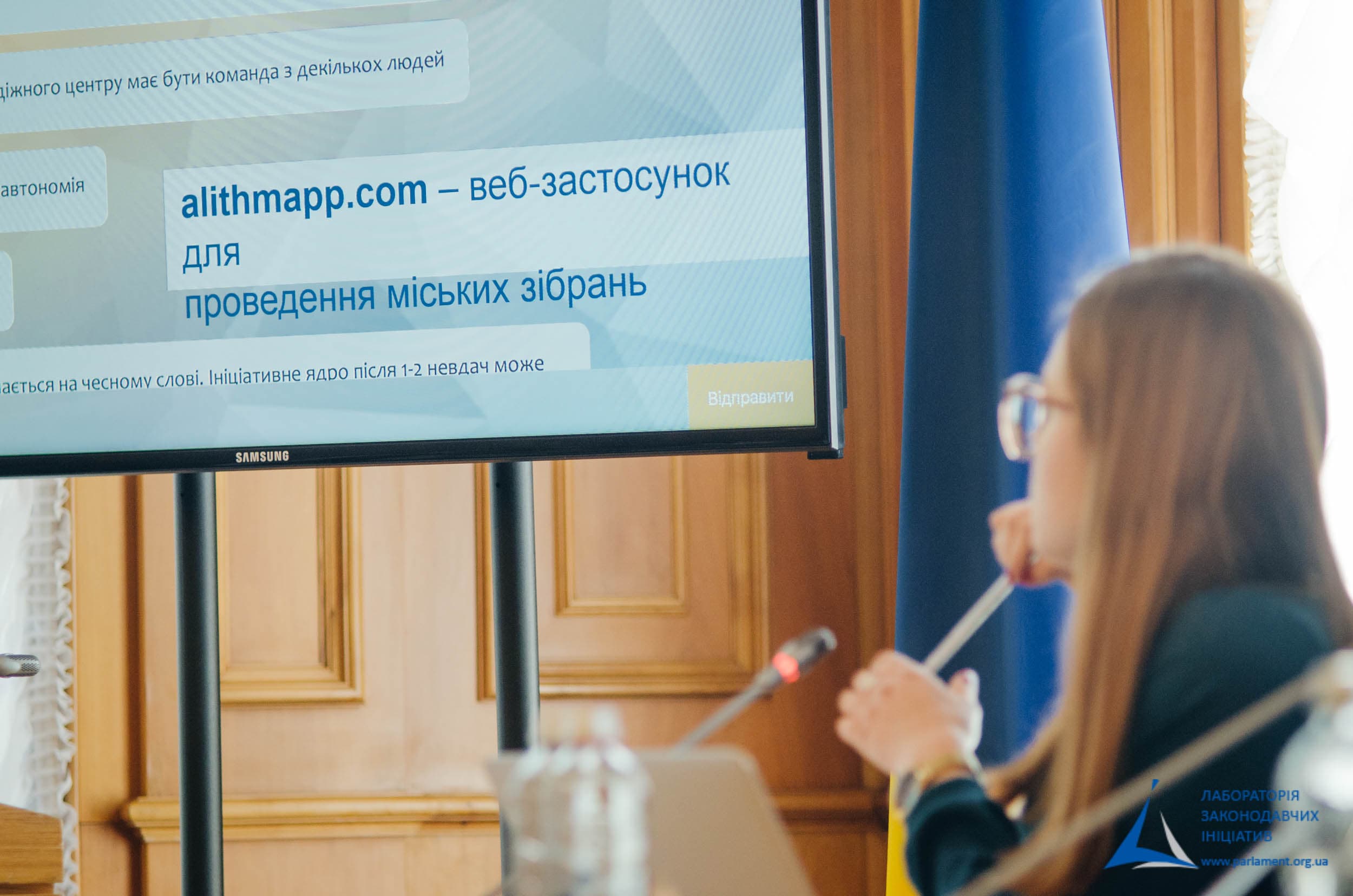
Photo by Oleksandr Kovalenko
Agency for Legislative Initiatives has developed a special web application for the Town Hall Meeting. It is available at alithmapp.com, which can be downloaded from the Agency for Legislative Initiatives’ website parliament.org.ua. This web application allows you to display structured and informative messages in a shared chat and to simplify the process of generating a report after the event. In order to use the web application for the Town Hall Meeting, please contact us.
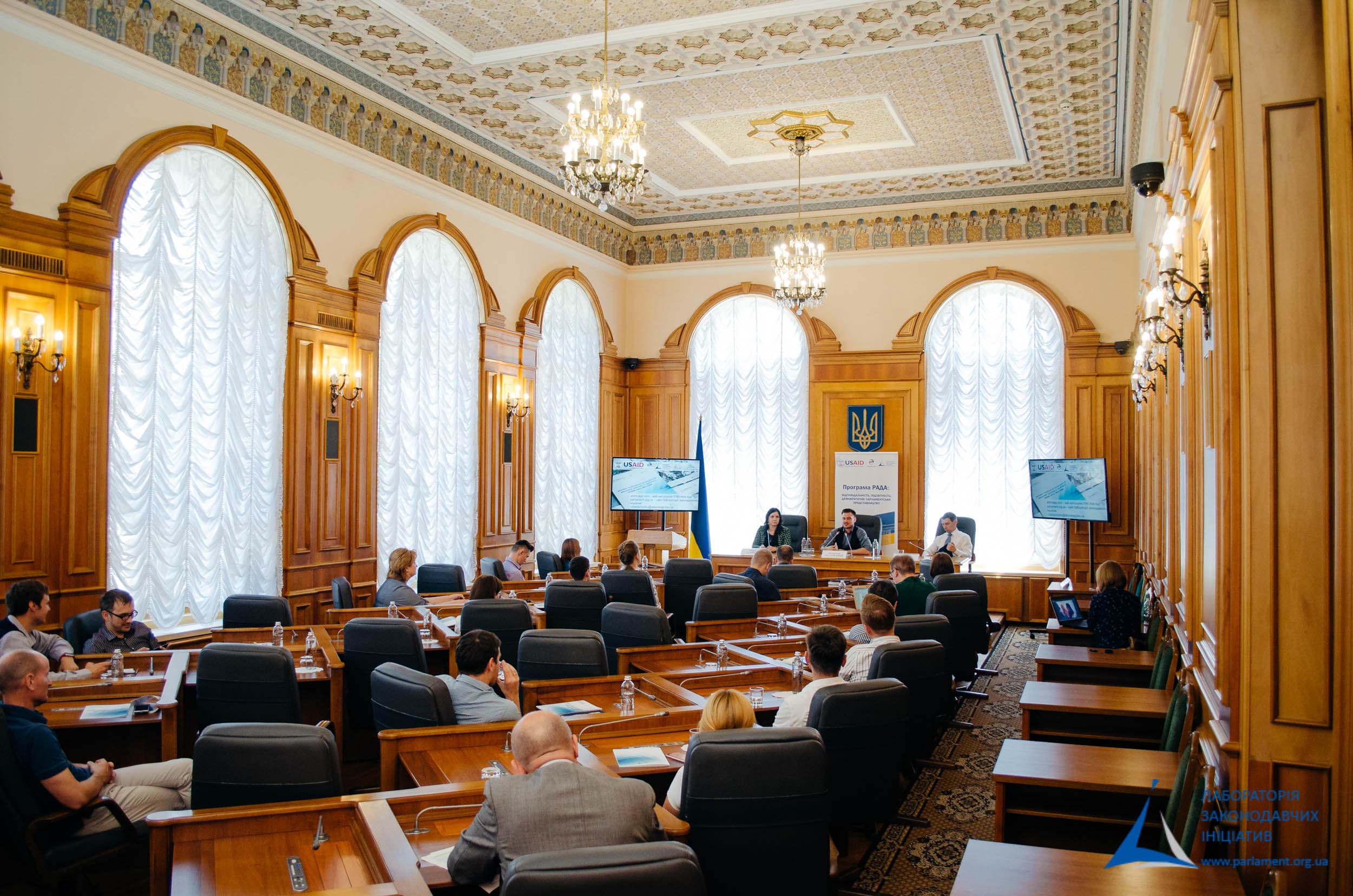
Photo by Oleksandr Kovalenko
Презентація Тіньового аналітичного звіту від громадськості (Shadow Report) на тему «Реформа державної служби та державного управління в Україні у 2017 році» – Copy
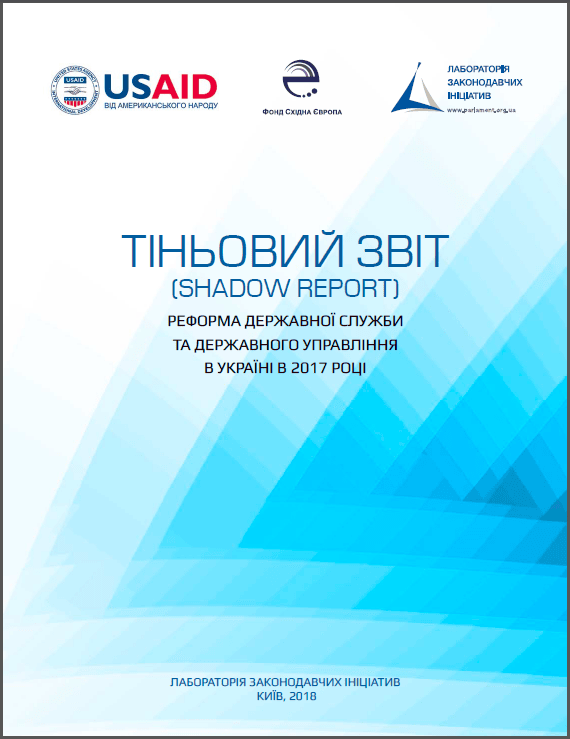
On May 16, 2018 at the Committee meeting on State Building, Regional Policy and Local Self-Government the presentation of the Shadow Report “Civil Service and Public Administration Reform in Ukraine in 2017” was held.
The shadow report was presented by Tatiana Chernukha, Program Coordinator of the Agency for Legislative Initiatives. The study was prepared within the framework of the USAID RADA Program: Responsible, Accountable, Democratic Assembly implemented by the East Europe Foundation.
The report is includes the process assessment of key reforms implementation in the area of public administration and public service of Ukraine, as defined by the new edition of the Law of Ukraine “On Civil Service”, adopted on December 10, 2015, which came into force on May 1, 2016, along with the relevant key policy documents of the Government on public administration reform, approved in 2017. The report studies the policy assessment in the field of civil service reform and public administration reform (PAR), including its compliance, retrospective progression and internal concurrence, integrity, planning, co-ordination and resource provision of implementation.
This report does not analyze the Verkhovna Rada and the President of Ukraine role in shaping the public policy and their coordination with the Cabinet of Ministers; local state administrations role and their coordination with central executive bodies; independent regulators role; local self-government role; budget process efficiency and reformation state of the public finance management system.
Tetiana Chernukha noted that the report prepared by the Agency for Legislative Initiatives is an alternative to the government report for 2016-2017 on the implementation of public administration and civil service reform of Ukraine.
“This report is prepared to support the Committee on State Building, Regional Policy and Local Self-Government control functions. We also pursue the goal of supporting the reform itself in such a way that it takes place as efficiently as possible and in order to respond in time to certain challenges, problems that may arise in the process of its implementation.
The Government’s report for 2017 contains a detailed description of the activities implemented during the year in areas covered by the Strategy, but does not reveal the state of objectives achievement, implementation of performance indicators and, in particular, the impact on problem solving. The reports also do not provide a clear understanding which planned measures were not implemented and why, and do not fully address the real challenges and risks associated with the PAR implementation, which are currently crucial and critical”
The Government’s report for 2017 contains a detailed description of the activities implemented during the year in areas covered by the Strategy, but does not reveal the state of objectives achievement, implementation of performance indicators and, in particular, the impact on problem solving. The reports also do not provide a clear understanding which planned measures were not implemented and why, and do not fully address the real challenges and risks associated with the PAR implementation, which are currently crucial and critical”
The report presents a qualitative assessment of the reform implementation, based on the Public Administration Principles developed by SIGMA:
- Coordination of implementation of public administration reform;
- Formation and coordination of government policy and strategic planning of government activities;
- Development of civil service and personnel management;
- Accountability and institutional architecture of the central executive authorities system.
Problematic aspects of public administration reform implementation are:
- Weak political management;
- Uncertainty in resource provision and sustainability of PAR funding;
- Insufficient and uncoordinatedPAR communication;
- Low level of introduction of modern information and communication technologies in public administration system.
Among the problematic aspects of the formation, coordination of state policy and strategic planning, the following should be singled out:
- Low coherence and coordination of state policy at the political level;
- Low capacity to formulate state policy at the administrative level (at the civil service level);
- Inconsistency between the planning of government activities and the planning of budget expenditures.
The problems of civil service development and human resources management are:
- Low ability to manage civil service personnel management;
- Low professional level of organization and holding competitions for civil service positions;
- Inconsistency of the evaluating system of civil servants performance with the government goals and between different categories of civil service. Lack of connection between the assessment system and financial motivation;
- Lack of an effective system of civil servants professional development of all categories.
Among the problematic aspects of accountability and institutional architecture of the central executive authorities system, the following should be singled out:
- There is no clear distinction between political and administrative functions at the level of ministries;
- The subjects’ functions of the policy formation and implementation are not distinctly specified;
- The optimization and centralization of ministry functions were not held.
Summing up the presentation and discussion of the Shadow Report, Serhiy Vlasenko, Chair of the Committee on State Building, Regional Policy and Local Self-Government, noted that the Committee takes note of the information, taking into account the comments expressed by MPs during the discussion.
Civil Service and Public Administration Reform in Ukraine in 2017 (Shadow Report)
The report is devoted to the evaluation of the progress on key reforms in the field of public administration and public service of Ukraine, as defined in the revised Law of Ukraine «On Civil Service», adopted on December 10, 2015, which came into force on May 1, 2016, with the relevant key policy documents of the Government on the Public Administration Reform that were approved in 2017. The evaluation of policy in the field of reforming the civil service and public administration, including its relevance, consistency in retrospectives and internal consistency, integrity, planning, coordination, and resourcefulness of implementation are researched.
The research examines the progress of implementing the corresponding State policy measures from January 2017 to May 2018, as well as the analysis of the specific challenges of reforming and specific suggestions for the required steps in this area.
Only existing normative legal acts in the field of public administration from January 2017 to May 2018, primarily the Civil Service Law, have been studied with a view of preparing the publication.
The publication focuses on reforming the public administration system, mainly at the level of the CMU and CEB, especially as regards the coordination of the reform implementation, the development of capacity in relation to the formation of public policy, the development of personnel management in the civil service and the organization of the Government architecture and its accountability.
For this publication, the above-mentioned issues and essential elements of the public administration were not analyzed. They should be included in the comprehensive harmonization of the Public Administration Reform, still, they are insufficiently covered by the key Government policy documents:
- Roles of the VRU and the PU in the formation of the state policy, and their coordination with the Cabinet of Ministers;
- The role of the MDA and their coordination with the CMU and the territorial offices of the CEB;
- The role of independent state bodies regulating certain spheres (independent regulators) and their coordination with the CMU;
- The role of local self-government;
- The effectiveness of the budget process and the state of the public finance management system reform.
The preparation and presentation of analytical reports in the Shadow Report format is part of the project embodied by the Agency for Legislative Initiatives, supported by the USAID Rada Program: Responsible Accountable Democratic Assembly, implemented by the East Europe Foundation.
Presentation of Shadow Report “Creation of Amalgamated Territorial Communities in Ukraine in 2015-2017”
On April 18, 2018, the Shadow Report “Creation of Amalgamated Territorial Communities in Ukraine in 2015-2017” was presented at the Committee meeting of the State Building, Regional Policy and Local Government by the Agency for Legislative Initiatives.
The shadow report was presented by Tetiana Chernukha, Program Coordinator of the Agency for Legislative Initiatives. The study was prepared within the framework of the USAID Program RADA: Responsibility, Accountability, Democratic Assembly implemented by the Eastern Europe Foundation.
While presenting the research, Tetiana drew the attention to the problems connected with the legislative provision of the decentralization reform in Ukraine.
The first problem of legislative regulation of the process of amalgamation of territorial communities is the problem of formation of territorial communities around cities of oblast significance. The essence of this problem has a dual nature. On the one hand, the creation of a new territorial community with a center in a city of regional significance requires to run new elections for mayor and the city council, which in most cases contradicts the interests of the current members of the city councils and city mayors. The mechanism of solving this problem is quite simple and consists in the legislative recognition of territorial communities of cities of oblast significance capable a priori, and thus the way of the formation of amalgamated territorial communities opens by joining of neighboring rural populated areas the city territorial community. On the other hand, realizing the need for amalgamation with city communities, territorial communities of villages express legitimate concerns that in the case of joining they will not have their own budget at all, and local self-government bodies of the city community will not pay attention to their problems.
The second tangible problem that has already emerged in the process of creating of amalgamated territorial communities is the problem of ensuring the real capacity of the newly formed amalgamated communities.
In accordance with the Methodology for the formation of capable territorial communities, approved by the Resolution of the Cabinet of Ministers of Ukraine as of April 8, 2015, No. 214, the capable territorial community is territorial communities of villages (cities) which, as a result of a voluntary amalgamation, can independently or through appropriate local self-government bodies provide the proper level of services, in particular in the field of education, culture, health care, social protection, housing and communal services, taking into account human resources, financial support and infrastructure development of the relevant administrative and territorial units.
The key point here is the availability of relevant human resources, financial support and infrastructure development.
In fact, in the process of creating of amalgamated territorial communities, we deal with three types of capabilities.
- First, it is the potential or estimated capacity that communities need to have, defined in accordance with a long-term plan.
- Second, this is the capacity legally recognized by the Cabinet of Ministers of Ukraine in accordance with Article 9 of the Law of Ukraine “On Voluntary Amalgamation of Territorial Communities”.
- Third, it is a real capacity that is determined already after the amalgamated territorial community has been formed and shows certain results of its activity
In practice, potential, legally recognized and real ability coincides, as a rule, only with amalgamated territorial communities formed around populated areas, which are district centers. Instead, the creation of rural amalgamated territorial communities around populated areas that did not have the status of administrative centers immediately raises the problem of high-quality personnel provision of local self-government bodies.
Another quite controversial point in determining the capacity of the amalgamated territorial communities is the provision of part four of Article 9 of the Law of Ukraine “On Voluntary Amalgamation of Territorial Communities”, according to which the Cabinet of Ministers of Ukraine may recognize an amalgamated territorial community as capable, on condition that it is formed in the manner prescribed by Section II of this Law, around the community determined by the prospective plan for the formation of community territories. In fact, the law recognizes the possibility of legal recognition of capable territorial communities with potential capacity of only half of the maximum possible. It is clear that this is done to avoid artificial interruption of the merger processes, but on the other hand this is the way to create potentially insolvent communities.
In this context we should mentioned one of the principles of the amalgamation of territorial communities, namely the principle of voluntariness. If we analyze the relevant laws, we can ensure that voluntariness as such exists only in one aspect – in the choice of the moment of amalgamation or joining. From the territorial point of view, voluntariness is limited by the principle of capacity. The capacity of the potential amalgamated territorial communities is determined administratively by the formation of a perspective plan of community territories in accordance with Article 11 of the Law of Ukraine “On Voluntary Amalgamation of Territorial Communities”. In addition, voluntariness is limited by the administrative and territorial criterion, in particular, that the amalgamation is possible only within the existing areas.
Despite the fact that the amalgamation of territorial communities is a conditionally voluntary process, often the factor of voluntarism impedes the reform. This is especially true for promising communities, which have 2 to 3 population areas that are equivalent in their capacities, which may be the administrative centers of the amalgamated communities. As a rule, the leadership of these communities believes that the administrative center should be located exactly in their populated area and categorically rejects the idea of establishing an administrative center in another place.
Another important factor in the formation of capable territorial communities is the delineation of the boundaries of their territories, which are determined with the following requirements:
- the territory of a capable territorial community should include the territory of the territorial communities that are part of it and be inseparable;
- capable territorial communities are located within the territory of one oblast and, if possible, one district. At the same time, the law allows amalgamation of adjacent communities that are located in different areas and do not allow to restrict their legal rights.
Most often, the voluntary amalgamation of communities during 2015-2017 was in line with the long-term plan. Such an amalgamation allowed communities to obtain a new legal status of the territorial community with the powers of cities of oblast significance and direct intergovernmental relations with the state budget.
“In our opinion, 2018 should become the deadline for the voluntary amalgamation of territorial communities. The transition from 2019 to the administrative method of forming the amalgamated territorial communities, on the one hand, should encourage those who hesitate to hurry with the voluntary amalgamation by the end of 2018, and, on the other hand, to solve the problems with the formation of the cities amalgamated territorial communities.
At the same time, we would recommend to the government and all involved in the reform actors not to fight the already created small and potentially insolvent amalgamated territorial communities. They should have the right to join another, more capable community. To form such a design that they consider to be the most effective. At least until the moment when the reform is completed by the adoption of the law on the new administrative and territorial system”
At the same time, we would recommend to the government and all involved in the reform actors not to fight the already created small and potentially insolvent amalgamated territorial communities. They should have the right to join another, more capable community. To form such a design that they consider to be the most effective. At least until the moment when the reform is completed by the adoption of the law on the new administrative and territorial system”
Creation of United Territorial Communities in Ukraine 2015–2017 (Shadow Report)
The report focuses on the implementation of decentralization reform in Ukraine. The publication traces the main stages of the reform process, the specificities of local budgeting and its resourcing following different revenues, as well as the support of international donors. There are urgent issues of amending the legislation on the decentralization process and improving the institutional and legal framework for improving the territorial organization of power.
The report focuses on the appointment and conduct of elections, as well as on the formation of local authorities following the time frame and conditions for the completion of the voluntary establishment of joint territorial communities.
The purpose of this publication is to improve communication between those directly concerned with the decentralization reform, to identify the main shortcomings of the reform, and to contribute to the process of improving the territorial organization of power, which will ensure the country’s transition to a new model of multi-level governance.

Presentation of the Shadow Report “On Implementation by the Ukrainian Government of the European Court of Human Rights decision in the Case of Burmych and Others v. Ukraine”
On March 27, 2018, the round table “Implementation of the European Court of Human Rights decision in cases “Yuriy Mykolayovych Ivanov v. Ukraine” and “Burmych and others v. Ukraine”: Requirements for General Measures” was held by the Subcommittee on Implementation the Decisions of the European Court of Human Rights of the VRU Committee on Legal Policy and Justice, the Ministry of Justice of Ukraine and the Council of Europe Project “Supporting Ukraine in the execution of judgments of the European Court of Human Rights”.
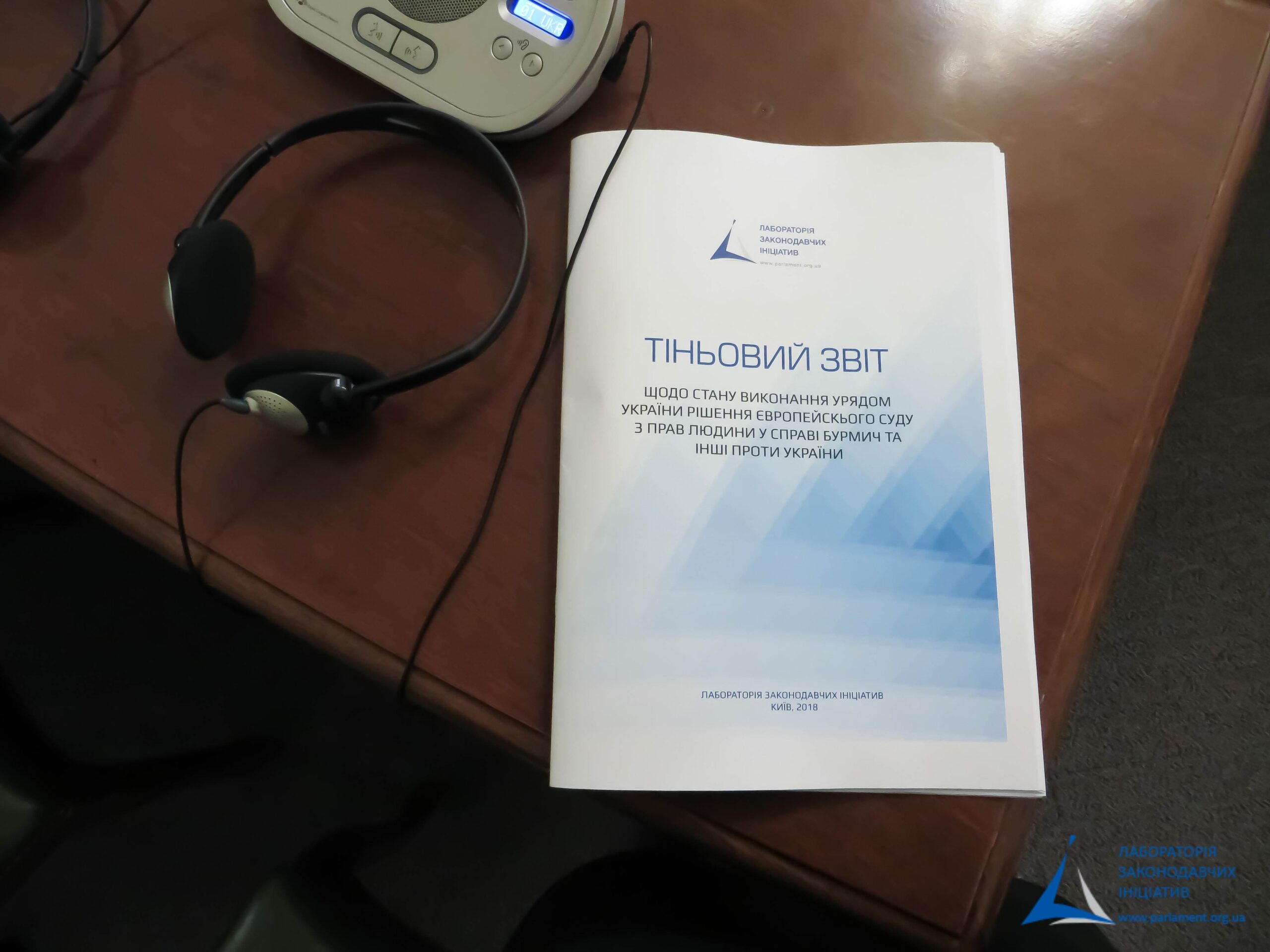
During the round table Svitlana Matviienko, Chairwoman of the Board of the Agency for Legislative Initiatives, presented the Shadow Report “Implementation of the European Court of Human Rights decision in cases “Yuriy Mykolayovych Ivanov v. Ukraine” and “Burmych and others v. Ukraine”, prepared by an expert of the Agency for Legislative Initiatives.
Core of the Problem
The problem of non-enforcement of national courts’ decisions was first recognized by the European Court in 2004 in the cases of “Zhovner v. Ukraine” and “Voytenko v. Ukraine”. Unfortunately, over the past five years, the Government of Ukraine has not taken effective measures to address this problem, which has led to a significant increase in the number of complaints to the European Court. As a result, the Court decided to apply the pilot decision in the case of “Yuriy Mykolayovych Ivanov v. Ukraine. In this case the Court points out to the existence of structural problems that are of a widespread and complex nature and require the implementation of comprehensive and complex legislative and administrative measures, involving various national authorities.
The European Court determined that the violation was a consequence of the practice incompatible with the provisions of the Convention for the Protection of Human Rights and Fundamental Freedoms (ratified by Law № 475/97-VR dd. 17.07.1997), which is the systematic non-compliance of the respondent government with the national courts decisions for which the respondent government is liable and in connection with which the parties whose rights are violated do not have effective remedies.
On October 12, 2017, by the decision of the Grand Chamber of the European Court of Human Rights in the case of Burmych and Others v. Ukraine, the European Court handed 12.148 cases under the control of the Committee of Ministers of the Council of Europe. It also decided to transfer all such cases under consideration, as well as such future cases, to the Committee of Ministers for consideration in the framework of general measures to implement the pilot decision in the Ivanov case, including provisions for compensation for failure to comply or late execution of national court decisions and payment of a debt awarded by a court decision.Thus, public authorities should be called upon to introduce at national level a targeted mechanism to ensure that all actual and potential applicants with valid complaints under the Convention are compensated. In response to the Burmych case decision, a high-level meeting was held in Strasbourg on 17 November 2017 with the participation of the Ministry of Justice, the Presidential Administration and Parliament, which discussed the creation of an ad hoc compensation mechanism for all those mentioned in the applicants’ decision, which should take place in parallel with the efforts, aimed at reaching a long-term solution to the root causes of these problems.
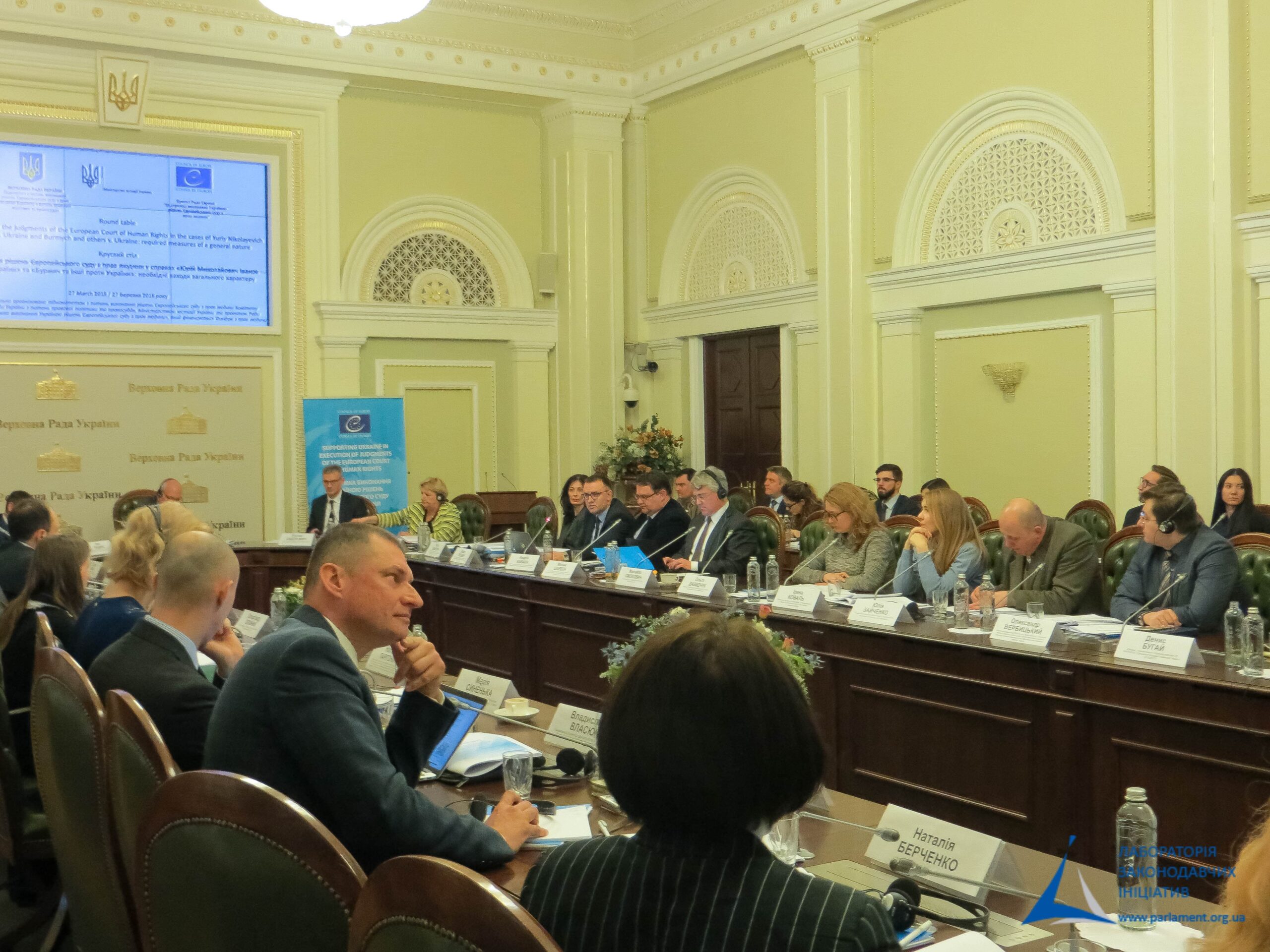
Svitlana Matviienko, Chairwoman of the Board of the Agency for Legislative Initiatives, presenting the Shadow Report prepared by the expert of the Agency for Legislative Initiatives, noted that the source of the information for the Report was the annual report on the activity results of the Government Commissioner for European Court of Human Rights in 2017, responses to the Mr. Lishchyna’s query to Member of the Parliament Ruslan Sydorovych, information provided by the Ministry of Justice to the Ombudsman for Human Rights, the Ombudsman on Human Rights annual report on the state of observance and protection of human rights and freedoms in Ukraine in 2017 and information received from the applicants in the case of Burmych.
“Having examined all these facts, we came to the conclusion that this problem can be analyzed on the basis of two positions”
The first step is taking measures to enforce decisions of national courts passed in favor of the applicants in the case of Burmych and payments of compensations. The second step is taking measures to introduce an effective system of enforcement of decisions of national courts.
What was discovered?
“First of all, the lack of political will blocks the process of resolving this issue, and here we do not aim at criticizing the Ministry of Justice of Ukraine. Our goal is for all interested stakeholders to understand that it’s time to raise this issue at a very high state level”
If we are talking about taking measures to implement the national courts decisions, it is worth emphasizing the mechanism revealed by our experts, which consists in working with the Resolution of the Cabinet of Ministers of Ukraine “On approval of the procedure for using the funds foreseen in the state budget for payments related to using decisions of foreign jurisdictional bodies adopted on the results of consideration of cases against Ukraine” №408 dd. 07.03.2017.
“We believe that if we make some changes to it, it will allow us to begin to enforce court decisions and to understand one simple thing – we need not only to enforce decisions, but to understand that it is necessary to change the system itself and the vision frame. Because we can endlessly try to enforce all of these decisions, but without changing the system, we will still collapse. Therefore, changing the point of view on this problem was our main task”
The CMU Resolution №408 can be improved as follows: first of all, a large-scale collection of information on the decisions to be executed and the state of their enforcement should be carried out. Amendments to the Resolution of the Cabinet of Ministers of Ukraine No. 408 will allow to undertake expenditures for taking general measures. After that, it will be possible to calculate the amount of indexation and compensation for long non-enforcement of court decisions. Then, the most important step is to provide adequate funding for these payments. It is at this stage that the coordinated work of the Verkhovna Rada of Ukraine is needed and the bringing up this issue not only within the professional lawyers circle, but also a massive informing of the public.
The second important point emphasized by the Shadow Report is to take measures to implement an effective system of enforcement of domestic courts.
In our opinion, the main disadvantages of the mechanism proposed by the Government are:
- repayment of debts with promissory notes is carried out with the consent of the payer, while there are no alternative mechanisms of debt repayment;
- absence of indexation for the period from the moment of the rendering of decision and until the issuance of promissory notes, as well as redress for the non-pecuniary damage;
- the repayment period is too long (it was noted by the Ukrainian Helsinki Human Rights Union, p. 125 Burmych), in addition, it may be extended at any time by the Government decision, as well as the interest rate changed;
- the moment of the court decision enforcement is considered to be not the time of full payment of the bill, but the moment when the bill is issued to the recoverer.
“We are ready to cooperate with all stakeholders to solve this problem,” stressed Svitlana, “as the problem is extremely relevant, and if it is not considered in all its bearings and a mechanism for its solution is not formed now, then there may be collapse”
Shadow Report on Implementation by the Ukrainian Government of the European Court of Human Rights Judgement in the Case of Burmych and Others v. Ukraine
The problem of non-enforcement of the national court decisions was first stated by the European Court in the cases of Zhovner v. Ukraine (Application No. 56848/00, Judgement of 29.06.2004) Voytenko v. Ukraine (Application No. 18966/02, Judgement of 29.06.2004). Unfortunately, the Government of Ukraine took no efficient measures in the subsequent 5 years to solve this problem, which generated a much bigger number of complaints submitted to the European Court, so, as a result, the Court decided to apply a pilot-judgement procedure in the case of Yuriy Mykolayovych Ivanov v. Ukraine (Judgement No. 40450/04 of 15.10.2009).
The Shadow Report on Implementation by the Ukrainian Government of the European Court of Human Rights Judgement in the Case of Burmych and Others v. Ukraine contains a brief overview of the problem, and the analysis of the measures proposed by the Government of Ukraine. It investigates the implementation of measures to enforce national courts’ decisions in favor of the applicants in the case of Burmich and payment of compensation. It also explores the implementation of measures to introduce an effective system of enforcement of decisions of national courts, and offers an effective mechanism for implementing new solutions and repayment of current debts.

Presentation of the Policy Paper “Policy Proposals to Regulate the Status of the Local Council Members”
On January 17, 2018, the Policy Paper “Policy Proposals to Regulate the Status of the Local Council Members” was presented at the meeting of the Committee on State Building, Regional Policy and Local Self-Government.
Kateryna Handzyuk, Advisor to the Kherson City Mayor, Councilor of the Kherson Oblast Council, member of the Executive Committee of the Kherson City Council, expert of the Agency for Legislative Initiatives:
“The issue of the need to amend the legislation regulating the status of local councilors in Ukraine has been raised repeatedly. This resulted, if anything, in cosmetic changes to the legislative framework and, in particular, the Law “On the Status of Local Councilors”.
However, the principles and foundation remained the same, and the electoral law, the law on public service, and anti-corruption legislation changed.
Having analyzed the Law, we chose its key sore points that require a cautious approach because some inconsistency of the Law produces tension. These include the issue of representation in the light of the Law “On Local Elections” as amended in 2015 and the issue of recalling local councilor on people’s initiative.
We believe that by settling these issues in combination with other amendments that need to be introduced into the Law, we will be able to improve and resolve the problem of the status of local councilors”
However, the principles and foundation remained the same, and the electoral law, the law on public service, and anti-corruption legislation changed.
Having analyzed the Law, we chose its key sore points that require a cautious approach because some inconsistency of the Law produces tension. These include the issue of representation in the light of the Law “On Local Elections” as amended in 2015 and the issue of recalling local councilor on people’s initiative.
We believe that by settling these issues in combination with other amendments that need to be introduced into the Law, we will be able to improve and resolve the problem of the status of local councilors”
Ms. Handzyuk highlighted the following recommendations aimed at settling the status of the local councilor:
- Article 2 of the Law “On the Status of Local Councilors” shall be amended with paragraph 2 as follows: “Not later than at the second session, councilors of city, city district, district, and oblast councils elected in multi-mandate constituencies shall be appointed to the respective territorial election districts by decision of the relevant council/by decision of the local organizations of the political parties from whose electoral lists they were elected. The relevant decision is urgent and shall be published in official print publications, on official websites, information stands or in any other way communicated to the voters of the respective territorial constituency no later than in 1 working day”.
- All other articles shall use the term ‘relevant territorial election district represented by a councilor’.
- Para. 3, Section 1 of Article 37 of the Law of Ukraine “On the Status of Local Councilors” (“lack of compliance of the councilor’s practical activity with the basic principles and provisions of his election program”) shall be deleted, since Article 38 of the Law of Ukraine “On Local Elections” does not require that candidates provide any election programs.
- Instead, Para. 1, Section 1, Article 37 (Grounds for recalling of local councilors by voters who elected them) shall be revised to read as follows: “infringement by the local councilor after assumption of powers of the provisions of the Constitution and laws of Ukraine related to his office as established by the court”.
- Section 3 of Art. 38 of the Law of Ukraine “On the Status of Local Councilors” shall provide for the obligation to publish information on the date, place and time of the meeting of the action group for recalling a councilor in regional and/or local mass media, or an announcement of the meeting must be posted on the official website of the relevant local council.
- Para. 2 of Art. 38 (concerning the meeting of the action group) shall be supplemented with the requirement: “A decision shall be deemed adopted if upheld by two-thirds of the voters present at the meeting”.
- It is necessary to minimize the political influence of territorial election commissions by depriving them of the right to verify the collected signatures. This task shall be committed to the bodies of the State Register of Voters, accordingly changing their powers, as well as specifying the law enforcement body to be involved in checking 10% of the collected signatures as well as the ways of this involvement.
- The Law of Ukraine “On the State Register of Voters” and the Law of Ukraine “On National Police” shall be amended to establish the obligation to verify the authenticity of information about citizens contained in the signatures sheet in support of the proposal to recall the local councilor on public initiative and selective verification of voters’ signatures by the State Register of Voters and Police, as well as the procedure for such verification.
- The Law “On the Status of Local Councilor” shall stipulate that local councilors may be recalled by the voters of the electoral district where the councilor was elected/appointed rather than the voters of the entire multi-mandate constituency; the required number shall be set at the level of the electoral quotient +1 vote.
Olena Ledovskyh, the First Deputy Chairwoman of the Committee on State Building, Regional Policy and Local Self-Government, emphasized that the Committee takes to account the presented information and submits it to the Subcommittee that deals with these issues.

Preparation of the analytical materials is a part of a project implemented by the NGO Agency of Legislative Initiatives with the support of USAID RADA Program: Responsible Accountable Democratic Assembly, implemented by East Europe Foundation.
Presentation of the Policy Paper “Policy Proposals to Regulate the Status of the Local Council Members”
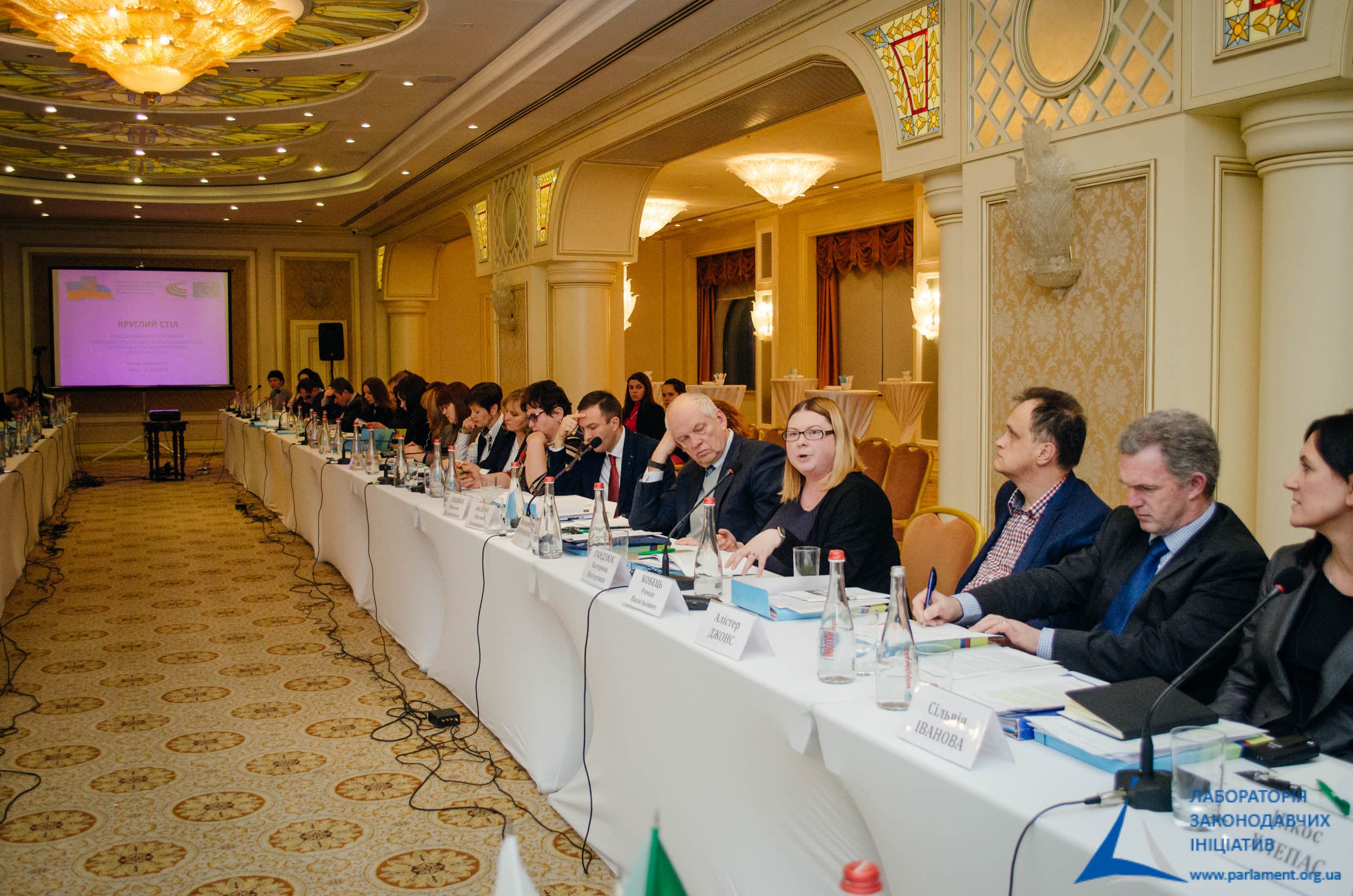
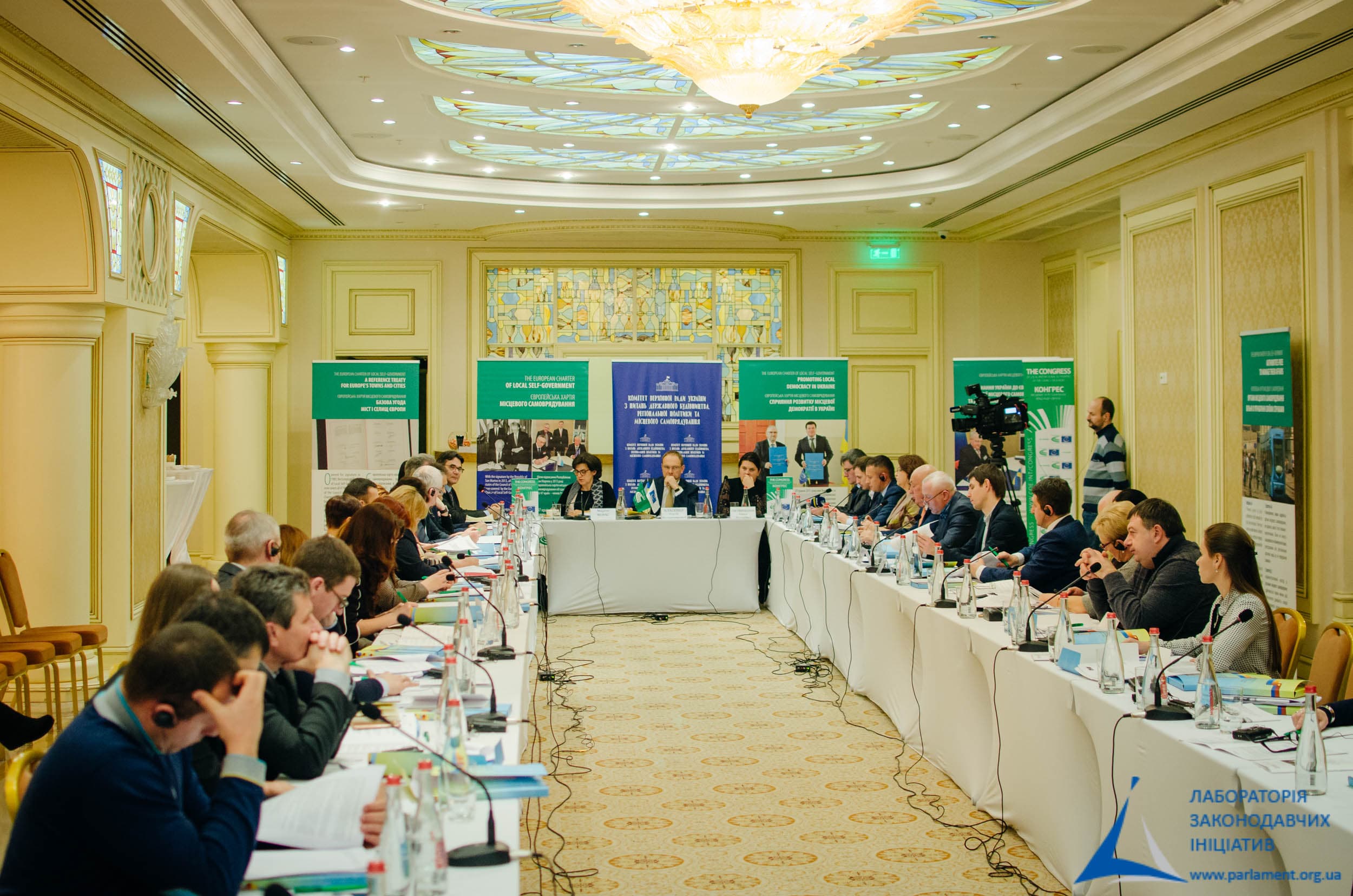
On December 18, 2017, the Committee on State Building, Regional Policy and Local Self-Government held a roundtable on “Legislative Regulation of the Legal Status of Local Councilors: State of Play and Prospects for Improvement”, which included presentation of the Policy Paper “Policy Proposals to Regulate the Status of the Local Council Members” .
The event was organized by the VRU Committee on State Building, Regional Policy and Local Self-Government in co-operation with the project Promoting Local Democracy in Ukraine implemented by the Congress of Local and Regional Authorities of the Council of Europe.
The roundtable involved discussion of the current state and thorny issues of the implementation of Ukrainian legislation as regards the status of local councilors, ways to resolve these issues, and examination of the international experience of the work of local councilors.
Kateryna Handzyuk, Advisor to the Kherson City Mayor, Councilor of the Kherson Oblast Council, member of the Executive Committee of the Kherson City Council, expert of the Agency for Legislative Initiatives:
“The issue of the need to amend the legislation regulating the status of local councilors in Ukraine has been raised repeatedly. This resulted, if anything, in cosmetic changes to the legislative framework and, in particular, the Law “On the Status of Local Councilors”.
However, the principles and foundation remained the same, and the electoral law, the law on public service, and anti-corruption legislation changed.
Having analyzed the Law, we chose its key sore points that require a cautious approach because some inconsistency of the Law produces tension. These include the issue of representation in the light of the Law “On Local Elections” as amended in 2015 and the issue of recalling local councilor on people’s initiative.
We believe that by settling these issues in combination with other amendments that need to be introduced into the Law, we will be able to improve and resolve the problem of the status of local councilors”
However, the principles and foundation remained the same, and the electoral law, the law on public service, and anti-corruption legislation changed.
Having analyzed the Law, we chose its key sore points that require a cautious approach because some inconsistency of the Law produces tension. These include the issue of representation in the light of the Law “On Local Elections” as amended in 2015 and the issue of recalling local councilor on people’s initiative.
We believe that by settling these issues in combination with other amendments that need to be introduced into the Law, we will be able to improve and resolve the problem of the status of local councilors”
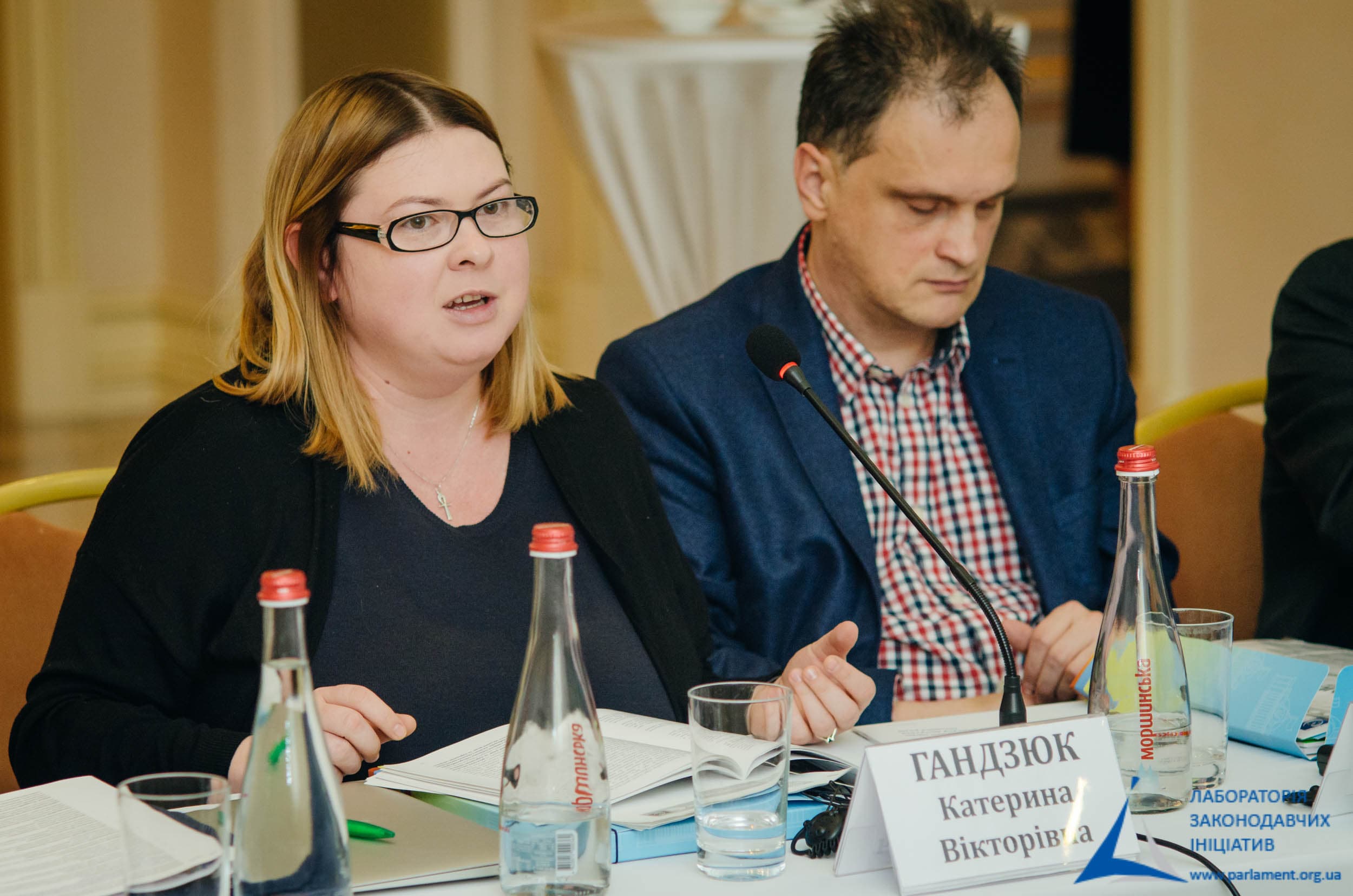
Presenting the study, Ms. Handzyuk focused on the issue of constituencies in the light of the current Law “On Local Elections”; the issue of recalling local councilors in the current Law and the practice of its enforcement; judicial practice of appealing against decisions, actions and inactivity of territorial election commissions in the process of recalling councilors on people’s initiative; as well as examined the stakeholders and their impact on the problem.
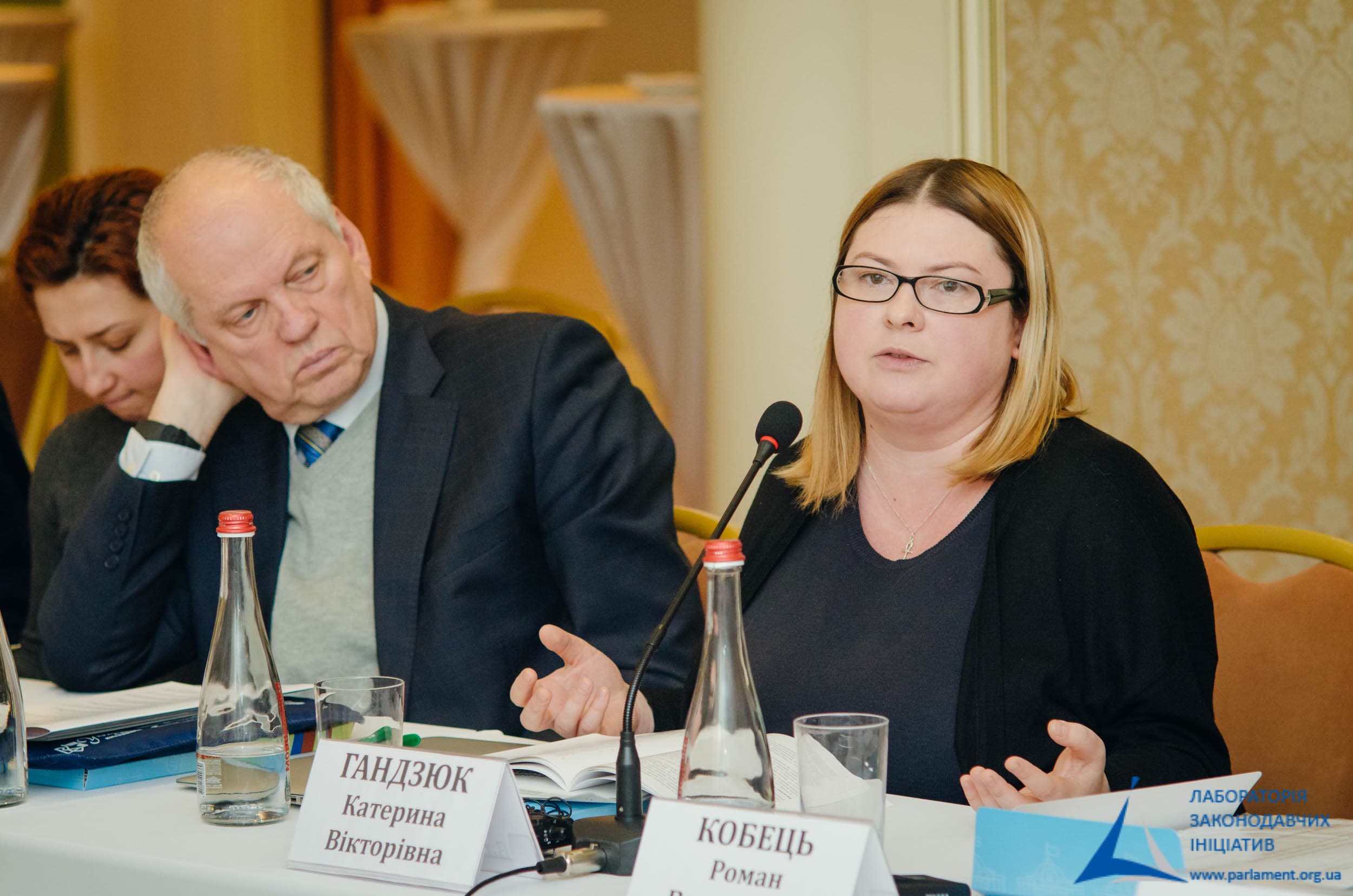
Ms. Handzyuk highlighted the following recommendations aimed at settling the status of the local councilor:
- Article 2 of the Law “On the Status of Local Councilors” shall be amended with paragraph 2 as follows: “Not later than at the second session, councilors of city, city district, district, and oblast councils elected in multi-mandate constituencies shall be appointed to the respective territorial election districts by decision of the relevant council/by decision of the local organizations of the political parties from whose electoral lists they were elected. The relevant decision is urgent and shall be published in official print publications, on official websites, information stands or in any other way communicated to the voters of the respective territorial constituency no later than in 1 working day”.
- All other articles shall use the term ‘relevant territorial election district represented by a councilor’.
- Para. 3, Section 1 of Article 37 of the Law of Ukraine “On the Status of Local Councilors” (“lack of compliance of the councilor’s practical activity with the basic principles and provisions of his election program”) shall be deleted, since Article 38 of the Law of Ukraine “On Local Elections” does not require that candidates provide any election programs.
- Instead, Para. 1, Section 1, Article 37 (Grounds for recalling of local councilors by voters who elected them) shall be revised to read as follows: “infringement by the local councilor after assumption of powers of the provisions of the Constitution and laws of Ukraine related to his office as established by the court”.
- Section 3 of Art. 38 of the Law of Ukraine “On the Status of Local Councilors” shall provide for the obligation to publish information on the date, place and time of the meeting of the action group for recalling a councilor in regional and/or local mass media, or an announcement of the meeting must be posted on the official website of the relevant local council.
- Para. 2 of Art. 38 (concerning the meeting of the action group) shall be supplemented with the requirement: “A decision shall be deemed adopted if upheld by two-thirds of the voters present at the meeting”.
- It is necessary to minimize the political influence of territorial election commissions by depriving them of the right to verify the collected signatures. This task shall be committed to the bodies of the State Register of Voters, accordingly changing their powers, as well as specifying the law enforcement body to be involved in checking 10% of the collected signatures as well as the ways of this involvement.
- The Law of Ukraine “On the State Register of Voters” and the Law of Ukraine “On National Police” shall be amended to establish the obligation to verify the authenticity of information about citizens contained in the signatures sheet in support of the proposal to recall the local councilor on public initiative and selective verification of voters’ signatures by the State Register of Voters and Police, as well as the procedure for such verification.
- The Law “On the Status of Local Councilor” shall stipulate that local councilors may be recalled by the voters of the electoral district where the councilor was elected/appointed rather than the voters of the entire multi-mandate constituency; the required number shall be set at the level of the electoral quotient +1 vote.
Preparation of the analytical materials is a part of a project implemented by the NGO Agency of Legislative Initiatives with the support of USAID RADA Program: Responsible Accountable Democratic Assembly, implemented by East Europe Foundation.
Presentation of the Concept of the Green Paper on the Information Security of the Electoral Process at the Committee Hearings “Principles of E-Governance in the Election Process”
The event was organized by the Agency for Legislative Initiatives in partnership of the Committee for Informatization and Communications and International IDEA.

Oleksandr Danchenko, Chair of the Parliamentary Committee for Informatization and Communications said at the Committee Hearings:
“As Ukraine is on the path of democratization, not only the society as a whole, but all its state institutions, need to make the appropriate changes. In particular, when it comes to the electoral process, it is expected that the use of modern information technology and the standardization of mechanisms during its conduct will be widely used.
The development of e-democracy and e-governance is impossible without the introduction of electronic will”
The development of e-democracy and e-governance is impossible without the introduction of electronic will”

Olena Matuzko, Secretary of the Committee for Informatization and Communications of the Verkhovna Rada of Ukraine mentioned:
“The current legislation of Ukraine does not yet support the introduction of electronic voting, but the foreign experience of democratic states regarding electronic elections should become the basis for the development and adoption of legislative acts aimed at developing e-elections and digitization of the electoral process.
The introduction of information technology in the domestic electoral process should take into account the best legal experience of the countries in the context of both progressive expression of will and protection of the results of expression of will during the electronic voting”
The introduction of information technology in the domestic electoral process should take into account the best legal experience of the countries in the context of both progressive expression of will and protection of the results of expression of will during the electronic voting”

Svitlana Matviienko, Chairwoman of the Agency for Legislative Initiatives, noticed that the changes which occur around the whole world induce developments also in Ukraine. In particular, this refers to the possibility of electronic voting to be implemented in Ukraine in 2024. Nonetheless, it is quite an exaggeration to insist on the preparedness of the state. The Green Paper on the Information Security of the Electoral Process, which will be finalized taking into account today’s discussion and recommendations, aims to accelerate this progress.

“In our opinion, the introduction of electronic voting, the challenges and risks, which accompany this process, as well as a number of other related and important issues, is matter of great urgency in Ukraine.
Electronic voting is not only a tool to learn the results of people’s will. We believe that this is a tool that makes the election process more effective and increases confidence in it.
Appropriate decisions pertaining to electronic voting could improve security of voting, speed up vote counting, and simplify the voting process. Nevertheless, such decisions involve many problems. They need to be carefully planned and developed; otherwise, they will shatter confidence in the election process as a whole”
Electronic voting is not only a tool to learn the results of people’s will. We believe that this is a tool that makes the election process more effective and increases confidence in it.
Appropriate decisions pertaining to electronic voting could improve security of voting, speed up vote counting, and simplify the voting process. Nevertheless, such decisions involve many problems. They need to be carefully planned and developed; otherwise, they will shatter confidence in the election process as a whole”
Electronization of the electoral process: establishing an interinstitutional dialogue and developing common vision

Danylo Mialkovskyi, Head of the Department of the Administration of the State Service for Special Communication and Information Protection, spoke of up-to-date mechanisms for information security in the election process. Mr. Mialkovskyi emphasized the fact that the introduction of electronic voting could motivate youth to take part in elections, which indicates the stage of democracy development in the country. The introduction of electronic voting requires not only the reassessment of the election infrastructure but also revision of institutional and resource capabilities of Ukraine. Considering the practices for building confidence in electronic voting, Mr. Mialkovskyi claimed that it is very important to accurately identify a person who votes. This is possible to do by using the Ukrainian passport as ID-card as well as by implementing the technology of digital signing with mobile terminals – mobile ID. On the other hand, we need to pay special attention to the legal regulation of these technical tools.

Oleksandr Stelmakh, Director of the Disposer Service of the State Register of Voters, Central Election Commission, said that since 1998 the Central Election Commission has a data analytics system “Elections”, which embraces all stages of the election process. Mr. Stelmakh pointed at issues and challenges to the high-quality election process, which are the following: the replacement of the electoral legislation every election; the absence of regular election commissions; the neglect of new election technologies; unreasonable cutbacks to funding for information programs; the poor status on the state register data accumulation and ID-card distribution.

Yevhen Yakovenko, Deputy Head of the Division as part of the Department of the Counterintelligence Protection of the State Interests in the Field of Information Security of the Security Service of Ukraine, noticed that the Central Election Commission was one of the first institutions in Ukraine that built two of the most important information systems – a system of election automatization and system of the state register of voters. These systems are under constant cyberattacks of hostile intelligence agencies. Two main types of attacks are the following: information field, which is a creation of a bad reputation for the state, and intrusion into the work of these systems with the aim to block information or distort it.

Oleksandr Ryzhenko, Head of the State Agency on e-Governance of Ukraine, emphasized the importance of the adoption of the Law of Ukraine “On Electronic Trust Services”, which can help to introduce new election technologies and election services for citizens that will simplify the exchange of electronic documents for citizens. Nevertheless, there are some questions that persist. Those are the following: access to information; digital inequality between the citizens who live in big cities and those who live in Ukrainian regions; improvement of the electronic identification of citizens. Mr. Ryzhenko agreed with previous speakers on the fact that informatization needs citizens’ confidence.
International experience of using information and telecommunication technologies in the election process

Peter Wolf, Technical Manager and Expert on Elections, Constitution-building, ICTs in elections, International IDEA, gave attention to electoral technologies and main trends in cybersecurity. Peter Wolf named main problems with cybersecurity during elections, which are the following: DDoS attacks, web hacking and manipulation with content; system hacking; information leaks; information and data accumulation; distribution of disinformation. Appropriate measures to undertake would be national interdepartmental coordination, detailed analysis of all processes, resource enhancement for protection, control, detection and counteraction to dangers.

Prof. Carsten Schürmann, IT University of Copenhagen, told how to provide elections with information and communication technologies and how to protect election systems. Prof. Schürmann paid attention to the fact that it is necessary to carefully prepare legislature and technologies to make elections transparent and effective. In addition, he specially emphasized the fact that the very technical system of elections is vulnerable to cyberattacks, no matter how much it is protected from hackers. You need to have hard evidence, such as bulletins, which you can verify after the publication of results. It is usually best to use both technologies and bulletins because only technologies guarantee transparency, and confidence in elections is formed by a conducted audit.

Peter Erben, IFES Ukraine Senior Country Director, IFES Senior Global Electoral Adviser, laid bare the specifics of the use of electoral technologies in Ukraine. Mr. Erben pointed out that ten years ago people were optimistic regarding the use of technologies in the election process, while today they have become very sceptical because of constant cyber threats and attacks. There has been a regression in the use of electoral technologies because of the confidence issues. Thanks to technologies we can promptly process big data, but they cannot replace old ‘manual’ methods. They can only complement and improve them. Mr. Erben mentioned that the state register of voters in Ukraine is very good. And traditionally, it is the most problematic election tool in the whole world. Nonetheless, Ukraine is not up to speed on the election result management.

Oleksii Koshel, Head of the Committee of Voters of Ukraine, emphasized the importance of a high-quality and clearly spelled out legislative framework to avoid additional risks while using new technologies. Mr. Koshel indicated the risks for the Ukrainian electoral system, which are the following: constant Russian interventions and distrust in election results.
Roadmap for the introduction of the e-Governance in the election process

Yegor Aushev, Project Director at Cyber Guard, Co-founder of HACKEN, during the presentation of the conception of the Green paper for information security of the election process, made a point that this document is created to present some aspects of information security of the election process, detect problems, assess the scope, dynamics and acuteness of detected problems, and propose possible solutions.
“We can make a general conclusion that, despite risks, known technical solutions are confirmed in practice. In addition, after the systematic reviewing of all questions, it has become obvious that cyber threats which can influence the election process are only in part related to technical issues. Inadequate perceptions of threats and vulnerability are also dangerous and even more difficult to counteract”

Ihor Malchenyuk, Technology Strategist, Microsoft, Associated Member, Ukrainian Information Security Group (NGO), Co-founder of City Innovation Platform (NGO), emphasized that the Green paper gave attention to the analysis of important components of the election process, such as the state register of voters, vote counting, personal data protection. Cyberattacks of foreign countries is a challenge to national sovereignty, and they are threatening the political system, ruining confidence, damaging data, and hindering the use of technologies.

Victor Zhora, Director of Infosafe IT, analysed the evolution of the “Elections” system; investigated into how the Ukrainian electoral system changed from 2002 till 2017; revealed main phases of attacks on the electoral system of Ukraine, such as non-sanctioned interventions, distortion of results, and DDoS attacks; in addition, told about ways how to make the election process in Ukraine safer. Mr. Zhora emphasized that Ukraine was a testing platform to cyberattack an electoral system. Cybersecurity is a stumbling block in regards to the confidence in the election process.

Volodymyr Flonts, Head of SCO “Electronic Democracy”, made a point that the term ‘Internet-voting’ is already present in the Ukrainian legislation. Mr. Flonts mentioned that there are no hindrances to introduce open Internet-voting. It is harder to implement ballot voting. Without trust in the voting process we do not have the legitimacy of election.


At the end of the committee hearings, prof. Carsten Schürmann showed an example of a cyberattack on the electronic voting system – hacking of a voting machine. With the help of his computer, information search in the Internet, and simple tricks, prof. Schürmann could enter in 5 minutes in the system of the voting machine and changed the saved data.

