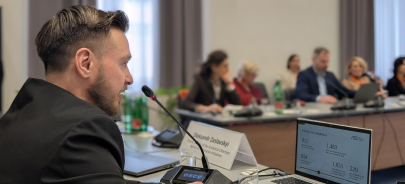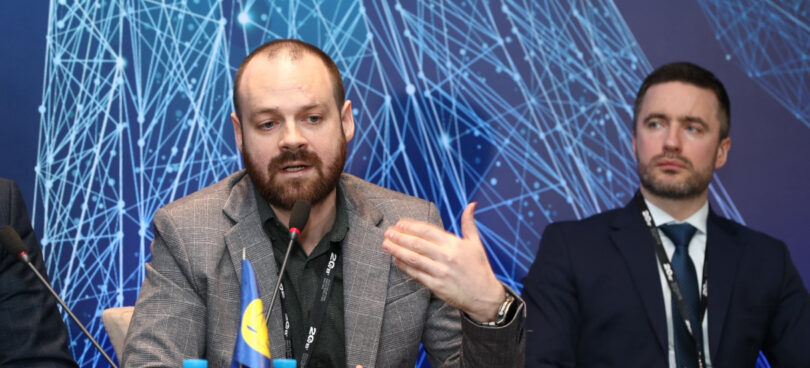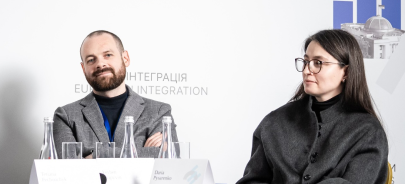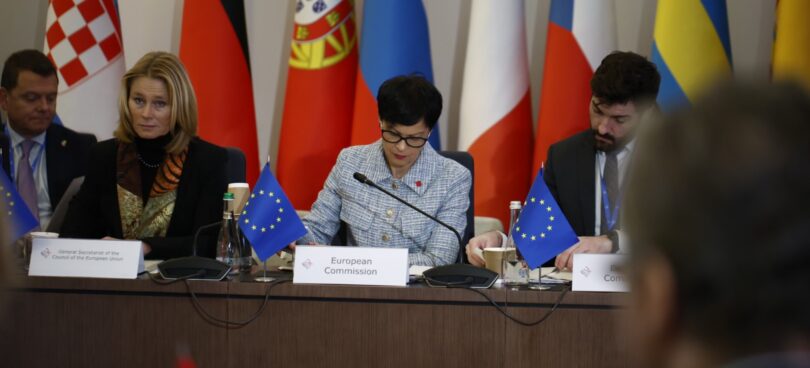
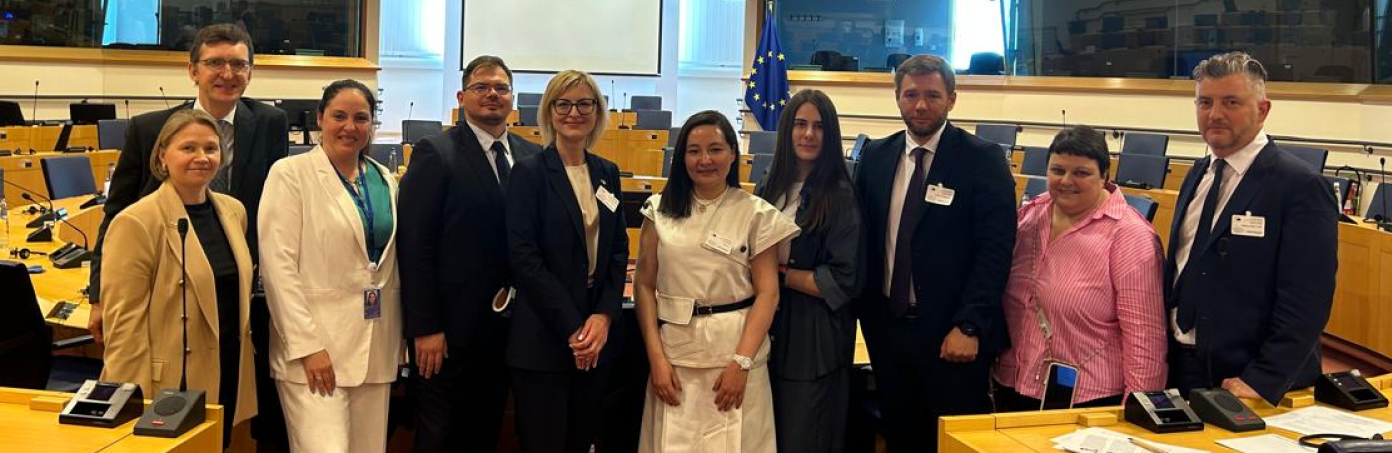
Last week, the Agency for Legislative Initiatives participated in the international conference “Ukraine on the Path to EU Accession: Enlargement Policy and the Impact of the Rule of Law”, organised by Members of the European Parliament in Brussels under the Renew Europe group.
The first panel discussion focused on the regulation of Ukraine’s integration into the European Union. It also addressed a recently proposed approach that would allow candidate countries to gradually participate in EU institutions, policies, and programmes even before obtaining full membership.
Vsevolod Chentsov, Representative of Ukraine to the European Union and the European Atomic Energy Community, commented on Ukraine’s European integration process:
Olha Stefanishyna, Deputy Prime Minister for European and Euro-Atlantic Integration of Ukraine — Minister of Justice of Ukraine, spoke about mutual strengthening and Ukraine’s readiness for the negotiation process:
Just last week, the Cabinet of Ministers of Ukraine reviewed and approved Reform Roadmaps in the areas of the rule of law, public administration reform, and the functioning of democratic institutions. Representatives of civil society were involved in developing these roadmaps – the Agency for Legislative Initiatives provided expert support in their preparation.
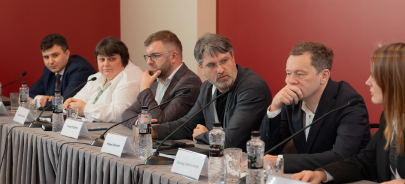
During the discussion panel “The Impact of the Rule of Law in Ukraine”, Karyna Aslanyan, Rule of Law Lead at the Agency for Legislative Initiatives, spoke about the progress and challenges faced by the judiciary on Ukraine’s path toward EU membership. In particular, she reminded the audience that in 2024, a coalition of civil society organisations led by ALI prepared the first Shadow Report under Chapter 23, “Judiciary and Fundamental Rights”. The coalition is now working on the second Shadow Report, which will cover both Chapter 23, “Judiciary and Fundamental Rights,” and Chapter 24 “, Justice, Freedom and Security.”
However, challenges in the area of the rule of law remain substantial: issues with quorum in the High Council of Justice and especially in the Constitutional Court of Ukraine, which has been non-operational since January; the Prosecutor General’s position remains vacant; there are ongoing problems with interference in the activities of judges and members of judicial governance bodies. The issue of uneven workload among judges remains relevant, as does the insufficient funding of the judiciary. Although there has been some positive momentum in the selection of judges for local courts (around 400 new judges were appointed last year), there is still a critical shortage of judges in appellate courts (particularly in criminal specialisation).
What could be the solutions to these problems?
This includes the strategic development of a new judicial map, the unification of procedures for selecting judges and members of judicial governance bodies, and the revision of the model for the functioning of the Public Integrity Council — including ensuring its proper funding and technical support — as well as the gradual reform of judicial education.
It also encompasses the digitalisation of judicial proceedings, including remote hearings in frontline regions, adequate funding for the judiciary, and the immediate appointment of judges to the Constitutional Court of Ukraine.
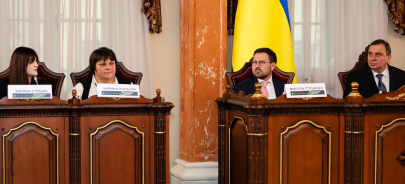
This panel discussion also featured the participation of Oleksii Omelian, Deputy Head of the HQCJ, and Vitalii Hatseliuk, a member of the HQCJ.
Oleksii Omelian spoke about the current situation and the challenges facing the Commission — namely, the shortage of judicial personnel, outdated material and technical infrastructure, and the consequences of the war. At the same time, he highlighted the ongoing work of the Commission: the completion of competitions for positions in local courts and the High Anti-Corruption Court, the renewal of the composition of the Public Integrity Council and the Public Council of International Experts. In addition, a competition for appellate courts is currently underway, a new competition for the Appeals Chamber of the High Anti-Corruption Court has been announced, and the largest judicial selection process in Ukraine’s history is in progress — the Commission has begun selecting candidates for 1,800 positions in local courts. Over 8,500 individuals have applied for these posts, and nearly 600 current judges have submitted applications for transfer.
Vitalii Hatseliuk emphasised that the HQCJ continues to focus on ensuring functional sustainability, building public trust by involving civil society in the selection processes, and coordinating with international partners. However, he noted that successful implementation of these efforts requires improvements in legislation, optimisation of the processing of personal data for candidates and judges, and an overall strengthening of the Commission’s institutional capacity.
He also stressed the importance of forming resilient institutions grounded in the rule of law.
Thus, it is crucial for Ukraine today to focus on all aspects that support and develop independent and effective judicial institutions — institutions capable not only of consolidating their achievements and results but also of responding to current challenges.